Tarsal tunnel syndrome (TTS) is a compressive neuropathy of the posterior tibial nerve or its branches. The diagnosis is largely based on findings from patient history, physical examination, electrodiagnosis, and adjunctive imaging studies. Although several studies[
1–
3] describe the cause of this syndrome, the specific cause can be identified in only 60% to 80% of cases. Other studies[
2,
4] report that as many as 50% of cases are idiopathic. We describe a patient with TTS in whom the posterior tibial nerve was compressed by a pulsating artery.
Case Report
A 72-year-old woman presented with mild but continuous numbness and paresthesia over the entire left sole, except the heel area, that persisted for more than 5 years. Her medical history revealed no diabetes, renal disease, hypothyroidism, malnutrition, peripheral vascular disease, or neuropathies. There was no history of major trauma, vascular intervention, or foot or ankle surgery that might have caused structural damage to the ankle. Gabapentin therapy (300 mg three times daily) resulted in no benefit. Physical examination revealed no valgus deformity, intrinsic foot muscle atrophy, or weakness. Besides mild paresthesia and slightly reduced sensitivity to light touch and pinprick in the left sole, the patient did not complain of ankle or foot pain. Ankle reflexes were normal, and Tinel’s sign was negative. Laboratory tests, including rheumatoid factor, erythrocyte sedimentation rate, and C-reactive protein, excluded rheumatic diseases and other metabolic and endocrine diseases. Foot and ankle radiographs showed no bony abnormality.
We suspected TTS and performed electrodiagnostic studies. Motor nerve conduction studies of the left common peroneal and tibial nerves and sensory nerve conduction studies of the left superficial peroneal and sural nerves showed normal latencies and amplitudes. Mixed nerve conduction studies of the left medial and lateral plantar nerves also showed normal latencies and amplitudes. We compared sensory nerve conduction studies between bilateral medial and lateral plantar nerves, and the resultant values were all similar and within the reference range. Needle electromyography studies including the lumbar paraspinal muscles revealed no abnormal spontaneous activities and showed normal motor unit action potentials. Together, these data indicate that all electrodiagnostic studies were normal in the present case.
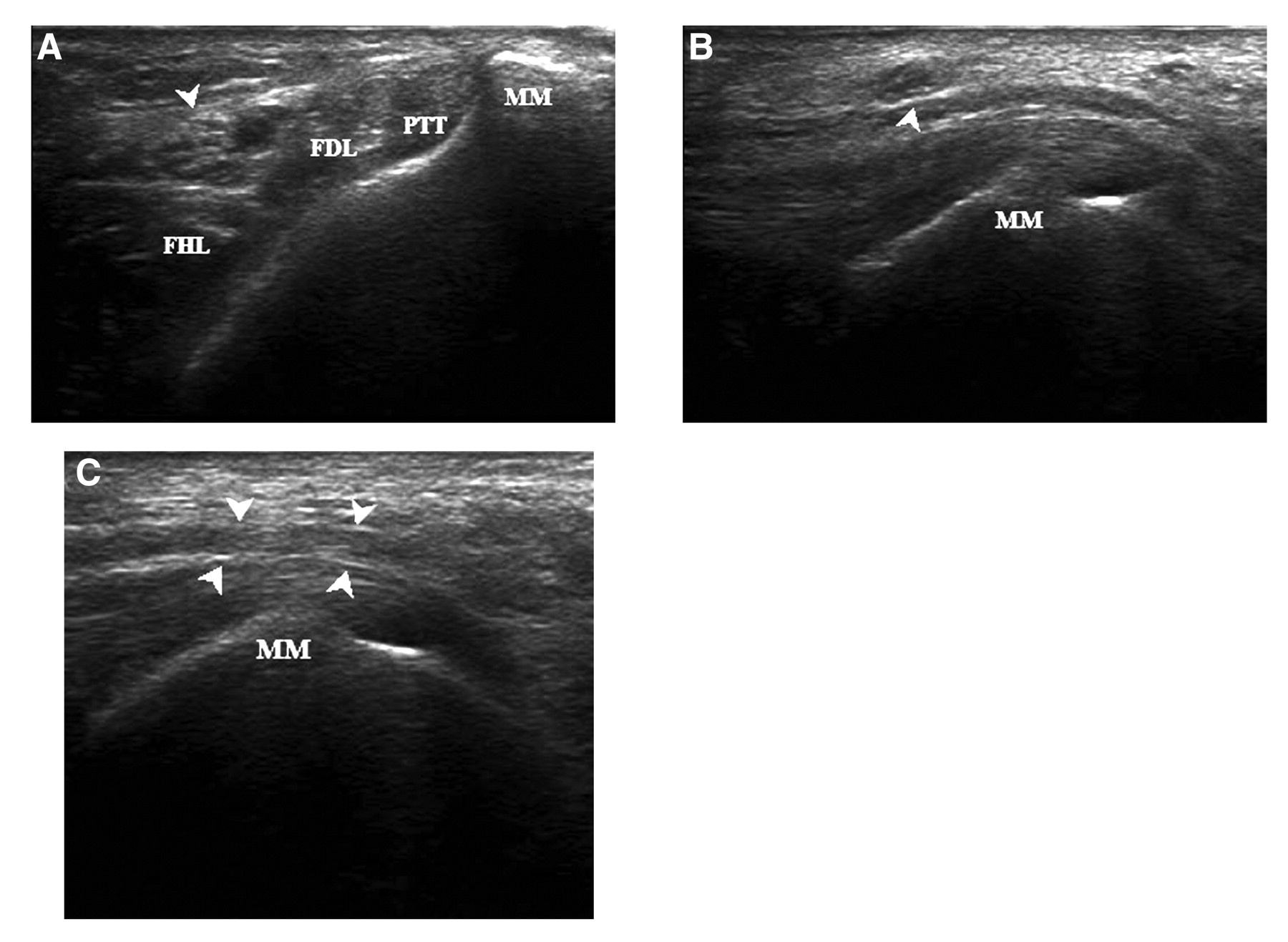
Ultrasonography of both ankles was performed to identify and compare minor lesions with a 3- to 12-MHz real-time linear-array transducer (HD11XE; Philips Medical Systems, Bothell, Washington) (
Figure 1). We noticed a small round hypoechoic lesion in contact with the posterior tibial nerve just behind the left medial malleolus (
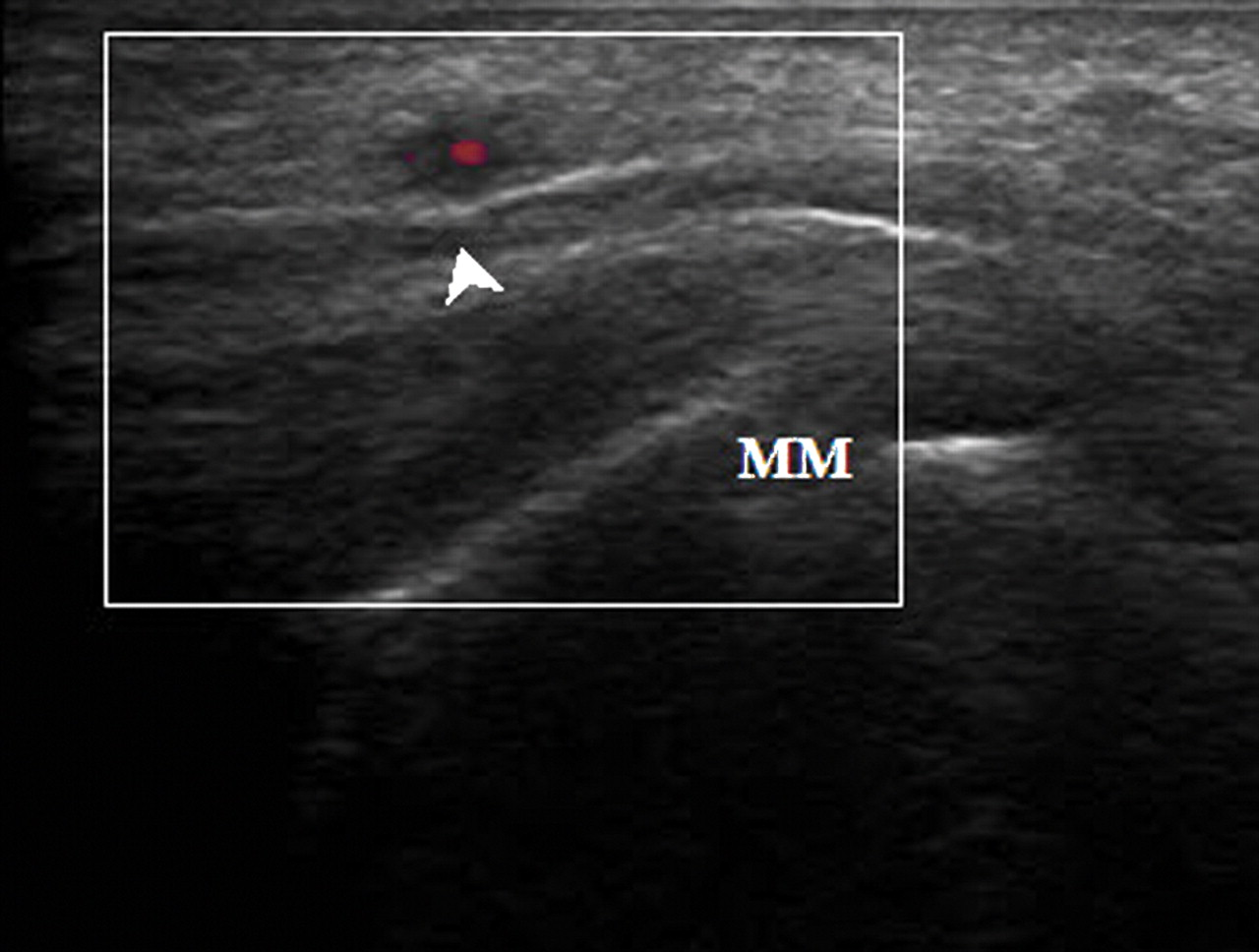
Figure 1B). The lesion was pulsating regularly like an artery, as confirmed by power Doppler scan (
Figure 2). The posterior tibial nerve was being compressed in the region of contact with the pulsating artery. To investigate the effects of local anesthetic treatment, we injected 0.5 mL of 0.5% lidocaine under ultrasound guidance at the compression site. After injection, the patient reported immediate resolution of spontaneous paresthesia. This effect lasted for a few minutes, with gradual return of her usual symptoms. Six months later, she continued to experience the same degree of mild paresthesia without any aggravation or improvement.
Discussion
A burning sensation or numbness in the feet is a frequently encountered disorder by physicians. Patients often complain of sensory disturbances, localized or radiating pain, burning pain, paresthesia, and abnormal perception of temperature.[
1] In some patients, such as this one, only mild sensory loss or irritation in the sole of the foot is noted.[
1]
Owing to a paucity of objective findings, TTS is often underdiagnosed as a potential cause of the previously mentioned conditions.[
5] It also tends to be overlooked because other metabolic, nutritional, psychosomatic, and lower-extremity conditions can often cause these symptoms.[
1] Furthermore, the lack of definite diagnostic tools contributes to the underdiagnosis of TTS. Although electrodiagnosis is an excellent modality for evaluating TTS, false-negative results are the major limitation, and the rate of false negativity is reported to be approximately 10%.[
2,
6]
Initially, the present case seemed to be idiopathic. However, ultrasound imaging and the effects of the ultrasound-guided anesthetic injection supported the possibility of an association between arterial compression and TTS. Therefore, this might be the first case report that describes a potential arterial etiology of TTS.
The tarsal tunnel consists of the posterior tibial tendon, flexor digitorum longus tendon, neurovascular bundle, and flexor hallucis longus tendon (from medial to lateral). These components are covered by the flexor retinaculum separated by fibrous septa.[
2,
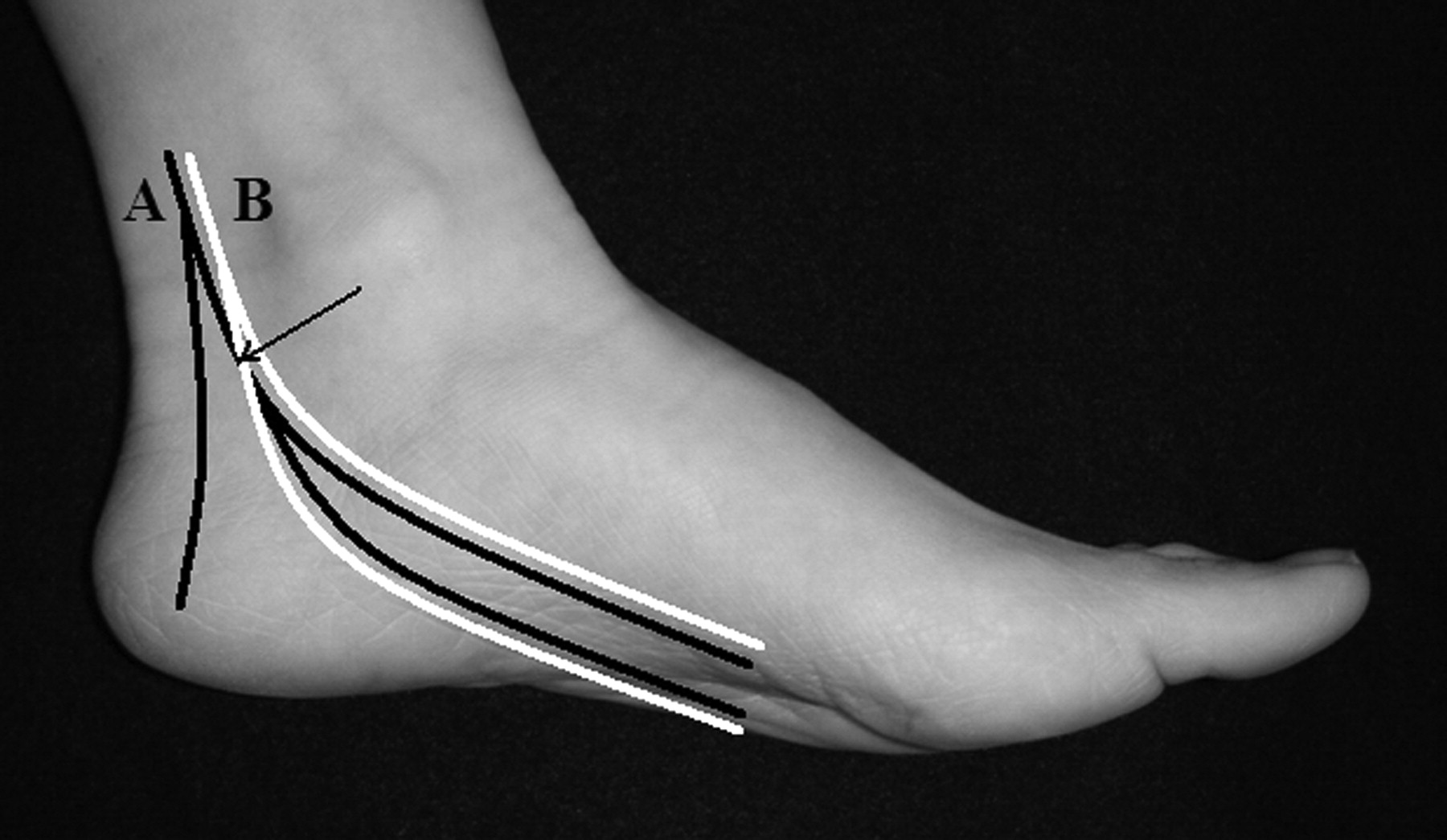
7] Therefore, slight changes in this space might easily result in neuropathy. In the present case, the tibial nerve seemed to be compressed by a pulsating artery that crossed over the nerve before it branched into the medial and lateral plantar nerves. At the site of compression, the medial calcaneal branch arose proximal to the tunnel. This may explain the lack of sensory disturbance around the heel. The anatomy of the neurovascular bundle in this case could be assumed from the distribution of the patient’s sensory symptoms and the ultrasonographic findings (
Figure 3). We believe that the pulsating artery was most likely a variant lateral plantar artery.
Varicose veins have been closely examined as a causative factor in TTS and have been considered the most common vascular abnormality associated with TTS.[
2,
7] In the present case, we identified TTS probably associated with arterial compression using high-resolution ultrasound. Because ultrasound can clearly demonstrate the contents of the tarsal tunnel, it is possible to detect minor morphological abnormalities that can cause TTS. In addition, ultrasound is extremely useful for ascertaining the positional relationships of the tarsal tunnel to a lesion.[
7] Therefore, use of ultrasound imaging has been reported to increase the diagnostic sensitivity of TTS.[
7,
8] Therefore, we suggest using high-resolution ultrasound routinely as an initial assessment for TTS.
Neural compression by vascular structures has been suggested as a possible etiology in a few clinical conditions. One case of trigeminal neuralgia was associated with a primitive trigeminal artery variant.[
9] Another study[
10] used magnetic resonance imaging to evaluate anatomical patterns of neural compression by vascular structures and revealed vascular structures in contact with the trigeminal nerve. The authors concluded that the results were similar to those reported in surgical and autopsy series, and they suggested that a noninvasive imaging approach could be useful for the diagnosis of neural compression by vascular structures. Hemifacial spasm may also result from direct compression of the facial nerve by the vertebrobasilar artery, noted in 12 of 1,642 cases (0.7%).[
11] A similar study[
12] of normal-tension glaucoma evaluated neuroradiologic findings of magnetic resonance imaging to determine the relationship between the optic nerve and the intracranial segment of the carotid artery. The authors concluded that optic nerve compression by the carotid artery might cause or be a risk factor for optic nerve damage. On the other hand, one retrospective study[
13] analyzed whether anterior inferior cerebellar artery compression of the cochleovestibular nerve in asymmetrical hearing loss could be correlated to the symptomatic ear. Results indicated that anterior inferior cerebellar artery compression of the nerve did not correlate with hearing loss. These data indicate that an association between a vascular structure and neural compression is not necessarily causative. Further studies that incorporate hypothesis testing are required to conclusively demonstrate cause and effect regarding neural compression by vascular structures. In the present case, because TTS is generally considered to be a diagnosis of exclusion, we carefully evaluated the patient’s medical and surgical history, completed a thorough physical examination, and performed foot and ankle radiography, elecrodiagnosis, and ultrasonography. The present findings indicate that there was no definite evidence of bony deformity, soft-tissue lesion, injury to a peripheral nerve, radiculopathy, or presence of a generalized peripheral neuropathy. Further serologic assessment excluded diabetes, thyroid dysfunction, and rheumatic diseases. Accordingly, we cannot exclude the possibility of tibial nerve compression by the pulsating artery as a possible etiology of the patient’s unilateral left sole paresthesia. However, the present case must be interpreted cautiously because the data are only suggestive of an association between arterial compression and TTS. Further cohort studies are required to determine whether variant arterial compression, such as described in the present case, is a causative factor in the etiology of TTS.