Accessory ossicles in the foot are common incidental findings. However, accessory ossicles can become clinically significant when they interfere with the biomechanics of the foot. The embryonic elements responsible for accessory bones are preformed in the embryo as early as the second or third fetal month and may ossify during adolescence or preadolescence.[
1]
The foot is the most common location for accessory ossicles in the body, and the number of bones described in the literature has varied. In 1956, Kohler[
2] documented 21 bones, whereas Meschan[
3] listed 12 accessory bones. Accessory bones can occur in three ways: as a true supernumerary ossicle, as a fractured process of another bone, or as a secondary ossification center that has not fused with its adjoining bone.[
4]
An os intermetatarseum is an uncommon accessory ossicle that occurs between the bases of the first and second metatarsals. The first detailed account of the ossicle was in 1896 by Pfitzner.[
5] It varies in size and shape as described by Henderson.[
6] An os intermetatarseum may occur as a separate ossicle or as a spur off the base of the first or second metatarsal, or it may articulate with the bases of the first two metatarsals.[
7,
8] A similar ossicle has also been reported between the fourth and fifth metatarsal bases.[
4]
The presence of an os intermetatarseum may facilitate the development of metatarsus primus varus. Henderson[
6] stated that the ossicle acted as a wedge that spread apart the bases of the first two metatarsals and that a very small wedge could produce considerable deviation. He presented a series of four patients with an os intermetatarseum and painful metatarsus primus varus.[
6]
The occurrence of a painful os intermetatarseum without any associated bunion deformity or bunion pain has been reported. Scarlet et al[
4] and Reichmister[
1] presented a total of three cases of painful os intermetatarseum that required excision. Knackfuss et al[
9] and Noguchi et al[
10] each presented a case of a painful os intermetatarseum related to compression of the deep peroneal nerve that required excision.
Case Report
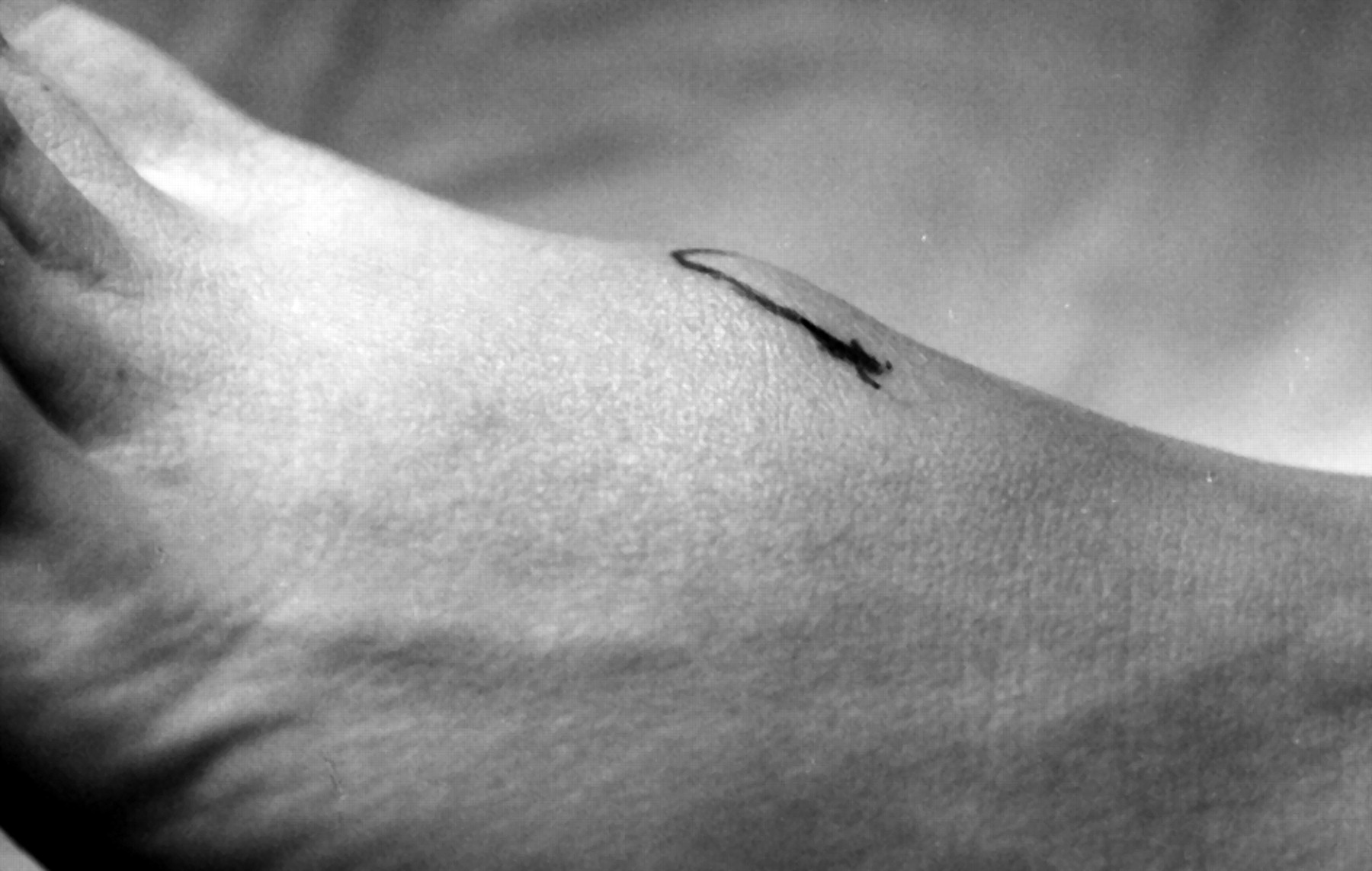
A 22-year-old woman presented with a 1-year history of pain on the dorsal aspect of the left foot. The patient noticed a painful dorsal bump, which was aggravated by shoes and ambulation. She denied previous surgery or trauma to the affected area, as well as pain in the first metatarsophalangeal area. On physical examination, a 0.5-cm firm, immobile mass was palpable on the dorsal aspect of the left foot, between the first and second metatarsal bases (
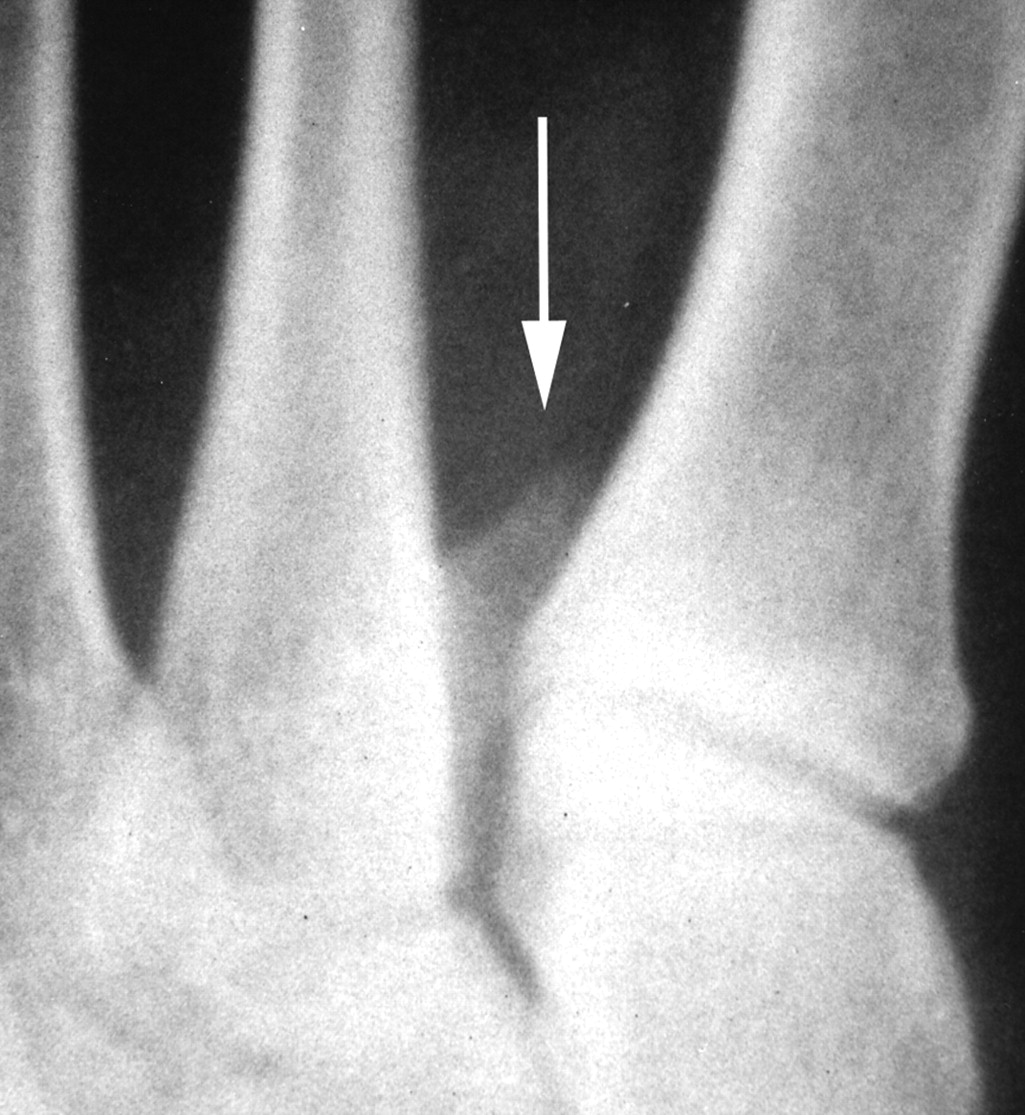
Figure 1). There were no neurologic symptoms associated with the mass. Standard radiographs were taken only of the symptomatic foot and revealed an ossicle at the base of the first intermetatarsal space with a mild metatarsus primus varus deformity (
Figure 2).
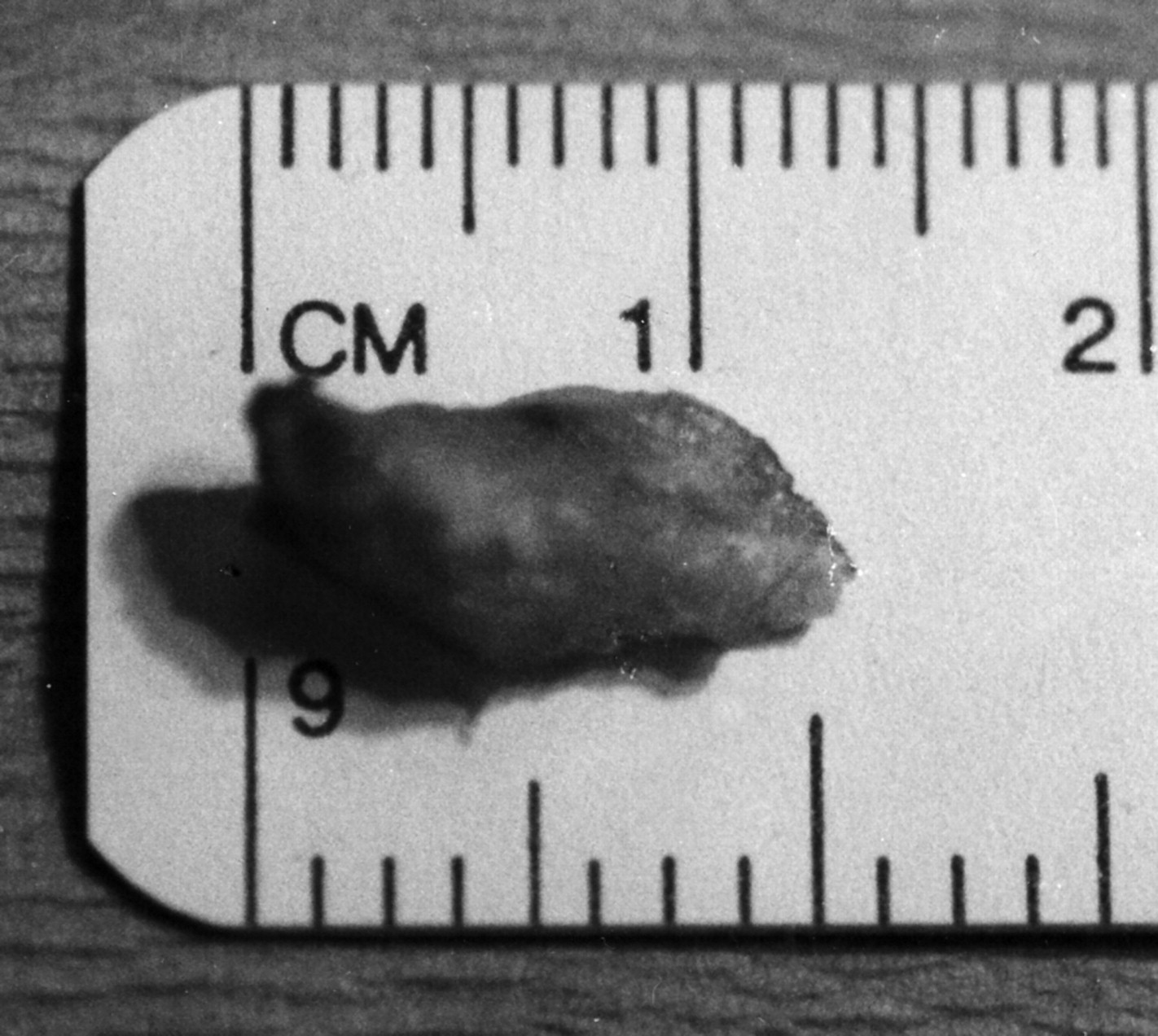
The preoperative differential diagnosis consisted of os intermetatarseum, osteochondroma, and ganglion. The patient underwent excision of the accessory ossicle through a lazy S-incision. The accessory ossicle was noted to articulate with the second metatarsal base. There was also a soft-tissue structure noted to be extending distally from the ossicle. The structure appeared tendinous, with longitudinal fibers. The pathology report revealed a benign segment of osteocartilaginous tissue measuring 1.3 × 0.5 cm (
Figure 3). There was no finding of hyaline cartilage, which eliminates osteochondroma as a diagnosis. One year after the surgery, the patient is walking and wearing shoes without pain.
Discussion
The incidence of os intermetatarseum ranges from 1.24%, as described by Shands,[
11] to 12.5%, according to Pfitzner.[
5] The accessory ossicle usually occurs bilaterally. A familial relationship has also been reported in the literature.[
6] Waters[
12] radiographically documented a family in which the ossicle was found in a husband, wife, three of four siblings, and the husband’s sister and mother. The one patient who underwent surgical excision of the ossicle initially presented with a painful bunion, which was also corrected.[
12] A cadaveric study of Native Americans by Case et al[
7] also shows the high probability of os intermetatarseum to be inherited.
Many theories speculate as to the origin of os intermetatarseum. The most popular theory states that it may represent a missing metatarsal as in a form of polymetatarsia or duplicate metatarsal.[
6] Henderson[
6] discounted this theory by describing a tendinous attachment from the os intermetatarseum to the lateral base of the proximal phalanx of the hallux, which would abduct the hallux, contrary to dorsal interossei, which function to abduct from the second toe.
Most cases of os intermetatarseum reported in the literature are related to painful metatarsus primus varus or pain associated with compression of the deep peroneal nerve. This case is unique because it does not involve either of these entities and it is the first podiatric medical case described in the literature in more than 30 years.