Article

The Impact of Debt Maturity Structure on Financial Resilience: Evidence from Non-Financial Listed Firms on the Vietnamese Stock Market


by
Nguyen Thi Hong Duyen
1,
Le Quoc Diem
2,* and
Nguyen Thao Hoa
3
1
Faculty of Finance & Accounting, Phenikaa University, Hanoi 100000, Vietnam
2
Faculty of Accounting, University of Labour and Social Affairs (Campus II), Ho Chi Minh City 700000, Vietnam
3
School of Accounting and Auditing, National Economics University, Hanoi 100000, Vietnam
*
Author to whom correspondence should be addressed.
J. Risk Financ. Manag. 2026, 19(7), 539; https://doi.org/10.3390/jrfm19070539
Submission received: 8 June 2026 / Revised: 16 July 2026 / Accepted: 17 July 2026 / Published: 20 July 2026
(This article belongs to the Section Applied Economics and Finance)

Abstract

How the maturity structure of corporate debt shapes firms’ capacity to withstand financial pressure remains understudied, particularly in bank-dependent emerging markets. This study examines whether greater reliance on short-term debt weakens firms’ ability to absorb financial shocks. Using quarterly panel data for non-financial listed firms on the Vietnamese stock market from 2015 to 2025, we construct an accounting-based measure of financial resilience (FR), defined as the ratio of earnings before interest, taxes, depreciation and amortization (EBITDA) to the sum of short-term debt and interest expense, and measure debt maturity structure (DMS) as the proportion of short-term debt in total interest-bearing debt. Firm fixed-effects models with quarterly time fixed effects and firm-clustered standard errors are used to estimate the relationship. The results consistently show that firms with a higher proportion of short-term interest-bearing debt exhibit significantly lower financial resilience across all model specifications. This negative relationship remains robust after controlling for alternative measures of financial leverage and using a logarithmic transformation of the dependent variable. The findings highlight the importance of debt maturity management as a key component of corporate financing strategy for firms and policymakers seeking to enhance financial resilience.

1. Introduction

Maintaining financial resilience has become increasingly challenging as firms operate in a highly volatile business environment. While the overall level of debt is widely recognized as a source of financial vulnerability, the maturity profile of that debt may be equally important. Debt maturity theory suggests that firms that rely heavily on short-term borrowing are exposed to more frequent refinancing needs and greater liquidity pressure, thereby weakening firms’ ability to absorb financial shocks (Diamond, 1991; Johnson, 2003). In contrast, a more balanced debt maturity structure may help firms maintain financial flexibility and business continuity under uncertain conditions.
These concerns are particularly important in emerging markets such as Vietnam, where firms depend heavily on bank lending and short-term credit. Given the country’s high degree of trade openness and strong integration into global supply chains, external shocks such as declining demand, trade disruptions, or tightening credit conditions can rapidly spill over into the corporate sector (World Bank, 2024, 2026). This vulnerability is further reinforced by persistently high corporate indebtedness, which the International Monetary Fund (2025) identifies as a source of renewed financial stress should financing conditions deteriorate. These characteristics make financing decisions particularly crucial for maintaining corporate resilience during periods of economic uncertainty. While traditional capital structure theory emphasizes the role of financial leverage (Modigliani & Miller, 1958; Myers, 1977), recent studies suggest that debt maturity also plays a significant role in determining liquidity risk and firms’ financial resilience (Diamond, 1991; Z. Wang et al., 2025). However, most existing studies largely examine the determinants of debt maturity choices rather than whether those choices influence firms’ financial resilience, especially in emerging markets. This distinction matters because firms with similar leverage ratios may face substantially different refinancing risks depending on how their debt is structured. Against this background, this study examines the impact of debt maturity structure on the financial resilience of non-financial listed firms on the Vietnamese stock market. Accordingly, this study addresses three related questions: (i) does higher reliance on short-term debt reduce firms’ financial resilience?; (ii) does financial leverage exert an independent effect after debt maturity structure is taken into account?; (iii) do these relationships remain robust across alternative leverage measurements and model specifications?
The study contributes to the literature in several ways. First, it extends existing research by shifting attention from the determinants of debt maturity structure to its implications for firms’ financial resilience. It also develops an accounting-based measure of financial resilience that directly captures the pressure of servicing near-term debt obligations. Moreover, by providing evidence from Vietnam, an emerging market characterized by a high dependence on bank credit and short-term working capital financing, it further broadens the evidence to the international discussion on debt maturity structure and corporate financial vulnerability.
The remainder of this paper is structured as follows. Section 2 reviews the relevant literature and develops the research hypothesis. Section 3 presents the data, variable construction, and research methodology employed in the study. Section 4 reports the empirical results. Section 5 discusses the main findings in relation to the literature. Finally, Section 6 summarizes the study and highlights its managerial and policy implications.

2. Literature Review and Hypothesis Development

2.1. Accounting Information and Financial Resilience

Financial resilience at the firm level refers to the capacity of a firm to withstand adverse financial shocks, continue servicing its obligations, and maintain operational continuity without rapidly falling into financial distress (Rezaei Soufi et al., 2022; Brigham & Daves, 2019). From the perspective of accounting and corporate finance, financial resilience reflects a firm’s capacity to generate sufficient operating resources to cover its financial commitments, particularly those falling due in the near term. Accordingly, it is commonly reflected through indicators related to profitability, liquidity, leverage, and debt-servicing capacity. This concept is closely aligned with, but distinct from, the corporate failure prediction literature, which focuses on identifying financial vulnerability and bankruptcy risk. Beaver (1966) was one of the earliest studies to show that financial ratios contain significant predictive power in distinguishing between failing and non-failing firms. Altman (1968) further formalized this perspective through the Z-score model, while Ohlson (1980) developed a bankruptcy probability model based on accounting variables. Subsequent contributions by Zmijewski (1984) and Shumway (2001) reinforce the importance of accounting information in predicting financial distress, even when combined with market-based indicators. Collectively, these studies indicate that accounting information and financial statements serve not only as a record of past performance but also as valuable signals regarding a firm’s financial vulnerability and capacity to withstand adverse conditions. A common finding across these studies is that indicators capturing the ability to meet debt obligations consistently emerge as among the strongest predictors of financial distress. This insight provides the conceptual foundation for the financial resilience measure employed in the present study.
Building on this literature, the present study measures financial resilience using the ratio of EBITDA to the sum of total short-term debt and interest expense. This proposed measure is grounded in the debt-servicing capacity framework, which emphasizes that a firm’s short-term financial stability depends on its ability to generate sufficient operating earnings to meet near-term financial obligations. In the numerator, EBITDA captures operating performance before financing costs and non-cash accounting charges, whereas the denominator captures the immediate financial commitments arising from short-term debt and related interest expenses. By placing operating capacity in the numerator and near-term financial pressure in the denominator, this ratio captures the extent to which a firm’s earnings buffer is adequate to absorb both rollover and servicing risk simultaneously. This dual focus is particularly appropriate in emerging market contexts, where refinancing constraints and credit rationing can abruptly transform manageable short-term obligations into acute liquidity crises (Diamond, 1991; He & Xiong, 2012). This study concentrates specifically on interest-bearing short-term liabilities because these obligations carry the most direct refinancing risk; unlike trade payables or deferred revenues, they require active debt market participation to roll over and are therefore most exposed to tightening credit conditions. Consistent with International Accounting Standard (IAS) 7, which identifies liquidity, solvency, and financial flexibility as central objectives of cash flow reporting, this measure aligns with the informational role of accounting data in signaling financial vulnerability. However, the financial resilience measure employed in this study should not be interpreted as a measure of absolute cash flow. Because EBITDA is constructed on an accrual basis, this measure does not fully capture changes in working capital and may differ substantially from actual operating cash flows, particularly in firms with high working capital requirements (Bouwens et al., 2019). Therefore, the study interprets FR as an accounting-based measure of the firm’s capacity to meet short-term financial obligations rather than as a comprehensive proxy for cash-generating ability. This approach is well suited to the use of quarterly financial statements and provides a consistent basis for assessing the financial resilience of listed firms.

2.2. Debt Maturity Structure and Liquidity Risk

Debt maturity structure represents an important dimension of corporate financing decisions because it determines not only the amount of debt a firm carries but also the timing of its repayment obligations. Unlike leverage, which reflects the overall level of indebtedness, debt maturity structure captures how debt is distributed between short-term and long-term financing. Debt maturity structure theory suggests that firms inherently face a trade-off when selecting the maturity of their debt. Short-term borrowing may become more attractive when firms expect their credit quality to improve in the future, thereby lowering financing costs and mitigating certain agency conflicts. However, these benefits come at the cost of greater refinancing frequency and higher liquidity risk, making firms more vulnerable to disruptions in credit markets. This trade-off was formalized by Diamond (1991), who argued that the optimal debt maturity structure reflects a balance between the benefits of short-term debt and the liquidity risk arising from pressure and the possibility of premature liquidation. Rather than being determined solely by firms’ financing preferences, debt maturity decisions are also shaped by firm characteristics, capital market conditions, and institutional environments. Antoniou et al. (2006), based on countries representing different financial and legal traditions, show that corporate debt maturity decisions are significantly influenced by the financial system, financing practices, and institutional context of each country. Therefore, the impact of liquidity risk on debt maturity structure may not be uniform across contexts. Similarly, Fan et al. (2012) extended the analysis to an international context and showed that institutional factors, including legal origin, taxation, corruption, and the preferences of capital providers, explain substantial cross-country differences in debt maturity decisions.
Beyond these institutional determinants, a growing body of research highlights the close relationship between debt maturity and liquidity risk. Marks and Shang (2021) documented an inverse relationship between stock market liquidity and firms’ reliance on short-term debt, suggesting that greater market liquidity enables firms to reduce their dependence on short-term financing and, consequently, mitigate refinancing risk. Recent studies have further expanded the perspective on liquidity risk by emphasizing the interaction between different types of risk. Wei et al. (2011) developed a model showing that businesses simultaneously balance market liquidity risk and debt rollover risk by adjusting the debt maturity structure. When one type of liquidity risk increases, a company may adjust its debt maturity in a way that increases exposure to the other type of risk to partially offset the adverse impact, indicating a spillover effect between risk types rather than each risk operating independently. These findings imply that debt maturity structure is not merely a response to isolated liquidity shocks but also serves as a broader mechanism for managing financing-related risks. Johnson (2003) emphasized that short-term debt may mitigate the adverse effects of growth opportunities on leverage; however, it simultaneously increases firms’ exposure to liquidity risk. Likewise, Gopalan et al. (2014) showed that firms with higher exposure to maturity risk tend to have lower credit quality and face higher yield spreads. More recently, S. Wang et al. (2023) showed that firms with greater exposure to refinancing risk, measured by the share of long-term debt maturing within one year, respond by producing more readable risk disclosures, suggesting that managers themselves treat near-term debt maturity as a salient signal of liquidity vulnerability that warrants closer communication with capital providers. This finding underscores the dual role of debt maturity: it not only shapes firms’ exposure to liquidity risk but also influences the information environment in which creditors and investors assess that risk.
Taken together, this literature establishes that debt maturity is far more than an accounting classification; it is a structural determinant of how exposed a firm is to shocks. When the proportion of short-term debt increases, the business faces larger near-term payment obligations, thereby reducing its ability to absorb financial shocks. Based on this perspective, debt maturity structure can be viewed not merely as a choice between short-term and long-term debt, but also as a strategic mechanism for managing liquidity risk, refinancing risk, and the firm’s ability to sustain financial resilience. When the proportion of short-term debt is high, firms are required to refinance more frequently, thereby becoming more vulnerable to declines in debt market liquidity, tightening credit conditions, and rising refinancing costs (Diamond, 1991; He & Xiong, 2012). Evidence from Vietnam reinforces this argument. Trinh et al. (2020) examine how short-term debt maturity affects accruals-based earnings management among Vietnamese listed firms: at low levels, short-term debt acts as a creditor monitoring mechanism that constrains earnings manipulation, while at high levels it creates incentives to inflate reported performance. This finding implies that as short-term debt concentration increases, the information quality of financial statements deteriorates, compounding the vulnerability already introduced by rollover risk and reinforcing the case for monitoring debt maturity structure as a key indicator of financial fragility.
In this research context, the variable DMS = STDE/(STDE + LTDE) captures the extent to which the firm’s debt maturity structure is tilted toward short-term debt. When the regression models simultaneously control for overall leverage through variables such as TDTA (total liabilities to total assets), TDE (total liabilities to equity), or TAE (total assets to equity), the coefficient on DMS can be interpreted primarily as the effect of debt maturity structure, rather than merely reflecting the effect of higher borrowing intensity. This interpretation is consistent with the international literature, which suggests that debt maturity decisions are shaped by firm characteristics, capital market conditions, and the institutional environment. Nevertheless, the underlying logic remains unchanged: greater reliance on short-term debt increases firms’ vulnerability to refinancing and liquidity shocks. Therefore, both theoretical and empirical evidence support the expectation that firms with higher DMS are likely to exhibit lower financial resilience.
Hypothesis 1 (H1).
A higher proportion of short-term debt is negatively associated with firms’ financial resilience.

2.3. Financial Leverage

Financial leverage reflects the extent to which a business uses debt in its capital structure and is directly linked to the level of fixed financial commitments it must make in the future. As the debt ratio increases, firms face greater pressure to repay interest and principal, reducing their financial capacity to absorb adverse business shocks. Consistent with this view, the IMF identifies the ratio of income to interest expense or to principal and interest obligations as a measure of debt capacity. The lower this ratio, the higher the risk of a business failing to meet its mandatory payments. In other words, high leverage is often associated with lower financial resilience because the remaining operating income available for liquidity reserves and reinvestment is reduced.
This argument is also consistent with classical theories of capital structure and financial distress. Myers (1977) argues that risky debt creates suboptimal investment strategy costs, i.e., the debt overhang phenomenon, where firms tend to abandon projects with positive net present value because the marginal benefit of the project may shift to creditors instead of shareholders. Empirically, Opler and Titman (1994) showed that highly leveraged firms experience significantly greater losses in market share than more conservatively financed firms during industry downturns, implying that high leverage increases corporate vulnerability when business conditions deteriorate. Adding to this argument, Gopalan et al. (2014) showed that debt rollover risk arising from the debt maturity structure degrades the credit quality of a firm, especially when the proportion of near-maturity obligations is large. These pieces of evidence agree on one point: debt not only increases fixed financial obligations but also amplifies liquidity risk, refinancing risk, and the cost of financial distress, thereby undermining a company’s financial resilience.
In the context of non-financial listed firms in Vietnam, the negative relationship between financial leverage and financial resilience is even more plausible. Research on financial distress in Vietnam shows that the financial difficulties of listed firms are often linked to a shortage of resources to meet their financial obligations. Furthermore, Vo (2023) uses the interest coverage ratio (ICR) as a proxy for financial distress and finds that firms with a low ICR experience a sharper deterioration in performance when market risk rises, underscoring the practical relevance of debt-servicing capacity indicators in this market. This evidence is consistent with the broader emerging-market finding of Farooq et al. (2023): higher leverage raises the expected cost of financial distress, particularly for firms with limited tangible collateral. Therefore, when a company maintains a high debt ratio, a larger portion of its operating income must be allocated to debt servicing, making it more vulnerable to fluctuations in revenue, interest rates, and credit conditions (Pham Vo Ninh et al., 2018). Complementing this, Nguyen and Tran (2024) examine the interplay between liquidity, capital structure, and financial performance among Vietnamese listed non-financial firms, finding that while higher liquidity directly improves financial performance, it simultaneously reduces leverage. Moreover, capital structure itself exerts a negative effect on performance, suggesting that debt financing in the Vietnamese context carries tangible costs that are not offset by the tax benefits commonly emphasized in developed-market studies. Overall, both theoretical arguments and empirical evidence indicate that greater financial leverage reduces firms’ capacity to absorb financial shocks by increasing debt-servicing obligations and limiting financial flexibility. Accordingly, firms with higher leverage are expected to exhibit lower financial resilience.
In terms of measurement, the study uses control and alternative variables of financial leverage, including TDTA (total debt/total assets), TDE (total debt/equity), TAE (total assets/equity), along with STDE and LTDE to separately reflect short-term and long-term debt relative to equity. However, the study does not include TDTA, TDE, and TAE in the same model because these three variables all measure the same characteristic, namely the level of financial leverage, and have a close accounting relationship. Therefore, including these variables in the same regression equation could easily lead to multicollinearity and make it difficult to separate the individual effects of each indicator. Thus, the study estimates alternative models for each representative of financial leverage, while STDE and LTDE are used in a separate model to identify the impact of debt structure by maturity in more detail. Based on the above arguments, the following research hypothesis is proposed:
Hypothesis 2 (H2).
Financial leverage is negatively associated with firms’ financial resilience.

3. Data and Research Methods

3.1. Research Data

This study uses quarterly unbalanced panel data from non-financial firms listed on the Ho Chi Minh Stock Exchange (HOSE) and the Hanoi Stock Exchange (HNX) over the period 2015–2025. Financial statement data and firm-specific information are drawn from the FiinProX database provided by FiinGroup, one of the most widely used financial databases for listed companies in Vietnam. The sample selection process involved the following screening steps. First, firms operating in the financial sector, including banks, securities companies, and insurance firms, were excluded, as these firms differ substantially from non-financial firms in their business models, capital structure, accounting regulations, and regulatory requirements, making their financial statements not directly comparable. Second, firm-quarter observations with missing values for the core variables: FR, DMS, and the leverage controls (TDTA, TDE, TAE, STDE, LTDE) were removed. These procedures were undertaken to ensure data consistency and reliability.
After data screening, the final sample consists of 559 non-financial firms operating across the industrials, basic materials, consumer goods, consumer services, oil and gas, utilities, information technology, telecommunications, pharmaceuticals, and healthcare sectors. The dataset is structured in a firm-quarter panel format, in which each observation represents a specific firm in each quarter. To facilitate panel data estimation in Stata 17, the study constructs numerical firm identifiers (Firm_id) and quarterly time identifiers (Time_id).
All variables are constructed from quarterly financial statement data. Continuous variables are winsorized at the 1st and 99th percentiles to mitigate the influence of extreme values prior to estimation. The explanatory variables are lagged by one period to reflect the premise that debt structure and leverage decisions made in the previous quarter influence financial resilience in the current quarter. This specification also helps mitigate potential simultaneity concerns between financing decisions and financial outcomes.

3.2. Measuring Variables

The dependent variable is financial resilience, denoted as FR, and is defined as follows:
F R i t = E B I T D A i t S h o r t D e b t i t   +   I n t e r e s t E x p e n s e i t
In this formula, EBITDA is profit before interest, taxes, and depreciation; ShortDebt is short-term debt; and InterestExpense is interest expense. A higher FR value indicates that the company has a better ability to cover its short-term financial obligations, meaning greater financial resilience.
Since FR is constructed as a ratio variable, extreme values may arise when the denominator is very small. To reduce the influence of outliers, the study winsorized FR at the 1% and 99% levels prior to estimation, consistent with common practice in empirical accounting and finance research (Li et al., 2011; Srivastava, 2019).
The primary independent variable is debt maturity structure, denoted as DMS, which is measured as follows:
D M S i t = S T D E i t S T D E i t   +   L T D E i t
where STDE represents short-term debt to equity, while LTDE represents long-term debt to equity. Since both the numerator and denominator are normalized to equity, DMS is equivalent to the proportion of short-term debt in total interest-bearing debt. A higher DMS indicates that the company is more dependent on short-term debt.
The control and surrogate variables include TDTA, TDE, TAE, STDE, and LTDE. The study did not include TDTA, TDE, and TAE simultaneously in a single model because these variables all reflect financial leverage and have strong accounting relationships, which could easily lead to multicollinearity.

3.3. Research Models

The study estimates five fixed-effects panel regression models. The dependent variable FR is regressed on lagged DMS and alternative leverage controls, with firm and quarterly time fixed effects. Standard errors are clustered at the firm level.
Model 1: FRit = β0 + β1DMSi,t−1 + μi + λt + εit
Model 2: FRit = β0 + β1DMSi,t−1 + β2TDTAi,t−1 + μi + λt + εit
Model 3: FRit = β0 + β1DMSi,t−1 + β2TDEi,t−1 + μi + λt + εit
Model 4: FRit = β0 + β1DMSi,t−1 + β2TAEi,t−1 + μi + λt + εit
Model 5: FRit = β0 + β1STDEi,t−1 + β2LTDEi,t−1 + μi + λt + εit
where μi denotes firm fixed effects, which control for time-invariant firm characteristics such as business models, managerial capability, market position, and operational specificities; λt represents quarterly time fixed effects, which capture common macroeconomic shocks, including credit conditions, interest rates, market cycles, and economic uncertainty; and ε i t denotes the idiosyncratic error term, capturing firm-quarter-specific shocks not explained by the fixed effects or the included regressors. Standard errors are clustered at the firm level to account for heteroskedasticity and serial correlation within firms.

4. Research Results

4.1. Descriptive Statistics

Table 1 presents the descriptive statistics of the main variables. After outlier treatment, the FR variable still exhibits substantial dispersion across firm-quarter observations, reflecting considerable heterogeneity in firms’ EBITDA-generating capacity, dependence on short-term debt financing, and interest expense burden. Likewise, DMS demonstrates notable variation, indicating significant differences among firms in the allocation of debt between short-term and long-term maturities.
Differences in the number of observations across variables reflect the unbalanced nature of the panel dataset due to missing quarterly information, a common and acceptable characteristic of firm-level panel data that arises when some entities are not fully observed across all periods (Wooldridge, 2010, 2021). The FR and DMS variables display considerable variation across firms, suggesting substantial differences in financial resilience and debt maturity structure within the sample. The extreme values observed for the leverage variables are largely attributable to firms with low or negative equity. To ensure that these observations do not unduly influence the findings, additional robustness analyses were performed.

4.2. Correlation Matrix

Table 2 reports the pairwise correlation matrix among all variables. DMSt−1 is negatively associated with FR, suggesting that firms relying more heavily on short-term debt tend to exhibit lower financial resilience. A similar negative association is observed between TDTAt−1 and FR, supporting the view that higher financial leverage reduces firms’ financial flexibility.
Notably, TDE and TAE exhibit a very high correlation due to the underlying accounting relationship among assets, liabilities, and shareholders’ equity. To avoid potential multicollinearity, these leverage measures are not included simultaneously in the same regression model. Instead, each is introduced separately across alternative model specifications to assess the robustness of the empirical findings.

4.3. Main Regression Results

Table 3 presents the results of the fixed-effects regression. The dependent variable is financial resilience, which is winsorized at the 1% and 99% thresholds. All models control for firm fixed effects and quarterly time effects, with cluster standard errors by firm.
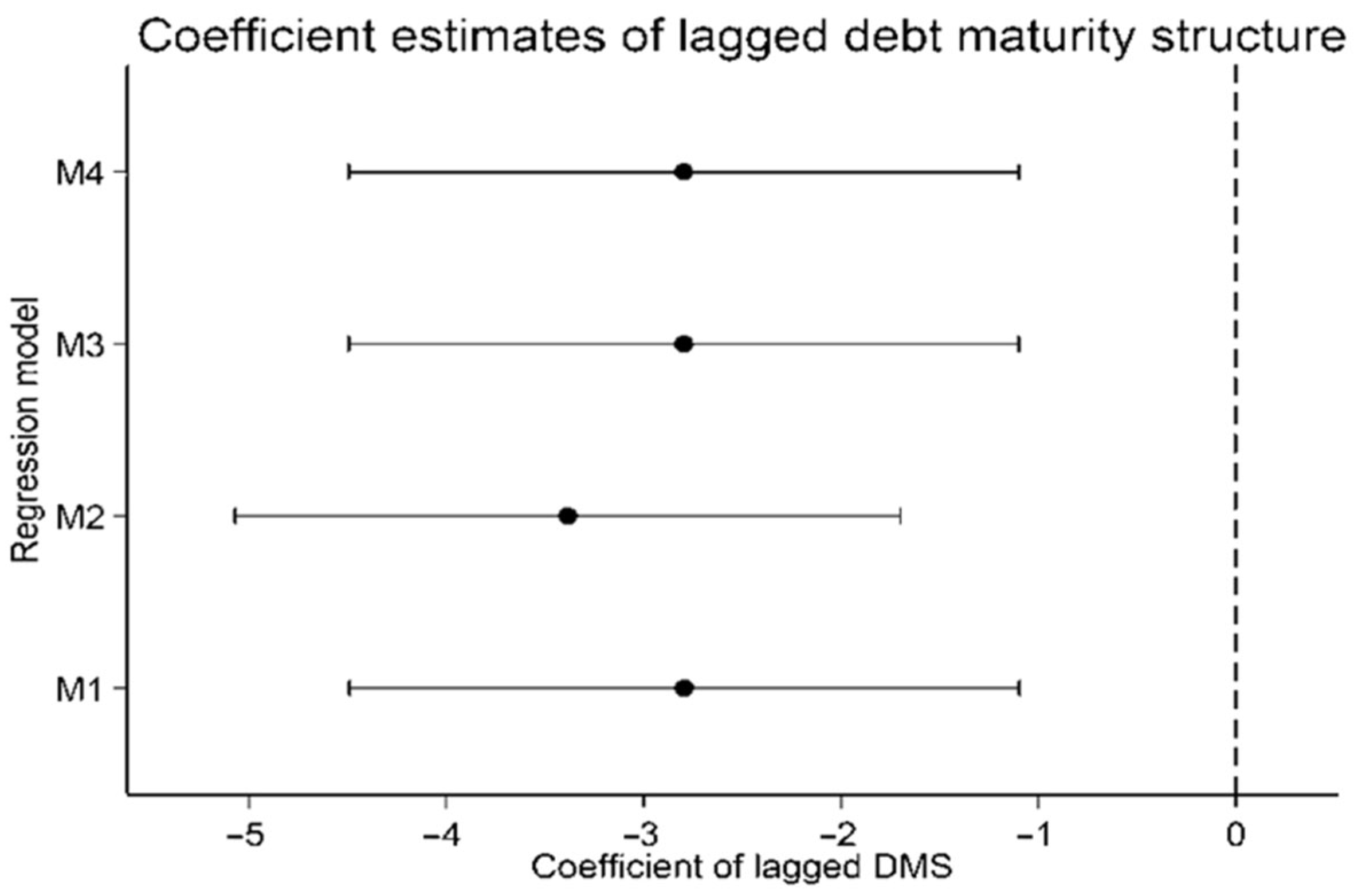
Model 1 shows that the coefficient on DMSt−1 is −2.7937 and statistically significant at the 1% level. Even before controlling for financial leverage, a debt structure tilted toward short-term debt is therefore significantly and negatively associated with firms’ financial resilience in the subsequent quarter.
Model 2 serves as the benchmark specification of the study. The coefficient on DMSt−1 is −3.3846 and is statistically significant at the 1% level. In terms of economic significance, a 0.1 increase in the proportion of short-term debt within total debt is associated with an approximate 0.338-point decline in financial resilience, after controlling for financial leverage, firm fixed effects, and time fixed effects. This result provides strong support for Hypothesis 1 (H1).
Financial leverage also exhibits the expected negative effect. The coefficient on TDTAt−1 equals −7.7323 and is statistically significant at the 1% level, indicating that firms with higher total liabilities relative to total assets tend to exhibit lower financial resilience. This finding supports Hypothesis 2 (H2) and suggests that overall indebtedness remains an important determinant in assessing firms’ financial resilience.
To examine whether this relationship depends on the leverage measure employed, Models 3 and 4 replace TDTA with TDE and TAE, respectively. Across both specifications, the coefficient on DMSt−1 remains negative and highly significant. The adverse effect of reliance on short-term debt appears robust, and does not depend on a particular proxy for financial leverage.
Model 5 further distinguishes between short-term and long-term debt by introducing STDE and LTDE separately. Both STDEt−1 and LTDEt−1 carry negative coefficients; however, the statistical evidence is weaker than in the specifications employing DMS. The relative composition of short-term debt within total debt provides greater explanatory power for financial resilience than the individual magnitude of each debt component considered separately.
The within R2 ranges from approximately 2% to 5% across Models 1 to 4, which is modest but consistent with the nature of the dependent variable and the estimation strategy employed. Financial resilience, as measured by the EBITDA-to-short-term-obligations ratio, exhibits considerable idiosyncratic variation at the firm-quarter level that is unlikely to be captured by a parsimonious set of debt structure variables alone. Within-firm variation in FR over time reflects not only financing decisions but also transitory shocks to revenues, costs, and working capital that are orthogonal to debt maturity choices. The within R2 for Model 2, which includes both DMS and TDTA, rises to 5.3%, indicating that the leverage control variable contributes meaningful additional explanatory power. Importantly, the statistical significance and consistency of the DMS coefficient across all specifications suggests that the low R2 reflects the inherent complexity of financial resilience rather than a misspecified or spurious relationship.
Figure 1 presents the estimated coefficients of DMSt−1 across Models 1 to 4. All coefficients lie to the left of the zero benchmark, and the 95% confidence intervals do not cross zero. This visualization provides further support for the regression evidence that a debt structure tilted toward short-term debt exerts a negative and statistically significant effect on financial resilience.
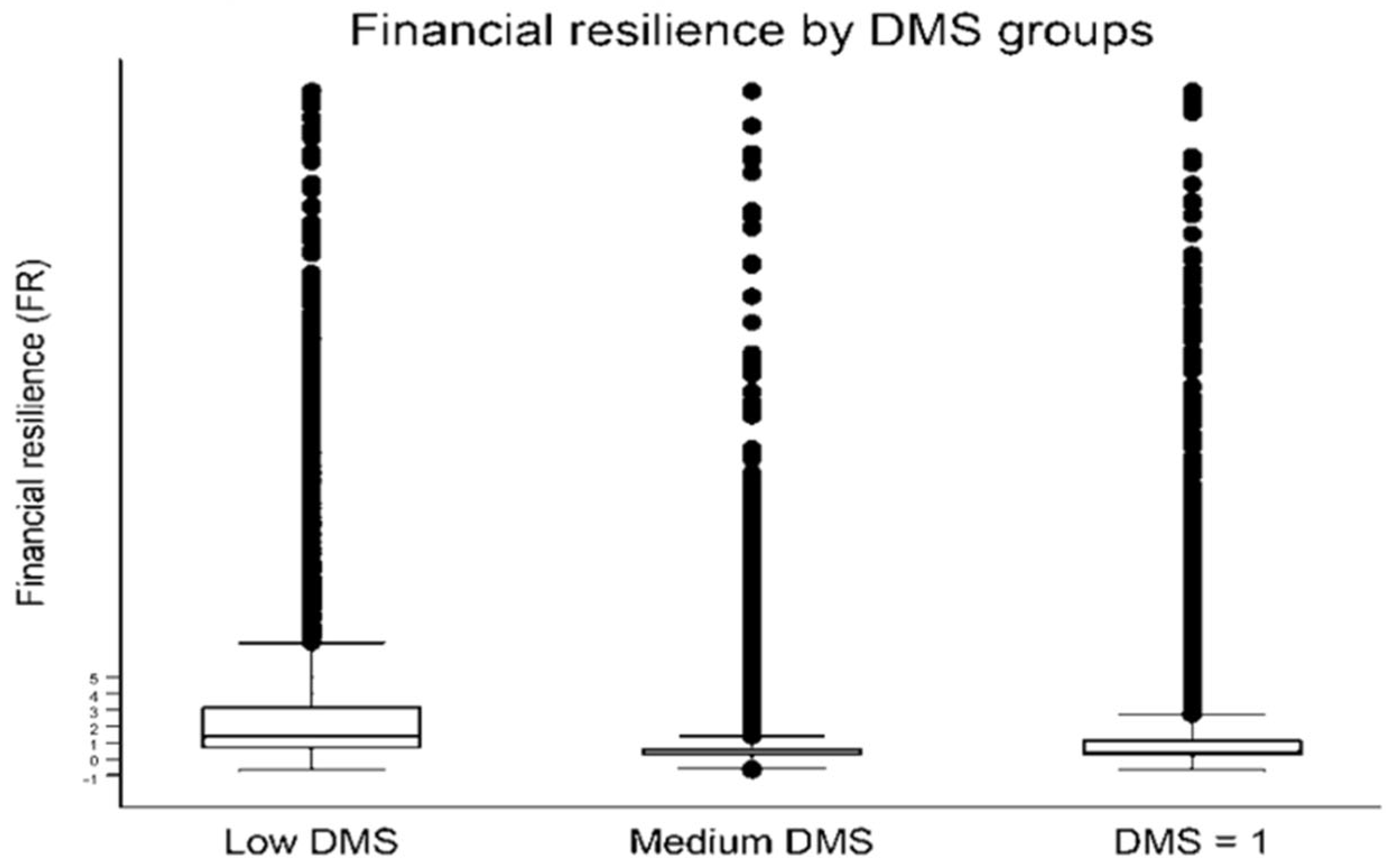
Figure 2 compares the distribution of FR across three DMS groups. Firms in the low-DMS group exhibit a higher median level of FR relative to those in the medium DMS group and the group with DMS = 1. This pattern is consistent with the regression findings, indicating that firms with greater reliance on short-term debt tend to display lower financial resilience.

4.4. Robustness Checks

To examine whether the results are sensitive to the skewed distribution of FR, Table 4 employs an alternative dependent variable, ln(1 + FR). The logarithmic transformation helps mitigate the influence of extreme values in the financial resilience measure.
The robustness test results confirm the main findings of the study. The coefficient on DMSt−1 remains negative and statistically significant at the 1% level. The negative relationship between reliance on short-term debt and financial resilience is not driven by the scale or skewness of the original FR measure.

5. Discussion

Across all model specifications, a higher proportion of short-term debt is consistently associated with lower financial resilience in the subsequent quarter, providing strong support for Hypothesis 1 (H1). The result holds whether leverage is controlled using TDTA, TDE, or TAE, and survives logarithmic transformation of the dependent variable. The pattern connects naturally to Diamond’s (1991) theoretical framework, which argues that although short-term debt offers financing advantages, it also exposes firms to greater refinancing and rollover risk. It likewise accords with the evidence of He and Xiong (2012), as well as Johnson (2003), who document how short-term debt amplifies firms’ vulnerability to credit market disruptions.
In terms of corporate financing, the result has a straightforward interpretation. Under normal financing conditions, short-term borrowing can reduce financing costs and provide greater flexibility. However, these advantages become less pronounced when credit markets tighten or firms experience weaker operating cash flows. Because short-term obligations must be refinanced more frequently, firms relying heavily on short-term debt become more exposed to liquidity pressure, rising borrowing costs, and refinancing difficulties. As a result, their capacity to absorb adverse financial shocks is substantially reduced, consistent with the evidence reported by Opler and Titman (1994) and Gopalan et al. (2014). In such cases, companies may struggle to stay afloat, and their ability to weather financial storms can be severely tested.
The findings also have important accounting implications. Distinguishing between short-term and long-term debt under International Financial Reporting Standards (IFRS), such as IAS 1 (International Accounting Standards Board, 2007); IAS 7 (International Accounting Standards Board, 1992) is not merely a matter of financial statement presentation. Rather, the maturity profile of debt provides additional information about firms’ exposure to refinancing risk, future solvency, and going-concern uncertainty. It is also a key signal of going-concern risk and future solvency. This interpretation is supported by the literature on financial reporting quality and corporate risk prediction, in which cash flow indicators and debt structure are considered critical factors reflecting firms’ financial health (Dechow, 1994; International Monetary Fund, 2019).
At the same time, this accounting-based interpretation warrants an important caveat. Because FR is constructed from EBITDA, an accrual-based measure, it does not fully reflect changes in working capital and may diverge from actual operating cash flow, particularly for firms with substantial working capital needs (Bouwens et al., 2019). The negative association between DMSt−1 and FR should therefore be interpreted as evidence of accounting-based debt-servicing pressure rather than as a direct measure of cash-flow shortfall. This distinction is consistent with the conceptual boundaries of the financial resilience measure set out earlier in this study. The results for TDTAt−1 further indicate that overall financial leverage weakens financial resilience. This is in line with previous research that has found the negative impact of debt on the likelihood of financial distress (Altman, 1968; Ohlson, 1980). However, the fact that DMSt−1 remains statistically significant even after controlling for leverage suggests that debt maturity provides incremental information beyond just the overall level of indebtedness. This finding reinforces the view that capital structure should be evaluated simultaneously from two dimensions: the magnitude of leverage and the maturity composition of debt (Myers, 1984; Fan et al., 2012).
For Vietnam, this finding carries clear practical significance, particularly in the context of non-financial firms operating in sectors with substantial working capital requirements, such as industrials, basic materials, consumer goods, and services, which are often highly exposed to business cycles and fluctuations in credit conditions. Under such circumstances, tightened financing conditions and disruptions in supply chains may substantially increase liquidity pressure and rapidly transmit financial stress throughout the corporate sector (World Bank, 2024, 2026; International Monetary Fund, 2025). This finding is also consistent with emerging-market evidence indicating that higher leverage raises the expected cost of financial distress, especially for firms with limited tangible collateral (Farooq et al., 2023), and with evidence from Vietnamese non-financial listed firms showing that capital structure exerts a direct cost on financial performance not fully offset by the tax benefits typically emphasized in developed-market settings (Nguyen & Tran, 2024). These studies suggest that the debt-related vulnerability documented here reflects not only the maturity composition of debt but also broader institutional and credit-market features that amplify the cost of debt financing for Vietnamese firms.
Regarding the potential concern of endogeneity, although the study uses explanatory variables with a one-quarter lag to mitigate simultaneity bias from things happening at the same time, reverse causality cannot be completely ruled out: firms with inherently low financial resilience may be compelled by lenders to borrow on shorter maturities, which would bias the estimated coefficient on DMS toward a more negative value. There is also the problem of missing variables, such as firm-specific investment cycles, earnings quality, or the credit conditions in its sector. These things could simultaneously affect both debt maturity choices and financial resilience. While firm fixed effects absorb time-invariant heterogeneity and quarterly time fixed effects capture common macroeconomic shocks, these controls do not fully address firm-specific time-varying confounders.

6. Conclusions

This study examines the impact of debt maturity structure on the financial resilience of non-financial listed firms on the Vietnamese stock market. Using quarterly panel data, firm fixed-effects models, quarterly time fixed effects, and firm-clustered standard errors, the study provides consistent evidence that a higher proportion of short-term debt within total debt reduces firms’ financial resilience. These findings directly respond to the three research questions posed in the introduction: short-term debt reliance significantly reduces financial resilience; overall leverage exerts an independent negative effect; and both relationships are robust across alternative model specifications. The regression results indicate that DMSt−1 carries a negative coefficient and remains statistically significant at the 1% level across Models 1 to 4. The baseline specification also shows that TDTAt−1 exerts a negative and statistically significant effect on financial resilience. Robustness checks using the logarithmic transformation ln(1 + FR) further confirm the main findings. These results suggest that firms’ financial resilience depends not only on the overall level of indebtedness but also substantially on debt maturity structure.
Several practical implications emerge from the findings. At the firm level, treasury managers and chief financial officers should consider debt maturity structure as a financing decision aimed at minimizing borrowing costs and as a strategic component of liquidity risk management. Excessive reliance on short-term interest-bearing debt may increase refinancing pressure and reduce firms’ capacity to withstand adverse financial conditions. This issue is particularly relevant for Vietnamese firms operating in working-capital-intensive industries, potentially creating maturity mismatches during periods of tightening credit conditions. Proactively extending debt maturities when financing conditions are favorable may therefore enhance financial flexibility and reduce exposure to refinancing risk. The findings also have implications for corporate disclosure practices. Providing more transparent information on debt maturity profiles, refinancing needs, and liquidity risk exposure would improve stakeholders’ understanding of firms’ financial risk and debt-servicing capacity, thereby facilitating more informed investment and lending decisions.
Several limitations should be acknowledged. First, due to the constraints of quarterly financial reporting data, the baseline models do not include certain time-varying firm-level control variables, such as firm size, profitability and asset tangibility. Although firm fixed effects account for time-invariant heterogeneity, the possibility of omitted-variable bias cannot be completely excluded. Second, FR is an accounting-based measure and may therefore be influenced by firms’ accounting policies regarding revenue recognition, expense allocation, and depreciation. Finally, the analysis does not explore whether the relationship between debt maturity structure and financial resilience differs across industries, firm size, or periods of economic stress.
Future research may extend this analysis by employing dynamic models or generalized method of moments (GMM) estimators, incorporating operating cash flow and earnings quality variables, and conducting separate analyses for capital-intensive industries.

Author Contributions

Conceptualization, N.T.H.D., L.Q.D. and N.T.H.; Methodology, N.T.H.D. and L.Q.D.; Formal Analysis, N.T.H.D. and L.Q.D.; Investigation, N.T.H.D. and L.Q.D.; Data Curation, L.Q.D.; Writing—Original Draft Preparation, N.T.H.D. and L.Q.D.; Writing—Review and Editing, N.T.H.D. and N.T.H.; Supervision, N.T.H.D. All authors have read and agreed to the published version of the manuscript.

Funding

This research received no external funding.

Institutional Review Board Statement

Not applicable.

Informed Consent Statement

Not applicable.

Data Availability Statement

The firm-level financial data used in this study were obtained from the FiinProX database, which compiles financial statements and quarterly reports of listed companies in Vietnam. Additional macroeconomic and institutional information was collected from publications and databases of the World Bank and the International Monetary Fund (IMF). The data supporting the findings of this study are available from the corresponding author upon reasonable request, subject to the licensing restrictions of the data provider.

Acknowledgments

During the preparation of this manuscript, the author(s) used ChatGPT (GPT-4o mini, OpenAI) for the purposes of language refinement, proofreading, and improvement of academic writing. Grammarly was additionally used for grammar and language editing. The authors have reviewed and edited the output and take full responsibility for the content of this publication.

Conflicts of Interest

The authors declare no conflicts of interest.

References

  1. Altman, E. I. (1968). Financial ratios, discriminant analysis and the prediction of corporate bankruptcy. The Journal of Finance, 23(4), 589–609. [Google Scholar] [CrossRef]
  2. Antoniou, A., Guney, Y., & Paudyal, K. (2006). The determinants of debt maturity structure: Evidence from France, Germany and the UK. European Financial Management, 12(2), 161–194. [Google Scholar] [CrossRef] [Scilit]
  3. Beaver, W. H. (1966). Financial ratios as predictors of failure. Journal of Accounting Research, 4, 71–111. [Google Scholar] [CrossRef] [Scilit]
  4. Bouwens, J., De Kok, T., & Verriest, A. (2019). The prevalence and validity of EBITDA as a performance measure. Comptabilité Contrôle Audit, 25(1), 55–105. [Google Scholar] [CrossRef] [Scilit]
  5. Brigham, E. F., & Daves, P. R. (2019). Intermediate financial management. Cengage Learning. Available online: https://books.google.com.vn/books?id=ipRUEAAAQBAJ (accessed on 20 March 2026).
  6. Dechow, P. M. (1994). Accounting earnings and cash flows as measures of firm performance: The role of accounting accruals. Journal of Accounting and Economics, 18(1), 3–42. [Google Scholar] [CrossRef] [Scilit]
  7. Diamond, D. W. (1991). Debt maturity structure and liquidity risk. The Quarterly Journal of Economics, 106(3), 709–737. [Google Scholar] [CrossRef] [Scilit]
  8. Fan, J. P. H., Titman, S., & Twite, G. (2012). An international comparison of capital structure and debt maturity choices. Journal of Financial and Quantitative Analysis, 47(1), 23–56. [Google Scholar] [CrossRef] [Scilit]
  9. Farooq, M., Hunjra, A. I., Ullah, S., & Al-Faryan, M. A. S. (2023). The determinants of financial distress cost: A case of emerging market. Cogent Economics & Finance, 11(1), 2186038. [Google Scholar] [CrossRef] [Scilit]
  10. Gopalan, R., Song, F., & Yerramilli, V. (2014). Debt maturity structure and credit quality. Journal of Financial and Quantitative Analysis, 49(4), 817–842. [Google Scholar] [CrossRef] [Scilit]
  11. He, Z., & Xiong, W. (2012). Rollover risk and credit risk. The Journal of Finance, 67(2), 391–430. [Google Scholar] [CrossRef] [Scilit]
  12. International Accounting Standards Board. (1992). IAS 7 statement of cash flows (IAS 7). IFRS Foundation. Available online: https://www.ifrs.org/issued-standards/list-of-standards/ias-7-statement-of-cash-flows/ (accessed on 16 April 2026).
  13. International Accounting Standards Board. (2007). IAS 1 presentation of financial statements (revised) (IAS 1). IFRS Foundation. Available online: https://www.ifrs.org/issued-standards/list-of-standards/ias-1-presentation-of-financial-statements/ (accessed on 16 April 2026).
  14. International Monetary Fund. (2019). Financial soundness indicators compilation guide. IMF. Available online: https://www.imf.org/en/data/statistics/fsi-guide (accessed on 18 April 2026).
  15. International Monetary Fund. (2025). Vietnam: 2025 article IV consultation—Press release; staff report; and statement by the executive director for Vietnam (Country Report No. 25/283). IMF. [Google Scholar] [CrossRef] [Scilit]
  16. Johnson, S. A. (2003). Debt maturity and the effects of growth opportunities and liquidity risk on leverage. The Review of Financial Studies, 16(1), 209–236. [Google Scholar] [CrossRef]
  17. Li, K., Griffin, D., Yue, H., & Zhao, L. (2011). National culture and capital structure decisions: Evidence from foreign joint ventures in China. Journal of International Business Studies, 42(4), 477–503. [Google Scholar] [CrossRef] [Scilit]
  18. Marks, J. M., & Shang, C. (2021). Does stock liquidity affect corporate debt maturity structure? Quarterly Journal of Finance, 11(01), 2150005. [Google Scholar] [CrossRef] [Scilit]
  19. Modigliani, F., & Miller, M. H. (1958). The cost of capital, corporation finance and the theory of investment. American Economic Review, 48(3), 261–297. [Google Scholar]
  20. Myers, S. C. (1977). Determinants of corporate borrowing. Journal of Financial Economics, 5(2), 147–175. [Google Scholar] [CrossRef] [Scilit]
  21. Myers, S. C. (1984). The capital structure puzzle. The Journal of Finance, 39(3), 575–592. [Google Scholar] [CrossRef] [Scilit]
  22. Nguyen, H. P. N., & Tran, T. M. T. (2024). Impact of liquidity on capital structure and financial performance of non-financial-listed companies in the Vietnam stock market. Future Business Journal, 10(1), 126. [Google Scholar] [CrossRef] [Scilit]
  23. Ohlson, J. A. (1980). Financial ratios and the probabilistic prediction of bankruptcy. Journal of Accounting Research, 18(1), 109–131. [Google Scholar] [CrossRef] [Scilit]
  24. Opler, T. C., & Titman, S. (1994). Financial distress and corporate performance. The Journal of Finance, 49(3), 1015–1040. [Google Scholar] [CrossRef]
  25. Pham Vo Ninh, B., Do Thanh, T., & Vo Hong, D. (2018). Financial distress and bankruptcy prediction: An appropriate model for listed firms in Vietnam. Economic Systems, 42(4), 616–624. [Google Scholar] [CrossRef] [Scilit]
  26. Rezaei Soufi, H., Esfahanipour, A., & Akbarpour Shirazi, M. (2022). A quantitative approach for analysis of macroeconomic resilience due to socio-economic shocks. Socio-Economic Planning Sciences, 79, 101101. [Google Scholar] [CrossRef] [Scilit]
  27. Shumway, T. (2001). Forecasting bankruptcy more accurately: A simple hazard model. The Journal of Business, 74(1), 101–124. [Google Scholar] [CrossRef] [Scilit] [PubMed]
  28. Srivastava, A. (2019). Improving the measures of real earnings management. Review of Accounting Studies, 24(4), 1277–1316. [Google Scholar] [CrossRef] [Scilit]
  29. Trinh, Q. T., Nguyen, T. L., Cao, T. M. T., & Elgammal, M. M. (2020). The impact of short-term debt on accruals-based earnings management—Evidence from Vietnam. Cogent Economics & Finance, 8(1), 1767851. [Google Scholar] [CrossRef] [Scilit]
  30. Vo, D. H. (2023). Market risk, financial distress and firm performance in Vietnam. PLoS ONE, 18(7), e0288621. [Google Scholar] [CrossRef] [Scilit] [PubMed]
  31. Wang, S., Wang, X., & Xu, L. (2023). Debt maturity structure and the quality of risk disclosures. Journal of Corporate Finance, 83, 102503. [Google Scholar] [CrossRef] [Scilit]
  32. Wang, Z., Feng, D., & Li, C. (2025). Pandemic shock, debt maturity structure and corporate performance. Accounting & Finance, 65(1), 289–321. [Google Scholar] [CrossRef] [Scilit]
  33. Wei, J., Min, X., & You, J. (2011). Managerial overconfidence and debt maturity structure of firms: Analysis based on China’s listed companies. China Finance Review International, 1(3), 262–279. [Google Scholar] [CrossRef] [Scilit]
  34. Wooldridge, J. M. (2010). Econometric analysis of cross section and panel data. MIT Press. [Google Scholar]
  35. Wooldridge, J. M. (2021). Introductory econometrics: A modern approach (7th ed.). Cengage Learning. [Google Scholar]
  36. World Bank. (2024). Vietnam macro monitoring, October 2024. World Bank. [Google Scholar] [CrossRef] [Scilit]
  37. World Bank. (2026). Viet Nam economic update, May 2026: Sustaining reforms, navigating uncertainty. World Bank. [Google Scholar] [CrossRef] [Scilit]
  38. Zmijewski, M. E. (1984). Methodological issues related to the estimation of financial distress prediction models. Journal of Accounting Research, 22(Supplement 1984), 59–82. [Google Scholar] [CrossRef] [Scilit]
Figure 1. Estimated impact of lagged debt maturity structure on financial resilience. Source: Authors’ calculations. Note: All coefficients (DMSt−1) are from Models 1–4. Error bars represent 95% confidence intervals.
Jrfm 19 00539 g001
Figure 2. Financial Resilience Across Debt Maturity Structure Groups. Source: Authors’ calculations. Note: Low DMS = bottom tercile; High DMS (DMS = 1) = firms with all short-term interest-bearing debt.
Jrfm 19 00539 g002
Table 1. Descriptive Statistics of the Principal Variables.
VariablesCountMeanSDMinMax
FR18,2072.09645.4942−0.690040.6800
DMSt−117,3100.72410.32760.00001.0000
TDTAt−121,3840.45940.2257−0.01001.2900
TDEt−121,3841.52607.8062−95.7300781.1600
TAEt−121,3842.52137.8077−94.7300782.1600
STDEt−121,1790.50162.2200−69.6700219.3700
LTDEt−121,3830.19900.6427−9.060038.9600
Source: Authors’ calculations.
Table 2. Correlation Analysis.
VariablesFRDMSt−1TDTAt−1TDEt−1TAEt−1STDEt−1LTDEt−1
FR1.0000
DMSt−1−0.2818 ***1.0000
TDTAt−1−0.2898 ***0.0191 *1.0000
TDEt−1−0.0444 ***0.0206 **0.2072 ***1.0000
TAEt−1−0.0442 ***0.0206 **0.2086 ***1.0000 ***1.0000
STDEt−1−0.0788 ***0.1047 ***0.2378 ***0.9462 ***0.9462 ***1.0000
LTDEt−1−0.0536 ***−0.4007 ***0.2925 ***0.2723 ***0.2724 ***0.1630 ***1.0000
Source: Authors’ calculations. Notes: This table reports Pearson correlation coefficients. ***, ** and * indicate statistical significance at the 1%, 5% and 10% levels, respectively.
Table 3. Impact of debt maturity structure on financial resilience. Dependent Variable: Financial Resilience.
VariablesModel 1Model 2Model 3Model 4Model 5
DMSt−1−2.7937 *** (0.8656)−3.3846 *** (0.8600)−2.7967 *** (0.8658)−2.7967 *** (0.8658)
TDTAt−1 −7.7323 *** (1.1189)
TDEt−1 −0.0044 (0.0042)
TAEt−1 −0.0044 (0.0042)
STDEt−1 −0.0131 (0.0179)
LTDEt−1 −0.2654 * (0.1402)
Observations16,84416,84416,84416,84417,274
Within R20.02090.05300.02100.02100.0075
Source: Authors’ calculations. Notes: Firm-clustered standard errors are reported in parentheses. * and *** denote statistical significance at the 10% and 1% levels, respectively. All models include firm fixed effects and quarterly time fixed effects.
Table 4. Robustness checks using the logarithmic form of the dependent variable.
Variablesln(1 + FR)
DMSt−1−0.3831 *** (0.0750)
TDTAt−1−1.2580 *** (0.1260)
Observations16,844
Within R20.0813
Source: Authors’ calculations. Notes: Firm-clustered standard errors are reported in parentheses. All models include firm fixed effects and quarterly time fixed effects. *** denote statistical significance at the 1% levels.
Disclaimer/Publisher’s Note: The statements, opinions and data contained in all publications are solely those of the individual author(s) and contributor(s) and not of MDPI and/or the editor(s). MDPI and/or the editor(s) disclaim responsibility for any injury to people or property resulting from any ideas, methods, instructions or products referred to in the content.