1. Introduction
In recent years, climate risk has evolved from an environmental concern into a central factor in the stability of the financial system and in asset valuation (
Ren et al., 2023;
Trotta et al., 2024). This shift has been driven both by growing regulatory pressure and by investor demand for greater transparency regarding exposure to environmental, social and governance (ESG) risks. In this context, climate risk is emerging not only as a global challenge, but also as a key variable whose real impact on financial performance remains a subject of intense academic scrutiny and growing consensus regarding its non-linear returns (
Mansouri & Momtaz, 2022;
A. Wang et al., 2022;
A. Y. Zhang & Zhang, 2024).
At the same time, the development of advanced artificial intelligence (AI) techniques has opened up new avenues for addressing the inherent complexity of climate risk. On one hand, computational linguistic architectures—driven by natural language processing (NLP)—have positioned themselves as driving mechanisms to audit climate risk disclosure and mitigate corporate greenwashing (
Chen et al., 2023;
A. H. Huang et al., 2023;
Schimanski et al., 2024). On the other hand, machine learning algorithms establish the predictive foundation of the discipline, improving the efficiency of carbon markets, assessing credit risk in decarbonisation contexts (
Gong et al., 2023;
Nguyen et al., 2023;
Qi et al., 2025;
Yu et al., 2022), and strengthening the resilience of investment portfolios through big data analysis and neural network modelling.
Despite the significant growth in the literature, conceptual fragmentation persists regarding the integration of these tools into financial practice. Whilst some studies focus on the analysis of ESG performance or the quality of disclosed information (
Singhania et al., 2024;
A. Y. Zhang & Zhang, 2024), others address specific applications of artificial intelligence in particular financial contexts (
Effah et al., 2023;
Kumar et al., 2024). This dispersion makes it difficult to identify structural patterns and limits our understanding of how AI is contributing to the integrated measurement and management of climate risk.
Furthermore, significant differences are observed in the development of the field between advanced economies and emerging markets. The literature shows a greater concentration of studies in countries with greater technological capacity, whilst emerging markets, despite their greater vulnerability to climate change, exhibit lower adoption of data-driven approaches (
Jaiswal et al., 2024;
Lai et al., 2025). This asymmetry poses significant challenges for risk management at a global level.
In parallel with the rapid expansion of primary research, a growing number of bibliometric and review studies have sought to synthesise knowledge in related fields. Existing bibliometric analyses have mapped out broad areas of research, including research on ESG (
Angeloni, 2026), sustainable finance (
Singhania et al., 2024), sustainable accounting, finance and governance (
Tiwari et al., 2025), and the interaction between financial technologies (FinTech) and ESG criteria (
Trotta et al., 2024), identifying publication trends, collaboration networks, thematic clusters and emerging research agendas. To complement these studies, several hybrid reviews combining bibliometric techniques with systematic literature reviews have examined the intersection between financial technologies (FinTech) and ESG criteria (
Hassan et al., 2026), ESG practices in Asian companies (
Hermawan et al., 2025) and ESG risk (
Nguyen et al., 2023), integrating scientific mapping with qualitative evidence to identify research gaps and future agendas. Finally, systematic and narrative reviews have summarised methodological developments in machine learning for climate finance (
Tian et al., 2025), climate risk concepts and measurement approaches (
S. Huang et al., 2025), machine learning applications in ESG analytics (
Seow, 2025), and AI-enabled sustainable finance technologies, including blockchain and IoT (
Mansour, 2026).
Despite these valuable contributions, the existing review literature remains fragmented in scope. Most previous studies focus on broad areas of sustainability (e.g., ESG, sustainable finance or climate finance), on specific sectors (e.g., Islamic finance or supply chains), or on specific technologies, such as machine learning. Consequently, AI, climate risk and finance are often analysed from broader sustainability or ESG perspectives rather than as a distinct research field. While systematic reviews primarily synthesise methodological advances and empirical evidence, existing bibliometric studies have not specifically examined the intellectual structure of research at the intersection of AI, climate risk and finance. Therefore, to the best of our knowledge, there remains no comprehensive bibliometric assessment devoted to this emerging field of research.
Building on these previous review studies, this article adopts a more specific perspective by examining the intersection between artificial intelligence, climate risk and finance through a targeted bibliometric analysis. To ensure maximum comprehensiveness and avoid selection bias, our initial literature search strategy deliberately focuses on the broader literature on climate and finance and on ESG criteria, cross-referencing macro-environmental terms with transition-specific descriptors. However, our structural scientific mapping reveals a predominant empirical reality: current operational applications of AI in finance focus on transition dynamics—such as regulatory compliance, carbon price forecasting and NLP-based auditing of corporate emissions data—rather than on monitoring physical risk. Consequently, while our data collection framework remains methodologically broad, this study explicitly narrows its interpretive and conceptual scope to climate transition risk, effectively aligning our analytical boundaries with the actual orientation of the retrieved scientific production. To interpret this body of literature, the analysis is organised around three complementary analytical dimensions through which AI contributes to climate transition risk in finance: risk measurement, risk integration into financial valuation and decision-making, and risk management. These analytical dimensions guide the interpretation of the field’s intellectual structure and thematic evolution while facilitating the identification of emerging research opportunities beyond descriptive publication patterns.
In this context, the aim of this study is to analyze the evolution of the financial literature on climate transition risk and to examine how artificial intelligence is being integrated into its measurement and management. In particular, to align the research design with advanced quantitative standards, the following bibliometric research questions are posed: (1) What is the chronological trajectory and performance distribution of scientific production regarding AI applications for climate transition risk? (2) What is the underlying intellectual structure and which thematic clusters currently predominate in the financial literature? (3) What remaining gaps and emerging thematic frontiers exist for integrating these advanced computational tools into corporate risk management?
To answer these questions, a bibliometric analysis of 221 articles indexed in the Web of Science Core Collection (Clarivate Analytics, Philadelphia, PA, USA) is conducted, using the Bibliometrix package (version 4.3.0; developed by Massimo Aria and Corrado Cuccurullo, available for R). The analysis combines performance analysis and science mapping techniques to identify structural patterns in scientific production, collaboration networks and thematic evolution. The main contribution of this study extends beyond providing a descriptive bibliometric overview. By focusing specifically on the intersection between artificial intelligence, climate transition risk and finance, the analysis uncovers the intellectual organisation of this emerging field, identifies its dominant thematic trajectories and motor themes, and reveals methodological niches and geographical imbalances that remain underexplored. In this way, the study complements previous bibliometric reviews on ESG and sustainable finance, whilst offering a specific understanding of how AI is being applied to support the assessment of climate transition risk in the financial sector.
The rest of the article is structured as follows. The next section presents the theoretical framework underpinning the relationship between artificial intelligence and climate risk in finance. It then describes the methodology used and sets out the results of the bibliometric analysis. Finally, the main findings are discussed, the implications for risk management are presented, and the article concludes by outlining the study’s limitations and future avenues of research.
2. Literature Background
Financial literature has gradually shifted from viewing climate change as an external environmental issue to recognising climate risk as a financially relevant factor that affects asset valuation, market stability and business decision-making (
Ren et al., 2023;
A. Y. Zhang & Zhang, 2024). Against this backdrop, advances in artificial intelligence (AI) have expanded the range of analytical tools available for processing increasingly complex climate-related information. Building on these advances, this section reviews the conceptual foundations of climate risk in finance and analyses how AI techniques are being applied to facilitate its measurement and management.
2.1. Climate Risk in Finance
Climate risk has become a key dimension in contemporary financial analysis, particularly regarding its impact on asset valuation, market stability and risk management. The specialist literature typically distinguishes between physical risk, associated with acute and chronic climate hazards, and transition risk, arising from regulatory, technological and behavioural changes related to the transition to a low-carbon economy (
S. Huang et al., 2025). Of these dimensions, transition risk has attracted growing attention due to its direct implications for corporate valuation, capital allocation and investment decisions (
Nguyen et al., 2023;
Yu et al., 2022).
The increasing integration of ESG considerations into financial decision-making has reinforced the importance of transition risk in valuation models and in the assessment of corporate risk. Empirical evidence suggests that climate-related information is progressively being incorporated into investment decisions, access to finance and the assessment of corporate performance (
Mansouri & Momtaz, 2022;
A. Wang et al., 2022;
A. Y. Zhang & Zhang, 2024). However, measuring transition risk remains a challenge, as climate-related information is heterogeneous, largely unstructured and subject to considerable uncertainty regarding future developments in policy and technology. Recent studies also highlight that the measurement of climate risk is increasingly based on advanced analytical approaches, such as big data analysis, machine learning and network-based models (
S. Huang et al., 2025).
2.2. Artificial Intelligence in Financial Risk Management
The growing complexity of climate-related financial information has made artificial intelligence (AI) a key analytical tool for assessing climate risk. Recent studies show that AI techniques are currently applied across a wide range of activities related to climate finance, including the analysis of climate-related disclosures, carbon markets, ESG assessment, investment decision-making and climate risk modelling (
S. Huang et al., 2025;
Tian et al., 2025).
Among these techniques, natural language processing (NLP) has become particularly important for analysing unstructured information contained in corporate sustainability reports, regulatory information and financial news. Transformer-based language models, such as FinBERT, facilitate the extraction of climate-related information, improve ESG assessment and help detect greenwashing by identifying inconsistencies in corporate information (
Chen et al., 2023;
Liu et al., 2024;
Schimanski et al., 2024).
Alongside natural language processing (NLP), machine learning has established itself as the leading predictive framework underpinning climate-related financial analysis. Supervised learning algorithms, neural networks and ensemble models have been applied to credit risk prediction, carbon price forecasting, emissions efficiency modelling and portfolio management in a context of climate uncertainty (
Gong et al., 2023;
Nguyen et al., 2023;
A. Wang et al., 2022;
Yu et al., 2022). The most recent reviews also highlight the growing adoption of advanced approaches, including explainable AI, causal machine learning and reinforcement learning, although these applications remain relatively underdeveloped (
Tian et al., 2025).
Overall, the literature indicates that AI is progressively enhancing financial institutions’ ability to process heterogeneous climate-related information, improve the assessment of climate-related risks, and support investment and risk management decisions. These advances provide the technological foundation for understanding the thematic evolution of the research analysed in this bibliometric study.
3. Materials and Methods
The present study adopts a bibliometric approach with the aim of analysing the evolution of financial literature concerning climate risk and examining the role of artificial intelligence in its measurement and management. This type of approach allows for the identification of structural patterns in scientific production, as well as emerging trends in the development of knowledge, without seeking to establish causal relationships between variables (
Donthu et al., 2021;
Zupic & Čater, 2015).
3.1. Database Selection and Search Strategy
To construct the corpus for analysis, the Web of Science (WoS) Core Collection database was used, specifically restricting the retrieval to the Science Citation Index Expanded (SCI-EXPANDED) and the Social Sciences Citation Index (SSCI). The choice of this source is due to its wide acceptance in bibliometric studies within the fields of economics, finance, and management, as well as its standardised citation structure, which facilitates longitudinal analysis and the comparability of results (
Birkle et al., 2020;
Visser et al., 2021). It is essential to emphasise that relying exclusively on the WoS Main Collection ensures a strict quality threshold, as only high-impact literature that has undergone rigorous peer review is indexed; this eliminates the noise from predatory journals or unselected conference proceedings, which are often present in broader repositories. Furthermore, maintaining a single-source extraction framework is methodologically essential to preserve the absolute homogeneity of the metadata. Merging database exports from different platforms introduces serious technical problems, such as fragmented citation counts, discrepancies in institutional nomenclature and incompatible algorithmic keyword indexing (e.g., WoS Keywords Plus). This heterogeneity in metadata would introduce artificial artefacts and distort the mathematical accuracy of subsequent calculations of co-citations and thematic networks (
Kumpulainen & Seppänen, 2022;
Mongeon & Paul-Hus, 2016). Therefore, using WoS as the sole repository ensures maximum computational consistency and architectural integrity for programmatic scientific mapping.
A critical clarification must be made regarding the search execution: the query was applied strictly utilizing the TOPIC (TS) field in Web of Science. In WoS architecture, a search query under the TOPIC field does not merely index the titles of papers; rather, it comprehensively and simultaneously scans the Title, Abstract, Author Keywords, and Keywords Plus. Keywords Plus are independently generated by Clarivate Analytics algorithms based on the titles of an article’s references, significantly expanding the search’s ability to capture interdisciplinary connections that authors might not explicitly list in their manual keywords.
A structured search strategy was designed based on three conceptual areas: artificial intelligence, climate risk and sustainable finance, using Boolean operators; the technical parameters of this strategy are summarised in
Table 1.
The search architecture was deliberately balanced to optimise both sensitivity and specificity. Macro-level descriptors were used alongside strategic sub-dimensions, as these represent the standard indexing terms under which international journals classify environmental finance. In line with established bibliometric guidelines (
Donthu et al., 2021), this hybrid approach ensures a comprehensive retrieval of the relevant literature, effectively avoiding premature selection bias whilst capturing the seminal and highly cited articles that establish the discipline’s frameworks.
3.2. Screening Protocol and PRISMA Statement
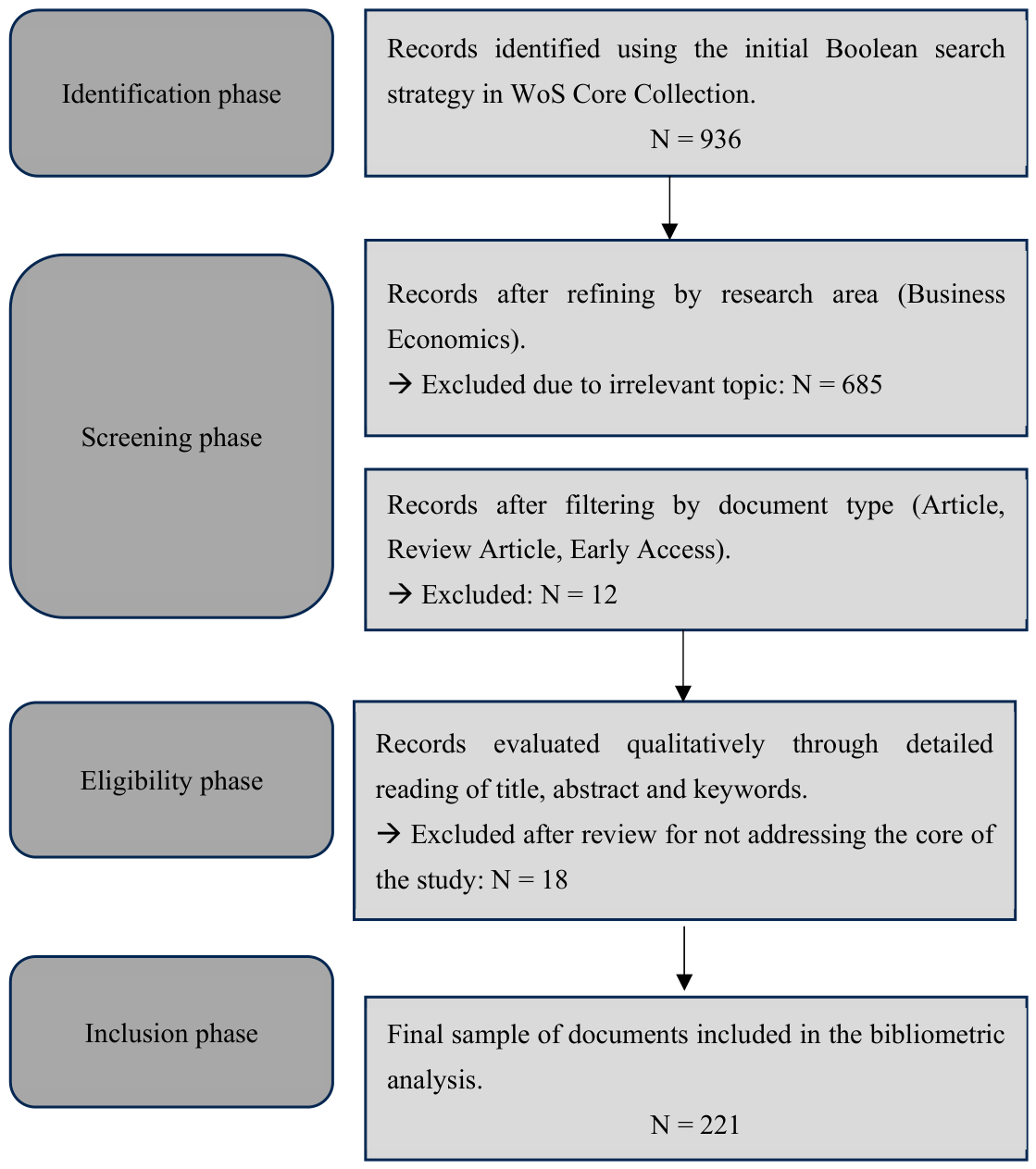
To guarantee a transparent, objective, and reproducible document selection process and systematically mitigate selection bias, this study strictly followed the PRISMA (Preferred Reporting Items for Systematic Reviews and Meta-Analyses) framework, adapted for bibliometric mapping. The systematic workflow advanced through four consecutive phases (see in
Figure 1).
Identification Phase: The execution of the unrestricted Boolean search query in the WoS Core Collection—without applying initial chronological, linguistic, or disciplinary constraints—retrieved a raw initial corpus of 936 records.
Screening Phase (Automated Index Filters): Index refinement parameters were applied within the WoS interface. By restricting the subject category to the “Business Economics” research area, 685 documents unrelated to the core theme of the analysis were eliminated. This specific refinement is methodologically aligned with the guidelines of
Donthu et al. (
2021) regarding the definition of cohesive bibliometric boundaries to prevent semantic noise. Furthermore, following established paradigms in sustainable finance literature (e.g.,
Brooks & Oikonomou, 2018), climate risks must be evaluated within corporate, accounting, and market frameworks to guarantee meaningful insights; this filter automatically discards entries from the hard sciences (such as meteorology or atmospheric physics) that lack economic materiality. Subsequently, from the remaining records by limiting document types strictly to “Article”, “Review Article”, and “Early Access”, an additional 12 records corresponding to conference proceedings, book chapters, and editorials were discarded, yielding a refined subtotal of 239 records entering the eligibility phase.
Eligibility Phase (Manual Qualitative Assessment): The 239 pre-selected records underwent a thorough, manual and independent review by the authors. Titles, abstracts and keywords were peer-reviewed to eliminate semantic noise and false positives. Particular attention was paid to records retrieved using the ESG search term included in the search strategy. At this stage, studies addressing ESG performance, governance, socially responsible investment or sustainability reporting without an explicit link to climate-related financial risk or AI applications in finance were excluded, in order to ensure that the final corpus remained fully aligned with the study’s objectives. Consequently, 18 articles were excluded on the basis of two strict criteria: (i) semantic ambiguity, where the acronyms duplicated technical terms from unrelated disciplines, or (ii) a purely peripheral or descriptive mention of climate risk or artificial intelligence that lacked functional financial modelling or economic materiality. Minor initial discrepancies in classification between the authors were resolved through active discussion and consensus, thereby establishing a very robust final selection framework.
Inclusion phase: Following manual exclusion, the process concluded with the final selection of a corpus of 221 highly specialised documents, which rigorously meet all eligibility criteria and constitute the final sample subject to bibliometric analysis.
3.3. Bibliometric Analysis Techniques and Software Workflow
Prior to the analysis, a process of terminological normalisation was conducted through the construction of a specific thesaurus
1, with the aim of unifying synonymous terms and enhancing the semantic coherence of the data. This step is fundamental in bibliometric studies, as it allows for a more precise representation of the field’s conceptual structure and prevents the artificial fragmentation of results.
The analysis was performed using the Bibliometrix package, developed within the R statistical environment (version 4.4.1; R Foundation for Statistical Computing, Vienna, Austria) (
Gentleman et al., 2009) along with its graphical interface, Biblioshiny (the graphical interface of the bibliometrix R package (version 4.3.0)) (
Srisusilawati et al., 2021). This tool enables the execution of descriptive analyses, co-citation networks, and keyword co-occurrence studies, facilitating the identification of the intellectual base and the thematic structure of the literature. Furthermore, Bibliometrix integrates functionalities found in other specialised software such as SciMAT or HistCite, ensuring high versatility in the analysis of scientific data (
Barreiro, 2007;
Chatakonda et al., 2021).
In particular, productivity and performance indicators were calculated to analyse the geographical distribution of publications and their temporal evolution, providing a quantitative baseline of the field’s growth trajectory. Likewise, the most influential articles and the journals with the highest impact within the field were identified through citation metrics to uncover the structural pillars of the discipline.
Finally, a thematic mapping technique based on keyword co-occurrence was employed, which allowed for the classification of research topics according to their centrality and density, distinguishing between motor, basic, emerging, or niche themes. To ensure a deep analytical approach to this bibliometric technique, the conceptual structure is governed by Callon’s graphical formulation (
Callon et al., 1991): centrality functions as an index of the multi-disciplinary relevance of a theme across the global network, whereas density measures the internal cohesion and maturity of the specific algorithmic or financial sub-field. By mapping these dimensions, the methodology shifts from a purely descriptive stance to a dynamic classification of the research front. To ensure the strict reproducibility of this conceptual framework, the network analysis was configured within the Biblioshiny environment (executed via R software version 4.4.1 and bibliometrix R-package version 4.3.0) using Author’s Keywords as the primary unit of analysis, subsequent to their standardization and unification through our specialized thesaurus mapping. The network analysis utilized a Full Counting method for the co-occurrence matrix, and Association Strength as the normalization measure. The network community detection was operationalized through the Louvain Clustering Algorithm (Community Repulsion = 0), establishing a maximum threshold of 200 words and a minimum cluster frequency of 15 keywords per thousand documents. The mathematical computation of the quadrants relies precisely on Callon’s centrality and density algorithms, displaying up to 4 labels per cluster to ensure optimal graphic legibility.
This methodological approach provides a systematic overview of the field’s evolution and enables the identification of both consolidated areas and emerging lines of research at the intersection of artificial intelligence and climate risk in finance.
4. Results
This section presents the empirical findings derived from the bibliometric analysis of the 221 selected documents, tracking the integration of artificial intelligence within the climate risk financial literature. To ensure analytical depth, the results evaluate the field’s structural architecture by progressively moving from scientific performance and impact metrics to advanced thematic and semantic mapping frameworks.
4.1. Annual Evolution of Scientific Production
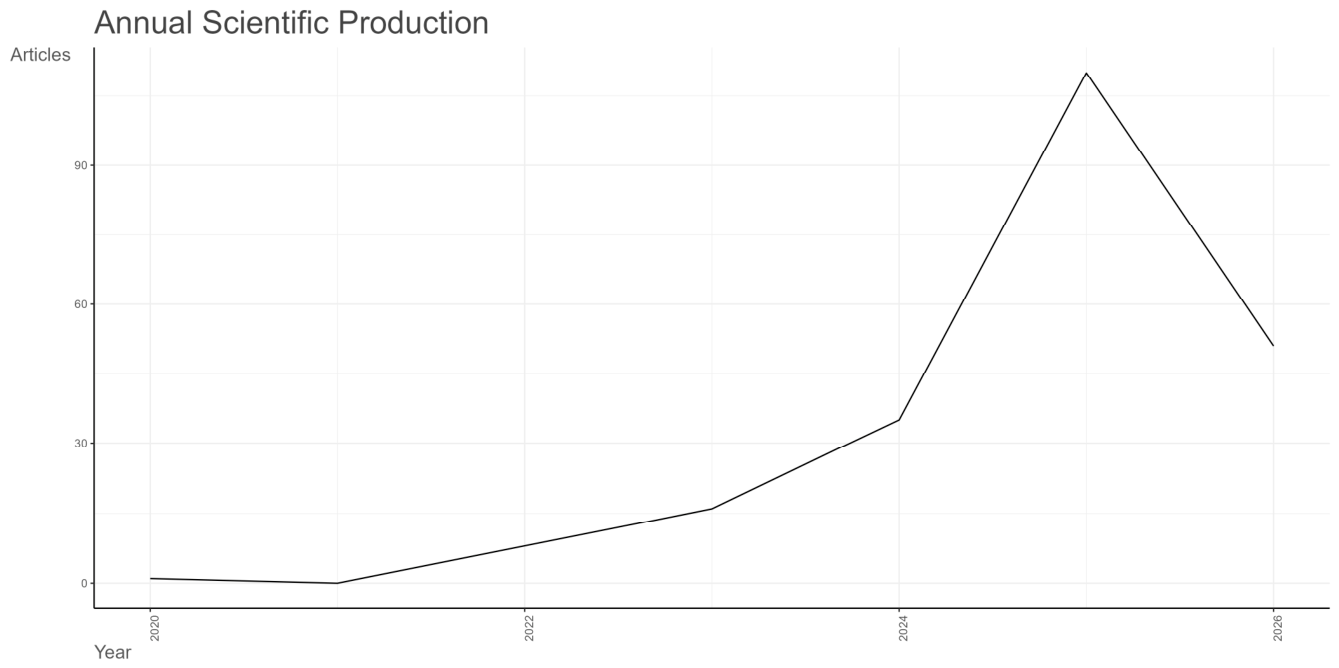
The temporal evolution of scientific production reveals an exponential growth pattern that underscores the accelerating academic interest in this intersection. As illustrated in
Figure 2, the literature was practically residual between 2020 and 2021, recording only 1 and 0 documents, respectively. However, a significant turning point occurred in 2022 with 8 articles, initiating a sharp upward trajectory that expanded to 16 documents in 2023, 35 in 2024, and reached an absolute peak of 110 publications in 2025.
This evolution reflects how the integration of artificial intelligence methodologies within climate risk assessment has transitioned from an emerging niche into a rapidly expanding and prominent research front within financial economics. Regarding the data for 2026, which accounts for 51 documents, it is crucial to note that this lower figure does not indicate a decline in academic interest. Instead, it represents an incomplete annual cycle, as the data collection for this study was concluded in April 2026. Factoring in this temporal constraint, registering 51 articles within the first four months serves as a robust partial baseline that demonstrates active and continuous research activity.
4.2. Geographical Distribution of Scientific Production
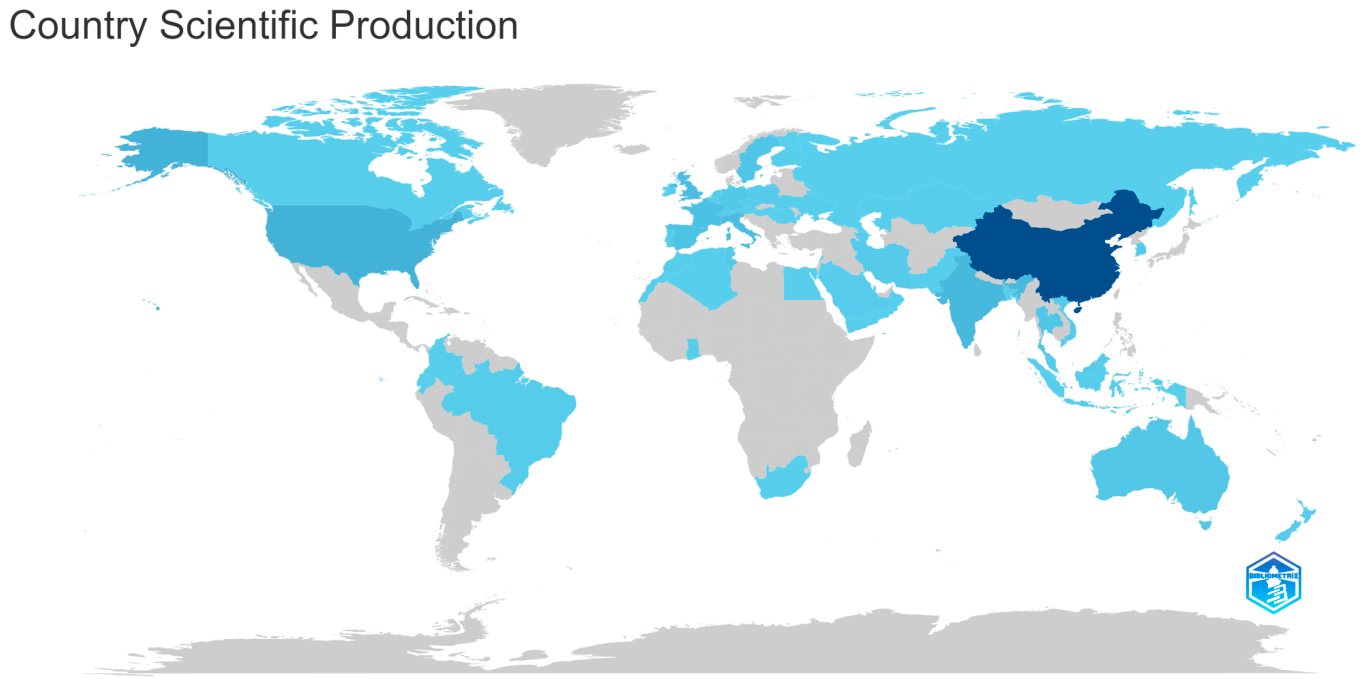
In terms of scientific production by country, a notable geographical concentration is observed. As illustrated in
Figure 3—which computes all-author affiliations under a full counting approach—China significantly leads the global landscape with 311 document affiliations, followed at a considerable distance by the United States (67), India (51), and the United Kingdom (42). Other European countries such as Italy (41), France (30), and Spain (29) also show a relevant, albeit lower, level of participation. This distribution highlights the substantial volume of academic output and research activity directed toward this field in the Asian and American contexts. Crucially, in line with methodological standards, these metrics must be interpreted strictly as indicators of publication volume and institutional engagement, rather than as direct proxies for intrinsic research quality or absolute national technological capacity.
4.3. Analysis of Publication Sources
The analysis of publication sources allows for the identification of the most influential journals at the intersection of artificial intelligence and climate risk in finance. As illustrated in
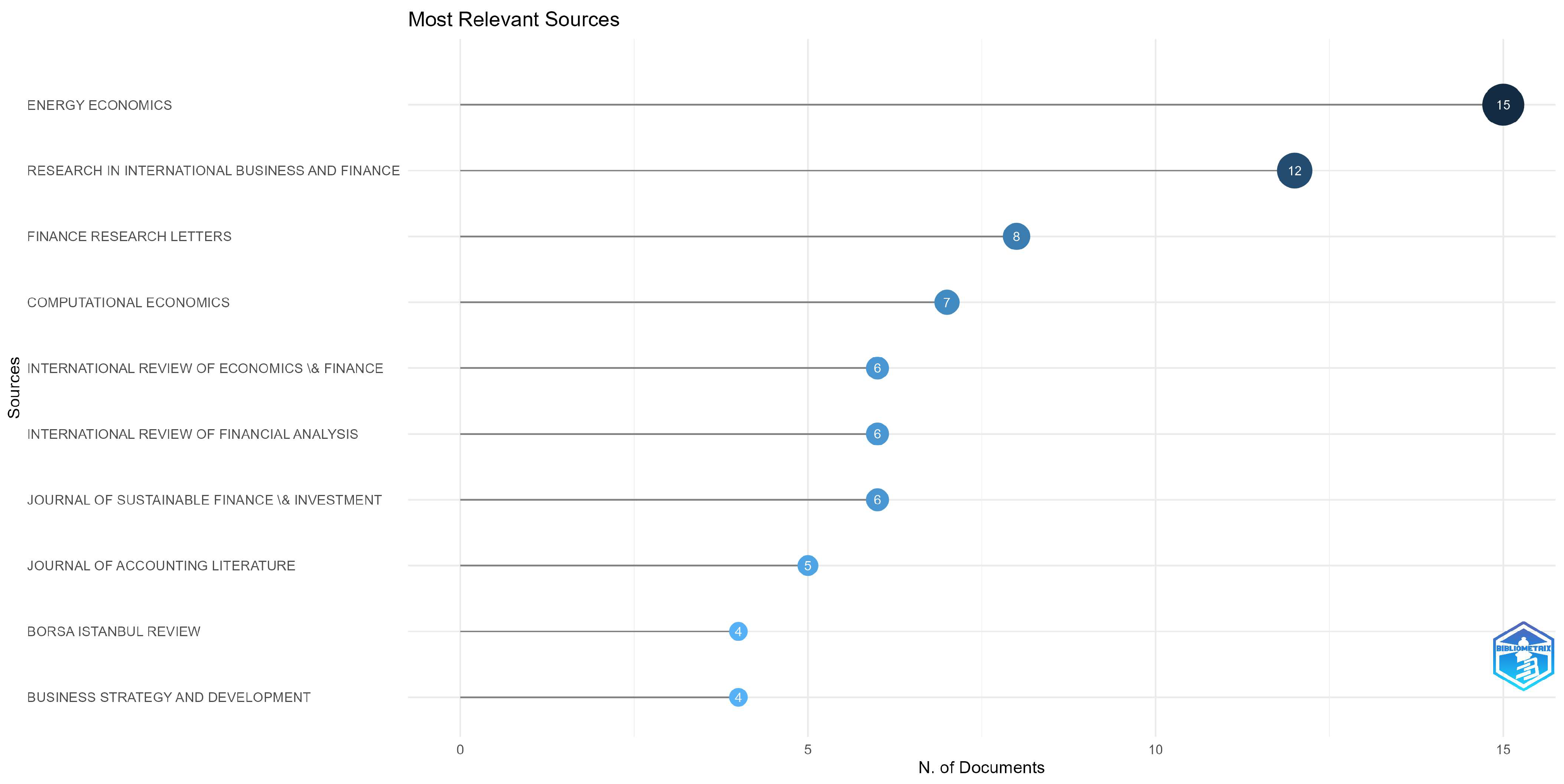
Figure 4, Energy Economics stands out as the most prominent venue with 15 documents, followed closely by Research in International Business and Finance with 12 articles, and Finance Research Letters with 8 publications. Likewise, journals such as Computational Economics (7 documents), International Review of Economics & Finance (6 documents), and International Review of Financial Analysis (6 documents) show a highly relevant contribution to the sample. This distribution suggests a robust concentration of scientific output across three distinct editorial blocks. First, the leadership of Energy Economics highlights that climate risk is deeply anchored in energy policy and transition modeling. Second, the prominent positions of Research in International Business and Finance, Finance Research Letters, and International Review of Financial Analysis reflect a strong corporate finance interest in pricing these risks. Finally, the inclusion of Computational Economics and the Journal of Accounting Literature suggests a clear methodological push toward computational modeling, machine learning applications, and rigorous corporate disclosure auditing, effectively reflecting the deeply interdisciplinary nature of this emerging field.
4.4. Analysis of Highly Cited Papers
The citation analysis allows for the identification of the specific works that have exerted the greatest intellectual influence on the development of this research field. As illustrated in
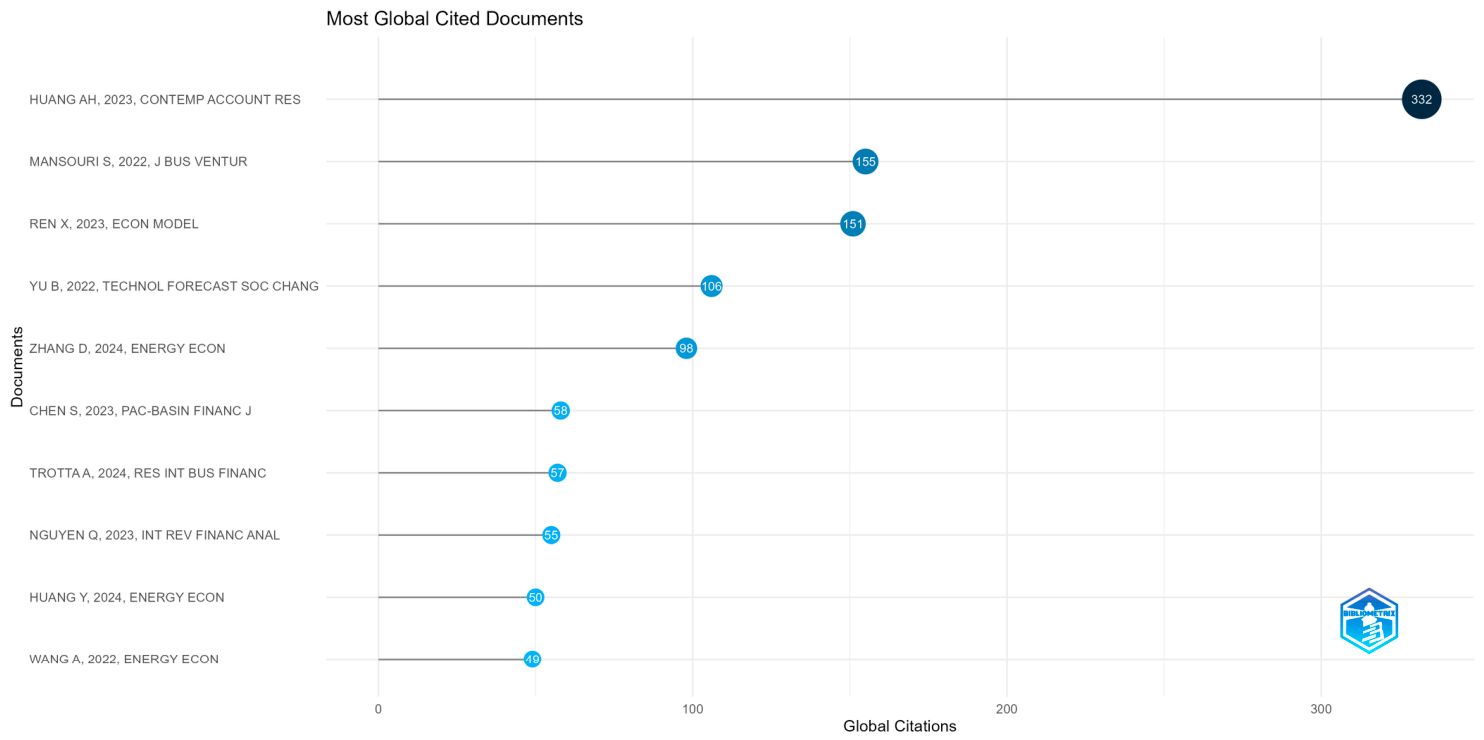
Figure 5, the study by
A. H. Huang et al. (
2023), published in Contemporary Accounting Research, remarkably dominates the landscape with 332 global citations, followed at a considerable distance by
Mansouri and Momtaz (
2022) in the Journal of Business Venturing with 155 citations, and
Ren et al. (
2023) in Economic Modelling with 151 citations.
The citation hierarchy suggests two broad thematic directions that have strongly influenced the development of the field. On one hand, the prominence of
A. H. Huang et al. (
2023) highlights the critical role of corporate disclosure text analysis, as their development of the FinBERT architecture has become the methodological benchmark for parsing environmental and financial sentiments averaging an exceptional 83.00 citations per year (with a Normalized TC = 7.14). On the other hand, highly cited works such as
Yu et al. (
2022) with 100 citations (21.20 per year),
D. Zhang (
2024) with 98 but a remarkable 32.67 citations per year, and
Chen et al. (
2023) with 58 citations (14.50 per year), indicate a core academic preoccupation with bridging theoretical frameworks to operational financial applications, specifically focusing on credit risk prediction, greenwashing detection, and ESG corporate investments.
To complement the citation analysis, the five most highly cited papers were examined according to their primary research contribution. Collectively, these studies illustrate the methodological and conceptual evolution of the field.
A. H. Huang et al. (
2023) introduced FinBERT, establishing one of the most influential NLP architectures for analysing financial texts and ESG-related disclosures.
Mansouri and Momtaz (
2022) extended AI applications to the measurement of firms’ sustainability characteristics, using machine learning to derive ESG indicators from corporate documentation and examine their implications for firm valuation. More recent contributions increasingly emphasise operational financial applications.
Ren et al. (
2023) combined textual analysis and machine learning to examine the relationship between digital transformation and environmental performance,
Yu et al. (
2022) applied machine learning algorithms to predict the credit ratings of environmentally oriented firms, and
D. Zhang (
2024) explored how AI can improve ESG disclosure quality and mitigate greenwashing. Taken together, these highly cited studies illustrate the gradual evolution of the literature from AI-based information extraction towards applications supporting climate-related financial risk assessment, corporate disclosure and sustainable finance.
Furthermore, the significant representation of top-tier journals within this ranking—such as Energy Economics (featuring
D. Zhang, 2024;
Y. Huang et al., 2024, 50 citations, 16.67 per year; and
A. Wang et al., 2022, 49 citations, 9.80 per year) alongside the International Review of Financial Analysis (
Nguyen et al., 2023, 55 citations, 13.75 per year)—suggests a growing academic validation. This trend indicates that the deployment of artificial intelligence within climate finance is rapidly gaining traction within leading journals in energy economics and finance. By evaluating both cumulative metrics and time-normalized indicators, the analysis avoids bias toward older publications and reveals that recent contributions maintain a highly competitive momentum in terms of annual impact.
4.5. Conceptual Structure: Co-Occurrence Analysis of Thesaurus-Adjusted Keywords
To examine the conceptual emphasis of the literature, this section analyses the most frequent Author’s Keywords after thesaurus standardization.
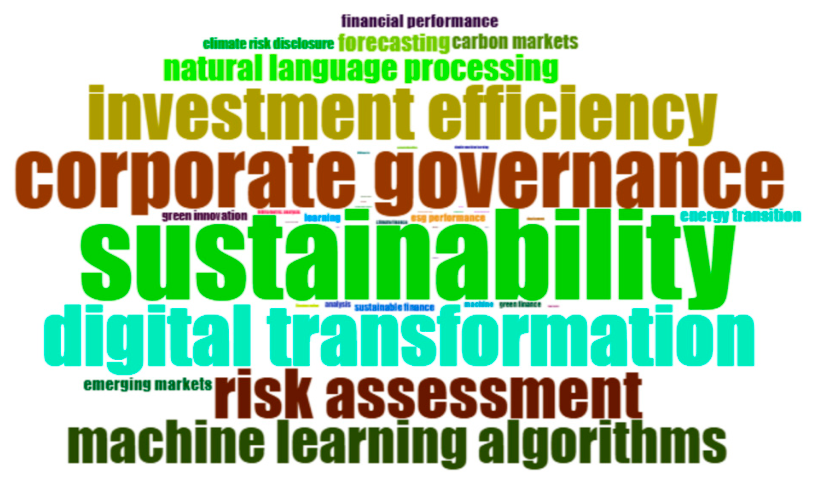
Figure 6 presents the resulting word cloud, which provides an overview of the dominant concepts characterizing research on AI, climate risk and finance. As observed in its visual architecture, the term “sustainability” emerges as the dominant keyword, recording 142 occurrences within the 221-document sample after thesaurus consolidation (which aggregates related terms into a single macro-node). Its prominence suggests that research on AI, climate risk and finance is predominantly framed within the broader sustainability agenda, where climate-related issues are increasingly incorporated into corporate and financial decision-making. Closely connected to this central concept, three additional keywords—“corporate governance”, “digital transformation”, and “investment efficiency”—also appear prominently in the semantic network. Their frequent occurrence suggests that these topics constitute important conceptual components of the current literature. This pattern is consistent with recent studies emphasizing the role of digital transformation in processing climate-related information (
Peng et al., 2026;
Zhou et al., 2025), the importance of investment efficiency within sustainable finance and portfolio allocation (
Zhu & Zhou, 2025;
J. Wang et al., 2025), and the relevance of corporate governance in supporting climate-related financial strategies (
Zhu & Zhou, 2025). A second conceptual layer is represented by methodological keywords, particularly “risk assessment”, “machine learning algorithms”, and “natural language processing”. The prominence of these terms suggests an increasing methodological orientation of the field towards AI-based analytical techniques. This observation is aligned with recent studies showing that machine learning and NLP are increasingly applied to analyse corporate disclosures, support climate risk assessment and improve the detection of greenwashing practices (
Sultana & Zeya, 2025). Finally, keywords such as “forecasting”, “carbon markets”, and “energy transition” appear with lower but still visible frequencies, indicating the presence of research streams focused on predictive modelling and transition-related financial applications. Recent empirical contributions have particularly highlighted AI applications in carbon price forecasting and emission trading systems (
Ding et al., 2025). Likewise, the comparatively limited presence of “emerging markets” suggests that these contexts remain comparatively underrepresented within the current literature. This observation is consistent with previous reviews highlighting the predominance of research in developed economies and identifying developing markets as an underexplored context for future research (
Nguyen et al., 2023).
4.6. Thematic Mapping and Motor Themes
Building upon the conceptual overview provided by the keyword frequency analysis, the thematic map allows the underlying intellectual structure of the field to be examined through the relationships established among the main research themes. Based on Callon’s centrality and density measures (
Callon et al., 1991), this framework, which continues to be widely adopted in contemporary bibliometric research (e.g.,
Abelaira et al., 2025), classifies research themes according to their relevance within the overall knowledge network (centrality) and their internal level of development (density). Consequently, the strategic diagram should be interpreted as a representation of the conceptual organization and maturity of the literature rather than as evidence of empirical relationships or economic outcomes.
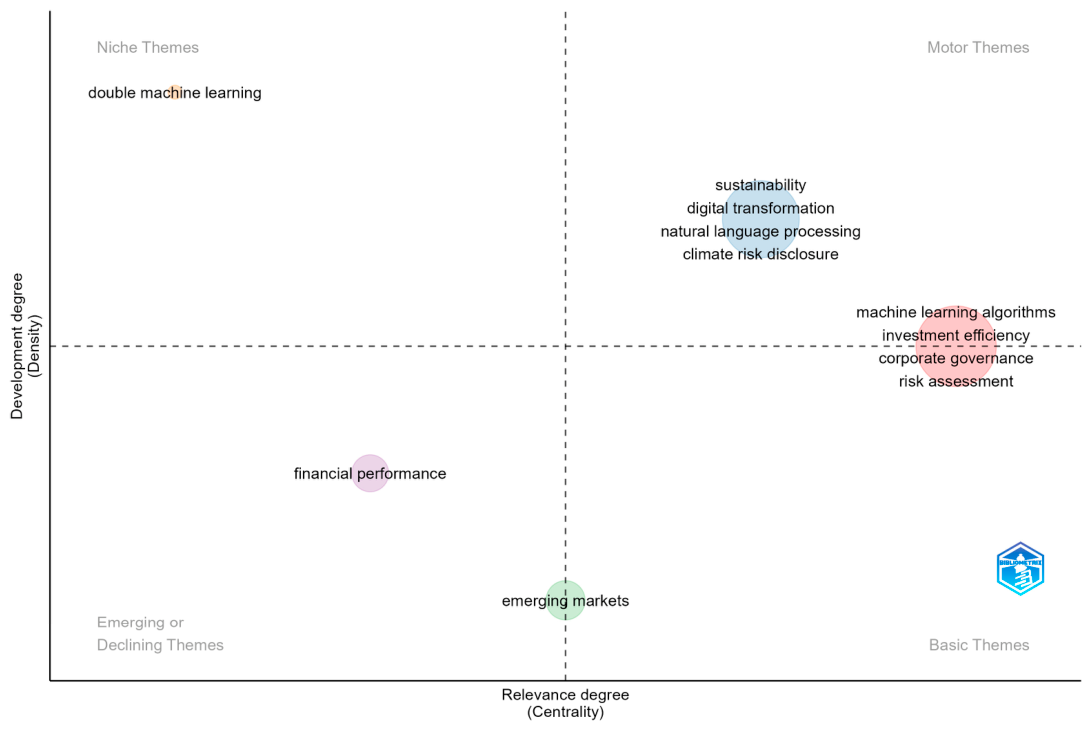
As shown in
Figure 7, the upper-right quadrant, corresponding to motor themes, contains a mature cluster centred on sustainability, digital transformation, natural language processing (NLP) and climate risk disclosure. The position of this cluster indicates that these topics are both conceptually well developed and highly interconnected with the rest of the research field. From a bibliometric perspective, this thematic configuration suggests that recent research increasingly connects digital technologies, climate-related disclosure and sustainability within a common conceptual framework. The empirical studies associated with this thematic area report the application of AI to ESG reporting, corporate disclosure analysis and greenwashing detection (
Y. Huang et al., 2024;
Jiao et al., 2024), illustrating the type of research contributing to this motor theme. Future research may further explore explainable AI approaches, alternative data sources and regulatory applications to strengthen climate-related financial disclosure and risk assessment.
The lower-right quadrant, representing basic and transversal themes, includes a cluster linking machine learning algorithms, investment efficiency, corporate governance and risk assessment. Their location indicates that these concepts constitute foundational components connecting several research streams within AI and climate finance. From a bibliometric perspective, this cluster represents one of the principal methodological foundations of the field. The reviewed empirical literature associated with these keywords increasingly applies machine learning techniques to investment analysis, credit risk assessment and ESG-related financial modelling (
Sharma et al., 2024;
Svanberg et al., 2022;
Musleh Al-Sartawi et al., 2022). Future research could examine the robustness, explainability and transferability of these AI models across different institutional, regulatory and geographical contexts.
The left-hand quadrants identify themes that remain less integrated into the overall conceptual structure of the field. In the upper-left quadrant, corresponding to niche themes, double machine learning appears as a specialised methodological topic with high internal development but relatively limited connections to the broader literature. Its position suggests that this methodological approach remains concentrated within specific analytical applications rather than being widely adopted across climate finance research.
Finally, the bottom-left quadrant, corresponding to emerging or declining themes, contains the clusters financial performance and emerging markets. From a bibliometric perspective, their location indicates that these topics currently occupy a relatively peripheral position within the conceptual structure of the field. This does not imply that they lack practical or economic relevance, but rather that they have not yet become central themes within the keyword network. For example, recent empirical studies continue to examine the relationship between AI, sustainability and financial performance (
Turek et al., 2023). Likewise, the limited prominence of emerging markets suggests that these contexts remain comparatively underrepresented within the current body of literature. This bibliometric gap highlights an important opportunity for future research, particularly given the growing importance of climate-related financial risks in developing economies.
Overall, the thematic map suggests two complementary conceptual trajectories within the current literature. The first is centred on sustainability, climate risk disclosure and AI-based text analysis, while the second groups machine learning, investment efficiency, corporate governance and risk assessment as the principal methodological foundations of the field. Together, these thematic structures indicate that recent research increasingly connects AI methodologies with climate-related financial applications. At the same time, the comparatively limited prominence of emerging markets and specialised methodologies such as double machine learning identifies areas where future research could further expand the current knowledge base.
Trending topics related to artificial intelligence and climate risk include machine learning architectures, sustainability paradigms, green finance, and textual analysis. Identifying the behaviour of these emerging themes facilitates their hierarchical classification based on the value they contribute to the development and consolidation of this discipline (
Saquib & Ali, 2017). Within the analyzed period, “green finance” appears as a prominent recent trend, while the steady evolution of “sustainability” as a trending theme suggests a potential shift in scientific interest from traditional operational management towards the integration of environmental factors as core pillars of corporate strategy.
5. Discussion
The results obtained identify a significant evolution in the financial literature on climate risk, characterized by the increasing prominence of AI-based analytical techniques within the conceptual structure of the field. In particular, the growing visibility of machine learning and natural language processing suggests that these methodologies have become central components of contemporary climate finance research. This finding is consistent with recent studies that suggest a significant role for machine learning and natural language processing in improving the measurement of ESG factors and reducing information asymmetries (
Chen et al., 2023;
A. H. Huang et al., 2023).
In this context, the historical prominence of financial performance in traditional thematic mapping reflected the fact that the literature had begun to incorporate climate risk into applied economic analysis. This initial approach aligns with studies that argue for a relationship between environmental performance, digital transformation and asset valuation (
Mansouri & Momtaz, 2022;
Ren et al., 2023;
A. Y. Zhang & Zhang, 2024). Consequently, the bibliometric structure suggests that recent research increasingly frames climate risk within broader discussions of corporate governance, sustainability and financial decision-making. However, the updated thematic structure suggests that the conceptual emphasis of the literature has shifted from financial performance towards topics associated with algorithmic governance and climate risk disclosure. This evolution reflects the increasing attention devoted to AI-enabled governance and disclosure mechanisms in recent empirical studies (
Y. Huang et al., 2024;
Jiao et al., 2024), while research examining their financial implications continues to develop (
Turek et al., 2023).
However, the results also evidence the existence of relevant gaps in the development of the field. In particular, the lower prevalence of studies focused on emerging markets suggests an inequality in the generation and application of knowledge, which coincides with previous research highlighting limitations in the adoption of advanced technologies in these contexts (
Jaiswal et al., 2024;
Lai et al., 2025). This situation may have significant implications for risk management at a global level, given that these economies are often portrayed as the most vulnerable to the systemic effects of climate change.
At a conceptual level, the semantic prominence of the word cloud indicates that corporate sustainability operates as the field’s main paradigm, frequently linked to digital transformation and investment efficiency. This observation is consistent with recent empirical studies reporting the increasing application of AI architectures such as FinBERT for natural language processing in climate disclosure analysis and greenwashing detection (
Sultana & Zeya, 2025). However, the comparatively low prominence of emerging markets continues to reveal an important geographical imbalance in the current literature.
Overall, the findings suggest that climate risk has become an increasingly prominent topic within the financial literature and that artificial intelligence now occupies a central methodological role in the conceptual development of the field. However, the uneven geopolitical development of the field and the methodological fragmentation of the literature indicate that important research opportunities remain, particularly regarding the integration of evidence from emerging markets, the harmonization of climate-related data, and the further development of AI applications for climate risk assessment.
6. Implications for Risk Management
The results of this study present several significant implications for risk management within the financial sector, particularly in a context characterized by the growing importance of climate risk and the availability of advanced analytical tools. The findings suggest that risk managers may increasingly benefit from AI-enabled digital transformation to process complex climate-related disclosures, particularly in environments characterized by heterogeneous and unstructured information.
Furthermore, the thematic repositioning of financial performance suggests that recent research is increasingly prioritizing governance, disclosure and predictive risk assessment over financial performance as the primary conceptual focus. Accordingly, financial institutions may benefit from complementing traditional financial indicators with forward-looking climate metrics to strengthen the identification and management of long-term climate-related risks.
Likewise, the prominence of AI-related analytical techniques within the thematic structure reflects a growing scholarly consensus on how artificial intelligence can contribute to strengthening financial risk management systems. The reviewed literature indicates that AI applications are increasingly being adopted to support climate stress testing, credit risk modelling, asset pricing and portfolio optimization under climate transition scenarios. By explicitly focusing on transition risk, this study highlights the growing academic and operational interest in these AI capabilities for financial risk assessment. Nevertheless, their effective implementation continues to depend on adequate technological infrastructure and the availability of high-quality data.
On the other hand, the thematic scarcity of research centered on emerging markets highlights a significant gap in the current literature, which may obscure potential asymmetries in climate risk management capacity. The lower academic attention dedicated to artificial intelligence-based approaches in developing financial contexts limits the generalization of these frameworks and may increase the vulnerability of the global financial system. These findings highlight the importance of strengthening analytical capabilities and improving access to climate-related data and AI technologies within emerging markets in order to address these literature disparities and enhance global climate risk frameworks.
Finally, the results highlight the growing importance of high-quality, standardized and comparable climate-related information within AI-enabled financial risk management. The prominence of sustainability, climate disclosure and AI-based analytical methods suggests that reliable ESG information has become an increasingly important component of climate risk assessment. Consistent with the reviewed empirical literature, advanced text-mining architectures such as FinBERT may support the analysis of corporate disclosures and improve the assessment of transition-related financial risks. Their successful implementation, however, depends on continued improvements in data quality, reporting standards and technological capabilities.
These implications suggest that the incorporation of artificial intelligence into climate risk management represents not only an opportunity to enhance analytical precision, but also a significant challenge in terms of infrastructure, regulation, and the global development of capabilities.
7. Conclusions
The present study has analyzed the evolution of financial literature concerning climate risk, with a particular focus on the role of artificial intelligence in its measurement and management. Based on a bibliometric analysis of 221 documents, the results indicate that the literature has progressively evolved towards the application of AI-based analytical techniques, particularly machine learning and natural language processing, for analysing climate-related financial risks.
The bibliometric evidence further shows that the conceptual structure of the field is increasingly organized around sustainability, digital transformation, climate risk disclosure and natural language processing, which emerge as the principal motor themes of current research. At the same time, machine learning, corporate governance, investment efficiency and risk assessment constitute the conceptual foundations connecting the main research streams within AI and climate finance.
The analysis also reveals that financial performance and emerging markets currently occupy a more peripheral position within the conceptual network. Rather than indicating lower practical or economic relevance, this finding suggests that these topics remain comparatively less integrated into the dominant research agenda, highlighting opportunities for future investigation, particularly in developing economies.
Taken together, by explicitly isolating climate transition risk, this study provides a systematic and refined overview of the field’s evolution, highlighting the growing significance of artificial intelligence within the academic mapping of climate finance. Furthermore, this specialized focus bridges the gap between raw data and actionable financial risk frameworks, providing a solid foundation for future research aimed at improving the measurement and management of these specific risks within a context of increasing regulatory uncertainty.
8. Limitations and Future Lines of Research
This study presents several limitations that should be considered when interpreting the results. Firstly, the analysis is based exclusively on the Web of Science database, which may imply a bias in the coverage of the literature, particularly regarding non-indexed publications or those in other languages (
Mongeon & Paul-Hus, 2016;
Visser et al., 2021). Secondly, the search strategy, although carefully designed, may not capture the full extent of terms used in the literature to refer to artificial intelligence and climate risk, which could affect the representativeness of the analysed corpus.
Furthermore, the bibliometric approach adopted allows for the identification of structural patterns and trends in the literature, but it does not establish causal relationships between variables nor directly evaluate the effectiveness of analytical tools in real-world contexts (
Donthu et al., 2021;
Zupic & Čater, 2015). Therefore, the results should be interpreted as a descriptive approximation of the state of knowledge in the field.
Regarding future lines of research, there is an urgent need to transition from descriptive bibliometric syntheses toward empirical, multi-method designs. Specifically, future studies should exploit the methodological niche identified in this paper by adopting advanced causal inference techniques, such as Double Machine Learning (DML), to rigorously isolate the impact of AI adoption on asset valuation and portfolio resilience under climate transition scenarios. Likewise, it is pertinent to delve deeper into the analysis of under-represented geographies, evaluating how international technology transfer and uniform infrastructure frameworks can dissolve the analytical barriers and institutional asymmetries that persist in emerging markets.
Finally, future research must explore the operationalization of advanced text-mining architectures (such as FinBERT) to establish standard, automated auditing systems capable of detecting sophisticated greenwashing practices. This stream should investigate how regulatory frameworks and reporting standards can incorporate these AI-driven mechanisms, ensuring long-term financial stability by matching algorithmic sophistication with structural corporate governance oversight.




 ,
,