


Abstract
In the San Diego–Tijuana border region, characterized by human mobility dynamics, institutional vulnerability, and inequalities, experiences of financial exclusion among Latin American migrants are deeply intertwined. This study draws on in-depth interviews with 14 migrants from Central America, South America, and the Caribbean, including both men and women. It analyzes factors such as undocumented status, institutional mistrust, cultural barriers, and regulatory requirements that shape access to financial services. In contexts of exclusion, migrants resort to social support networks, informal strategies, and emerging digital options such as fintech. The study adopts a qualitative design, using an analysis based on emerging categories to construct analytical dimensions grounded in participants’ trajectories and voices. The findings show that financial inclusion does not depend solely on access to services, but also on recognizing the lived experiences, emotions, and everyday obstacles faced by migrants. Far from being passive recipients, migrants play an active role in building responses to exclusion. The study concludes that making these practices visible and designing policies grounded in migrants’ realities are essential steps toward a more just and accessible financial system.
1. Introduction
Unequal access to financial services is a persistent challenge for economic development and reducing inequality, particularly in contexts marked by high human mobility (Klapper et al., 2025). According to Ríos (2023), financial inclusion is a central component of economic integration, risk management, and asset accumulation, although its reach remains limited among socially vulnerable populations, especially in contexts of migration and informality.
In border regions such as San Diego–Tijuana, characterized by constant migratory flows from Latin America and the Caribbean, these inequalities are particularly evident in the form of transit, waiting, and prolonged settlement trajectories (Rodríguez López & Hoffmann, 2024). In this context, research on migration and financial access indicates that migrants face multiple conditions of vulnerability that limit their economic integration, among which financial exclusion emerges as a key dimension. Although less visible than other barriers, this exclusion significantly restricts access to the formal economy, asset protection, and the exercise of basic economic rights (Alliance for Financial Inclusion, 2024).
Despite regulatory advances aimed at financial inclusion, structural gaps persist that disproportionately affect the migrant population, especially in border contexts (Alliance for Financial Inclusion, 2024). In Latin America and the Caribbean these gaps are associated with a lack of recognized documentation and regulatory requirements that restrict access to formal financial services. In the specific case of the San Diego–Tijuana border, these limitations are intensified by transit dynamics and precarious settlement, where financial access is closely linked to immigration status (Calderón García, 2021) and regulatory frameworks that tend to reproduce inequalities (Vidal-Correa, 2024).
Given this scenario, this study examines the experiences of access, restriction, and financial exclusion of migrants on the San Diego–Tijuana border from a qualitative perspective, with an emphasis on the obstacles to interacting with the formal financial system, the strategies developed in response to these restrictions, and the implications of these processes for economic autonomy and social integration. From this perspective, financial access is conceived not as a homogeneous or fully achieved condition, but as a dynamic process traversed by regulatory restrictions, informal practices, and localized adaptive strategies.
The study is structured around the following question: How do Latin American migrants experience financial access, restriction, and exclusion in the San Diego–Tijuana border context, and what strategies do they develop to address these limitations? Based on this, the overall objective of the study is to analyze these experiences, identifying both the structural barriers that condition access to the financial system and the adaptive responses developed by migrants. In particular, the analysis focuses on institutional, regulatory, and social obstacles; informal and community-based economic management strategies; and the implications of these experiences for perceptions of the future and stability.
Although financial inclusion has been widely promoted to reduce inequalities, there is still debate about its real capacity to translate into effective access among mobile populations, particularly in border areas. Recent evidence suggests that such access does not depend solely on institutional provision, but on the interaction between regulatory frameworks, migratory trajectories, and specific social conditions (Cassimon et al., 2022), making it essential to approach these dynamics from the everyday experiences of migrants themselves. However, despite growing research on financial inclusion and migration, limited attention has been given to how migrants in border regions experience financial access as a dynamic process shaped by mobility and legal status.
This study addresses this gap by examining these experiences in the San Diego–Tijuana border region. In this context, the study’s findings suggest that financial inclusion in border contexts is a fragmented and conditioned process, in which individual and community responses play a central role in the face of institutional limitations.
This study contributes to the literature in three main ways. First, it provides empirical evidence from a border region that remains underexamined in research on financial inclusion and migration. Second, it advances a qualitative and situated understanding of financial exclusion by foregrounding migrants’ lived experiences and adaptive strategies. Third, it contributes to policy discussions by highlighting the limitations of regulatory approaches that do not account for mobility and legal precarity in border contexts.
2. Literature Review
2.1. Conceptual Framework of Financial Inclusion in Migration Contexts
Financial inclusion is conceptualized as a multidimensional phenomenon that extends beyond the mere possession of a bank account. Gharbi and Kammoun (2023) structure it in terms of availability, accessibility, and use, while Banerjee and Donato (2021) emphasize the need to distinguish between access and effective utilization. In the Mexican case, López Cabrera et al. (2023) further incorporate a quality dimension, underscoring that financial integration entails adequate conditions of protection and information. Taken together, these approaches confirm that financial inclusion is not limited to access, but encompasses diverse forms of use and appropriation of the financial system.
Beyond its operational dimensions, financial inclusion is shaped by regulatory and institutional frameworks that may facilitate or restrict migrants’ access. Nosakhare and Yusoff (2025) show that strict credit requirements and discriminatory practices limit migrants’ financial integration. In Latin America, Eyquem (2021) demonstrates that nationality and income function as structural filters of access, while Vidal-Correa (2024) highlights cultural and gender barriers in interactions with financial institutions. In this regard, Ríos (2023) argues that the inclusion of migrant populations requires differentiated policy approaches. Collectively, these contributions allow financial exclusion to be understood as a phenomenon embedded in broader institutional structures.
Furthermore, the literature links financial inclusion to processes of economic stability and development. At the macro level, Marcelin et al. (2022) show that higher levels of inclusion are associated with lower banking risk and greater financial system stability. Chipunza and Fanta (2022) find that the use of formal financial services promotes asset accumulation and subjective well-being. Similarly, Chhatre et al. (2023) highlight that access to financial instruments enables households to better cope with shocks and uncertainty. Together, these contributions position financial inclusion as a key mechanism for resilience and broader economic integration.
According to de Almeida Arão-Galhardi (2024), Latin American migration to the San Diego–Tijuana border takes place in a context marked by structural inequalities, restrictive regulatory frameworks, and community networks that operate as mechanisms for survival and migration coordination. In this context, migration trajectories, far from being linear, are fraught with uncertainty and insufficient institutional responses, which increases the vulnerability of migrants (Contreras, 2019). Under these conditions, access to formal financial services becomes relevant as a key component of social and economic integration, as it is linked to income management, the exercise of rights, and economic participation (World Bank, 2022).
Based on this structural reading, the migratory trajectory can be understood as a dynamic process in which vulnerability is not limited to the place of origin, but is shaped and deepened throughout the migrant journey, depending on the institutional and social conditions faced by people at each stage of their displacement (Nimble et al., 2024). Throughout this migratory journey, as documented by Karatsareas and Ndoci (2024), risks do not remain static but transform as the contexts of transit, waiting, and settlement, repeatedly exposing migrants to situations of precariousness and violence, generating cumulative effects on their psychosocial well-being that confirm that vulnerability is not a response to an isolated moment, but rather to a prolonged experience over time (Berenzon Gorn et al., 2023).
However, the main obstacles to the financial inclusion of the migrant population include the lack of legal documentation, which limits access to basic financial products (Salgado Ledesma, 2022), as well as mistrust of financial institutions. According to Silva Hernández and Padilla Orozco (2020), this mistrust is based on previous experiences of exclusion and unequal treatment. These barriers are intensified in restrictive regulatory contexts, where regulatory and administrative requirements reinforce formal financial exclusion (Alliance for Financial Inclusion, 2024). Faced with this restrictive scenario, migrants tend to develop alternative strategies for access and economic management that operate outside formal financial channels.
In response to the structural barriers they face, migrants’ daily financial management can be understood as an adaptive process through which they reorganize their economic practices in contexts of irregular income and high uncertainty, resorting to the use of social networks, informal savings, and short-term strategies for financial decision-making. Tang and Chandra (2022) point out that these practices not only reflect survival mechanisms but are also closely conditioned by limited access to formal credit, derived from institutional restrictions that raise borrowing costs and restrict the financial eligibility of migrant households, especially those with lower incomes (Albareto & Mistrulli, 2011). In this sense, legal status acts as an additional factor that deepens credit exclusion and contributes to the reproduction of trajectories of economic precariousness throughout the migration process (Schmidt, 2025).
Under these conditions, David and Schäfer (2022) show that entrepreneurship among migrants is often a strategy for economic survival in the face of limited opportunities for integration into the formal labor market and experiences of structural discrimination in host countries, allowing for income generation and a certain degree of economic autonomy in adverse contexts. However, these initiatives are often developed in precarious and informal conditions, as they depend largely on family and community networks that operate as alternative sources of financing in the absence of access to formal credit, as well as on the strategic use of remittances to sustain productive activities and family ties (Cheng et al., 2021).
In Latin America, migrants face significant financial inclusion challenges, among which low trust in financial institutions is a central barrier to economic security and participation in the financial system (Hagstrom & Pereira, 2021). In this regional context, low levels of institutional trust directly limit the adoption of digital payments and other financial instruments, affecting the economic integration of the migrant population (Rubio & Tulcanaza-Prieto, 2025). These dynamics are part of a Latin American environment marked by persistent institutional mistrust, which deepens the difficulties of economic integration for migrants (Keefer & Scartascini, 2022).
From this perspective, the recent literature points out that fintech can be a relevant avenue for financial inclusion for the migrant population by reducing costs, making requirements more flexible, and facilitating the sending and receiving of remittances in scenarios of banking exclusion and high territorial mobility (Delgado & Zamora, 2025). However, institutional evidence warns that the impact of these solutions depends on adequate regulatory frameworks and sufficient levels of digital literacy, without which digitization can reproduce pre-existing inequalities (Inter-American Development Bank, 2024). In operational terms, the adoption of fintech is linked to the educational capacities and individual trajectories of migrants, being more frequent among those with higher levels of education, which reinforces the role of digital financial education as an enabling factor for the informed and safe use of these tools in migration contexts (Atkinson & Messy, 2015).
In empirical terms, evidence confirms that financial inclusion in Latin America remains limited, with less than half of the population having access to formal financial services (Demirgüç-Kunt et al., 2022) and with even more restrictive conditions for the migrant population (Pérez Caldentey & Titelman, 2018). In countries such as Colombia, Venezuelan migrants face significant barriers to access despite the regularization efforts implemented (Joint Data Center on Forced Displacement, 2023), while in Ecuador, some cooperative schemes promoted by the International Organization for Migration seek to meet basic financial needs (IOM, 2022). In contrast, in Mexico, the persistence of informality and lack of regulation reinforce financial exclusion (Alliance for Financial Inclusion, 2024), as seen in critical cases such as the El Chaparral camp (del Monte Madrigal, 2023).
However, Perdomo Ibáñez (2025) warns that, although fintech has expanded access to financial services for traditionally excluded populations, its inclusive impact continues to be limited by persistent structural barriers, including the digital divide, low financial literacy, and restrictive regulatory frameworks that condition its adoption and effective use in contexts of human mobility. Within this same empirical framework, the use of fintech tools by the migrant population is highly contextual and non-homogeneous, as financial decisions are influenced by factors such as speed of service, available information, previous experiences of other users, and the amount of transfers made (Viceisza et al., 2020).
Along these lines, Barba Del Horno et al. (2024) document that remittances not only fulfill a survival function, but also constitute a relevant resource for sustaining family projects and, in many cases, serve as the starting point for productive initiatives aimed at generating income, particularly through economic empowerment strategies in female-headed households, which reinforces the solidarity and gender dimension present in migration processes. Under this approach, financial inclusion should be conceived as a process that transcends the satisfaction of immediate basic needs and is oriented toward wealth building and long-term economic planning, establishing a more stable and sustainable horizon of integration for vulnerable groups (Morales Flores et al., 2023).
Based on this analytical framework, the literature points to the need to move from conceptual and theoretical analysis to an understanding of the space where these dynamics take concrete form, since it is in the territories of transit and destination where structural conditions, migration policies, and the daily practices of migrants intertwine and produce differentiated effects on their social and economic integration (Vera Martínez & López Jiménez, 2025). In particular, the San Diego–Tijuana border is a strategic setting for observing these interactions, as it concentrates migratory flows, territorial tensions, and adaptive responses that directly affect access to rights and services, especially those of a financial nature. Therefore, the following section examines the regional context of this border to empirically situate the processes analyzed in the literature review.
2.2. Regional Context of the San Diego–Tijuana Border
Migration flows from Latin America have intensified in recent years. León Rojas and Luque Brazán (2022) document that this phenomenon arises from structural crises, violence, extreme poverty, natural disasters, and restrictive political contexts. Countries such as Venezuela, Haiti, Honduras, and Cuba have experienced massive displacement, placing Mexico in an increasingly complex role, not only as a transit country but also as a place of containment, a temporary destination, and, in many cases, a territory of forced waiting (Núñez García & Dávila Pérez, 2022).
In this regional context, the border between San Diego and Tijuana is a strategic space for understanding how migrants face and manage the structural and political challenges associated with human mobility (Ramos García & Ramos Valencia, 2024). Beyond its character as a geographical boundary, Aguilar Barceló et al. (2025) highlight that this border operates as a dynamic social space, characterized by constant flows, prolonged waiting processes, and diverse forms of daily adaptation.
Empirical literature has extensively documented this border complexity. Aguilar Barceló et al. (2025) show that migratory flows in the region are mainly determined by structural factors and that local integration processes depend more on the perceptions of the receiving community than on the demographic characteristics of migrants. Complementarily, Navarro-Conticello and Moyano-Díaz (2023) show how migrants actively negotiate their identities and develop adaptation strategies in the workplace, family, and social spheres. Likewise, López et al. (2020) document cross-border survival practices, such as care work, sustained through personal and professional networks that span both sides of the border.
Beyond continental transit, it is key to observe how migrant stays are distributed within Mexico. As shown in Figure 1, taken from a survey conducted by the International Organization for Migration, the states with the highest concentration of migrants are identified, among which Tijuana stands out for its strategic location, its network of shelters, and its role in the waiting process, confirming that certain urban areas in the north of the country have become key points of migrant settlement.
Figure 1.
Entities in Mexico with the highest presence of migrants in transit. Note. Reprinted from DTM Q1 2024–Tijuana, by International Organization for Migration (IOM), 2024. https://mexico.iom.int/sites/g/files/tmzbdl1686/files/documents/2024-05/dtm-q1-2024-tijuana.pdf (accessed on 26 February 2025), Copyright 2024 by International Organization for Migration.
As shown in Figure 1 (IOM, 2024), migrant presence in Mexico is not evenly distributed but concentrates in northern border states, particularly in Baja California. This spatial concentration is not merely descriptive; it reflects the territorialization of migration governance and the transformation of border cities such as Tijuana into semi-permanent waiting spaces. The high density of migrants in transit intensifies pressure on local housing markets, public services, and informal labor circuits, thereby creating structural conditions that heighten vulnerability and limit effective access to financial rights and services. Thus, the border region operates not only as a transit corridor but as a site where prolonged immobility, institutional bottlenecks, and urban precarity converge, reinforcing the mechanisms of financial exclusion examined in this study.
At the territorial level, this mobility is critically expressed at the border between Mexico and the United States. In particular, the San Diego–Tijuana region has established itself as one of the main areas for analyzing the combined effects of binational migration policies, demographic pressure, and the structural inequalities faced by those seeking to cross the border. Likewise, this region is a convergence point for various migratory flows whose trajectories are marked by processes of structural exclusion, institutional crisis, and the search for more stable living conditions.
This concentration of migration in the north of the country has obvious territorial consequences, especially in border cities such as Tijuana, where, according to the Instituto Metropolitano de Planeación de Tijuana (2025), the municipality’s urban growth has been strongly influenced by national and international migratory movements seeking to settle temporarily or permanently near the border. As a result, there has been a significant increase in the cost and demand for housing, as well as the proliferation of irregular settlements in areas unsuitable for urban development, with direct impacts on the ecosystem and the quality of life of the population.
In addition to the above, this type of accelerated urban expansion without adequate planning not only puts pressure on existing infrastructure and services (Urbalejo Castorena, 2021), but also deepens social and territorial inequalities, where migrants, when entering an environment marked by problems of lack of information from institutions, scarcity of resources, and competition for urban space, face multiple barriers to accessing public services, employment opportunities, and protection mechanisms (Vera Martínez & López Jiménez, 2025). This exclusion is not only material, as it is also expressed in invisible ways such as legal uncertainty and difficulties in exercising basic rights under conditions of equality.
The case of the El Chaparral camp, studied by del Monte Madrigal (2023), shows how thousands of migrants faced difficult conditions, living in high-density spaces, exposed to insecurity, and without sufficient support from the authorities. Furthermore, without access to basic services such as banks or institutional assistance, migrants had to organize themselves to survive through community support networks, sharing food, services, and resources through bartering or small sales within the camp itself. Therefore, this experience reflects how, in the face of official neglect, people support each other and seek to get ahead despite living amid great difficulties.
In this context, vulnerability intensifies and financial exclusion becomes even more evident. The lack of recognized identity documents, the inability to prove a fixed address, language barriers, and the fear of being criminalized prevent many migrants from opening bank accounts, applying for credit, or taking out insurance. Added to this is the weakness of local institutions in offering coordinated solutions, which leads to fragmentation, overload, and institutional mistrust (González Placencia & Díaz de León Fernández de Castro, 2021).
Therefore, various studies show that the financial barriers faced by migrants are not only due to their immigration status, but also to the limited institutional information available for their inclusion. As summarized in Figure 2, the main obstacles include the lack of identity documents, the difficulty of establishing a fixed address, the absence of clear procedures in the financial sector, as well as discrimination and ignorance of national policies, creating an environment of structural exclusion that limits effective access to basic financial rights and services.
Figure 2.
Main barriers to financial inclusion for migrants in Latin America and the Caribbean. Note. Reprinted from Financial Inclusion of Migrants in Latin America and the Caribbean, by Alliance for Financial Inclusion (Alliance for Financial Inclusion, 2024) (https://www.afi-global.org/wp-content/uploads/2024/06/AFI-LAC-Migrants-Special-Report_SP-v2.pdf) (accessed on 15 February 2025). Copyright 2024 by Alliance for Financial Inclusion.
Figure 2 reveals that the main barriers to migrants’ financial inclusion in Latin America and the Caribbean are predominantly structural rather than individual (Alliance for Financial Inclusion, 2024). Obstacles such as lack of documentation, difficulties in meeting regulatory requirements, discrimination, and limited institutional coordination demonstrate that exclusion is embedded in formal governance frameworks and market practices. These findings support the argument that financial exclusion cannot be reduced to individual vulnerability or lack of financial literacy. Instead, it emerges from systemic regulatory rigidities and institutional fragmentation, which disproportionately affect migrants residing in border regions such as Tijuana. By situating the local case within this broader regional pattern, the figure strengthens the analytical link between structural exclusion and the lived experiences documented in this study.
Thus, it can be observed that the financial exclusion faced by migrants is not only due to individual factors, but also to structural, regulatory, and institutional barriers that are intertwined and restrict access to basic rights. This reality calls for more comprehensive approaches that allow us to understand not only the obstacles migrants face, but also the ways in which, daily, they develop responses, support networks, and possible paths to sustain themselves and move forward.
3. Materials and Methods
3.1. Methodological Approach
A qualitative exploratory approach is adopted, aimed at understanding the experiences, strategies, and perceptions related to the financial inclusion of Latin American migrants in the San Diego–Tijuana border region. This perspective is relevant for capturing the complexity of the processes experienced by individuals in mobility, through their own life stories and meanings, as proposed by Denzin et al. (1994). In line with the approaches of Flick (2015) and Hernández Sampieri and Mendoza Torres (2018), this approach is characterized by being open, flexible, and oriented toward a deep understanding of social phenomena. It is based on inductive and contextual logic, which is appropriate for exploring complex and changing realities from the perspective of those who experience them.
3.2. Research Design
Given the above, an interpretive phenomenological design was chosen because the study seeks to understand how migrants experience and assign meaning to financial access, restriction, and exclusion within a border context marked by mobility and institutional uncertainty. Rather than measuring levels of financial inclusion, this approach allows for the exploration of lived experiences, emotions, and everyday practices that shape migrants’ interactions with financial institutions. This methodological choice also responds to the need to highlight practices and subjectivities that commonly escape quantitative studies focused on banking metrics, especially on the issue of financial inclusion, as pointed out by Pérez Caldentey and Titelman (2018).
3.3. Context of the Study
Within this framework, the research was carried out in Tijuana, Baja California, a key city on the San Diego–Tijuana migration route, characterized by its dual status as a transit and settlement territory, where the significant presence of migrants in vulnerable situations, coupled with weak regulatory clarity, informal labor markets, and dynamics of exclusion, justify the choice of this context. As Quijas Cristerna and Hernández López (2023) point out, the city represents an environment where migration control, economic precariousness, and social responses to adaptation coincide.
3.4. Selection of Participants
Consequently, a more comprehensive approach was taken to the selection of participants, using purposive sampling, which, as Hernández Sampieri and Mendoza Torres (2018) point out, allows participants to be deliberately chosen based on specific characteristics that are relevant to the study’s objectives. In this case, the aim was to reflect the diversity within the Latin American migrant population, so 14 people from countries such as Colombia, Haiti, Venezuela, Cuba, Peru, Honduras, Costa Rica, and Ecuador were interviewed, aged between 20 and 60, and in different migratory situations, from internships to temporary or permanent residence. This allowed access to a wide range of experiences with the Mexican financial system.
Inclusion criteria were: (a) being 18 years of age or older; (b) self-identifying as a Latin American migrant residing in Tijuana at the time of the study; (c) having had at least one direct interaction with the Mexican financial system (e.g., opening a bank account, sending remittances, applying for credit, or using fintech services); and (d) being willing to share personal experiences related to financial access. Exclusion criteria included individuals under 18 years of age, migrants in transit without any interaction with financial services in Mexico, and persons unable to provide informed consent.
It is important to clarify that vulnerability in this study is not equated exclusively with irregular migratory status. Rather, it refers to structural and institutional conditions that restrict effective financial access, including regulatory barriers, documentary requirements, discrimination, and precarious labor insertion. Thus, participants with permanent residence or professional status may still experience situational financial vulnerability within the border context.
3.5. Information Gathering Techniques
In line with the qualitative approach adopted, semi-structured interviews were used as the main data collection technique, based on preliminary thematic categories related to financial inclusion, institutional perception, financial education, money management strategies, access to credit, and personal projections. The interviews were conducted between March and May 2025, either in person or virtually, depending on logistical possibilities and the availability of the participants, with an average duration of between 45 and 60 min.
The interview guide was structured into thematic blocks designed to capture different dimensions of migrants’ financial experiences. These included: (1) socio-demographic profile and migratory trajectory; (2) access to financial services and perceived barriers; (3) remittance practices and money management strategies; (4) financial education and knowledge acquisition; (5) access to credit and entrepreneurship; (6) perceptions of institutional trust and financial security; (7) proposals and recommendations for improving financial inclusion; and (8) emotional perspectives and future aspirations. Each block included open-ended questions aimed at eliciting detailed narratives about participants’ lived experiences in the border context.
Interviews were conducted primarily in Spanish, as it was the native language of most participants. In cases where some participants had limited proficiency in Spanish, additional clarification and explanatory support were provided to ensure full comprehension of the interview questions. All interviews were transcribed in their original language. For publication purposes, excerpts included in this article were translated into English by the research team, ensuring semantic fidelity and preserving the original meaning of participants’ narratives.
Prior to each meeting, a confidentiality letter was provided explaining the purpose of the study, ensuring the anonymity of responses, and offering the necessary conditions for each person to decide to participate voluntarily and safely.
3.6. Analysis of Information
After the fieldwork, the interviews were transcribed and analyzed using NVivo 15 software, following an open coding process that allowed for the identification of meaningful units of meaning, which were organized into thematic groups. This procedure was carried out using inductive logic, aimed at recognizing recurring patterns, emerging categories, and significant relationships within the participants’ discourses, as proposed by Taylor and Bogdan (2000) in their qualitative analysis approach.
Following the initial open coding stage, codes were compared and grouped based on conceptual similarities and recurring patterns across interviews. Through a process of constant comparison, related codes were clustered into broader analytical categories, which were subsequently refined into higher-order themes. These themes represent interpretative syntheses of participants’ experiences, integrating structural, relational, and emotional dimensions of financial inclusion in the border context. This iterative process allowed movement from descriptive coding toward more abstract conceptual interpretation.
Data collection and analysis were conducted iteratively until thematic saturation was reached, understood as the point at which no substantially new categories or interpretive dimensions emerged from subsequent interviews. Saturation was observed around the twelfth interview, and two additional interviews were conducted to confirm the stability and coherence of the analytical structure. Therefore, the final sample size (n = 14) was determined not only by diversity criteria but by the principle of analytical saturation, consistent with qualitative research standards.
Table 1 presents the open coding and conceptual families constructed from the analysis of the interviews using NVivo 15.
Table 1.
Open coding and conceptual families in NVivo.
Table 1 illustrates the analytical traceability between open codes and the corresponding Results sections, ensuring transparency in how empirical material systematically informed each thematic development. This mapping clarifies how the transition from descriptive coding to higher-order themes was operationalized in the structure of the findings.
3.7. Ethical Considerations and Rigor of the Study
Finally, the strategies applied during the methodological process, including the combination of different analytical perspectives, internal validation of the coding process, systematic documentation of the analysis, and incorporation of recent studies, contributed to building a coherent, situated investigation that was sensitive to the experiences of the participants, who were recognized as legitimate sources of knowledge. This perspective coincides with that proposed by Vasilachis de Gialdino (2006), who highlights the importance of interpreting meanings from the perspective of the social actors themselves and recognizing their perspectives on events.
In addition, a reflective stance was maintained throughout the process, recognizing that working with migrant experiences involves not only collecting information but also listening with attention, respect, and sensitivity. We sought to understand each story in depth, avoiding generalizations and taking care that the voices of the interviewees were not distorted or reduced to personal biases. To mitigate potential researcher bias, reflexive memos were developed during coding, analytical decisions were systematically documented, and interpretations were reviewed collaboratively among the authors to ensure consistency and transparency in the construction of categories. This commitment ensured an approach grounded in methodological reflexivity, aimed not only at describing participants’ experiences but also at analytically documenting contexts that are frequently underrepresented in institutional narratives.
3.8. Transition to the Analysis of Results
Based on this methodological framework, we proceeded with the thematic analysis of the migration narratives, the main findings of which are presented in the following section. The categories obtained reflect the structural, emotional, and relational dimensions of the migration trajectories, as well as the experiences related to the financial inclusion of the migrant population in Tijuana. In this sense, the results are presented around the main groups of codes identified during the analysis process. This organization allows for a deeper understanding of the experiences, strategies, and perceptions that shape the processes of financial inclusion, maintaining a coherent reading that is aligned with the objectives of the study.
4. Results
4.1. Profiles of the Migrant Population
To fully understand the experiences of financial inclusion, it is necessary to first place the interviewees in their contexts of origin, age, gender, occupation, and migration status. This initial characterization allows us to assess the social and personal conditions that affect their relationship with the financial system in Mexico, as well as the challenges they face during their integration process in the border region. The analysis of the sociodemographic profile and migratory trajectory of the interviewees, which can be seen in Table 2, reveals significant diversity in terms of nationality, age, migratory status, and motivations for migrating.
Table 2.
Sociodemographic and migratory profile of the people interviewed.
The sample consists of 14 people from different countries in Latin America and the Caribbean, including Colombia, Peru, Haiti, Venezuela, Cuba, Ecuador, Honduras, and Costa Rica. In terms of age group, most of the interviewees are between 20 and 60 years old, suggesting that this is an economically active population of working age with both professional and family motivations for migrating.
In terms of occupation, a notable diversity was identified. People work in different areas, such as self-employment, professional services, factory work, administrative assistance, digital platforms, and academic activities. This diversity not only reveals different levels of labor integration, but also individual strategies in contexts marked by institutional restrictions or lack of professional recognition.
In terms of housing conditions, most people share their space with family members, partners, or children, although there were also cases of people living alone. Household structure is a key factor, as it can represent support networks, but also an additional burden, especially in contexts where job opportunities are limited or informal.
Likewise, many of the people interviewed reported having financial dependents, particularly children, grandchildren, or parents, both in Mexico and in their countries of origin. This responsibility influences everyday economic decisions, including sending remittances, seeking multiple jobs, or the inability to save.
In addition, a history of residence in other countries before arriving in Mexico was identified, such as the United States, Chile, the Dominican Republic, Brazil, or Peru. These previous trajectories reveal prolonged mobility, motivated by economic, academic, or security reasons, and allow us to recognize a migratory experience that also influences their current adaptation strategies.
Together, these elements provide a contextual framework for understanding participants’ financial experiences and integration processes, showing how their current living conditions, family responsibilities, work trajectories, and previous residences directly influence their financial practices and levels of inclusion. These characteristics are associated with differentiated patterns of financial access and resource management among participants.
To visualize the most recurring elements in the testimonies analyzed in a clear and compact way, a word cloud was generated in Figure 3, based on qualitative coding. This tool allows us to identify, based on frequency of appearance, the key concepts that run through the migratory experiences linked to financial access. Through this visual representation, it is possible to recognize both the central concerns and the actors, procedures, and resources that shape the daily lives of migrants on the San Diego–Tijuana border.
Figure 3.
Recurring words in migrant narratives. Note. Author’s own elaboration based on qualitative data analysis.
In this context, the predominance of economic and banking terms underscores the importance of financial resources and banking services in the migrant experience. Words such as “money,” “bank,” “account,” and “credit” reveal that access to financial products and resource management are not only everyday necessities, but also fundamental obstacles and opportunities in the integration and well-being processes for those who migrate.
On the other hand, the significant presence of the word “residence” indicates that immigration procedures and status are central aspects, determining access or lack thereof to services and rights. In addition, terms such as “people,” “family,” “passport,” and “card” show the diversity of actors, documents, and procedures involved in mobility trajectories.
The visualization indicates recurring references to stability, financial access, and legal status, suggesting the interrelation of these dimensions in participants’ accounts. The frequency of these terms reflects their centrality in the narratives analyzed.
4.2. Migrant Narratives on Resilience and Adaptation
Interview data indicate that migrants’ trajectories were shaped by experiences of forced displacement, institutional obstacles, and adaptive responses in the destination context. Rather than representing voluntary mobility alone, migration was frequently described as a response to structural pressures in countries of origin. From this perspective, many people shared that migrating was not a choice, but a forced departure from unbearable living situations. “I don’t know if the right term is motivation… many of us have had to leave Venezuela out of desperation, sadness, some even out of hunger…” (Interviewee 9, Venezuelan woman, 47 years old). For some, however, displacement was a gamble on overcoming adversity, even with difficult goodbyes: “My mom said to me, ‘Daughter, I’m not going to clip your wings, but you know you’re going to be on your own’… Yes, it was tough.” (Interviewee 1, Colombian woman, 32 years old).
A recurring pattern across interviews was the description of migration journeys as marked by economic exploitation, bureaucratic uncertainty, and precarious transit conditions. “It was quite an odyssey to find a flight… a ticket that cost $860 was sold to me for $3000.” (Interviewee 9, Venezuelan woman, 47 years old). In other cases, the obstacles were bureaucratic: “The agent told me: ‘I don’t see anything wrong with your case… I just don’t feel like letting you in. Come back in three months.’” (Interviewee 7, Haitian man, 43 years old).
Upon arriving in Mexico, emotions ranged from excitement to grief and anxiety. “It was excitement… sadness because I was far away, but a lot of excitement because I knew it was something very good…” (Interviewee 1, Colombian woman, 32 years old). However, there was also a strong sense of isolation. “I never had a bad time, but I felt very lonely…” (Interviewee 11, Honduran man, 45 years old). Or even deep emotional distress: “I spent the first year completely depressed.” (Interviewee 12, Venezuelan woman, 32 years old).
Participants consistently reported early adjustment challenges related to institutional procedures, financial unfamiliarity, and perceived discrimination. The unfamiliarity with the currency was distressing: “I didn’t know how I was going to pay… The biggest challenge was not knowing how manage my money.“ (Interviewee 1, Colombian woman, 32 years old). They also faced institutional suspicion: “The consuls thought I wanted to cross into the US, which delayed my visa.” (Interviewee 8, Haitian man, 42 years old). Discrimination based on origin became a recurring theme in migrants’ transit through other countries: “You’re not Chilean, my dear.” (Interviewee 7, Haitian man, 43 years old).
Some people reported hostile treatment by Mexican authorities: “As soon as they see you with a residence card… they send you to the black zone… it’s like a prison here…” (Interviewee 5, Cuban woman, 20 years old). Added to this were exhaustive immigration procedures: “You have to declare if you change jobs… if not, they fine you.” (Interviewee 5, Cuban woman, 20 years old). Several accounts refer to differential treatment based on nationality: “They treat you better if you’re from outside Latin America.” (Interviewee 5, Cuban woman, 20 years old).
In response to these conditions, participants described adaptive practices aimed at sustaining daily life and economic stability. “I was pregnant… I bartered with formula milk…” (Interviewee 11, Venezuelan woman, 31 years old). Work overload was a constant: “People have more than one job to be able to live a little better.” (Interviewee 11, Venezuelan woman, 31 years old). Even food took on a nostalgic significance: “Look, I can’t eat tortillas here in Mexico, not because I dislike the food, but because when they sent us food from here, they sent us something called Maseca, which we used to try to make our arepas, but it never tasted right. That makes me cry here because it reminds me of that part of my life back there.” (Interviewee 9, Venezuelan woman, 47 years old).
Taken together, these findings show that financial access in the border context is embedded in broader emotional, legal, and structural dimensions of the migration experience. These conditions form the contextual basis for understanding subsequent patterns of financial inclusion and exclusion analyzed in the following sections.
4.3. Barriers to Entry into the Formal Financial System
For many migrants, entering the formal financial system is an obstacle course that begins even before they reach the counter. Documentary barriers and prejudices about nationality emerge as exclusionary filters: “Well, initially I struggled with creating the account, because we only had a permit…” (Interviewee 1, Colombian woman, 32 years old). Even with formal residency, institutional rejections persist: “The people at the bank didn’t understand that the FM-2 is an immigration document that allows you to open accounts” (Interviewee 2, Peruvian woman, 60 years old).
The slowness of the procedures and informal costs accentuate this exclusion: “They ask you for a migration letter… it takes up to two or three months… if you want to speed things up, you can give them three thousand pesos, and that’s it” (Interviewee 14, Costa Rican man, 38 years old). In this environment, the lack of institutional advice exacerbates the situation: “I have not received any formal advice” (Interviewee 10, Ecuadorian man, 40 years old).
Given this, the little support that does exist comes from the workplace: “The company where I started working provided me with the letter” (Interviewee 4, Honduran woman, 45 years old). Although some banks or fintech companies show flexibility: “Ban Coppel allowed me to open an account without any obstacles” (Interviewee 11, Honduran man, 45 years old), barriers reappear with more complex products: “The payroll account has always worked…but they deny me a credit card because I don’t have a history“ (Interviewee 1, Colombian woman, 32 years old). Access, far from being complete, is limited to the basics: “ A Volaris… the limit is very low, barely enough for a ticket” (Interviewee 13, Venezuelan woman, 31 years old).
The lack of staff training ends up closing the doors even further: “You show them your resident card, and they don’t know what to do with it” (Interviewee 7, Haitian man, 43 years old). This testimony illustrates how access mechanisms operate through documentary requirements, institutional discretion, administrative opacity, and differential interpretation of migrants’ legal status. Rather than reflecting isolated incidents, these barriers reveal structured constraints that condition entry into the formal financial system.
4.4. Economic Management Strategies and Remittance Sending in Restrictive Contexts
Migrants’ financial strategies range from meticulous planning to immediate responses to family needs. Some choose to accumulate resources before transferring them: “I don’t like to go often, I accumulate the money for two or three months and then send it all at once” (Interviewee 7, Haitian man, 43 years old), while others provide constant support: “I try to support my daughter and my mother every month…” (Interviewee 9, Venezuelan woman, 47 years old).
Faced with the limitations of the formal system, alternative practices are emerging that take advantage of binational family networks: “In January, I put money in my Bank of America account in the United States and told my family to transfer the same amount in Ecuador” (Interviewee 10, Ecuadorian man, 40 years old). This financial creativity reveals a profound ability to adapt to regulatory barriers.
Some channels are preferred for their flexibility: “Banco Azteca doesn’t have so many requirements” (Interviewee 1, Colombian woman, 32), while the informal market remains the only viable option: “Venezuelans usually send remittances to Venezuela through the black market” (Interviewee 12, Venezuelan woman, 32).
Although digital tools open up new possibilities for managing money: “Sometimes the dollar in the app is lower than in the market” (Interviewee 1, Colombian woman, 32 years old), access to these platforms remains limited by documentation requirements: “Without a passport, you can’t send or receive remittances, even if you have a residence card. That should change” (Interviewee 7, Haitian man, 43 years old). Added to this is technological mistrust and the slowness of the system, which make each transfer an uncertain gamble: “It’s practically a matter of luck… sometimes it takes days to get a response” (Interviewee 9, Venezuelan woman, 47 years old).
Taken together, these findings show that remittance behavior is shaped by cost considerations (fees, exchange rate differentials, and informal premiums) and by perceived risk associated with documentation requirements, technological uncertainty, and transaction delays. These mechanisms directly influence migrants’ channel selection, timing of transfers, and reliance on informal or binational alternatives.
In this context, financial technologies operate as mechanisms of partial inclusion: while they may reduce certain procedural and cost-related barriers, they simultaneously generate new forms of exclusion linked to digital access, documentation requirements, and platform reliability.
4.5. Limited Financial Knowledge and Adaptation in the Destination Country
Approaching the formal financial system often begins with a lack of knowledge. Several participants reported that their knowledge was almost non-existent: “Well, I didn’t know much… I learned a little more about the system, about the institutions” (Interviewee 1, Colombian woman, 32 years old). In other cases, learning was spontaneous: “I didn’t know anything at first, but I got used to it quickly” (Interviewee 10, Ecuadorian man, 40 years old).
In the absence of formal advice, migrants turn to informal networks or self-teaching: “Sometimes I asked friends… Basically, it has been with people who already live here“ (Interviewee 1, Colombian woman, 32 years old);” It has been Google, researching and reading” (Interviewee 11, Honduran man, 45 years old).
The differences between the financial systems in their countries of origin and destination also cause confusion. Some are surprised by the high costs of banking products: “Here, credit cards have very expensive annual fees… but they also offer many benefits” (Interviewee 1, Colombian woman, 32 years old). For others, even the value of money requires a new interpretation: “I don’t understand how $25 is enough here and nothing there” (Interviewee 13, Venezuelan woman, 31 years old).
In addition, there is a persistent lack of knowledge about more complex investment or credit products: “I am interested in learning more about how to access a home loan” (Interviewee 10, Ecuadorian man, 40 years old); “Here in Tijuana… what can you buy as a foreigner?” (Interviewee 12, Venezuelan woman, 32 years old).
These testimonies reveal knowledge gaps ranging from the most basic to the most advanced. Considering this, there is an urgent need to create accessible training opportunities, adapted to migrant contexts, which enable informed decision-making and the building of more solid and fair economic trajectories.
4.6. Credit Restrictions and Entrepreneurial Strategies in the Face of Exclusion
Access to credit and the possibility of entrepreneurship are fundamental routes to economic autonomy for migrants. However, these possibilities are often thwarted by institutional barriers, immigration filters, and perceptions of risk. Despite efforts to regularize their situation, many find doors closed to them. “I have always tried through formal institutions” (Interviewee 1, Colombian woman, 32 years old). However, immigration status acts as a constant limitation: “I was denied Infonavit credit because I am a foreigner” (Interviewee 14, Costa Rican man, 38 years old). Even those who have employment and proper documentation face restrictions: “…they check your status in the country and whether you work…that prevents foreigners from easily accessing services” (Interviewee 1, Colombian woman, 32 years old).
In addition, banking institutions reproduce a logic of suspicion that affects certain profiles. “… I also understand that these are security issues on the part of the bank… this person could leave with the money to their country” (Interviewee 5, Cuban woman, 20 years old). This mistrust is accentuated in racialized contexts or those with low institutional representation: “… they are afraid to lend to a Haitian because they are not used to it” (Interviewee 7, Haitian man, 43 years old).
Faced with these restrictions, entrepreneurship emerges as an alternative, although not always a viable one. “I sell on my own… through social media, but it’s not that big” (Interviewee 12, Venezuelan woman, 32 years old). The lack of access to capital, coupled with the informality of the environment, limits the growth of these projects: “… you don’t have enough capital to be able to inject into that venture” (Interviewee 3, Colombian woman, 33 years old). In more serious cases, local violence ends up stifling any attempt at subsistence: “… someone came demanding payment… we had to close” (Interviewee 9, Venezuelan woman, 47 years old).
These experiences show how unequal access to credit and precarious business conditions hinder economic integration projects. Exclusion stems not only from legal requirements but also from institutional stigmas and control dynamics that marginalize migrants. In this scenario, resilience and creativity become vital resources for resisting, reinventing oneself, and sustaining expectations for the future.
4.7. Institutional Mistrust, Financial Insecurity, and Emotional Resilience
Mistrust of financial institutions has become constant among migrants, whose experiences are marked by fear of fraud, uncertainty in services, and a lack of institutional support. In this context, the relationship with formal banking not only reflects operational exclusion but also deeply rooted emotional insecurity.
Much of this perception stems from shared stories and warnings from those around them. “It’s out of fear, because I’ve heard a lot of negative comments… people who manage their cards well but have been overcharged… they see purchases they don’t recognize” (Interviewee 1, Colombian woman, 32 years old). The suspicion is exacerbated when it is directly linked to the institutions: “The truth is, I don’t trust them… in the end, the person is robbed, and that’s when users say, ‘It was the bank itself because it took my money’” (Interviewee 12, Venezuelan woman, 32 years old).
These feelings are not unfounded but also arise from personal experiences. “They had charged me for insurance that I hadn’t even asked for” (Interviewee 2, Peruvian woman, 60 years old). Added to this are obstacles in accessing one’s own money: “I went to withdraw money, and they asked me for a lot of documents… bothering me” (Interviewee 8, Haitian man, 42 years old). Even digital platforms generate mistrust: “A sister from Colombia sent me a transfer… and the platform never responded” (Interviewee 9, Venezuelan woman, 47 years old).
These experiences indicate that trust operates as a central mechanism shaping migrants’ engagement with formal financial institutions. Perceived institutional unreliability, unexpected charges, administrative opacity, and transaction uncertainty directly influence decisions about opening accounts, requesting credit, or using digital financial services. In this sense, mistrust functions not only as an emotional reaction but as a structural constraint that limits sustained participation in the formal financial system.
Beyond the banking system, financial insecurity is expressed in everyday concerns. “Well, having enough to support myself” (Interviewee 10, Ecuadorian man, 40 years old); “I don’t have enough money” (Interviewee 7, Haitian man, 43 years old). The high cost of services such as credit or rent exacerbates this feeling of vulnerability. “The high interest rates on credit cards are very exaggerated” (Interviewee 2, Peruvian woman, 60 years old); “Renting is unstable… the landlord can raise the rent without explanation” (Interviewee 7, Haitian man, 43 years old). This perception is intensified in demanding urban environments: “This city is very expensive” (Interviewee 1, Colombian woman, 32 years old).
Faced with these conditions, many migrants prefer to avoid formal banking, resorting to informal networks, hidden savings strategies, or community support. Taken together, these findings demonstrate that mistrust contributes to the reproduction of structural financial vulnerability. Rather than functioning solely at the level of individual perception, distrust interacts with institutional opacity, cost burdens, and risk allocation practices, reinforcing unequal participation in the formal financial system.
Beyond institutional mistrust and financial vulnerability, interview data also reveal how emotional resilience and long-term financial aspirations shape migrants’ engagement with stability and belonging in the border context.
Interview data show that, beyond structural barriers, participants articulated emotional concerns and long-term goals that influence their perceptions of stability and belonging. For many of the people interviewed, achieving financial peace of mind means being able to support themselves from month to month. “That I have enough to cover everything I need to pay for in a month… that I can meet my expenses and feel at ease” (Interviewee 1, Colombian woman, 32 years old). Others associate this stability with income: “Earning enough… at least 50% or double what I spend” (Interviewee 10, Ecuadorian man, 40 years old). In addition, the importance of institutional support is recognized: “Having government support… and the correct information about what documents you need” (Interviewee 3, Colombian woman, 33 years old).
Participants described adaptation as a gradual and non-linear process, frequently accompanied by uncertainty. “It has been quite difficult for me to adapt… but I still feel that I have not managed to adapt completely” (Interviewee 1, Colombian woman, 32 years old). For others, unfamiliarity with procedures or services causes confusion: “A little lost” (Interviewee 9, Venezuelan woman, 47 years old). However, positive assessments of the border environment also emerge: “I like it better than Mexico City… most of the people in Tijuana aren’t even from Tijuana” (Interviewee 11, Venezuelan woman, 31 years old).
As for the future, aspirations reveal a horizon of economic consolidation and autonomy. “Invest in real estate… have a piece of land with commercial premises downstairs and apartments upstairs to rent” (Interviewee 1, Colombian woman, 32 years old). For others, the goal is “to buy a house and save… so that those savings can be put to work” (Interviewee 12, Venezuelan woman, 32 years old), or even “to structure a larger project” (Interviewee 6, Peruvian man, 60 years old).
Across interviews, these aspirations ranged from achieving short-term financial stability to pursuing long-term asset accumulation. These findings indicate that financial inclusion, as experienced by participants, extends beyond immediate subsistence and incorporates expectations of permanence, investment, and economic advancement within the border context.
4.8. Recommendations for Transforming the System Based on Migrant Experience
Migrants’ recommendations to the financial system reflect a practical vision and an urgent demand for greater inclusion.
For many, trust begins with accessible platforms and less restrictive processes. “A platform that allows… a broader and faster view of each person’s profile… that is secure, efficient… and helps them better analyze whether someone is eligible for a financial service” (Interviewee 1, Colombian woman, 32 years old). Similarly, access to productive credit is a recurring need: “Migrants are working and can pay… they just need banks to offer reliable mechanisms” (Interviewee 10, Ecuadorian man, 40 years old).
Likewise, simplifying procedures and recognizing valid documents is a constant request. “Well, give them the opportunity to open an account if they have a passport” (Interviewee 3, Colombian woman, 33 years old); “Accept the residence card as a valid document… not just the passport” (Interviewee 8, Haitian man, 42 years old). It is not enough to change the rules: it is also necessary to train bank staff. “Train the staff… at one bank they couldn’t open an account for me and at another they could… it’s not that they didn’t want to, it’s that they didn’t know how” (Interviewee 4, Honduran woman, 45 years old).
In addition, to achieve effective inclusion, it is essential to strengthen financial education, especially among groups with language barriers. “A financial education program for Haitians… because many do not speak Spanish and feel alone” (Interviewee 7, Haitian man, 43 years old). Along with this, communication and institutional support are key. “More information… invite us to your proposals” (Interviewee 9, Venezuelan woman, 47 years old).
These voices not only propose technical adjustments but also demand structural transformations that recognize the conditions of migrants and dignify their economic participation. These recommendations highlight structural gaps in the current financial system and point to areas where institutional adjustments could improve access and responsiveness to migrant populations.
5. Discussion
The migrant trajectories observed at the San Diego–Tijuana border confirm that financial inclusion is influenced by structural, emotional, and relational dimensions that combine in dynamic ways. The double vulnerability resulting from violence and precariousness in the country of origin, coupled with institutional vulnerability in the destination country, expands the theory of structural expulsion (Sassen, 2014). At the same time, the emotional burden of fear, nostalgia, and frustration, along with resilience and pride, is reflected in phrases such as “many tell you that just because you are Venezuelan, they won’t let you open an account,” which shows how nationality also conditions access to the financial system.
Beyond confirming existing literature, these findings expand prevailing financial inclusion frameworks by demonstrating that access is not determined solely by regulatory compliance or product availability, but by the interaction between migration status, territorial uncertainty, and institutional discretion. In border contexts, financial inclusion becomes a negotiated and conditional process rather than a linear progression toward formal integration.
These findings indicate that migrant vulnerability is not a one-off event, but a cumulative and dynamic process that deepens across stages of displacement, depending on the institutional and regulatory conditions that people face in transit and destination areas (Contreras, 2019). From this perspective, financial exclusion reconfigures itself throughout the migratory journey, reinforcing economic precariousness and limiting the effective exercise of rights.
Repeated experiences of exclusion generate cumulative emotional effects that shape migrants’ relationships with financial institutions. In this sense, nationality and migration status operate as relational filters that structure differentiated access to financial services, reinforcing mistrust and symbolic barriers (Silva Hernández & Padilla Orozco, 2020). These mechanisms operate through discretionary practices and opaque administrative procedures that intensify perceptions of unequal treatment.
Family, religious, and civil networks act as buffers that provide information and support, as documented by Cheng et al. (2021), who show that community and family networks play a central role in day-to-day economic management and in generating alternative mechanisms for accessing resources in contexts of financial exclusion. However, documentary barriers and discrimination associated with previous experiences of unequal treatment and institutional mistrust are intensified when bank staff lack training and act arbitrarily, in line with Silva Hernández and Padilla Orozco (2020) on the social construction of financial exclusion. Exclusion is evident in testimonies such as “they didn’t let me open an account,” while BanCoppel or the fintech Nu facilitate processes: “they ask you for your passport and proof of address, and they open it for you in 15 days,” so that the organizational culture of each entity determines inclusion.
From a broader perspective, these findings reinforce the idea that the financial inclusion of migrants does not depend exclusively on the availability of products, but on the interaction between institutional practices, regulatory frameworks, and subjective experiences of exclusion (Hagstrom & Pereira, 2021). In Latin American contexts characterized by low institutional trust, financial decisions are strongly influenced by community recommendations, previous experiences, and perceptions of fair treatment, which explains why certain institutions and fintech companies are perceived as more accessible than traditional banks (Rubio & Tulcanaza-Prieto, 2025). Thus, financial inclusion is configured as a relational and contextual process, where the organizational culture and operational flexibility of institutions take on central importance in the possibility of effective access to formal financial services.
However, the border context introduces a distinctive dimension. Unlike more stable settlement environments, border territories are characterized by prolonged legal transitions, high institutional discretion, and mobility uncertainty. This produces forms of conditional inclusion, where migrants may access basic services while remaining excluded from more complex financial instruments such as credit or long-term asset consolidation. At the same time, mechanisms related to trust, cost sensitivity, and reliance on social networks appear generalizable beyond border settings, suggesting that structural vulnerability operates both territorially and systemically.
Explicit discrimination emerges when nationality becomes an informal filter; however, employment support can reverse such exclusion: “the company where I started working provided me with the letter.” This type of partial institutional support illustrates how access to formal resources is often mediated by labor intermediation and organizational networks in contexts of financial exclusion.
Once they have settled in, migrants deploy sophisticated remittance strategies, with some taking advantage of apps to obtain better exchange rates: “sometimes the dollar is lower in the app than in the market,” while others group shipments to reduce costs or coordinate cross-transfers: “I put money in my Bank of America account and my family transfers the same amount in Ecuador.” These practices illustrate that fintech adoption is guided by cost, speed, and peer experience, but also reflects strategic adaptation to institutional constraints, particularly in contexts of mobility and restricted banking access. (Delgado & Zamora, 2025).
From an analytical perspective, these financial strategies should not be understood as isolated individual decisions, but rather as adaptive responses to restrictive institutional frameworks and previous experiences of exclusion, where information circulates through social and community networks, and decisions are continuously adjusted based on costs, risks, and perceived trust (Tang & Chandra, 2022). In this sense, the selective adoption of fintech tools reinforces the idea that the financial inclusion of migrants is a gradual, contextual process that is deeply conditioned by migratory trajectories and the opportunities available in destination territories, especially in border contexts characterized by high mobility and institutional uncertainty (Atkinson & Messy, 2015).
When it comes to financial knowledge, self-taught learning dominates: “Google, researching and reading…” due to the lack of formal advice, which highlights a disconnect between educational policies and real needs, revealing a structural disconnect between formal financial education frameworks and migrants’ lived informational needs. With regard to credit and entrepreneurship, legal obstacles confirm that the legal situation and lack of documentation limit access to formal financing, as reflected in testimonies such as “I tried to get Infonavit credit, but they denied me because I am a foreigner,” in line with what has been documented by Salgado Ledesma (2022) and Schmidt (2025).
However, the diversity of productive initiatives observed reveals an economic agency that emerges as a survival strategy in the face of exclusion from the formal labor market, as explained by David and Schäfer (2022) in their analysis of migrant entrepreneurship. When entrepreneurship thrives, informal extortion appears: “someone came demanding a payment or commission…” creating a double exclusion marked by economic precariousness and insecurity, which further constrains sustainable economic integration in high-vulnerability environments.
Structural mistrust grows with unexpected charges: “they had charged me for insurance that I hadn’t even asked for,” and discretionary procedures: “I had my money, I went to withdraw it, and they asked me for lots of documents.” These experiences reinforce mistrust of financial institutions and reproduce perceptions of unequal treatment, in line with what Silva Hernández and Padilla Orozco (2020) documented about the social construction of financial exclusion, as well as with regional evidence that identifies low institutional trust as a central barrier to financial inclusion in Latin America (Hagstrom & Pereira, 2021).
Against this backdrop, community networks become spaces for collective financial learning: “I asked friends… basically it has been with people who already live here,” functioning as informal mechanisms for transmitting information and reducing uncertainty, as noted by Cheng et al. (2021) when analyzing the role of social and community networks in the daily economic management of migrants. However, this dependence on informal networks also has limitations and risks, as financial decisions are conditioned by partial information and the experiences of others, as Tang and Chandra (2022) warn when studying financial decision-making in contexts of vulnerability.
The use of fintech presents both opportunities and challenges in financial inclusion processes. Its adoption is higher among young people with higher levels of education, in line with what has been documented by Vidal-Correa (2024), but fears associated with fraud persist: “I have heard of many cases. And in the end, the person gets robbed as well as service failures: A sister from Colombia sent me a transfer and the platform never responded,” which shows that trust in these tools remains fragile and confirms the need to strengthen digital financial education for informed and safe use, as pointed out by Atkinson and Messy (2015).
Remittances sustain life projects and impact the family fabric: “I support my daughter and my mother every month…” This finding coincides with evidence documenting that remittances fulfill not only a subsistence function, but also a role of solidarity and economic reorganization within households (Barba Del Horno et al., 2024). In this sense, remittances become mechanisms of both survival and long-term planning. In particular, the literature highlights that remittances can contribute to economic empowerment and medium- and long-term family planning by allowing for greater income stability and financial decision making.
Likewise, aspirations for investment and asset consolidation: “invest in real estate…,” “structure a larger project,” as well as the search for housing credit: “I am interested in learning more about how to access credit for a home, especially for foreigners.” These aspirations support the idea that financial inclusion is linked to processes of rooting, permanence, and long-term economic planning beyond daily survival (Morales Flores et al., 2023). They reveal that migrants conceptualize inclusion not only as access, but as the capacity to accumulate, invest, and stabilize their life projects.
Finally, migrants’ own proposals for improvement reflect a situated understanding of the systemic flaws that permeate their financial experience, as seen in expressions such as: “train branch staff…,” “a platform that allows banks to quickly view each person’s profile.” Consequently, financial exclusion does not manifest itself in a homogeneous manner but varies according to the institution, the user profile, and the moment of interaction, as has been documented in Latin American contexts characterized by low institutional trust and differential treatment (Hagstrom & Pereira, 2021; Silva Hernández & Padilla Orozco, 2020).
Overall, the findings challenge linear models of financial inclusion that assume gradual integration into formal systems over time. Instead, inclusion in border contexts emerges as layered, reversible, and institution-dependent. Migrants oscillate between formal, semi-formal, and informal mechanisms depending on cost, risk, trust, and documentation constraints. This dynamic perspective contributes to ongoing debates on financial inclusion by foregrounding mobility, legal precarity, and territorial uncertainty as structuring variables.
5.1. Theoretical Contributions
This study advances financial inclusion theory in three main ways. First, it conceptualizes financial inclusion as a relational and conditional process rather than a linear trajectory toward formal integration. The findings demonstrate that access depends not only on regulatory compliance or product availability, but on the interaction between migration status, institutional discretion, and territorial uncertainty.
Second, the study identifies institutional discretion as a central mechanism of financial risk production. Exclusion does not operate solely through formal regulation, but through discretionary interpretation of documentation, risk profiling practices, and administrative opacity. This reframes institutional discretion as a structural determinant of financial vulnerability.
Third, the findings show that in border contexts, financial inclusion is layered and reversible. Migrants oscillate between formal, semi-formal, and informal mechanisms depending on cost, trust, documentation constraints, and perceived risk. This dynamic perspective expands prevailing models that assume gradual and stable integration into formal financial systems. Together, these contributions provide a context-sensitive framework that integrates mobility, legal precarity, and territorial instability into financial inclusion theory.
5.2. Regulatory and Policy Implications
The practical implications of these findings vary across traditional banks, fintech providers, and regulatory authorities operating in border contexts.
For traditional banks, standardized protocols for the recognition of migration documents could reduce discretionary exclusion practices at the branch level. In addition, risk assessment models may require recalibration to avoid incorporating nationality or mobility status as informal proxies for default risk. The development of tiered financial products, allowing gradual access from basic accounts to credit and asset-building instruments, could mitigate conditional inclusion patterns identified in this study.
For regulatory authorities, the findings suggest the importance of supervising documentation recognition criteria and monitoring risk-scoring systems to prevent indirect discrimination against migrants. Clearer guidelines regarding acceptable identification documents and oversight of institutional discretion may contribute to more consistent inclusion practices across financial institutions.
For fintech providers, the results highlight the need to balance procedural flexibility with robust consumer protection mechanisms, particularly in environments characterized by documentation gaps and digital literacy disparities. Strengthening digital transparency, dispute resolution channels, and multilingual financial education programs may reduce mistrust and enhance sustained engagement with formal financial systems.
Building on these findings, the analysis suggests that diversified and participatory approaches may be more responsive to migrant financial realities, particularly when they incorporate migrants’ perspectives and recognize their adaptive strategies and economic agency. The San Diego–Tijuana border thus positions itself as a natural laboratory, highlighting both the limitations of traditional approaches and the opportunities for institutional transformation when trust is built, financially accessible and culturally relevant products are designed, and community networks are strengthened (Vera Martínez & López Jiménez, 2025).
5.3. Limitations and Future Research
This study presents several limitations that should be acknowledged. First, the qualitative design and relatively small sample size (n = 14) limit the generalizability of the findings beyond the specific border context analyzed. While the depth of the interviews allows for a nuanced understanding of migrants’ financial experiences, the results cannot be statistically extrapolated to broader migrant populations.
Second, the research focuses on the San Diego–Tijuana border region, which is characterized by dynamics of mobility, legal transition, and institutional discretion. Although some mechanisms identified may be applicable to other settings, further research is needed to examine whether similar patterns emerge in non-border or more stable settlement contexts.
Third, the analysis relies on self-reported experiences, which may reflect subjective perceptions of institutional practices. Future studies could complement qualitative findings with institutional data, regulatory analysis, or quantitative surveys to triangulate results.
Future research could develop comparative analyses across different border regions (e.g., Mexico–Guatemala or European external borders) to assess whether conditional inclusion patterns vary according to regulatory regimes. Mixed-method designs combining qualitative interviews with large-scale survey data could strengthen external validity and allow for cross-context comparison. Longitudinal approaches may also help identify how financial inclusion trajectories evolve over time. Additionally, incorporating institutional perspectives, including bank staff, compliance officers, fintech developers, and regulatory authorities, would provide deeper insight into how discretionary practices are constructed and operationalized in everyday financial interactions.
6. Conclusions
The migration experiences collected show that financial access cannot be understood as a simple institutional procedure. Rather, it is a process marked by emotions, uncertainties, forced learning, and daily survival strategies. Those who arrive at the San Diego–Tijuana border do so with stories of loss and displacement, but also with life projects that seek to take root, rebuild, and project themselves into new territories. In this scenario, the voices shared reveal that, even in contexts of high exclusion, migrants do not give up, but rather reinvent ways to circulate money, support their families, and cope with a system that often turns its back on them.
Indeed, the lack of accepted documents, misinformation, institutional filters, and institutional inconsistency appear as silent barriers that condition financial access and reinforce inequality. However, amid these restrictions, ingenious practices emerge, such as cross-border remittances, the selective use of digital platforms, and self-taught economic learning. These responses are not born of privilege but of the urgent need to adapt, protect their loved ones, and move forward, even when everything seems designed to stop them.
Likewise, the stories told here show that the existence of financial products is not enough; what is needed are conditions that recognize and legitimize the presence of migrants. From the most intimate testimonies about the sadness of not understanding the value of money to the aspirations of investing in real estate or starting one’s own business, a complex narrative emerges in which the economic and the emotional go hand in hand. Thus, financial access becomes synonymous with possibility, continuity, and rootedness. More than formality, it represents the possibility of making decisions with autonomy and dignity.
In short, Tijuana, as a territory of passage and settlement, concentrates not only on the tensions of a system that marginalizes, but also the power of those who challenge it daily. Therefore, listening to their stories, without simplifying or modifying them, implies opening real spaces for transformation. Financial inclusion, understood from this perspective, begins with recognizing the humanity of those who cross borders, their knowledge, their fears, and their desires. Only then will it be possible to move toward a more just system, where mobility is not synonymous with exclusion, but with dignified and shared possibility.
Author Contributions
Conceptualization, M.P.B.; methodology, D.F.M.; software, D.F.M.; validation, D.F.M.; formal analysis, M.P.B.; investigation, B.J.M.M.; resources, B.J.M.M.; data curation, B.J.M.M.; writing—original draft preparation, B.J.M.M.; writing—review and editing, M.P.B.; visualization, M.P.B.; supervision, M.P.B. and D.F.M.; project administration, M.P.B.; funding acquisition, M.P.B. All authors have read and agreed to the published version of the manuscript.
Funding
This research received no external funding.
Institutional Review Board Statement
Ethical review and approval were waived for this study because it involved non-invasive qualitative interviews with adult participants and did not include clinical or experimental procedures. The study posed no foreseeable risk to participants. All participants provided informed consent, and confidentiality was ensured throughout the research process.
Informed Consent Statement
Informed consent was obtained from all subjects involved in the study.
Data Availability Statement
The datasets generated and analyzed during the current study are not publicly available due to confidentiality and privacy reasons but are available from the corresponding author on reasonable request.
Conflicts of Interest
The authors declare no conflicts of interest.
References
- Aguilar Barceló, J. G., Salinas Solís, K. I., & Peraza Álvarez, D. M. (2025). De la movilidad humana a la integración social: Tijuana como espacio de encuentro y tensión migratoria. Aportes Nueva Época, 2(3), e378. [Google Scholar] [CrossRef] [Scilit]
- Albareto, G., & Mistrulli, P. E. (2011). Bridging the gap between migrants and the banking system (MPRA Paper No. 26476). Munich Personal RePEc Archive. Available online: https://mpra.ub.uni-muenchen.de/26476/ (accessed on 15 February 2025).
- Alliance for Financial Inclusion. (2024, June 30). Financial inclusion of migrants in latin america and the caribbean region. Available online: https://www.afi-global.org/publication/financial-inclusion-of-migrants-in-the-latin-america-and-the-caribbean-region/ (accessed on 15 February 2025).
- Atkinson, A., & Messy, F.-A. (2015). Financial education for migrants and their families (OECD Working Papers on Finance, Insurance and Private Pensions No. 38; OECD Working Papers on Finance, Insurance and Private Pensions, Vol. 38). Organisation for Economic Co-operation and Development (OECD). [CrossRef]
- Banerjee, R., & Donato, R. (2021). The composition of financial inclusion in ASEAN and East Asia: A new hybrid index and some stylised facts. In K. H. Lee, & R. Sherif (Eds.), Financial inclusion in Asia and beyond: Measurement, development gaps, and economic impacts (1st ed.). Routledge. [Google Scholar] [CrossRef] [Scilit]
- Barba Del Horno, M., Garcia-Azpuru, A., & Arcos-Alonso, A. (2024). Remesas, género y cadenas globales de cuidados. El caso de la población de origen latinoamericano en la CAE. Migraciones. Publicación del Instituto Universitario de Estudios sobre Migraciones, 60, 1–27. [Google Scholar] [CrossRef] [Scilit]
- Berenzon Gorn, S., Saavedra, N., Bojorquez, I., Reed, G., Wainberg, M. L., & Medina-Mora, M. E. (2023). Anxiety among Central American Migrants in Mexico: A cumulative vulnerability. International Journal of Environmental Research and Public Health, 20(6), 4899. [Google Scholar] [CrossRef] [Scilit]
- Calderón García, M. (2021). Fronteras cotidianas: Intersecciones de espacios de exclusión y resistencia en una experiencia de migración desde América del Sur. Ambigua: Revista de Investigaciones Sobre Género y Estudios Culturales, 8, 64–84. [Google Scholar] [CrossRef] [Scilit]
- Cassimon, S., Maravalle, A., González Pandiella, A., & Turroques, L. (2022). Determinants of and barriers to people’s financial inclusion in Mexico (OECD Economics Department Working Papers No. 1728; OECD Economics Department Working Papers, Vol. 1728). Organisation for Economic Co-operation and Development. [CrossRef]
- Cheng, Z., Guo, W., Hayward, M., Smyth, R., & Wang, H. (2021). Childhood adversity and the propensity for entrepreneurship: A quasi-experimental study of the Great Chinese Famine. Journal of Business Venturing, 36(1), 106063. [Google Scholar] [CrossRef] [Scilit]
- Chhatre, A., Deuskar, P., Mohib, J., & Bhardwaj, D. (2023). Financial inclusion helps rural households address climate risk. Scientific Reports, 13, 7929. [Google Scholar] [CrossRef] [Scilit]
- Chipunza, K. J., & Fanta, A. (2022). Quality financial inclusion and its determinants in South Africa: Evidence from survey data. African Journal of Economic and Management Studies, 13(2), 177–189. [Google Scholar] [CrossRef] [Scilit]
- Contreras, Y. (2019). Trayectorias migratorias. Entre trayectorias directas, azarosas y nómades. Investigaciones Geográficas: Una Mirada Desde el Sur, 58, 4–20. [Google Scholar] [CrossRef] [Scilit]
- David, A., & Schäfer, S. (2022). Spatial perspectives on migrant entrepreneurship. ZFW—Advances in Economic Geography, 66(3), 131–136. [Google Scholar] [CrossRef] [Scilit]
- de Almeida Arão-Galhardi, R. (2024). La historia enredada de las redes sociales: Un análisis desde la migración mexicana internacional. Huellas de la Migración, 8(16), 47–65. [Google Scholar] [CrossRef] [Scilit]
- Delgado, K. R. Z., & Zamora, R. G. (2025). Las remesas familiares y colectivas en México frente a las nuevas propuestas microfinancieras y la innovación tecnológica en las últimas dos décadas. In En el estado sometido: Espejismos de la regulación financiera, financiamiento sostenible y política económica en el neoliberalismo (p. 291). Universidad Nacional Autónoma de México (UNAM). [Google Scholar]
- del Monte Madrigal, J. A. (2023). Narrativas mediáticas sobre el campamento de migrantes El Chaparral en Tijuana, México. Anagramas Rumbos Y Sentidos De La Comunicación, 22(43), 1. [Google Scholar] [CrossRef] [Scilit]
- Demirgüç-Kunt, A., Klapper, L., Singer, D., & Ansar, S. (2022). The global findex database 2021: Financial inclusion, digital payments, and resilience in the age of COVID-19. World Bank Publications. [Google Scholar]
- Denzin, N. K., Lincoln, Y. S., & Perrone, M. E. (1994). Manual de investigación cualitativa 1 Introducción. In Handbook of qualitative research. Sage. [Google Scholar]
- Eyquem, M. (2021). Inclusión financiera de migrantes latinoamericanos en Chile (2013–2017). Encrucijada Americana, 13(2), 37–57. [Google Scholar] [CrossRef] [Scilit]
- Flick, U. (2015). El diseño de la investigación cualitativa (Ediciones Morata). Sage. [Google Scholar]
- Gharbi, I., & Kammoun, A. (2023). Developing a multidimensional financial inclusion index: A comparison based on income groups. Journal of Risk and Financial Management, 16(6), 296. [Google Scholar] [CrossRef] [Scilit]
- González Placencia, L., & Díaz de León Fernández de Castro, L. (2021). Securitización, selección y exclusión: El papel de la Ley de Migración de 2011 como “muro legal” contra la migración desde México y Centroamérica. EntreDiversidades, 8(17), 167–190. [Google Scholar] [CrossRef] [Scilit]
- Hagstrom, P., & Pereira, J. (2021). Financial inclusion of individuals who arrived as refugees to the United States. Journal of International Development, 33(4), 752–779. [Google Scholar] [CrossRef] [Scilit]
- Hernández Sampieri, R., & Mendoza Torres, C. P. (2018). Metodología de la investigación: Las rutas cuantitativa, cualitativa y mixta (Primera edición). McGraw-Hill Education. [Google Scholar]
- Instituto Metropolitano de Planeación de Tijuana. (2025). Plan municipal de desarrollo 2025–2027 de Tijuana (Plan municipal de desarrollo). Instituto Metropolitano de Planeación de Tijuana (IMPLAN). Available online: https://implan.tijuana.gob.mx/implan/planes-y-programas/pmd.aspx (accessed on 18 March 2025).
- Inter-American Development Bank (IDB). (2024). Fintech en América Latina y el Caribe: Un ecosistema consolidado con potencial para aportar a la inclusión financiera regional. Inter-American Development Bank. [Google Scholar] [CrossRef] [Scilit]
- International Organization for Migration. (2024). DTM Q1 2024—Tijuana. Available online: https://mexico.iom.int/sites/g/files/tmzbdl1686/files/documents/2024-05/dtm-q1-2024-tijuana.pdf (accessed on 26 February 2025).
- Joint Data Center on Forced Displacement. (2023). Barreras a la integración de los migrantes y refugiados venezolanos en Colombia: Lecciones de política de la encuesta pulso de migración. World Bank Group y United Nations High Commissioner for Refugees (UNHCR). [Google Scholar]
- Karatsareas, P., & Ndoci, R. (2024). Tracing trajectories of vulnerability in the biographical narratives of Albanian onward migrants from Greece in the UK. Language, Culture and Society, 6(2), 158–189. [Google Scholar] [CrossRef] [Scilit]
- Keefer, P., & Scartascini, C. (2022). Trust: The key to social cohesion and growth in Latin America and the Caribbean (P. Keefer, & C. Scartascini, Eds.). Inter-American Development Bank. [Google Scholar] [CrossRef] [Scilit]
- Klapper, L., Singer, D., Starita, L., & Norris, A. (2025). The global findex database 2025: Connectivity and financial inclusion in the digital economy. World Bank. [Google Scholar] [CrossRef] [Scilit]
- León Rojas, A., & Luque Brazán, J. C. (2022). Movilidad humana en tránsito. Algunas lógicas en los movimientos y en los espacios de tránsito en América Latina (2015–2021). Trayectorias Humanas Trascontinentales, 8, 116–133. [Google Scholar] [CrossRef] [Scilit]
- López, J. A., Padilla Pérez, R., & Villarreal, F. G. (2020). Estrategias para fomentar la inversión de remesas familiares y la inclusión financiera: Estudio de caso de la cadena de valor de turismo de Sacatepéquez en Guatemala (No. LC/TS.2020/85 LC/MEX/TS.2020/20; Documentos de Proyectos). Comisión Económica para América Latina y el Caribe (CEPAL).
- López Cabrera, J. A., Gabriel Villarreal, F., & Cardoso López, D. (2023). Una propuesta de medición de la inclusión financiera en México. Revista Mexicana de Economía y Finanzas, 18(3), e889. [Google Scholar] [CrossRef] [Scilit]
- Marcelin, I., Sun, W., Teclezion, M., & Junarsin, E. (2022). Financial inclusion and bank risk-taking: The effect of information sharing. Finance Research Letters, 50, 103182. [Google Scholar] [CrossRef] [Scilit]
- Morales Flores, S. A., Villalobos Torres, P., & González Ochoa, D. M. (2023). Panorama de la inclusión financiera con perspectiva de género. In Una introducción a las políticas públicas en inclusión financiera en México (Primera). Editorial CENID. [Google Scholar] [CrossRef] [Scilit]
- Navarro-Conticello, J., & Moyano-Díaz, E. (2023). Adaptación cultural, discriminación percibida y bienestar de migrantes sudamericanos en Chile. Perfiles Latinoamericanos, 31(61), 1–18. [Google Scholar] [CrossRef] [Scilit]
- Nimble, N., Mudaliyar, S., & Karkora, T. (2024). Labour migration and human trafficking in Andhra Pradesh, India: A ‘determinants of migrant vulnerability’ perspective. Genealogy, 8(3), 85. [Google Scholar] [CrossRef] [Scilit]
- Nosakhare, M. E., & Yusoff, Y. M. (2025). Migrant entrepreneurs and financial access in Sweden: A critical review of financial inclusion and institutional barriers. Multidisciplinary Reviews, 9(1), 2026026. [Google Scholar] [CrossRef] [Scilit]
- Núñez García, S., & Dávila Pérez, M. d. C. (2022). El nuevo nudo gordiano de la migración: México y las caravanas del Triángulo Norte de Centroamérica. International Development Policy|Revue Internationale de Politique de Développement, 14, 14. [Google Scholar] [CrossRef] [Scilit]
- Organización Internacional para las Migraciones (OIM). (2022). Informe sobre las migraciones en el mundo 2022. Organización Internacional para las Migraciones. Available online: https://publications.iom.int/books/informe-sobre-las-migraciones-en-el-mundo-2022 (accessed on 21 March 2025).
- Perdomo Ibáñez, M. C. (2025). Impacto de las fintech en la digitalización financiera y su rol en la inclusión financiera. Publicaciones e Investigación, 19, 1. [Google Scholar] [CrossRef] [Scilit]
- Pérez Caldentey, E., & Titelman, D. (Eds.). (2018). La inclusión financiera para la inserción productiva y el papel de la banca de desarrollo. Comisión Económica para América Latina y el Caribe (CEPAL). [Google Scholar] [CrossRef] [Scilit]
- Quijas Cristerna, S. P., & Hernández López, R. A. (2023). Migración desordenada, insegura e irregular. México frente a los flujos de personas migrantes. Carta Económica Regional, 132, 97–122. [Google Scholar] [CrossRef] [Scilit]
- Ramos García, J. M., & Ramos Valencia, J. E. (2024). Crisis y resiliencia en la región Tijuana-San Diego: Un análisis de la gobernanza humanitaria en la frontera México-Estados Unidos. Cuadernos del Ciesal, 2(23), 1–31. [Google Scholar] [CrossRef] [Scilit]
- Ríos, C. (2023). Inclusión financiera para poblaciones migrantes. Ciencia Cultura y Sociedad, 9(1), 6–7. [Google Scholar] [CrossRef] [Scilit]
- Rodríguez López, M. T., & Hoffmann, O. (2024). Rompiendo paradigmas: Una perspectiva multisituada del fenómeno migratorio en México y Centroamérica, 2010–2022. Cuadernos Intercambio Sobre Centroamérica y el Caribe, 21(1), e59437. [Google Scholar] [CrossRef] [Scilit]
- Rubio, J., & Tulcanaza-Prieto, A. B. (2025). Digital payments trust in Latin America and the caribbean. Economies, 13(5), 140. [Google Scholar] [CrossRef] [Scilit]
- Salgado Ledesma, E. (2022). En la migración: ¡Ninguna persona es ilegal! Iuris Tantum, 36(35), 109–135. [Google Scholar] [CrossRef] [Scilit]
- Sassen, S. (2014). Expulsions: Brutality and Complexity in the Global Economy. Harvard University Press. [Google Scholar] [CrossRef] [Scilit]
- Schmidt, S. (2025). Buen crédito y buen seguro: Legal status and restricted access to shelter among low-income Latina/o renters in an immigrant gateway city. Social Problems, 72(3), 877–894. [Google Scholar] [CrossRef] [Scilit]
- Silva Hernández, A., & Padilla Orozco, V. (2020). Instituciones en crisis y acción colectiva frente a las migraciones globales. El caso de la llegada de haitianos a Tijuana, B.C., 2016–2017. Desafíos, 32(1), 77–113. [Google Scholar] [CrossRef] [Scilit]
- Tang, N., & Chandra, P. (2022). Community, culture, and capital: Exploring the financial practices of older Hong Kong immigrants. In Extended abstracts of the 2022 CHI conference on human factors in computing systems (pp. 1–6). Association for Computing Machinery. [Google Scholar] [CrossRef] [Scilit]
- Taylor, S. J., & Bogdan, R. (2000). Introducción a los métodos cualitativos de investigación (3rd ed.). Paidós. [Google Scholar]
- Urbalejo Castorena, O. L. (2021). La marca espacial de la migración en el este de Tijuana. Apuntes sobre crecimiento urbano y exclusión en una ciudad (des)ordenada. Investigaciones Geográficas, 61, 44. [Google Scholar] [CrossRef] [Scilit]
- Vasilachis de Gialdino, I. (2006). Estrategias de investigación cualitativa (1st ed.). Gedisa. [Google Scholar]
- Vera Martínez, M. C., & López Jiménez, F. (2025). Los desafíos de la formulación de políticas públicas en el fenómeno migratorio y el desarrollo de la región Tijuana-San Diego. Ciencia Latina: Revista Multidisciplinar, 9(1), 2757–2787. Available online: https://dialnet.unirioja.es/servlet/articulo?codigo=10082493 (accessed on 12 March 2025). [CrossRef] [Scilit]
- Viceisza, A., Nakasone, E., & Torero, M. (2020). Understanding consumer take-up of fintech and its potential value. The Fintech Center. [Google Scholar]
- Vidal-Correa, F. (2024). Inclusión financiera y emprendimiento: Mujeres migrantes mexicanas en Francia. Ola Financiera, 17(48), 96–115. [Google Scholar] [CrossRef] [Scilit]
- World Bank. (2022). Financial inclusion financial inclusion is a key enabler to reducing poverty and boosting prosperity. World Bank. Available online: https://www.worldbank.org/en/topic/financialinclusion/overview (accessed on 11 March 2025).
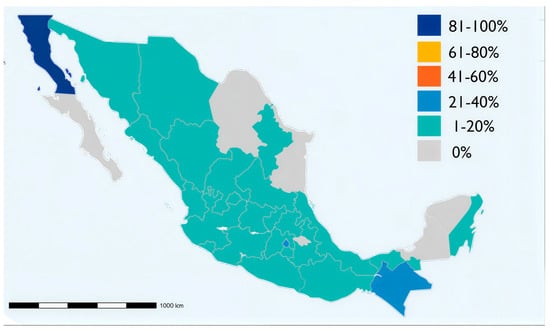
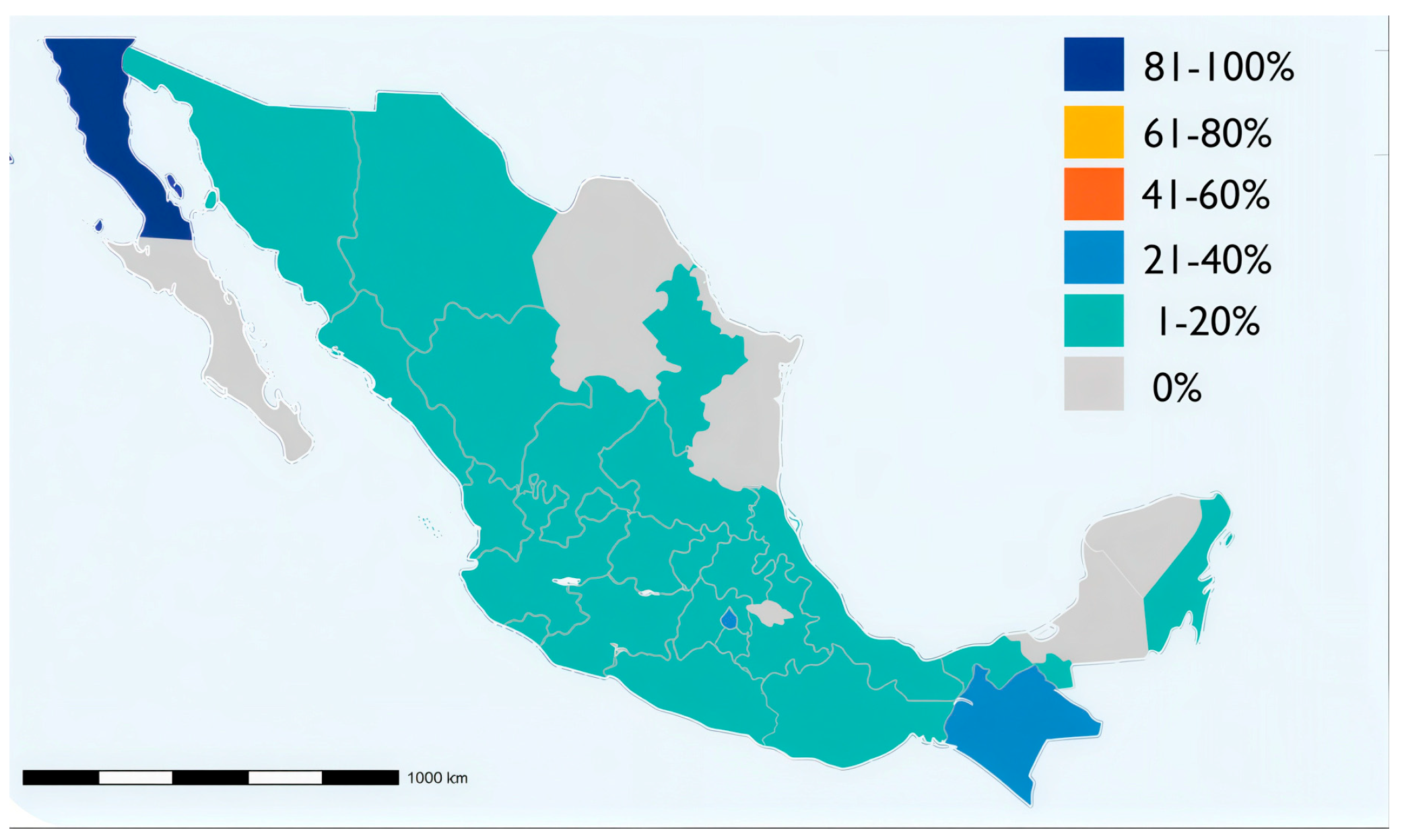
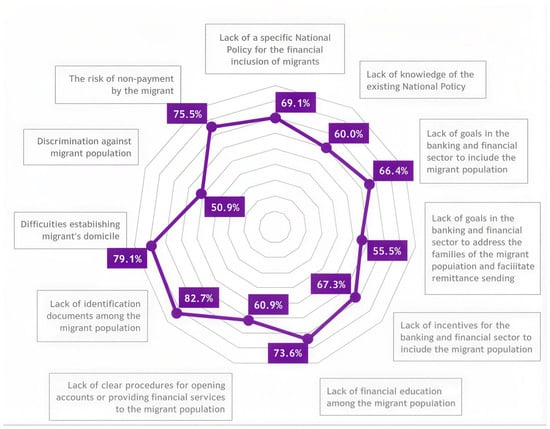
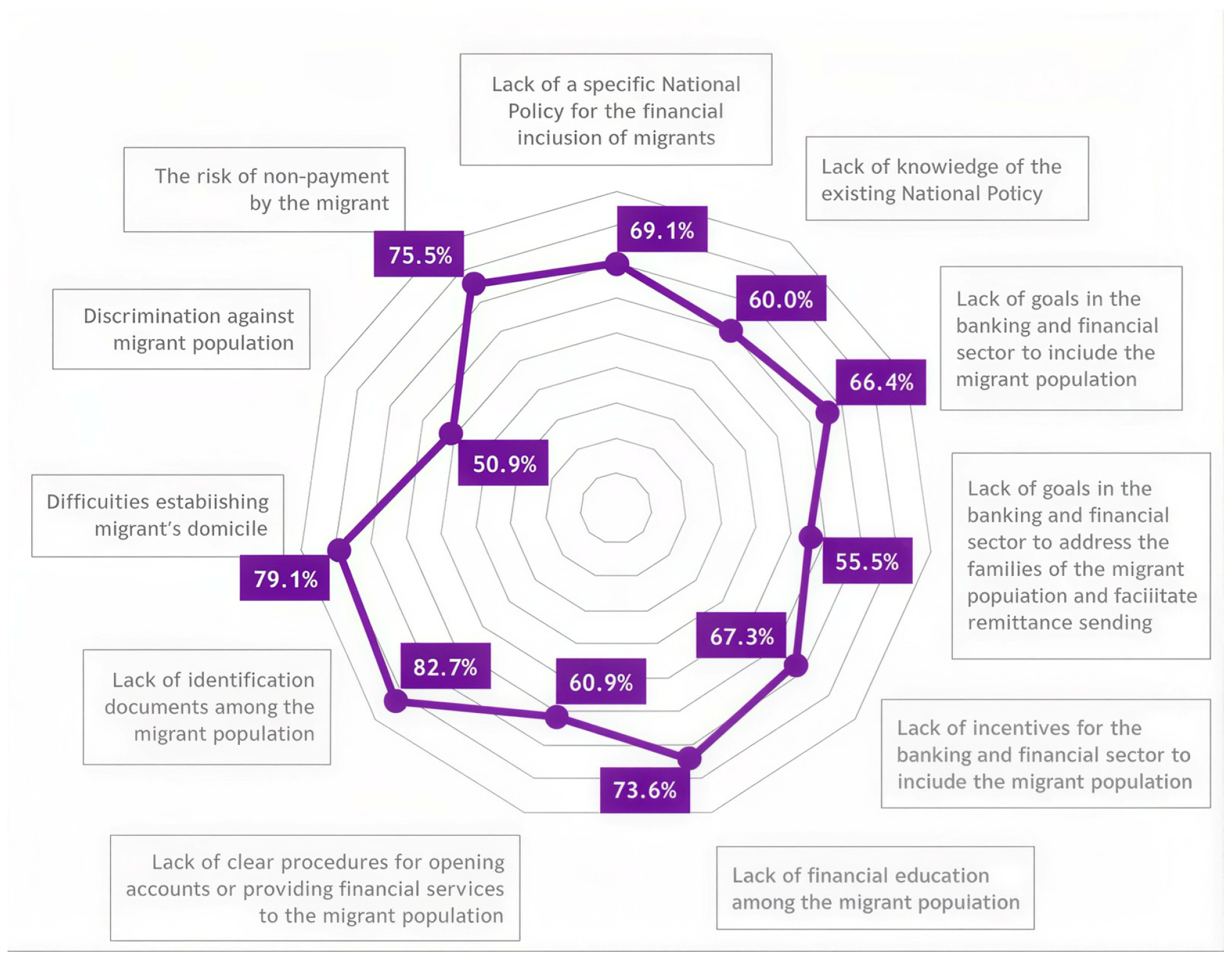
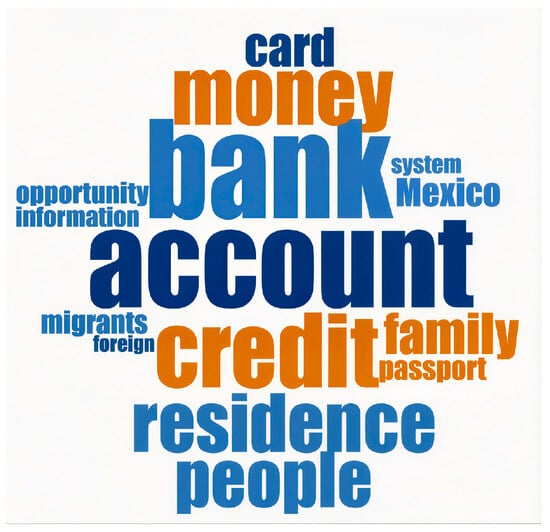
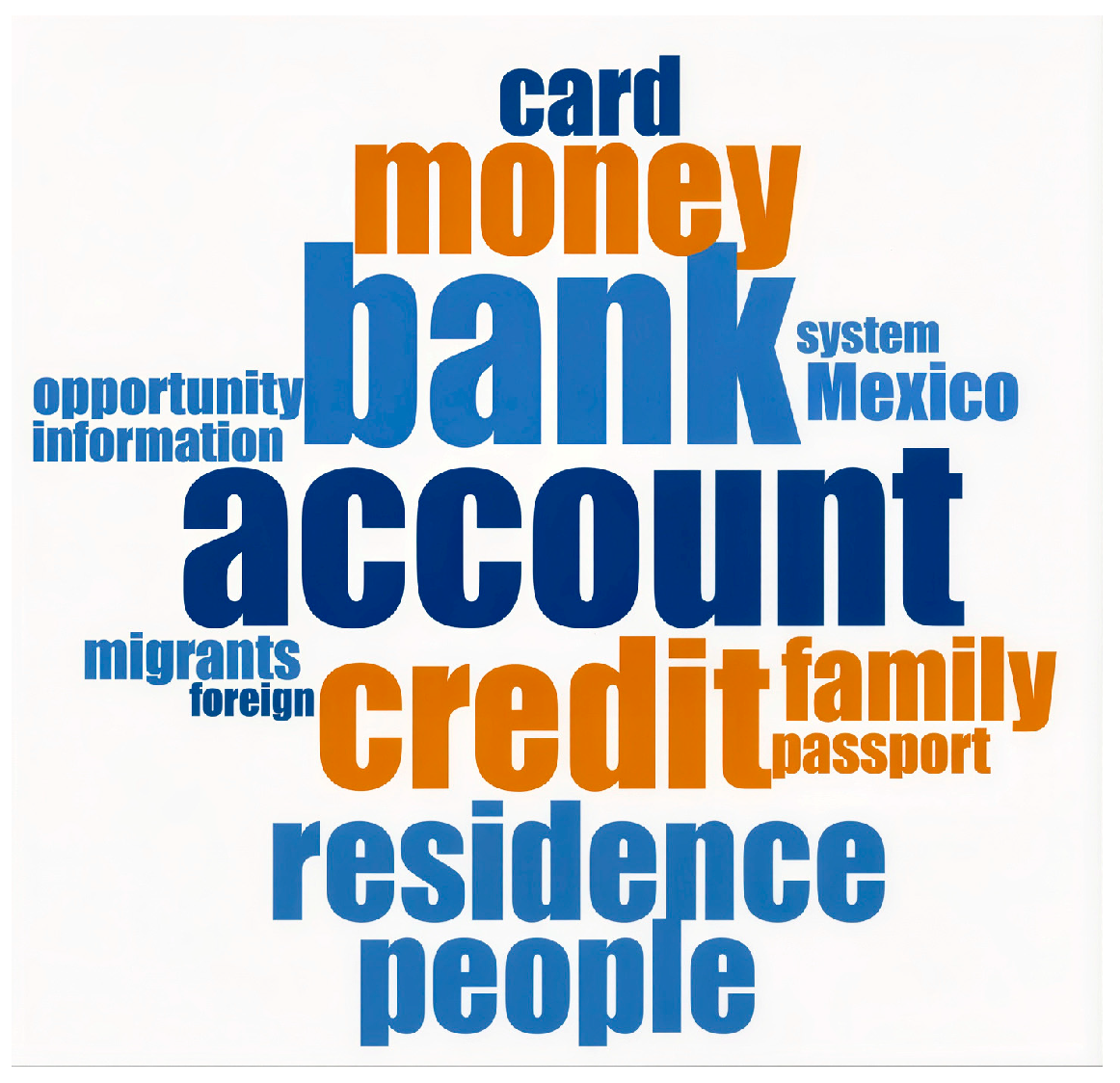

Disclaimer/Publisher’s Note: The statements, opinions and data contained in all publications are solely those of the individual author(s) and contributor(s) and not of MDPI and/or the editor(s). MDPI and/or the editor(s) disclaim responsibility for any injury to people or property resulting from any ideas, methods, instructions or products referred to in the content. |
© 2026 by the authors. Licensee MDPI, Basel, Switzerland. This article is an open access article distributed under the terms and conditions of the Creative Commons Attribution (CC BY) license.