1. Introduction
Over recent decades, the banking sector has seen significant shifts, transforming into a central player in national economic stability and growth. As the market matures and competition grows more fierce, banks have had to rethink their strategies for improving performance and managing risks. Diversification, in particular, has become a key focus. But it is important to point out that diversification for banks today is not just about spreading credit portfolios across different industries or customer groups (
DeYoung & Roland, 2001). It has evolved into a broader strategy, where banks are exploring new revenue streams—things like fee-based services, investment banking, and even insurance products (
Stiroh, 2004a). This marks a shift from the traditional reliance on interest-based income, which has long been the cornerstone of banking operations.
In this review, “diversification” is defined precisely along two dimensions used in the empirical banking literature. First, revenue (income) diversification refers to a bank’s reliance on multiple income sources, typically measured via the share of non-interest income or an entropy/Herfindahl-type index over income components. Second, asset (portfolio) diversification refers to the dispersion of assets and exposures across loan sectors, securities, and other asset classes, often proxied by concentration indices or portfolio shares (
DeYoung & Roland, 2001;
Diamond, 1984;
Elsas et al., 2010;
Markowitz, 1952;
Stiroh, 2004a). These definitions are used consistently throughout the paper to avoid ambiguity in the research objective.
However, it’s not all smooth sailing. While diversification may seem like a neat solution to the challenges facing banks, it is far from a risk-free strategy. On one hand, it can help boost profits and reduce dependency on a single income source (
Elsas et al., 2010). But, on the flip side, expanding into new areas can bring its own set of risks and complexities (
DeYoung & Torna, 2013;
Stiroh, 2004b;
Stiroh & Rumble, 2006), requiring banks to adjust not only to new market dynamics but also to ever-evolving regulatory environments (
C.-C. Lee et al., 2014b). Success in diversification is by no means guaranteed. There are numerous factors, often beyond a bank’s control, that can affect the outcome. A major factor is the broader economic environment—specifically, monetary policy (
Lopez et al., 2020). Fluctuations in interest rates, reserve requirements, and credit growth limits, all determined by central banks, can dramatically shift the operating conditions banks face (
Altavilla et al., 2018;
Drechsler et al., 2017;
Heider et al., 2019). These macroeconomic factors can either support or hinder the success of diversification efforts, highlighting the intricate relationship between banking strategies and monetary policy.
Despite the many studies on (i) diversification–performance and (ii) monetary policy–bank profitability/lending, their intersection is less systematically synthesized. Recent systematic reviews on income diversification mainly attribute heterogeneous findings to methodological and contextual factors (e.g., sample composition, measures, and estimation strategies) (
Zouaoui & Zoghlami, 2023), while others delve into the ways monetary policy influences bank behavior (
Altavilla et al., 2018;
Drechsler et al., 2017;
Heider et al., 2019;
Lopez et al., 2020). But the intersection of these two elements? That is still underexplored. The way in which monetary policy changes impact the decisions banks make regarding diversification is not something that has been fully addressed in the existing literature. And this gap in research is precisely why a more systematic review of what we already know is needed. This motivates a PRISMA-based systematic review that maps evidence globally (i.e., across regions and banking systems represented in the published literature) and explicitly treats monetary-policy conditions as a moderator of diversification outcomes.
A comprehensive review could serve several important purposes. First, it would help bring together the existing research to provide a clearer, more cohesive picture of the current landscape. By connecting studies on diversification, monetary policy, and their interplay, we get a more nuanced understanding of these issues. Second, such a review would highlight areas that remain underexplored, setting the stage for future research. For example, while we have learned a lot about the individual impacts of diversification and monetary policy on bank performance, we still know very little about how these two factors work together, particularly during times of economic uncertainty. Third—and perhaps most critically—this review could offer practical insights for both bank managers and policymakers. In an economic environment where monetary policy is constantly shifting, it is essential for banks to remain agile and responsive to those changes. A thorough review could provide actionable guidance on how banks can navigate the challenges of diversification, especially when faced with unpredictable economic shifts. For instance, understanding how changes in interest rates or reserve requirements might influence a bank’s strategy could help managers better anticipate risks and identify new opportunities.
As diversification becomes an increasingly important strategy for banks to enhance resilience and profitability, the need for a more structured examination of this topic is becoming more urgent. The banking sector is evolving rapidly, and the constant flux of global economic conditions only adds to the complexity. A deeper understanding of how diversification and monetary policy interact will be crucial for shaping both strategic decisions at the bank level and broader policy decisions at the governmental level. By filling the gaps in our current understanding, we can help banks refine their approaches to diversification while ensuring that policymakers craft monetary policies that foster a competitive, healthy banking environment. Ultimately, as banking research continues to develop, it will be crucial to provide a more complete and nuanced view of how banks can succeed in an increasingly complex and dynamic economic world.
This study seeks to address this gap by exploring three main research questions, following the approach typically used in bibliometric analyses:
RQ1 (Publication Trends): What are the trends in publications and the overall focus of research on how diversification affects the performance of commercial banks between 2006 and 2025?
RQ2 (Influential Contributors): Which journals, authors, and countries appear to have had the greatest impact on research in this area?
RQ3 (Emerging Themes): What are the key emerging research areas focusing on the role of monetary policy in shaping the relationship between diversification and bank performance?
This systematic literature review explores how diversification affects commercial bank performance, with a focus on the role of monetary policy between 2006 and 2025. Using the SCOPUS database as the main source, the study follows the PRISMA framework to carefully sift through relevant academic work (
Page et al., 2021). To dig deeper, tools like VOSviewer (
Van Eck & Waltman, 2010) and RStudio (
Aria & Cuccurullo, 2017) are used for thematic clustering, factor analysis, and keyword citation analysis (
Aggarwal et al., 2025;
Bhullar et al., 2025;
Nguyen et al., 2025). These methods help reveal three distinct research clusters, shedding light on the complex relationship between diversification, bank performance, and monetary policy.
The rest of this article is structured as follows:
Section 2 outlines the research methodology.
Section 3 presents the findings, including both the descriptive literature analysis and the bibliometric cluster analysis.
Section 4 discusses the key results, potential directions for future research, and practical implications. Finally,
Section 5 wraps up with a conclusion.
2. Methodology
This study takes a systematic literature review (SLR) approach to analyze and synthesize the existing body of research in the field. Following a structured methodology proposed by
Durach et al. (
2017), the review is organized into four distinct stages. Each stage plays a crucial role in ensuring that the review is comprehensive and systematic, guiding the process from initial search to synthesis of findings and identification of research gaps. This organized framework offers a clear and replicable process, which could prove useful for future reviews within this field.
To enhance the rigor of our approach, we adopted the PRISMA framework (Preferred Reporting Items for Systematic Reviews and Meta-Analyses) as outlined by
Page et al. (
2021). PRISMA is a widely accepted set of guidelines that aims to improve the transparency, consistency, and reliability of systematic reviews and meta-analyses. By adhering to this framework, we aimed to minimize bias and increase the validity of our findings, as it provides a structured method for reporting every step of the review process. Furthermore, the PRISMA framework facilitates the clear presentation of review procedures, which ultimately enhances the overall quality and reliability of our synthesis (
Aggarwal et al., 2025;
Bhullar et al., 2025;
Nguyen et al., 2025).
For this review, bibliographic data was gathered from the Scopus database on 22 August 2025. We scope the review to 2006–2025 for three reasons: First, starting in 2006 provides a critical pre-Global Financial Crisis (GFC) baseline, allowing for a longitudinal analysis of how bank strategies evolved through the 2008 financial shock and into the subsequent recovery. Second, the post-2006 period uniquely encapsulates the prolonged era of unconventional monetary policy, characterized by near-zero (ZIRP) and negative interest rate (NIRP) environments, which is the central focus of our analysis on monetary-policy-conditioned bank performance. Furthermore, we note that influential empirical research on revenue and income diversification experienced a significant expansion in the mid-2000s. Utilizing this timeframe ensures that our synthesis is based on a high-density period of scholarly output while maintaining a consistent and relevant macro-financial context for the review. While WoS is a reputable repository, Scopus was selected for this systematic review due to its broader coverage of social science and finance journals, as well as its superior metadata compatibility with bibliometric tools like the R-package Bibliometrix. We have included an explicit discussion on database-coverage differences and potential selection bias, demonstrating a high degree of overlap between the two databases in the economics and finance domains (
Mongeon & Paul-Hus, 2016).
Scopus was chosen for its extensive coverage of peer-reviewed research across a wide array of disciplines. It is particularly valued for its high-quality indexing, which is evidenced by the SCImago Journal Rank (SJR) indicator (
González-Pereira et al., 2010). The SJR measures journal quality based on citation counts and the prestige of the citing journals, making it a trustworthy source for gathering influential and well-regarded studies. Given Scopus’ high standards for inclusion, it was deemed an ideal database for our review, providing a comprehensive pool of scholarly articles that align with the rigorous requirements of a systematic review.
Scopus also offers the ability to efficiently download bulk bibliographic references, a feature that significantly streamlines the data collection process. This capability is essential for large-scale reviews, allowing us to quickly access and organize a vast number of relevant studies. More importantly, the bulk download feature reduces the likelihood of missing important research, including studies that might be published in smaller or less well-known journals that may still be highly relevant to our topic. This feature was especially beneficial for ensuring a broad and inclusive review, allowing us to consider a wide range of perspectives and findings within the field.
In keeping with best practices for systematic reviews, the studies selected for inclusion were determined using a set of predefined criteria. These criteria were carefully crafted to ensure that only high-quality, relevant research was considered. The selection process began with an extensive search of the Scopus database, using a series of well-defined keywords tied to the research topic. The goal was to capture a broad spectrum of studies, ranging from empirical research to theoretical discussions and methodological papers. After the initial search, the studies underwent a rigorous screening process based on several factors, such as publication date, relevance to the research questions, the quality of the journal, and the methodological rigor of each study. This careful screening was essential in narrowing down the large number of initial studies to those that best addressed the focus of the review.
Once the studies were selected, we used a two-step process to extract and synthesize the data. The first step involved extracting basic bibliographic information, such as the authors, publication year, title, journal, and abstract. This allowed us to organize the studies according to key themes and research questions. The second step focused on a deeper analysis of the content of each study, examining their methodologies, findings, and theoretical contributions. This detailed analysis was crucial for gaining a comprehensive understanding of current research trends, identifying consensus in the literature, and uncovering areas where there are gaps or disagreements.
Throughout the entire review process, we placed a strong emphasis on transparency and replicability. Every step of the methodology, from search strategy to data extraction, was carefully documented to ensure that the review could be easily reproduced by other researchers. This transparency was key in minimizing bias and maintaining the integrity of the review process. Additionally, we made sure to synthesize the findings in a way that clearly highlighted both the major trends in the literature and areas that warrant further exploration. This not only contributes to the existing body of knowledge but also lays a foundation for future research that can build on these findings.
The four-stage process outlined by
Durach et al. (
2017) was rigorously followed throughout the review. The first stage, planning, involved clearly defining the research questions, establishing inclusion/exclusion criteria, and designing the search strategy. The second stage, searching, involved conducting the actual search of the Scopus database and applying the predefined selection criteria to identify relevant studies. In the third stage, analysis, we extracted data from the selected studies and began synthesizing the findings to identify key patterns and themes. Finally, the fourth stage, reporting, involved presenting the synthesized findings in a structured and coherent manner. This systematic approach ensured that our review was comprehensive, methodologically sound, and contributed valuable insights to the existing literature on the topic.
By adhering to these established methodologies and frameworks, we have aimed to produce a review that not only synthesizes existing knowledge but also identifies areas where further exploration is needed. The systematic review approach helps ensure that the findings are not only relevant but also grounded in high-quality, peer-reviewed research. This review, therefore, serves as a critical tool for both scholars and practitioners seeking to navigate the complexities of the field and lays the groundwork for future investigations that can address the identified gaps.
The search strategy was designed to capture all relevant articles by combining related keywords (“diversification” OR “income diversification” OR “business model diversification”) AND (“bank performance” OR “financial performance” OR “profitability” OR “risk-taking”) AND (“monetary policy” OR “central bank policy” OR “interest rate” OR “macroeconomic policy”).
To strengthen the scientific reliability of our keyword selection process, we used a triangulation approach that involved several validation methods (
Sridharan, 2021). First, we cross-checked the results from the Scopus database against a keyword co-occurrence analysis done with VOSviewer 1.6.20 and RStudio 4.4.3. This step helped ensure that we were capturing all the relevant keywords. Then, we used an iterative clustering technique to validate the thematic relevance, refining the groups to better capture emerging trends. Finally, to make sure the keyword set was both relevant and comprehensive, we consulted with subject-matter experts. Their input was crucial in confirming that the keywords aligned with the research’s main focus.
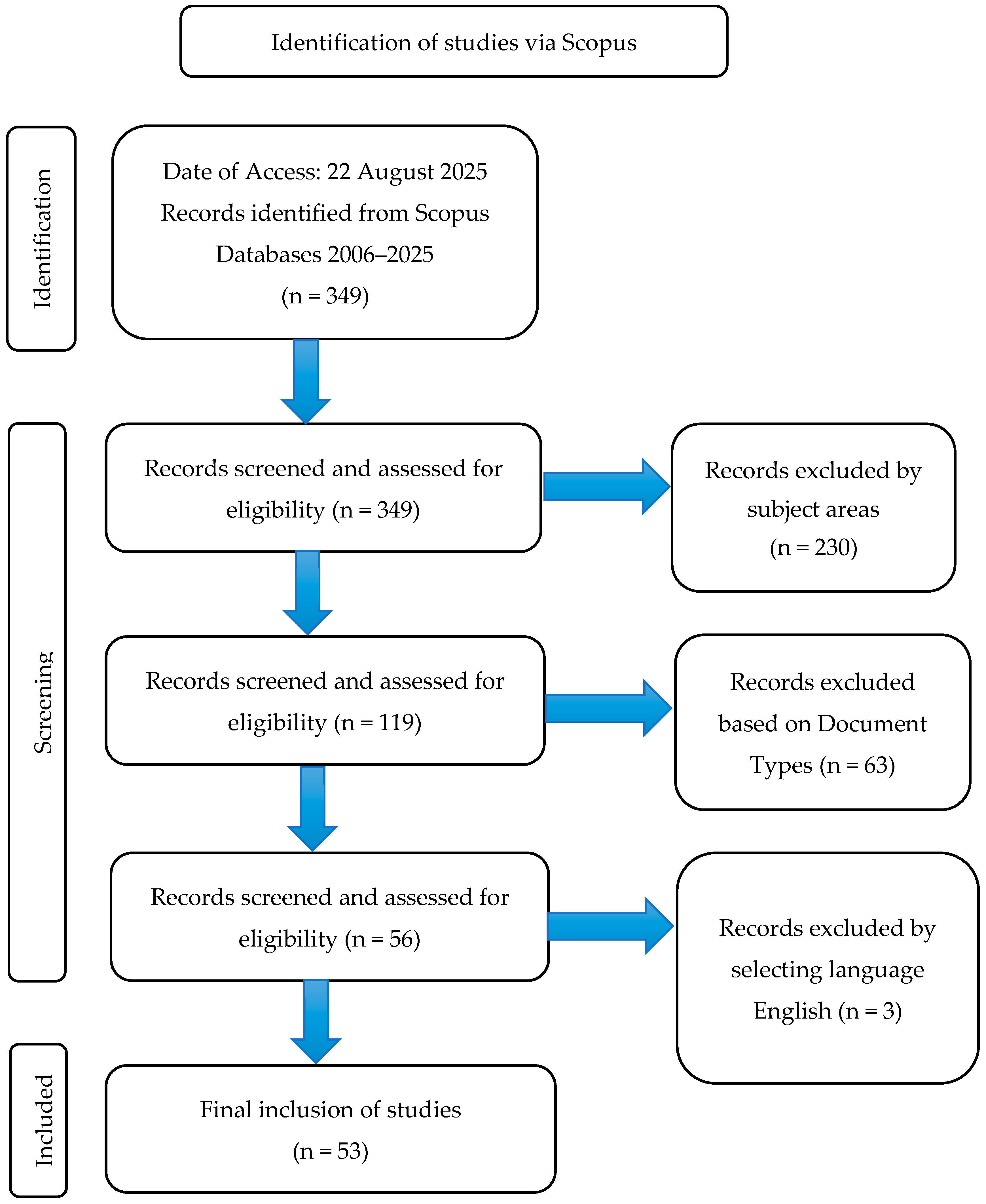
The initial search in Scopus yielded 349 records. After screening for relevance, we excluded records not directly related to diversification, bank performance, or monetary policy, bringing the total down to 230 articles. Next, we applied additional filters, removing non-peer-reviewed documents like conference papers and book chapters, which reduced the count by 63. We then narrowed the selection further by applying a language filter, leaving just 3, retaining only English-language articles. Finally, a manual review of titles and abstracts was carried out to ensure they matched the research questions. After all filters were applied, the final sample included 53 articles.
3. Findings and Results
The study analyzed 53 articles selected from the SCOPUS database, following a strict protocol to ensure consistency, objectivity, and quality in the selection, screening, and evaluation process. Building on the approach by
Seuring and Gold (
2012), the descriptive analysis of existing research on diversification, bank performance, and monetary policy focuses on three key areas: Publication Trends, Influential Contributors, and Emerging Themes (
Figure 1).
3.1. Publication Trends (RQ1)
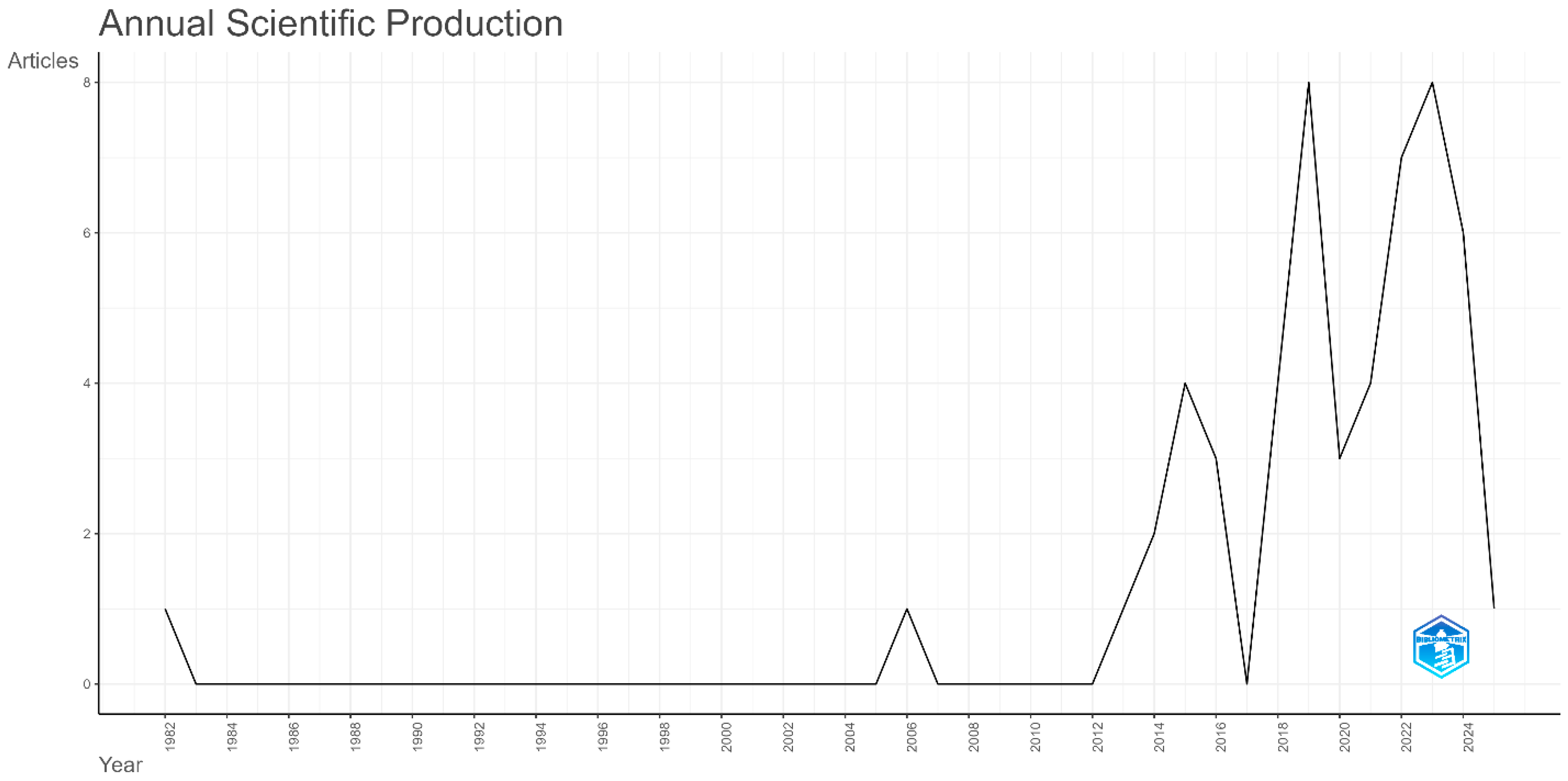
Figure 2 showed a noticeable and growing interest in the research areas of diversification, bank performance, and monetary policy from 2006 to 2025. The output was relatively low initially, with just one study per year from 2017 to 2019. However, there was a steady increase in publications starting around 2015, with a notable spike in 2021 when four studies were published. This upward trend gained more momentum in the following years, with 7–8 studies published annually from 2019 to 2023, and 6 studies in 2024.
3.2. Influential Contributors (RQ2)
Appendix A,
Table A1 presents details about the academic papers, including the paper title, total citations, and average citations per year. These metrics help gauge the influence of each paper within the academic community. For example, the paper by
Altavilla et al. (
2018) in econ policy, with 143 total citations, clearly demonstrates its strong impact on the field of economic policy research. The average citations per year offer a glimpse into the paper’s ongoing relevance, with
Altavilla et al. (
2018) receiving an average of 17.88 citations annually, showing that it continues to be widely referenced. Overall, these indicators highlight varying levels of influence among the papers—some maintain consistently high citation counts, while others have a more modest impact.
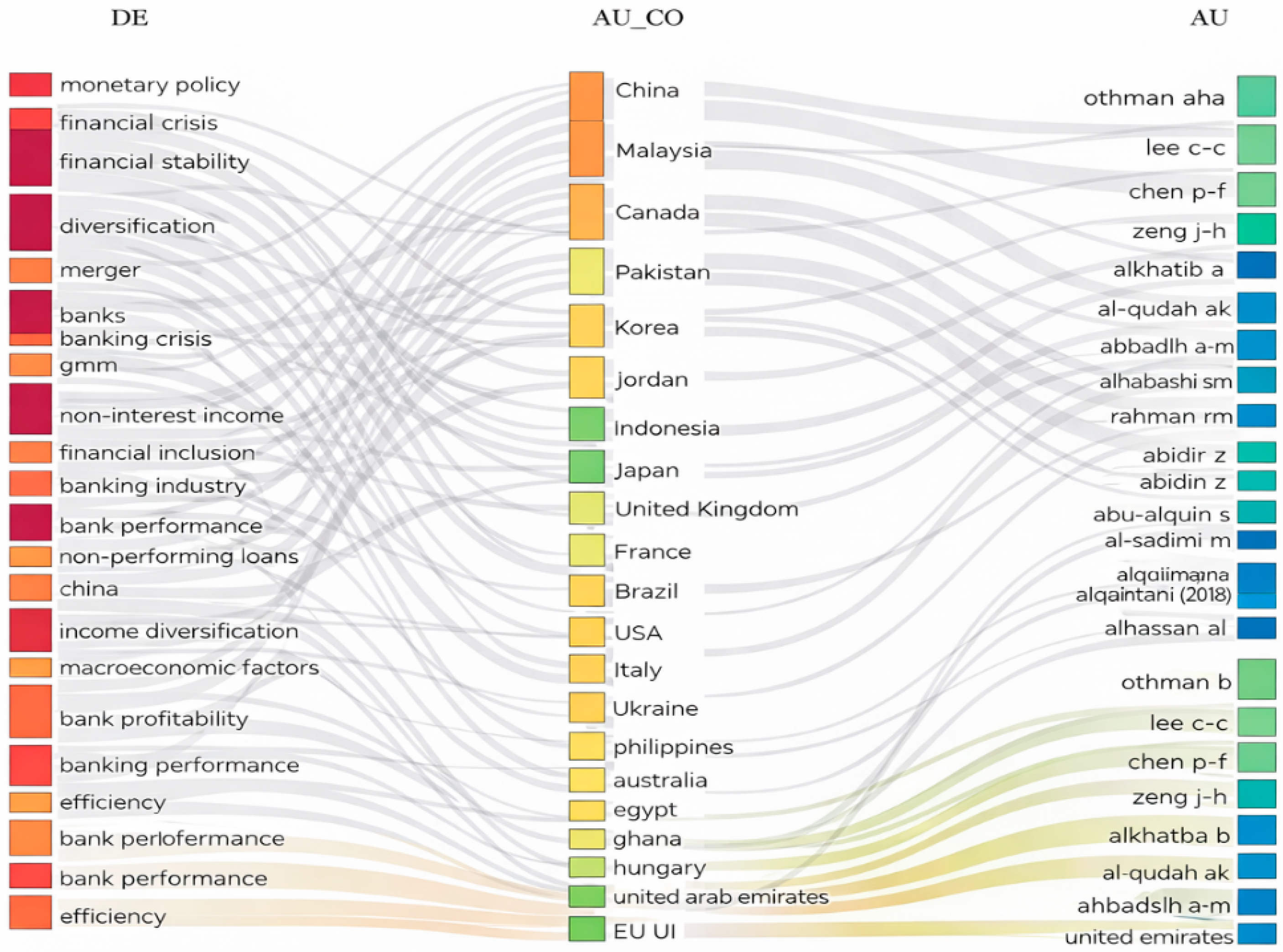
Figure 3 offers an interesting look at how research topics, countries, and authors intersect in the field of banking and finance. The topics (DE) themselves span a wide range, from “monetary policy” and “financial crisis” to more specific concerns like “bank performance” and “non-performing loans.” At the same time, it seems that certain countries (AU_CO) and authors (AU) are more heavily involved in shaping these conversations. The diagram’s visual representation makes it easier to grasp the scope of this research and how different elements come together in the broader banking and finance discourse.
One clear takeaway from the diagram is the recurring emphasis on topics like “financial crisis,” “monetary policy,” and “bank performance.” These are undeniably significant issues in the world of banking and finance, especially given their relevance during financial downturns and periods of instability. The prominence of these themes suggests they continue to hold the attention of academics and researchers, though one might wonder if the focus on these areas could overshadow emerging concerns. For example, topics like “financial inclusion” and “non-performing loans” are getting more attention lately, possibly because there is a growing recognition of the need to address not just the macroeconomic forces at play, but also the granular, day-to-day operations of financial institutions. This shift may reflect a broader trend toward paying more attention to micro-level issues, such as operational efficiency and social implications of financial systems.
Looking at the authors (AU), it is noticeable that the research community is not confined to just one region. Countries like China, Malaysia, and Canada appear frequently in the diagram, which is likely due to their established financial sectors and an ongoing focus on improving banking systems. But it is also worth considering whether this concentration of research from certain countries might reflect an imbalance, or at least a disproportionate focus on specific financial systems. Could the research be too heavily influenced by countries with more robust financial infrastructures, potentially sidelining perspectives from regions with less developed banking sectors?
Another interesting aspect of the diagram is how particular authors seem to be central players in multiple studies, which hints at the emergence of influential research groups. Authors such as
El-Said et al. (
2015) and
Othman et al. (
2020) pop up across various topics, which may suggest that these scholars are at the forefront of important debates. While this could point to a strong, cohesive research effort within the field, it also raises the question of whether this concentration of authority could limit diversity in the types of research questions being asked. Still, the diagram hints at the fact that these ongoing contributions might shape the future of both theoretical and practical frameworks in banking and finance.
In the end, this diagram provides more than just a visual representation; it offers a snapshot of the current trends in banking and finance research. It helps highlight where the field is headed, where there might be gaps, and where future research could be most valuable. While it is a useful tool for identifying the key players and issues, it may also raise questions about the inclusivity of the research landscape and the need to broaden the scope of inquiry.
3.3. Emerging Themes (RQ3)
A conceptual Multiple Correspondence Analysis (MCA) was conducted to visually map out the intellectual structure of the field. This analysis not only identifies several key themes but also exposes critical gaps in current research. Emerging themes, such as the nuanced impact of monetary policy on diversification strategies and the role of non-interest income, require deeper investigation. Notably, a growing body of research emphasizes the significance of regulatory frameworks in shaping diversification outcomes—an area often neglected in earlier studies.
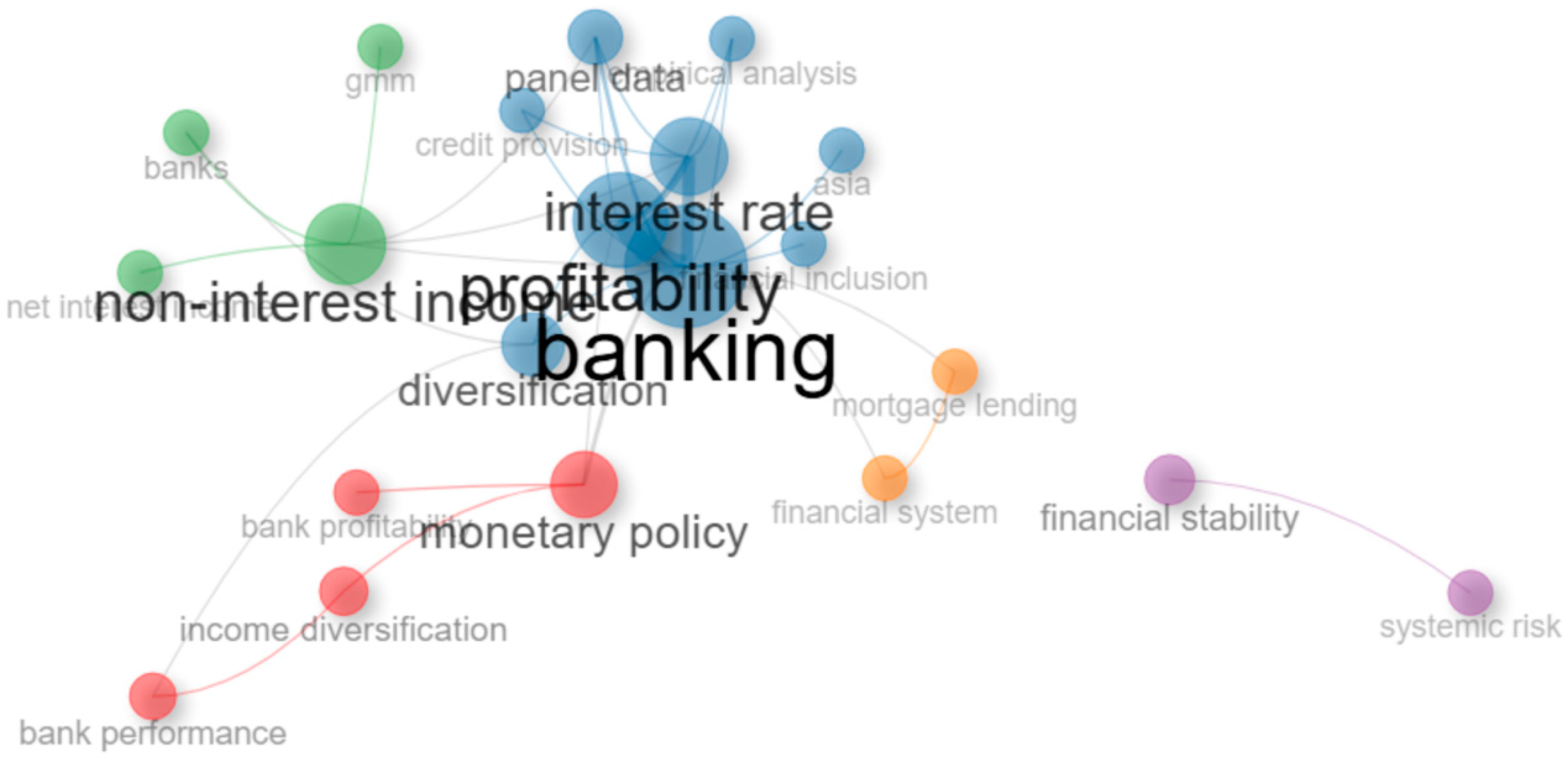
Figure 4 show central keywords like “diversification,” “non-interest income,” “profitability,” and “bank” form the core cluster, representing foundational research in this area. Surrounding this core, we see keywords related to macroeconomic factors and policy, such as “interest rate” and “monetary policy.” The conceptual map clearly shows that the link between “diversification” and “performance” is strongly influenced by the “monetary policy” cluster, highlighting its growing importance as an area of academic focus. For instance, the impact of diversification on bank profitability may be positive in a low-interest-rate environment, but this effect could diminish—or even reverse—during periods of monetary tightening. This helps explain some of the observed relationships in the literature. As shown in the Multiple Correspondence Analysis (
Figure 4), the intellectual structure of the field is bifurcated between core operational metrics (Blue Cluster) and broader regulatory and stability concerns (Red and Purple Clusters). The proximity of ‘monetary policy’ to ‘income diversification’ suggests a growing scholarly interest in how policy shifts drive banks toward non-traditional revenue streams.
The Multiple Correspondence Analysis (MCA) in
Figure 4 illustrates the thematic landscape of the literature, identifying five distinct clusters of research concentration based on keyword co-occurrences:
Cluster 1 (Blue) Core Banking Dynamics: This represents the most prominent thematic area, focusing on the fundamental relationship between banking operations, profitability, and interest rate fluctuations. The presence of panel data and empirical analysis in this cluster suggests a methodology-heavy core in the existing literature.
Cluster 2 (Red) Policy and Performance: This cluster links macroeconomic triggers—specifically monetary policy—to micro-level outcomes like income diversification and overall bank performance, highlighting the transmission channels of central bank actions.
Cluster 3 (Green) Revenue Diversification: Centered on non-interest income, this cluster explores how banks manage credit provision and institutional structures to diversify beyond traditional lending models.
Cluster 4 (Orange) Credit and Systems: This thematic grouping connects the broader financial system with specialized sectors, notably mortgage lending, reflecting research into specific credit market segments.
Cluster 5 (Purple) Systemic Stability: A specialized cluster focusing on the nexus between financial stability and systemic risk, addressing the macro-prudential health of the banking sector.
3.4. Thematic Clusters by Bibliographic Coupling
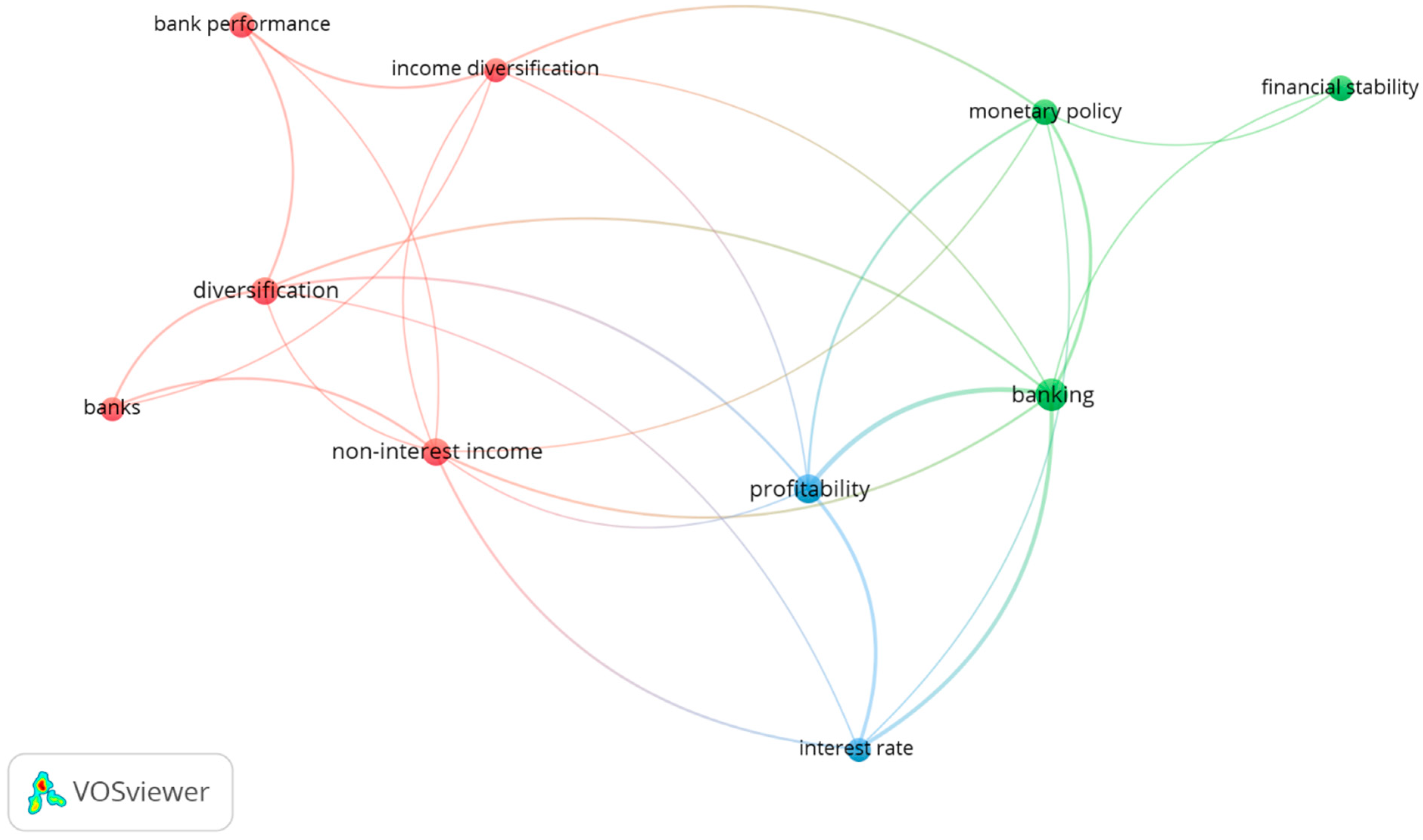
Figure 5 illustrates the key thematic clusters identified through bibliographic coupling using VOSviewer software. Only studies with a minimum of six citations were included in this analysis, which helped pinpoint these main clusters. The figure shows a network visualization of the clusters, with different sizes and colors representing their significance.
The conceptual bibliographic coupling analysis reveals three distinct thematic clusters, offering a detailed view of the research landscape.
The red cluster in
Figure 5 consists of 20 studies examining the relationship between “bank performance,” “diversification,” “banks,” “income diversification,” and “non-interest income,” with a total of 134 citations. The most influential study in this group is by
C.-C. Lee et al. (
2014a), which has garnered 105 citations and focuses on the effects of portfolio diversification in the banking industry.
Ferreira et al. (
2019), with 11 citations, discusses the significant role non-interest income plays in bank performance.
Park et al. (
2019) (8 citations) find that non-interest income positively affects bank risk and return, particularly during periods of crisis. Meanwhile,
Kozak and Wierzbowska (
2022) (7 citations) show that an increase in the share of non-interest income in a bank’s total income has a statistically significant positive impact on profitability in the European banking sector. Interestingly, they note that the relationship between profitability and diversification became stronger amid the negative effects of the pandemic.
The green Cluster II focuses on the relationship between banking, financial stability, and monetary policy. Comprising 5 articles with a total of 76 citations, this cluster includes notable studies.
Ahmed et al. (
2021) (40 citations) found that factors like credit growth, net interest margin, loan loss provision, and bank diversification significantly increase non-performing loans (NPLs), while operating efficiency, bank size, and return on assets (ROA) help lower NPLs. They also noted that higher interest rates, exchange rates, and political risk lead to an increase in NPLs, while GDP growth has the opposite effect, reducing NPLs.
AlKhouri and Arouri (
2019) (39 citations) examined the impact of diversification on GCC banks, finding that non-interest income diversification negatively affects performance, while asset-based diversification has a positive impact. However, they pointed out that investors tend to devalue banks with highly diversified assets. They also found that government intervention, low competition, legal protections, and tight central bank control positively influence performance in these banks. Interestingly, unlike conventional banks, asset diversification adds value to Islamic banks. Overall, both revenue and non-interest diversification were found to negatively affect the stability of GCC banks, while asset diversification improved the stability of Islamic banks.
Addai et al. (
2023) (4 citations) studied bank intermediation margins in Africa, showing that they depend on variables like bank concentration, credit risk, risk aversion, interest rate volatility, income from non-traditional banking activities, and macroeconomic factors such as financial innovation and GDP.
Albert (
2015) (2 citations) used multiple scenario simulations to assess the expected performance (profitability and risk) of activities and the extent of uncertainty. Their findings suggest that diversification into investment services improves the expected risk–return, with well-calibrated interest rate mismatches further supporting performance. However, deviations from historical volatilities and correlations can cause the benefits of diversification to fluctuate. Finally,
Abidin et al. (
2024) (1 citation) found that larger banks are more efficient than smaller ones.
Altavilla et al. (
2018), with 143 citations, found that monetary policy easing—such as a decrease in short-term interest rates or a flattening of the yield curve—does not necessarily lead to lower bank profits when accounting for the endogeneity of these policy measures to expected macroeconomic and financial conditions. They found that accommodative monetary conditions have an asymmetric effect on the key components of bank profitability. While they positively impact loan loss provisions and non-interest income, they negatively affect net interest income. Over a long period, low monetary rates can negatively affect profits, though this impact is offset by improved macroeconomic conditions.
Lopez et al. (
2020), with 63 citations, indicated that negative interest rates lead to a loss in interest income, but banks manage this by lowering deposit expenses and gaining more non-interest income through fees and capital gains. Their study highlights that smaller banks with lower deposit ratios are most affected. In response to negative rates, banks tend to increase lending and rely more on deposit funding.
Al-Muharrami and Murthy (
2017), with 6 citations, found that the implicit interest margin was relatively small—around 1 percentage point—and that profits made up a significant portion of this margin. The study also noted that reserve requirement costs were reduced as the reserve requirement ratio declined. Interestingly, the average interest rate on deposits was lower than inflation, highlighting the complex dynamics at play.
Dhal and Ansari (
2013) observed that the determinants influencing banks’ loan pricing decisions can have different effects depending on how loan interest rates and spreads are measured. They found that the pass-through effect from policy rates to loan interest rates is often limited, as commercial banks take multiple factors into account when setting prices. Their study also pointed to the issue of pass-through from the interbank money market rate and repo rate, suggesting that liquidity and interest rate channels of transmission may not always align. Additionally, they concluded that banks’ operating efficiency plays a crucial role in determining margins and loan pricing, especially in the Indian context. The study also noted that higher capital charges could lead to increased risk aversion, which in turn raises loan interest rates. However, they found no clear, statistically significant impact of non-performing loans on loan pricing, indicating a need for a stronger risk pricing culture in India. Interestingly, the bank size variable, often associated with economies of scale, did not seem to hold in the Indian context.
4. Discussion
This section integrates the bibliometric clusters with an intuitive, theory-informed synthesis of mechanisms and boundary conditions. The literature reports mixed effects because diversification creates both (i) potential benefits—risk reduction via lower concentration and economies of scope in production and distribution—and (ii) potential costs—higher operational complexity, agency problems, and exposure to more volatile income streams. Consequently, the sign and magnitude of the diversification–performance relationship varies with how diversification is implemented (income versus asset), the bank’s business model and capabilities, and the macro-financial regime. Monetary policy matters because it changes net interest margins and funding conditions, thereby affecting the relative attractiveness of interest versus non-interest activities and the evolution of credit risk (
Altavilla et al., 2018;
DeYoung & Roland, 2001;
Drechsler et al., 2017;
Stiroh, 2004a;
Stiroh & Rumble, 2006).
Cluster I (Diversification and profitability) is dominated by studies on revenue diversification (e.g., non-interest income shares and related indices). A key intuitive channel is that service-based activities can generate fee income and exploit economies of scope (cross-selling and reuse of customer information and distribution networks), which can raise average profitability (
Elsas et al., 2010). However, many fee and trading activities are intrinsically more volatile than traditional lending. Empirical evidence shows that shifting the product mix toward fee-based activities can increase revenue volatility and earnings volatility, and greater exposure to non-interest income may reduce risk-adjusted performance even when average returns rise (
DeYoung & Roland, 2001;
Stiroh, 2004a;
Stiroh & Rumble, 2006). Thus, “more diversification” is not uniformly beneficial; composition and risk management capacity are central.
Cluster II (Stability, credit risk, and macro-financial conditions) highlights that diversification decisions and bank performance metrics are jointly shaped by the business cycle and policy environment. Rather than “moving in tandem,” the evidence indicates that multiple bank balance-sheet and income-statement components co-vary with macroeconomic conditions: credit growth and loan-loss provisioning tend to be procyclical, while non-performing loans worsen when GDP growth falls and unemployment and lending rates rise (
Laeven & Majnoni, 2003;
Louzis et al., 2012). These dynamics imply that the diversification–stability trade-off is state-dependent: diversification may buffer income in mild downturns but can amplify losses if it increases exposure to activities that are highly sensitive to market stress or liquidity conditions.
Cluster III (Interest rates, monetary policy, and profitability) provides the main mechanisms for why the interest-rate regime moderates diversification outcomes. In low-rate environments, margin compression increases incentives to expand fee-based services, but banks’ ability to pass through policy rates to deposits is limited by deposit market power and the effective lower bound (
Drechsler et al., 2017;
Heider et al., 2019). Empirically, monetary policy easing affects components of profitability asymmetrically: net interest income can decline, while provisions and non-interest income may improve, leading to ambiguous effects on overall profits (
Altavilla et al., 2018). Evidence on negative nominal rates similarly indicates that losses in interest income can be partially offset by lower deposit expenses and higher non-interest income, with heterogeneity by bank size and funding structure (
Lopez et al., 2020).
Bringing these strands together, we can frame the relationship between “diversification, bank performance, and monetary policy.” During tightening cycles, funding costs tend to rise faster than asset yields for many banks, which compresses margins and pushes them toward fee-based services and trading income. At the same time, risk management becomes more critical, as higher rates increase the risk of non-performing loans (NPLs). In such cases, diversification that adds complexity without offering clear pricing power can backfire. During easing cycles, margin compression may be offset by improvements in asset quality and volume effects, while opportunities for non-interest income (NII) expand (e.g., in payments, wealth management, and bancassurance)—as long as competition and regulation allow for flexible pricing. In periods of prolonged low rates, the “search for yield” may drive banks toward nontraditional activities. However, the sustainability of these moves depends on factors like asset-liability management (ALM) mismatches, operational capabilities, and regulatory boundaries. This state-dependent logic aligns with our clusters and reflects the broader methodological approach used in the template study, which highlights how institutional environments influence the relationships observed.
4.1. Future Research Directions
Building on the conceptual findings and the identified gaps, we propose a research agenda aimed at guiding future scholarly work. This agenda is designed to foster more rigorous and policy-relevant research, following a framework similar to the one outlined in the source paper.
Quantitative analysis of the interactive effect: Future research should use advanced quantitative techniques, like panel data regression with interaction terms, to better understand how monetary policy influences the relationship between different types of diversification and bank performance.
Case studies on policy shocks: Researchers could look at specific events—like sudden interest rate hikes or cuts—to see how banks adjust their diversification strategies and how these moves affect performance. This approach may reveal nuances that broad statistical models sometimes miss.
Research could look into how digital technologies and the growing presence of Fintech companies are reshaping the way traditional banks approach diversification. It seems likely that the way these banks adjust their strategies is heavily influenced by the evolving role of Fintech in the financial landscape. At the same time, central bank regulations may play a key role in shaping these changes. In fact, one might argue that while the rise in Fintech presents new opportunities for growth, the regulations that govern financial institutions may either enable or constrain these efforts in unpredictable ways.
A comparative study between different economies and regions could offer valuable insights into how diversification strategies vary across regions. It might also help us understand how these strategies hold up against changes in monetary policy. The way different regions respond to such shifts could tell us a lot about their economic structures, regulatory landscapes, and how adaptable they are to external pressures. Each region might react in unique ways, and exploring these differences could reveal important patterns.
Future research might explore how specific regulatory changes—like new capital adequacy standards or loan classification rules—affect banks’ approaches to diversification and their willingness to take on risk. It is likely that these regulations influence not just the financial stability of banks, but also their strategies for growth and risk management. Understanding these impacts could provide a clearer picture of how regulatory shifts shape the broader banking landscape, particularly when it comes to balancing profitability and risk.
4.2. Implications
The findings from this review have some interesting implications for both policymakers and bank managers. For policymakers, it is clear that understanding the potential unintended consequences of their decisions on bank behavior is crucial. When central banks make monetary policy choices, they need to think about how those decisions could influence banks’ strategies, particularly when it comes to diversification. A stable macroeconomic environment with predictable policies might encourage banks to take a more thoughtful, long-term approach to diversification, ultimately helping to strengthen the financial system. On the other hand, bank managers should also keep in mind that diversification is not something to be tackled in isolation. The study suggests that banks need to continuously adjust their strategies, keeping a close eye on central bank signals. Incorporating macroeconomic forecasting into their planning could make a big difference, as changes in monetary policy will likely impact the bank’s approach to diversification in ways that are not always immediately obvious.
Looking ahead, there are a few areas where the research could go deeper. For example, future studies could focus on how diversification interacts with specific policy indicators like policy rates, yield-curve shifts, or reserve requirement changes. It could also be helpful to break down net interest income (NII) into different components—like fees or trading income—to better understand what’s driving long-term versus more cyclical income. Event-based analyses that track policy shocks from central banks could provide valuable insights too. Finally, paying more attention to liquidity and pass-through frictions when modeling margins and risk would likely add a layer of nuance to the current research. The future directions for research—like exploring interaction models, studying the impact of policy shocks, examining fintech’s growing role, making cross-country comparisons, and focusing on the effects of specific regulations—seem to be a natural extension of these findings. These areas would be in line with the best practices for advancing the field.
5. Conclusions
This paper provides a thorough review and bibliometric analysis of research examining the impact of diversification on commercial bank performance, particularly how monetary policy plays a role. The analysis focuses on studies published between 2006 and 2025, pulling data from the SCOPUS database. The PRISMA framework was used to systematically evaluate the literature, while tools like VOSviewer and RStudio helped map out publication trends, identify key contributors, and highlight major themes in the field.
All bibliometric indicators (publication trends, citations, networks, clusters) are computed from the exported Scopus records on 22 August 2025. Citation counts may change over time as Scopus updates its database. Therefore, reproducibility is ensured by sharing the exported snapshot used in this study.
The banking sector, especially in emerging economies, is undergoing significant changes, which have made strategic diversification more important than ever. As banks look to boost their financial performance and manage risk, diversification—whether through income sources or credit portfolios—has become a crucial part of their strategy. That said, it is not always straightforward. The success of these diversification efforts is deeply tied to the broader macroeconomic environment, with monetary policy playing a particularly influential role. This review, supported by the bibliometric analysis, pulls together insights from the literature on how diversification interacts with commercial bank performance, with a special focus on how monetary policy affects these dynamics. The review points to a noticeable uptick in academic interest regarding the impact of diversification on bank performance, especially as the global financial landscape continues to shift. It seems clear that while diversification can boost profitability and help banks reduce their dependence on a single income source, it also brings with it new operational risks. This balancing act is further complicated by the influence of monetary policy, which, in many ways, appears to play a pivotal role in shaping the effectiveness of diversification strategies.
One of the key takeaways from the study is the increasing importance of non-interest income, such as revenue from fee-based services and investment banking, in bolstering bank profitability. This seems especially true during times of economic stress, when traditional revenue streams might not be enough. However, there is a catch. As banks lean more heavily on these non-traditional sources of income, they may find themselves exposed to higher volatility, particularly when the economy takes a downturn. It is a delicate balance—diversification offers opportunities, but also risks that need careful management. An evident and recurrent theme across the literature is the significant role that monetary policy plays in mediating the relationship between diversification and bank performance. However, this influence is often oversimplified or treated as a secondary factor in many studies. Recent contributions (
Chen & Zeng, 2014;
Ferreira et al., 2019) indicate that monetary policy not only influences profitability but also modifies the risk–return profile of diversified activities, which remains an underexplored aspect in banking research. The analysis suggests that accommodative monetary policy, marked by lower interest rates, can generally support profitability. By boosting credit demand and lowering funding costs, it creates a more favorable environment for banks. However, if low rates persist for too long, banks may start to see diminishing returns on their diversified activities, especially if broader macroeconomic conditions are not improving alongside them. On the flip side, tightening monetary policies, like higher interest rates or stricter reserve requirements, can shrink bank margins and erode the advantages of diversification. This is especially true for banks that have not carefully managed their asset-liability mismatches. It is a stark reminder that banks must be strategic, adjusting their diversification strategies to align with the current monetary policy landscape. Without this, the potential benefits of diversification could quickly turn into risks.
Emerging themes from the review also highlight the crucial role of the macroprudential environment in shaping how diversification impacts bank performance. It seems that the effectiveness of diversification strategies is not just about the bank’s internal decisions; it is deeply tied to the broader policy and regulatory landscape. The findings suggest that the value of diversification could depend heavily on the prevailing policy conditions. As both monetary policies and financial regulations evolve, commercial banks will need to stay flexible, adjusting their strategies to stay profitable while managing risk. It is not just about diversifying for the sake of it—it is about doing so in a way that aligns with the changing policy environment
Looking ahead, this review suggests a few potential directions for future research. For one, more empirical studies are needed to better understand the combined effects of monetary policy and diversification strategies on bank performance. Advanced statistical methods like panel data regression or event-based analyses could provide deeper insights into this relationship. Another area worth exploring is the role of Fintech and digital banking in reshaping how banks approach diversification. As digitalization continues to alter revenue generation and risk management in the banking sector, it is likely that these changes will influence diversification strategies in ways we have only just begun to understand. There is also a clear need for cross-country comparative studies to explore how banks in different economic contexts—especially in emerging markets—adapt their diversification strategies in response to macroeconomic shifts. It would be fascinating to see how these strategies play out in varying environments. Lastly, research could take a closer look at the impact of specific regulatory changes, like updates to capital adequacy requirements or changes in loan classification rules. Understanding how these regulations affect the risk–return profile of diversified banks could help banks navigate the evolving regulatory landscape.
From a conceptual standpoint, our review backs the idea of a “policy-conditioned diversification”. Simply put, the impact of diversification on bank performance seems to depend on a variety of factors, including the monetary regime, how policy affects bank balance sheets, and the bank’s specific capabilities. This suggests that diversification is not a one-size-fits-all strategy or a guaranteed hedge. Instead, its effectiveness appears to hinge on the bank’s asset-liability management (ALM) structure upfront and how it responds to policy changes over time. In that sense, our approach offers a way to make sense of the mixed findings across different countries and time periods, focusing on how these factors interact rather than just looking at average outcomes.
This study is concerned with data availability and reproducibility. The bibliographic dataset (full records and cited references) exported from Scopus on 22 August 2025 and the complete R scripts used for screening logs, preprocessing, and bibliometric mapping (bibliometrix) as well as the VOSviewer configuration files. This allows independent researchers to reproduce all descriptive statistics, networks, and clusters reported in the manuscript.