


Abstract
The oil and gas sector operates in a high-risk environment defined by capital intensity, regulatory uncertainty, and volatile commodity prices. Although Artificial Intelligence (AI) is widely promoted as a lever for profitability, the mechanisms through which AI adoption translate into financial outcomes remain insufficiently specified in the oil and gas literature. Grounded in the Resource-Based View and Technology Adoption Theory, this study combines bibliometric mapping of 201 Scopus-indexed publications (2010–2025) with a focused comparative case analysis of important players (BP and Shell), based on publicly reported operational and financial indicators (e.g., operating cost, uptime-related evidence, and return on average capital employed—ROACE). Keyword co-occurrence analysis identifies five thematic clusters showing that efficiency-oriented AI use cases (optimization, automation, predictive maintenance, and digital twins) dominate the research landscape. A thematic synthesis of five highly cited studies further indicates that AI-enabled operational improvements are most consistently linked to measurable cost, productivity, or revenue effects. Case evidence suggests that large-scale predictive maintenance and digital twin programs can support capital efficiency by reducing unplanned downtime and structural costs, contributing to more resilient ROACE trajectories amid price swings. Overall, the findings support a conceptual pathway in which operational efficiency is a primary channel through which AI can create financial value, while underscoring the need for future firm-level empirical mediation tests using standardized KPIs.
1. Introduction
The global oil and gas industry, a cornerstone of the world economy, is navigating unprecedented challenges in the 21st century, characterized by volatile commodity markets, increasingly stringent environmental regulations, and the growing complexities of exploration and production (Yergin, 2020). Amidst this dynamic and demanding landscape, enhancing financial performance while simultaneously adopting sustainable and efficient operational practices has become consequential for industry survival and sustained growth (International Energy Agency, 2023; Pandey et al., 2023). The critical role of the oil and gas sector in ensuring global energy supply and economic stability further underscores the urgency and relevance of addressing these challenges, because traditional methods of cost reduction and scale expansion have become insufficient.
Artificial Intelligence (AI) has emerged as a transformative technology, offering revolutionary potential across various sectors, including the oil and gas industry (Russell & Norvig, 2021; N. Khan et al., 2024; Czachorowski et al., 2023). With its capacity to process vast datasets, discern complex patterns, and automate intricate tasks, AI presents a suite of advanced tools promising significant enhancements in improving forecasting accuracy, reducing unplanned downtime, optimizing production processes, and improving 5-decision making under uncertainty, thereby increasing operational efficiency and, consequently, financial performance (Kaplan & Haenlein, 2019; Jiao et al., 2025). The implementation of AI applications is occurring from the upstream stage of exploration and drilling to midstream transportation and processing and distribution in the oil and gas value chain (Sircar et al., 2021).
A critical issue remains unresolved: while the transformative potential of AI in this sector is increasingly acknowledged in both industry reports and academic discussions (Venkatesh et al., 2003) a significant gap remains in understanding the precise mechanisms through which AI investments are translated into tangible financial results, due to the implementation of AI does not automatically or uniformly deliver better financial results for oil and gas companies (Gilliland & Tashman, 2021; Kuzmina et al., 2024; Mavlutova et al., 2025). Operational efficiency is rarely conceptualized as an explicit mediating construct between AI deployment and financial performance in previous studies.
The research objectives are, firstly, to enrich the academic discourse on digital transformation in traditional industries (Mavlutova et al., 2022) by providing a focused and in-depth analysis of AI in the oil and gas context. Second, to provide practical, evidence-based insights for oil and gas companies looking to strategically use AI to improve financial performance, highlighting the critical role of the mediator of operational efficiency. The growing recognition of AI’s transformative potential in oil and gas, aligning with previous research while highlighting the recent surge in publications on this topic. It uniquely emphasizes the mediating role of operational efficiency, clarifying how AI drives financial gains. Unlike previous studies, which often examined the impact of AI on operations or finance separately, this study brings together findings to demonstrate the role of AI as a mediator of operational efficiency, pointing out key research gaps, particularly regarding empirical validation and sustainability. Thus, this study aims to investigate how AI adoption in the oil and gas industry translates into financial performance outcomes by explicitly testing the mediating role of operational efficiency between AI use and financial results.
The current research adds to the body of literature In three important areas. Using an AI → Operational Efficiency → Financial Performance framework to formalize a mechanism-based explanation of value generation, it first enhances previous studies by going beyond descriptive explanations of AI applications. Second, it shows how AI-driven efficiency gains are the direct causes of higher capital returns, integrating operational and financial viewpoints. Third, it establishes ROACE as an industry-relevant and theoretically sound metric for evaluating AI-driven financial performance in capital-intensive industries.
The structure of this article is as follows: an introduction and a concise conceptual framework to structure the AI-financial efficiency nexus, bibliometric and thematic methodology were used to examine the body of evidence described, the results of the selected case studies are presented and interpreted in stages, the discussion concludes with suggested directions for further research, and conclusions are drawn on theoretical findings and management development.
2. Literature Review
AI adoption in oil and gas encompasses the deployment and integration of machine learning, optimization, computer vision, and related analytics into core workflows (exploration, drilling, production, midstream integrity, and refining). Across the value chain, AI is most positioned as a capability that enhances decision quality under uncertainty, automates data-intensive activities, and enables predictive and prescriptive interventions (e.g., failure prediction, process control, and operational optimization).
The oil and gas industry is increasingly recognizing the transformative potential of AI to address long-standing challenges and unlock new opportunities (Beckers et al., 2021). AI, encompassing machine learning, deep learning, natural language processing, and computer vision, offers sophisticated tools for data analysis, automation, and predictive modeling across the oil and gas value chain (LeCun et al., 2015).
Several studies highlight the diverse applications of AI in the sector. In upstream operations, AI is being utilized for seismic data processing and interpretation, enhancing the accuracy and efficiency of exploration activities (Pang et al., 2025). Machine learning algorithms can analyze vast datasets of seismic surveys to identify potential hydrocarbon reservoirs with greater precision, reducing exploration risks and costs (Beckers et al., 2021). AI is also revolutionizing drilling operations through automated drilling systems, predictive maintenance of drilling equipment, and optimization of drilling parameters, leading to increased drilling speed, reduced downtime, and improved safety (Z. Khan, 2025). Furthermore, AI-powered reservoir management tools are enhancing production optimization by predicting reservoir behavior, optimizing injection strategies, and improving enhanced oil recovery (EOR) techniques (Satter & Iqbal, 2016).
The oil and gas giants recently launched a fleet of low-impact, AI-powered robots that can analyze sea-bed conditions at depths of up to 6000 m. The robots minimize exploration risk while reducing harm to marine life.
In midstream operations, AI plays a crucial role in pipeline monitoring and integrity management. AI-driven systems can analyze sensor data from pipelines to detect anomalies, predict potential failures, and optimize pipeline maintenance schedules, ensuring safer and more efficient transportation of oil and gas (Amadhe et al., 2024). AI is also being applied to optimize logistics and supply chain management in the midstream sector, improving transportation routes, optimizing storage, and reducing operational costs (Simchi Levi et al., 2008).
Researchers have estimated that corrosion causes 15% to 25% of pipeline incidents (Rachman et al., 2021). For instance, in the US alone, pipeline corrosion costs companies $1.4 billion annually according to a NACE (National Association of Corrosion Engineers) study (AMPP, 2025). AI-based corrosion analysis enables early detection of pipe corrosion, helping oil and gas companies optimize maintenance schedules and extend asset lifespan. Additionally, AI can help analyze pipeline characteristics and corrosion data to decide the best corrosion prevention mechanism.
Downstream operations are also experiencing significant AI integration. Refineries are leveraging AI for process optimization, predictive maintenance of refinery equipment, and improved energy efficiency (Póvoas et al., 2025). AI-based process control systems can optimize refinery operations in real-time, maximizing throughput, improving product quality, and reducing energy consumption (Qin, 2014). Moreover, AI is being used in downstream marketing and sales, for demand forecasting, personalized customer service, and optimized pricing strategies (Iyer et al., 2025).
Advanced Process Control and AI help Taiwan Refinery Capture $4.2M in Operational Benefits. A unique combination of advanced process control (APC) and artificial intelligence (AI) technologies across critical application areas (like crude oil distillation) in order to cut costs (Ben, 2020).
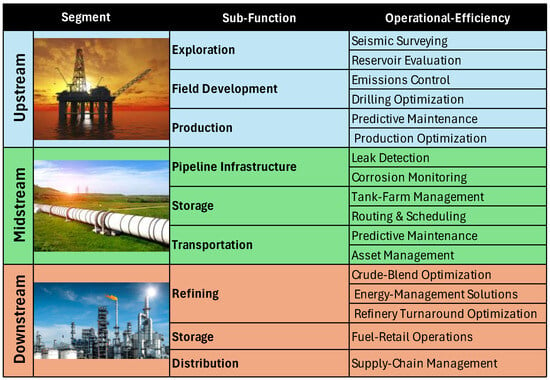
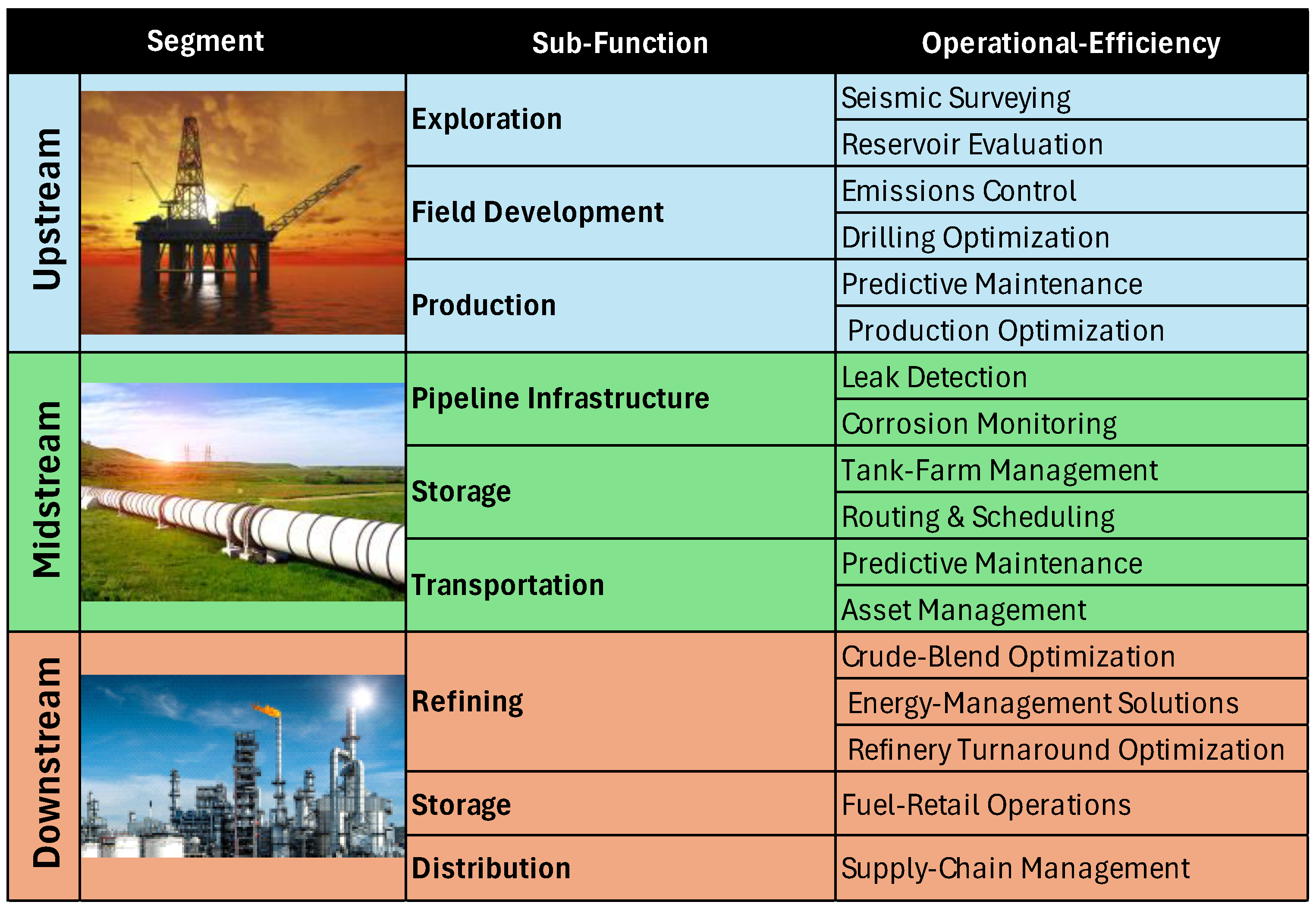
The summary of the extensive reach of AI applications across the oil and gas industry, targeting key areas for operational efficiencies is provided in Figure 1. Operational efficiency refers to the ability to deliver required outputs (production, reliability, safety, throughput) with reduced inputs (time, cost, energy, unplanned downtime) and better asset utilization. In oil and gas, the most policy-relevant efficiency proxies typically include unplanned downtime, maintenance cost, unit operating cost, production efficiency, and utilization/uptime indicators. Many AI applications are explicitly designed to reduce non-productive time and stabilize operations; thus, operational efficiency is a theoretically plausible “value-creation channel” linking AI adoption to financial outcomes.
Figure 1.
AI in Oil and Gas Industry-Benefit, Use Cases, and Examples. Source: Created by the authors and contribution will be specified further.
Financial performance in oil and gas is often evaluated using profitability (EBIT), cash generation (operating cash flow), and capital efficiency metrics such as ROACE. ROACE is particularly relevant in oil and gas because it captures how effectively management converts a large capital base into operating returns, and it is routinely used in investor communication and strategic planning.
Drawing on the Resource-Based View, AI capabilities can be interpreted as firm resources that produce advantage when they are embedded in operational routines and complementary assets. From a mechanism perspective, this suggests a pathway: AI-enabled tools improve operational efficiency (e.g., fewer failures, optimized set-points, faster cycle times), which further improves financial performance through cost reduction, improved margins, and higher returns on the existing capital base.
3. Materials and Methods
Grounded in established theoretical frameworks, including technology adoption theory (Venkatesh et al., 2003) and the resource-based view (RBV) (Barney, 1991), the literature review synthesizes existing knowledge from over 201 scholarly scientific articles, industry reports, and case studies.
The bibliometric dataset was retrieved from Scopus using a TITLE-ABS-KEY query combining AI terms (“artificial intelligence”, “AI”, “machine learning”) with domain terms (“oil and gas”, “petroleum industry”) and performance terms (“operational efficiency”, “financial performance”, “profitability”). Filters were applied for English-language sources and the 2010–2025 period. All 201 records meeting the inclusion criteria were exported with full bibliographic metadata and author keywords for network analysis.
A recent bibliometric review highlights the growing trend and research focus on AI in energy economics, indicating a substantial body of literature in this (Bitzenis et al., 2025). The application of AI, machine learning, and big data analytics in natural resource management has seen a significant increase in research since 2010, as evidenced by a bibliometric analysis of Scopus-indexed documents highlighting key research clusters (Pandey et al., 2023).
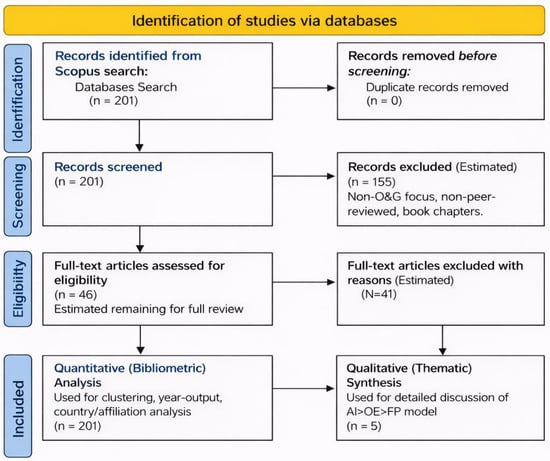
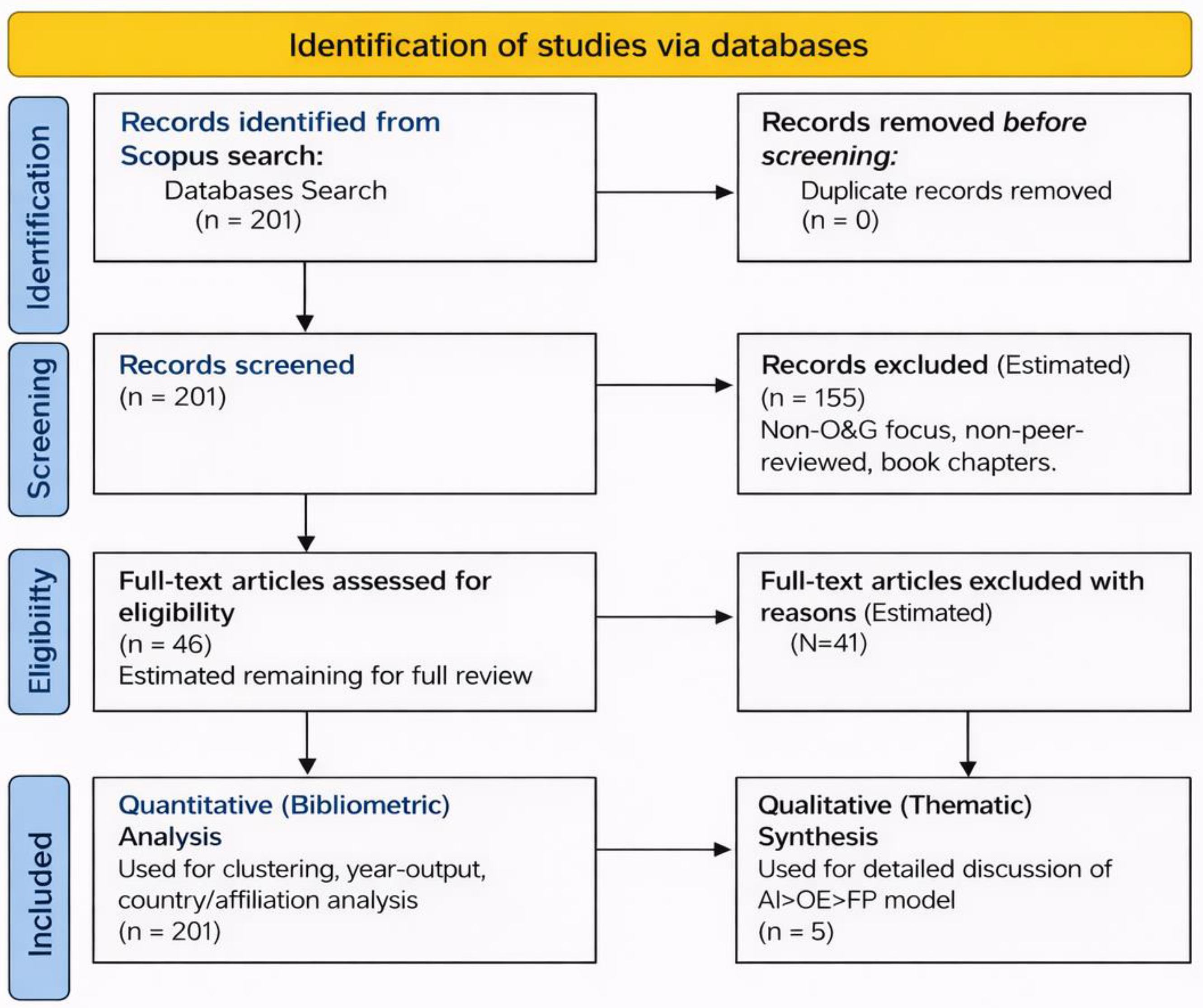
The summary of the extensive reach of AI applications across the oil and gas industry, targeting key areas for operational efficiencies is provided in Figure 2.
Figure 2.
Flow Diagram of Literature Selection Process (PRISMA-Style).
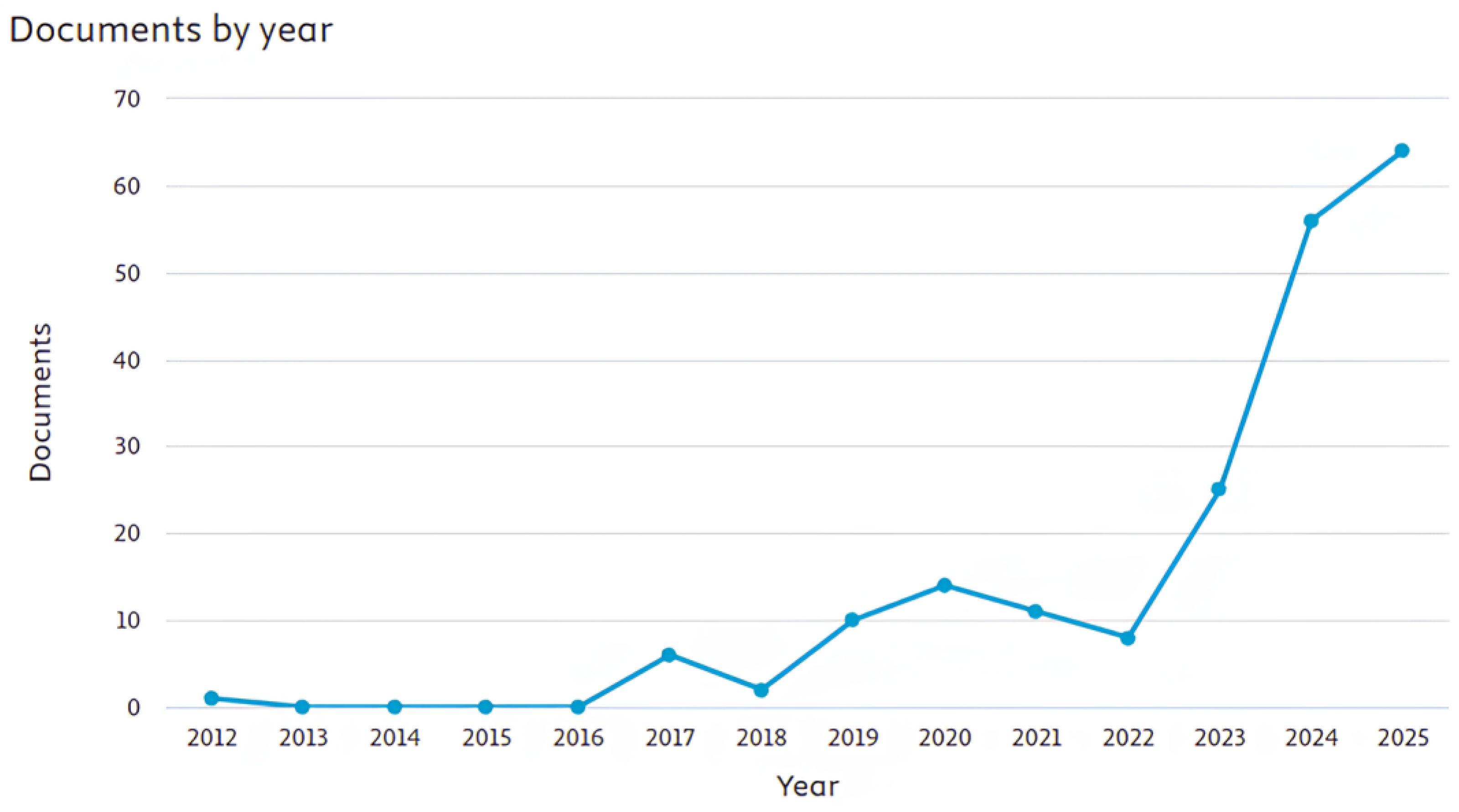
The selection process followed a systematic methodology, visualized in a PRISMA-style flow diagram chart (Figure 2). An initial paper was screened based on criteria of relevance, publication type, language, and time period (Figure 2, Figure 3 and Figure 4), followed by a qualitative review to identify high impact, frequently cited, and empirically relevant studies for in-depth thematic synthesis. This rigorous filtering allowed for the final selection of five articles for thematic synthesis, to ensure the replicability and rigor of the literature synthesis. The initial 201 documents identified via the Scopus search were subjected to screening based on the relevance, publication type, language, and timeframe criteria. While all 201 documents formed the basis of the quantitative bibliometric analysis (Figure 2, Figure 3 and Figure 5), a subsequent qualitative review was conducted to identify high-impact, highly cited, and empirically relevant studies for the in-depth thematic synthesis. This rigorous filtering resulted in the final selection of five articles for the thematic synthesis that directly provided measurable operational and financial outcomes.
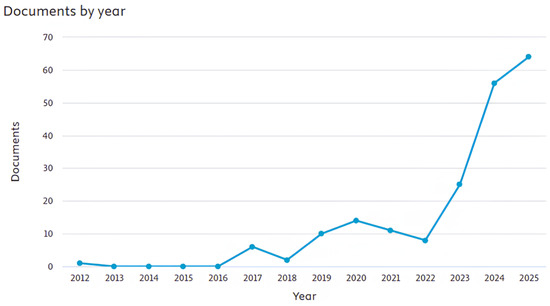
Figure 3.
Yearly output of Scopus-indexed publications on AI and performance in the oil and gas sector in SCOPUS, 2010–2025. Source: Created by the authors.
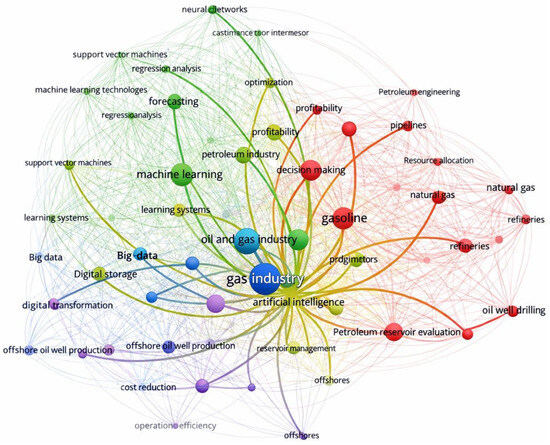
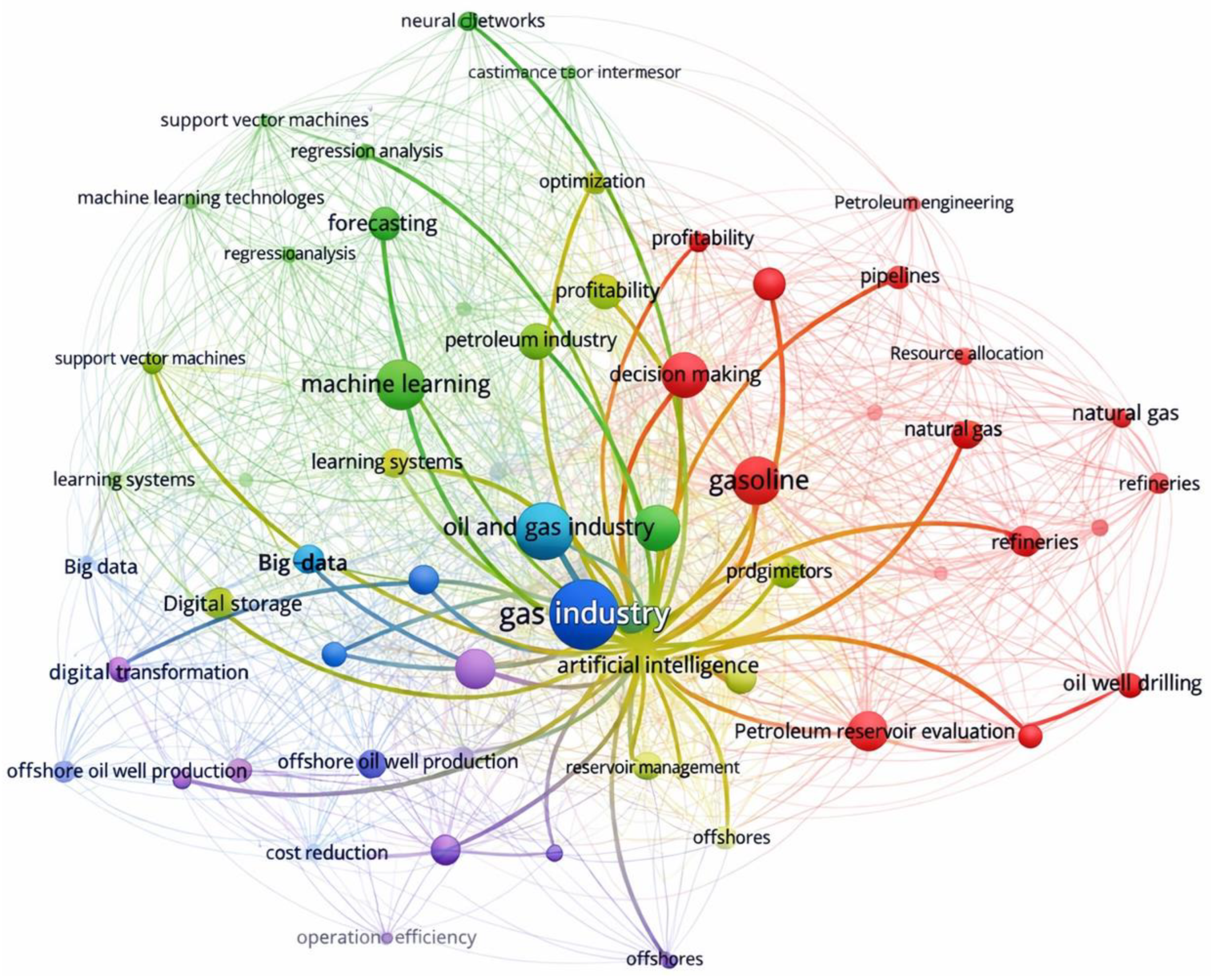
Figure 4.
Keywords mapping of the publications with the names of key keywords.
Figure 5.
Word cloud of the key concepts related. Source: Created by the authors.
This study employs a theory-informed, comparative case-study design to assess whether firm-level evidence supports the proposed value-creation pathway: AI adoption leading to operational efficiency, which subsequently drives financial performance. The unit of analysis is the firm specifically focused on industry supermajors BP and Shell. The analytic logic utilizes pattern matching and mechanism-based inference rather than statistical causal attribution. Accordingly, the analysis operationalizes this pathway as a three-link chain:
- AI adoption (intervention): identifiable AI-enabled initiatives embedded in operational workflows (e.g., predictive maintenance, digital twins, process optimization).
- Operational efficiency (mechanism): observable changes in efficiency-relevant outcomes (e.g., reduced unplanned downtime, improved reliability/uptime, lower unit operating costs, shorter cycle times).
- Financial performance (outcome): capital-efficiency and profitability indicators, with emphasis on ROACE, interpreted as a function of operating performance relative to capital employed.
For each firm, evidence is organized into an evidence-to-mechanism matrix that links: (1) the stated objective of the AI initiative; (2) the targeted operational mechanism and its corresponding operational indicators; and (3) the relevant financial outcomes (e.g., ROACE). To avoid overstating AI effects, the analysis explicitly assesses rival explanations that may influence financial performance contemporaneously, including oil price volatility, portfolio and capex changes, restructuring programs, impairments/divestments affecting capital employed, and other strategic initiatives. Consequently, the case-study results are interpreted as contextual support for the proposed pathway (i.e., “consistent with”) rather than definitive proof of causality.
4. Results
4.1. Bibliometrics and Oil and Gas Industry
The initial search highlights key research topics (the central role of AI in the literature) and tracks the development of AI applications in the oil and gas industry, highlighting the rapid rise in research on cost reduction and profitability enhancement starting from 2020–2022.
Figure 3 indicates a significant increase in the number of documents published, particularly showing a sharp rise in publications from 2022 to 2025, which traces the evolution of AI applications in oil and gas.
Current study employs a structured, variable-based analytical method to investigate the mediating role of operational efficiency in the relationship between financial performance and the use of artificial intelligence (AI). Adoption of AI is viewed as a technological capability, as evidenced by established uses throughout the oil and gas value chain, including data-driven optimization, process automation, and predictive maintenance. The mediating variable, operational efficiency, is assessed using quantitative metrics that are commonly accepted in both academia and industry: asset utilization rates, production uptime, operating expenses (OPEX), and unit operating cost. Efficiency benefits brought about by AI-enabled process enhancements are captured by these measurements. Return on Average Capital Employed (ROACE), operating cash flow, EBIT, and other profitability and capital-return metrics are used to evaluate financial performance, the dependent variable.
VOSviewer version 1.6.20 was used to construct a keyword co-occurrence network. The analysis applied a minimum keyword occurrence threshold of 5, yielding 51 keywords grouped into five clusters. Keyword cleaning was conducted by merging synonyms and spelling variants (e.g., “AI” vs. “artificial intelligence”; “oil & gas” vs. “oil and gas”), and by removing generic terms without analytical value. Association-strength normalization was used to map relationships among keywords, and the resulting clusters were interpreted as thematic research streams (See Figure 4).
The keyword co-occurrence network in Figure 4 shows the strong interconnections between artificial intelligence, machine learning, and key operational and financial aspects within the oil and gas industry research landscape from 2010 to 2025.
As Table 1 indicates, the keyword co-occurrence network, overall, illustrates a well-connected structure wherein the central nodes (AI, machine learning, etc.) are linked to both the operational-efficiency terms and the financial-performance terms. This confirms that in the literature, technical AI topics are frequently discussed together with operational outcomes and financial implications. In other words, the field’s conceptual structure links “what AI is and does” (the techniques and the specific oil and gas applications) with “why it matters” (efficiency gains and financial results). Such a mapping validates the premise of current study: the interplay between AI, operational efficiency, and financial performance is indeed the crux of scholarly conversation. The fact that these concepts co-occur strongly in the bibliometric map provides evidence suggests that researchers are actively examining how AI-driven improvements translate into performance and profitability gains.
Table 1.
Interpretation of the Keyword Co-Occurrence Map (2010–2025).
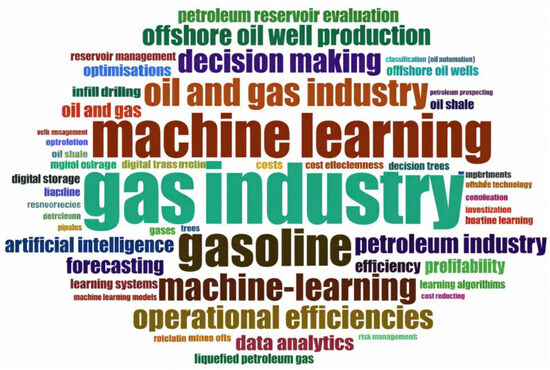
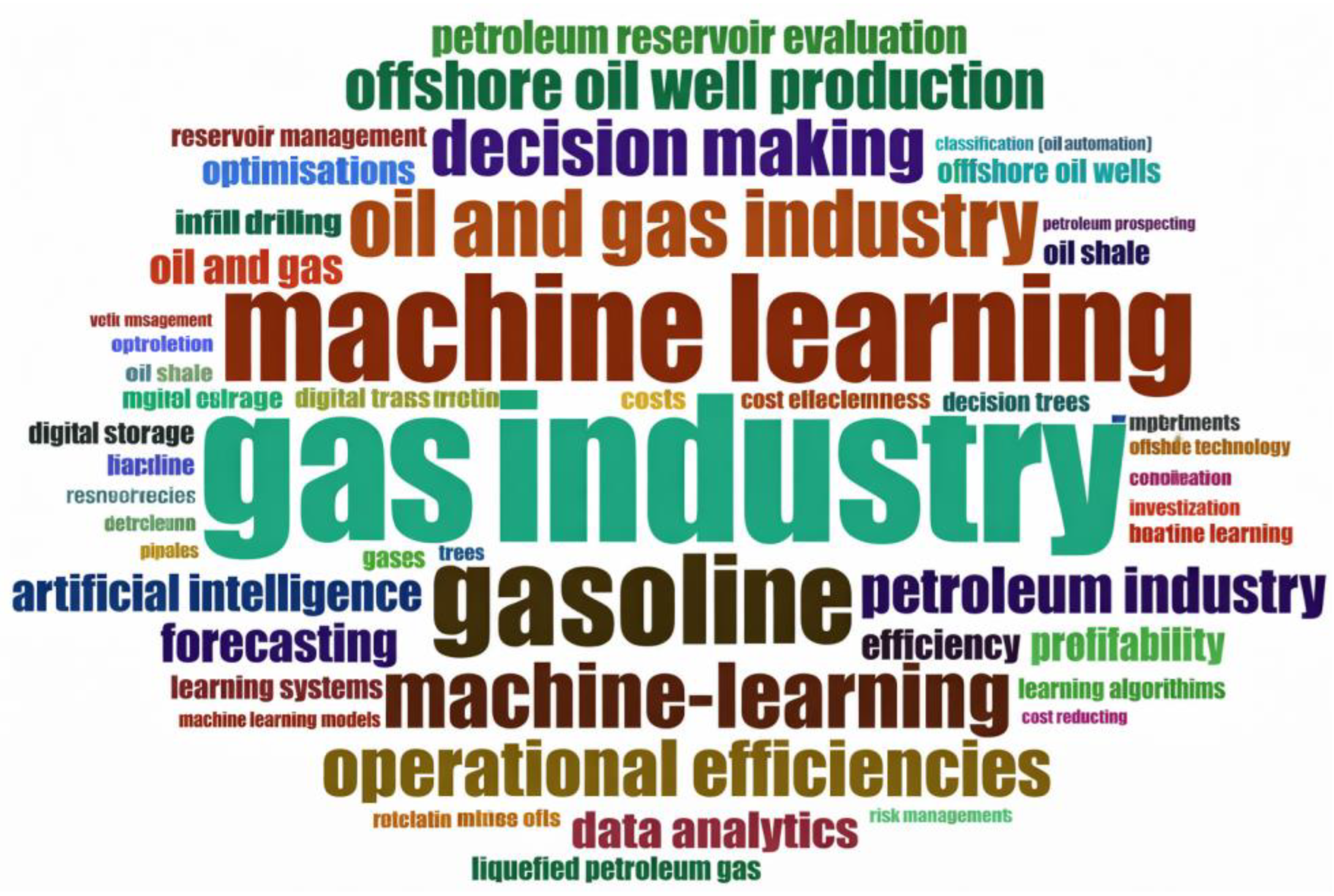
The terms “machine learning” and “gas industry” that appear most frequently in Figure 5 indicate that the central theme is the application of machine learning in the gas industry. Other salient terms include “oil and gas industry”, “decision making”, “operational efficiencies”, and “gasoline”, which collectively indicate the dominant aims of literature and the principal domains of application.
The word cloud also features a range of related concepts, including:
- Technologies and Methods: “artificial intelligence”, “data analytics”, “forecasting”, “neural networks”, and “learning algorithms”.
- Business Objectives: “profitability”, “cost effectiveness”, and “cost reduction”.
- Industry Applications: “offshore oil well production”, “petroleum reservoir evaluation”, “pipelines”, and “digital transformation”.
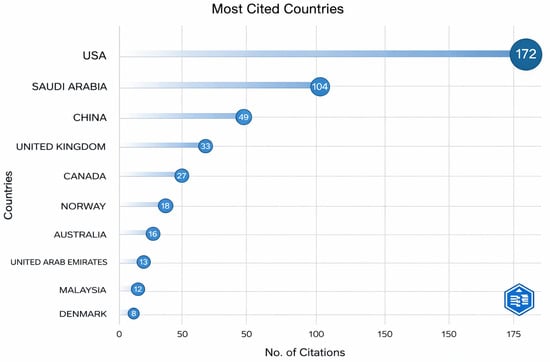
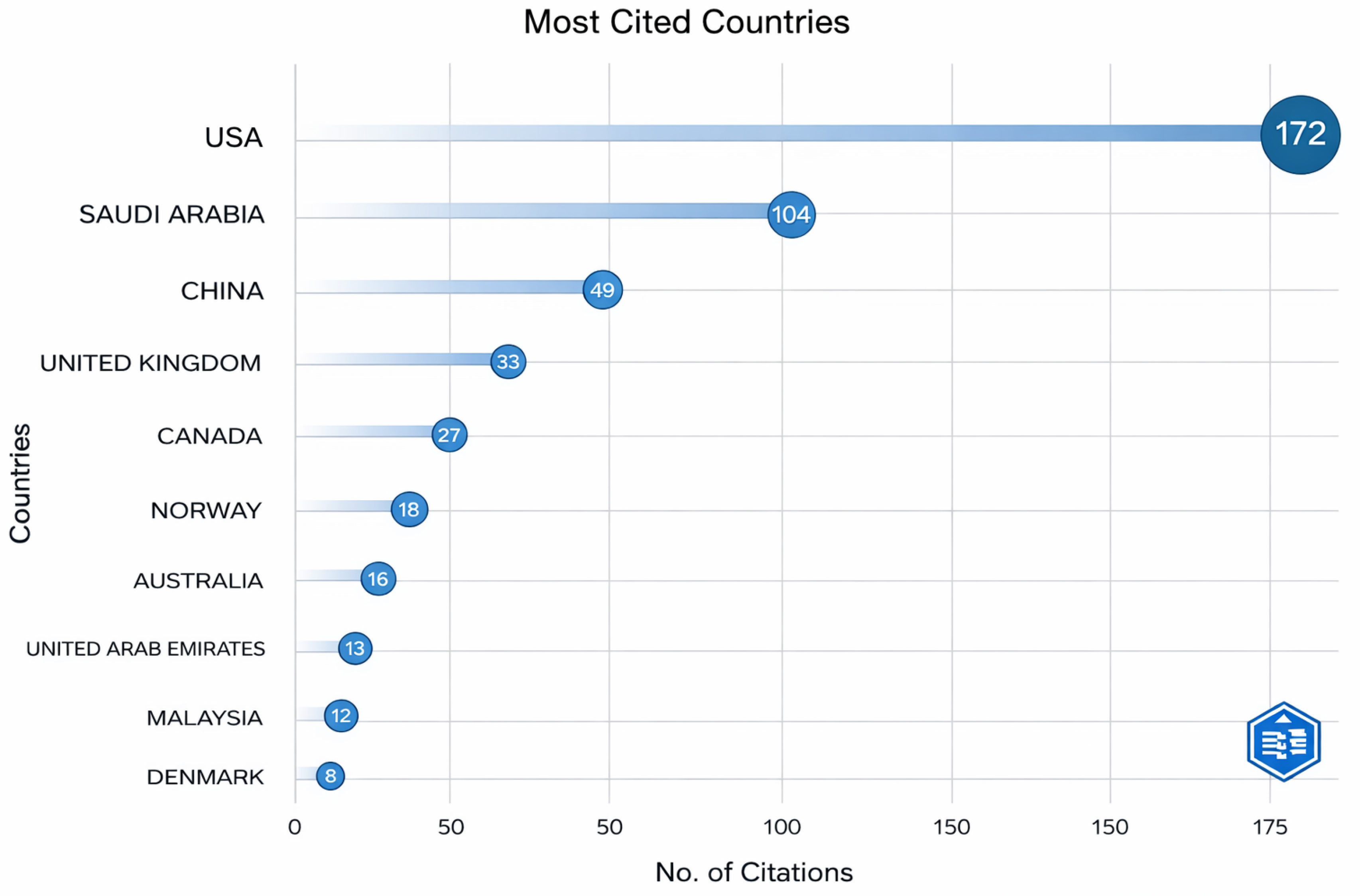
Figure 6 highlight the countries whose authors have made the most significant contributions to the research field, as measured by the total number of citations (TC). The results reveal that US authors emerge as the dominant leader with 172 citations in total, indicating a significant amount of research in this area, followed by Saudi Arabian researchers with 104 citations and Chinese with 46 citations.
Figure 6.
Most Cited Countries (2010–2025) Source: Created by the authors by combining information from Scopus.
However, when examining the average citations per article as a measure of research impact, the United Kingdom research is the most influential with 16.50 citations per article. Saudi Arabia follows with an average of 11.60 citations, and the USA with 10.10 citations per article (See Table 2). Thus, while the US produce a high volume of research, studies from the United Kingdom demonstrate a higher average citation impact in this field. Overall, figures highlight substantial academic contributions from a diverse set of countries across North America, Europe, the Middle East, and Asia. The findings suggest that research in this domain is not confined to a specific region but has garnered significant attention and impact globally.
Table 2.
Most Cited Countries with average article citations (2010–2025) Source: Created by the authors by combining information from Scopus.
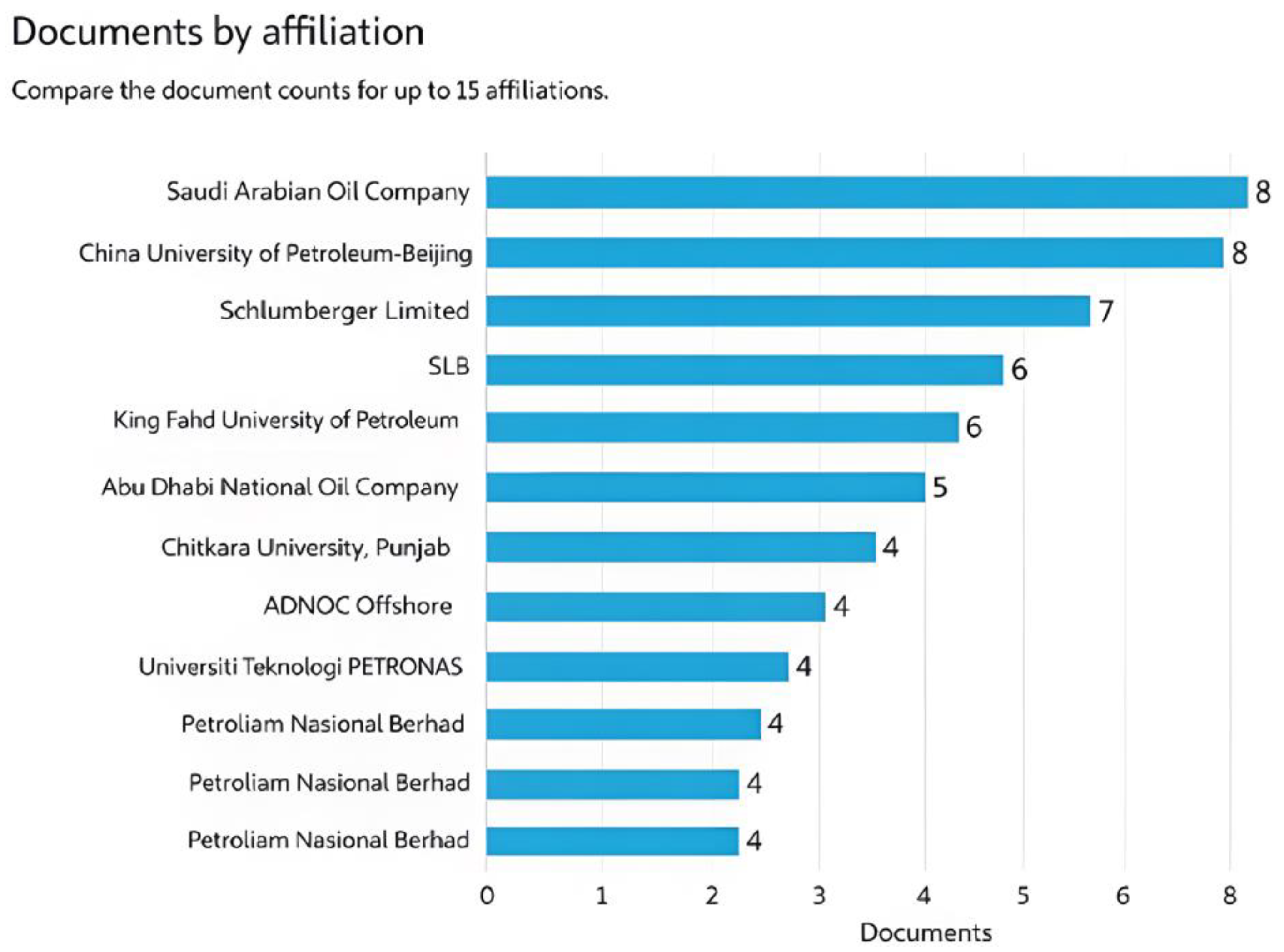
Figure 7 reveals a robust mix of both corporate and academic leadership. The ‘Saudi Arabian Oil Company’ leads the contributions with 7 documents, followed closely by the ‘China University of Petroleum-Beijing’ with 6 documents. This highlights a strong focus from both a major National Oil Company (NOC) and a specialized energy university. The international oilfield service giant ‘Schlumberger Limited’ (now ‘SLB’, which also appears separately) is a significant contributor, with 5 and 4 documents, respectively. Other major NOCs, such as the ‘Abu Dhabi National Oil Company’ (and its ‘ADNOC Offshore’ arm) and ‘Petroliam Nasional Berhad’ (along with ‘Universiti Teknologi PETRONAS’), also feature prominently. This landscape of affiliations underscores that the pursuit of AI-driven efficiency is a critical strategic priority shared by the industry’s largest operators, its key service providers, and its dedicated academic partners.
Figure 7.
The document counts by affiliation.
BP and Shell were selected as case studies because they provide consistent, high-quality publicly reported operational and financial data that allows for reliable and comparable analysis of the outcomes of AI implementation. Their large-scale, mature digital programs, especially in the areas of predictive maintenance and digital twins, allow for the development of evidence on how AI implementation impacts operational efficiency improvements and financial performance, making them suitable empirical cases.
Table 3 shows the qualitative thematic synthesis, five studies were selected from the Scopus corpus using transparent criteria: (1) high citation visibility within the corpus, (2) explicit discussion of an AI application in oil and gas, (3) a clearly described operational efficiency mechanism (e.g., optimization, automation, predictive maintenance, reliability improvement), and (4) an explicitly stated financial or performance outcome (cost reduction, productivity improvement, profitability/capital efficiency implications). The selected studies were then coded by value-chain segment and mechanism type to map how AI-enabled operational improvements plausibly translate into financial outcomes.
Table 3.
Thematic Synthesis of AI Applications and their Role in Operational Efficiency-Financial Performance.
The application of automated machine learning for multi-variate prediction of well production. Selected studies demonstrate how automated machine learning is applied in upstream production to analyze hundreds of wells and predict the optimal set of operational variables that will “maximize the production” (Maucec & Garni, 2019). Study by Maucec and Garni supports AI → OE → FP model by showing a specific AI tool enabling “process optimization” (the mediator) to directly achieve a stated financial performance goal (maximized revenue). Another study analyzes the use of an SVM to automate the identification of depositional microfacies from well logs, a process that is conventionally manual, “time-consuming,” and limited (Wang et al., 2019). This study also provides a clear link to AI → OE → FP model by showing an AI tool (AI) achieving “process automation” (OE) with 84% accuracy, thus contributing to “cost-saving” and “sustainable profitability” (FP). The multi-objective optimization in petroleum refinery catalytic desulfurization using a machine learning approach. This study details a hybrid-ML approach (SVMG) that incorporates both support vector machine (SVM) and genetic algorithm (GA) that performs multi-objective optimization in a downstream refinery, finding the best configuration to simultaneously minimize sulfur, emissions, and the “HDS cost” (Al-Jamimi et al., 2022). This links to the framework by showing AI as the enabler for a complex “process optimization” (OE), where the financial performance (“profitability” via cost minimization) is a direct and measured component of the efficiency gain. A Review of Modern Approaches of Digitalization in Oil and Gas Industry (Al-Rbeawi, 2023) provides a strategic overview of digitalization technologies, including AI, arguing that their primary purpose is to “enhance operational efficiency and reduce the cost” through system-wide optimization and risk reduction. This study strengthens the current research with the main argument’s strategic context, as its core objective confirms that the AI → OE → FP pathway is the foundational goal of the industry’s entire digital transformation.
A critical review of physics-informed machine learning applications in subsurface energy systems (Latrach et al., 2024) investigates the next generation of AI, Physics-Informed Machine Learning (PIML), integrated physics principles to make models more reliable and interpretable. This analysis gives the opportunity for a crucial link to the current study by showing that the evolution of AI technology is being driven by the need to make the AI → OE link more trustworthy, as PIML enables “more accurate and reliable predictions for resource management and operational efficiency”.
This study is structured to empirically test and validate the central thesis. The analytical framework is derived from the model proposed by the authors, which posits the causal chain: AI → OE → FP. According to this model, AI technologies (the independent variable) are deployed to enable specific operational improvements mechanisms such as “cost control, process optimization, and predictive maintenance” (the mediating variable, OE) which, in turn, are the direct drivers of improved financial outcomes such as “increased return on investment”, “return on average capital employed” and “long-term resilience” (the dependent variable, FP). The current research demonstrates how specific AI and ML methodologies, such as Artificial Neural Networks (ANNs), Support Vector Machines (SVMs), and Physics-Informed Machine Learning (PIML), are consistently applied to solve discrete operational challenges. By quantifying the improvements in efficiency (e.g., higher prediction accuracy, reduced non-productive time, optimized process parameters), previously analyzed studies provide the missing link, connecting the algorithm to the balance sheet. Ultimately, this synthesis will show that the financial outcomes repeatedly cited in the literature, such as “increased profitability,” “cost-saving,” and “maximized NPV,” are the direct and logical consequences of these AI-driven enhancements in operational efficiency. This table serves as an “at-a-glance” roadmap that visually confirms the central thesis: across the entire O&G value chain, operational efficiency is the consistent and indispensable mediator between AI adoption and financial performance.
A thematic synthesis of highly cited authors like Maucec and Garni (2019) and Wang et al. (2019) further details this connection, providing specific case studies where AI tools like automated ML and SVMs are used to enable process optimization and automation, thus, consistently demonstrate that financial outcomes like “cost-saving” and “maximized production” are the direct results of these AI-driven enhancements in operational efficiency, which validates the authors’ main AI → OE → FP model.
The oil and gas (O&G) industry underpins the modern economy by supplying a dominant share of global primary energy while enabling a vast array of downstream products from transportation fuels to petrochemical feedstocks. Its value creation rests on a tightly coupled, capital-intensive chain of activities that must operate reliably under geological uncertainty, price volatility, stringent safety requirements, and growing decarbonization pressures. In this context, companies continuously balance resource access, operational efficiency, and environmental stewardship to sustain competitiveness and financial performance.
The role of operational efficiency is evaluated using a mechanism-based triangulation logic:
- Bibliometric clustering is used to assess whether the literature co-locates AI topics with efficiency and finance concepts.
- Thematic synthesis identifies whether empirical papers report operational improvements alongside stated financial outcomes.
- Company cases (BP and Shell) are used to examine whether documented AI initiatives plausibly target efficiency mechanisms (downtime reduction, cost control) and whether contemporaneous financial indicators (e.g., ROACE) move in a direction consistent with improved capital efficiency. This provides indicative evidence of an efficiency-mediated pathway while avoiding causal attribution.
4.2. Operational Efficiency in Oil and Gas Through AI
Operational efficiency, defined as maximizing output with minimal input, is a critical performance metric in the capital-intensive oil and gas industry (Senses & Kumral, 2025). AI adoption is a pathway for significantly enhancing operational efficiency across various domains within the sector.
Enhanced Asset Management and Predictive Maintenance: AI-powered predictive maintenance is transforming asset management in oil and gas. By analyzing sensor data, historical maintenance records, and operational parameters, AI algorithms can predict equipment failures with remarkable accuracy, allowing for proactive maintenance interventions (Mobley, 2002). This predictive approach minimizes unplanned downtime, reduces maintenance costs, extends asset lifespan, and improves overall equipment effectiveness (OEE) (Mishra, 2012). For instance, AI can predict failures in critical equipment such as pumps, compressors, and turbines, enabling timely repairs and preventing costly operational disruptions.
Due to failures of a multi-phase pump, BP deployed an AI-powered predictive maintenance solution to its unmanned platform in Tambar. After half a year, the AI software notified Aker BP about the possibility of the multi-phase pump failing. The solution used a normal behavior model, which tracked operational deviations (Numalis, 2024). Previously, unplanned failures would cost more than $10 million in production. By predicting the failure, the pump malfunction was averted, resulting in sustained production.
AI is instrumental in optimizing production processes across the oil and gas value chain. In upstream operations, AI algorithms can optimize well placement, drilling trajectories, and production rates to maximize hydrocarbon recovery while minimizing operational costs (Davoodi et al., 2025). In refineries, AI-based process control systems can optimize process parameters such as temperature, pressure, and flow rates in real-time, leading to increased throughput, improved product yields, and reduced energy consumption (Noh et al., 2025). AI can also optimize energy usage across operations, reducing energy intensity and improving environmental performance (Guo et al., 2025).
The AI-powered drilling rig allows Shell to optimize drilling trajectories, which helps with better wellbore placement. The system is also armed with reinforcement learning to learn over time.
Improved Safety and Risk Management: Safety is paramount in the hazardous oil and gas industry. AI contributes to improved safety and risk management through various applications. AI-powered monitoring systems can detect safety hazards, predict potential accidents, and trigger timely alerts, enhancing workplace safety (Kim et al., 2024). AI is also used for risk assessment and mitigation, analyzing historical incident data, identifying risk factors, and developing proactive safety measures (Kulinan et al., 2025). Furthermore, AI-driven automation of hazardous tasks reduces human exposure to dangerous environments, further improving safety (Baek et al., 2025).
4.3. Financial Performance Outcomes of AI Adoption
The improvements in operational efficiency driven by AI adoption are expected to translate into tangible financial performance gains for oil and gas companies. These monetary gains can take many different forms, such as greater profits, fewer expenses, and additional revenue (Ibishova et al., 2024).
Revenue Enhancement: AI-driven production optimization can lead to increased hydrocarbon production, boosting revenue for oil and gas companies (Mohaghegh, 2016). Improved exploration success rates through AI-powered seismic data analysis can also contribute to revenue growth by identifying new and commercially viable reserves (Yuan et al., 2025). Furthermore, AI-driven demand forecasting and optimized pricing strategies in downstream operations can enhance revenue generation (Kwon et al., 2022).
In the oil and gas sector, an industry defined by its staggering capital intensity and long-duration, high-risk investments, financial metrics are not created equal. While metrics such as EBIT (Earnings Before Interest and Taxes) or absolute Net Income are widely used, they are insufficient for capturing the true measure of corporate performance. These metrics effectively measure scale and profitability, but they inherently fail to account for the efficiency with which the enormous capital base is being utilized.
This critical gap is filled by Return on Average Capital Employed (ROACE), which shows how well a company uses its money to make profits. ROACE has been established as a core financial indicator and one of the central target figures used by financial analysts for the benchmarking and valuation of international oil and gas companies since the late 1990s (Osmundsen et al., 2006).
The formal definition of ROACE, as provided in industry analyses, is a ratio that divides profitability by the capital used to generate it (Formula (1)):
The structure of this Formula (1) is the key to its strategic importance: EBIT (Earnings before interests and taxes), Current liabilities. Return on average capital employed (ROACE) is a useful ratio when analyzing businesses in capital-intensive industries, such as oil. Companies that earn more profit with less capital have a higher ROACE than less efficient ones. The formula for the ratio uses EBIT in the numerator and divides that by average total assets less average current liabilities. Therefore, ROACE is not a simple measure of profit; it is the definitive measure of capital efficiency. ROACE is a key indicator of how effectively firms convert invested capital (e.g., production facilities, pipelines, refineries, and reserves) into operating returns.
This efficiency component is what elevates ROACE above all other metrics. It is the lingua franca of value that translates complex operational achievements, such as improvements in production efficiency, asset uptime, or maintenance schedules, into a single, standardized, and comparable percentage. This percentage is understood by C-suite executives, boards of directors, and financial analysts alike, serving as the essential bridge between performance in the oil field and valuation on the stock market.
4.4. Analytical Approach for the BP and Shell Cases
Financial indicators (ROACE, EBIT, and operating cash flow, where used) were extracted directly from annual reports and investor materials, while AI initiative descriptions were sourced from company publications and reputable technology partner documentation. Additionally, Brent price series were included to contextualize commodity-cycle effects and isolate AI-driven performance from broader market volatility.
The BP and Shell cases are analyzed using a structured logic model that traces how AI initiatives are expected to generate financial value through measurable operational efficiency improvements. Rather than providing a descriptive inventory of digital initiatives, the analysis evaluates whether the documented AI deployments (e.g., predictive maintenance and digital twin programs) are linked to operational outcomes that plausibly affect cost structure and asset utilization—two central drivers of ROACE in capital-intensive oil and gas operations. The discussion therefore focuses on (i) the operational mechanisms targeted by AI and (ii) whether the direction of observed operational and financial indicators aligns with the proposed pathway, while recognizing that firm-level financial outcomes are simultaneously shaped by commodity prices and strategic capital allocation decisions.
Table 4 operationalizes the proposed AI → OE → FP pathway by linking firm-level AI initiatives (e.g., predictive maintenance, reliability analytics, and digital twins) to specific operational mechanisms (reduced unplanned downtime, improved reliability, and cost optimization) and to financial linkages reflected in capital-efficiency indicators such as ROACE. The matrix also records key rival explanations (e.g., Brent price dynamics, portfolio restructuring, capex discipline, and impairments) to clarify that observed financial outcomes may be co-determined by external and strategic factors.
Table 4.
Evidence-to-mechanism matrix for the AI → Operational Efficiency → Financial Performance pathway (BP/Shell).
4.5. Indicators for AI Implementation: Case Studies of BP
Digital twin and predictive analytics in the Gulf of Mexico—BP has rolled out “digital twin” technology on its Gulf of America platforms. A digital replica of each platform allows remote teams to conduct corrosion inspections and valve checks using laser scan data and machine learning models, cutting the time and risk of manual offshore inspections (bp America, 2025b). BP also uses high-performance computing and AI to optimize drilling trajectories, reducing a months-long process to days.
The technology enables maintenance work to be planned and executed more safely and efficiently, and the predictive models help prioritize areas needing attention (bp America, 2025a). This reduces unplanned downtime and maintenance costs in BP’s offshore operations (bp America, 2025c).
By improving asset uptime and reducing capital tied up in equipment and maintenance, these AI projects enhance asset productivity and lower capital employed. BP’s 2024 financial results show a ROACE of 14.2% (BP p.l.c., 2025). AI-driven efficiency supports this metric by increasing returns (through higher production and cost savings) while limiting additional capital investment. BP is using technology to drive innovation in its Gulf of America operations, with safety and efficiency top of mind.
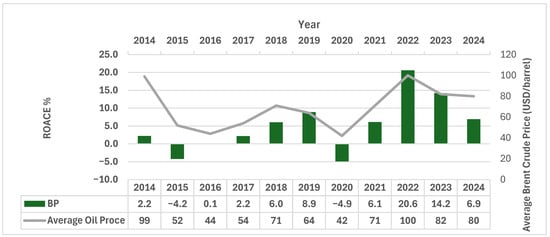
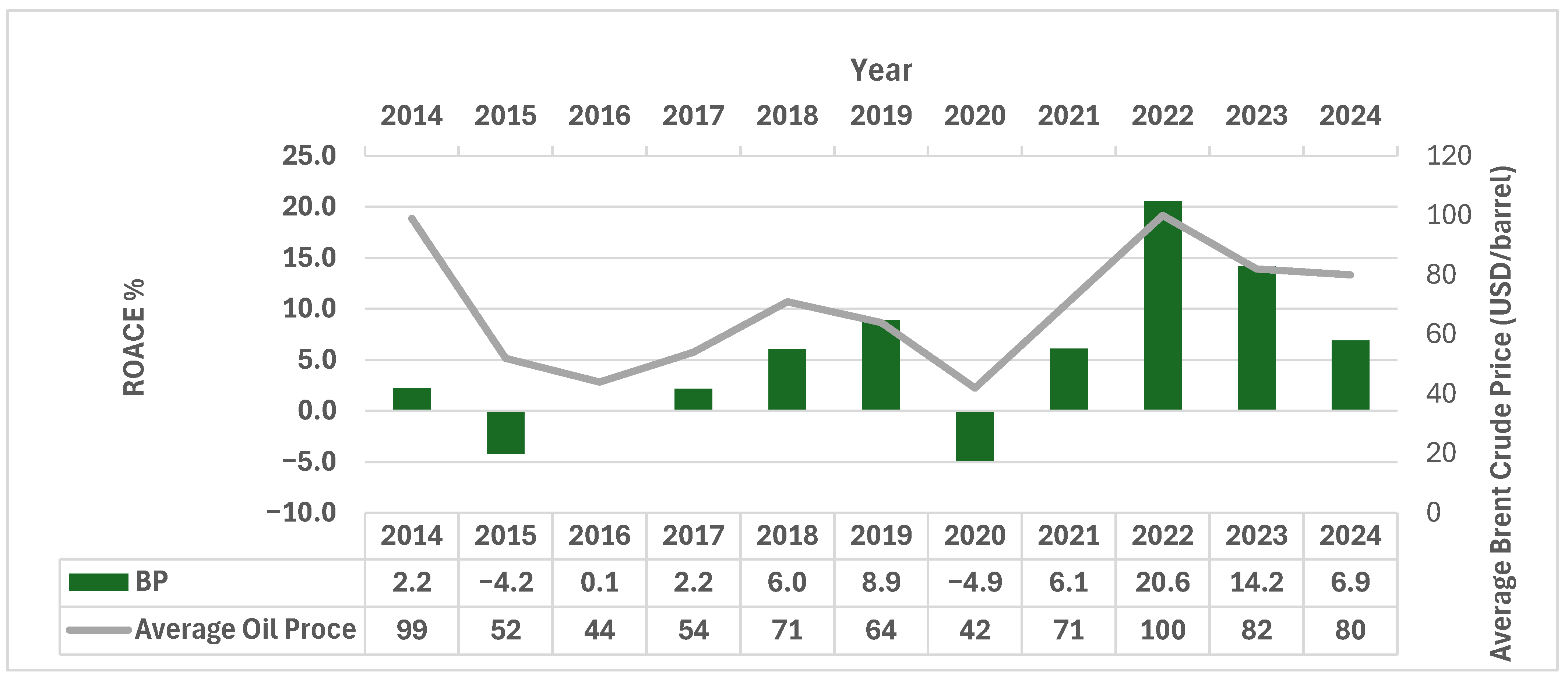
Figure 8 illustrates the historical correlation between BP’s financial performance (BP, 2025), measured by ROACE, and global oil prices over a decade (2014–2024). The data reveal a clear sensitivity of BP’s returns to crude oil price fluctuations, characterized by three distinct phases:
Figure 8.
BP ROACE vs. Average Brent Crude Price (USD/barrel).
- Market Volatility (2014–2020): Following the price crash in 2015 ($52/barrel) and the demand shock in 2020 ($42/barrel), BP recorded negative ROACE values of −4.2% and −4.9%, respectively. This underscores the vulnerability of capital returns during periods of depressed commodity prices.
- Peak Performance (2022): A significant decoupling of historical efficiency is observed in 2022. While oil prices reached $100/barrel, comparable to 2014 levels ($99/barrel the ROACE in 2022 surged to 30.5%, compared to only 2.2% in 2014. This suggests substantial improvements in operational efficiency or capital discipline over the decade.
- Stabilization (2023–2024): As oil prices stabilized in the $80–$82 range, ROACE moderated to 14.2% in 2023 and 6.9% in 2024, indicating a normalization of returns post-crisis.
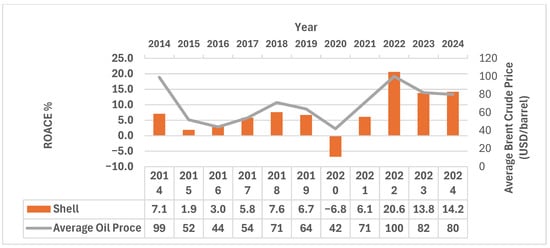
As shown in Figure 9, BP’s ROACE generally co-moves with the oil price cycle across 2014–2024, with pronounced deterioration in low-price periods and strong improvement during the 2022 price upswing.
Figure 9.
Shell ROACE vs. Average Brent Crude Price (USD/barrel).
These case studies demonstrate that sustained reductions in operating expenses and rising ROACE correspond to AI-enabled efficiency improvements. Monitoring ROACE, therefore, provides a practical way to evaluate the effectiveness of AI implementation and its contribution to operational efficiency and profitability.
While the operational logic of the documented AI initiatives is consistent with an efficiency-driven value-creation pathway, firm-level financial performance—particularly ROACE—is also materially influenced by external and strategic factors. These include oil price volatility (affecting realized revenues and operating profit), restructuring and cost-transformation programs (affecting cost base independent of AI), capex and portfolio rebalancing (affecting both operating performance and capital employed), and impairments/divestments that can mechanically alter capital employed and thus ROACE. Accordingly, the case evidence is interpreted as supportive but not exclusive: AI may contribute to improved operational efficiency, but the magnitude of its contribution to ROACE cannot be isolated without firm-level econometric identification or quasi-experimental designs.
Overall, BP’s case provides indicative support for the proposed pathway insofar as the reported AI initiatives are explicitly oriented toward reliability and cost mechanisms that plausibly improve capital efficiency. Where operational indicators or narrative disclosures point to reduced downtime and improved cost control, subsequent ROACE movements can be interpreted as consistent with the efficiency channel. However, because ROACE is jointly determined by commodity prices and strategic capital decisions, the case should be read as mechanism-consistent evidence rather than a causal estimate of AI impact.
4.6. Indicators for AI Implementation: Case Studies of Shell
Shell has a long history in technology and innovation. Shell has a global network of R&D centers and works closely with our customers, suppliers, and partners also collaborate with some of the world’s leading technology companies to deploy digital solutions at scale across our business.
AI implementation and operations—Shell deployed an AI predictive maintenance programme using machine learning models, digital twins and the C3 AI platform. The system monitors more than 10,000 pieces of equipment across upstream, manufacturing and integrated gas assets globally (C3 AI, 2022). It ingests data from over three million sensor streams and runs thousands of ML models to detect anomalies in pumps, compressors, valves and other critical machinery. The programme is integrated with Shell’s digital twin environment, providing a virtual representation of assets and allowing engineers to simulate and address issues remotely.
Operational efficiency outcomes—AI-based predictive maintenance reduces unplanned downtime by using resources more efficiently and extending asset life (C3 AI, 2022). According to Energies Media’s 2025 report on digital twins, Shell’s system monitors equipment in real time and cuts unplanned downtime by 35%, while also reducing maintenance costs by 20% (Energies Media, 2025).
Financial performance outcomes—Shell’s AI-enabled maintenance programme yields substantial cost savings. Energies Media reports that reducing unplanned downtime and maintenance costs by 20% leads to about US$2 billion in annual savings. The system also boosts equipment performance by about 15% (Energies Media, 2025), translating into higher production and revenue. BP’s adoption of digital twin technology is credited with producing 30,000 extra barrels of oil in one year, illustrating the financial benefit of similar AI tools in the sector.
Shell’s Capital Markets Day 2025 guidance targets an increase in ROACE from 6% in 2024 to around 10% by 2030 (Shell plc, 2025). The company notes that trading and supply activities have historically added ~2% ROACE uplift per year. AI-enabled predictive maintenance and optimization, which reduces unplanned downtime and improves resource utilization (Velthuis, 2021), contribute to higher returns on existing assets and therefore support the improvement in ROACE.
Shell’s 2025 Capital Markets Day materials stated that the company aims for $5–7 bn of cumulative structural cost reductions from 2022 to 2028, partly through procurement and supply chain optimization, cost savings from technology and AI implementation and corporate center simplification.
As shown in Figure 9, Shell’s ROACE broadly co-moves with the oil-price cycle between 2014 and 2024, with a marked decline in 2020 and a pronounced rebound during the 2022 price upswing.
The analysis of Shell’s financial performance (Shell 2024, 2025) from 2014 to 2024 reveals a strong cyclical dependency on global crude oil prices, though with notable shifts in capital efficiency over time. Three key trends define this period:
- Impact of the 2020 Downturn: The data underscores the severity of the 2020 market collapse. As average oil prices fell to $42/barrel, Shell experienced its only negative performance in the dataset, with ROACE dropping to -6.8%, a sharp decline from the stable returns observed in 2018–2019.
- Efficiency Gains (2014 vs. 2022): A comparison of high-price environments indicates improved operational leverage. In 2014, an oil price of $99/barrel yielded a ROACE of 7.1%. In contrast, when prices returned to a similar level in 2022 ($100/barrel), ROACE more than doubled to 15.9%. This suggests that Shell has significantly lowered its breakeven point or optimized assets over the decade.
- Post-Peak Normalization: As oil prices moderated to the $80–$82 range in 2023 and 2024, ROACE stabilized between 6.3% and 7.2%, mirroring levels seen in 2018–2019 but achieving them at higher commodity price points.
The dataset shows a direct correlation between oil price and ROACE. Notably, the recovery slope post-2020 is steep, and the company achieved significantly higher returns in 2022 compared to 2014, despite nearly identical oil prices.
Shell’s case similarly offers mechanism-consistent evidence: AI initiatives targeted at predictive maintenance and operational optimization map directly onto efficiency levers (uptime and unit costs) that are theoretically linked to ROACE. Financial indicator trends that align with improved operating performance are therefore interpreted as supportive of the pathway, while acknowledging that price cycles, portfolio actions, and capital allocation decisions remain important rival explanations.
Therefore, operational efficiency acts as an intermediary variable that explains how AI adoption impacts financial performance. Understanding this mediating role is crucial for oil and gas companies seeking to strategically leverage AI to achieve tangible financial benefits. Companies need to focus not only on AI implementation but also on effectively leveraging AI to drive measurable improvements in operational efficiency to realize the desired financial outcomes (Teece et al., 1997). In the respective field, many innovative solutions are introduced on a regular basis.
5. Discussion
The combined bibliometric and thematic results indicate that the dominant stream of AI research in oil and gas is not “AI for its own sake,” but AI as an operational capability aimed at reliability, optimization (Ljarwan et al., 2025), and automation (Wei, 2023). This is consistent with the sector’s economic logic: in capital-intensive operations, even small improvements in uptime, maintenance effectiveness, and unit operating costs can scale into substantial financial effects when applied across large asset bases.
At the same time, the case evidence underscores an important boundary condition: financial outcomes (including ROACE) are jointly shaped by commodity-price cycles and strategic decisions (portfolio, capex discipline, restructuring). Consequently, the value of AI is most plausibly realized when digital initiatives are embedded in operational routines and governance that convert algorithmic insights into repeatable efficiency gains (Al-Hajri et al., 2025). This supports treating operational efficiency as a primary value-creation channel while also motivating future empirical mediation studies using standardized KPIs and multi-firm panel data.
Despite the recognized potential of AI in the oil and gas industry, significant research gaps remain, particularly concerning the empirical quantification of operational efficiency’s mediating role, industry and application-specific financial outcomes, integration with sustainability and ESG goals, and the influence of organizational and human factors, all of which necessitate further investigation even amidst ongoing global research into AI applications within this sector. While the literature highlights the significant potential of AI in the oil and gas industry, several research gaps and areas for future inquiry remain.
Empirical Studies Quantifying the Mediating Effect: There is a need for more empirical research that directly quantifies the mediating role of operational efficiency in the AI-financial performance relationship. Future studies could employ statistical modelling and mediation analysis techniques to rigorously test this mediating effect using industry data (Baron & Kenny, 1986).
Industry-Specific and Application-Specific Analysis: Further research is needed to examine the financial performance outcomes of AI adoption in specific segments of the oil and gas industry (e.g., upstream, midstream, downstream) and for specific AI applications (e.g., predictive maintenance, reservoir management, process optimization). This granular analysis can provide more targeted insights for companies considering AI investments (Ochieng et al., 2024). Those aspects are under research for academic researchers with the practical involvement of practitioners.
Integration with Sustainability and ESG Goals: Future research should explore the intersection of AI adoption, operational efficiency, financial performance, and sustainability goals in the oil and gas industry. AI leverage to simultaneously improve financial performance and contribute to environmental, social, and governance (ESG) objectives is an increasingly important focus in the global focus on energy transition and sustainable development (AlGhanem & Mendy, 2024).
Organizational and Human Factors: The literature could further explore the organizational and human factors that influence the successful adoption and implementation of AI in oil and gas. Factors such as organizational culture, workforce skills, change management, and ethical considerations are critical for realizing the full potential of AI (AlGhanem & Mendy, 2024).
6. Implications
This study contributes to the oil and gas digital transformation literature by foregrounding a mechanism-based interpretation of AI value creation: operational efficiency is a plausible primary channel through which AI capabilities translate into improved financial outcomes. The bibliometric clusters and thematic synthesis jointly indicate that most impactful AI use cases focus on reliability, optimization, and automation—mechanisms that directly influence cost structure, productivity, and capital utilization.
For practitioners, the findings support evaluating AI programs through an indicator chain rather than isolated “technology adoption” metrics. Operational KPIs (e.g., downtime reduction, maintenance cost, unit operating cost, throughput stability) should be tracked alongside capital-efficiency outcomes (e.g., ROACE) to reflect whether AI is improving returns on the existing asset base. The BP and Shell cases illustrate how predictive maintenance and digital twin initiatives are typically justified through such efficiency mechanisms, while emphasizing that observed ROACE trajectories must be interpreted in the context of price cycles and strategic restructuring.
7. Conclusions
Using a dual approach that combines bibliometric mapping of 201 publications with thematic synthesis and targeted case evidence, this study clarifies how AI adoption is discussed and operationalized in the oil and gas sector. The evidence indicates that AI is most consistently linked to financial outcomes when it is deployed to produce measurable operational efficiency improvements—particularly in predictive maintenance, process optimization, and reliability management. While the findings support a conceptual AI → operational efficiency → financial performance pathway, the study does not claim causal mediation and instead positions operational efficiency as a theoretically and empirically plausible mechanism that requires future econometric testing.
8. Limitations
This review is limited by its reliance on English-language, Scopus-indexed sources, which excludes grey literature and non-English case studies that may contain additional evidence of AI deployments. Most included studies are descriptive or correlational, so the mediating effect of operational efficiency on financial performance is theoretically inferred rather than causally proven. Finally, the rapid evolution of AI technologies implies that newly published use cases and firm deployments after the search period may not be captured; the bibliometric results, therefore, represent a time-bounded snapshot of the 2010–2025 literature.
Author Contributions
Conceptualization and methodology, E.M. and I.M.; analysis and investigation, E.M. and I.M.; writing—original draft preparation, E.M. and I.M.; writing—review and editing, I.M. and B.S.; supervision and project administration, I.M.; The data acquisition and analysis, E.M. and B.S. Obtaining funding support, I.M. All authors have read and agreed to the published version of the manuscript.
Funding
The research is financed by the Recovery and Resilience Facility project “Internal and External Consolidation of the University of Latvia” (No. 5.2.1.1.i.0/2/24/I/CFLA/007).
Institutional Review Board Statement
Not applicable.
Informed Consent Statement
Not applicable.
Data Availability Statement
The original contributions presented in this study are included in the article. Further inquiries can be directed to the corresponding author.
Conflicts of Interest
The authors declare no conflicts of interest.
Abbreviations
The following abbreviations are used in this manuscript:
| AI | Artificial Intelligence |
| AMPP | Association for Materials Protection and Performance |
| APC | Advanced Process Control |
| BP | British Petroleum |
| EBIT | Earnings Before Interest, Taxes |
| EOR | Enhanced Oil Recovery |
| ESG | Environmental, Social and Governance |
| HDS | Hydrodesulfurization |
| IEA | International Energy Agency |
| IOGP | International Association of Oil and Gas Producers |
| NACE | National Association of Corrosion Engineers |
| OEE | Overall Equipment Effectiveness |
| PHMSA | Pipeline and Hazardous Materials Safety Administration |
| PRIMIS | Pipeline Risk Management Information System |
| ROACE | Return on Average Capital Employed |
| RBV | Resource-Based View |
| ROI | Return on Investment |
| SVM | Support Vector Machine |
References
- AlGhanem, N., & Mendy, J. (2024). Sustaining successful organizational change through leadership competence within Bahrain oil and gas: The power of sustainable network leadership approach. Journal of Organizational Change Management, 37(6), 1340–1360. [Google Scholar] [CrossRef] [Scilit]
- Al-Hajri, A., Hamouda, A. M., & Abdella, G. M. (2025). Sustainability-based strategic framework for digital transformation in the oil and gas industry. IEEE Access, 13, 52114–52133. [Google Scholar] [CrossRef] [Scilit]
- Al-Jamimi, H. A., BinMakhashen, G. M., & Saleh, T. A. (2022). Multiobjectives optimization in petroleum refinery catalytic desulfurization using machine learning approach. Fuel, 322, 124088. [Google Scholar] [CrossRef] [Scilit]
- Al-Rbeawi, S. (2023). A review of modern approaches of digitalization in oil and gas industry. Upstream Oil and Gas Technology, 11, 100098. [Google Scholar] [CrossRef] [Scilit]
- Amadhe, F. O., Anjorin, R. O., & Uwoghiren, F. O. (2024). Advancements in machine learning for pipeline integrity management: A Comprehensive review of predictive and optimization techniques. Cognizance Journal of Multidisciplinary Studies, 4(11), 129–138. [Google Scholar] [CrossRef] [Scilit]
- AMPP. (2025, October 1). Available online: https://www.ampp.org/technical-research/what-is-corrosion/corrosion-reference-library/oil-gas (accessed on 5 November 2025).
- Baek, S., Park, C. Y., & Jung, W. (2025). Automated safety risk management guidance enhanced by retrieval-augmented large language model. Automation in Construction, 176, 106255. [Google Scholar] [CrossRef] [Scilit]
- Barney, J. (1991). Firm resources and sustained competitive advantage. Journal of Management, 17, 99–120. [Google Scholar] [CrossRef] [Scilit]
- Baron, R. M., & Kenny, D. A. (1986). The moderator–mediator variable distinction in social psychological research: Conceptual, strategic, and statistical considerations. Journal of Personality and Social Psychology, 51, 1173–1182. [Google Scholar] [CrossRef] [PubMed]
- Beckers, K. F., Duplyakin, D., Martin, M. J., Johnston, H. E., & Siler, D. L. (2021, February 16–18). Subsurface characterization and machine learning predictions at brady hot springs. 46th Workshop on Geothermal Reservoir Engineering, Stanford, CA, USA. National Renewable Energy Laboratory conference paper. Available online: https://www.nrel.gov/docs/fy21osti/78975.pdf (accessed on 10 October 2025).
- Ben, C. (2020, March 19). Schneider electric. Available online: https://blog.se.com/industry/life-science/2020/03/19/advanced-process-control-and-ai-helps-taiwan-refinery-capture-4-2m-in-operational-benefits/ (accessed on 1 October 2025).
- Bitzenis, A., Koutsoupias, N., & Nosios, M. (2025). Artificial intelligence and machine learning in production efficiency enhancement and sustainable development: A comprehensive bibliometric review. Frontiers in Sustainability, 5, 1508647. [Google Scholar] [CrossRef] [Scilit]
- BP. (2025). BP annual report 2024. p. 363. Available online: https://www.annualreports.com/HostedData/AnnualReports/PDF/LSE_BP_2024.pdf (accessed on 20 October 2025).
- bp America. (2025a, January 29). Digital twin in action. Available online: https://www.bp.com/en/global/corporate/news-and-insights/energy-in-focus/technology-at-bp.html (accessed on 1 October 2025).
- bp America. (2025b, January 29). Here’s one way bp is using tech to innovate its gulf of America operations. Available online: https://www.bp.com/en_us/united-states/home/news/features-and-highlights/heres-one-way-bp-is-using-tech-to-innovate-its-gulf-of-america-operations.html (accessed on 1 October 2025).
- bp America. (2025c, June 10). 5 ways bp uses AI and other tech to drive performance. Available online: https://www.bp.com/en_us/united-states/home/news/features-and-highlights/5-ways-bp-uses-ai-and-other-tech-to-drive-performance.html#:~:text=1,drilling (accessed on 10 October 2025).
- BP p.l.c. (2025, November 2). Full year and 4Q 2024 financial results. Available online: https://www.bp.com/en/global/corporate/news-and-insights/press-releases/fourth-quarter-2024-results.html (accessed on 1 November 2025).
- C3 AI. (2022, March 9). Shell scales predictive maintenance to 10,000 pieces. Journal of Petroleum Technology. Available online: https://jpt.spe.org/shell-scales-predictive-maintenance-to-10-000-pieces (accessed on 20 October 2025).
- Czachorowski, K. V., Haskins, C., & Mansouri, M. (2023). Minding the gap between the front and back offices: A systemic analysis of the offshore oil and gas upstream supply chain for framing digital transformation. Systems Engineering, 26, 241–256. [Google Scholar] [CrossRef] [Scilit]
- Davoodi, S., Al-Shargabi, M., Wood, D. A., & Mehrad, M. (2025). Advancement of artificial intelligence applications in hydrocar-bon well drilling technology: A review. Applied Soft Computing, 176, 113129. [Google Scholar] [CrossRef] [Scilit]
- Energies Media. (2025, November 5). Predictive maintenance in offshore and onshore assets. Available online: https://energiesmedia.com/digital-twins-in-oil-gas-real-results-from-top-energy-companies/#:~:text=The%20benefits%20are%20clear,and%20fewer%20emergencies%20pop%20up (accessed on 25 October 2025).
- Gilliland, M., & Tashman, L. (2021). Business forecasting: The emerging role of artificial intelligence and machine learning. International Journal of Forecasting, 31, 432. [Google Scholar]
- Guo, Q., Peng, Y., & Luo, K. (2025). The impact of artificial intelligence on energy environmental performance: Empirical evidence from cities in China. Energy Economics, 141, 108136. [Google Scholar] [CrossRef] [Scilit]
- Ibishova, B., Misund, B., & Tveterås, R. (2024). Driving green: Financial benefits of carbon emission reduction in companies. Inter-national Review of Financial Analysis, 96, 103757. [Google Scholar] [CrossRef] [Scilit]
- International Energy Agency. (2023). World energy outlook. Available online: https://www.iea.org/reports/world-energy-outlook-2023 (accessed on 26 October 2025).
- Iyer, P., Nikolov, A. N., Sleep, S., Eskridge, B., Moke, D. M., & Hutchins, J. (2025). Navigating the AI wave for sales management: The mediating role of marketing agility. Industrial Marketing Management, 127, 62–73. [Google Scholar] [CrossRef] [Scilit]
- Jiao, Z., Zhang, C., & Li, W. (2025). Artificial intelligence in energy economics research: A bibliometric review. Energies, 18(2), 434. [Google Scholar] [CrossRef] [Scilit]
- Kaplan, A., & Haenlein, M. S. (2019). Siri, Siri, in my hand, who’s the fairest in the land? On the interpretations, illustrations, and implications of artificial intelligence. Business Horizons, 62, 15–25. [Google Scholar] [CrossRef] [Scilit]
- Khan, N., Solvang, W. D., Yu, H., & Rolland, B. E. (2024). Towards the design of a smart warehouse management system for spare parts management in the oil and gas sector. Frontiers in Sustainability, 5, 1426089. [Google Scholar] [CrossRef] [Scilit]
- Khan, Z. (2025). Automated drilling process control using artificial intelligence: A novel framework for unconventional reservoirs and fracking operations. International Journal of Engineering Research & Technology (IJERT), 14(12), 1–15. [Google Scholar] [CrossRef]
- Kim, J., Yum, S., Adhikari, M. D., & Bae, J. (2024). A deep-learning approach to leveraging natural hazard indicators for improved safety on construction sites. Safety Science, 177, 106596. [Google Scholar] [CrossRef] [Scilit]
- Kulinan, A. S., Jeon, Y., Aung, P. P. W., Park, M., Cha, G., & Park, S. (2025). BIM-based automated analysis of dynamic hazards for proactive safety measures during the earthwork construction stage using CCTV data. Advanced Engineering Informatics, 65, 103296. [Google Scholar] [CrossRef] [Scilit]
- Kuzmina, J., Romānova, I., Natrins, A., Spilbergs, A., & Mavlutova, I. (2024). Innovative digital technologies in finance for promoting sustainable development goals: Baltic economies compared to OECD countries. WSEAS Transactions on Environment and Development, 20, 973–986. [Google Scholar] [CrossRef] [Scilit]
- Kwon, H., Ngan, T., DO, & Kim, J. (2022). Optimization-based integrated decision model for smart resource management in the petrochemical industry. Journal of Industrial and Engineering Chemistry, 113, 232–246. [Google Scholar] [CrossRef] [Scilit]
- Latrach, A., Malki, M. L., Morales, M., Mehana, M., & Rabiei, M. (2024). A critical review of physics-informed machine learning applications in subsurface energy systems. Geoenergy Science and Engineering, 239, 212938. [Google Scholar] [CrossRef] [Scilit]
- LeCun, Y., Bengio, Y., & Hinton, G. (2015). Deep learning. Nature, 521, 436–444. [Google Scholar] [CrossRef] [Scilit]
- Ljarwan, R., Alshehhi, M., Khammo, M., Obedkov, A., Alamri, M., Alhebshi, M., Alnuaimi, H., Hassan, A., Almansoori, H., Bay-ramkulyev, A., Sitnikov, V., Yazmyradov, M., Ismayilov, S., Zubari, H., Alhashemi, A., Almaeeni, K., & Alsharif, A. (2025). In leveraging artificial intelligence models for enhanced operational efficiency in the oil & gas industry: Driving Production, safety, and cost optimization. Society of Petroleum Engineers—GOTECH 2025. [Google Scholar]
- Maucec, M., & Garni, S. (2019, March 18–21). Application of automated machine learning for multi-variate prediction of well production. SPE Middle East Oil and Gas Show and Conference (p. D032S069R003), Manama, Bahrain. [Google Scholar] [CrossRef] [Scilit]
- Mavlutova, I., Lesinskis, K., & Hermanis, J. (2025). Digital tools in education: The impact on entrepreneurial intention and attraction of development funding (Vol. 256). Procedia Computer Science. [Google Scholar]
- Mavlutova, I., Spilbergs, A., Verdenhofs, A., Natrins, A., Arefjevs, I., & Volkova, T. (2022). Digital transformation as a driver of the financial sector sustainable development: An impact on financial inclusion and operational efficiency. Sustainability, 15, 207. [Google Scholar] [CrossRef] [Scilit]
- Mishra, R. C. (2012). Maintenance engineering and management (2nd ed.). Prentice-Hall Of India Pv. [Google Scholar]
- Mobley, R. K. (2002). An introduction to predictive maintenance. Elsevier. [Google Scholar]
- Mohaghegh, S. D. (2016). Determining the main drivers in hydrocarbon production from shale using advanced data-driven analytics—A case study in Marcellus shale. Journal of Unconventional Oil and Gas Resources, 15, 146–157. [Google Scholar] [CrossRef] [Scilit]
- Noh, W., Park, S., Kim, S., & Lee, I. (2025). A hybrid framework of first-principles model and machine learning for optimizing control parameters in chemical processes. Journal of Industrial and Engineering Chemistry, 141, 582–596. [Google Scholar] [CrossRef] [Scilit]
- Numalis. (2024, February 7). Available online: https://numalis.com/ai-as-an-enabler-in-upstream-oil-and-gas-exploration/ (accessed on 25 October 2025).
- Ochieng, E. G., Ominde, D., & Zuofa, T. (2024). Potential application of generative artificial intelligence and machine learning algorithm in oil and gas sector: Benefits and future prospects. Technology in Society, 79, 102710. [Google Scholar] [CrossRef] [Scilit]
- Osmundsen, P., Asche, F., Mohn, K., & Misund, B. (2006). Valuation of international oil companies. The Energy Journal, 27(3), 49–64. [Google Scholar] [CrossRef] [Scilit]
- Pandey, D. K., Hunjra, A. I., Bhaskar, R., & Al Faryan, M. A. S. (2023). Artificial intelligence, machine learning and big data in natural resources management: A comprehensive bibliometric review of literature spanning 1975–2022. Resources Policy, 86, 104250. [Google Scholar] [CrossRef] [Scilit]
- Pang, H., Dong, S., Tan, P., Wang, H., & Li, J. (2025). From data to decisions: AI-augmented geoscience and engineering in natural gas industry. Natural Gas Industry B, 12(2), 101–109. [Google Scholar] [CrossRef] [Scilit]
- Póvoas, M. d. S., Moreira, J. F., Neto, S. V. M., Carvalho, C. A. d. S., Cezario, B. S., Guedes, A. L. A., & Lima, G. B. A. (2025). Artificial intelligence in the oil and gas industry: Applications, challenges, and future directions. Applied Sciences, 15(14), 7918. [Google Scholar] [CrossRef] [Scilit]
- Qin, S. J. (2014). Process data analytics in the era of big data. AIChE Journal, 60, 3022–3060. [Google Scholar] [CrossRef] [Scilit]
- Rachman, A., Zhang, T., & Chandima Ratnayake, R. M. (2021). Applications of machine learning in pipeline integrity management: A state-of-the-art review. International Journal of Pressure Vessels and Piping, 193, 104471. [Google Scholar] [CrossRef] [Scilit]
- Russell, S. J., & Norvig, P. (2021). Artificial intelligence: A modern approach (4th ed.). Pearson Education. [Google Scholar]
- Satter, A., & Iqbal, G. M. (2016). Reservoir engineering: The fundamentals, simulation, and management of conventional and unconventional recoveries. Gulf Professional Publishing. [Google Scholar]
- Senses, S., & Kumral, M. (2025). An optimization-based approach to fleet reliability and allocation in open-pit mining. Decision Analytics Journal, 15, 100583. [Google Scholar] [CrossRef] [Scilit]
- Shell 2024. (2025). Available online: https://www.shell.com/investors/results-and-reporting/annual-report/_jcr_content/root/main/section/promo/links/item0.stream/1752580693041/6c20b8111738b9a590ba145f0d1c4fa0e530dae0/shell-annual-report-2024.pdf (accessed on 27 October 2025).
- Shell plc. (2025, October 30). Financial modelling guidance. Available online: https://www.shell.com/investors/results-and-reporting/data-supplements/_jcr_content/root/main/section/text_copy.multi.stream/1761789812456/aebef7cf10c655e1f547ff5231cc457f8d23dca4/financial-modelling-toolkit-accessibility-version.pdf#:~:text=Price%20resilient%20businesses%20with%20CFFO,in%202030%20%E2%96%AA (accessed on 28 November 2025).
- Simchi Levi, D., Kaminsky, P., & Simchi Levi, E. (2008). Designing and managing the supply chain: Concepts, strategies, and case studies. McGraw Hill. [Google Scholar]
- Sircar, A., Yadav, K., Rayavarapu, K., Bist, N., & Oza, H. (2021). Application of machine learning and artificial intelligence in oil and gas industry. Petroleum Research, 6(4), 379–391. [Google Scholar] [CrossRef] [Scilit]
- Teece, D. J., Pisano, G., & Shuen, A. (1997). Dynamic capabilities and strategic management. Strategic Management Journal, 18, 509–533. [Google Scholar] [CrossRef] [Scilit]
- Velthuis, N. K. (2021). The shell journey towards global predictive maintenance. Available online: https://www.shell.com/what-we-do/technology-and-innovation/shell-techxplorer-digest/shell-techxplorer-digest-2020/_jcr_content/root/main/section/list_copy_copy_copy/list_item_copy_98181_819446707/links/item0.stream/1669888451651/dabc9c17a2c9a00d39cb4f442e75d667920c8562/the-shell-journey-towards-global-predictive-maintenance-velthuis.pdf (accessed on 20 October 2025).
- Venkatesh, V., Morris, M. G., Davis, G. B., & Davis, F. D. (2003). User acceptance of information technology: Toward a unified view. MIS Quarterly, 27, 425–478. [Google Scholar] [CrossRef] [Scilit]
- Wang, D., Peng, J., Yu, Q., Chen, Y., & Yu, H. (2019). Support vector machine algorithm for automatically identifying depositional microfacies using well logs. Sustainability, 11(7), 1919. [Google Scholar] [CrossRef] [Scilit]
- Wei, W. (2023). Automatic design of microcontroller system simulation based on artificial intelligence technology and data intelligence analysis. Procedia Computer Science, 228, 966–973. [Google Scholar] [CrossRef] [Scilit]
- Yergin, D. (2020). The new map: Energy, climate, and the clash of nations. Penguin Press. [Google Scholar]
- Yuan, S., Xu, Y., Xie, R., Chen, S., & Yuan, J. (2025). Multi-scale intelligent fusion and dynamic validation for high-resolution seismic data processing in drilling. Petroleum Exploration and Development, 52(3), 680–691. [Google Scholar] [CrossRef] [Scilit]

Disclaimer/Publisher’s Note: The statements, opinions and data contained in all publications are solely those of the individual author(s) and contributor(s) and not of MDPI and/or the editor(s). MDPI and/or the editor(s) disclaim responsibility for any injury to people or property resulting from any ideas, methods, instructions or products referred to in the content. |
© 2026 by the authors. Licensee MDPI, Basel, Switzerland. This article is an open access article distributed under the terms and conditions of the Creative Commons Attribution (CC BY) license.