Prediction of Immune Checkpoint Inhibitor-Induced Liver Injury in Patients with Gastrointestinal Cancer: Machine Learning Modeling for Time-Stratified Risk Assessment

1
Department of Pharmacy, Zhongshan Hospital, Fudan University, 180 Fenglin Road, Shanghai 200032, China
2
Department of Gastroenterology, Zhongshan Hospital, Fudan University, Shanghai 200032, China
*
Authors to whom correspondence should be addressed.
†
These authors contributed equally to this work.
Curr. Oncol. 2026, 33(9), 568; https://doi.org/10.3390/curroncol33090568 (registering DOI)
Submission received: 28 July 2026
/
Revised: 9 September 2026
/
Accepted: 17 September 2026
/
Published: 20 September 2026
(This article belongs to the Section Gastrointestinal Oncology)
Simple Summary
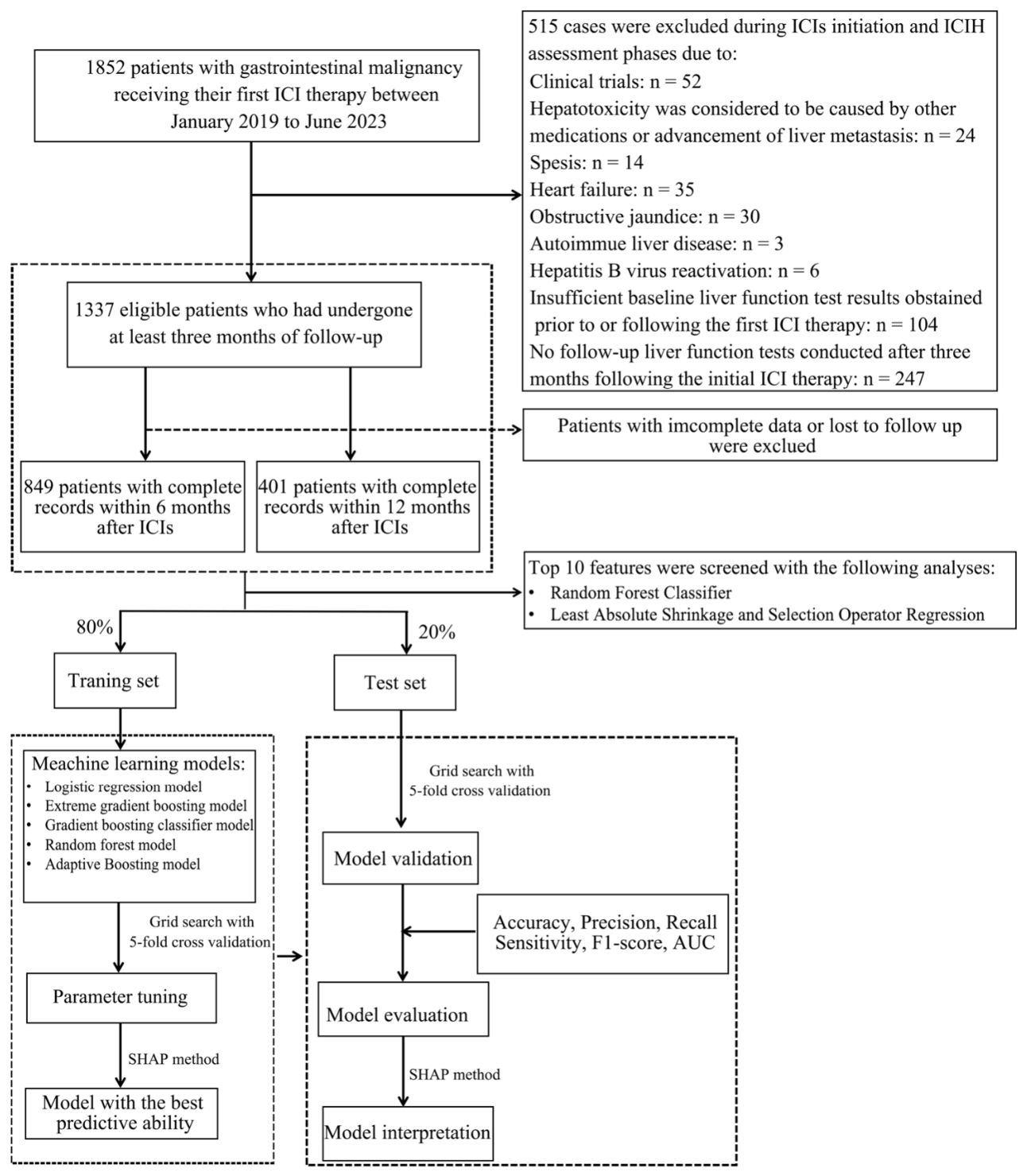
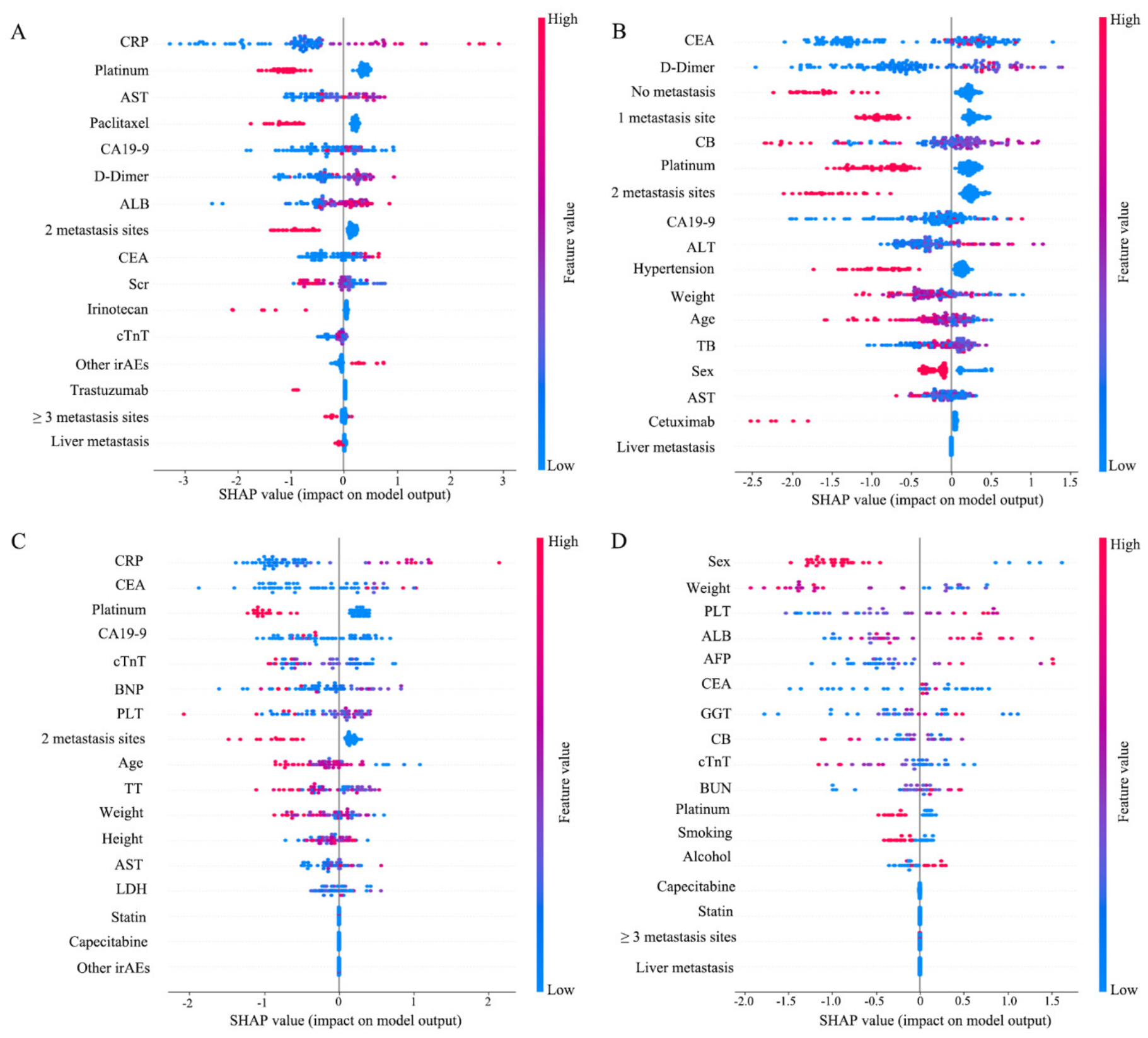
Immune checkpoint inhibitors are widely used in the treatment of gastrointestinal cancers. Yet, immune-related liver injury continues to be a notable unfavorable occurrence for which dependable prediction tools are lacking. Current models provide single-point risk assessments and fail to consider the evolving characteristics of risk during therapy. In this research, time-stratified machine learning models were developed using data from 1337 patients to predict liver injury at 3, 6, and 12 months following therapy initiation. The GradientBoost model exhibited good prediction efficacy; however, SHAP analysis identified a temporal alteration in prevailing risk factors. Initial inflammatory indicators transitioned to host characteristics, encompassing gender and body mass index. These temporal models enable clinicians to identify changing risk profiles and implement specific monitoring strategies throughout various phases of treatment. This approach provides a progression toward individualized and enhanced safety in immunotherapy administration.
Abstract
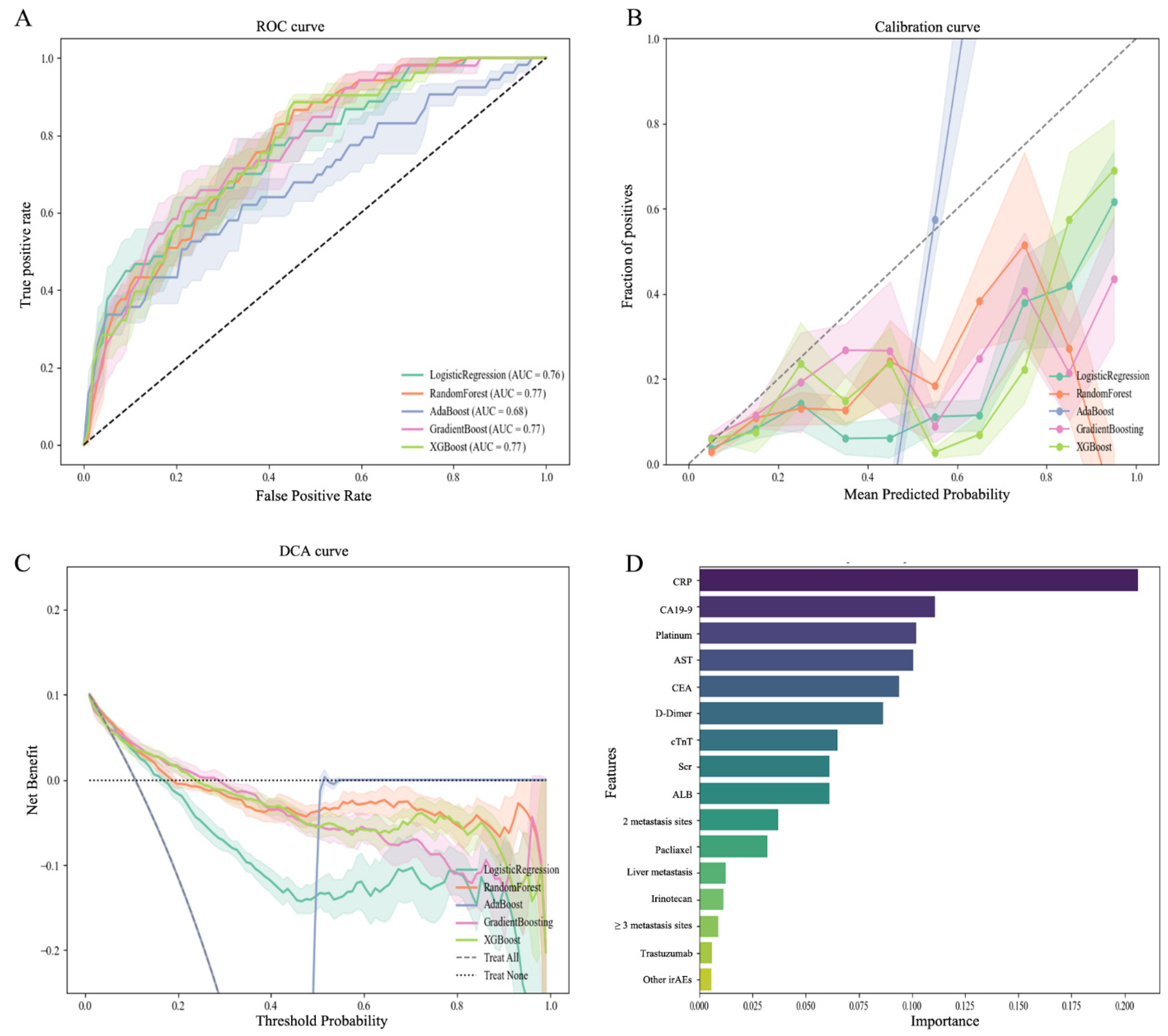
Background: Immunotherapy has transformed cancer treatment and is widely used in the Chinese mainland. Though advances have been made, immune checkpoint inhibitor-related liver injury (ICILI) remains a significant clinical challenge. Existing risk models commonly lack time-specific risk stratification for ICILI. The present study aimed to develop and validate interpretable machine learning models to predict grade 2 or higher ICILI at multiple time points in patients with gastrointestinal cancer (GC). Methods: This retrospective cohort study encompassed GC patients who commenced their initial ICI medication between January 2019 and June 2023 at Zhongshan Hospital, Fudan University. Five machine learning algorithms, including Logistic Regression, Random Forest, Extreme Gradient Boosting (XGBoost), Gradient Boosting (GradientBoost), and Adaptive Boosting (AdaBoost), were utilized to develop predictive models for grade ≥ 2 ICILI at specific intervals of 3 months, 6 months, and 12 months. The evaluation of model performance was conducted using the area under the curve (AUC), accuracy, precision, recall, and F1-score. The Shapley Additive exPlanations (SHAP) method was employed to assess feature importance and interpret the final model. Results: A total of 1337, 849, and 401 patients were enrolled in the follow-up groups at 3 months, 6 months, and 12 months. The final model for grade ≥ 2 ICILI was developed with GradientBoost and achieved an AUC of 0.769 (95% CI: 0.732–0.806), with a test set accuracy of 0.834. XGBoost yielded AUCs of 0.671 (95% CI: 0.636–0.706) at 3-month indication, 0.678 (95% CI: 0.638–0.718) at 6 months, and 0.644 (95% CI: 0.589–0.699) at 12-month follow-up in the 5-fold cross-validation. The DCA curve demonstrated solid clinical benefit, whereas the calibration curve indicated good predictive reliability. SHAP analysis identified several parameters as predictive features at different intervals, which suggested that the ICILI determinants varied from acute inflammatory to host-related characteristics. Conclusions: A temporal stratification prediction model for grade ≥ 2 ICILI in GC patients was developed and validated at various intervals using ML algorithms with SHAP interpretability. This methodology facilitated early recognition of varying parameters across different treatment phases, enhancing clinical management and elevating treatment outcomes.