Limited Immune-Mediated Efficacy of Anti-PD-L1/VEGF in EGFR-TKI-Naïve Egfr-Mutant Lung Cancer with Non-Inflamed Tumor Microenvironment

 , , , , , , ,
Simple Summary
Abstract
1. Introduction
2. Materials and Methods
2.1. Syngeneic Egfr-Mutant Lung Cancer Mouse Model
2.2. Immunohistochemistry Analysis (Ihc)
2.3. Flow Cytometry (Fcm)
2.4. RNA Expression Profiling Using Next-Generation Sequencing
2.5. Statistical Analysis
3. Results
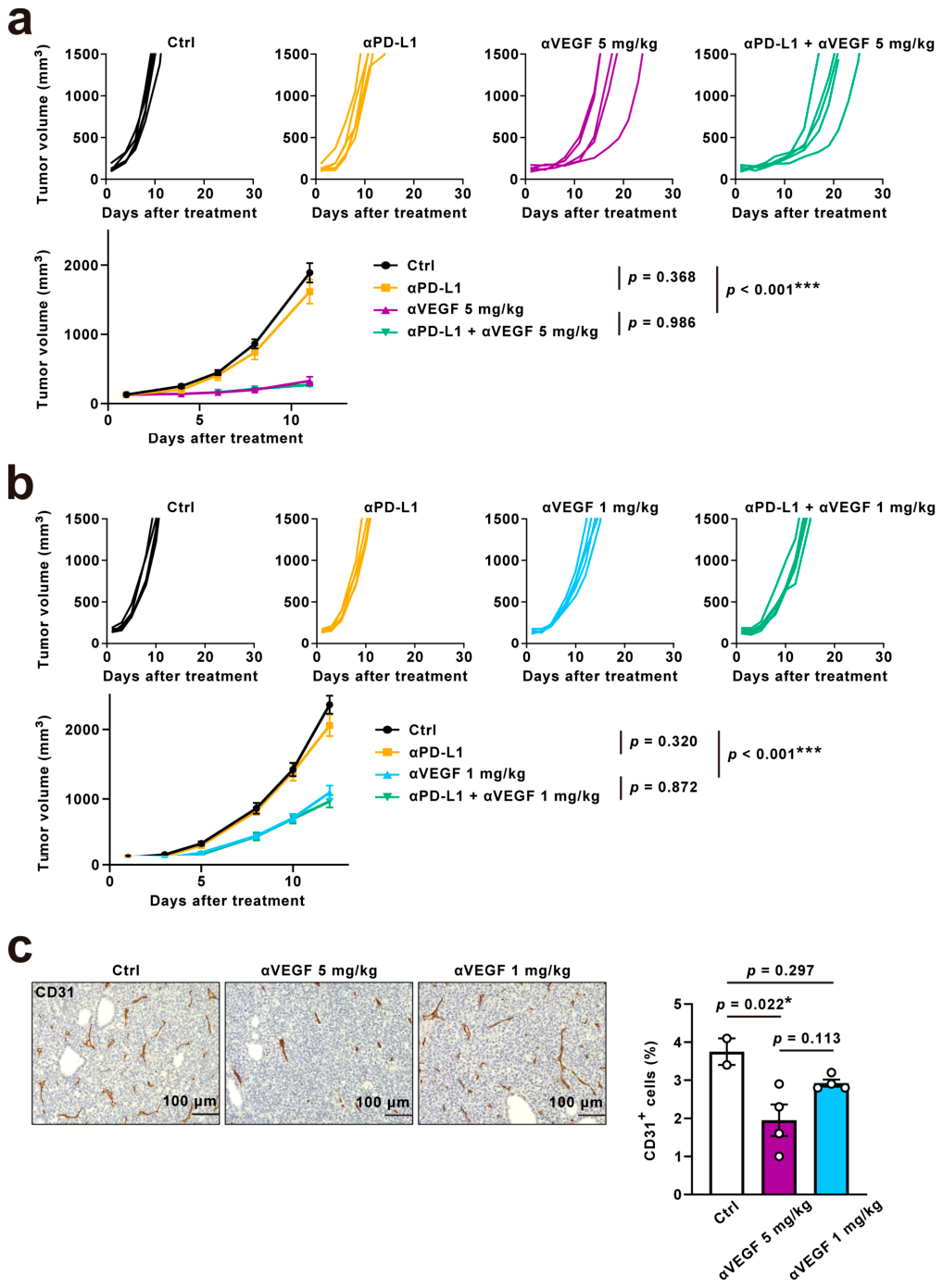
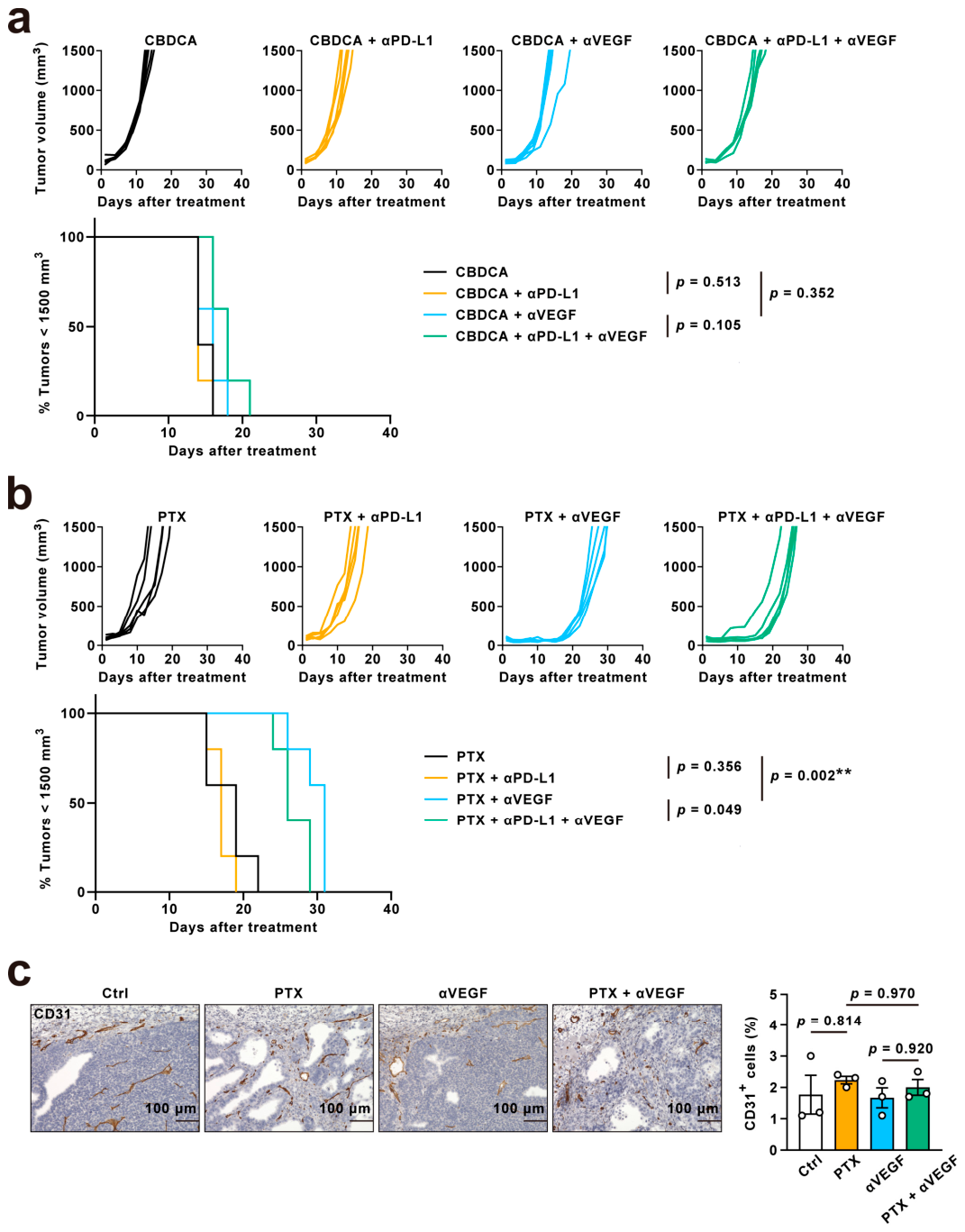
3.1. Vegf Inhibition Does Not Sensitize Egfr-Mutant Tumors to Anti-Pd-L1 Therapy
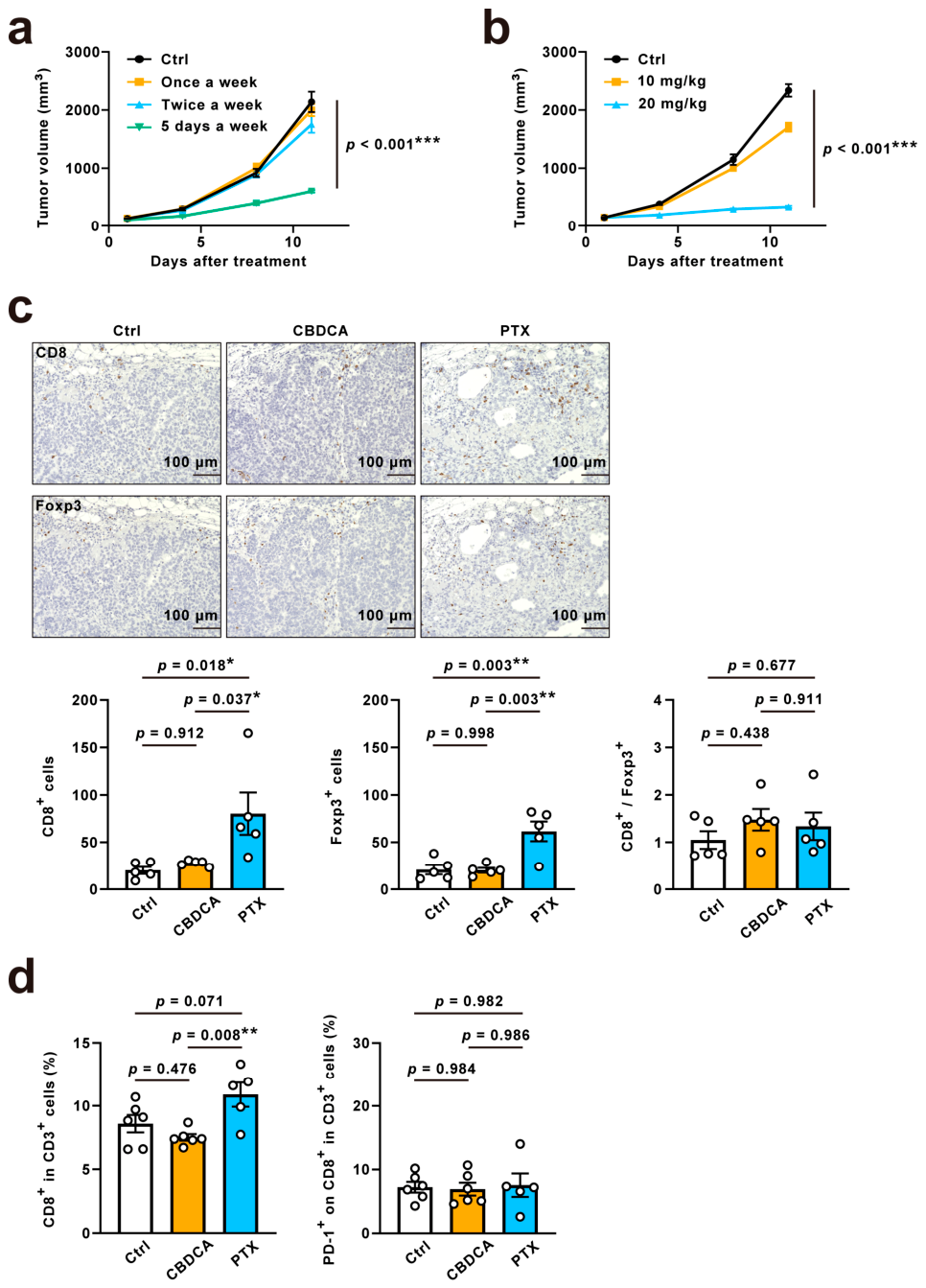
3.2. Paclitaxel, Not Carboplatin, Increases Cd8+ T Cell Infiltration in Egfr-Mutant Tumors
3.3. Low-Dose Anti-Vegf, but Not Anti-Pd-L1, Enhances the Antitumor Activity of Paclitaxel in Egfr-Mutant Tumors
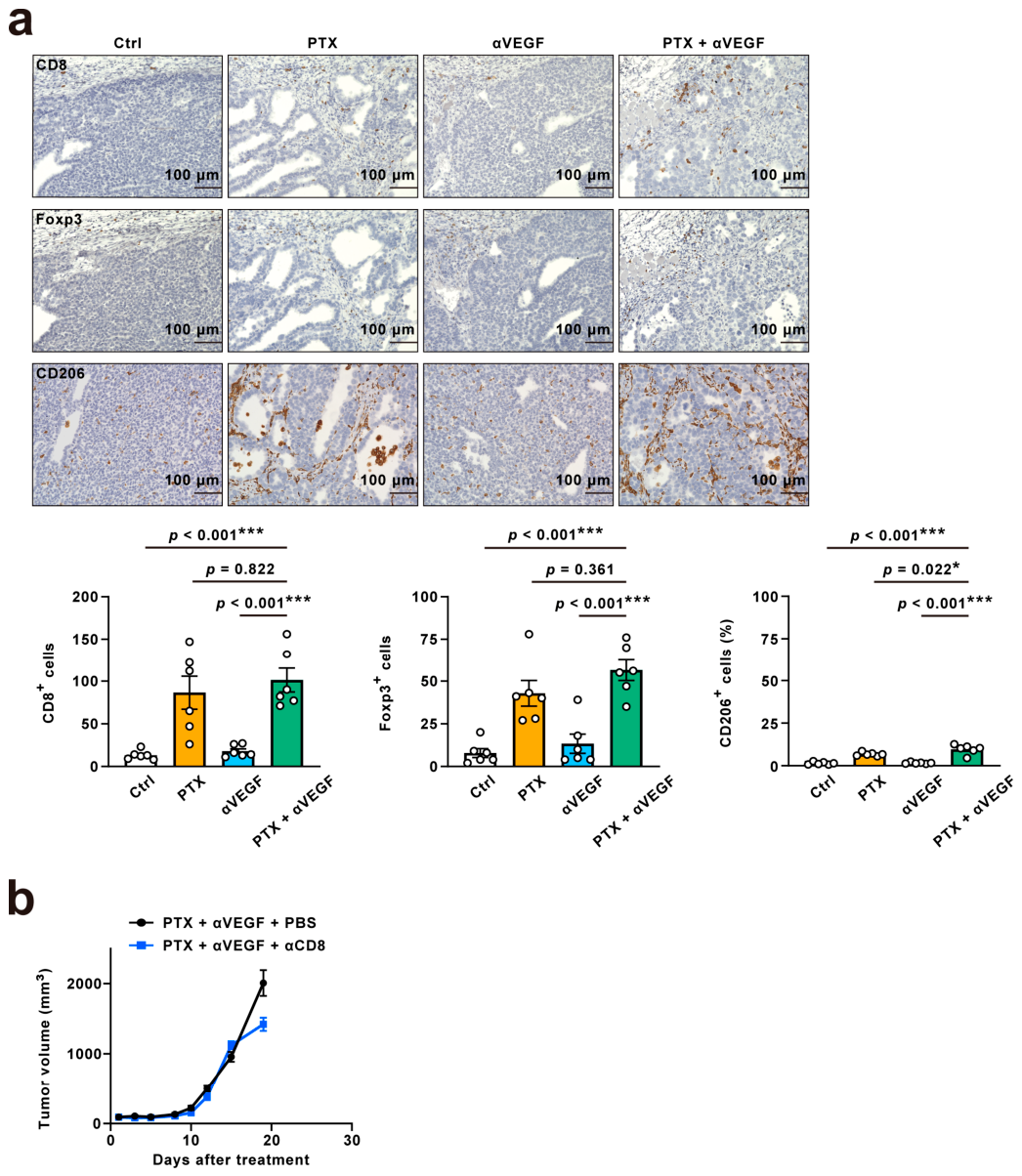
3.4. Limited Role of Cd8+ T-Cell-Mediated Immunity in the Antitumor Effect of Paclitaxel and Low-Dose Anti-Vegf
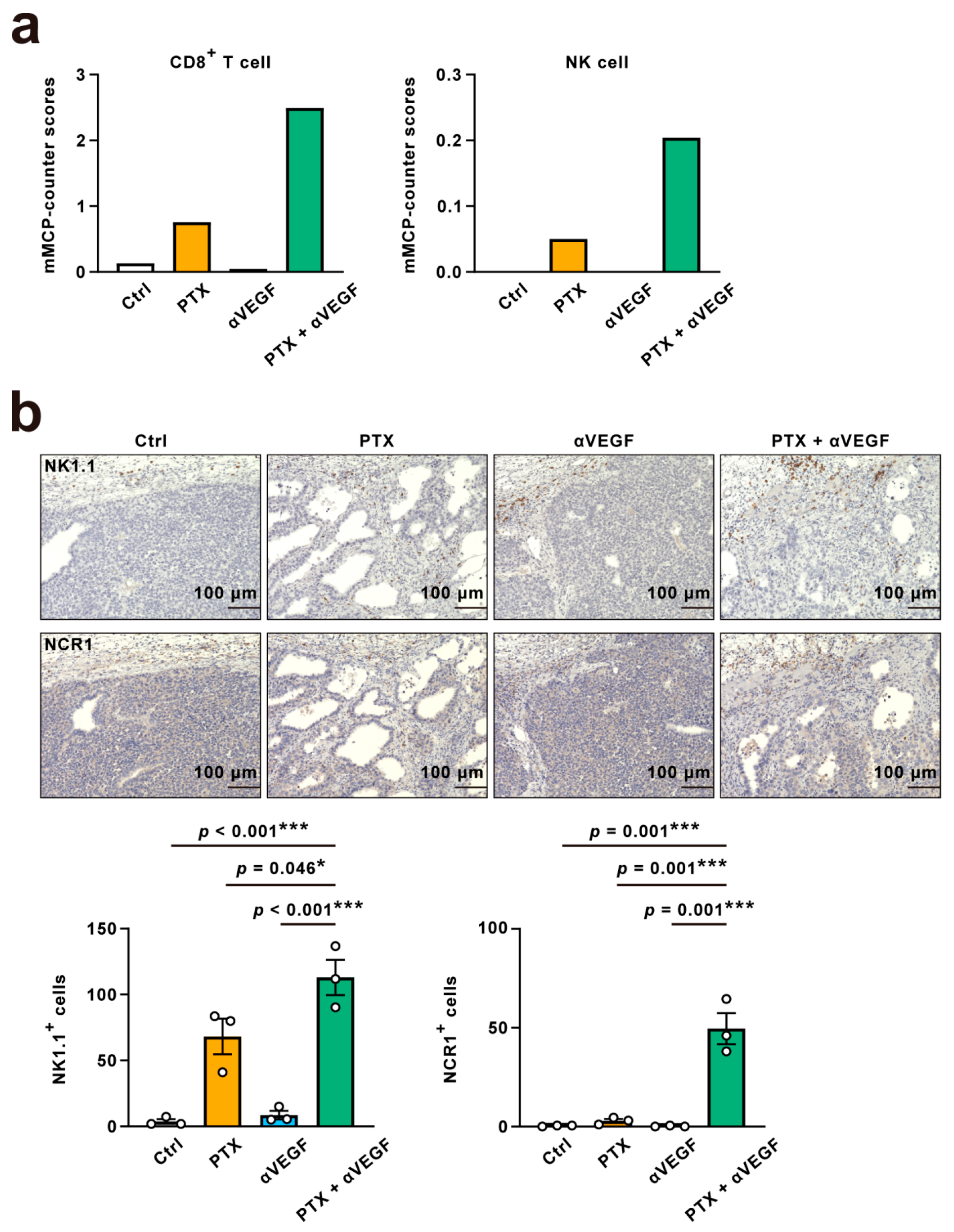
3.5. Paclitaxel and Low-Dose Anti-Vegf Antitumor Activity Is Accompanied by Nk Cell Infiltration
4. Discussion
5. Conclusions
Supplementary Materials
Author Contributions
Funding
Institutional Review Board Statement
Informed Consent Statement
Data Availability Statement
Acknowledgments
Conflicts of Interest
Abbreviations
| PD-L1 | Programmed death-ligand 1 |
| PD-1 | Programmed cell death-1 |
| VEGF | Vascular endothelial growth factor |
| VEGFR | VEGF receptor |
| EGFR | Epidermal growth factor receptor |
| TKIs | Tyrosine kinase inhibitors |
| ICIs | Immune checkpoint inhibitors |
| TME | Tumor microenvironment |
| TMB | Tumor mutational burden |
| IHC | Immunohistochemistry |
| FCM | Flow cytometry |
| NK | Natural killer |
| NSCLCs | Non-small cell lung cancers |
| Tregs | Regulatory T-cells |
| CTL | Cytotoxic T lymphocytes |
| TILs | Tumor-infiltrating lymphocytes |
| Chemo-IO | Chemotherapy plus ICI |
| GEMM | Genetically engineered mouse model |
| PBS | Phosphate-buffered saline |
| RNA-seq | RNA-sequencing |
| TPM | Transcripts per million |
| RPK | Reads per kilobase |
| mMCP | Murine Microenvironment Cell Population |
| NCR1 | Natural cytotoxicity triggering receptor 1 |
| αSMA | Alpha smooth muscle actin |
References
- Ribas, A.; Wolchok, J.D. Cancer immunotherapy using checkpoint blockade. Science 2018, 359, 1350–1355. [Google Scholar] [CrossRef] [Scilit] [PubMed]
- Siegel, R.L.; Giaquinto, A.N.; Jemal, A. Cancer Statistics, 2024. CA Cancer J. Clin. 2024, 74, 12–49. [Google Scholar] [CrossRef] [Scilit]
- Mok, T.; Nakagawa, K.; Park, K.; Ohe, Y.; Girard, N.; Kim, H.R.; Wu, Y.L.; Gainor, J.; Lee, S.H.; Chiu, C.H.; et al. Nivolumab Plus Chemotherapy in Epidermal Growth Factor Receptor-Mutated Metastatic Non-Small-Cell Lung Cancer After Disease Progression on Epidermal Growth Factor Receptor Tyrosine Kinase Inhibitors: Final Results of CheckMate 722. J. Clin. Oncol. 2024, 42, 1252–1264. [Google Scholar] [CrossRef] [Scilit]
- Yang, J.C.; Lee, D.H.; Lee, J.S.; Fan, Y.; de Marinis, F.; Iwama, E.; Inoue, T.; Rodríguez-Cid, J.; Zhang, L.; Yang, C.T.; et al. Phase III KEYNOTE-789 Study of Pemetrexed and Platinum with or without Pembrolizumab for Tyrosine Kinase Inhibitor-resistant, EGFR-Mutant, Metastatic Nonsquamous Non-Small Cell Lung Cancer. J. Clin. Oncol. 2024, 42, 4029–4039. [Google Scholar] [CrossRef] [Scilit] [PubMed]
- Offin, M.; Rizvi, H.; Tenet, M.; Ni, A.; Sanchez-Vega, F.; Li, B.T.; Drilon, A.; Kris, M.G.; Rudin, C.M.; Schultz, N.; et al. Tumor Mutation Burden and Efficacy of EGFR-Tyrosine Kinase Inhibitors in Patients with EGFR-Mutant Lung Cancers. Clin. Cancer Res. 2019, 25, 1063–1069. [Google Scholar] [CrossRef] [Scilit] [PubMed]
- Dong, Z.Y.; Zhang, J.T.; Liu, S.Y.; Su, J.; Zhang, C.; Xie, Z.; Zhou, Q.; Tu, H.Y.; Xu, C.R.; Yan, L.X.; et al. EGFR Mutation Correlates with Uninflamed Phenotype and Weak Immunogenicity, Causing Impaired Response to PD-1 Blockade in Non-Small Cell Lung Cancer. Oncoimmunology 2017, 6, e1356145. [Google Scholar] [CrossRef] [Scilit]
- Saito, M.; Shiraishi, K.; Kunitoh, H.; Takenoshita, S.; Yokota, J.; Kohno, T. Gene Aberrations for Precision Medicine against Lung Adenocarcinoma. Cancer Sci. 2016, 107, 713–720. [Google Scholar] [CrossRef] [Scilit]
- Fukumura, D.; Kloepper, J.; Amoozgar, Z.; Duda, D.G.; Jain, R.K. Enhancing Cancer Immunotherapy Using Antiangiogenics: Opportunities and Challenges. Nat. Rev. Clin. Oncol. 2018, 15, 325–340. [Google Scholar] [CrossRef] [Scilit]
- Patel, S.A.; Nilsson, M.B.; Le, X.; Cascone, T.; Jain, R.K.; Heymach, J.V. Molecular Mechanisms and Future Implications of VEGF/VEGFR in Cancer Therapy. Clin. Cancer Res. 2023, 29, 30–39. [Google Scholar] [CrossRef] [Scilit]
- Motzer, R.J.; Penkov, K.; Haanen, J.; Rini, B.; Albiges, L.; Campbell, M.T.; Venugopal, B.; Kollmannsberger, C.; Negrier, S.; Uemura, M.; et al. Avelumab plus Axitinib versus Sunitinib for Advanced Renal-Cell Carcinoma. N. Engl. J. Med. 2019, 380, 1103–1115. [Google Scholar] [CrossRef] [Scilit]
- Rini, B.I.; Plimack, E.R.; Stus, V.; Gafanov, R.; Hawkins, R.; Nosov, D.; Pouliot, F.; Alekseev, B.; Soulières, D.; Melichar, B.; et al. Pembrolizumab plus Axitinib versus Sunitinib for Advanced Renal-Cell Carcinoma. N. Engl. J. Med. 2019, 380, 1116–1127. [Google Scholar] [CrossRef] [Scilit]
- Finn, R.S.; Qin, S.; Ikeda, M.; Galle, P.R.; Ducreux, M.; Kim, T.Y.; Kudo, M.; Breder, V.; Merle, P.; Kaseb, A.O.; et al. Atezolizumab plus Bevacizumab in Unresectable Hepatocellular Carcinoma. N. Engl. J. Med. 2020, 382, 1894–1905. [Google Scholar] [CrossRef] [Scilit] [PubMed]
- Provencio, M.; Ortega, A.L.; Coves-Sarto, J.; Calvo, V.; Marsé-Fabregat, R.; Dómine, M.; Guirado, M.; Carcereny, E.; Fernández, N.; Álvarez, R.; et al. Atezolizumab Plus Bevacizumab as First-Line Treatment for Patients with Metastatic Nonsquamous Non-Small Cell Lung Cancer with High Tumor Mutation Burden: A Nonrandomized Controlled Trial. JAMA Oncol. 2023, 9, 344–353. [Google Scholar] [CrossRef] [Scilit]
- Seto, T.; Nosaki, K.; Shimokawa, M.; Toyozawa, R.; Sugawara, S.; Hayashi, H.; Murakami, H.; Kato, T.; Niho, S.; Saka, H.; et al. Phase II Study of Atezolizumab with Bevacizumab for Non-Squamous Non-Small Cell Lung Cancer with High PD-L1 Expression (@Be Study). J. Immunother. Cancer 2022, 10, e004025. [Google Scholar] [CrossRef] [Scilit]
- Nogami, N.; Barlesi, F.; Socinski, M.A.; Reck, M.; Thomas, C.A.; Cappuzzo, F.; Mok, T.S.K.; Finley, G.; Aerts, J.G.; Orlandi, F.; et al. IMpower150 Final Exploratory Analyses for Atezolizumab Plus Bevacizumab and Chemotherapy in Key NSCLC Patient Subgroups with EGFR Mutations or Metastases in the Liver or Brain. J. Thorac. Oncol. 2022, 17, 309–323. [Google Scholar] [CrossRef] [Scilit] [PubMed]
- Shiraishi, Y.; Kishimoto, J.; Sugawara, S.; Mizutani, H.; Daga, H.; Azuma, K.; Matsumoto, H.; Hataji, O.; Nishino, K.; Mori, M.; et al. Atezolizumab and Platinum plus Pemetrexed with or without Bevacizumab for Metastatic Nonsquamous Non-Small Cell Lung Cancer: A Phase 3 Randomized Clinical Trial. JAMA Oncol. 2024, 10, 315–324. [Google Scholar] [CrossRef] [Scilit]
- Zhou, C.; Dong, X.; Chen, G.; Wang, Z.; Wu, X.; Yao, Y.; Zhang, Y.; Cheng, Y.; Pan, H.; Zhang, X.; et al. Atezolizumab plus bevacizumab and chemotherapy in metastatic nonsquamous NSCLC: The randomized double-blind phase 3 IMpower151 trial. Nat. Med. 2025, 31, 2375–2384. [Google Scholar] [CrossRef] [Scilit]
- Ohashi, K.; Rai, K.; Fujiwara, Y.; Osawa, M.; Hirano, S.; Takata, K.; Kondo, E.; Yoshino, T.; Takata, M.; Tanimoto, M.; et al. Induction of Lung Adenocarcinoma in Transgenic Mice Expressing Activated EGFR Driven by the SP-C Promoter. Cancer Sci. 2008, 99, 1747–1753. [Google Scholar] [CrossRef] [Scilit]
- Ohashi, K.; Takigawa, N.; Osawa, M.; Ichihara, E.; Takeda, H.; Kubo, T.; Hirano, S.; Yoshino, T.; Takata, M.; Tanimoto, M.; et al. Chemopreventive effects of gefitinib on nonsmoking-related lung tumorigenesis in activating epidermal growth factor receptor transgenic mice. Cancer Res. 2009, 69, 7088–7095. [Google Scholar] [CrossRef] [Scilit] [PubMed]
- Higo, H.; Ohashi, K.; Makimoto, G.; Nishii, K.; Kudo, K.; Kayatani, H.; Watanabe, H.; Kano, H.; Ninomiya, K.; Hotta, K.; et al. EGFR-TKI Acquired Resistance in Lung Cancers Harboring EGFR Mutations in Immunocompetent C57BL/6J Mice. Lung Cancer 2019, 136, 86–93. [Google Scholar] [CrossRef] [Scilit]
- Nishii, K.; Ohashi, K.; Tomida, S.; Nakasuka, T.; Hirabae, A.; Okawa, S.; Nishimura, J.; Higo, H.; Watanabe, H.; Kano, H.; et al. CD8+ T-Cell Responses Are Boosted by Dual PD-1/VEGFR2 Blockade after EGFR Inhibition in Egfr-Mutant Lung Cancer. Cancer Immunol. Res. 2022, 10, 1111–1126. [Google Scholar] [CrossRef] [Scilit] [PubMed]
- Bagri, A.; Berry, L.; Gunter, B.; Singh, M.; Kasman, I.; Damico, L.A.; Xiang, H.; Schmidt, M.; Fuh, G.; Hollister, B.; et al. Effects of anti-VEGF treatment duration on tumor growth, tumor regrowth, and treatment efficacy. Clin. Cancer Res. 2010, 16, 3887–3900. [Google Scholar] [CrossRef] [Scilit]
- Huang, Y.; Yuan, J.; Righi, E.; Kamoun, W.S.; Ancukiewicz, M.; Nezivar, J.; Santosuosso, M.; Martin, J.D.; Martin, M.R.; Vianello, F.; et al. Vascular normalizing doses of antiangiogenic treatment reprogram the immunosuppressive tumor microenvironment and enhance immunotherapy. Proc. Natl. Acad. Sci. USA 2012, 109, 17561–17566. [Google Scholar] [CrossRef] [Scilit] [PubMed]
- Petitprez, F.; Levy, S.; Sun, C.M.; Meylan, M.; Linhard, C.; Becht, E.; Elarouci, N.; Tavel, D.; Roumenina, L.T.; Ayadi, M.; et al. The Murine Microenvironment Cell Population Counter Method to Estimate Abundance of Tissue-Infiltrating Immune and Stromal Cell Populations in Murine Samples Using Gene Expression. Genome Med. 2020, 12, 86. [Google Scholar] [CrossRef] [Scilit]
- Nakasuka, T.; Ohashi, K.; Nishii, K.; Hirabae, A.; Okawa, S.; Tomonobu, N.; Takada, K.; Ando, C.; Watanabe, H.; Makimoto, G.; et al. PD-1 Blockade Augments CD8+ T Cell Dependent Antitumor Immunity Triggered by Ad-SGE-REIC in Egfr-Mutant Lung Cancer. Lung Cancer 2023, 178, 1–10. [Google Scholar] [CrossRef] [Scilit] [PubMed]
- Chamoto, K.; Chowdhury, P.S.; Kumar, A.; Sonomura, K.; Matsuda, F.; Fagarasan, S.; Honjo, T. Mitochondrial Activation Chemicals Synergize with Surface Receptor PD-1 Blockade for T Cell-Dependent Antitumor Activity. Proc. Natl. Acad. Sci. USA 2017, 114, E761–E770. [Google Scholar] [CrossRef] [Scilit]
- Mpekris, F.; Voutouri, C.; Baish, J.W.; Duda, D.G.; Munn, L.L.; Stylianopoulos, T.; Jain, R.K. Combining Microenvironment Normalization Strategies to Improve Cancer Immunotherapy. Proc. Natl. Acad. Sci. USA 2020, 117, 3728–3737. [Google Scholar] [CrossRef] [Scilit]
- Gros, A.; Robbins, P.F.; Yao, X.; Li, Y.F.; Turcotte, S.; Tran, E.; Wunderlich, J.R.; Mixon, A.; Farid, S.; Dudley, M.E.; et al. PD-1 Identifies the Patient-Specific CD8+ Tumor-Reactive Repertoire Infiltrating Human Tumors. J. Clin. Investig. 2014, 124, 2246–2259. [Google Scholar] [CrossRef] [Scilit]
- U.S. Food and Drug Administration. FDA Approves Atezolizumab with Chemotherapy and Bevacizumab for First-Line Treatment of Metastatic Non-Squamous Non-Small Cell Lung Cancer. Available online: https://www.fda.gov/drugs/fda-approves-atezolizumab-chemotherapy-and-bevacizumab-first-line-treatment-metastatic-non-squamous (accessed on 4 October 2025).
- European Medicines Agency. Tecentriq: European Public Assessment Report (EPAR). Available online: https://www.ema.europa.eu/en/medicines/human/EPAR/tecentriq (accessed on 4 October 2025).
- Pharmaceuticals and Medical Devices Agency. Review Report: Tecentriq Intravenous Infusion 1200 mg. Available online: https://www.pmda.go.jp/files/000235287.pdf (accessed on 4 October 2025).
- Lu, S.; Wu, L.; Jian, H.; Cheng, Y.; Wang, Q.; Fang, J.; Wang, Z.; Hu, Y.; Han, L.; Sun, M.; et al. Sintilimab plus chemotherapy for patients with EGFR-mutated non-squamous non-small-cell lung cancer with disease progression after EGFR tyrosine-kinase inhibitor therapy (ORIENT-31): Second interim analysis from a double-blind, randomised, placebo-controlled, phase 3 trial. Lancet Respir. Med. 2023, 11, 624–636. [Google Scholar]
- Park, S.; Kim, T.M.; Han, J.Y.; Lee, G.W.; Shim, B.Y.; Lee, Y.G.; Kim, S.W.; Kim, I.H.; Lee, S.; Kim, Y.J.; et al. Phase III, Randomized Study of Atezolizumab plus Bevacizumab and Chemotherapy in Patients with EGFR- or ALK-Rearranged or Translocated Non–Small-Cell Lung Cancer (ATTLAS, KCSG-LU19-04). J. Clin. Oncol. 2024, 42, 1241–1251. [Google Scholar] [CrossRef] [Scilit]
- Kroemer, G.; Galassi, C.; Zitvogel, L.; Galluzzi, L. Immunogenic cell stress and death. Nat. Immunol. 2022, 23, 487–500. [Google Scholar] [CrossRef] [Scilit]
- Kubo, M.; Morisaki, T.; Matsumoto, K.; Tasaki, A.; Yamanaka, N.; Nakashima, H.; Kuroki, H.; Nakamura, K.; Nakamura, M.; Katano, M. Paclitaxel probably enhances cytotoxicity of natural killer cells against breast carcinoma cells by increasing perforin production. Cancer Immunol. Immunother. 2005, 54, 468–476. [Google Scholar] [CrossRef] [Scilit]
- Yu, D.L.; Lou, Z.P.; Ma, F.Y.; Najafi, M. The interactions of paclitaxel with tumour microenvironment. Int. Immunopharmacol. 2022, 105, 108555. [Google Scholar] [CrossRef] [Scilit]
- Jain, R.K. Normalizing tumor vasculature with anti-angiogenic therapy: A new paradigm for combination therapy. Nat. Med. 2001, 7, 987–989. [Google Scholar] [CrossRef] [Scilit]
- Rodriguez-Ruiz, M.E.; Vitale, I.; Harrington, K.J.; Melero, I.; Galluzzi, L. Immunological impact of cell death signaling driven by radiation on the tumor microenvironment. Nat. Immunol. 2020, 21, 120–134. [Google Scholar] [CrossRef] [Scilit]




Disclaimer/Publisher’s Note: The statements, opinions and data contained in all publications are solely those of the individual author(s) and contributor(s) and not of MDPI and/or the editor(s). MDPI and/or the editor(s) disclaim responsibility for any injury to people or property resulting from any ideas, methods, instructions or products referred to in the content. |
© 2026 by the authors. Licensee MDPI, Basel, Switzerland. This article is an open access article distributed under the terms and conditions of the Creative Commons Attribution (CC BY) license.
Share and Cite
Hirabae, A.; Kuribayashi, T.; Tomida, S.; Okawa, S.; Nakasuka, T.; Nishii, K.; Nishimura, J.; Makimoto, G.; Ninomiya, K.; Higo, H.; et al. Limited Immune-Mediated Efficacy of Anti-PD-L1/VEGF in EGFR-TKI-Naïve Egfr-Mutant Lung Cancer with Non-Inflamed Tumor Microenvironment. Curr. Oncol. 2026, 33, 315. https://doi.org/10.3390/curroncol33060315
Hirabae A, Kuribayashi T, Tomida S, Okawa S, Nakasuka T, Nishii K, Nishimura J, Makimoto G, Ninomiya K, Higo H, et al. Limited Immune-Mediated Efficacy of Anti-PD-L1/VEGF in EGFR-TKI-Naïve Egfr-Mutant Lung Cancer with Non-Inflamed Tumor Microenvironment. Current Oncology. 2026; 33(6):315. https://doi.org/10.3390/curroncol33060315
Chicago/Turabian StyleHirabae, Atsuko, Tadahiro Kuribayashi, Shuta Tomida, Sachi Okawa, Takamasa Nakasuka, Kazuya Nishii, Jun Nishimura, Go Makimoto, Kiichiro Ninomiya, Hisao Higo, and et al. 2026. "Limited Immune-Mediated Efficacy of Anti-PD-L1/VEGF in EGFR-TKI-Naïve Egfr-Mutant Lung Cancer with Non-Inflamed Tumor Microenvironment" Current Oncology 33, no. 6: 315. https://doi.org/10.3390/curroncol33060315
APA StyleHirabae, A., Kuribayashi, T., Tomida, S., Okawa, S., Nakasuka, T., Nishii, K., Nishimura, J., Makimoto, G., Ninomiya, K., Higo, H., Rai, K., Ichihara, E., Hotta, K., Sugimoto, M., Togashi, Y., Maeda, Y., Kiura, K., & Ohashi, K. (2026). Limited Immune-Mediated Efficacy of Anti-PD-L1/VEGF in EGFR-TKI-Naïve Egfr-Mutant Lung Cancer with Non-Inflamed Tumor Microenvironment. Current Oncology, 33(6), 315. https://doi.org/10.3390/curroncol33060315