Ferroptosis-Based Nanotherapeutic Strategies to Overcome Temozolomide Resistance in Glioblastoma: A Systematic Review and Meta-Analysis

 ,
,  , , , , , and
Simple Summary
Abstract
1. Introduction
2. Materials and Methods
Statistical Analysis
3. Results
3.1. Study Characteristics
3.2. Molecular and Functional Differences Among GBM Cell Models
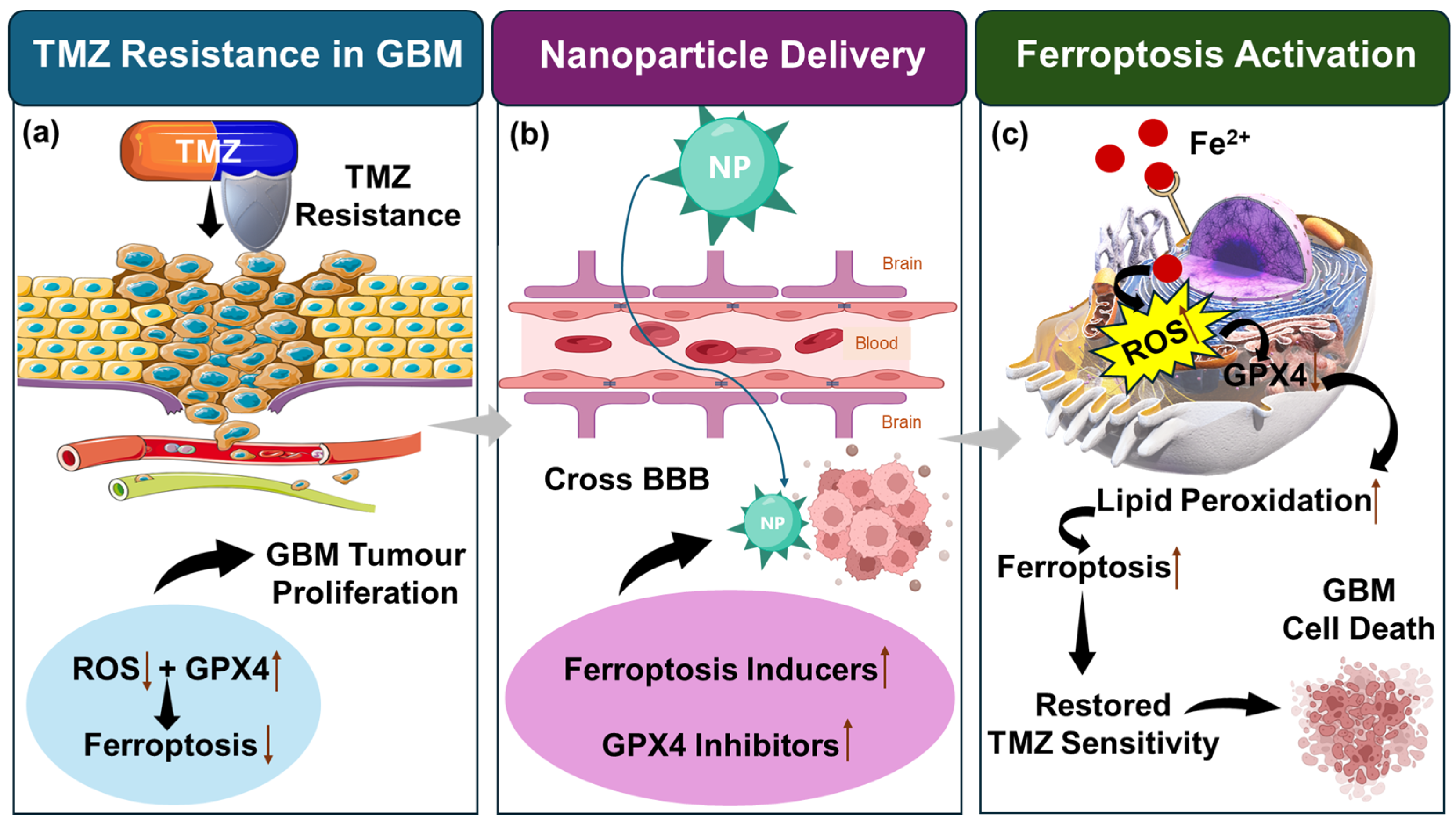
3.3. Role of Ferroptosis Induction in GBM
3.4. Nanoparticle-Mediated Resensitization of GBM to TMZ
3.5. In Vivo Therapeutic Response to TMZ and Survival Analysis
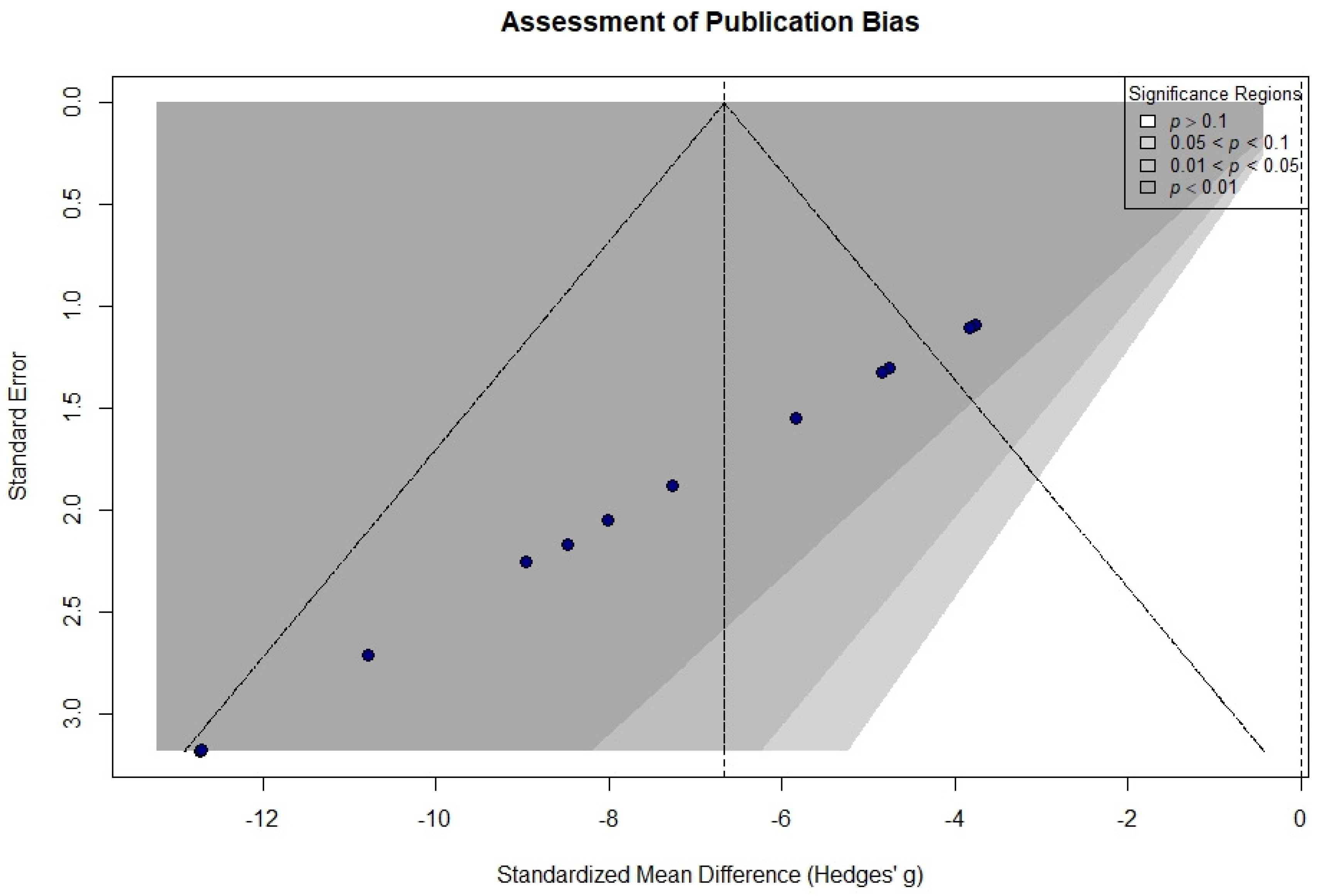
3.6. Publication Bias and Heterogeneity
3.7. Risk of Bias and Quality Assessment
- Q1 (Selection Bias): Was the allocation sequence adequately generated and applied? (Evaluates if animals were truly randomized to groups).
- Q2 (Selection Bias): Were the groups’ baseline characteristics similar? (Evaluates age, weight, and starting tumour volume).
- Q3 (Selection Bias): Was the allocation adequately concealed? (Evaluates if researchers knew which animal was in which group at the start).
- Q4 (Performance Bias): Were the animals housed randomly during the experiment?
- Q5 (Performance Bias): Were the caregivers and/or investigators blinded from the knowledge of which intervention each animal received?
- Q6 (Detection Bias): Were animals selected at random for outcome assessment?
- Q7 (Detection Bias): Was the outcome assessor blinded? (e.g., were the MRI or histology slides read by someone unaware of the treatment group?).
- Q8 (Attrition Bias): Were all animals accounted for, and were incomplete outcome data addressed?
- Q9 (Reporting Bias): Are reports of the study free of selective outcome reporting? (Do the results match the stated methods?).
- Q10 (Other Bias): Was the study apparently free of other problems that could result in a high risk of bias?
3.8. Statistical Analysis
4. Discussion
4.1. Strengths and Limitations
4.2. Future Directions
5. Conclusions
Author Contributions
Funding
Institutional Review Board Statement
Informed Consent Statement
Data Availability Statement
Conflicts of Interest
Abbreviations
| GBM | Glioblastoma |
| TMZ | Temozolomide |
| ROS | Reactive Oxygen Species |
| GSH | Glutathione |
| GPX4 | Glutathione Peroxidase 4 |
| NRF2 | Nuclear Factor Erythroid 2-Related Factor 2 |
| MGMT | O6-Methylguanine-DNA Methyltransferase |
| BBB | Blood–Brain Barrier |
| GSCs | Glioblastoma Stem Cells |
| NPs | Nanoparticles |
| SMD | Standardized Mean Difference |
| IC50 | Half Maximal Inhibitory Concentration |
| HIF | Hypoxia-Inducible Factor |
| LIP | Labile Iron Pool |
| DDR | DNA Damage Response |
| PRISMA | Preferred Reporting Items for Systematic Reviews and Meta-Analyses |
| PROSPERO | International Prospective Register of Systematic Reviews |
| OS | Overall Survival |
| WHO | World Health Organization |
| IDH | Isocitrate Dehydrogenase |
| CNS | Central Nervous System |
| PDX | Patient-Derived Xenograft |
| MDA | Malondialdehyde |
| xCT (SLC7A11) | Cystine/Glutamate Antiporter |
| IRP1 | Iron Regulatory Protein 1 |
| NF-κB | Nuclear Factor Kappa B |
| ABCC1 | ATP-Binding Cassette Subfamily C Member 1 |
| ALDH1A1 | Aldehyde Dehydrogenase 1 Family Member A1 |
| miRNA | MicroRNA |
| IFN-γ | Interferon Gamma |
| MRI | Magnetic Resonance Imaging |
References
- Louis, D.N.; Perry, A.; Wesseling, P.; Brat, D.J.; Cree, I.A.; Figarella-Branger, D.; Hawkins, C.; Ng, H.K.; Pfister, S.M.; Reifenberger, G.; et al. The 2021 WHO Classification of Tumors of the Central Nervous System: A summary. Neuro Oncol. 2021, 23, 1231–1251. [Google Scholar] [CrossRef] [Scilit]
- Sipos, D.; Raposa, B.L.; Freihat, O.; Simon, M.; Mekis, N.; Cornacchione, P.; Kovacs, A. Glioblastoma: Clinical Presentation, Multidisciplinary Management, and Long-Term Outcomes. Cancers 2025, 17, 146. [Google Scholar] [CrossRef] [Scilit]
- Hacioglu, C.; Tuncer, C. Boric acid Increases Susceptibility to Chemotherapy by Targeting the Ferritinophagy Signaling Pathway in TMZ Resistant Glioblastoma Cells. Biol. Trace Elem. Res. 2024, 202, 3574–3587. [Google Scholar] [CrossRef] [Scilit] [PubMed]
- Thakkar, J.P.; Dolecek, T.A.; Horbinski, C.; Ostrom, Q.T.; Lightner, D.D.; Barnholtz-Sloan, J.S.; Villano, J.L. Epidemiologic and molecular prognostic review of glioblastoma. Cancer Epidemiol. Biomark. Prev. 2014, 23, 1985–1996. [Google Scholar] [CrossRef] [Scilit] [PubMed]
- Davis, M.E. Glioblastoma: Overview of Disease and Treatment. Clin. J. Oncol. Nurs. 2016, 20, S2–S8. [Google Scholar] [CrossRef] [Scilit] [PubMed]
- Alexander, B.M.; Cloughesy, T.F. Adult Glioblastoma. J. Clin. Oncol. 2017, 35, 2402–2409. [Google Scholar] [CrossRef] [Scilit]
- Schwartzbaum, J.A.; Fisher, J.L.; Aldape, K.D.; Wrensch, M. Epidemiology and molecular pathology of glioma. Nat. Clin. Pract. Neurol. 2006, 2, 494–503, quiz 491. [Google Scholar] [CrossRef] [Scilit]
- Rong, L.; Li, N.; Zhang, Z. Emerging therapies for glioblastoma: Current state and future directions. J. Exp. Clin. Cancer Res. 2022, 41, 142. [Google Scholar] [CrossRef] [Scilit]
- Thakur, A.; Faujdar, C.; Sharma, R.; Sharma, S.; Malik, B.; Nepali, K.; Liou, J.P. Glioblastoma: Current Status, Emerging Targets, and Recent Advances. J. Med. Chem. 2022, 65, 8596–8685. [Google Scholar] [CrossRef] [Scilit]
- Jiang, L.; Kon, N.; Li, T.; Wang, S.J.; Su, T.; Hibshoosh, H.; Baer, R.; Gu, W. Ferroptosis as a p53-mediated activity during tumour suppression. Nature 2015, 520, 57–62. [Google Scholar] [CrossRef] [Scilit]
- Lin, L.; Li, X.; Zhu, S.; Long, Q.; Hu, Y.; Zhang, L.; Liu, Z.; Li, B.; Li, X. Ferroptosis-related NFE2L2 and NOX4 Genes are Potential Risk Prognostic Biomarkers and Correlated with Immunogenic Features in Glioma. Cell Biochem. Biophys. 2023, 81, 7–17. [Google Scholar] [CrossRef] [Scilit]
- Sui, X.; Zhang, R.; Liu, S.; Duan, T.; Zhai, L.; Zhang, M.; Han, X.; Xiang, Y.; Huang, X.; Lin, H.; et al. RSL3 Drives Ferroptosis Through GPX4 Inactivation and ROS Production in Colorectal Cancer. Front. Pharmacol. 2018, 9, 1371. [Google Scholar] [CrossRef] [Scilit] [PubMed]
- Eling, N.; Reuter, L.; Hazin, J.; Hamacher-Brady, A.; Brady, N.R. Identification of artesunate as a specific activator of ferroptosis in pancreatic cancer cells. Oncoscience 2015, 2, 517–532. [Google Scholar] [CrossRef] [Scilit]
- Tang, D.; Chen, X.; Kang, R.; Kroemer, G. Ferroptosis: Molecular mechanisms and health implications. Cell Res. 2021, 31, 107–125. [Google Scholar] [CrossRef] [Scilit]
- Mitre, A.O.; Florian, A.I.; Buruiana, A.; Boer, A.; Moldovan, I.; Soritau, O.; Florian, S.I.; Susman, S. Ferroptosis Involvement in Glioblastoma Treatment. Medicina 2022, 58, 319. [Google Scholar] [CrossRef] [Scilit] [PubMed]
- Jacobson, M.D.; Raff, M.C. Programmed cell death and Bcl-2 protection in very low oxygen. Nature 1995, 374, 814–816. [Google Scholar] [CrossRef] [Scilit] [PubMed]
- Zhuo, S.; He, G.; Chen, T.; Li, X.; Liang, Y.; Wu, W.; Weng, L.; Feng, J.; Gao, Z.; Yang, K. Emerging role of ferroptosis in glioblastoma: Therapeutic opportunities and challenges. Front. Mol. Biosci. 2022, 9, 974156. [Google Scholar] [CrossRef] [Scilit]
- Lei, G.; Zhuang, L.; Gan, B. Targeting ferroptosis as a vulnerability in cancer. Nat. Rev. Cancer 2022, 22, 381–396. [Google Scholar] [CrossRef] [Scilit]
- Ahlawat, J.; Guillama Barroso, G.; Masoudi Asil, S.; Alvarado, M.; Armendariz, I.; Bernal, J.; Carabaza, X.; Chavez, S.; Cruz, P.; Escalante, V.; et al. Nanocarriers as Potential Drug Delivery Candidates for Overcoming the Blood-Brain Barrier: Challenges and Possibilities. ACS Omega 2020, 5, 12583–12595. [Google Scholar] [CrossRef] [Scilit]
- Carvalho, S.M.; Mansur, A.A.P.; da Silveira, I.B.; Pires, T.F.S.; Victoria, H.F.V.; Krambrock, K.; Leite, M.F.; Mansur, H.S. Nanozymes with Peroxidase-like Activity for Ferroptosis-Driven Biocatalytic Nanotherapeutics of Glioblastoma Cancer: 2D and 3D Spheroids Models. Pharmaceutics 2023, 15, 1702. [Google Scholar] [CrossRef] [Scilit]
- Reddy, S.; Tatiparti, K.; Sau, S.; Iyer, A.K. Recent advances in nano delivery systems for blood-brain barrier (BBB) penetration and targeting of brain tumors. Drug Discov. Today 2021, 26, 1944–1952. [Google Scholar] [CrossRef] [Scilit]
- Hooijmans, C.R.; Rovers, M.M.; de Vries, R.B.; Leenaars, M.; Ritskes-Hoitinga, M.; Langendam, M.W. SYRCLE’s risk of bias tool for animal studies. BMC Med. Res. Methodol. 2014, 14, 43. [Google Scholar] [CrossRef] [Scilit]
- Alexiou, G.A.; Gerogianni, P.; Vartholomatos, E.; Kyritsis, A.P. Deferiprone Enhances Temozolomide Cytotoxicity in Glioma Cells. Cancer Investig. 2016, 34, 489–495. [Google Scholar] [CrossRef] [Scilit]
- Calzolari, A.; Larocca, L.M.; Deaglio, S.; Finisguerra, V.; Boe, A.; Raggi, C.; Ricci-Vitani, L.; Pierconti, F.; Malavasi, F.; De Maria, R.; et al. Transferrin receptor 2 is frequently and highly expressed in glioblastomas. Transl. Oncol. 2010, 3, 123–134. [Google Scholar] [CrossRef] [Scilit]
- Chen, M.; Kim, B.; Robertson, N.; Mondal, S.K.; Medarova, Z.; Moore, A. Co-administration of temozolomide (TMZ) and the experimental therapeutic targeting miR-10b, profoundly affects the tumorigenic phenotype of human glioblastoma cells. Front. Mol. Biosci. 2023, 10, 1179343. [Google Scholar] [CrossRef] [Scilit]
- Cushing, C.M.; Petronek, M.S.; Bodeker, K.L.; Vollstedt, S.; Brown, H.A.; Opat, E.; Hollenbeck, N.J.; Shanks, T.; Berg, D.J.; Smith, B.J.; et al. Magnetic resonance imaging (MRI) of pharmacological ascorbate-induced iron redox state as a biomarker in subjects undergoing radio-chemotherapy. Redox Biol. 2021, 38, 101804. [Google Scholar] [CrossRef] [Scilit] [PubMed]
- El Husseini, K.; Marguet, F.; Lamy, A.; Magne, N.; Fontanilles, M. Major response to temozolomide as first-line treatment for newly-diagnosed DDR2-mutated glioblastoma: A case report. Rev. Neurol. 2020, 176, 402–404. [Google Scholar] [CrossRef] [Scilit]
- Fontanilles, M.; Fontanilles, A.; Massy, N.; Rouvet, J.; Pereira, T.; Alexandru, C.; Hanzen, C.; Basuyau, F.; Langlois, O.; Clatot, F.; et al. Deleterious impact of a generic temozolomide formulation compared with brand-name product on the kinetic of platelet concentration and survival in newly diagnosed glioblastoma. Fundam. Clin. Pharmacol. 2020, 34, 484–494. [Google Scholar] [CrossRef] [Scilit] [PubMed]
- Fontanilles, M.; Heisbourg, J.D.; Daban, A.; Di Fiore, F.; Pepin, L.F.; Marguet, F.; Langlois, O.; Alexandru, C.; Tennevet, I.; Ducatez, F.; et al. Metabolic remodeling in glioblastoma: A longitudinal multi-omics study. Acta Neuropathol. Commun. 2024, 12, 162. [Google Scholar] [CrossRef] [Scilit] [PubMed]
- Fontanilles, M.; Marguet, F.; Alexandru, C.; Langlois, O.; Veresezan, O.; Gilard, V.; David, M.; Laquerriere, A.; Hanzen, C.; Tennevet, I.; et al. Early platelet variation during concomitant chemo-radiotherapy predicts adjuvant temozolomide-induced thrombocytopenia in newly diagnosed glioblastoma patients. Support. Care Cancer 2019, 27, 477–484. [Google Scholar] [CrossRef] [Scilit]
- Fontanilles, M.; Marguet, F.; Beaussire, L.; Magne, N.; Pepin, L.F.; Alexandru, C.; Tennevet, I.; Hanzen, C.; Langlois, O.; Jardin, F.; et al. Cell-free DNA and circulating TERT promoter mutation for disease monitoring in newly-diagnosed glioblastoma. Acta Neuropathol. Commun. 2020, 8, 179. [Google Scholar] [CrossRef] [Scilit]
- Fontanilles, M.; Marguet, F.; Ruminy, P.; Basset, C.; Noel, A.; Beaussire, L.; Viennot, M.; Viailly, P.J.; Cassinari, K.; Chambon, P.; et al. Simultaneous detection of EGFR amplification and EGFRvIII variant using digital PCR-based method in glioblastoma. Acta Neuropathol. Commun. 2020, 8, 52. [Google Scholar] [CrossRef] [Scilit]
- Huang, W.C.; Lu, I.L.; Chiang, W.H.; Lin, Y.W.; Tsai, Y.C.; Chen, H.H.; Chang, C.W.; Chiang, C.S.; Chiu, H.C. Tumortropic adipose-derived stem cells carrying smart nanotherapeutics for targeted delivery and dual-modality therapy of orthotopic glioblastoma. J. Control. Release 2017, 254, 119–130. [Google Scholar] [CrossRef] [Scilit] [PubMed]
- Kun, Z.; Yuling, Y.; Dongchun, W.; Bingbing, X.; Xiaoli, L.; Bin, X. HIF-1alpha Inhibition Sensitized Pituitary Adenoma Cells to Temozolomide by Regulating Presenilin 1 Expression and Autophagy. Technol. Cancer Res. Treat. 2016, 15, NP95–NP104. [Google Scholar] [CrossRef] [Scilit] [PubMed]
- Kwon, Y.M.; Je, J.Y.; Cha, S.H.; Oh, Y.; Cho, W.H. Synergistic combination of chemo-phototherapy based on temozolomide/ICG-loaded iron oxide nanoparticles for brain cancer treatment. Oncol. Rep. 2019, 42, 1709–1724. [Google Scholar] [CrossRef] [Scilit] [PubMed]
- Lee, G.A.; Hsu, J.B.; Chang, Y.W.; Hsieh, L.C.; Li, Y.T.; Wu, Y.C.; Chu, C.Y.; Chiang, Y.H.; Guo, W.Y.; Wu, C.C.; et al. IL-19 as a promising theranostic target to reprogram the glioblastoma immunosuppressive microenvironment. J. Biomed. Sci. 2025, 32, 34. [Google Scholar] [CrossRef] [Scilit]
- Lee, G.A.; Lin, W.L.; Kuo, D.P.; Li, Y.T.; Chang, Y.W.; Chen, Y.C.; Huang, S.W.; Hsu, J.B.; Chen, C.Y. Detection of PD-L1 Expression in Temozolomide-Resistant Glioblastoma by Using PD-L1 Antibodies Conjugated with Lipid-Coated Superparamagnetic Iron Oxide. Int. J. Nanomed. 2021, 16, 5233–5246. [Google Scholar] [CrossRef] [Scilit]
- Li, K.; Chen, B.; Xu, A.; Shen, J.; Li, K.; Hao, K.; Hao, R.; Yang, W.; Jiang, W.; Zheng, Y.; et al. TRIM7 modulates NCOA4-mediated ferritinophagy and ferroptosis in glioblastoma cells. Redox Biol. 2022, 56, 102451. [Google Scholar] [CrossRef] [Scilit]
- Liu, J.; Gao, L.; Zhan, N.; Xu, P.; Yang, J.; Yuan, F.; Xu, Y.; Cai, Q.; Geng, R.; Chen, Q. Hypoxia induced ferritin light chain (FTL) promoted epithelia mesenchymal transition and chemoresistance of glioma. J. Exp. Clin. Cancer Res. 2020, 39, 137. [Google Scholar] [CrossRef] [Scilit]
- Lozano-Gonzalez, M.; Ramírez-Apan, M.T.; Nieto-Camacho, A.; Toscano, R.A.; Sanchez-Sandoval, A.L.; Alvarez-Toledano, C. Anticarcinogenic and metal chelation properties of novel hydroxybenzylidene-1-indanone derivatives in the U-251 glioblastoma cell line. New J. Chem. 2018, 42, 3878–3884. [Google Scholar] [CrossRef] [Scilit]
- Mohanty, S.; Chen, Z.; Li, K.; Morais, G.R.; Klockow, J.; Yerneni, K.; Pisani, L.; Chin, F.T.; Mitra, S.; Cheshier, S.; et al. A Novel Theranostic Strategy for MMP-14-Expressing Glioblastomas Impacts Survival. Mol. Cancer Ther. 2017, 16, 1909–1921. [Google Scholar] [CrossRef] [Scilit] [PubMed]
- Mouawad, R.; Neamati, N. Inhibition of Protein Disulfide Isomerase (PDIA1) Leads to Proteasome-Mediated Degradation of Ubiquitin-like PHD and RING Finger Domain-Containing Protein 1 (UHRF1) and Increased Sensitivity of Glioblastoma Cells to Topoisomerase II Inhibitors. ACS Pharmacol. Transl. Sci. 2023, 6, 100–114. [Google Scholar] [CrossRef] [Scilit] [PubMed]
- Nozhat, Z.; Wang, S.; Mushtaq, A.; Deng, T.; Iqbal, M.Z.; Kong, X. Temozolomide loaded Fe3O4@SiO2 nanoparticles for MR-imaging directed synergistic therapy of glioblastoma multiforme in vitro. Mater. Today Commun. 2024, 38, 108289. [Google Scholar] [CrossRef] [Scilit]
- Petronek, M.S.; Bodeker, K.L.; Lee, C.Y.; Teferi, N.; Eschbacher, K.L.; Jones, K.A.; Loeffler, B.T.; Smith, B.J.; Buatti, J.M.; Magnotta, V.A.; et al. Iron-based biomarkers for personalizing pharmacological ascorbate therapy in glioblastoma: Insights from a phase 2 clinical trial. J. Neuro-Oncol. 2024, 166, 493–501. [Google Scholar] [CrossRef] [Scilit]
- Petronek, M.S.; Monga, V.; Bodeker, K.L.; Kwofie, M.; Lee, C.Y.; Mapuskar, K.A.; Stolwijk, J.M.; Zaher, A.; Wagner, B.A.; Smith, M.C.; et al. Magnetic Resonance Imaging of Iron Metabolism with T2* Mapping Predicts an Enhanced Clinical Response to Pharmacologic Ascorbate in Patients with GBM. Clin. Cancer Res. 2024, 30, 283–293. [Google Scholar] [CrossRef] [Scilit]
- Prabhu, S.; Goda, J.S.; Mutalik, S.; Mohanty, B.S.; Chaudhari, P.; Rai, S.; Udupa, N.; Rao, B.S.S. A polymeric temozolomide nanocomposite against orthotopic glioblastoma xenograft: Tumor-specific homing directed by nestin. Nanoscale 2017, 9, 10919–10932. [Google Scholar] [CrossRef] [Scilit]
- Rivera, D.; Bouras, A.; Mattioli, M.; Anastasiadou, M.; Pacentra, A.C.; Pelcher, O.; Koziel, C.; Schupper, A.J.; Chanenchuk, T.; Carlton, H.; et al. Magnetic hyperthermia therapy enhances the chemoradiosensitivity of glioblastoma. Sci. Rep. 2025, 15, 10532. [Google Scholar] [CrossRef] [Scilit]
- Senturk, F.; Cakmak, S.; Gumusderelioglu, M.; Ozturk, G.G. Hydrolytic instability and low-loading levels of temozolomide to magnetic PLGA nanoparticles remain challenging against glioblastoma therapy. J. Drug Deliv. Sci. Technol. 2022, 68, 103101. [Google Scholar] [CrossRef] [Scilit]
- Seyfoori, A.; Liu, K.; Caruncho, H.J.; Walter, P.B.; Akbari, M. Tumoroid-On-a-Plate (ToP): Physiologically Relevant Cancer Model Generation and Therapeutic Screening. Adv. Healthc. Mater. 2025, 14, e2402060. [Google Scholar] [CrossRef] [Scilit] [PubMed]
- Song, Q.; Peng, S.; Sun, Z.; Heng, X.; Zhu, X. Temozolomide Drives Ferroptosis via a DMT1-Dependent Pathway in Glioblastoma Cells. Yonsei Med. J. 2021, 62, 843–849. [Google Scholar] [CrossRef] [Scilit]
- Stefan, D.; Lesueur, P.; Lequesne, J.; Feuvret, L.; Bronnimann, C.; Castera, M.; Brachet, P.E.; Hrab, I.; Ducloie, M.; Lacroix, J.; et al. Olaparib, Temozolomide, and Concomitant Radiotherapy for Partially Resected or Biopsy-Only Glioblastoma First-Line Treatment: Results from the OLA-TMZ-RTE-01 Phase I Study. Clin. Cancer Res. 2025, 31, 1212–1222. [Google Scholar] [CrossRef] [Scilit]
- Su, I.C.; Su, Y.K.; Setiawan, S.A.; Yadav, V.K.; Fong, I.H.; Yeh, C.T.; Lin, C.M.; Liu, H.W. NADPH Oxidase Subunit CYBB Confers Chemotherapy and Ferroptosis Resistance in Mesenchymal Glioblastoma via Nrf2/SOD2 Modulation. Int. J. Mol. Sci. 2023, 24, 7706. [Google Scholar] [CrossRef] [Scilit]
- Tang, C.; Wang, Y.; Wu, M.; Wang, Z.; Zhou, Y.; Lin, Y.; Wang, Y.; Xu, H. Cancer cell membrane-camouflaged biomimetic nanoparticles for enhancing chemo-radiation therapy efficacy in glioma. J. Biomed. Res. 2024, 39, 87–102. [Google Scholar] [CrossRef] [Scilit] [PubMed]
- Wang, K.; Kievit, F.M.; Chiarelli, P.A.; Stephen, Z.R.; Lin, G.; Silber, J.R.; Ellenbogen, R.G.; Zhang, M. siRNA nanoparticle suppresses drug-resistant gene and prolongs survival in an orthotopic glioblastoma xenograft mouse model. Adv. Funct. Mater. 2021, 31, 2007166. [Google Scholar] [CrossRef] [Scilit] [PubMed]
- Wang, L.; Xu, R.; Huang, C.; Qu, S. The antiferroptotic role of TRIM7: Molecular mechanism and synergistic effect with temozolomide. Cancer Innov. 2023, 2, 237–239. [Google Scholar] [CrossRef] [Scilit]
- Wang, Z.; Liu, Z.; Wang, S.; Bing, X.; Ji, X.; He, D.; Han, M.; Wei, Y.; Wang, C.; Xia, Q.; et al. Implantation of hydrogel-liposome nanoplatform inhibits glioblastoma relapse by inducing ferroptosis. Asian J. Pharm. Sci. 2023, 18, 100800. [Google Scholar] [CrossRef] [Scilit]
- Williams, C.H.; Neitzel, L.R.; Cornell, J.; Rea, S.; Mills, I.; Silver, M.S.; Ahmad, J.D.; Birukov, K.G.; Birukova, A.; Brem, H.; et al. GPR68-ATF4 signaling is a novel prosurvival pathway in glioblastoma activated by acidic extracellular microenvironment. Exp. Hematol. Oncol. 2024, 13, 13. [Google Scholar] [CrossRef] [Scilit]
- Xu, P.; Ge, F.H.; Li, W.X.; Xu, Z.; Wang, X.L.; Shen, J.L.; Xu, A.B.; Hao, R.R. MicroRNA-147a Targets SLC40A1 to Induce Ferroptosis in Human Glioblastoma. Anal. Cell. Pathol. 2022, 2022, 2843990. [Google Scholar] [CrossRef] [Scilit]
- Yang, D.I.; Chen, S.D.; Yang, Y.T.; Ju, T.C.; Xu, J.M.; Hsu, C.Y. Carbamoylating chemoresistance induced by cobalt pretreatment in C6 glioma cells: Putative roles of hypoxia-inducible factor-1. Br. J. Pharmacol. 2004, 141, 988–996. [Google Scholar] [CrossRef] [Scilit] [PubMed]
- Yin, J.; Ge, X.; Ding, F.; He, L.; Song, K.; Shi, Z.; Ge, Z.; Zhang, J.; Ji, J.; Wang, X.; et al. Reactivating PTEN to impair glioma stem cells by inhibiting cytosolic iron-sulfur assembly. Sci. Transl. Med. 2024, 16, eadg5553. [Google Scholar] [CrossRef] [Scilit] [PubMed]
- Zhu, H.; Dai, C.; He, L.; Xu, A.; Chen, T. Iron (II) Polypyridyl Complexes as Antiglioblastoma Agents to Overcome the Blood-Brain Barrier and Inhibit Cell Proliferation by Regulating p53 and 4E-BP1 Pathways. Front. Pharmacol. 2019, 10, 946. [Google Scholar] [CrossRef] [Scilit]
- Abu-Serie, M.M.; Osuka, S.; Heikal, L.A.; Teleb, M.; Barakat, A.; Dudeja, V. Diethyldithiocarbamate-ferrous oxide nanoparticles inhibit human and mouse glioblastoma stemness: Aldehyde dehydrogenase 1A1 suppression and ferroptosis induction. Front. Pharmacol. 2024, 15, 1363511. [Google Scholar] [CrossRef] [Scilit]
- Buccarelli, M.; Marconi, M.; Pacioni, S.; De Pascalis, I.; D’Alessandris, Q.G.; Martini, M.; Ascione, B.; Malorni, W.; Larocca, L.M.; Pallini, R.; et al. Inhibition of autophagy increases susceptibility of glioblastoma stem cells to temozolomide by igniting ferroptosis. Cell Death Dis. 2018, 9, 841. [Google Scholar] [CrossRef] [Scilit] [PubMed]
- de Souza, I.; Monteiro, L.K.S.; Guedes, C.B.; Silva, M.M.; Andrade-Tomaz, M.; Contieri, B.; Latancia, M.T.; Mendes, D.; Porchia, B.; Lazarini, M.; et al. High levels of NRF2 sensitize temozolomide-resistant glioblastoma cells to ferroptosis via ABCC1/MRP1 upregulation. Cell Death Dis. 2022, 13, 591. [Google Scholar] [CrossRef] [Scilit]
- Hacioglu, C.; Ray, S. Capsaicin Enhances Temozolomide-Resistant Glioblastoma Cells’ Chemosensitivity and Ferroptosis through FHOD1/IRF2 Downregulation. J. Food Biochem. 2024, 2024, 8464817. [Google Scholar] [CrossRef] [Scilit]
- Lan, Y.; Yang, T.; Yue, Q.; Wang, Z.; Zhong, X.; Luo, X.; Zuo, B.; Zhang, M.; Zeng, T.; Liu, B.; et al. IRP1 mediated ferroptosis reverses temozolomide resistance in glioblastoma via affecting LCN2/FPN1 signaling axis depended on NFKB2. iScience 2023, 26, 107377. [Google Scholar] [CrossRef] [Scilit]
- Stephen, Z.R.; Gebhart, R.N.; Jeon, M.; Blair, A.A.; Ellenbogen, R.G.; Silber, J.R.; Zhang, M. pH-Sensitive O6-Benzylguanosine Polymer Modified Magnetic Nanoparticles for Treatment of Glioblastomas. Bioconjug. Chem. 2017, 28, 194–202. [Google Scholar] [CrossRef] [Scilit]
- Stephen, Z.R.; Kievit, F.M.; Veiseh, O.; Chiarelli, P.A.; Fang, C.; Wang, K.; Hatzinger, S.J.; Ellenbogen, R.G.; Silber, J.R.; Zhang, M. Redox-responsive magnetic nanoparticle for targeted convection-enhanced delivery of O6-benzylguanine to brain tumors. ACS Nano 2014, 8, 10383–10395. [Google Scholar] [CrossRef] [Scilit] [PubMed]
- Su, X.; Xie, Y.; Zhang, J.; Li, M.; Zhang, Q.; Jin, G.; Liu, F. HIF-alpha activation by the prolyl hydroxylase inhibitor roxadustat suppresses chemoresistant glioblastoma growth by inducing ferroptosis. Cell Death Dis. 2022, 13, 861. [Google Scholar] [CrossRef] [Scilit] [PubMed]
- Sukumar, U.K.; Bose, R.J.C.; Malhotra, M.; Babikir, H.A.; Afjei, R.; Robinson, E.; Zeng, Y.; Chang, E.; Habte, F.; Sinclair, R.; et al. Intranasal delivery of targeted polyfunctional gold-iron oxide nanoparticles loaded with therapeutic microRNAs for combined theranostic multimodality imaging and presensitization of glioblastoma to temozolomide. Biomaterials 2019, 218, 119342. [Google Scholar] [CrossRef] [Scilit]
- Yang, F.C.; Wang, C.; Zhu, J.; Gai, Q.J.; Mao, M.; He, J.; Qin, Y.; Yao, X.X.; Wang, Y.X.; Lu, H.M.; et al. Inhibitory effects of temozolomide on glioma cells is sensitized by RSL3-induced ferroptosis but negatively correlated with expression of ferritin heavy chain 1 and ferritin light chain. Lab. Investig. 2022, 102, 741–752. [Google Scholar] [CrossRef] [Scilit]
- Yoo, B.; Ifediba, M.A.; Ghosh, S.; Medarova, Z.; Moore, A. Combination treatment with theranostic nanoparticles for glioblastoma sensitization to TMZ. Mol. Imaging Biol. 2014, 16, 680–689. [Google Scholar] [CrossRef] [Scilit]
- Flem-Karlsen, K.; Talty, R.; McGeary, M.K.; Park, K.; Thakral, D.; Brooks, V.T.; Daniels, A.J.; Damsky, W.; Roy, S.F.; Micevic, G.; et al. Cytotoxic CD8+ T Cells Downregulate GPX4 to Promote Ferroptosis in Melanoma That Drives Antitumor Immunity. Cancer Res. 2025, 85, 4139–4150. [Google Scholar] [CrossRef] [Scilit]
- Liu, Y.; Duan, C.; Dai, R.; Zeng, Y. Ferroptosis-mediated Crosstalk in the Tumor Microenvironment Implicated in Cancer Progression and Therapy. Front. Cell Dev. Biol. 2021, 9, 739392. [Google Scholar] [CrossRef] [Scilit]
- Lin, Z.; Zou, S.; Wen, K. The crosstalk of CD8+ T cells and ferroptosis in cancer. Front. Immunol. 2023, 14, 1255443. [Google Scholar] [CrossRef] [Scilit] [PubMed]
- Wang, W.; Green, M.; Choi, J.E.; Gijon, M.; Kennedy, P.D.; Johnson, J.K.; Liao, P.; Lang, X.; Kryczek, I.; Sell, A.; et al. CD8(+) T cells regulate tumour ferroptosis during cancer immunotherapy. Nature 2019, 569, 270–274. [Google Scholar] [CrossRef] [Scilit] [PubMed]
- Mashayekhi, S.; Majedi, H.; Dehpour, A.R.; Dehghan, S.; Jafarian, M.; Hadjighassem, M.; Hosseindoost, S. Ferroptosis as a therapeutic target in glioblastoma: Mechanisms and emerging strategies. Mol. Ther. Nucleic Acids 2025, 36, 102649. [Google Scholar] [CrossRef] [Scilit]
- Hagiwara, F.; Omata, D.; Munakata, L.; Kageyama, S.; Maruyama, K.; Kudo, N.; Suzuki, R. Brain Delivery of Cisplatin Using Microbubbles in Combination with Ultrasound as an Effective Therapy for Glioblastoma. Pharmaceuticals 2023, 16, 1599. [Google Scholar] [CrossRef] [Scilit] [PubMed]


| Database | Search Details |
|---|---|
| COCHRANE | 0 Cochrane Reviews matching iron glioblastoma temozolomide in Title, Abstract, and Keywords |
| PubMed | ((“iron”[MeSH Terms] OR “iron”[All Fields]) AND (“glioblastoma”[MeSH Terms] OR “glioblastoma”[All Fields] OR “glioblastomas”[All Fields]) AND (“temozolomide”[MeSH Terms] OR “temozolomide”[All Fields] OR “temozolomide s”[All Fields])) AND (1000/1/1:2025/4/3[pdat]) |
| ScienceDirect | Title, abstract, keywords: iron glioblastoma temozolomide |
| SCOPUS | TITLE-ABS-KEY (iron AND glioblastoma AND temozolomide) |
| Component | Definition |
|---|---|
| Population | Preclinical glioblastoma models (in vitro cell lines, organoids; in vivo animal/xenograft/PDX) with demonstrated or induced temozolomide (TMZ) resistance (e.g., MGMT ↑ lines, chronically TMZ-exposed lines, resistant PDX). |
| Intervention | Strategies that induce or modulate ferroptosis (e.g., erastin, RSL3, GPX4 inhibition, iron metabolism targeting, ferritinophagy) and/or nanoparticle-based delivery systems (liposomes, polymer/magnetic NPs, exosomes, micelles) used alone or with TMZ. |
| Comparator | TMZ-sensitive models, vehicle/untreated controls, or alternative non-ferroptosis/non-nanotech interventions (e.g., free TMZ vs. nano-TMZ; TMZ alone vs. TMZ + ferroptosis inducer). |
| Outcomes (Primary) | Reduction in TMZ resistance: improved TMZ sensitivity (IC50 ↓), tumour shrinkage/volume ↓, survival benefit in vivo, synergism indices with TMZ. |
| Outcomes (Secondary) | Mechanistic markers of ferroptosis and resistance: lipid ROS/MDA ↑, GSH ↓, GPX4 ↓, SLC7A11/xCT ↓, IRP1/LCN2/FPN1 axis changes, MGMT modulation, delivery/biodistribution metrics for nanotech. |
| Study Author (Year) | Reason for Exclusion | Exclusion Category |
|---|---|---|
| Alexiou, 2016 [23] | Only tests iron chelator (deferiprone) in general glioma cells; no ferroptosis or nanotech strategy. | Inappropriate intervention |
| Calzolari, 2010 [24] | Observational study on transferrin receptor expression; no TMZ resistance intervention. | No therapeutic outcomes |
| Chen, 2023 [25] | miR-10b targeting; not ferroptosis or nanoparticle focused on TMZ resistance | Inappropriate intervention |
| Cushing, 2021 [26] | Clinical biomarker study; not preclinical or intervention-based. | Clinical trial/Review |
| El Husseini, 2020 [27] | Case report; clinical, not preclinical. | Clinical trial/Review |
| Fontanilles, 2019 [30] | Clinical platelet monitoring; no preclinical intervention. | Clinical trial/Review |
| Fontanilles, 2020 [28] | Clinical comparison of TMZ formulations; no ferroptosis/nanotech mechanism. | Clinical trial/Review |
| Fontanilles, 2020 [31] | Clinical cfDNA/TERT mutation monitoring; not intervention-based. | Clinical trial/Review |
| Fontanilles, 2020 [32] | Clinical EGFR detection study; no preclinical TMZ resistance model. | Clinical trial/Review |
| Fontanilles, 2024 [29] | Multi-omics clinical study; not preclinical, no TMZ resistance intervention. | Clinical trial/Review |
| Huang, 2017 [33] | Nanotherapeutics via stem cells; lack of TMZ-resistant context or ferroptosis analysis | No TMZ-resistance model |
| Kun, 2016 [34] | Pituitary adenoma model, not GBM; mechanism not ferroptosis/nanotech. | Inappropriate intervention |
| Kwon, 2019 [35] | TMZ/ICG-iron oxide NPs chemo-phototherapy without TMZ-resistant model | No TMZ-resistance model |
| Lee, 2021 [37] | Immunomodulation target (IL-19); no TMZ/ferroptosis focus | Inappropriate intervention |
| Lee, 2025 [36] | Diagnostic PD-L1 imaging in TMZ-resistant GBM; not a therapeutic overcoming resistance | No therapeutic outcomes |
| Li, 2022 [38] | Ferritinophagy/ferroptosis mechanistic work; no TMZ-resistant model | No TMZ-resistance model |
| Liu, 2020 [39] | Focus on hypoxia and FTL; no ferroptosis/nanotech strategy in TMZ-resistant GBM. | No therapeutic outcomes |
| Lozano-Gonzalez, 2018 [40] | Novel compound study; general anticancer, not TMZ resistance-focused. | No TMZ-resistance model |
| Mohanty, 2017 [41] | Theranostic MMP-14 targeting; not TMZ/ferroptosis in resistance setting | No TMZ-resistance model |
| Mouawad, 2023 [42] | Sensitizes to topo II inhibitors; not TMZ | Inappropriate intervention |
| Nozhat, 2024 [43] | TMZ-loaded Fe3O4@SiO2 NPs in vitro; lacks TMZ-resistant model/sensitization endpoint | No TMZ-resistance model |
| Petronek, 2024 [44] | Clinical phase 2 trial; biomarker study only, no preclinical intervention. | Clinical trial/Review |
| Petronek, 2024 [45] | Clinical imaging study; not preclinical or mechanistic. | Clinical trial/Review |
| Prabhu, 2017 [46] | Nestin-targeting TMZ nanocomposite; no explicit TMZ-resistant model | No TMZ-resistance model |
| Rivera, 2025 [47] | Magnetic hyperthermia with chemoradiation; not TMZ-specific or ferroptosis-based | Inappropriate intervention |
| Senturk, 2022 [48] | Formulation feasibility/challenges; not therapeutic efficacy vs. resistance | No therapeutic outcomes |
| Seyfoori, 2025 [49] | Tumouroid-on-a-plate model; general platform development, not TMZ resistance-specific. | No TMZ-resistance model |
| Song, 2021 [50] | TMZ-induced ferroptosis mechanism; not overcoming TMZ resistance | No TMZ-resistance model |
| Stefan, 2025 [51] | Clinical phase I trial; no preclinical focus. | Clinical trial/Review |
| Su, 2023 [52] | CYBB/Nrf2/SOD2 axis; chemo/ferroptosis resistance broadly; TMZ-specific resistant model unclear | No TMZ-resistance model |
| Tang, 2024 [53] | Biomimetic NPs for chemo-radiation; TMZ-resistant context not addressed | No TMZ-resistance model |
| Wang, 2021 [54] | siRNA NPs vs. drug-resistant gene; TMZ specificity unclear | No TMZ-resistance model |
| Wang, 2023 [55] | General molecular study on TRIM7; no nanotech or ferroptosis intervention with TMZ. | No therapeutic outcomes |
| Wang, 2023 [56] | Ferroptosis induction platform; no TMZ-resistant model | No TMZ-resistance model |
| Williams, 2024 [57] | Prosurvival pathway (acidic pH); not TMZ or ferroptosis-targeted resistance | No therapeutic outcomes |
| Xu, 2022 [58] | Ferroptosis via miR-147a; TMZ-resistant model not addressed | No therapeutic outcomes |
| Yang, 2004 [59] | Early in vitro study on cobalt-induced chemoresistance; unrelated to ferroptosis/nanotech. | Inappropriate intervention |
| Yin, 2024 [60] | Clinical or translational; not preclinical ferroptosis/nanotech. | Clinical trial/Review |
| Zhu, 2019 [61] | Anti-GBM agent study; not specifically addressing TMZ resistance via ferroptosis/nanotech. | No TMZ-resistance model |
| Study Authors (Year) | Country | Study Type | Cell Line | Animal Model | Route | IC50/LD10 Parental | IC50/LD10 Resistant | IC50/LD10 with Inducer | Fold-Change (↓) | % Sens. Increase | Mechanism/Intervention | Sensitivity/Resistance Outcomes |
|---|---|---|---|---|---|---|---|---|---|---|---|---|
| Abu-Serie, 2024 [62] | Egypt/USA | In vitro | Human GSCs | None | NA | 1349.0 µM (MGG18) | 2497.0 µM | 731.0 µM | 3.4× | 70.7% | DE-FeONPs (Nanoparticle): Direct iron delivery via nanoparticles inducing Fenton-reaction-mediated ferroptosis. | Acquired Resistance. DE-FeONPs inhibited GSC self-renewal and re-sensitized cells to TMZ and radiation. |
| Buccarelli, 2018 [63] | Italy | In vitro + In vivo | GSC#1, #163 | Orthotopic | Intracranial | NA | NA (Inherent resistance) | ↓ Survival to ~25% 1 | NA | ~50% | Quinacrine (Ferroptosis): Inhibition of autophagy, leading to iron-dependent ferroptotic cell death. | Inherent Resistance. In vitro, DFO/Fer-1 rescued cells, confirming ferroptosis. The in vivo effect was not significant. |
| de Souza, 2022 [64] | Brazil | In vitro | T98G, U251 | None | NA | NA (Sensitive line used as comparator) | NA (Inherent resistance) | <40% Viability 2 | NA | High | Erastin/RSL3 (Ferroptosis): Targeting NRF2/ABCC1 axis to enhance GSH efflux via system xc− inhibition. | Inherent Resistance. Demonstrated “collateral sensitivity” where high NRF2 confers TMZ resistance but hypersensitizes cells to ferroptosis. |
| Hacioglu, 2024 [65] | Turkey | In vitro | U87, U251 | None | NA | 337.2 µM (U87) | 912.7 µM | 522.6 µM | 1.7× | 42.7% | Capsaicin (Ferroptosis): Downregulation of FHOD1/IRF2 signalling, leading to decreased GPX4/GSH. | Acquired Resistance. Restored ferroptotic susceptibility, induced cell cycle arrest, and reduced migration. |
| Hacioglu, 2024 [3] | Turkey | In vitro | A172, T98G | None | NA | 362.8 µM (A172) | 921.4 µM | 604.1 µM | 1.5× | 34.4% | Boric Acid (Ferroptosis): Induction of ferritinophagy via upregulation of NCOA4/IRP2 pathway. | Acquired Resistance. Restored ferroptotic susceptibility by modulating cellular iron metabolism. |
| Lan, 2023 [66] | China | In vitro + In vivo | U87, U251 | Orthotopic | IC/IP | 595.3 µM (U87) | 1673.0 µM | 531.9 µM | 3.1× | 68.2% | IRP1 Overexpression (Ferroptosis): Reversal of IRP1 loss, which blocks NF-κB2 activation and subsequent iron export. | Acquired Resistance. In vivo, IRP1 overexpression significantly prolonged survival (55 vs. 42 days) in TMZ-treated mice. |
| Stephen, 2014 [68] | USA | In vitro + In vivo | SF767, GBM6 | Orthotopic | IC (CED) | NA | 640.0 µM 3 | 15.7 µM 3 | 40.7× | 97.5% | BG-NP (Nanoparticle): Redox-responsive nanoparticle delivery of MGMT inhibitor (BG). | Inherent Resistance. Achieved a 3-fold increase in median survival and mitigated myelosuppression of free BG. |
| Stephen, 2017 [67] | USA | In vitro | SF767 | None | NA | NA | 487.0 µM 3 | 12.1 µM 3 | 40.2× | 97.5% | BGS-NP (Nanoparticle): pH-triggered nanoparticle release of MGMT inhibitor (BGS analogue). | Inherent Resistance. High drug loading (33.4 wt%) and pH-specific release potentiated TMZ-induced apoptosis. |
| Su, 2022 [69] | China | In vitro + In vivo | GL261, U87 | Orthotopic | IP | NA | N/A (Inherent resistance) | ↑ Survival 4 | 1.5× | Significant | Roxadustat (Ferroptosis): Upregulation of HIF-2α, leading to increased lipid peroxidation. | Inherent Resistance. Roxadustat treatment alone prolonged survival more than TMZ, confirming efficacy in chemoresistant model. |
| Sukumar, 2019 [70] | USA | In vitro + In vivo | U87-MG | Orthotopic | Intranasal | 950.0 µM | NA (Presensitization) | ~42% Vol. ↓ 5 | NA | 42% | miRNA-NP (Nanoparticle): Intranasal delivery of NPs with miR-100/antimiR-21 to upregulate p53/PTEN pathways. | Presensitization. Intranasal route successfully bypassed the BBB, suppressed tumour growth, and increased survival. |
| Yang, 2022 [71] | China | In vitro + In vivo | LN18, LN229 | Orthotopic | SC/IC | 2.38 µM (LN18) | NA (Basal resistance) | 0.45 µM | 5.3× | 81.2% | RSL3 (Ferroptosis): Direct inhibition of GPX4, leading to increased lipid peroxidation. | Inherent Resistance. Combination therapy prolonged survival and was effective in both IDH1-mutant and WT contexts. |
| Yoo, 2014 [72] | USA | In vitro + In vivo | T98G, U87 | Orthotopic | Intratumoural | 6.9 µM 3 | 8000 µM 3 | ↓ Survival to ~35% 6 | NA | ~65% | siMGMT-NP (Nanoparticle): Nanoparticle-mediated silencing of the MGMT DNA repair gene. | Inherent Resistance. MRI confirmed targeted NP delivery. The targeting agent (CTX) also contributed to cytotoxicity. |
| Study Author (Year) | Q1 | Q2 | Q3 | Q4 | Q5 | Q6 | Q7 | Q8 | Q9 | Q10 |
|---|---|---|---|---|---|---|---|---|---|---|
| Abu-Serie, 2024 [62] | Unclear | Low | Unclear | Unclear | Unclear | Unclear | Unclear | Low | Low | Low |
| Buccarelli, 2018 [63] | Low | Low | Unclear | Unclear | Unclear | Unclear | Unclear | Low | Low | Low |
| de Souza, 2022 [64] | Not Applicable | Low | Not Applicable | Not Applicable | Unclear | Unclear | Unclear | Low | Low | Low |
| Hacioglu, 2024 [65] | Not Applicable | Low | Not Applicable | Not Applicable | Unclear | Unclear | Unclear | Low | Low | Low |
| Hacioglu, 2024 [3] | Not Applicable | Low | Not Applicable | Not Applicable | Unclear | Unclear | Unclear | Low | Low | Low |
| Lan, 2023 [66] | Low | Low | Unclear | Unclear | Unclear | Unclear | Unclear | Low | Low | Low |
| Stephen, 2017 [67] | Low | Low | Unclear | Unclear | Unclear | Unclear | Low | Low | Low | Low |
| Stephen, 2014 [68] | Not Applicable | Low | Not Applicable | Not Applicable | Unclear | Unclear | Unclear | Low | Low | Low |
| Su, 2022 [69] | Low | Low | Unclear | Unclear | Unclear | Unclear | Unclear | Low | Low | Low |
| Sukumar, 2019 [70] | Low | Low | Unclear | Unclear | Unclear | Unclear | Low | Low | Low | Low |
| Yang, 2022 [71] | Low | Low | Unclear | Unclear | Unclear | Unclear | Unclear | Low | Low | Low |
| Yoo, 2014 [72] | Unclear | Low | Unclear | Unclear | Unclear | Unclear | Unclear | Low | Low | Low |
Disclaimer/Publisher’s Note: The statements, opinions and data contained in all publications are solely those of the individual author(s) and contributor(s) and not of MDPI and/or the editor(s). MDPI and/or the editor(s) disclaim responsibility for any injury to people or property resulting from any ideas, methods, instructions or products referred to in the content. |
© 2026 by the authors. Licensee MDPI, Basel, Switzerland. This article is an open access article distributed under the terms and conditions of the Creative Commons Attribution (CC BY) license.
Share and Cite
Sharma, Y.; Parihar, A.; Arya, N.; Kanwar, J.; Munisamy, M.; Katare-Pandey, M.; Tandon, A.; Rao, M.; Das, S.; Shrivastava, A.; et al. Ferroptosis-Based Nanotherapeutic Strategies to Overcome Temozolomide Resistance in Glioblastoma: A Systematic Review and Meta-Analysis. Curr. Oncol. 2026, 33, 194. https://doi.org/10.3390/curroncol33040194
Sharma Y, Parihar A, Arya N, Kanwar J, Munisamy M, Katare-Pandey M, Tandon A, Rao M, Das S, Shrivastava A, et al. Ferroptosis-Based Nanotherapeutic Strategies to Overcome Temozolomide Resistance in Glioblastoma: A Systematic Review and Meta-Analysis. Current Oncology. 2026; 33(4):194. https://doi.org/10.3390/curroncol33040194
Chicago/Turabian StyleSharma, Yashaswi, Arpana Parihar, Neha Arya, Jagat Kanwar, Murali Munisamy, Megha Katare-Pandey, Ashwani Tandon, Mahadev Rao, Saikat Das, Adesh Shrivastava, and et al. 2026. "Ferroptosis-Based Nanotherapeutic Strategies to Overcome Temozolomide Resistance in Glioblastoma: A Systematic Review and Meta-Analysis" Current Oncology 33, no. 4: 194. https://doi.org/10.3390/curroncol33040194
APA StyleSharma, Y., Parihar, A., Arya, N., Kanwar, J., Munisamy, M., Katare-Pandey, M., Tandon, A., Rao, M., Das, S., Shrivastava, A., Chowdhary, R., Agrawal, A., & Kanwar, R. K. (2026). Ferroptosis-Based Nanotherapeutic Strategies to Overcome Temozolomide Resistance in Glioblastoma: A Systematic Review and Meta-Analysis. Current Oncology, 33(4), 194. https://doi.org/10.3390/curroncol33040194