Challenges of Applying the RANO-BM Criteria for Characterization of Brain Metastases Treatment Response


Simple Summary
Abstract
1. Introduction
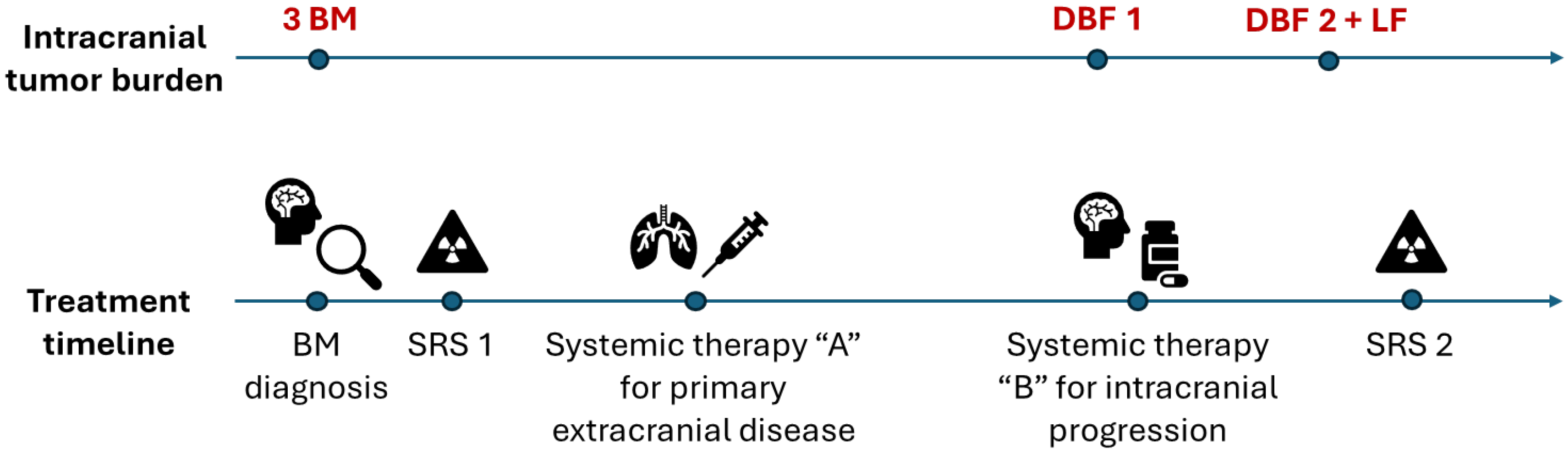
2. Single Modality Response Assessment
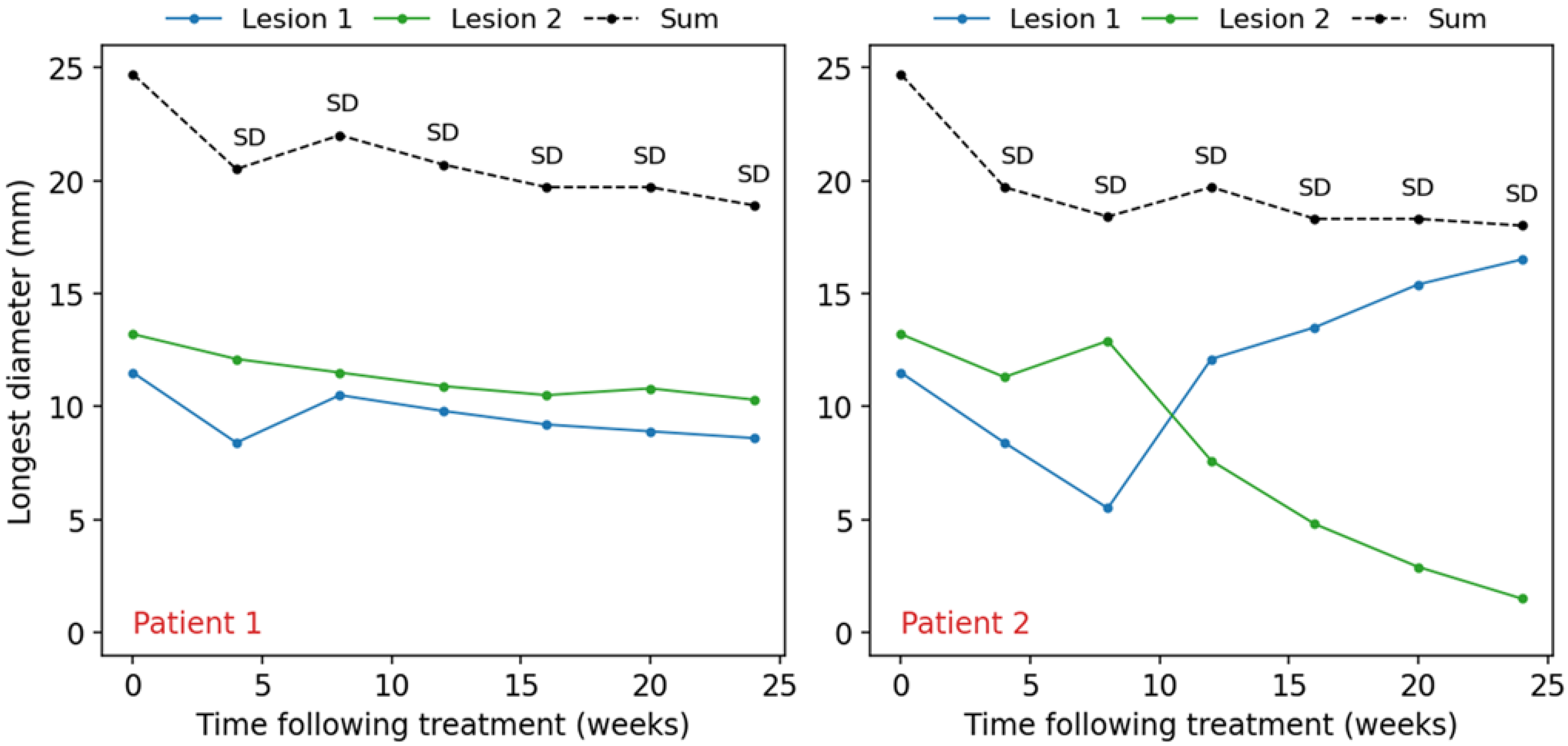
3. The Sum of Target Lesion Diameters
3.1. Individual Lesion Progression
3.2. Individual Lesion Control
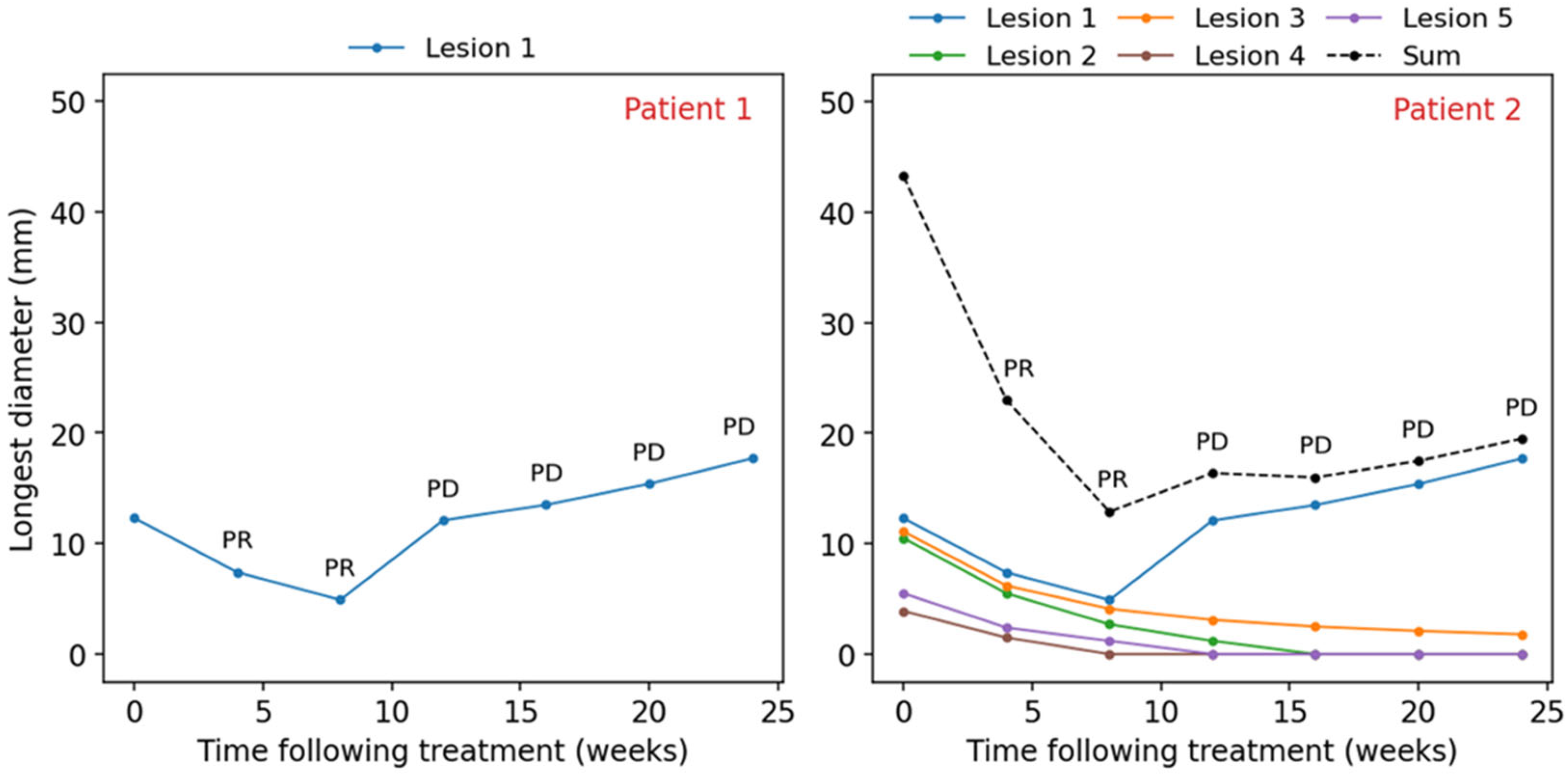
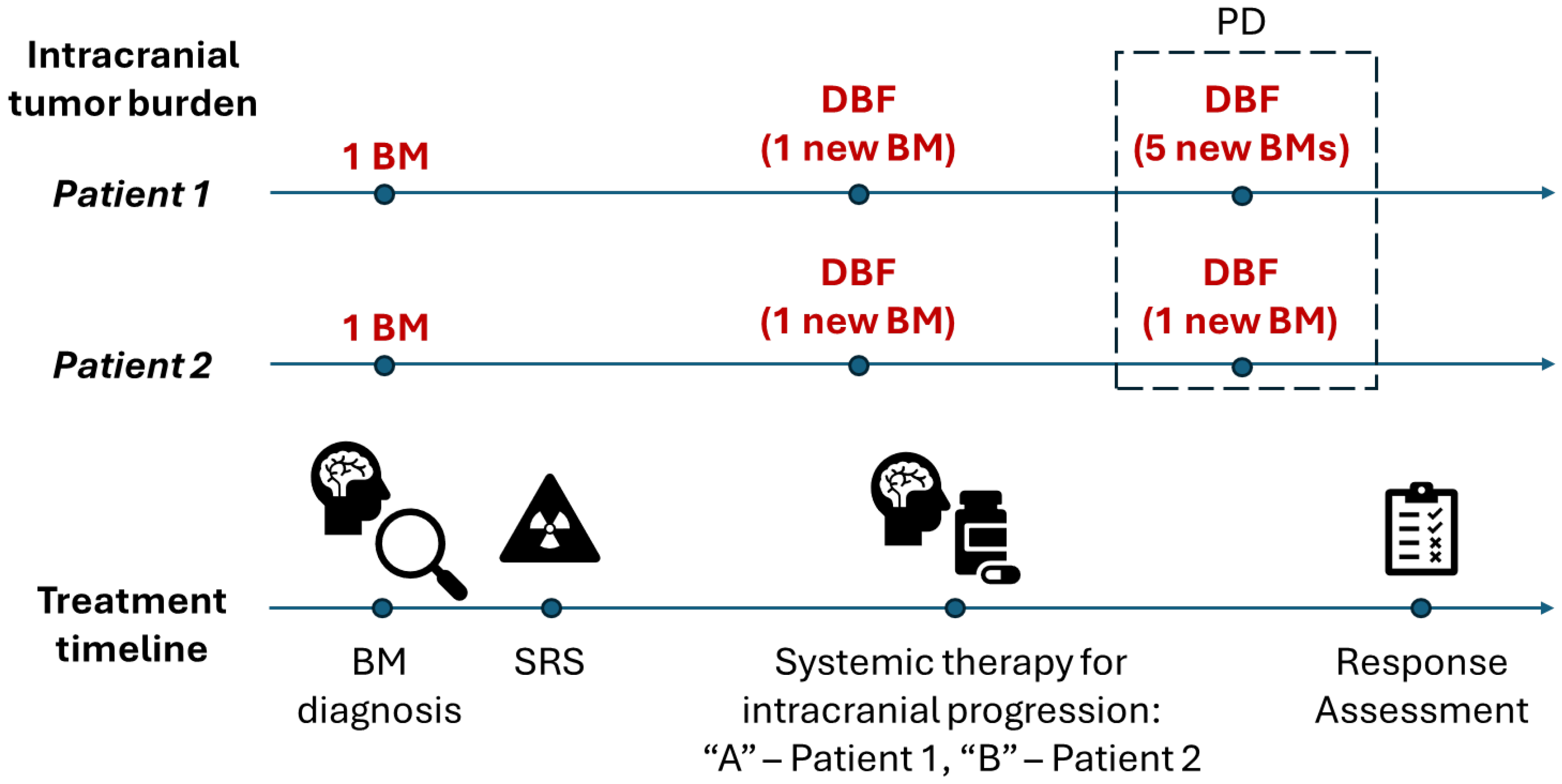
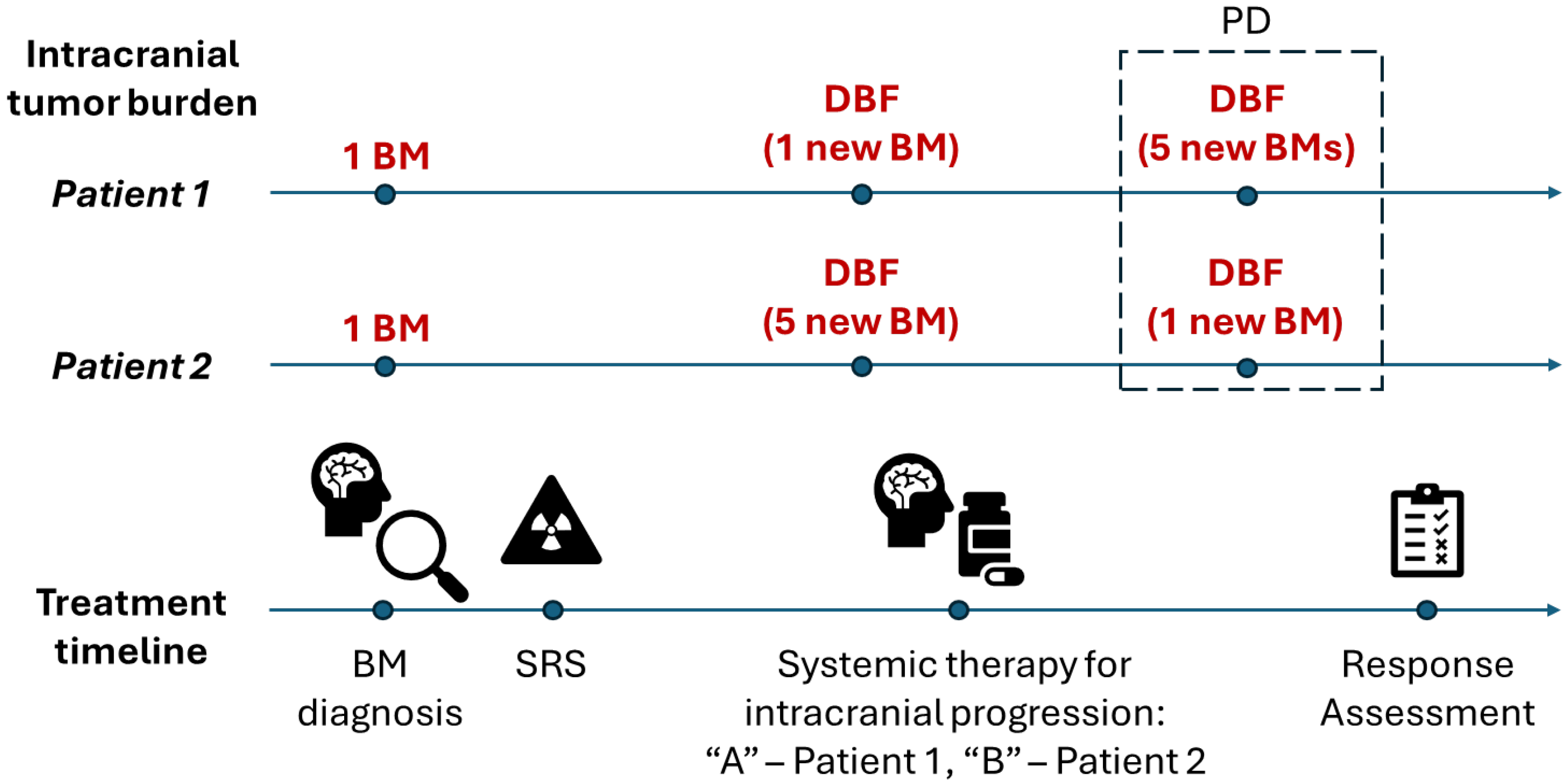
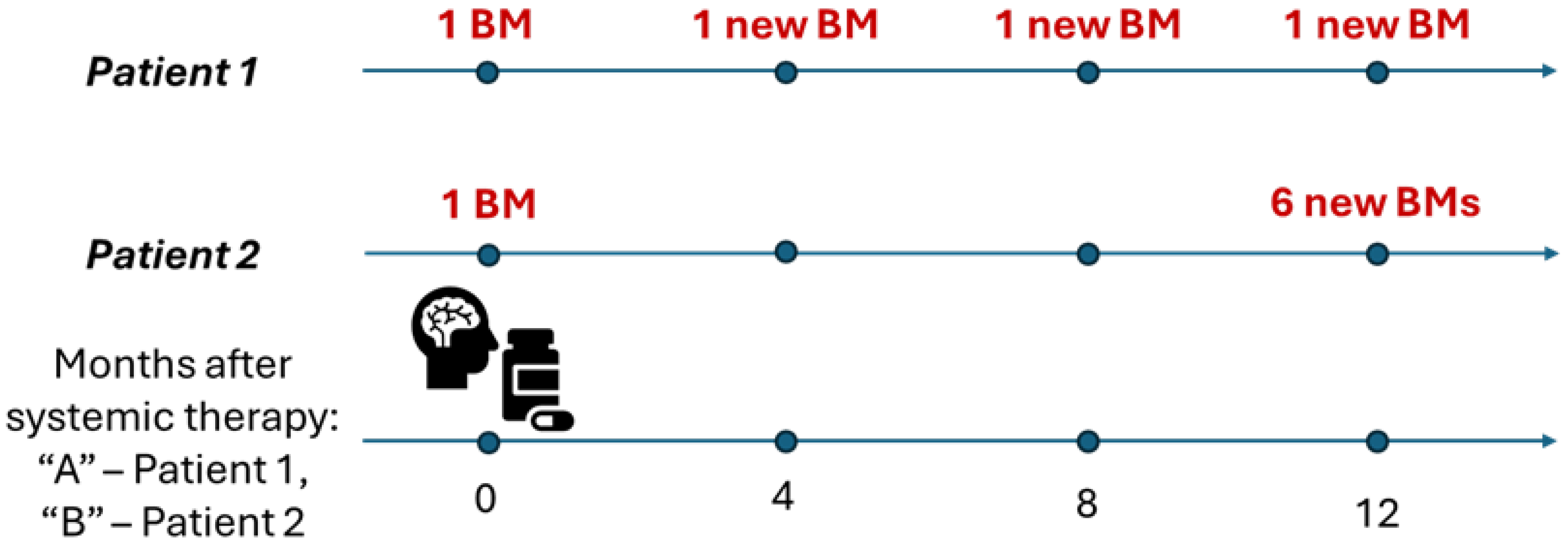
4. PD Category for DBF
4.1. DBF Extent
4.2. DBF Rate
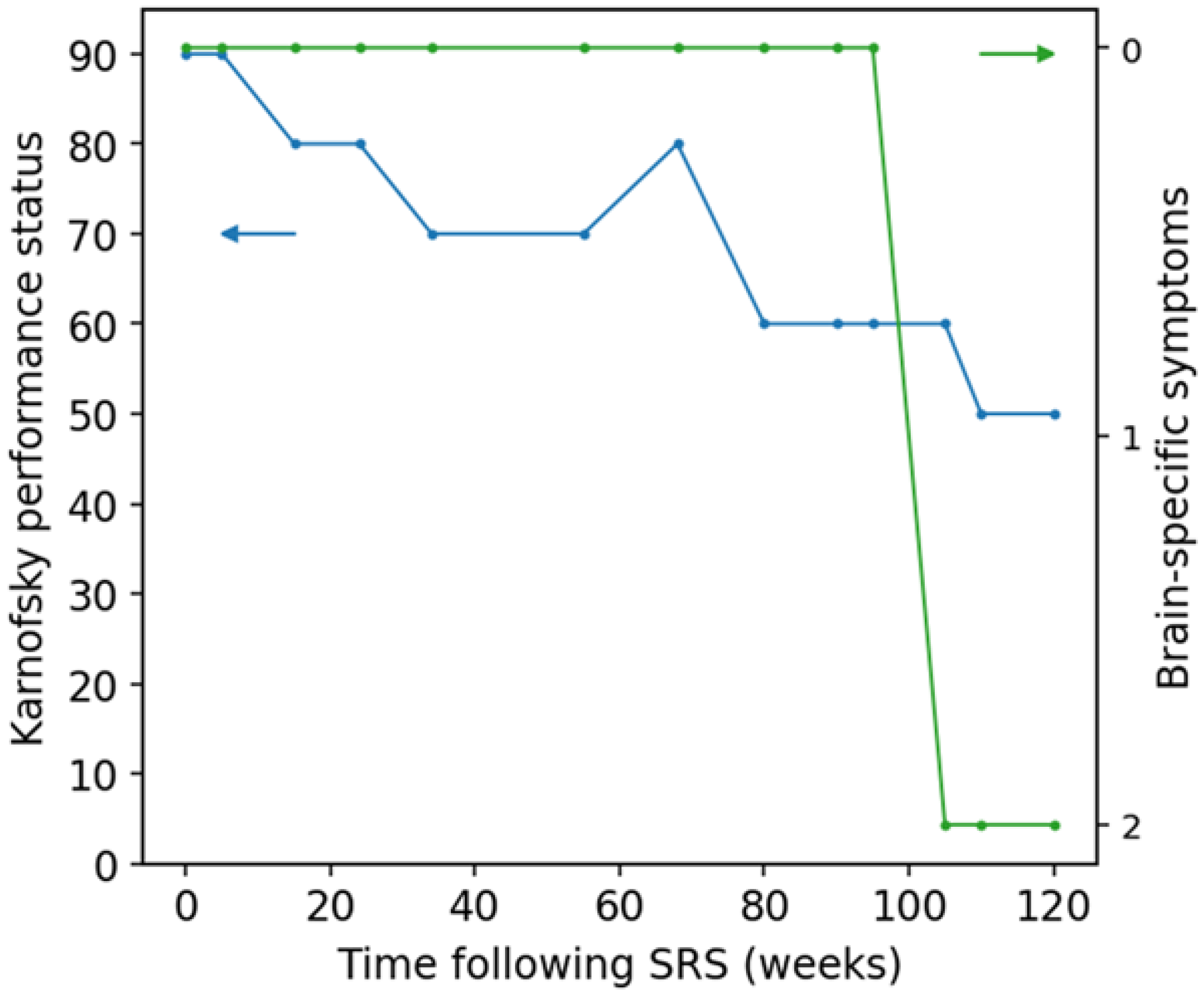
5. Patient Clinical Status
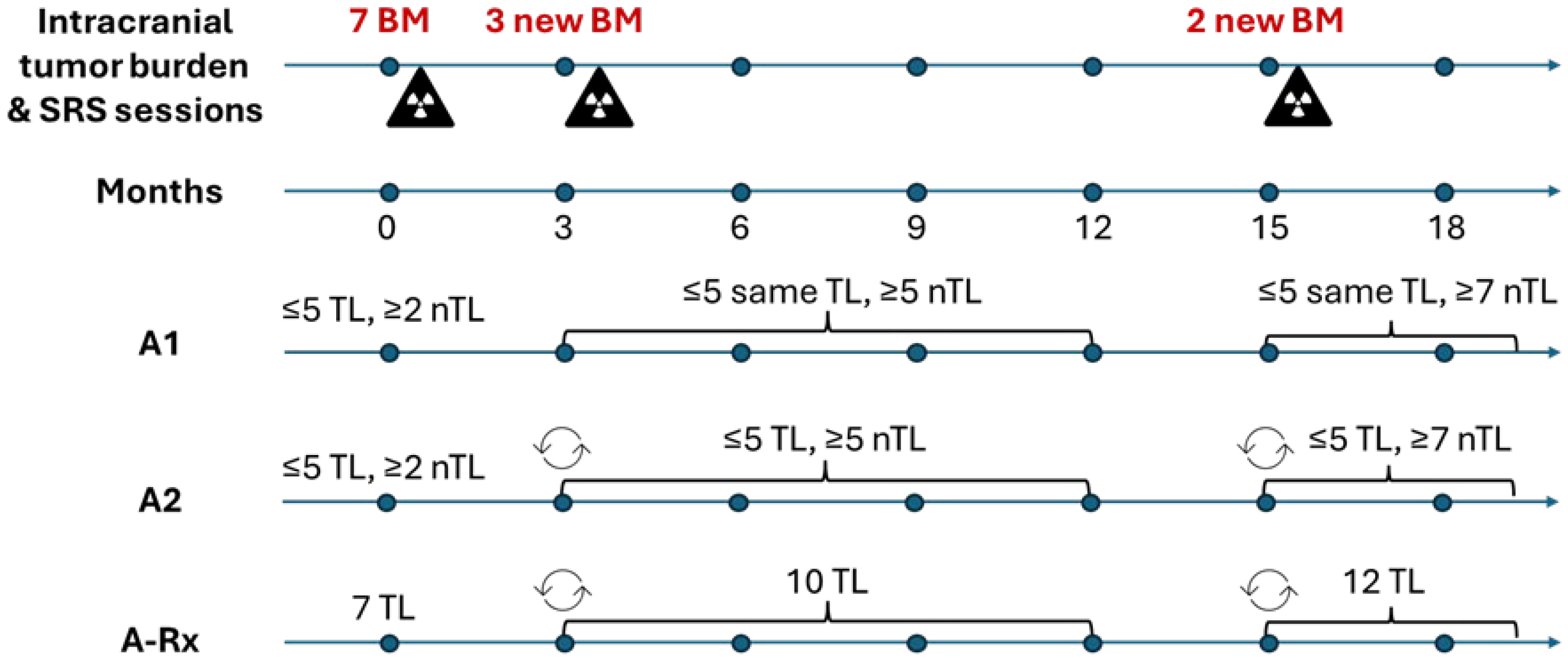
6. Target/Non-Target Lesion Designation
6.1. Initial Lesion Designation
6.2. Sequential Lesion Designation
7. Discussion
Author Contributions
Funding
Data Availability Statement
Acknowledgments
Conflicts of Interest
References
- Lu-Emerson, C.; Eichler, A.F. Brain metastases. Continuum 2012, 18, 295–311. [Google Scholar] [CrossRef]
- Lamba, N.; Wen, P.Y.; Aizer, A.A. Epidemiology of brain metastases and leptomeningeal disease. Neuro Oncol. 2021, 23, 1447–1456. [Google Scholar] [CrossRef] [PubMed]
- Tsao, M.N.; Lloyd, N.S.; Wong, R.K.; Rakovitch, E.; Chow, E.; Laperriere, N.; Supportive Care Guidelines Group of Cancer Care Ontario’s Program in Evidence-Based Care. Radiotherapeutic management of brain metastases: A systematic review and meta-analysis. Cancer Treat. Rev. 2005, 31, 256–273. [Google Scholar] [CrossRef] [PubMed]
- Moravan, M.J.; Fecci, P.E.; Anders, C.K.; Clarke, J.M.; Salama, A.K.S.; Adamson, J.D.; Floyd, S.R.; Torok, J.A.; Salama, J.K.; Sampson, J.H.; et al. Current multidisciplinary management of brain metastases. Cancer 2020, 126, 1390–1406. [Google Scholar] [CrossRef]
- Putz, F.; Weissmann, T.; Oft, D.; Schmidt, M.A.; Roesch, J.; Siavooshhaghighi, H.; Filimonova, I.; Schmitter, C.; Mengling, V.; Bert, C.; et al. FSRT vs. SRS in brain metastases—Differences in local control and radiation necrosis—A volumetric study. Front. Oncol. 2020, 10, 559193. [Google Scholar] [CrossRef]
- Ramakrishna, N.; Anders, C.K.; Lin, N.U.; Morikawa, A.; Temin, S.; Chandarlapaty, S.; Crews, J.R.; Davidson, N.E.; Franzoi, M.A.B.; Kirshner, J.J.; et al. Management of advanced human epidermal growth factor receptor 2-positive breast cancer and brain metastases: ASCO guideline update. J. Clin. Oncol. 2022, 40, 2636–2655. [Google Scholar] [CrossRef]
- Mehta, M.P.; Gondi, V.; Ahluwalia, M.S.; Roberge, D.; Sio, T.T.W.; Trifiletti, D.M.; Muanza, T.; Krpan, A.M.; Zhu, Z.; Ramakrishna, N.R.; et al. Tumor Treating Fields (TTFields) therapy after stereotactic radiosurgery for brain metastases from non-small cell lung cancer: Final results of the phase 3 METIS study. Int. J. Radiat. Oncol. Biol. Phys. 2026, 124, 278–293. [Google Scholar] [CrossRef]
- Tanzhu, G.; Peng, H.; Chen, L.; Xiao, G.; Ning, J.; Chen, L.; Zhou, R. Tumor treating fields combined with ionizing radiation inhibit the malignant phenotype of lung cancer brain metastasis cells by suppressing DNA damage repair pathways. Brain Stimul. 2025, 18, 1426–1440. [Google Scholar] [CrossRef]
- Lin, N.U.; Lee, E.Q.; Aoyama, H.; Barani, I.J.; Barboriak, D.P.; Baumert, B.G.; Bendszus, M.; Brown, P.D.; Camidge, D.R.; Chang, S.M.; et al. Response assessment criteria for brain metastases: Proposal from the RANO group. Lancet Oncol. 2015, 16, e270–e278. [Google Scholar] [CrossRef]
- Romano, A.; Moltoni, G.; Blandino, A.; Palizzi, S.; Romano, A.; de Rosa, G.; De Blasi Palma, L.; Monopoli, C.; Guarnera, A.; Minniti, G.; et al. Radiosurgery for brain metastases: Challenges in imaging interpretation after treatment. Cancers 2023, 15, 5092. [Google Scholar] [CrossRef]
- Wen, P.Y.; Chang, S.M.; Van den Bent, M.J.; Vogelbaum, M.A.; Macdonald, D.R.; Lee, E.Q. Response assessment in neuro-oncology clinical trials. J. Clin. Oncol. 2017, 35, 2439–2449. [Google Scholar] [CrossRef] [PubMed]
- Qian, J.M.; Mahajan, A.; Yu, J.B.; Tsiouris, A.J.; Goldberg, S.B.; Kluger, H.M.; Chiang, V.L.S. Comparing available criteria for measuring brain metastasis response to immunotherapy. J. Neurooncol. 2017, 132, 479–485. [Google Scholar] [CrossRef] [PubMed]
- Iorio-Morin, C.; Mercure-Cyr, R.; Figueiredo, G.; Touchette, C.J.; Masson-Côté, L.; Mathieu, D. Repeat stereotactic radiosurgery for the management of locally recurrent brain metastases. J. Neurooncol. 2019, 145, 551–559. [Google Scholar] [CrossRef]
- Alexander, B.M.; Brown, P.D.; Ahluwalia, M.S.; Aoyama, H.; Baumert, B.G.; Chang, S.M.; Gaspar, L.E.; Kalkanis, S.N.; Macdonald, D.R.; Mehta, M.P.; et al. Clinical trial design for local therapies for brain metastases: A guideline by the Response Assessment in Neuro-Oncology Brain Metastases working group. Lancet Oncol. 2018, 19, e33–e42. [Google Scholar] [CrossRef]
- Thrower, S.L.; Al Feghali, K.A.; Luo, D.; Paddick, I.; Hou, P.; Briere, T.; Li, J.; McAleer, M.F.; McGovern, S.L.; Woodhouse, K.D.; et al. The effect of slice thickness on contours of brain metastases for stereotactic radiosurgery. Adv. Radiat. Oncol. 2021, 6, 100708. [Google Scholar] [CrossRef]
- Douri, K.; Iorio-Morin, C.; Mercure-Cyr, R.; Figueiredo, G.; Touchette, C.J.; Masson-Côté, L.; Mathieu, D. Response assessment in brain metastases managed by stereotactic radiosurgery: A reappraisal of the RANO-BM criteria. Curr. Oncol. 2023, 30, 9382–9391. [Google Scholar] [CrossRef]
- Chang, K.; Beers, A.L.; Bai, H.X.; Brown, J.M.; Ly, K.I.; Li, X.; Senders, J.T.; Kavouridis, V.K.; Boaro, A.; Su, C.; et al. Automatic assessment of glioma burden: A deep learning algorithm for fully automated volumetric and bidimensional measurement. Neuro Oncol. 2019, 21, 1412–1422. [Google Scholar] [CrossRef]
- Kickingereder, P.; Isensee, F.; Tursunova, I.; Petersen, J.; Neuberger, U.; Bonekamp, D.; Brugnara, G.; Schell, M.; Kessler, T.; Foltyn, M.; et al. Automated quantitative tumour response assessment of MRI in neuro-oncology with artificial neural networks: A multicentre, retrospective study. Lancet Oncol. 2019, 20, 728–740. [Google Scholar] [CrossRef]
- Cho, J.; Kim, Y.J.; Sunwoo, L.; Lee, G.P.; Nguyen, T.Q.; Cho, S.J.; Baik, S.H.; Bae, Y.J.; Choi, B.S.; Jung, C.; et al. Deep learning-based computer-aided detection system for automated treatment response assessment of brain metastases on 3D MRI. Front. Oncol. 2021, 11, 739639. [Google Scholar] [CrossRef]
- Oft, D.; Schmidt, M.A.; Weissmann, T.; Roesch, J.; Mengling, V.; Masitho, S.; Bert, C.; Lettmaier, S.; Frey, B.; Distel, L.V.; et al. Volumetric regression in brain metastases after stereotactic radiotherapy: Time course, predictors, and significance. Front. Oncol. 2021, 10, 590980. [Google Scholar] [CrossRef]
- Bauknecht, H.C.; Romano, V.C.; Rogalla, P.; Klingebiel, R.; Wolf, C.; Bornemann, L.; Hamm, B.; Hein, P.A. Intra- and interobserver variability of linear and volumetric measurements of brain metastases using contrast-enhanced magnetic resonance imaging. Investig. Radiol. 2010, 45, 49–56. [Google Scholar] [CrossRef] [PubMed]
- Bauknecht, H.C.; Klingebiel, R.; Hein, P.; Wolf, C.; Bornemann, L.; Siebert, E.; Bohner, G. Effect of MRI-based semiautomatic size-assessment in cerebral metastases on the RANO-BM classification. Clin. Neuroradiol. 2020, 30, 263–270. [Google Scholar] [CrossRef] [PubMed]
- Ozkara, B.B.; Federau, C.; Dagher, S.A.; Pattnaik, D.; Ucisik, F.E.; Chen, M.M.; Wintermark, M. Correlating volumetric and linear measurements of brain metastases on MRI scans using intelligent automation software: A preliminary study. J. Neurooncol. 2023, 162, 363–371. [Google Scholar] [CrossRef] [PubMed]
- Ocaña-Tienda, B.; Pérez-Beteta, J.; Romero-Rosales, J.A.; Asenjo, B.; Ortiz de Mendivil, A.; Pérez Romasanta, L.A.; Albillo Labarra, J.D.; Nagib, F.; Vidal Denis, M.; Luque, B.; et al. Volumetric analysis: Rethinking brain metastases response assessment. Neurooncol. Adv. 2023, 6, vdad161. [Google Scholar] [CrossRef]
- Galanis, E.; Buckner, J.C.; Maurer, M.J.; Sykora, R.; Castillo, R.; Ballman, K.V.; Erickson, B.J. Validation of neuroradiologic response assessment in gliomas: Measurement by RECIST, two-dimensional, computer-assisted tumor area, and computer-assisted tumor volume methods. Neuro Oncol. 2006, 8, 156–165. [Google Scholar] [CrossRef]
- Shah, G.D.; Kesari, S.; Xu, R.; Batchelor, T.T.; O’Neill, A.M.; Hochberg, F.H.; Levy, B.; Bradshaw, J.; Wen, P.Y. Comparison of linear and volumetric criteria in assessing tumor response in adult high-grade gliomas. Neuro Oncol. 2006, 8, 38–46. [Google Scholar] [CrossRef]
- Gahrmann, R.; van den Bent, M.; van der Holt, B.; Vernhout, R.M.; Taal, W.; Vos, M.; de Groot, J.C.; Beerepoot, L.V.; Buter, J.; Flach, Z.H.; et al. Comparison of 2D (RANO) and volumetric methods for assessment of recurrent glioblastoma treated with bevacizumab—A report from the BELOB trial. Neuro Oncol. 2017, 19, 853–861. [Google Scholar] [CrossRef]
- Likhacheva, A.; Pinnix, C.C.; Parikh, N.; Allen, P.K.; Guha-Thakurta, N.; McAleer, M.; Sulman, E.P.; Mahajan, A.; Shiu, A.; Luo, D.; et al. Validation of Recursive Partitioning Analysis and Diagnosis-Specific Graded Prognostic Assessment in patients treated initially with radiosurgery alone. J. Neurosurg. 2012, 117, 38–44. [Google Scholar] [CrossRef]
- Sperduto, P.W.; Kased, N.; Roberge, D.; Xu, Z.; Shanley, R.; Luo, X.; Sneed, P.K.; Chao, S.T.; Weil, R.J.; Suh, J.; et al. Summary report on the graded prognostic assessment: An accurate and facile diagnosis-specific tool to estimate survival for patients with brain metastases. J. Clin. Oncol. 2012, 30, 419–425. [Google Scholar] [CrossRef]
- Varlotto, J.M.; Flickinger, J.C.; Niranjan, A.; Bhatnagar, A.K.; Kondziolka, D.; Lunsford, L.D. Analysis of tumor control and toxicity in patients who have survived at least one year after radiosurgery for brain metastases. Int. J. Radiat. Oncol. Biol. Phys. 2003, 57, 452–464. [Google Scholar] [CrossRef]
- Weltman, E.; Salvajoli, J.V.; Brandt, R.A.; de Morais Hanriot, R.; Prisco, F.E.; Cruz, J.C.; de Oliveira Borges, S.R.; Wajsbrot, D.B. Radiosurgery for brain metastases: A score index for predicting prognosis. Int. J. Radiat. Oncol. Biol. Phys. 2000, 46, 1155–1161. [Google Scholar] [CrossRef]
- Jawahar, A.; Matthew, R.E.; Minagar, A.; Shukla, D.; Zhang, J.H.; Willis, B.K.; Ampil, F.; Nanda, A. Gamma knife surgery in the management of brain metastases from lung carcinoma: A retrospective analysis of survival, local tumor control, and freedom from new brain metastasis. J. Neurosurg. 2004, 100, 842–847. [Google Scholar] [CrossRef] [PubMed]
- Farris, M.; McTyre, E.R.; Cramer, C.K.; Hughes, R.; Randolph, D.M., 2nd; Ayala-Peacock, D.N.; Bourland, J.D.; Ruiz, J.; Watabe, K.; Laxton, A.W.; et al. Brain metastasis velocity: A novel prognostic metric predictive of overall survival and freedom from whole-brain radiation therapy after distant brain failure following upfront radiosurgery alone. Int. J. Radiat. Oncol. Biol. Phys. 2017, 98, 131–141. [Google Scholar] [CrossRef] [PubMed]
- LeCompte, M.C.; McTyre, E.; Henson, A.; Farris, M.; Okoukoni, C.; Cramer, C.K.; Triozzi, P.; Ruiz, J.; Watabe, K.; Lo, H.W.; et al. Survival and failure outcomes predicted by brain metastasis volumetric kinetics in melanoma patients following upfront treatment with stereotactic radiosurgery alone. Cureus 2017, 9, e1934. [Google Scholar] [CrossRef] [PubMed]
- National Cancer Institute. Common Terminology Criteria for Adverse Events (CTCAE); U.S. Department of Health and Human Services, National Institutes of Health, National Cancer Institute: Bethesda, MD, USA, 2017; V5.0. [Google Scholar]
- Nayak, L.; DeAngelis, L.M.; Brandes, A.A.; Peereboom, D.M.; Galanis, E.; Lin, N.U.; Soffietti, R.; Macdonald, D.R.; Chamberlain, M.; Perry, J.; et al. The Neurologic Assessment in Neuro-Oncology (NANO) scale: A tool to assess neurologic function for integration into the Response Assessment in Neuro-Oncology (RANO) criteria. Neuro Oncol. 2017, 19, 625–635. [Google Scholar] [CrossRef]
- Lee, J.; Park, S.H.; Kim, Y.Z. Prognostic evaluation of neurological assessment of the neuro-oncology scale in glioblastoma patients. Brain Tumor Res. Treat. 2018, 6, 22–30. [Google Scholar] [CrossRef]
- Amsbaugh, M.; Pan, J.; Yusuf, M.B.; Dragun, A.; Dunlap, N.; Guan, T.; Boling, W.; Rai, S.; Woo, S. Dose-volume response relationship for brain metastases treated with frameless single-fraction linear accelerator-based stereotactic radiosurgery. Cureus 2016, 8, e587. [Google Scholar] [CrossRef]
- Wei, Z.; Luy, D.D.; Jose, S.; Deng, H.; Yavan, S.; Worrell, S.; Belkhir, J.R.; Tang, L.W.; Niranjan, A.; Lunsford, L.D. Single-session gamma knife radiosurgery for patients with 20 or more brain metastases. Neurosurgery 2023, 93, 857–866. [Google Scholar] [CrossRef]



| CR | PR | SD | PD | |
|---|---|---|---|---|
| Target lesions | None | ≥30% ↓ in SLD relative to baseline | Not PR, not PD | ≥20% ↑ in SLD and ≥5 mm ↑ in ≥1 LD relative to nadir |
| Non-target lesions | None | Stable or improved | Stable or improved | Unequivocal progression |
| New lesions | None | None | None | Present |
| Corticosteroids | None | Stable or decreased | Stable or decreased | Not applicable |
| Clinical status | Stable or improved | Stable or improved | Stable or improved | Worse |
| Requirement | All | All | All | Any |
| BSS Score | Neurologic Symptoms Severity |
|---|---|
| 0 | None |
| 1 | Mild symptoms not affecting activities of daily living and with no intervention required (e.g., mild headache, paresthesia, weakness) |
| 2 | Moderate symptoms affecting instrumental activities of daily living with non-invasive intervention required (e.g., steroids, pain management) |
| 3 | Severe symptoms, not immediately life-threatening but limiting self-care activities of daily living and potentially requiring invasive intervention |
| 4 | Life-threatening (e.g., complete disability, drastic cognitive decline) |
| 5 | Death due to neurologic decline |
| RANO-BM Limitations | Clinical Impact | Potential Future Directions |
|---|---|---|
| Single modality response assessment | Not designed to assess outcomes for mixed modality local/systemic treatments | Distinguish modality-specific effects on local and distant brain control |
| Sum of target lesion diameters | Might mischaracterize individual lesion control and introduce bias when assessing responses in patients with one vs. multiple brain metastases | Compare per lesion versus combined overall response Report fraction (percentage) of lesions contributing to a particular response category among patients (populations) |
| PD category for DBF | Does not consider DBF extent and rate in treatment efficacy assessment | Quantify extent of DBF (total number of new lesions and their volume) at the time of progression Supplement DBF (PD) with BMV and/or vBMV parameters |
| KPS for patient clinical status | Does not directly represent patient neurological status and might lead to false PD responses | Consider the BSS score as an alternative to KPS in prospective and retrospective trials |
| Target/non-target lesion designation | Might compromise response assessment accuracy and consistency | Consider the A-Rx approach to lesion designation as a uniform assessment framework for all treated brain lesions including new metastases |
Disclaimer/Publisher’s Note: The statements, opinions and data contained in all publications are solely those of the individual author(s) and contributor(s) and not of MDPI and/or the editor(s). MDPI and/or the editor(s) disclaim responsibility for any injury to people or property resulting from any ideas, methods, instructions or products referred to in the content. |
© 2026 by the authors. Licensee MDPI, Basel, Switzerland. This article is an open access article distributed under the terms and conditions of the Creative Commons Attribution (CC BY) license.
Share and Cite
Kashtanova, T.; Ramakrishna, N. Challenges of Applying the RANO-BM Criteria for Characterization of Brain Metastases Treatment Response. Curr. Oncol. 2026, 33, 77. https://doi.org/10.3390/curroncol33020077
Kashtanova T, Ramakrishna N. Challenges of Applying the RANO-BM Criteria for Characterization of Brain Metastases Treatment Response. Current Oncology. 2026; 33(2):77. https://doi.org/10.3390/curroncol33020077
Chicago/Turabian StyleKashtanova, Tatiana, and Naren Ramakrishna. 2026. "Challenges of Applying the RANO-BM Criteria for Characterization of Brain Metastases Treatment Response" Current Oncology 33, no. 2: 77. https://doi.org/10.3390/curroncol33020077
APA StyleKashtanova, T., & Ramakrishna, N. (2026). Challenges of Applying the RANO-BM Criteria for Characterization of Brain Metastases Treatment Response. Current Oncology, 33(2), 77. https://doi.org/10.3390/curroncol33020077