Prognostic Value of the PET/CT-Derived Maximum Standardized Uptake Value Combined with the Neutrophil–Lymphocyte Ratio in Patients with Hepatocellular Carcinoma Undergoing Hepatectomy

Department of General Surgery, Shengjing Hospital of China Medical University, Shenyang 110004, China
*
Author to whom correspondence should be addressed.
†
Current address: Department of Radiology, Shengjing Hospital of China Medical University, Shenyang 110004, China.
Curr. Oncol. 2026, 33(1), 13; https://doi.org/10.3390/curroncol33010013
Submission received: 27 November 2025
/
Revised: 22 December 2025
/
Accepted: 23 December 2025
/
Published: 25 December 2025
(This article belongs to the Special Issue Surgical Management of Patients with Hepatobiliary and Pancreatic Malignancies)
Simple Summary
Despite recent advances, survival outcomes in patients with hepatocellular carcinoma remain poor and recurrence rates are high. Positron emission tomography/computed tomography plays an important role in the prognostic assessment of patients with hepatocellular carcinoma, as it can provide information about the morphology of metastatic lesions and the metabolic characteristics of the tumor itself. The neutrophil–lymphocyte ratio is an indicator of both the pro-tumor inflammatory microenvironment and the host’s immune status in hepatocellular carcinoma. However, it is often impossible to accurately assess the prognosis of such patients based on a single indicator alone. In this study, we established a new scoring system incorporating both preoperative positron emission tomography/computed tomography-derived standardized uptake values and the neutrophil–lymphocyte ratio. It was capable of accurately identifying those with a high recurrence risk or worse overall survival outcome, which could be useful for facilitating the selection of treatment regimens before surgery.
Abstract
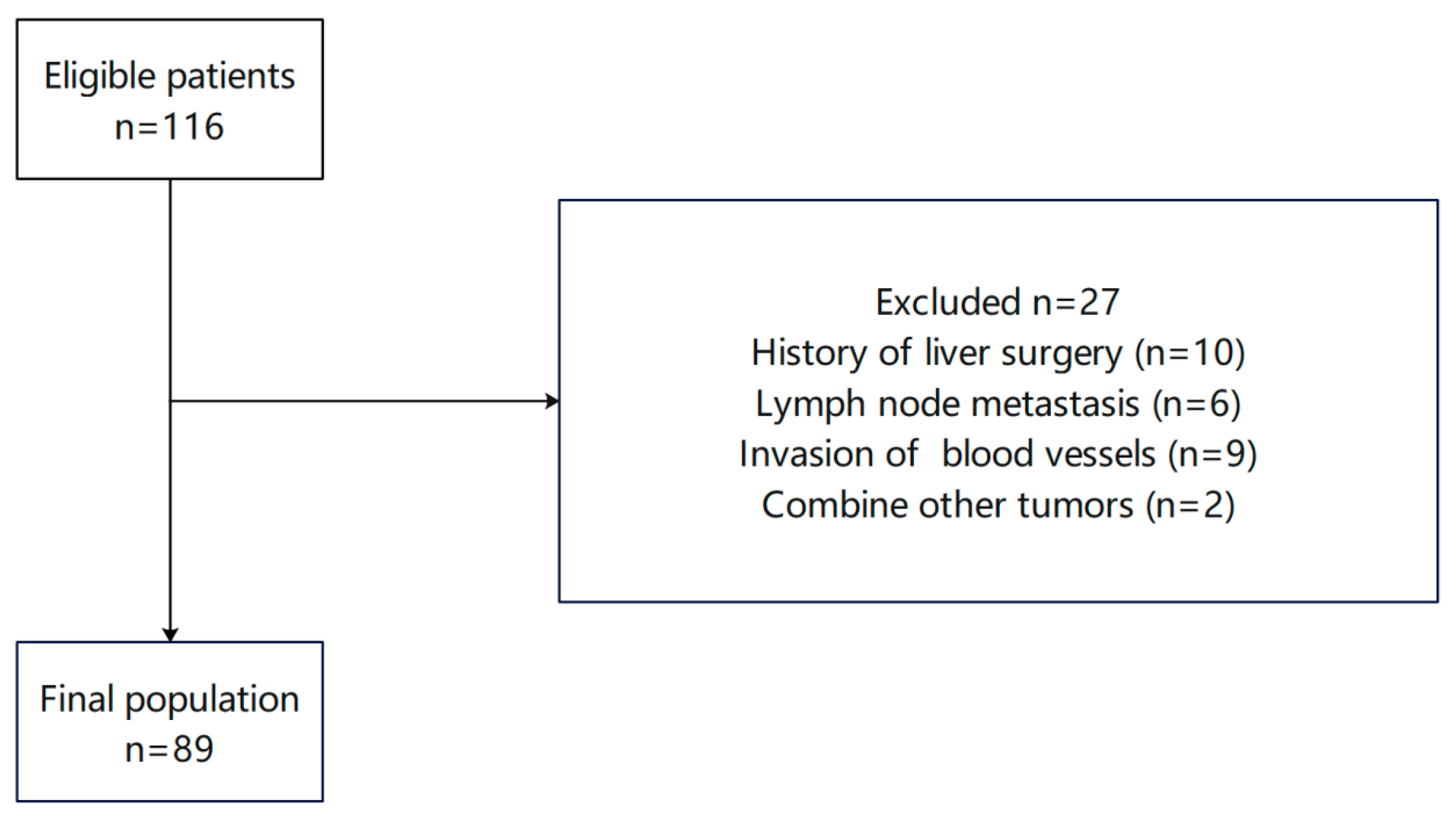
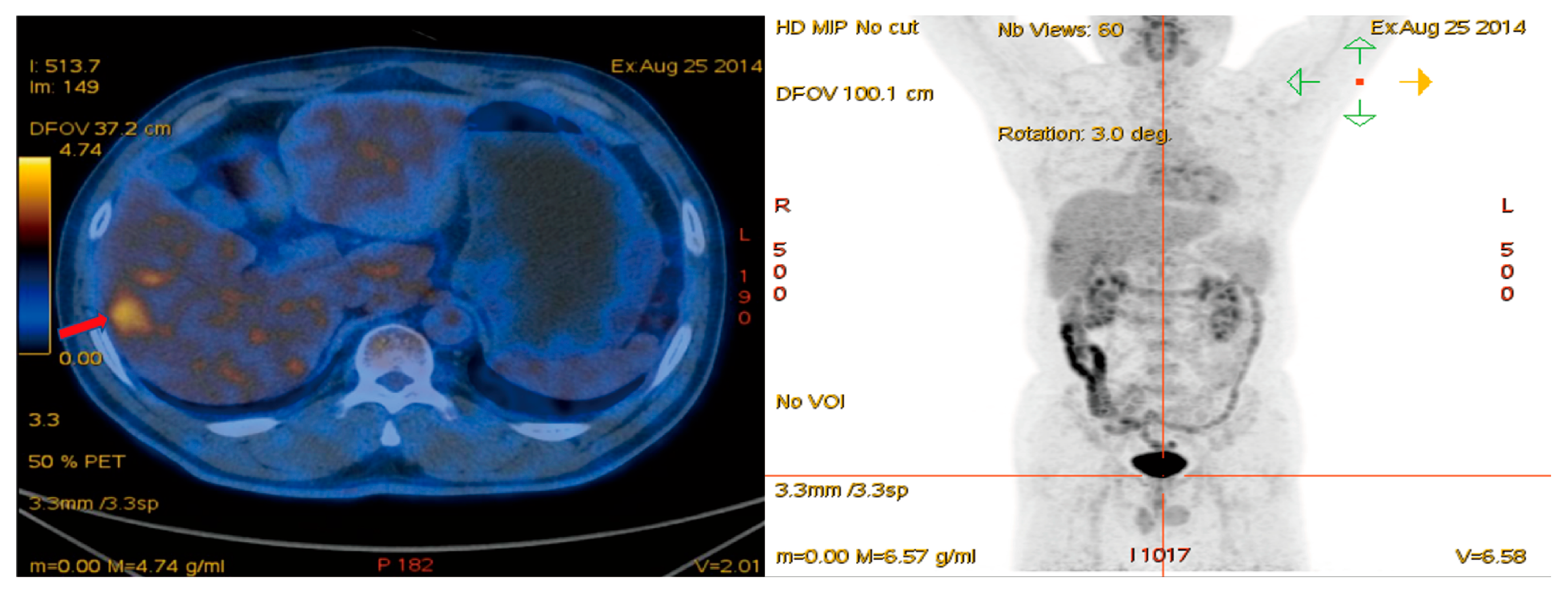
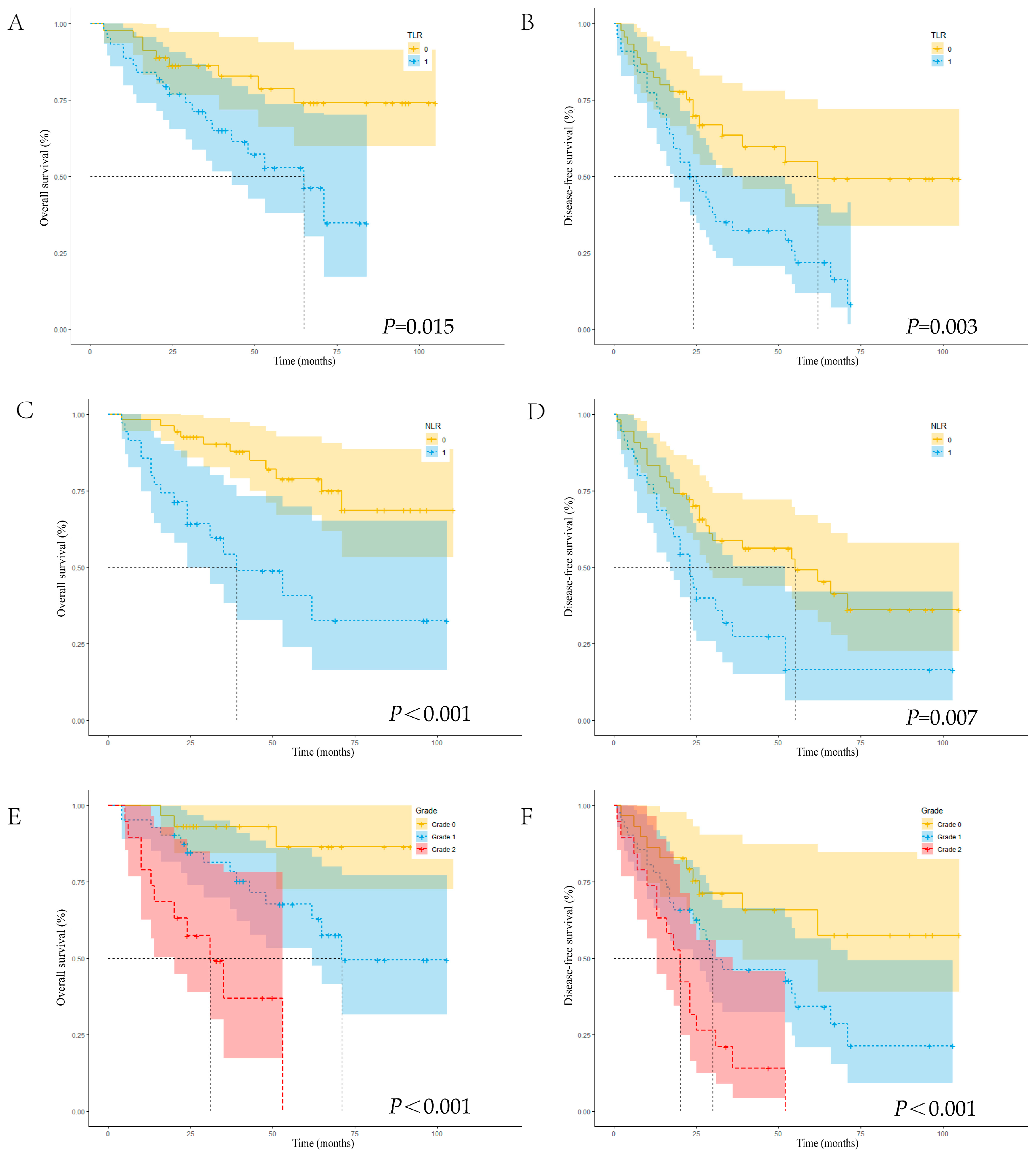
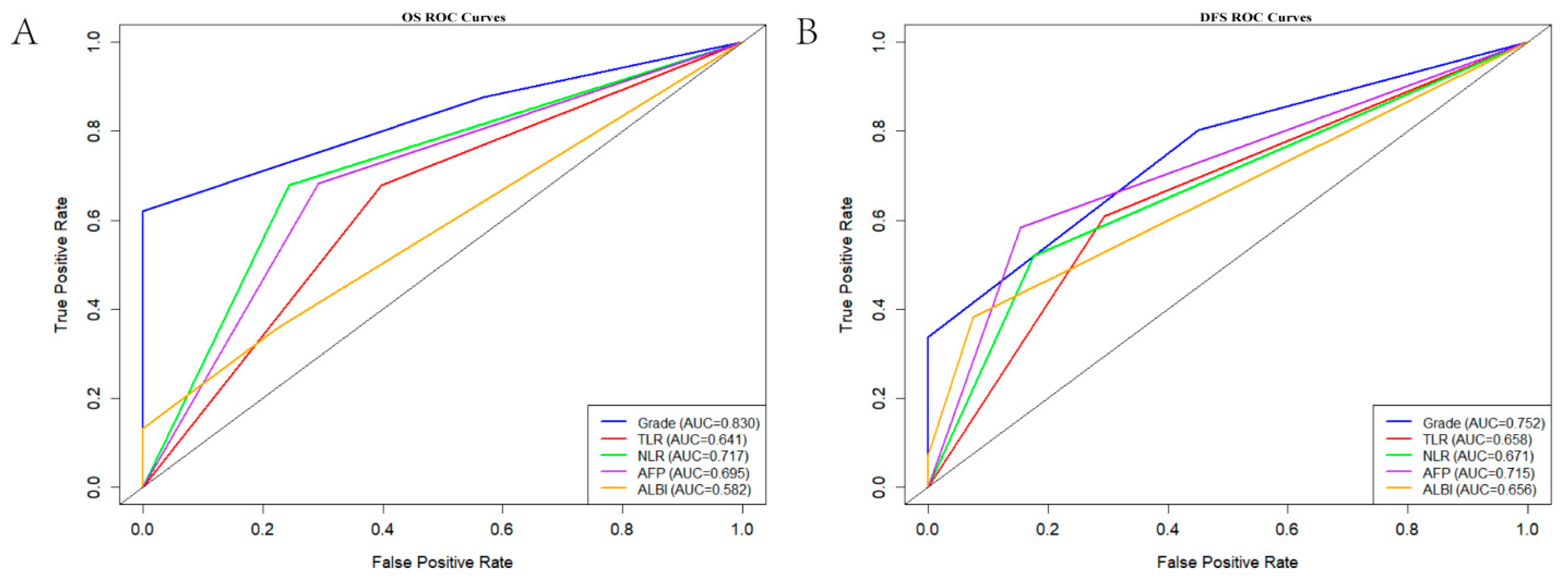
Background: We aimed to evaluate ability of a novel scoring system that combines fluorodeoxyglucose-uptake parameters and systemic inflammatory response indicators to predict hepatocellular carcinoma (HCC) prognosis. Methods: Clinical data were collected from patients with HCC who underwent hepatectomy at our hospital in 2014–2022. The tumor-to-liver ratio (TLR) was adopted as a positron emission tomography/computed tomography (PET/CT) standardized uptake value (SUV)-related indicator and calculated as the ratio of the SUVmax of tumor tissue to the SUVmean of normal liver tissue. The patients’ immune microenvironment reflected the NLR. Postoperative overall survival (OS)- and disease-free survival (DFS)-related independent prognostic factors were analyzed using Cox proportional hazards regression modeling. Results: Eighty-nine patients were included. TLR, NLR, and alpha-fetoprotein levels were independently associated with OS and DFS. The OS and DFS in the zero-point group were significantly longer than those in the one- and two-point groups. Time-dependent ROC curve analyses revealed area under the curve values of 0.830 and 0.752 for 5-year OS and DFS, respectively, for the scoring system, outperforming single evaluation indices. Conclusions: The proposed scoring system, which incorporates both TLR and NLR, simultaneously reflects metabolic tumor characteristics and the host’s immune microenvironment, enabling more accurate patients with early to intermediate-stage HCC undergoing hepatectomy classification and better prognostic evaluation.