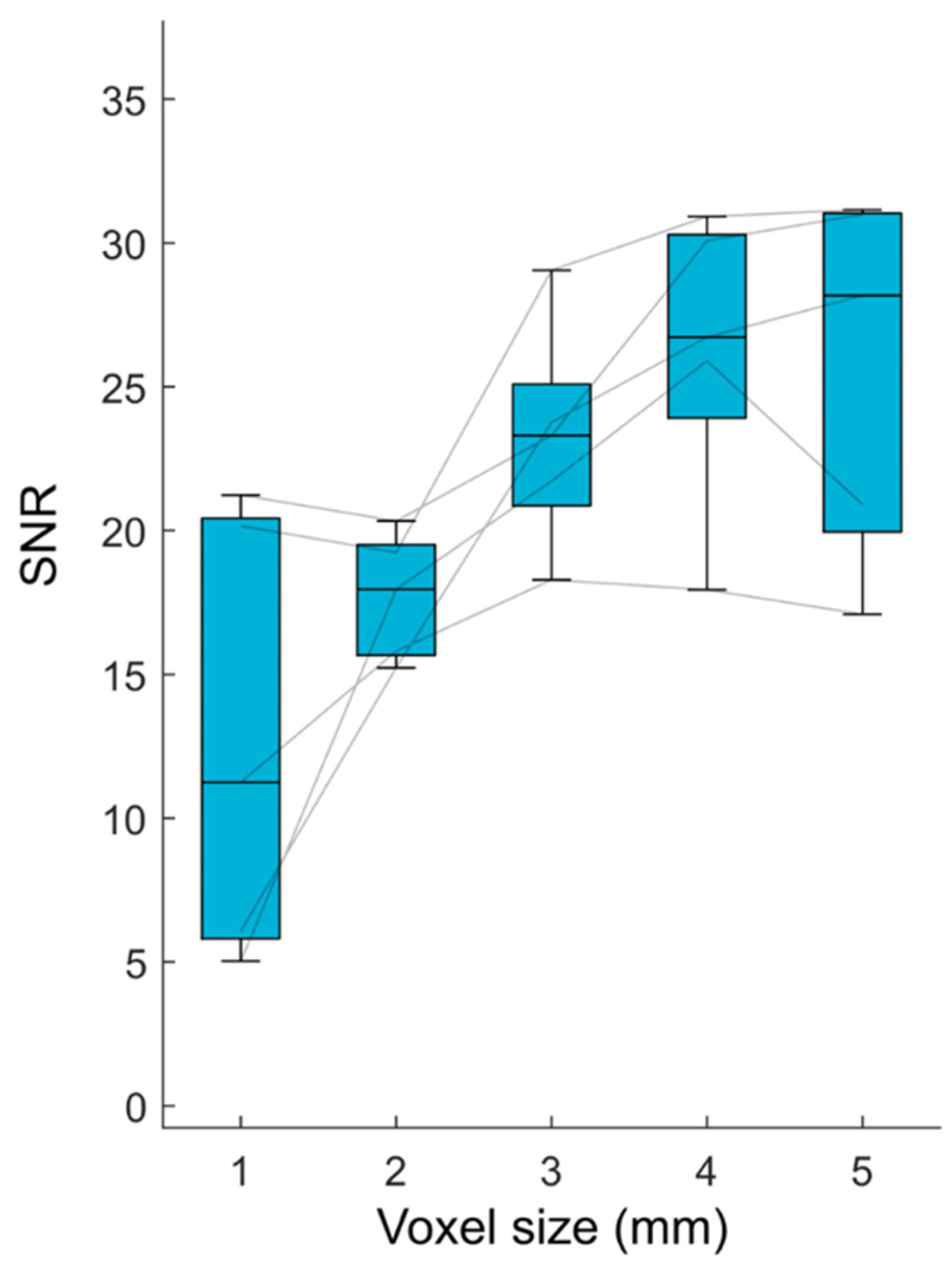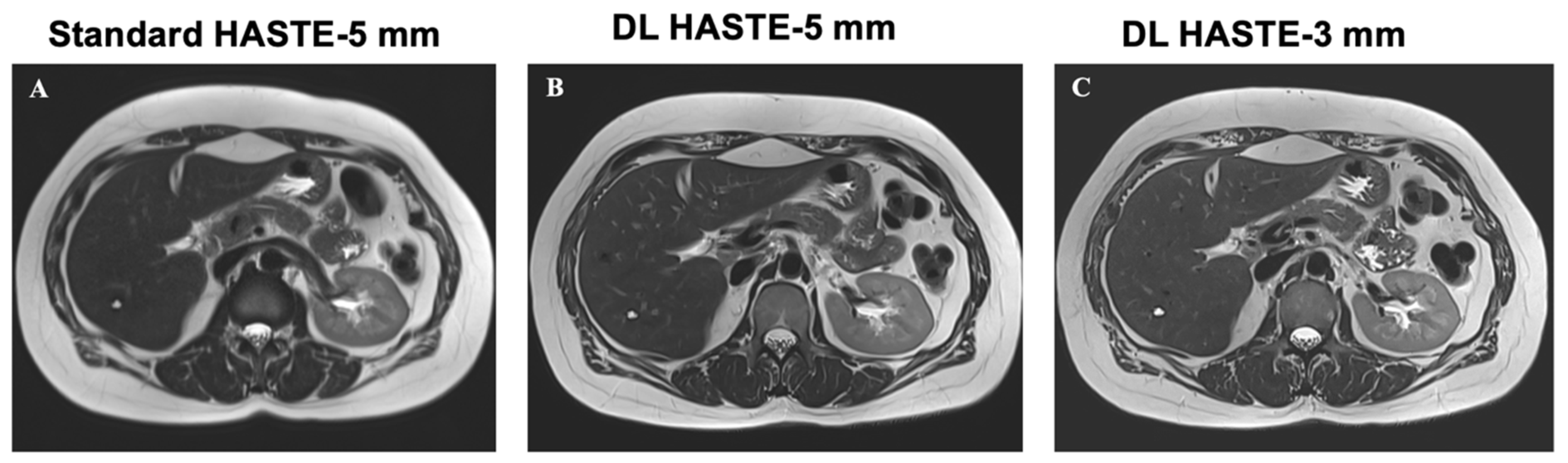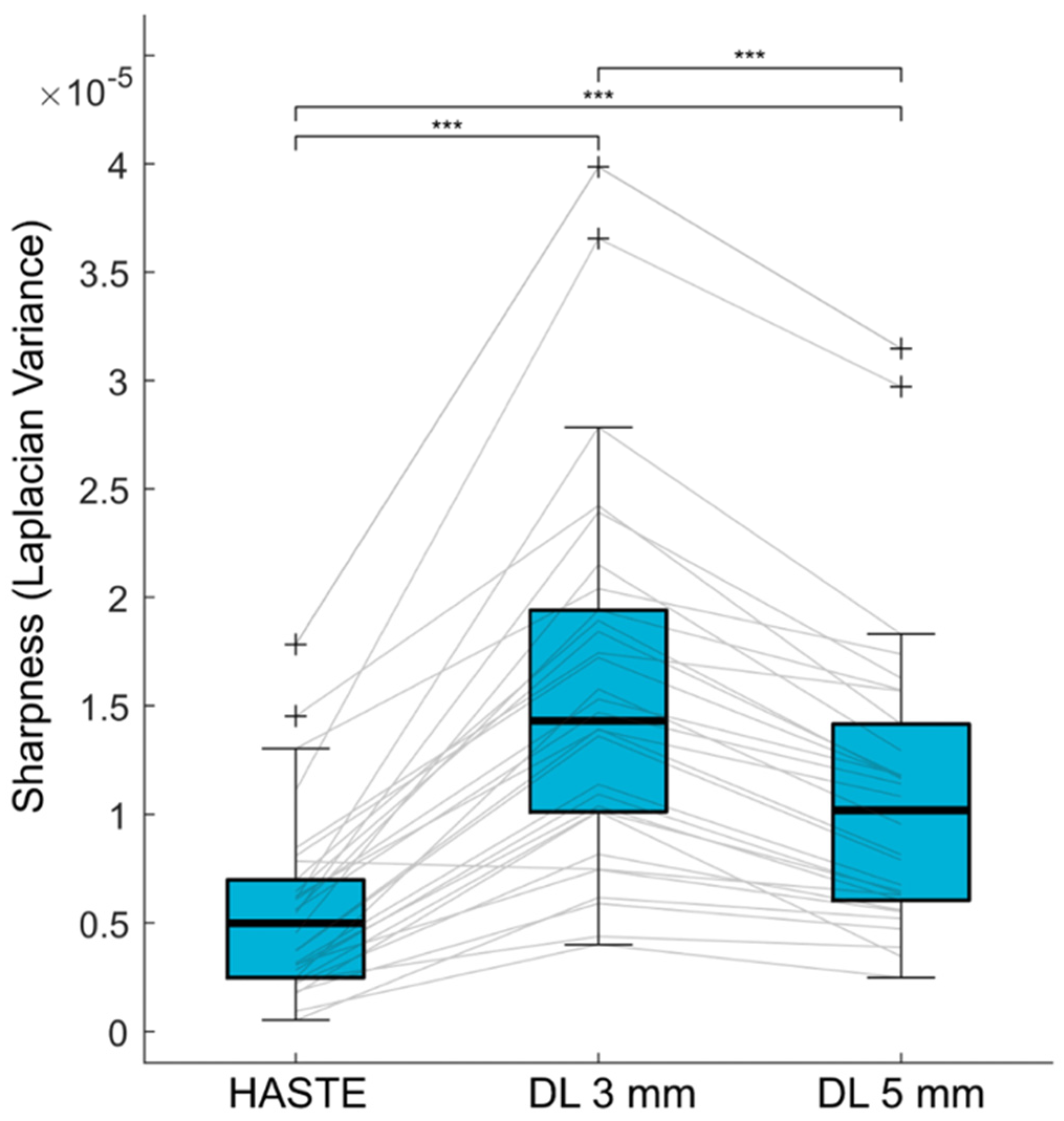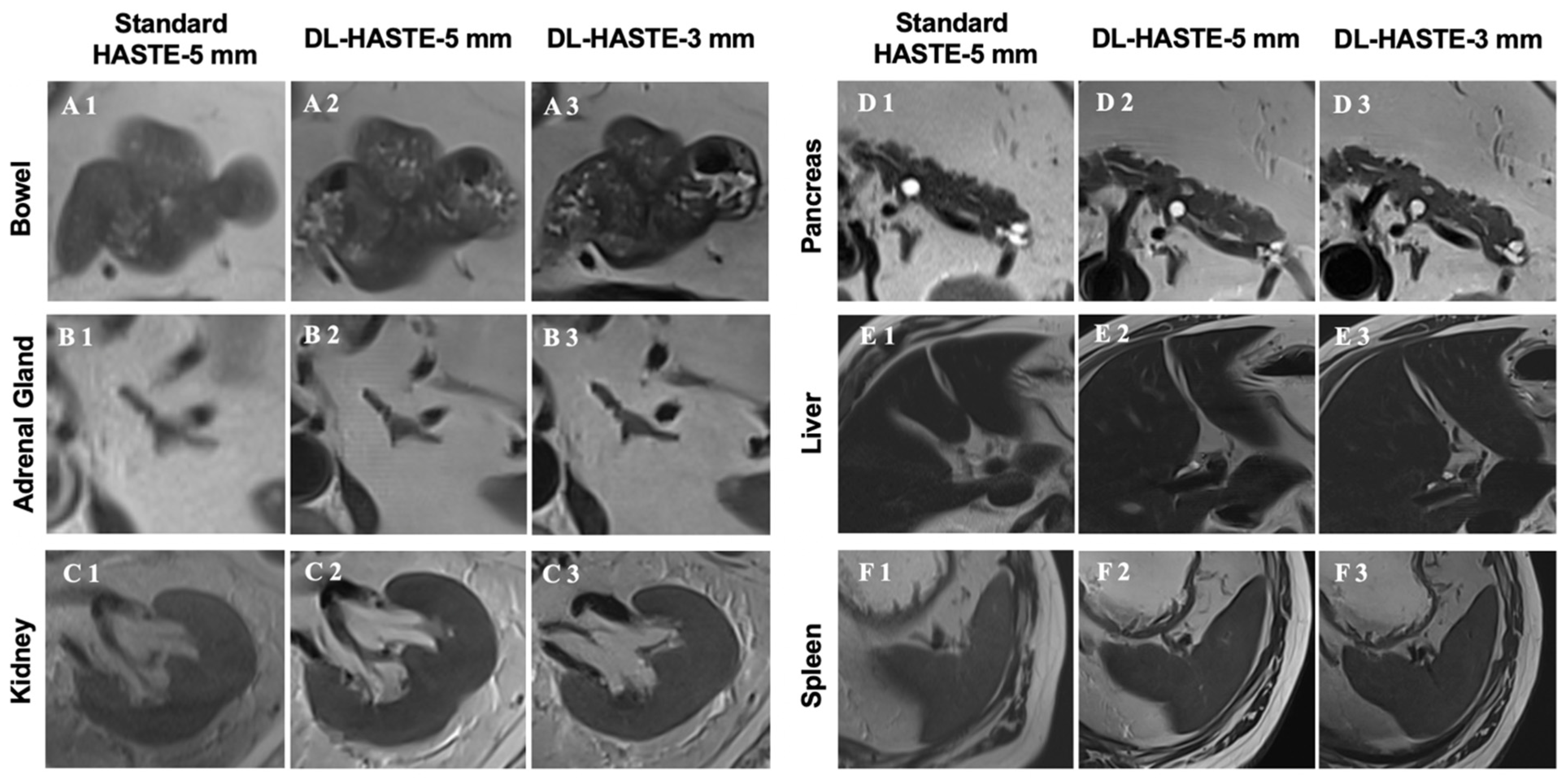
Deep-Learning-Based Reconstruction of Single-Breath-Hold 3 mm HASTE Improves Abdominal Image Quality and Reduces Acquisition Time: A Quantitative Analysis

 , , , , and
 Abstract
Share and Cite
Kubicka, F.; Tan, Q.; Meyer, T.; Nickel, D.; Weiland, E.; Wagner, M.; Marticorena Garcia, S.R. Deep-Learning-Based Reconstruction of Single-Breath-Hold 3 mm HASTE Improves Abdominal Image Quality and Reduces Acquisition Time: A Quantitative Analysis. Curr. Oncol. 2025, 32, 30. https://doi.org/10.3390/curroncol32010030
Kubicka F, Tan Q, Meyer T, Nickel D, Weiland E, Wagner M, Marticorena Garcia SR. Deep-Learning-Based Reconstruction of Single-Breath-Hold 3 mm HASTE Improves Abdominal Image Quality and Reduces Acquisition Time: A Quantitative Analysis. Current Oncology. 2025; 32(1):30. https://doi.org/10.3390/curroncol32010030
Chicago/Turabian StyleKubicka, Felix, Qinxuan Tan, Tom Meyer, Dominik Nickel, Elisabeth Weiland, Moritz Wagner, and Stephan Rodrigo Marticorena Garcia. 2025. "Deep-Learning-Based Reconstruction of Single-Breath-Hold 3 mm HASTE Improves Abdominal Image Quality and Reduces Acquisition Time: A Quantitative Analysis" Current Oncology 32, no. 1: 30. https://doi.org/10.3390/curroncol32010030
APA StyleKubicka, F., Tan, Q., Meyer, T., Nickel, D., Weiland, E., Wagner, M., & Marticorena Garcia, S. R. (2025). Deep-Learning-Based Reconstruction of Single-Breath-Hold 3 mm HASTE Improves Abdominal Image Quality and Reduces Acquisition Time: A Quantitative Analysis. Current Oncology, 32(1), 30. https://doi.org/10.3390/curroncol32010030