Article

Short-Term Outcomes in Influenza Virus-Related Myocarditis: A Single-Centre Real-Life Experience


by
Lucia Ilaria Birtolo
1,*,†,
Antonio Lattanzio
1,†,
Vincenzo Myftari
1,
Gianluca Di Pietro
1,
Giovanna Manzi
1,
Bartolomeo Fabrizio Lovero
1,
Margherita Pugliese
1,
Annalisa Caputo
1,
Gianmarco Scoccia
1,
Maria Antonella Zingaropoli
2,
Nicola Galea
3,
Cristina Chimenti
1,
Paolo Severino
1,
Viviana Maestrini
1,
Massimo Mancone
1,
Roberto Badagliacca
1,
Guido Antonelli
4 and
Carmine Dario Vizza
1
1
Department of Clinical, Internal, Anesthesiology and Cardiovascular Sciences, Sapienza University of Rome, Viale del Policlinico 155, 00161 Rome, Italy
2
Department of Public Health and Infectious Diseases, Sapienza University of Rome, Piazzale Aldo Moro 5, 00185 Rome, Italy
3
Department of Radiological, Oncological and Pathological Sciences, Sapienza University of Rome, Viale Regina Elena 324, 00161 Rome, Italy
4
Department of Molecular Medicine, Sapienza University of Rome, Viale del Policlinico 155, 00161 Rome, Italy
*
Author to whom correspondence should be addressed.
These authors contributed equally to this work.
Cardiovasc. Med. 2026, 29(1), 7; https://doi.org/10.3390/cardiovascmed29010007
Submission received: 16 December 2025 / Revised: 5 February 2026 / Accepted: 9 February 2026 / Published: 12 February 2026

Abstract

Background: Myocarditis is a potentially life-threatening inflammation of the myocardium that can be triggered by viral infections, including influenza. While corticosteroids have historically been used with caution in viral myocarditis due to concerns over impaired viral clearance, recent insights—particularly those emerging from the COVID-19 pandemic—suggest that early, moderate-dose corticosteroid therapy may offer clinical benefits in selected inflammatory cardiac syndromes. This study aimed to assess the incidence and clinical features, as well as short-term outcomes of influenza-related myocarditis and/or pericarditis. Methods: A retrospective, observational study was conducted, including all consecutive patients diagnosed with acute myocarditis and/or pericarditis between December 2024 and March 2025 who presented with chest pain or dyspnea and had a confirmed Influenza A (H1N1) infection. The diagnostic evaluation included cardiac biomarkers, ECG, TTE, and cardiovascular magnetic resonance (CMR). All patients were monitored during a three-month follow-up period. Results: Of 281 patients with laboratory-confirmed H1N1 infection, six (2%) were diagnosed with myocarditis and/or pericarditis. All patients diagnosed with myocarditis received corticosteroid therapy and an antiviral drug (oseltamivir). CMR confirmed the diagnosis in all cases of inflammatory cardiomyopathy. At 30 days, median LVEF improved from 49% to 58%. No deaths or rehospitalizations were reported. Conclusions: Influenza-related myocarditis and/or pericarditis are relatively uncommon, occurring in approximately 2% of cases. When they occur, they are primarily associated with an uncomplicated clinical course and with favourable short-term outcomes, including a rapid recovery of left ventricular function and the absence of adverse events at three-month follow-up.

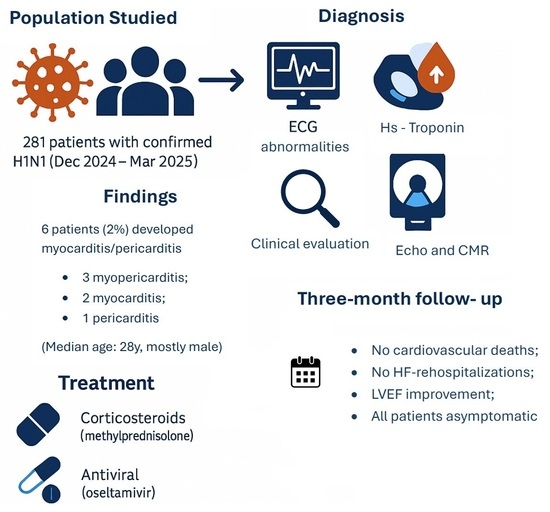
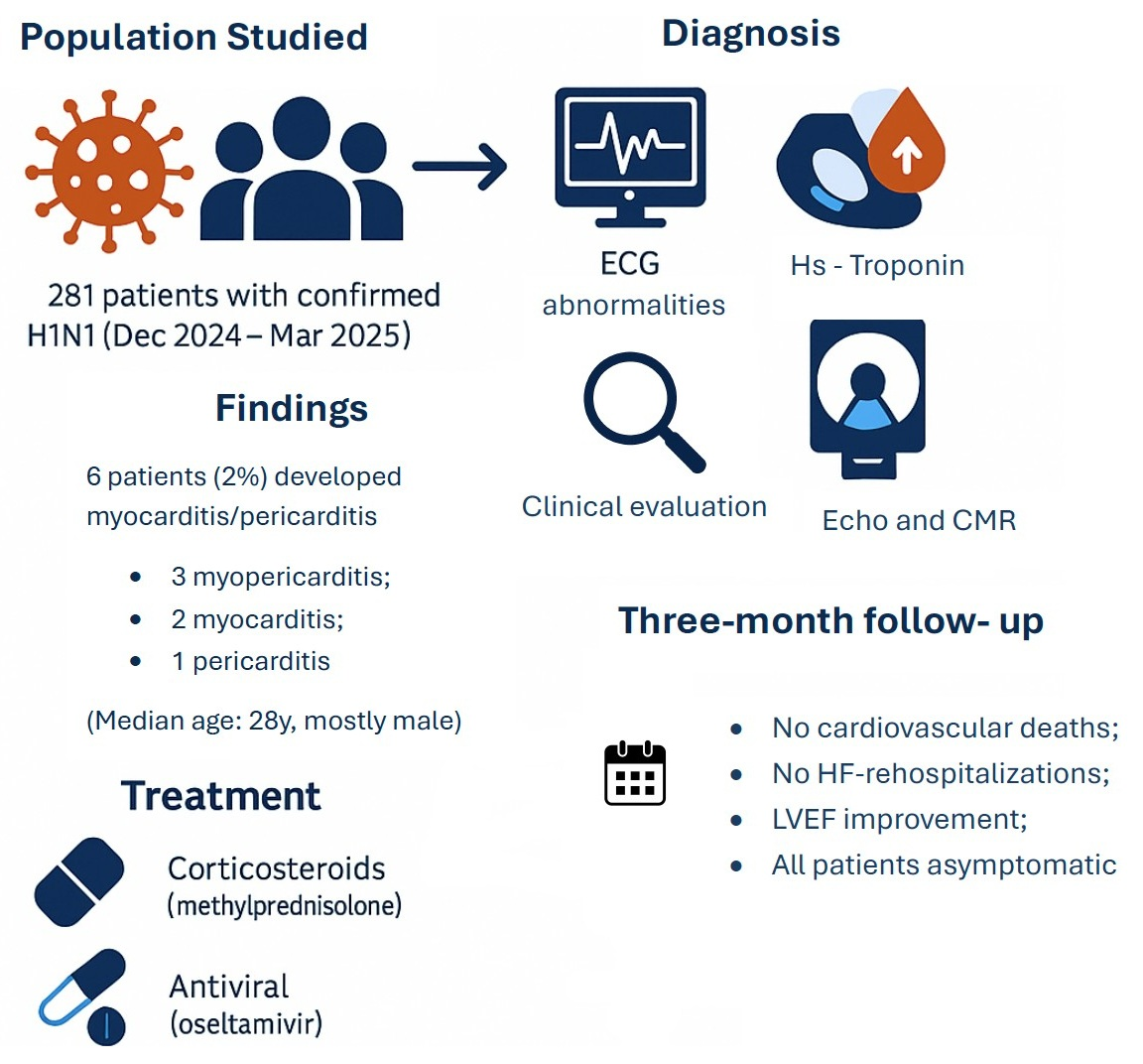
Graphical Abstract

1. Introduction

1.1. Background: Inflammatory Cardiomyopathies and Diagnostic Approach

Inflammatory cardiomyopathies, including myocarditis and pericarditis, can be characterized by a wide spectrum of clinical manifestations, ranging from asymptomatic cases to fulminant heart failure (HF) and sudden cardiac death [1,2,3]. The diagnostic process involves integrating clinical presentation, biomarkers (e.g., troponins), cardiac imaging (including echocardiograms and, especially, cardiac magnetic resonance imaging, or CMR), and, in selected cases, endomyocardial biopsy (EMB). CMR has become the cornerstone for non-invasive diagnosis, enabling the detection of myocardial oedema and fibrosis, primarily through T2-weighted sequences, T1/T2 mapping, and late gadolinium enhancement (LGE) [4,5,6,7,8].

1.2. Influenza-Related Myocarditis: Epidemiology and Clinical Features

Viral infections, including influenza, can trigger myocarditis and pericarditis [9]. Myocarditis is identified in around 0.4% to 13% of hospitalized adults with confirmed influenza. Regarding epidemiological and clinical features, individuals affected by influenza-related myocarditis are primarily young, with an average age of 33.2 years, and predominantly female (63%) [9,10]. Previous cases of fulminant myocarditis have been documented, although the incidence is rare, with a high risk of mortality [11,12,13,14,15].

1.3. Rationale and Study Objectives

Corticosteroids, widely used for their anti-inflammatory and immunosuppressive effects, have traditionally been approached with caution in the setting of viral myocarditis due to the risk of enhancing viral replication. However, emerging evidence from the COVID-19 pandemic has reshaped this perspective. In selected clinical contexts—particularly when myocardial inflammation appears to be predominantly immune-mediated—early corticosteroid administration may mitigate disease progression and promote faster recovery [16,17,18,19,20,21]. Despite growing awareness following the SARS-CoV-2 pandemic, several uncertainties remain, especially regarding the optimal treatment for acute viral myocarditis. Thus, the present study aims to describe the incidence and clinical features of influenza-related myocarditis in a single-centre cohort during the 2024–2025 influenza season and to investigate short-term outcomes in patients with myocarditis and a confirmed influenza A (H1N1) infection, promptly treated with antiviral and steroid therapy.

2. Material and Methods

2.1. Study Design and Patient Cohort

This retrospective, observational study included all consecutive patients who presented to the Emergency Department of Policlinico Umberto I Hospital in Rome between 1 December 2024, and 31 March 2025, with a diagnosis of laboratory-confirmed influenza A (H1N1) infection (QIAstat-Dx Respiratory SARS-CoV-2 Panel) by nasopharyngeal swab and acute inflammatory cardiomyopathies (myocarditis and/or pericarditis). Inflammatory cardiomyopathy cases were considered eligible if symptom onset occurred within 15 days following a confirmed influenza infection, documented by nasopharyngeal swab. All patients with a diagnosis of both inflammatory cardiomyopathies and influenza were admitted to the Coronary Intensive Care Unit (CICU) for continuous monitoring and diagnostic workup.
This study qualifies as a retrospective report of routine clinical practice based on fully anonymized data, with no prospective enrolment [22].

2.2. Cardiac Magnetic Resonance Imaging Protocol

All patients (except those with contraindications) diagnosed with acute myocarditis underwent CMR, which was performed within 15 days of clinical presentation.

2.3. Diagnostic Criteria for Acute Myocarditis

The diagnosis of acute myocarditis was established according to current international guidelines, which were made when a suggestive clinical presentation was present, along with cardiovascular magnetic resonance (CMR) imaging findings suggestive of myocardial inflammation [16,23,24,25,26].
CMR was considered diagnostic if at least one criterion from each of the following two categories was met (advanced tissue characterization techniques were available at our center): (a) T2-based marker of myocardial oedema: increased signal intensity on T2-weighted sequences and/or elevated T2 mapping values; (b) T1-based marker of myocardial injury: regional or global elevation in native T1 values, increased extracellular volume (ECV), and/or regional late gadolinium enhancement (LGE) [16,17,23,24,25,26].

2.4. Diagnostic Criteria for Acute Pericarditis

The diagnosis of acute pericarditis was based on the presence of at least two of the following four criteria: (a) typical pericardial chest pain; (b) pericardial friction rubs; (c) electrocardiographic findings such as widespread ST-segment elevation or PR-segment depression; (d) new or worsening pericardial effusion [25].
Additional supportive findings included elevated inflammatory markers (e.g., C-reactive protein, ESR, leukocytosis) and imaging evidence of pericardial inflammation on CMR or CT [23,24,25].

2.5. Laboratory Assessment

High-sensitivity cardiac troponin T levels were systematically measured to help differentiate acute myocarditis from isolated pericarditis and to assess potential myocardial involvement.

2.6. Data Collection

For each patient, the following data were collected: demographics, cardiovascular risk factors, clinical presentation, electrocardiographic and imaging findings, laboratory parameters, and therapeutic strategies.

2.7. Therapeutic Management

All patients diagnosed with influenza-related myocarditis received corticosteroid therapy and antiviral therapy. Specifically, the protocol for myocarditis was followed, with all patients receiving corticosteroid therapy using methylprednisolone at a dosage of 1 mg/kg/day for 1 month (3 mg/kg/day for 3 days and then 1 mg/kg/day for 1 month in case of fulminant myocarditis)—which was subsequently tapered to 0.33 mg/kg/day under monitoring of ventricular function, cardiac biomarkers and clinical status [6,26,27,28]. Also, all patients received antiviral therapy with oseltamivir at a dosage of 75 mg twice daily for 5 days.

2.8. Follow-Up and Outcomes

All patients underwent a three-month follow-up, during which cardiovascular mortality, HF rehospitalization, and echocardiographic outcomes were systematically assessed.
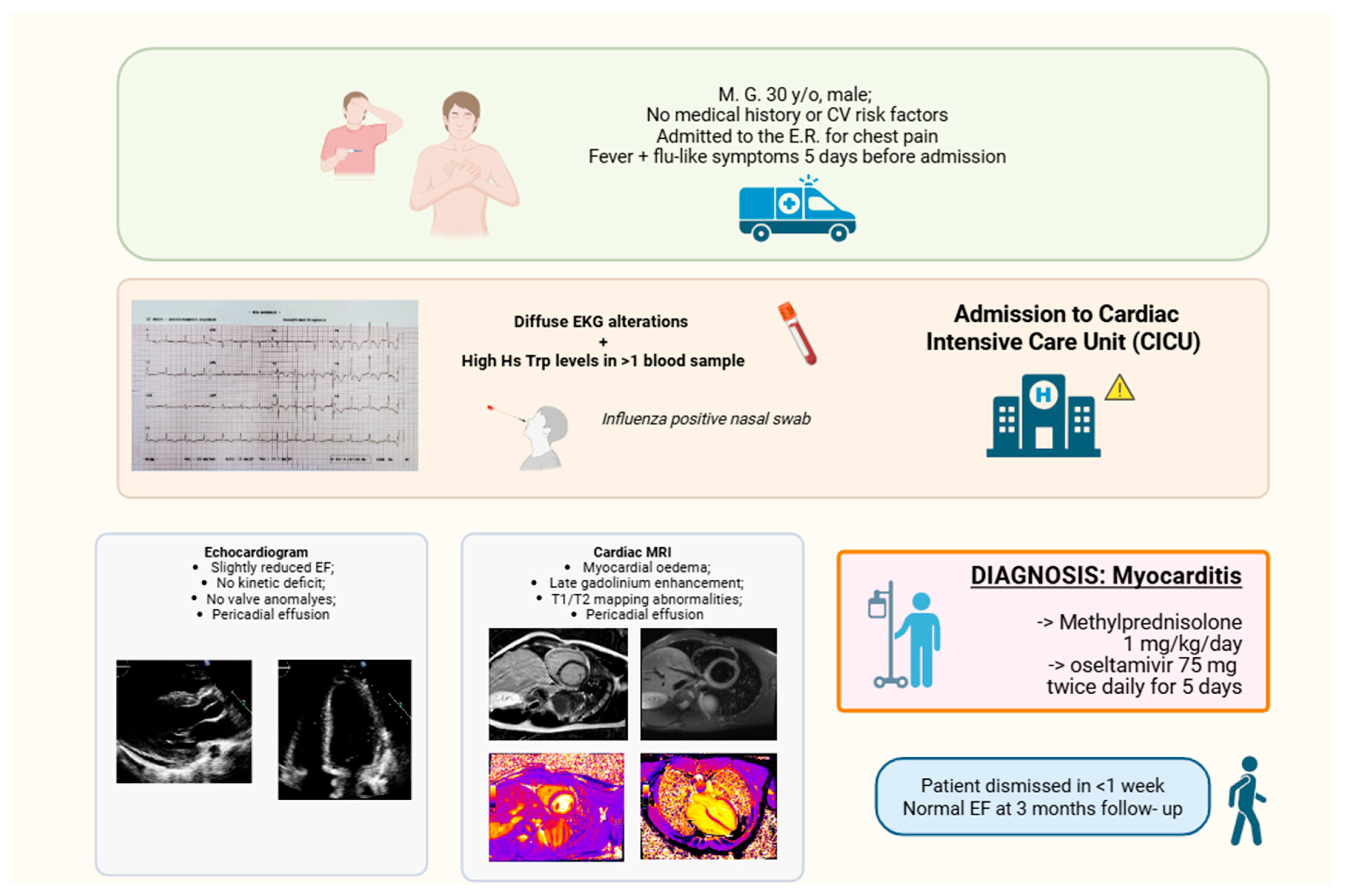
The clinical course and diagnostic workup of a 30-year-old male patient presenting with H1N1-Related Myocarditis is illustrated in Figure 1.

3. Endpoints

This study aimed to evaluate the incidence and clinical features of influenza-related myocarditis and/or pericarditis, as well as the short-term outcomes in patients with myocarditis and a confirmed influenza A (H1N1) infection who were promptly treated with antiviral and steroid therapy. The primary endpoint was the improvement in left ventricular ejection fraction (LVEF) at three-month follow-up, as assessed by transthoracic echocardiography. Secondary endpoints included in-hospital and all-cause mortality, cardiovascular death, and rehospitalizations for HF.

4. Statistical Analysis

Statistical analysis was performed using SPSS software (IBM SPSS Statistics for Windows, Version 30). Continuous variables were presented as mean ± standard deviation (SD), while categorical variables were presented as numerical values and percentages.

5. Results

A total of 281 patients with a confirmed diagnosis of influenza A (H1N1) by nasopharyngeal swab were admitted to the Emergency Department of Policlinico Umberto I Hospital in Rome between 1 December 2024, and 31 March 2025. Of these, six patients (2%) with inflammatory cardiomyopathy required Cardiac Intensive Care Unit (CICU) admission.
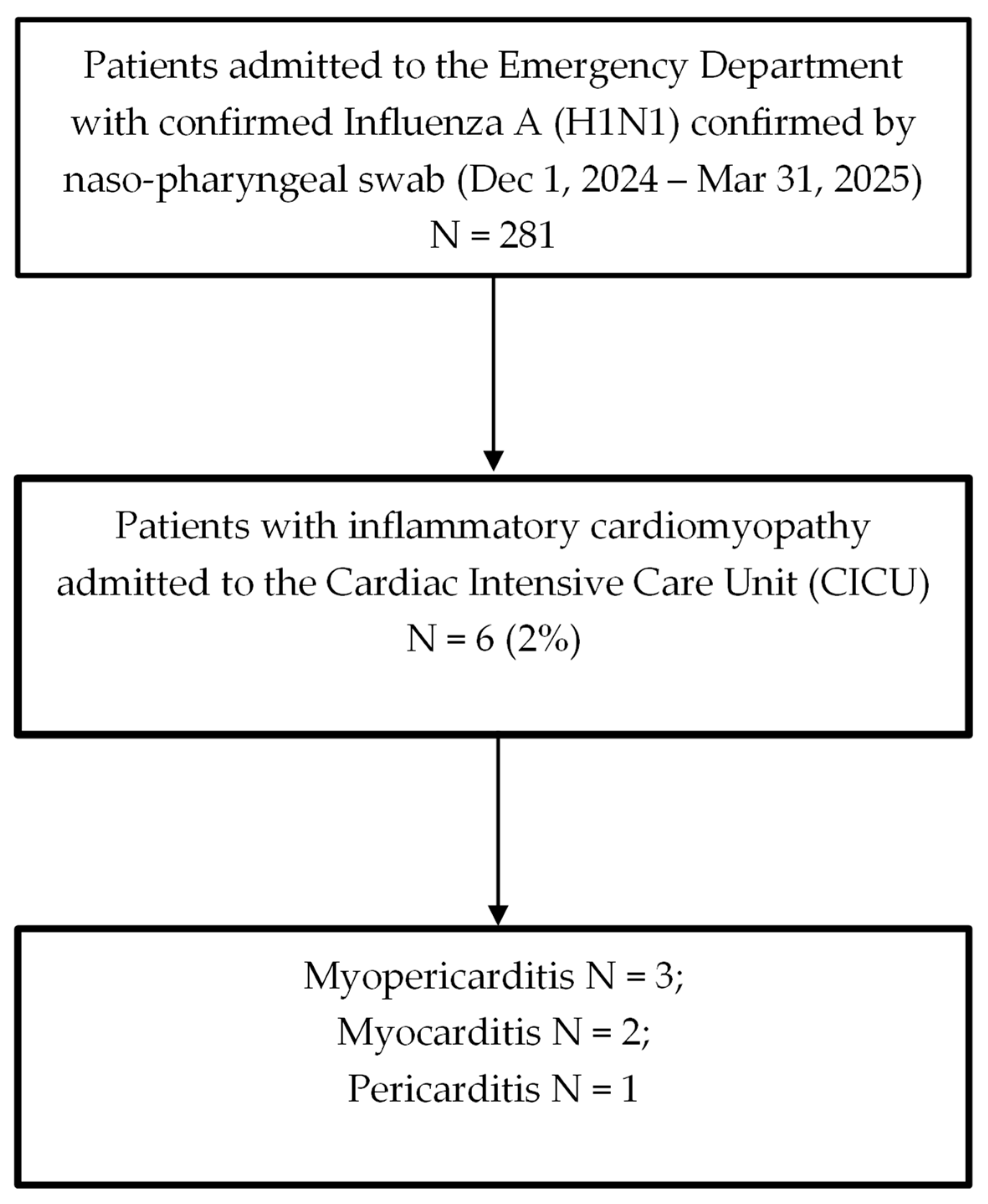
Among patients with both H1N1 and inflammatory cardiomyopathy (n = 6), three patients had myopericarditis, two patients had myocarditis, and one patient had pericarditis (Figure 2). The median age was 28 years (interquartile range (IQR) 25–52), and the majority were males (67%). Cardiovascular risk factors were uncommon: hypertension and hyperlipidemia were each observed in 16% of patients; 33% were smokers; and none had diabetes, coronary artery disease, or chronic kidney disease. A history of myocarditis and pericarditis was reported in 2/6 patients. Additional details are shown in Table 1.
All six patients reported chest pain and dyspnea at the time of presentation, while symptoms such as fever (33%, 2/6), diarrhea (17%, 1/6), headache (17%, 1/6) and dizziness (17%, 1/6) were less common. The median time from symptom onset to hospital admission was four days (IQR 2–7). All patients diagnosed with myocarditis exhibited elevated troponin levels at the time of admission. ST-segment elevation was observed in 2/6 patients (33%), while PR segment depression was observed in one patient diagnosed with pericarditis (17%) (Table 1).
At baseline, the median LVEF was 49% (IQR 42–52). Cardiac magnetic resonance imaging (CMR) was performed in all patients diagnosed with H1N1 and inflammatory cardiomyopathy, revealing myocardial oedema on T2-weighted imaging and late gadolinium enhancement (LGE) in 67% (4/6) of cases. T2 mapping abnormalities were also detected in 84% (5/6) of patients. T1 mapping was abnormal in one patient (17%). Pericardial effusion was observed in all patients, with associated oedema in 4 cases (67%), and pericardial LGE in one case—additional details in Table 2.
The protocol for myocarditis was followed, with all patients receiving corticosteroid therapy using methylprednisolone at a dosage of 1 mg/kg/day, which was subsequently tapered to 0.33 mg/kg/day under monitoring of ventricular function, cardiac biomarkers and clinical status [6,27,28,29]. Also, all patients received antiviral therapy with oseltamivir at a dosage of 75 mg twice daily for 5 days. Nobody required mechanical support. Only one case presented with fulminant myocarditis; she experienced a severe reduction in left ventricular ejection fraction (LVEF 25%) and required inotropic support, but declined an endomyocardial biopsy. Consequently, a more aggressive immunosuppressive regimen consisting of methylprednisolone at a dose of 3 mg/kg/day for 3 days (then, 1 mg/kg/day for 1 month) was adopted, with tapering as above.
Patients with HF due to myocarditis were also treated with HF therapy according to current guidelines [30]. At three-month follow-up, LVEF improved to a median value of 58% (IQR 55–60). Notably, the patient with fulminant myocarditis achieved full recovery of left ventricular function. There were no cases of in-hospital or three-month all-cause mortality, cardiac death, or rehospitalization for heart failure. At follow-up, all patients had normal LVEF, remained asymptomatic and demonstrated excellent clinical status.

6. Discussion

The main findings of the present study could be summarized as follows. First, the occurrence of influenza-related inflammatory cardiomyopathies in our study appears to be relatively uncommon. Within our cohort of hospitalized 281 patients with laboratory-confirmed Influenza A (H1N1) infection, only 6 (2%) developed inflammatory cardiomyopathy. Notably, our cohort represents a minority, comprising only hospitalized influenza cases. In fact, in light of the epidemiological context, approximately 120,000 estimated cases of influenza-like illness occurred in the city of Rome between December 2024 and March 2025 [31]. These data suggest that, despite the substantial community burden of influenza during the study period, the progression to an inflammatory cardiomyopathy represents a relatively rare complication.
Also of note, most of these cases involved young individuals and were not associated with hemodynamic instability or cardiogenic shock, highlighting a generally non-severe clinical presentation.
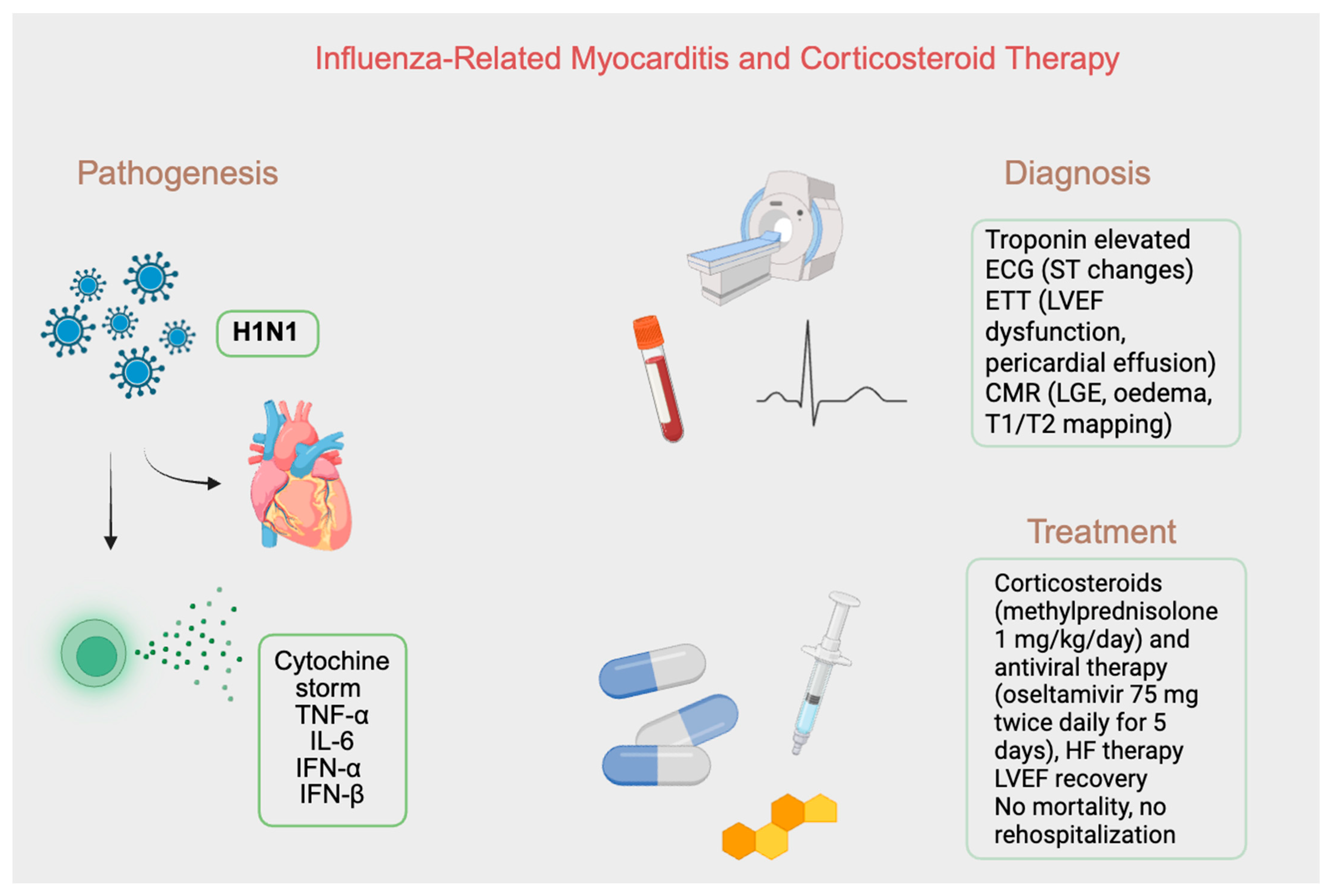
Secondly, corticosteroid therapy may be both safe and effective in promoting early myocardial recovery in cases of influenza-related myocarditis (Figure 3). The use of corticosteroids in acute viral myocarditis has long been debated, with historical concerns regarding viral persistence weighed against their potential to modulate immune-mediated myocardial injury. Current international guidelines discourage the use of corticosteroids in suspected viral myocarditis unless there is histological confirmation of immune-mediated forms, such as giant cell or eosinophilic myocarditis, or clear evidence of hemodynamic involvement [6,7]. This cautious approach reflects concerns that immunosuppressive treatment might hinder the clearance of the virus and worsen the prognosis in the context of an active infection. However, these recommendations are primarily based on theoretical risks, limited clinical data and heterogeneous populations [7,8].
The available evidence suggests that targeted immunosuppressive therapy could benefit certain patients with acute viral myocarditis, especially if treatment is started early in the course of the disease. Several observational studies and clinical trials have reported improvements in left ventricular function and overall clinical status, without a significant increase in adverse events. This challenges the traditional concern that corticosteroids may exacerbate viral replication. Case reports and small case series, including those with recurrent or biopsy-proven myocarditis, further support the potential efficacy of immunomodulatory therapy in cases of ongoing inflammation. Further evidence from paediatric populations indicates improved short-term outcomes and reduced mortality among children receiving immunosuppression; however, these findings are limited by small sample sizes and observational study designs [30,32,33,34].
During the SARS-CoV-2 pandemic, reports of SARS-CoV-2-related myocarditis have generally described favorable outcomes in patients treated with corticosteroids, most commonly intravenous methylprednisolone, despite the lack of standardized diagnostic criteria and randomized controlled trials. Influenza-related myocarditis shares several immune-mediated mechanisms with myocardial injury associated with SARS-CoV-2 infection, including myocardial oedema and non-ischemic late gadolinium enhancement on cardiac magnetic resonance imaging. However, important differences exist in terms of vascular involvement and systemic complications [8,14,16,17,18,19,20,21,35].
The data presented above can be interpreted considering the underlying pathogenesis of virus-related myocarditis. It involves a complex interplay of direct viral injury and immune-mediated mechanisms, which typically unfolds in three phases. The initial phase is marked by direct viral invasion of cardiomyocytes, leading to cellular damage through apoptosis and necrosis (Influenza A and B viruses can exert cytopathic effects during this stage). This is followed by an immune activation phase, during which molecular mimicry and T-cell-mediated responses drive further myocardial injury. Both innate and adaptive immune responses play a central role in this process, particularly through the activation of Th1 and Th17 pathways. The early innate response triggers the release of interferons (IFN-α and IFN-β), tumor necrosis factor-alpha (TNF-α), and interleukin-6 (IL-6), which collectively promote endothelial dysfunction, vascular leakage, and interstitial oedema. As the disease progresses, the adaptive immune system amplifies the inflammatory response via T-cell-mediated cytotoxicity and sustained cytokine production. Persistent immune activation in the chronic phase can lead to myocardial fibrosis, structural remodeling, and ultimately, ventricular dysfunction with a risk of progression to dilated cardiomyopathy.
Immune activation can persist beyond the phase of active viral replication and contribute to myocardial dysfunction [7,8]. Myocardial dysfunction can also persist following systemic infections such as sepsis and viral illnesses [35].
Importantly, inflammatory and cytokine-mediated myocardial dysfunction does not invariably respond to corticosteroid therapy. In systemic inflammatory states, including viral infections, myocardial depression may reflect complex and heterogeneous mechanisms such as cytokine-induced myocardial stunning, microvascular dysfunction, and metabolic derangements, which are not consistently reversed by immunosuppression. This may partly explain the variable or partial effectiveness of corticosteroids observed in influenza-related myocarditis and underscores that clinical improvement cannot be assumed solely based on inflammatory burden reduction.
The clinical pathway of influenza-related myocarditis, from viral pathogenesis to diagnostic imaging and corticosteroid-based treatment, is summarized in Figure 3.
In this context, corticosteroids may exert a therapeutic effect by interrupting the inflammatory cascade and attenuating both innate and adaptive immune responses, thereby reducing myocardial inflammation and tissue edema. This is particularly relevant in systemic viral syndromes, such as influenza, where clinical deterioration is often driven more by immune dysregulation, or ‘cytokine storm,’ than by direct viral burden [7,8]. In our cohort, corticosteroid therapy was associated with favourable clinical outcomes. All patients experienced recovery of LVEF, and there were no deaths or rehospitalizations due to HF during follow-up. One patient who met the clinical criteria for an endomyocardial biopsy but declined the procedure was treated with a higher dose of corticosteroids and demonstrated a favourable response. This further supports the potential utility of immune modulation in this setting [7,8].
Nevertheless, alternative explanations for the favourable clinical and functional outcomes observed in our cohort must be carefully considered. In particular, spontaneous recovery related to the natural history of mild or self-limited myocarditis cannot be excluded, especially given the young age of most patients and the absence of hemodynamic instability or cardiogenic shock. In addition, all patients received optimized supportive care and antiviral therapy, which may have contributed to myocardial recovery independently of corticosteroid administration. In the absence of a control group not treated with corticosteroids, the relative contribution of immunosuppressive therapy versus the natural course of disease or antiviral treatment alone cannot be disentangled. Accordingly, our findings should be interpreted with caution and regarded as hypothesis-generating rather than confirmatory. While the temporal association between corticosteroid initiation and improvement in left ventricular function is noteworthy, it does not establish causality. This uncertainty is consistent with the heterogeneity of results reported in previous studies and underscores the need for controlled, prospective investigations to better define the role of immunomodulatory therapy in virus-related myocarditis.
In clinical practice, endomyocardial biopsy (EMB) remains the gold standard for etiological diagnosis of myocarditis, particularly when guiding immunosuppressive therapy [6,9,24]. However, current guidelines recommend EMB only in selected cases, such as new-onset HF with hemodynamic compromise, life-threatening arrhythmias or suspicion of specific histotypes, such as giant cell or eosinophilic myocarditis [10]. This selective use reflects both the procedural risks and the limited availability of expert histopathological interpretation. Therefore, routine EMB in all cases of suspected viral myocarditis is neither feasible nor clinically justified, particularly in patients who are hemodynamically stable or present with mild to moderate disease [24].
In this scenario, requiring histological confirmation before administering corticosteroids could result in unnecessary delays in initiating potentially beneficial treatment [8,10]. Our findings suggest that, in well-characterized clinical settings such as influenza-related myocarditis with typical imaging and laboratory features, a pragmatic, non-invasive strategy may be appropriate. In this regard, CMR has emerged as a valuable diagnostic tool, providing consistent evidence of myocardial oedema and non-ischemic late gadolinium enhancement in all patients [9,16,23,26]. Tissue characterization reinforced the clinical suspicion and helped justify the initiation of corticosteroid therapy. While CMR cannot replace histology in determining the underlying aetiology, it serves as a practical surrogate in the decision-making process when endomyocardial biopsy (EMB) is not indicated or performed. This is particularly true in the context of influenza-related myocardial involvement, where the inflammatory phenotype is well-characterized and the clinical course can be rapid. In such cases, corticosteroids may offer therapeutic benefit when guided by an integrated clinical and imaging assessment [8,9,11]. Our experience supports a tailored approach that balances diagnostic certainty with timely therapeutic intervention.

7. Limitations

This study has several limitations. First, the retrospective nature of the study, the small sample size and single-center design limit the generalizability of the findings and preclude definitive conclusions regarding the efficacy of the treatment. The absence of a control group receiving no corticosteroids prevents the establishment of a causal relationship between treatment and clinical improvement.
In addition, endomyocardial biopsy and viral genome detection were not performed in most patients, limiting the ability to distinguish immune-mediated myocarditis from ongoing virus-related myocardial injury.
Finally, the relatively short follow-up period of three months allows only the assessment of short-term clinical and functional recovery and is insufficient to evaluate long-term outcomes of inflammatory cardiomyopathy, such as myocardial fibrosis, recurrent heart failure, or arrhythmic events, which are highly relevant to clinical practice.

8. Conclusions

Influenza-related myocarditis and/or pericarditis are relatively uncommon, occurring in approximately 2% of cases. When they arise, they are primarily associated with an uncomplicated clinical course and favourable short-term outcomes, including a rapid recovery of left ventricular function and the absence of adverse events at three-month follow-up. These findings underscore the importance of early recognition and timely tailored treatment, highlighting the need for larger, prospective, and randomized studies to validate these results and better define patient selection criteria for immunomodulatory strategies in virus-associated myocardial inflammation.

Author Contributions

L.I.B. and A.L. contributed equally to this work. Conceptualization, L.I.B. and A.L.; methodology, L.I.B.; validation, G.D.P., G.M., B.F.L., M.P., A.C., G.S., M.A.Z., N.G., C.C., P.S., M.M., R.B., G.A., V.M. (Vincenzo Myftari) and V.M. (Viviana Maestrini); formal analysis, L.I.B.; investigation, L.I.B.; data curation, L.I.B.; writing—original draft preparation, L.I.B. and A.L.; writing—review and editing, G.D.P., G.M., B.F.L., M.P., A.C., G.S., M.A.Z., N.G., C.C., P.S., M.M., R.B., G.A., V.M. (Vincenzo Myftari) and V.M. (Viviana Maestrini); supervision, C.D.V.; project administration, C.D.V. All authors have read and agreed to the published version of the manuscript.

Funding

This research was funded by Guido Antonelli: Grant Project n. PE00000007, INF-ACT.

Institutional Review Board Statement

This study qualifies as a retrospective report of routine clinical practice based on fully anonymized data, with no prospective enrolment.

Informed Consent Statement

Informed consent was obtained from all subjects involved in the study.

Data Availability Statement

The original contributions presented in this study are included in the article. Further inquiries can be directed to the corresponding author.

Acknowledgments

This research was partially supported by EU funding to G.A. within the NextGeneration EU-MUR PNRR Extended Partnership initiative on Emerging Infectious Diseases (Grant Project n. PE00000007, INF-ACT).

Conflicts of Interest

The authors declare no conflicts of interest.

References

  1. McDonagh, T.A.; Metra, M.; Adamo, M.; Gardner, R.S.; Baumbach, A.; Böhm, M.; Burri, H.; Butler, J.; Čelutkienė, J.; Chioncel, O.; et al. 2023 Focused Update of the 2021 ESC Guidelines for the diagnosis and treatment of acute and chronic heart failure. Eur. Heart J. 2023, 44, 3627–3639. [Google Scholar] [CrossRef] [PubMed]
  2. Malomo, S.; Oswald, T.; Stephenson, E.; Yip, A.; Alway, T.; Hadjivassilev, S.; Coombs, S.; Ellery, S.; Lee, J.; James, R.; et al. Characterisation of post-sepsis cardiomyopathy using cardiovascular magnetic resonance. Diagnostics 2025, 15, 997. [Google Scholar] [CrossRef]
  3. Sagar, S.; Liu, P.P.; Cooper, L.T., Jr. Myocarditis. Lancet 2012, 379, 738–747. [Google Scholar] [CrossRef]
  4. Ammirati, E.; Moslehi, J.J. Diagnosis and Treatment of Acute Myocarditis: A Review. JAMA 2023, 329, 1098–1113. [Google Scholar] [CrossRef] [PubMed]
  5. Fairweather, D.; Beetler, D.J.; Di Florio, D.N.; Musigk, N.; Heidecker, B.; Cooper, L.T., Jr. COVID-19, Myocarditis and Pericarditis. Circ. Res. 2023, 132, 1302–1319. [Google Scholar] [CrossRef]
  6. Caforio, A.L.P.; Pankuweit, S.; Arbustini, E.; Basso, C.; Gimeno-Blanes, J.; Felix, S.B.; Fu, M.; Heliö, T.; Heymans, S.; Jahns, R.; et al. Current state of knowledge on aetiology, diagnosis, management, and therapy of myocarditis: A position statement of the ESC Working Group on Myocardial and Pericardial Diseases. Eur. Heart J. 2013, 34, 2636–2648. [Google Scholar]
  7. Kindermann, I.; Barth, C.; Mahfoud, F.; Ukena, C.; Lenski, M.; Yilmaz, A.; Klingel, K.; Kandolf, R.; Sechtem, U.; Cooper, L.T.; et al. Update on myocarditis. J. Am. Coll. Cardiol. 2012, 59, 779–792. [Google Scholar] [CrossRef] [PubMed]
  8. Ammirati, E.; Frigerio, M.; Adler, E.D.; Basso, C.; Birnie, D.H.; Brambatti, M.; Friedrich, M.G.; Klingel, K.; Lehtonen, J.; Moslehi, J.J.; et al. Management of acute myocarditis and chronic inflammatory cardiomyopathy: An expert consensus document. Circ. Heart Fail. 2020, 13, e007405. [Google Scholar] [CrossRef]
  9. Kumar, K.; Guirgis, M.; Zieroth, S.; Lo, E.; Menkis, A.H.; Arora, R.C.; Freed, D.H. Influenza myocarditis and myositis: Case presentation and review of the literature. Can. J. Cardiol. 2011, 27, 514–522. [Google Scholar] [CrossRef]
  10. Baral, N.; Adhikari, P.; Adhikari, G.; Karki, S. Influenza Myocarditis: A Literature Review. Cureus 2020, 12, e12007. [Google Scholar] [CrossRef]
  11. Cottet, M.; Vivekanantham, H.; Arroja, J.D.; Arroyo, D. Fulminant Influenza A myocarditis in a patient presenting with cardiogenic shock and biventricular thrombi: A case report. Eur. Heart J. Case Rep. 2022, 6, ytac026. [Google Scholar]
  12. Shakerian, B.; Mandegar, M.H. A fatal case of fulminant myocarditis after influenza infection with a rapidly progressive course: A case report. IDCases 2024, 36, e01986. [Google Scholar] [CrossRef]
  13. Coyle, J.; Igbinomwanhia, E.; Sanchez-Nadales, A.; Danciu, S.; Chu, C.; Shah, N. A Recovered Case of COVID-19 Myocarditis and ARDS Treated with Corticosteroids, Tocilizumab, and Experimental AT-001. JACC Case Rep. 2020, 2, 1331–1336. [Google Scholar]
  14. Kamarullah, W.; Nurcahyani Mary Josephine, C.; Bill Multazam, R.; Ghaezany Nawing, A.; Dharma, S. Corticosteroid Therapy in Management of Myocarditis Associated with COVID-19; a Systematic Review of Current Evidence. Arch. Acad. Emerg. Med. 2021, 9, e32. [Google Scholar]
  15. Skaarup, K.G.; Modin, D.; Nielsen, L.; Jensen, J.U.S.; Biering-Sørensen, T. Influenza and cardiovascular disease pathophysiology: Strings attached. Eur. Heart J. Suppl. 2023, 25, A5–A11. [Google Scholar] [CrossRef] [PubMed]
  16. Ferreira, V.M.; Schulz-Menger, J.; Holmvang, G.; Kramer, C.M.; Carbone, I.; Sechtem, U.; Kindermann, I.; Gutberlet, M.; Cooper, L.T.; Liu, P.; et al. Cardiovascular Magnetic Resonance in Nonischemic Myocardial Inflammation: Expert Recommendations. J. Am. Coll. Cardiol. 2018, 72, 3158–3176. [Google Scholar] [PubMed]
  17. Birtolo, L.I.; Di Pietro, G.; D’Ascenzo, F.; Cuccuru, G.; Fabris, E.; Merlo, M.; Andreis, A.; Caforio, A.L.P.; Cameli, M.; Improta, R.; et al. Myocarditis and pericarditis during COVID-19 pandemic: A study of the Italian Society of Cardiology. J. Cardiovasc. Med. 2025, 26, 143–152. [Google Scholar] [CrossRef]
  18. Maestrini, V.; Birtolo, L.I.; Francone, M.; Galardo, G.; Galea, N.; Severino, P.; Alessandri, F.; Colaiacomo, M.C.; Cundari, G.; Chimenti, C.; et al. Cardiac involvement in consecutive unselected hospitalized COVID-19 population: In-hospital evaluation and one-year follow-up. Int. J. Cardiol. 2021, 339, 235–242. [Google Scholar] [CrossRef]
  19. Birtolo, L.I.; Di Pietro, G.; Ciuffreda, A.; Improta, R.; Monosilio, S.; Prosperi, S.; Cimino, S.; Galea, N.; Severino, P.; Galardo, G.; et al. The impact of vaccination status on post-acute sequelae in hospitalized COVID-19 survivors using a multi-disciplinary approach: An observational single center study. Heliyon 2024, 10, e40409. [Google Scholar] [CrossRef] [PubMed]
  20. Kociol, R.D.; Cooper, L.T.; Fang, J.C.; Moslehi, J.J.; Pang, P.S.; Sabe, M.A.; Shah, R.V.; Sims, D.B.; Thiene, G.; Vardeny, O.; et al. Recognition and initial management of fulminant myocarditis: A scientific statement from the American Heart Association. Circulation 2020, 141, e69–e92. [Google Scholar] [CrossRef] [PubMed]
  21. Bozkurt, B.; Colvin, M.; Cook, J.; Cooper, L.T.; Deswal, A.; Fonarow, G.C.; Francis, G.S.; Lenihan, D.; Lewis, E.F.; McNamara, D.M.; et al. Current diagnostic and treatment strategies for specific dilated cardiomyopathies: A scientific statement from the American Heart Association. Circulation 2016, 134, e579–e646. [Google Scholar]
  22. Agenzia Italiana del Farmaco (AIFA). Linea Guida Osservazionali [Internet]. ** Determina Presidenziale 425/2024. Available online: https://www.aifa.gov.it/documents/20142/1654269/Det-Pres-425-2024-Linea_Guida_osservazionali.pdf (accessed on 16 November 2025).
  23. Friedrich, M.G.; Sechtem, U.; Schulz-Menger, J.; Holmvang, G.; Alakija, P.; Cooper, L.T.; White, J.A.; Abdel-Aty, H.; Gutberlet, M.; Prasad, S.; et al. Cardiovascular magnetic resonance in myocarditis: A JACC White Paper. J. Am. Coll. Cardiol. 2009, 53, 1475–1487. [Google Scholar] [CrossRef] [PubMed]
  24. Angelini, A.; Calzolari, V.; Calabrese, F.; Boffa, G.M.; Maddalena, F.; Chioin, R.; Thiene, G. Myocarditis mimicking acute myocardial infarction: Role of endomyocardial biopsy in the differential diagnosis. Heart 2000, 84, 245–250. [Google Scholar] [CrossRef] [PubMed]
  25. Adler, Y.; Charron, P.; Imazio, M.; Badano, L.; Barón-Esquivias, G.; Bogaert, J.; Brucato, A.; Gueret, P.; Klingel, K.; Lionis, C.; et al. 2015 ESC Guidelines for the diagnosis and management of pericardial diseases. Eur. Heart J. 2015, 36, 2921–2964. [Google Scholar] [CrossRef] [PubMed]
  26. Mavrogeni, S.; Bratis, C.; Kitsiou, A.; Kolovou, G.; Manoussakis, M.N.; Papadopoulou, E.; Magoutas, A.; Pavlides, G. CMR assessment of myocarditis in patients with cardiac symptoms during H1N1 viral infection. JACC Cardiovasc. Imaging 2011, 4, 307–309. [Google Scholar] [CrossRef][Green Version]
  27. Nagai, T.; Inomata, T.; Kohno, T.; Sato, T.; Tada, A.; Kubo, T.; Nakamura, K.; Oyama-Manabe, N.; Ikeda, Y.; Fujino, T.; et al. JCS 2023 Guideline on the Diagnosis and Treatment of Myocarditis. Circ. J. 2023, 87, 674–754. [Google Scholar] [CrossRef]
  28. Chimenti, C.; Russo, M.A.; Frustaci, A. Immunosuppressive therapy in virus-negative inflammatory cardiomyopathy: 20-year follow-up of the TIMIC trial. Eur. Heart J. 2022, 43, 3463–3473. [Google Scholar] [CrossRef]
  29. Schneider, B.J.; Naidoo, J.; Santomasso, B.D.; Lacchetti, C.; Adkins, S.; Anadkat, M.; Atkins, M.B.; Brassil, K.J.; Caterino, J.M.; Chau, I.; et al. Management of Immune-Related Adverse Events in Patients Treated with Immune Checkpoint Inhibitor Therapy: ASCO Guideline Update. J. Clin. Oncol. 2021, 39, 4073–4126. [Google Scholar] [CrossRef]
  30. Schwartz, B.H.; Stein, N.R.; Eshaghian, S.; Kwan, A.C.; Kittleson, M.M. Recurrent Myocarditis Treated with Intravenous Immune Globulin and Steroids. Am. J. Case Rep. 2022, 23, e935974. [Google Scholar] [CrossRef]
  31. Istituto Superiore di Sanità. Sorveglianza Integrata dei Virus Respiratori (RespiVirNet) [Internet]. EpiCentro. Available online: https://www.epicentro.iss.it/influenza/respivirnet (accessed on 4 September 2025).
  32. Chen, H.S.; Wang, W.; Wu, S.N.; Liu, J.P. Corticosteroids for viral myocarditis. Cochrane Database Syst. Rev. 2013, 2013, CD004471. [Google Scholar]
  33. Márquez-González, H.; López-Gallegos, D.; González-Espinosa, A.M.; Zamudio-López, J.O.; Yáñez-Gutiérrez, L. Effect of immunotherapy on prognosis of viral myocarditis in pediatric patients. Rev. Med. Inst. Mex. Seguro Soc. 2016, 54, S296–S301. [Google Scholar] [PubMed]
  34. Aziz, K.U.; Patel, N.; Sadullah, T.; Tasneem, H.; Thawerani, H.; Talpur, S. Acute viral myocarditis: Role of immunosuppression: A prospective randomised study. Cardiol. Young 2010, 20, 509–515. [Google Scholar] [PubMed]
  35. Sawalha, K.; Abozenah, M.; Kadado, A.J.; Battisha, A.; Al-Akchar, M.; Salerno, C.; Hernandez-Montfort, J.; Islam, A.M. Systematic Review of COVID-19 Related Myocarditis: Insights on Management and Outcome. Cardiovasc. Revasc Med. 2021, 23, 107–113. [Google Scholar] [PubMed]
Figure 1. Clinical course and diagnostic workup of a 30-year-old male patient presenting with H1N1-Related Myocarditis. The patient, with no prior medical history or cardiovascular risk factors, was admitted to the emergency room with chest pain following a 5-day history of fever and flu-like symptoms. Initial evaluation revealed diffuse electrocardiogram (EKG) alterations and elevated high-sensitivity troponin (Hs Trp) levels on multiple blood samples, nasal swab testing was positive for influenza. The patient was admitted to the Cardiac Intensive Care Unit (CICU). Echocardiography showed slightly reduced ejection fraction (EF), pericardial effusion, and no kinetic or valvular abnormalities. Cardiac magnetic resonance imaging (MRI) confirmed myocardial edema, late gadolinium enhancement, T1/T2 mapping abnormalities, and pericardial effusion. A diagnosis of myocarditis was established, and treatment with intravenous methylprednisolone (1 mg/kg/day) and oseltamivir (75 mg twice daily for 5 days) was initiated. The patient was discharged in under one week and demonstrated normalized EF at three-months follow-up.
Cardiovascmed 29 00007 g001
Figure 2. Patient disposition. From 1 December 2024, to 31 March 2025, a total of 281 patients with confirmed Influenza A (H1N1) were admitted to the Emergency Department of Policlinico Umberto I Hospital in Rome. Six patients (2%) experienced inflammatory cardiomyopathy and were admitted to the Cardiac Intensive Care Unit (CICU) for monitoring. Among these, three had myopericarditis, two had myocarditis, and one had pericarditis.
Cardiovascmed 29 00007 g002
Figure 3. Schematic overview of the clinical pathway in influenza-related myocarditis. It illustrates the viral trigger and immune-mediated myocardial injury leading to symptoms such as chest pain and fever. It highlights the diagnostic process, including cardiac magnetic resonance imaging (CMR) and ECG abnormalities. The corticosteroid and antiviral treatment and associated clinical outcomes, including improved left ventricular ejection fraction (LVEF) and absence of mortality or rehospitalization at three months, are also reported.
Cardiovascmed 29 00007 g003
Table 1. Baseline Characteristics and Clinical presentations of influenza and inflammatory cardiomiopathy patients.
Population (n = 6)
Age, y.o. (IQR)28 (25–52)
Male, n (%)4 (67%)
HTN, n (%)1 (16%)
Hyperlypidemia, n (%)1 (16%)
Diabetes Mellitus, n (%)0 (0%)
Smoking, n (%)2 (33%)
Prior Myocarditis, n (%)2 (33%)
Prior Pericarditis, n (%)2 (33%)
Prior CAD, n (%)0 (0%)
Prior CKD, n (%)0 (0%)
Chest pain, n (%)6 (100%)
Dyspnea, n (%)6 (100%)
Palpitations, n (%)0 (0%)
Syncope, n (%)0 (0%)
Fever > 38 °C, n (%)2 (33%)
Other symptoms
Diarrhea, n (%)1 (17%)
Vomiting, n (%)0 (0%)
Headache, n (%)1 (17%)
Dizziness, n (%)1 (17%)
Median time from symptoms to admission, days (IQR)4 (2–7)
Arrthymias, n (%)1 (17%)
Pericardial Rubs, n (%)0 (0%)
Troponin raise, n (%)6 (100%)
ST elevation at EKG, n (%)2 (33%)
PR depression at EKG, n (%)1 (17%)
HTN, hypertension; CAD, coronary artery disease; CKD, chronic kidney disease.
Table 2. Imaging findings of influenza and inflammatory cardiomiopathy patients.
Population
(n = 6)
LVEF, % (IQR)49 (42–52)
CCTA, n (%)5 (83.5%)
ICA, n (%)1 (16.5%)
CMR, n (%)6 (100%)
Myocardial LGE, n (%)4 (66.6%)
T2 Myocardial Oedema, n (%)4 (66.6%)
T2 Mapping, n (%)5 (83.5%)
T1 Mapping, n (%)1 (17%)
Pericardial effusion, n (%)6 (100%)
Pericardial Oedema, n (%)4 (66.6%)
Pericardial LGE, n (%)1 (16.6%)
EBM, n (%)0 (0%)
LVEF, left ventricular ejection fraction; CCTA, coronary computed tomography angiography; ICA, invasive coronary angiography; CMR, cardiac magnetic resonance; LGE, late gadolinium enhancement; EBM, endomyocardial biopsy.
Disclaimer/Publisher’s Note: The statements, opinions and data contained in all publications are solely those of the individual author(s) and contributor(s) and not of MDPI and/or the editor(s). MDPI and/or the editor(s) disclaim responsibility for any injury to people or property resulting from any ideas, methods, instructions or products referred to in the content.