A Scoping Review of Psychological Distress Outcomes in NICU Healthcare Providers
 , , ,
, , ,
Highlights
- Advances in neonatal medicine have increased the survival of critically ill and extremely premature infants, resulting in NICU healthcare providers being increasingly exposed to emotionally, psychologically, ethically, and morally challenging clinical situations that may affect their physical and mental health.
- NICU healthcare provider well-being is a critical public health concern because psychological distress can influence workforce functioning, staff retention and engagement, and the quality of care delivered to infants and families, ultimately affecting patient and family health outcomes.
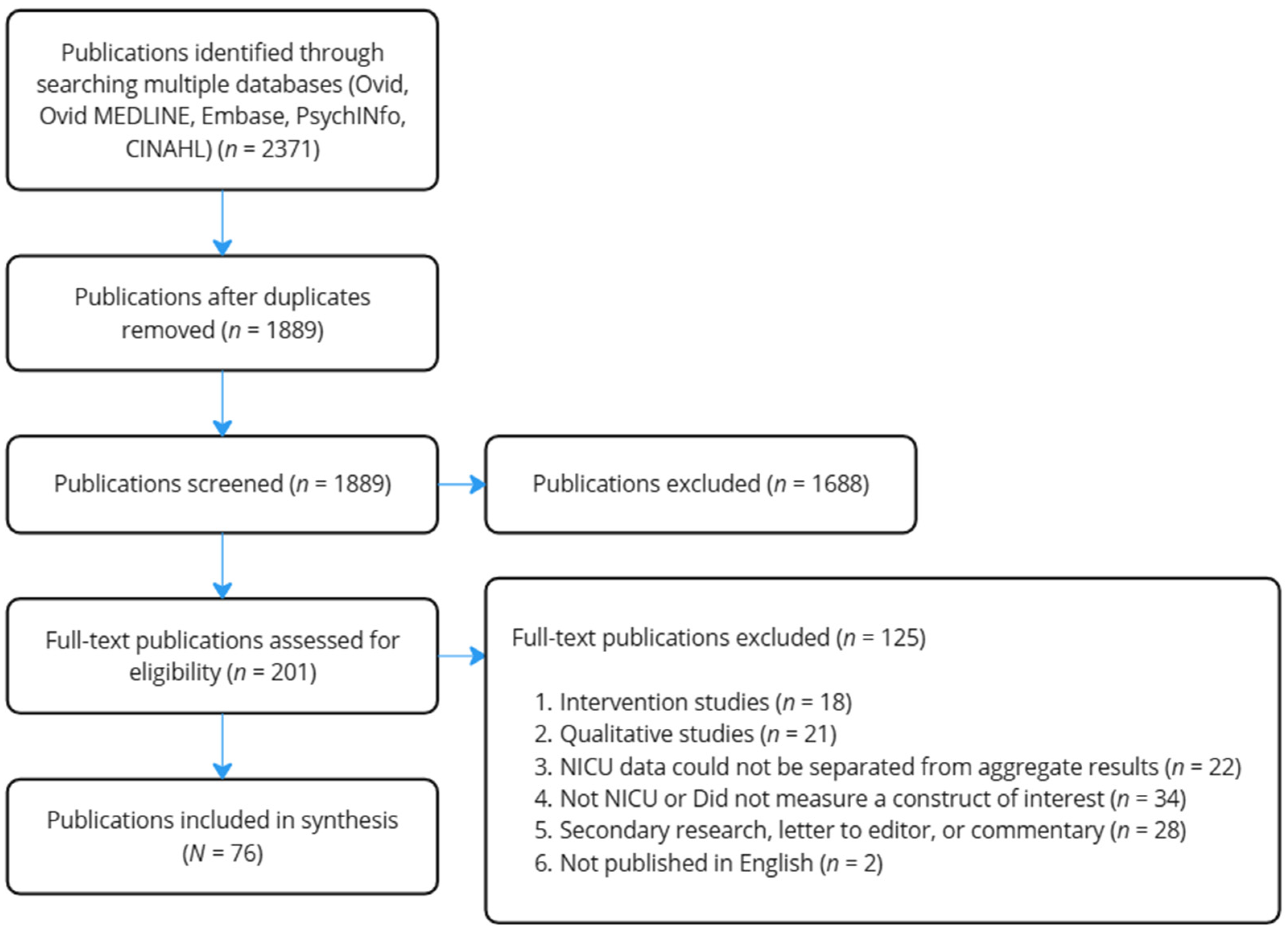
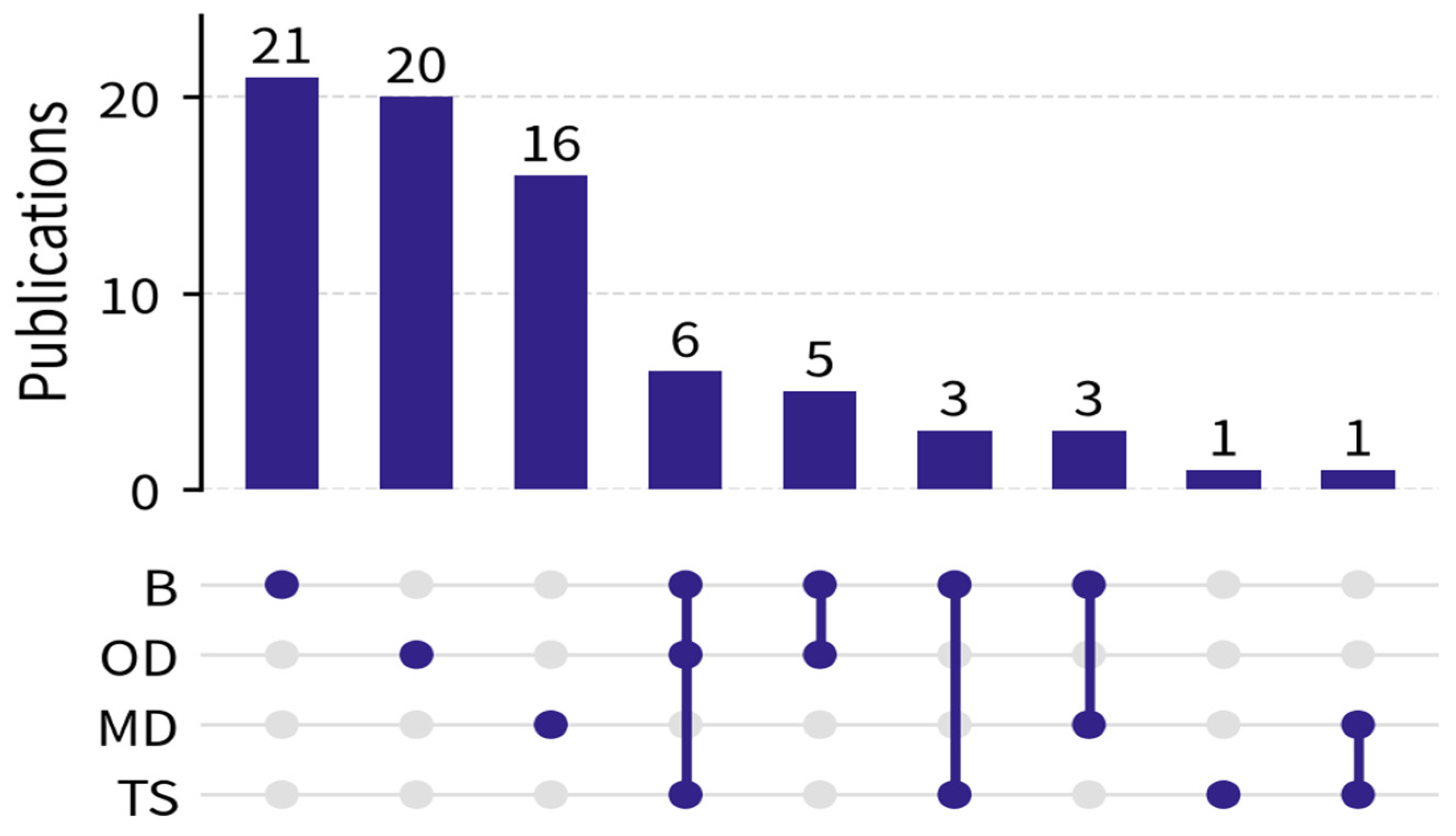
- This review synthesizes evidence from 76 quantitative publications across 34 countries and provides the first examination of multiple forms of psychological distress among NICU healthcare providers, including burnout, traumatic stress, moral distress, mental health, stress and physiological symptoms.
- Findings suggest that working in the NICU is, on average, associated with low to moderate levels of psychological distress across professions and elevated distress in some providers; however, substantial variability within studies and heterogeneity across studies make it difficult to draw firm conclusions about the prevalence and correlates of psychological distress in NICU healthcare providers. Improved research methodologies are needed.
- Future research should examine the complex interplay of multiple distress constructs as well as individual, biological, environmental, organizational and social determinants of health in NICU providers using longitudinal approaches and standardized measures and methods to identify potential risk and protective factors to guide targeted prevention and intervention efforts.
- Hospitals, healthcare organizations and policy makers should prioritize routine assessment of NICU healthcare provider well-being and implement evidence-informed interventions that address modifiable workplace stressors, foster supportive work environments, improve individual stress management skills and promote workforce sustainability.
Abstract
1. Introduction
… there is nothing morally neutral about a NICU. NICUs are horrible, wonderful places. They are the best and the worst of pediatrics. They save many lives and they cause much pain and suffering[1].
1.1. Occupational Stress and Distress Constructs: Definitions and Challenges
1.2. Current Scoping Review
2. Materials and Methods
Procedures
3. Results
3.1. Study Samples
3.2. Study Designs
3.3. Construct Summaries
3.3.1. Burnout
Burnout Measures
Burnout Levels
Burnout Associations
3.3.2. Traumatic Stress
Traumatic Stress Measures
Traumatic Stress Levels
Traumatic Stress Associations
3.3.3. Moral Distress
Moral Distress Measures
Moral Distress Levels
Moral Distress Associations
3.3.4. Other Distress Outcomes
Other Distress Measures
Other Distress Levels
- Mental Health and Somatic Symptoms.
- Perceived Stress/Distress.
- Physiologic Indicators.
Other Distress Associations
3.3.5. Associations Across Constructs
4. Discussion
4.1. Psychological Distress Levels
4.2. Psychological Distress Associations
4.3. Limitations and Gaps in the Literature
4.4. Limitations of Scoping Review
4.5. Research and Practice Implications
5. Conclusions
Supplementary Materials
Author Contributions
Funding
Institutional Review Board Statement
Informed Consent Statement
Data Availability Statement
Acknowledgments
Conflicts of Interest
Abbreviations
| B | Burnout |
| BM | Burnout Measure |
| BDI | Beck Depression Inventory |
| CBI | Copenhagen Burnout Inventory |
| CES-D | Center for Epidemiological Studies Depression Scale |
| CESS | Commonly Experienced Stress Symptoms |
| CFS | Compassion Fatigue Scale |
| CFSI | Cumulative Fatigue Symptoms Index |
| CICU | Cardiac Intensive Care Unit |
| CIS | Checklist Individual Strength Questionnaire |
| CINAHL | Cumulative Index to Nursing and Allied Health Literature |
| COVID PRSI | COVID-19 Pandemic Related Stress Index |
| DAS | Death Anxiety Scale |
| DP | Depersonalization |
| EDI | Global Index of Emotional Distress |
| EE | Emotional Exhaustion |
| EOL | End of Life Care Stress |
| ENSS | Expanded Nurse Stress Scale |
| GAD-7 | Generalized Anxiety Disorder-7 |
| GHQ | General Health Questionnaire |
| HADS | Hospital Anxiety and Depression Scale |
| ICU | Intensive Care Unit |
| IES | Impact of Events Scale |
| IES-R | Impact of Events Scale—Revised |
| MBI | Maslach Burnout Inventory |
| MD | Moral Distress |
| MDS | Moral Distress Scale |
| MDS-R | Moral Distress Scale-Revised |
| MDT | Moral Distress Thermometer |
| MMD-HP | Measure of Moral Distress for Healthcare Professionals |
| MHI-21 | Mental Health Inventory-21 |
| MHPSS-M | Mental Health Professional Stress Scale, modified |
| NICU | Neonatal Intensive Care Unit |
| NP | Nurse Practitioner |
| NPIWBS | Nurse Perceptions of Infant Well-Being Survey |
| NSS | Nurse Stress Scale |
| OBI | Oldenburg Burnout Inventory |
| OD | Other Distress |
| PA | Personal Accomplishment |
| PC-PTSD | Primary Care–Posttraumatic Stress Disorder Screen |
| PHQ-2 | Patient Health Questionnaire-2 |
| PICU | Pediatric Intensive Care Unit |
| PRISMA-ScR | Preferred Reporting Items for Systematic Reviews and Meta-Analyses—Extension for Scoping Reviews |
| ProQOL | Professional Quality of Life |
| PTSD | Posttraumatic Stress Disorder |
| PSC | Psychosomatic Symptom Checklist |
| PSS | Perceived Stress Scale |
| QOL | Quality of life |
| RT | Respiratory Therapist |
| STAI | State-Trait Anxiety Inventory |
| STS | Secondary Traumatic Stress |
| STSS | Secondary Traumatic Stress Scale |
| SA-M | Stress Audit, modified |
| WSQ | Work Stress Questionnaire |
| TS | Traumatic Stress |
| USA | United States of America |
References
- Lantos, J. The difficulty of being anti-NICU. Lit. Med. 1999, 18, 237–240; discussion 241–243. [Google Scholar] [CrossRef] [Scilit] [PubMed]
- Hagen, L.W.; Rød, I.; Kynø, N.M.; Tandberg, B.S. Compassion fatigue among nurses in neonatal intensive care units. BMC Nurs. 2025, 24, 817. [Google Scholar] [CrossRef] [Scilit] [PubMed]
- Naylor, L.; Clarke-Sather, A.; Weber, M. Troubling care in the neonatal intensive care unit. Geoforum J. Phys. Hum. Reg. Geosci. 2020, 114, 107–116. [Google Scholar] [CrossRef] [Scilit] [PubMed]
- Dyrbye, L.N.; Shanafelt, T.D.; Sinsky, C.A.; Cipriano, P.F.; Bhatt, J.; Ommaya, A.; West, C.P.; Meyers, D. Burnout Among Health Care Professionals: A Call to Explore and Address This Underrecognized Threat to Safe, High-Quality Care. NAM Perspect. 2017, 7, 1–11. [Google Scholar] [CrossRef] [Scilit]
- Wheaton, B.; Montazer, S. Stressors, Stress, and Distress. In A Handbook for the Study of Mental Health: Social Contexts, Theories, and Systems, 2nd ed.; Scheid, T.L., Brown, T.N., Eds.; Cambridge University Press: Cambridge, UK, 2010; pp. 171–199. [Google Scholar] [CrossRef] [Scilit]
- Ridner, S.H. Psychological distress: Concept analysis. J. Adv. Nurs. 2004, 45, 536–545. [Google Scholar] [CrossRef] [Scilit] [PubMed]
- Leiter, M.P.; Maslach, C. Areas of worklife: A structured approach to organizational predictors of job burnout. In Emotional and Physiological Processes and Positive Intervention Strategies; Elsevier Science/JAI Press: Amsterdam, The Netherlands, 2004; pp. 91–134. [Google Scholar]
- Maslach, C.; Jackson, S. The Measurement of Experienced Burnout. J. Organ. Behav. 1981, 2, 99–113. [Google Scholar] [CrossRef] [Scilit]
- Maslach, C.; Jackson, S.; Leiter, M. The Maslach Burnout Inventory Manual. In Evaluating Stress: A Book of Resources; The Scarecrow Press: Lanham, MD, USA, 1997; Volume 3, pp. 191–218. [Google Scholar]
- World Health Organization. International Statistical Classification of Diseases and Related Health Problems, 11th ed.; World Health Organization: Geneva, Switzerland, 2019. Available online: https://icd.who.int/en/ (accessed on 30 April 2022).
- Schonfeld, I.S.; Bianchi, R. From Burnout to Occupational Depression: Recent Developments in Research on Job-Related Distress and Occupational Health. Front. Public Health 2021, 9, 796401. [Google Scholar] [CrossRef] [Scilit] [PubMed]
- Canu, I.G.; Marca, S.C.; Dell’Oro, F.; Balázs, Á.; Bergamaschi, E.; Besse, C.; Bianchi, R.; Bislimovska, J.; Bjelajac, A.K.; Bugge, M.; et al. Harmonized definition of occupational burnout: A systematic review, semantic analysis, and Delphi consensus in 29 countries. Scand. J. Work Environ. Health 2021, 47, 95–107. [Google Scholar] [CrossRef] [Scilit] [PubMed]
- Mańkowska, B. Burnout phenomenon still unresolved. The current state in theory and implications for public interest. Front. Organ. Psychol. 2025, 3, 1549253. [Google Scholar] [CrossRef] [Scilit]
- Schonfeld, I.S.; Bianchi, R. Breaking Point: Job Stress, Occupational Depression, and the Myth of Burnout; John Wiley & Sons, Inc.: Hoboken, NJ, USA, 2025; p. xix, 207. [Google Scholar] [CrossRef] [Scilit]
- Joinson, C. Coping with compassion fatigue. Nursing 1992, 22, 116, 118–119, 120. [Google Scholar] [CrossRef] [Scilit]
- Stamm, B. The Concise ProQOL Manual: The Concise Manual for the Professional Quality of Life Scale, 2nd ed.; The ProQOL.org: Pocatello, ID, USA, 2010. [Google Scholar]
- American Psychiatric Association. Diagnostic and Statistical Manual of Mental Disorders, 5th ed.; DSM Library: Arlington, VA, USA, 2013. [Google Scholar]
- Fourie, C. Moral distress and moral conflict in clinical ethics. Bioethics 2015, 29, 91–97. [Google Scholar] [CrossRef] [Scilit] [PubMed]
- Prentice, T.; Janvier, A.; Gillam, L.; Davis, P.G. Moral distress within neonatal and paediatric intensive care units: A systematic review. Arch. Dis. Child. 2016, 101, 701–708. [Google Scholar] [CrossRef] [Scilit] [PubMed]
- Jameton, A. Nursing Practice, the Ethical Issues; Prentice-Hall: Englewood Cliffs, NJ, USA, 1984. [Google Scholar]
- American Nursing Association. Available online: https://codeofethics.ana.org/hs-search-results (accessed on 28 August 2026).
- Morley, G.; Ives, J.; Bradbury-Jones, C.; Irvine, F. What is “moral distress”? A narrative synthesis of the literature. Nurs. Ethics 2019, 26, 646–662. [Google Scholar] [CrossRef] [Scilit] [PubMed]
- Butcher, I.; Morrison, R.; Balogun, O.; Duncan, H.; St Louis, K.; Webb, S.; Shaw, R. Burnout and Coping Strategies in Pediatric and Neonatal Intensive Care Staff. Clin. Pract. Pediatr. Psychol. 2023, 12, 16–30. [Google Scholar] [CrossRef] [Scilit]
- Mills, M.; Cortezzo, D.E. Moral Distress in the Neonatal Intensive Care Unit: What Is It, Why It Happens, and How We Can Address It. Front. Pediatr. 2020, 8, 581. [Google Scholar] [CrossRef] [Scilit] [PubMed]
- Tricco, A.C.; Lillie, E.; Zarin, W.; O’Brien, K.K.; Colquhoun, H.; Levac, D.; Moher, D.; Peters, M.D.J.; Horsley, T.; Weeks, L.; et al. PRISMA Extension for Scoping Reviews (PRISMA-ScR): Checklist and Explanation. Ann. Intern. Med. 2018, 169, 467–473. [Google Scholar] [CrossRef] [Scilit] [PubMed]
- Gagliardi, L.; Grumi, S.; Gentile, M.; Cacciavellani, R.; Placidi, G.; Vaccaro, A.; Maggi, C.; Gambi, B.; Magi, L.; Crespin, L.; et al. The COVID-related mental health load of neonatal healthcare professionals: A multicenter study in Italy. Ital. J. Pediatr. 2022, 48, 136. [Google Scholar] [CrossRef] [Scilit] [PubMed]
- Nazzari, S.; Grumi, S.; Ciotti, S.; Merusi, I.; Provenzi, L.; Gagliardi, L. Determinants of emotional distress in neonatal healthcare professionals: An exploratory analysis. Front. Public Health 2022, 10, 968789. [Google Scholar] [CrossRef] [Scilit] [PubMed]
- Barr, P. Dispositional stress coping styles and mental health in NICU nurses. J. Neonatal Nurs. 2024, 30, 283–287. [Google Scholar] [CrossRef] [Scilit]
- Barr, P. Relationships of nursing stress and trait emotional intelligence with mental health in neonatal intensive care unit nurses: A cross-sectional correlational study. Aust. Crit. Care 2024, 37, 258–264. [Google Scholar] [CrossRef] [Scilit] [PubMed]
- Barr, P. Dimensions of the Burnout Measure: Relationships with shame- and guilt-proneness in neonatal intensive care unit nurses. Aust. Crit. Care 2022, 35, 174–180. [Google Scholar] [CrossRef] [Scilit] [PubMed]
- Barr, P. Moral foundations, moral emotions, and moral distress in NICU nurses. Nurs. Ethics 2025, 32, 636–647. [Google Scholar] [CrossRef] [Scilit] [PubMed]
- Profit, J.; Sharek, P.J.; Amspoker, A.B.; Kowalkowski, M.A.; Nisbet, C.C.; Thomas, E.J.; Chadwick, W.A.; Sexton, J.B. Burnout in the NICU setting and its relation to safety culture. BMJ Qual. Saf. 2014, 23, 806–813. [Google Scholar] [CrossRef] [Scilit] [PubMed]
- Sexton, J.B.; Sharek, P.J.; Thomas, E.J.; Gould, J.B.; Nisbet, C.C.; Amspoker, A.B.; Kowalkowski, M.A.; Schwendimann, R.; Profit, J. Exposure to Leadership WalkRounds in neonatal intensive care units is associated with a better patient safety culture and less caregiver burnout. BMJ Qual. Saf. 2014, 23, 814–822. [Google Scholar] [CrossRef] [Scilit] [PubMed]
- Tawfik, D.S.; Phibbs, C.S.; Sexton, J.B.; Kan, P.; Sharek, P.J.; Nisbet, C.C.; Rigdon, J.; Trockel, M.; Profit, J. Factors Associated with Provider Burnout in the NICU. Pediatrics 2017, 139, e20164134. [Google Scholar] [CrossRef] [Scilit] [PubMed]
- Tawfik, D.S.; Sexton, J.B.; Kan, P.; Sharek, P.J.; Nisbet, C.C.; Rigdon, J.; Lee, H.C.; Profit, J. Burnout in the neonatal intensive care unit and its relation to healthcare-associated infections. J. Perinatol. Off. J. Calif. Perinat. Assoc. 2017, 37, 315–320. [Google Scholar] [CrossRef] [Scilit] [PubMed]
- Zana-Taïeb, E.; Kermorvant, E.; Beuchée, A.; Patkaï, J.; Rozé, J.-C.; Torchin, H.; On the Behalf of the French Society of Neonatology. Excessive workload and insufficient night-shift remuneration are key elements of dissatisfaction at work for French neonatologists. Acta Paediatr. 2023, 112, 2075–2083. [Google Scholar] [CrossRef] [Scilit] [PubMed]
- Guttmann, K.; Flibotte, J.; Seitz, H.; Huber, M.; DeMauro, S.B. Goals of Care Discussions and Moral Distress Among Neonatal Intensive Care Unit Staff. J. Pain Symptom Manag. 2021, 62, 529–536. [Google Scholar] [CrossRef] [Scilit] [PubMed]
- Prentice, T.M.; Janvier, A.; Gillam, L.; Donath, S.; Davis, P.G. Moral Distress in Neonatology. Pediatrics 2021, 148, e2020031864. [Google Scholar] [CrossRef] [Scilit] [PubMed]
- Dye, M.E.; Runyan, P.; Scott, T.A.; Dietrich, M.S.; Hatch, L.D.; France, D.; Alrifai, M.W. Small Patients but a Heavy Lift: Workload and Burnout of Advanced Practice Providers and Physicians in a Level IV Neonatal Intensive Care Unit. J. Perinat. Neonatal Nurs. 2024, 38, 192–200. [Google Scholar] [CrossRef] [Scilit] [PubMed]
- Garten, L.; Danke, A.; Reindl, T.; Prass, A.; Bührer, C. End-of-Life Care Related Distress in the PICU and NICU: A Cross-Sectional Survey in a German Tertiary Center. Front. Pediatr. 2021, 9, 709649. [Google Scholar] [CrossRef] [Scilit] [PubMed]
- Janvier, A.; Nadeau, S.; Deschênes, M.; Couture, E.; Barrington, K.J. Moral distress in the neonatal intensive care unit: Caregiver’s experience. J. Perinatol. Off. J. Calif. Perinat. Assoc. 2007, 27, 203–208. [Google Scholar] [CrossRef] [Scilit] [PubMed]
- Prentice, T.M.; Gillam, L.; Davis, P.G.; Janvier, A. Always a burden? Healthcare providers’ perspectives on moral distress. Arch. Dis. Childhood. Fetal Neonatal Ed. 2018, 103, F441–F445. [Google Scholar] [CrossRef] [Scilit] [PubMed]
- Rosenthal, S.L.; Schmid, K.D.; Black, M.M. Stress and coping in a NICU. Res. Nurs. Health 1989, 12, 257–265. [Google Scholar] [CrossRef] [Scilit] [PubMed]
- Shivani; Sharma, M.; Sonakshi; Singh, J.; Arora, K.; Kumar, A.; Dhir, S.K.; Chowdhary, G.; Chawla, V.; Rai, H.; et al. Correlates of Perceived Stress and Professional Quality of Life Among Nurses Working in Neonatal Intensive Care Units (NICU) in North India: A Multicenter Study. J. Neonatol. 2023, 37, 6–13. [Google Scholar] [CrossRef] [Scilit]
- Fujimaru, C.; Okamura, H.; Kawasaki, M.; Kakuma, T.; Yoshii, C.; Matsuishi, T. Self-perceived work-related stress and its relation to salivary IgA, cortisol and 3-methoxy-4-hydroxyphenyl glycol levels among neonatal intensive care nurses. Stress Health J. Int. Soc. Investig. Stress 2012, 28, 171–174. [Google Scholar] [CrossRef] [Scilit] [PubMed]
- Fumagalli, M.; Provenzi, L.; Sorrentino, G.; Ciceri, F.; Fontana, C.; Passera, S.; Moncecchi, M.; Plevani, L.; Laquintana, D.; Borgatti, R.; et al. Self-Report and Biological Indexes of Work-Related Stress in Neonatal Healthcare Professionals: A Repeated-Measures Observational Study. Adv. Neonatal Care Off. J. Natl. Assoc. Neonatal Nurses 2021, 21, E120–E128. [Google Scholar] [CrossRef] [Scilit] [PubMed]
- Mörelius, E.; Gustafsson, P.A.; Ekberg, K.; Nelson, N. Neonatal Intensive Care and Child Psychiatry Inpatient Care: Do Different Working Conditions Influence Stress Levels? Nurs. Res. Pract. 2013, 2013, 761213. [Google Scholar] [CrossRef] [Scilit] [PubMed]
- Maslach, C.; Jackson, S.; Leiter, M. Maslach Burnout Inventory Manual, 4th ed.; Mind Garden: Menlo Park, CA, USA, 2018; Volume 3, pp. 191–218. [Google Scholar]
- Rochefort, C.M.; Clarke, S.P. Nurses’ work environments, care rationing, job outcomes, and quality of care on neonatal units. J. Adv. Nurs. 2010, 66, 2213–2224. [Google Scholar] [CrossRef] [Scilit] [PubMed]
- Garden, M. The Problem with Cut-Offs for the Maslach Burnout Inventory; Mind Garden: Menlo Park, CA, USA, 2018. [Google Scholar]
- Favrod, C.; Jan du Chêne, L.; Martin Soelch, C.; Garthus-Niegel, S.; Tolsa, J.-F.; Legault, F.; Briet, V.; Horsch, A. Mental Health Symptoms and Work-Related Stressors in Hospital Midwives and NICU Nurses: A Mixed Methods Study. Front. Psychiatry 2018, 9, 364. [Google Scholar] [CrossRef] [Scilit] [PubMed]
- Carletto, S.; Ariotti, M.C.; Garelli, G.; Di Noto, L.; Berchialla, P.; Malandrone, F.; Guardione, R.; Boarino, F.; Campagnoli, M.F.; Savant Levet, P.; et al. Moral Distress and Burnout in Neonatal Intensive Care Unit Healthcare Providers: A Cross-Sectional Study in Italy. Int. J. Environ. Res. Public Health 2022, 19, 8526. [Google Scholar] [CrossRef] [Scilit] [PubMed]
- Ravaldi, C.; Mosconi, L.; Mannetti, L.; Checconi, M.; Bonaiuti, R.; Ricca, V.; Mosca, F.; Dani, C.; Vannacci, A. Post-traumatic stress symptoms and burnout in healthcare professionals working in neonatal intensive care units: Results from the STRONG study. Front. Psychiatry 2023, 14, 1050236. [Google Scholar] [CrossRef] [Scilit] [PubMed]
- Grace, M.K.; VanHeuvelen, J.S. Occupational variation in burnout among medical staff: Evidence for the stress of higher status. Soc. Sci. Med. 2019, 232, 199–208. [Google Scholar] [CrossRef] [Scilit] [PubMed]
- Basset, A.; Zana-Taïeb, E.; Bénard, M.; Gascoin, G.; Tourneux, P.; Pierrat, V.; Butin, M.; Brémaud-Csizmadia, C.; Torchin, H. Nurses and physicians at high risk of burnout in French level III neonatal intensive care units: An observational cross-sectional study. J. Perinatol. 2022, 42, 669–670. [Google Scholar] [CrossRef] [Scilit] [PubMed]
- Klein, S.D.; Bucher, H.U.; Hendriks, M.J.; Baumann-Hölzle, R.; Streuli, J.C.; Berger, T.M.; Fauchère, J.-C. Sources of distress for physicians and nurses working in Swiss neonatal intensive care units. Swiss Med. Wkly. 2017, 147, w14477. [Google Scholar] [CrossRef] [Scilit] [PubMed]
- Hayakawa, J.; Schomberg, J.; Barrows, J. A Cross-Sectional Study of Professional Quality of Life in Pediatric Nurses at a Level II Trauma Center. Pediatr. Nurs. 2023, 49, 125. [Google Scholar] [CrossRef] [Scilit]
- Bursch, B.; Emerson, N.D.; Arevian, A.C.; Aralis, H.; Galuska, L.; Bushman, J.; Sinclair, M.; Grimley, K.; Lester, P.; Bulut, Y. Feasibility of Online Mental Wellness Self-assessment and Feedback for Pediatric and Neonatal Critical Care Nurses. J. Pediatr. Nurs. 2018, 43, 62–68. [Google Scholar] [CrossRef] [Scilit] [PubMed]
- Winning, A.M.; Merandi, J.M.; Lewe, D.; Stepney, L.M.C.; Liao, N.N.; Fortney, C.A.; Gerhardt, C.A. The emotional impact of errors or adverse events on healthcare providers in the NICU: The protective role of coworker support. J. Adv. Nurs. 2018, 74, 172–180. [Google Scholar] [CrossRef] [Scilit] [PubMed]
- Hawes, K. Nurse Job Stress, Burnout, Practice Environment and Maternal Satisfaction in the Neonatal Intensive Care Unit. Ph.D. Thesis, University of Rhode Island, Kingston, RI, USA, 2009. [Google Scholar] [CrossRef] [Scilit]
- Oehler, J.M.; Davidson, M.G.; Starr, L.E.; Lee, D.A. Burnout, job stress, anxiety, and perceived social support in neonatal nurses. Heart Lung J. Crit. Care 1991, 20, 500–505. [Google Scholar]
- Omidi, Z.; Khanjari, S.; Salehi, T.; Haghani, S. Association between burnout and nurses’ quality of life in neonatal intensive care units: During the COVID-19 pandemic. J. Neonatal Nurs. 2023, 29, 144–148. [Google Scholar] [CrossRef] [Scilit] [PubMed]
- Hallowell, S.G.; Kutney-Lee, A. Healthy Work Environments-Happier Nurses: A Glimpse of Nurse Burnout Within Neonatal Intensive Care Units. Nurs. Res. 2016, 65, 87–88. [Google Scholar]
- Duxbury, M.L.; Armstrong, G.D.; Drew, D.J.; Henly, S.J. Head nurse leadership style with staff nurse burnout and job satisfaction in neonatal intensive care units. Nurs. Res. 1984, 33, 97–101. [Google Scholar] [CrossRef] [Scilit]
- Kushniruk, K. Traumatic Birth History as a Predictor for Burnout in NICU Nurses: Time for a Paradigm Shift. J. Prenat. Perinat. Psychol. Health 2019, 34, 129–148. [Google Scholar]
- Moore, B.M.; Schellinger, K. An Examination of the Moderating Effect of Proactive Coping in NICU Nurses. J. Perinat. Neonatal Nurs. 2018, 32, 275–285. [Google Scholar] [CrossRef] [Scilit] [PubMed]
- Vittner, D.; Young, H.; D’Agata, A. Stress and burnout influence NICU healthcare professionals’ decision-making on family-centered care delivery: An international survey. J. Neonatal Nurs. 2022, 28, 430–436. [Google Scholar] [CrossRef] [Scilit]
- Sano, R.; Schiffman, R.F.; Shoji, K.; Sawin, K.J. Negative Consequences of Providing Nursing Care in the Neonatal Intensive Care Unit. Nurs. Outlook 2018, 66, 576–585. [Google Scholar] [CrossRef] [Scilit] [PubMed]
- Nissanholtz Gannot, R.; Hamama Raz, Y.; Stein, I.; Hochwald, O. Secondary Traumatic Stress and Vigor Among Neonatal Intensive Care Unit Personnel: The Moderator Role of Coping Flexibility. Adv. Neonatal Care 2022, 22, E86–E93. [Google Scholar] [CrossRef] [Scilit] [PubMed]
- Saleh, Z.N.; Loghmani, L.; Rasouli, M.; Nasiri, M.; Borhani, F. Moral distress and compassion fatigue in nurses of neonatal intensive care unit. Electron. J. General. Med. 2019, 16, em116. [Google Scholar] [CrossRef] [Scilit] [PubMed]
- Corley, M.C.; Elswick, R.K.; Gorman, M.; Clor, T. Development and evaluation of a moral distress scale. J. Adv. Nurs. 2001, 33, 250–256. [Google Scholar] [CrossRef] [Scilit] [PubMed]
- Hamric, A.; Borchers, C.; Epstein, E. Development and Testing of an Instrument to Measure Moral Distress in Healthcare Professionals. AJOB Prim. Res. 2012, 3, 1–9. [Google Scholar] [CrossRef] [Scilit]
- Rezaei, Z.; Nematollahi, M.; Asadi, N. The relationship between moral distress, ethical climate, and attitudes towards care of a dying neonate among NICU nurses. BMC Nurs. 2023, 22, 303. [Google Scholar] [CrossRef] [Scilit] [PubMed]
- Lawrence, L.A. Work engagement, moral distress, education level, and critical reflective practice in intensive care nurses. Nurs. Forum 2011, 46, 256–268. [Google Scholar] [CrossRef] [Scilit] [PubMed]
- Cavaliere, T.A.; Daly, B.; Dowling, D.; Montgomery, K. Moral distress in neonatal intensive care unit RNs. Adv. Neonatal Care 2010, 10, 145–156. [Google Scholar] [CrossRef] [Scilit] [PubMed]
- Barr, P. Moral Distress and Considering Leaving in NICU Nurses: Direct Effects and Indirect Effects Mediated by Burnout and the Hospital Ethical Climate. Neonatology 2020, 117, 646–649. [Google Scholar] [CrossRef] [Scilit] [PubMed]
- Artigas, V. Do Neonatal Nurses Caring for Newborns with Neonatal Abstinence Syndrome (NAS) Whose Mothers Used Illicit Substances During Pregnancy Experience Moral Distress? A Pilot Study. Doctoral Dissertation, University of Connecticut, Storrs, CT, USA, 2017. Available online: https://digitalcommons.lib.uconn.edu/dissertations/1677 (accessed on 23 October 2024).
- Sannino, P.; Giannì, M.L.; Re, L.G.; Lusignani, M. Moral distress in the neonatal intensive care unit: An Italian study. J. Perinatol. Off. J. Calif. Perinat. Assoc. 2015, 35, 214–217. [Google Scholar] [CrossRef] [Scilit] [PubMed]
- Begjani, J.; Dizaji, N.N.; Mirlashari, J.; Dehghan, K. Moral Distress and Perception of Futile Care among Nurses of Neonatal Care Units. Indian J. Palliat. Care 2022, 28, 301–306. [Google Scholar] [CrossRef] [Scilit] [PubMed]
- Dryden-Palmer, K.; Moore, G.; McNeil, C.; Larson, C.P.; Tomlinson, G.; Roumeliotis, N.; Janvier, A.; Parshuram, C.S.; Program of Wellbeing, Ethical Practice and Resilience (POWER) Investigators. Moral Distress of Clinicians in Canadian Pediatric and Neonatal ICUs. Pediatr. Crit. Care Med. 2020, 21, 314–323. [Google Scholar] [CrossRef] [Scilit] [PubMed]
- Larson, C.P.; Dryden-Palmer, K.D.; Gibbons, C.; Parshuram, C.S. Moral Distress in PICU and Neonatal ICU Practitioners: A Cross-Sectional Evaluation. Pediatr. Crit. Care Med. 2017, 18, e318. [Google Scholar] [CrossRef] [Scilit] [PubMed]
- de Boer, J.C.; van Rosmalen, J.; Bakker, A.B.; van Dijk, M. Appropriateness of care and moral distress among neonatal intensive care unit staff: Repeated measurements. Nurs. Crit. Care 2016, 21, e19–e27. [Google Scholar] [CrossRef] [Scilit] [PubMed]
- Hally, S.M.; Settle, M.; Nelson, B.D. Relationship Between Moral Distress and Intent to Leave a Position Among Neonatal Intensive Care Nurses. Adv. Neonatal Care 2021, 21, E191–E198. [Google Scholar] [CrossRef] [Scilit] [PubMed]
- Mohammadi, S.; Tajabadi, A.; Roshanzadeh, M. Predicting Moral Distress Through the Dimensions of Psychological Empowerment in Nurses. Adv. Nurs. Midwifery 2021, 30, 21–27. [Google Scholar]
- Raeside, L. Caring for dying babies: Perceptions of neonatal nurses. J. Neonatal Nurs. 2000, 6, 93–99. [Google Scholar]
- Downey, V.; Bengiamin, M.; Heuer, L.; Juhl, N. Dying babies and associated stress in NICU nurses. Neonatal Netw. NN 1995, 14, 41–46. [Google Scholar] [PubMed]
- Kitao, M.; Setou, N.; Yamamoto, A.; Takada, S. Associated Factors of Psychological Distress among Japanese NICU Nurses in Supporting Bereaved Families Who Have Lost Children. Kobe J. Med. Sci. 2018, 64, E11–E19. [Google Scholar] [PubMed]
- Huang, Z.; Huang, F.; Wang, M.; Tang, C.; Huang, J.; Ling, J.; Li, S.; Wei, S.; Lei, H.; Li, J.; et al. Lifestyle and Social Factors Exacerbated on the Prevalence of Mood Disorders and Functional Dyspepsia Among Neonatal Nurses in China. Front. Psychiatry 2022, 13, 905401. [Google Scholar] [CrossRef] [Scilit] [PubMed]
- Oates, P.R.; Oates, R.K. Stress and work relationships in the neonatal intensive care unit: Are they worse than in the wards? J. Paediatr. Child Health 1996, 32, 57–59. [Google Scholar] [CrossRef] [Scilit] [PubMed]
- Oates, R.K.; Oates, P. Stress and mental health in neonatal intensive care units. Arch. Dis. Child. Fetal Neonatal Ed. 1995, 72, F107–F110. [Google Scholar] [CrossRef] [Scilit] [PubMed]
- Knupp, A.M.; Patterson, E.S.; Ford, J.L.; Zurmehly, J.; Patrick, T. Associations Among Nurse Fatigue, Individual Nurse Factors, and Aspects of the Nursing Practice Environment. J. Nurs. Adm. 2018, 48, 642–648. [Google Scholar] [CrossRef] [Scilit] [PubMed]
- Fortney, C.A.; Pratt, M.; Dunnells, Z.D.O.; Rausch, J.R.; Clark, O.E.; Baughcum, A.E.; Gerhardt, C.A. Perceived Infant Well-Being and Self-Reported Distress in Neonatal Nurses. Nurs. Res. 2020, 69, 127–132. [Google Scholar] [CrossRef] [Scilit] [PubMed]
- Hegazy, A.A.; Abdel Hamid, T.A.; Zein, M.M.; Aboushady, A.T.; Akmal, D.M. Stress among health care providers in NICU department, tertiary pediatric care hospital during COVID-19 pandemic in Egypt. J. Public Health Res. 2023, 12, 22799036221147095. [Google Scholar] [CrossRef] [Scilit] [PubMed]
- Lavoie-Tremblay, M.; Feeley, N.; Lavigne, G.L.; Genest, C.; Robins, S.; Fréchette, J. Neonatal Intensive Care Unit Nurses Working in an Open Ward: Stress and Work Satisfaction. Health Care Manag. 2016, 35, 205–216. [Google Scholar] [CrossRef] [Scilit] [PubMed]
- Uslu-Sahan, F.; Terzioglu, F.; Dizdar, E.A.; Kayademir, N.; Mutlu, D.K.; Adıguzel, G.; Tozlu, G.; Baykal, T. The Effect of Neonatal Intensive Care Nurses’ Attitudes Towards Palliative Care on Death Anxiety and Burnout: An Analytic Cross-Sectional Study. OMEGA-J. Death Dying 2024, 93, 1020–1035. [Google Scholar] [CrossRef] [Scilit] [PubMed]
- Park, J.-Y.; Oh, J. Influence of Perceptions of Death, End-of-Life Care Stress, and Emotional Intelligence on Attitudes towards End-of-Life Care among Nurses in the Neonatal Intensive Care Unit. Child Health Nurs. Res. 2019, 25, 38–47. [Google Scholar] [CrossRef] [Scilit] [PubMed]
- Heuer, L.; Bengiamin, M.; Downey, V.W.; Imler, N.J. Neonatal intensive care nurse stressors: An American study. Br. J. Nurs. 1996, 5, 1126–1130. [Google Scholar] [CrossRef] [Scilit] [PubMed]
- Tang, R.; Feng, O.; Chong, J.J.; Wang, A. Evaluating the impact of coronavirus disease on burnout among healthcare workers using maslach burnout inventory tool: A systematic review. Proc. Singap. Healthc. 2022, 31, 20101058221117390. [Google Scholar] [CrossRef] [Scilit]
- Alqahtani, R.; Saadon, A.; Alarifi, M.I.; Muaygil, R.; Altaymani, Y.K.M.; Elsaid, M.A.M.; Alsohime, F.; Temsah, M.-H.; Aljerian, K. Moral distress among health care workers in the intensive care unit; a systematic review and meta-analysis. Signa Vitae 2021, 17, 192–202. [Google Scholar] [CrossRef] [Scilit]
- Alimoradi, Z.; Jafari, E.; Lin, C.-Y.; Rajabi, R.; Marznaki, Z.H.; Soodmand, M.; Potenza, M.N.; Pakpour, A.H. Estimation of moral distress among nurses: A systematic review and meta-analysis. Nurs. Ethics 2023, 30, 334–357. [Google Scholar] [CrossRef] [Scilit] [PubMed]
- Chutiyami, M.; Cheong, A.M.Y.; Salihu, D.; Bello, U.M.; Ndwiga, D.; Maharaj, R.; Naidoo, K.; Kolo, M.A.; Jacob, P.; Chhina, N.; et al. COVID-19 Pandemic and Overall Mental Health of Healthcare Professionals Globally: A Meta-Review of Systematic Reviews. Front. Psychiatry 2022, 12, 804525. [Google Scholar] [CrossRef] [Scilit] [PubMed]
- Hill, J.E.; Harris, C.; Danielle, L.C.; Boland, P.; Doherty, A.J.; Benedetto, V.; Gita, B.E.; Clegg, A.J. The prevalence of mental health conditions in healthcare workers during and after a pandemic: Systematic review and meta-analysis. J. Adv. Nurs. 2022, 78, 1551–1573. [Google Scholar] [CrossRef] [Scilit] [PubMed]
- Boucher, V.G.; Dahl, M.; Lee, J.; Faulkner, G.; Beauchamp, M.R.; Puterman, E. An umbrella review and meta-analysis of 87 meta-analyses examining healthcare workers’ mental health during the COVID-19 pandemic. J. Affect. Disord. 2025, 375, 423–436. [Google Scholar] [CrossRef] [Scilit] [PubMed]
- Frodsham, C.; Harvey, S.B.; Collins, D.; Krakue, K.; Dalgaard, V.L.; Lipscomb, R.; Hotopf, M.; Deady, M.; Bryant, R.; Gayed, A. Prevalence of post-traumatic stress disorder in healthcare workers before and during COVID-19: A systematic review and meta-analysis. Front. Public Health 2026, 14, 1735552. [Google Scholar] [CrossRef] [Scilit] [PubMed]
- Sulley, S.; Adzrago, D.; Ormiston, C.K.; Williams, F. Mental health outcomes among U.S. healthcare workers before, during, and after the 2019 global respiratory pandemic: A population-based study. J. Affect. Disord. 2026, 393, 120342. [Google Scholar] [CrossRef] [Scilit] [PubMed]
- Maslach, C.; Leiter, M.P. How to Measure Burnout Accurately and Ethically. Harvard Business Review. 19 March 2021. Available online: https://hbr.org/2021/03/how-to-measure-burnout-accurately-and-ethically (accessed on 23 March 2026).
- Glasberg, J.; Horiuti, L.; Novais, M.A.B.; Canavezzi, A.Z.; da Costa Miranda, V.; Chicoli, F.A.; Gonçalves, M.S.; Bensi, C.G.; del Giglio, A. Prevalence of the burnout syndrome among Brazilian medical oncologists. Rev. Assoc. Medica Bras. 2007, 53, 85–89. [Google Scholar] [CrossRef] [Scilit] [PubMed]
- Sahebi, A.; Yousefi, A.; Abdi, K.; Jamshidbeigi, Y.; Moayedi, S.; Torres, M.; Wesemann, U.; Sheikhbardsiri, H.; Golitaleb, M. The Prevalence of Post-traumatic Stress Disorder Among Health Care Workers During the COVID-19 Pandemic: An Umbrella Review and Meta-Analysis. Front. Psychiatry 2021, 12, 764738. [Google Scholar] [CrossRef] [Scilit] [PubMed]
- Kessler, R.C.; Sonnega, A.; Bromet, E.; Hughes, M.; Nelson, C.B. Posttraumatic stress disorder in the National Comorbidity Survey. Arch. General. Psychiatry 1995, 52, 1048–1060. [Google Scholar] [CrossRef] [Scilit] [PubMed]
- Chalghaf, N.; Chokri, I.; Dhahbi, W.; Ceylan, H.İ.; Bragazzi, N.L.; Muntean, R.I.; Stefanica, V.; Guelmami, N.; Dergaa, I. Burnout Across Healthcare, Educational, and Professional Populations: A Comprehensive Scoping Review. J. Multidiscip. Healthc. 2026, 19, 564113. [Google Scholar] [CrossRef] [Scilit] [PubMed]
- Gholipour, M.; Mousavi, S.M.; Naghshbandi, A.; Ahmadi, O. Factors affecting occupational stress: Identification, classification and determination of importance. Work 2026, 83, 670–685. [Google Scholar] [CrossRef] [Scilit] [PubMed]
- Demerouti, E.; Bakker, A.B.; Nachreiner, F.; Schaufeli, W.B. The job demands-resources model of burnout. J. Appl. Psychol. 2001, 86, 499–512. [Google Scholar] [CrossRef]
- Figley, C.R. Compassion fatigue: Toward a new understanding of the costs of caring. In Secondary Traumatic Stress: Self-Care Issues for Clinicians, Researchers, and Educators; The Sidran Press: Derwood, MD, USA, 1995; pp. 3–28. [Google Scholar]
- Figley, C.R. Treating Compassion Fatigue; Routledge: London, UK, 2013. [Google Scholar]
- Geoffrion, S.; Lamothe, J.; Morizot, J.; Giguere, C.-E. Construct Validity of the Professional Quality of Life (ProQoL) Scale in a Sample of Child Protection Workers. J. Trauma. Stress 2019, 32, 566–576. [Google Scholar] [CrossRef] [Scilit] [PubMed]
- Worthen, M.; De Bourbon, S.; Breedlove, O.; Ewing, C.; Graterol, J.; Harmon, A.; Hines, N.; Lundgren, E.; Mason, M.; Marchiselli, M.; et al. We are still in it: A conceptual model for moral injury and burnout in alternative response programs to guide intervention. Front. Psychiatry 2026, 17, 1735265. [Google Scholar] [CrossRef] [Scilit] [PubMed]
- Litz, B.T.; Walker, H.E. Moral Injury: An Overview of Conceptual, Definitional, Assessment, and Treatment Issues. Annu. Rev. Clin. Psychol. 2025, 21, 251–277. [Google Scholar] [CrossRef] [Scilit] [PubMed]
- Nyarko, B.A.; Yin, Z.; Chai, X.; Yue, L. Nurses’ alarm fatigue, influencing factors, and its relationship with burnout in the critical care units: A cross-sectional study. Aust. Crit. Care 2024, 37, 273–280. [Google Scholar] [CrossRef] [Scilit] [PubMed]
- Fiske, E. Nurse Stressors and Satisfiers in the NICU. Adv. Neonatal Care Off. J. Natl. Assoc. Neonatal Nurses 2018, 18, 276–284. [Google Scholar] [CrossRef] [Scilit] [PubMed]
- Al-Harrasi, S.; Sabei, S.A.; Omari, O.A.; Abrawi, U.A. Nurses’ Job Burnout and Resilience in Neonatal Intensive Care Units. J. Perinat. Neonatal Nurs. 2024, 38, 201–211. [Google Scholar] [CrossRef] [Scilit] [PubMed]
- Walden, M.; Janssen, D.W.; Lovenstein, A. What Keeps Neonatal Nurses Up at Night and What Gets Them Up in the Morning? Adv. Neonatal Care 2020, 20, E102–E110. [Google Scholar] [CrossRef] [Scilit] [PubMed]
- Thomas, A.O.; Bakas, T.; Miller, E.; Johnson, K.; Tubbs-Cooley, H.L. Burnout and Turnover among NICU Nurses. MCN Am. J. Matern. Child Nurs. 2022, 47, 33–39. [Google Scholar] [CrossRef] [Scilit] [PubMed]
- Wynendaele, H.; Clays, E.; Peeters, E.; DeJonghe, Y.; Van Hecke, A.; Trybou, J. Understanding turnover in healthcare and welfare sectors of high-income countries: An umbrella review. BMC Health Serv. Res. 2025, 25, 806. [Google Scholar] [CrossRef] [Scilit] [PubMed] [PubMed Central]
- Ren, H.; Li, P.; Xue, Y.; Xin, W.; Yin, X.; Li, H. Global Prevalence of Nurse Turnover Rates: A Meta-Analysis of 21 Studies from 14 Countries. J. Nurs. Manag. 2024, 2024, 5063998. [Google Scholar] [CrossRef] [Scilit] [PubMed]
- Bae, S.-H. Noneconomic and economic impacts of nurse turnover in hospitals: A systematic review. Int. Nurs. Rev. 2022, 69, 392–404. [Google Scholar] [CrossRef] [Scilit] [PubMed]
- Moss, M.; Good, V.S.; Gozal, D.; Kleinpell, R.; Sessler, C.N. An Official Critical Care Societies Collaborative Statement-Burnout Syndrome in Critical Care Health-care Professionals: A Call for Action. Chest 2016, 150, 17–26. [Google Scholar] [CrossRef] [Scilit] [PubMed]
- Bianchi, R.; Schonfeld, I.S. Who needs to be “burned-out”? Time for a new approach to job-related distress. Eur. Psychiatry 2021, 64, e65. [Google Scholar] [CrossRef] [Scilit] [PubMed]
- Meadors, P.; Lamson, A.; Swanson, M.; White, M.; Sira, N. Secondary traumatization in pediatric healthcare providers: Compassion fatigue, burnout, and secondary traumatic stress. Omega 2008, 60, 103–128. [Google Scholar] [CrossRef] [Scilit] [PubMed]
- Epstein, E.G.; Hamric, A.B. Moral distress, moral residue, and the crescendo effect. J. Clin. Ethics 2009, 20, 330–342. [Google Scholar] [CrossRef] [Scilit]
- Soares, J.P.; Lopes, R.H.; Mendonça, P.B.d.S.; Silva, C.R.D.V.; Rodrigues, C.C.F.M.; Castro, J.L.D. Use of the Maslach Burnout Inventory Among Public Health Care Professionals: Scoping Review. JMIR Ment. Health 2023, 10, e44195. [Google Scholar] [CrossRef] [Scilit] [PubMed]
- Kleijweg, J.H.M.; Verbraak, M.J.P.M.; Van Dijk, M.K. The clinical utility of the Maslach Burnout Inventory in a clinical population. Psychol. Assess. 2013, 25, 435–441. [Google Scholar] [CrossRef] [Scilit] [PubMed]
- Cohen, C.; Pignata, S.; Bezak, E.; Tie, M.; Childs, J. Workplace interventions to improve well-being and reduce burnout for nurses, physicians and allied healthcare professionals: A systematic review. BMJ Open 2023, 13, e071203. [Google Scholar] [CrossRef] [Scilit] [PubMed]
- Catapano, P.; Cipolla, S.; Sampogna, G.; Perris, F.; Luciano, M.; Catapano, F.; Fiorillo, A. Organizational and individual interventions for managing work-related stress in healthcare professionals: A systematic review. Medicina 2023, 59, 1866. [Google Scholar] [CrossRef] [Scilit] [PubMed]
- Everly, G.S.; Flannery, R.B.; Eyler, V.A. Critical Incident Stress Management (CISM): A statistical review of the literature. Psychiatr. Q. 2002, 73, 171–182. [Google Scholar] [CrossRef] [Scilit] [PubMed]
- Lifeso, N.; Hicks, M.; Joynt, C. 45 Helping the Helpers: Peer Critical Incident Stress Management for NICU Health Care Providers to Improve Resilience, Burnout and Patient Safety. Paediatr. Child Health 2020, 25, e19. [Google Scholar] [CrossRef] [Scilit]
- Tamminga, S.J.; Emal, L.M.; Boschman, J.S.; Levasseur, A.; Thota, A.; Ruotsalainen, J.H.; Schelvis, R.M.; Nieuwenhuijsena, K.; van der Molena, H.F. Individual-level interventions for reducing occupational stress in healthcare workers. In Cochrane Database of Systematic Reviews; John Wiley & Sons: Hoboken, NJ, USA, 2023; Available online: https://www.cochranelibrary.com/cdsr/doi/10.1002/14651858.CD002892.pub6/full (accessed on 30 August 2026).
- Imbulana, D.I.; Davis, P.G.; Prentice, T.M. Interventions to reduce moral distress in clinicians working in intensive care: A systematic review. Intensive Crit. Care Nurs. 2021, 66, 103092. [Google Scholar] [CrossRef] [Scilit] [PubMed]
- Boutillier, B.; Juneau, A.L.; Reichherzer, M.; Tremblay, C.; Janvier, A. Managing moral distress and complex ethical challenges in the NICU. Semin. Perinatol. 2025, 49, 152050. [Google Scholar] [CrossRef] [Scilit] [PubMed]
- Callahan, K.P.; Behringer, K.; Hill, D.; Mason, K.; Walter, J.; Lechtenberg, L.; Munson, D.; Feudtner, C. Addressing neonatal intensive care unit clinicians’ distress via interprofessional meetings. J. Perinatol. 2026, 1–6. [Google Scholar] [CrossRef] [Scilit] [PubMed]
- Chambers, S.; Sigmon, L. Mitigating Moral Distress in Neonatal Intensive Care Unit Healthcare Professionals: A Pilot Program. Adv. Neonatal Care 2026. Epub ahead of printing. [Google Scholar] [CrossRef] [Scilit] [PubMed]
- Moghimian Shahrbabaki, R.; Mehdipour-Rabori, R.; Badakhshan, R.; Nematollahi, M. Effect of flipped classroom on moral distress and moral sensitivity of intensive care unit nurses: A randomized controlled trial. BMC Med. Ethics 2026, 27, 29. [Google Scholar] [CrossRef] [Scilit] [PubMed]
- Bresesti, I.; Folgori, L.; De Bartolo, P. Interventions to reduce occupational stress and burn out within neonatal intensive care units: A systematic review. Occup. Environ. Med. 2020, 77, 515–519. [Google Scholar] [CrossRef] [Scilit] [PubMed]
- Rushton, C.H.; Schoonover-Shoffner, K.; Kennedy, M.S. A Collaborative State of the Science Initiative: Transforming Moral Distress into Moral Resilience in Nursing. Am. J. Nurs. 2017, 117, S2–S6. [Google Scholar] [CrossRef] [Scilit] [PubMed]
- Zores, C.; Touzet, M.; Girard, L.; Caeymaex, L.; Kuhn, P.; Berne-Audeoud, F.; Zana-Taïeb, E.; GREEN Study Group of the French Neonatal Society. Recommendations on supporting neonatology healthcare givers from the French National Society. Acta Paediatr. 2025, 114, 487–497. [Google Scholar] [PubMed]
- Beccia, F.; Gualano, M.R.; Fevola, G.; Capogna, E.; Scarfagna, C.; Bonacquisti, M.; Ricciardi, W. The impact of leadership interventions on neonatal care: A systematic review of current literature. Eur. J. Pediatr. 2025, 184, 126. [Google Scholar] [CrossRef] [Scilit] [PubMed]
- Kutahyalioglu, N.S.; Scafide, K.N.; Mallinson, K.R.; D’Agata, A.L. Implementation and Practice Barriers of Family-Centered Care Encountered by Neonatal Nurses. Adv. Neonatal Care 2022, 22, 432–443. [Google Scholar] [CrossRef] [Scilit] [PubMed]
- Noah, N.; Potas, N. Association between nursing work stress, burnout and nosocomial infection rate in a neonatal intensive care unit in Hargeisa, Somaliland. Trop. Dr. 2022, 52, 46–52. [Google Scholar] [CrossRef] [Scilit] [PubMed]
- Richey, D.A. Neonatal nurses’ attitudes, beliefs, and feelings toward the care and management of fetal-infants. J. Perinatol. Off. J. Calif. Perinat. Assoc. 1988, 8, 145–153. [Google Scholar]
- Saeidi, R.; Izanloo, A.; Izanlou, S. A Study of the Relationship between Job Satisfaction and Burnout among Neonatal Intensive Care Unit Staff. Iran. J. Neonatol. 2020, 11, 67–70. [Google Scholar] [CrossRef] [Scilit]
- Skorobogatova, N.; Žemaitienė, N.; Šmigelskas, K.; Tamelienė, R. Professional Burnout and Concurrent Health Complaints in Neonatal Nursing. Open Med. 2017, 12, 328–334. [Google Scholar] [CrossRef] [Scilit] [PubMed]



| Construct | Number of Publications | Samples a | Measures b | Summary of Distress Levels c,d | Significant Associations | Limitations |
|---|---|---|---|---|---|---|
| Burnout | 38 (50%) with 35 independent samples | N = 8481; 21 publications (55.3%) included only nurses (n = 4189) & 17 (44.7%) included nurses & other professions (n = 4283). | BM (n = 2); CBI (n = 1); MBI (n = 25); OBI (n = 1); ProQOL (n = 7); TS (n = 1); unvalidated scale (n = 1). | MBI: Mean EE (scale 0–54) scores ranged from 14.4 (SD = 7.91) to 26.44 (SD = 13.55); mean DP (score 0–30) scores ranged from 3.37 (SD = 3.31) to 7.66 (SD = 7.18); mean PA (scale 0–48) scores ranged from 27.35 (SD = 7.39) to 38.4 (SD not reported); 5% burnout estimate (n = 1). ProQOL: means in the low (n = 4) to moderate (n = 1) ranges. | Adverse events; workload; high job demands; low resources; greater overtime; staffing shortages; high admissions & occupancy levels; poor work environment; considering leaving position; poor teamwork & safety climate; poor communication; lack of support; nurse leadership styles; bereavement training; age (younger & older); less work experience; race; religious affiliation or spirituality | Only nine publications reported the means for the 3 MBI scales; Only one publication reported the rate of burnout as recommended by Maslach & colleagues. |
| Traumatic Stress | 11 (14.5%) with 11 independent samples | N = 1983; 6 publications (55%) included only nurses (n = 835) &5 (45%) included nurses & other professions (n = 1148) | CFS (n = 1); IES (n = 1); IES-R (n = 1); PC-PTSD (n = 1); ProQOL (n = 5); STSS (n = 3). | ProQOL: Means in the low (n = 4) to moderate (n = 1) ranges. PC-PTSD: 13.2% reported clinical levels. STSS: Means in low (n = 2) to moderate (n = 1) ranges. | Adverse events; less vigor; less self-compassion; poorer nurse-infant/family relationships; lower reported nurse–physician collegiality; communication training; bereavement training; pandemic stress; older age; greater experience | Traumatic stress symptoms were not associated with a specific event; no evaluation of trauma history; no diagnostic assessments. |
| Moral Distress | 20 (26.3%) with 20 independent samples | N = 5208; 10 publications (50%) included only nurses (n = 1360) & 10 (50%) included nurses & other professions (n = 3848) | MDS (n = 5), MDS “not in the patient’s best interest” subscale (n = 1); MDS-R (n = 9); MMD-HP (n = 1); MDT (n = 2); unvalidated scale (n = 3). | MDS: Mean frequency & intensity “average” (n = 2), mean frequency “average” & intensity “high” (n = 1), mean frequency & intensity “moderate” (n = 1). MDS-R: Means were in the “low” (n = 2), “low-moderate” (n = 2), “moderate” (n = 2) & “high” ranges (n = 1) MMD-HP: Mean in “low to moderate” range (n = 1). | Higher acuity patients; nurse uncertainty about benefit of care; nurse uncertainty about child’s prognosis; perceptions of futile care; the wish to diminish treatment; end-of-life care & communication; perception of “parents wanting too much”; critical reflective practice in NICU; considering leaving position; lower psychological empowerment; less work engagement; lower perceived hospital supportiveness; less favorable hospital ethical climate; religiosity; increasing years of ICU experience; more work experience; younger age. | Inconsistent reporting of scales & statistics across the publications that used the MDS, MDS-R & MMD-HP. |
| Other Distress | 31 (40.8%) with 29 independent samples | N = 4759; 21 publications (68%) included only nurses (n = 2317), 9 (29%) included nurses & other professions (n = 1721), & 1 (3%) included only neonatologists (n = 721) | Mental health & somatic symptoms: BDI (n = 1); CES-D (n = 1); CIS (n = 1); CFSI (n = 1); EDI (n = 1); GAD-7 (n = 2); GHQ (n = 2); HADS (n = 2); MHI-21 (n = 2); PHQ-2; (n = 1); PHQ-9 (n = 1); PSC (n = 1); STAI (n = 3); unvalidated survey (n = 1) Perceived Stress/Distress: CESS (n = 1); COVID PRSI (n = 1); DAS (n = 1); EOL (n = 1); ENSS (n = 1); NSS (n = 2); SA-M (n = 2); MHPSS-M (n = 1); NPIWBS (n = 1); PSS (n = 1); PSS-14 (n = 1); WSQ (n = 1); unvalidated survey (n = 3). Physiological Indicators of Stress/Distress: cortisol (n = 3); glycol (n = 1). | Mental health & somatic symptoms: BDI: 3% above clinical cutoff. CES-D: Mean below clinical cutoff (M = 10.67, SD = 8.06). GAD-7: 5.45–11.3% severe range; 6.15–20.8% moderate range. GHQ: 27–32% of nurses & 32% of physicians in impaired range. HADS: Anxiety & depression in normal range. MHI-21 (scale 1–6, higher scores = better mental health): Psychological distress (M = 3.08, SD = 0.96); hopelessness (M = 1.73, SD = 0.59); emotional wellbeing (M = 3.52, SD = 0.83). PHQ-2: 5.7% at clinical levels. PHQ-9: 29.62% mild, 8.85% moderate, 2.31% moderate-severe & 1.92% severe ranges. STAI: State anxiety in high (n = 2) & low (n = 1) ranges. Perceived Stress/Distress: CESS: Mean below cutoff for stress affecting health. DAS: Mean in moderate range. ENSS: Mean in moderate range. EOL: Mean above scale midpoint. MHPSS: Mean scores showed workload as greatest source of stress, followed by difficulties with infant/parent & organizational structure/processes. NPIWBS: Mean in mild range. NSS: Means on low end of scale. PSS: Mean in high range. PSS-14: 59.2% moderate & 17.5% severe range. SA-M: Stress caring for dying infants (M = 2.49, SD = 1.20; 0–4 scale); highest-rated NICU stressors: floating (M = 3.38, SD = 1.02), unnecessary prolongation of life (M = 3.10, SD = 1.27), emergencies/arrests (M = 3.07, SD = 1.03) & inadequate staffing (M = 3.04, SD = 1.04). WSQ: 5.5% high, 79.2% moderate, & 15.6% low ranges. Physiologic Indicators of Stress/Distress: Reduced immune function & altered physiological stress regulation in nurses & elevated stress markers in NICU staff. | Unnecessary prolongation of life; emergencies/arrests; distressing patient event; patient death/sudden death; being involved in an error or adverse event; poor patient well-being, suffering & quality of life; close relationships (with child, parents) during end-of-life care; end-of-life care assignments > 4 weeks; inadequate staffing & overwork; floating assignment; work schedule; insufficient remuneration for on-call duty; task, organizational & technology obstacles; lack of clearly defined work duties; inadequate involvement in patient pain care decisions; conflict between job demands & personal life; limited nursing administration support; unsupportive unit atmosphere; lower team effectiveness; overcrowded work environment; ≥4 patients per shift; 11–20 night shifts per month; NICU alarm bells & lights; communication problems/conflict among staff (e.g., physician–nurse, nurse–nurse); weak leadership support; inconsistent assignments; lack of family centered care; lack of training; lack of formal & informal support from co-workers/leadership; not talking with friends & family; lack of rest/”mental health days”; low emotional intelligence; negative outlook; lack of acceptance; pessimism; mood disregulation; non-religious background; <1 year of experience; younger age. | Large number of distinct measures & wide range of specific symptoms assessed; variety of scoring formats used & statistics reported; no diagnostic assessment of mental health. |
Disclaimer/Publisher’s Note: The statements, opinions and data contained in all publications are solely those of the individual author(s) and contributor(s) and not of MDPI and/or the editor(s). MDPI and/or the editor(s) disclaim responsibility for any injury to people or property resulting from any ideas, methods, instructions or products referred to in the content. |
© 2026 by the authors. Licensee MDPI, Basel, Switzerland. This article is an open access article distributed under the terms and conditions of the Creative Commons Attribution (CC BY) license.
Share and Cite
Geller, P.A.; Nelson, A.L.; Sodowick, L.; Nsier, H.; Hanson, S.G.; Saxton, S.N.; Patterson, C.A.; Shivers, M.; Steinwurtzel, R.; Maye, M. A Scoping Review of Psychological Distress Outcomes in NICU Healthcare Providers. Int. J. Environ. Res. Public Health 2026, 23, 1225. https://doi.org/10.3390/ijerph23091225
Geller PA, Nelson AL, Sodowick L, Nsier H, Hanson SG, Saxton SN, Patterson CA, Shivers M, Steinwurtzel R, Maye M. A Scoping Review of Psychological Distress Outcomes in NICU Healthcare Providers. International Journal of Environmental Research and Public Health. 2026; 23(9):1225. https://doi.org/10.3390/ijerph23091225
Chicago/Turabian StyleGeller, Pamela A., Andrea L. Nelson, Leah Sodowick, Hisham Nsier, Shannon G. Hanson, Sage N. Saxton, Chavis A. Patterson, Miller Shivers, Rochelle Steinwurtzel, and Melissa Maye. 2026. "A Scoping Review of Psychological Distress Outcomes in NICU Healthcare Providers" International Journal of Environmental Research and Public Health 23, no. 9: 1225. https://doi.org/10.3390/ijerph23091225
APA StyleGeller, P. A., Nelson, A. L., Sodowick, L., Nsier, H., Hanson, S. G., Saxton, S. N., Patterson, C. A., Shivers, M., Steinwurtzel, R., & Maye, M. (2026). A Scoping Review of Psychological Distress Outcomes in NICU Healthcare Providers. International Journal of Environmental Research and Public Health, 23(9), 1225. https://doi.org/10.3390/ijerph23091225