Review

Air Pollution, Anemia and Nutrition: A Scoping Review of Research Gaps in the Role of Nutrients in PM2.5-Related Anemia

by
Katelyn Lee
1,†,
Brooke-Lynn Reynolds
2,†,
Avani Dinesh
1,
Laura Lipke
3 and
Deena B. Thomas
1,*
1
Division of Public Health, State University of New York at Binghamton, Binghamton, NY 13902, USA
2
Division of Nutritional Sciences, Cornell University, Ithaca, NY 14850, USA
3
University Libraries, State University of New York at Binghamton, Binghamton, NY 13902, USA
*
Author to whom correspondence should be addressed.
These authors contributed equally to this work.
Int. J. Environ. Res. Public Health 2026, 23(9), 1224; https://doi.org/10.3390/ijerph23091224
Submission received: 8 July 2026 / Revised: 11 September 2026 / Accepted: 11 September 2026 / Published: 16 September 2026
(This article belongs to the Special Issue Air Pollution Exposure and Its Impact on Human Health)

Highlights

Public health relevance—How does this work relate to a public health issue?
  • This review highlights how fine particulate matter (PM2.5) contributes to anemia, a condition that affects nearly two billion people worldwide.
  • By examining the literature on nutrition, which is limited, the review finds a critical need for more research on how nutrition may modify the association between PM2.5 and anemia.
Public health significance—Why is this work of significance to public health?
  • The findings emphasize the dual burden of anemia and air pollution exposure in vulnerable groups like women, children, and low-income communities.
  • Anemia risk is potentially shaped jointly by air quality, nutritional status, and social determinants, but significantly more research is needed.
Public health implications—What are the key implications or messages for practitioners, policy makers, and/or researchers in public health?
  • Researchers should conduct studies that jointly assess PM2.5 exposure and nutrients, to better understand how they intersect to affect anemia risk.
  • Researchers should also conduct studies that jointly assess PM2.5 exposure and social determinants to report how these intersect to affect anemia risk.

Abstract

Anemia, a major global public health issue, has been increasingly linked to air pollution. Growing evidence suggests that fine particulate matter (PM2.5) exposure is associated with reduced hemoglobin concentrations and increased anemia risk, potentially through pathways involving oxidative stress, inflammation, and disrupted hematopoiesis. This review examines whether nutrients or supplements, such as iron, vitamins B, C, and D, and folate, and the social context have a protective effect and can modify PM2.5-related anemia. Following JBI guidelines, we systematically searched databases such as PubMed and Web of Science to screen 3450 studies. Across diverse geographic settings, the included studies consistently reported the following: (a) an inverse association between PM2.5 exposure and anemia-related outcomes, including lower hemoglobin concentrations and altered hematologic indicators, and an increased anemia risk; (b) an adequate nutritional status, particularly higher intake or levels of iron, folate, and antioxidant vitamins, may attenuate the adverse hematologic effects of PM2.5 exposure, but evidence remains limited; and (c) adverse social conditions such as lower income and lower education can amplify vulnerability to PM2.5-related anemia, but this evidence also remains limited. Further research is needed to better understand how nutritional factors and the social environment modify susceptibility to PM2.5-related anemia.

1. Introduction

Anemia affects 1.92 billion people worldwide [1]. It is a condition in which the number of red blood cells or the hemoglobin concentration within them is lower than normal, thereby reducing the blood’s capacity to carry oxygen to tissues. This impairment contributes to fatigue, weakness, impaired cognitive and physical development, and increased morbidity and mortality across the life course [2,3]. Beyond traditional nutritional etiologies, growing evidence implicates exposure to fine particulate matter (PM2.5), a major component of air pollution, in the development of anemia. Multiple epidemiologic studies report that as PM2.5 exposure increases, hemoglobin concentrations decrease and the likelihood of anemia rises. Among children under five in India, higher ambient PM2.5 exposure was associated with an increased prevalence of anemia and a decrease in average hemoglobin levels [4]. Similar associations have been observed in a large population-based study of adults in Southwest China linking long-term PM2.5 exposure to lower hemoglobin [5] and in Lima, Peru, where increased outdoor PM2.5 concentrations were associated with decreased hemoglobin and increased moderate to severe anemia in children aged 6–59 months [6].
PM2.5 penetrates distal airways, disrupts epithelial barrier integrity, and induces oxidative stress and systemic inflammation, mechanisms plausibly linked to impaired hematopoiesis, disrupted iron homeostasis, and altered nutrient metabolism [7]. These mechanistic pathways align with epidemiologic observations of lower hemoglobin levels and increased odds of anemia associated with higher PM2.5 exposure, including evidence from both large adult cohorts and pediatric populations [4,5]. Although much of this literature emphasizes ambient exposure, indoor sources of PM2.5 show similar effects, underscoring the relevance of indoor air pollution as well [8].
Iron-deficiency anemia (IDA) remains the most common form of anemia globally and arises from inadequate dietary intake, impaired absorption, increased physiological requirements, or chronic blood loss. Deficiencies in other micronutrients, including vitamin B12 and vitamin D, also contribute to IDA and other types of anemia [9,10,11,12,13]. Evidence suggests that nutrients may counteract particulate-matter associated adverse health effects. For example, in workers exposed to PM from an electric power plant in Southern Brazil, lower levels of biomarkers of oxidative stress were measured after vitamin C and E supplementation [14]. In another study, the serum vitamin D status significantly modified the association between PM2.5 and serum glycosylated hemoglobin A1c (HbA1c), with higher levels offering a protective effect [15]. Similar results have been reported elsewhere [16,17,18,19]. Collectively, these findings highlight the need for further studies that examine PM2.5 exposure and nutrition and diet jointly rather than as isolated risk factors.
Risk is not evenly distributed across populations. Social determinants of health—including income, education, occupation, housing quality, and neighborhood conditions—shape both exposure to PM2.5 and access to nutrient-dense foods and preventive healthcare. These factors can increase indoor PM2.5 exposure through reliance on solid fuels, poor ventilation, and poor housing quality, while simultaneously constraining dietary quality and micronutrient adequacy, thereby compounding the anemia risk via both heightened exposure and increased biological susceptibility [20].
In this scoping review on PM2.5-related anemia, we examine the available limited body of literature to describe how nutrition and the social context could potentially modify this association, and we highlight several critical areas for future research.

2. Methods

2.1. Design and Reporting Standards

This review was conducted following the JBI guidelines [21] as documented in the protocol registered in osf.io (https://osf.io/gzs6q/overview?view_only=00461e73a3bb4565a6aac380596e7976 (accessed on: 1 July 2026)). The purpose of this scoping review methodology was to examine the extent of evidence on the relationship between PM2.5 and anemia and the role of diet, nutrients, or supplements in modifying this association across diverse populations. Reporting of this review was guided by the PRISMA-ScR (Preferred Reporting Items for Systematic Reviews and Meta-Analyses extension for Scoping Reviews) framework [22,23].

2.2. Eligibility Criteria

Studies were eligible for inclusion if they examined the association between exposure to fine particulate matter (PM2.5) and anemia-related outcomes in human populations and evaluated the role of the diet, nutritional status, or dietary supplementation (micronutrients such as iron, vitamin B12, or vitamin D) in modifying this association. Eligible studies included observational studies and interventions that reported original findings [24]. Studies were required to include a clearly defined measure of PM2.5 and at least one anemia-related outcome, such as hemoglobin levels, and studies focusing on all age groups and sexes were considered. Only studies published in peer-reviewed journals were included. Studies were excluded if they were conducted exclusively in animal models or in vitro, did not assess PM2.5 exposure specifically (e.g., grouped particulate matter without size differentiation), lacked anemia-related outcomes, or were review articles, commentaries, editorials, or conference abstracts without full data available. PM2.5 exposure and anemia outcomes were assessed in papers published in 2015–2025.

2.3. Search Strategy

The search strategy incorporated controlled vocabulary and keyword terms related to PM2.5, anemia, and nutrition. Boolean operators (AND/OR) were used to combine major concepts such as the exposure, outcome, and nutrient-related terms. The air pollution concept included terms such as “PM2.5,” “particulate matter,” and “ambient air pollution.” The diet and nutrition concept included “diet,” “nutrition,” “dietary patterns,” and “nutrient intake.” The anemia concept included terms such as “anemia,” “hemoglobin concentrations,” “iron deficiency,” and “iron deficiency anemia.” This approach ensured comprehensive coverage of studies addressing all components of this review. The full search strategy is provided in the Evidence Synthesis Protocol Supplement and documented according to PRISMA-S [22]. The databases PubMed, CINAHL Ultimate (EBSCO), Web of Science (Core Collection), and Embase (Elsevier) were searched on 10/03/2025 by a Health Sciences librarian (LL).

2.4. Study Selection

Titles and abstracts were screened independently by two reviewers using Covidence and following the inclusion and exclusion criteria. Full-text screening was subsequently conducted for studies meeting the inclusion criteria. Any disagreements between the two reviewers at either screening stage were resolved by a third reviewer who served as an adjudicator to resolve conflicts [21].

2.5. Data Extraction

Data extraction was conducted in Covidence using a finalized, standardized data extraction form developed a priori. Extracted variables included the publication year, study location, study design, population characteristics (e.g., age, sex), PM2.5 exposure assessment (e.g., ambient monitoring, modeled estimates, or household exposure), anemia-related outcomes (e.g., hemoglobin concentration, diagnosis of iron-deficiency anemia), and nutrient indicators (iron status, vitamin B12, and vitamin D levels or supplementation), consistent with scoping review methodology [21].
To address health equity considerations, the extraction process explicitly incorporated PROGRESS-Plus factors, including the place of residence, race/ethnicity, occupation, gender/sex, socioeconomic status (SES), and other relevant characteristics influencing vulnerability to both air pollution exposure and nutritional deficiencies [25]. Where available, data on dietary intake, supplementation, or biomarkers of nutritional status were also extracted to assess potential effect modification. The finalized extraction form served as the reference guide to ensure consistency and completeness across all included studies.

2.6. Data Synthesis

A descriptive and thematic synthesis approach was used to summarize findings across included studies, consistent with scoping review methodology [21]. Extracted data were organized into key domains, including (1) the characteristics of included studies, (2) associations between PM2.5 exposure and anemia-related outcomes, (3) the role of the nutrient status (iron, vitamin B12, and vitamin D) in modifying these associations, and (4) the influence of social determinants of health as captured through PROGRESS-Plus factors [25].
The population characteristics (e.g., children, adults, low-income), geographic region, and exposure context (ambient vs. household PM2.5) was identified across included studies. Patterns in the direction and magnitude of associations between PM2.5 and anemia outcomes were also identified and compared across studies. Particular attention was given to evidence of the effect of the nutritional status, including whether adequate micronutrient levels attenuated or mitigated PM2.5-related anemia risk. Additionally, the synthesis investigated whether social factors were measured or adjusted for in the analyses, whether their modification or interaction effects were assessed, and whether significant effects, if any, were appropriately interpreted [25].

3. Results

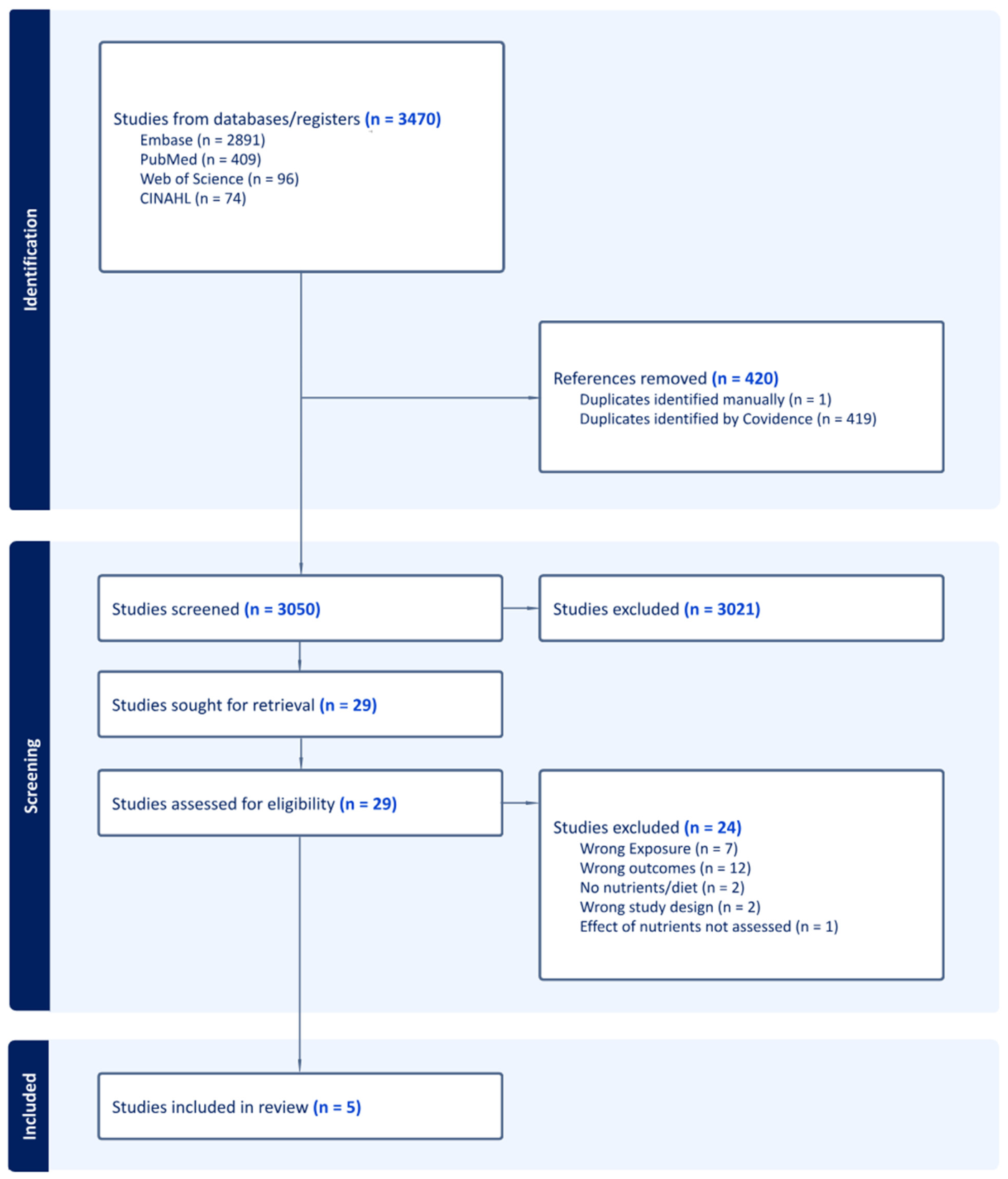
A total of 3470 publications were retrieved from electronic databases (Embase = 2891; PubMed = 409; Web of Science = 96; CINAHL = 74). After removing 420 duplicates, 3050 studies were retained, and of those, the title and abstract screening excluded 3021 studies, leaving 29 for full-text assessment. Five studies met the eligibility criteria and were included in the review. [26,27,28,29,30] The remaining studies were excluded due to no PM2.5 as an exposure measure (n = 7), no anemia as the outcome (n = 12) and the absence of a dietary/supplement/nutrient component (n = 1), or the wrong study design (n = 2) and the effect of nutrients not measured (n = 1). Data was subsequently extracted from the five included studies (Figure 1).

3.1. Study Populations

The study populations of the two studies were from India [26,28], and the remaining were from South Korea (n = 1) [30], the United Kingdom (n = 1) [27], and China (n = 1) [29]. Vulnerable populations such as children, women, and older adults are represented in this review. Children five and under are the study population for three included studies [26,28,29], women for two studies [27,30], and older study participants (≥60 years) were recruited into one study [27].

3.2. PM2.5, Anemia, and Nutrients

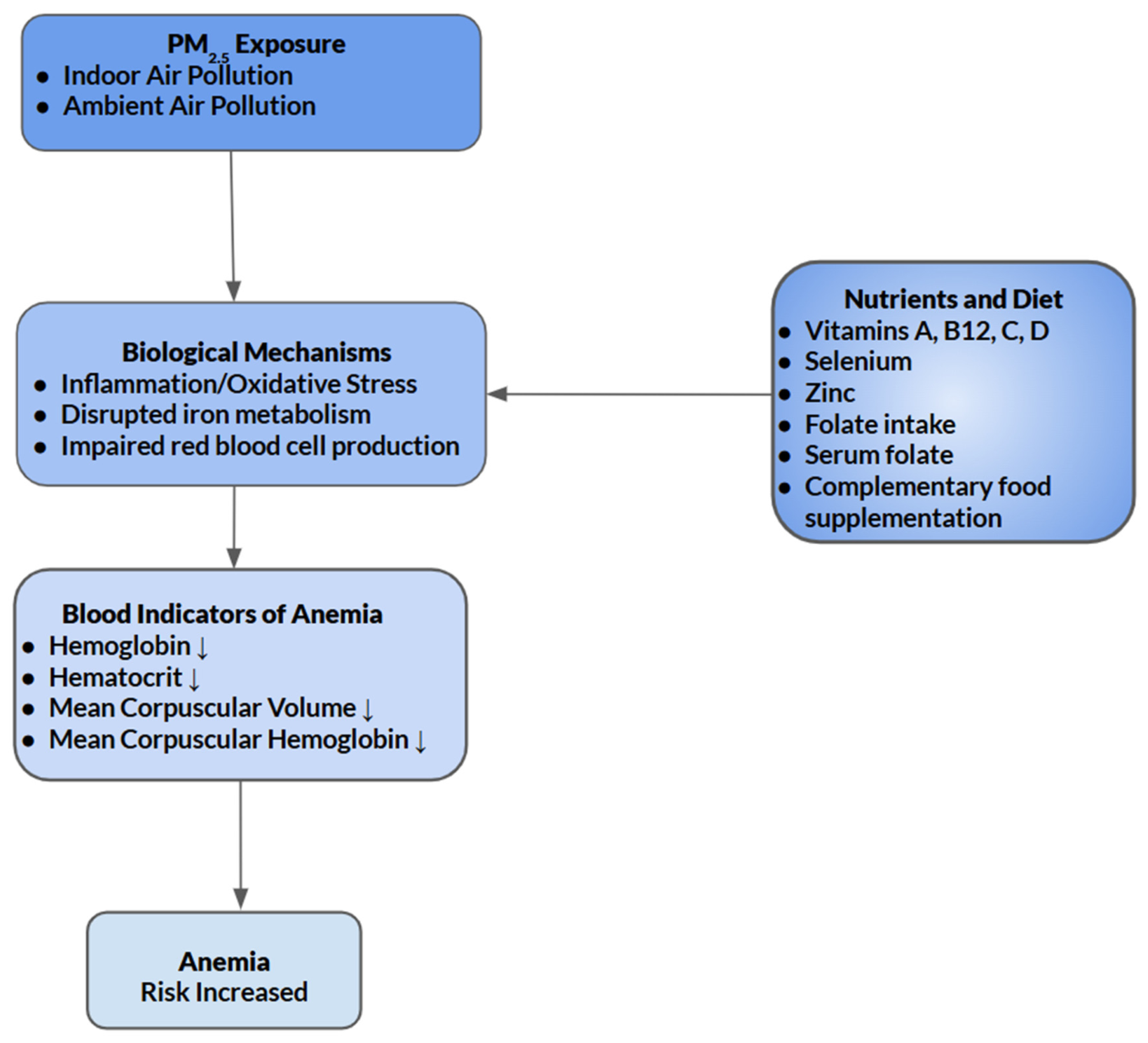
Results from the five included studies illustrate how indoor and ambient PM2.5 exposure are associated with reduced markers of anemia such as hemoglobin levels. They also report how nutrients and supplementation may modify PM2.5-related anemia (Figure 2).
Four of the included studies reported on ambient PM2.5 exposure [26,27,28,29], while one reported on indoor PM2.5 exposure [31]. Three studies reported on the effect of PM2.5 exposure on Hb-levels [27,29,30], while one reported on the effect of PM2.5 exposure on Hb and other blood indicators of anemia such as hematocrit (Hct), mean corpuscular volume, mean corpuscular Hb, and mean corpuscular Hb concentration [30]. Among children, men, and women, Hb levels less than 11 g/dL, 12 g/dL, and 13 g/dL were defined as anemia [26,27,28,29,30]. Another study used data from the UK Biobank cohort, and anemia diagnosis based on ICD-10 codes was provided for IDA, folate deficiency anemia, vitamin B12 deficiency anemia, and other types of anemia. [27] All studies measured the effect of a nutrient or supplementation on PM2.5-related anemia [26,27,28,29,30] (Table 1).

3.3. Anemia

All studies reported a negative association between PM2.5 exposure and various blood indicators of anemia (Table 2). In terms of Hb levels, four studies examined this marker and found that as PM2.5 exposure increased, the risk of lower Hb levels increased [26,28,29,30]. For example, for every 10 μg/m3 increase in ambient PM2.5, the OR for anemia (Hb < 11 g/dL) was 1.14 (95% CI: 1.13–1.14) [29]. PM2.5 was also significantly associated with lower Hct (β = −0.059, SE = 0.033), mean corpuscular volume (MCV) (β = −0.081, SE = 0.037), and mean corpuscular hemoglobin (MCH) (β = −0.037, SE = 0.012) in a study of adult women [30].
In another study, the evidence, however, suggests that the association between PM2.5 exposure and anemia may vary across anemia subtypes. They reported on IDA, folate deficiency anemia, and vitamin B12 deficiency anemia and found the strongest association with folate deficiency anemia, followed by iron deficiency anemia, but none was found with vitamin B12 deficiency anemia. For each 10 µg/m3 increase in PM2.5, the hazard ratio (HR) of folate deficiency anemia was 4.61 (95% CI: 2.03, 10.47 and of) and IDA was 2.00 (95% CI: 1.71, 2.33) [27].

3.4. Nutrition and Micronutrients

All of the included studies report on nutrients or supplements, including on folate (Table 2). One study reported that indoor PM2.5 exposure is significantly associated with decreased Hb, MCV, and MCH, but this effect is attenuated in the presence of serum folate [30].
Another study examined the modifying effects of nutritional supplementation on the association between ambient exposure to PM2.5 and Hb levels [29]. They found that air pollution adversely affected child growth through reductions in Hb levels, but prolonged nutritional supplementation was associated with the attenuation of this pathway among children under five years of age. The supplementation in this study was through the Yingyangbao (YYB) program, a large-scale child nutrition initiative in poor and rural regions of China designed to improve the diets and health of infants and young children through a supplement fortified with protein, calories, and multiple micronutrients (e.g., iron, zinc, calcium, vitamins A and D, and folic acid) that can be mixed into foods [31,32].
Another study also found that the effect of PM2.5 on anemia significantly changed with the intake of certain foods [28]. Per capita daily fruit intake above 18 g (g) and vegetable intake above 80 g showed significant changes. The estimated ORs of anemia for every 10 μg/m3 increase in PM2.5 when the daily per capita intake of fruit was <18 g, 18–50 g, and >50 g were 1.09, 1.08, and 1.08, respectively. The estimated ORs of anemia for every 10 μg/m3 increase in PM2.5 when daily per capita vegetable intake was 80 g, 81–110 g, and >150 g were 1.1, 1.09 and 1.08, respectively. The per capita daily intake was defined as the household nutrient purchased divided by the household size.
The same study also assessed the effect of micronutrients [28]. Vitamins A, C, and D, as well as zinc and selenium above their Estimated Average Requirements (EAR), or the normal required daily nutrient intake for a population, reduced the risk of anemia in children under the age of five. These nutrients and vitamin B12 above the per capita daily intake also reduced the likelihood of PM2.5-related anemia. In adjusted models, the odds ratio (OR) of anemia was lower when the intake of the micronutrient was higher. For example, the adjusted ORs of anemia for every 10 μg/m3 increase in PM2.5 was estimated as 1.09 and 1.05 at vitamin D intakes of <45 μg and >45 μg. Similar associations were reported for vitamins A, C, and B12, selenium, and zinc.

3.5. Social Context

The anemia status was reported based on PROGRESS-Plus factors in several studies. Place of residence: In one study, rural areas had a higher prevalence of anemia than urban areas (R: 58.3, 95%CI: 58, 58.6 vs. U:55.3, 95%CI: 54.8, 55.8) [28]. Race/ethnicity/culture/language: one study reported anemia based on this measure and found that anemic participants were more likely to be non-white. Gender/Sex: Two studies reported no difference in anemia status by sex [27,28]. Maternal Education: In one study, the prevalence of anemia increased as maternal education decreased (higher: 50.2, 95%CI: 49.4,51; secondary: 54.1, 95%CI: 53.7, 54.5; primary: 57.9, 95%CI: 57.3, 58.5; no education: 64.3, 95%CI: 63.9, 64.7), but another study reported the inverse [27], while a third found no difference by education [30]. Socioeconomic Status/Wealth: one study reported that the prevalence of anemia decreased as wealth increased (poorest: 63.1, 95%CI: 62.6, 63.5; poor: 57.5, 95%CI: 57, 58; middle: 56, 95%CI: 55.5, 56.5; rich: 53.7, 95%CI: 53.1, 54.3; richest: 53.1, 95%CI: 52.4, 53.8) [28], and another study reported similar findings [27]. Smoking Status: Finally, no differences were reported in anemia by smoking status [27,28,30]. Age: In the Kwag et al. (2021) study, the mean age for anemic and non-anemic participants was about the same [30], but in another, anemic participants were older (≥60 years) than younger (<60 years) [27]. Factors like religion and occupation were not reported, and PM2.5 exposure was not reported based on these factors (Table 3).
While four of the studies reported anemia status by PROGRESS-Plus factors, only two reported stratified analyses to determine whether the association between PM2.5 and anemia varied by socio-demographic factors. For age, hemoglobin levels were most affected by PM2.5 in the 7–12 month age group than in the other age groups [29]. Stratified analysis and effect modification tests by sex and age suggest that older and male individuals may be more susceptible to PM2.5-related anemia, but the results were not significant [27] (Table 3).

4. Discussion

This scoping review examined the literature on PM2.5 and anemia, with particular emphasis on the modifying effect of nutrition and the social context. Only five studies were available, highlighting a significant gap in this area of research. The available studies report an association between higher PM2.5 exposure and adverse anemia-related outcomes, including lower hemoglobin concentrations. They also report that the adequate intake of key nutrients, including folate, vitamins A, B12, C, and D, selenium, and zinc, as well as nutritional supplementation, could potentially mitigate the effect of PM2.5 on anemia risk, whereas social factors such as a lower socioeconomic status and educational attainment may increase vulnerability. However, the small number of studies and heterogeneity in populations, exposures, and study designs limit the conclusions that can be drawn. They also underscore the need for more research investigating the association among PM2.5, nutrition, anemia, the social context, and the pathways linking these factors.

4.1. PM2.5 and Anemia

The references included in this review all report a positive association between PM2.5 exposure and anemia, aligning with the current body of evidence [4,5,6,33,34,35]. The biological mechanisms proposed in the literature provide support for these epidemiologic findings. PM2.5-induced oxidative stress, systemic inflammation, and the disruption of epithelial barriers may interfere with the creation of new blood cells and lead to altered iron absorption, transport, and storage [36,37,38]. These mechanisms offer an explanation for observed reductions in hemoglobin and other blood indicators of anemia and the increased anemia risk in populations exposed to higher levels of particulate matter.
This association between PM2.5 exposure and anemia, however, may differ by subtypes, suggesting that some hematological components and pathways are more sensitive to PM2.5 than others. The study utilizing the UK Biobank prospective cohort found that folate deficiency anemia is most susceptible to the effects of PM2.5, followed by iron deficiency anemia, but PM2.5 had no effect on vitamin B12 deficiency anemia [27]. A second study points to a similar effect on folate; higher serum folate levels offset the effect of PM2.5 on various blood indicators of anemia [30]. This, however, is a relatively new finding, and more studies are needed to establish the strength of this finding.

4.2. Distribution of Study Populations

Exposure to PM2.5 remains a major public health concern, with recent global estimates indicating that ~94–95% of the world’s population is exposed to annual PM2.5 concentrations above the WHO air quality guidelines [39,40]. At the same time, anemia affects ~30% of the global population, representing one of the most prevalent nutritional disorders globally [41]. Despite substantial overlap between exposure and anemia, very few studies assess the effect of the nutrient status, so additional studies are needed across contexts and particularly from low and middle-income countries, where the burden of PM2.5 exposure and anemia is concentrated.

4.3. PM2.5-Related Anemia and Nutrition

All five studies included in this review report that a nutrient or nutritional supplement weakens the association between PM2.5 and indicators of anemia. This is consistent with findings from observational studies. For example, one study reported that higher intakes of vitamin B6 and C and selenium were associated with a lower risk of PM2.5-induced inflammatory responses in vascular tissue [42]. Other observational evidence suggests that Vitamins A and E, magnesium and zinc may also lower the risk to PM2.5-related poor respiratory health [43] and adherence to the Mediterranean diet may lower the cardiovascular mortality risk [44].
In vitro studies on PM2.5 and nutrients may provide insights into a potential mechanism underlying these associations. In studies on vascular endothelial cells and bronchial endothelial cells, exposure to PM2.5 induced inflammation and oxidative stress, but treatment with certain nutrients reduced injury in these cells [45,46]. These suggest that the antioxidant and anti-inflammatory properties of certain nutrients may help mitigate PM2.5-induced injury to cells.
Whether similar associations and mechanisms exist between nutrients and PM2.5-related anemia is unclear, given the limited work in this area. Significantly more research is required, and future observational and experimental studies should examine these associations across diverse populations, nutrients, and anemia subtypes.

4.4. Social Context and Vulnerability

Another key finding of this review is the inconsistent assessment of social and demographic variables. A substantial body of literature shows that factors such as place of residence, income, and education are critical determinants of both PM2.5 exposure and nutrition status across diverse settings. Lower SES has consistently been associated with higher levels of air pollution exposure, particularly in disadvantaged neighborhoods and communities [47,48]. Additionally, both individual- and neighborhood-level socioeconomic conditions can modify the relationship between PM2.5 exposure and adverse health outcomes, further shaping vulnerability [49,50,51]. At the same time, income and education are strongly linked to diet quality and food security, with lower socioeconomic groups facing greater barriers to accessing nutrient-dense foods [52,53]. Together, these structural factors influence both exposure pathways and susceptibility, creating compounded risks for anemia through increased PM2.5 exposure and constrained access to adequate nutrition. Explicit attention to these determinants is therefore essential in efforts to address PM2.5-related anemia.
A key gap identified in the literature is the limited focus on vulnerable populations in studies examining the relationship among PM2.5 exposure, nutrition, and anemia. There is a need for more research focused on vulnerable populations, particularly children, pregnant women, the elderly, and marginalized groups, who are disproportionately affected by both air pollution and nutritional deficiencies. While some studies highlight these disparities, few are designed to specifically investigate the mechanisms underlying increased susceptibility or to evaluate targeted interventions.

5. Conclusions

In summary, despite evidence demonstrating an association between PM2.5 exposure and anemia-related outcomes, several important gaps remain in the literature. First, there are a limited number of studies examining the effect of nutrition, and this currently limits the interpretation of whether nutrients may diminish susceptibility to PM2.5-related anemia. Second, there is a lack of research on social variables and vulnerable groups. Social determinants of health—including income, education, and place of residence —play a critical role in shaping PM2.5, anemia, and the nutritional status. This gap also limits the ability to address social and demographic factors contributing to anemia, particularly in vulnerable populations where PM2.5 may exacerbate existing hematological vulnerabilities.
Future research should jointly assess PM2.5 exposure, anemia subtypes, nutrition-related biomarkers—particularly vitamins A, C, and D, B12, zinc, folate, selenium, and iron—while also accounting for the social context. Strong observational studies and well-designed interventions incorporating long-term PM2.5 exposure, with different blood indicators of anemia, and strong nutritional assessments such as 24 h dietary recalls or food frequency questionnaires or reliable biomarkers of nutrition would strengthen the evidence base. Additionally, using a health equity framework such as PROGRES-Plus or similar frameworks ensures a standard way to assess the effect of the social context. This type of research could potentially contribute to reducing the global burden of anemia.

Supplementary Materials

The following supporting information can be downloaded at: https://www.mdpi.com/article/10.3390/ijerph23091224/s1, Supplementary File S1: Search Strategies; Supplementary File S2: Table S1: Preferred Reporting Items for Systematic reviews and Meta-Analyses extension for Scoping Reviews (PRISMA-ScR) Checklist; Table S2: Data Extraction Form. Refs. [54,55,56,57] are cited in the Supplementary Materials.

Author Contributions

Conceptualization, D.B.T. and B.-L.R.; methodology, D.B.T., L.L. and B.-L.R.; literature search and screening, B.-L.R., K.L. and A.D.; data extraction and synthesis, K.L., B.-L.R. and A.D.; writing- original draft preparation, K.L., B.-L.R. and A.D.; writing—review and editing, D.B.T. and K.L. All authors have read and agreed to the published version of the manuscript.

Funding

This research received no external funding.

Institutional Review Board Statement

Not applicable.

Informed Consent Statement

Not applicable.

Data Availability Statement

The original contributions presented in this study are included in the article and Supplementary Materials. Further inquiries can be directed to the corresponding author.

Acknowledgments

The authors wish to acknowledge Tista Goswami, Vivian Rodriguez, and Brandon Ma for their assistance in the screening stages of this review.

Conflicts of Interest

The authors declare no conflicts of interest.

Abbreviations

The following abbreviations are used in this manuscript:
PM2.5Fine Particulate Matter
IDAIron-Deficiency Anemia
HbHemoglobin
HctHematocrit
MCVMean Corpuscular Volume
MCHMean Corpuscular Hemoglobin
MCHCMean Corpuscular Hemoglobin Concentration
SESSocioeconomic Status
SDISocio-demographic Index
OROdds Ratio
HRsHazard Ratios
YYBYingyangbao
EAREstimated Average Requirements
PRISMA-ScRPreferred Reporting Items for Systematic Reviews and Meta-Analyses extension for Scoping Reviews

References

  1. GBD 2021 Anaemia Collaborators. Prevalence, years lived with disability, and trends in anaemia burden by severity and cause, 1990–2021: Findings from the Global Burden of Disease Study 2021. Lancet Haematol. 2023, 10, e713–e734, Correction in Lancet Haematol. 2023, 10, e796; Correction in Lancet Haematol. 2024, 11, e10. [Google Scholar] [CrossRef] [Scilit] [PubMed]
  2. World Health Organization. Anaemia; World Health Organization, 10 February 2025; Available online: https://www.who.int/news-room/fact-sheets/detail/anaemia (accessed on 5 May 2026).
  3. Mayo Clinic. Anemia: Symptoms and Causes. Available online: https://www.mayoclinic.org/diseases-conditions/anemia/symptoms-causes/syc-20351360 (accessed on 5 May 2026).
  4. Mehta, U.; Dey, S.; Chowdhury, S.; Ghosh, S.; Hart, J.E.; Kurpad, A. The Association Between Ambient PM2.5 Exposure and Anemia Outcomes Among Children Under Five Years of Age in India. Environ. Epidemiol. 2021, 5, e125. [Google Scholar] [CrossRef] [Scilit] [PubMed]
  5. He, C.; Xie, L.; Gu, L.; Yan, H.; Feng, S.; Zeng, C.; Danzhen, W.; Zhang, X.; Han, M.; Li, Z.; et al. Anemia is associated with long-term exposure to PM2.5 and its components, as shown in a large population-based study in Southwest China. Ther. Adv. Hematol. 2023, 14, 20406207231189922. [Google Scholar] [CrossRef] [Scilit] [PubMed]
  6. Morales-Ancajima, V.C.; Tapia, V.; Vu, B.N.; Liu, Y.; Alarcón-Yaquetto, D.E.; Gonzales, G.F. Increased Outdoor PM2.5 Concentration Is Associated with Moderate/Severe Anemia in Children Aged 6-59 Months in Lima, Peru. J. Environ. Public Health 2019, 2019, 6127845. [Google Scholar] [CrossRef] [Scilit] [PubMed]
  7. Kayalar, Ö.; Rajabi, H.; Konyalilar, N.; Mortazavi, D.; Aksoy, G.T.; Wang, J.; Bayram, H. Impact of particulate air pollution on airway injury and epithelial plasticity; underlying mechanisms. Front. Immunol. 2024, 15, 1324552. [Google Scholar] [CrossRef] [Scilit] [PubMed]
  8. Moore, B.F.; Butler, L.M.; Bachand, A.M.; Salim, A.; Reynolds, S.J.; Wang, R.; Nelson, T.L.; Peel, J.L.; Murphy, S.E.; Koh, W.P.; et al. Diet, Secondhand Smoke, and Glycated Hemoglobin (HbA1c) Levels among Singapore Chinese Adults. Int. J. Environ. Res. Public Health 2019, 16, 5148. [Google Scholar] [CrossRef] [Scilit] [PubMed]
  9. Saboor, M.; Zehra, A.; Hamali, H.A.; Mobarki, A.A. Revisiting Iron Metabolism, Iron Homeostasis and Iron Deficiency Anemia. Clin. Lab. 2021, 1, 67. [Google Scholar] [CrossRef] [Scilit] [PubMed]
  10. Saxena, G.; Singh, B.; Billen, A. Iron, vitamin B12 and folate. Medicine 2025, 53, 181–185. [Google Scholar] [CrossRef] [Scilit]
  11. Wolffenbuttel, B.H.R.; Wouters, H.J.C.M.; Heiner-Fokkema, M.R.; van der Klauw, M.M. The many faces of cobalamin (vitamin B12) deficiency. Mayo Clin. Proc. Innov. Qual. Outcomes 2019, 3, 200–214. [Google Scholar] [CrossRef] [Scilit] [PubMed]
  12. Pasricha, S.-R.; Tye-Din, J.; Muckenthaler, M.U.; Swinkels, D.W. Iron deficiency. Lancet 2021, 397, 233–248. [Google Scholar] [CrossRef] [Scilit] [PubMed]
  13. Akhtar, S.; Ahmed, A.; Randhawa, M.A.; Atukorala, S.; Arlappa, N.; Ismail, T.; Ali, Z. Iron deficiency anemia: A comprehensive review on iron absorption, bioavailability and emerging food fortification approaches. Trends Food Sci. Technol. 2020, 99, 58–75. [Google Scholar] [CrossRef] [Scilit]
  14. Possamai, F.P.; Júnior, S.Á.; Parisotto, E.B.; Moratelli, A.M.; Inácio, D.B.; Garlet, T.R.; Dal-Pizzol, F.; Filho, D.W. Antioxidant intervention compensates oxidative stress in blood of subjects exposed to emissions from a coal electric-power plant in South Brazil. Environ. Toxicol. Pharmacol. 2010, 30, 175–180. [Google Scholar] [CrossRef] [Scilit] [PubMed]
  15. Wang, L.; Zhou, Z.; Li, D.; Wu, M.; Yang, Y.; Hu, Y.; Wang, Y.; Sun, Y.; Tian, Y. The modifiable effect of vitamin D in the association between long-term exposure to ambient air pollution and glycosylated hemoglobin in patients with hypertension. Nutrition 2023, 107, 111920. [Google Scholar] [CrossRef] [Scilit] [PubMed]
  16. Zhong, J.; Karlsson, O.; Wang, G.; Li, J.; Guo, Y.; Lin, X.; Zemplenyi, M.; Sanchez-Guerra, M.; Trevisi, L.; Urch, B.; et al. B vitamins attenuate the epigenetic effects of ambient fine particles in a pilot human intervention trial. Proc. Natl. Acad. Sci. USA 2017, 114, 3503–3508, Correction in Proc. Natl. Acad. Sci. USA 2017, 114, E3367. [Google Scholar] [CrossRef] [Scilit] [PubMed]
  17. Zhong, J.; Trevisi, L.; Urch, B.; Lin, X.; Speck, M.; Coull, B.A.; Lissowska, J.; Wang, G.; Li, J.; Dai, L.; et al. B-vitamin supplementation mitigates effects of fine particles on cardiac autonomic dysfunction and inflammation: A pilot human intervention trial. Sci. Rep. 2017, 7, 45322. [Google Scholar] [CrossRef] [Scilit] [PubMed]
  18. Wang, Y.; Tong, S.; Liu, S.; Yang, Y.; Cao, Y.; Zhang, Y.; Chen, R.; Kan, H. Mechanistic insights into the health benefits of fish-oil supplementation against fine particulate matter air pollution: A randomized controlled trial. Environ. Health 2022, 21, 110. [Google Scholar] [CrossRef] [Scilit] [PubMed]
  19. Govindaraju, T.; Man, M.; Owen, A.J.; Carroll, M.; Borg, B.M.; Smith, C.L.; Gao, C.X.; Brown, D.; Poland, D.; Allgood, S.; et al. Does diet quality moderate the long-term effects of discrete but extreme PM2.5 exposure on respiratory symptoms? A study of the Hazelwood coalmine fire. Environ. Res. 2024, 252, 119014. [Google Scholar] [CrossRef] [Scilit] [PubMed]
  20. Health Effects Institute. State of Global Air 2024 (Special Report); Health Effects Institute; Available online: https://www.stateofglobalair.org/resources/report/state-global-air-report-2024 (accessed on 5 May 2026).
  21. Peters, M.D.J.; Godfrey, C.; McInerney, P.; Munn, Z.; Tricco, A.C.; Khalil, H. Scoping Reviews. In JBI Manual for Evidence Synthesis; Aromataris, E., Lockwood, C., Porritt, K., Pilla, B., Jordan, Z., Eds.; 2024; Available online: https://synthesismanual.jbi.global (accessed on 11 May 2026).
  22. Rethlefsen, M.L.; Kirtley, S.; Waffenschmidt, S.; Ayala, A.P.; Moher, D.; Page, M.J.; Koffel, J.B.; PRISMA-S Group. PRISMA-S: An extension to the PRISMA Statement for Reporting Literature Searches in Systematic Reviews. Syst. Rev. 2021, 10, 39. [Google Scholar] [CrossRef] [Scilit] [PubMed]
  23. Tricco, A.C.; Lillie, E.; Zarin, W.; O’Brien, K.K.; Colquhoun, H.; Levac, D.; Moher, D.; Peters, M.D.J.; Horsley, T.; Weeks, L.; et al. PRISMA extension for scoping reviews (PRISMA-ScR): Checklist and explanation. Ann. Intern. Med. 2018, 169, 467–473. [Google Scholar] [CrossRef] [Scilit] [PubMed]
  24. von Elm, E.; Altman, D.G.; Egger, M.; Pocock, S.J.; Gøtzsche, P.C.; Vandenbroucke, J.P. The Strengthening the Reporting of Observational Studies in Epidemiology (STROBE) statement: Guidelines for reporting observational studies. PLoS Med. 2007, 4, e296. [Google Scholar] [CrossRef] [Scilit] [PubMed]
  25. Welch, V.; Dewidar, O.; Ghogomu, E.T.; Abdisalam, S.; Al Ameer, A.; Barbeau, V.I.; Brand, K.; Kebedom, K.; Benkhalti, M.; Kristjansson, E.; et al. How effects on health equity are assessed in systematic reviews of interventions. Cochrane Database Syst. Rev. 2022, 2022, MR000028. [Google Scholar] [CrossRef] [Scilit] [PubMed]
  26. Bora, K. Air Pollution as a Determinant of Undernutrition Prevalence among Under-Five Children in India: An Exploratory Study. J. Trop. Pediatr. 2021, 67, fmab089, Erratum in J. Trop. Pediatr. 2021, 67, fmab095. https://doi.org/10.1093/tropej/fmab095. [Google Scholar] [CrossRef] [PubMed]
  27. Li, L.; Ran, Y.; Zhuang, Y.; Wang, L.; Chen, J.; Sun, Y.; Lu, S.; Ye, F.; Mei, L.; Ning, Y.; et al. Risk analysis of air pollutants and types of anemia: A UK Biobank prospective cohort study. Int. J. Biometeorol. 2024, 68, 1343–1356. [Google Scholar] [CrossRef] [Scilit] [PubMed]
  28. George, F.; Chaudhary, E.; Dey, S.; Thomas, T.; Sachdev, H.S.; Kurpad, A.; Ghosh, S. The role of antioxidant nutrients in mitigating PM2.5-related health risks in young Indian children. Front. Public Health 2025, 13, 1575950. [Google Scholar] [CrossRef] [Scilit] [PubMed]
  29. Jin, X.; Wu, D.; Ge, F.; Cui, D.; Jumabieke, A.; Wang, X.; Wang, R.; Wang, N.; Sun, J.; Liao, W.; et al. Hemoglobin as a mediator between air pollution and growth outcomes in children under 60 months: The moderating role of nutritional supplementation. BMC Public Health 2025, 25, 1187. [Google Scholar] [CrossRef] [Scilit] [PubMed]
  30. Kwag, Y.; Ye, S.; Oh, J.; Lee, D.-W.; Yang, W.; Kim, Y.; Ha, E. Direct and indirect effects of indoor particulate matter on blood indicators related to anemia. Int. J. Environ. Res. Public Health 2021, 18, 12890. [Google Scholar] [CrossRef] [Scilit] [PubMed]
  31. Li, Z.; Li, X.; Sudfeld, C.R.; Liu, Y.; Tang, K.; Huang, Y.; Fawzi, W. The Effect of the Yingyangbao Complementary Food Supplement on the Nutritional Status of Infants and Children: A Systematic Review and Meta-Analysis. Nutrients 2019, 11, 2404. [Google Scholar] [CrossRef] [Scilit] [PubMed]
  32. UNICEF China. Supporting Child Nutrition and Sustainable Development Through International Collaboration: A Case Study of China’s Ying Yang Bao Programme. Available online: www.unicef.cn/en/media/26351/file/Supporting%20Child%20Nutrition%20and%20Sustainable%20Development%20through%20International%20Collaboration.pdf (accessed on 26 May 2026).
  33. Khan, Y.; Banerjee, R. Exposure to air pollution as a risk factor for anaemia: A global scoping review. Int. J. Environ. Health Res. 2024, 34, 3847–3859. [Google Scholar] [CrossRef] [Scilit] [PubMed]
  34. Odo, D.B.; Yang, I.A.; Dey, S.; Hammer, M.S.; van Donkelaar, A.; Martin, R.V.; Dong, G.-H.; Yang, B.-Y.; Hystad, P.; Knibbs, L.D. A cross-sectional analysis of ambient fine particulate matter (PM2.5) exposure and haemoglobin levels in children aged under 5 years living in 36 countries. Environ. Res. 2023, 227, 115734. [Google Scholar] [CrossRef] [Scilit] [PubMed]
  35. Xie, G.; Yue, J.; Yang, W.; Yang, L.; Xu, M.; Sun, L.; Zhang, B.; Guo, L.; Chung, M.C. Effects of PM2.5 and its constituents on hemoglobin during the third trimester in pregnant women. Environ. Sci. Pollut. Res. 2022, 29, 35193–35203. [Google Scholar] [CrossRef] [Scilit] [PubMed]
  36. Bai, J.; Zhang, M.; Shao, L.; Jones, T.P.; Feng, X.; Huang, M.; BéruBé, K.A. Hemolytic properties of fine particulate matter (PM2.5) in in vitro systems. Toxics 2024, 12, 246. [Google Scholar] [CrossRef] [Scilit] [PubMed]
  37. Zhu, Y.; Ku, T.; Nie, H.; Wang, X.; Bi, D.; Xie, Z.; Jia, Z.; Li, G.; Sang, N. Effects of long-term exposure to PM2.5 on oxidative stress injury and expression of inflammatory factors, NF-κB p65 and Cx43 in bone marrow of mice. Front. Environ. Sci. 2022, 10, 747286. [Google Scholar] [CrossRef] [Scilit]
  38. Wang, Y.; Tang, M. PM2.5 induces ferroptosis in human endothelial cells through iron overload and redox imbalance. Environ. Pollut. 2019, 254, 112937, Corrigendum in Environ. Pollut. 2021, 276, 113640. [Google Scholar] [CrossRef] [Scilit] [PubMed]
  39. Rentschler, J.; Leonova, N. Global air pollution exposure and poverty. Nat. Commun. 2023, 14, 4432. [Google Scholar] [CrossRef] [Scilit] [PubMed]
  40. Parsons, L.A.; Shindell, D.T.; Faluvegi, G.; Nagamoto, E. Geophysical uncertainties in air pollution exposure and benefits of emissions reductions for global health. Earth’s Future 2023, 11, e2023EF003839. [Google Scholar] [CrossRef] [Scilit]
  41. World Health Organization. WHO Global Anaemia Estimates: Key Findings, 2025. Available online: https://www.who.int/publications/i/item/9789240113930 (accessed on 29 June 2026).
  42. Parklak, W.; Kulprachakarn, K.; KawFichai, S.; Fakfum, P.; Jiraya, P.; Kijkuokool, P.; Khiaolaongam, W.; Chuljerm, H. Association between dietary patterns and lifestyle habits with vascular inflammatory responses in individuals with hypertension living in PM2.5-polluted areas: A cross-sectional pilot study in Chiang Mai Province, Thailand. Diseases 2025, 13, 258. [Google Scholar] [CrossRef] [Scilit] [PubMed]
  43. Govindaraju, T.; Smith, C.L.; Ikin, J.; Owen, A.J.; Carroll, M.; Borg, B.M.; Gao, C.X.; Brown, D.; Poland, D.; Allgood, S.; et al. Protective role of dietary antioxidant intake on long-term effects of extreme PM 2.5 exposure on respiratory health. J. Occup. Environ. Med. 2026. [Google Scholar] [CrossRef] [Scilit] [PubMed]
  44. Lim, C.C.; Hayes, R.B.; Ahn, J.; Shao, Y.; Silverman, D.T.; Jones, R.R.; Thurston, G.D. Mediterranean Diet and the Association Between Air Pollution and Cardiovascular Disease Mortality Risk. Circulation 2019, 139, 1766–1775. [Google Scholar] [CrossRef] [Scilit] [PubMed]
  45. Bo, L.; Jiang, S.; Xie, Y.; Kan, H.; Song, W.; Zhao, J. Effect of Vitamin E and Omega-3 Fatty Acids on Protecting Ambient PM2.5-Induced Inflammatory Response and Oxidative Stress in Vascular Endothelial Cells. PLoS ONE 2016, 11, e0152216. [Google Scholar] [CrossRef] [Scilit] [PubMed]
  46. Pfeffer, P.E.; Lu, H.; Mann, E.H.; Chen, Y.-H.; Ho, T.-R.; Cousins, D.J.; Corrigan, C.; Kelly, F.J.; Mudway, I.S.; Hawrylowicz, C.M. Effects of vitamin D on inflammatory and oxidative stress responses of human bronchial epithelial cells exposed to particulate matter. PLoS ONE 2018, 13, E0200040. [Google Scholar] [CrossRef] [Scilit] [PubMed]
  47. Colmer, J.; Hardman, I.; Shimshack, J.; Voorheis, J. Disparities in PM2.5 air pollution in the United States. Science 2020, 369, 575–578. [Google Scholar] [CrossRef] [Scilit] [PubMed]
  48. Hajat, A.; Hsia, C.; O’Neill, M.S. Socioeconomic disparities and air pollution exposure: A global review. Curr. Environ. Health Rep. 2015, 2, 440–450. [Google Scholar] [CrossRef] [Scilit] [PubMed]
  49. Chi, G.C.; Hajat, A.; Bird, C.E.; Cullen, M.R.; Griffin, B.A.; Miller, K.A.; Shih, R.A.; Vedal, S.; Kaufman, J.D. Individual and neighborhood socioeconomic status and the association between air pollution and cardiovascular disease. Environ. Health Perspect. 2016, 124, 1840–1847. [Google Scholar] [CrossRef] [Scilit] [PubMed]
  50. Zhang, Z.; Laden, F.; Forman, J.P.; Hart, J.E. Long-term exposure to particulate matter and self-reported hypertension: A prospective analysis in the Nurses’ Health Study. Environ. Health Perspect. 2016, 124, 1414–1420. [Google Scholar] [CrossRef] [Scilit] [PubMed]
  51. Darmon, N.; Drewnowski, A. Does social class predict diet quality? Am. J. Clin. Nutr. 2008, 87, 1107–1117. [Google Scholar] [CrossRef] [Scilit] [PubMed]
  52. Hanson, K.L.; Connor, L.M. Food insecurity and dietary quality in US adults and children: A systematic review. Am. J. Clin. Nutr. 2014, 100, 684–692. [Google Scholar] [CrossRef] [Scilit] [PubMed]
  53. Mayén, A.L.; Marques-Vidal, P.; Paccaud, F.; Bovet, P.; Stringhini, S. Socioeconomic determinants of dietary patterns in low- and middle-income countries: A systematic review. Am. J. Clin. Nutr. 2014, 100, 1520–1531. [Google Scholar] [CrossRef] [Scilit] [PubMed]
  54. McGowan, J.; Sampson, M.; Salzwedel, D.M.; Cogo, E.; Foerster, V.; Lefebvre, C. PRESS peer review of electronic search strategies: 2015 Guideline Statement. J. Clin. Epidemiol. 2016, 75, 40–46. [Google Scholar] [CrossRef] [Scilit] [PubMed]
  55. Salvador-Oliván, J.A.; Marco-Cuenca, G.; Arquero-Avilés, R. Development of an efficient search filter to retrieve systematic reviews from PubMed. J. Med. Libr. Assoc. JMLA 2021, 109, 561–574. [Google Scholar] [CrossRef] [Scilit] [PubMed]
  56. University of Pittsburgh Health Sciences Library System. Elsevier Embase Search Filters: Systematic and Other Types of High Evidence Level Reviews. 2 October 2025. Available online: https://hsls.libguides.com/Embase-search-filters/systematic-reviews (accessed on 7 July 2026).
  57. University of Pittsburgh Health Sciences Library System. Search Limits: Limit by Human, Animal or Plant Studies. 2 October 2025. Available online: https://hsls.libguides.com/PubMed-search-filters/limiters#s-lg-box-32409015 (accessed on 7 July 2026).
Figure 1. PRISMA flowchart reporting the number of studies identified, screened, and included in this review. The diagram tracks the flow of references from initial database retrieval through the removal of duplicates and title and abstract screening and full-text screening using predefined inclusion criteria.
Ijerph 23 01224 g001
Figure 2. Diagram illustrating a pathway from PM2.5 exposure to anemia risk, with nutrients and diet potentially disrupting this pathway.
Ijerph 23 01224 g002
Table 1. Study characteristics of studies included in a scoping review of PM2.5 exposure, anemia, and nutrition.
YearAuthorsTitleCountryStudy PopulationSample SizeExposureOutcomeNutrition Indicator
2021Bora [26]Air Pollution as a Determinant of Undernutrition Prevalence among Under-Five Children in India: An Exploratory StudyIndiaChildren
under 5
31 states and union territoriesAmbient PM2.5Anemia (Hb < 11 g/dL)Iron supplementation
2025George et al. [28]The role of antioxidant nutrients in mitigating PM2.5-related health risks in young Indian childrenIndiaChildren
under 5
197,289Ambient PM2.5Anemia (Hb < 11 g/dL)Vitamins A, B12, C, D, zinc, selenium
2025Jin et al. [29]Hemoglobin as a mediator between air pollution and growth outcomes in children under 60 months: the moderating role of nutritional supplementationChinaChildren
under 5
10,766Ambient PM2.5Anemia (Hb < 11 g/dL)YYB micronutrient supplementation program
2021Kwag et al. [30]Direct and indirect effects of indoor particulate matter on blood indicators related to anemiaSouth KoreaWomen284Indoor PM2.5Blood indicators related to anemia (Hb < 12 g/dL, Hct, MCV, MCH, MCHC)Serum folate
2024Li et al. [27]Risk analysis of air pollutants and types of anemia: a UK Biobank prospective cohort studyUnited KingdomMen and women347,306Ambient PM2.5Iron deficiency anemia, folate deficiency anemia, vitamin B12 anemiaIron, vitamin B12, and folate intake from diet and supplements
Abbreviations: PM2.5 = fine particulate matter; Hb = hemoglobin; HC = hematocrit; YYB = Yingyangbao; Hct = hematocrit; MCV = mean corpuscular volume; MCH = mean corpuscular hemoglobin; MCHC = mean corpuscular hemoglobin concentration.
Table 2. Summary of studies examining the association between PM2.5 exposure and anemia and the modifying role of nutrition.
YearAuthorsPM2.5–Anemia AssociationHow Nutrients/Diet/Supplements Affected PM2.5-Related Anemia
2021Bora [26]In adjusted multivariate models, the prevalence of anemia is 11.8% higher in high-PM2.5 areas than in low-PM2.5 areas (p < 0.01) After adjusting for iron supplementation, the prevalence of anemia in high-PM2.5 areas remained significantly higher than low-PM2.5 areas (p < 0.01)
2025George et al. [28]In adjusted logistic regression models, the OR of anemia was 1.14 (95% CI: 1.13–1.14) for every 10 µg/m3 increase in PM2.5 Higher intake of vitamins A, C, D, B12, zinc, and selenium weakened the association between PM2.5 exposure and anemia
2025Jin et al. [29]In adjusted models, Hb decreased by 0.106 g/dL (95% CI: 0.723–5.35) amongst those exposed to higher PM2.5 (62.74–76.92 µg/m3) compared to no exposure to PM2.5. Ying Yang Bao (YYB) micronutrient supplementation attenuated the negative association between PM2.5 exposure and Hb levels
2021Kwag et al. [30]In adjusted models, the increase in PM2.5 was associated with a decrease in Hb (B: −0.024, SE: 0.011), HC (B: −0.059, SE: 0.033), and MCV(B: −0.081, SE: 0.037) and MCH (B: −0.037, SE: 0.012)Higher serum folate concentrations partially offset the negative association between PM2.5 exposure and hematologic outcomes
2024Li et al. [27]In adjusted models, the HR of iron deficiency anemia for a 10 μg/m3 increase in PM2.5 was 2.00 (95%CI: 1.71, 2.33), and the HR of folate deficiency anemia was 4.61 (95%CI: 2.03, 10.47). No significant association was found with vitamin B12 deficiency anemia. Individuals with anemia linked to deficiencies in iron, folate, or vitamin B12 appeared to be more susceptible to the adverse hematologic effects associated with PM2.5 exposure, suggesting a role of nutritional status in PM2.5-related anemia pathways.
Abbreviations: OR = odds ratio; HR = hazard ratio; Hb = hemoglobin; HC = hematocrit; MCV = mean corpuscular volume; MCH = mean corpuscular hemoglobin.
Table 3. Assessment of PROGRESS-Plus factors across studies included in a scoping review of PM2.5-related anemia and nutrition.
YearAuthorsPROGRESS-Plus Factors ReportedPM2.5 Exposure and Anemia by PROGRESS-Plus FactorsAnalysis of Differences in PM2.5-Related Anemia Across PROGRESS-Plus Factors
2021Bora [26]Socio-Demographic Index (SDI)Anemia and PM2.5 by
SDI not reported
None
2025George et al. [28]Place of residence, household wealth, maternal education, child sex, and smoking statusPrevalence of anemia reported by place of residence (urban vs. rural), wealth, maternal education, child sex, and smoking status
PM2.5 not reported
None
2025Jin et al. [29]Age, socioeconomic status, maternal education, mother’s occupation, and access to healthcarePM2.5 and anemia not reported by PROGRESS-Plus factorsStratified analysis by age showed that hemoglobin levels in children 7–12 months were most affected by PM2.5 than in other age groups
2021Kwag et al. [30]Sex, age, education, smoking, and occupationMean or percent anemia reported by age, education, and
smoking status
None
2024Li et al. [27]Sex, age, education, ethnicity, economic level, and smoking statusPercent anemic and non-anemic reported by sex, age, education, ethnicity, economic level, and smoking statusStratified analysis and effect modification tests by sex and age suggest older and male individuals may be more susceptible to PM2.5-related anemia, but the results were not significant
Abbreviations: SDI: socio-demographic index is a composite metric of socio-economic development using lag-distributed per capita income, total fertility rate in people aged <25 years, and mean education of people aged 15 years; PROGRESS Plus: place of residence, race/ethnicity/culture/language, occupation, gender/sex, religion, education, socioeconomic status, social capital, plus can refer to (a) personal characteristics associated with discrimination (e.g., age, disability), (b) features of relationships (e.g., smoking parents, excluded from school), and (c) time-dependent relationships (e.g., leaving the hospital, respite care, other instances where a person may be temporarily at a disadvantage).
Disclaimer/Publisher’s Note: The statements, opinions and data contained in all publications are solely those of the individual author(s) and contributor(s) and not of MDPI and/or the editor(s). MDPI and/or the editor(s) disclaim responsibility for any injury to people or property resulting from any ideas, methods, instructions or products referred to in the content.