Article

Landslide Displacement Prediction Based on Time Series Analysis and Double-BiLSTM Model
1
School of Computer Science and Information Security, Guilin University of Electronic Technology, Guilin 541004, China
2
Guangxi Key Laboratory of Precision Navigation Technology and Application, Guilin University of Electronic Technology, Guilin 541004, China
3
Information and Communication School, Guilin University of Electronic Technology, Guilin 541004, China
4
GUET-Nanning E-Tech Research Institute Co., Ltd., Nanning 530031, China
*
Author to whom correspondence should be addressed.
Int. J. Environ. Res. Public Health 2022, 19(4), 2077; https://doi.org/10.3390/ijerph19042077

Submission received: 3 January 2022 / Revised: 6 February 2022 / Accepted: 10 February 2022 / Published: 12 February 2022
(This article belongs to the Special Issue Environmental and Safety Issues to Protect People's Health)

Abstract

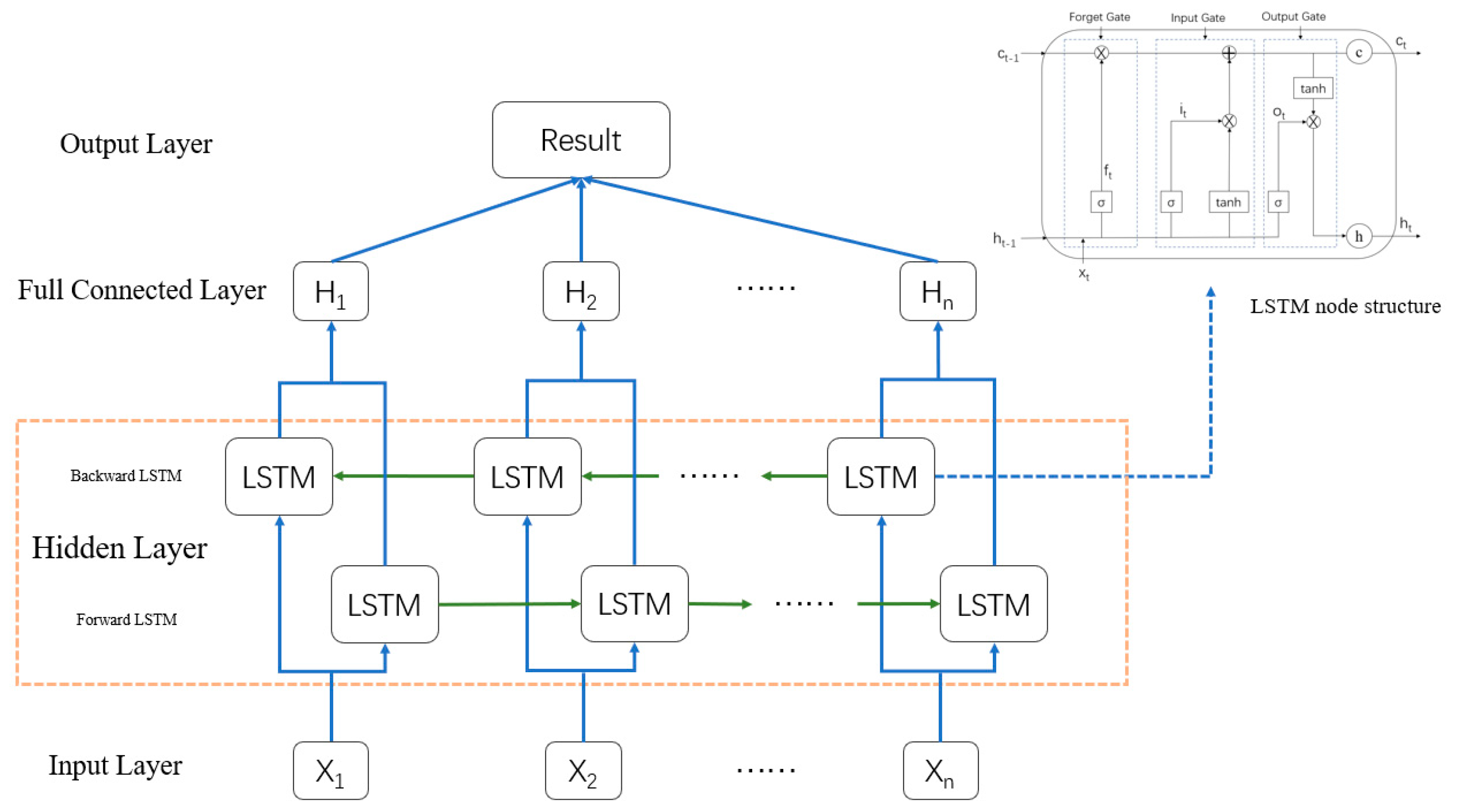
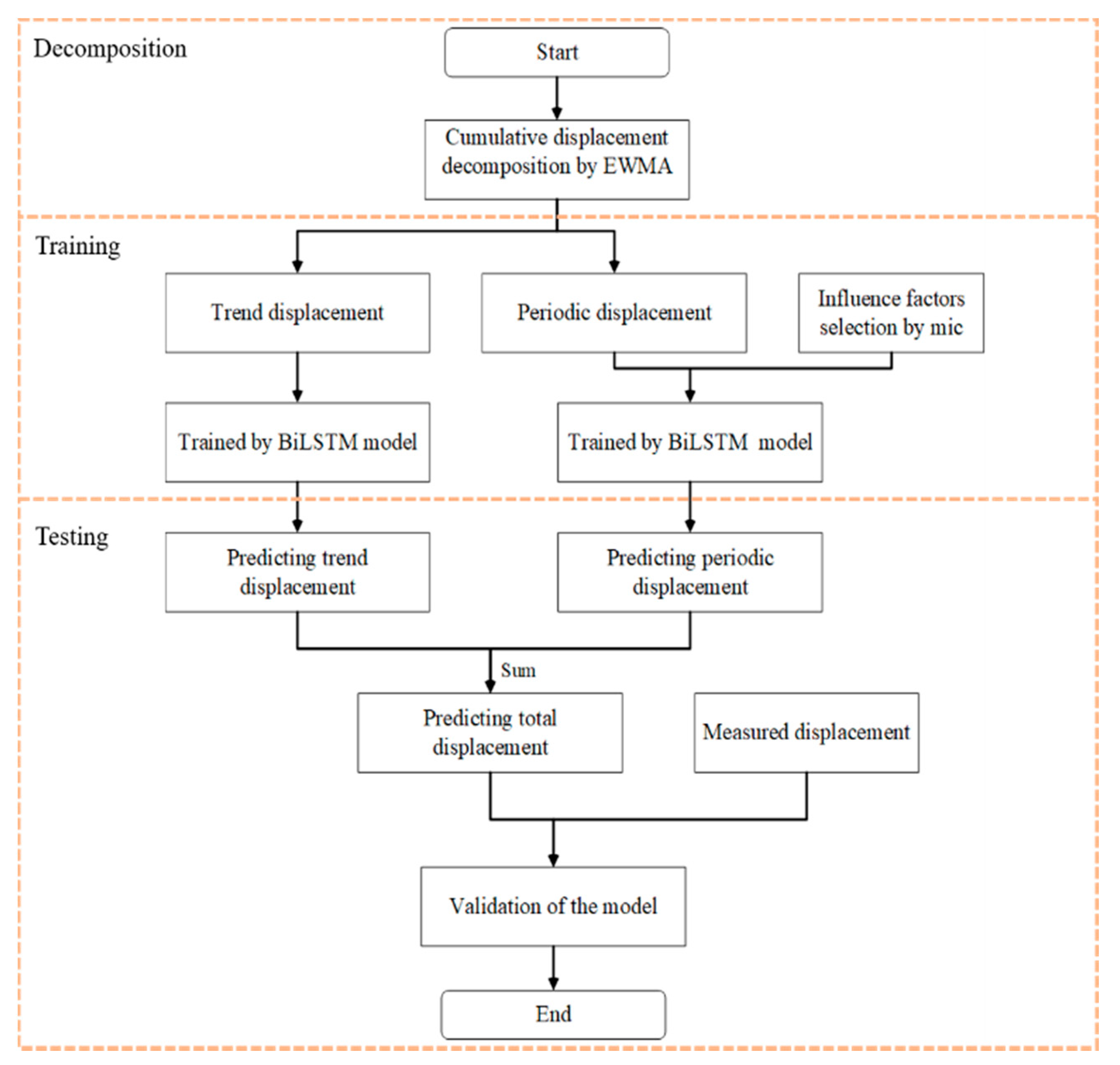
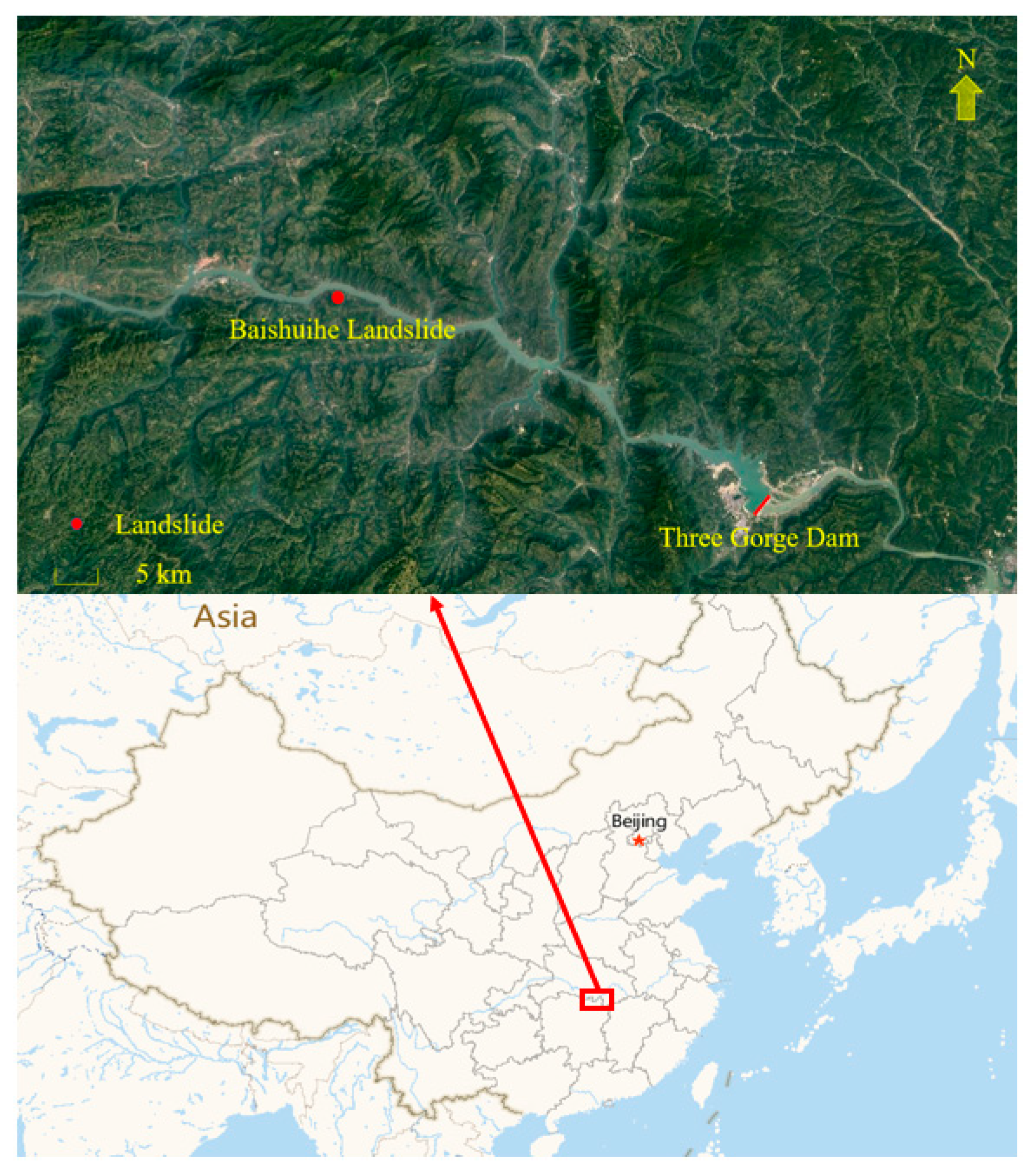
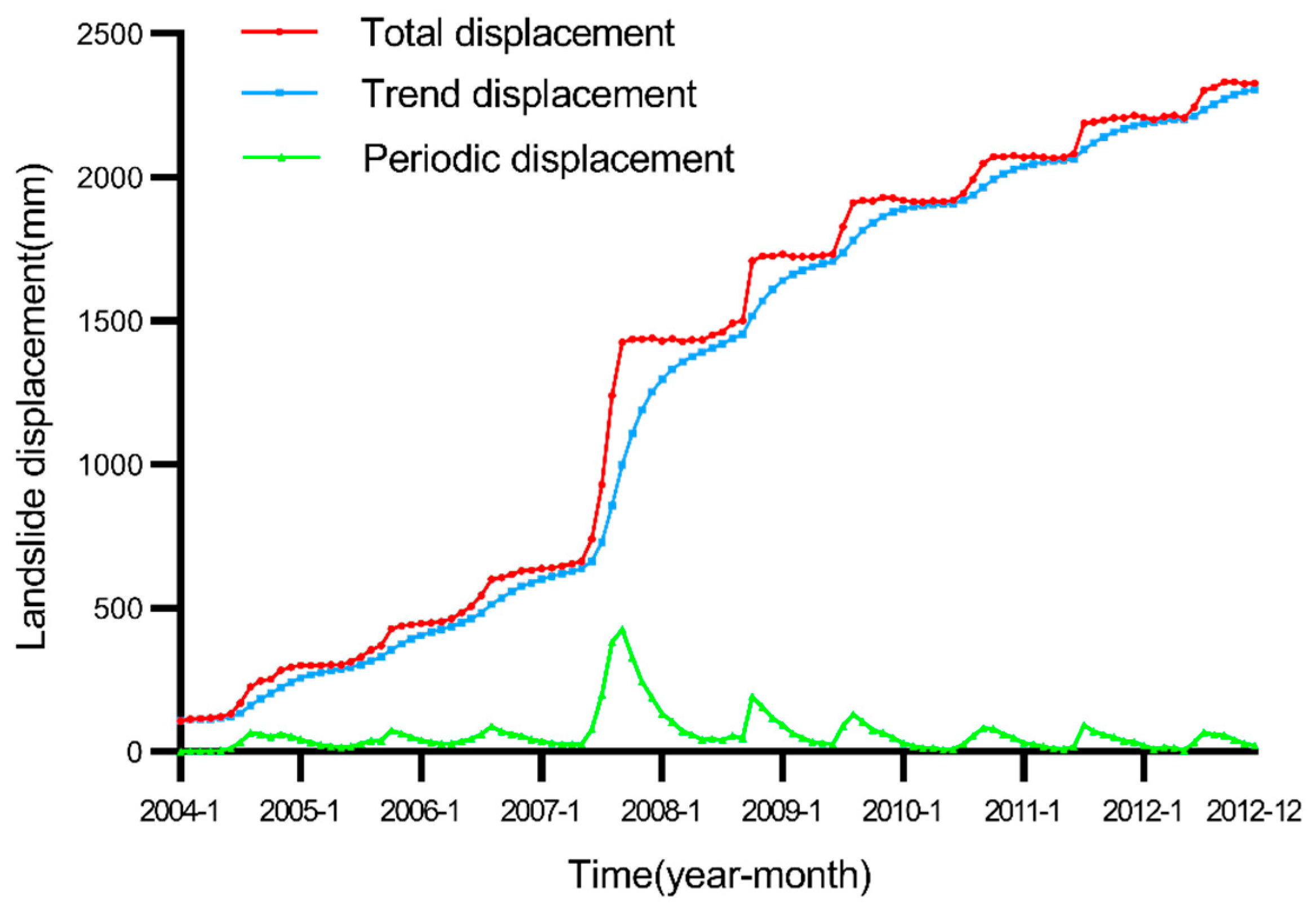
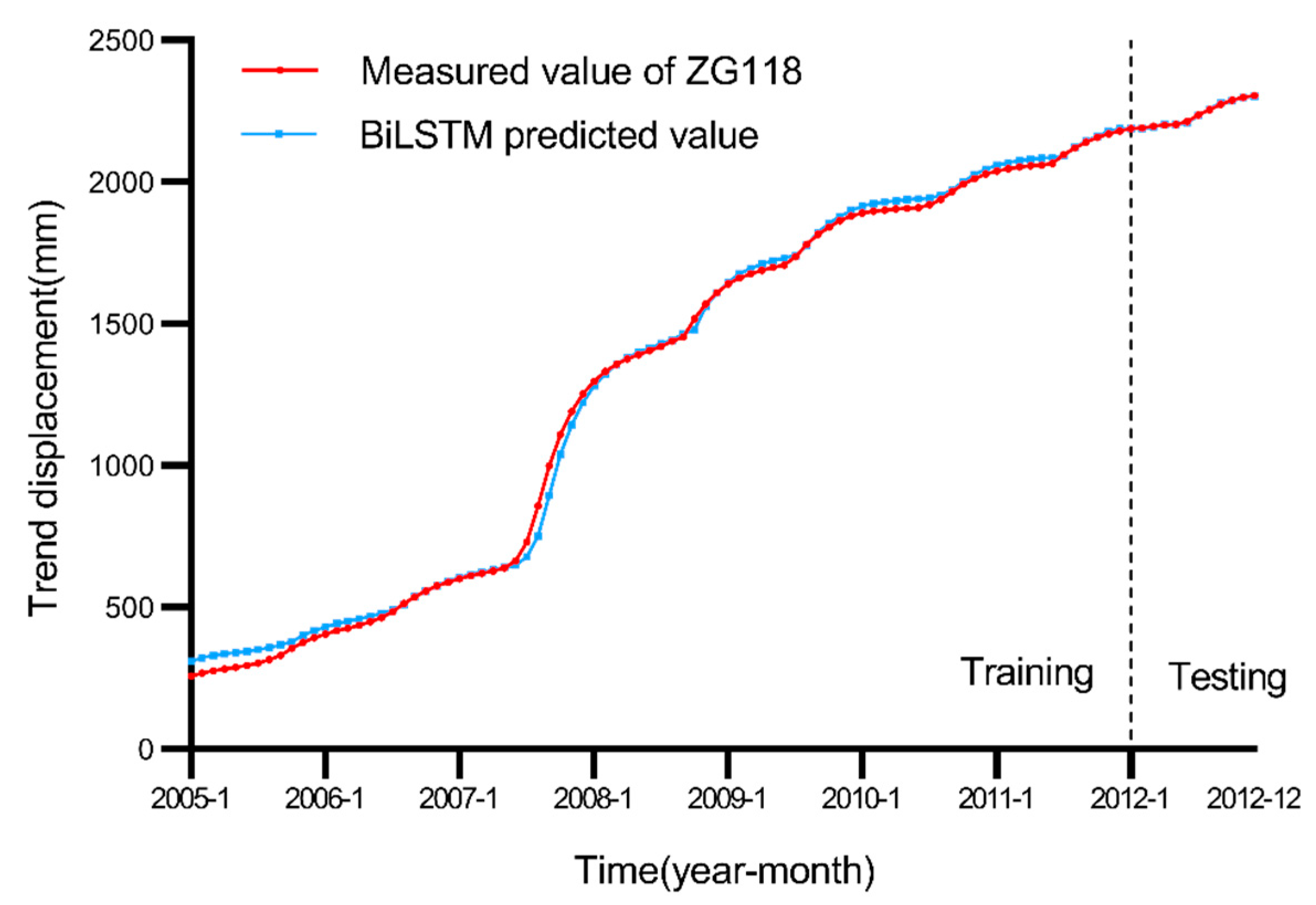
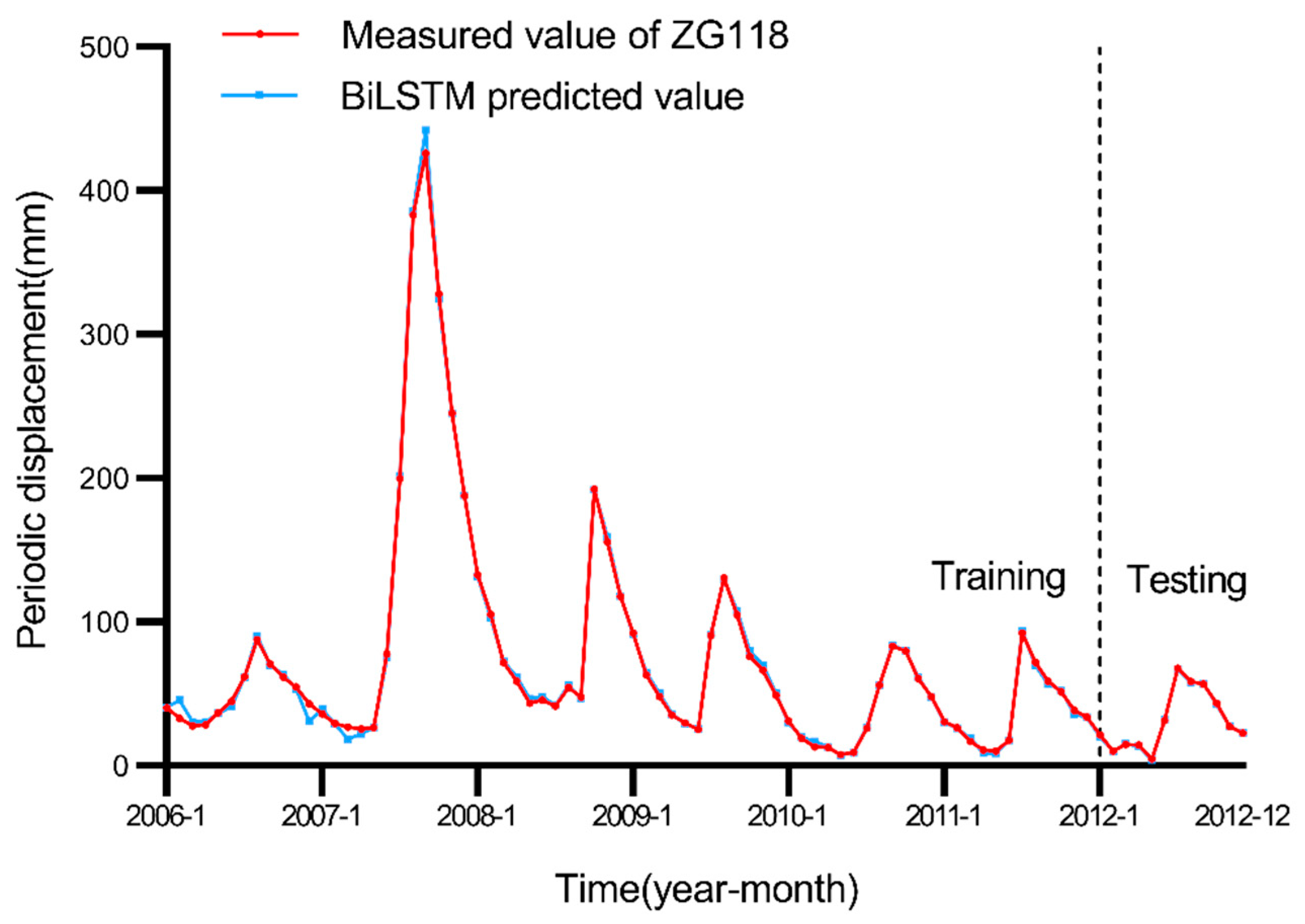
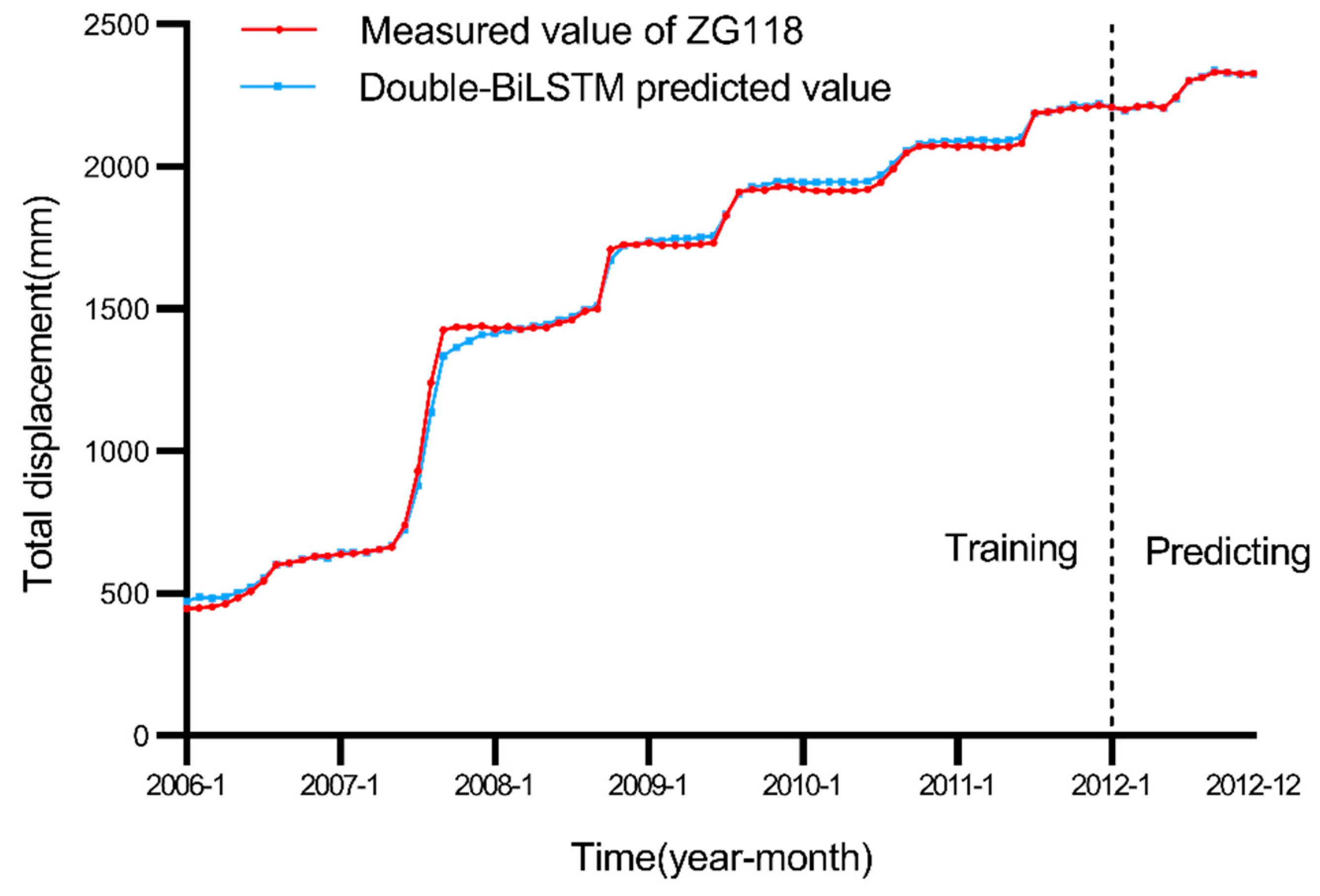
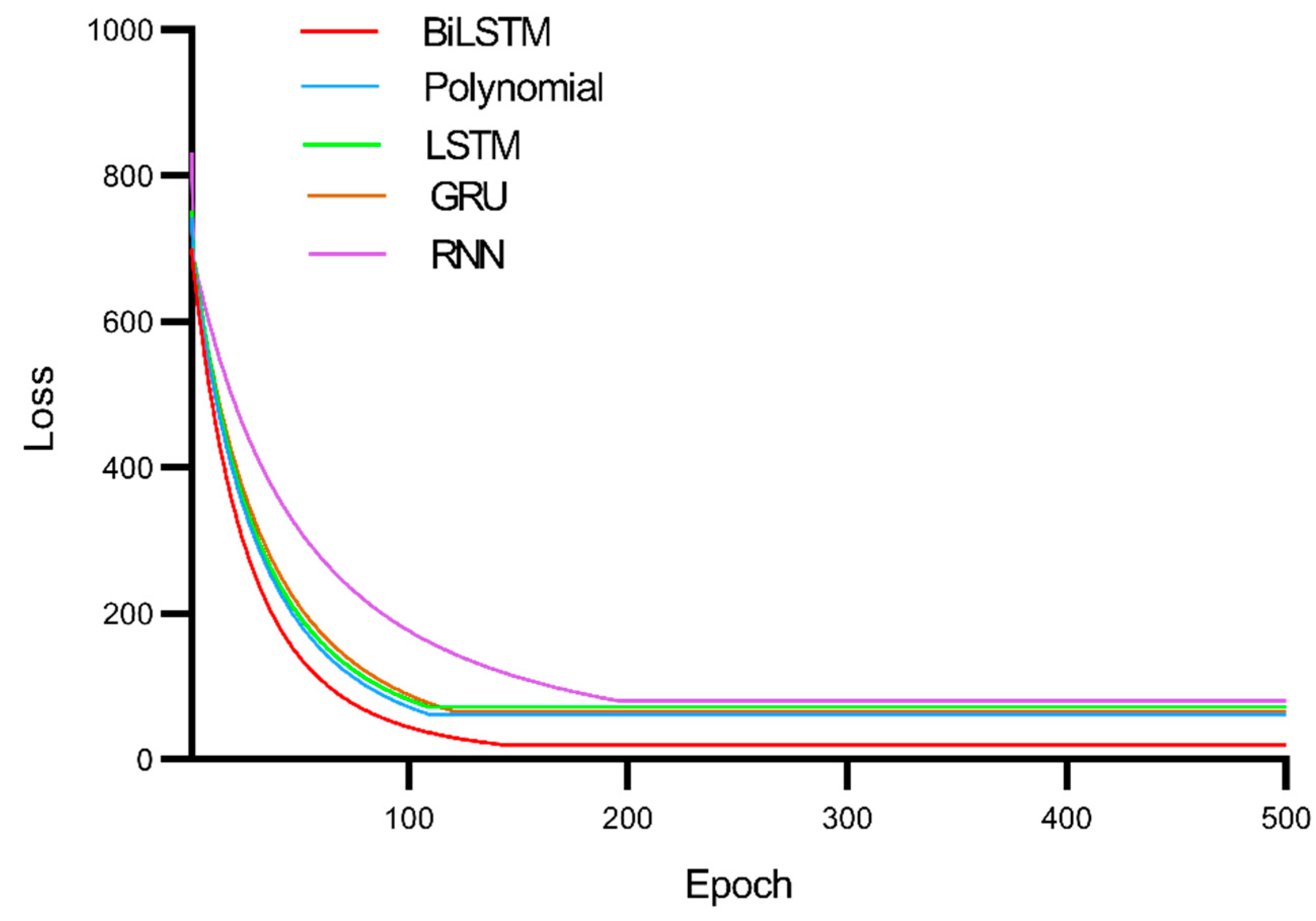
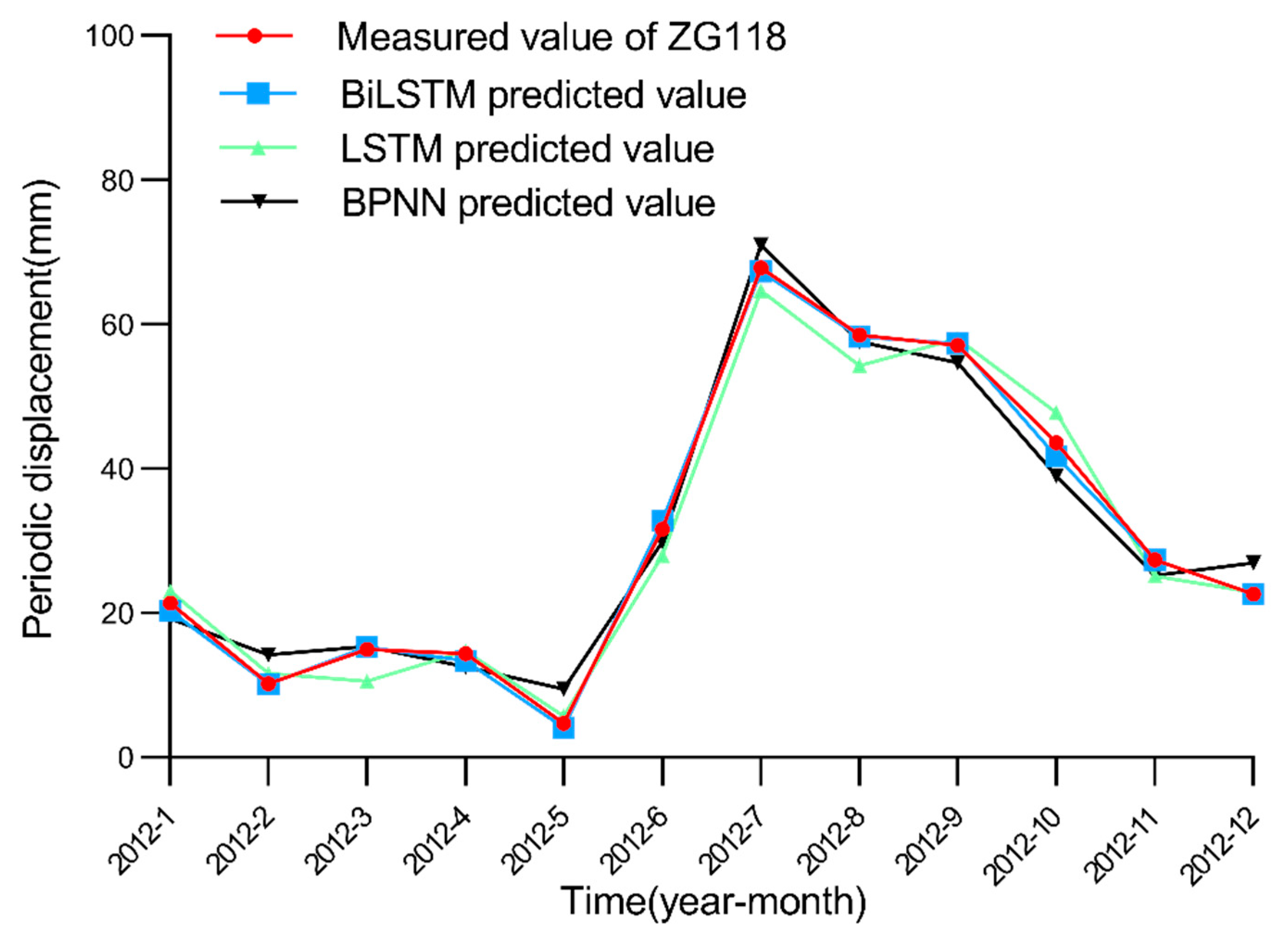
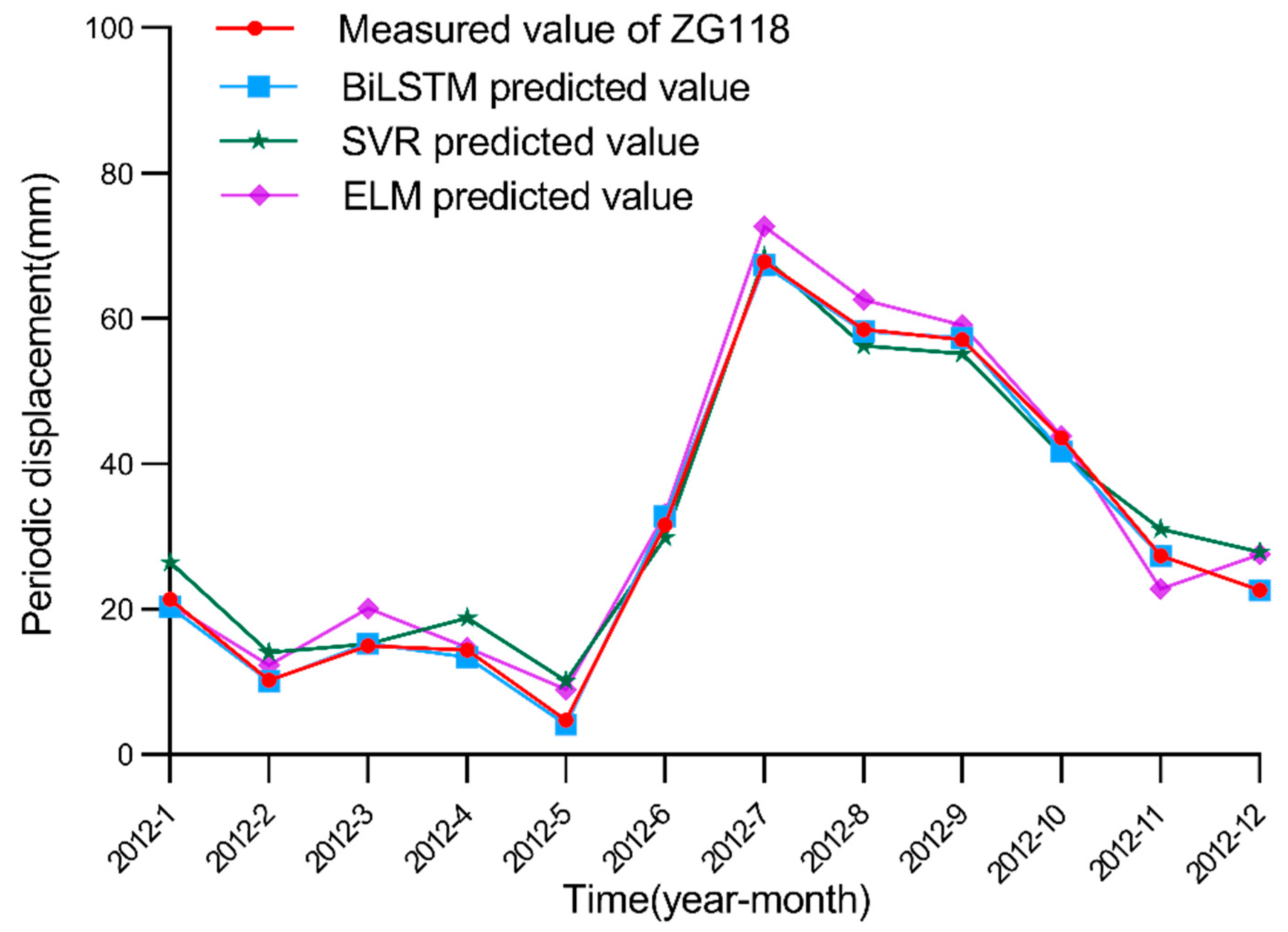
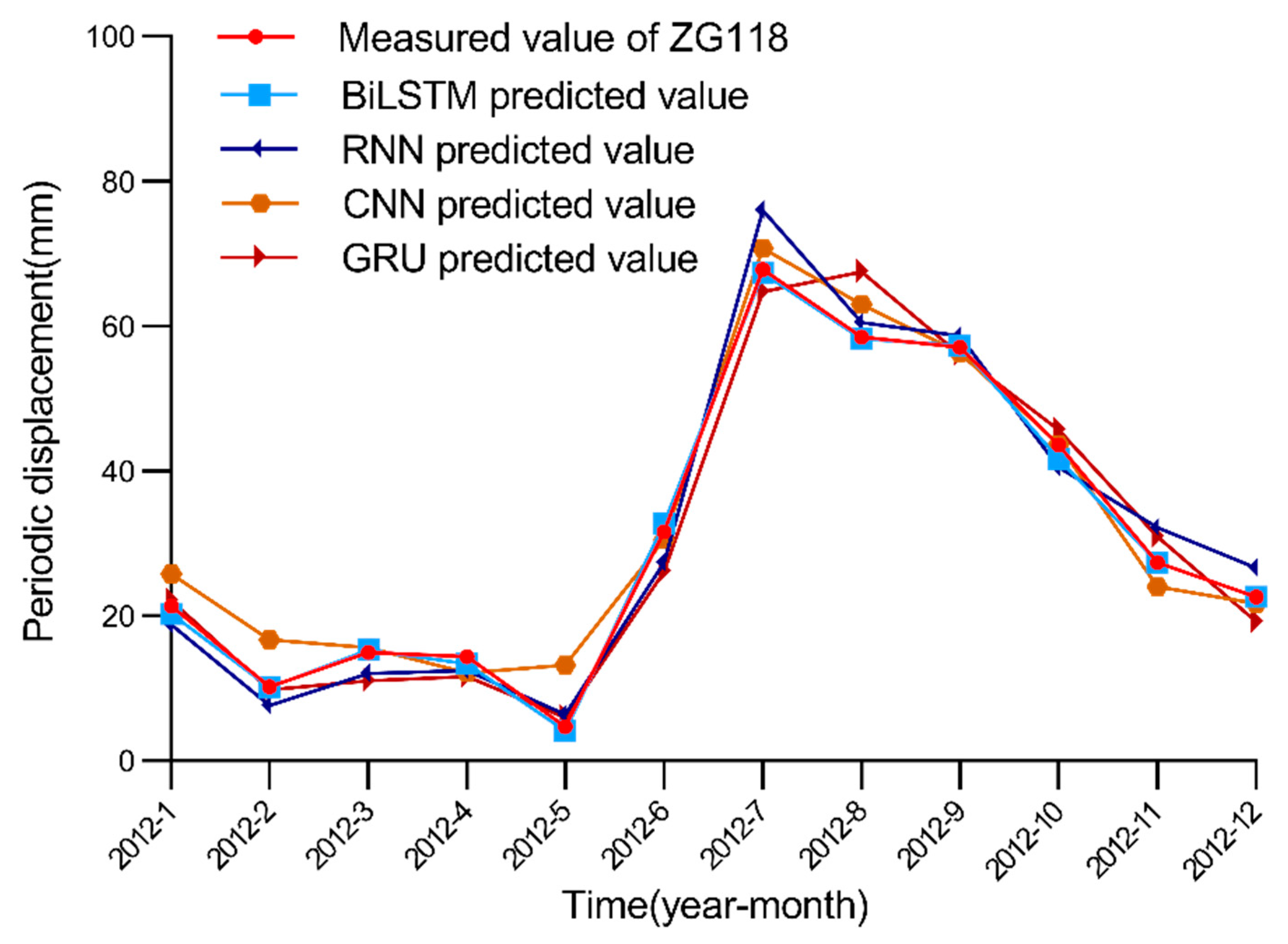
In recent years, machine learning models facilitated notable performance improvement in landslide displacement prediction. However, most existing prediction models which ignore landslide data at each time can provide a different value and meaning. To analyze and predict landslide displacement better, we propose a dynamic landslide displacement prediction model based on time series analysis and a double-bidirectional long short term memory (Double-BiLSTM) model. First, the cumulative landslide displacement is decomposed into trend and periodic displacement components according to time series analysis via the exponentially weighted moving average (EWMA) method. We consider that trend displacement is mainly influenced by landslide factors, and we apply a BiLSTM model to predict landslide trend displacement. This paper analyzes the internal relationship between rainfall, reservoir level and landslide periodic displacement. We adopt the maximum information coefficient (MIC) method to calculate the correlation between influencing factors and periodic displacement. We employ the BiLSTM model for periodic displacement prediction. Finally, the model is validated against data pertaining to the Baishuihe landslide in the Three Gorges, China. The experimental results and evaluation indicators demonstrate that this method achieves a better prediction performance than the classical prediction methods, and landslide displacement can be effectively predicted.
Keywords: landslide displacement prediction; bidirectional long short term memory; time series analysis; maximum information coefficient landslide displacement prediction; bidirectional long short term memory; time series analysis; maximum information coefficient