Article

Examining Whistleblowing Intention: The Influence of Rationalization on Wrongdoing and Threat of Retaliation


1
Department of Business Administration, Iqra National University, Peshawar 25100, Pakistan
2
Institute of Business and Management Sciences, The University of Agriculture, Peshawar 25130, Pakistan
3
Business School, Henan University, Kaifeng 475000, China
4
Facultad de Economía y Negocios, Universidad Andres Bello, Viña del Mar 2531015, Chile
5
Departamento de Ingeniería Industrial, Facultad de Ingeniería, Universidad Católica de la Santísima Concepción, Concepción 4090541, Chile
6
Public Policy Observatory, Universidad Autónoma de Chile, Santiago 7500912, Chile
*
Authors to whom correspondence should be addressed.
Int. J. Environ. Res. Public Health 2022, 19(3), 1752; https://doi.org/10.3390/ijerph19031752

Submission received: 3 November 2021 / Revised: 28 January 2022 / Accepted: 2 February 2022 / Published: 3 February 2022
(This article belongs to the Special Issue Violence in the Workplace)

Abstract

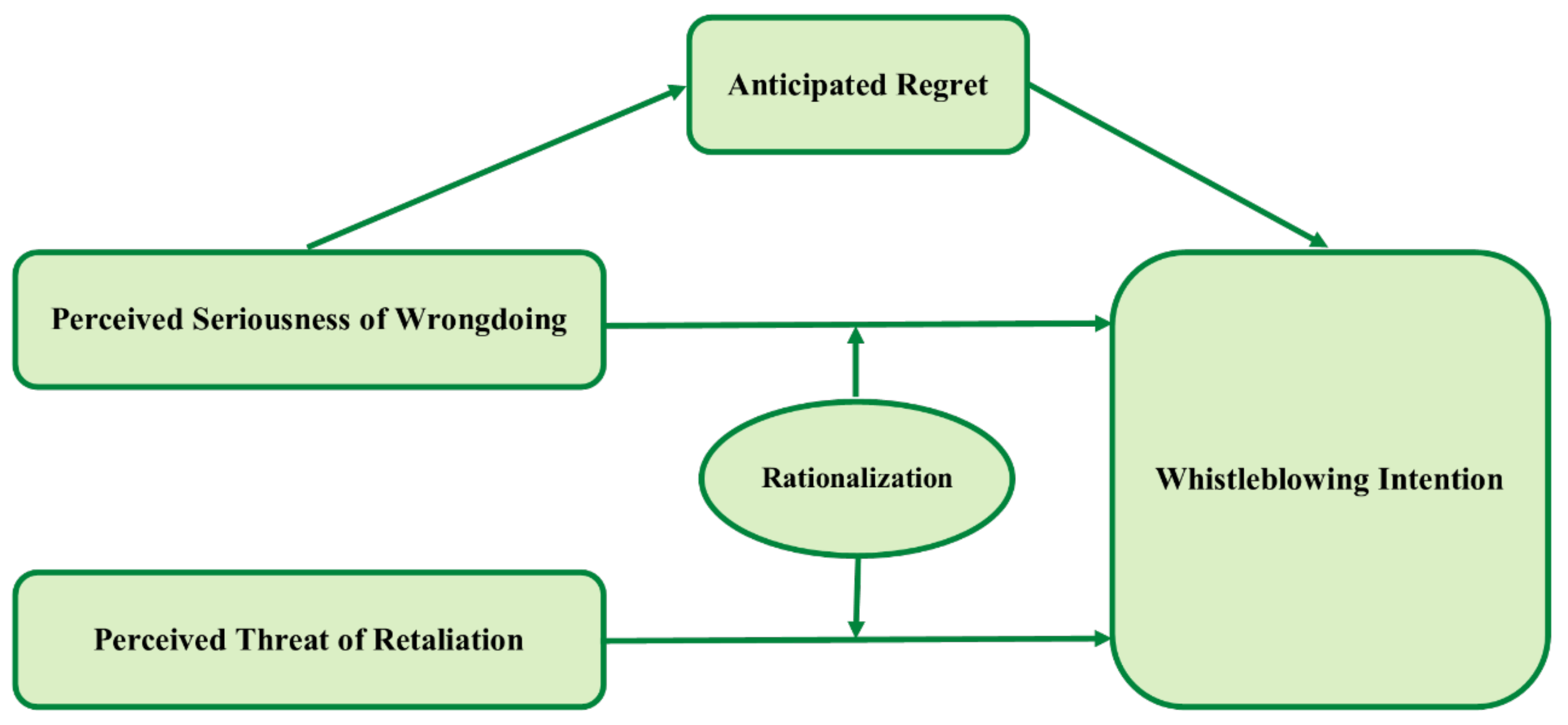
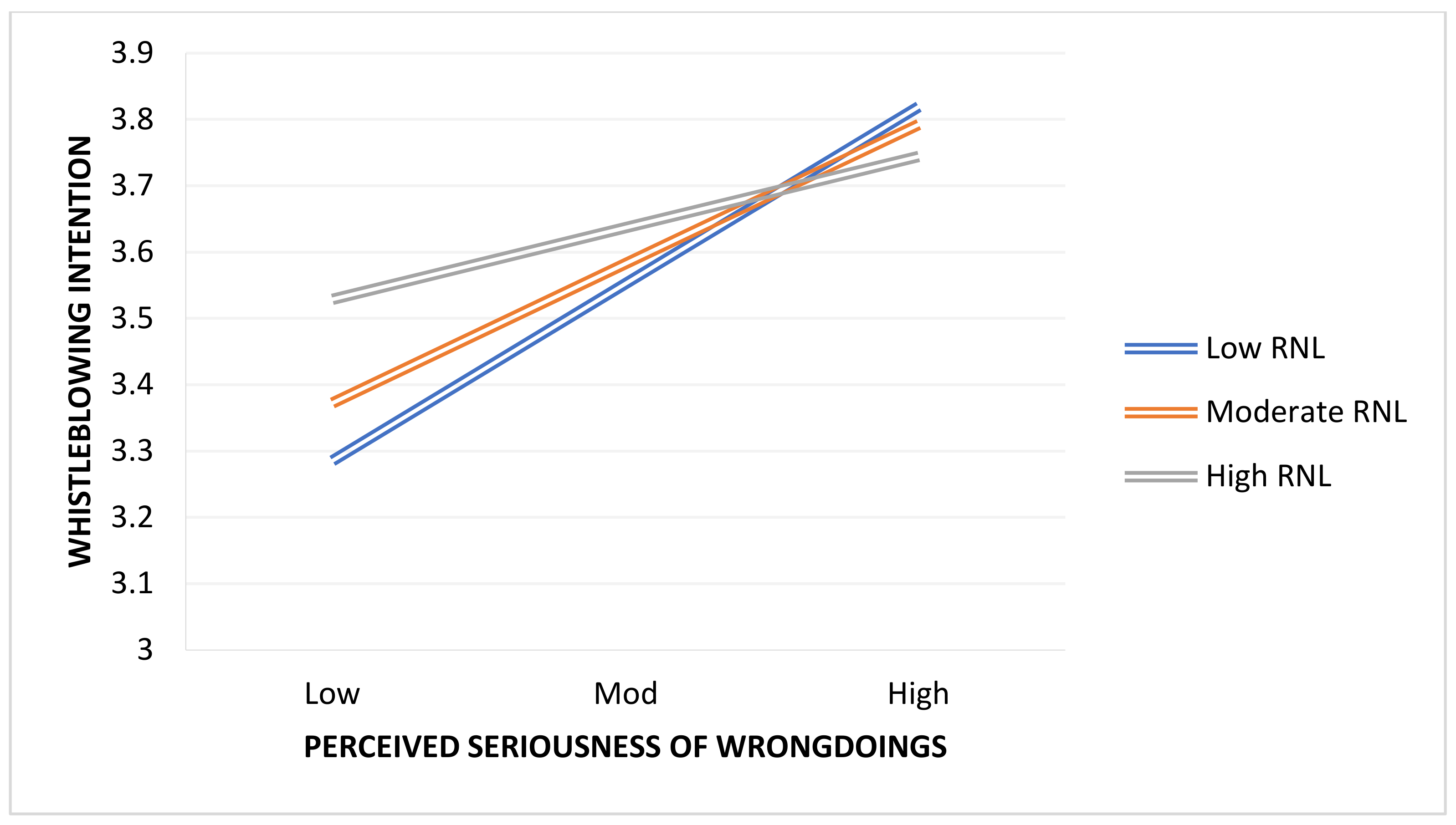
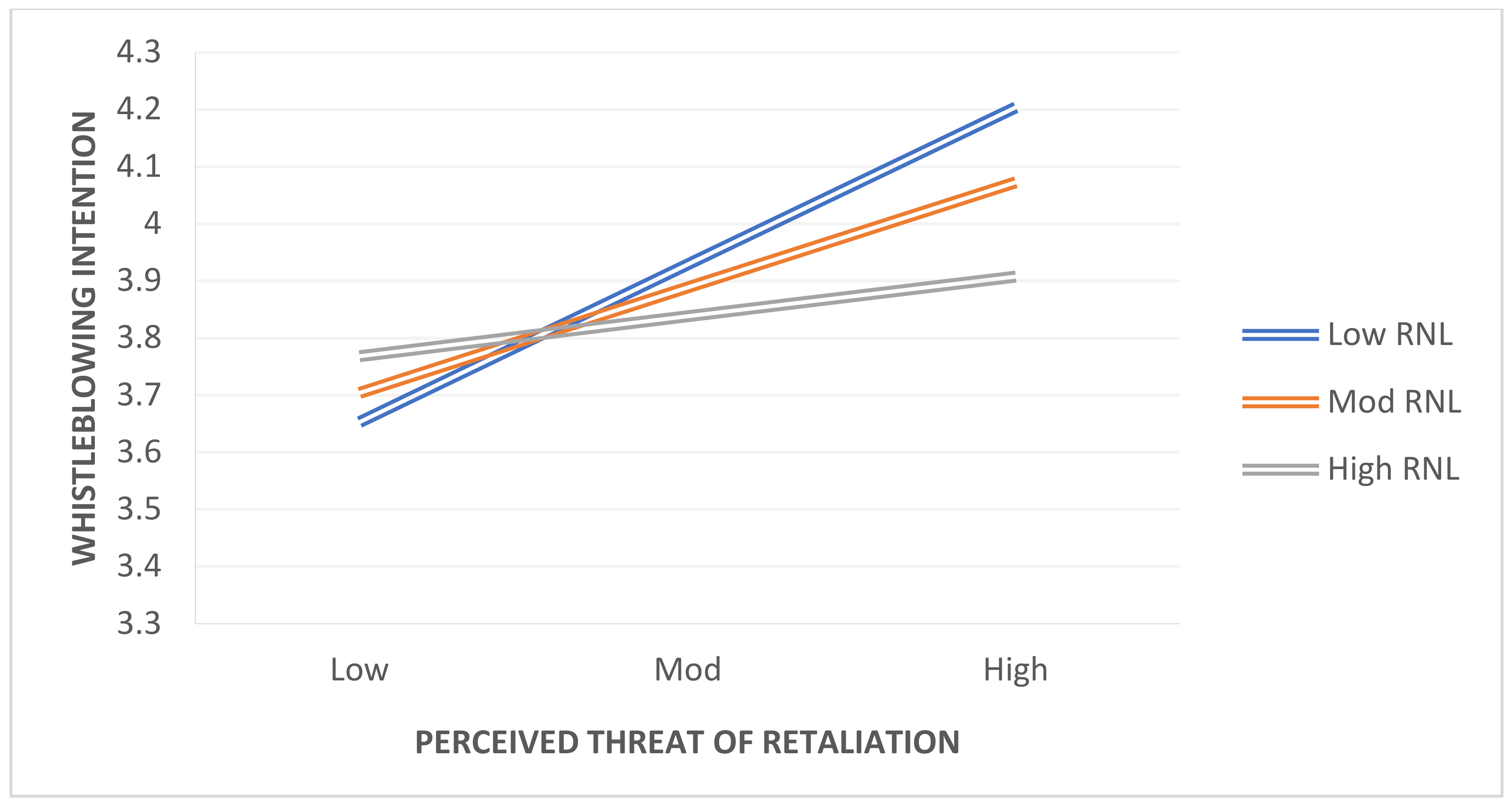
Whistleblowers who expose wrongdoing often face several concerns, pressures, and threats of retaliation before reaching a final decision. Specifically, this study examines the effects of perceived seriousness of wrongdoing (PSW) and perceived threat of retaliation (PTR), as well as the impact of rationalization (RNL), comparing perceived seriousness of wrongdoing, perceived threat of retaliation and whistleblowing intention. Furthermore, this study aims to determine the mediating effect of anticipated regret (AR) on the relationship between perceived seriousness of wrongdoing and whistleblowing intention. We validated our model by analyzing data gathered across three stages from employees in the telecom sector in Pakistan. The key findings of our research may be summarized as follows: (i) individuals’ willingness to ‘blow the whistle’ increases as a result of perceived seriousness of wrongdoing; (ii) whistleblowers are more likely to opt to remain silent if they anticipate a greater threat of retaliation, and (iii) our study establishes a positive connection between perceived seriousness of wrongdoing and whistleblowing intention, indicating that perceived seriousness of wrongdoing enhances people’s willingness to blow the whistle, and whistleblowers are more likely to choose to emerge if the behaviour is more serious in nature; (iv) the data we have uncovered indicates a moderating role of rationalization in regulating the connections between perceived seriousness of wrongdoing, perceived threat of retaliation, and whistleblowing intention; and (v) the findings demonstrate that anticipated regret mediates the connection between perceived seriousness of wrongdoing and the intention to report wrongdoing. Additionally, the results are discussed in terms of their significance for corporate ethics researchers and managers, as well as for end-users who are interested in whistleblowing.
Keywords: perceived seriousness of wrongdoing; workplace; perceived threat of retaliation; rationalization; whistleblowing intentions; anticipated regret perceived seriousness of wrongdoing; workplace; perceived threat of retaliation; rationalization; whistleblowing intentions; anticipated regret