Article

Analysis of Landscape Characteristics and Influencing Factors of Residential Areas on the Qinghai–Tibet Plateau: A Case Study of Tibet, China

1
College of Geography and Environmental Science, Northwest Normal University, Lanzhou 730070, China
2
College of Economics, Northwest Normal University, Lanzhou 730070, China
*
Authors to whom correspondence should be addressed.
Int. J. Environ. Res. Public Health 2022, 19(22), 14951; https://doi.org/10.3390/ijerph192214951

Submission received: 3 October 2022 / Revised: 10 November 2022 / Accepted: 10 November 2022 / Published: 13 November 2022
(This article belongs to the Special Issue Impacts of Human Activities and Climate Change on Landscape)

Abstract

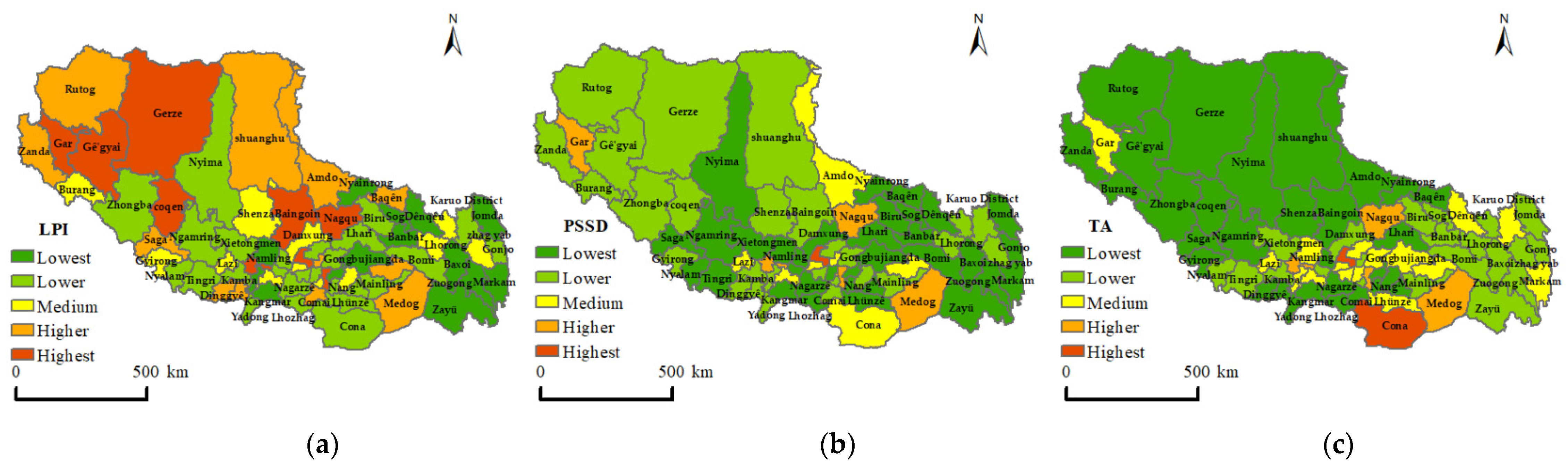
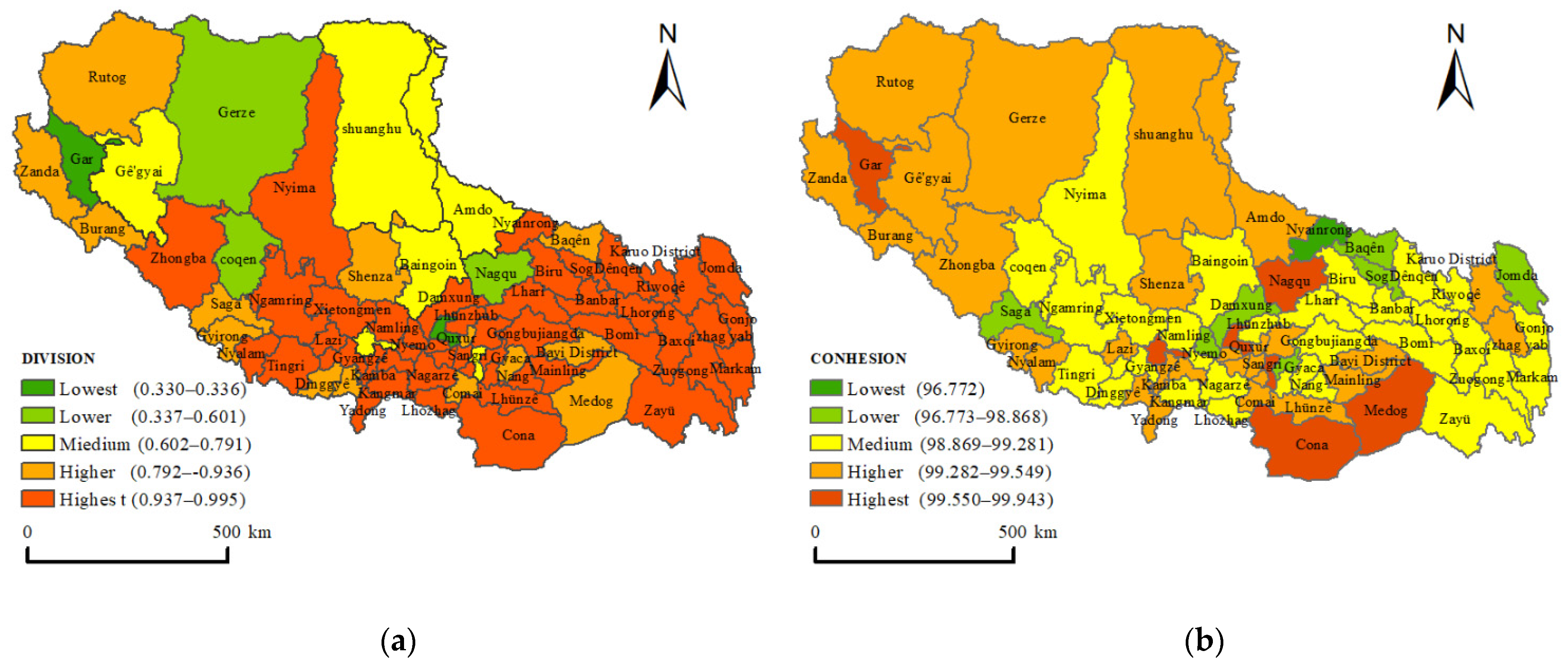
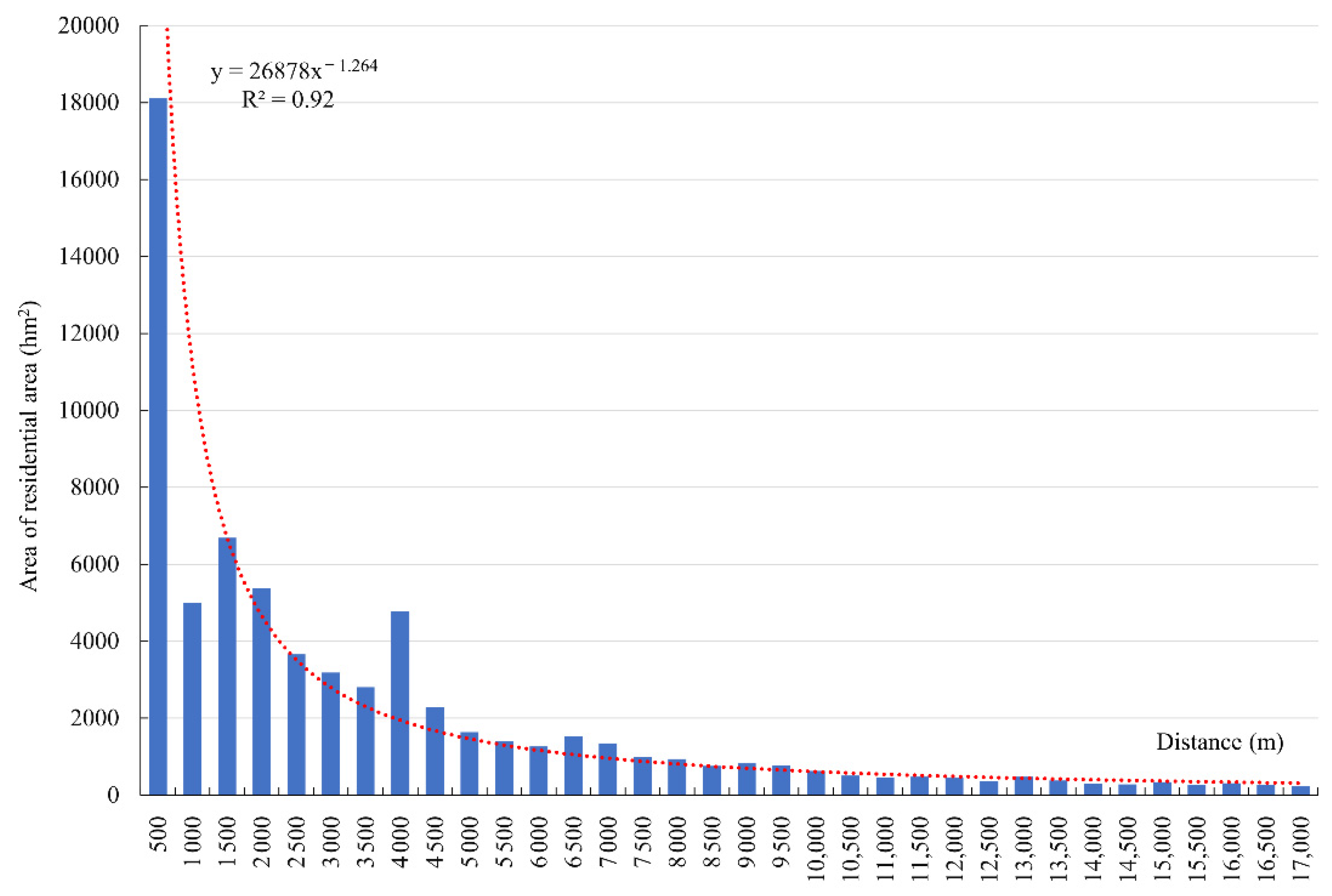
The Qinghai–Tibet Plateau is the largest ecological barrier and one of the most vulnerable areas of the ecological environmental system. However, the increasing frequency of human activities in the Qinghai–Tibet Plateau has led to strong interference. Residential areas are the main places in which human activities are carried out and, as such, can effectively reflect the intensity of activities. Based on this, this research takes the Tibet Autonomous Region as the study area and analyzes the distribution characteristics of Tibetan residential areas using Zipf’s law and various landscape indices, as well as discussing the influences of altitude, hydrology, ecological environment, and location on residential area distribution. The obtained results indicate the following: (1) The residential areas in Tibet basically conform to the rank–size principle. The residential areas in central and northwest Tibet are concentrated in size distribution, and the relatively large residential areas are prominent, while the residential areas in the eastern Hengduan mountain region are relatively balanced in size distribution. (2) The landscape index results demonstrate that the counties with an unbalanced distribution of residential areas are mainly concentrated in the northwest of Tibet, while the residential areas in the counties and regions where the administrative stations of each prefecture-level city (or region) are located tend to present a polarization phenomenon, with large patches. The area distribution of residential areas showed a “medium–high–low” pattern from southeast to northwest. The residential areas in eastern Tibet have a high degree of fragmentation and a low degree of aggregation, while the residential areas in northwest Tibet have a low degree of fragmentation and a relatively high degree of aggregation. (3) The residential areas in Tibet are most concentrated in the altitude range of 3000–5000 m above sea level and their water affinity and road–affinity are strong, with the distribution of residential areas within 500 m of roads and water networks accounting for more than one-quarter. The vegetation coverage in the residential areas is low, inconsistent with the surface vegetation coverage rate over the whole of Tibet.
Keywords: residential area; landscape characteristics; influencing factors; Tibet residential area; landscape characteristics; influencing factors; Tibet