


Abstract
Australia has one of the lowest per capita numbers of ophthalmologists among OECD countries, and they predominantly practise in metropolitan centres of the country. Increasing the size and distribution of the ophthalmology workforce is of critical importance. The objective of this review was to investigate the context of rural ophthalmology training and practise in Australia and how they relate to future ophthalmology workforce development. This scoping review was informed by Arksey and O’Malley’s framework and the methodology described by Coloqhuon et al. The search yielded 428 articles, of which 261 were screened for eligibility. Following the screening, a total of 75 articles were included in the study. Themes identified relating to rural ophthalmology training and practise included: Indigenous eye health; access and utilisation of ophthalmology-related services; service delivery models for ophthalmic care; ophthalmology workforce demographics; and ophthalmology workforce education and training for rural and remote practise. With an anticipated undersupply and maldistribution of ophthalmologists in the coming decade, efforts to improve training must focus on how to build a sizeable, fit-for-purpose workforce to address eye health needs across Australia. More research focusing on ophthalmology workforce distribution is needed to help identify evidence-based solutions for workforce maldistribution. Several strategies to better prepare the future ophthalmology workforce for rural practise were identified, including incorporating telehealth into ophthalmology training settings; collaborating with other health workers, especially optometrists and specialist nurses in eyecare delivery; and exposing trainees to more patients of Indigenous background.
1. Introduction
Although Australia’s ophthalmology workforce comprises well over 1000 ophthalmologists, collectively, Australia has one of the lowest per capita numbers of ophthalmologists among OECD countries [1]. This situation is of concern given that future estimates suggest that ophthalmology is one of the medical specialties predicted to experience a critical shortage within the next 10 years [2]. It has been estimated that even with a yearly growth of 3% in the number of qualified ophthalmologists, there will still be an undersupply of up to 68 ophthalmologists by 2030 [3]. Another estimate has suggested a larger shortfall of 162 ophthalmologists by 2025 [4], highlighting inadequate funded training opportunities for ophthalmologists in the public sector, an imminent shortage of paediatric ophthalmologists and a potential dependence on international medical graduates to bolster the Australian ophthalmic workforce [4].
Although Australia collectively needs more practising ophthalmologists, the situation is even more critical in regional, rural and remote areas of the country where few medical specialists are located [3]. In 2018, Australia’s Future Health Workforce–Ophthalmology reported that 84% of ophthalmologists are in metropolitan areas, with the remainder practising in regional, rural and remote areas [3]. This implies that communities outside of metropolitan areas may have delayed or reduced access to ophthalmic care. Despite previous efforts and policies to improve eye health in non-metropolitan locations, people living in rural and remote locations are still disproportionally affected by eye diseases [5]. Therefore, there is a real need to develop a fit-for-purpose ophthalmic workforce that is both cognisant of rural eye health needs and capable of delivering care to those most in need.
One Commonwealth Government Department of Health initiative designed to support an increase in the size and distribution of the ophthalmology workforce in non-metropolitan areas is the Specialist Training Program (STP). In 2021, the STP funded 15 ophthalmology training posts that provide specialist vocational training in a range of private and/or rural settings across Australia [6]. The STP initiative broadly aims to enhance the capacity of the healthcare sector, providing access to specialist medical care to underserved communities, extending specialist training into healthcare settings experiencing workforce shortages and contributing to improving medical workforce distribution by encouraging medical specialists to return to areas of workforce need after qualification [7]. The program was established in 2010 by consolidating seven existing programs into a single program [7]. In 2015, the program was reviewed, with a number of major reforms implemented, including providing colleges with greater flexibility to manage the program to ensure it is responsive to emerging training needs [7].
Given the important role the STP may play in improving ophthalmic care in underserved areas, it is important to understand both the nature of ophthalmology training and ophthalmology service provision in rural and remote areas to ensure the development of a fit-for-purpose ophthalmology workforce that is skilled and able to meet the demand for services in this context. The aim of this review was therefore to investigate the context of rural ophthalmology training and practise in Australia and how they relate to future ophthalmology workforce development. A scoping review was conducted to provide an overview of a large and diverse body of literature that pertains to rural and remote ophthalmology practise in Australia.
2. Method
In order to provide a broad overview of the topic, a scoping review was conducted in accordance with a methodology described by Arksey et al. and Coloqhuon et al. [8,9,10]. Scoping reviews have been defined as a form of knowledge synthesis that incorporates a range of study designs to comprehensively summarize and synthesize evidence with the aim of informing practice, programs and policy and providing direction to future research priorities [9]. This review was conducted in collaboration with the Royal Australian and New Zealand College of Ophthalmologists (RANZCO) who are committed to the development of rural training to address the maldistribution of the ophthalmology workforce, improve eye health services in underserved locations and increase the number of Indigenous medical practitioners who become ophthalmologists [11].
2.1. Search Strategy
Electronic searches of PubMed, Embase, CINAHL, Google Scholar and Scopus databases were conducted to investigate the context of rural ophthalmology training and practise in Australia and how they relate to workforce development. The search terms were: (Austra * or New Zealand) and (rural or remote) and (recruit * or retain * or retention * or training) and (ophthal *). The scoping review initially focused on academic literature, with eligible reports included from the grey literature following a reference check of included papers.
2.2. Eligibility Criteria
Table 1 shows in detail the inclusion and exclusion criteria for the review. Included articles had to focus on rural ophthalmology practise or the training of ophthalmologists in rural and remote Australia. To focus on contemporary issues, articles were limited to the period from January 2005 to June 2020. The search was updated prior to finalisation of the review results in February 2022 to identify newly published articles.
Table 1.
Inclusion and exclusion criteria.
2.3. Study Selection
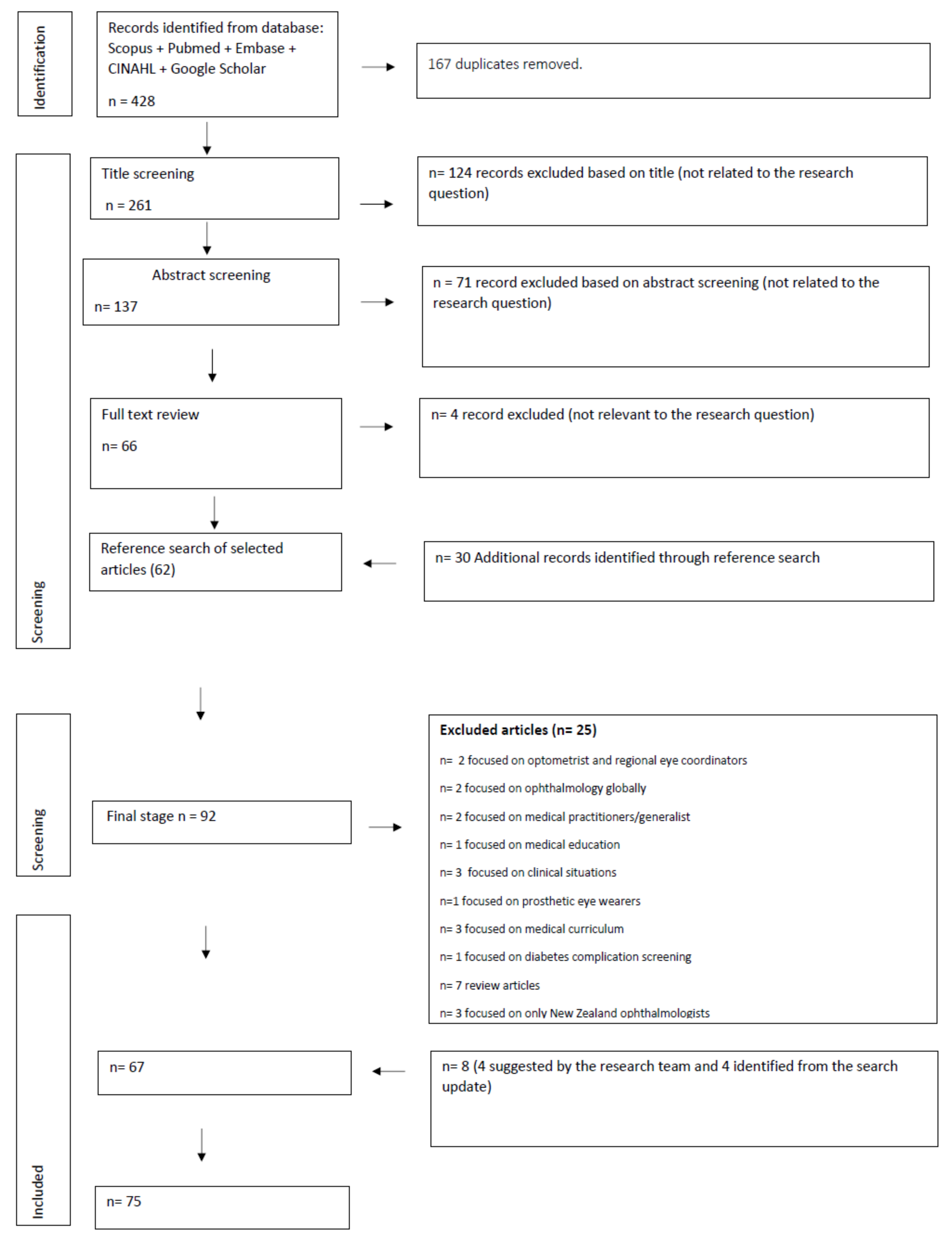
On the completion of the database search, all citations were exported into EndNote X7 (Thomson Reuters, New York, NY, USA) reference management software, and duplicates were removed (Figure 1). In the first stage, two authors independently screened titles for eligibility using the inclusion/exclusion criteria (KO, BJ). Articles for which either reviewer agreed met eligibility were retained. In the second stage, the abstracts of included articles were again screened independently by four reviewers (KO, BJ, PA, TB). Articles for which either reviewer deemed the abstract to meet inclusion criteria were included. In the third stage, the full text of all selected articles was retrieved for independent screening by two members of the research team to determine relevance to the study question (KO, BJ). Articles were included if there was consensus by both researchers that it was relevant to the study objective. Disputed articles where researchers disagreed on relevance were referred to the broader research team, with consensus achieved through discussion (KO, BJ, PA, SK).
Figure 1.
Flow chart of selection process.
In the final stage, the reference lists of selected articles were searched for additional papers that may meet eligibility criteria and could be included. Additional papers found through this search were again subjected to an independent screening process, with two members of the research team determining their eligibility (KO, BJ). Any instances of disagreement were resolved through consensus discussion with the broader research team (KO, BJ, PA, TB).
2.4. Data Extraction Process
Relevant data from each article were extracted using an extraction template. The extraction sheet was designed for comparison and then to enable the synthesis of information across articles. After this, major themes were identified by grouping articles with a similar research focus together [12].
3. Results
A total of 428 articles were retrieved from the literature search (Figure 1). After removing duplicates, 261 articles remained. Further, 124 records were excluded from title screening, 71 from abstract screening and 4 from full-text screening. On completion of the reference check of eligible articles, 30 additional records were identified, of which 21 were excluded because they were not related to the research question (Figure 1). Following the methodology for scoping reviews, four additional articles that met the inclusion criteria were included based on the recommendation of members of the research team. This resulted in a total of 75 articles in this review. The articles included were 4 editorials, 2 policy papers, 2 reports from the grey literature and 67 original research articles. To identify major themes, data were coded, followed by the development of descriptive themes [12]. The major descriptive themes generated from the codes included: Indigenous eye health; access and utilisation of ophthalmology-related services in rural and remote areas; service delivery models for ophthalmic care in rural and remote areas; ophthalmology workforce demographics; and ophthalmology workforce education and training for rural and remote practise.
3.1. Indigenous Eye Health
The review identified 42 articles that reported on the incidence and prevalence of various eye diseases amongst the Indigenous population, including keratitis, visual impairment, vision loss, cataract, glaucoma, choroidal nevi, eye trauma, trachoma and diabetic retinopathy [13,14,15,16,17,18,19,20,21,22,23,24,25,26,27,28,29,30,31,32,33,34,35,36,37,38,39,40,41,42,43,44,45,46,47,48,49,50,51,52,53,54] (Table 2). Irrespective of the study design, these studies collectively demonstrated that the prevalence of vision impairment and eye diseases in Aboriginal and Torres Strait Islanders (respectfully referred to as Indigenous Australians) is consistently higher compared to non-Indigenous Australians. For example, a study by Keel et al. investigated the prevalence rate of near vision impairment using a sample of 3098 non-Indigenous Australians and 1738 Indigenous Australians [13]. A higher prevalence of near vision impairment was reported among Indigenous Australians at 34.7% versus 21.6% in non-Indigenous Australians. In a study investigating the prevalence of blindness and vision loss by Vos et al., similar findings were reported [14]. In this study, 1694 Indigenous children and 1614 Indigenous adults from 30 communities were included, with the prevalence of blindness and vision loss amongst adult Indigenous Australians found to be higher compared with estimates for the total Australian population. Further, the number of years lived with a disability was seven times higher among Indigenous Australians compared to the total Australian population [14]. A National Eye Survey by Foreman et al. was conducted to determine the prevalence and cause of vision loss in the Australian population [15]. The study included 1738 Indigenous Australians and 3098 non-Indigenous Australians. The prevalence of vision loss in non-Indigenous Australians was estimated to be 6.6%, while the prevalence was 11.2% among Indigenous Australians after adjustment for age and gender. Moreover, the results suggest that there are risk factors common to all Australians and those specific to Indigenous Australians. Advancing age and not having had an eye examination within the past year were identified as common risk factors, while additional risk factors among Indigenous Australians included remoteness, gender and diabetes. A study that investigated the prevalence of visually significant cataracts [16] reported the prevalence of visually significant cataract was higher in Indigenous Australians at 4.3% compared to 2.7% in non-Indigenous Australians.
Table 2.
Indigenous Eye Health.
Brazionis et al. found that 47% of Indigenous Australians living in remote areas had diabetic retinopathy, and 16.2% had sight-threatening diabetic retinopathy [17]. Lander et al. investigated the prevalence of pseudo-exfoliation syndrome among 1884 Indigenous Australians aged 20 years and above [18]. Pseudo-exfoliation syndrome was present in one or both eyes of 5% of individuals, and the prevalence was observed to increase with age. There are also reports that have reported a higher death rate in Indigenous people with eye conditions compared to the general Indigenous population. Ng et al., in a prospective study, assessed the association between visual impairment and 10-year mortality risk in a sample of 1347 Indigenous Australians from 30 remote communities [19]. The study showed that all-cause mortality was 29.3% at 10 years. After stratifying into those without visual impairment and those with visual impairment, all-cause mortality was more than two times higher in those with visual impairment. This result remained the same even after further adjustment for gender, age and medical conditions such as hypertension and diabetes.
3.2. Access and Utilisation of Ophthalmology-Related Services in Rural and Remote Areas
Twelve studies were identified that described issues relating to the access and utilisation of ophthalmology services in rural and remote areas [55,56,57,58,59,60,61,62,63,64,65,66] (Table 3). In terms of access, Foreman et al. compared the participation rate in routine eye examinations, finding that a lower proportion of Indigenous Australians (67%) compared to non-Indigenous Australians (82.5%) underwent an eye examination within the previous two years [55]. Factors associated with less recent examination included male gender and living in outer regional and very remote areas. A study by Boudville et al. investigated barriers that limit access to cataract surgery for Indigenous Australians using focus group discussions involving 530 participants [56]. The study identified cost, long waiting, times, complex processes involved in treatment and absence of surgical capacity as barriers to accessing treatment. A study by Arnold et al. similarly described how a lack of local service options impacted service access [57]. In their survey of Indigenous Australians residing in 30 remote communities, around 14% with vision problems did not seek help because eye services were not available in their area. A further 10% did not seek help due to the absence of suitable transportation or distance constraints. Turner et al. confirmed that service availability was an important factor in ophthalmic care utilisation, reporting that the availability of full-time equivalent ophthalmic services working in an Indigenous Medical Service led to a decrease in the prevalence of low vision and an increase in the coverage rate for distance refractive correction [58].
Table 3.
Service access and utilisation of ophthalmology related service in rural and remote areas.
3.3. Service Delivery Models for Ophthalmic Care in Rural and Remote Areas
Several service delivery models were identified from the literature, including outreach services [67,68,69,70,71], collaboration with other healthcare professionals, including optometrists and nurses [72,73], integration of eye care with other locally available services [74] and the use of teleophthalmology [75,76,77,78,79,80,81] (Table 4). Research has identified that ophthalmologists are one of the most willing medical specialties to participate in service outreach to rural and remote communities [67]. O’Sullivan et al. conducted an Australia-wide study to determine the proportion of specialist doctors who participate in rural outreach [67]. Of 4596 specialist doctors recruited, 909 were involved in outreach programs, out of which 16% (149) were involved in remote outreach. Ophthalmologists were among the top five specialties involved in outreach services. Fu et al. reported on the impact of the Lions Outback vision mobile ophthalmology service van (LOVV) [68]. Sixteen regional towns were visited two or more times per year with total distance travel of about 25,000 km. Between 2015 and 2016, the number of outreach ophthalmology consultations was observed to increase by over 20%, and this enabled community members to benefit from many specialists’ ophthalmological instruments and expertise not previously available in any of the locations [68]. An article by Turner et al. described funding models used in outreach ophthalmology services and compared the impact on remuneration for clinical activities and cost-effectiveness [69]. The result showed that there is a greater than three-fold increase in costs per patient when comparing the most expensive and least expensive services. The study showed that funding approaches used can impact the effectiveness and sustainability of an outreach program. An ideal model should ensure the minimal cost to the end-user and an adequate remuneration rate for personnel providing eye services.
Table 4.
Service delivery models in rural and remote areas.
Other studies have explored the integration of ophthalmic care with other eye care providers in local communities. For example, a retrospective study by Glasson et al. suggests that an innovative model of diabetic retinopathy screening greatly improved accessibility in remote communities, thereby reducing preventable blindness [70]. The model provided a holistic, locally appropriate diabetes service and utilised existing infrastructure and health workforce efficiently. The model was found to be acceptable to both patients and health professionals [71]. A clinical audit of 300 patients by Slight et al. investigated if a nurse specialist could reduce waiting list numbers and waiting length for the first specialist assessment for glaucoma [72]. The introduction of the glaucoma clinical nurse specialist led to a significant reduction in waiting lists of patients, both those who fall within the nurse specialist’s area of practice and for more complex patients as appointments in consultant clinics freed up. A study by O’Connor et al. reported on the perspectives of optometrists, ophthalmologists and patients on a model of shared care for patients with chronic eye diseases [73]. Optometrists were not only able to meet ophthalmologists’ expectations but exceeded them by appropriately identifying and referring patients with previously undetected conditions. Patients mentioned savings in travel time as a benefit and were satisfied with the quality of care they received [73]. Optometrists, ophthalmologists and patients indicated a general acceptance of the shared care model [73]. Turner et al. described models of service integration between optometrists and ophthalmologists when conducting outreach eye services using nine outreach ophthalmology services [74]. Good service integration was observed to increase surgical caseload for ophthalmologists, reduce wait times and increase clinical services without impacting cost [74].
This review also identified seven articles related to teleophthalmology and showed teleophthalmology to be cost-effective, useful in managing a wide range of eye conditions and for training and mentoring, and beneficial across the continuum of patient care. Kumar et al. reported on the utility of an internet-based service for eye care in a remote Australian setting [75]. Among 118 remote participants in teleophthalmology consultations, the average consultation time was 30 min, with 86% requiring primary care, 11% requiring secondary care and follow-up care and 3% needing emergency care. Johnson et al. assessed the utilisation of teleophthalmology in a rural location using a prospective audit. They found that 31 different eye conditions were well managed using teleophthalmology [76]. This ensured access to patients in rural and remote locations and was seen as a supplement to outreach programs. Hall et al. reported on the benefit of telementoring between a metropolitan and rural hospitals to conduct ophthalmological procedures [77]. Two successful surgeries were conducted remotely, indicating that telehealth can be useful for training purposes in real-time and improve the quality of eye health services accessible by remote communities. Similarly, McGlacken-Byrne et al. reported that the addition of telehealth services improved access to surgery by reducing waiting times in a retrospective clinical audit [78]. While studies have illustrated the utility of teleophthalmology, other studies have also confirmed it is both satisfactory for patients and cost-effective. For example, a study by Host et al. evaluated patient satisfaction in 109 participants in a rural location who underwent teleophthalmology consultations [79]. Satisfaction rates were high, with 94% of participants reporting that they were either very satisfied or satisfied, and no one reported being dissatisfied or very dissatisfied [79]. Kumar et al. in 2006 also investigated the cost-effectiveness of teleophthalmology and whether it is a sustainable approach to providing eye health services [80]. The results showed that the variable costs per patient were AUD 166.89 per patient, with alternatives costing AUD 445.96, AUD 271.48 and AUD 665.44 per patient depending on the clinical scenario [80]. Teleophthalmology was calculated to have a set-up cost of AUD 13,340, and the cut-off point at which teleophthalmology became cheaper to operate compared to any of the alternative options was at a workload of 128 patients. Razavi et al. also performed a cost analysis of teleophthalmology using both retrospective and prospective audits and reported on the potential cost-saving benefit of teleophthalmology [81]. They showed that up to 15% and 24% of emergency patient transfer and outreach consultations, respectively, were suitable for teleophthalmology. These results further confirm that teleophthalmology serves as a sustainable substitute for conventional eye-care services in underserviced areas.
3.4. Ophthalmology Workforce Demographics
Four reports were identified from the review discussing the ophthalmology workforce [3,82,83,84] (Table 5). Two of these studies outlined both the size and distribution of the ophthalmology workforce, which highlighted the gross maldistribution towards metropolitan centres of Australia [3,82]. The 2016 Australia Future Workforce Report provided details on the distribution of the ophthalmology workforce [3]. Overall, there was a total of 985 qualified ophthalmologists and trainees recorded, representing 1050 full-time equivalent personnel. Of this number, 830 personnel worked in metropolitan cities, 73 in large regional towns and only 82 across various rural and remote areas [3]. In a more recent study by Allen et al., a high degree of location stability was also observed in the ophthalmology workforce [82]. The study analysed the practise locations of 948 ophthalmologists over a six-year period using the Australian Health Practitioner Registration Agency (AHPRA) data and found that 84% of ophthalmologists working in a metropolitan city and 79% of those working outside of metropolitan areas remained in their respective locations over the study period [82].
Table 5.
Ophthalmology workforce demographics.
The other two workforce studies highlighted the increasing disparity between male and female ophthalmologist workforce participation [83,84]. Lo et al. investigated the differences in clinical practise between male and female ophthalmologists in Australia [83]. The participants were ophthalmologists who undertook the RANZCO workforce survey, the Medicine in Australia: Balancing Employment and Life survey, or those who made claims from the Medicare Benefits Schedule. The results showed that female ophthalmologists provided 35% fewer services per ophthalmologist per year, worked fewer hours and received about half the annual income of male ophthalmologists. Additionally, most female ophthalmologists reported practicing in medical subspecialties, while most male ophthalmologists were in a surgical subspecialty. In a study by Danesh et al. that included ophthalmologists from both Australia and New Zealand, similar findings were reported [84]. Not only did female ophthalmologists work fewer hours and earn less, but the results also showed that female ophthalmologists were more likely to practise in metropolitan settings compared to males and were less likely to be in a stable relationship or have children. These differences appeared not to affect career satisfaction, as no variation was observed between male and female ophthalmologists.
3.5. Ophthalmology Workforce Education and Training for Rural and Remote Practise
Only three studies were identified in the review that specifically discussed aspects of workforce education and training for future rural and remote practise [3,85,86] (Table 6). Firstly, the Australia Future Workforce Report provided insight into the potential future ophthalmology workforce by reporting on the characteristics of 325 hospital non-specialists with the intention of undertaking vocational ophthalmology training [3]. Fifty-six per cent were resident medical officers, 22% were females, 45% were between the age of 25 and 34 years and 53% lived in either New South Wales or Victoria [3]. Another study by Creed et al. also focused on factors likely to influence the choice of future medical specialty among medical students. Creed et al. investigated the specialty choice of 530 medical students based on their prestige and lifestyle friendliness ranking of 19 medical specialties [85]. The results showed that significant variability exists in terms of students’ preferences. In their study, ophthalmology was ranked seventh out of 19 specialties for both prestige and lifestyle friendliness. However, current evidence suggests that ophthalmology is a sought-after specialty as it is one of only two medical specialties with annual average earnings of more than half a million dollars [87].
Table 6.
Ophthalmology workforce education and training for rural and remote practise.
The final study by McGrail et al. assessed the selection criteria used by 14 medical specialist colleges to determine suitable candidates for vocational training [87]. This study found that most medical specialist colleges do not have any selection criteria related to rurality, thereby limiting the number of rurally exposed doctors in vocational training. Fortunately, RANZCO, along with five other medical specialist colleges, were reported to have some rural-focused selection criteria for trainees. Specifically, RANZCO considers the rural exposure of applicants based on their background, past education, or work experience [87].
4. Discussion
The major training strategy to address ophthalmology workforce maldistribution in Australia is the Specialist Training Program (STP) [11], which provides an opportunity for trainees to gain knowledge and experience in training positions located outside of tertiary centres, including private and/or public facilities in regional, rural or remote settings. The expectation is that positive training experiences in these settings outside of major metropolitan hospitals will improve future workforce distribution by encouraging trainees to practise in these locations post-qualification. Considering the importance of the STP in improving future rural ophthalmic care, the aim of this review was to examine the context of ophthalmology training and practise in rural and remote Australia and the implications for future workforce development. Overall, the findings have illustrated a wealth of literature relating to Indigenous eye health and the delivery of ophthalmology services in rural and remote areas, and yet there is a paucity of information regarding workforce distribution or the training and education of ophthalmologists for work in rural and remote locations. This is concerning given the need for evidence on workforce distribution to highlight current areas of workforce shortage and hence allow for better alignment between the development of STP training opportunities and areas of ophthalmic need.
While further policy work is needed to inform the development of further STP sites, training provided at current posts can be improved by incorporating experiences that reflect real-world ophthalmology care in rural and remote locations. This will ensure trainees are better prepared and cognisant of how best to support underserved communities when they graduate. Firstly, training must include a core focus on Indigenous eye health, given the reports on the incidence and prevalence of eye diseases have largely reported a higher prevalence of eye diseases in Indigenous Australians compared to non-Indigenous Australians. Regions with a high population of Indigenous Australians, which are often rural and remote areas, should be prioritised as training locations to allow ophthalmologists to develop cultural awareness. Further, prioritising these regions would also ensure increased access to eye health services, thus potentially reducing the prevalence of eye disease both in the local Indigenous population and nationally. Considering that Indigenous people and rural residents are more likely to present at a later stage of eye disease progression, this will also allow trainees to develop confidence and competence in surgically managing more complex patient presentations and providing relevant aftercare. Finally, training additional ophthalmologists who identify as Indigenous Australians would build on the ability to provide culturally sensitive ophthalmology care to First Nations peoples in Australia [88].
Secondly, there is a need for ophthalmology training to expose trainees to rural and remote communities who suffer from the barrier of distance and develop their appreciation of alternative methods of service delivery, including both outreach and telehealth, to address eye health inequity. The benefits of teleophthalmology have been well reported in the literature [75,76,77,78,79,80,81,89]. Collectively, the reports demonstrate that teleophthalmology services can be useful in the diagnosis and management of a wide range of eye conditions in rural areas by specialists in metropolitan locations. Teleophthalmology has, however, had a reluctant uptake due to several reasons. These include poor internet access in rural communities, poor technological literacy amongst both patients and clinicians, and clinician fear of malpractice liability [90]. However, the challenge of reliable internet connectivity can be overcome by using a combination of asynchronous image transmission and real-time consultation [89]. The COVID-19 pandemic has also accelerated the need for ophthalmologists to explore the role of teleophthalmology in clinical service delivery [90]. Capitalising on this growing acceptance of telehealth and equipping trainees with skills in teleophthalmology will no doubt greatly aid uptake and its application, specifically in rural and remote practise. Telehealth could also be useful for providing mentorship to practitioners in rural areas through connection with tertiary centres in a metropolitan location [77]. This suggests that developing telehealth competence during vocational training will not only enrich trainees’ experiences but also help improve the quality of services accessible to patients in rural areas in the longer term. In addition to telehealth, rural and remote training experiences also need to expose trainees to outreach programs. This may serve to continue the strong commitment of the profession to participating in outreach programs, as documented in the literature [67]. Frequent participation in outreach programs may be because ophthalmologists acknowledge the difficulties faced by underserved communities in accessing eye care. Continuous outreach programs in rural communities may provide sufficient rural exposure to trainees who may end up practising in such communities both in the short term and long term.
Aside from telehealth and outreach services, vocational training for ophthalmologists in metropolitan teaching hospitals typically seeks to immerse trainees in training settings that offer models of care that utilise other eye health professionals, especially optometrists and nurses. This interprofessional approach to ophthalmology care is critical to supporting service delivery in rural and remote areas where there are health workforce shortages. Further, interprofessional collaborations have been documented to be beneficial in delivering eye care in both regular clinic settings and outreach programs [69,73]. The RANZCO Vocational Training Program can be structured in a way that encourages a multidisciplinary model of care to enrich the trainee experience and provide an environment for interprofessional learning and collaboration in the overall interest of the patient and the community.
Thirdly, there needs to be a strong pipeline of medical graduates into ophthalmology training positions to ensure a continued supply of ophthalmologists in the coming decade. These graduates should be selected from rural backgrounds, if possible, to leverage off the increased likelihood of them returning to non-metropolitan areas to practise [91,92,93]. Additionally, the composition of the workforce is an important consideration that can impact the availability of ophthalmologists in rural areas. Considering that the population is ageing, the demand for ophthalmologists is likely to exceed the supply in the future. Moreover, the evidence shows that the ophthalmology workforce is ageing too [3], and female ophthalmologists tend to balance work and personal responsibilities by working fewer hours, resulting in a reduction in full-time equivalent ophthalmologists available [83,84]. This highlights the need to increase the number of trainees admitted into an ophthalmology training program to ensure that there will be enough ophthalmologists in the future to cater for specialist eye service demand.
Finally, it is acknowledged that several recommendations have already been proposed by Australia’s Future Health Workforce report to improve ophthalmology workforce development, many of which are reaffirmed by the findings of this review [3]. However, this review has identified additional considerations for ophthalmology training specifically in rural and remote areas which will enhance achieving a fit-for-purpose ophthalmic workforce in the future. Specifically, this review has identified the importance of incorporating telehealth into ophthalmology training settings; collaborating with other health workers, especially optometrists and specialist nurses in eyecare delivery; and exposing trainees to more patients of Indigenous background. This review has also highlighted the need for more research focusing on ophthalmology workforce distribution to help identify evidence-based solutions for workforce maldistribution. Ongoing and expanded support by the Australian Government Department of Health through the STP and other rural health training and research funding and policy initiatives will prove critical in achieving this.
Our review has a number of limitations. Due to the large number of articles and reports from the grey literature, we have only included relevant entries identified by cross-referencing research articles included in the review. Additionally, our review only relates to the Australian context and cannot be generalised to global ophthalmology practice.
5. Conclusions
With an anticipated undersupply and maldistribution of ophthalmologists in the coming decade, efforts to improve training must focus on how to build a sizeable, fit-for-purpose workforce to address eye health needs across Australia. Although there is an urgent need for research and policy action into ophthalmology training in rural areas, this review has identified several training considerations that may benefit future rural ophthalmic workforce development. Aligning the location of STP posts to areas with the greatest workforce shortage, together with adapting training positions offered to reflect real-world ophthalmology care in regional, rural and remote environments, will help improve trainee skills and experience and ultimately better prepare future eye health specialists to support eye health needs across Australia.
Author Contributions
Conceptualization, K.O., B.J., P.A., V.B.-S., S.K. and T.B. methodology, K.O., B.J., P.A., V.B.-S., S.K. and T.B; software, K.O.; formal analysis, K.O., B.J., P.A., S.K. and T.B.; resources, K.O., B.J. and T.B.; data curation, K.O.; writing—original draft preparation, K.O.; writing—review and editing, K.O., B.J., P.A., V.B.-S., S.K. and T.B.; visualization, K.O.; supervision, T.B.; project administration, K.O., B.J. and T.B.; funding acquisition, T.B. All authors have read and agreed to the published version of the manuscript.
Funding
This research was funded by The Royal Australian and New Zealand College of Ophthalmologists.
Institutional Review Board Statement
Not applicable.
Informed Consent Statement
Not applicable.
Conflicts of Interest
S.K. and V.B.-S. are employed by RANZCO. S.K. and V.B.-S. were not involved in the data analysis or the interpretation of the results. The remaining authors do not have any relevant conflict of interest to declare.
References
- Australian Institute of Health and Welfare. Eye Health Treatment and Management. Available online: https://www.aihw.gov.au/reports/eye-health/eye-health/contents/treatment-and-management (accessed on 3 March 2022).
- Department of Health. National Medical Workforce Strategy Scoping Framework. 2019. Available online: https://www.health.gov.au/sites/default/files/documents/2021/09/national-medical-workforce-strategy-scoping-framework.pdf (accessed on 9 August 2021).
- Department of Health. Australia’s Future Health Workforce–Ophthalmology. 2018. Available online: https://www.health.gov.au/resources/publications/ophthalmology-australias-future-health-workforce-report (accessed on 19 July 2021).
- Department of Health. Health Workforce 2025 Doctors, Nurses and Midwives. 2012. Available online: https://www1.health.gov.au/internet/publications/publishing.nsf/Content/work-review-australian-government-health-workforce-programs-toc~appendices~appendix-ii-health-workforce-2025-summary (accessed on 10 August 2021).
- Caffery, L.J.; Taylor, M.; Gole, G.; Smith, A.C. Models of care in tele-ophthalmology: A scoping review. J. Telemed. Telecare 2019, 25, 106–122. [Google Scholar] [CrossRef] [Scilit] [PubMed]
- Department of Health. Discussion Paper: Review of the Specialist Training Programme. 2015. Available online: https://www1.health.gov.au/internet/main/publishing.nsf/Content/review_specialist_training_program_stp (accessed on 9 August 2021).
- Department of Health. Specialist Training Program (STP) Operational Framework 2022–2025. Available online: https://www.health.gov.au/resources/publications/specialist-training-program-operational-framework (accessed on 9 August 2021).
- Colquhoun, H.L.; Levac, D.; O’Brien, K.K.; Straus, S.; Tricco, A.C.; Perrier, L.; Kastner, M.; Moher, D. Scoping reviews: Time for clarity in definition, methods, and reporting. J. Clin. Epidemiol. 2014, 67, 1291–1294. [Google Scholar] [CrossRef] [Scilit] [PubMed]
- Arksey, H.; O’Malley, L. Scoping studies: Towards a methodological framework. Int. J. Soc. Res. Methodol. 2005, 8, 19–32. [Google Scholar] [CrossRef] [Scilit]
- Tricco, A.C.; Lillie, E.; Zarin, W.; O’Brien, K.K.; Colquhoun, H.; Levac, D.; Moher, D.; Peters, M.D.; Horsley, T.; Weeks, L.; et al. PRISMA extension for scoping reviews (PRISMA-ScR): Checklist and explanation. Ann. Intern. Med. 2018, 169, 467–473. [Google Scholar] [CrossRef] [Scilit] [PubMed]
- The Royal Australian and New Zealand College of Ophthalmologists. Community Engagement. 2020. Available online: https://ranzco.edu/home/community-engagement/ (accessed on 12 October 2021).
- Thomas, J.; Harden, A. Methods for the thematic synthesis of qualitative research in systematic reviews. BMC Med. Res. Methodol. 2008, 8, 45. [Google Scholar] [CrossRef] [Scilit]
- Keel, S.; Foreman, J.; Xie, J.; Taylor, H.R.; Dirani, M. Prevalence and associations of presenting near-vision impairment in the Australian National Eye Health Survey. Eye 2018, 32, 506–514. [Google Scholar] [CrossRef] [Scilit]
- Vos, T.; Taylor, H.R. Contribution of vision loss to the Indigenous health gap. Clin. Exp. Ophthalmol. 2012, 41, 309–310. [Google Scholar] [CrossRef] [Scilit]
- Foreman, J.; Xie, J.; Keel, S.; van Wijngaarden, P.; Sandhu, S.S.; Ang, G.S.; Gaskin, G.F.; Crowston, J.; Bourne, R.; Taylor, H.R.; et al. The Prevalence and Causes of Vision Loss in Indigenous and Non-Indigenous Australians: The National Eye Health Survey. Ophthalmology 2017, 124, 1743–1752. [Google Scholar] [CrossRef] [Scilit]
- Keel, S.; McGuiness, M.B.; Foreman, J.; Taylor, H.R.; Dirani, M. The prevalence of visually significant cataract in the Australian National Eye Health Survey. Eye 2019, 33, 957–964. [Google Scholar] [CrossRef] [Scilit]
- Brazionis, L.; Jenkins, A.; Keech, A.; Ryan, C.; Brown, A.; Boffa, J.; Bursell, S.; on behalf of the CRE in Diabetic Retinopathy and the TEAMSnet Study Group. Diabetic retinopathy in a remote Indigenous primary healthcare population: A Central Australian diabetic retinopathy screening study in the Telehealth Eye and Associated Medical Services Network project. Diabet. Med. 2018, 35, 630–639. [Google Scholar]
- Landers, J.; Henderson, T.; Craig, J. Prevalence of pseudoexfoliation syndrome in indigenous Australians within central Australia: The Central Australian Ocular Health Study. Clin. Exp. Ophthalmol. 2012, 40, 454–457. [Google Scholar] [CrossRef] [Scilit]
- Ng, S.K.; Kahawita, S.; Andrew, N.H.; Henderson, T.; Craig, J.E.; Landers, J. Association of Visual Impairment and All-Cause 10-Year Mortality among Indigenous Australian Individuals within Central Australia: The Central Australian Ocular Health Study. JAMA Ophthalmol. 2018, 136, 534–537. [Google Scholar] [CrossRef] [Scilit]
- Chang, J.H.; Landers, J.; Henderson, T.R.; Craig, J.E. Prevalence of uveitis in Indigenous populations presenting to remote clinics of central Australia: The Central Australian Ocular Health Study. Clin. Exp. Ophthalmol. 2012, 40, 448–453. [Google Scholar] [CrossRef] [Scilit]
- Chua, B.E.; Xie, J.; Arnold, A.L.; Koukouras, I.; Keeffe, J.E.; Taylor, H.R. Glaucoma prevalence in Indigenous Australians. Br. J. Ophthalmol. 2011, 95, 926–930. [Google Scholar] [CrossRef] [Scilit]
- Dirani, M.; Keel, S.; Foreman, J.; van Wijngaarden, P.; Taylor, H.R. Prevalence of trachomatous trichiasis in Australia: The National Eye Health Survey. Clin. Exp. Ophthalmol. 2018, 46, 13–17. [Google Scholar] [CrossRef] [Scilit]
- Keel, S.; Xie, J.; Foreman, J.; Lee, P.Y.; Alwan, M.; Fahy, E.T.; van Wijngaarden, P.; Gaskin, G.C.F.; Ang, G.S.; Crowston, J.G.; et al. Prevalence of glaucoma in the Australian National Eye Health Survey. Br. J. Ophthalmol. 2019, 103, 191–195. [Google Scholar] [CrossRef] [Scilit]
- Keel, S.; Xie, J.; Foreman, J.; Taylor, H.R.; Dirani, M. The prevalence of vision loss due to ocular trauma in the Australian National Eye Health Survey. Injury 2017, 48, 2466–2469. [Google Scholar] [CrossRef] [Scilit]
- Keel, S.; Xie, J.; Foreman, J.; Taylor, H.R.; Dirani, M. Population-based assessment of visual acuity outcomes following cataract surgery in Australia: The National Eye Health Survey. Br. J. Ophthalmol. 2018, 102, 1419–1424. [Google Scholar] [CrossRef] [Scilit]
- Keel, S.; Xie, J.; Foreman, J.; Taylor, H.R.; Dirani, M. Prevalence and characteristics of choroidal nevi: The Australian National Eye Health Survey. Clin. Exp. Ophthalmol. 2018, 46, 777–782. [Google Scholar] [CrossRef] [Scilit]
- Keel, S.; Xie, J.; Foreman, J.; van Wijngaarden, P.; Taylor, H.R.; Dirani, M. The Prevalence of Diabetic Retinopathy in Australian Adults with Self-Reported Diabetes: The National Eye Health Survey. Ophthalmology 2017, 124, 977–984. [Google Scholar] [CrossRef] [Scilit]
- Keel, S.; Xie, J.; Foreman, J.; van Wijngaarden, P.; Taylor, H.R.; Dirani, M. Prevalence of Age-Related Macular Degeneration in Australia: The Australian National Eye Health Survey. JAMA Ophthalmol. 2017, 135, 1242–1249. [Google Scholar] [CrossRef] [Scilit]
- Landers, J.; Henderson, T.; Abhary, S.; Craig, J. Prevalence and associations of diabetic retinopathy in Indigenous Australians within central Australia: The Central Australian Ocular Health Study. Clin. Exp. Ophthalmol. 2010, 38, 393–397. [Google Scholar] [CrossRef] [Scilit]
- Landers, J.; Henderson, T.; Craig, J. Prevalence and associations of cataract in indigenous Australians within central Australia: The Central Australian Ocular Health Study. Clin. Exp. Ophthalmol. 2010, 38, 387–392. [Google Scholar] [CrossRef] [Scilit]
- Landers, J.; Henderson, T.; Craig, J. The prevalence and causes of visual impairment in Indigenous Australians within central Australia: The Central Australian Ocular Health Study. Br. J. Ophthalmol. 2010, 94, 1140–1144. [Google Scholar] [CrossRef] [Scilit] [PubMed]
- Landers, J.; Henderson, T.; Craig, J. Prevalence of pterygium in Indigenous Australians within central Australia: The Central Australian Ocular Health Study. Clin. Exp. Ophthalmol. 2011, 39, 604–606. [Google Scholar] [CrossRef] [Scilit] [PubMed]
- Landers, J.; Henderson, T.; Craig, J.E. Incidence of visual impairment due to cataract, diabetic retinopathy and trachoma in Indigenous Australians within central Australia: The Central Australian Ocular Health Study. Clin. Exp. Ophthalmol. 2013, 41, 50–55. [Google Scholar] [CrossRef] [Scilit] [PubMed]
- Landers, J.; Kleinschmidt, A.; Wu, J.; Burt, B.; Ewald, D.; Henderson, T. Prevalence of cicatricial trachoma in an Indigenous population of Central Australia: The Central Australian Trachomatous Trichiasis Study (CATTS). Clin. Exp. Ophthalmol. 2005, 33, 142–146. [Google Scholar] [CrossRef] [Scilit]
- Sherwin, J.C.; Kearns, L.S.; Hewitt, A.W.; Ma, Y.; Kelly, J.; Griffiths, L.R.; Mackey, D.A. Prevalence of chronic ocular diseases in a genetic isolate: The Norfolk Island Eye Study (NIES). Ophthalmic Epidemiol. 2011, 18, 61–71. [Google Scholar] [CrossRef] [Scilit]
- Taylor, H.R.; Keeffe, J.E.; Vu, H.T.; Wang, J.J.; Rochtchina, E.; Mitchell, P.; Pezzullo, M.L. Vision loss in Australia. Med. J. Aust. 2005, 182, 565–568. [Google Scholar] [CrossRef] [Scilit]
- Taylor, H.R.; Xie, J.; Arnold, A.L.; Goujon, N.; Dunn, R.A.; Fox, S.; Keeffe, J. Cataract in Indigenous Australians: The National Indigenous Eye Health Survey. Clin. Exp. Ophthalmol. 2010, 38, 790–795. [Google Scholar] [CrossRef] [Scilit]
- Taylor, H.R.; Xie, J.; Fox, S.; Dunn, R.A.; Arnold, A.L.; Keeffe, J.E. The prevalence and causes of vision loss in Indigenous Australians: The National Indigenous Eye Health Survey. Med. J. Aust. 2010, 192, 312–318. [Google Scholar] [CrossRef] [Scilit]
- Yazar, S.; Forward, H.; McKnight, C.M.; Tan, A.; Soloshenko, A.; Oates, S.K.; Ang, W.; Sherwin, J.C.; Wood, D.; Mountain, J.A.; et al. Raine eye health study: Design, methodology and baseline prevalence of ophthalmic disease in a birth-cohort study of young adults. Ophthalmic Genet. 2013, 34, 199–208. [Google Scholar] [CrossRef] [Scilit]
- Abouzeid, M.; Anjou, M.D.; Taylor, H.R. Equity in vision in Australia is in sight. Med. J. Aust. 2015, 203, 21–23. [Google Scholar] [CrossRef] [Scilit]
- Clark, A.; Morgan, W.H.; Kain, S.; Farah, H.; Armstrong, K.; Preen, D.; Semmens, J.B.; Yu, D.-Y. Diabetic retinopathy and the major causes of vision loss in Aboriginals from remote Western Australia. Clin. Exp. Ophthalmol. 2010, 38, 475–482. [Google Scholar] [CrossRef] [Scilit]
- Estevez, J.; Kaidonis, G.; Henderson, T.; Craig, J.E.; Landers, J. Association of disease-specific causes of visual impairment and 10-year mortality amongst Indigenous Australians: The Central Australian Ocular Health Study. Clin. Exp. Ophthalmol. 2018, 46, 18–24. [Google Scholar] [CrossRef] [Scilit]
- Foreman, J.; Xie, J.; Keel, S.; Taylor, H.R.; Dirani, M. Treatment coverage rates for refractive error in the National Eye Health survey. PLoS ONE 2017, 12, e0175353. [Google Scholar] [CrossRef] [Scilit]
- Foreman, J.; Xie, J.; Keel, S.; van Wijngaarden, P.; Crowston, J.; Taylor, H.R.; Dirani, M. Cataract surgery coverage rates for Indigenous and non-Indigenous Australians: The National Eye Health Survey. Med. J. Aust. 2017, 207, 256–261. [Google Scholar] [CrossRef] [Scilit]
- Keel, S.; Lee, P.Y.; Foreman, J.; van Wijngaarden, P.; Taylor, H.R.; Dirani, M. Participant referral rate in the National Eye Health Survey (NEHS). PLoS ONE 2017, 12, e0174867. [Google Scholar] [CrossRef] [Scilit]
- Landers, J.; Henderson, T.; Craig, J. Prevalence and associations of refractive error in Indigenous Australians within central Australia: The Central Australian Ocular Health Study. Clin. Exp. Ophthalmol. 2010, 38, 381–386. [Google Scholar] [CrossRef] [Scilit]
- Landers, J.; Liu, E.; Estevez, J.; Henderson, T.; Craig, J.E. Presence of diabetic retinopathy is associated with worse 10-year mortality among Indigenous Australians in Central Australia: The Central Australian ocular health study. Clin. Exp. Ophthalmol. 2019, 47, 226–232. [Google Scholar] [CrossRef] [Scilit]
- Liu, E.; Ng, S.K.; Kahawita, S.; Andrew, N.H.; Henderson, T.; Craig, J.E.; Landers, J. Ten-year all-cause mortality and its association with vision among Indigenous Australians within Central Australia: The Central Australian Ocular Health Study. Clin. Exp. Ophthalmol. 2017, 45, 348–356. [Google Scholar] [CrossRef] [Scilit]
- Brando, A.; Hsueh, Y.S.; Dunt, D.; Stanford, E.; Taylor, H.R. Projected needs for eye-care services in indigenous Australians. Clin. Exp. Ophthalmol. 2011, 39, 841–843. [Google Scholar] [CrossRef] [Scilit]
- Taylor, H.R.; Stanford, E. Provision of Indigenous Eye Health Services; University of Melbourne: Melbourne, Australia, 2010. [Google Scholar]
- Wright, H.R.; Keeffe, J.E.; Taylor, H.R. Trachoma, cataracts and uncorrected refractive error are still important contributors to visual morbidity in two remote Indigenous communities of the Northern Territory, Australia. Clin. Exp. Ophthalmol. 2009, 37, 550–557. [Google Scholar] [CrossRef] [Scilit]
- Brazionis, L.; Keech, A.; Ryan, C.; Brown, A.; O’Neal, D.; Boffa, J.; Bursell, S.-E.; Jenkins, A. Associations with sight-threatening diabetic macular oedema among Indigenous adults with type 2 diabetes attending an Indigenous primary care clinic in remote Australia: A Centre of Research Excellence in Diabetic Retinopathy and Telehealth Eye and Associated Medical Services Network study. BMJ Open Ophthalmol. 2021, 6, e000559. [Google Scholar]
- Foreman, J.; Keel, S.; McGuiness, M.; Liew, D.; van Wijngaarden, P.; Taylor, H.R.; Dirani, M. Future burden of vision loss in Australia: Projections from the National Eye Health Survey. Clin. Exp. Ophthalmol. 2020, 48, 730–738. [Google Scholar] [CrossRef] [Scilit]
- Quinn, N.; Yang, F.; Ryan, C.; Bursell, S.E.; Keech, A.; Atkinson-Briggs, S.; Jenkins, A.; Brazionis, L.; Centre of Research Excellence in Diabetic Retinopathy Study and TEAMSnet Study Groups. Screening for Diabetic Retinopathy and Reduced Vision among Indigenous Australians in Top End Primary Care Health Services: A TEAMSnet Sub-study. Intern. Med. J. 2020, 51, 1897–1905. [Google Scholar] [CrossRef] [Scilit]
- Foreman, J.; Xie, J.; Keel, S.; Taylor, H.R.; Dirani, M. Utilization of eye health-care services in Australia: The National Eye Health Survey. Clin. Exp. Ophthalmol. 2018, 46, 213–221. [Google Scholar] [CrossRef] [Scilit]
- Boudville, A.I.; Anjou, M.D.; Taylor, H.R. Indigenous access to cataract surgery: An assessment of the barriers and solutions within the Australian health system. Clin. Exp. Ophthalmol. 2013, 41, 148–154. [Google Scholar] [CrossRef] [Scilit] [PubMed]
- Arnold, A.-L.M.; Busija, L.; Keeffe, J.E.; Taylor, H.R. Use of eye care services by Indigenous Australian adults. Med. J. Aust. 2011, 194, 537. [Google Scholar] [CrossRef] [Scilit]
- Turner, A.W.; Xie, J.; Arnold, A.L.; Dunn, R.A.; Taylor, H.R. Eye health service access and utilization in the National Indigenous Eye Health Survey. Clin. Exp. Ophthalmol. 2011, 39, 598–603. [Google Scholar] [CrossRef] [Scilit] [PubMed]
- Muller, A.; Keeffe, J.E.; Taylor, H.R. Changes in eye care utilization following an eye health promotion campaign. Clin. Exp. Ophthalmol. 2007, 35, 305–309. [Google Scholar] [CrossRef] [Scilit] [PubMed]
- Wright, H.R.; Keeffe, J.E.; Taylor, H.R. Barriers to the implementation of the SAFE strategy to combat hyperendemic trachoma in Australia. Ophthalmic Epidemiol. 2010, 17, 349–359. [Google Scholar] [CrossRef] [Scilit] [PubMed]
- Joyce, C.M.; McGrail, M.R. Adoption, implementation and prioritization of specialist outreach policy in Australia: A national perspective. Bull. World Health Organ. 2014, 92, 512–519. [Google Scholar]
- Pearse, J.; Mazevska, D.; Hachigo, A. The impact of the Medical Specialist Outreach Assistance Program on improved access to specialist services for regional and remote Australia. In Proceedings of the 12th National Rural Health Conference, Adelaide, Australia, 7–10 April 2013. [Google Scholar]
- Boudville, A.I.; Anjou, M.D.; Taylor, H.R. Improving eye care for I ndigenous A ustralians in primary health care settings. Aust. J. Rural. Health 2013, 21, 121–127. [Google Scholar] [CrossRef] [Scilit]
- Copeland, S.; Muir, J.; Turner, A. Understanding Indigenous patient attendance: A qualitative study. Aust. J. Rural. Health 2017, 25, 268–274. [Google Scholar] [CrossRef] [Scilit]
- Finger, R.P.; Xie, J.; Fotis, K.; Parikh, S.; Cummins, R.; Mitchell, P.; Guymer, R.H. Disparities in access to anti-vascular endothelial growth factor treatment for neovascular age-related macular degeneration. Clin. Exp. Ophthalmol. 2017, 45, 143–151. [Google Scholar] [CrossRef] [Scilit]
- Taylor, H.R.; Henderson, T.R.; Le Mesurier, R.T. Cataract surgical blitzes: An Australian anachronism. Med. J. Aust. 2015, 202, 407–408. [Google Scholar] [CrossRef] [Scilit]
- O’Sullivan, B.G.; Joyce, C.M.; McGrail, M.R. Rural outreach by specialist doctors in Australia: A national cross-sectional study of supply and distribution. Hum. Resour. Health 2014, 12, 50. [Google Scholar] [CrossRef] [Scilit]
- Fu, S.; Jeyaraj, J.; Turner, A.W. Evaluating the impact of the Lions Outback Vision mobile ophthalmology service. Clin. Exp. Ophthalmol. 2019, 47, 956–957. [Google Scholar] [CrossRef] [Scilit]
- Turner, A.W.; Mulholland, W.; Taylor, H.R. Funding models for outreach ophthalmology services. Clin. Exp. Ophthalmol. 2011, 39, 350–357. [Google Scholar] [CrossRef] [Scilit]
- Glasson, N.M.; Crossland, L.J.; Larkins, S.L. An Innovative Australian Outreach Model of Diabetic Retinopathy Screening in Remote Communities. J. Diabetes. Res. 2016, 2016, 1267215. [Google Scholar] [CrossRef] [Scilit]
- Glasson, N.M.; Larkins, S.L.; Crossland, L.J. What do patients with diabetes and providers think of an innovative Australian model of remote diabetic retinopathy screening? A qualitative study. BMC Health Serv. Res. 2017, 17, 158. [Google Scholar] [CrossRef] [Scilit]
- Slight, C.; Marsden, J.; Raynel, S. The impact of a glaucoma nurse specialist role on glaucoma waiting lists. Nurs. Prax. New Zealand Inc. 2009, 25, 38–47. [Google Scholar]
- O’Connor, P.M.; Alex Harper, C.; Brunton, C.L.; Clews, S.J.; Haymes, S.A.; Keeffe, J.E. Shared care for chronic eye diseases: Perspectives of ophthalmologists, optometrists and patients. Med. J. Aust. 2012, 196, 646–650. [Google Scholar] [CrossRef] [Scilit]
- Turner, A.W.; Mulholland, W.J.; Taylor, H.R. Coordination of outreach eye services in remote Australia. Clin. Exp. Ophthalmol. 2011, 39, 344–349. [Google Scholar] [CrossRef] [Scilit]
- Kumar, S.; Yogesan, K.; Hudson, B.; Tay-Kearney, M.-L.; Constable, I. Emergency eye care in rural Australia: Role of internet. Eye 2006, 20, 1342–1344. [Google Scholar] [CrossRef] [Scilit]
- Johnson, K.A.; Meyer, J.; Yazar, S.; Turner, A.W. Real-time teleophthalmology in rural Western Australia. Aust. J. Rural. Health 2015, 23, 142–149. [Google Scholar] [CrossRef] [Scilit]
- Hall, G.; Hennessy, M.; Barton, J.; Coroneo, M. Teleophthalmology-assisted corneal foreign body removal in a rural hospital. Telemed. J. E-Health 2005, 11, 79–83. [Google Scholar] [CrossRef] [Scilit]
- McGlacken-Byrne, A.; Turner, A.W.; Drinkwater, J. Review of cataract surgery in rural north-Western Australia with the Lions Outback Vision. Clin. Exp. Ophthalmol. 2019, 47, 802–803. [Google Scholar] [CrossRef] [Scilit]
- Host, B.K.; Turner, A.W.; Muir, J. Real-time teleophthalmology video consultation: An analysis of patient satisfaction in rural Western Australia. Clin. Exp. Optom. 2018, 101, 129–134. [Google Scholar] [CrossRef] [Scilit]
- Kumar, S.; Tay-Kearney, M.L.; Chaves, F.; Constable, I.J.; Yogesan, K. Remote ophthalmology services: Cost comparison of telemedicine and alternative service delivery options. J. Telemed. Telecare 2006, 12, 19–22. [Google Scholar] [CrossRef] [Scilit] [PubMed]
- Razavi, H.; Copeland, S.P.; Turner, A.W. Increasing the impact of teleophthalmology in Australia: Analysis of structural and economic drivers in a state service. Aust. J. Rural. Health 2017, 25, 45–52. [Google Scholar] [CrossRef] [Scilit] [PubMed]
- Allen, P.; Jessup, B.; Khanal, S.; Baker-Smith, V.; Obamiro, K.; Barnett, T. Distribution and Location Stability of the Australian Ophthalmology Workforce: 2014–2019. Int. J. Environ. Res. Public Health 2021, 18, 12574. [Google Scholar] [CrossRef] [Scilit] [PubMed]
- Lo, T.C.; Rogers, S.L.; Hall, A.J.; Lim, L.L. Differences in practice of ophthalmology by gender in Australia. Clin. Exp. Ophthalmol. 2019, 47, 840–846. [Google Scholar] [CrossRef] [Scilit]
- Danesh-Meyer, H.V.; Deva, N.C.; Ku, J.Y.; Carroll, S.C.; Tan, Y.W.; Gamble, G. Differences in practice and personal profiles between male and female ophthalmologists. Clin. Exp. Ophthalmol. 2007, 35, 318–323. [Google Scholar] [CrossRef] [Scilit]
- Creed, P.A.; Searle, J.; Rogers, M.E. Medical specialty prestige and lifestyle preferences for medical students. Soc. Sci. Med. 2010, 71, 1084–1088. [Google Scholar] [CrossRef] [Scilit]
- McGrail, M.; O’Sullivan, B.; Gurney, T. Critically reviewing the policies used by colleges to select doctors for specialty training: A kink in the rural pathway. Aust. J. Rural. Health 2021, 29, 272–283. [Google Scholar] [CrossRef] [Scilit]
- Australian Taxation Office. Taxation Statistics 2018–19; Australian Taxation Office: Canberra, Australia, 2019. [Google Scholar]
- Optometry Australia. Encouraging Optometrists to Identify If They Are Aboriginal and/or Torres Strait Islander at Membership Renewal. Available online: https://www.optometry.org.au/national_state_initiatives/encouraging-optometrists-to-identify-if-they-are-aboriginal-and-or-torres-strait-islander-at-membership-renewal/ (accessed on 21 February 2022).
- Tan, I.J.; Dobson, L.P.; Bartnik, S.; Muir, J.; Turner, A.W. Real-time teleophthalmology versus face-to-face consultation: A systematic review. J. Telemed. Telecare 2017, 23, 629–638. [Google Scholar] [CrossRef] [Scilit]
- Walsh, L.; Hong, S.C.; Chalakkal, R.J.; Ogbuehi, K.C. A Systematic Review of Current Teleophthalmology Services in New Zealand Compared to the Four Comparable Countries of the United Kingdom, Australia, United States of America (USA) and Canada. Clin. Ophthalmol. 2021, 15, 4015–4027. [Google Scholar] [CrossRef] [Scilit]
- McGrail, M.R.; O’Sullivan, B.G.; Russell, D.J. Rural training pathways: The return rate of doctors to work in the same region as their basic medical training. Hum. Resour. Health 2018, 16, 56. [Google Scholar] [CrossRef] [Scilit]
- McGrail, M.R.; O’Sullivan, B.G. Increasing doctors working in specific rural regions through selection from and training in the same region: National evidence from Australia. Hum. Resour. Health 2021, 19, 132. [Google Scholar] [CrossRef] [Scilit]
- Puddey, I.B.; Playford, D.E.; Mercer, A. Impact of medical student origins on the likelihood of ultimately practicing in areas of low vs. high socio-economic status. BMC Med. Educ. 2017, 17, 1–13. [Google Scholar] [CrossRef] [Scilit]

Publisher’s Note: MDPI stays neutral with regard to jurisdictional claims in published maps and institutional affiliations. |
© 2022 by the authors. Licensee MDPI, Basel, Switzerland. This article is an open access article distributed under the terms and conditions of the Creative Commons Attribution (CC BY) license (https://creativecommons.org/licenses/by/4.0/).