

We Need You: Influence of Hiring Demand and Modified Applicant Testing on the Physical Fitness of Law Enforcement Recruits

 ,
, 


Abstract
1. Introduction
2. Materials and Methods
2.1. Subjects
2.2. Procedures
2.3. Push-Ups
2.4. Sit-Ups
2.5. Vertical Jump (VJ)
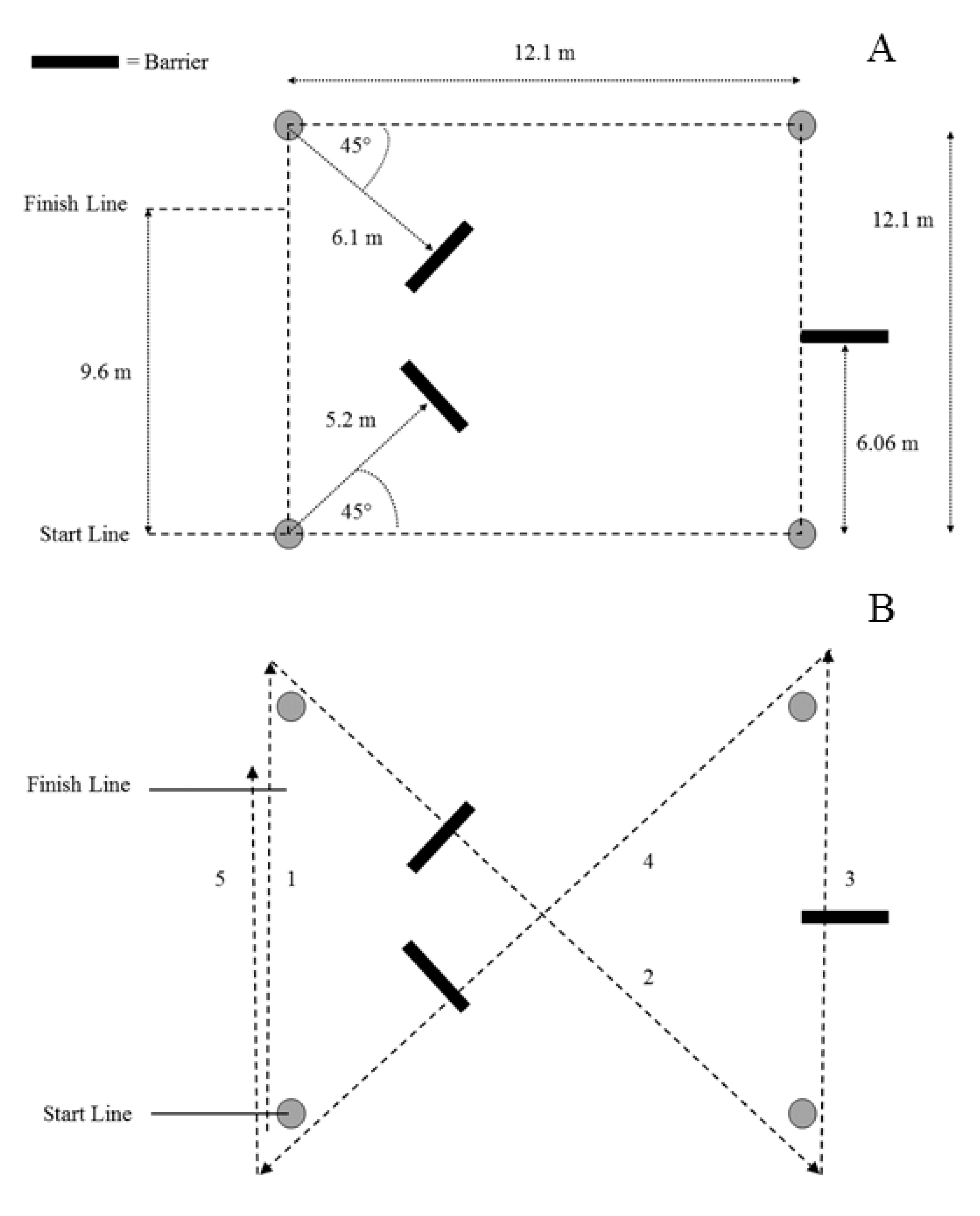
2.6. The 75 Yard Pursuit Run (75PR)
2.7. Medicine Ball Throw (MBT)
2.8. Multistage Fitness Test (20MSFT)
2.9. Statistical Analysis
3. Results
4. Discussion
5. Conclusions
Author Contributions
Funding
Acknowledgments
Conflicts of Interest
References
- Dawes, J.J.; Orr, R.; Siekaniec, C.L.; VanDerWoude, A.A.; Pope, R. Associations between anthropometric characteristics and physical performance in male law enforcement officers: A retrospective cohort study. Ann. Occup. Environ. Med. 2016, 28, 26. [Google Scholar] [CrossRef] [PubMed]
- Gyi, D.E.; Porter, J.M. Musculoskeletal problems and driving in police officers. Occup. Med. 1998, 48, 153–160. [Google Scholar] [CrossRef]
- Orr, R.; Pope, R.; Stierli, M.; Hinton, B. Grip Strength and Its Relationship to Police Recruit Task Performance and Injury Risk: A Retrospective Cohort Study. Int. J. Environ. Res. Public Health 2017, 14, 941. [Google Scholar] [CrossRef]
- Lockie, R.G.; Dawes, J.J.; Balfany, K.; Gonzales, C.E.; Beitzel, M.M.; Dulla, J.M.; Orr, R. Physical Fitness Characteristics That Relate to Work Sample Test Battery Performance in Law Enforcement Recruits. Int. J. Environ. Res. Public Health 2018, 15, 2477. [Google Scholar] [CrossRef] [PubMed]
- Berg, B.L. First Day at the Police Academy: Stress-Reaction-Training as a Screening-Out Technique. J. Contemp. Crim. Justice 1990, 6, 89–105. [Google Scholar] [CrossRef]
- Lockie, R.G.; Dawes, J.J.; Orr, R.M.; Dulla, J.M. Recruit Fitness Standards From a Large Law Enforcement Agency. J. Strength Cond. Res. 2020, 34, 934–941. [Google Scholar] [CrossRef] [PubMed]
- Cochrane, R.E.; Tett, R.P.; VandeCreek, L. Psychological Testing and the Selection of Police Officers. Crim. Justice Behav. 2003, 30, 511–537. [Google Scholar] [CrossRef]
- Arvey, R.D.; Landon, T.E.; Nutting, S.M.; Maxwell, S.E. Development of physical ability tests for police officers: A construct validation approach. J. Appl. Psychol. 1992, 77, 996–1009. [Google Scholar] [CrossRef]
- Dawes, J.J.; Lockie, R.G.; Orr, R.M.; Kornhauser, C.; Holmes, R.J. Initial fitness testing scores as a predictor of police academy graduation. J. Aust. Strength Cond. 2019, 27, 30–37. [Google Scholar]
- Lockie, R.G.; Balfany, K.; Bloodgood, A.M.; Moreno, M.R.; Cesario, K.A.; Dulla, J.M.; Dawes, J.J.; Orr, R.M. The Influence of Physical Fitness on Reasons for Academy Separation in Law Enforcement Recruits. Int. J. Environ. Res. Public Health 2019, 16, 372. [Google Scholar] [CrossRef]
- Shusko, M.; Benedetti, L.; Korre, M.; Eshleman, E.J.; Farioli, A.; Christophi, C.A.; Kales, S.N. Recruit Fitness as a Predictor of Police Academy Graduation. Occup. Med. 2017, 67, 555–561. [Google Scholar] [CrossRef] [PubMed]
- Cesario, K.A.; Dulla, J.M.; Moreno, M.R.; Bloodgood, A.M.; Dawes, J.J.; Lockie, R.G. Relationships between assessments in a physical ability test for law enforcement: Is there redundancy in certain assessments? Int. J. Exerc. Sci. 2018, 11, 1063–1073. [Google Scholar]
- Orr, R.; Pope, R.; Peterson, S.; Hinton, B.; Stierli, M. Leg Power as an Indicator of Risk of Injury or Illness in Police Recruits. Int. J. Environ. Res. Public Health 2016, 13, 237. [Google Scholar] [CrossRef] [PubMed]
- Bornstein, D.B.; Grieve, G.L.; Clennin, M.N.; McLain, A.C.; Whitsel, L.P.; Beets, M.W.; Hauret, K.G.; Jones, B.H.; Sarzynski, M.A. Which US States Pose the Greatest Threats to Military Readiness and Public Health? Public Health Policy Implications for a Cross-sectional Investigation of Cardiorespiratory Fitness, Body Mass Index, and Injuries Among US Army Recruits. J. Public Health Manag. Pract. 2019, 25, 36–44. [Google Scholar] [CrossRef] [PubMed]
- Caspersen, C.J.; Pereira, M.A.; Curran, K.M. Changes in physical activity patterns in the United States, by sex and cross-sectional age. Med. Sci. Sports Exerc. 2000, 32, 1601–1609. [Google Scholar] [CrossRef]
- Troiano, R.P.; Berrigan, D.; Dodd, K.W.; Mâsse, L.C.; Tilert, T.; McDowell, M. Physical Activity in the United States Measured by Accelerometer. Med. Sci. Sports Exerc. 2008, 40, 181–188. [Google Scholar] [CrossRef]
- Centers for Disease Control and Prevention. Prevalence of Self-Reported Obesity Among U.S. Adults by State and Territory. Available online: https://www.cdc.gov/obesity/data/prevalence-maps.html (accessed on 3 February 2020).
- Fryar, C.D.; Gu, Q.; Ogden, C.L.; Flegal, K.M. Anthropometric Reference Data for Children and Adults: United States, 2011–2014. Vital- Health Stat. 2016, 3, 1–46. [Google Scholar]
- Kaste, M. America’s Growing Cop Shortage. Available online: https://www.npr.org/2018/12/12/675359781/americas-growing-cop-shortage (accessed on 5 July 2020).
- Roufa, T. Why Police Departments Are Facing Recruitment Problems. Available online: https://www.thebalancecareers.com/why-police-departments-are-facing-recruitment-problems-974771 (accessed on 5 July 2020).
- Silvester, J.; Pearson, E. Police Recruits Given More Chances to Pass Initial Fitness Test. Available online: https://www.theage.com.au/national/victoria/police-recruits-will-no-longer-have-to-pass-initial-fitness-test-20190826-p52ksw.html (accessed on 1 July 2020).
- Barrett, K.; Greene, R. To Find More ’Good Cops,’ a Few Big Cities Change Their Hiring Process. Available online: https://www.governing.com/topics/public-justice-safety/gov-police-hiring-test-recruit-interpersonal-emotional-intelligence.html (accessed on 1 July 2020).
- Lockie, R.G.; Hernandez, J.A.; Moreno, M.R.; Dulla, J.M.; Dawes, J.J.; Orr, R.M. 2.4-km Run and 20-m Multistage Fitness Test Relationships in Law Enforcement Recruits After Academy Training. J. Strength Cond. Res. 2020, 34, 942–945. [Google Scholar] [CrossRef]
- Bloodgood, A.M.; Dawes, J.J.; Orr, R.M.; Stierli, M.; Cesario, K.A.; Moreno, M.R.; Dulla, J.M.; Lockie, R.G. Effects of Sex and Age on Physical Testing Performance for Law Enforcement Agency Candidates. J. Strength Cond. Res. 2019. [Google Scholar] [CrossRef]
- Lockie, R.G.; Beitzel, M.M.; Dulla, J.M.; Dawes, J.J.; Orr, R.M.; Hernandez, J.A. Between-Sex Differences in the Work Sample Test Battery Performed by Law Enforcement Recruits: Implications for Training and Potential Job Performance. J. Strength Cond. Res. 2020, in press. [Google Scholar] [CrossRef]
- Lockie, R.G.; Dawes, J.J.; Moreno, M.R.; Cesario, K.A.; Balfany, K.; Stierli, M.; Dulla, J.M.; Orr, R.M. Relationship Between the 20-m Multistage Fitness Test and 2.4-km Run in Law Enforcement Recruits. J. Strength Cond. Res. 2019. [Google Scholar] [CrossRef]
- World Medical Association. World Medical Association Declaration of Helsinki. Recommendations guiding physicians in biomedical research involving human subjects. JAMA 1997, 277, 925–926. [Google Scholar] [CrossRef]
- Gebhardt, D.L.; Baker, T.A. Physical Ability Test Manual Los Angeles County Sheriff’s Department; Human Performance Systems, Inc.: Beltsville, MD, USA, 2010. [Google Scholar]
- Lockie, R.G.; Dawes, J.J.; Orr, R.; Stierli, M.; Dulla, J.M.; Orjalo, A.J. Analysis of the Effects of Sex and Age on Upper- and Lower-Body Power for Law Enforcement Agency Recruits Before Academy Training. J. Strength Cond. Res. 2018, 32, 1968–1974. [Google Scholar] [CrossRef]
- Lockie, R.G.; Ruvalcaba, T.R.; Stierli, M.; Dulla, J.M.; Dawes, J.J.; Orr, R. Waist Circumference and Waist-to-Hip Ratio in Law Enforcement Agency Recruits. J. Strength Cond. Res. 2020, 34, 1666–1675. [Google Scholar] [CrossRef]
- Moreno, M.R.; Dulla, J.M.; Dawes, J.J.; Orr, R.M.; Cesario, K.A.; Lockie, R.G. Lower-body power and its relationship with body drag velocity in law enforcement recruits. Int. J. Exerc. Sci. 2019, 12, 847–858. [Google Scholar]
- McGuigan, M.R. Administration, Scoring, and Interpretation of Selected Tests. In Essentials of Strength Training and Conditioning, 4th ed.; Haff, G.G., Triplett, N.T., Eds.; Human Kinetics: Champaign, IL, USA, 2015; pp. 259–316. [Google Scholar]
- McGuigan, M.R. Principles of Test Selection and Administration. In Essentials of Strength Training and Conditioning, 4th ed.; Haff, G.G., Triplett, N.T., Eds.; Human Kinetics: Champaign, IL, USA, 2015; pp. 249–258. [Google Scholar]
- Lockie, R.G.; Callaghan, S.J.; Berry, S.P.; Cooke, E.R.A.; Jordan, C.A.; Luczo, T.M.; Jeffriess, M.D. Relationship Between Unilateral Jumping Ability and Asymmetry on Multidirectional Speed in Team-Sport Athletes. J. Strength Cond. Res. 2014, 28, 3557–3566. [Google Scholar] [CrossRef]
- Lockie, R.G.; Schultz, A.B.; Callaghan, S.J.; Jeffriess, M.D. The effects of traditional and enforced stopping speed and agility training on multidirectional speed and athletic performance. J. Strength Cond. Res. 2014, 28, 1538–1551. [Google Scholar] [CrossRef]
- Collins, K.S.; Coburn, J.W.; Galpin, A.J.; Lockie, R.G. Relationships and Reliability Between a Drive Block Test and Traditional Football Performance Tests in High School Offensive Line Players. J. Strength Cond. Res. 2018, 32, 3423–3432. [Google Scholar] [CrossRef]
- Post, B.K.; Dawes, J.J.; Lockie, R.G. Relationships Between Tests of Strength, Power, and Speed and the 75-Yard Pursuit Run. J. Strength Cond. Res. 2019. [Google Scholar] [CrossRef] [PubMed]
- Hetzler, R.K.; Stickley, C.D.; Lundquist, K.M.; Kimura, I.F. Reliability and Accuracy of Handheld Stopwatches Compared with Electronic Timing in Measuring Sprint Performance. J. Strength Cond. Res. 2008, 22, 1969–1976. [Google Scholar] [CrossRef] [PubMed]
- Lockie, R.; Hernandez, E. The 75-Yard Pursuit Run Performed by Law Enforcement Recruits–Percentile Rankings and Implications for Training; TSAC Report: Colorado Springs, CO, USA, 2020; pp. 16–22. [Google Scholar]
- Lockie, R.G.; Stierli, M.; Dawes, J.; Cesario, K.A.; Moreno, M.R.; Bloodgood, A.M.; Orr, R.M.; Dulla, J.M. Are there similarities in physical fitness characteristics of successful candidates attending law enforcement training regardless of training cohort? J. Trainology 2018, 7, 5–9. [Google Scholar] [CrossRef]
- Lockie, R.G.; Moreno, M.R.; Cesario, K.A.; McGuire, M.B.; Dawes, J.J.; Orr, R.; Dulla., J.M. The effects of aerobic fitness on day one physical training session completion in law enforcement recruits. J. Trainology 2019, 8, 1–4. [Google Scholar] [CrossRef]
- Moreno, M.R.; Lockie, R.G.; Kornhauser, C.L.; Holmes, R.J.; Dawes, J.J. A preliminary analysis of the relationship between the multistage fitness test and 300-m run in law enforcement officers: Implications for fitness assessment. Int. J. Exerc. Sci. 2018, 11, 730–738. [Google Scholar]
- Orr, R.M.; Ford, K.; Stierli, M. Implementation of an Ability-Based Training Program in Police Force Recruits. J. Strength Cond. Res. 2016, 30, 2781–2787. [Google Scholar] [CrossRef]
- Dawes, J.J.; Orr, R.M.; Flores, R.R.; Lockie, R.G.; Kornhauser, C.; Holmes, R. A physical fitness profile of state highway patrol officers by gender and age. Ann. Occup. Environ. Med. 2017, 29, 16. [Google Scholar] [CrossRef]
- Jeffriess, M.D.; Schultz, A.B.; McGann, T.S.; Callaghan, S.J.; Lockie, R.G. Effects of Preventative Ankle Taping on Planned Change-of-Direction and Reactive Agility Performance and Ankle Muscle Activity in Basketballers. J. Sports Sci. Med. 2015, 14, 864–876. [Google Scholar]
- Callaghan, S.J.; Lockie, R.G.; Andrews, W.A.; Chipchase, R.F.; Nimphius, S. The relationship between inertial measurement unit-derived ‘force signatures’ and ground reaction forces during cricket pace bowling. Sports Biomech. 2018, 19, 307–321. [Google Scholar] [CrossRef]
- Orjalo, A.J.; Lockie, R.G.; Balfany, K.; Callaghan, S.J. The Effects of Lateral Bounds on Post-Activation Potentiation of Change-of-Direction Speed Measured by the 505 Test in College-Aged Men and Women. Sports 2020, 8, 71. [Google Scholar] [CrossRef]
- Lachenbruch, P.A.; Cohen, J. Statistical Power Analysis for the Behavioral Sciences (2nd ed.). J. Am. Stat. Assoc. 1989, 84, 1096. [Google Scholar] [CrossRef]
- Hopkins, W.G. How to interpret changes in an athletic performance test. Sportscience 2004, 8, 1–7. [Google Scholar]
- Durlak, J.A. How to Select, Calculate, and Interpret Effect Sizes. J. Pediatr. Psychol. 2009, 34, 917–928. [Google Scholar] [CrossRef] [PubMed]
- Buchheit, M. The Numbers Will Love You Back in Return—I Promise. Int. J. Sports Physiol. Perform. 2016, 11, 551–554. [Google Scholar] [CrossRef] [PubMed]
- Winter, E.M.; Abt, G.; Nevill, A.M. Metrics of meaningfulness as opposed to sleights of significance. J. Sports Sci. 2014, 32, 901–902. [Google Scholar] [CrossRef] [PubMed]
- Lockie, R.G.; Davis, D.L.; Birmingham-Babauta, S.A.; Beiley, M.D.; Hurley, J.M.; Stage, A.A.; Stokes, J.J.; Tomita, T.M.; Torne, I.A.; Lazar, A. Physiological Characteristics of Incoming Freshmen Field Players in a Men’s Division I Collegiate Soccer Team. Sports 2016, 4, 34. [Google Scholar] [CrossRef] [PubMed]
- Risso, F.G.; Jalilvand, F.; Orjalo, A.J.; Moreno, M.R.; Davis, D.L.; Birmingham-Babauta, S.A.; Stokes, J.J.; Stage, A.A.; Liu, T.M.; Giuliano, D.V.; et al. Physiological Characteristics of Projected Starters and Non-Starters in the Field Positions from a Division I Women’s Soccer Team. Int. J. Exerc. Sci. 2017, 10, 568–579. [Google Scholar]
- Lockie, R.G.; Moreno, M.R.; Orjalo, A.J.; Stage, A.A.; Liu, T.M.; Birmingham-Babauta, S.A.; Hurley, J.M.; Torne, I.A.; Beiley, M.D.; Risso, F.G.; et al. Repeated-Sprint Ability in Division I Collegiate Male Soccer Players. J. Strength Cond. Res. 2019, 33, 1362–1370. [Google Scholar] [CrossRef]
- Fernhall, B.; Fahs, C.A.; Horn, G.; Rowland, T.; Smith, D. Acute effects of firefighting on cardiac performance. Graefe’s Arch. Clin. Exp. Ophthalmol. 2011, 112, 735–741. [Google Scholar] [CrossRef]
- Zhao, J.S.; He, N.; Lovrich, N.P. Pursuing Gender Diversity in Police Organizations in the 1990s: A Longitudinal Analysis of Factors Associated with the Hiring of Female Officers. Police Q. 2006, 9, 463–485. [Google Scholar] [CrossRef]
- Felkenes, G.T.; Peretz, P.; Schroedel, J.R. An Analysis of the Mandatory Hiring of Females. Women Crim. Justice 1993, 4, 31–63. [Google Scholar] [CrossRef]
- Cohen, J. Things I have learned (so far). Am. Psychol. 1990, 45, 1304–1312. [Google Scholar] [CrossRef]
- Knapik, J.J.; Sharp, M.A.; Canham-Chervak, M.; Hauret, K.; Patton, J.F.; Jones, B.H. Risk factors for training-related injuries among men and women in basic combat training. Med. Sci. Sports Exerc. 2001, 33, 946–954. [Google Scholar] [CrossRef]
- O’Leary, T.J.; Saunders, S.C.; McGuire, S.J.; Venables, M.C.; Izard, R.M. Sex Differences in Training Loads during British Army Basic Training. Med. Sci. Sports Exerc. 2018, 50, 2565–2574. [Google Scholar] [CrossRef] [PubMed]
- Tomlin, D.L.; Wenger, H.A. The Relationship Between Aerobic Fitness and Recovery from High Intensity Intermittent Exercise. Sports Med. 2001, 31, 1–11. [Google Scholar] [CrossRef] [PubMed]
- Dawes, J.; Lockie, R.G.; Kornhauser, C.L.; Holmes, R.J.; Orr, R.M. Relationships Between Absolute and Relative Strength and Power in Male Police Officers of Varying Strength Levels. J. Sci. Sport Exerc. 2019, 1, 281–288. [Google Scholar] [CrossRef]
- Lockie, R.G.; Balfany, K.; Denamur, J.K.; Moreno, M.R. A Preliminary Analysis of Relationships between a 1RM Hexagonal Bar Load and Peak Power with the Tactical Task of a Body Drag. J. Hum. Kinet. 2019, 68, 157–166. [Google Scholar] [CrossRef] [PubMed]
- Myers, C.J.; Orr, R.M.; Goad, K.S.; Schram, B.L.; Lockie, R.; Kornhauser, C.; Holmes, R.; Dawes, J.J. Comparing levels of fitness of police Officers between two United States law enforcement agencies. Work 2019, 63, 615–622. [Google Scholar] [CrossRef]

| Variables | Older ATB | Newer ATB | p | d |
|---|---|---|---|---|
| Age (years) | 27.29 ± 6.11 | 27.43 ± 6.48 | 0.874 | 0.02 |
| Height (m) | 1.74 ± 0.09 | 1.71 ± 0.09 | 0.018 | 0.33 |
| Body mass (kg) | 80.47 ± 13.25 | 80.75 ± 16.56 | 0.901 | 0.02 |
| Push-ups (no.) | 42.93 ± 14.44 | 42.45 ± 14.82 | 0.809 | 0.03 |
| Sit-ups (no.) | 35.68 ± 9.16 | 33.98 ± 7.43 | 0.173 | 0.20 |
| VJ (cm) | 53.52 ± 12.74 | 52.27 ± 15.90 | 0.492 | 0.09 |
| MBT (m) | 5.83 ± 1.21 | 5.96 ± 1.51 | 0.464 | 0.10 |
| 75PR (s) | 17.08 ± 1.24 | 16.76 ± 1.02 | 0.057 | 0.28 |
| 20MSFT shuttles (no.) | 54.37 ± 17.82 | 49.98 ± 14.07 | 0.070 | 0.27 |
| Variables | Older ATB | Newer ATB | p | d |
|---|---|---|---|---|
| Age (years) | 27.16 ± 5.81 | 27.71 ± 7.01 | 0.550 | 0.09 |
| Height (m) | 1.76 ± 0.07 | 1.73 ± 0.08 | 0.021 | 0.40 |
| Body mass (kg) | 83.47 ± 11.70 | 85.44 ± 15.23 | 0.404 | 0.15 |
| Push-ups (no.) | 46.19 ± 12.65 | 47.00 ± 13.29 | 0.685 | 0.06 |
| Sit-ups (no.) | 36.44 ± 9.22 | 34.24 ± 7.77 | 0.123 | 0.26 |
| VJ (cm) | 55.91 ± 11.27 | 56.34 ± 15.53 | 0.818 | 0.03 |
| MBT (m) | 6.17 ± 0.95 | 6.50 ± 1.26 | 0.094 | 0.30 |
| 75PR (s) | 16.83 ± 1.09 | 16.46 ± 0.85 | 0.029 | 0.38 |
| 20MSFT shuttles (no.) | 55.36 ± 17.94 | 52.51 ± 14.56 | 0.302 | 0.17 |
| Variables | Older ATB | Newer ATB | p | d |
|---|---|---|---|---|
| Age (years) | 28.02 ± 7.76 | 26.46 ± 4.29 | 0.481 | 0.25 |
| Height (m) | 1.62 ± 0.06 | 1.63 ± 0.05 | 0.839 | 0.18 |
| Body mass (kg) | 64.69 ± 9.14 | 64.53 ± 9.22 | 0.955 | 0.02 |
| Push-ups (no.) | 25.77 ± 10.70 | 26.69 ± 7.02 | 0.766 | 0.10 |
| Sit-ups (no.) | 31.68 ± 7.69 | 33.08 ± 6.30 | 0.535 | 0.20 |
| VJ (cm) | 40.89 ± 12.62 | 38.20 ± 6.25 | 0.453 | 0.27 |
| MBT (m) | 4.05 ± 0.78 | 4.08 ± 0.39 | 0.878 | 0.05 |
| 75PR (s) | 18.42 ± 1.16 | 17.79 ± 0.89 | 0.064 | 0.61 |
| 20MSFT shuttles (no.) | 49.13 ± 16.29 | 41.23 ± 7.56 | 0.007 | 0.62 |
Publisher’s Note: MDPI stays neutral with regard to jurisdictional claims in published maps and institutional affiliations. |
© 2020 by the authors. Licensee MDPI, Basel, Switzerland. This article is an open access article distributed under the terms and conditions of the Creative Commons Attribution (CC BY) license (http://creativecommons.org/licenses/by/4.0/).
Share and Cite
Lockie, R.G.; Dawes, J.J.; Moreno, M.R.; McGuire, M.B.; Ruvalcaba, T.J.; Bloodgood, A.M.; Dulla, J.M.; Orr, R.M. We Need You: Influence of Hiring Demand and Modified Applicant Testing on the Physical Fitness of Law Enforcement Recruits. Int. J. Environ. Res. Public Health 2020, 17, 7512. https://doi.org/10.3390/ijerph17207512
Lockie RG, Dawes JJ, Moreno MR, McGuire MB, Ruvalcaba TJ, Bloodgood AM, Dulla JM, Orr RM. We Need You: Influence of Hiring Demand and Modified Applicant Testing on the Physical Fitness of Law Enforcement Recruits. International Journal of Environmental Research and Public Health. 2020; 17(20):7512. https://doi.org/10.3390/ijerph17207512
Chicago/Turabian StyleLockie, Robert G., J. Jay Dawes, Matthew R. Moreno, Megan B. McGuire, Tomas J. Ruvalcaba, Ashley M. Bloodgood, Joseph M. Dulla, and Robin M. Orr. 2020. "We Need You: Influence of Hiring Demand and Modified Applicant Testing on the Physical Fitness of Law Enforcement Recruits" International Journal of Environmental Research and Public Health 17, no. 20: 7512. https://doi.org/10.3390/ijerph17207512
APA StyleLockie, R. G., Dawes, J. J., Moreno, M. R., McGuire, M. B., Ruvalcaba, T. J., Bloodgood, A. M., Dulla, J. M., & Orr, R. M. (2020). We Need You: Influence of Hiring Demand and Modified Applicant Testing on the Physical Fitness of Law Enforcement Recruits. International Journal of Environmental Research and Public Health, 17(20), 7512. https://doi.org/10.3390/ijerph17207512

