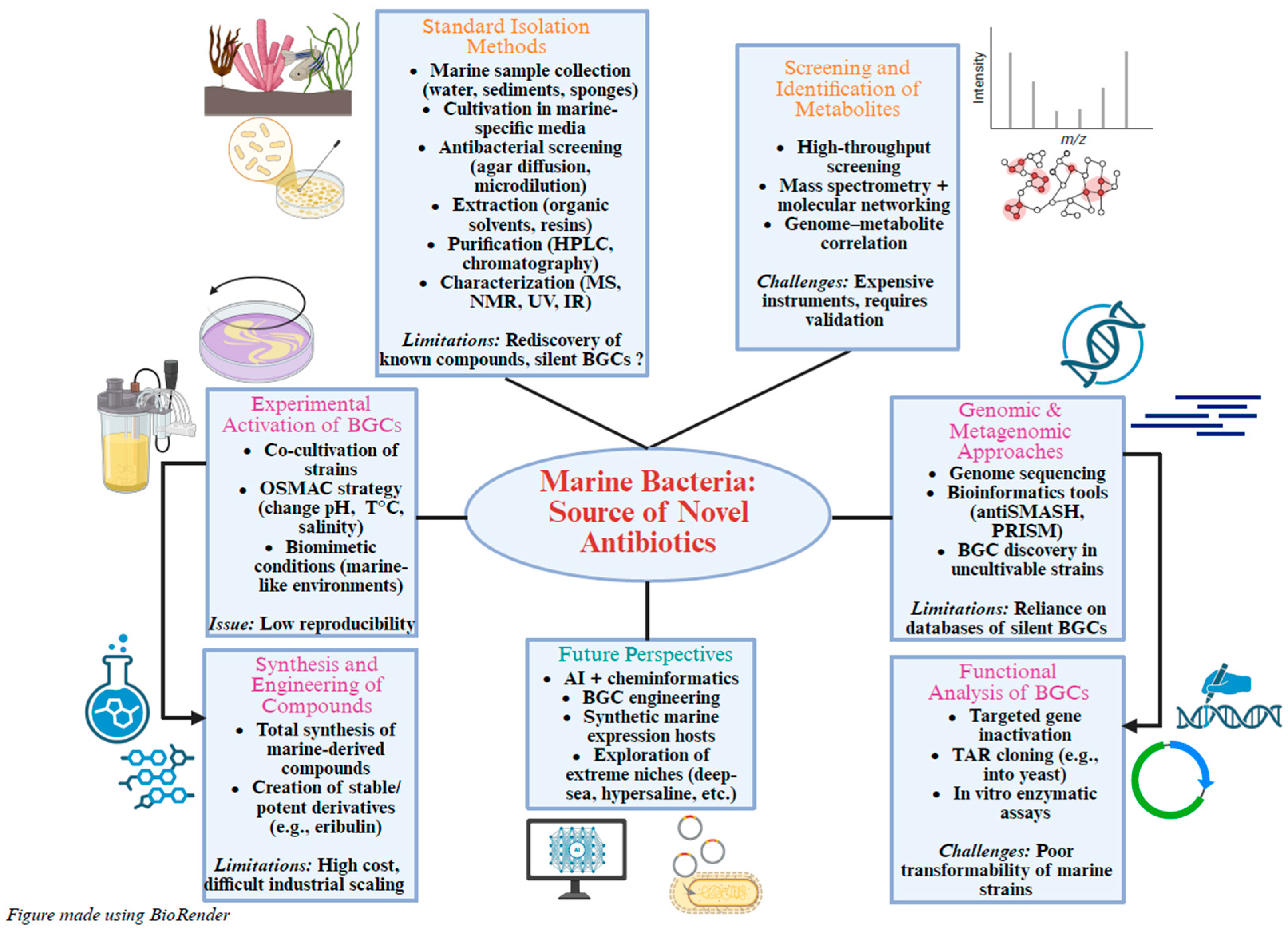

Marine Bacteria as a Source of Antibiotics Against Staphylococcus aureus: Natural Compounds, Mechanisms of Action, and Discovery Strategies


Abstract
1. Introduction
1.1. Importance of Staphylococcus aureus in Human Infections
1.2. S. aureus as a Global Antimicrobial Resistance Threat
1.3. The Emergence of Antibiotic Resistance in S. aureus
1.4. Mechanisms of Resistance of S. aureus
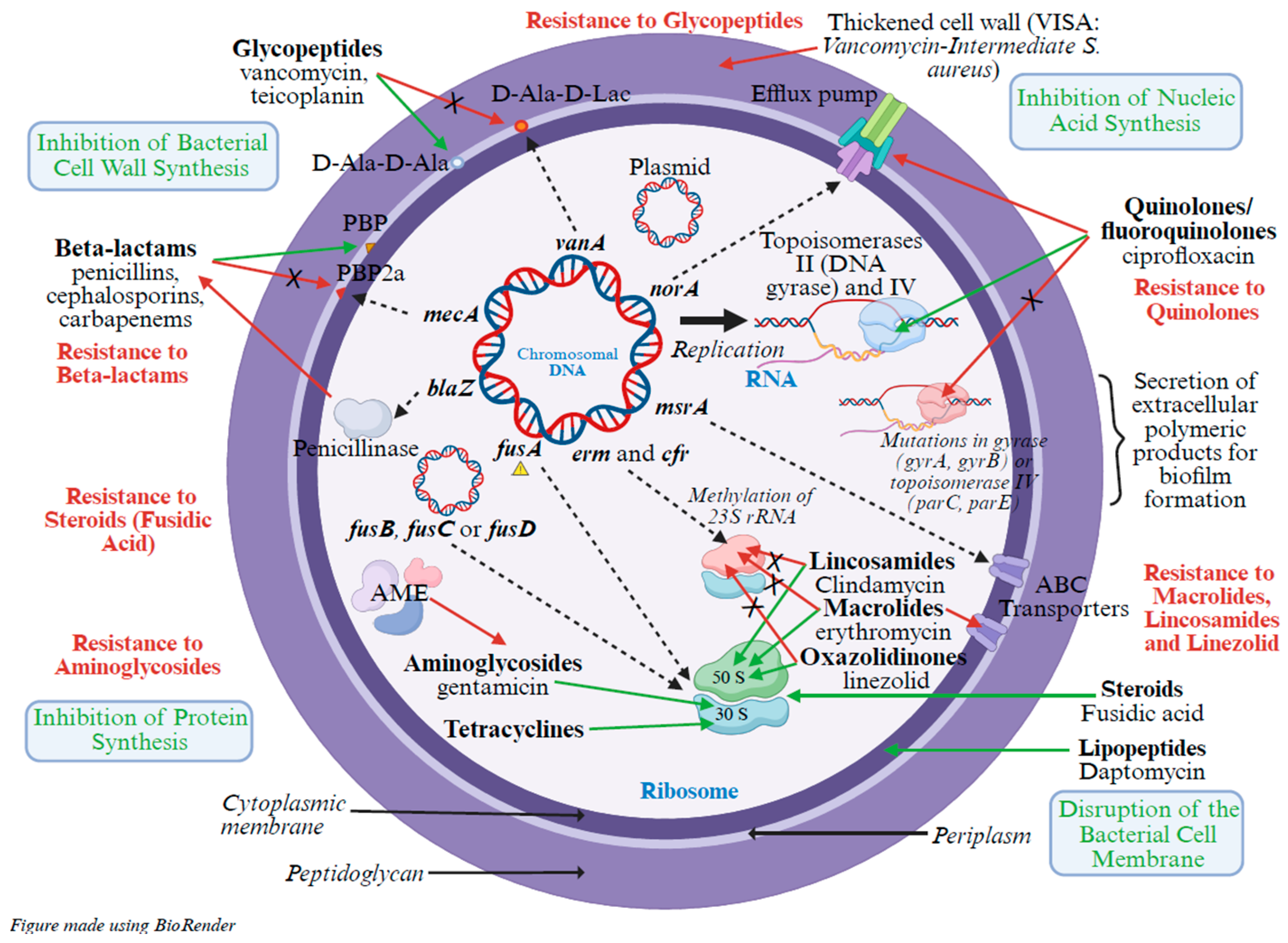
1.4.1. Resistance to β-Lactam Antibiotics
1.4.2. Resistance to Glycopeptides
1.4.3. Resistance to Aminoglycosides
1.4.4. Resistance to Quinolones
1.4.5. Resistance to Macrolides, Lincosamides, and Linezolid
1.4.6. Resistance to Steroids (Fusidic Acid)
1.4.7. Biofilm Formation
1.5. Therapeutic Challenges and Economic Burden of Treating S. aureus Infections
1.6. Objectives and Methodology
2. Antibacterial Potential of Marine Bacteria Compounds Against S. aureus
2.1. Interest in Marine Resources as a Reservoir of New Bioactive Molecules
2.2. Marine Bacteria as a Source of New Antibiotics

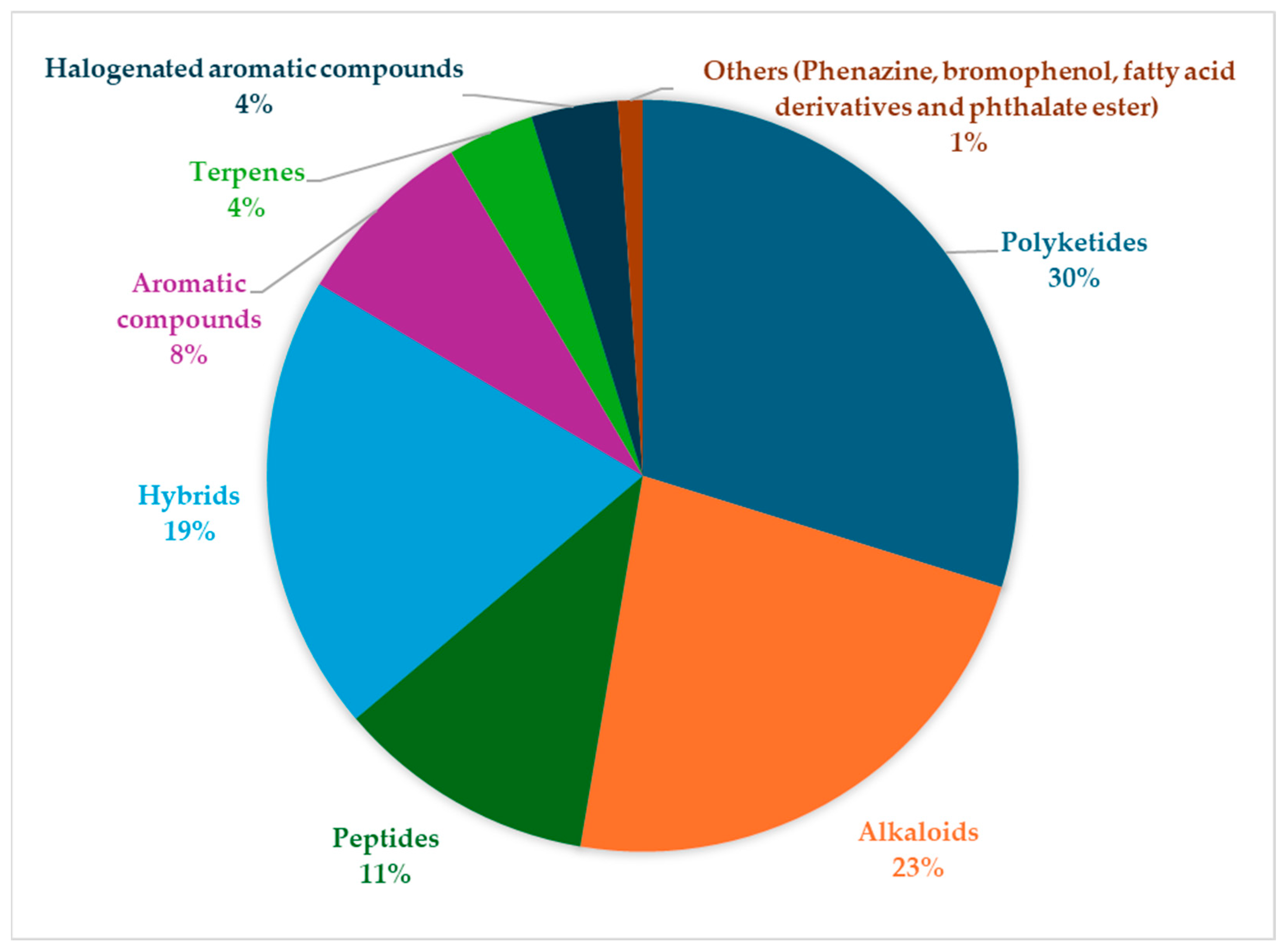
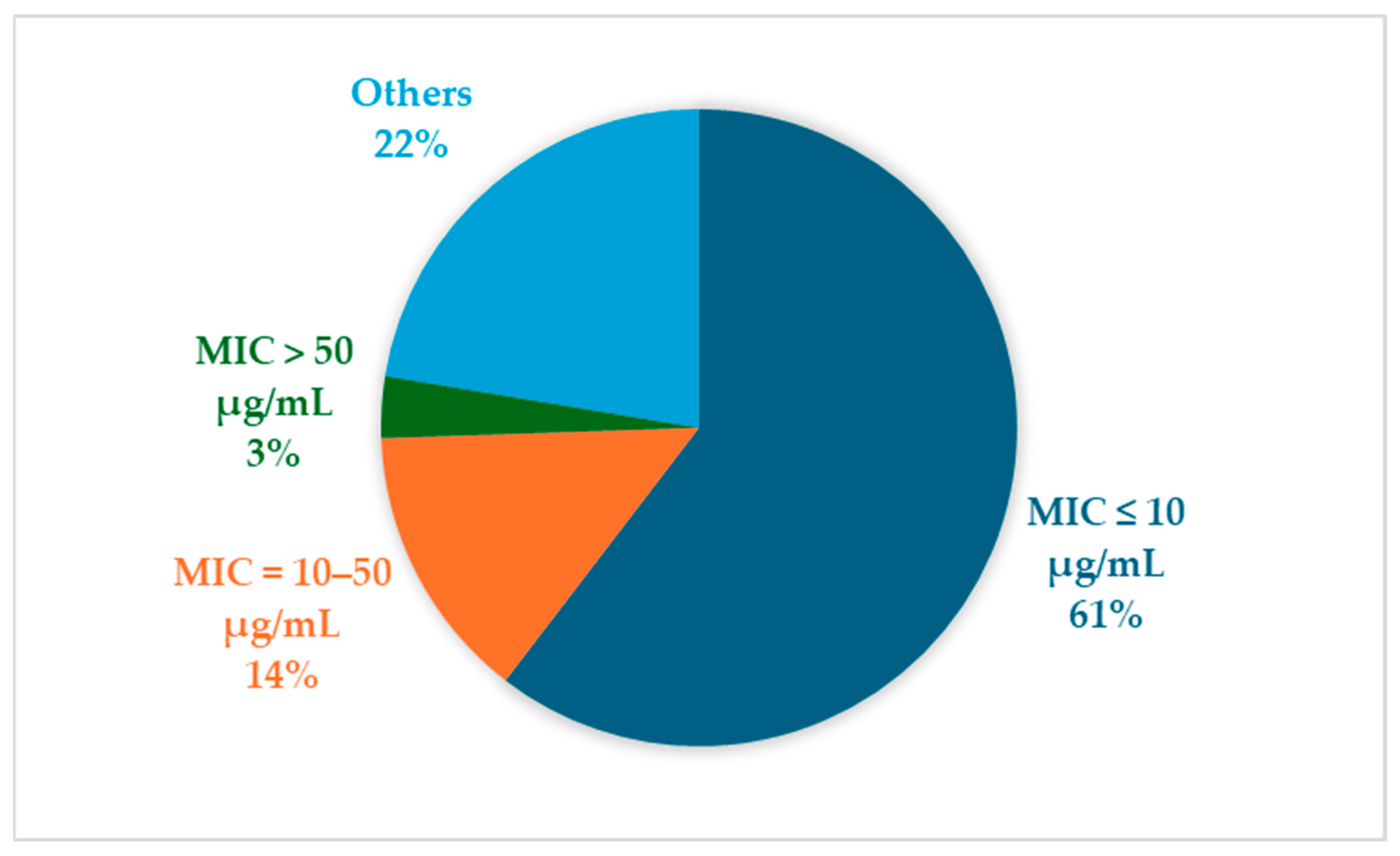
| Class | Subclass | Marine Bacterial Strain (Source) | Compound | S. aureus Strains Tested | MIC, IC50 or ZI | MOA | References |
|---|---|---|---|---|---|---|---|
| Alkaloids | - | Marinispora sp. NPS12745 (sediment) | Lynamicin A | MSSA (ATCC29213) MRSA (ATCC43300) | MIC = 4.3 (MSSA), 4.7 (MRSA) µg/mL | - | [79] |
| - | Marinispora sp. NPS12745 (sediment) | Lynamicin B | MSSA (ATCC29213) MRSA (ATCC43300) | MIC = 1.8 (MSSA), 2.2 (MRSA) µg/mL | - | [79] | |
| - | Marinispora sp. NPS12745 (sediment) | Lynamicin C | MSSA (ATCC29213) MRSA (ATCC43300) | MIC = 2.5 (MSSA), 3.5 (MRSA) µg/mL | - | [79] | |
| - | Marinispora sp. NPS12745 (sediment) | Lynamicin D | MSSA (ATCC29213) MRSA (ATCC43300) | MIC = 6.2 (MSSA), 6.2 (MRSA) µg/mL | - | [79] | |
| - | Marinispora sp. NPS12745 (sediment) | Lynamicin E | MSSA (ATCC29213) MRSA (ATCC43300) | MIC = > 45 (MSSA), 27 (MRSA) µg/mL | - | [79] | |
| - | Micromonospora sp. WMMA-2495 (tunicate) | Phallusialides A and B | MRSA (ATCC33591) | MIC = 32 µg/mL | - | [80] | |
| - | Pseudomonas aeruginosa (eal fish) | 1-methyl-1,4 dihydroquinoline | MSSA MRSA | MIC = 50–75 µg/mL | - | [81] | |
| - | Pseudomonas sp. UJ-6 (seawater) | 1-acetyl-beta-carboline | MRSA (KCCM40510, KCCM40511) MRSA clinical isolates | MIC = 32 (KCCM40510), 64 (KCCM40511) µg/mL | - | [82] | |
| - | Streptomyces sp. CNQ-418 (sediment) | Marinopyrrole A | MSSA (NCTC8325) MRSA | MIC = 0.25 µg/mL (MSSA) MIC90 = 0.31 µg/mL (MRSA) | Membrane depolarization and dissipation of the proton motive force (PMF) essential for cell viability | [83,84] | |
| - | Streptomyces sp. CNQ-418 (sediment) | Marinopyrrole B | MRSA | MIC90 = 0.63 μg/mL | [84] | ||
| - | Streptomyces sp. CNQ-418 (sediment) | Marinopyrrole C | MRSA | MIC90 = 0.16 μg/mL | [83] | ||
| - | Streptomyces sp. CNQ-418 (sediment) | Marinopyrrole F | MRSA | MIC90 = 3.1 μg/mL | [83] | ||
| - | Streptomyces sp. HZP-2216E (seaweed) | Streptopertusacin A | MRSA (ATCC43300) | MIC = 40 µg/mL | - | [85] | |
| - | Streptomyces sp. SCSIO 11791 (deep-sea sediment) | Dionemycin | MSSA (ATCC29213) MRSA clinical isolates | MIC = 1 (MSSA), 2 (MRSA) µg/mL | - | [86] | |
| - | Streptomyces sp. SCSIO 11791 (deep-sea sediment) | 6-OMe-7′,7″-dichorochromopyrrolic acid | MSSA (ATCC29213) MRSA clinical isolates | MIC = 3 (MSSA), 32–128 (MRSA) µg/mL | - | [86] | |
| - | Streptomyces sp. ZZ1118 (shrimp) | Streptoindole A | MRSA (ATCC43300) | MIC = 25 µg/mL | - | [87] | |
| - | Streptomyces sp. ZZ1118 (shrimp) | Streptoindole B | MRSA (ATCC43300) | MIC = 7 µg/mL | - | [87] | |
| - | Streptomyces sp. ZZ1118 (shrimp) | Streptoindole D | MRSA (ATCC43300) | MIC = 25 µg/mL | - | [87] | |
| - | Streptomyces sp. ZZ741 (marine mud) | Streptoglutarimides A–J | MRSA (ATCC43300) | MIC = 9–11 μg/mL | - | [88] | |
| - | Streptomycetes sp. SMS636 (sediment) | Lansai D, E and F, imidazo[4,5-e]-1,2,4-triazine | MSSA (ATCC6538) MRSA (ATCC29213) | MIC = > 100 µg/mL | [89] | ||
| - | Streptomycetes sp. SMS636 (sediment) | 1-N-methyl-(E, Z)-albonoursin | MSSA (ATCC6538) MRSA (ATCC29213) | MIC = 12.5 µg/mL (MSSA) MIC = 25 µg/mL (MRSA) | Importance of the (E, Z) configuration of the double bond for activity | [89] | |
| - | Streptomycetes sp. SMS636 (sediment) | Streptonigrin | MSSA (ATCC6538) MRSA (ATCC29213) | MIC = 0.78 µg/mL (MSSA, MRSA) | Cause oxidative damage and lethal bacterial DNA strand breakage | [89,90] | |
| - | Vibrio ruber ZXR-93 (seawater) | Vibripyrrolidine A | MSSA (ATCC6538) | MIC = 1.95 µg/mL | - | [91] | |
| - | Vibrio ruber ZXR-93 (seawater) | Vibridiazinane A | MSSA (ATCC6538) | MIC = 0.98 µg/mL | - | [91] | |
| - | Vibrio ruber ZXR-93 (seawater) | Vibridiazinane B | MSSA (ATCC6538) | MIC = 3.90 µg/mL | - | [91] | |
| - | Verrucosispora sp. strain MS100047 (deep-sea sediment) | Glycerol 1-hydroxy-2,5-dimethyl benzoate | MRSA | MIC = 12.5 µg/mL | - | [92] | |
| Bromophenol derivative | - | Nocardiopsis sp. SCA21 (sediment) | 4-bromophenol | MSSA (ATCC12600) MRSA (ATCC NR-46117) | MIC = 62.5 (MSSA), 15.62 (MRSA) µg/mL | - | [93] |
| Fatty acid derivatives | - | Aequorivita sp. (sediment) | R-(+)-N-[15-methyl-3-(12-methyltridecanoyloxy)-hexadecanoyl] glycine and N-terminal glycine unit | MRSA (clinical isolate DSM18827) | IC50 = 22–145 μg/mL | - | [94] |
| Halogenated aromatic compounds and aromatic compounds | Biphenyl carboxylic acid | Pseudoalteromonas phenolica O-BC30T | MC21-B (2,2′,3-tribromo-biphenyl-4-4′-dicarboxylic acid) | MSSA (ATCC25923) MRSA (ATCC33591) | MIC = 1–4 µg/mL | - | [95] |
| Biphenyl diol | Actinomadura sp. DS-MS-114 (deep-sea sediment) | 5,6-dihydro-1,8-dihydroxy-3-methylbenz[a]anthracene-7,12-quinone | MSSA (NBRC12732) | ZI = 12.7 mm (100 µg of 50 µL at 2 mg/mL) | - | [96] | |
| Actinomycete CNQ-525 (sediment) | Chlorinated dihydroquinones | MRSA | MIC = 1.90–15.6 μg/mL | - | [97] | ||
| Nocardiopsis sp. HDN154086 (sediment) | Nocarterphenyl D | MRSA | MIC > 50 µM | - | [98] | ||
| Nocardiopsis sp. HDN154086 (sediment) | Nocarterphenyls F | MRSA | MIC = 6.2 µM | - | [98] | ||
| Pseudoalteromonas luteoviolacea (seaweed) | 2, 4-dibromo-6-chlorophenol | MRSA 9551 | ZI = 20 mm (1.0 mg/mL, 40 µL) | - | [99] | ||
| Pseudoalteromonas phenolica O-BC30T | MC21-A (3,3′,5,5′-tetrabromo-2,2′-biphenyldiol) | MSSA (ATCC25923) MRSA (ATCC33591) | MIC = 1–2 µg/mL | - | [100] | ||
| Salinispora arenicola BRA-213 (sediment) | Salinaphthoquinones B and D | MSSA (ATCC29213) MRSA (ATCC43300) | MIC = 31–125 µg/mL | - | [101] | ||
| Streptomyces sp. 1425S.R.1a.1 (mollusk) | 7,8-dideoxygriseorhodin C | MRSA (ATCC43300) | MIC = 0.08–0.12 µg/mL | - | [102] | ||
| Biphenyl diol | Streptomyces sp. CNQ-418 (sediment) | 4,4′,5,5′-Tetrachloro-1′H-1,3′-bipyrrole-2,2′-diyl)bis((2-acetoxyphenyl)methanone)(1), 4,4′,5′-Trichloro-5-methoxy-1′H-1,3′-bipyrrole-2,2′-diyl)bis((2-hydroxyphenyl)methanone (2), N-(2-(3,4′,5′-Trichloro-2′,5-bis(2-hydroxybenzoyl)-1′H-1,3′-bipyrrol-2-ylthio)ethyl)acetamide (3) and 4,4′,5′-Trichloro-5-(dimethylamino)-1′H-1,3′-bipyrrole-2,2′-diyl)bis((2-hydroxyphenyl) methanone (4) | MRSA | MIC90 = 0.78–6.3 μg/mL | - | [83] | |
| Biphenyl diol | Streptomyces sp. EG1 (sediment) | Mersaquinone | MRSA (TCH1516) | MIC = 3.36 μg/mL | - | [103] | |
| Biphenyl diol | Streptomyces sp. EG32 (sediment) | Chlororesistoflavins A and B | MRSA | MIC = 0.25–2 µg/mL | - | [104] | |
| Biphenyl diol | Streptomyces sp. strain CA-271078 (ascidian) | 3-chloro-6,8-dihydroxy-8-α-lapachone | MRSA (MB5393) | MIC > 64 µg/mL | - | [105] | |
| Hybrids | Peptide-polyketide | Marinispora sp. NPS008920 (sediment) | Lipoxazolidinones A–C | MSSA (ATCC29213) MRSA (ATCC43300) | MIC = 1.0–6.0 μg/mL | - | [106] |
| Pseudomonas aeruginosa 1682U.R.0a.27 (shipworm) | Mindapyrroles A–C | MSSA (ATCC29213) MRSA (ATCC43300) | MIC = 4 to >32 µg/mL | - | [107] | ||
| Streptomyces microflavus MBTI36 (sediment) | Chromomycins A9, Ap, A2 and A3 | MSSA (ATCC25923, CCARM0027, CCARM0204, CCARM0205 and CCARM3640) and MRSA (CCARM3089, CCARM3090, CCARM3634, CCARM3635, ATCC43300, ATCC700787 and ATCC700788) | MIC = 0.06–0.25 μg/mL | RNA polymerase inhibition by chromomycin A3 | [108,109] | ||
| Streptomyces sp. ZZ820 (coastal soil) | Chromomycin A3 | MRSA (ATCC43300) | MIC = 0.59 µM | RNA polymerase inhibition by chromomycin A3 | [109,110] | ||
| Verrucosispora sp. strain MS100047 (deep-sea sediment) | Proximicin B | MSSA (ATCC29523) MRSA (EMRSA-15, EMRSA-16) Mutidrug resistant MDR S. aureus (SA1199B) | MIC = 8 (MSSA), 4–8 (MRSA), 4 (MDR) µg/mL | - | [92,111] | ||
| Chalcone-terpenoid | Streptomyces sp. G246 (sponge) | 5′-lavandulyl-4′-methoxy-2,4,2′,6′-tetrahydroxylchalcone | MSSA (ATCC25923) | MIC = 1 µg/mL | - | [112] | |
| Flavonoid-terpenoid | Streptomyces sp. G246 (sponge) | 6-lavandulyl-7-methoxy-5,2′,4′-trihydroxylflavanone | MSSA (ATCC25923) | MIC = 32 µg/mL | - | [112] | |
| Phenazine-terpene | Actinomycete strains CNS-284 and CNY-960 (sediment) | Marinocyanins A–F | MSSA | MIC = 2.37–36.62 µM | - | [113] | |
| Terpene-polyketide | Streptomyces sp. CA-271078 | Napyradiomycin analogs | MRSA (MB5393) | MIC = 3 to >96 µg/mL | - | [114] | |
| Streptomyces sp. strain CA-271078 (ascidian) | 3-hydroxy-10a-(3-chloro-6-hydroxy-2,2,6-trimethylcyclohexylmethyl)-6,8-dihydroxy-2,2-dimethyl-3,10a-dihydro-2H-benzo[g]chromene-5,10-dione (1), 4-dehydro-4a-dechloronapyradiomycin A1 (2), napyradiomycin A1 (3) | MRSA (MB5393) | MIC = 0.5 to >64 µg/mL | - | [105] | ||
| Peptides | - | Bacillus pumilus SF214 | Pumilacidin | MSSA | - | Alteration in motility and biofilm formation | [115,116] |
| - | Bacillus sp. (Tube worm) | Bogorol A | MRSA | MIC = 2 µg/mL | Disruption of bacterial cell membrane leading to cell lysis | [117,118] | |
| - | Bacillus subtilis 109GGC020 (sediment) | Bacilotetrins A and B | MRSA (ATCC25923), XU212, SA1199B and RN4220) | MIC = 8–32 µg/mL | - | [119] | |
| - | Paenibacillus profundus sp. nov. SL 79 (sediment) | Glyceryl-D-leucyl-D-alanyl-D-leucyl-D-leucyl-L-valyl-D-leucylD-alanine | MSSA (CIP65.8T) | ZI = 24 mm (1 mg/mL) | - | [120] | |
| - | Saccharomonospora sp. CNQ-490 | Taromycins A and B | MRSA (A8819-DapS, A8817-DapR and 0325) | MIC = 3.1–50 µg/mL | - | [121] | |
| - | Streptomyces sp. CNS-575 (sediment) | Fijimycins A–C (1–3), Etamycin A (4) | MRSA (ATCC33591, Sanger 252, UAMS1182) | MIC100 = 4 à > 32 μg/mL | Inhibition of bacterial protein synthesis by targeting the ribosome (3 and 4) | [122,123] | |
| - | Streptomyces sp. IMB094 (sediment) | Neo-actinomycin A, actinomycins D and X2 | MSSA (ATCC29213, isolates) MRSA (ATCC33591, isolates) | MIC = 0.125–64 µg/mL | Intercalates DNA blocking transcription (RNA polymerase) and DNA replication by Actinomycin D | [124] | |
| - | Streptomyces sp. LHW52447 (sponge) | Actinomycins D1–D4 and actinomycin D | MRSA (P172, P172 and ATCC 33591) | MIC = 0.125–1 μg/mL | Intercalates DNA blocking transcription (RNA polymerase) and DNA replication by Actinomycin D | [125] | |
| - | Streptomyces sp. LS298 (sponge) | Quinomycin G | MSSA (ATCC29213, isolates) MRSA (ATCC33591, isolates) | MIC = 32 µg/mL | - | [126] | |
| - | Streptomyces sp. ZZ338 (sea squirts) | Actinomycin D, V and X0β | MRSA (ATCC43300) | MIC = 0.08–0.61 µM | Intercalates DNA blocking transcription (RNA polymerase) and DNA replication by Actinomycin D | [127] | |
| Phenazine derivatives | - | Actinomycete strains CNS-284 and CNY-960 (sediment) | 2-bromo-1-hydroxyphenazine (1) and lavanducyanin (2) | MSSA | MIC = 2.92 (2) and 56.93 µM (1) | - | [113] |
| Phthalate ester | - | Nocardiopsis sp. SCA21 (sediment) | Bis (2-ethylhexyl) phthalate | MSSA (ATCC12600) | MIC = 125 µg/mL | - | [93] |
| Polyketides | - | Bacillus amyloliquefaciens MTCC 12716 (red algae) | Methyl 1′-((2E,4E,14E)-9,12-dihydroxy-15-isopropyl-1,6-dioxohexadecahydro [1] oxacyclononadecino[3,4-f] isobenzofuranyl) benzoate (1), (E)-Ethyl 15-ethyl-9,12-dihydroxy-25-(2′-hydroxy-3′-(methoxycarbonyl)phenyl)-1-oxo-octadecahydro-1H-furopyrano[2,3-c]oxacyclononadecine-6-carboxylate (2) and (E)-Ethyl 15-ethyl-12-hydroxy-25-(2′-hydroxy-3′-(methoxycarbonyl)phenyl)-24-methyl-1-oxo-icosahydro-1H-furopyrano[2,3-c]oxacyclononadecine-6-carboxylate (3) | MRSA (ATCC33592) | MIC = 21.00 ± 0.05–35.00 ± 0.01 µg/mL | Targeting bacterial deformylase | [128] |
| - | Micromonospora harpali SCSIO GJ089 (sediment) | Microsporanates A, B and tetrocarcins A, B | MSSA (ATCC29213) MRSA (clinical isolate shhs-A1) | MIC = 32 µg/mL | - | [129] | |
| - | Micromonospora sp. CA-214671 (sediment) | Phocoenamicins B and C | MRSA (MB5393) | MIC = 8–64 µg/mL | - | [130] | |
| - | Micromonospora sp. RJA4480 (sediment) | 3-amino-27-demethoxy-27-hydroxyrifamycin S (1), 3-amino-rifamycin S (2), sporalactam A (3), sporalactam B (4), 27-demethoxy-27-hydroxyrifamycin S (5) and rifamycin S (6) | MRSA | MIC90 = 0.0008–7µM | Inhibition of transcription by binding to the β subunit (encoded by the rpoB gene) of the prokaryotic RNA polymerase (RNAP) | [131,132] | |
| - | Nocardiopsis sp. HB-J378 (sponge) | Nocardiopsistins A–C | MRSA | MIC = 3.12–12.5 μg/mL | - | [133] | |
| - | Nonomuraea sp. MM565M-173N2 (sediment) | Sealutomicins A–D (1–4) | MRSA (FDA 209P, MRSA No.5, MRSA No. 17, Mu50) | MIC = 0.0063–1.6 µg/mL | DNA scission via enediyne-generated biradicals (DNA cleavage) (3) | [134,135] | |
| - | Paenibacillus profundus sp. nov. SL 79 (sediment) | Isocoumarin | MSSA (CIP65.8T) | ZI = 46 mm (1 mg/mL) | - | [120] | |
| - | Pseudomonas sp. AMSN (algae) | 2,4-Diacetylphloroglucinol (2,4 DAPG) | MRSA (ATCC43300) | MIC =8 µg/mL | Disruption of bacterial membrane integrity and inhibition of biofilm formation | [136,137] | |
| - | Pseudomonas sp. F92S91 (sponge) | Pyrone-I, II and III | GC 4541,4543: Smith,2216 MRSA (GC 1131) | MIC = 4–32 μg/mL | [138] | ||
| - | Shewanella algae MTCC 12715 (red algae) | 20-(20a,20b-dimethylbutan-20a-yl)-9-methoxy-3-methyl-dodecahydropyrano[3,4-p]-2,6,12-trioxacycloocta decine-1,13-dione (1) and Methyl-22-ethyl-5,6-dihydroxy-18-(hydroxymethyl)-4,5,9,22-tetramethyl-1,15,19-trioxo-octadecahydro-1H-benzo[o]-2,7,11,14-tetraoxacyclopentacosine-28-carboxylate (2) | MRSA (ATCC33592) | MIC = 3.12–5 µg/mL | - | [139] | |
| - | Streptomyces althioticus MSM3 (seaweed) | Desertomycin G | MSSA (ATCC25923) MRSA (ATCC 43300) | MIC = 4 µg/mL | - | [140] | |
| - | Streptomyces cyaneofuscatus M-169 (gorgonian coral) | Anthracimycin B | MSSA (ATCC 29213) MRSA (MB5393) | MIC = 0.125–8 µg/mL | - | [141] | |
| - | Streptomyces koyangensis SCSIO 5802 (sediment) | Neoabyssomicins F and G | MSSA (ATCC29213) MRSA (clinical isolates) | MIC = 16–32 µg/mL | - | [142] | |
| - | Streptomyces lusitanus OUCT16-27 (deep-sea sediment) | Grincamycin L (1), himalomycin B (2) and rabelomycin (3) | MRSA (CCARM 3090) | MIC = 6.25 (1) and >50 µg/mL (2 and 3) | - | [143] | |
| - | Streptomyces platensis TP-A0598 (seawater) | TPU-0037-A-D (30-demethyllydicamycin, 14, 15-dehydro-8-deoxylydicamycin) | 209P JC-1 and MRSA (F597 and A2862) | MIC = 3.13–12.5 μg/mL | - | [144] | |
| - | Streptomyces pratensis strain NA-ZhouS1 (sediment) | Stremycins A and B | MRSA | MIC = 16 µg/mL | - | [145] | |
| - | Streptomyces sp. 12A35 (deep-sea sediment) | Lobophorins B, F, H and I, O-β-kijanosyl-(1→17)-kijanolide | MSSA (ATCC29213) | MIC = 6.25 to >100 µg/mL | - | [146] | |
| - | Streptomyces sp. 182SMLY (sediment) | N-acetyl-N-demethylmayamycin | MRSA (ATCC43300) | MIC = 20.0 μM | - | [147] | |
| - | Streptomyces sp. HZP-2216E (seaweed) | Bafilomycin D (1), 9-hydroxybafilomycin D (2), bafilomycin A1 (3) and 23-O-butyrylbafilomycin D (4) | MRSA | MIC = 7.4–32.2 µM | V-ATPase inhibitor (1) | [148] | |
| - | Streptomyces sp. HZP-2216E (seaweed) | 21,22-en-bafilomycin D and 21,22-en-9-hydroxybafilomycin D | MRSA (ATCC43300) | MIC = 12.5 µg/mL | - | [85] | |
| - | Streptomyces sp. IMB7-145 (sediment) | Niphimycins C–E and Iα | MSSA (ATCC29213, isolates) MRSA (ATCC33591, isolates) | MIC = 8–64 µg/mL | - | [149] | |
| - | Verrucosispora sp. AB-18-032 (sediment) | Atrop-abyssomicin C | MRSA (isolates) | MIC = 20 µg/mL | Inhibition of para-aminobenzoic acid (pABA) biosynthesis, precursor of folic acid, via inhibition of 4-amino-4-deoxychorismate synthase | [150,151,152] | |
| - | Verrucosispora sp. AB-18-032 (sediment) | Abyssomicin C | MRSA (N315) MDR S.aureus (Mu50) | MIC = 4 (MRSA), 13 (MDR) µg/mL | Inhibition of para-aminobenzoic acid (pABA) biosynthesis, precursor of folic acid, via inhibition of 4-amino-4-deoxychorismate synthase | [153,154] | |
| Terpenes | - | Enterococcus lactis (S-2) (sediment) | 13-hydroxy-9-(1-hydroxyethyl)-11-methoxy-2,4-dioxapentacyclo [10.7.1.03, 4.05, 21.013, 16] icosa-1(20),5,7,12,14(19),16-hexane-18-one | MSSA | MIC = 250 μg/mL | - | [155] |
| - | Micromonospora sp. WMMC-218 (ascidian) | Micromonohalimane A | MRSA (ATCC33591) | MIC = 200 μg/mL | - | [156] | |
| - | Micromonospora sp. WMMC-218 (ascidian) | Micromonohalimane B | MRSA (ATCC33591) | MIC = 40 µg/mL | - | [156] | |
| - | Streptomyces sp. ZZ820 (coastal soil) | 18-acetyl-cyclooctatin (1), 5,18-dedihydroxy-cyclooctatin (2), and 5-dehydroxy-cyclooctatin (3), cyclooctatin (4) | MRSA (ATCC43300) | MIC = 24.11–65.17 µg/mL | Potent inhibitor of lysophospholipase | [110,157] |
2.3. Discussion on the Antibacterial Activity of Marine Bacterial Compounds Against S. aureus
2.3.1. Polyketides
2.3.2. Alkaloids
2.3.3. Peptides
2.3.4. Hybrids
2.3.5. Terpenes, Halogenated Aromatic Compounds, Aromatic Compounds and Minor Chemical Families: Potency in Rarity
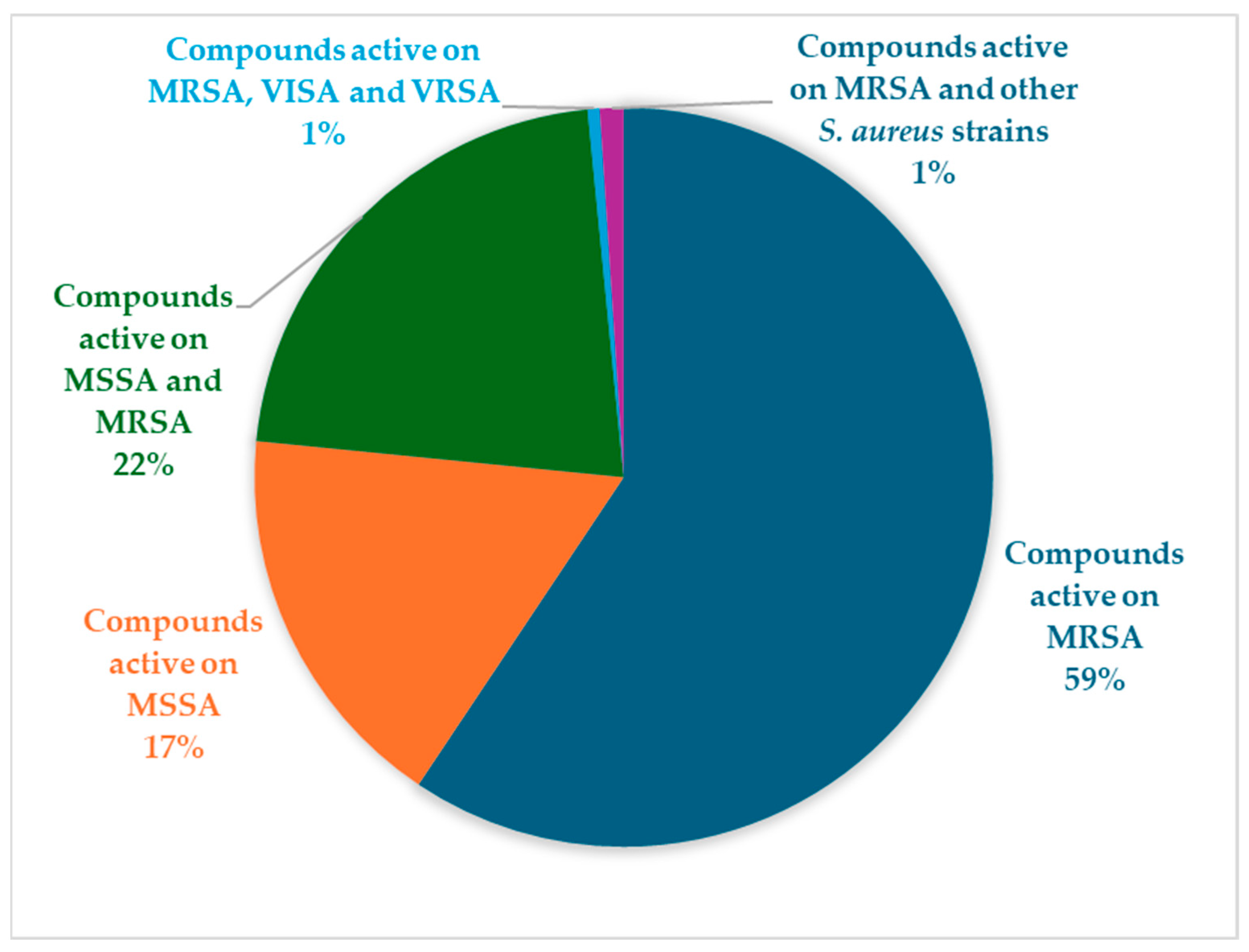
2.3.6. Spectrum of Activity Against S. aureus Strains
2.3.7. Structural Trends Associated with Anti-S. aureus Activity
2.3.8. Challenges and Future Perspectives
3. Marine-Derived Antibiotics: Advances, Bottlenecks, and Prospects in the Exploration of Marine Bacteria
3.1. Standard Methods for the Isolation and Identification of Antibacterial Metabolites
3.2. Genomic, Metagenomic, and In Silico Approaches for the Exploration of BGCs
3.3. Functional Analysis of Biosynthetic Pathways
3.4. Experimental Methods for Expression and Activation of BGCs
3.5. High-Throughput Screening, Analysis, and Identification Techniques for Bioactive Compounds
3.6. Synthesis and Engineering of Bioactive Compounds
3.7. Critical Evaluation, Limitations, and Perspectives
4. Conclusions
Author Contributions
Funding
Institutional Review Board Statement
Data Availability Statement
Conflicts of Interest
Abbreviations
| antiSMASH | Antibiotics & Secondary Metabolite Analysis Shell |
| BGC | Biosynthetic Gene Cluster |
| DNA | Deoxyribonucleic Acid |
| EtOAc | Ethyl Acetate |
| FDA | Food and Drug Administration |
| GC | Gas Chromatography |
| HGT | Horizontal Gene Transfer |
| HPLC | High-Performance Liquid Chromatography |
| HTS | High-Throughput Screening |
| IR | Infrared (Spectroscopy) |
| LC-MS | Liquid Chromatography–Mass Spectrometry |
| MeOH | Methanol |
| MDR | Multidrug-Resistant |
| MNPs | Marine Natural Products |
| MS | Mass Spectrometry |
| NGS | Next-Generation Sequencing |
| NMR | Nuclear Magnetic Resonance |
| NRPS | Non-Ribosomal Peptide Synthetase |
| OMICS | Comprehensive biological analysis approaches (genOMIC, transcriptOMIC, proteOMIC, metabolOMIC) |
| OSMACs | One Strain, Many Compounds |
| PCR | Polymerase Chain Reaction |
| PKS | Polyketide Synthase |
| PRISM | Prediction Informatics for Secondary Metabolomes |
| TAR | Transformation-Associated Recombination |
| UV-Vis | Ultraviolet–Visible (Spectroscopy) |
| WT | Wild Type |
References
- Tong, S.Y.C.; Davis, J.S.; Eichenberger, E.; Holland, T.L.; Fowler, V.G. Staphylococcus aureus Infections: Epidemiology, Pathophysiology, Clinical Manifestations, and Management. Clin. Microbiol. Rev. 2015, 28, 603–661. [Google Scholar] [CrossRef]
- Pinchuk, I.V.; Beswick, E.J.; Reyes, V.E. Staphylococcal enterotoxins. Toxins 2010, 2, 2177–2197. [Google Scholar] [CrossRef]
- Klevens, R.M.; Edwards, J.R.; Richards, C.L.; Horan, T.C.; Gaynes, R.P.; Pollock, D.A.; Cardo, D.M. Estimating Health Care-Associated Infections and Deaths in U.S. Hospitals, 2002. Public Health Rep. 2007, 122, 160–166. [Google Scholar] [CrossRef]
- Elston, D.M. Community-acquired methicillin-resistant Staphylococcus aureus. J. Am. Acad. Dermatol. 2007, 56, 1–16. [Google Scholar] [CrossRef] [PubMed]
- Naghavi, M.; Vollset, S.E.; Ikuta, K.S.; Swetschinski, L.R.; Gray, A.P.; Wool, E.E.; Aguilar, G.B.; Mestrovic, T.; Smith, T.; Han, C.; et al. Global burden of bacterial antimicrobial resistance 1990–2021: A systematic analysis with forecasts to 2050. Lancet 2024, 404, 1199–1226. [Google Scholar] [CrossRef]
- Sati, H.; Carrara, E.; Savoldi, A.; Hansen, P.; Garlasco, J.; Campagnaro, E.; Boccia, S.; Castillo-Polo, J.A.; Magrini, E.; Garcia-Vello, P.; et al. The WHO Bacterial Priority Pathogens List 2024: A prioritisation study to guide research, development, and public health strategies against antimicrobial resistance. Lancet Infect. Dis. 2025, 25, 1033–1043. [Google Scholar] [CrossRef]
- Abraham, E.P.; Chain, E. An enzyme from bacteria able to destroy penicillin. Nature 1940, 146, 837. [Google Scholar] [CrossRef]
- Reynolds, L.A.; Tansey, E.M. Superbugs and Superdrugs: A History of MRSA; Wellcome Trust Centre for the History of Medicine at UCL: London, UK, 2008; Available online: https://qmro.qmul.ac.uk/xmlui/handle/123456789/2768 (accessed on 28 April 2025).
- Parker, M.T.; Jevons, M.P. A survey of methicillin resistance in Staphylococcus aureus. Postgrad. Med. J. 1964, 40, 170–178. [Google Scholar] [CrossRef] [PubMed]
- Hiramatsu, K.; Hanaki, H.; Ino, T.; Yabuta, K.; Oguri, T.; Tenover, F.C. Methicillin-resistant Staphylococcus aureus clinical strain with reduced vancomycin susceptibility. J. Antimicrob. Chemother. 1997, 40, 135–136. [Google Scholar] [CrossRef]
- Sievert, D.M.; Boulton, M.L.; Stoltman, G.; Johnson, D.; Stobierski, M.G.; Downes, F.P.; Somsel, P.A.; Rudrik, J.T.; Brown, W.; Hafeez, W.; et al. Staphylococcus aureus Resistant to Vancomycin—United States, 2002. 2002. Available online: https://www.cabidigitallibrary.org/doi/full/10.5555/20023113747 (accessed on 28 April 2025).
- McNeil, J.C.; Sommer, L.M.; Vallejo, J.G.; Hulten, K.G.; Kaplan, S.L.; Flores, A.R. Reduced Ceftaroline Susceptibility among Invasive MRSA Infections in Children: A Clinical and Genomic Investigation. Antimicrob. Agents Chemother. 2022, 66, e0074522. [Google Scholar] [CrossRef]
- Banerjee, R.; Gretes, M.; Basuino, L.; Strynadka, N.; Chambers, H.F. In vitro selection and characterization of ceftobiprole-resistant methicillin-resistant Staphylococcus aureus. Antimicrob. Agents Chemother. 2008, 52, 2089–2096. [Google Scholar] [CrossRef]
- Jean, S.S.; Hsueh, S.C.; Lee, W.S.; Hsueh, P.R. Cefiderocol: A promising antibiotic against multidrug-resistant Gram-negative bacteria. Expert Rev. Anti-Infect. Ther. 2019, 17, 307–309. [Google Scholar] [CrossRef]
- de la Rosa, J.M.O.; Fernández, M.A.; Rodríguez-Villodres, Á.; Casimiro-Soriguer, C.S.; Cisneros, J.M.; Lepe, J.A. High-level delafloxacin resistance through the combination of two different mechanisms in Staphylococcus aureus. Int. J. Antimicrob. Agents 2023, 61, 106795. [Google Scholar] [CrossRef] [PubMed]
- Stefani, S.; Bongiorno, D.; Mongelli, G.; Campanile, F. Linezolid Resistance in Staphylococci. Pharmaceuticals 2010, 3, 1988–2006. [Google Scholar] [CrossRef]
- Bourles, A.; Tristan, A.; Vandenesch, F.; Bes, M.; Laurent, F.; Ranc, A.-G.; Kainiu, M.; Gourinat, A.-C.; Biron, A.; Cazarola, C.; et al. A fusidic acid-resistant (PVL+) clone is associated with the increase in methicillin-resistant Staphylococcus aureus in New Caledonia. J. Glob. Antimicrob. Resist. 2022, 30, 363–369. [Google Scholar] [CrossRef]
- Nong, Y.; Taiaroa, G.; Pasricha, S.; Guérillot, R.; Monk, I.R.; Baines, S.L.; Carter, G.P.; Howden, B.P.; Williamson, D.A. Clinical relevance of topical antibiotic use in co-selecting for multidrug-resistant Staphylococcus aureus: Insights from in vitro and ex vivo models. Antimicrob. Agents Chemother. 2023, 95, e02048-20. [Google Scholar]
- Watkins, R.R.; Holubar, M.; David, M.Z. Antimicrobial Resistance in Methicillin-Resistant Staphylococcus aureus to Newer Antimicrobial Agents. Antimicrob. Agents Chemother. 2019, 63, e01216-19. [Google Scholar] [CrossRef] [PubMed]
- Allergie Aux Beta-Lactamines. Available online: https://www.objectif-preservation-antibiotiques.ch/conseils-bonnes-pratiques/article/2018/05/04/allergie-aux-beta-lactamines (accessed on 16 October 2025).
- Fuda, C.C.S.; Fisher, J.F.; Mobashery, S. Beta-lactam resistance in Staphylococcus aureus: The adaptive resistance of a plastic genome. Cell. Mol. Life Sci. 2005, 62, 2617–2633. [Google Scholar] [CrossRef]
- Fishovitz, J.; Hermoso, J.A.; Chang, M.; Mobashery, S. Penicillin-Binding Protein 2a of Methicillin-Resistant Staphylococcus aureus. IUBMB Life 2014, 66, 572–577. [Google Scholar] [CrossRef]
- Périchon, B.; Courvalin, P. VanA-Type Vancomycin-Resistant Staphylococcus aureus. Antimicrob. Agents Chemother. 2009, 53, 4580–4587. [Google Scholar] [CrossRef] [PubMed]
- Howden, B.P.; Davies, J.K.; Johnson, P.D.R.; Stinear, T.P.; Grayson, M.L. Reduced Vancomycin Susceptibility in Staphylococcus aureus, Including Vancomycin-Intermediate and Heterogeneous Vancomycin-Intermediate Strains: Resistance Mechanisms, Laboratory Detection, and Clinical Implications. Clin. Microbiol. Rev. 2010, 23, 99–139. [Google Scholar] [CrossRef]
- Shokravi, Z.; Mehrad, L.; Ramazani, A. Detecting the frequency of aminoglycoside modifying enzyme encoding genes among clinical isolates of methicillin-resistant Staphylococcus aureus. BioImpacts 2015, 5, 87–91. [Google Scholar] [CrossRef] [PubMed][Green Version]
- Fatholahzadeh, B.; Emaneini, M.; Feizabadi, M.M.; Sedaghat, H.; Aligholi, M.; Taherikalani, M.; Jabalameli, F. Characterisation of genes encoding aminoglycoside-modifying enzymes among meticillin-resistant Staphylococcus aureus isolated from two hospitals in Tehran, Iran. Int. J. Antimicrob. Agents 2009, 33, 264–265. [Google Scholar] [CrossRef]
- Khosravi, A.D.; Jenabi, A.; Montazeri, E.A. Distribution of genes encoding resistance to aminoglycoside modifying enzymes in methicillin-resistant Staphylococcus aureus (MRSA) strains. Kaohsiung J. Med. Sci. 2017, 33, 587–593. [Google Scholar] [CrossRef]
- Muñoz-Bellido, J.L.; Manzanares, M.A.; Andrés, J.A.M.; Zufiaurre, M.N.G.; Ortiz, G.; Hernández, M.S.; García-Rodríguez, M.S. Efflux Pump-Mediated Quinolone Resistance in Staphylococcus aureus Strains Wild Type for gyrA, gyrB, grlA, and norA. Antimicrob. Agents Chemother. 1999, 43, 354–356. [Google Scholar] [CrossRef]
- Ince, D.; Hooper, D.C. Quinolone Resistance Due to Reduced Target Enzyme Expression. J. Bacteriol. 2003, 185, 6883. [Google Scholar] [CrossRef] [PubMed]
- Miklasińska-Majdanik, M. Mechanisms of Resistance to Macrolide Antibiotics among Staphylococcus aureus. Antibiotics 2021, 10, 1406. [Google Scholar] [CrossRef] [PubMed]
- González-López, A.; Selmer, M. Mechanisms of fusidic acid resistance. Biochem. Soc. Trans. 2025, 53, 1011–1022. [Google Scholar] [CrossRef]
- Vázquez-Sánchez, D.; Rodríguez-López, P. Biofilm Formation of Staphylococcus aureus. In Staphylococcus aureus; Academic Press: New York, NY, USA, 2018; pp. 87–103. [Google Scholar] [CrossRef]
- Kranjec, C.; Morales Angeles, D.; Torrissen Mårli, M.; Fernández, L.; García, P.; Kjos, M.; Diep, D.B. Staphylococcal Biofilms: Challenges and Novel Therapeutic Perspectives. Antibiotics 2021, 10, 131. [Google Scholar] [CrossRef]
- Lessa de Menezes, I.; Moura Pone, S.; da Silva Pone, M.V. Clinical, demographic characteristics and antimicrobial resistance profile of Staphylococcus aureus isolated in clinical samples from pediatric patients in a tertiary hospital in Rio de Janeiro: 7-year longitudinal study. BMC Infect. Dis. 2024, 24, 1081. [Google Scholar] [CrossRef]
- Mostofsky, E.; Lipsitch, M.; Regev-Yochay, G. Is methicillin-resistant Staphylococcus aureus replacing methicillin-susceptible S. aureus? J. Antimicrob. Chemother. 2011, 66, 2199–2214. [Google Scholar] [CrossRef]
- Cosgrove, S.E.; Sakoulas, G.; Perencevich, E.N.; Schwaber, M.J.; Karchmer, A.W.; Carmeli, Y. Comparison of mortality associated with methicillin-resistant and methicillin-susceptible Staphylococcus aureus bacteremia: A meta-analysis. Clin. Infect. Dis. 2003, 36, 53–59. [Google Scholar] [CrossRef]
- Miyakis, S.; Brentnall, S.; Masso, M.; Reynolds, G.; Byrne, M.K.; Newton, P.; Crawford, S.; Fish, J.; Nicholas, B.; Hill, T.; et al. Key predictors and burden of meticillin-resistant Staphylococcus aureus infection in comparison with meticillin-susceptible S. aureus infection in an Australian hospital setting. J. Hosp. Infect. 2022, 129, 41–48. [Google Scholar] [CrossRef] [PubMed]
- López-Cortés, L.E.; Gálvez-Acebal, J.; Rodríguez-Baño, J. Therapy of Staphylococcus aureus bacteremia: Evidences and challenges. Enferm. Infecc. Microbiol. Clin. 2020, 38, 489–497. [Google Scholar] [CrossRef] [PubMed]
- Shariati, A.; Dadashi, M.; Moghadam, M.T.; van Belkum, A.; Yaslianifard, S.; Darban-Sarokhalil, D. Global prevalence and distribution of vancomycin resistant, vancomycin intermediate and heterogeneously vancomycin intermediate Staphylococcus aureus clinical isolates: A systematic review and meta-analysis. Sci. Rep. 2020, 10, 12689. [Google Scholar] [CrossRef]
- Jaspard, M.; Butel, N.; Guillot, H.; Peytavin, G.; Veziris, N.; Caumes, E.; Petitjean, G.; Marogot-Outtandy, D.; El Helali, N.; Pourcher, V. Tuberculose MDR/XDR: Tolérance d’un traitement prolongé par linézolide. Méd. Mal. Infect. 2018, 48, S34. [Google Scholar] [CrossRef]
- Meireles, V.D.; Airaud, C.; Xuereb, F.; Bacle, A.; Lazaro, P.; Lahouati, M. Toxicité musculaire de la daptomycine forte dose: Prévalence et impact des co-prescriptions à risque. Méd. Mal. Infect. Form. 2024, 3, S51. [Google Scholar] [CrossRef]
- Idrees, M.; Sawant, S.; Karodia, N.; Rahman, A. Staphylococcus aureus Biofilm: Morphology, Genetics, Pathogenesis and Treatment Strategies. Int. J. Environ. Res. Public Health 2021, 18, 7602. [Google Scholar] [CrossRef]
- Zhen, X.; Lundborg, C.S.; Zhang, M.; Sun, X.; Li, Y.; Hu, X.; Gu, S.; Gu, Y.; Wei, J.; Dong, H. Clinical and economic impact of methicillin-resistant Staphylococcus aureus: A multicentre study in China. Sci. Rep. 2020, 10, 3900. [Google Scholar] [CrossRef]
- Diener, A.; Wang, H.; Nkangu, M. Coûts des hôpitaux et des ressources connexes associés aux infections résistantes aux antimicrobiens au Canada, 2019. Util. Intend. Antimicrob. 2022, 48, 582. [Google Scholar] [CrossRef]
- Margat, E.; Dargère, S.; Daurel, C.; Fines-Guyon, M.; Michon, J.; Verdon, R.; Cattoir, V. Endocardite à Staphylococcus aureus communautaire résistant à la méticilline appartenant au clone émergent Géraldine: Un diagnostic microbiologique difficile. Méd. Mal. Infect. 2013, 43, 299–301. [Google Scholar] [CrossRef] [PubMed]
- Tacconelli, E.; Carrara, E.; Savoldi, A.; Harbarth, S.; Mendelson, M.; Monnet, D.L.; Pulcini, C.; Kahlmeter, G.; Kluytmans, J.; Carmeli, Y.; et al. Discovery, research, and development of new antibiotics: The WHO priority list of antibiotic-resistant bacteria and tuberculosis. Lancet Infect. Dis. 2018, 18, 318–327. [Google Scholar] [CrossRef]
- Pranckutė, R. Web of Science (WoS) and Scopus: The Titans of Bibliographic Information in Today’s Academic World. Publications 2021, 9, 12. [Google Scholar] [CrossRef]
- MarinLit—A Database of the Marine Natural Products Literature. Available online: https://marinlit.rsc.org/ (accessed on 23 September 2025).
- Newman, D.J.; Cragg, G.M. Natural products as sources of new drugs over the nearly four decades from 01/1981 to 09/2019. J. Nat. Prod. 2020, 83, 770–803. [Google Scholar] [CrossRef]
- Hou, X.M.; Hai, Y.; Gu, Y.C.; Wang, C.Y.; Shao, C.L. Chemical and Bioactive Marine Natural Products of Coral-Derived Microorganisms (2015–2017). Curr. Med. Chem. 2019, 26, 6930–6941. [Google Scholar] [CrossRef]
- Naqvi, S.A.R.; Sherazi, T.A.; Hassan, S.U.; Shahzad, S.A.; Faheem, Z. Anti-inflammatory, anti-infectious and anti-cancer potential of marine algae and sponge: A review. Eur. J. Inflamm. 2022, 20, 20587392221075514. [Google Scholar] [CrossRef]
- Nawaz, T.; Gu, L.; Fahad, S.; Saud, S.; Jiang, Z.; Hassan, S.; Harrison, M.T.; Liu, K.; Khan, M.A.; Liu, H.; et al. A comprehensive review of the therapeutic potential of cyanobacterial marine bioactives: Unveiling the hidden treasures of the sea. Food Energy Secur. 2023, 12, e495. [Google Scholar] [CrossRef]
- Giordano, D. Bioactive Molecules from Extreme Environments. Mar. Drugs 2020, 18, 640. [Google Scholar] [CrossRef]
- Poli, A.; Finore, I.; Romano, I.; Gioiello, A.; Lama, L.; Nicolaus, B. Microbial Diversity in Extreme Marine Habitats and Their Biomolecules. Microorganisms 2017, 5, 25. [Google Scholar] [CrossRef]
- Somero, G.N. Solutions: How adaptive changes in cellular fluids enable marine life to cope with abiotic stressors. Mar. Life Sci. Technol. 2022, 4, 389–413. [Google Scholar] [CrossRef] [PubMed]
- Carroll, A.R.; Copp, B.R.; Davis, R.A.; Keyzers, R.A.; Prinsep, M.R. Marine natural products. Nat. Prod. Rep. 2023, 40, 275–325. [Google Scholar] [CrossRef] [PubMed]
- Lasalo, M.; Jauffrais, T.; Georgel, P.; Matsui, M. Marine Microorganism Molecules as Potential Anti-Inflammatory Therapeutics. Mar. Drugs 2024, 22, 405. [Google Scholar] [CrossRef]
- Mayer, A.M.S.; Mayer, V.A.; Swanson-Mungerson, M.; Pierce, M.L.; Rodríguez, A.D.; Nakamura, F.; Taglialatela-Scafati, O. Marine Pharmacology in 2019–2021: Marine Compounds with Antibacterial, Antidiabetic, Antifungal, Anti-Inflammatory, Antiprotozoal, Antituberculosis and Antiviral Activities; Affecting the Immune and Nervous Systems, and Other Miscellaneous Mechanisms of Action. Mar. Drugs 2024, 22, 309. [Google Scholar] [CrossRef]
- Moghaddam, J.A.; Jautzus, T.; Alanjary, M.; Beemelmanns, C. Recent highlights of biosynthetic studies on marine natural products. Org. Biomol. Chem. 2021, 19, 123–140. [Google Scholar] [CrossRef]
- Negi, A.; Kuo, C.-W.; Hazam, P.K.; Yeh, J.-C.; Lin, W.-C.; Lou, Y.-C.; Yu, C.-Y.; Yu, T.-L.; Lu, T.-M.; Chen, J.-Y. Disruption of MRSA Biofilm and Virulence by Deep-Sea Probiotics: Impacts on Energy metabolism and Host Antimicrobial Peptides. Probiotics Antimicrob. Proteins 2025, 17, 2394–2416. [Google Scholar] [CrossRef]
- Sermkaew, N.; Atipairin, A.; Boonruamkaew, P.; Krobthong, S.; Aonbangkhen, C.; Uchiyama, J.; Yingchutrakul, Y.; Songnaka, N. Novel Anti-MRSA Peptide from Mangrove-Derived Virgibacillus chiguensis FN33 Supported by Genomics and Molecular Dynamics. Mar. Drugs 2025, 23, 209. [Google Scholar] [CrossRef] [PubMed]
- Ahmad, M.; Tahir, M.; Hong, Z.; Zia, M.A.; Rafeeq, H.; Ahmad, M.S.; Rehman, S.U.; Sun, J. Plant and marine-derived natural products: Sustainable pathways for future drug discovery and therapeutic development. Front. Pharmacol. 2025, 15, 1497668. [Google Scholar] [CrossRef]
- Blunt, J.W.; Copp, B.R.; Munro, M.H.G.; Northcote, P.T.; Prinsep, M.R. Marine natural products. Nat. Prod. Rep. 2006, 23, 26–78. [Google Scholar] [CrossRef] [PubMed]
- Bultel-Poncé, V.; Debitus, C.; Berge, J.P.; Cerceau, C.; Guyot, M. Metabolites from the sponge-associated bacterium Micrococcus luteus. J. Mar. Biotechnol. 1998, 6, 233–236. [Google Scholar]
- Liu, M.; El-Hossary, E.M.; Oelschlaeger, T.A.; Donia, M.S.; Quinn, R.J.; Abdelmohsen, U.R. Potential of marine natural products against drug-resistant bacterial infections. Lancet Infect. Dis. 2019, 19, e237–e245. [Google Scholar] [CrossRef]
- Modolon, F.; Barno, A.R.; Villela, H.D.M.; Peixoto, R.S. Ecological and biotechnological importance of secondary metabolites produced by coral-associated bacteria. J. Appl. Microbiol. 2020, 129, 1441–1457. [Google Scholar] [CrossRef] [PubMed]
- Zan, J.; Li, Z.; Tianero, M.D.; Davis, J.; Hill, R.T.; Donia, M.S. A microbial factory for defensive kahalalides in a tripartite marine symbiosis. Science 2019, 364, eaaw6732. [Google Scholar] [CrossRef] [PubMed]
- Riyanti; Balansa, W.; Liu, Y.; Sharma, A.; Mihajlovic, S.; Hartwig, C.; Leis, B.; Rieuwpassa, F.J.; Ijong, F.G.; Wägele, H.; et al. Selection of sponge-associated bacteria with high potential for the production of antibacterial compounds. Sci. Rep. 2020, 10, 19614. [Google Scholar] [CrossRef]
- Lopanik, N.B. Chemical defensive symbioses in the marine environment. Funct. Ecol. 2014, 28, 328–340. [Google Scholar] [CrossRef]
- Blunt, J.W.; Copp, B.R.; Hu, W.P.; Munro, M.H.G.; Northcote, P.T.; Prinsep, M.R. Marine natural products. Nat. Prod. Rep. 2008, 25, 35–94. [Google Scholar] [CrossRef]
- Barzkar, N.; Sukhikh, S.; Babich, O. Study of marine microorganism metabolites: New resources for bioactive natural products. Front. Microbiol. 2024, 14, 1285902. [Google Scholar] [CrossRef]
- Voser, T.M.; Campbell, M.D.; Carroll, A.R. How different are marine microbial natural products compared to their terrestrial counterparts? Nat. Prod. Rep. 2022, 39, 7–19. [Google Scholar] [CrossRef]
- Wiese, J.; Imhoff, J.F. Marine bacteria and fungi as promising source for new antibiotics. Drug Dev. Res. 2019, 80, 24–27. [Google Scholar] [CrossRef]
- Stincone, P.; Brandelli, A. Marine bacteria as source of antimicrobial compounds. Crit. Rev. Biotechnol. 2020, 40, 306–319. [Google Scholar] [CrossRef]
- Zotchev, S.B. Marine actinomycetes as an emerging resource for the drug development pipelines. J. Biotechnol. 2012, 158, 168–175. [Google Scholar] [CrossRef]
- Dhakal, D.; Pokhrel, A.R.; Shrestha, B.; Sohng, J.K. Marine Rare Actinobacteria: Isolation, Characterization, and Strategies for Harnessing Bioactive Compounds. Front. Microbiol. 2017, 8, 1106. [Google Scholar] [CrossRef] [PubMed]
- Gohain, A.; Manpoong, C.; Saikia, R.; De Mandal, S. Chapter 9—Actinobacteria: Diversity and biotechnological applications. In Recent Advancements in Microbial Diversity; De Mandal, S., Bhatt, P., Eds.; Academic Press: New York, NY, USA, 2020; pp. 217–231. [Google Scholar] [CrossRef]
- Schorn, M.A.; Alanjary, M.M.; Aguinaldo, K.; Korobeynikov, A.; Podell, S.; Patin, N.; Lincecum, T.; Jensen, P.R.; Ziemert, N.; Moore, B.S. Sequencing rare marine actinomycete genomes reveals high density of unique natural product biosynthetic gene clusters. Microbiology 2016, 162, 2075–2086. [Google Scholar] [CrossRef] [PubMed]
- McArthur, K.A.; Mitchell, S.S.; Tsueng, G.; Rheingold, A.; White, D.J.; Grodberg, J.; Lam, K.S.; Potts, B.C.M. Lynamicins A−E, Chlorinated Bisindole Pyrrole Antibiotics from a Novel Marine Actinomycete. J. Nat. Prod. 2008, 71, 1732–1737. [Google Scholar] [CrossRef]
- Zhang, F.; Braun, D.R.; Chanana, S.; Rajski, S.R.; Bugni, T.S. Phallusialides A–E, Pyrrole-Derived Alkaloids Discovered from a Marine-Derived Micromonospora sp. Bacterium Using MS-Based Metabolomics Approaches. J. Nat. Prod. 2019, 82, 3432–3439. [Google Scholar] [CrossRef]
- Uzair, B.; Ahmed, N.; Ahmad, V.U.; Kousar, F. A new antibacterial compound produced by an indigenous marine bacteria—Fermentation, isolation, and biological activity. Nat. Prod. Res. 2006, 20, 1326–1331. [Google Scholar] [CrossRef]
- Lee, D.-S.; Eom, S.-H.; Jeong, S.-Y.; Shin, H.J.; Je, J.-Y.; Lee, E.-W.; Chung, Y.-H.; Kim, Y.-M.; Kang, C.-K.; Lee, M.-S. Anti-methicillin-resistant Staphylococcus aureus (MRSA) substance from the marine bacterium Pseudomonas sp. UJ-6. Environ. Toxicol. Pharmacol. 2013, 35, 171–177. [Google Scholar] [CrossRef] [PubMed]
- Castro-Falcón, G.; Straetener, J.; Bornikoel, J.; Reimer, D.; Purdy, T.N.; Berscheid, A.; Schempp, F.M.; Liu, D.Y.; Linington, R.G.; Brötz-Oesterhelt, H.; et al. Antibacterial Marinopyrroles and Pseudilins Act as Protonophores. ACS Chem. Biol. 2024, 19, 743–752. [Google Scholar] [CrossRef]
- Hughes, C.C.; Kauffman, C.A.; Jensen, P.R.; Fenical, W. Structures, Reactivities, and Antibiotic Properties of the Marinopyrroles A−F. J. Org. Chem. 2010, 75, 3240–3250. [Google Scholar] [CrossRef]
- Zhang, X.; Chen, L.; Chai, W.; Lian, X.Y.; Zhang, Z. A unique indolizinium alkaloid streptopertusacin A and bioactive bafilomycins from marine-derived Streptomyces sp. HZP-2216E. Phytochemistry 2017, 144, 119–126. [Google Scholar] [CrossRef]
- Song, Y.; Yang, J.; Yu, J.; Li, J.; Yuan, J.; Wong, N.-K.; Ju, J. Chlorinated bis-indole alkaloids from deep-sea derived Streptomyces sp. SCSIO 11791 with antibacterial and cytotoxic activities. J. Antibiot. 2020, 73, 542–547. [Google Scholar] [CrossRef]
- Newaz, A.W.; Yong, K.; Lian, X.Y.; Zhang, Z. Streptoindoles A–D, novel antimicrobial indole alkaloids from the marine-associated actinomycete Streptomyces sp. ZZ1118. Tetrahedron 2022, 104, 132598. [Google Scholar] [CrossRef]
- Zhang, D.; Yi, W.; Ge, H.; Zhang, Z.; Wu, B. Bioactive Streptoglutarimides A–J from the Marine-Derived Streptomyces sp. ZZ741. J. Nat. Prod. 2019, 82, 2800–2808. [Google Scholar] [CrossRef] [PubMed]
- Xu, X.; Han, J.; Lin, R.; Polyak, S.W.; Song, F. Two new piperazine-triones from a marine-derived Streptomycetes sp. strain SMS636. Mar. Drugs 2019, 17, 186. [Google Scholar] [CrossRef]
- Lewis, K. Streptonigrin kills bacteria by stealth. Proc. Natl. Acad. Sci. USA 2024, 121, e2320942121. [Google Scholar] [CrossRef] [PubMed]
- Zha, X.; Li, Y.; Zhao, H.; Tan, Y.; Zhou, S. Pyrrolidine, Piperazine, and Diazinane Alkaloids from the Marine Bacterium Strain Vibrio ruber ZXR-93. Molecules 2024, 29, 4446. [Google Scholar] [CrossRef]
- Huang, P.; Xie, F.; Ren, B.; Wang, Q.; Wang, J.; Wang, Q.; Abdel-Mageed, W.M.; Liu, M.; Han, J.; Oyeleye, A.; et al. Anti-MRSA and anti-TB metabolites from marine-derived Verrucosispora sp. MS100047. Appl. Microbiol. Biotechnol. 2016, 100, 7437–7447. [Google Scholar] [CrossRef]
- Siddharth, S.; Rai, V.R. Isolation and characterization of bioactive compounds with antibacterial, antioxidant and enzyme inhibitory activities from marine-derived rare actinobacteria, Nocardiopsis sp. SCA21. Microb. Pathog. 2019, 137, 103775. [Google Scholar] [CrossRef]
- Chianese, G.; Esposito, F.P.; Parrot, D.; Ingham, C.; De Pascale, D.; Tasdemir, D. Linear Aminolipids with Moderate Antimicrobial Activity from the Antarctic Gram-Negative Bacterium Aequorivita sp. Mar. Drugs 2018, 16, 187. [Google Scholar]
- Isnansetyo, A.; Kamei, Y. Anti-methicillin-resistant Staphylococcus aureus (MRSA) activity of MC21-B, an antibacterial compound produced by the marine bacterium Pseudoalteromonas phenolica O-BC30T. Int. J. Antimicrob. Agents 2009, 34, 131–135. [Google Scholar] [CrossRef]
- Kurata, A.; Sugiura, M.; Kokoda, K.; Tsujimoto, H.; Numata, T.; Kato, C.; Nakasone, K.; Kishimoto, N. Taxonomy of actinomycetes in the deep-sea Calyptogena communities and characterization of the antibacterial compound produced by Actinomadura sp. DS-MS-114. Biotechnol. Biotechnol. Equip. 2017, 31, 1000–1006. [Google Scholar] [CrossRef]
- Soria-Mercado, I.E.; Prieto-Davo, A.; Jensen, P.R.; Fenical, W. Antibiotic Terpenoid Chloro-Dihydroquinones from a New Marine Actinomycete. J. Nat. Prod. 2005, 68, 904–910. [Google Scholar] [CrossRef]
- Chang, Y.; Che, Q.; Xing, L.; Ma, C.; Han, Y.; Zhu, T.; Pfeifer, B.A.; Peng, J.; Zhang, G.; Li, D. Antibacterial p-Terphenyl with a Rare 2,2’-Bithiazole Substructure and Related Compounds Isolated from the Marine-Derived Actinomycete Nocardiopsis sp. HDN154086. J. Nat. Prod. 2021, 84, 1226–1231. [Google Scholar] [CrossRef]
- Jiang, Z.; Boyd, K.G.; Mearns-spragg, A.; Adams, D.R.; Wright, P.C.; Burgess, J.G. Two Diketopiperazines and One Halogenated Phenol from Cultures of the Marine Bacterium, Pseudoalteromonas luteoviolacea. Nat. Prod. Lett. 2000, 14, 435–440. [Google Scholar] [CrossRef]
- Isnansetyo, A.; Kamei, Y. MC21-A, a Bactericidal Antibiotic Produced by a New Marine Bacterium, Pseudoalteromonas phenolica sp. nov. O-BC30T, against Methicillin-Resistant Staphylococcus aureus. Antimicrob. Agents Chemother. 2003, 47, 480–488. [Google Scholar] [CrossRef]
- da Silva, A.B.; Silveira, E.R.; Wilke, D.V.; Ferreira, E.G.; Costa-Lotufo, L.V.; Torres, M.C.M.; Ayala, A.P.; Costa, W.S.; Canuto, K.M.; de Araújo-Nobre, A.R.; et al. Antibacterial Salinaphthoquinones from a Strain of the Bacterium Salinispora arenicola Recovered from the Marine Sediments of St. Peter and St. Paul Archipelago, Brazil. J. Nat. Prod. 2019, 82, 1831–1838. [Google Scholar] [CrossRef]
- Miller, B.W.; Torres, J.P.; Tun, J.O.; Flores, M.S.; Forteza, I.; Rosenberg, G.; Haygood, M.G.; Schmidt, E.W.; Concepcion, G.P. Synergistic anti-methicillin-resistant Staphylococcus aureus (MRSA) activity and absolute stereochemistry of 7,8-dideoxygriseorhodin C. J. Antibiot. 2020, 73, 290–298. [Google Scholar] [CrossRef]
- Kim, M.C.; Cullum, R.; Hebishy, A.M.S.; Mohamed, H.A.; Faraag, A.H.I.; Salah, N.M.; Abdelfattah, M.S.; Fenical, W. Mersaquinone, A New Tetracene Derivative from the Marine-Derived Streptomyces sp. EG1 Exhibiting Activity against Methicillin-Resistant Staphylococcus aureus (MRSA). Antibiotics 2020, 9, 252. [Google Scholar] [CrossRef] [PubMed]
- Kim, M.C.; Li, Z.; Cullum, R.; Molinski, T.F.; Eid, M.A.G.; Hebishy, A.M.S.; Faraag, A.H.I.; Moneim, A.E.A.; Abdelfattah, M.S.; Fenical, W. Chlororesistoflavins A and B, Chlorinated Benzopyrene Antibiotics Produced by the Marine-Derived Actinomycete Streptomyces sp. Strain EG32. J. Nat. Prod. 2022, 85, 270–275. [Google Scholar] [CrossRef] [PubMed]
- Lacret, R.; Pérez-Victoria, I.; Oves-Costales, D.; de la Cruz, M.; Domingo, E.; Martín, J.; Díaz, C.; Vicente, F.; Genilloud, O.; Reyes, F. MDN-0170, a New Napyradiomycin from Streptomyces sp. Strain CA-271078. Mar. Drugs 2016, 14, 188. [Google Scholar] [CrossRef]
- Macherla, V.R.; Liu, J.; Sunga, M.; White, D.J.; Grodberg, J.; Teisan, S.; Lam, K.S.; Potts, B.C.M. Lipoxazolidinones A, B, and C: Antibacterial 4-Oxazolidinones from a Marine Actinomycete Isolated from a Guam Marine Sediment. J. Nat. Prod. 2007, 70, 1454–1457. [Google Scholar] [CrossRef] [PubMed]
- Lacerna, N.M.; Miller, B.W.; Lim, A.L.; Tun, J.O.; Robes, J.M.D.; Cleofas, M.J.B.; Lin, Z.; Salvador-Reyes, L.A.; Haygood, M.G.; Schmidt, E.W.; et al. Mindapyrroles A–C, Pyoluteorin Analogues from a Shipworm-Associated Bacterium. J. Nat. Prod. 2019, 82, 1024–1028. [Google Scholar] [CrossRef]
- Cho, E.; Kwon, O.-S.; Chung, B.; Lee, J.; Sun, J.; Shin, J.; Oh, K.-B. Antibacterial Activity of Chromomycins from a Marine-Derived Streptomyces microflavus. Mar. Drugs 2020, 18, 522. [Google Scholar] [CrossRef] [PubMed]
- Kaziro, Y.; Kamiyama, M. Inhibition of RNA polymerase reaction by chromomycin A3. Biochem. Biophys. Res. Commun. 1965, 19, 433–437. [Google Scholar] [CrossRef] [PubMed]
- Yi, W.; Li, Q.; Song, T.; Chen, L.; Li, X.-C.; Zhang, Z.; Lian, X.-Y. Isolation, structure elucidation, and antibacterial evaluation of the metabolites produced by the marine-sourced Streptomyces sp. ZZ820. Tetrahedron 2019, 75, 1186–1193. [Google Scholar] [CrossRef]
- Brucoli, F.; Natoli, A.; Marimuthu, P.; Borrello, M.T.; Stapleton, P.; Gibbons, S.; Schätzlein, A. Efficient synthesis and biological evaluation of proximicins A, B and C. Bioorg. Med. Chem. 2012, 20, 2019–2024. [Google Scholar] [CrossRef] [PubMed]
- Cao, D.D.; Do, T.Q.; Doan Thi Mai, H.; Vu Thi, Q.; Nguyen, M.A.; Le Thi, H.M.; Tran, D.T.; Chau, V.M.; Cong Thung, D.; Pham, V.C. Antimicrobial lavandulylated flavonoids from a sponge-derived actinomycete. Nat. Prod. Res. 2020, 34, 413–420. [Google Scholar] [CrossRef]
- Asolkar, R.N.; Singh, A.; Jensen, P.R.; Aalbersberg, W.; Carté, B.K.; Feussner, K.-D.; Subramani, R.; DiPasquale, A.; Rheingold, A.L.; Fenical, W. Marinocyanins, cytotoxic bromo-phenazinone meroterpenoids from a marine bacterium from the streptomycete clade MAR4. Tetrahedron 2017, 73, 2234–2241. [Google Scholar] [CrossRef]
- Carretero-Molina, D.; Ortiz-López, F.J.; Martín, J.; Oves-Costales, D.; Díaz, C.; de la Cruz, M.; Cautain, B.; Vicente, F.; Genilloud, O.; Reyes, F. New Napyradiomycin Analogues from Streptomyces sp. Strain CA-271078. Mar. Drugs 2020, 18, 22. [Google Scholar] [CrossRef]
- Saggese, A.; Culurciello, R.; Casillo, A.; Corsaro, M.M.; Ricca, E.; Baccigalupi, L. A Marine Isolate of Bacillus pumilus Secretes a Pumilacidin Active against Staphylococcus aureus. Mar. Drugs 2018, 16, 180. [Google Scholar] [CrossRef]
- Xiu, P.; Liu, R.; Zhang, D.; Sun, C. Pumilacidin-like Lipopeptides Derived from Marine Bacterium Bacillus sp. Strain 176 Suppress the Motility of Vibrio alginolyticus. Appl. Environ. Microbiol. 2017, 83, e00450-17. [Google Scholar] [CrossRef]
- Barsby, T.; Kelly, M.T.; Gagné, S.M.; Andersen, R.J. Bogorol A Produced in Culture by a Marine Bacillus sp. Reveals a Novel Template for Cationic Peptide Antibiotics. Org. Lett. 2001, 3, 437–440. [Google Scholar] [CrossRef]
- Friedrich, C.L.; Moyles, D.; Beveridge, T.J.; Hancock, R.E.W. Antibacterial Action of Structurally Diverse Cationic Peptides on Gram-Positive Bacteria. Antimicrob. Agents Chemother. 2000, 44, 2086–2092. [Google Scholar] [CrossRef]
- Tareq, F.S.; Shin, H.J. Bacilotetrins A and B, Anti-Staphylococcal Cyclic-Lipotetrapeptides from a Marine-Derived Bacillus subtilis. J. Nat. Prod. 2017, 80, 2889–2892. [Google Scholar] [CrossRef]
- A New Antimicrobial and Anticancer Peptide Producing by the Marine Deep Sediment Strain “Paenibacillus profundus” sp. nov. Sl 79. Available online: https://journals.sagepub.com/doi/epdf/10.1177/1934578X1300800326?src=getftr&utm_source=chemport&getft_integrator=chemport (accessed on 26 June 2025).
- Reynolds, K.A.; Luhavaya, H.; Li, J.; Dahesh, S.; Nizet, V.; Yamanaka, K.; Moore, B.S. Isolation and structure elucidation of lipopeptide antibiotic taromycin B from the activated taromycin biosynthetic gene cluster. J. Antibiot. 2018, 71, 333–338. [Google Scholar] [CrossRef]
- Sun, P.; Maloney, K.N.; Nam, S.-J.; Haste, N.M.; Raju, R.; Aalbersberg, W.; Jensen, P.R.; Nizet, V.; Hensler, M.E.; Fenical, W. Fijimycins A–C, three antibacterial etamycin-class depsipeptides from a marine-derived Streptomyces sp. Bioorg. Med. Chem. 2011, 19, 6557–6562. [Google Scholar] [CrossRef]
- Garcia-Mendoza, C. Studies on the mode of action of etamycin (viridogrisein). Biochim. Biophys. Acta (BBA)-Gen. Subj. 1965, 97, 394–396. [Google Scholar] [CrossRef]
- Wang, Q.; Zhang, Y.; Wang, M.; Tan, Y.; Hu, X.; He, H.; Xiao, C.; You, X.; Wang, Y.; Gan, M. Neo-actinomycins A and B, natural actinomycins bearing the 5H-oxazolo[4,5-b]phenoxazine chromophore, from the marine-derived Streptomyces sp. IMB094. Sci. Rep. 2017, 7, 3591. [Google Scholar] [CrossRef] [PubMed]
- Jiao, W.-H.; Yuan, W.; Li, Z.-Y.; Li, J.; Li, L.; Sun, J.-B.; Gui, Y.-H.; Wang, J.; Ye, B.-P.; Lin, H.-W. Anti-MRSA actinomycins D1–D4 from the marine sponge-associated Streptomyces sp. LHW52447. Tetrahedron 2018, 74, 5914–5919. [Google Scholar] [CrossRef]
- Zhen, X.; Gong, T.; Liu, F.; Zhang, P.-C.; Zhou, W.-Q.; Li, Y.; Zhu, P. A New Analogue of Echinomycin and a New Cyclic Dipeptide from a Marine-Derived Streptomyces sp. LS298. Mar. Drugs 2015, 13, 6947–6961. [Google Scholar] [CrossRef]
- Zhang, X.; Ye, X.; Chai, W.; Lian, X.Y.; Zhang, Z. New Metabolites and Bioactive Actinomycins from Marine-Derived Streptomyces sp. ZZ338. Mar. Drugs 2016, 14, 181. [Google Scholar] [CrossRef]
- Kizhakkekalam, V.K.; Chakraborty, K.; Joy, M. Oxygenated elansolid-type of polyketide spanned macrolides from a marine heterotrophic Bacillus as prospective antimicrobial agents against multidrug-resistant pathogens. Int. J. Antimicrob. Agents 2020, 55, 105892. [Google Scholar] [CrossRef]
- Gui, C.; Zhang, S.; Zhu, X.; Ding, W.; Huang, H.; Gu, Y.-C.; Duan, Y.; Ju, J. Antimicrobial Spirotetronate Metabolites from Marine-Derived Micromonospora harpali SCSIO GJ089. J. Nat. Prod. 2017, 80, 1594–1603. [Google Scholar] [CrossRef]
- Pérez-Bonilla, M.; Oves-Costales, D.; De la Cruz, M.; Kokkini, M.; Martín, J.; Vicente, F.; Genilloud, O.; Reyes, F. Phocoenamicins B and C, New Antibacterial Spirotetronates Isolated from a Marine Micromonospora sp. Mar. Drugs 2018, 16, 95. [Google Scholar]
- Williams, D.E.; Dalisay, D.S.; Chen, J.; Polishchuck, E.A.; Patrick, B.O.; Narula, G.; Ko, M.; Av-Gay, Y.; Li, H.; Magarvey, N.; et al. Aminorifamycins and Sporalactams Produced in Culture by a Micromonospora sp. Isolated from a Northeastern-Pacific Marine Sediment Are Potent Antibiotics. Org. Lett. 2017, 19, 766–769. [Google Scholar] [CrossRef] [PubMed]
- Gill, S.K.; Garcia, G.A. Rifamycin inhibition of WT and Rif-resistant Mycobacterium tuberculosis and Escherichia coli RNA polymerases in vitro. Tuberculosis 2011, 91, 361–369. [Google Scholar] [CrossRef]
- Xu, D.; Nepal, K.K.; Chen, J.; Harmody, D.; Zhu, H.; McCarthy, P.J.; Wright, A.E.; Wang, G. Nocardiopsistins A–C: New angucyclines with anti-MRSA activity isolated from a marine sponge-derived Nocardiopsis sp. HB-J378. Synth. Syst. Biotechnol. 2018, 3, 246–251. [Google Scholar] [CrossRef]
- Igarashi, M.; Sawa, R.; Umekita, M.; Hatano, M.; Arisaka, R.; Hayashi, C.; Ishizaki, Y.; Suzuki, M.; Kato, C. Sealutomicins, new enediyne antibiotics from the deep-sea actinomycete Nonomuraea sp. MM565M-173N2. J. Antibiot. 2021, 74, 291–299. [Google Scholar] [CrossRef]
- Astle, S.M.; Guggiari, S.; Frost, J.R.; Hepburn, H.B.; Klauber, D.J.; Christensen, K.E.; Burton, J.W. Enantioselective Synthesis of Sealutomicin C. J. Am. Chem. Soc. 2024, 146, 17757–17764. [Google Scholar] [CrossRef] [PubMed]
- Zhong, Y.; He, X.; Tao, W.; Feng, J.; Zhang, R.; Gong, H.; Tang, Z.; Huang, C.; He, Y. 2,4-Diacetylphloroglucinol (DAPG) derivatives rapidly eradicate methicillin-resistant Staphylococcus aureus without resistance development by disrupting membrane. Eur. J. Med. Chem. 2023, 261, 115823. [Google Scholar] [CrossRef] [PubMed]
- Isnansetyo, A.; Horikawa, M.; Kamei, Y. In vitro anti-methicillin-resistant Staphylococcus aureus activity of 2,4-diacetylphloroglucinol produced by Pseudomonas sp. AMSN isolated from a marine alga. J. Antimicrob. Chemother. 2001, 47, 724–725. [Google Scholar] [CrossRef]
- Singh, M.P.; Kong, F.; Janso, J.E.; Arias, D.A.; Suarez, P.A.; Bernan, V.S.; Petersen, P.J.; Weiss, W.J.; Carter, G.; Greenstein, M. Novel α-Pyrones Produced by a Marine Pseudomonas sp. F92S91 Taxonomy and Biological Activities. J. Antibiot. 2003, 56, 1033–1044. [Google Scholar] [CrossRef]
- Chakraborty, K.; Kizhakkekalam, V.K.; Joy, M. Chemical mining of heterotrophic Shewanella algae reveals anti-infective potential of macrocyclic polyketides against multidrug-resistant pathogens. Bioorg. Chem. 2021, 108, 104533. [Google Scholar] [CrossRef]
- Braña, A.F.; Sarmiento-Vizcaíno, A.; Pérez-Victoria, I.; Martín, J.; Otero, L.; Palacios-Gutiérrez, J.J.; Fernández, J.; Mohamedi, Y.; Fontanil, T.; Salmón, M.; et al. Desertomycin G, a New Antibiotic with Activity against Mycobacterium tuberculosis and Human Breast Tumor Cell Lines Produced by Streptomyces althioticus MSM3, Isolated from the Cantabrian Sea Intertidal Macroalgae Ulva sp. Mar. Drugs 2019, 17, 114. [Google Scholar] [CrossRef]
- Rodríguez, V.; Martín, J.; Sarmiento-Vizcaíno, A.; De la Cruz, M.; García, L.A.; Blanco, G.; Reyes, F. Anthracimycin B, a Potent Antibiotic against Gram-Positive Bacteria Isolated from Cultures of the Deep-Sea Actinomycete Streptomyces cyaneofuscatus M-169. Mar. Drugs 2018, 16, 406. [Google Scholar] [CrossRef]
- Huang, H.; Song, Y.; Li, X.; Wang, X.; Ling, C.; Qin, X.; Zhou, Z.; Li, Q.; Wei, X.; Ju, J. Abyssomicin Monomers and Dimers from the Marine-Derived Streptomyces koyangensis SCSIO 5802. J. Nat. Prod. 2018, 81, 1892–1898. [Google Scholar] [CrossRef]
- Yang, L.; Hou, L.; Li, H.; Li, W. Antibiotic angucycline derivatives from the deepsea-derived Streptomyces lusitanus. Nat. Prod. Res. 2020, 34, 3444–3450. [Google Scholar] [CrossRef] [PubMed]
- Furumai, T.; Eto, K.; Sasaki, T.; Higuchi, H.; Onaka, H.; Saito, N.; Fujita, T.; Naoki, H.; Igarashi, Y. TPU-0037-A, B, C and D, Novel Lydicamycin Congeners with Anti-MRSA Activity from Streptomyces platensis TP-A0598. J. Antibiot. 2002, 55, 873–880. [Google Scholar] [CrossRef] [PubMed]
- Akhter, N.; Liu, Y.; Auckloo, B.N.; Shi, Y.; Wang, K.; Chen, J.; Wu, X.; Wu, B. Stress-Driven Discovery of New Angucycline-Type Antibiotics from a Marine Streptomyces pratensis NA-ZhouS1. Mar. Drugs 2018, 16, 331. [Google Scholar] [CrossRef]
- Pan, H.-Q.; Zhang, S.-Y.; Wang, N.; Li, Z.-L.; Hua, H.-M.; Hu, J.-C.; Wang, S.-J. New Spirotetronate Antibiotics, Lobophorins H and I, from a South China Sea-Derived Streptomyces sp. 12A35. Mar. Drugs 2013, 11, 3891–3901. [Google Scholar] [CrossRef]
- Liang, Y.; Xie, X.; Chen, L.; Yan, S.; Ye, X.; Anjum, K.; Huang, H.; Lian, X.; Zhang, Z. Bioactive Polycyclic Quinones from Marine Streptomyces sp. 182SMLY. Mar. Drugs 2016, 14, 10. [Google Scholar] [CrossRef] [PubMed]
- Zhang, Z.; Chen, L.; Zhang, X.; Liang, Y.; Anjum, K.; Chen, L.; Lian, X.-Y. Bioactive Bafilomycins and a New N-Arylpyrazinone Derivative from Marine-derived Streptomyces sp. HZP-2216E. Planta Med. 2017, 83, 1405–1411. [Google Scholar] [CrossRef]
- Hu, Y.; Wang, M.; Wu, C.; Tan, Y.; Li, J.; Hao, X.; Duan, Y.; Guan, Y.; Shang, X.; Wang, Y.; et al. Identification and Proposed Relative and Absolute Configurations of Niphimycins C–E from the Marine-Derived Streptomyces sp. IMB7-145 by Genomic Analysis. J. Nat. Prod. 2018, 81, 178–187. [Google Scholar] [CrossRef]
- Keller, S.; Nicholson, G.; Drahl, C.; Sorensen, E.; Fiedler, H.P.; Süssmuth, R.D. Abyssomicins G and H and atrop-Abyssomicin C from the Marine Verrucosispora Strain AB-18-032. J. Antibiot. 2007, 60, 391–394. [Google Scholar] [CrossRef]
- Bihelovic, F.; Karadzic, I.; Matovic, R.; Saicic, R.N. Total synthesis and biological evaluation of (−)-atrop–abyssomicin C. Org. Biomol. Chem. 2013, 11, 5413–5424. [Google Scholar] [CrossRef] [PubMed]
- Keller, S.; Schadt, H.S.; Ortel, I.; Süssmuth, R.D. Action of atrop-Abyssomicin C as an Inhibitor of 4-Amino-4-deoxychorismate Synthase PabB. Angew. Chem. Int. Ed. 2007, 46, 8284–8286. [Google Scholar] [CrossRef] [PubMed]
- Bister, B.; Bischoff, D.; Ströbele, M.; Riedlinger, J.; Reicke, A.; Wolter, F.; Bull, A.T.; Zähner, H.; Fiedler, H.; Süssmuth, R.D. Abyssomicin C—A Polycyclic Antibiotic from a Marine Verrucosispora Strain as an Inhibitor of the p-Aminobenzoic Acid/Tetrahydrofolate Biosynthesis Pathway. Angew. Chem. Int. Ed. 2004, 43, 2574–2576. [Google Scholar] [CrossRef]
- Riedlinger, J.; Reicke, A.; Zähner, H.; Krismer, B.; Bull, A.T.; Maldonado, L.A.; Ward, A.C.; Goodfellow, M.; Bister, B.; Bischoff, D.; et al. Abyssomicins, Inhibitors of the para-Aminobenzoic Acid Pathway Produced by the Marine Verrucosispora Strain AB-18-032. J. Antibiot. 2004, 57, 271–279. [Google Scholar] [CrossRef]
- Kotakonda, M.; Marappan, M. The Antibacterial Efficacy of a Compound Extracted from Marine Sediment Bacterium Enterococcus lactis (S-2): A Comparative Analysis Through In-Vitro and In-Silico Assessments. Curr. Comput. Aided-Drug Des. 2025, 21, 972–983. [Google Scholar] [CrossRef]
- Zhang, Y.; Adnani, N.; Braun, D.R.; Ellis, G.A.; Barns, K.J.; Parker-Nance, S.; Guzei, I.A.; Bugni, T.S. Micromonohalimanes A and B: Antibacterial Halimane-Type Diterpenoids from a Marine Micromonospora Species. J. Nat. Prod. 2016, 79, 2968–2972. [Google Scholar] [CrossRef] [PubMed]
- Aoyagi, T.; Aoyama, T.; Kojima, F.; Hattori, S.; Honma, Y.; Hamada, M.; Takeuch, T. Cyclooctatin, a new inhibitor of lysophospholipase, produced by Streptomyces melanosporofaciens MI614-43F2. Taxonomy, production, isolation, physico-chemical properties and biological activities. J. Antibiot. 1992, 45, 1587–1591. [Google Scholar] [CrossRef]
- Papini, E.; de Bernard, M.; Bugnoli, M.; Milia, E.; Rappuoli, R.; Montecucco, C. Cell vacuolization induced by Helicobacter pylori: Inhibition by bafilomycins A1, B1, C1 and D. FEMS Microbiol. Lett. 1993, 113, 155–159. [Google Scholar] [CrossRef]
- Blunt, J.W.; Carroll, A.R.; Copp, B.R.; Davis, R.A.; Keyzers, R.A.; Prinsep, M.R. Marine natural products. Nat. Prod. Rep. 2018, 35, 8–53. [Google Scholar] [CrossRef]
- Cragg, G.M.; Newman, D.J. Natural products: A continuing source of novel drug leads. Biochim. Biophys. Acta BBA Gen. Subj. 2013, 1830, 3670–3695. [Google Scholar] [CrossRef]
- Hertweck, C. The Biosynthetic Logic of Polyketide Diversity. Angew. Chem. Int. Ed. 2009, 48, 4688–4716. [Google Scholar] [CrossRef] [PubMed]
- Medema, M.H.; Cimermancic, P.; Sali, A.; Takano, E.; Fischbach, M.A. A Systematic Computational Analysis of Biosynthetic Gene Cluster Evolution: Lessons for Engineering Biosynthesis. PLoS Comput. Biol. 2014, 10, e1004016. [Google Scholar] [CrossRef]
- Liu, Z.; Sun, W.; Hu, Z.; Wang, W.; Zhang, H. Marine Streptomyces-Derived Novel Alkaloids Discovered in the Past Decade. Mar. Drugs 2024, 22, 51. [Google Scholar] [CrossRef]
- Koba, M.; Konopa, J. Actinomycin D and its mechanisms of action. Postep. Hig. Med. Dosw. 2005, 59, 290–298. [Google Scholar]
- Chen, C.H.; Lu, T.K. Development and Challenges of Antimicrobial Peptides for Therapeutic Applications. Antibiotics 2020, 9, 24. [Google Scholar] [CrossRef] [PubMed]
- Li, T.; Yang, N.; Teng, D.; Mao, R.; Hao, Y.; Wang, X.; Wang, J. C-terminal mini-PEGylation of a marine peptide N6 had potent antibacterial and anti-inflammatory properties against Escherichia coli and Salmonella strains in vitro and in vivo. BMC Microbiol. 2022, 22, 128. [Google Scholar] [CrossRef] [PubMed]
- Magalhães, R.; Mil-Homens, D.; Cruz, S.; Oliveira, M. Marine Antimicrobial Peptides: Emerging Strategies Against Multidrug-Resistant and Biofilm-Forming Bacteria. Antibiotics 2025, 14, 808. [Google Scholar] [CrossRef]
- Robinson, K.R.; Mills, J.J.; Pierce, J.G. Expanded Structure–Activity Studies of Lipoxazolidinone Antibiotics. ACS Med. Chem. Lett. 2019, 10, 374–377. [Google Scholar] [CrossRef]
- Liu, X.; Xin, J.; Sun, Y.; Zhao, F.; Niu, C.; Liu, S. Terpenoids from Marine Sources: A Promising Avenue for New Antimicrobial Drugs. Mar. Drugs 2024, 22, 347. [Google Scholar] [CrossRef]
- Serafim, B.; Bernardino, A.R.; Freitas, F.; Torres, C.A.V. Recent Developments in the Biological Activities, Bioproduction, and Applications of Pseudomonas spp. Phenazines. Molecules 2023, 28, 1368. [Google Scholar] [CrossRef] [PubMed]
- Eltarahony, M.M.; Younis, S.S.; Abdel Salam, S.A.; Arafa, F.M. An insight into pyocyanin: Production, characterization, and evaluation of its in vitro antibacterial, antifungal, antibiofilm and in vivo anti-schistosomal potency. BMC Microbiol. 2025, 25, 532. [Google Scholar] [CrossRef]
- Pierson, L.S.; Pierson, E.A. Metabolism and function of phenazines in bacteria: Impacts on the behavior of bacteria in the environment and biotechnological processes. Appl. Microbiol. Biotechnol. 2010, 86, 1659–1670. [Google Scholar] [CrossRef] [PubMed]
- Yan, J.; Liu, W.; Cai, J.; Wang, Y.; Li, D.; Hua, H.; Cao, H. Advances in Phenazines over the Past Decade: Review of Their Pharmacological Activities, Mechanisms of Action, Biosynthetic Pathways and Synthetic Strategies. Mar. Drugs 2021, 19, 610. [Google Scholar] [CrossRef] [PubMed]
- Ma, M.; Li, M.; Wu, Z.; Liang, X.; Zheng, Q.; Li, D.; Wang, G.; An, T. The microbial biosynthesis of noncanonical terpenoids. Appl. Microbiol. Biotechnol. 2024, 108, 226. [Google Scholar] [CrossRef] [PubMed]
- Faleye, O.S.; Boya, B.R.; Lee, J.H.; Choi, I.; Lee, J. Halogenated Antimicrobial Agents to Combat Drug-Resistant Pathogens. Pharmacol. Rev. 2024, 76, 90–141. [Google Scholar] [CrossRef]
- Giurini, E.F.; Godla, A.; Gupta, K.H. Redefining bioactive small molecules from microbial metabolites as revolutionary anticancer agents. Cancer Gene Ther. 2024, 31, 187–206. [Google Scholar] [CrossRef]
- Sadaka, C.; Ellsworth, E.; Hansen, P.R.; Ewin, R.; Damborg, P.; Watts, J.L. Review on Abyssomicins: Inhibitors of the Chorismate Pathway and Folate Biosynthesis. Molecules 2018, 23, 1371. [Google Scholar] [CrossRef]
- Carroll, A.R.; Copp, B.R.; Grkovic, T.; Keyzers, R.A.; Prinsep, M.R. Marine natural products. Nat. Prod. Rep. 2025, 42, 257–297. [Google Scholar] [CrossRef]
- Qiu, Z.; Wu, Y.; Lan, K.; Wang, S.; Yu, H.; Wang, Y.; Wang, C.; Cao, S. Cytotoxic compounds from marine actinomycetes: Sources, Structures and Bioactivity. Acta Mater. Med. 2022, 1, 445–475. [Google Scholar] [CrossRef]
- Cushnie, T.P.T.; Cushnie, B.; Echeverría, J.; Fowsantear, W.; Thammawat, S.; Dodgson, J.L.; Law, S.; Clow, S.M. Bioprospecting for Antibacterial Drugs: A Multidisciplinary Perspective on Natural Product Source Material, Bioassay Selection and Avoidable Pitfalls. Pharm. Res. 2020, 37, 125. [Google Scholar] [CrossRef] [PubMed]
- Rutz, A.; Sorokina, M.; Galgonek, J.; Mietchen, D.; Willighagen, E.; Gaudry, A.; Graham, J.G.; Stephan, R.; Page, R.; Vondrášek, J.; et al. The LOTUS initiative for open knowledge management in natural products research. eLife 2022, 11, e70780. [Google Scholar] [CrossRef] [PubMed]
- Jiménez, C. Marine Natural Products in Medicinal Chemistry. ACS Med. Chem. Lett. 2018, 9, 959–961. [Google Scholar] [CrossRef]
- Montaser, R.; Luesch, H. Marine natural products: A new wave of drugs? Future Med. Chem. 2011, 3, 1475–1489. [Google Scholar] [CrossRef]
- Kwon, H.C.; Kauffman, C.A.; Jensen, P.R.; Fenical, W. Marinomycins A−D, Antitumor-Antibiotics of a New Structure Class from a Marine Actinomycete of the Recently Discovered Genus “Marinispora”. J. Am. Chem. Soc. 2006, 128, 1622–1632. [Google Scholar] [CrossRef]
- Newman, D.J.; Cragg, G.M. Natural Products as Sources of New Drugs from 1981 to 2014. J. Nat. Prod. 2016, 79, 629–661. [Google Scholar] [CrossRef]
- Cimermancic, P.; Medema, M.H.; Claesen, J.; Kurita, K.; Brown, L.C.W.; Mavrommatis, K.; Pati, A.; Godfrey, P.A.; Koehrsen, M.; Clardy, J.; et al. Insights into secondary metabolism from a global analysis of prokaryotic biosynthetic gene clusters. Cell 2014, 158, 412–421. [Google Scholar] [CrossRef] [PubMed]
- Medema, M.H. Computational Genomics of Specialized Metabolism: From Natural Product Discovery to Microbiome Ecology. mSystems 2018, 3, e00182–17. [Google Scholar] [CrossRef]
- Blin, K.; Shaw, S.; Augustijn, H.E.; Reitz, Z.L.; Biermann, F.; Alanjary, M.; Fetter, A.; Terlouw, B.R.; Metcalf, W.W.; Helfrich, E.J.N.; et al. antiSMASH 7.0: New and improved predictions for detection, regulation, chemical structures and visualisation. Nucleic Acids Res. 2023, 51, W46–W50. [Google Scholar] [CrossRef] [PubMed]
- Skinnider, M.A.; Merwin, N.J.; Johnston, C.W.; Magarvey, N.A. PRISM 3: Expanded prediction of natural product chemical structures from microbial genomes. Nucleic Acids Res. 2017, 45, W49–W54. [Google Scholar] [CrossRef]
- Letzel, A.-C.; Li, J.; Amos, G.C.A.; Millán-Aguiñaga, N.; Ginigini, J.; Abdelmohsen, U.R.; Gaudêncio, S.P.; Ziemert, N.; Moore, B.S.; Jensen, P.R. Genomic insights into specialized metabolism in the marine actinomycete Salinispora. Environ. Microbiol. 2017, 19, 3660–3673. [Google Scholar] [CrossRef]
- Rutledge, P.J.; Challis, G.L. Discovery of microbial natural products by activation of silent biosynthetic gene clusters. Nat. Rev. Microbiol. 2015, 13, 509–523. [Google Scholar] [CrossRef]
- Gui, C.; Li, Q.; Mo, X.; Qin, X.; Ma, J.; Ju, J. Discovery of a new family of Dieckmann cyclases essential to tetramic acid and pyridone-based natural products biosynthesis. Org. Lett. 2015, 17, 628–631. [Google Scholar] [CrossRef]
- Yamanaka, K.; Reynolds, K.A.; Kersten, R.D.; Ryan, K.S.; Gonzalez, D.J.; Nizet, V.; Dorrestein, P.C.; Moore, B.S. Direct cloning and refactoring of a silent lipopeptide biosynthetic gene cluster yields the antibiotic taromycin A. Proc. Natl. Acad. Sci. USA 2014, 111, 1957–1962. [Google Scholar]
- Zhong, W.; Aiosa, N.; Deutsch, J.M.; Garg, N.; Agarwal, V. Pseudobulbiferamides: Plasmid-Encoded Ureidopeptide Natural Products with Biosynthetic Gene Clusters Shared Among Marine Bacteria of Different Genera. J. Nat. Prod. 2023, 86, 2414–2420. [Google Scholar] [CrossRef]
- Xu, X.; Zhang, F.; Zhou, L.; Chang, Y.; Che, Q.; Zhu, T.; Li, D.; Zhang, G. Overexpression of Global Regulator SCrp Leads to the Discovery of New Angucyclines in Streptomyces sp. XS-16. Mar. Drugs 2023, 21, 240. [Google Scholar] [CrossRef]
- Narsing Rao, M.P.; Quadri, S.R.; Sathish, M.; Quach, N.T.; Li, W.J.; Thamchaipenet, A. Exploring omics strategies for drug discovery from Actinomycetota isolated from the marine ecosystem. Front. Pharmacol. 2025, 16, 163420715. [Google Scholar] [CrossRef]
- Gao, H.; Murugesan, B.; Hoßbach, J.; Evans, S.K.; Stark, W.M.; Smith, M.C.M. Integrating vectors for genetic studies in the rare Actinomycete Amycolatopsis marina. BMC Biotechnol. 2019, 19, 32. [Google Scholar] [CrossRef]
- Adnani, N.; Vazquez-Rivera, E.; Adibhatla, S.N.; Ellis, G.A.; Braun, D.R.; Bugni, T.S. Investigation of Interspecies Interactions within Marine Micromonosporaceae Using an Improved Co-Culture Approach. Mar. Drugs 2015, 13, 6082–6098. [Google Scholar] [CrossRef]
- Lim, H.-J.; An, J.S.; Bae, E.S.; Cho, E.; Hwang, S.; Nam, S.-J.; Oh, K.-B.; Lee, S.K.; Oh, D.-C. Ligiamycins A and B, Decalin-Amino-Maleimides from the Co-Culture of Streptomyces sp. and Achromobacter sp. Isolated from the Marine Wharf Roach, Ligia exotica. Mar. Drugs 2022, 20, 83. [Google Scholar] [CrossRef] [PubMed]
- Augner, D.; Krut, O.; Slavov, N.; Gerbino, D.C.; Sahl, H.-G.; Benting, J.; Nising, C.F.; Hillebrand, S.; Krönke, M.; Schmalz, H.-G. On the Antibiotic and Antifungal Activity of Pestalone, Pestalachloride A, and Structurally Related Compounds. J. Nat. Prod. 2013, 76, 1519–1522. [Google Scholar] [CrossRef] [PubMed]
- Cueto, M.; Jensen, P.R.; Kauffman, C.; Fenical, W.; Lobkovsky, E.; Clardy, J. Pestalone, a New Antibiotic Produced by a Marine Fungus in Response to Bacterial Challenge. J. Nat. Prod. 2001, 64, 1444–1446. [Google Scholar] [CrossRef]
- Ding, W.; Li, Y.; Tian, X.; Xiao, Z.; Li, R.; Zhang, S.; Yin, H. Investigation on Metabolites in Structure and Biosynthesis from the Deep-Sea Sediment-Derived Actinomycete Janibacter sp. SCSIO 52865. Molecules 2023, 28, 2133. [Google Scholar] [CrossRef]
- Martín-Aragón, V.R.; Millán, F.R.; Cuadrado, C.; Daranas, A.H.; Medarde, A.F.; López, J.M.S. Induction of New Aromatic Polyketides from the Marine Actinobacterium Streptomyces griseorubiginosus through an OSMAC Approach. Mar. Drugs 2023, 21, 526. [Google Scholar] [CrossRef]
- Harwoko, H.; Rahmawati, A.T.; Riyanti, R. Molecular Networking Analysis and Antibacterial Potential of Ethyl Acetate Extracts of Sinomicrobium sp. PAP.21 using OSMAC Method. Maj. Obat Tradis. 2024, 29, 213–223. [Google Scholar] [CrossRef]
- Koser, L.; Lechner, V.M.; Bach, T. Biomimetic Total Synthesis of Enterocin. Angew. Chem. Int. Ed. 2021, 60, 20269–20273. [Google Scholar] [CrossRef]
- Sarnes, D.M.; Jones, P.G.; Lindel, T. Biomimetic Synthesis of Cyanogramides B and C. Org. Lett. 2022, 24, 2479–2482. [Google Scholar] [CrossRef]
- Cheng, K.C.-C.; Cao, S.; Raveh, A.; MacArthur, R.; Dranchak, P.; Chlipala, G.; Okoneski, M.T.; Guha, R.; Eastman, R.T.; Yuan, J.; et al. Actinoramide A Identified as a Potent Antimalarial from Titration-Based Screening of Marine Natural Product Extracts. J. Nat. Prod. 2015, 78, 2411–2422. [Google Scholar] [CrossRef]
- Liaw, C.-C.; Chen, P.-C.; Shih, C.-J.; Tseng, S.-P.; Lai, Y.-M.; Hsu, C.-H.; Dorrestein, P.C.; Yang, Y.-L. Vitroprocines, new antibiotics against Acinetobacter baumannii, discovered from marine Vibrio sp. QWI-06 using mass-spectrometry-based metabolomics approach. Sci. Rep. 2015, 5, 12856. [Google Scholar] [CrossRef]
- Bai, Y.; Ren, D.; Li, F.; Hu, J.; Pan, H. Genome Mining and Molecular Networking Guided Isolation of Antimycin Analogs with Antifeedant Activities from the Deep-Sea-Derived Streptomyces sp. NA13. Chem. Biodivers. 2023, 20, e202300715. [Google Scholar] [CrossRef]
- Towle, M.J.; Salvato, K.A.; Budrow, J.; Wels, B.F.; Kuznetsov, G.; Aalfs, K.K.; Welsh, S.; Zheng, W.; Seletsky, B.M.; Palme, M.H.; et al. In vitro and in vivo anticancer activities of synthetic macrocyclic ketone analogues of halichondrin B. Cancer Res. 2001, 61, 1013–1021. [Google Scholar]
- Hirata, Y.; Uemura, D. Halichondrins—Antitumor polyether macrolides from a marine sponge. Pure Appl. Chem. 1986, 58, 701–710. [Google Scholar]
- La FDA Approuve une Nouvelle Option de Traitement pour le Cancer du Sein à un Stade Avancé. 2010. Available online: https://web.archive.org/web/20101117013510/http://www.fda.gov/NewsEvents/Newsroom/PressAnnouncements/ucm233863.htm (accessed on 21 July 2025).
- Zhou, G.; Janarthanan, S.; Lu, Y.; Hu, P. CL-MFAP: A Contrastive Learning-Based Multimodal Foundation Model for Molecular Property Prediction and Antibiotic Screening. arXiv 2025. [Google Scholar] [CrossRef]
- Shen, T.; Guo, J.; Han, Z.; Zhang, G.; Liu, Q.; Si, X.; Wang, D.; Wu, S.; Xia, J. AutoMolDesigner for Antibiotic Discovery: An AI-Based Open-Source Software for Automated Design of Small-Molecule Antibiotics. J. Chem. Inf. Model. 2024, 64, 575–583. [Google Scholar] [PubMed]
- Boulaamane, Y.; Panadero, I.M.; Hmadcha, A.; Rey, C.A.; Baammi, S.; El Allali, A.; Maurady, A.; Smani, Y. Antibiotic discovery with artificial intelligence for the treatment of Acinetobacter baumannii infections. mSystems 2024, 9, e0032524. [Google Scholar] [CrossRef]
- Torres, M.D.T.; Wan, F.; de la Fuente-Nunez, C. Discovery of antibiotics in the archaeome using deep learning. bioRxiv 2024. [Google Scholar] [CrossRef]
- U.S. FDA Approves Eisai’s Halaventm (Eribulin Mesylate) Injection for Treatment of Metastatic Breast Cancer|News Release: 2010|Eisai Co., Ltd. Available online: https://www.eisai.com/news/news201064.html?utm_source=chatgpt.com (accessed on 25 September 2025).
- Swami, U.; Shah, U.; Goel, S. Eribulin in Cancer Treatment. Mar. Drugs 2015, 13, 5016–5058. [Google Scholar] [CrossRef]
- Feling, R.H.; Buchanan, G.O.; Mincer, T.J.; Kauffman, C.A.; Jensen, P.R.; Fenical, W. Salinosporamide A: A Highly Cytotoxic Proteasome Inhibitor from a Novel Microbial Source, a Marine Bacterium of the New Genus Salinospora. Angew. Chem. Int. Ed. 2003, 42, 355–357. [Google Scholar]
- National Brain Tumor Society. National Brain Tumor Society|Community Here. Breakthroughs Ahead. Available online: https://braintumor.org/ (accessed on 25 September 2025).
- Kang, H.S.; Kim, E.S. Recent advances in heterologous expression of natural product biosynthetic gene clusters in Streptomyces hosts. Curr. Opin. Biotechnol. 2021, 69, 118–127. [Google Scholar] [CrossRef]
- Bonet, B.; Teufel, R.; Crüsemann, M.; Ziemert, N.; Moore, B.S. Direct capture and heterologous expression of Salinispora natural product genes for the biosynthesis of enterocin. J. Nat. Prod. 2015, 78, 539–542. [Google Scholar] [CrossRef]
- Tschirhart, T.; Shukla, V.; Kelly, E.E.; Schultzhaus, Z.; NewRingeisen, E.; Erickson, J.S.; Wang, Z.; Garcia, W.; Curl, E.; Egbert, R.G.; et al. Synthetic Biology Tools for the Fast-Growing Marine Bacterium Vibrio natriegens. ACS Synth. Biol. 2019, 8, 2069–2079. [Google Scholar] [CrossRef] [PubMed]
- Wang, Z.; Tschirhart, T.; Schultzhaus, Z.; Kelly, E.E.; Chen, A.; Oh, E.; Nag, O.; Glaser, E.R.; Kim, E.; Lloyd, P.F.; et al. Melanin Produced by the Fast-Growing Marine Bacterium Vibrio natriegens through Heterologous Biosynthesis: Characterization and Application. Appl. Environ. Microbiol. 2020, 86, e02749-19. [Google Scholar] [CrossRef]
- Scanlon, T.C.; Dostal, S.M.; Griswold, K.E. A high-throughput screen for antibiotic drug discovery. Biotechnol. Bioeng. 2014, 111, 232–243. [Google Scholar] [CrossRef]
- Woods, A.L.; Parker, D.; Glick, M.M.; Peng, Y.; Lenoir, F.; Mulligan, E.; Yu, V.; Piizzi, G.; Lister, T.; Lilly, M.-D.; et al. High-Throughput Screen for Inhibitors of Klebsiella pneumoniae Virulence Using a Tetrahymena pyriformis Co-Culture Surrogate Host Model. ACS Omega 2022, 7, 5401–5414. [Google Scholar] [CrossRef] [PubMed]
- Kalsum, S.; Andersson, B.; Das, J.; Schön, T.; Lerm, M. A high-throughput screening assay based on automated microscopy for monitoring antibiotic susceptibility of Mycobacterium tuberculosis phenotypes. BMC Microbiol. 2021, 21, 167. [Google Scholar] [CrossRef]
- Bulterys, P.L.; Toesca, I.J.; Norris, M.H.; Maloy, J.P.; Fitz-Gibbon, S.T.; France, B.; Toffig, B.; Morselli, M.; Somprasong, N.; Pellegrini, M.; et al. An in situ high-throughput screen identifies inhibitors of intracellular Burkholderia pseudomallei with therapeutic efficacy. Proc. Natl. Acad. Sci. USA 2019, 116, 18597–18606. [Google Scholar] [CrossRef] [PubMed]
- Navarro, G.; Cheng, A.T.; Peach, K.C.; Bray, W.M.; Bernan, V.S.; Yildiz, F.H.; Linington, R.G. Image-based 384-well high-throughput screening method for the discovery of skyllamycins A to C as biofilm inhibitors and inducers of biofilm detachment in Pseudomonas aeruginosa. Antimicrob. Agents Chemother. 2014, 58, 1092–1099. [Google Scholar]
- Ryoo, H.; Kimmel, H.; Rondo, E.; Underhill, G.H. Advances in high throughput cell culture technologies for therapeutic screening and biological discovery applications. Bioeng. Transl. Med. 2024, 9, e10627. [Google Scholar] [CrossRef]


Disclaimer/Publisher’s Note: The statements, opinions and data contained in all publications are solely those of the individual author(s) and contributor(s) and not of MDPI and/or the editor(s). MDPI and/or the editor(s) disclaim responsibility for any injury to people or property resulting from any ideas, methods, instructions or products referred to in the content. |
© 2026 by the authors. Licensee MDPI, Basel, Switzerland. This article is an open access article distributed under the terms and conditions of the Creative Commons Attribution (CC BY) license.
Share and Cite
Xuma, C.; Bourles, A.; Colot, J.; Guentas, L.; Matsui, M. Marine Bacteria as a Source of Antibiotics Against Staphylococcus aureus: Natural Compounds, Mechanisms of Action, and Discovery Strategies. Mar. Drugs 2026, 24, 44. https://doi.org/10.3390/md24010044
Xuma C, Bourles A, Colot J, Guentas L, Matsui M. Marine Bacteria as a Source of Antibiotics Against Staphylococcus aureus: Natural Compounds, Mechanisms of Action, and Discovery Strategies. Marine Drugs. 2026; 24(1):44. https://doi.org/10.3390/md24010044
Chicago/Turabian StyleXuma, Céphas, Alexandre Bourles, Julien Colot, Linda Guentas, and Mariko Matsui. 2026. "Marine Bacteria as a Source of Antibiotics Against Staphylococcus aureus: Natural Compounds, Mechanisms of Action, and Discovery Strategies" Marine Drugs 24, no. 1: 44. https://doi.org/10.3390/md24010044
APA StyleXuma, C., Bourles, A., Colot, J., Guentas, L., & Matsui, M. (2026). Marine Bacteria as a Source of Antibiotics Against Staphylococcus aureus: Natural Compounds, Mechanisms of Action, and Discovery Strategies. Marine Drugs, 24(1), 44. https://doi.org/10.3390/md24010044