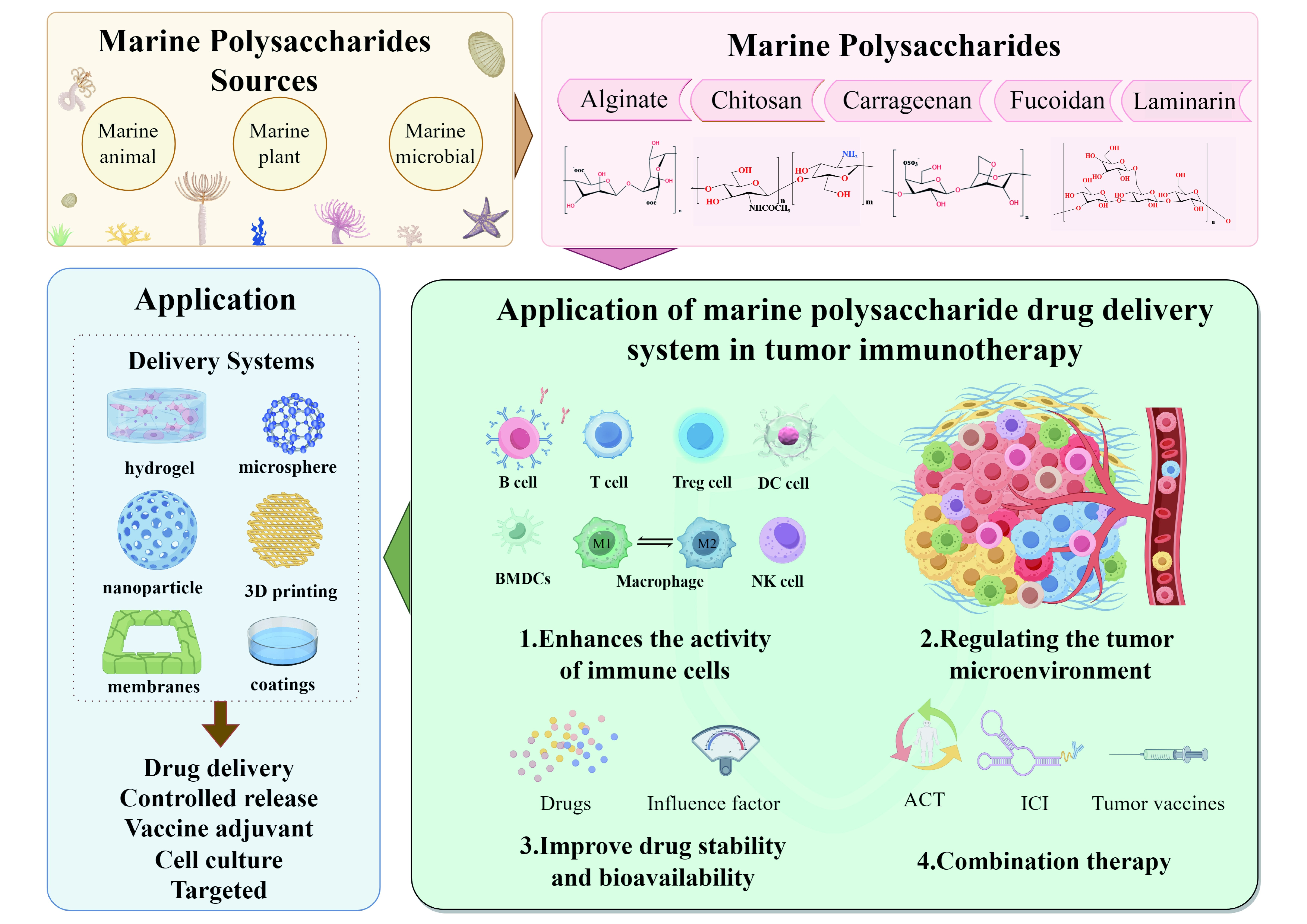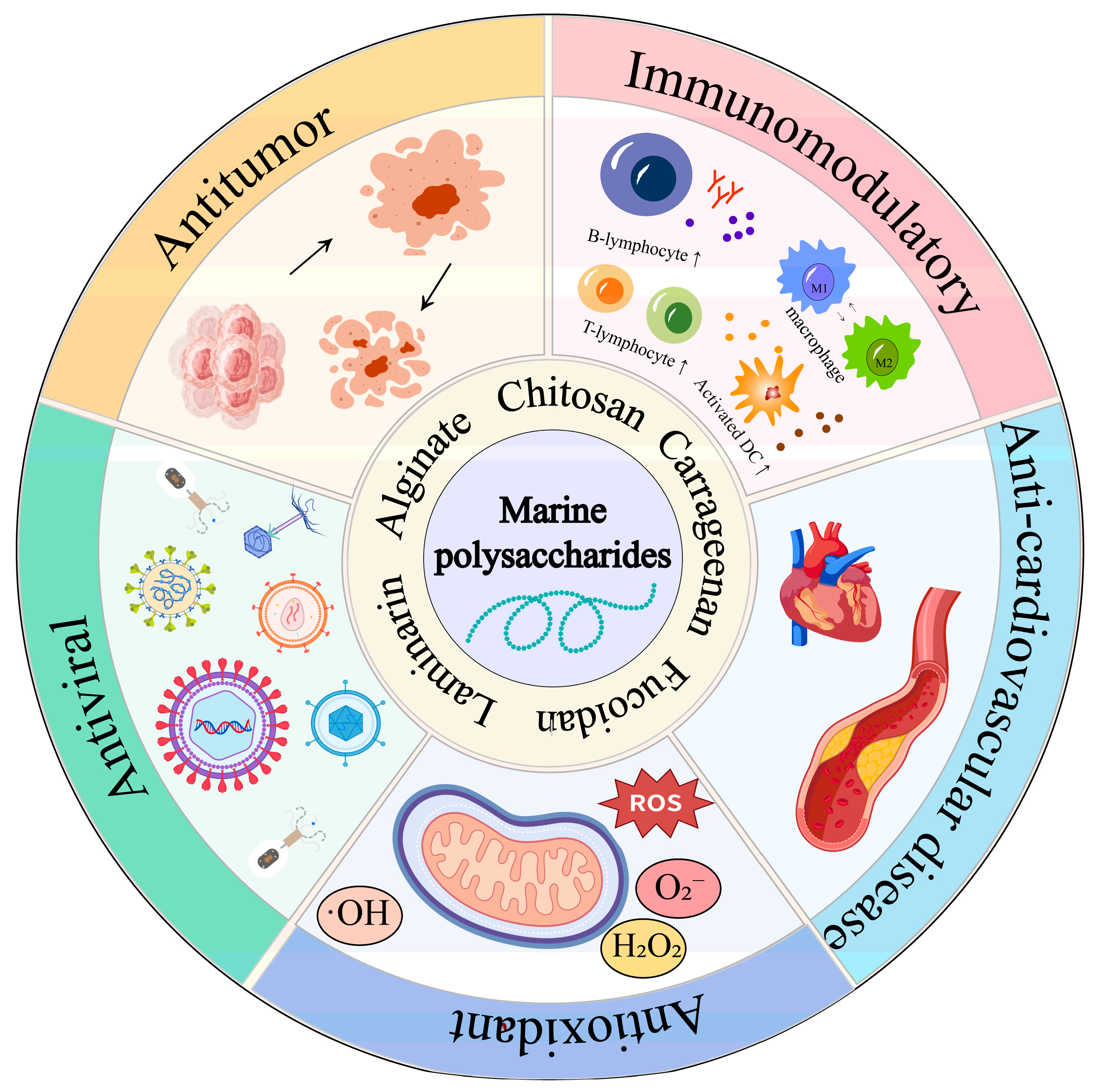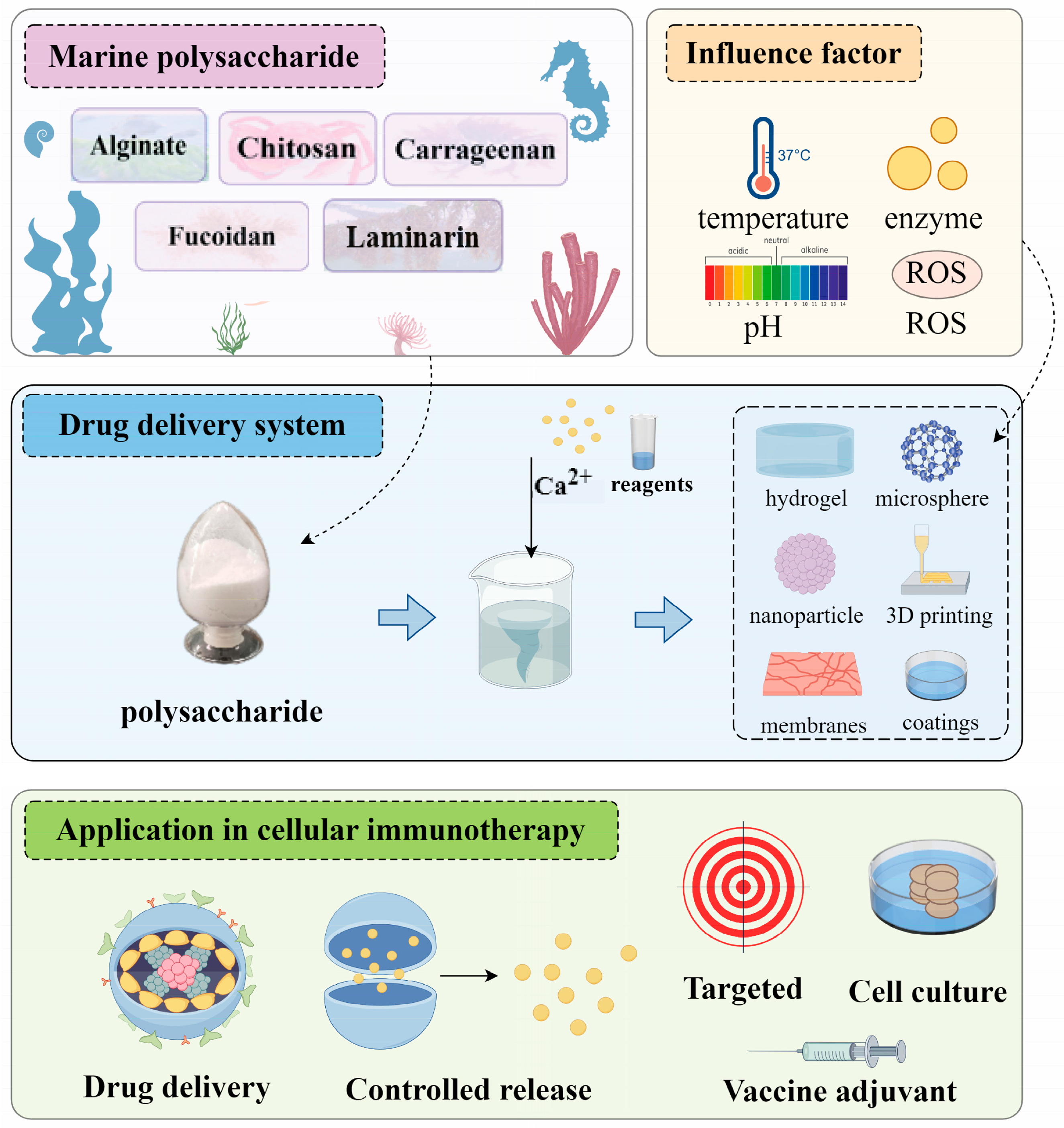

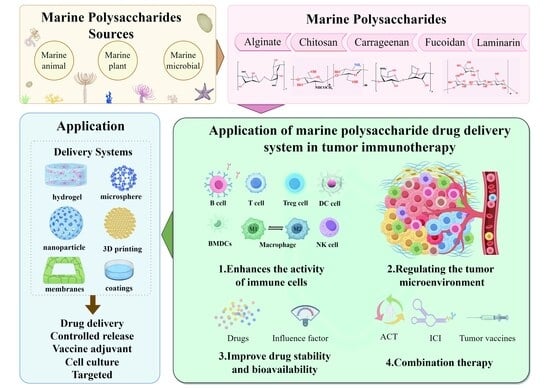
Progress in the Application of Marine Polysaccharide Drug Delivery Systems in Tumor Immunotherapy: Multiple Mechanisms and Material Forms


Abstract
Share and Cite
Cha, M.; Yan, S.; Zhang, Y.; Wang, P. Progress in the Application of Marine Polysaccharide Drug Delivery Systems in Tumor Immunotherapy: Multiple Mechanisms and Material Forms. Mar. Drugs 2025, 23, 384. https://doi.org/10.3390/md23100384
Cha M, Yan S, Zhang Y, Wang P. Progress in the Application of Marine Polysaccharide Drug Delivery Systems in Tumor Immunotherapy: Multiple Mechanisms and Material Forms. Marine Drugs. 2025; 23(10):384. https://doi.org/10.3390/md23100384
Chicago/Turabian StyleCha, Mingxue, Shuqiang Yan, Yiping Zhang, and Peipei Wang. 2025. "Progress in the Application of Marine Polysaccharide Drug Delivery Systems in Tumor Immunotherapy: Multiple Mechanisms and Material Forms" Marine Drugs 23, no. 10: 384. https://doi.org/10.3390/md23100384
APA StyleCha, M., Yan, S., Zhang, Y., & Wang, P. (2025). Progress in the Application of Marine Polysaccharide Drug Delivery Systems in Tumor Immunotherapy: Multiple Mechanisms and Material Forms. Marine Drugs, 23(10), 384. https://doi.org/10.3390/md23100384