
Article

Molecular Diversity and Biochemical Content in Two Invasive Alien Species: Looking for Chemical Similarities and Bioactivities

by
Julia Vega
1,
Teresa S. Catalá
2,3,
Jorge García-Márquez
4,
Linn G. Speidel
5,
Salvador Arijo
4,
Niklas Cornelius Kunz
6,
Christoph Geisler
3 and
Félix L. Figueroa
1,*
1
Andalusian Institute of Blue Biotechnology and Development (IBYDA), Ecology Department, Faculty of Sciences, Malaga University, Campus Universitario de Teatinos s/n, 29071 Malaga, Spain
2
Research Group for Marine Geochemistry, Institute for Chemistry and Biology of the Marine Environment (ICBM), Carl von Ossietzky University, 26129 Oldenburg, Germany
3
Organization for Science, Education and Global Society, 70563 Stuttgart, Germany
4
Andalusian Institute of Blue Biotechnology and Development (IBYDA), Microbiology Department, Faculty of Sciences, Malaga University, Campus Universitario de Teatinos s/n, 29071 Malaga, Spain
5
Biogeoscience Group, Geological Institute, ETH Zurich, Sonneggstr. 5, 8092 Zurich, Switzerland
6
Artificial Intelligence in Healthcare and Biotechnology, ValueData GmbH, 51429 Bergisch Gladbach, Germany
*
Author to whom correspondence should be addressed.
Mar. Drugs 2023, 21(1), 5; https://doi.org/10.3390/md21010005
Submission received: 17 November 2022 / Revised: 17 December 2022 / Accepted: 17 December 2022 / Published: 22 December 2022
(This article belongs to the Special Issue Marine Invasive Species and Their Bioactive Metabolites)

Abstract

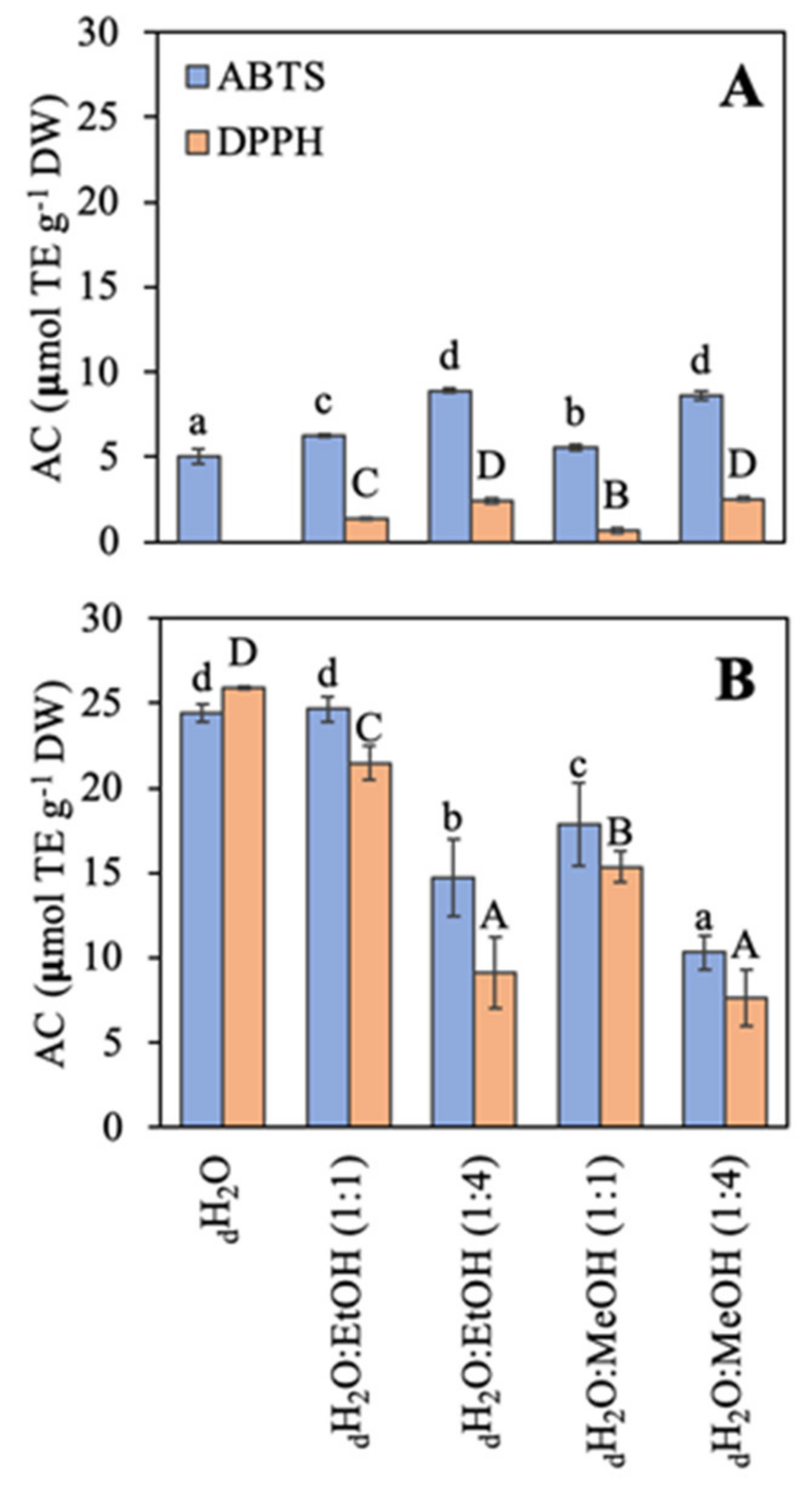
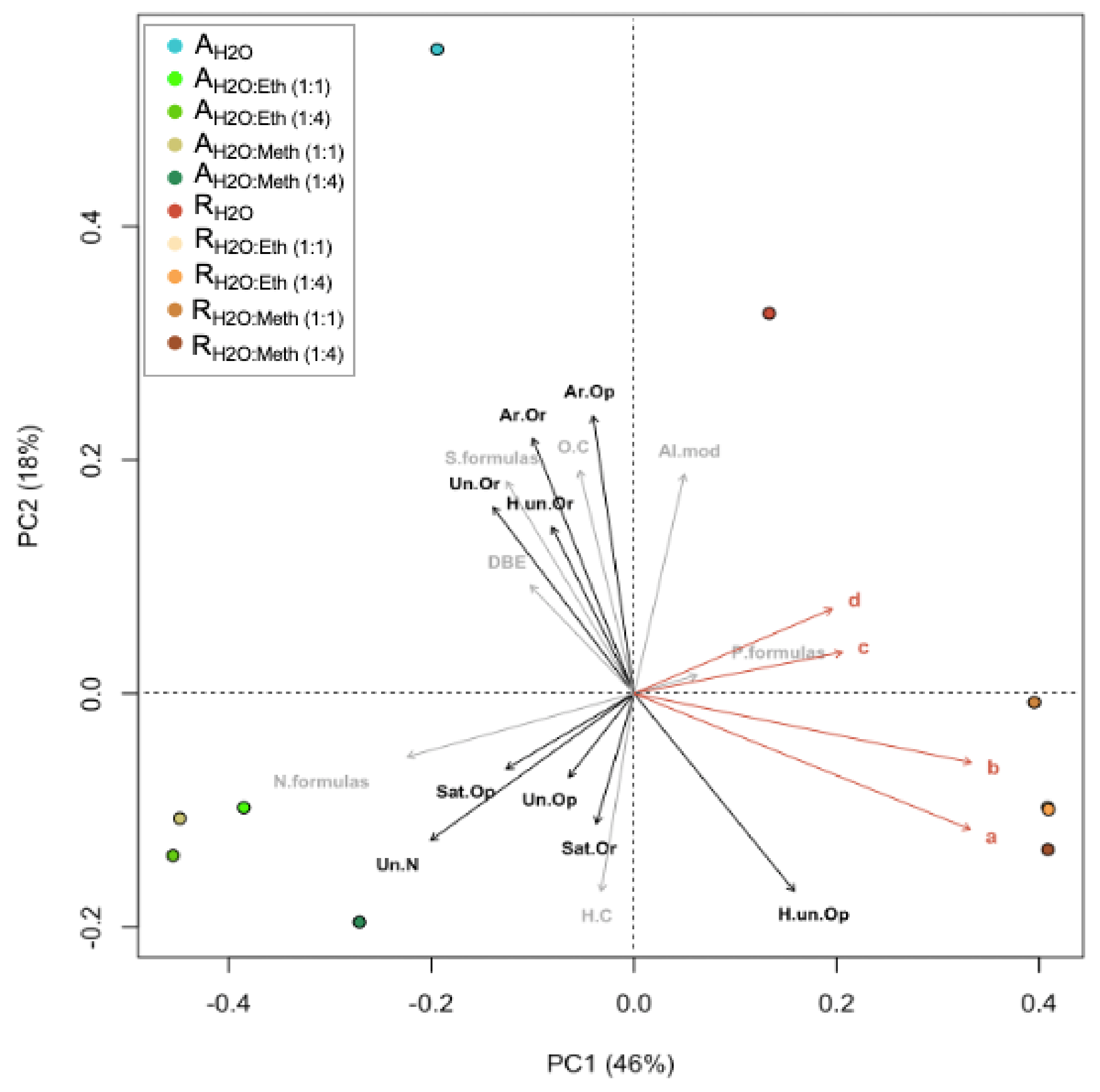
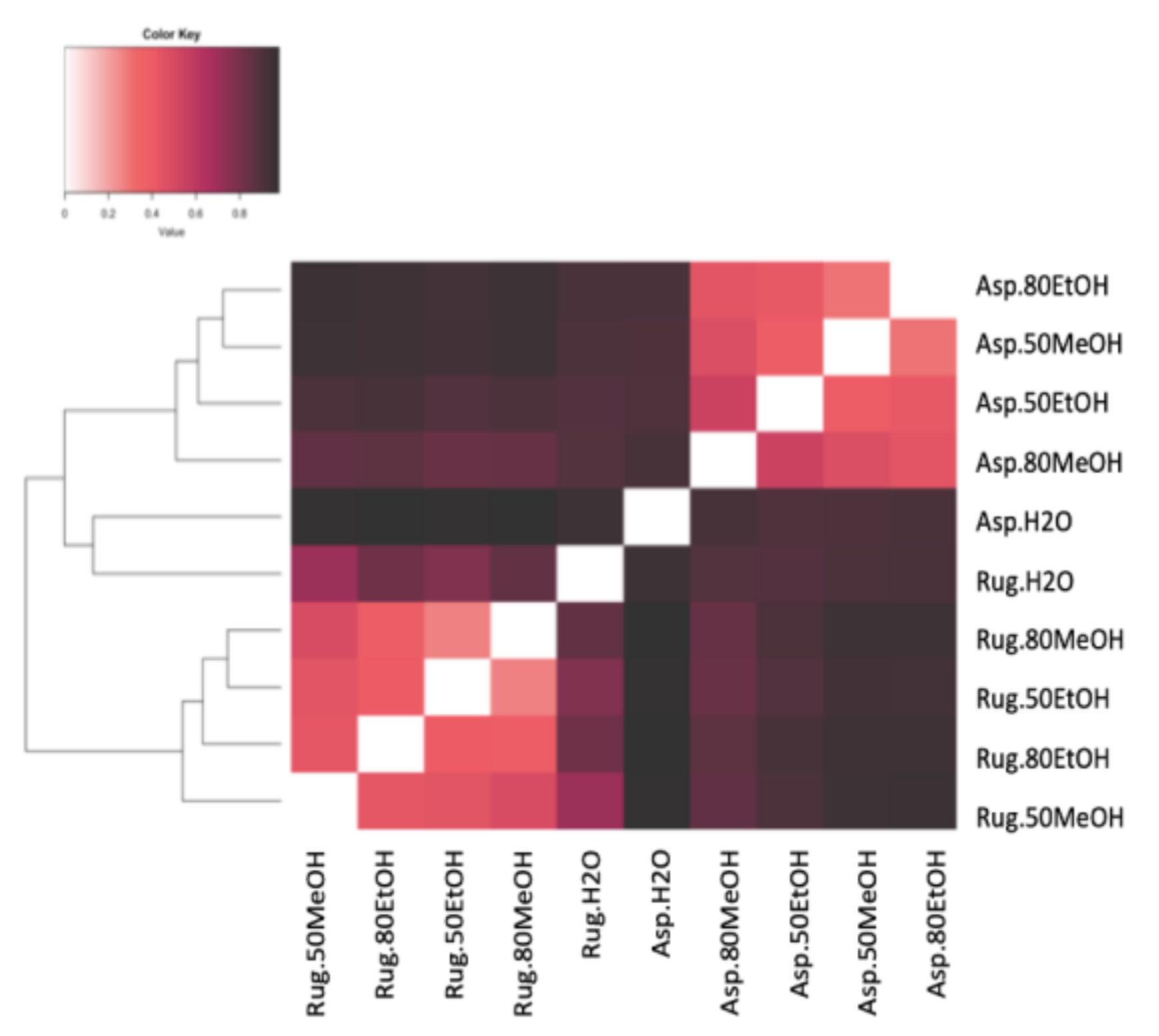
The biochemical composition, molecular diversity, and two different bioactivities of Asparagopsis armata and Rugulopteryx okamurae (two alien species with different invasive patterns in the southern Iberian Peninsula) were analyzed through spectrophotometric methods and Fourier transform ion cyclotron mass spectroscopy (FT-ICR-MS). A total of 3042 molecular formulas were identified from the different extracts. The dH2O extracts were the most molecularly different. A. armata presented the highest content of nitrogenous compounds (proteins, CHON) and sulphur content, whereas R. okamurae was rich in carbonated compounds (total carbon, lipids, CHO, and CHOP). Antioxidant capacity and phenolic content were higher in R. okamurae than in A. armata. Antimicrobial activity was detected from both species. A. armata showed capacity to inhibit human and fish pathogens (e.g., Staphylococcus aureus or Vibrio anguillarum), whereas R. okamurae only showed inhibition against human bacteria (Staphylococcus aureus and Cutibacterium acnes). In R. okamurae, molecules with a great number of pharmaceutical activities (e.g., anti-inflammatory or antitumoral), antibacterial, biomaterial, and other utilities were found. The main molecules of A. armata had also pharmaceutical applications (e.g., antimalarian, antithrombotic, anti-inflammatory, or antiarthritis). The valorization of these species can help to counteract the environmental effects of the bioinvasions.
Keywords: antioxidant capacity; Asparagopsis armata; molecular composition; polyphenols; Rugulopteryx okamurae; ultrahigh resolution mass spectrometry antioxidant capacity; Asparagopsis armata; molecular composition; polyphenols; Rugulopteryx okamurae; ultrahigh resolution mass spectrometry
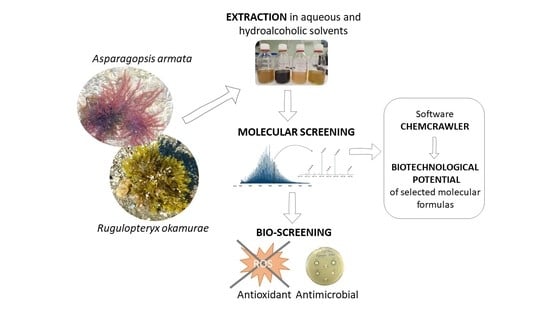
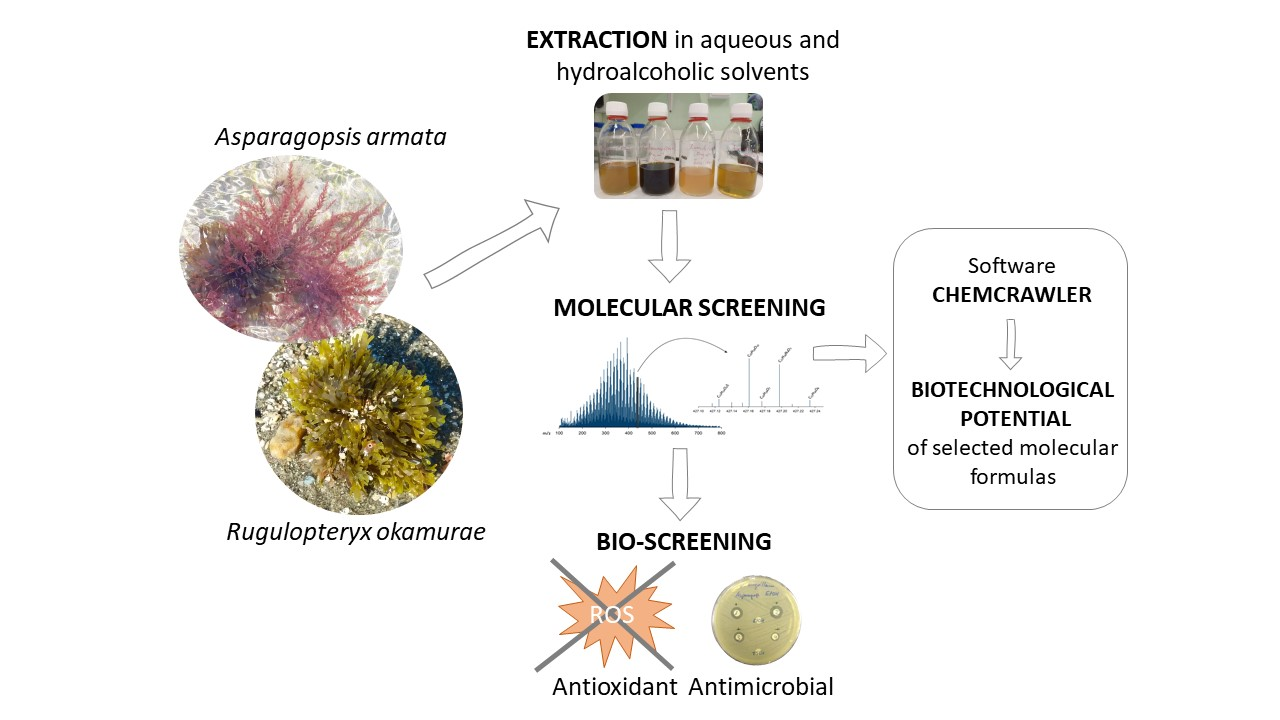
Graphical Abstract