
Communication

Recombinant Expression of Thrombolytic Agent Reteplase in Marine Microalga Tetraselmis subcordiformis (Chlorodendrales, Chlorophyta)

1
CAS and Shandong Province Key Laboratory of Experimental Marine Biology, Center for Ocean Mega-Science, Institute of Oceanology, Chinese Academy of Sciences, Qingdao 266071, China
2
Laboratory for Marine Biology and Biotechnology, Qingdao National Laboratory for Marine Science and Technology, Qingdao 266237, China
*
Author to whom correspondence should be addressed.
Mar. Drugs 2021, 19(6), 315; https://doi.org/10.3390/md19060315
Submission received: 31 March 2021 / Revised: 25 May 2021 / Accepted: 26 May 2021 / Published: 28 May 2021
(This article belongs to the Special Issue Cardio-Protective Properties of Marine Natural Products)

Abstract

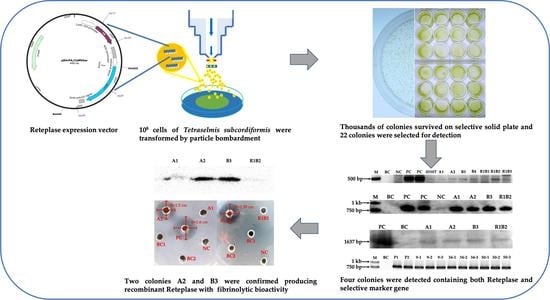
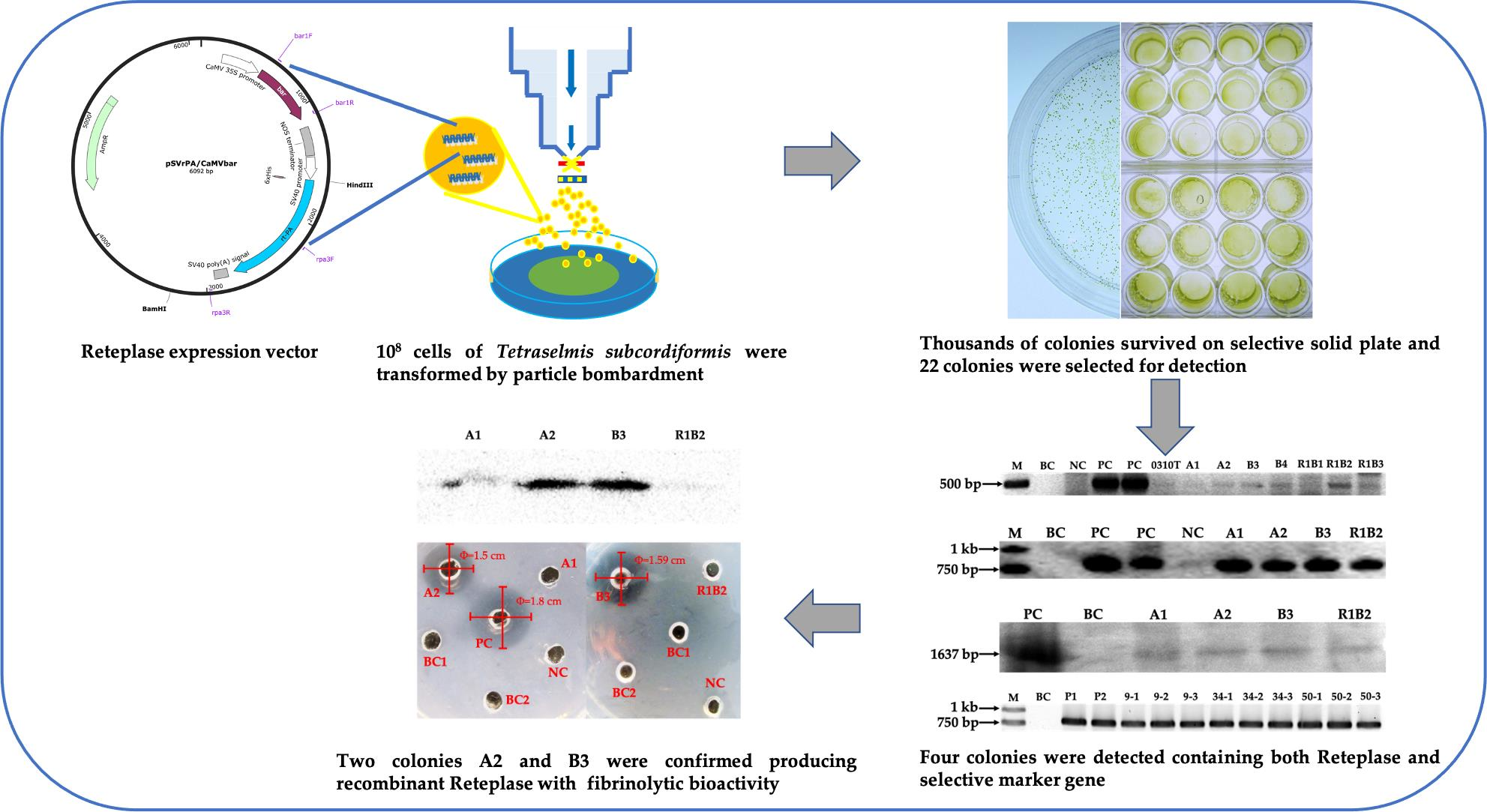
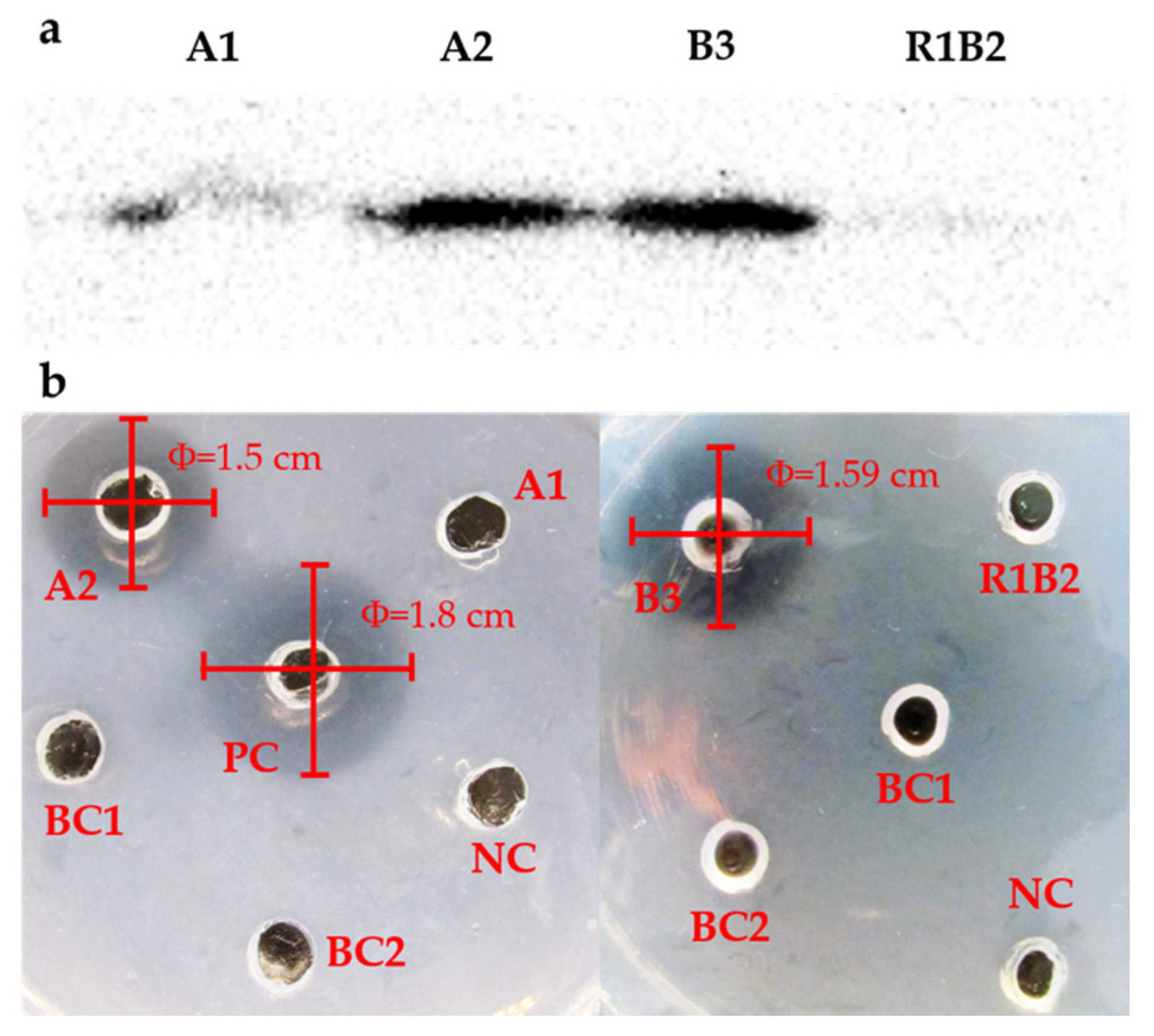
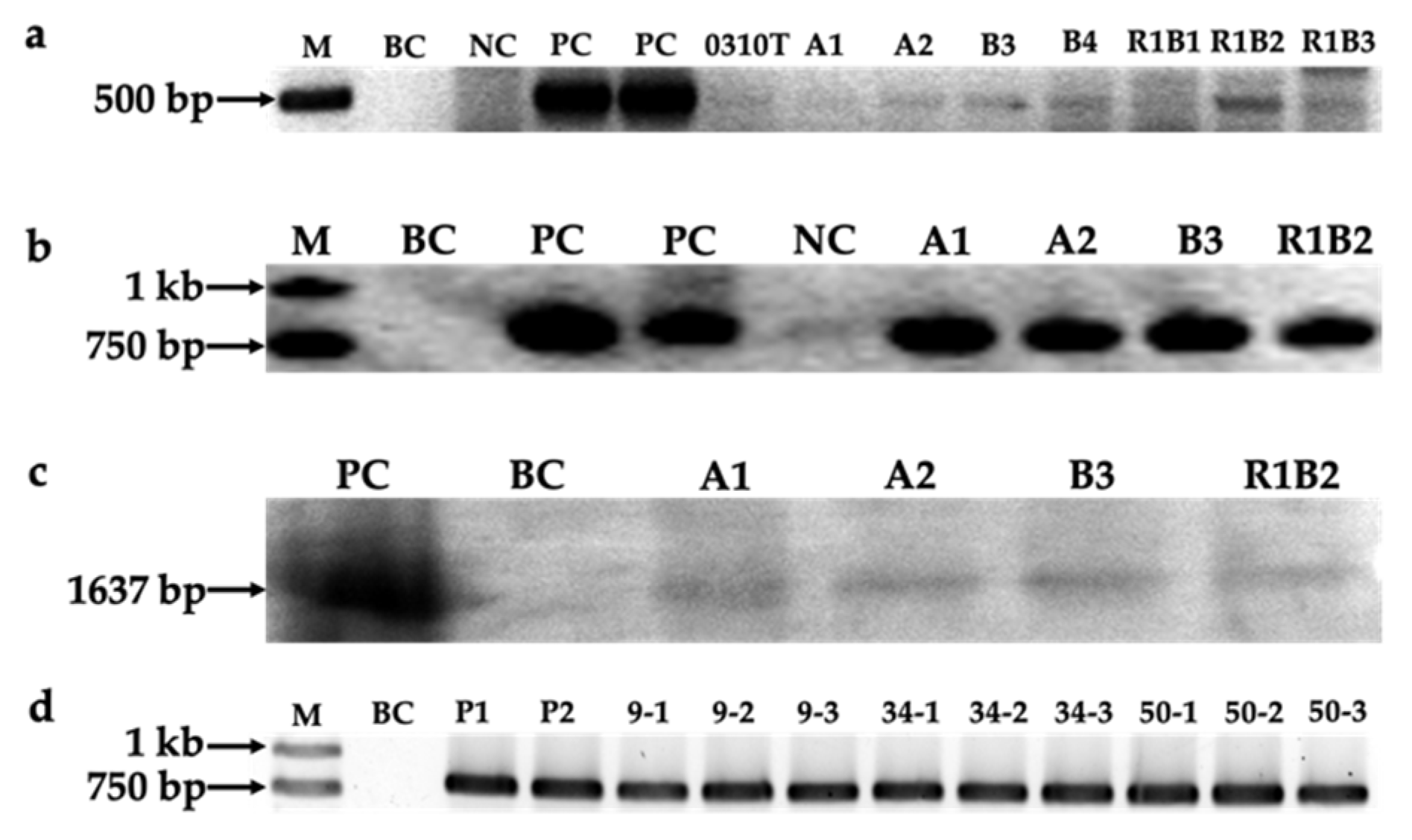
Tetraselmis subcordiformis, a unicellular marine green alga, is used widely in aquaculture as an initial feeding for fish, bivalve mollusks, penaeid shrimp larvae, and rotifers because of its rich content of amino acids and fatty acids. A stable nuclear transformation system using the herbicide phosphinothricin (PPT) as a selective reagent was established previously. In this research, the recombinant expression in T. subcordiformis was investigated by particle bombardment with the rt-PA gene that encodes the recombinant human tissue-type plasminogen activator (Reteplase), which is a thrombolytic agent for acute myocardial infarction treatment. Transgenic algal strains were selected by their resistance to PPT, and expression of rt-PA was validated by PCR, Southern blotting, and Western blotting, and bioactivity of rt-PA was confirmed by the fibrin agarose plate assay for bioactivity. The results showed that rt-PA was integrated into the genome of T. subcordiformis, and the expression product was bioactive, indicating proper post-transcriptional modification of rt-PA in T. subcordiformis. This report contributes to efforts that take advantage of marine microalgae as cell factories to prepare recombinant drugs and in establishing a characteristic pathway of oral administration in aquaculture.
Keywords: algal genetic transformation; recombinant expression; Reteplase; rt-PA gene; Tetraselmis subcordiformis; thrombolytic agent algal genetic transformation; recombinant expression; Reteplase; rt-PA gene; Tetraselmis subcordiformis; thrombolytic agent
Graphical Abstract