Circulating microRNAs in Atrial Fibrillation: Clinical Significance and Future Perspectives

Abstract
1. Introduction
2. Clinical Challenges in Atrial Fibrillation Management
2.1. The Problem of Subclinical and Paroxysmal Atrial Fibrillation
2.2. Recurrence After Catheter Ablation
2.3. Residual Stroke Risk Under Anticoagulation
2.4. Monitoring Structural Progression over Time
3. Biological Basis of Circulating microRNAs in Atrial Fibrillation
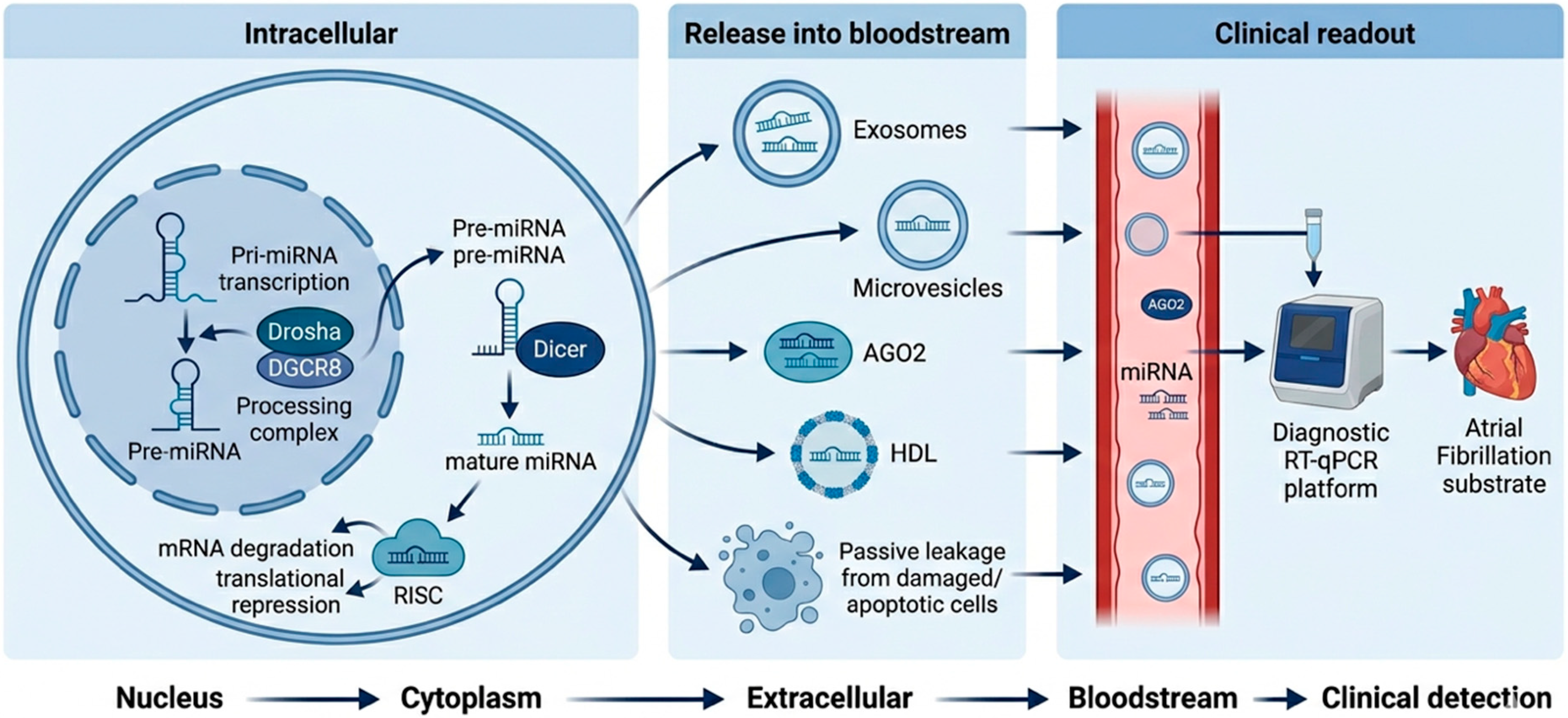
3.1. Biogenesis and Stability in Circulation
3.2. Technical Considerations
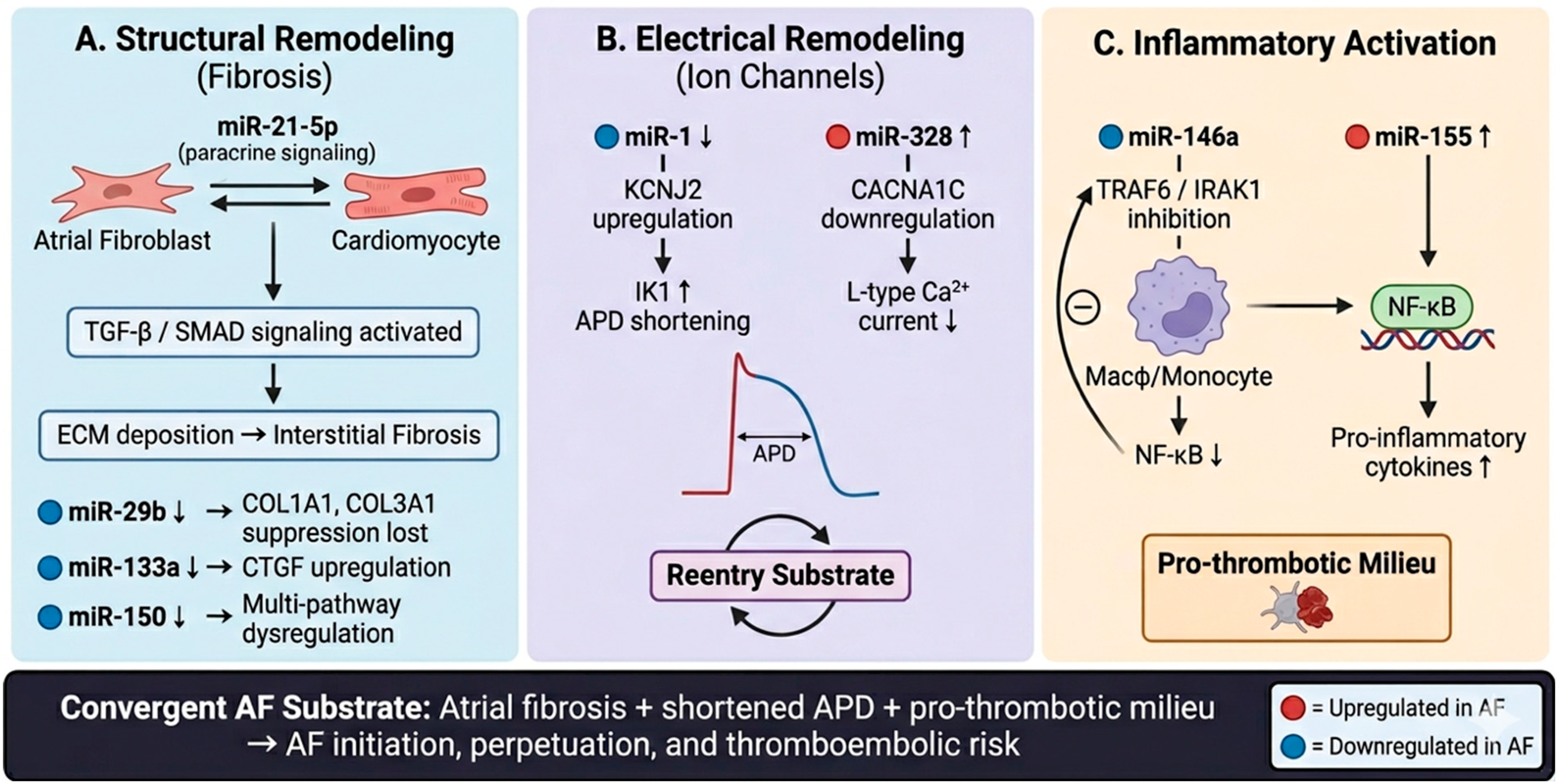
3.3. Mechanistic Involvement in AF Pathophysiology
3.3.1. Atrial Fibrosis and Structural Remodeling
3.3.2. Inflammatory Remodeling
3.3.3. Electrical Remodeling and Ion Channel Dysregulation
4. Circulating microRNA Profiles in AF: Clinical Evidence and Significance
4.1. Meta-Analytic Findings
4.2. Key Individual MicroRNA Candidates
4.2.1. miR-21
4.2.2. miR-150
4.2.3. miR-328
4.2.4. miR-133a and miR-29b
4.2.5. miR-146a
4.3. The Cardiac Specificity Problem
4.4. Differential Expression Across AF Subtypes
4.5. Diagnostic Potential—Promise and Realistic Limits
4.6. Prognostic Value
4.6.1. Ablation Outcomes
4.6.2. Stroke and Major Adverse Cardiovascular Events
5. Potential Role in Clinical Decision-Making
5.1. Anticoagulation Decisions
5.2. Patient Selection for Catheter Ablation
5.3. Disease Progression Monitoring
5.4. Barriers to Clinical Implementation
6. Future Perspectives
6.1. The Validation Imperative
6.2. Multi-Biomarker Panel Strategies
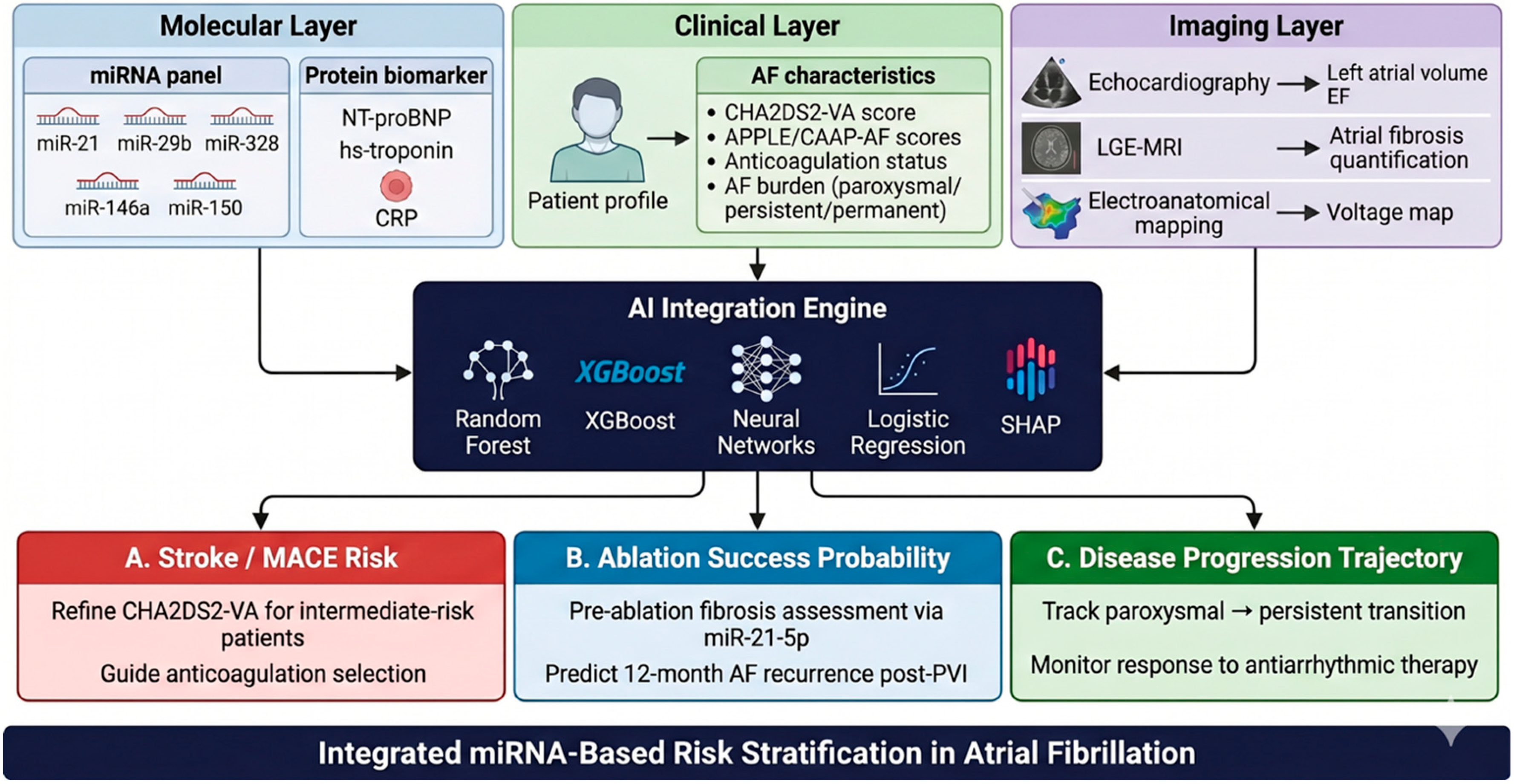
6.3. Artificial Intelligence and Multi-Omic Integration
6.4. Therapeutic Applications
7. Conclusions
Funding
Data Availability Statement
Acknowledgments
Conflicts of Interest
Abbreviations
| ACC | American College of Cardiology |
| AGO2 | Argonaute-2 protein |
| AF | Atrial fibrillation |
| AHA | American Heart Association |
| APPLE | Age, Prior stroke/TIA, Persistent AF, Early recurrence, Left atrial diameter score |
| APD | Action potential duration |
| AUC | Area under the receiver operating characteristic curve |
| CABG | Coronary artery bypass grafting |
| CACNA1C | Calcium voltage-gated channel subunit alpha1 C |
| CHA2DS2-VA | Stroke risk score (2024 ESC guidelines) |
| COL1A1 | Collagen type I alpha 1 |
| COL3A1 | Collagen type III alpha 1 |
| CRP | C-reactive protein |
| CT | Computed tomography |
| CTGF | Connective tissue growth factor |
| Cx43 | Connexin-43 |
| DECAAF | Delayed Enhancement MRI Determinant of Successful Radiofrequency Catheter Ablation of Atrial Fibrillation |
| DGCR8 | DiGeorge syndrome critical region gene 8 |
| DM | Diabetes mellitus |
| DOAC | Direct oral anticoagulant |
| ECM | Extracellular matrix |
| EORP-AF | EURObservational Research Programme Atrial Fibrillation |
| ERK | Extracellular signal-regulated kinase |
| ESC | European Society of Cardiology |
| FN1 | Fibronectin-1 |
| HAS-BLED | Hypertension, Abnormal renal/liver function, Stroke, Bleeding history, Labile INR, Elderly, Drugs/alcohol score |
| HDL | High-density lipoprotein |
| HRS | Heart Rhythm Society |
| hs-CRP | High-sensitivity C-reactive protein |
| IK1 | Inward rectifier potassium current |
| IL-6 | Interleukin-6 |
| IRAK1 | Interleukin-1 receptor-associated kinase 1 |
| KCNIP2 | Potassium channel interacting protein 2 |
| KCNJ2 | Potassium inwardly rectifying channel subfamily J member 2 |
| LA | Left atrium |
| LGE-MRI | Late gadolinium enhancement magnetic resonance imaging |
| LSTM | Long short-term memory network |
| MACE | Major adverse cardiovascular events |
| MAP kinase | Mitogen-activated protein kinase |
| miRNA/miR | MicroRNA |
| MMP9 | Matrix metalloproteinase-9 |
| MVB | Multivesicular body |
| NF-κB | Nuclear factor kappa-light-chain-enhancer of activated B cells |
| NGS | Next-generation sequencing |
| NT-proBNP | N-terminal pro-brain natriuretic peptide |
| OR | Odds ratio |
| POAF | Post-operative atrial fibrillation |
| PVI | Pulmonary vein isolation |
| RCT | Randomized controlled trial |
| RISC | RNA-induced silencing complex |
| RNase | Ribonuclease |
| RT-qPCR | Quantitative reverse transcriptase polymerase chain reaction |
| SCAF | Subclinical atrial fibrillation |
| SHAP | SHapley Additive exPlanations |
| SMAD7 | SMAD family member 7 |
| SNP | Single nucleotide polymorphism |
| SOP | Standard operating procedure |
| SPRY1 | Sprouty homolog 1 |
| TGF-β | Transforming growth factor-beta |
| TIMP4 | Tissue inhibitor of metalloproteinases 4 |
| TNF-α | Tumor necrosis factor-alpha |
| TRAF6 | TNF receptor-associated factor 6 |
References
- Chugh, S.S.; Havmoeller, R.; Narayanan, K.; Singh, D.; Rienstra, M.; Benjamin, E.J.; Gillum, R.F.; Kim, Y.H.; McAnulty, J.H., Jr.; Zheng, Z.J.; et al. Worldwide epidemiology of atrial fibrillation: A Global Burden of Disease 2010 study. Circulation 2014, 129, 837–847. [Google Scholar] [CrossRef]
- Lippi, G.; Sanchis-Gomar, F.; Cervellin, G. Global epidemiology of atrial fibrillation: An increasing epidemic and public health challenge. Int. J. Stroke 2021, 16, 217–221. [Google Scholar] [CrossRef]
- Odutayo, A.; Wong, C.X.; Hsiao, A.J.; Hopewell, S.; Altman, D.G.; Emdin, C.A. Atrial fibrillation and risks of cardiovascular disease, renal disease, and death: Systematic review and meta-analysis. BMJ 2016, 354, i4482. [Google Scholar] [CrossRef] [PubMed]
- Piccini, J.P.; Hammill, B.G.; Sinner, M.F.; Hernandez, A.F.; Walkey, A.J.; Benjamin, E.J.; Curtis, L.H.; Heckbert, S.R. Clinical course of atrial fibrillation in older adults: The importance of cardiovascular events beyond stroke. Eur. Heart J. 2014, 35, 250–256. [Google Scholar] [CrossRef]
- Van Gelder, I.C.; Rienstra, M.; Bunting, K.V.; Casado-Arroyo, R.; Caso, V.; Crijns, H.J.G.M.; De Potter, T.J.R.; Dwight, J.; Guasti, L.; Hanke, T.; et al. 2024 ESC Guidelines for the management of atrial fibrillation developed in collaboration with the European Association for Cardio-Thoracic Surgery (EACTS): Developed by the task force for the management of atrial fibrillation of the European Society of Cardiology (ESC), with the special contribution of the European Heart Rhythm Association (EHRA) of the ESC. Eur. Heart J. 2024, 45, 3314–3414. [Google Scholar] [PubMed]
- Joglar, J.A.; Chung, M.K.; Armbruster, A.L.; Benjamin, E.J.; Chyou, J.Y.; Cronin, E.M.; Deswal, A.; Eckhardt, L.L.; Goldberger, Z.D.; Gopinathannair, R.; et al. 2023 ACC/AHA/ACCP/HRS Guideline for the Diagnosis and Management of Atrial Fibrillation: A Report of the American College of Cardiology/American Heart Association Joint Committee on Clinical Practice Guidelines. Circulation 2024, 149, e1–e156. [Google Scholar] [CrossRef]
- Bartel, D.P. MicroRNAs: Target recognition and regulatory functions. Cell 2009, 136, 215–233. [Google Scholar] [CrossRef]
- He, L.; Hannon, G.J. MicroRNAs: Small RNAs with a big role in gene regulation. Nat. Rev. Genet. 2004, 5, 522–531. [Google Scholar]
- Mitchell, P.S.; Parkin, R.K.; Kroh, E.M.; Fritz, B.R.; Wyman, S.K.; Pogosova-Agadjanyan, E.L.; Peterson, A.; Noteboom, J.; O’Briant, K.C.; Allen, A.; et al. Circulating microRNAs as stable blood-based markers for cancer detection. Proc. Natl. Acad. Sci. USA 2008, 105, 10513–10518. [Google Scholar]
- Chen, X.; Ba, Y.; Ma, L.; Cai, X.; Yin, Y.; Wang, K.; Guo, J.; Zhang, Y.; Chen, J.; Guo, X.; et al. Characterization of microRNAs in serum: A novel class of biomarkers for diagnosis of cancer and other diseases. Cell Res. 2008, 18, 997–1006. [Google Scholar] [CrossRef] [PubMed]
- Luo, X.; Yang, B.; Nattel, S. MicroRNAs and atrial fibrillation: Mechanisms and translational potential. Nat. Rev. Cardiol. 2015, 12, 83–92. [Google Scholar] [CrossRef]
- Weckbach, L.T.; Grabmaier, U.; Clauss, S.; Wakili, R. MicroRNAs as a diagnostic tool for heart failure and atrial fibrillation. Curr. Opin. Pharmacol. 2016, 27, 24–30. [Google Scholar] [CrossRef]
- Menezes Junior, A.d.S.; Ferreira, L.C.; Barbosa, L.J.V.; Silva, D.d.M.e.; Saddi, V.A.; Silva, A.M.T.C. Circulating microRNAs as specific biomarkers in atrial fibrillation: A meta-analysis. Non-Coding RNA 2023, 9, 13. [Google Scholar] [CrossRef]
- Rizal, A.; Waranugraha, Y.; Wikananda, A.P.; Yuniadi, Y. Identification of microRNAs as diagnostic biomarkers for atrial fibrillation: A systematic review and meta-analysis. Front. Cardiovasc. Med. 2023, 10, 1128708. [Google Scholar] [CrossRef]
- Ragia, G.; Thomopoulos, T.; Chalikias, G.; Trikas, A.; Tziakas, D.N.; Manolopoulos, V.G. Circulating microRNAs and DNA methylation as regulators of direct oral anticoagulant response in atrial fibrillation (miR-CRAFT). J. Pers. Med. 2024, 14, 562. [Google Scholar] [CrossRef]
- Kirchhof, P.; Toennis, T.; Goette, A.; Camm, A.J.; Diener, H.C.; Becher, N.; Bertaglia, E.; Lundqvist, C.B.; Borlich, M.; Brandes, A.; et al. Anticoagulation with edoxaban in patients with atrial high-rate episodes. N. Engl. J. Med. 2023, 389, 1167–1179. [Google Scholar] [CrossRef] [PubMed]
- Healey, J.S.; Lopes, R.D.; Granger, C.B.; Alings, M.; Rivard, L.; McIntyre, W.F.; Atar, D.; Birnie, D.H.; Boriani, G.; Camm, A.J.; et al. Apixaban for stroke prevention in subclinical atrial fibrillation. N. Engl. J. Med. 2024, 390, 107–117. [Google Scholar] [PubMed]
- Boriani, G.; Glotzer, T.V.; Santini, M.; West, T.M.; De Melis, M.; Sepsi, M.; Gasparini, M.; Lewalter, T.; Camm, J.A.; Singer, D.E. Device-detected atrial fibrillation and risk for stroke: An analysis of >10,000 patients from the SOS AF project. Eur. Heart J. 2014, 35, 508–516. [Google Scholar] [CrossRef]
- Swiryn, S.; Orlov, M.V.; Benditt, D.G.; DiMarco, J.P.; Lloyd-Jones, D.M.; Karst, E.; Qu, F.; Slawsky, M.T.; Turkel, M.; Waldo, A.L. Clinical implications of brief device-detected atrial tachyarrhythmias in a cardiac rhythm management device population. Circulation 2016, 134, 1130–1140. [Google Scholar] [CrossRef] [PubMed]
- Camm, A.J.; Corbucci, G.; Padeletti, L. Usefulness of continuous electrocardiographic monitoring for atrial fibrillation. Am. J. Cardiol. 2012, 110, 270–276. [Google Scholar] [CrossRef]
- Israel, C.W.; Grönefeld, G.; Ehrlich, J.R.; Li, Y.G.; Hohnloser, S.H. Long-term risk of recurrent atrial fibrillation as documented by an implantable monitoring device. J. Am. Coll. Cardiol. 2004, 43, 47–52. [Google Scholar] [CrossRef]
- Lip, G.Y.H.; Tse, H.F.; Lane, D.A. Atrial fibrillation. Lancet 2012, 379, 648–661. [Google Scholar] [CrossRef]
- Bifulco, S.F.; Magoon, M.J.; Chahine, Y.; Kim, I.; Macheret, F.; Akoum, N.; Boyle, P.M. Predicting arrhythmia recurrence post-ablation in atrial fibrillation using explainable machine learning. Commun. Med. 2025, 5, 421. [Google Scholar] [CrossRef]
- Luo, A.; Chen, W.; Zhu, H.; Xie, W.; Chen, X.; Liu, Z.; Xin, Z. Machine learning in the management of patients undergoing catheter ablation for atrial fibrillation: Scoping review. J. Med. Internet Res. 2025, 27, e60888. [Google Scholar] [CrossRef] [PubMed]
- Kornej, J.; Hindricks, G.; Shoemaker, M.B.; Husser, D.; Arya, A.; Sommer, P.; Rolf, S.; Saavedra, P.; Kanagasundram, A.; Whalen, S.P.; et al. The APPLE score: A novel and simple score for the prediction of rhythm outcomes after catheter ablation of atrial fibrillation. Clin. Res. Cardiol. 2015, 104, 871–876. [Google Scholar] [CrossRef]
- Marrouche, N.F.; Wilber, D.; Hindricks, G.; Jais, P.; Akoum, N.; Marchlinski, F.; Kholmovski, E.; Burgon, N.; Hu, N.; Mont, L.; et al. Association of atrial tissue fibrosis identified by delayed enhancement MRI and atrial fibrillation catheter ablation: The DECAAF study. JAMA 2014, 311, 498–506. [Google Scholar] [CrossRef]
- Whitaker, J.; Rajani, R.; Chubb, H.; Gabrawi, M.; Varela, M.; Wright, M.; Niederer, S.; O’Neill, M.D. The role of myocardial fibrosis in the pathogenesis of atrial fibrillation: A systematic review. Europace 2016, 18, 1807–1817. [Google Scholar]
- Daccarett, M.; Badger, T.J.; Akoum, N.; Burgon, N.S.; Mahnkopf, C.; Vergara, G.; Kholmovski, E.; McGann, C.J.; Parker, D.; Brachmann, J.; et al. Association of left atrial fibrosis detected by delayed-enhancement magnetic resonance imaging and the risk of stroke in patients with atrial fibrillation. J. Am. Coll. Cardiol. 2011, 57, 831–838. [Google Scholar]
- Lip, G.Y.H.; Nieuwlaat, R.; Pisters, R.; Lane, D.A.; Crijns, H.J.G.M. Refining clinical risk stratification for predicting stroke and thromboembolism in atrial fibrillation using a novel risk factor-based approach: The Euro Heart Survey on Atrial Fibrillation. Chest 2010, 137, 263–272. [Google Scholar] [CrossRef] [PubMed]
- de los Reyes-García, A.M.; Zapata-Martínez, L.; Águila, S.; Lozano, M.L.; Martínez, C.; González-Conejero, R. microRNAs as biomarkers of risk of major adverse cardiovascular events in atrial fibrillation. Front. Cardiovasc. Med. 2023, 10, 1135127. [Google Scholar] [CrossRef]
- Camm, A.J.; Amarenco, P.; Haas, S.; Hess, S.; Kirchhof, P.; Kuhls, S.; van Eickels, M.; Turpie, A.G. XANTUS: A real-world, prospective, observational study of patients treated with rivaroxaban for stroke prevention in atrial fibrillation. Eur. Heart J. 2016, 37, 1145–1153. [Google Scholar] [CrossRef]
- Ruff, C.T.; Giugliano, R.P.; Braunwald, E.; Hoffman, E.B.; Deenadayalu, N.; Ezekowitz, M.D.; Camm, A.J.; Weitz, J.I.; Lewis, B.S.; Parkhomenko, A.; et al. Comparison of the efficacy and safety of new oral anticoagulants with warfarin in patients with atrial fibrillation: A meta-analysis of randomised trials. Lancet 2014, 383, 955–962. [Google Scholar] [CrossRef]
- de Vos, C.B.; Pisters, R.; Nieuwlaat, R.; Prins, M.H.; Tieleman, R.G.; Coelen, R.J.; van den Heijkant, A.C.; Allessie, M.A.; Crijns, H.J.G.M. Progression from paroxysmal to persistent atrial fibrillation: Clinical correlates and prognosis. J. Am. Coll. Cardiol. 2010, 55, 725–731. [Google Scholar] [CrossRef] [PubMed]
- Schotten, U.; Verheule, S.; Kirchhof, P.; Goette, A. Pathophysiological mechanisms of atrial fibrillation: A translational appraisal. Physiol. Rev. 2011, 91, 265–325. [Google Scholar] [CrossRef]
- Allessie, M.; Ausma, J.; Schotten, U. Electrical, contractile and structural remodeling during atrial fibrillation. Cardiovasc. Res. 2002, 54, 230–246. [Google Scholar] [CrossRef] [PubMed]
- Kirchhof, P.; Camm, A.J.; Goette, A.; Brandes, A.; Eckardt, L.; Elvan, A.; Fetsch, T.; van Gelder, I.C.; Haase, D.; Haegeli, L.M.; et al. Early rhythm-control therapy in patients with atrial fibrillation. N. Engl. J. Med. 2020, 383, 1305–1316. [Google Scholar] [CrossRef] [PubMed]
- Ha, M.; Kim, V.N. Regulation of microRNA biogenesis. Nat. Rev. Mol. Cell Biol. 2014, 15, 509–524. [Google Scholar] [CrossRef]
- Arroyo, J.D.; Chevillet, J.R.; Kroh, E.M.; Ruf, I.K.; Pritchard, C.C.; Gibson, D.F.; Mitchell, P.S.; Bennett, C.F.; Pogosova-Agadjanyan, E.L.; Stirewalt, D.L.; et al. Argonaute2 complexes carry a population of circulating microRNAs independent of vesicles in human plasma. Proc. Natl. Acad. Sci. USA 2011, 108, 5003–5008. [Google Scholar] [CrossRef]
- Witwer, K.W.; Buzás, E.I.; Bemis, L.T.; Bora, A.; Lässer, C.; Lötvall, J.; Nolte-’t Hoen, E.N.; Piper, M.G.; Sivaraman, S.; Skog, J.; et al. Standardization of sample collection, isolation and analysis methods in extracellular vesicle research. J. Extracell. Vesicles 2013, 2, 20360. [Google Scholar] [CrossRef]
- Mestdagh, P.; Hartmann, N.; Baeriswyl, L.; Andreasen, D.; Bernard, N.; Chen, C.; Cheo, D.; D’Andrade, P.; DeMayo, M.; Dennis, L.; et al. Evaluation of quantitative miRNA expression platforms in the microRNA quality control (miRQC) study. Nat. Methods 2014, 11, 809–815. [Google Scholar] [CrossRef]
- Kroh, E.M.; Parkin, R.K.; Mitchell, P.S.; Tewari, M. Analysis of circulating microRNA biomarkers in plasma and serum using quantitative reverse transcription-PCR (qRT-PCR). Methods 2010, 50, 298–301. [Google Scholar] [CrossRef]
- Moret, I.; Sanchez-Izquierdo, D.; Iborra, M.; Tortosa, L.; Navarro-Puche, A.; Nos, P.; Cervera, J.; Beltrán, B. Assessing an improved protocol for plasma microRNA extraction. PLoS ONE 2013, 8, e82753. [Google Scholar] [CrossRef] [PubMed]
- Schwarzenbach, H.; da Silva, A.M.; Calin, G.; Pantel, K. Data normalization strategies for microRNA quantification. Clin. Chem. 2015, 61, 1333–1342. [Google Scholar] [CrossRef]
- Harada, M.; Okuzaki, D.; Yamauchi, A.; Hitachi, K.; Tsuchida, K. Circulating miR-20b-5p and miR-330-3p are novel biomarkers for progression of atrial fibrillation. PLoS ONE 2023, 18, e0283942. [Google Scholar] [CrossRef]
- Xu, J.; Zhao, J.; Evan, G.; Xiao, C.; Cheng, Y.; Xiao, J. Circulating microRNAs: Novel biomarkers for cardiovascular diseases. J. Mol. Med. 2012, 90, 865–875. [Google Scholar] [CrossRef]
- Pradhan, K.; Niehues, P.; Neupane, B.; Maleck, C.; Sharif-Yakan, A.; Emrani, M.; Zink, M.D.; Napp, A.; Marx, N.; Gramlich, M. MicroRNA-21 mediated cross-talk between cardiomyocytes and fibroblasts in patients with atrial fibrillation. Front. Cardiovasc. Med. 2023, 10, 1056134. [Google Scholar] [CrossRef] [PubMed]
- Adam, O.; Löhfelm, B.; Thum, T.; Gupta, S.K.; Puhl, S.L.; Schäfers, H.J.; Böhm, M.; Laufs, U. Role of miR-21 in the pathogenesis of atrial fibrosis. Basic Res. Cardiol. 2012, 107, 278. [Google Scholar] [CrossRef] [PubMed]
- van Rooij, E.; Sutherland, L.B.; Thatcher, J.E.; DiMaio, J.M.; Naseem, R.H.; Marshall, W.S.; Hill, J.A.; Olson, E.N. Dysregulation of microRNAs after myocardial infarction reveals a role of miR-29 in cardiac fibrosis. Proc. Natl. Acad. Sci. USA 2008, 105, 13027–13032. [Google Scholar] [CrossRef]
- Papadimitriou, D.; Mastronikolis, N.; Ververi, A.; Kalogeropoulos, A. MicroRNAs in atrial fibrillation: Mechanisms, vascular implications, and therapeutic potential. Biomedicines 2024, 12, 811. [Google Scholar] [CrossRef]
- Papadimitriou, D.; Ververi, A.; Mastronikolis, N.; Kalogeropoulos, A. MicroRNAs in atrial fibrillation: Vascular implications and therapeutic potential. Int. J. Mol. Sci. 2024, 25, 4296. [Google Scholar]
- Guo, Y.; Lip, G.Y.H.; Apostolakis, S. Inflammation in atrial fibrillation. J. Am. Coll. Cardiol. 2012, 60, 2263–2270. [Google Scholar] [CrossRef]
- Aviles, R.J.; Martin, D.O.; Apperson-Hansen, C.; Houghtaling, P.L.; Rautaharju, P.; Kronmal, R.A.; Tracy, R.P.; Van Wagoner, D.R.; Psaty, B.M.; Lauer, M.S.; et al. Inflammation as a risk factor for atrial fibrillation. Circulation 2003, 108, 3006–3010. [Google Scholar] [CrossRef]
- Taganov, K.D.; Boldin, M.P.; Chang, K.J.; Baltimore, D. NF-κB-dependent induction of microRNA miR-146, an inhibitor targeted to signaling proteins of innate immune responses. Proc. Natl. Acad. Sci. USA 2006, 103, 12481–12486. [Google Scholar] [CrossRef]
- Chung, M.K.; Martin, D.O.; Sprecher, D.; Wazni, O.; Kanderian, A.; Carnes, C.A.; Bauer, J.A.; Tchou, P.J.; Niebauer, M.J.; Natale, A.; et al. C-reactive protein elevation in patients with atrial arrhythmias: Inflammatory mechanisms and persistence of atrial fibrillation. Circulation 2001, 104, 2886–2891. [Google Scholar] [CrossRef] [PubMed]
- Psychari, S.N.; Apostolou, T.S.; Sinos, L.; Hamodraka, E.; Liakos, G.; Kremastinos, D.T. Relation of elevated interleukin-6 and interleukin-8 levels to left atrial size and duration of episodes in patients with atrial fibrillation. Am. J. Cardiol. 2005, 95, 764–767. [Google Scholar] [CrossRef]
- Nattel, S.; Maguy, A.; Le Bouter, S.; Yeh, Y.H. Arrhythmogenic ion-channel remodeling in the heart: Heart failure, myocardial infarction, and atrial fibrillation. Physiol. Rev. 2007, 87, 425–456. [Google Scholar] [CrossRef] [PubMed]
- Girmatsion, Z.; Biliczki, P.; Bonauer, A.; Wimmer-Greinecker, G.; Scherer, M.; Moritz, A.; Bukowska, A.; Goette, A.; Nattel, S.; Hohnloser, S.H.; et al. Changes in microRNA-1 expression and IK1 up-regulation in human atrial fibrillation. Heart Rhythm 2009, 6, 1802–1809. [Google Scholar] [CrossRef]
- Yang, B.; Lin, H.; Xiao, J.; Lu, Y.; Luo, X.; Li, B.; Zhang, Y.; Xu, C.; Bai, Y.; Wang, H.; et al. The muscle-specific microRNA miR-1 regulates cardiac arrhythmogenic potential by targeting GJA1 and KCNJ2. Nat. Med. 2007, 13, 486–491. [Google Scholar] [CrossRef] [PubMed]
- Luo, X.; Pan, Z.; Shan, H.; Xiao, J.; Sun, X.; Wang, N.; Lin, H.; Xiao, L.; Maguy, A.; Qi, X.-Y.; et al. MicroRNA-26 governs profibrillatory inward-rectifier potassium current changes in atrial fibrillation. J. Clin. Investig. 2013, 123, 1939–1951. [Google Scholar] [CrossRef]
- Duisters, R.F.; Tijsen, A.J.; Schroen, B.; Leenders, J.J.; Lentink, J.J.; Lentink, V.; van der Made, I.; Herias, V.; van Leeuwen, R.E.; Schellings, M.W.; et al. miR-133 and miR-30 regulate connective tissue growth factor: Implications for a role of microRNAs in myocardial matrix remodeling. Circ. Res. 2009, 104, 170–178. [Google Scholar] [CrossRef]
- McManus, D.D.; Tanriverdi, K.; Lin, H.; Esa, N.; Kinno, M.; Mandapati, D.; Tam, S.; Okike, O.N.; Ellinor, P.T.; Keaney, J.F., Jr.; et al. Plasma microRNAs are associated with atrial fibrillation and change after catheter ablation (the miRhythm study). Heart Rhythm 2015, 12, 3–10. [Google Scholar] [CrossRef] [PubMed]
- Sharma, V.; Kacprzyk, A.; Hooper, J.; Raza, A.; Zakkar, M. MicroRNA signature predicts post-operative atrial fibrillation after coronary artery bypass grafting. Sci. Rep. 2025, 15, 18426. [Google Scholar]
- Lukas, M.; Weinert, L.; Lüttgen, A.; Wollert, H.G.; Biegler, B.; Hanefeld, C.; Heidorn, H.H.; Fabricius, H.A.; Müller, M.P.; Walther, T.B.; et al. Serum microRNA in patients undergoing atrial fibrillation ablation. Sci. Rep. 2020, 10, 4593. [Google Scholar] [CrossRef] [PubMed]
- Higgins, J.P.T.; Thompson, S.G.; Deeks, J.J.; Altman, D.G. Measuring inconsistency in meta-analyses. BMJ 2003, 327, 557–560. [Google Scholar] [CrossRef]
- Wang, Y.; Song, C.; Liu, Y. Expression profile of circulating miRNAs in patients with atrial fibrillation-dominated cardioembolic stroke: A systematic review and bioinformatics analysis. Heliyon 2024, 10, e35201. [Google Scholar]
- Chen, H.; Zhang, F.; Zhang, Y.L.; Yang, X.C. Relationship between circulating miRNA-21, atrial fibrosis, and atrial fibrillation in patients with atrial enlargement. Ann. Palliat. Med. 2021, 10, 12742–12749. [Google Scholar] [CrossRef]
- Cardin, S.; Guasch, E.; Luo, X.; Naud, P.; Le Quang, K.; Shi, Y.; Tardif, J.-C.; Comtois, P.; Nattel, S. Role for MicroRNA-21 in atrial profibrillatory fibrotic remodeling associated with experimental postinfarction heart failure. Circ. Arrhythm. Electrophysiol. 2012, 5, 1027–1035. [Google Scholar]
- Sieweke, J.T.; Koenig, T.; Gabriel, M.M.; Zwadlo, C.; Gronewold, J.; Westhoff-Bleck, M.; Floerke, U.; Bauersachs, J.; Bär, C.; Thum, T. MicroRNA-150 plasma levels predict outcome after acute myocardial infarction. Circ. Heart Fail. 2019, 12, e005583. [Google Scholar]
- Huang, H.; Chen, H.; Liang, X.; Chen, X.; Chen, X.; Chen, C. Upregulated miR-328-3p and its high risk in atrial fibrillation: A systematic review and meta-analysis with meta-regression. Medicine 2022, 101, e28980. [Google Scholar] [CrossRef]
- Shan, H.; Zhang, Y.; Lu, Y.; Zhang, Y.; Pan, Z.; Cai, B.; Wang, N.; Xuelian, L.; Feng, T.; Hong, Y.; et al. Downregulation of miR-133 and miR-590 contributes to nicotine-induced atrial remodelling in canines. Cardiovasc. Res. 2009, 83, 465–472. [Google Scholar]
- Sanchis-Gomar, F.; Perez-Quilis, C.; Leischik, R.; Lucia, A. Epidemiology of coronary heart disease and acute coronary syndrome. Ann. Transl. Med. 2016, 4, 256. [Google Scholar] [CrossRef] [PubMed]
- January, C.T.; Wann, L.S.; Calkins, H.; Chen, L.Y.; Cigarroa, J.E.; Cleveland, J.C., Jr.; Ellinor, P.T.; Ezekowitz, M.D.; Field, M.E.; Furie, K.L.; et al. 2019 AHA/ACC/HRS Focused Update of the 2014 AHA/ACC/HRS Guideline for the Management of Patients with Atrial Fibrillation. J. Am. Coll. Cardiol. 2019, 74, 104–132. [Google Scholar] [CrossRef]
- Paul, A.; Pai, P.G.; Ariyannur, P.S.; Joy, R.A. MiR-499 is a diagnostic biomarker of paroxysmal atrial fibrillation involved in the development of atrial fibrillation. Int. J. Clin. Exp. Pathol. 2017, 10, 4221–4231. [Google Scholar]
- Wijnands, J.M.A.; Niessink, L.M.; Beyer, M.; Smeets, J.L.R.M.; Bast, A.; Stehouwer, C.D.A.; Henkens, M.T.H.M.; Maessen, J.G.; Schotten, U.; van de Weijer, T.A.B.; et al. Microbiota and biomarkers of atrial fibrillation. Eur. Heart J. 2020, 41, 2005–2007. [Google Scholar]
- Bai, C.; Liu, Y.; Zhao, Y.; Ye, Q.; Zhao, C.; Liu, Y.; Wang, J. Circulating exosome-derived miR-122-5p is a novel biomarker for prediction of postoperative atrial fibrillation. Heart Lung Circ. 2022, 15, 1393–1405. [Google Scholar]
- Sychev, D.; Gruzdeva, O.; Dyleva, Y. Synergistic effects of weight loss and catheter ablation: Can microRNAs serve as predictive biomarkers for the prevention of atrial fibrillation recurrence? Biomolecules 2024, 14, 563. [Google Scholar]
- Galenko, O.; Jacobs, V.; Knight, S.; Reid, B.B.; Cutler, M.J.; Muhlestein, J.B.; Le, V.T.; Muhlestein, J.B.; Knowlton, K.U.; Horne, B.D. Plasma levels of microRNA and atrial fibrillation: Insight into the arrhythmia and outcomes after catheter ablation. JAMA Netw. Open 2020, 3, e200921. [Google Scholar]
- Hart, R.G.; Pearce, L.A.; Aguilar, M.I. Meta-analysis: Antithrombotic therapy to prevent stroke in patients who have nonvalvular atrial fibrillation. Ann. Intern. Med. 2007, 146, 857–867. [Google Scholar] [CrossRef] [PubMed]
- Liu, L.; Yu, Y.; Hu, L.L.; Dong, Q.B.; Hu, F.; Zhu, L.J.; Liang, Q.; Yu, L.-L.; Bao, H.-H.; Cheng, X.-S. Potential target genes in the development of atrial fibrillation: A comprehensive bioinformatics analysis. Med. Sci. Monit. 2021, 27, e928366. [Google Scholar] [CrossRef]
- Pisters, R.; Lane, D.A.; Nieuwlaat, R.; de Vos, C.B.; Crijns, H.J.G.M.; Lip, G.Y.H. A novel user-friendly score (HAS-BLED) to assess 1-year risk of major bleeding in patients with atrial fibrillation. Chest 2010, 138, 1093–1100. [Google Scholar]
- Atzemian, N.; Kareli, D.; Ragia, G.; Manolopoulos, V.G. Distinct pleiotropic effects of direct oral anticoagulants on cultured endothelial cells: A comprehensive review. Front. Pharmacol. 2023, 14, 1244098. [Google Scholar] [CrossRef] [PubMed]
- Zimetbaum, P. Atrial fibrillation. Ann. Intern. Med. 2017, 166, ITC33–ITC48. [Google Scholar] [CrossRef] [PubMed]
- El-Harasis, M.A.; Quintana, J.A.; Martinez-Parachini, J.R.; Jackson, G.G. Recurrence after atrial fibrillation ablation and investigational biomarkers of cardiac remodeling. J. Am. Heart Assoc. 2024, 13, e031029. [Google Scholar] [CrossRef] [PubMed]
- Razeghi, O.; Kapoor, R.; Alhusseini, M.I.; Fazal, M.; Tang, S.; Roney, C.H.; Rogers, A.J.; Lee, A.; Wang, P.J.; Clopton, P. Atrial fibrillation ablation outcome prediction with a machine learning fusion framework incorporating cardiac computed tomography. J. Cardiovasc. Electrophysiol. 2023, 34, 1164–1174. [Google Scholar] [CrossRef]
- Vlachos, K.; Mascia, G.; Martin, C.A.; Bazoukis, G.; Frontera, A.; Cheniti, G.; Kitamura, T.; Lam, A.; Martin, R.; Beiert, X.; et al. Non-invasive atrial fibrosis assessment using P-wave signal-averaged ECG and computed tomography imaging for identification of atrial fibrillation recurrence following pulmonary vein isolation. J. Cardiovasc. Electrophysiol. 2019, 30, 1809–1817. [Google Scholar]
- Willems, S.; Meyer, C.; de Bono, J.; Brandes, A.; Ector, J.; Frederiksen, M.; Sinner, M.F.; Jordaens, L.; Kalman, J.M.; Sanders, P.; et al. Cabins, castles, and constant hearts: Rhythm monitoring strategies for the detection of atrial fibrillation. Eur. Heart J. 2017, 38, 1010–1021. [Google Scholar]
- Packer, D.L.; Mark, D.B.; Robb, R.A.; Monahan, K.H.; Bahnson, T.D.; Poole, J.E.; Noseworthy, P.A.; Rosenberg, Y.D.; Jeffries, N.; Brent Mitchell, L.; et al. Effect of catheter ablation vs antiarrhythmic drug therapy on mortality, stroke, bleeding, and cardiac arrest among patients with atrial fibrillation: The CABANA randomized clinical trial. JAMA 2019, 321, 1261–1274. [Google Scholar] [CrossRef]
- Freedman, J.E.; Bhatt, D.L.; Bhatt, J.S.; Tanriverdi, K.; McManus, D.D. Plasma microRNA as biomarkers in atrial fibrillation. J. Am. Coll. Cardiol. 2019, 73, 2522–2524. [Google Scholar]
- Vlachos, I.S.; Hatzigeorgiou, A.G. Online resources for miRNA analysis. Clin. Biochem. 2013, 46, 879–900. [Google Scholar] [CrossRef]
- Bassand, J.P.; Accetta, G.; Camm, A.J.; Cools, F.; Fitzmaurice, D.A.; Fox, K.A.A.; Goldhaber, S.Z.; Goto, S.; Haas, S.; Hacke, W.; et al. Two-year outcomes of patients with newly diagnosed atrial fibrillation: Results from GARFIELD-AF. Eur. Heart J. 2016, 37, 2882–2889. [Google Scholar] [CrossRef]
- Lip, G.Y.H.; Laroche, C.; Dan, G.A.; Santini, M.; Kalarus, Z.; Rasmussen, L.H.; Oliveira, M.M.; Mairesse, G.; Crijns, H.J.; Simantirakis, E.; et al. A prospective survey in European Society of Cardiology member countries of atrial fibrillation management: Baseline results of EURObservational Research Programme Atrial Fibrillation (EORP-AF) Pilot General Registry. Europace 2014, 16, 308–319. [Google Scholar] [CrossRef]
- Schreiber, J.E.; Bhatt, D.L.; Cannon, C.P.; Moliterno, D.J.; Pfeffer, M.A.; Sabatine, M.S. Biomarker panels for cardiovascular risk assessment. Curr. Cardiol. Rep. 2021, 23, 90. [Google Scholar]
- Wang, T.J.; Larson, M.G.; Levy, D.; Benjamin, E.J.; Leip, E.P.; Omland, T.; Wolf, P.A.; Vasan, R.S. Plasma natriuretic peptide levels and the risk of cardiovascular events and death. N. Engl. J. Med. 2004, 350, 655–663. [Google Scholar] [CrossRef]
- Noseworthy, P.A.; Attia, Z.I.; Behnken, E.M.; Giblon, R.E.; Bews, K.A.; Liu, S.; Gosse, T.A.; Linn, Z.D.; Deng, Y.; Yin, J.; et al. Artificial intelligence-guided screening for atrial fibrillation using electrocardiogram during sinus rhythm: A prospective non-inferiority trial. Lancet 2022, 400, 1206–1212. [Google Scholar] [CrossRef]
- Siontis, K.C.; Noseworthy, P.A.; Attia, Z.I.; Friedman, P.A. Artificial intelligence-enhanced electrocardiography in cardiovascular disease management. Nat. Rev. Cardiol. 2021, 18, 465–478. [Google Scholar] [CrossRef] [PubMed]
- Lozano-Velasco, E.; Franco, D.; Aranega, A.; Daimi, H. Genetics and epigenetics of atrial fibrillation. Int. J. Mol. Sci. 2020, 21, 5717. [Google Scholar] [CrossRef]
- Tao, H.; Shi, K.H.; Yang, J.J.; Li, J. Epigenetic mechanisms in atrial fibrillation: New insights and future directions. Trends Cardiovasc. Med. 2016, 26, 306–318. [Google Scholar] [CrossRef] [PubMed]
- Montgomery, R.L.; Hullinger, T.G.; Semus, H.M.; Dickinson, B.A.; Seto, A.G.; Lynch, J.M.; Stack, C.; Latimer, P.A.; Olson, E.N.; van Rooij, E. Therapeutic inhibition of miR-208a improves cardiac function and survival during heart failure. Circulation 2011, 124, 1537–1547. [Google Scholar]
- Tijsen, A.J.; van der Made, I.; van den Hoogenhof, M.M.G.; Wijnen, W.J.; van Deel, E.D.; de Groot, N.E.; de Windt, L.J.; de Windt, L.J.; Creemers, E.E. The microRNA-15 family inhibits the TGF-β-pathway in the heart. Cardiovasc. Res. 2014, 104, 61–71. [Google Scholar] [CrossRef]
- van Rooij, E.; Olson, E.N. MicroRNA therapeutics for cardiovascular disease: Opportunities and obstacles. Nat. Rev. Drug Discov. 2012, 11, 860–872. [Google Scholar] [CrossRef] [PubMed]
- Wahlquist, C.; Jeong, D.; Rojas-Muñoz, A.; Kho, C.; Lee, A.; Mitsuyama, S.; van Mil, A.; Park, W.J.; Sluijter, J.P.G.; Doevendans, P.A.F.; et al. Inhibition of miR-25 improves cardiac contractility in the failing heart. Nature 2014, 508, 531–535. [Google Scholar] [CrossRef] [PubMed]
- Dimmeler, S.; Ding, S.; Rando, T.A.; Trounson, A. Translational strategies and challenges in regenerative medicine. Nat. Med. 2014, 20, 814–821. [Google Scholar] [CrossRef] [PubMed]



| miRNA | Direction in AF | Primary Mechanism | Key Target(s) | Diagnostic/Prognostic Role | Key Reference(s) |
|---|---|---|---|---|---|
| miR-21-5p | ↑ tissue; variable in plasma | Atrial fibrosis (SMAD7/TGF-β, SPRY1/ERK) | SMAD7, SPRY1, PTEN | Fibrosis biomarker; post-ablation monitoring | [9,18,22] |
| miR-150 | ↓ plasma | Inflammation, apoptosis, fibrosis | Multiple (≥18 genes) | AF vs. sinus rhythm discrimination; post-ablation marker | [9,19,22] |
| miR-328-3p | ↑ plasma | Electrical remodeling (APD shortening) | CACNA1C (L-type Ca2+ channel) | Strongest diagnostic signal in meta-analysis | [10,32] |
| miR-133a | ↓ plasma and tissue | Fibrosis (CTGF), conduction (Cx43) | CTGF, KCNIP2, Cx43 | Multi-panel component; structural marker | [8,9,10] |
| miR-29b | ↓ plasma and tissue | Anti-fibrotic (ECM suppression) | COL1A1, COL3A1, FN1 | Fibrotic burden indicator | [8,10] |
| miR-1-5p | ↓ persistent AF | Electrical remodeling (IK1 upregulation) | KCNJ2 (Kir2.1) | APD shortening; diagnostic candidate | [8,10] |
| miR-146a | SNP-dependent (rs2431697) | NF-κB inflammatory signaling | TRAF6, IRAK1 | Independent MACE predictor (n = 901) | [7] |
| miR-106b | ↑ plasma and atrial tissue | Disease severity, thrombogenesis | MYL4 | CHA2DS2 score correlation | [7] |
| miR-425-5p | ↑ plasma | Ion channel regulation, Ca2+ signaling | Multiple | Highest sensitivity in single-study analysis (AUC 0.96) | [10] |
| miR-223-3p | ↑ plasma | Inflammatory activation (neutrophil) | Multiple | Diagnostic candidate (meta-analysis) | [10] |
| miR-20b-5p | ↑ intracardiac plasma | Structural remodeling (LA dilation) | Not fully defined | LA diameter correlation; cardiac-specific | [17] |
| miR-330-3p | ↑ intracardiac plasma | Structural remodeling | Not fully defined | Novel candidate; intracardiac sampling | [17] |
| Study | Design | n | miRNA(s) | Sample | Key Finding | Clinical Endpoint |
|---|---|---|---|---|---|---|
| Hindricks et al., 2023 [18] | Prospective cohort (validation) | 175 | miR-21-5p | Peripheral arterial plasma | Correlation with bipolar voltage maps; predicts 12-month recurrence | AF recurrence after catheter ablation |
| McManus et al., 2015 [61] (miRhythm) | Prospective observational | 47 (ablation); 31 (surgery) | miR-21, miR-150 | Plasma | miR-21 and miR-150 twofold lower in AF; threefold increase post-ablation | Post-ablation biomarker dynamics |
| de los Reyes-García et al., 2023 [30] | Prospective cohort | 901 | miR-146a (rs2431697 SNP) | Plasma/Genomic | rs2431697 + CHA2DS2-VASc + IL-6 improves MACE prediction | MACE in anticoagulated AF patients |
| Harada et al., 2023 [44] | Prospective (intracardiac sampling) | 24 (NGS); extended validation | miR-20b-5p, miR-330-3p | Coronary sinus + femoral vein plasma | Cardiac-specific miRNAs correlate with LA diameter; differ from peripheral levels | AF progression biomarkers |
| Sharma et al., 2025 [62] | Prospective (CABG) | 15 (7 POAF/8 controls) | Panel of 10 (from 84 candidates) | Preoperative plasma | XGBoost AUC 0.83 for POAF prediction | Post-operative AF after CABG |
| Lukas et al., 2020 [63] | Prospective validation | 90 | Multiple (miR-125a, 10b, 601, 30a-3p, 199b) | Serum | Pre-specified miRNA predictors not confirmed; subgroup signal only | AF recurrence 12 months post-ablation |
| Ragia et al., 2024 [15] (miR-CRAFT) | Prospective longitudinal | Ongoing | Multiple (+DNA methylation) | Plasma (serial) | miRNA/methylation changes with DOAC initiation; epigenetic pharmacology | DOAC response in naïve AF patients |
| Barrier | Current Status | Proposed Solution |
|---|---|---|
| Methodological heterogeneity (I2 = 99%) | Studies use different platforms, normalization methods, and sampling protocols | Harmonized pre-analytical standard operating procedures; multi-center prospective design |
| Limited disease specificity of single miRNAs | miR-21 and miR-150 are dysregulated in cancer, heart failure, and diabetes mellitus | Multi-miRNA panels with mechanistic complementarity; confounder adjustment |
| No validated normalization standard | cel-miR-39 spike-in is most widely used but not universally endorsed | International consortium for plasma miRNA reference standards |
| Sampling site confounds cardiac specificity | Peripheral venous blood dilutes cardiac-specific signal | Exosome surface profiling; cardiac-specific miRNA combinations |
| Small study sizes; single-center designs | Most studies include fewer than 200 participants; independent replication is rare | Embed miRNA biobanking in large AF registries (e.g., EORP-AF) |
| No outcome-driven prospective validation | No randomized controlled trial demonstrating that miRNA-guided decisions improve outcomes | Large prospective registry-embedded studies with hard clinical endpoints |
| Laboratory infrastructure not clinical-grade | RT-qPCR requires specialized equipment and expertise | Point-of-care microfluidic biosensor platforms under development |
Disclaimer/Publisher’s Note: The statements, opinions and data contained in all publications are solely those of the individual author(s) and contributor(s) and not of MDPI and/or the editor(s). MDPI and/or the editor(s) disclaim responsibility for any injury to people or property resulting from any ideas, methods, instructions or products referred to in the content. |
© 2026 by the author. Published by MDPI on behalf of the Lithuanian University of Health Sciences. Licensee MDPI, Basel, Switzerland. This article is an open access article distributed under the terms and conditions of the Creative Commons Attribution (CC BY) license.
Share and Cite
Ozmen, C. Circulating microRNAs in Atrial Fibrillation: Clinical Significance and Future Perspectives. Medicina 2026, 62, 1126. https://doi.org/10.3390/medicina62061126
Ozmen C. Circulating microRNAs in Atrial Fibrillation: Clinical Significance and Future Perspectives. Medicina. 2026; 62(6):1126. https://doi.org/10.3390/medicina62061126
Chicago/Turabian StyleOzmen, Caglar. 2026. "Circulating microRNAs in Atrial Fibrillation: Clinical Significance and Future Perspectives" Medicina 62, no. 6: 1126. https://doi.org/10.3390/medicina62061126
APA StyleOzmen, C. (2026). Circulating microRNAs in Atrial Fibrillation: Clinical Significance and Future Perspectives. Medicina, 62(6), 1126. https://doi.org/10.3390/medicina62061126