Article

Comparative Analysis of Antimicrobial Resistance in Male Uropathogens Before and After the COVID-19 Pandemic: A Single-Center Study from Romania


1
Faculty of Medicine, “Carol Davila” University of Medicine and Pharmacy, 8 Eroii Sanitari Blvd., 050474 Bucharest, Romania
2
Department of Urology, “Prof. Dr. Th. Burghele” Clinical Hospital, 20 Panduri Str., 050659 Bucharest, Romania
3
Department of Urology, “Saint John” Clinical Emergency Hospital, 13 Vitan-Barzesti Str., 042122 Bucharest, Romania
4
Department of Obstetrics and Gynecology, CF2 Clinical Hospital, 63 Marasti Blvd., 011464 Bucharest, Romania
*
Authors to whom correspondence should be addressed.
Medicina 2026, 62(5), 889; https://doi.org/10.3390/medicina62050889
Submission received: 23 March 2026 / Revised: 26 April 2026 / Accepted: 30 April 2026 / Published: 5 May 2026

Abstract

Introduction: Urinary tract infections (UTIs) in male patients are a topic that has received less attention in the medical literature. Current management strategies recommended by most guidelines are largely based on research involving female populations, which limits their applicability to men, in whom UTIs are often considered complicated. While the COVID-19 pandemic has brought about many changes in antibiotic treatment, this study aims to compare antimicrobial resistance patterns of uropathogens in male patients between the COVID-19 pandemic and post-pandemic periods. Materials and Methods: A retrospective descriptive study including urine-culture positive cases in male patients was conducted at a tertiary-level university urology center in Bucharest, Romania. To assess temporal trends, the analysis used four selected six-month intervals during the COVID-19 pandemic (2020–2022) and the post-pandemic period (2023–2025). Inclusion was limited to adult male patients aged at least 18 years who had a single identified pathogen and significant bacteriuria (at least 105 CFU/mL). Duplicate and polymicrobial samples were excluded. In accordance with CLSI guidelines, bacteria were identified and antimicrobial susceptibility was assessed using standard microbiological methods. Statistical analysis was made using Python 3.11.3. Results: A total of 3158 urine positive urine cultures from male patients were included. Gram-negative isolates were the most frequent, with E. coli being the most common urinary pathogen, followed by Klebsiella. The most common Gram-positive isolate was Enterococcus. Antimicrobial resistance in Gram-negative pathogens were higher in the post-pandemic period compared to the pandemic period, particularly to amoxicillin-clavulanic acid, and levofloxacin, with carbapenem resistance exceeding 20%. E. coli showed increased resistance rates to levofloxacin, and amoxicillin-clavulanic acid, and ceftazidime. Resistance of Klebsiella spp. exceeded 30% for imipenem and meropenem. Resistance to amoxicillin-clavulanic, ceftazidime, and imipenem acid increased in Proteus spp. Even though Pseudomonas spp.demonstrated higher resistance rates to several antibiotics, no statistical differences were observed. Enterococcus spp. showed a stable profile, demonstrating resistance to levofloxacin, penicillin, and ampicillin. Conclusion: Among male patients, uropathogens’ antimicrobial resistance was higher in the post-pandemic period compared to the COVID-19 period, particularly among Gram-negative bacteria. Regarding empirical therapy, there are significant concerns regarding the rise in resistance to antibiotics such as fluoroquinolones and β-lactams, as well as the emergence of resistance to carbapenems.

1. Introduction

Urinary tract infections (UTIs) are among the most frequently diagnosed bacterial infections in both hospitalized and outpatient settings and are among the most pressing concerns of the modern era. The latest epidemiological studies reveal over 150 million new cases worldwide each year, making this a major healthcare issue with significant socio-economic impact [1,2]. The prevalence risk of developing UTIs increases with advancing age and increasing comorbidities [1,2]. Despite numerous advisories to limit antibiotic treatment, unnecessary prescriptions remain common in clinical practice [3]. Although some progress is already visible, antimicrobial resistance remains a major concern [4]. While urinary tract infections exhibit considerable variability in prevalence and AMR, they place a heavy burden on healthcare systems.
Most of the actual guidelines’ recommendations for antibiotic administration are based on the incidence, prevalence, and resistance rates observed in female patients. Besides the fact that UTIs in males are less frequent and mostly associated with advancing age, this should not be underestimated as long as they are mostly associated with several risk factors, including functional and anatomical anomalies of the urinary tract, prostate involvement or recent instrumentation. The European Association of Urology (EAU) states that antibiotic administration should be based only on diagnostic accuracy in male cohorts [5].
Several sex differences were identified and implicated in the natural evolution of urinary tract infections. While lifetime prevalence in females is higher, according to well-known risk factors such as a shortened urethra and perineal proximity, urinary tract infections in males are less frequent but are mostly classified as complicated due to underlying pathologies [1,6].
Regarding bacterial prevalence, E. coli represents the leading uropathogen in both sexes. While recent data reveal alarming rates of bacterial resistance, this phenomenon appears to be more pronounced in elderly male patients, especially those who require urethral catheterization or urinary tract instrumentation [2]. The major difference between sexes is that females are most likely to develop cystitis and pyelonephritis, while males often present with prostatic involvement [7].
Antibiotic course administration also differs between males and females, suggesting that males often require longer courses and that recurrence rates differ. Some hormonal and behavioural factors were associated with higher recurrence rates in uncomplicated cystitis, whereas the same scenario in male patients should be closely investigated to assess early structural lesions or chronic bacterial prostatitis [5].
The COVID-19 pandemic, which began in 2019, has led to important conclusions regarding the epidemiology and evolution of UTIs, especially among hospitalized male patients. The frequently reported secondary bacterial infections, especially in severely ill patients, were associated with prolonged hospitalization and the need for invasive devices [8,9]. Reported studies showed higher rates of catheter-associated UTIs during 2020–2022 than in pre-pandemic surveillance data [10]. Sex and age were found to be key factors responsible for worse SARS-CoV-2 prognostic outcomes and highlighted the risk of nosocomial infections in male patients [11].
One of the most important concerns during the recent pandemic, especially in the beginning, was the increased use of antibiotics, which has led to higher rates of antimicrobial resistance among hospital uropathogens [12]. For more than 25 years, the Infectious Disease Society of America (IDSA), has been continuously warning about the importance of determining local resistance profiles, as long as urine cultures are not consistently recommended by primary care providers, which would be the best option for optimizing antibiotic administration [13].
Romania was recently highlighted by the European Centre for Disease Prevention as one of the highest-antibiotic-resistance countries, and, more worryingly, as one of the countries with increased antibiotic consumption. This should serve as an important warning to the medical community regarding the responsibility of judicious antibiotic administration [14].
Although recent government policies on recording and monitoring antibiotic use have aligned Romania with World Health Organization (WHO) recommendations, there are still problems in monitoring bacterial prevalence and resistance rates. Considering that most of the guideline antibiotic treatment recommendations are made based on female-reported resistances, in males, there is still a gap in data [15]. Given these concerns, the main objective of this study was to compare the antimicrobial resistance patterns among male uropathogens between the COVID-19 pandemic and post-pandemic periods. The secondary objective was to assess the differences regarding bacterial prevalence between the mentioned periods.

2. Materials and Methods

2.1. Study Design and Population

The present study is a descriptive retrospective analysis including male patients from whom urine samples were collected at a highly representative tertiary urology center and academic institution in Bucharest, Romania: the “Prof. Dr. Th. Burghele” Clinical Hospital (BCH). Given that the first part of 2020 was significantly affected by the COVID-19 pandemic, including periods of lockdown and reduced hospital activity, September 2020 was selected as the starting point to ensure a stable, representative patient population. To achieve consistent comparisons between COVID-19 pandemic and post-pandemic while minimizing the impact of seasonal variability, the analysis was structured into four predefined six-month intervals (September–February), each encompassing autumn and winter seasons. This approach has been used in previous epidemiological and antimicrobial resistance surveillance studies assessing defined pandemic and post-pandemic periods [16,17,18]. The intervals were selected to allow comparison between two periods during the COVID-19 pandemic (2020–2022) and the post-pandemic period. The included intervals were: 1 September 2020–29 February 2021, 1 September 2021–28 February 2022, 1 September 2023–29 February 2024, 1 September 2024–28 February 2025. The study included only positive urine cultures from male patients during the selected intervals. All urine samples processed in the hospital microbiology laboratory during the specified periods were reviewed. Duplicate isolates from the same patient were excluded, based on the personal identification number. Only the first positive urine culture was registered.
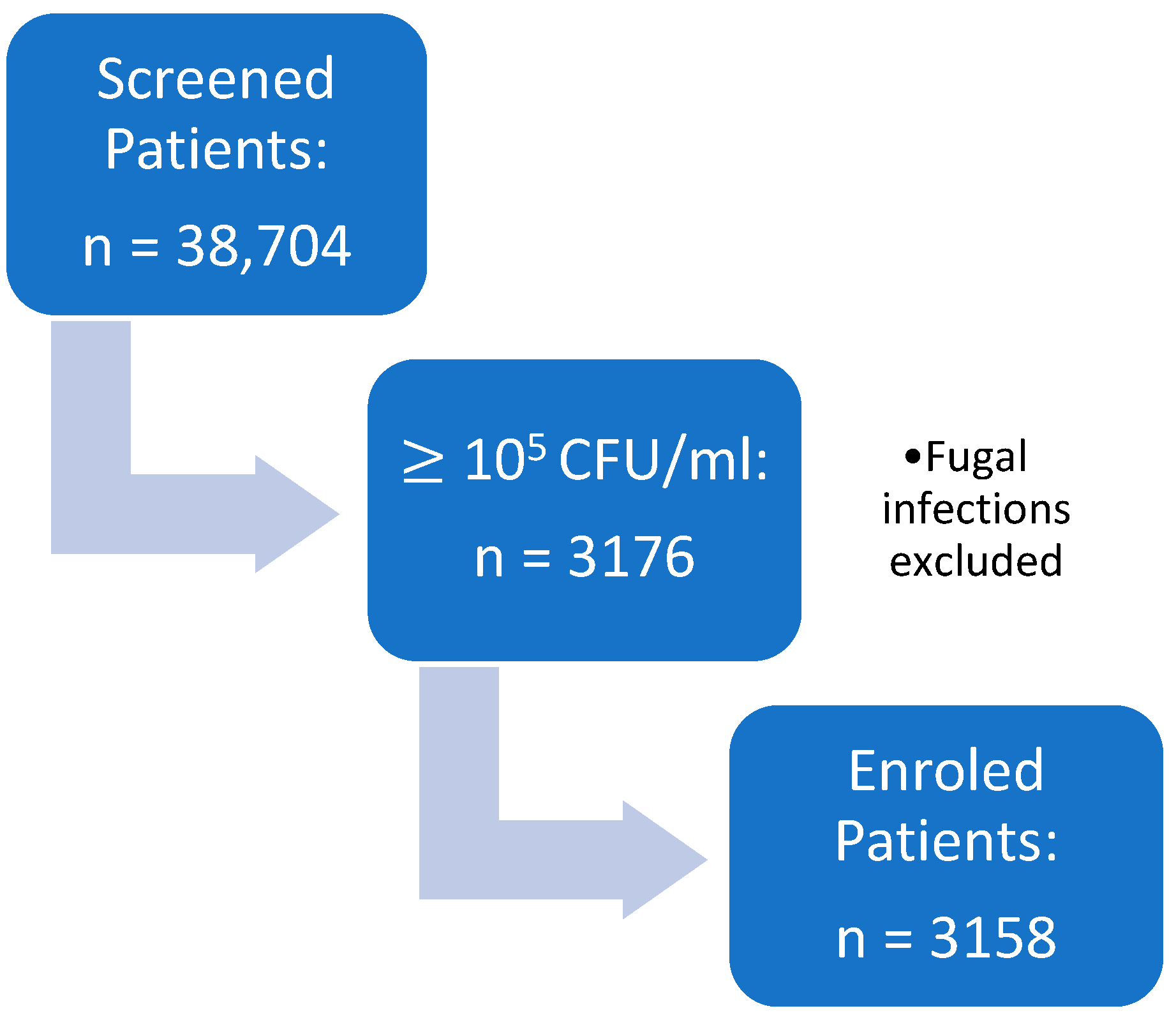
Despite the constraints imposed by the COVID-19 pandemic, the hospital activity continued without any restrictions after the lockdown. Owing to its extensive infrastructure, with over 135 urology beds, the institution served as a major referral center for non-COVID urological care, ensuring the uninterrupted management of patients with urological infections throughout the pandemic. A graphical representation of the patients’ selection process can be observed in Figure 1.
Figure 1. Graphical representation of patients assessed and included in the study group.
Medicina 62 00889 g001
In all cases, the patients included in the study were either hospitalized or received outpatient care. Consequently, it was not possible to collect a more detailed medical history about associated pathologies, of administered medical treatment, and its evolution for the non-hospitalized group. Furthermore, it is not possible to distinguish between recurrences and infections diagnosed for the first time.
The study was conducted in accordance with the ethical principles outlined in the Declaration of Helsinki for research involving human subjects. All procedures involving patient data were performed in accordance with institutional and national ethical standards, and patient confidentiality was strictly maintained.

2.2. Inclusion and Exclusion Criteria

Inclusion criteria:
  • Positive Urine Test ≥ 105 CFU/mL;
  • Single bacteria identified on culture;
  • Age ≥ 18 years;
  • Male patients.
Exclusion criteria:
  • Urine test < 105 CFU/mL;
  • Female Sex;
  • Multiple bacteria presence on culture;
  • Duplicate urine culture results from the same patient during the analyzed period (based on the personal identification number, only the first positive urine culture was registered);
  • Patients with urinary catheters.
The antibiotic treatment policy was established in accordance with the annually revised European Association of Urology guidelines [15]. According to its specifications, the minimum duration of the antibiotic regimen was preferred based on a careful evaluation of the specific disease. If the treatment was started empirically, it was properly adjusted based on urine test results. For hospitalized patients, the hospital also benefits from the Infectious Disease department’s advice whenever needed.
Regarding antibiotic susceptibility testing, all urine samples were incubated for 24 h after inoculation onto standard plates. Columbia sheep and lactose agar were the most frequently used for bacterial growth. In specific instances, the Chapman medium was used for Staphylococcus spp. Bacterial growth exceeding 105 CFU/mL in no more than 2 isolates was considered significant. The antibiotic inhibition zone evaluated by the Kirby-Bauer disk diffusion technique was analyzed according to the Clinical and Laboratory Standards Institute (CLSI) guideline for Antimicrobial Susceptibility Testing (AST) [19]. All bacterial identification and susceptibility testing were previously reported in several studies conducted in our department [19,20,21].

2.3. Statistical Analysis

Data were collected and structured using Microsoft Excel (version 2016, Microsoft Corporation, Redmond, WA, USA). Descriptive statistical analyses were performed in Python version 3.8.9, using JupyterLab 3.2.4 and the Pandas library 1.3.4. Categorical variables were expressed as absolute frequencies and percentages. Data comparison between groups regarding antimicrobial resistance rates was assessed using the chi-square test; when expected cell counts were fewer than 5, Fisher’s test was applied. A p-value < 0.05 was considered significant for the compared cases. Grammarly and DeepL were used for language accuracy.

3. Results

After analyzing the demographic parameters of the studied population, patients were divided into 2 age groups based on the 55-year landmark, which many authors consider the starting point for the manifestation of lower tract urinary symptoms related to increasing UTI prevalence. Focusing on the age distribution, the present results showed a higher prevalence of urinary tract infections among elderly, vulnerable patients. Table 1 shows that most cases occurred in patients over 55 years old in both groups. The mean age distribution showed similar patterns in both groups (70.5 years in the pandemic group vs. 69.4 years in the post-pandemic group).
Regarding the distribution of bacterial pathogens across the two analysed periods, Gram-negative bacteria showed the highest prevalence, with similar results in both groups, as illustrated in Table 2. E. coli continues to be the most prevalent diagnosed uropathogen among male patients, closely followed by Klebsiella spp. Higher rates of evolution were observed in Pseudomonas spp. during the post-pandemic period (10.90%) compared with the pandemic period (7.26%), suggesting a potential shift toward a higher risk of healthcare-associated UTIs. Enterococcus spp. remained the most frequently isolated pathogen among Gram-positive.
This study focused on determining the antimicrobial resistance rates in both Gram-negative and Gram-positive isolates. Table 3 and Table 4 illustrate the overall resistance rates registered for both bacterial groups.
The overall resistance rates among Gram-negative pathogens showed alarming increases for amoxicillin-clavulanic acid. (43.24% vs. 50.37%), levofloxacin (39.36% vs. 44.55%) compared with the pandemic period. Another important finding was the increasing resistance to last-resort antibiotic classes, such as meropenem and imipenem, which both showed over 20% resistance in the post-pandemic period. Similar trends, but lower values, were also observed when analysing ceftazidime (21.83% vs. 27.11%) and aztreonam (22.8% vs. 31.54%), suggesting worsening susceptibility to β-lactams. One of the most stable regarding antimicrobial resistance seems to be fosfomycin, and amikacin is still effective against all Gram-negative bacteria in both predefined periods.
Among Gram-positive bacteria, resistance patterns were stable, with some selective variations in both pandemic and post-pandemic time frames. Levofloxacin has shown the same concerning resistance in both the pandemic and post-pandemic periods. Despite showing alarming resistance to many antibiotic classes, Gram-positive bacteria remain sensitive to vancomycin, confirming its therapeutic role as a viable option. Overall, the Gram-positive bacteria revealed minimal differences between the analyzed periods in contrast to the Gram-negative bacteria.
E. coli, the most frequently identified uropathogen, was higher in the post-pandemic period compared to the pandemic period to one of the most commonly used antibiotics, such as levofloxacin, amoxicillin-clavulanic acid, and ceftazidime (Table 5). The AMR for levofloxacin rose from 37.24% to 45.57%, while, similarly, for amoxicillin-clavulanic ac. it rose from 33.81% to 40.13%. Even though the ceftazidime maintained resistance rates under 20%, a significant difference and an increasing trend were observed (12.04% vs. 17.21%).
Preserved sensitivity was observed for carbapenems, amikacin, and fosfomycin.
Table 5. E. coli resistance and sensitivity rates.
AntibioticE. coli RE. coli SE. coli RE. coli Sp Value
 PandemicPost-Pandemic 
 No.%.No.%.No.%.No.%. 
Amikacin234.6946795.31244.8247495.181.00
Amoxicillin- Clavulanic Acid16433.8132166.1919140.1328559.870.049
Aztreonam6012.9940287.012519.2310580.770.098
Trimethoprim/
Sulfamethoxazole
323.081076.9219345.0923554.910.196
Ceftazidime5912.0443187.968517.2140982.790.027
Fosfomycin71.5544498.4551.0746198.930.728
Imipenem40.8347999.1720.8323899.171.0
Levofloxacin18137.2430562.7622145.5726454.430.010
Meropenem30.6347499.3700.051100.01.0
Nitrofurantoin4813.3331286.67399.5836890.420.128
The second most frequent isolated bacteria, Klebsiella spp., showed a notable increase in AMR in the post-pandemic period to nitrofurantoin, rising up to 68.51% (Table 6).
The most important increased resistance rate after COVID-19 was observed in imipenem and meropenem, exceeding 30%, highlighting a potential emergence of resistance to last-resort carbapenems.
Table 6. Klebsiella spp. resistance and sensitivity rates.
AntibioticKlebsiella RKlebsiella SKlebsiella RKlebsiella Sp Value
 PandemicPost-Pandemic 
 No.%.No.%.No.%.No.%. 
Amikacin6416.7131983.298622.1130377.890.07
Amoxicillin- Clavulanic Acid22257.8116242.1922363.3512936.650.144
Aztreonam13538.3521761.654539.137060.870.969
Trimethoprim/
Sulfamethoxazole
836.361463.6414444.1718255.830.622
Ceftazidime13936.224563.814537.4724262.530.771
Imipenem5615.0931584.916032.0912767.91<0.001
Levofloxacin15941.322658.716042.6721557.330.757
Meropenem5514.432785.62633.335266.67<0.001
Nitrofurantoin11056.78443.312468.515731.490.02
When analyzing Pseudomonas spp., although major increases in resistance rates over the COVID and post-COVID compared periods were observed for antibiotics such as levofloxacin (48.11% vs. 49.39%) and amikacin (31.13% vs. 28.98%), no significant differences were observed (Table 7).
Last-resort antibiotics showed a relatively stable trend over time, but their resistance patterns remain a major concern, with over 30% resistance.
Table 7. Pseudomonas spp. resistance and sensitivity rates.
AntibioticPseudomonas RPseudomonas SPseudomonas RPseudomonas Sp Value
 PandemicPost-Pandemic 
 No.%.No.%.No.%.No.%. 
Amikacin3331.137368.875128.9812571.020.803
Aztreonam3736.276563.735243.336856.670.351
Imipenem3633.647166.365237.148862.860.663
Levofloxacin5148.115551.898149.398350.610.935
Meropenem3733.647366.365132.2810767.720.919
In contrast to Pseudomonas spp., in Proteus spp.a significant increase in resistance was observed for amoxicillin-clavulanic ac., rising from 34.27% during the COVID-19 pandemic to 53.21% in the post-pandemic period (Table 8). Similarly, resistance to ceftazidime increased significantly from 10.81% to 22.31%, while imipenem was a particular concern, showing a significant increase from 5.56% to 20.0% in a small number of cases.
Table 8. Proteus spp. resistance and sensitivity rates.
AntibioticProteus RProteus SProteus RProteus Sp Value
 PandemicPost-Pandemic 
 No.%.No.%.No.%.No.%. 
Amikacin64.0314395.9797.1411792.860.468
Amoxicillin- Clavulanic Acid4934.279465.735853.215146.790.002
Aztreonam96.3813293.6214.02496.00.599
Trimethoprim/
Sulfamethoxazole
571.43228.576460.954139.050.599
Ceftazidime1610.8113289.192722.319477.690.012
Imipenem85.5613694.44720.02880.00.049
Levofloxacin5134.939565.074939.847460.160.408
Meropenem42.7814097.2236.524393.480.344
After assessing the antibiotic susceptibility profile of Gram-negative uropathogens, the antibiotic susceptibility profile of the primary Gram-positive isolate was also examined. Enterococcus spp., the most frequent pathogen in its class, revealed relatively stable results when comparing the pandemic and post-pandemic situation (Table 9). Although no significant differences were observed, several antibiotics exhibited an alarming resistance profile. The most representative resistance profile was observed in levofloxacin (48.7% vs. 47.89%), followed by penicillin (32.26% vs. 38.64%), and ampicillin (14.5% vs. 13.06%).
A significant, albeit small, increase was observed for vancomycin (0.35% vs. 2.87%).
Table 9. Enterococcus spp. resistance and sensitivity rates.
AntibioticEnterococcus REnterococcus SEnterococcus REnterococcus Sp Value
 PandemicPost-Pandemic 
 No.%.No.%.No.%.No.%. 
Ampicillin3914.523085.53513.0623386.940.720
Fosfomycin103.5727096.43145.5323994.470.377
Levofloxacin13148.713851.313647.8914852.110.915
Linezolid51.8227098.18114.125795.90.186
Nitrofurantoin124.2627095.74176.2725493.730.382
Penicillin9032.2618967.7410238.6416261.360.143
Vancomycin10.3528599.6582.8727197.130.040
Regarding Staphylococcus spp., resistance rates remained stable over the analyzed periods, with no statistically significant differences between periods. Although stable, there are nevertheless concerning data regarding resistance to levofloxacin (58.33% vs. 54.05%) and penicillin (Table 10).
Table 10. Staphylococcus spp. resistance and sensitivity rates.
AntibioticStaphylococcus RStaphylococcus SStaphylococcus RStaphylococcus Sp Value
 PandemicPost-Pandemic 
 No.%.No.%.No.%.No.%. 
Trimethoprim/
Sulfamethoxazole
2440.03660.02434.294665.710.623
Levofloxacin3558.332541.674054.053445.950.748
Linezolid11.566398.4422.826997.181.0
Nitrofurantoin11.825498.1834.486495.520.756
Penicillin4778.331321.676284.931115.070.448

4. Discussion

4.1. General Data Comparison

The characteristics of the study population can partially explain the distribution of pathogens in this study. Since the patient analysis was conducted at a reference urology centre in Romania and included only male patients, a higher rate of healthcare-associated infections is expected. Within these institutions, the bacterial distribution may differ from that found in the community, where the recorded percentage of E. coli exceeds 60%. Typically, studies conducted in in-hospital patients demonstrate a higher incidence of opportunistic bacteria, such as Klebsiella, Enterococcus, and Pseudomonas [2,5,20].
Recent epidemiological data on a higher prevalence of UTIs in older patients confirm the mean age of 70 years old reported in the present study. Numerous recent studies have demonstrated an association between age and risk factors such as benign prostatic hyperplasia, urinary retention, urethrovaginal catheterization, institutionalization, and comorbidities, with a significant increase in the incidence of urinary tract infections [1,2,21,22]. According to recent analyses based on male subjects, patients over the age of 60 are at high risk for developing UTIs, especially those who are hospitalized or require urological care [15,21,22,23]. Taken together, these results confirm, the advanced age of the patients included in this study is consistent with current demographic trends regarding the prevalence of UTIs.

4.2. Overall Bacterial Comparison to Previous Results

The high prevalence of Gram-negative bacteria observed in this study confirms recent epidemiological data demonstrating their high prevalence in both community-acquired and nosocomial infections. Among the Enterobacterales, E. coli in particular is the most common pathogen implicated in the development of UTIs [2,20].
Although nitrofurantoin and fosfomycin demonstrate very good susceptibility rates, similar to other recent studies showing their excellent therapeutic activity in the treatment of urinary tract infections, in male patients, they are more difficult to use, as they are more suitable for the treatment of uncomplicated infections [24,25]. Furthermore, antibiotics such as carbapenems and amikacin maintain good susceptibility rates against Enterobacterales, as demonstrated by numerous global surveillance studies.
Recent studies, in accordance to our findings, reveal an alarming worldwide trend of bacteria in developing resistance to the most frequently used antibiotics, especially for fluoroquinolones and β-lactams [20,25].
Data reported over the past 10 years from patient have indicated a gradual increase in resistance to fluoroquinolones among E. coli and other Enterobacterales bacteria. This increase has most often been attributed to the overuse of these antibiotics, due to their efficacy [2,23].
Studies conducted during the post-pandemic setting have indicated increases in antibiotic resistance rates to the common bacterial agents, but also in last-line resort drugs like carbapenems, particularly among Gram-negative bacteria [26]. The data obtained in this study are consistent with research conducted during and after the COVID-19 pandemic and confirm that inappropriate antibiotic use in hospitalized patients and the increased rate of prolonged hospital stays are correlated with rising resistance rates, particularly for urinary tract infections [8,10].
This study also aligns with recent studies regarding resistance rates for Gram-positive bacteria, particularly Enterococcus. The antimicrobial resistance rates are high for the most commonly used antibiotics; sensitivity to antibiotics such as vancomycin, linezolid, nitrofurantoin, or fosfomycin remains [27]. Even though fosfomycin and nitrofurantoin retain activity against Gram-positive bacteria, they have limited utility in men, as they are primarily used to treat uncomplicated infections in women [24,27].
The overall data obtained in this study for both Gram-negative and Gram-positive bacteria are consistent with the general findings reported in recent specialized studies, which indicate alarming rates of resistance to fluoroquinolones and aminopenicillins. Furthermore, the relatively good susceptibility rates for fosfomycin, nitrofurantoin, and carbapenems are also consistent with recent studies on the activity of antibiotics against various categories of urinary pathogens [2,20,24,25].
Findings from current data and specialized literature underscore the importance of optimizing antibiotic treatment strategies based on local prevalence data and of continuously monitoring resistance trends across various population groups [2,23,28].

4.3. Gram-Negative Comparison

Escherichia coli, the most commonly isolated pathogen, shows a marked increase in antibiotic resistance worldwide, particularly in healthcare-associated infections and among patients with high antibiotic use [29,30]. Both in the present study and in international epidemiological studies, E. coli exhibits an alarming resistance rate to some of the most commonly used classes of antibiotics, such as fluoroquinolones and β-lactams. Another concerning aspect regarding resistance to β-lactam antibiotics is that global epidemiological data indicate an increasingly widespread prevalence of bacteria producing extended-spectrum β-lactamases (ESBLs) [30].
Regarding susceptibility data in both the present study and other recent studies, E. coli demonstrated favourable susceptibility profiles for aminoglycosides, fosfomycin, and carbapenems. This indicates that these classes of antibiotics remain effective despite the rising trend in resistance rates.
For Klebsiella spp., this study demonstrated increased resistance rates after the COVID-19 pandemic not only to fluoroquinolones but also to antibiotics such as nitrofurantoin and carbapenems. These alarming data registered in the post-pandemic period are also consistent with the current trend in the resistance spectrum of Klebsiella reported in previous studies [31]. Increased resistance to last-line antibiotics such as carbapenems in Enterobacterales caused by carbapenemase-producing bacteria is becoming an increasingly serious problem worldwide, due to the severe limitations in treatment options [32].
Another major focus of this study was the increasing rates of antibiotic resistance among Pseudomonas spp. across most antibiotic classes registered in both COVID and post-COVID period. Although no major changes were observed between the two periods analysed, the resistance rates are consistent with data from recent studies that identify this bacterium’s ability to develop resistance through intrinsic mechanisms such as efflux pumps, reduced membrane permeability, and biofilm formation [33]. All these mechanisms and processes significantly reduce Pseudomonas’ susceptibility to aminoglycosides, fluoroquinolones, cephalosporins, and carbapenems, making this bacterium a significant threat regarding urinary tract infections [33].
Compared with the pandemic period Proteus spp. antimicrobial resistance rates to the most common classes of antibiotics was higher, while maintaining relatively good susceptibility to aminoglycosides and carbapenems. These data correlates with current epidemiological data demonstrating that this bacterium retains good sensitivity to these classes [34].
All patterns of bacterial resistance and sensitivity over the compared periods, of Gram-negative organisms analyzed in this study correlate with international epidemiological data, demonstrating that these uropathogens, which account for approximately 90% of all urinary tract infections, exhibit increasing rates of AMR worldwide. This also highlight the necessity for rapid improvement in local studies for choosing the proper empiric antibiotic treatment [28,29,30,31,32,35].
Gram-negative uropathogens showed higher antimicrobial resistance in the post-pandemic period compared to COVID period findings, particularly among Enterobacterales.
Resistance to last-resort agents, including carbapenems, was higher in several Gram-negative isolates, raising concern for carbapenemase-producing organisms. These patterns may reflect some aspects during pandemic period regarding increased antibiotic usage, prolonged hospitalization, and higher rates of healthcare-associated infections. Overall, the findings suggest that Gram-negative resistance trends in the male population may have been influenced by COVID-19.

4.4. Gram-Positive Comparison

Enterococcus spp., the most commonly identified Gram-positive uropathogen, was shown in this study to exhibit low antibiotic resistance rates in both compared periods to nitrofurantoin, fosfomycin, and linezolid—antibiotics cited in the literature as viable therapeutic options for the treatment of urinary tract infections [27,36]. Unfortunately, some of these have limited efficacy in the male population due to poor penetration into the prostate [15]. As in other studies that identified minimal resistance rates, ampicillin retains its antibacterial activity against Enterococcus spp. [36,37]. Another aspect that should not be overlooked is the slight increase in vancomycin resistance, which aligns with the global trend of increasing vancomycin-resistant enterococci (VRE), particularly in settings where antibiotic administration and prolonged hospitalization contribute to this [37,38].
Resistance data levofloxacin, which showed extremely high but stable rates in this study in both COVID and post-COVID settings, are consistent with the general susceptibility data published in recent years for these pathogens [27,37].
In the present study, Staphylococcus spp. demonstrated adequate susceptibility to antibiotics such as vancomycin and linezolid. These findings are consistent with existing data in the specialized literature, as it is well known that these antibiotics are used as effective therapies for the treatment of Gram-positive bacteria, including methicillin-resistant Staphylococci [39,40]. The increase in resistance to ampicillin identified across multiple specialized studies may indicate widespread production of β-lactamases among these bacteria [40,41]. The data obtained in this study, in line with recent epidemiological data, indicate that although fluoroquinolones and older β-lactam antibiotics exhibit high resistance rates, Gram-positive bacteria nevertheless retain good susceptibility to classes such as vancomycin and linezolid [36,37,38,39,40,41].
Gram-positive uropathogen isolates showed relatively stable antimicrobial resistance patterns across the pandemic and post-pandemic periods, suggesting a more limited impact of COVID-19–related factors compared to Gram-negative bacteria. A slight increase in vancomycin resistance among enterococci may reflect the selective pressure associated with increased antibiotic use and prolonged hospitalizations during the COVID-19 period. Overall, these findings indicate that, while the pandemic influenced antimicrobial use, its effect on Gram-positive resistance patterns remained relatively modest.

4.5. Further Directions

Most international organizations, such as the World Health Organization, and the European Antimicrobial Resistance Surveillance Network, are continuously sounding the alarm regarding the importance of following guidelines for antibiotic prescribing and monitoring their use, as well as implementing training campaigns for prescribing physicians to reduce rates of uropathogen resistance [5,42]. The resistance patterns of Gram-negative and Gram-positive bacteria identified by this study underscore the importance of conducting prevalence and resistance studies that are both local and gender-specific, as these may reveal significant differences.
Another immediate need would be to improve national surveillance systems through the adoption of appropriate government policies. The European Antimicrobial Resistance Surveillance Network seeks to provide epidemiological data to identify resistance patterns and to adjust antibiotic treatment administration based on clear evidence regarding the prevalence of uropathogens [2,42].
Furthermore, government measures should have a greater impact on healthcare sectors. In urological practice, measures to prevent infections should be taken by improving catheter management and implementing standardized protocols [5,10].
Perhaps one of the most pressing issues regarding bacterial resistance is investment in research into new classes of drugs and possibly rapid diagnostic techniques, which will be essential in the very near future [2,10].

4.6. Strengths and Limitations

This study has numerous strengths, and one of the most important is that it includes a cohort of over 3000 urine culture-positive cases analyzed in a male population over a 4-year period. This facilitates a thorough assessment of bacterial resistance patterns.
Another important point to note is that this study included comparative data from the COVID-19 period with data from the post-pandemic period. Throughout this entire period, the hospital operated at full capacity after lockdown period during the pandemic situation as a treatment center for non-COVID patients, performing a wide range of urological surgical procedures without restrictions, covering both oncological conditions and lithiasis or benign pathologies. Given its high patient volume as a referral centre, outpatient cases are also very numerous, with the hospital serving patients from over one-third of the country’s territory.
The hospital also has an Infectious Diseases Department responsible for managing newly diagnosed cases of UTI. To our knowledge, this is the largest study to date conducted on a male population in Romania.
The present study also has some limitations, the most important of which are its retrospective nature and the inclusion in the database of both hospitalized and outpatient patients. In addition, given the inclusion of non-hospitalized cases, the study cannot provide a breakdown of the prevalence of various pathologies within the study cohort. Given that only the first positive urine culture was registered, this study can’t provide data about the recurrence of UTIs. A further limitation is the use of six-month intervals instead of a complete comparison over a whole year, which may lead to seasonal bias. Also, the hospital urology profile as a tertiary center may lead to higher registered resistance rates than in the general population due to the fact that complex pathologies are treated. The exclusion of urinary catheters is also another important limitation of the present study. Last but not least, the study’s single-center design means that the results cannot be accurately generalized to the country’s population.

5. Conclusions

In this single-center study of male patients, antimicrobial resistance patterns differed between the COVID-19 pandemic and post-pandemic periods, with higher resistance rates observed in the post-pandemic group, particularly among Gram-negative uropathogens. Enterobacterales, especially Escherichia coli and Klebsiella spp., demonstrated higher resistance rates to commonly used antibiotics such as fluoroquinolones and β-lactams, while preserved activity was noted for fosfomycin, aminoglycosides, carbapenems. Notably, increased resistance to carbapenems in the post-COVID setting raises concern regarding the emergence of highly resistant bacterial strains. In contrast, Gram-positive organisms showed relatively stable resistance profiles between the two compared periods. To the best of our knowledge, this is one of the largest studies evaluating the antimicrobial resistance evolution after the COVID-19 situation in the Romanian male population These findings highlight the importance of continuous local surveillance and support the use of culture-guided therapy when managing urinary tract infections in male patients.

Author Contributions

Conceptualization, R.-I.P., R.-C.P. and C.M.; methodology, R.-I.P., C.M., A.P. and V.J.; software, C.M. and M.B.; validation, R.-C.P., A.P. and V.J.; formal analysis, R.-I.P., A.P., C.M. and M.B.; investigation, R.-I.P., M.B. and R.-C.P.; data curation, R.-C.P., A.P. and V.J.; writing—original draft preparation, R.-I.P., C.M. and M.B.; writing—review and editing, R.-C.P., A.P. and V.J.; visualization, R.-I.P., A.P., C.M. and M.B.; supervision, R.-C.P. and V.J.; All authors have read and agreed to the published version of the manuscript.

Funding

This research received no external funding.

Institutional Review Board Statement

The study was conducted in accordance with the Declaration of Helsinki and approved by the Ethics Committee of “Prof. Dr. Th. Burghele” Clinical Hospital, no. 2/21.01.2019.

Informed Consent Statement

The data collected retrospectively did not contain any personal information. Written informed consent was obtained for each patient.

Data Availability Statement

Data supporting the reported results are available from the authors.

Conflicts of Interest

The authors declare no conflicts of interest.

References

  1. Flores-Mireles, A.L.; Walker, J.N.; Caparon, M.; Hultgren, S.J. Urinary tract infections: Epidemiology, mechanisms of infection and treatment options. Nat. Rev. Microbiol. 2015, 13, 269–284. [Google Scholar] [CrossRef] [PubMed]
  2. Medina, M.; Castillo-Pino, E. An introduction to the epidemiology and burden of urinary tract infections. Ther. Adv. Urol. 2019, 11, 1756287219832172. [Google Scholar] [CrossRef]
  3. Zeng, Z.; Zhan, J.; Zhang, K.; Chen, H.; Cheng, S. Global, regional, and national burden of urinary tract infections from 1990 to 2019: An analysis of the global burden of disease study 2019. World J. Urol. 2022, 40, 755–763. [Google Scholar] [CrossRef]
  4. Murray, C.J.L.; Ikuta, K.S.; Sharara, F.; Swetschinski, L.; Aguilar, G.R.; Gray, A.; Han, C.; Bisignano, C.; Rao, P.; Wool, E.; et al. Global burden of bacterial antimicrobial resistance in 2019: A systematic analysis. Lancet 2022, 399, 629–655. [Google Scholar] [CrossRef]
  5. Kranz, J.; Bartoletti, R.; Bruyère, F.; Cai, T.; Geerlings, S.; Köves, B.; Schubert, S.; Pilatz, A.; Veeratterapillay, R.; Wagenlehner, F.M.E.; et al. European Association of Urology Guidelines on Urological Infections: Summary of the 2024 Guidelines. Eur. Urol. 2024, 86, 27–41. [Google Scholar] [CrossRef]
  6. Farrell, K.; Tandan, M.; Hernandez Santiago, V.; Gagyor, I.; Braend, A.M.; Skow, M.; Vik, I.; Jansaaker, F.; Hayward, G.; Vellinga, A. Treatment of uncomplicated UTI in males: A systematic review of the literature. BJGP Open 2021, 5, bjgpopen20X101140. [Google Scholar] [CrossRef]
  7. Lafaurie, M.; Chevret, S.; Fontaine, J.-P.; Mongiat-Artus, P.; de Lastours, V.; Escaut, L.; Jaureguiberry, S.; Bernard, L.; Bruyere, F.; Gatey, C.; et al. Antimicrobial for 7 or 14 Days for Febrile Urinary Tract Infection in Men: A Multicenter Noninferiority Double-Blind, Placebo-Controlled, Randomized Clinical Trial. Clin. Infect. Dis. 2023, 76, 2154–2162. [Google Scholar] [CrossRef] [PubMed]
  8. Langford, B.J.; So, M.; Raybardhan, S.; Leung, V.; Westwood, D.; MacFadden, D.R.; Soucy, J.R.; Daneman, N. Bacterial co-infection and secondary infection in patients with COVID-19: A living rapid review and meta-analysis. Clin. Microbiol. Infect. 2020, 26, 1622–1629. [Google Scholar] [CrossRef]
  9. Garcia-Vidal, C.; Sanjuan, G.; Moreno-García, E.; Puerta-Alcalde, P.; Garcia-Pouton, N.; Chumbita, M.; Fernandez-Pittol, M.; Pitart, C.; Inciarte, A.; Bodro, M.; et al. Incidence of co-infections and superinfections in hospitalized patients with COVID-19: A retrospective cohort study. Clin. Microbiol. Infect. 2021, 27, 83–88. [Google Scholar] [CrossRef]
  10. Weiner-Lastinger, L.M.; Pattabiraman, V.; Konnor, R.Y.; Patel, P.R.; Wong, E.; Xu, S.Y.; Smith, B.; Edwards, J.R.; Dudeck, M.A. The impact of coronavirus disease 2019 (COVID-19) on healthcare-associated infections in 2020: A summary of data reported to the National Healthcare Safety Network. Infect. Control Hosp. Epidemiol. 2022, 43, 12–25. [Google Scholar] [CrossRef] [PubMed]
  11. Peckham, H.; de Gruijter, N.M.; Raine, C.; Radziszewska, A.; Ciurtin, C.; Wedderburn, L.R.; Rosser, E.C.; Webb, K.; Deakin, C.T. Male sex identified by global COVID-19 meta-analysis as a risk factor for death and ITU admission. Nat. Commun. 2020, 11, 6317. [Google Scholar] [CrossRef]
  12. Rawson, T.M.; Moore, L.S.P.; Zhu, N.; Ranganathan, N.; Skolimowska, K.; Gilchrist, M.; Satta, G.; Cooke, G.; Holmes, A. Bacterial and Fungal Coinfection in Individuals with Coronavirus: A Rapid Review To Support COVID-19 Antimicrobial Prescribing. Clin. Infect. Dis. 2020, 71, 2459–2468. [Google Scholar] [CrossRef] [PubMed]
  13. Warren, J.W.; Abrutyn, E.; Hebel, J.R.; Johnson, J.R.; Schaeffer, A.J.; Stamm, W.E. Guidelines for antimicrobial treatment of uncomplicated acute bacterial cystitis and acute pyelonephritis in women. Infectious Diseases Society of America (IDSA). Clin. Infect. Dis. 1999, 29, 745–758. [Google Scholar] [CrossRef]
  14. Aluculesei, B.C. Antibiotic resistance in Romania: An economic and medical challenge. J. Sci. Res. 2017, 3, 1–8. [Google Scholar]
  15. Bonkat, G.; Bartoletti, R.; Bruyère, F.; Cai, T.; Geerlings, S.E.; Köves, B.; Schubert, S.; Wagenlehner, F. EAU Guidelines on Urological Infections; European Association of Urology: Arnhem, The Netherlands, 2022. [Google Scholar]
  16. Petca, R.C.; Negoiță, S.; Mareș, C.; Petca, A.; Popescu, R.I.; Chibelean, C.B. Heterogeneity of Antibiotics Multidrug-Resistance Profile of Uropathogens in Romanian Population. Antibiotics 2021, 10, 523. [Google Scholar] [CrossRef] [PubMed]
  17. Petca, R.C.; Mareș, C.; Petca, A.; Negoiță, S.; Popescu, R.I.; Boț, M.; Barabás, E.; Chibelean, C.B. Spectrum and Antibiotic Resistance of Uropathogens in Romanian Females. Antibiotics 2020, 9, 472. [Google Scholar] [CrossRef]
  18. Chibelean, C.B.; Petca, R.-C.; Mareș, C.; Popescu, R.-I.; Enikő, B.; Mehedințu, C.; Petca, A. A Clinical Perspective on the Antimicrobial Resistance Spectrum of Uropathogens in a Romanian Male Population. Microorganisms 2020, 8, 848. [Google Scholar] [CrossRef]
  19. Clinical and Laboratory Standards Institute (CLSI). Performance Standards for Antimicrobial Susceptibility Testing, 31st ed.; CLSI: Wayne, PA, USA, 2021; CLSI Supplement M100. [Google Scholar]
  20. Tandogdu, Z.; Wagenlehner, F.M. Global epidemiology of urinary tract infections. Curr. Opin. Infect. Dis. 2016, 29, 73–79. [Google Scholar] [CrossRef]
  21. Foxman, B. Urinary tract infection syndromes: Occurrence, recurrence, bacteriology, risk factors, and disease burden. Infect. Dis. Clin. N. Am. 2014, 28, 1–13. [Google Scholar] [CrossRef]
  22. Broughton, E.; Bektas, M.; Colosia, A.; Kuper, K.; Fernandez, M.M.; Al-Taie, A.; Kotb, R. A Systematic Literature Review of the Epidemiology of Complicated Urinary Tract Infection. Infect. Dis. Ther. 2025, 14, 1157–1181. [Google Scholar] [CrossRef]
  23. Rowe, T.A.; Juthani-Mehta, M. Urinary tract infection in older adults. Aging Health 2013, 9, 519–528. [Google Scholar] [CrossRef]
  24. Gardiner, B.J.; Stewardson, A.J.; Abbott, I.J.; Peleg, A.Y. Nitrofurantoin and fosfomycin for resistant urinary tract infections: Old drugs for emerging problems. Aust. Prescr. 2019, 42, 14–19. [Google Scholar] [CrossRef]
  25. Bader, M.S.; Loeb, M.; Leto, D.; Brooks, A.A. Treatment of urinary tract infections in the era of antimicrobial resistance and new antimicrobial agents. Postgrad. Med. 2020, 132, 234–250. [Google Scholar] [CrossRef]
  26. Shields, R.K.; Zhou, Y.; Kanakamedala, H.; Cai, B. Burden of illness in US hospitals due to carbapenem-resistant Gram-negative urinary tract infections in patients with or without bacteraemia. BMC Infect. Dis. 2021, 21, 572. [Google Scholar] [CrossRef]
  27. Codelia-Anjum, A.; Lerner, L.B.; Elterman, D.; Zorn, K.C.; Bhojani, N.; Chughtai, B. Enterococcal Urinary Tract Infections: A Review of the Pathogenicity, Epidemiology, and Treatment. Antibiotics 2023, 12, 778. [Google Scholar] [CrossRef] [PubMed]
  28. Bruins, M.J.; Eijkelkamp-Biesterbos, L.; Meutstege, A.M.; Dos Santos, C.O. Escherichia coli antimicrobial resistance in acute urinary tract infection lower than reported in Dutch national surveillance database. PLoS ONE 2025, 20, e0334222. [Google Scholar] [CrossRef]
  29. Mareș, C.; Petca, R.-C.; Popescu, R.-I.; Petca, A.; Mulțescu, R.; Bulai, C.A.; Ene, C.V.; Geavlete, P.A.; Geavlete, B.F.; Jinga, V. Update on Urinary Tract Infection Antibiotic Resistance—A Retrospective Study in Females in Conjunction with Clinical Data. Life 2024, 14, 106. [Google Scholar] [CrossRef] [PubMed]
  30. Fukuda, D.; Handa, Y.; Kayama, Y.; Fujii, K.; Kawamatsu, S.; Kawano, Y.; Vojtek, I.; Powell, D.; Mulgirigama, A.; Gu, Y. The Current Landscape of Antibiotic Use and Antimicrobial Resistance in Japan: Focusing on Common Infections Including Uncomplicated Urinary Tract Infection and Gonorrhea. Antibiotics 2025, 14, 813. [Google Scholar] [CrossRef] [PubMed]
  31. Radu, V.D.; Costache, R.C.; Onofrei, P.; Miron, A.; Bandac, C.A.; Arseni, D.; Mironescu, M.; Miftode, R.S.; Boiculese, L.V.; Miftode, I.L. Urinary Tract Infections with Carbapenem-Resistant Klebsiella pneumoniae in a Urology Clinic-A Case-Control Study. Antibiotics 2024, 13, 583. [Google Scholar] [CrossRef]
  32. Codjoe, F.S.; Donkor, E.S. Carbapenem Resistance: A Review. Med. Sci. 2017, 6, 1. [Google Scholar] [CrossRef]
  33. Pang, Z.; Raudonis, R.; Glick, B.R.; Lin, T.J.; Cheng, Z. Antibiotic resistance in Pseudomonas aeruginosa: Mechanisms and alternative therapeutic strategies. Biotechnol. Adv. 2019, 37, 177–192. [Google Scholar] [CrossRef] [PubMed]
  34. Armbruster, C.E.; Mobley, H.L.T.; Pearson, M.M. Pathogenesis of Proteus mirabilis Infection. EcoSal Plus 2018, 8, 10-1128. [Google Scholar] [CrossRef] [PubMed]
  35. Mareș, C.; Petca, R.-C.; Popescu, R.-I.; Petca, A.; Geavlete, B.F.; Jinga, V. Uropathogens’ Antibiotic Resistance Evolution in a Female Population: A Sequential Multi-Year Comparative Analysis. Antibiotics 2023, 12, 948. [Google Scholar] [CrossRef]
  36. Arias, C.A.; Murray, B.E. The rise of the Enterococcus: Beyond vancomycin resistance. Nat. Rev. Microbiol. 2012, 10, 266–278. [Google Scholar] [CrossRef] [PubMed]
  37. Lee, T.; Pang, S.; Abraham, S.; Coombs, G.W. Antimicrobial-resistant CC17 Enterococcus faecium: The past, the present and the future. J. Glob. Antimicrob. Resist. 2019, 16, 36–47. [Google Scholar] [CrossRef]
  38. O’Driscoll, T.; Crank, C.W. Vancomycin-resistant enterococcal infections: Epidemiology, clinical manifestations, and optimal management. Infect. Drug Resist. 2015, 8, 217–230. [Google Scholar] [CrossRef]
  39. Tong, S.Y.; Davis, J.S.; Eichenberger, E.; Holland, T.L.; Fowler, V.G., Jr. Staphylococcus aureus infections: Epidemiology, pathophysiology, clinical manifestations, and management. Clin. Microbiol. Rev. 2015, 28, 603–661. [Google Scholar] [CrossRef]
  40. Kourtis, A.P.; Hatfield, K.; Baggs, J.; Mu, Y.; See, I.; Epson, E.; Nadle, J.; Kainer, M.A.; Dumyati, G.; Petit, S.; et al. Vital Signs: Epidemiology and Recent Trends in Methicillin-Resistant and in Methicillin-Susceptible Staphylococcus aureus Bloodstream Infections—United States. MMWR Morb. Mortal. Wkly. Rep. 2019, 68, 214–219. [Google Scholar] [CrossRef]
  41. Chambers, H.F.; Deleo, F.R. Waves of resistance: Staphylococcus aureus in the antibiotic era. Nat. Rev. Microbiol. 2009, 7, 629–641. [Google Scholar] [CrossRef]
  42. European Centre for Disease Prevention and Control. Antimicrobial Resistance Surveillance in Europe 2023; ECDC: Stockholm, Sweden, 2023. [Google Scholar]
Table 1. Age distribution.
<55 Years
No./%.
>55 Years
No./%.
Total
Group 1 (Pandemic)173/11.211370/88.781543
Group 2 (Post-pandemic)174/10.771441/89.221615
Table 2. Bacterial prevalence in the analysed groups.
Pandemic No.Pandemic %.Post-Pandemic No.Post-Pandemic
%.
Gram -E. coli50732.8652032.20
Klebsiella40025.9239724.58
Pseudomonas1127.2617610.90
Proteus1549.981297.99
Gram +Enterococcus30019.4429918.51
Staphylococcus674.34774.77
Other 30.19151.06
Table 3. Gram negative (Gram -) Overall resistance rates.
AntibioticGram—RGram—RGram—R
 PandemicPost-PandemicOverall
 No.%.No.%.No.%.
Amikacin12611.1717014.329612.78
Amoxicillin- Clavulanic Acid44143.2447350.3791446.66
Aztreonam24122.812331.5436425.16
Trimethoprim/
Sulfamethoxazole
1638.140246.6941846.29
Ceftazidime24621.8331827.1156424.52
Fosfomycin132.73142.8272.76
Imipenem1049.4112120.122513.18
Levofloxacin44239.3651144.5595341.98
Meropenem998.898024.0217912.38
Nitrofurantoin17129.5816727.9733828.77
Table 4. Gram negative (Gram +) Overall resistance rates.
AntibioticGram + RGram + RGram + R
 PandemicPost-PandemicOverall
 No.%.No.%.No.%.
Amikacin46.9 5.5656.58
Ampicillin3914.393513.067413.73
Trimethoprim/
Sulfamethoxazole
2439.342529.764933.79
Fosfomycin124.2145.49264.81
Levofloxacin16650.4617649.1634249.78
Linezolid61.77133.83192.8
Nitrofurantoin133.86205.92334.89
Penicillin13740.4116448.6630144.53
Vancomycin10.3482.8791.57
Disclaimer/Publisher’s Note: The statements, opinions and data contained in all publications are solely those of the individual author(s) and contributor(s) and not of MDPI and/or the editor(s). MDPI and/or the editor(s) disclaim responsibility for any injury to people or property resulting from any ideas, methods, instructions or products referred to in the content.