Abstract
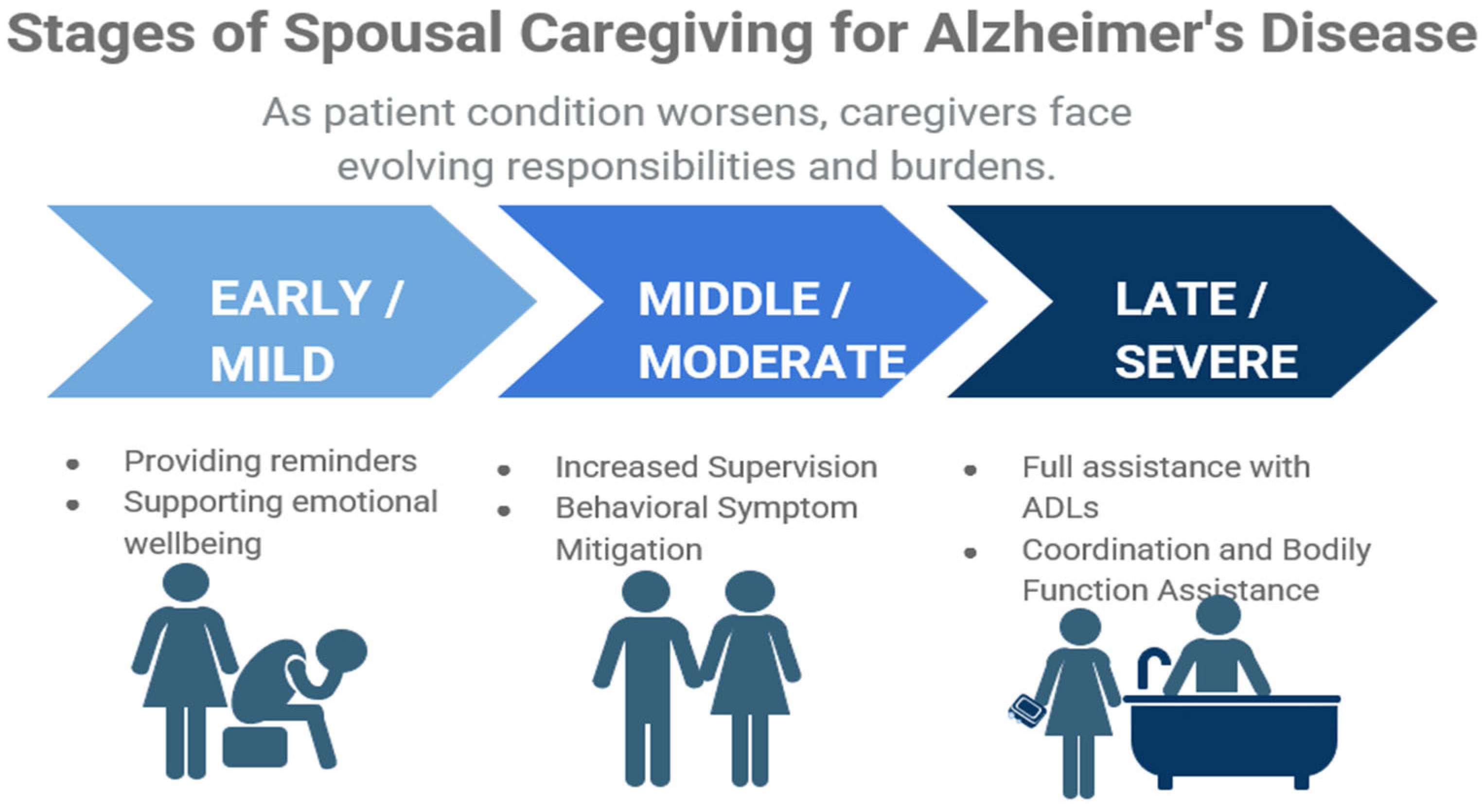
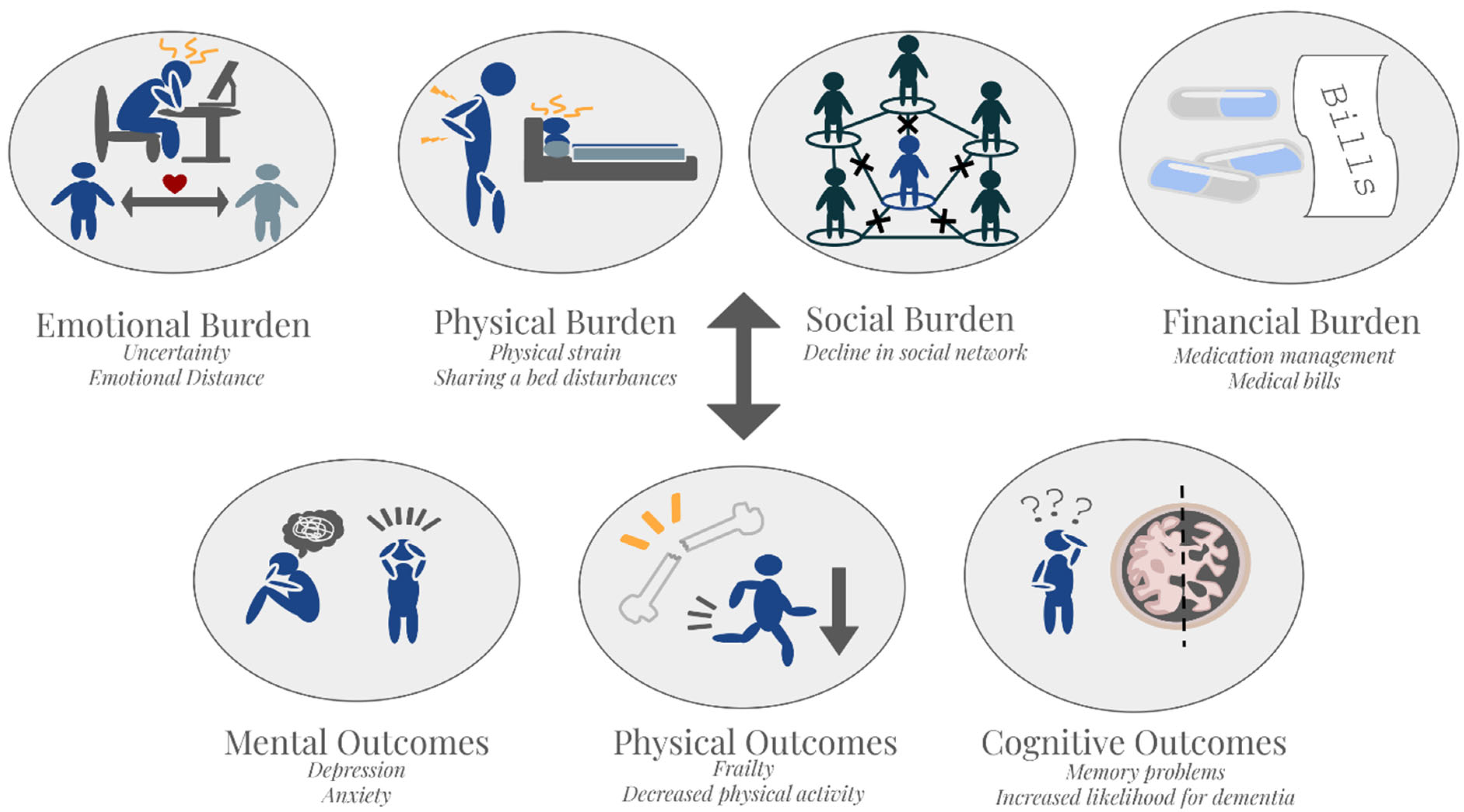
Dementia caregiving represents a major public health challenge, with spousal caregivers assuming the greatest burden. Spouses, themselves typically older adults, provide high intensity, long-term, and largely unpaid care across all stages of cognitive decline. Despite their central role in dementia care, the health consequences experienced by spousal caregivers remain insufficiently characterized in the literature and inadequately addressed in clinical and public health practice. This structured narrative review synthesizes current evidence on the multidimensional impact of dementia caregiving on the physical, psychological, cognitive, social, and financial health of spousal caregivers. It further contextualizes these consequences within the trajectory of dementia progression, and identifies interventions, support systems, and policy considerations necessary to mitigate caregiver burden. Spousal caregivers experience disproportionate burden due to continuous, escalating responsibilities that often mirror the progressive deterioration of their partners. Emotional burdens, including uncertainty during pre-diagnostic stages, role strain, conflict, loss of intimacy, and anticipatory grief. Physically, spouses endure musculoskeletal strain, sleep disruption, poor nutrition, and heightened frailty risk. Psychologically, spousal caregivers exhibit elevated rates of depression, anxiety, loneliness, and stress-related disorders. Socially, caregivers experience substantial isolation, stigma, and erosion of social networks. Financial hardship, including early retirement, reduced employment, and uncompensated care hours, further exacerbate stress. Evidence suggests that chronic caregiving stress contributes to biological changes such as immune dysregulation, inflammation, acceleration, aging, and potential cognitive decline in caregivers themselves. Caregiver burden influences patient outcomes as evidenced by increased emergency department use, falls, and earlier institutionalization in persons with dementia whose caregiver is subjected to a high burden. Current care models rarely include routine, caregiver assessment or structured guidance following diagnosis, resulting in substantial unmet needs. Effective mitigation requires integrated, stage-sensitive interventions, including psychosocial support, caregiver education, respite services, culturally tailored programs, and digital health tools, alongside broader policy reforms to reduce financial and structural barriers.




 ,
,