Hypoperfusion Intensity Ratio as an Independent Predictor of Functional Outcome After Mechanical Thrombectomy for Large Vessel Occlusion Stroke

 , , , , , ,
  and
and
Abstract
1. Introduction
2. Materials and Methods
Statistical Analysis
3. Results
3.1. General Patient Data
3.2. Factors Associated with the Functional Outcome
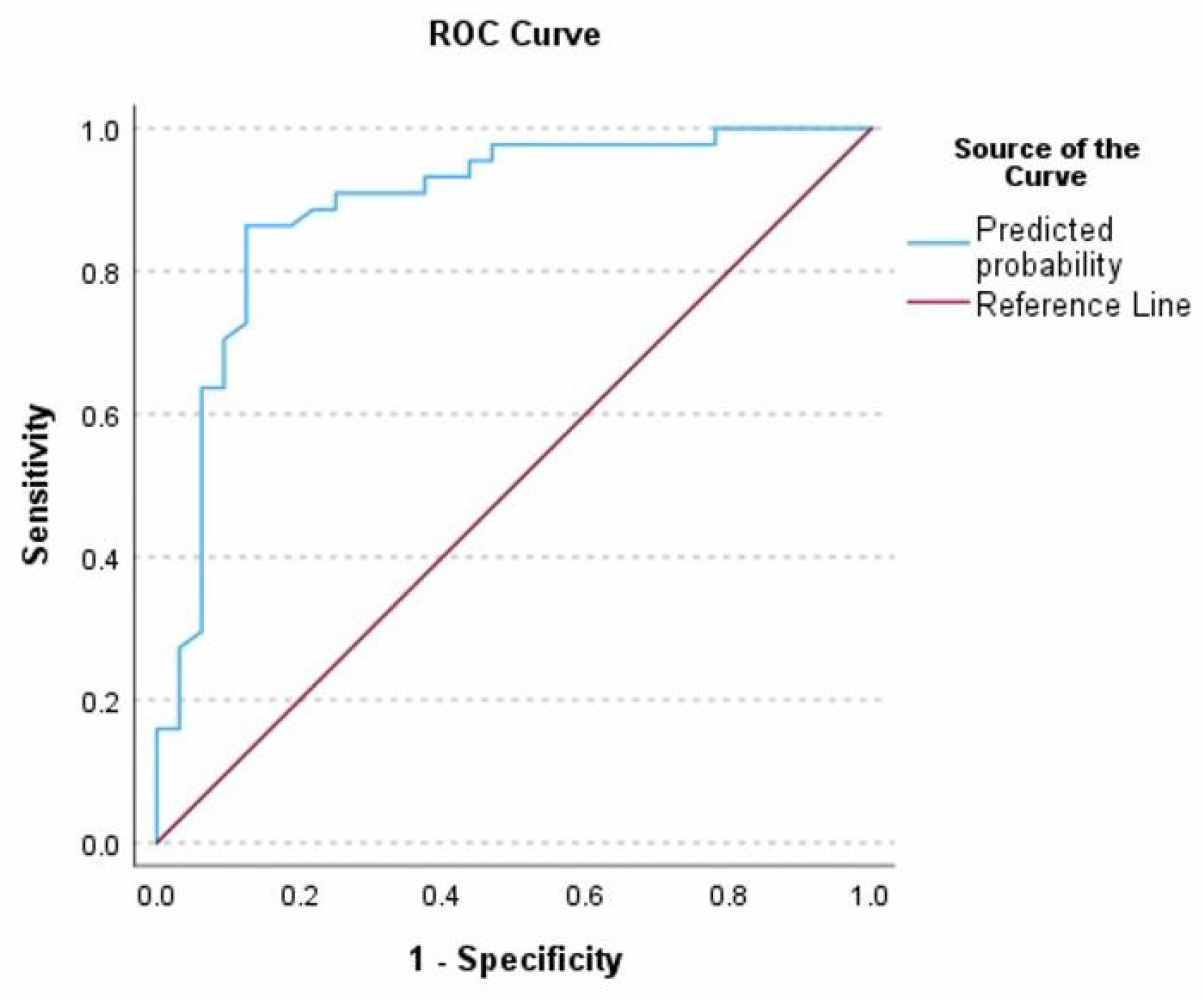
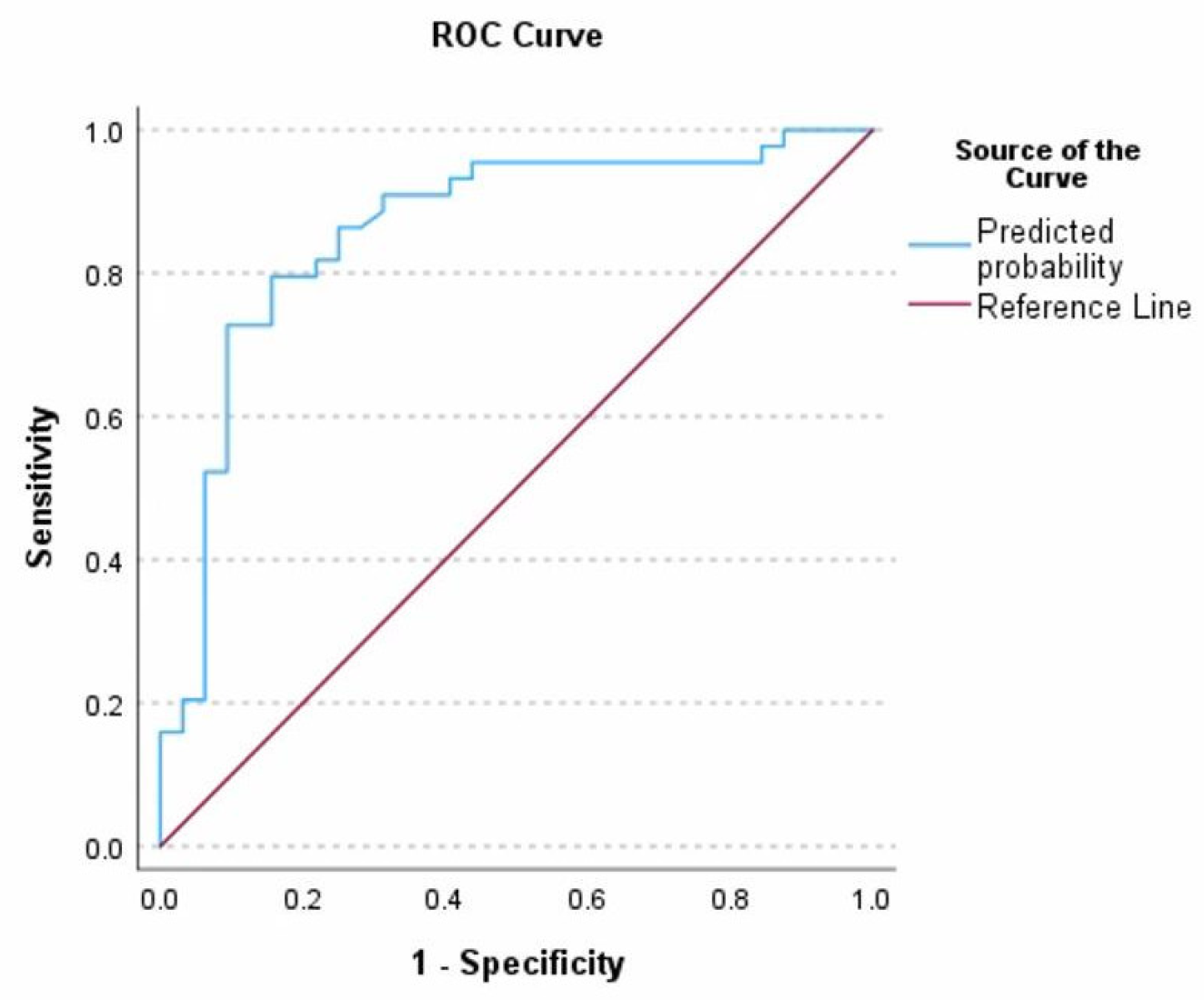
3.3. Logistic Regression Analysis
3.4. Evaluation of Symptomatic Intracerebral Haemorrhage
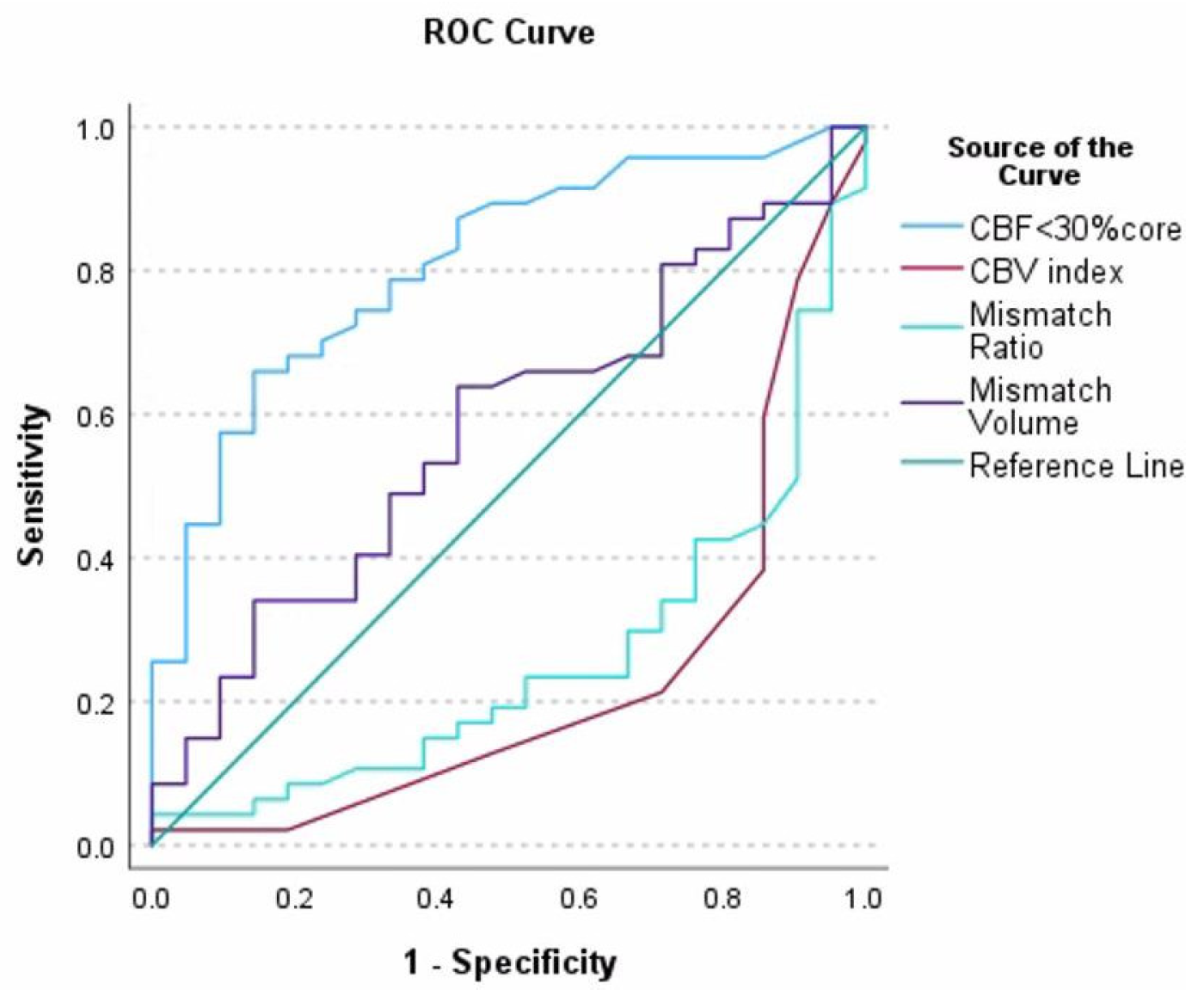
3.5. Evaluation of Automated CTP Measurements
4. Discussion
5. Conclusions
Author Contributions
Funding
Institutional Review Board Statement
Informed Consent Statement
Data Availability Statement
Acknowledgments
Conflicts of Interest
References
- Feigin, V.L.; Norrving, B.; Mensah, G.A.; O Martins, S.; Pandian, J.; Lindsay, P.; Grupper, M.F.; Rautalin, I. World Stroke Organization: Global Stroke Fact Sheet 2025. Int. J. Stroke 2025, 20, 132–144. [Google Scholar] [CrossRef]
- Saini, V.; Guada, L.; Yavagal, D.R. Global epidemiology of stroke and access to acute ischemic stroke interventions. Neurology 2021, 97, S6–S16. [Google Scholar] [CrossRef] [PubMed]
- GBD 2021 Diseases and Injuries Collaborators. Global incidence, prevalence, years lived with disability, disability-adjusted life-years, and healthy life expectancy for 371 diseases and injuries in 204 countries and territories, 1990–2021: A systematic analysis for the Global Burden of Disease Study 2021. Lancet 2024, 403, 2133–2161. [Google Scholar] [CrossRef]
- Feigin, V.L.; Brainin, M.; Norrving, B.; Martins, S.; Sacco, R.L.; Hacke, W.; Fisher, M.; Pandian, J.; Lindsay, P. World Stroke Organization (WSO): Global Stroke Fact Sheet 2022. Int. J. Stroke 2022, 17, 18–29. [Google Scholar] [CrossRef] [PubMed]
- Wassélius, J.; Arnberg, F.; von Euler, M.; Wester, P.; Ullberg, T. Endovascular thrombectomy for acute ischemic stroke. J. Intern. Med. 2022, 291, 303–316. [Google Scholar] [CrossRef]
- Chen, H.; Lee, J.S.; Michel, P.; Yan, B.; Chaturvedi, S. Endovascular stroke thrombectomy for patients with large ischemic core: A review. JAMA Neurol. 2024, 81, 1085–1093. [Google Scholar] [CrossRef]
- Maruani, A.; Obadia, M.; Fontaine, L.; Savatovsky, J.; Albucher, J.-F.; Calviere, L.; Raposo, N.; Cognard, C.; Viguier, A.; Albers, G.W.; et al. Hypoperfusion intensity ratio to differentiate between stroke etiologies in patients with a large vessel occlusion. Eur. Stroke J. 2024, 10, 796–803. [Google Scholar] [CrossRef]
- Ballout, A.A.; Libman, R.B.; Schneider, J.R.; Ayoub, M.S.; Wang, J.J.; Patsalides, A.; Katz, J.M. Hypoperfusion intensity ratio is associated with stroke mechanism in patients undergoing mechanical thrombectomy. J. Stroke Cerebrovasc. Dis. 2022, 31, 106539. [Google Scholar] [CrossRef]
- Wang, C.M.; Chang, Y.M.; Sung, P.S.; Chen, C.H. Hypoperfusion Index Ratio as a Surrogate of Collateral Scoring on CT Angiogram in Large Vessel Stroke. J. Clin. Med. 2021, 10, 1296. [Google Scholar] [CrossRef]
- Muehlen, I.; Borutta, M.; Siedler, G.; Engelhorn, T.; Hock, S.; Knott, M.; Hoelter, P.; Volbers, B.; Schwab, S.; Doerfler, A. Prognostic accuracy of CTP summary maps in patients with large vessel occlusive stroke and poor revascularization after mechanical thrombectomy: Comparison of three automated perfusion software applications. Tomography 2022, 8, 1350–1362. [Google Scholar] [CrossRef]
- Ai, Z.; Jiang, L.; Zhao, B.; Su, H.; Yin, X.; Chen, Y.C. Hypoperfusion intensity ratio correlates with angiographic collaterals and infarct growth in acute stroke with thrombectomy. Curr. Med. Imaging Rev. 2023, 19, 2657. [Google Scholar] [CrossRef] [PubMed]
- Rehman, S.; Nadeem, A.; Kasi, A.B.U.; Husnain, A.; Waseem, S.; Kumar, S.; Owais, S.M.; Banu, N.; Lakhani, D.A.; Salim, H.A.; et al. Role of hypoperfusion intensity ratio in vessel occlusions: A review on safety and clinical outcomes. AJNR Am. J. Neuroradiol. 2025, 46, 1069–1081. [Google Scholar] [CrossRef] [PubMed]
- Busto, G.; Morotti, A.; Casetta, I.; Barra, A.; Fiorenza, A.; Di Pasquale, F.; Maccaglia, M.G.; Toffali, M.; Mancini, S.; Carlesi, E.; et al. Hypoperfusion intensity ratio correlates with collaterals and predicts outcome and infarct volume in acute ischemic stroke patients. Eur. J. Clin. Investig. 2024, 54, e14264. [Google Scholar] [CrossRef] [PubMed]
- Fu, M.; Yang, J.; Dong, X.; Huang, C.; Yuan, Z.; Jiang, L.; Meng, R.; Xie, Y.; Li, J. Association of critical hypoperfusion biomarkers on CT with futile recanalization and poor outcome after mechanical thrombectomy in acute ischemic stroke. BMC Neurol. 2024, 24, 406. [Google Scholar] [CrossRef]
- Lakhani, D.A.; Balar, A.B.; Vagal, V.; Salim, H.; Mei, J.; Koneru, M.; Wen, S.; Ozkara, B.B.; Lu, H.; Wang, R.; et al. CT perfusion-derived relative cerebral blood volume < 42% is negatively associated with poor functional outcomes at discharge in anterior circulation large vessel occlusion stroke. J. Clin. Neurosci. 2024, 130, 110907. [Google Scholar] [CrossRef]
- Barber, P.A.; Demchuk, A.M.; Zhang, J.; Buchan, A.M. Validity and reliability of a quantitative computed tomography score in predicting outcome of hyperacute stroke before thrombolytic therapy. Lancet 2000, 355, 1670–1674. [Google Scholar] [CrossRef]
- Yedavalli, V.; Salim, H.A.; Balar, A.; Lakhani, D.A.; Mei, J.; Lu, H.; Luna, L.; Deng, F.; Vagal, V.; Hyson, N.Z.; et al. Hypoperfusion intensity ratio less than 0.4 is associated with favorable outcomes in unsuccessfully reperfused acute ischemic stroke with large-vessel occlusion. AJNR Am. J. Neuroradiol. 2025, 46, 483–488. [Google Scholar] [CrossRef]
- Psychogios, K.; Theodorou, A.; Kargiotis, O.; Safouris, A.; Velonakis, G.; Palaiodimou, L.; Spiliopoulos, S.; Giannopoulos, S.; Magoufis, G.; Tsivgoulis, G. Hypoperfusion index ratio and pretreatment with intravenous thrombolysis are independent predictors of good functional outcome in acute ischemic stroke patients with large vessel occlusion treated with acute reperfusion therapies. Neurol. Sci. 2024, 45, 4881–4893. [Google Scholar] [CrossRef]
- Kimmel, E.R.; Al Kasab, S.; Harvey, J.B.; Bathla, G.; Ortega-Gutierrez, S.; Toth, G.; Jaksich, E.M.; Sheharyar, A.; Roa, J.; Hasan, D.M.; et al. Absence of collaterals is associated with larger infarct volume and worse outcome in patients with large vessel occlusion and mild symptoms. J. Stroke Cerebrovasc. Dis. 2019, 28, 1987–1992. [Google Scholar] [CrossRef]
- Nagel, S.; Sinha, D.; Day, D.; Reith, W.; Chapot, R.; Papanagiotou, P.; A Warburton, E.; Guyler, P.; Tysoe, S.; Fassbender, K.; et al. e-ASPECTS software is non-inferior to neuroradiologists in applying the ASPECT score to CT scans of acute ischemic stroke patients. Int. J. Stroke 2017, 12, 615–622. [Google Scholar] [CrossRef]
- Hungerford, J.P.; Hyer, M.; Turk, A.S.; Turner, R.D.; Chaudry, M.I.; Fargen, K.M.; Spiotta, A.M. Impact of ASPECT scores and infarct distribution on outcomes among patients undergoing thrombectomy for acute ischemic stroke with the ADAPT technique. J. Neurointerv. Surg. 2017, 9, 823–829. [Google Scholar] [CrossRef] [PubMed]
- Potreck, A.; Falbesaner, A.; Seker, F.; Weyland, C.S.; Mundiyanapurath, S.; Heiland, S.; Bendszus, M.; Pfaff, J.A. Accuracy and reliability of PBV ASPECTS, CBV ASPECTS and NCCT ASPECTS in acute ischaemic stroke: A matched-pair analysis. Neuroradiol. J. 2021, 34, 585–592. [Google Scholar] [CrossRef] [PubMed]
- Nannoni, S.; Kaesmacher, J.; Ricciardi, F.; Strambo, D.; Dunet, V.; Hajdu, S.; Saliou, G.; Mordasini, P.; Hakim, A.; Arnold, M.; et al. ASPECTS-based selection for late endovascular treatment: A retrospective two-site cohort study. Int. J. Stroke 2022, 17, 434–443. [Google Scholar] [CrossRef] [PubMed]
- Yu, W.; Jiang, W.J. A simple imaging guide for endovascular thrombectomy in acute ischemic stroke: From time window to perfusion mismatch and beyond. Front. Neurol. 2019, 10, 502. [Google Scholar] [CrossRef]
- Lyndon, D.; van den Broek, M.; Niu, B.; Yip, S.; Rohr, A.; Settecase, F. Hypoperfusion intensity ratio correlates with CTA collateral status in large-vessel occlusion acute ischemic stroke. AJNR Am. J. Neuroradiol. 2021, 42, 1380–1386. [Google Scholar] [CrossRef]
- Jazayeri, S.B.; Zamarud, A.; Derhab, M.; Ghozy, S.; Mirbeyk, M.; Heit, J.J.; Kallmes, D.F. New insights on the predictive value of hypoperfusion intensity ratio in thrombectomy: An updated systematic review and meta-analysis with multiple cut-offs. J. Neurointerv. Surg. 2026, 18, 704–714. [Google Scholar] [CrossRef]
- Van Den Wijngaard, I.R.; Holswilder, G.; Wermer, M.J.H.; Boiten, J.; Algra, A.; Dippel, D.W.J.; Dankbaar, J.W.; Velthuis, B.K.; Boers, A.M.M.; Majoie, C.B.L.M.; et al. Assessment of collateral status by dynamic CT angiography in acute MCA stroke: Timing of acquisition and relationship with final infarct volume. AJNR Am. J. Neuroradiol. 2016, 37, 1231–1236. [Google Scholar] [CrossRef]
- Wu, R.R.; Lu, S.-S.; Cao, Y.-Z.; Xu, X.-Q.; Jia, Z.-Y.; Zhao, L.-B.; Liu, S.; Shi, H.-B.; Wu, F.-Y. Hypoperfusion intensity ratio correlates with clinical outcome of endovascular thrombectomy in acute ischaemic stroke patients with late therapeutic window. Clin. Radiol. 2022, 77, 570–576. [Google Scholar] [CrossRef]
- Shlobin, N.A.; Baig, A.A.; Waqas, M.; Patel, T.R.; Dossani, R.H.; Wilson, M.; Cappuzzo, J.M.; Siddiqui, A.H.; Tutino, V.M.; Levy, E.I. Artificial intelligence for large-vessel occlusion stroke: A systematic review. World Neurosurg. 2022, 159, 207–220.e1. [Google Scholar] [CrossRef]
- Heo, J. Application of artificial intelligence in acute ischemic stroke: A scoping review. Neurointervention 2024, 20, 4–14. [Google Scholar] [CrossRef]



| Variable | Value |
|---|---|
| Sex | |
| Male | 36 (37.5%) |
| Female | 60 (62.5%) |
| Patient age | 75.8 ± 9.6 |
| Clinical parameters | |
| NIHSS before treatment | 16 (11.8–19.0) |
| mRS before treatment | 5 (5.0–5.0) |
| mRS after 90 days | 5 (1.8–6.0) |
| Primary arterial hypertension | 76 (80%) |
| Intravenous thrombolysis before MT | |
| Yes | 65 (67.7%) |
| No | 31 (32.3%) |
| Final reperfusion grade (mTICI) | |
| 0–2a | 2 (2.1%) |
| 2b–3 | 94 (97.9%) |
| Occlusion site | |
| Internal carotid artery (ICA)/carotid-T | 30 (31.2%) |
| M1 segment | 65 (67.7%) |
| M2 segment | 1 (1.0%) |
| Anaesthesia strategy during MT | |
| General anaesthesia | 15 (15.6%) |
| Conscious sedation/local | 79 (82.3%) |
| Missing | 2 (2.1%) |
| Diabetes mellitus (DM) | 21 (22.1%) |
| Dyslipidemia | 34 (35.8%) |
| Smoking | 5 (5.3%) |
| History of transient ischemic attack (TIA)/cerebral infarction (CI)/intracerebral haemorrhage (ICH) | 10 (10.5%) |
| Atrial fibrillation (AF) | 66 (69.5%) |
| Coronary artery disease (CAD)/myocardial infarction (MI) | 21 (22.1%) |
| Chronic heart failure (CHF) | 43 (45.3%) |
| Deep vein thrombosis (DVT)/pulmonary artery thromboembolism (PTE) | 2 (2.1%) |
| Predictor | Univariable Association with Poor Outcome (mRS > 3) | Multivariable Logistic Regression—Model 1 (Without HIR) OR (95% CI) | p (Model 1) | Multivariable Logistic Regression—Model 2 (with HIR) OR (95% CI) | p (Model 2) |
|---|---|---|---|---|---|
| Procedure duration (per 1 min increase) | Shorter duration associated with favourable outcome (p < 0.001) | 1.058 (1.018–1.099) | <0.005 | 1.051 (1.016–1.087) | <0.005 |
| Baseline NIHSS (per 1 point increase) | Lower NIHSS in good outcome group (p = 0.004) | 1.175 (1.020–1.353) | <0.05 | 1.184 (1.034–1.356) | <0.05 |
| Baseline mRS (per 1 point) | Better pre-stroke mRS associated with favourable outcomes (p < 0.05) | – (not retained as an independent predictor in final model) | |||
| Good collateral circulation (vs. poor/malignant) | Better collaterals associated with favourable outcome (p < 0.001) | 0.086 (0.011–0.697) | <0.05 | – (no longer significant and not retained in Model 2) | |
| Absence of diabetes mellitus (vs. presence) | Presence of diabetes associated with worse outcomes (p < 0.05) | 0.131 (0.018–0.945) | <0.05 | – (no longer significant and not retained in Model 2) | |
| HIR (per 0.1 unit increase) | Lower HIR in good outcome group (p < 0.001) | – (not included by definition) | 1.476 (1.077–2.027) | <0.05 |
Disclaimer/Publisher’s Note: The statements, opinions and data contained in all publications are solely those of the individual author(s) and contributor(s) and not of MDPI and/or the editor(s). MDPI and/or the editor(s) disclaim responsibility for any injury to people or property resulting from any ideas, methods, instructions or products referred to in the content. |
© 2026 by the authors. Published by MDPI on behalf of the Lithuanian University of Health Sciences. Licensee MDPI, Basel, Switzerland. This article is an open access article distributed under the terms and conditions of the Creative Commons Attribution (CC BY) license.
Share and Cite
Grabovska, D.; Balodis, A.; Bušs, A.; Ratniece, M.; Šamanskis, R.; Miglāne, E.; Kupčs, K.; Jurjāns, K.; Grosmane, A.; Zālīte, S.; et al. Hypoperfusion Intensity Ratio as an Independent Predictor of Functional Outcome After Mechanical Thrombectomy for Large Vessel Occlusion Stroke. Medicina 2026, 62, 731. https://doi.org/10.3390/medicina62040731
Grabovska D, Balodis A, Bušs A, Ratniece M, Šamanskis R, Miglāne E, Kupčs K, Jurjāns K, Grosmane A, Zālīte S, et al. Hypoperfusion Intensity Ratio as an Independent Predictor of Functional Outcome After Mechanical Thrombectomy for Large Vessel Occlusion Stroke. Medicina. 2026; 62(4):731. https://doi.org/10.3390/medicina62040731
Chicago/Turabian StyleGrabovska, Dagnija, Arturs Balodis, Arvīds Bušs, Madara Ratniece, Roberts Šamanskis, Evija Miglāne, Kārlis Kupčs, Kristaps Jurjāns, Arta Grosmane, Sigita Zālīte, and et al. 2026. "Hypoperfusion Intensity Ratio as an Independent Predictor of Functional Outcome After Mechanical Thrombectomy for Large Vessel Occlusion Stroke" Medicina 62, no. 4: 731. https://doi.org/10.3390/medicina62040731
APA StyleGrabovska, D., Balodis, A., Bušs, A., Ratniece, M., Šamanskis, R., Miglāne, E., Kupčs, K., Jurjāns, K., Grosmane, A., Zālīte, S., & Radziņa, M. (2026). Hypoperfusion Intensity Ratio as an Independent Predictor of Functional Outcome After Mechanical Thrombectomy for Large Vessel Occlusion Stroke. Medicina, 62(4), 731. https://doi.org/10.3390/medicina62040731