The Impact of Inspiratory Muscle Training on Diaphragm Thickness in Healthy Adults: A Systematic Review and Meta-Regression

 , , ,
, , ,  ,
,  and
and 
Abstract
1. Introduction
2. Materials and Methods
2.1. Registration
2.2. Eligibility Criteria
- Investigated the effects of IMT on diaphragm muscle thickness.
- Included only healthy participants (no history of respiratory, cardiovascular, neurological, muscular, or metabolic problems; no drugs).
- Reported pre-post changes in site-specific hypertrophy using a validated imaging technique, such as B-mode ultrasonography.
- Designed as randomized controlled trials (RCTs) or pre-post studies, published as peer-reviewed articles.
- Only studies reporting muscle thickness data for muscles other than the diaphragm.
- Included individuals with chronic diseases or animal models (e.g., rat studies).
2.3. Search Strategy
2.4. Data Extraction
- Research Characteristics—Study author and year of publication.
- Participant Demographics—Population details, including sample size, sex/gender, and health status.
- Training Methods—Intensity, sets, duration, and repetitions of IMT.
- Outcome Measures—Means and standard deviations of pre- and post-test measurements, focusing on diaphragm muscle thickness. The analysis included data on relaxed diaphragm thickness (i.e., thickness at end-expiration).
- Study Identification—Name of the study, year of publication, and participant demographics (age, sex/gender).
- IMT Protocol—Training procedures, duration, study population, and sample size.
- Outcome Measures—Changes in diaphragm muscle thickness.
- Measurement Methodology—The use of ultrasound for assessing diaphragm muscle thickness.
2.5. Methodological Quality Assessment
2.6. Statistical Analysis
3. Results
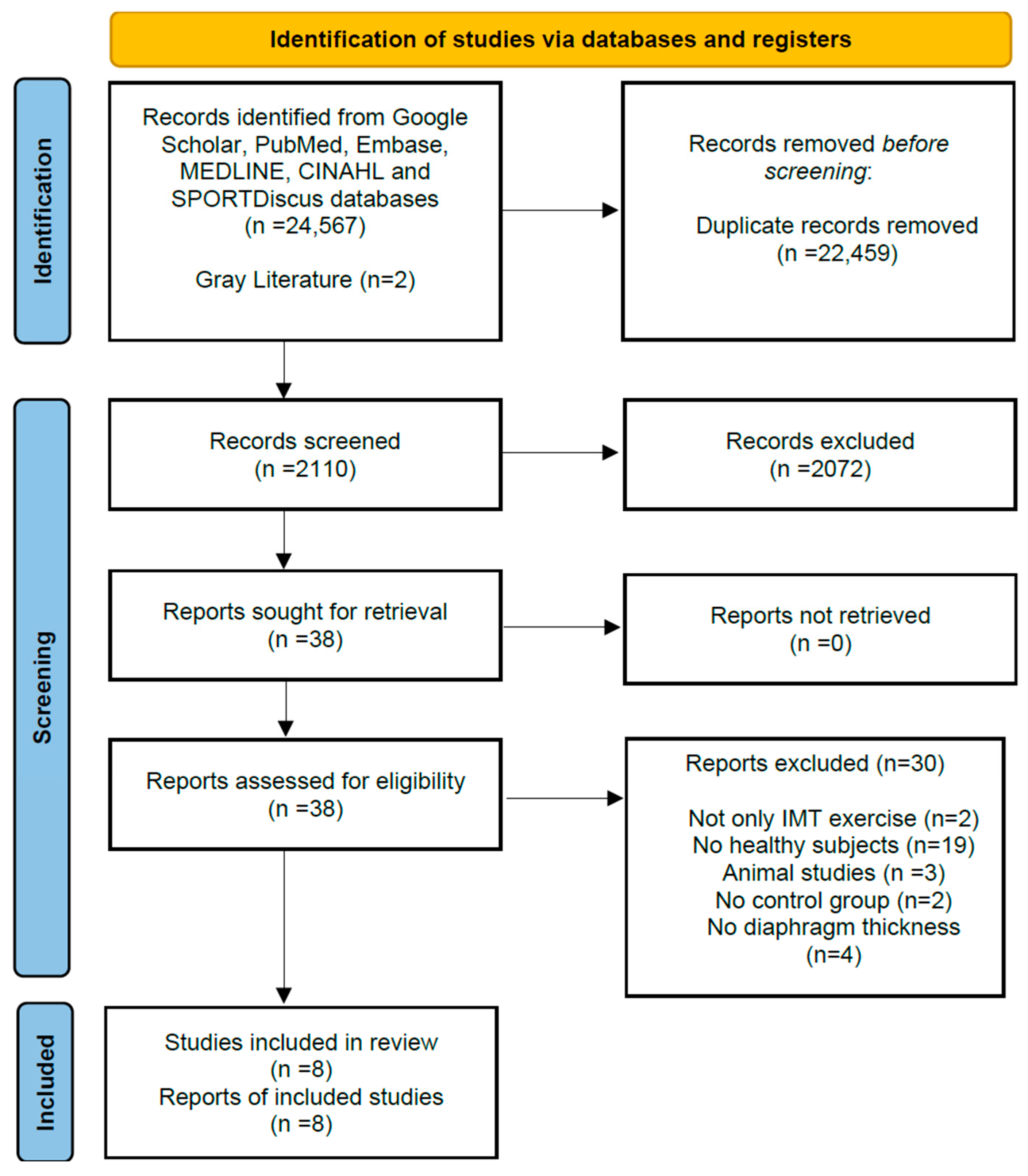
3.1. Literature Search and Study Selection
3.2. Study Characteristics
3.3. Quality Assessment
3.4. Categorization of Studies
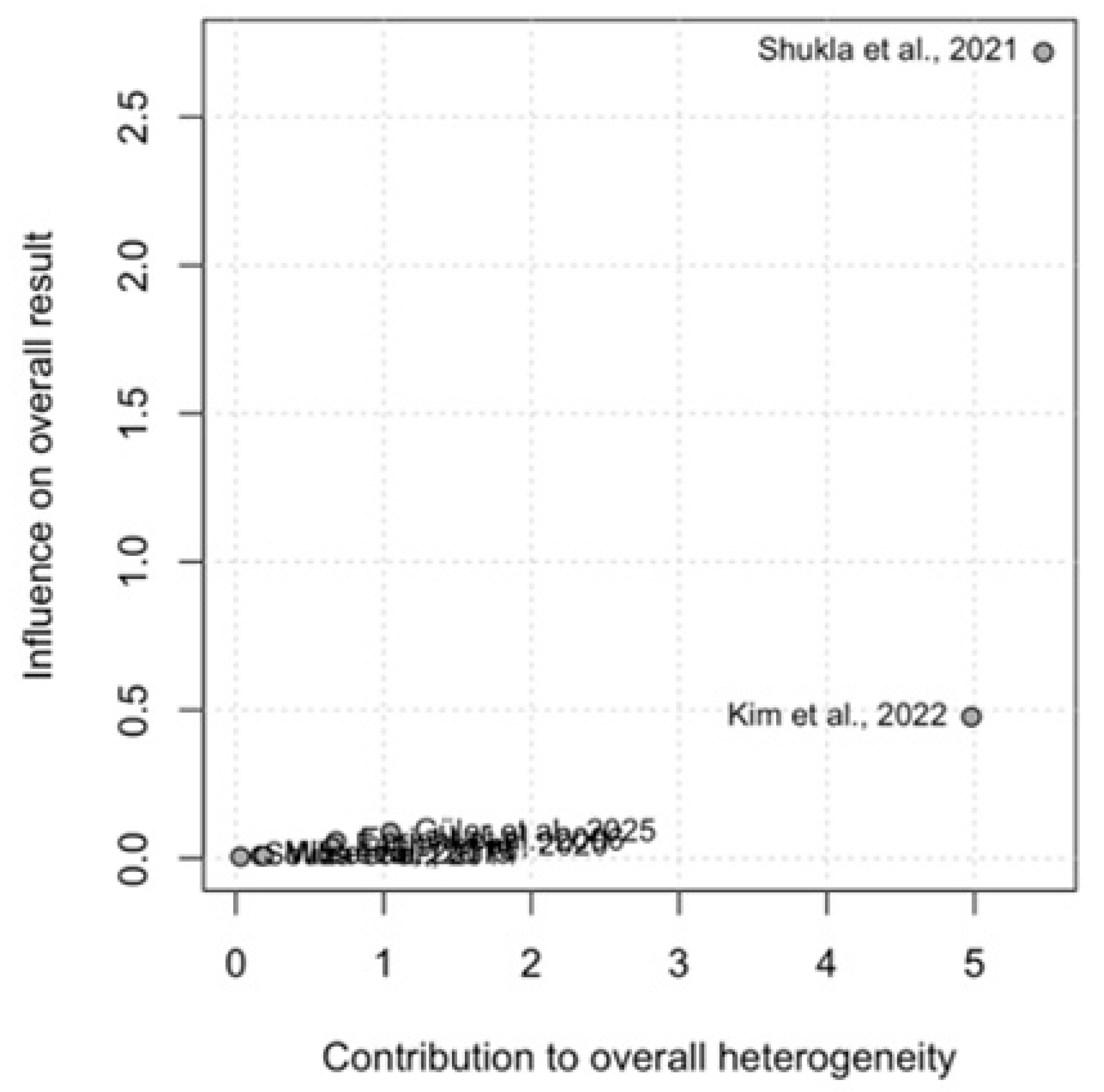
3.5. Heterogeneity
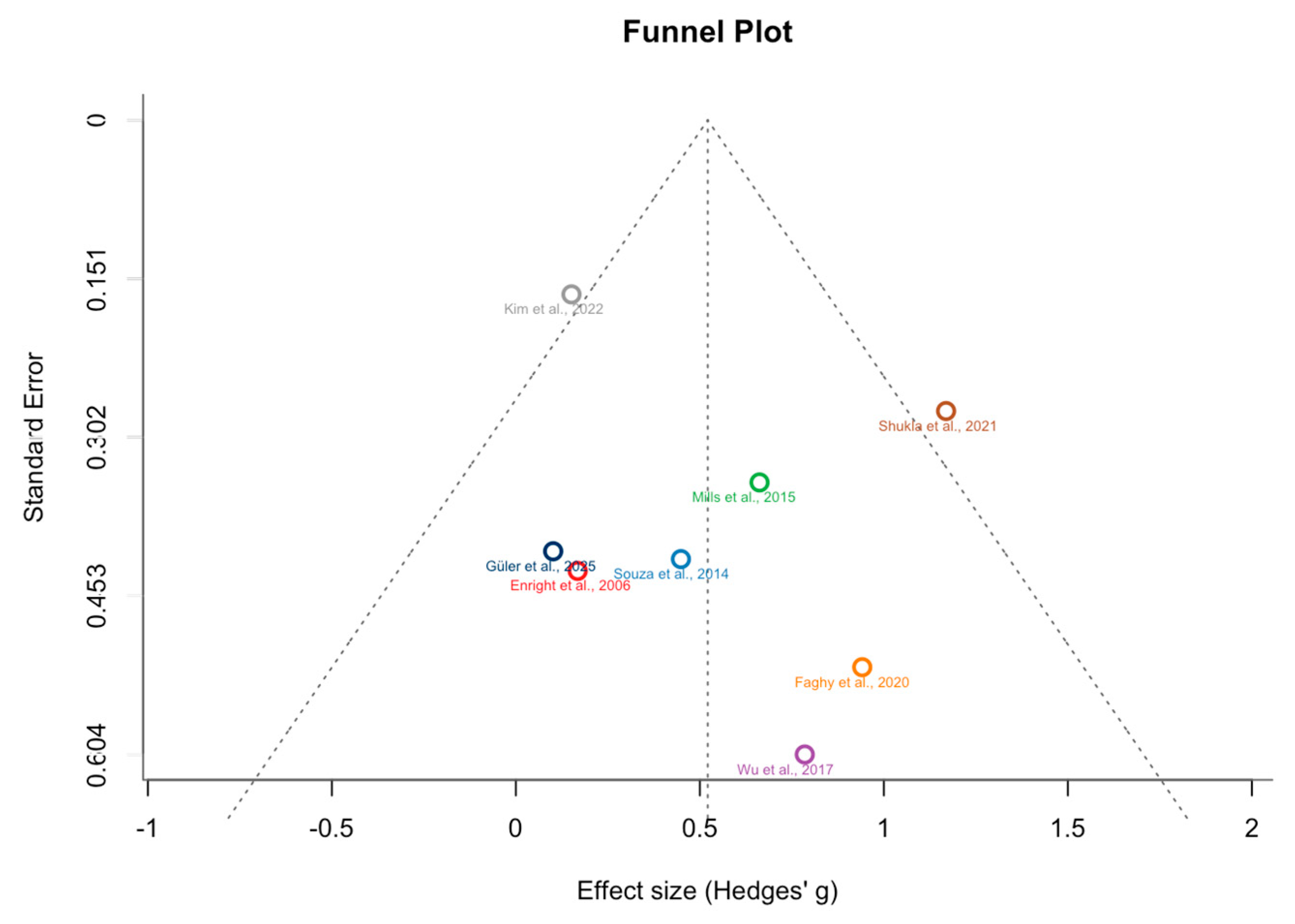
3.6. Publication Bias
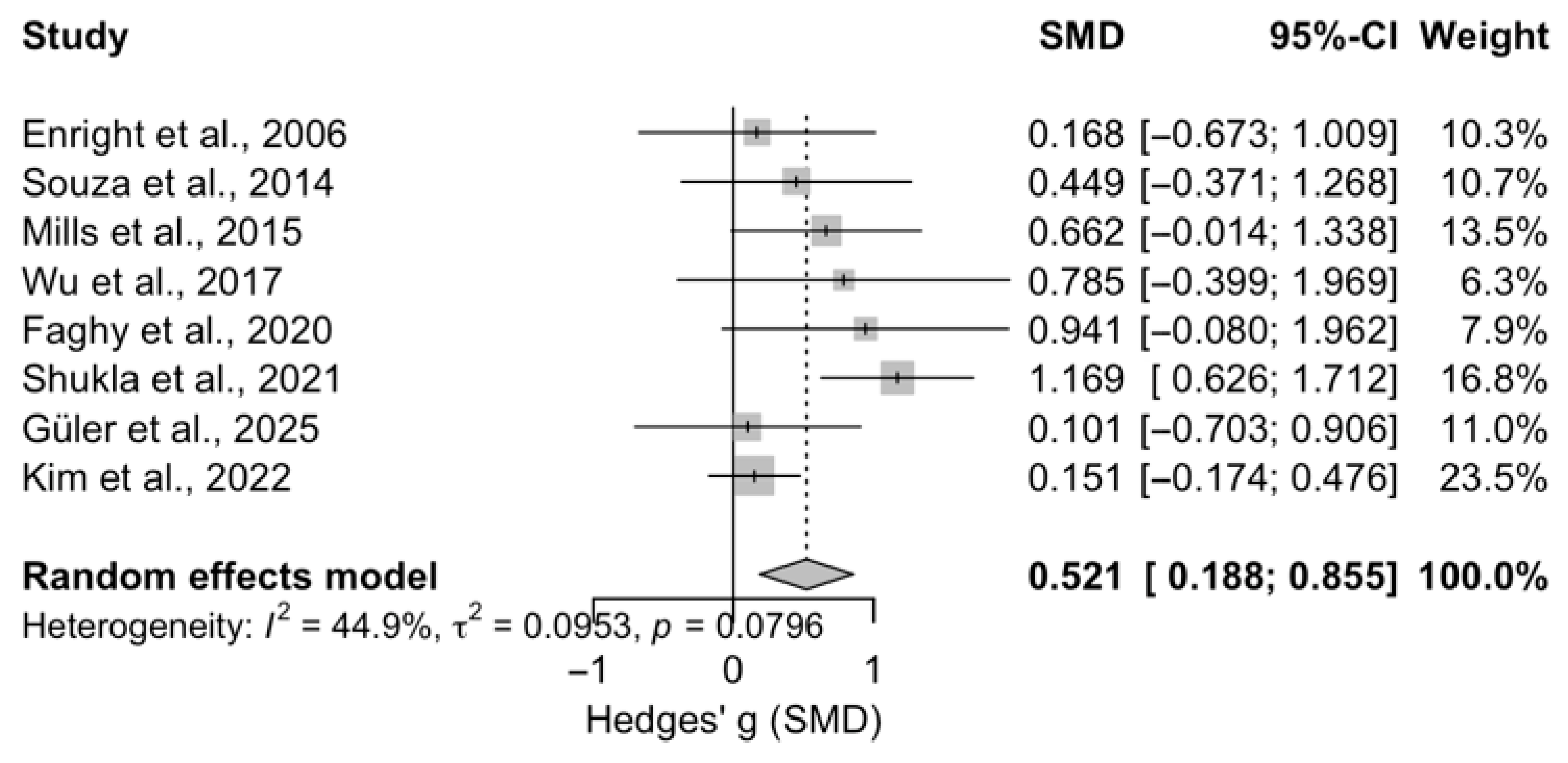
3.7. Effect of Inspiratory Muscle Training on Diaphragm Thickness
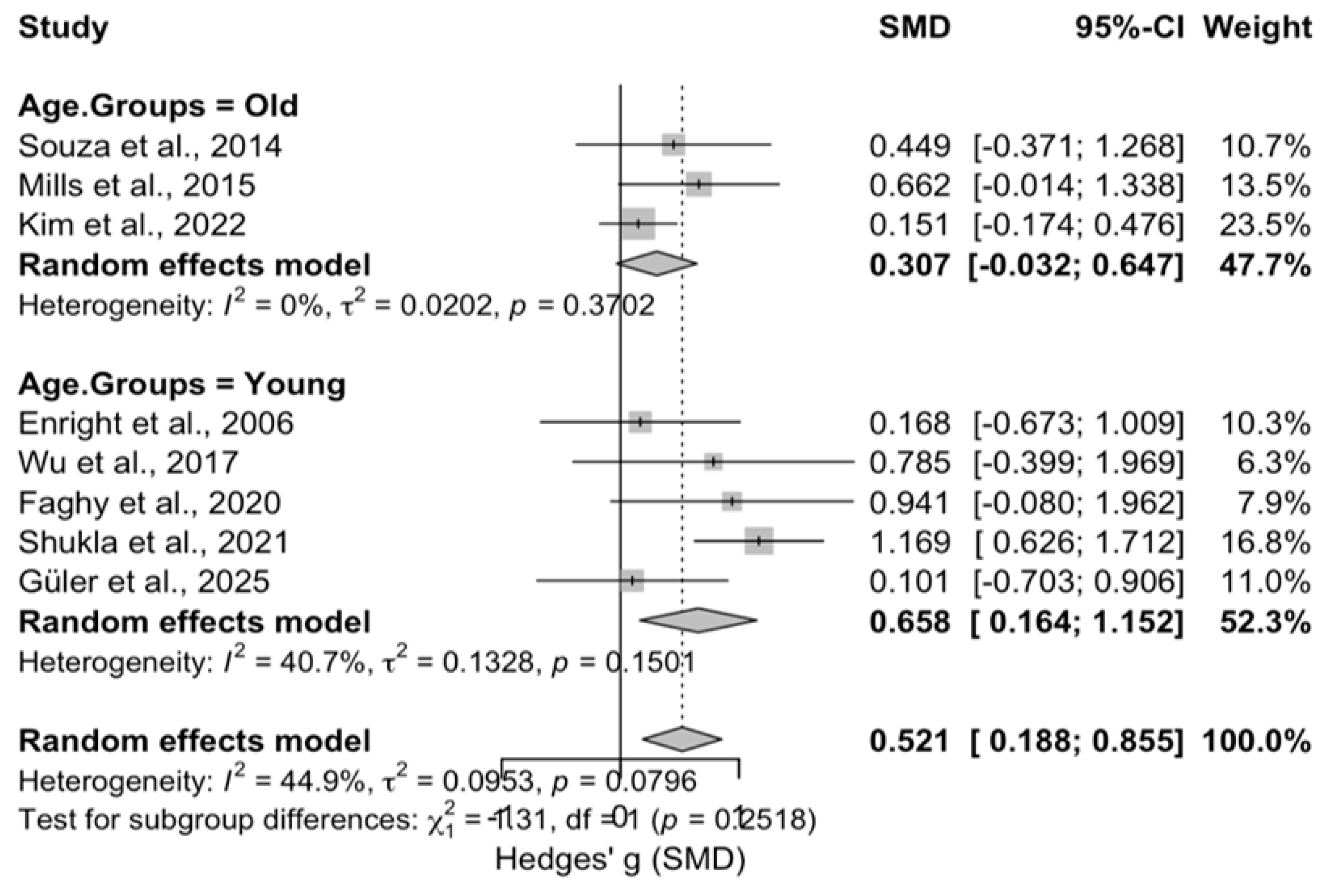
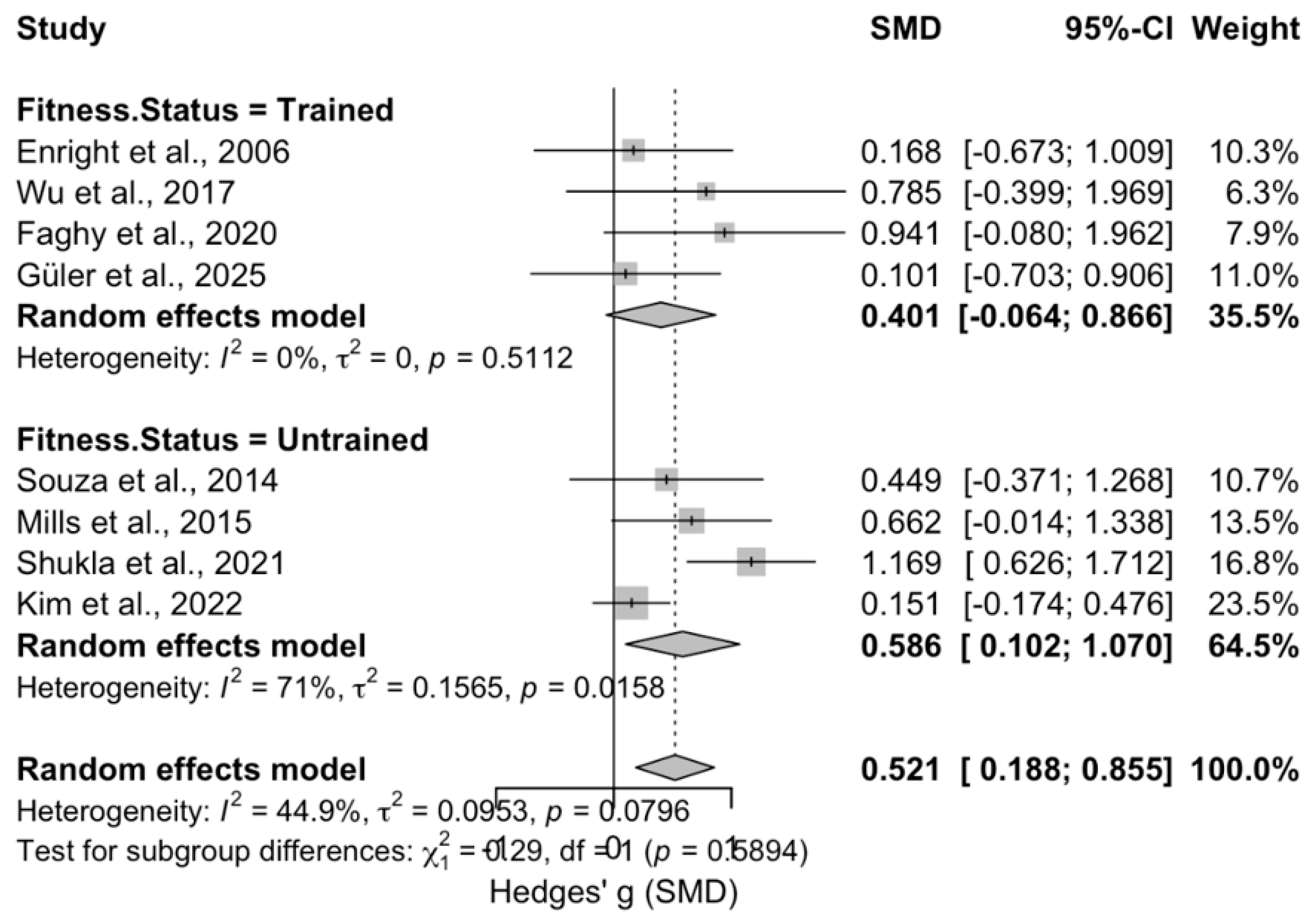
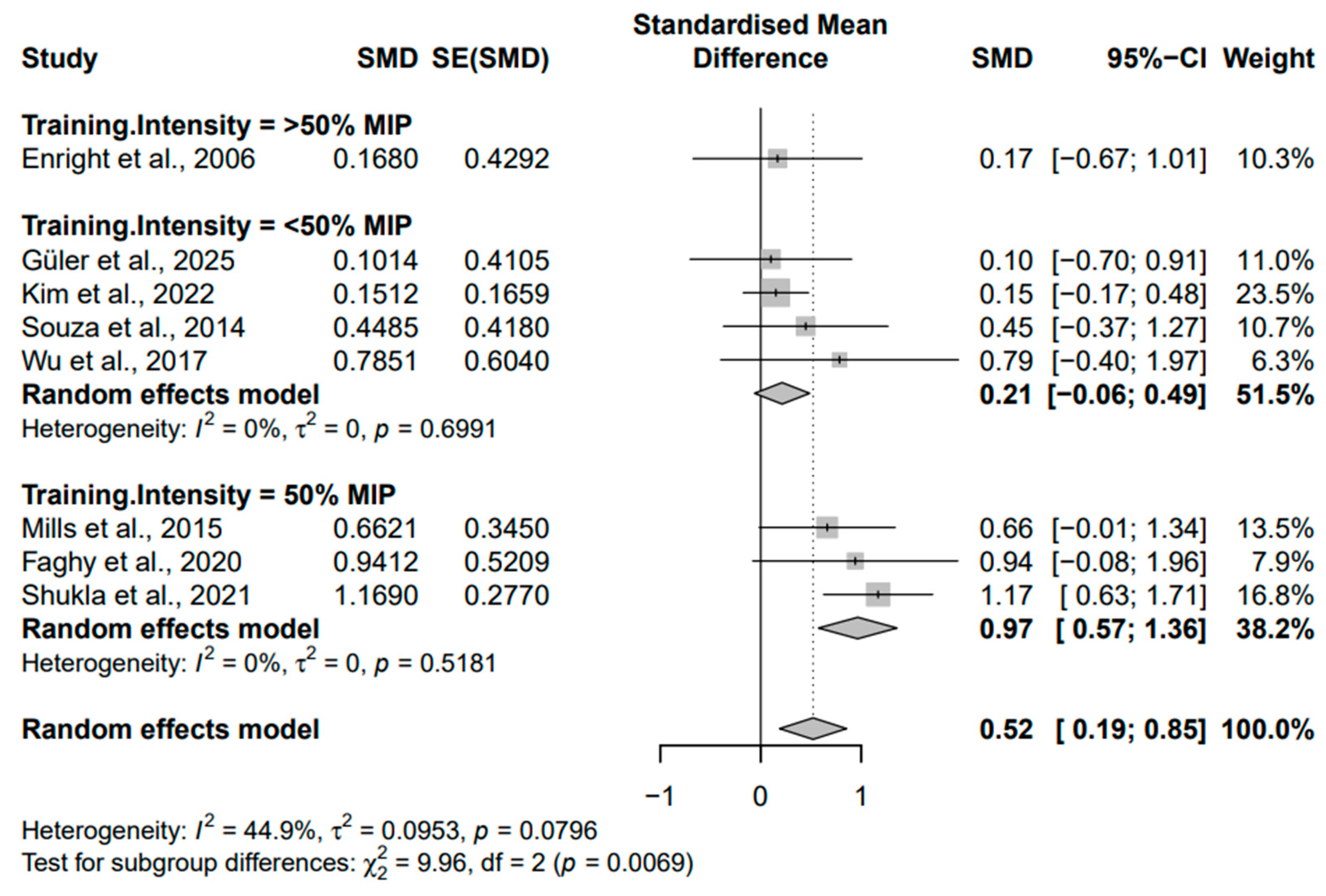
3.8. Subgroup Analyses
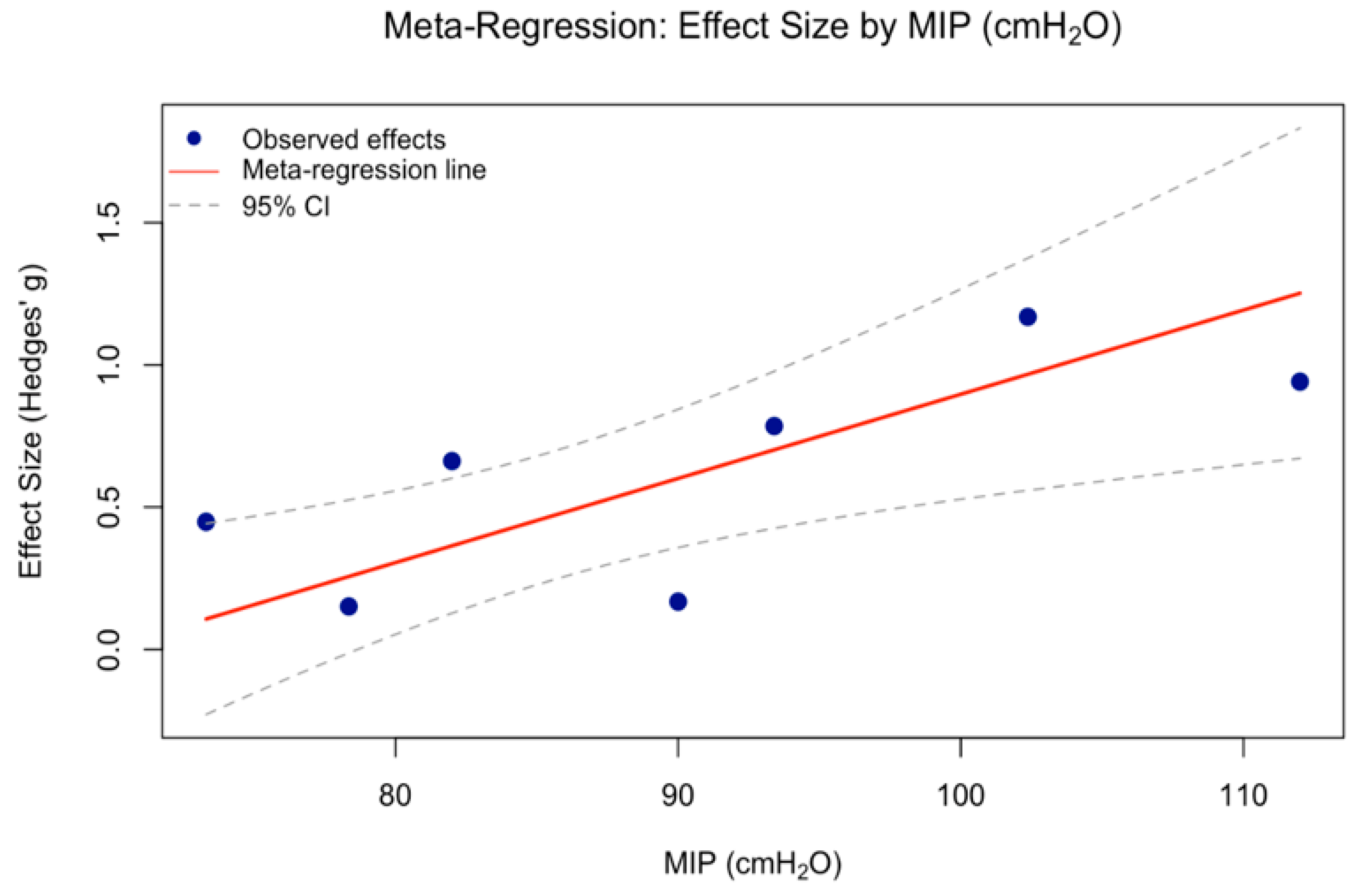
3.9. Meta-Regressions
4. Discussion
- Practical Applications
- Clinical Implications and Future Perspectives
- Limitations
5. Conclusions
Supplementary Materials
Author Contributions
Funding
Institutional Review Board Statement
Informed Consent Statement
Data Availability Statement
Conflicts of Interest
References
- Lomax, M.; Grant, I.; Corbett, J. Inspiratory muscle warm-up and inspiratory muscle training: Separate and combined effects on intermittent running to exhaustion. J. Sports Sci. 2011, 29, 563–569. [Google Scholar] [CrossRef] [PubMed]
- Ueki, J.; De Bruin, P.F.; Pride, N.B. In vivo assessment of diaphragm contraction by ultrasound in normal subjects. Thorax 1995, 50, 1157–1161. [Google Scholar] [CrossRef]
- Van Hollebeke, M.; Pleysier, S.; Poddighe, D.; Muelas Gómez, L.; Choudhary, Y.Q.; Clerckx, B.; Muller, J.; Hermans, G.; Gosselink, R.; Langer, D. Comparing two types of loading during inspiratory muscle training in patients with weaning difficulties: An exploratory study. Aust. Crit. Care 2023, 36, 622–627. [Google Scholar] [CrossRef] [PubMed]
- McConnell, A.K. CrossTalk opposing view: Respiratory muscle training does improve exercise tolerance. J. Physiol. 2012, 590, 3397–3400. [Google Scholar] [CrossRef]
- Ottenheijm, C.A.; Heunks, L.M.; Dekhuijzen, R.P. Diaphragm adaptations in patients with COPD. Respir. Res. 2008, 9, 12. [Google Scholar] [CrossRef] [PubMed]
- Goligher, E.C.; Fan, E.; Herridge, M.S.; Murray, A.; Vorona, S.; Brace, D.; Rittayamai, N.; Lanys, A.; Tomlinson, G.; Singh, J.M.; et al. Evolution of Diaphragm Thickness during Mechanical Ventilation. Impact of Inspiratory Effort. Am. J. Respir. Crit. Care Med. 2015, 192, 1080–1088. [Google Scholar] [CrossRef]
- Patsaki, I.; Kouvarakos, A.; Vasileiadis, I.; Koumantakis, G.A.; Ischaki, E.; Grammatopoulou, E.; Kotanidou, A.; Magira, E.E. Low-Medium and High-Intensity Inspiratory Muscle Training in Critically Ill Patients: A Systematic Review and Meta-Analysis. Medicina 2024, 60, 869. [Google Scholar] [CrossRef]
- Baria, M.R.; Shahgholi, L.; Sorenson, E.J.; Harper, C.J.; Lim, K.G.; Strommen, J.A.; Mottram, C.D.; Boon, A.J. B-mode ultrasound assessment of diaphragm structure and function in patients with COPD. Chest 2014, 146, 680–685. [Google Scholar] [CrossRef]
- Liu, F.; Jones, A.Y.M.; Tsang, R.C.C.; Yam, T.T.T.; Tsang, W.W.N. Diaphragm and sternocleidomastoid muscle activity with increasing inspiratory pressure loads in people after stroke. Sci. Rep. 2025, 15, 5856. [Google Scholar] [CrossRef]
- Krishnakumar, M.; Muthuchellappan, R.; Chakrabarti, D. Diaphragm Function Assessment During Spontaneous Breathing Trial in Patients with Neuromuscular Diseases. Neurocrit. Care 2021, 34, 382–389. [Google Scholar] [CrossRef]
- Fernandez-Rubio, H.; Becerro-de-Bengoa-Vallejo, R.; Rodríguez-Sanz, D.; Calvo-Lobo, C.; Vicente-Campos, D.; Chicharro, J.L. Inspiratory Muscle Training in Patients with Heart Failure. J. Clin. Med. 2020, 9, 1710. [Google Scholar] [CrossRef] [PubMed]
- Wait, J.L.; Johnson, R.L. Patterns of shortening and thickening of the human diaphragm. J. Appl. Physiol. 1997, 83, 1123–1132. [Google Scholar] [CrossRef] [PubMed]
- Enright, S.; Chatham, K.; Ionescu, A.A.; Unnithan, V.B.; Shale, D.J. Inspiratory muscle training improves lung function and exercise capacity in adults with cystic fibrosis. Chest 2004, 126, 405–411. [Google Scholar] [CrossRef]
- Lin, S.J.; McElfresh, J.; Hall, B.; Bloom, R.; Farrell, K. Inspiratory muscle training in patients with heart failure: A systematic review. Cardiopulm. Phys. Ther. J. 2012, 23, 29–36. [Google Scholar] [CrossRef]
- Zhang, X.; Zheng, Y.; Dang, Y.; Wang, L.; Cheng, Y.; Zhang, X.; Mao, M.; Lu, X. Can inspiratory muscle training benefit patients after stroke? A systematic review and meta-analysis of randomized controlled trials. Clin. Rehabil. 2020, 34, 866–876. [Google Scholar] [CrossRef] [PubMed]
- An, L.; Li, B.; Ming, D.; Wang, W. Multislice Spiral CT Image Analysis and Meta-Analysis of Inspiratory Muscle Training on Respiratory Muscle Function. J. Healthc. Eng. 2021, 2021, 1738205. [Google Scholar] [CrossRef]
- Fabero-Garrido, R.; del Corral, T.; Angulo-Díaz-Parreño, S.; Plaza-Manzano, G.; Martín-Casas, P.; Cleland, J.A.; Fernández-De-Las-Peñas, C.; López-De-Uralde-Villanueva, I. Respiratory muscle training improves exercise tolerance and respiratory muscle function/structure post-stroke at short term: A systematic review and meta-analysis. Ann. Phys. Rehabil. Med. 2022, 65, 101596. [Google Scholar] [CrossRef]
- Page, M.J.; McKenzie, J.E.; Bossuyt, P.M.; Boutron, I.; Hoffmann, T.C.; Mulrow, C.D.; Shamseer, L.; Tetzlaff, J.M.; Akl, E.A.; Brennan, S.E.; et al. The PRISMA 2020 statement: An updated guideline for reporting systematic reviews. BMJ 2021, 372, n71. [Google Scholar] [CrossRef]
- Verhagen, A.P.; de Vet, H.C.; de Bie, R.A.; Kessels, A.G.; Boers, M.; Bouter, L.M.; Knipschild, P.G. The Delphi list: A criteria list for quality assessment of randomized clinical trials for conducting systematic reviews developed by Delphi consensus. J. Clin. Epidemiol. 1998, 51, 1235–1241. [Google Scholar] [CrossRef]
- Gonzalez, G.Z.; Moseley, A.M.; Maher, C.G.; Nascimento, D.P.; da Cunha Menezes Costa, L.; Costa, L.O. Methodologic Quality and Statistical Reporting of Physical Therapy Randomized Controlled Trials Relevant to Musculoskeletal Conditions. Arch. Phys. Med. Rehabil. 2018, 99, 129–136. [Google Scholar] [CrossRef]
- Bonett, D.G. Meta-analytic interval estimation for standardized and unstandardized mean differences. Psychol. Methods 2009, 14, 225–238. [Google Scholar] [CrossRef]
- Higgins, J.P.T.; Thomas, J.; Chandler, J.; Cumpston, M.; Li, T.; Page, M.J.; Welch, V.A. (Eds.) Cochrane Handbook for Systematic Reviews of Interventions; John Wiley & Sons: Chichester, UK, 2023. [Google Scholar]
- Enright, S.J.; Unnithan, V.B.; Heward, C.; Withnall, L.; Davies, D.H. Effect of high-intensity inspiratory muscle training on lung volumes, diaphragm thickness, and exercise capacity in subjects who are healthy. Phys. Ther. 2006, 86, 345–354. [Google Scholar] [CrossRef]
- Souza, H.; Rocha, T.; Pessoa, M.; Rattes, C.; Brandão, D.; Fregonezi, G.; Campos, S.; Aliverti, A.; Dornelas, A. Effects of inspiratory muscle training in elderly women on respiratory muscle strength, diaphragm thickness and mobility. J. Gerontol. A Biol. Sci. Med. Sci. 2014, 69, 1545–1553. [Google Scholar] [CrossRef]
- Mills, D.E.; Johnson, M.A.; Barnett, Y.A.; Smith, W.H.; Sharpe, G.R. The effects of inspiratory muscle training in older adults. Med. Sci. Sports Exerc. 2015, 47, 691–697. [Google Scholar] [CrossRef] [PubMed]
- Wu, C.Y.; Yang, T.Y.; Lo, P.Y.; Guo, L.Y. Effects of respiratory muscle training on exercise performance in tennis players. Med. Sport. 2017, 70, 318–327. [Google Scholar] [CrossRef]
- Faghy, M.A.; Brown, P.I.; Davis, N.M.; Mayes, J.P.; Maden-Wilkinson, T.M. A flow resistive inspiratory muscle training mask worn during high-intensity interval training does not improve 5 km running time-trial performance. Eur. J. Appl. Physiol. 2021, 121, 183–191. [Google Scholar] [CrossRef] [PubMed]
- Shukla, M.P.; Prem, V.; Vaishali, K. Respiratory muscle training on diaphragm thickness, pulmonary function test and respiratory muscle strength in healthy young adults: A randomized controlled trial. J. Cardiovasc. Dis. Res. 2021, 12, 1203–1210. [Google Scholar]
- Kim, S.H.; Shin, M.J.; Lee, J.M.; Huh, S.; Shin, Y.B. Effects of a new respiratory muscle training device in community-dwelling elderly men: An open-label, randomized, non-inferiority trial. BMC Geriatr. 2022, 22, 155. [Google Scholar] [CrossRef]
- Güler, I.; Yılmaz, C.; Soylu, H.H.; Birinci, M.C.; Arslan, A.; Ocak, H.; Çayir, H.; Kavuran, K.; Saç, A.; Akkuş Uçar, M.; et al. Inspiratory muscle training in natural bodybuilders: Adaptations in diaphragm muscle thickness and maximal strength. Front. Physiol. 2025, 16, 1628146. [Google Scholar] [CrossRef]
- Schmidt, F.L.; Hunter, J.E. Methods of Meta-Analysis: Correcting Error and Bias in Research Findings; SAGE Publications: New York, NY, USA, 2015. [Google Scholar]
- Fry, C.S.; Drummond, M.J.; Glynn, E.L.; Dickinson, J.M.; Gundermann, D.M.; Timmerman, K.L.; Walker, D.K.; Dhanani, S.; Volpi, E.; Rasmussen, B.B. Aging impairs contraction-induced human skeletal muscle mTORC1 signaling and protein synthesis. Skelet. Muscle 2011, 1, 11. [Google Scholar] [CrossRef]
- Francaux, M.; Demeulder, B.; Naslain, D.; Fortin, R.; Lutz, O.; Caty, G.; Deldicque, L. Aging reduces the activation of the mTORC1 pathway after resistance exercise and protein intake in human skeletal muscle: Potential role of REDD1 and impaired anabolic sensitivity. Nutrients 2016, 8, 47. [Google Scholar] [CrossRef]
- Tang, H.; Inoki, K.; Brooks, S.V.; Okazawa, H.; Lee, M.; Wang, J.; Kim, M.; Kennedy, C.L.; Macpherson, P.C.D.; Ji, X.; et al. mTORC1 underlies age-related muscle fiber damage and loss by inducing oxidative stress and catabolism. Aging Cell 2019, 18, e12943. [Google Scholar] [CrossRef]
- Fogarty, M.J.; Sieck, G.C. Evolution and Functional Differentiation of the Diaphragm Muscle of Mammals. Compr. Physiol. 2019, 9, 715–766. [Google Scholar] [CrossRef]
- Illi, S.K.; Held, U.; Frank, I.; Spengler, C.M. Effect of respiratory muscle training on exercise performance in healthy indi-viduals: A systematic review and meta-analysis. Sports Med. 2012, 42, 707–724. [Google Scholar] [CrossRef]
- McKenna, C.F.; Salvador, A.F.; Keeble, A.R.; Khan, N.A.; De Lisio, M.; Konopka, A.R.; Paluska, S.A.; Burd, N.A. Muscle strength after resistance training correlates to mediators of muscle mass and mitochondrial remodeling in older adults. J. Appl. Physiol. 2022, 132, 682–698. [Google Scholar] [CrossRef]
- Wackerhage, H.; Schoenfeld, B.J.; Hamilton, D.L.; Lehti, M.; Hulmi, J.J. Stimuli and sensors that initiate skeletal muscle hypertrophy following resistance exercise. J. Appl. Physiol. 2019, 126, 30–43. [Google Scholar] [CrossRef]
- Witt, J.D.; Guenette, J.A.; Rupert, J.L.; McKenzie, D.C.; Sheel, A.W. Inspiratory muscle training attenuates the human respiratory muscle metaboreflex. J. Physiol. 2007, 584, 1019–1028. [Google Scholar] [CrossRef]
- Sheel, A.W. Respiratory muscle training in healthy individuals: Physiological rationale and implications for exercise performance. Sports Med. 2002, 32, 567–581. [Google Scholar] [CrossRef]
- Çelikel, B.E.; Yılmaz, C.; Demir, A.; Sezer, S.Y.; Ceylan, L.; Ceylan, T.; Tan, Ç. Effects of inspiratory muscle training on 1RM performance and body composition in professional natural bodybuilders. Front. Physiol. 2025, 16, 1574439. [Google Scholar] [CrossRef]
- Schoenfeld, B.J. The mechanisms of muscle hypertrophy and their application to resistance training. J. Strength. Cond. Res. 2010, 24, 2857–2872. [Google Scholar] [CrossRef]
- Schoenfeld, B.J. Potential mechanisms for a role of metabolic stress in hypertrophic adaptations to resistance training. Sports Med. 2013, 43, 179–194. [Google Scholar] [CrossRef]
- Ren, Z.; Guo, J.; He, Y.; Luo, Y.; Wu, H. Effects of Inspiratory Muscle Training on Respiratory Muscle Strength, Lactate Accumulation and Exercise Tolerance in Amateur Runners: A Randomized Controlled Trial. Life 2025, 15, 705. [Google Scholar] [CrossRef]
- Karsten, M.; Ribeiro, G.S.; Esquivel, M.S.; Matte, D.L. The effects of inspiratory muscle training with linear workload devices on the sports performance and cardiopulmonary function of athletes: A systematic review and meta-analysis. Physical therapy in sport: Phys. Ther. Sport. 2018, 34, 92–104. [Google Scholar] [CrossRef]
- Shei, R.J.; Paris, H.L.; Sogard, A.S.; Mickleborough, T.D. Time to Move Beyond a “One-Size Fits All” Approach to Inspiratory Muscle Training. Front. physiol. 2022, 12, 766346. [Google Scholar] [CrossRef]
- Brown, P.I.; Venables, H.K.; Liu, H.; de-Witt, J.T.; Brown, M.R.; Faghy, M.A. Ventilatory muscle strength, diaphragm thickness and pulmonary function in world-class powerlifters. Eur. J. Appl. Physiol. 2013, 113, 2849–2855. [Google Scholar] [CrossRef]
- Cardenas, L.Z.; Santana, P.V.; Caruso, P.; Ribeiro de Carvalho, C.R.; Pereira de Albuquerque, A.L. Diaphragmatic Ultrasound Correlates with Inspiratory Muscle Strength and Pulmonary Function in Healthy Subjects. Ultrasound Med. 2018, 44, 786–793. [Google Scholar] [CrossRef]
- Carrillo-Esper, R.; Pérez-Calatayud, Á.A.; Arch-Tirado, E.; Díaz-Carrillo, M.A.; Garrido-Aguirre, E.; Tapia-Velazco, R.; Peña-Pérez, C.A.; Espinoza-de Los Monteros, I.; Meza-Márquez, J.M.; Flores-Rivera, O.I.; et al. Standardization of Sonographic Diaphragm Thickness Evaluations in Healthy Volunteers. Respir. Care 2016, 61, 920–924. [Google Scholar] [CrossRef]
- Boon, A.J.; Harper, C.J.; Ghahfarokhi, L.S.; Strommen, J.A.; Watson, J.C.; Sorenson, E.J. Two-dimensional ultrasound imaging of the diaphragm: Quantitative values in normal subjects. Muscle Nerve 2013, 47, 884–889. [Google Scholar] [CrossRef]



| Study | EC | I | II | III | IV | V | VI | VII | VIII | IX | X | Total |
|---|---|---|---|---|---|---|---|---|---|---|---|---|
| Enright et al., 2006 [23] | √ | √ | √ | √ | √ | × | × | √ | × | √ | √ | 8 |
| Souza et al., 2014 [24] | √ | √ | √ | √ | √ | × | √ | √ | × | √ | √ | 9 |
| Mills et al., 2015 [25] | √ | √ | × | × | √ | × | × | √ | × | √ | √ | 6 |
| Wu et al., 2017 [26] | √ | √ | × | × | √ | × | × | √ | × | √ | √ | 6 |
| Faghy et al., 2021 [27] | √ | √ | √ | √ | × | × | × | √ | × | √ | √ | 7 |
| Shukla et al., 2021 [28] | √ | √ | √ | √ | √ | × | × | √ | × | √ | √ | 8 |
| Kim et al., 2022 [29] | √ | √ | × | √ | √ | √ | × | √ | × | √ | √ | 8 |
| Güler et al., 2025 [30] | √ | √ | √ | × | √ | × | × | √ | × | √ | √ | 7 |
| Total | 7.37 |
| Study | Population | Study Design | Training Protocol | Duration | Ultrasonography Procedure | Main Outcomes |
|---|---|---|---|---|---|---|
| Enright et al., 2006 [23] | 20 moderately trained adults, Experimental: 10, Control: 10; F: 11 M: 9; Age: 18–25 years | Single-center controlled study | IMT: 80% of MIP × 6 sets; the rest time between repeats was gradually lowered from 60 s to 45, 30, 15, 10, and 5 s throughout each set. CON: No intervention. | 8 weeks | 7.5 MHz linear probe, 8th–9th intercostal, anterior-middle axillary line, left lateral decubitus position | 12% increased diaphragm thickness in the experimental group ↑ (p < 0.05). No increase in diaphragm thickness was observed in the control group. |
| Souza et al., 2014 [24] | 22 elderly women, Experimental: 12, Control: 10; Age: 60–80 years | RCT | IMT: 40% of MIP × 8 sets, CON: Same protocol as IMT, but without a resistive load. | 8 weeks | 7.5 MHz linear probe, 8th–9th intercostal, anterior-middle axillary line, left lateral decubitus position | After IMT, diaphragm thickness increased by 11% in the experimental group (p = 0.001). |
| Mills et al., 2015 [25] | 34 healthy older adults, Experimental: 17, Control: 17; F: 8 M: 9; Age: 65–75 years | RCT | IMT: 50% of MIP, 2 × 30 breaths, and incremental intensity. CON: Same protocol as IMT, but without a resistive load. | 8 weeks | NR | After IMT, diaphragm thickness at residual volume 38% increased ↑ (p = 0.03) |
| Wu et al., 2017 [26] | 10 healthy male tennis players, Experimental: 5, Control: 5; Age: 18–25 years | RCT | IMT: 30% of MIP with 2 × 30 breaths. CON: Same protocol as IMT, but without a resistive load. | 6 weeks | 7.5 MHz linear probe, 8th intercostal midaxillary line. | Diaphragm thickness was significantly (p < 0.05) improved in the IMT group (pre (2.3 ± 0.3 mm) vs. post (2.8 ± 0.1 mm)). |
| Faghy et al., 2021 [27] | 23 recreationally trained runners, Experimental-1: 1: 8, Experimental-2: 8, Control: 7; F: 10 M: 13; Age: 27–45 years | RCT | Experimental-1: IMT 50–60% of MIP with 2 × 30 breaths, Experimental-2: HIIT training with flow-resistive mask CON: Same protocol as IMT, but without a resistive load. | 6 weeks | L17–5 MHz linear probe, 7th–10th intercostal space, right mid-axillary line | Diaphragm thickness was significantly (p = 0.032) improved in the IMT group by 9.5 ± 3.4% from pre (1.8 ± 0.2 mm) vs. post (2.0 ± 0.2 mm) [absolute change = 0.2 ± 0.2 mm, effect size d = 0.73]. |
| Shukla et al., 2021 [28] | 60 healthy young adults, Experimental: 30, Control: 30; F: 41, M: 19; Age: 22–23 years | RCT | IMT: 50% of MIP with 2 × 30 breaths. CON: Same protocol as IMT, but without a resistive load. | 8 weeks | 7.5 MHz linear probe, 8th–9th intercostal, right middle axillary line, left lateral decubitus position. | Diaphragm thickness was significantly (p < 0.05) increased in the IMT group (pre (1.83 ± 0.27) vs. post (2.15 ± 0.28)). In contrast, the control group showed no difference. |
| Kim et al., 2022 [29] | 80 active community-dwelling older men, Experimental-1-2-3-4: 20 Age: 73–76 years | Pre-post design | Experimental-1: 40% of MIP with 10 sets × 10 breaths in rehabilitation center via positive expiratory pressure device, Experimental-2: 40% of MIP with 10 sets × 10 breaths in rehabilitation center, Experimental-3: 40% of MIP with 10 sets × 10 breaths at home via positive expiratory pressure device, Experimental-4: 40% of MIP with 10 sets × 10 breaths at home. | 8 weeks | 12 MHz linear probe, 8th–9th ribs of the anterior and middle axillary line, supine position. | In the Experimental-2 group, no significant difference was observed in diaphragm muscle thickness in the post-test compared to the pre-test results (change from baseline 0.2 ± 1.27, p = 0.527). |
| Güler et al., 2025 [30] | 22 male bodybuilders Experiment: 11, Control: 11, Age: 22.45–24.82 years | RCT | IMT: 40% of MIP with 30 breaths. CON: No IMT intervention. | 4 weeks | 12 MHz linear probe, intercostal space between 10th and 11th ribs, middle axillary line, supine position. | Diaphragm thickness 19.46% more improvement in the IMT group (28.69%, p < 0.001) compared to the control group (9.21%, p = 0.019). |
| Cochran’s Q | Hedges’ g (95% CI) | dF | p | I2 (%) | tau2 |
|---|---|---|---|---|---|
| 12.71 | 0.52 (0.19–0.85) | 7 | 0.080 | 45.2 | 0.095 |
| Variables | k | τ2 | I2 (%) | Estimate (β) | SE | 95% CI (Lower–Upper) | z | p | R2 |
|---|---|---|---|---|---|---|---|---|---|
| Baseline FEV1 (L) | 6 | 0.0580 | 34.95 | 0.532 | 0.333 | −0.121–1.185 | 1.60 | 0.110 | %0 |
| Baseline FVC (L) | 6 | 0.1237 | 56.22 | 0.240 | 0.329 | −0.405–0.885 | 0.73 | 0.466 | %0 |
| Baseline MIP (cmH2O) | 7 | 0.0000 | 0.00 | 0.030 | 0.010 | 0.009–0.050 | 2.87 | 0.004 ** | %100 |
| Baseline MEP (cmH2O) | 6 | 0.1183 | 50.51 | 0.013 | 0.018 | −0.022–0.048 | 0.74 | 0.460 | %0 |
| Mean Age (years) | 8 | 0.0765 | 35.60 | −0.007 | 0.007 | −0.020–0.007 | −0.97 | 0.333 | %0 |
| Duration (weeks) | 8 | 0.1146 | 50.17 | 0.047 | 0.132 | −0.211–0.305 | 0.36 | 0.719 | %0 |
| Intensity (% of MIP) | 8 | 0.1169 | 50.06 | −0.001 | 0.014 | −0.028–0.027 | −0.04 | 0.966 | %0 |
| Frequency (per week) | 7 | 0.0854 | 34.35 | 0.076 | 0.139 | −0.195–0.348 | 0.55 | 0.582 | %0 |
Disclaimer/Publisher’s Note: The statements, opinions and data contained in all publications are solely those of the individual author(s) and contributor(s) and not of MDPI and/or the editor(s). MDPI and/or the editor(s) disclaim responsibility for any injury to people or property resulting from any ideas, methods, instructions or products referred to in the content. |
© 2026 by the authors. Published by MDPI on behalf of the Lithuanian University of Health Sciences. Licensee MDPI, Basel, Switzerland. This article is an open access article distributed under the terms and conditions of the Creative Commons Attribution (CC BY) license.
Share and Cite
Eyipınar, C.D.; Altuğ, T.; Süleymanoğulları, M.; Tekin, A.; Bragazzi, N.L.; Stefanica, V.; Ceylan, H.İ. The Impact of Inspiratory Muscle Training on Diaphragm Thickness in Healthy Adults: A Systematic Review and Meta-Regression. Medicina 2026, 62, 609. https://doi.org/10.3390/medicina62030609
Eyipınar CD, Altuğ T, Süleymanoğulları M, Tekin A, Bragazzi NL, Stefanica V, Ceylan Hİ. The Impact of Inspiratory Muscle Training on Diaphragm Thickness in Healthy Adults: A Systematic Review and Meta-Regression. Medicina. 2026; 62(3):609. https://doi.org/10.3390/medicina62030609
Chicago/Turabian StyleEyipınar, Cemre Didem, Tolga Altuğ, Mesut Süleymanoğulları, Aslıhan Tekin, Nicola Luigi Bragazzi, Valentina Stefanica, and Halil İbrahim Ceylan. 2026. "The Impact of Inspiratory Muscle Training on Diaphragm Thickness in Healthy Adults: A Systematic Review and Meta-Regression" Medicina 62, no. 3: 609. https://doi.org/10.3390/medicina62030609
APA StyleEyipınar, C. D., Altuğ, T., Süleymanoğulları, M., Tekin, A., Bragazzi, N. L., Stefanica, V., & Ceylan, H. İ. (2026). The Impact of Inspiratory Muscle Training on Diaphragm Thickness in Healthy Adults: A Systematic Review and Meta-Regression. Medicina, 62(3), 609. https://doi.org/10.3390/medicina62030609