HFE p.C282Y Polymorphism and Risk of Metabolic Syndrome Components: Systematic Review and Meta-Analysis
 , , , , and
Abstract
1. Introduction
2. Materials and Methods
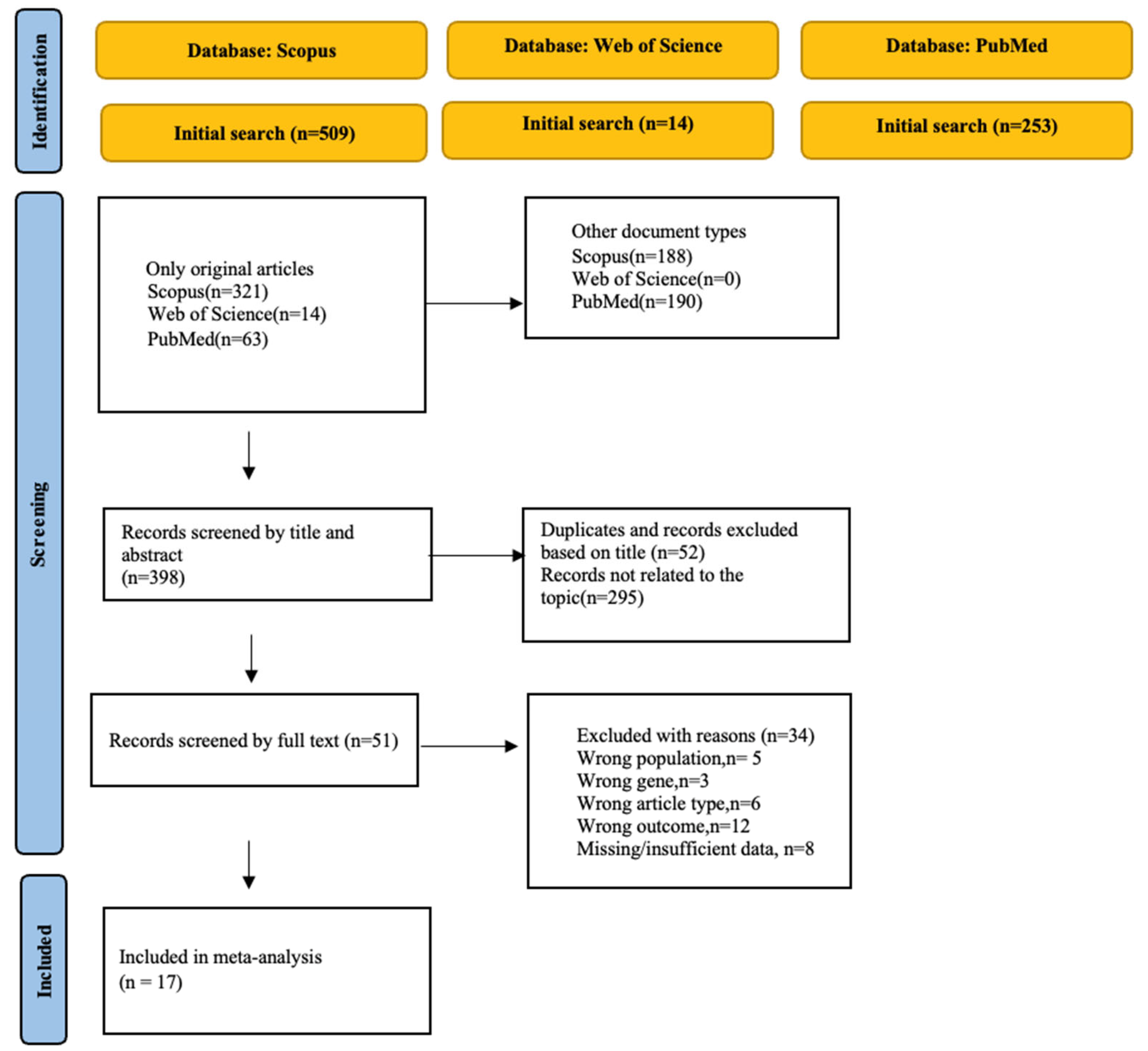
2.1. Literature Search
2.2. Inclusion Criteria
2.3. Exclusion Criteria
2.4. Data Extraction
2.5. Quality Assessment of the Studies
2.6. Statistical Analyses
3. Results
3.1. Characteristics and Quality Assessment of the Eligible Studies
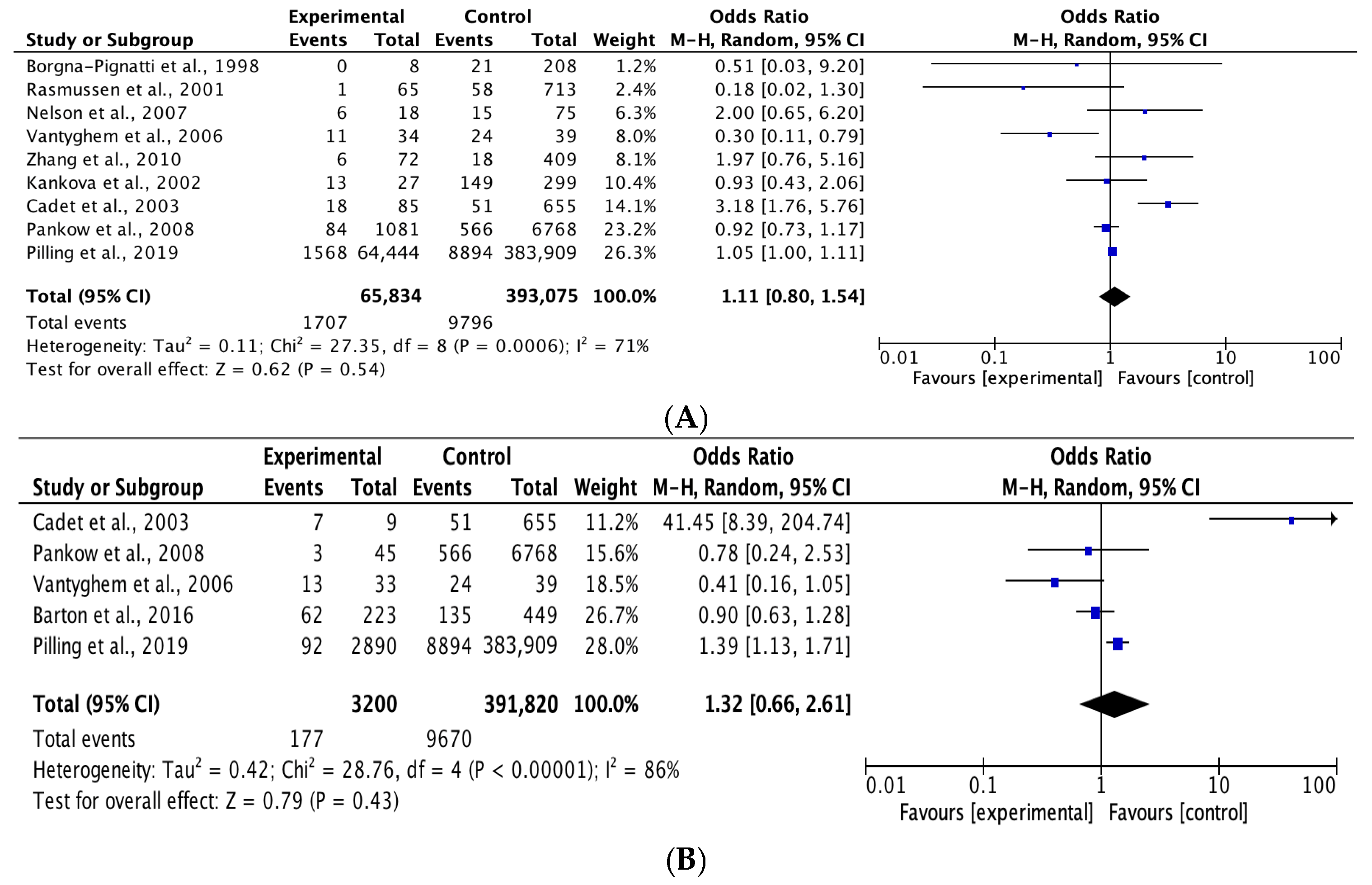
3.1.1. Association Between the p.C282Y rs1800562 Polymorphism and the Risk of Diabetes
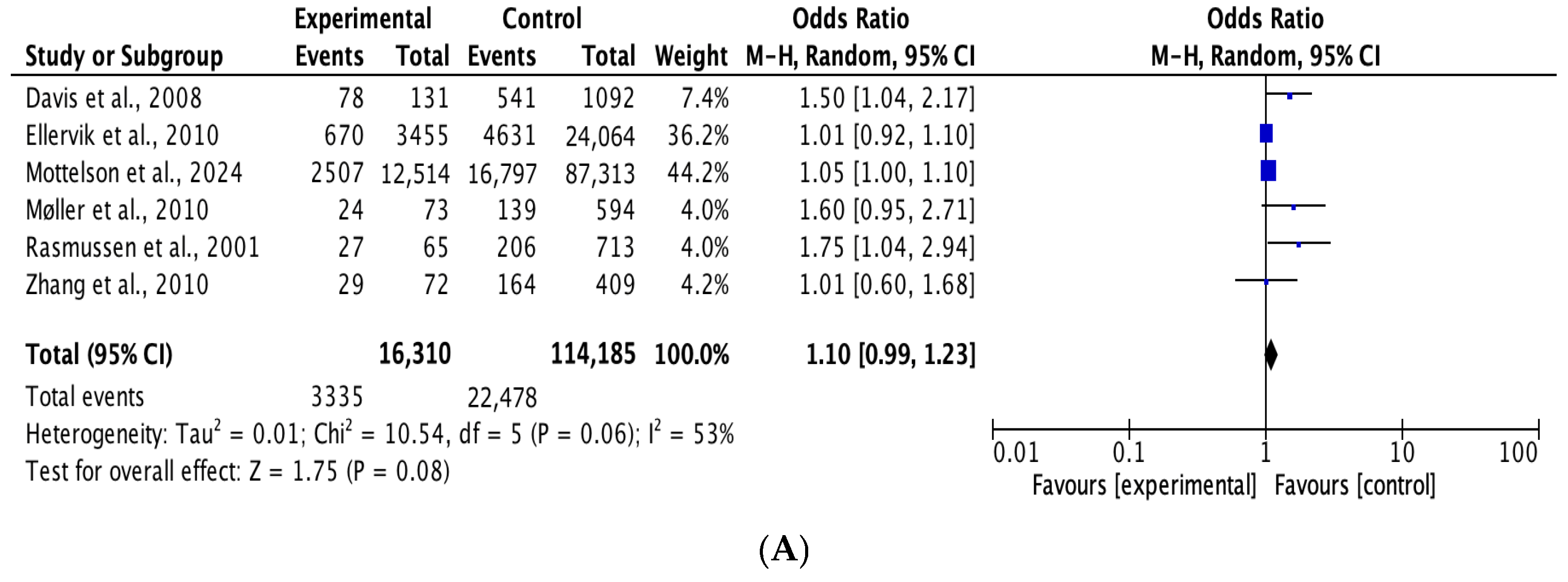
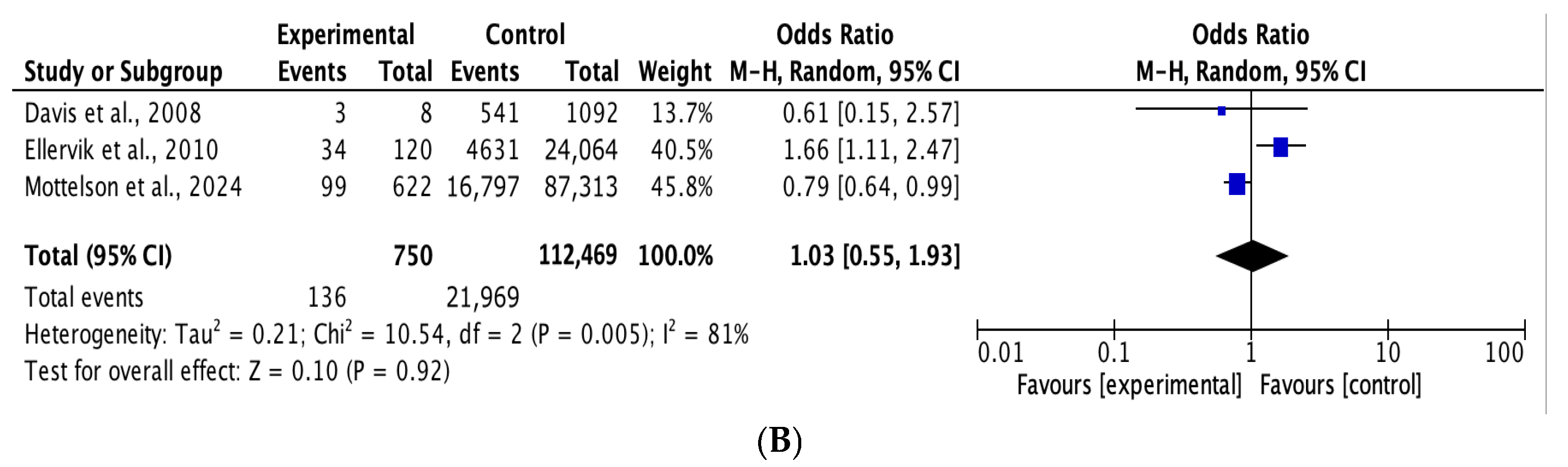
3.1.2. Association Between the p.C282Y rs1800562 Polymorphism and the Risk of Hypertension
3.1.3. Association Between the p.C282Y rs1800562 Polymorphism and Abdominal Obesity
3.1.4. Association Between the p.C282Y (rs1800562) Polymorphism and Serum HDL Cholesterol Levels
3.1.5. Association Between the p.C282Y rs1800562 Polymorphism and Serum Triglyceride Levels
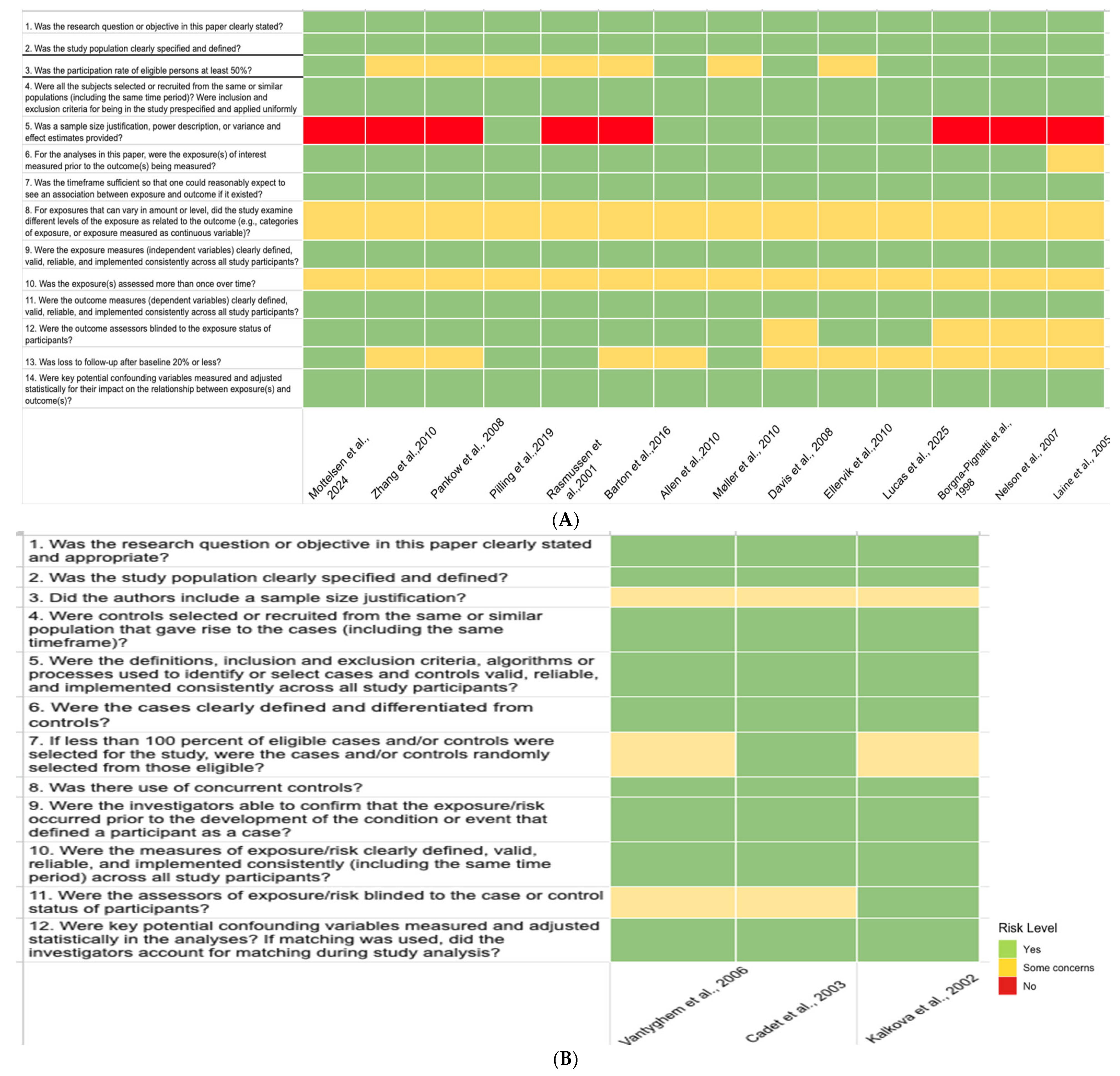
3.2. Risk of Bias Assessment
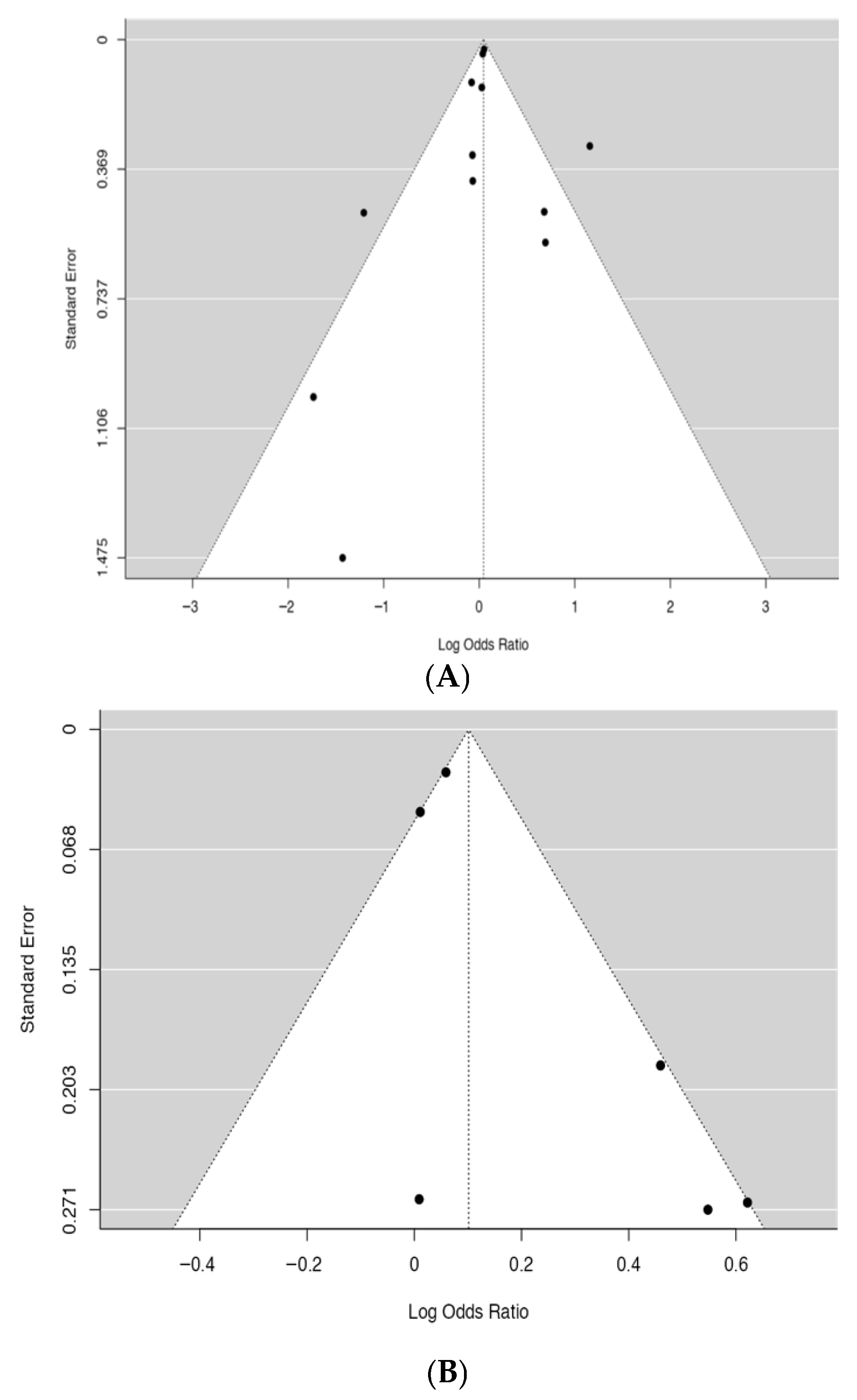
3.3. Publication Bias
4. Discussion
4.1. HFE p.C282Y Polymorphism and Diabetes
4.2. HFE p.C282Y Polymorphism and Hypertension
4.3. HFE p.C282Y Polymorphism and Abdominal Obesity
4.4. HFE p.C282Y Polymorphism and Dyslipidemia (Level of HDL and Triglyceride)
4.5. Strength and Limitations
5. Conclusions
Supplementary Materials
Author Contributions
Funding
Institutional Review Board Statement
Informed Consent Statement
Data Availability Statement
Conflicts of Interest
References
- Neeland, I.J.; Lim, S.; Tchernof, A.; Gastaldelli, A.; Rangaswami, J.; Ndumele, C.E.; Powell-Wiley, T.M.; Després, J.-P. Metabolic syndrome. Nat. Rev. Dis. Primers 2024, 10, 77. [Google Scholar] [CrossRef] [Scilit] [PubMed]
- Rizvi, A.A.; Stoian, A.P.; Rizzo, M. Metabolic Syndrome: From Molecular Mechanisms to Novel Therapies. Int. J. Mol. Sci. 2021, 22, 10038. [Google Scholar] [CrossRef] [Scilit] [PubMed] [PubMed Central]
- Prasun, P. Mitochondrial dysfunction in metabolic syndrome. Biochim. Biophys. Acta Mol. Basis Dis. 2020, 1866, 165838. [Google Scholar] [CrossRef] [Scilit] [PubMed]
- Sachinidis, A.; Doumas, M.; Imprialos, K.; Stavropoulos, K.; Katsimardou, A.; Athyros, V.G. Dysmetabolic Iron Overload in Metabolic Syndrome. Curr. Pharm. Des. 2020, 26, 1019–1024. [Google Scholar] [CrossRef] [Scilit] [PubMed]
- Valenti, L.; Corradini, E.; Adams, L.A.; Aigner, E.; Alqahtani, S.; Arrese, M.; Bardou-Jacquet, E.; Bugianesi, E.; Fernandez-Real, J.-M.; Girelli, D.; et al. Consensus Statement on the definition and classification of metabolic hyperferritinaemia. Nat. Rev. Endocrinol. 2023, 19, 299–310. [Google Scholar] [CrossRef] [Scilit] [PubMed] [PubMed Central]
- Rametta, R.; Fracanzani, A.L.; Fargion, S.; Dongiovanni, P. Dysmetabolic Hyperferritinemia and Dysmetabolic Iron Overload Syndrome (DIOS): Two Related Conditions or Different Entities? Curr. Pharm. Des. 2020, 26, 1025–1035. [Google Scholar] [CrossRef] [Scilit] [PubMed]
- Cheng, A.N.; Al-Samkari, H. Impact of iron overload on incidence of diabetes mellitus, cardiac disease, and death in congenital hemolytic anemias. Blood Adv. 2024, 8, 5451–5457. [Google Scholar] [CrossRef] [Scilit] [PubMed] [PubMed Central]
- Wang, X.; Fang, X.; Zheng, W.; Zhou, J.; Song, Z.; Xu, M.; Min, J.; Wang, F. Genetic Support of A Causal Relationship Between Iron Status and Type 2 Diabetes: A Mendelian Randomization Study. J. Clin. Endocrinol. Metab. 2021, 106, e4641–e4651. [Google Scholar] [CrossRef] [Scilit] [PubMed] [PubMed Central]
- Ganz, T. Hepcidin and iron regulation, 10 years later. Blood 2011, 117, 4425–4433. [Google Scholar] [CrossRef] [Scilit] [PubMed] [PubMed Central]
- Beutler, E.; Felitti, V.J.; Koziol, J.A.; Ho, N.J.; Gelbart, T. Penetrance of 845G--> A (C282Y) HFE hereditary haemochromatosis mutation in the USA. Lancet 2002, 359, 211–218. [Google Scholar] [CrossRef] [Scilit] [PubMed]
- Adams, P.C.; Jeffrey, G.; Ryan, J. Haemochromatosis. Lancet 2023, 401, 1811–1821. [Google Scholar] [CrossRef] [Scilit] [PubMed]
- Piesanen, J.; Valjakka, J.; Niemelä, S.; Borgenström, M.; Nikkari, S.; Hytönen, V.; Määttä, J.; Kunnas, T. Hepcidin is potential regulator for renin activity. PLoS ONE 2022, 17, e0267343. [Google Scholar] [CrossRef] [Scilit] [PubMed]
- Simcox, J.A.; McClain, D.A. Iron and diabetes risk. Cell Metab. 2013, 17, 329–341. [Google Scholar] [CrossRef] [Scilit] [PubMed] [PubMed Central]
- Harrison, A.V.; Lorenzo, F.R.; McClain, D.A. Iron and the Pathophysiology of Diabetes. Annu. Rev. Physiol. 2023, 85, 339–362. [Google Scholar] [CrossRef] [Scilit] [PubMed] [PubMed Central]
- Mottelson, M.; Helby, J.; Nordestgaard, B.G.; Ellervik, C.; Mandrup-Poulsen, T.; Petersen, J.; Bojesen, S.E.; Glenthøj, A. Mortality and risk of diabetes, liver disease, and heart disease in individuals with haemochromatosis HFE C282Y homozygosity and normal concentrations of iron, transferrin saturation, or ferritin: Prospective cohort study. BMJ 2024, 387, e079147. [Google Scholar] [CrossRef] [Scilit] [PubMed] [PubMed Central]
- Pankow, J.S.; Boerwinkle, E.; Adams, P.C.; Guallar, E.; Leiendecker-Foster, C.; Rogowski, J.; Eckfeldt, J.H. HFE C282Y homozygotes have reduced LDL cholesterol: The Atherosclerosis Risk in Communities (ARIC) Study. Transl. Res. 2008, 152, 3–10. [Google Scholar] [CrossRef] [Scilit] [PubMed] [PubMed Central]
- Cadet, E.; Capron, D.; Perez, A.S.; Crépin, S.N.; Arlot, S.; Ducroix, J.-P.; Dautréaux, M.; Fardellone, P.; Leflon, P.; Merryweather-Clarke, A.T.; et al. A targeted approach significantly increases the identification rate of patients with undiagnosed haemochromatosis. J. Intern. Med. 2003, 253, 217–224. [Google Scholar] [CrossRef] [Scilit]
- Nelson, J.E.; Bhattacharya, R.; Lindor, K.D.; Chalasani, N.; Raaka, S.; Heathcote, E.J.; Miskovsky, E.; Shaffer, E.; Rulyak, S.J.; Kowdley, K.V. HFE C282Y mutations are associated with advanced hepatic fibrosis in Caucasians with nonalcoholic steatohepatitis. Hepatology 2007, 46, 723–729. [Google Scholar] [CrossRef] [Scilit] [PubMed]
- Pilling, L.C.; Tamosauskaite, J.; Jones, G.; Wood, A.R.; Jones, L.; Kuo, C.-L.; Kuchel, G.A.; Ferrucci, L.; Melzer, D. Common conditions associated with hereditary haemochromatosis genetic variants: Cohort study in UK Biobank. BMJ 2019, 364, k5222. [Google Scholar] [CrossRef] [Scilit] [PubMed] [PubMed Central]
- Vantyghem, M.C.; Fajardy, I.; Dhondt, F.; Girardot, C.; D’Herbomez, M.; Danze, P.M.; Rousseaux, J.; Wemeau, J.L. Phenotype and HFE genotype in a population with abnormal iron markers recruited from an Endocrinology Department. Eur. J. Endocrinol. 2006, 154, 835–841. [Google Scholar] [CrossRef] [Scilit]
- Zhang, A.; Park, S.K.; Wright, R.O.; Weisskopf, M.G.; Mukherjee, B.; Nie, H.; Sparrow, D.; Hu, H. HFE H63D Polymorphism as a Modifier of the Effect of Cumulative Lead Exposure on Pulse Pressure: The Normative Aging Study. Environ. Health Perspect. 2010, 118, 1261–1266. [Google Scholar] [CrossRef] [Scilit] [PubMed]
- Barton, J.C.; Barton, J.C.; Adams, P.C.; Acton, R.T. Undiagnosed diabetes and impaired fasting glucose in HFE C282Y homozygotes and HFE wild-type controls in the HEIRS Study. BMJ Open Diabetes Res. Care 2016, 4, e000278. [Google Scholar] [CrossRef] [Scilit] [PubMed] [PubMed Central]
- Rasmussen, M.L.; Folsom, A.R.; Catellier, D.J.; Tsai, M.Y.; Garg, U.; Eckfeldt, J.H. A prospective study of coronary heart disease and the hemochromatosis gene (HFE) C282Y mutation: The Atherosclerosis Risk in Communities (ARIC) study. Atherosclerosis 2001, 154, 739–746. [Google Scholar] [CrossRef] [Scilit] [PubMed]
- Borgna-Pignatti, C.; Solinas, A.; Bombieri, C.; Micciolo, R.; Gamberini, M.R.; De Stefano, P.; De Menis, E.; Pignatti, P.F. The haemochromatosis mutations do not modify the clinical picture of thalassaemia major in patients regularly transfused and chelated. Br. J. Haematol. 1998, 103, 813–816. [Google Scholar] [CrossRef] [Scilit]
- Kanková, K.; Jansen, E.H.J.M.; Márová, I.; Stejskalová, A.; Pácal, L.; Muzík, J.; Vácha, J. Relations among serum ferritin, C282Y and H63D mutations in the HFE gene and type 2 diabetes mellitus in the Czech population. Exp. Clin. Endocrinol. Diabetes 2002, 110, 223–229. [Google Scholar] [CrossRef] [Scilit] [PubMed]
- Ellervik, C.; Tybjærg-Hansen, A.; Appleyard, M.; Ibsen, H.; Nordestgaard, B.G. Haemochromatosis genotype and iron overload: Association with hypertension and left ventricular hypertrophy. J. Intern. Med. 2010, 268, 252–264. [Google Scholar] [CrossRef] [Scilit]
- Møller, D.V.; Pecini, R.; Gustafsson, F.; Hassager, C.; Hedley, P.; Jespersgaard, C.; Torp-Pedersen, C.; Christiansen, M.; Køber, L.V. Hereditary Hemochromatosis (HFE) genotypes in heart failure: Relation to etiology and prognosis. BMC Med. Genet. 2010, 11, 117. [Google Scholar] [CrossRef] [Scilit] [PubMed] [PubMed Central]
- Davis, T.M.E.; Beilby, J.; Davis, W.A.; Olynyk, J.K.; Jeffrey, G.P.; Rossi, E.; Boyder, C.; Bruce, D.G. Prevalence, Characteristics, and Prognostic Significance of HFE Gene Mutations in Type 2 Diabetes. Diabetes Care 2008, 31, 1795–1801. [Google Scholar] [CrossRef] [Scilit] [PubMed] [PubMed Central]
- Lucas, M.R.; Pilling, L.C.; Atkins, J.L.; Melzer, D. Incidence of liver complications with hemochromatosis-associated HFE p.C282Y homozygosity: The role of central adiposity. Hepatology 2025, 81, 1522–1534. [Google Scholar] [CrossRef] [Scilit] [PubMed] [PubMed Central]
- Lainé, F.; Jouannolle, A.-M.; Morcet, J.; Brigand, A.; Pouchard, M.; Lafraise, B.; Mosser, J.; David, V.; Deugnier, Y. Phenotypic expression in detected C282Y homozygous women depends on body mass index. J. Hepatol. 2005, 43, 1055–1059. [Google Scholar] [CrossRef] [Scilit]
- Rong, Y.; Bao, W.; Rong, S.; Fang, M.; Wang, D.; Yao, P.; Hu, F.B.; Liu, L. Hemochromatosis gene (HFE) polymorphisms and risk of type 2 diabetes mellitus: A meta-analysis. Am. J. Epidemiol. 2012, 176, 461–472. [Google Scholar] [CrossRef] [Scilit] [PubMed]
- Kowdley, K.V.; Brown, K.E.; Ahn, J.; Sundaram, V. ACG Clinical Guideline: Hereditary Hemochromatosis. Am. J. Gastroenterol. 2019, 114, 1202–1218. [Google Scholar] [CrossRef] [Scilit]
- Barton, J.C.; Barton, J.C.; Acton, R.T. Diabetes in first-degree family members: A predictor of type 2 diabetes in 159 nonscreening Alabama hemochromatosis probands with HFE C282Y homozygosity. Diabetes Care 2014, 37, 259–266. [Google Scholar] [CrossRef] [Scilit] [PubMed]
- Barton, J.C.; Acton, R.T. Diabetes in HFE Hemochromatosis. J. Diabetes Res. 2017, 2017, 9826930. [Google Scholar] [CrossRef] [Scilit] [PubMed] [PubMed Central]
- Lu, F.; Qian, Y.; Li, H.; Dong, M.; Lin, Y.; Du, J.; Lin, Y.; Chen, J.; Shen, C.; Jin, G.; et al. Genetic variants on chromosome 6p21.1 and 6p22.3 are associated with type 2 diabetes risk: A case-control study in Han Chinese. J. Hum. Genet. 2012, 57, 320–325. [Google Scholar] [CrossRef] [Scilit]
- Olynyk, J.K.; Ramm, G.A. Hemochromatosis. N. Engl. J. Med. 2022, 387, 2159–2170. [Google Scholar] [CrossRef] [Scilit]
- Atkins, J.L.; Pilling, L.C.; Masoli, J.A.H.; Kuo, C.-L.; Shearman, J.D.; Adams, P.C.; Melzer, D. Association of Hemochromatosis HFE p.C282Y Homozygosity With Hepatic Malignancy. JAMA 2020, 324, 2048–2057. [Google Scholar] [CrossRef] [Scilit]



| First Author, Year | Race | Source of Controls | Sample Size | p-Value for HWE | Adjustment Factors | Genotyping Methods | |
|---|---|---|---|---|---|---|---|
| Cases | Controls | ||||||
| Diabetes | |||||||
| 1. Pankow et al., 2008 [16] | Caucasian | Population | 1126 | 6768 | p > 0.05 | Not adjusted | TaqMan method |
| 2. Cadet et al., 2003 [17] | Caucasian | Population | 94 | 655 | NR | Age and sex | NR |
| 3. Nelson et al., 2007 [18] | Caucasian | Hospital | 18 | 75 | NR | Age, sex, ethnicity, BMI | NR |
| 4. Pilling et al., 2019 [19] | Caucasian | Population | 67,304 | 383,909 | p > 0.05 | Age, assessment center | Genotyping microarray |
| 5. Vantyghem et al., 2006 [20] | Caucasian | Hospital | 77 | 39 | NR | Not adjusted | PCR |
| 6. Zhang et al., 2010 [21] | Caucasian | Population | 72 | 409 | p = 0.36 | Age, time elapsed from baseline | PCR |
| 7. Barton et al., 2016 [22] | Caucasian | Population | 223 | 449 | NR | Age, sex, BMI | PCR |
| 8. Rasmussen et al., 2001 [23] | Caucasian | Population | 65 | 713 | NR | Age, race, gender | PCR |
| 9. Borgna-Pignatti et al., 1998 [24] | Caucasian | Hospital | 8 | 208 | NR | Not adjusted | PCR |
| 10. Kanková et al., 2002 [25] | Caucasian | Population | 27 | 299 | p < 0.05 | Not adjusted | NR |
| Hypertension | |||||||
| 1. Ellervik et al., 2010 [26] | Caucasian | Population | 3565 | 24,064 | Reported, not stated | Age, gender, BMI | TaqMan assay |
| 2. Møller et al., 2010 [27] | Caucasian | Hospital | 73 | 594 | p = 0.922 | Not adjusted | PCR |
| 3. Rasmussen et al., 2001 [23] | Caucasian | Population | 65 | 713 | Age, race, gender | PCR | |
| 4. Davis et al., 2008 [28] | Caucasian | Population | 139 | 1092 | Reported; p-value not stated | Age, diabetes duration | PCR |
| 5. Zhang et al., 2010 [21] | Caucasian | Population | 72 | 409 | p = 0.36 | Age, time elapsed from baseline | PCR |
| 6. Mottelson et al., 2024 [15] | Caucasian | Population | 12,936 | 87,313 | p < 0.05 | Age and sex | TaqMan/KASPar KASPar |
| Abdominal obesity | |||||||
| 1. Lucas et al., 2025 [29] | Caucasian | Population | 2899 | 268,007 | NR | Alcohol intake, smoking status, education, Townsend deprivation index, physical activity, and any baseline diagnosis of viral hepatitis alcoholic liver disease | WES |
| 2. Lainé et al., 2005 [30] | Caucasian | Population | 47 | 31 | NR | Sex (gender), BMI | NR |
| HDL | |||||||
| 1. Pankow et al., 2008 [16] | Caucasian | Population | 1126 | 6768 | p > 0.05 | Not adjusted | TaqMan method |
| 2. Davis et al., 2008 [28] | Caucasian | Population | 139 | 1092 | Reported; p-value not stated | Age, diabetes duration | PCR |
| Triglyceride | |||||||
| 1. Pankow et al., 2008 [16] | Caucasian | Population | 1126 | 6768 | p > 0.05 | Not adjusted | TaqMan method |
| 2. Davis et al., 2008 [28] | Caucasian | Population | 139 | 1092 | Reported; p-value not stated | Age, diabetes duration | PCR |
Disclaimer/Publisher’s Note: The statements, opinions and data contained in all publications are solely those of the individual author(s) and contributor(s) and not of MDPI and/or the editor(s). MDPI and/or the editor(s) disclaim responsibility for any injury to people or property resulting from any ideas, methods, instructions or products referred to in the content. |
© 2026 by the authors. Published by MDPI on behalf of the Lithuanian University of Health Sciences. Licensee MDPI, Basel, Switzerland. This article is an open access article distributed under the terms and conditions of the Creative Commons Attribution (CC BY) license.
Share and Cite
Kaldarkhan, D.; Nuskabayeva, G.; Nurdinov, N.; Saruarov, Y.; Tatykayeva, U.; Oshibayeva, A.; Sadykova, K. HFE p.C282Y Polymorphism and Risk of Metabolic Syndrome Components: Systematic Review and Meta-Analysis. Medicina 2026, 62, 589. https://doi.org/10.3390/medicina62030589
Kaldarkhan D, Nuskabayeva G, Nurdinov N, Saruarov Y, Tatykayeva U, Oshibayeva A, Sadykova K. HFE p.C282Y Polymorphism and Risk of Metabolic Syndrome Components: Systematic Review and Meta-Analysis. Medicina. 2026; 62(3):589. https://doi.org/10.3390/medicina62030589
Chicago/Turabian StyleKaldarkhan, Dana, Gulnaz Nuskabayeva, Nursultan Nurdinov, Yerbolat Saruarov, Ugilzhan Tatykayeva, Ainash Oshibayeva, and Karlygash Sadykova. 2026. "HFE p.C282Y Polymorphism and Risk of Metabolic Syndrome Components: Systematic Review and Meta-Analysis" Medicina 62, no. 3: 589. https://doi.org/10.3390/medicina62030589
APA StyleKaldarkhan, D., Nuskabayeva, G., Nurdinov, N., Saruarov, Y., Tatykayeva, U., Oshibayeva, A., & Sadykova, K. (2026). HFE p.C282Y Polymorphism and Risk of Metabolic Syndrome Components: Systematic Review and Meta-Analysis. Medicina, 62(3), 589. https://doi.org/10.3390/medicina62030589