


Abstract
Bispecific antibodies represent a pivotal advancement in treating relapsed/refractory B-cell lymphomas, addressing unmet needs for patients with limited conventional options. This review examines CD20 × CD3 bispecific antibodies (BsAbs) like mosunetuzumab, epcoritamab, odronextamab, and glofitamab, which link malignant B-cells and T-cells, thus inducing targeted tumor lysis. These IgG-like molecules activate T-cells, triggering proliferation and cytotoxic molecule release, bypassing MHC presentation. These agents have received regulatory approval for the treatment of various B-cell lymphomas and exhibit substantial efficacy, with high overall and complete response rates in diffuse large B-cell lymphoma and follicular lymphoma. However, their use is associated with immune-related toxicities. Cytokine Release Syndrome, which is a systemic inflammatory response due to a cytokine surge, and Immune Effector Cell-Associated Neurotoxicity Syndrome, linked to endothelial activation and blood–brain barrier disruption, are critical concerns. This review details their mechanisms, grading, and management, including the use of tocilizumab and corticosteroids. Furthermore, BsAb therapy carries an elevated susceptibility to viral, bacterial, and opportunistic infections, often exacerbated by hypogammaglobulinemia. Expert recommendations for antimicrobial prophylaxis, including herpes and varicella zoster virus, pneumocystis, and immunoglobulin supplements are crucial for mitigating these risks. While BsAbs offer an “off-the-shelf” advantage, balancing their efficacy with comprehensive toxicity management is crucial for maximizing patient outcomes.
1. Introduction
Bispecific antibodies (BsAb) constitute a significant advancement in the management of B-cell lymphomas, offering novel immunotherapeutic strategies through the redirection of immune effector cells against malignant B-cells [1]. These therapies fulfill a critical, unmet clinical need among patients with relapsed/refractory (R/R) B-cell lymphomas, who often face poor prognosis with conventional treatments, marked by progressive resistance to anti-CD20 antibodies and chemotherapy and coupled with declining survival rates across successive lines of treatment [2,3,4]. For patients with R/R disease, particularly in diffuse large B-cell lymphoma (DLBCL), outcomes can be dismal, with median overall survival sometimes as low as 6–7 months and salvage chemotherapy and autologous stem cell transplantation achieving cure in only approximately half of these patients [5]. While CAR T-cell therapies have demonstrated efficacy, their use is often limited by accessibility, manufacturing delays, high costs, and treatment-related toxicities [6]. In this context, bispecific antibodies provide an “off-the-shelf” therapeutic possibility [7].
Several CD20 × CD3 bispecific antibodies have received regulatory approval, predominantly for R/R follicular lymphoma (FL) and DLBCL patients after two or more prior lines of systemic therapy [1,5,8]. This review will detail the structure and mechanism of action of CD20 × CD3 bispecific antibodies, discuss their approved indications, summarize the safety and efficacy profiles of key agents, and outline the clinical management of associated toxicities, including Immune Effector Cell-Associated Neurotoxicity Syndrome (ICANS) and Cytokine Release Syndrome (CRS), as well as infectious complications.
2. Bispecific Antibodies: Structure and Mechanism of Action
2.1. General Structure of Bispecific Antibodies
Bispecific antibodies are engineered molecular constructs serving as molecular bridges to recruit immune effector cells, like T-cells, into close proximity with target tumor cells [9,10,11,12,13]. This dual specificity is a hallmark of their therapeutic mechanism, allowing for novel immunotherapeutic strategies. Structurally, these therapeutics exhibit considerable diversity, broadly categorized into immunoglobulin G-like formats, which retain an Fc region, and Fc-free formats [10,14,15,16].
Many modern bispecific antibodies are designed with an IgG-like structure, often featuring a symmetrical architecture [17,18]. The inclusion of an Fc region in IgG-like bispecific antibodies is critical for several pharmacokinetic advantages, including enhanced stability, simplified purification processes, and an extended half-life in serum by binding to the neonatal Fc receptor [10,13,14,15,19,20,21,22]. However, the Fc domain may also engage effector functions, such as complement-dependent cytotoxicity and antibody-dependent cellular cytotoxicity, which can result in non-specific immune responses if not carefully managed. Therefore, the Fc domain is frequently engineered to be “silenced” or rendered inert to avoid these unwanted effects, while still preserving the benefits of stability and extended half-life [13,14,23].
Conversely, Fc-free bispecific antibodies, like BiTEs (bispecific T-cell engagers), are typically smaller in size. This reduced molecular weight often translates to better tissue penetration and potentially lower immunogenicity [14,15]. However, a trade-off for their smaller size and lack of an Fc region is a significantly shorter systemic half-life compared to their Fc-containing counterparts [14,15]. While a shorter half-life can be a disadvantage for maintaining sustained therapeutic levels, it can also be an intentional design choice, offering a safety advantage by allowing for prompt systemic elimination should adverse events occur, as seen with blinatumomab [12]. The engineering of these diverse formats is complex, often requiring meticulous molecular design to ensure optimal binding functionality and biophysical stability, and to overcome challenges like antibody chain mispairing [11,23]. For instance, glofitamab features a novel 2:1 tumor–T-cell binding configuration that confers bivalency for CD20 and monovalency for CD3, specifically designed to efficiently engage and redirect T-cells to eliminate malignant B-cells [24].
2.2. Mechanism of Action of CD20 × CD3 Bispecific Antibodies
CD20 × CD3 bispecific antibodies function by physically bridging CD20-expressing malignant B-cells and CD3-expressing T-cells, thus creating an artificial immune synapse [8,18,25,26,27,28,29]. This critical interaction brings the immune effector cells into close proximity with the target tumor cells, enabling a targeted immune response. Upon simultaneous engagement of CD3 on the T-cell and CD20 on the malignant B-cell, the bispecific antibody triggers the activation of the T-cell receptor signaling cascade [28]. This activation leads to a series of downstream events, including rapid T-cell proliferation and the release of various cytotoxic molecules and pro-inflammatory cytokines [26,28,30]. Specifically, activated T-cells secrete perforin and granzyme, which are crucial for inducing the apoptosis and subsequent lysis of the CD20-positive malignant B-cells [18,27,28,31,32,33]. Furthermore, T-cell activation also results in the secretion of cytokines, including interferon (IFN)-γ, tumor necrosis factor, interleukin (IL)-2, IL-6, and IL-10, which can enhance the anti-tumor function and contribute to the systemic inflammatory response [18,27]. This mechanism bypasses the need for conventional major histocompatibility complex (MHC) presentation, allowing T-cells to recognize and eliminate tumor cells independently of MHC-peptide complexes [29]. The potency of these antibodies, and the extent of T-cell activation and cytokine release, can be significantly influenced by factors such as the affinity of the CD3-binding arm [34]. This differentiates them from conventional CD20 monoclonal antibodies, which primarily rely on Fc-mediated effector functions [35].
3. Efficacy, Safety Profiles, and Approved Indications in B-Cell Lymphomas
3.1. Mosunetuzumab
Mosunetuzumab constitutes a pioneering humanized CD20 × CD3 bispecific antibody engineered on an IgG1 scaffold [36]. It is assembled using “knobs-into-holes” technology [26]. In patients with R/R FL after at least two prior therapies, a pivotal phase II trial demonstrated an overall response rate (ORR) of 80% and a complete response (CR) rate of 60% [4]. With a median follow-up of 28.3 months, the median duration of response was 35.9 months, and overall survival was 82.4% at 36 months [37]. A step-up dosing schedule in cycle 1 was implemented to effectively mitigate CRS, making events predominantly grade 1 or 2 [4,37,38]. Grade 3 or higher CRS occurred in approximately 2.2% of patients, and Immune Effector Cell-Associated Neurotoxicity Syndrome occurred in 4.4%. The incidence of potential ICANS remained low at 5%, predominantly comprising grade 1 events. Mosunetuzumab received conditional marketing authorization from the European Medicines Agency (EMA) and accelerated approval from the US Food and Drug Administration (FDA) for R/R FL following ≥2 prior systemic therapies [1,37].
Real-world data complements clinical trial results by revealing the sustained efficacy and safety profile of mosunetuzumab in B-cell lymphomas, with several studies using real-world evidence to assess its performance. One study used a Bayesian framework to integrate multiple real-world data sources to estimate long-term overall survival with mosunetuzumab among patients with follicular lymphoma receiving third- or later-line therapy (3L+). This analysis indicated that hazard patterns from real-world data sources corroborated a constant or linearly declining hazard pattern. For patients receiving 3L+ therapy for FL, the mean pointwise overall survival was estimated at 0.52 at 8 years. Bayesian extrapolations incorporating mosunetuzumab data subsequently produced median survival estimates of 11.6 to 17.0 years, with uncertainty reduced by 20% to 46% [39].
In another effort, a matching-adjusted indirect comparison was performed to compare outcomes between a mosunetuzumab clinical trial and a real-world cohort from the Lymphoma Epidemiology of Outcomes Consortium for Real World Evidence study in R/R FL patients. After weighting the LEO CReWE cohort to balance clinical characteristics with the trial, the observed overall response rates and complete response rates in the weighted LEO CReWE cohort were 73% (95% CI: 65–80%) and 53% (95% CI: 45–61%), respectively. These rates were numerically lower than those reported in the mosunetuzumab clinical trial, which showed ORR of 80% (95% CI: 70–88%) and CR of 60% (95% CI: 49–70%) [40].
3.2. Epcoritamab
Epcoritamab constitutes a full-length human IgG1 CD3 × CD20 bispecific antibody that has shown potent anti-tumor activity in preclinical studies [3]. In R/R B-cell lymphoma, including DLBCL and FL, it showed clinically meaningful activity. In R/R FL patients, high ORR (82.0%) and CR rates (62.5%) were observed at a median follow-up of 17.4 months. In DLBCL patients, ORR was 68% with 46% achieving CR at full doses of 12–60 mg, and at 48 mg, ORR was 88% with 38% CR [35]. Epcoritamab generally showed no grade ≥ 3 CRS or any-grade ICANS events in comparative studies, suggesting a potentially improved safety profile compared to other bispecifics [41]. The incidence of any grade CRS in pivotal trials ranged from 39% to 67%, with grade ≥ 3 CRS being less than 5% [42]. EMA was approved for FL and DLBCL and in R/R disease after two or more prior lines of therapy. It received breakthrough therapy designation from the FDA for R/R FL after two prior lines of therapy [41].
An inverse probability of treatment weighting analysis directly compared the outcomes of patients treated with epcoritamab within the EPCORE NHL-1 trial to those from real-world clinical practice cohorts receiving 3L+ treatments, utilizing data from a US-based electronic health records database [43]. This analysis involved 157 epcoritamab-treated patients with large B-cell lymphoma and 179 LBCL patients treated with chemoimmunotherapy.
Further solidifying the understanding of epcoritamab’s profile in broader clinical contexts are the long-term follow-up results from pivotal studies. For relapsed or refractory (R/R) large B-cell lymphoma, the pivotal EPCORE NHL-1 study reported long-term efficacy and safety with a median follow-up of 25.1 months for 157 patients, showing an overall response rate of 63.1% and a complete response rate of 40.1% [44]. Likewise, the 3-year follow-up from the EPCORE NHL-3 trial in Japanese patients with relapsed/refractory diffuse large B-cell lymphoma indicated durable responses, high rates of minimal residual disease negativity, and a safety profile consistent with prior observations [45].
Regarding safety, epcoritamab generally demonstrated no grade ≥ 3 CRS or any-grade ICANS events in comparative studies, suggesting a potentially improved safety profile compared to other bispecifics [41]. Pivotal trials reported the incidence of any grade CRS ranging from 39% to 67%, with grade ≥ 3 CRS being less than 5% [42]. There is an associated risk of infections, including bacterial, viral, and opportunistic infections, which is an important consideration in the real-world management of patients receiving epcoritamab [42,46]. These analyses collectively contribute to a more complete picture of epcoritamab’s performance outside of initial trial settings, supporting its use and management in various B-cell lymphomas.
3.3. Odronextamab
Odronextamab is a hinge-stabilized, fully human IgG4-based CD20 × CD3 bispecific antibody [47] and has demonstrated significant efficacy in both FL and DLBCL. In patients with R/R FL, odronextamab achieved high rates of deep and durable responses, with 73% of patients attaining complete response [2]. For patients with R/R DLBCL who had progressed after CAR T-cell therapy, the ELM-1 study demonstrated an overall response rate of 48% and a CR rate of 32% [48]. Further, the ELM-2 study, a phase 2 multicohort trial, reported an ORR of 52.0% and a CR rate of 31.5% in DLBCL patients, with median durations of response and CR being 10.2 and 17.9 months, respectively [49]. Regarding safety, CRS is reported as 57% in one study [50]. However, these events are predominantly low-grade and manageable, as noted in general for bispecific antibodies [42]. A comparative study indicated a grade ≥ 3 CRS incidence of 3.9% [41]. ICANS is less frequent; grade 3 or higher neurotoxicity occurred in two patients in one study [50], and a comparative study reported an ICANS rate of 0.8% [41]. The ELM-1 study specifically noted no cases of ICANS [48], while the ELM-2 trial reported one patient experiencing a grade 2 ICANS event [2]. Infections are also a notable concern, with infections occurring in 20% of patients in the ELM-1 study, including grade ≥ 3 infections in 20.0% of patients [48]. Discontinuation due to adverse events occurred in 16% of patients in the FL study [2]. EMA was approved for DLBCL and FL in R/R disease after two or more prior lines of therapy [42].
3.4. Glofitamab
Glofitamab is distinct with a 2:1 tumor–T-cell binding configuration [24]. In patients with R/R DLBCL who had received at more than two prior lines of therapy, fixed duration glofitamab monotherapy achieved a 39% CR rate at a median follow-up of 12.6 months, with 78% of CRs ongoing at 12 months [24]. This included patients who had previously received CAR T-cell therapy, where 35% achieved CR [24]. The most common adverse event was CRS (63%), with grade 3 or higher CRS in 4% [51]. Neurologic adverse events of grade 3 or higher occurred in 3% of patients [51]. Any grade CRS in pivotal trials was between 39% and 67%. Glofitamab was approved by the EMA for DLBCL in R/R disease after two or more prior lines of therapy [42] and was also approved globally for R/R DLBCL [8,52].
An Israeli retrospective real-world study of 35 patients with R/R DLBCL reported an overall response rate of 34% and a complete response rate of 14%. In this real-world cohort, efficacy was inferior to that observed in clinical trials, primarily attributable to the heavily pretreated nature of the patient population; treatment was prematurely discontinued in 86% of cases, mainly due to disease progression and infections among responding patients [53]. Another compassionate use study in Turkey involving 43 patients showed an ORR of 37% and a CR of 21% [54,55]. In this cohort, grade ≥ 3 adverse events occurred in 23% of patients, with CRS reported as grade 1–2 in 28.6% and grade 3–5 in 8.6% of patients; hematological toxicity was most frequent, one patient died of CRS, and two died due to glofitamab-related febrile neutropenia [55,56]. No ICANS events were detailed in these reports. These real-world observations highlight the “efficacy-effectiveness gap” where real-world outcomes may not fully mirror those from controlled clinical trials, with a manageable but notable safety profile including infections and CRS.
In Table 1, we compare the above-mentioned CD3 × CD20 bispecific antibodies.
Table 1.
Comparative table of CD20 × CD3 bispecific Antibodies.
4. Management of Immune-Related Toxicities
4.1. Cytokine Release Syndrome
4.1.1. Mechanism of CRS
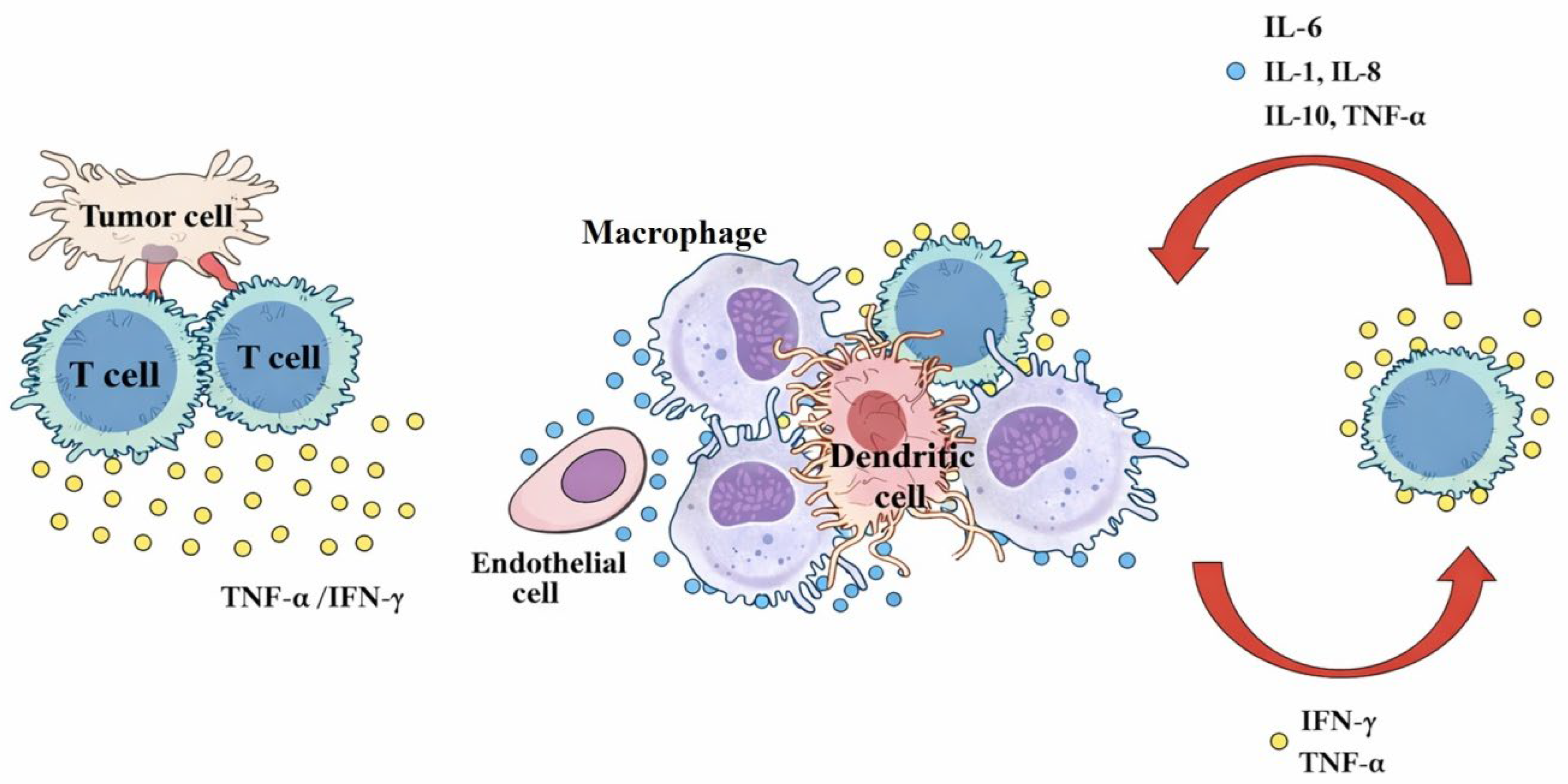
CRS is a significant acute toxicity associated with T-cell engaging therapies, like bispecific antibodies. It results from on-target effects where the binding of the BsAb activates T-cells and other immune and non-immune cells, leading to the extensive release of pro-inflammatory cytokines such as IL-6, IL-10, and IFN-gamma [57,58]. This initial activation and local expansion of T-cells trigger a hypersecretion of IFN-gamma and TNF-alpha [9,57]. These early cytokines, in turn, activate other innate immune cells, such as monocytes/macrophages and non-immune cells, including endothelial cells and dendritic cells [9,57].
The involvement of these bystander cells amplifies the inflammatory response. Macrophages, for instance, are a major source of IL-6 [9,57], a key cytokine driver in CRS [9]. Endothelial cells also contribute significantly to IL-6 production, particularly in severe CRS [57]. This massive and sustained release of cytokines establishes a positive feedback loop, where IL-6 further activates immune cells, leading to the uncontrolled escalation of the inflammatory process [57]. This surge of cytokines can overwhelm homeostatic mechanisms, resulting in a systemic inflammatory response, or “cytokine storm” [9,57]. A hallmark of severe CRS is the activation of endothelial cells, evidenced by elevated angiopoetin-2 and von Willebrand factor, which contributes to capillary leakage, hypotension, and coagulopathy, and may mechanistically link CRS to neurotoxicity (Figure 1) [57]. This widespread cytokine cascade leads to a constellation of symptoms, including chills, fever, fatigue, and anorexia. Severe cases can progress to organ dysfunction, such as cardiac and renal failure, or acute liver injury [9].
Figure 1.
Adapted and modified from Shimabukuro-Vornhagen A., et al. [57], who report the mechanism of Cytokine Release Syndrome (CRS) when using bispecific antibodies in B-cell lymphomas.
4.1.2. Grading of CRS
The grading of CRS is performed according to the American Society for Transplantation and Cellular Therapy (ASTCT) consensus criteria, originally developed for CAR T-cell therapy and applicable to BsAb treatment [59]. The ASTCT grading system categorizes CRS based on clinical signs and symptoms, particularly fever, hypotension, and hypoxia, as listed in Table 2.
Table 2.
Grading of Cytokine Release Syndrome (CRS) according to the American Society for Transplantation and Cellular Therapy (ASTCT) consensus criteria [59].
4.1.3. Treatment of CRS
The management of CRS is led by its severity, as defined by the ASTCT consensus criteria [59] listed in Table 3. Treatment algorithms typically involve supportive care, anti-cytokine agents like tocilizumab, and corticosteroids, with interventions escalating based on the CRS grade [13,60]. Early intervention is crucial to mitigate severe outcomes [59].
Table 3.
Treatment of CRS as defined by the American Society for Transplantation and Cellular Therapy (ASTCT) consensus criteria.
In pivotal trials of bispecific antibodies for B-cell lymphomas, any-grade CRS occurred in 39–67% of patients (mostly grades 1–2, with grade ≥ 3 in <5%). CRS is most frequent during step-up dosing in cycle 1, often after the first dose of glofitamab or epcoritamab, and is typically low-grade with a predictable onset. Management typically begins with symptomatic measures for grade 1 CRS [42]. For more severe cases, treatment algorithms are based on expert opinion and may involve pausing BsAb infusion, corticosteroids, and IL-6 receptor inhibitors like tocilizumab [13,60]. BsAb treatment must be interrupted until resolution of CRS [42].
4.2. Immune Effector Cell-Associated Neurotoxicity Syndrome
4.2.1. Mechanism of ICANS
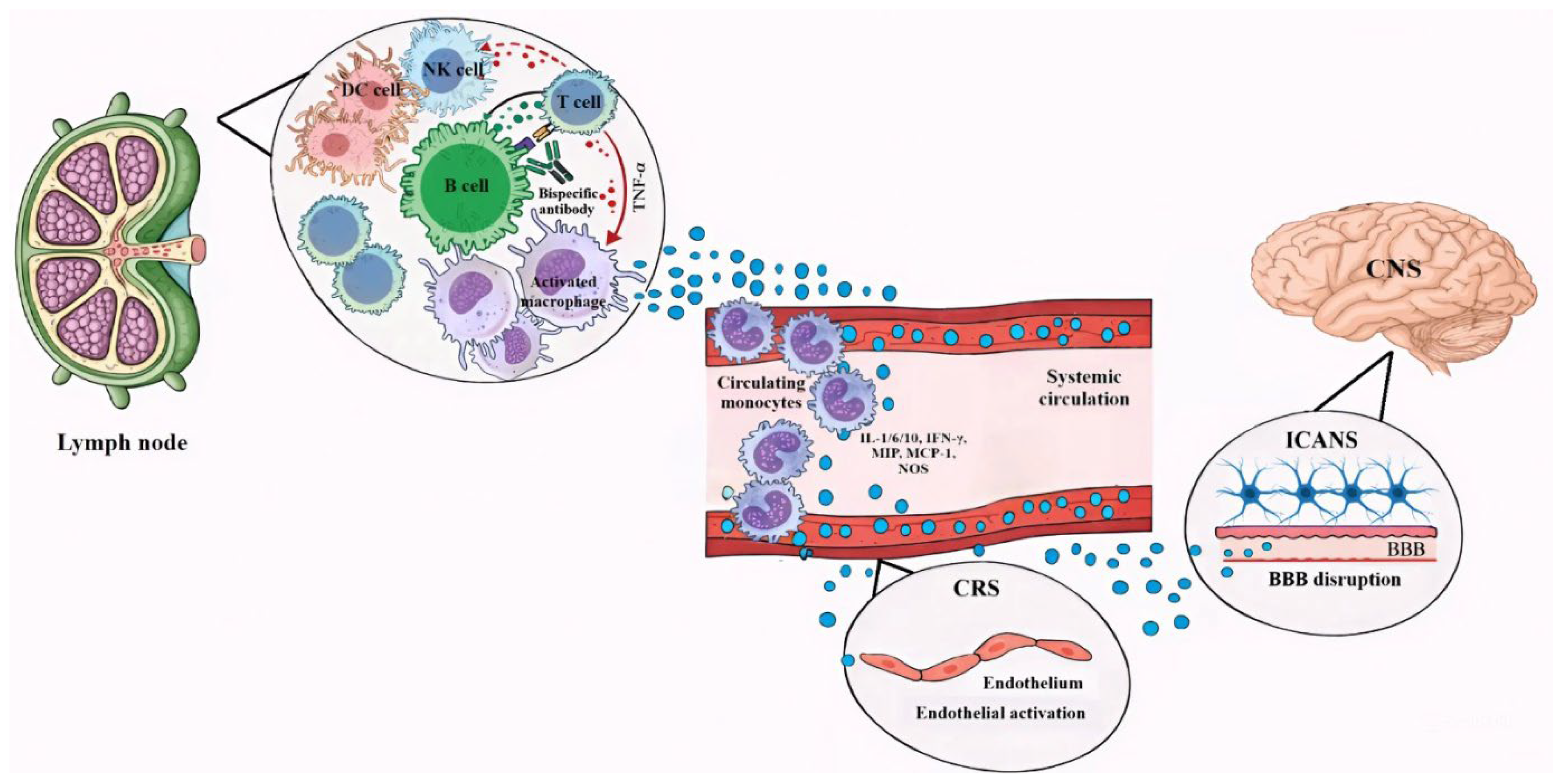
Immune Effector Cell-Associated Neurotoxicity Syndrome (ICANS) is less common than CRS with bispecific antibodies but can occur, presenting as a serious and potentially fatal complication [42,65]. The precise mechanisms that underlie ICANS are complex and not yet fully elucidated, but they are intricately linked to cytokine-induced toxicity, profound endothelial cell activation, and the subsequent disorder of the blood–brain barrier (BBB) [66,67].
Following the systemic inflammatory response characteristic of CRS, a cascade of proinflammatory cytokines, including IL-1beta, TNF-alpha, IL-6, IL-15, IFN-gamma, and granulocyte–macrophage colony-stimulating factor, are released [65,68,69,70]. These circulating cytokines can directly impact the central nervous system (CNS), even from peripheral inflammation [71]. They induce injury and activate components of the BBB, such as astrocytes and pericytes, leading to further cytokine secretion and a breakdown of the barrier [67].
Endothelial cell activation is a critical step in ICANS pathogenesis. This involves the release of angiopoietin-2 upon endothelial cell activation, which displaces angiopoietin-1 and results in increased endothelial activation and microvascular permeability [67,72]. This widespread systemic endothelial activation, often a consequence of the cytokine storm, promotes the upregulation of adhesion molecules (e.g., E- and P-selectin, ICAMs, VCAMs), leading to leukocyte activation and their migration into central nervous system tissue [73,74]. The resultant endothelial dysfunction and damage to tight junctions compromise the integrity of the BBB [67,70] (Figure 2).
Figure 2.
Mechanism of Immune Effector Cell-Associated Neurotoxicity Syndrome (ICANS), adapted and modified from Markouli M., et al. [9], when using bispecific antibodies in B-cell lymphomas.
The disruption of the BBB allows for the infiltration of large numbers of immune cells, inflammatory cytokines, and proteins into the CNS [67,70,72]. This influx exacerbates neuroinflammation, leading to various neurological symptoms. In severe instances, this process can culminate in cerebral edema, which may be profound and fulminant, and even intracerebral hemorrhage [66,67,68,75]. Neuroimaging often reveals cerebral edema in patients with severe neurotoxicity [64,76].
Clinically, adverse neurological events frequently manifest after the initial onset of CRS, suggesting that CRS can act as an initiating event or cofactor for ICANS [66,67,77]. It is common for ICANS to arise during the improvement or even resolution phase of CRS, though concurrent presentation can also occur [66,77]. ICANS clinical manifestations range from mild tremors and confusion to agitation, seizures, and severe encephalopathy [75].
4.2.2. Grading of ICANS
ICANS is also graded using the ASTCT consensus criteria [59], as shown in Table 4. The frequency of any-grade ICANS in pivotal trials for BsAbs ranged between 0% and 8%, with most events being grade 1 and self-limiting [42].
Table 4.
Grading of Immune Effector Cell-Associated Neurotoxicity Syndrome (ICANS) according to the American Society for Transplantation and Cellular Therapy (ASTCT) consensus criteria.
4.2.3. Treatment of ICANS
Treatment for ICANS involves a multi-pronged approach, varying based on the severity of the syndrome as graded by the ASTCT consensus criteria [59], as shown in Table 5. General strategies include corticosteroids, supportive care, and, in some cases, other immunomodulatory agents. Bispecific antibody treatment must be interrupted until ICANS is resolved [42].
Table 5.
Treatment of Immune Effector Cell-Associated Neurotoxicity Syndrome (ICANS) as defined by the American Society for Transplantation and Cellular Therapy (ASTCT) consensus criteria.
5. Infectious Complications and Prophylaxis
5.1. Types of Infections Associated with Bispecific Antibody Use
Bispecific antibody therapy for B-cell lymphomas is associated with an increased risk of infections, including bacterial, viral, and opportunistic infections [42,46]. Risk factors for infection encompass hypogammaglobulinemia, cytopenias, and T-cell exhaustion [46]. Commonly reported severe infections include COVID-19, pneumonia, and sepsis [42]. Reactivation of viruses such as herpes simplex virus/varicella zoster, cytomegalovirus, and Epstein–Barr virus, as well as infections like Pneumocystis jirovecii pneumonia and fungal pneumonia, have been observed [42]. A high incidence of hypogammaglobulinemia (IgG < 400 mg/dL) is frequently observed, contributing significantly to infection risk [83].
5.2. Antimicrobial Prophylaxis Recommendations
Antimicrobial prophylaxis is crucial in managing infections associated with bispecific antibody use. Prophylaxis for Pneumocystis jirovecii pneumonia (PJP) and varicella zoster virus is recommended throughout BsAb treatment, continuing until CD4 counts recover to >0.2 × 10⁹/L [42]. For PJP, first-line agents include trimethoprim-sulfamethoxazole or inhaled pentamidine, with dapsone and atovaquone as alternatives [9]. VZV prophylaxis typically involves acyclovir, valacyclovir, or famciclovir for seropositive patients [9,82]. Antifungal prophylaxis is not routinely required [42] but should be considered in cases with additional risk factors, such as prolonged and severe neutropenia or following the administration of tocilizumab, anakinra, siltuximab, and/or high-dose steroids, continuing for at least one month after the last dose [9,84]. The routine administration of antibacterial prophylaxis in non-neutropenic patients remains controversial and is generally not recommended [9]. Nevertheless, in select high-risk scenarios or when the absolute neutrophil count declines below 500 mm3 for an extended duration, pharmacological prophylaxis is warranted pending neutrophil recovery, typically employing amoxicillin–clavulanic acid, levofloxacin, or cefdinir [9,82]. Intravenous immunoglobulin is recommended as the primary prophylaxis when IgG levels are <400 mg/dL, especially given the high rates of hypogammaglobulinemia [83]. It is also considered for patients experiencing recurrent or severe infections despite other antimicrobial prophylaxis, particularly with IgG levels < 4 g/L [42]. Typical IVIG dosing for prophylaxis in these settings is around 400 mg/kg every 2–4 weeks [82]. Prior to or at the initiation of BsAb therapy, patients should receive all routine non-live vaccinations, including those for COVID-19, influenza, and varicella zoster, while live vaccines must be avoided [9,42]. After immune reconstitution and B-cell aplasia recovery, re-vaccinations, including pneumococcal conjugated vaccines, are generally recommended [9]. Finally, BsAb treatment must be withheld in the presence of any active infection [42].
6. Conclusions
Bispecific antibodies have significantly improved the therapeutic options for B-cell lymphomas, offering effective options for heavily pretreated patients. These therapies demonstrate high efficacy, with overall response rates often approaching 80% and with complete response rates around 60%, varying with the specific agent and lymphoma subtype [5,35,85,86]. While effective, CAR T-cell therapies generally exhibit superior long-term efficacy [87,88]. Understanding their mechanisms, indications, and associated toxicities, along with robust management strategies for CRS, ICANS, and infectious complications, is paramount for optimizing patient outcomes.
Notably, while CRS and ICANS are potential adverse events, severe CRS (grade ≥ 3) is relatively rare with bispecific antibodies, occurring in 0–4% of patients [42]. In contrast, infectious complications pose a more significant challenge, with reported rates of infection between 40% and 80%, often being the most common cause of death [31,89]. This heightened infection risk is partly due to hypogammaglobulinemia, a frequent side effect of bispecific antibody therapy [90].
Bispecific antibodies are currently approved as monotherapy for R/R settings of B-cell lymphomas [85,91]. While they offer an “off-the-shelf” advantage over CAR T-cells—being standardized recombinant proteins that are immediately available for administration without the patient-specific manufacturing process required for CAR T-cells, which involves leukapheresis, genetic engineering, ex vivo expansion (typically taking 20–40 days), and risks of manufacturing failure (up to 10–25%) leading to potential disease progression during the wait [2,42,85]—their administration typically requires multiple, continuous doses. Although initial step-up doses often necessitate hospitalization for the close monitoring of adverse events, efforts are underway to facilitate outpatient administration for subsequent doses, particularly through subcutaneous delivery, to enhance accessibility and reduce healthcare burden [92,93]. These therapies represent a substantial financial investment, with costs for bispecific antibodies being significant, though often less than the upfront costs of CAR T-cell therapy [85,94]. However, the cumulative cost of bispecific antibodies over prolonged treatment durations, coupled with expenses for managing adverse events, can make their overall cost comparable to or even exceed a single CAR T-cell treatment [95,96].
Continued research into minimizing adverse events and improving prophylactic measures, particularly for infectious complications, will further enhance the safety and efficacy of these novel therapies.
Author Contributions
Á.J. and D.T., writing original draft; Á.I., supervision and writing original draft; Z.M., supervising and writing original draft. All authors have read and agreed to the published version of the manuscript.
Funding
This study was supported by the University of Debrecen Program for Scientific Publication.
Data Availability Statement
No new data were created or analyzed in this study.
Acknowledgments
The manuscript was drafted with the assistance of Jenny.AI, but the intellectual content and research were solely the work of the authors.
Conflicts of Interest
The authors declare no conflicts of interest.
References
- Luminari, S.; Barbieri, E.; Nizzoli, M.E. Towards a Chemo-free Approach for Follicular Lymphoma. Br. J. Haematol. 2025, 207, 1755–1764. [Google Scholar] [CrossRef] [Scilit]
- Kim, T.M.; Taszner, M.; Novelli, S.; Cho, S.; Villasboas, J.C.; Merli, M.; Ubieto, A.J.; Tessoulin, B.; Poon, L.M.; Tucker, D.; et al. Safety and Efficacy of Odronextamab in Patients with Relapsed or Refractory Follicular Lymphoma. Ann. Oncol. 2024, 35, 1039. [Google Scholar] [CrossRef] [Scilit] [PubMed]
- Linton, K.; Vitolo, U.; Jurczak, W.; Lugtenburg, P.J.; Gyan, E.; Sureda, A.; Christensen, J.H.; Hess, B.T.; Tilly, H.; Córdoba, R.; et al. Epcoritamab Monotherapy in Patients with Relapsed or Refractory Follicular Lymphoma (EPCORE NHL-1): A Phase 2 Cohort of a Single-Arm, Multicentre Study. Lancet Haematol. 2024, 11, e593–e605. [Google Scholar] [CrossRef] [Scilit] [PubMed]
- Budde, L.E.; Sehn, L.H.; Matasar, M.J.; Schuster, S.J.; Assouline, S.; Giri, P.; Kuruvilla, J.; Canales, M.; Dietrich, S.; Fay, K.; et al. Safety and Efficacy of Mosunetuzumab, a Bispecific Antibody, in Patients with Relapsed or Refractory Follicular Lymphoma: A Single-Arm, Multicentre, Phase 2 Study. Lancet Oncol. 2022, 23, 1055. [Google Scholar] [CrossRef] [Scilit]
- Dalle, I.A.; Dulery, R.; Moukalled, N.; Ricard, L.; Stocker, N.; Cheikh, J.E.; Mohty, M.; Bazarbachi, A. Bi- and Tri-Specific Antibodies in Non-Hodgkin Lymphoma: Current Data and Perspectives. Blood Cancer J. 2024, 14, 23. [Google Scholar] [CrossRef] [Scilit]
- Cassanello, G.; Luna, A.; Falchi, L. Trial Watch: Bispecific Antibodies for the Treatment of Relapsed or Refractory Large B-Cell Lymphoma. OncoImmunology 2024, 13, 2321648. [Google Scholar] [CrossRef] [Scilit] [PubMed]
- González-Barca, E. Role of Bispecific Antibodies in Relapsed/Refractory Diffuse Large B-Cell Lymphoma in the CART Era. Front. Immunol. 2022, 13, 909008. [Google Scholar] [CrossRef] [Scilit]
- Minson, A.; Dickinson, M. New Bispecific Antibodies in Diffuse Large B-Cell Lymphoma. Haematologica 2025, 110, 1483. [Google Scholar] [CrossRef] [Scilit]
- Markouli, M.; Ullah, F.; Ünlü, S.; Omar, N.; Lopetegui-Lia, N.; Duco, M.; Anwer, F.; Raza, S.; Dima, D. Toxicity Profile of Chimeric Antigen Receptor T-Cell and Bispecific Antibody Therapies in Multiple Myeloma: Pathogenesis, Prevention and Management. Curr. Oncol. 2023, 30, 6330–6352. [Google Scholar] [CrossRef] [Scilit]
- Fan, G.; Wang, Z.; Hao, M.; Li, J. Bispecific Antibodies and Their Applications. J. Hematol. Oncol. 2015, 8, 130. [Google Scholar] [CrossRef] [Scilit]
- Madsen, A.V.; Pedersen, L.E.; Kristensen, P.; Goletz, S. Design and Engineering of Bispecific Antibodies: Insights and Practical Considerations. Front. Bioeng. Biotechnol. 2024, 12, 1352014. [Google Scholar] [CrossRef] [Scilit]
- Husain, B.; Ellerman, D. Expanding the Boundaries of Biotherapeutics with Bispecific Antibodies. BioDrugs 2018, 32, 441. [Google Scholar] [CrossRef] [Scilit] [PubMed]
- Zhou, Y.; Liu, M.; Ren, F.; Meng, X.; Yu, J. The Landscape of Bispecific T Cell Engager in Cancer Treatment. Biomark. Res. 2021, 9, 38. [Google Scholar] [CrossRef] [Scilit] [PubMed]
- Mohan, N.; Ayinde, S.; Peng, H.; Dutta, S.; Shen, Y.; Falkowski, V.M.; Biel, T.; Ju, T.; Wu, W.J. Structural and Functional Characterization of IgG- and Non-IgG-Based T-Cell-Engaging Bispecific Antibodies. Front. Immunol. 2024, 15, 1376096. [Google Scholar] [CrossRef] [Scilit] [PubMed]
- Li, L.; Wang, Y. Recent Updates for Antibody Therapy for Acute Lymphoblastic Leukemia. Exp. Hematol. Oncol. 2020, 9, 33. [Google Scholar] [CrossRef] [Scilit]
- Wang, Q.; Chen, Y.; Park, J.; Liu, X.; Hu, Y.; Wang, T.; McFarland, K.S.; Betenbaugh, M.J. Design and Production of Bispecific Antibodies. Antibodies 2019, 8, 43. [Google Scholar] [CrossRef] [Scilit]
- Lin, Y.; Huang, N.; Ge, L.; Sun, H.; Fu, Y.; Liu, C.; Wang, J. Structural Design of Tetravalent T-Cell Engaging Bispecific Antibodies: Improve Developability by Engineering Disulfide Bonds. J. Biol. Eng. 2021, 15, 18. [Google Scholar] [CrossRef] [Scilit]
- Yu, S.; Li, A.; Liu, Q.; Yuan, X.; Xu, H.; Jiao, D.; Pestell, R.G.; Han, X.; Wu, K. Recent Advances of Bispecific Antibodies in Solid Tumors. J. Hematol. Oncol. 2017, 10, 155. [Google Scholar] [CrossRef] [Scilit]
- Shan, L.; Dyk, N.V.; Haskins, N.; Cook, K.M.; Rosenthal, K.L.; Mazor, R.; Dragulin-Otto, S.; Jiang, Y.; Wu, H.; Dall’Acqua, W.F.; et al. In Vivo Pharmacokinetic Enhancement of Monomeric Fc and Monovalent Bispecific Designs through Structural Guidance. Commun. Biol. 2021, 4, 1048. [Google Scholar] [CrossRef] [Scilit]
- Abdeldaim, D.T.; Schindowski, K. Fc-Engineered Therapeutic Antibodies: Recent Advances and Future Directions. Pharmaceutics 2023, 15, 2402. [Google Scholar] [CrossRef] [Scilit]
- Zwolak, A.; Leettola, C.; Tam, S.H.; Goulet, D.R.; Derebe, M.G.; Pardinas, J.R.; Zheng, S.; Decker, R.; Emmell, E.; Chiu, M.L. Rapid Purification of Human Bispecific Antibodies via Selective Modulation of Protein A Binding. Sci. Rep. 2017, 7, 15521. [Google Scholar] [CrossRef] [Scilit]
- Suzuki, S.; Annaka, H.; KONNO, S.; Kumagai, I.; Asano, R. Engineering the Hinge Region of Human IgG1 Fc-Fused Bispecific Antibodies to Improve Fragmentation Resistance. Sci. Rep. 2018, 8, 17253. [Google Scholar] [CrossRef] [Scilit]
- Madsen, A.V. Engineering Strategies for Design and Production of Bispecific Antibodies. Ph.D. Thesis, Danmarks Tekniske Universite, Lyngby, Denmark, 2023; 166p. [Google Scholar]
- Dickinson, M.; Carlo-Stella, C.; Morschhauser, F.; Bachy, E.; Corradini, P.; Iacoboni, G.; Khan, C.; Wróbel, T.; Offner, F.; Trněný, M.; et al. Glofitamab for Relapsed or Refractory Diffuse Large B-Cell Lymphoma. N. Engl. J. Med. 2022, 387, 2220. [Google Scholar] [CrossRef] [Scilit]
- Kang, J.; Sun, T.; Zhang, Y. Immunotherapeutic Progress and Application of Bispecific Antibody in Cancer. Front. Immunol. 2022, 13, 1020003. [Google Scholar] [CrossRef] [Scilit]
- Hosseini, I.; Gadkar, K.; Stefanich, E.; Li, C.; Sun, L.; Chu, Y.; Ramanujan, S. Mitigating the Risk of Cytokine Release Syndrome in a Phase I Trial of CD20/CD3 Bispecific Antibody Mosunetuzumab in NHL: Impact of Translational System Modeling. npj Syst. Biol. Appl. 2020, 6, 28. [Google Scholar] [CrossRef] [Scilit]
- Wei, J.; Yang, Y.; Wang, G.; Liu, M. Current Landscape and Future Directions of Bispecific Antibodies in Cancer Immunotherapy. Front. Immunol. 2022, 13, 1035276. [Google Scholar] [CrossRef] [Scilit] [PubMed]
- Wu, Y.; Yi, M.; Zhu, S.; Wang, H.; Wu, K. Recent Advances and Challenges of Bispecific Antibodies in Solid Tumors. Exp. Hematol. Oncol. 2021, 10, 56. [Google Scholar] [CrossRef] [Scilit] [PubMed]
- Nakamura, R.; Tsumura, R.; Anzai, T.; Asano, R.; Yasunaga, M. Immunological Synapse Formation as a Key Mechanism in T Cell-Dependent Bispecific Antibody-Mediated Immune Activation and Cytotoxicity. Cancer Immunol. Immunother. 2025, 74, 246. [Google Scholar] [CrossRef] [Scilit]
- Engelberts, P.; Hiemstra, I.H.; de Jong, B.; Schuurhuis, D.H.; Meesters, J.; Hernández, I.B.; Oostindie, S.C.; Neijssen, J.; van den Brink, E.N.; Horbach, G.J.; et al. DuoBody-CD3xCD20 Induces Potent T-Cell-Mediated Killing of Malignant B Cells in Preclinical Models and Provides Opportunities for Subcutaneous Dosing. EBioMedicine 2020, 52, 102625. [Google Scholar] [CrossRef] [Scilit] [PubMed]
- Longhitano, A.; Slavin, M.A.; Harrison, S.J.; Teh, B.W. Bispecific Antibody Therapy, Its Use and Risks for Infection: Bridging the Knowledge Gap. Blood Rev. 2021, 49, 100810. [Google Scholar] [CrossRef] [Scilit]
- Ayyappan, S.; Maddocks, K.J. Novel and Emerging Therapies for B Cell Lymphoma. J. Hematol. Oncol. 2019, 12, 82. [Google Scholar] [CrossRef] [Scilit]
- Salvaris, R.; Ong, J.; Gregory, G.P. Bispecific Antibodies: A Review of Development, Clinical Efficacy and Toxicity in B-Cell Lymphomas. J. Pers. Med. 2021, 11, 355. [Google Scholar] [CrossRef] [Scilit]
- Haber, L.; Olson, K.; Kelly, M.P.; Crawford, A.; DiLillo, D.J.; Tavaré, R.; Ullman, E.; Mao, S.; Canova, L.; Sineshchekova, O.; et al. Generation of T-Cell-Redirecting Bispecific Antibodies with Differentiated Profiles of Cytokine Release and Biodistribution by CD3 Affinity Tuning. Sci. Rep. 2021, 11, 14397. [Google Scholar] [CrossRef] [Scilit] [PubMed]
- Hutchings, M.; Mous, R.; Clausen, M.R.; Johnson, P.; Linton, K.; Chamuleau, M.E.D.; Lewis, D.J.; Sureda, A.; Cunningham, D.; Oliveri, R.S.; et al. Dose Escalation of Subcutaneous Epcoritamab in Patients with Relapsed or Refractory B-Cell Non-Hodgkin Lymphoma: An Open-Label, Phase 1/2 Study. Lancet 2021, 398, 1157. [Google Scholar] [CrossRef] [Scilit]
- Cao, Y.; Marcucci, E.; Budde, L.E. Mosunetuzumab and Lymphoma: Latest Updates from 2022 ASH Annual Meeting. J. Hematol. Oncol. 2023, 16, 69. [Google Scholar] [CrossRef] [Scilit]
- Sehn, L.H.; Bartlett, N.L.; Matasar, M.J.; Schuster, S.J.; Assouline, S.; Giri, P.; Kuruvilla, J.; Shadman, M.; Cheah, C.Y.; Dietrich, S.; et al. Long-Term 3-Year Follow-up of Mosunetuzumab in Relapsed or Refractory Follicular Lymphoma after ≥2 Prior Therapies. Blood 2024, 145, 708. [Google Scholar] [CrossRef] [Scilit] [PubMed]
- Matasar, M.J.; Bartlett, N.L.; Shadman, M.; Budde, L.E.; Flinn, I.W.; Gregory, G.P.; Kim, W.S.; Heß, G.; El-Sharkawi, D.; Diefenbach, C.; et al. Mosunetuzumab Safety Profile in Patients with Relapsed/Refractory B-Cell Non-Hodgkin Lymphoma: Clinical Management Experience from a Pivotal Phase I/II Trial. Clin. Lymphoma Myeloma Leuk. 2023, 24, 240. [Google Scholar] [CrossRef] [Scilit]
- Alvarez, J.S.; Jaber, M.; Zumofen, M.-H.B. Multiple Real-World Data Sources in a Bayesian Framework to Inform Long-Term Survival Estimates of Mosunetuzumab in Patients with Follicular Lymphoma. Oncol. Ther. 2023, 11, 495. [Google Scholar] [CrossRef] [Scilit] [PubMed]
- Maurer, M.J.; Casulo, C.; Larson, M.C.; Habermann, T.M.; Lossos, I.S.; Wang, Y.; Nastoupil, L.J.; Strouse, C.; Chihara, D.; Martin, P.; et al. Matching-Adjusted Indirect Comparison from the Lymphoma Epidemiology of Outcomes Consortium for Real World Evidence (LEO CReWE) Study to a Clinical Trial of Mosunetuzumab in Relapsed or Refractory Follicular Lymphoma. Haematologica 2023, 109, 2177. [Google Scholar] [CrossRef] [Scilit]
- Danilov, A.V.; Kambhampati, S.; Linton, K.; Cumings, K.; Chirikov, V.; Mutebi, A.; Chawla, S.B.; Chhibber, A.; Navarro, F.R.; Gonçalves, F.M.; et al. Indirect Comparison of Epcoritamab vs. Chemoimmunotherapy, Mosunetuzumab, or Odronextamab in Follicular Lymphoma. Blood Adv. 2025, 9, 3754. [Google Scholar] [CrossRef] [Scilit]
- Chaganti, S.; Dulobdas, V.; Wilson, M.R.; Tucker, D.; Townsend, W.; Parry-Jones, N.; Lewis, D.J.; Fox, C.P.; Osborne, W. Clinical Management of Bispecific Antibody Therapy for Lymphoma: A British Society for Haematology Good Practice Paper. Br. J. Haematol. 2025, 207, 1227. [Google Scholar] [CrossRef] [Scilit]
- Rosenthal, A.; Muñoz, J.; Jun, M.; Wang, T.; Mutebi, A.; Wang, A.; Yang, S.; Osei-Bonsu, K.; Elliott, B.; Navarro, F.R.; et al. Comparisons of Treatment Outcomes of Epcoritamab versus Chemoimmunotherapy, Polatuzumab-Based Regimens, Tafasitamab-Based Regimens, or Chimeric Antigen Receptor T-Cell Therapy, in Third-Line or Later Relapsed/Refractory Large B-Cell Lymphoma. J. Hematol. Oncol. 2024, 17, 69. [Google Scholar] [CrossRef] [Scilit]
- Thiéblemont, C.; Karimi, Y.; Ghesquières, H.; Cheah, C.Y.; Clausen, M.R.; Cunningham, D.; Jurczak, W.; Rok, Y.; Gasiorowski, R.; Lewis, D.; et al. Epcoritamab in Relapsed/Refractory Large B-Cell Lymphoma: 2-Year Follow-up from the Pivotal EPCORE NHL-1 Trial. Leukemia 2024, 38, 2653. [Google Scholar] [CrossRef] [Scilit] [PubMed]
- Izutsu, K.; Kumode, T.; Yuda, J.; Nagai, H.; Mishima, Y.; Suehiro, Y.; Yamamoto, K.; Fujisaki, T.; Ishitsuka, K.; Ishizawa, K.; et al. Efficacy and Safety of Epcoritamab in Japanese Patients with Relapsed or Refractory Diffuse Large B-Cell Lymphoma: 3-Year Follow-up from the EPCORE NHL-3 Trial. Int. J. Clin. Oncol. 2025, 30, 1631. [Google Scholar] [CrossRef] [Scilit]
- Hammons, L.; Szabó, A.; Janardan, A.; Bhatlapenumarthi, V.; Annyapu, E.; Dhakal, B.; Hadidi, S.A.; Radhakrishnan, S.V.; Narra, R.; Bhutani, D.; et al. The Changing Spectrum of Infection with BCMA and GPRC5D Targeting Bispecific Antibody (bsAb) Therapy in Patients with Relapsed Refractory Multiple Myeloma. Haematologica 2023, 109, 906. [Google Scholar] [CrossRef] [Scilit]
- Bannerji, R.; Arnason, J.; Advani, R.H.; Brown, J.R.; Allan, J.N.; Ansell, S.M.; Barnes, J.A.; O’Brien, S.; Chávez, J.C.; Duell, J.; et al. Odronextamab, a Human CD20×CD3 Bispecific Antibody in Patients with CD20-Positive B-Cell Malignancies (ELM-1): Results from the Relapsed or Refractory Non-Hodgkin Lymphoma Cohort in a Single-Arm, Multicentre, Phase 1 Trial. Lancet Haematol. 2022, 9, e327–e339. [Google Scholar] [CrossRef] [Scilit] [PubMed]
- Topp, M.S.; Matasar, M.J.; Allan, J.N.; Ansell, S.M.; Barnes, J.A.; Arnason, J.; Michot, J.; Goldschmidt, N.; O’Brien, S.; Abadi, U.; et al. Odronextamab Monotherapy in R/R DLBCL after Progression with CAR T-Cell Therapy: Primary Analysis of the ELM-1 Study. Blood 2024, 145, 1498–1509. [Google Scholar] [CrossRef] [Scilit]
- Kim, W.S.; Kim, T.M.; Cho, S.; Jarque, I.; Iskierka-Jazdzewska, E.; Poon, L.M.; Prince, H.M.; Zhang, H.; Cao, J.; Zhang, M.; et al. Odronextamab Monotherapy in Patients with Relapsed/Refractory Diffuse Large B Cell Lymphoma: Primary Efficacy and Safety Analysis in Phase 2 ELM-2 Trial. Nat. Cancer 2025, 6, 528. [Google Scholar] [CrossRef] [Scilit]
- Hanel, W.; Epperla, N. Evolving Therapeutic Landscape in Follicular Lymphoma: A Look at Emerging and Investigational Therapies. J. Hematol. Oncol. 2021, 14, 104. [Google Scholar] [CrossRef] [Scilit]
- González-Barca, E. Developing New Strategies for Relapsed/Refractory Diffuse Large B-Cell Lymphoma. J. Clin. Med. 2023, 12, 7376. [Google Scholar] [CrossRef] [Scilit] [PubMed]
- Topouzis, S.; Papapetropoulos, A.; Alexander, S.P.H.; Cortese-Krott, M.M.; Kendall, D.A.; Martemyanov, K.A.; Mauro, C.; Nagercoil, N.; Panettieri, R.A.; Patel, H.H.; et al. Novel Drugs Approved by the EMA, the FDA and the MHRA in 2024: A Year in Review. Br. J. Pharmacol. 2025, 182, 1416–1445. [Google Scholar] [CrossRef] [Scilit]
- Gurion, R.; Guz, D.; Kedmi, M.; Perry, C.; Avivi, I.; Horowitz, N.A.; Abadi, U.; Gafter-Gvili, A.; Raanani, P.; Goldschmidt, N.; et al. Efficacy and Safety of Glofitamab in Patients with R/R DLBCL in Real Life Setting—A Retrospective Study. Ann. Hematol. 2025, 104, 3821. [Google Scholar] [CrossRef] [Scilit]
- Melody, M.; Gordon, L.I. Sequencing of Cellular Therapy and Bispecific Antibodies for the Management of Diffuse Large B-Cell Lymphoma. Haematologica 2024, 109, 3138. [Google Scholar] [CrossRef] [Scilit] [PubMed]
- Wang, C.; Liu, Y. Glofitamab Therapy for Diffuse Large B Cell Lymphoma: Latest Updates from the 2022 ASH Annual Meeting. J. Hematol. Oncol. 2023, 16, 20. [Google Scholar] [CrossRef] [Scilit]
- Ateşoğlu, E.B.; Gülbaş, Z.; Uzay, A.; Özcan, M.; Özkalemkaş, F.; Dal, M.S.; Kalyon, H.; Akay, O.M.; Devecı, B.; Beköz, H.S.; et al. Glofitamab in Relapsed/Refractory Diffuse Large B-cell Lymphoma: Real-world Data. Hematol. Oncol. 2023, 41, 663. [Google Scholar] [CrossRef] [Scilit] [PubMed]
- Shimabukuro-Vornhagen, A.; Gödel, P.; Subklewe, M.; Stemmler, H.; Schlößer, H.; Schlaak, M.; Kochanek, M.; Böll, B.; Bergwelt-Baildon, M.S. von Cytokine Release Syndrome. J. Immunother. Cancer 2018, 6, 56. [Google Scholar] [CrossRef] [Scilit]
- Cosenza, M.; Sacchi, S.; Pozzi, S. Cytokine Release Syndrome Associated with T-Cell-Based Therapies for Hematological Malignancies: Pathophysiology, Clinical Presentation, and Treatment. Int. J. Mol. Sci. 2021, 22, 7652. [Google Scholar] [CrossRef] [Scilit]
- Lee, D.W.; Santomasso, B.; Locke, F.L.; Ghobadi, A.; Turtle, C.J.; Brudno, J.N.; Maus, M.V.; Park, J.H.; Mead, E.; Pavletic, S.Z.; et al. ASTCT Consensus Grading for Cytokine Release Syndrome and Neurologic Toxicity Associated with Immune Effector Cells. Biol. Blood Marrow Transplant. 2018, 25, 625. [Google Scholar] [CrossRef] [Scilit]
- Charshafian, S.; Liang, S.Y. Rapid Fire: Infectious Disease Emergencies in Patients with Cancer. Emerg. Med. Clin. North Am. 2018, 36, 493. [Google Scholar] [CrossRef] [Scilit] [PubMed]
- Ayuketang, F.A.; Jäger, U. Management of Cytokine Release Syndrome (CRS) and HLH. In The EBMT/EHA CAR-T Cell Handbook; Springer: Berlin/Heidelberg, Germany, 2022; p. 135. [Google Scholar]
- Hayden, P.; Roddie, C.; Bader, P.; Basak, G.; Bönig, H.; Bonini, C.; Chabannon, C.; Ciceri, F.; Corbacioglu, S.; Ellard, R.; et al. Management of Adults and Children Receiving CAR T-Cell Therapy: 2021 Best Practice Recommendations of the European Society for Blood and Marrow Transplantation (EBMT) and the Joint Accreditation Committee of ISCT and EBMT (JACIE) and the European Haematology Association (EHA). Ann. Oncol. 2021, 33, 259. [Google Scholar] [CrossRef] [Scilit]
- Santomasso, B.D.; Nastoupil, L.J.; Adkins, S.; Lacchetti, C.; Schneider, B.J.; Anadkat, M.; Atkins, M.B.; Brassil, K.J.; Caterino, J.M.; Chau, I.; et al. Management of Immune-Related Adverse Events in Patients Treated with Chimeric Antigen Receptor T-Cell Therapy: ASCO Guideline. J. Clin. Oncol. 2021, 39, 3978. [Google Scholar] [CrossRef] [Scilit]
- Li, Y.; Yue, M.; Fu, R.; Li, C.; Wu, Y.; Jiang, T.; Li, Z.; Ni, R.; Li, L.; Su, H.; et al. The Pathogenesis, Diagnosis, Prevention, and Treatment of CAR-T Cell Therapy-Related Adverse Reactions. Front. Pharmacol. 2022, 13, 950923. [Google Scholar] [CrossRef] [Scilit] [PubMed]
- Gust, J.; Ponce, R.; Liles, W.C.; Garden, G.A.; Turtle, C.J. Cytokines in CAR T Cell–Associated Neurotoxicity. Front. Immunol. 2020, 11, 577027. [Google Scholar] [CrossRef] [Scilit] [PubMed]
- Wen, L.; Yu, J.; Sun, Y.; Song, Z.; Liu, X.; Han, X.; Li, L.; Qiu, L.; Zhou, S.; Qian, Z.; et al. Adverse Events in the Nervous System Associated with Blinatumomab: A Real-World Study. BMC Med. 2025, 23, 72. [Google Scholar] [CrossRef] [Scilit] [PubMed]
- Xiao, X.; Huang, S.; Chen, S.; Wang, Y.; Sun, Q.; Xu, X.; Li, Y. Mechanisms of Cytokine Release Syndrome and Neurotoxicity of CAR T-Cell Therapy and Associated Prevention and Management Strategies. J. Exp. Clin. Cancer Res. 2021, 40, 367. [Google Scholar] [CrossRef] [Scilit]
- Genoud, V.; Migliorini, D. Novel Pathophysiological Insights into CAR-T Cell Associated Neurotoxicity. Front. Neurol. 2023, 14, 1108297. [Google Scholar] [CrossRef] [Scilit]
- Yang, J.; Ran, M.; Li, H.; Lin, Y.; Ma, K.; Yang, Y.; Fu, X.; Yang, S. New Insight into Neurological Degeneration: Inflammatory Cytokines and Blood–Brain Barrier. Front. Mol. Neurosci. 2022, 15, 1013933. [Google Scholar] [CrossRef] [Scilit]
- Palomo, M.; Moreno-Castaño, A.B.; Salas, M.Q.; Escribano-Serrat, S.; Rovira, M.; Guillén-Olmos, E.; Fernández, S.; Ventosa-Capell, H.; Youssef, L.; Crispi, F.; et al. Endothelial Activation and Damage as a Common Pathological Substrate in Different Pathologies and Cell Therapy Complications. Front. Med. 2023, 10, 1285898. [Google Scholar] [CrossRef] [Scilit] [PubMed]
- Konsman, J.P. Cytokines in the Brain and Neuroinflammation: We Didn’t Starve the Fire! Pharmaceuticals 2022, 15, 140. [Google Scholar] [CrossRef] [Scilit] [PubMed]
- Frigault, M.J.; Maus, M.V. State of the Art in CAR T Cell Therapy for CD19+ B Cell Malignancies. J. Clin. Investig. 2020, 130, 1586. [Google Scholar] [CrossRef] [Scilit]
- Hellenthal, K.E.M.; Brabenec, L.; Wagner, N. Regulation and Dysregulation of Endothelial Permeability during Systemic Inflammation. Cells 2022, 11, 1935. [Google Scholar] [CrossRef] [Scilit]
- Langouche, L. Intensive Insulin Therapy Protects the Endothelium of Critically Ill Patients. J. Clin. Investig. 2005, 115, 2277. [Google Scholar] [CrossRef] [Scilit] [PubMed]
- Rees, J. Management of Immune Effector Cell-Associated Neurotoxicity Syndrome (ICANS). In The EBMT/EHA CAR-T Cell Handbook; Springer: Berlin/Heidelberg, Germany, 2022; p. 141. [Google Scholar]
- Wijdicks, E.F.M.; Rabinstein, A.A.; Lin, Y. CAR-T Cell Therapy and the Neurointensivist. Neurocritical Care 2024, 41, 691. [Google Scholar] [CrossRef] [Scilit] [PubMed]
- Morris, E.; Neelapu, S.S.; Giavridis, T.; Sadelain, M. Cytokine Release Syndrome and Associated Neurotoxicity in Cancer Immunotherapy. Nat. Rev. Immunol. 2021, 22, 85. [Google Scholar] [CrossRef] [Scilit] [PubMed]
- King, A.C.; Orozco, J. Axicabtagene Ciloleucel: The First FDA-Approved CAR T-Cell Therapy for Relapsed/Refractory Large B-Cell Lymphoma. J. Adv. Pract. Oncol. 2019, 10, 878. [Google Scholar] [CrossRef] [Scilit]
- Ellard, R.; Kenyon, M.; Hutt, D.; Aerts, E.; de Ruijter, M.; Chabannon, C.; Mohty, M.; Montoto, S.; Wallhult, E.; Murray, J. The EBMT Immune Effector Cell Nursing Guidelines on CAR-T Therapy: A Framework for Patient Care and Managing Common Toxicities. Clin. Hematol. Int. 2022, 4, 75. [Google Scholar] [CrossRef] [Scilit]
- Tallantyre, E.; Evans, N.A.; Parry-Jones, J.; Morgan, M.; Jones, C.; Ingram, W. Neurological Updates: Neurological Complications of CAR-T Therapy. J. Neurol. 2020, 268, 1544. [Google Scholar] [CrossRef] [Scilit]
- Adkins, S. CAR T-Cell Therapy: Adverse Events and Management. J. Adv. Pract. Oncol. 2019, 10, 21–28. [Google Scholar]
- Ludwig, H.; Terpos, E.; van de Donk, N.W.C.J.; Mateos, M.; Moreau, P.; Dimopoulos, M.-A.; Delforge, M.; Rodríguez-Otero, P.; Miguel, J.F.S.; Yong, K.; et al. Prevention and Management of Adverse Events during Treatment with Bispecific Antibodies and CAR T Cells in Multiple Myeloma: A Consensus Report of the European Myeloma Network. Lancet Oncol. 2023, 24, e255–e269. [Google Scholar] [CrossRef] [Scilit]
- Yee, A.J. Improving Outcomes with Anti-BCMA Bispecific Antibodies with Attention to Infection. Blood Cancer J. 2024, 14, 110. [Google Scholar] [CrossRef] [Scilit]
- Mellinghoff, S.C.; Panse, J.; Alakel, N.; Behre, G.; Buchheidt, D.; Christopeit, M.; Hasenkamp, J.; Kiehl, M.; Koldehoff, M.; Krause, S.W.; et al. Primary Prophylaxis of Invasive Fungal Infections in Patients with Haematological Malignancies: 2017 Update of the Recommendations of the Infectious Diseases Working Party (AGIHO) of the German Society for Haematology and Medical Oncology (DGHO). Ann. Hematol. 2017, 97, 197. [Google Scholar] [CrossRef] [Scilit]
- Trabolsi, A.; Arumov, A.; Schatz, J.H. Bispecific Antibodies and CAR-T Cells: Dueling Immunotherapies for Large B-Cell Lymphomas. Blood Cancer J. 2024, 14, 27. [Google Scholar] [CrossRef] [Scilit] [PubMed]
- Gerhard, G.M.; Keudell, G. von Bispecific Antibody Therapy for Lymphoma. Best Pract. Res. Clin. Haematol. 2024, 37, 101598. [Google Scholar] [CrossRef] [Scilit]
- Tapia-Galisteo, A.; Álvarez-Vallina, L.; Sanz, L. Bi- and Trispecific Immune Cell Engagers for Immunotherapy of Hematological Malignancies. J. Hematol. Oncol. 2023, 16, 83. [Google Scholar] [CrossRef] [Scilit] [PubMed]
- He, Y.; Qiu, L.; Chen, D.; Ren, S.-H.; Xiong, Y.; Li, M.; Dou, B.-T.; Li, Y.; Cen, Y.; Li, Y.; et al. CAR T-Cells vs. Bispecific Antibodies as Third- or Later-Line Treatment for Relapsed/Refractory Follicular Lymphoma: A Literature Review and Meta-Analysis. Front. Immunol. 2025, 16, 1611984. [Google Scholar] [CrossRef] [Scilit]
- Braun, A.; Gouni, S.; Pulles, A.E.; Strati, P.; Minnema, M.C.; Budde, L.E. Bispecific Antibody Use in Patients with Lymphoma and Multiple Myeloma. Am. Soc. Clin. Oncol. Educ. Book 2024, 44, e433516. [Google Scholar] [CrossRef] [Scilit] [PubMed]
- Ahlstrom, J.; Costa, L.J. Patient and Physician Perspectives on Multiple Myeloma Data Presented at ASCO and EHA 2025: A Podcast. Oncol. Ther. 2025, 13, 881–893. [Google Scholar] [CrossRef] [Scilit]
- Radtke, K.K.; Bender, B.C.; Li, Z.; Turner, D.C.; Roy, S.; Belousov, A.; Li, C. Clinical Pharmacology of Cytokine Release Syndrome with T-Cell–Engaging Bispecific Antibodies: Current Insights and Drug Development Strategies. Clin. Cancer Res. 2024, 31, 245. [Google Scholar] [CrossRef] [Scilit]
- Guo, X.; Wu, Y.; Ying, X.; Xie, N.; Shen, G. Revolutionizing Cancer Immunotherapy: Unleashing the Potential of Bispecific Antibodies for Targeted Treatment. Front. Immunol. 2023, 14, 1291836. [Google Scholar] [CrossRef] [Scilit]
- Scott, S.A.; Roberts, D.; Gupta, V.A.; Joseph, N.S.; Hofmeister, C.C.; Dhodapkar, M.V.; Lonial, S.; Nooka, A.K.; Kaufman, J.L. Feasibility and Safety of Outpatient Model for Administration of Bispecific Antibodies: Proceedings from an International Myeloma Society 21st Annual Meeting Oral Abstract. Clin. Lymphoma Myeloma Leuk. 2025, 25, 656. [Google Scholar] [CrossRef] [Scilit]
- Chao, S.; Tse, J.; VanGalder, A.; Wong, G.; Wonsettler, T.; Hertler, A. Whither CAR T? Will the FDA Being Under the Hood and the Availability of Bispecifics Make These Therapies Less Attractive? Am. J. Manag. Care 2024, 30, SP550–SP551. [Google Scholar] [CrossRef] [Scilit] [PubMed]
- Wu, J.J.; Ghobadi, A.; Maziarz, R.T.; Patel, K.; Hsu, H.; Liu, Z.; Sheetz, C.; Kardel, P.; Fu, C. Medicare Utilization and Cost Trends for CAR T Cell Therapies Across Settings of Care in the Treatment of Diffuse Large B-Cell Lymphoma. Adv. Ther. 2024, 41, 3232. [Google Scholar] [CrossRef] [Scilit] [PubMed]
- Lei, M.; Li, Q.; O’Day, K.; Meyer, K.; Wang, A.; Jun, M. Practice Efficiency and Total Cost of Care with Bispecifics and CAR-T in Relapsed/Refractory Diffuse Large B-Cell Lymphoma: An Institutional Perspective. Future Oncol. 2024, 20, 2189. [Google Scholar] [CrossRef] [Scilit] [PubMed]

Disclaimer/Publisher’s Note: The statements, opinions and data contained in all publications are solely those of the individual author(s) and contributor(s) and not of MDPI and/or the editor(s). MDPI and/or the editor(s) disclaim responsibility for any injury to people or property resulting from any ideas, methods, instructions or products referred to in the content. |
© 2026 by the authors. Published by MDPI on behalf of the Lithuanian University of Health Sciences. Licensee MDPI, Basel, Switzerland. This article is an open access article distributed under the terms and conditions of the Creative Commons Attribution (CC BY) license.