Article

Associations of Psychological Distress, Cognitive Function, and Physical Activity with Daily Functioning and Quality of Life Across Disability Levels in Multiple Sclerosis


by
Saad A. Alhammad
1,*,
Hamad T. Aldubayan
2,
Majed S. Albalawi
3,
Alaa A. Mutawam
4 and
Sami S. Alabdulwahab
1
1
Rehabilitation Sciences Department, Faculty of Applied Medical Sciences, King Saud University, Riyadh 11411, Saudi Arabia
2
Rehabilitation Department, Dammam Medical Complex, Al Khobar 31451, Saudi Arabia
3
Physical Therapy Department, Prince Fahad bin Sultan Hospital, Tabuk 47311, Saudi Arabia
4
Rehabilitation Department, Abu Areesh General Hospital, Jazan 45911, Saudi Arabia
*
Author to whom correspondence should be addressed.
Medicina 2026, 62(2), 316; https://doi.org/10.3390/medicina62020316
Submission received: 21 December 2025 / Revised: 14 January 2026 / Accepted: 22 January 2026 / Published: 3 February 2026

Abstract

Background and Objectives: Multiple sclerosis (MS) is a chronic neurological disorder causing physical, cognitive, and psychological impairments that affect daily functioning and quality of life (QoL). Psychological distress, cognitive deficits, and reduced physical activity often co-occur, yet their associations with QoL across disability levels are unclear. This study examined these relationships in people with relapsing–remitting MS, stratified by disability severity. Materials and Methods: This cross-sectional study included 149 adults with RRMS. Disability severity was classified as mild, moderate, or severe using the Patient-Determined Disease Steps (PDDS) scale. Psychological distress was assessed using the Depression, Anxiety, and Stress Scale–21 (DASS-21), cognitive function using the Montreal Cognitive Assessment (MoCA), and physical activity using the International Physical Activity Questionnaire (IPAQ). QoL was evaluated using the Multiple Sclerosis International Quality of Life (MusiQoL) questionnaire. Stratified comparative analyses were conducted to examine differences in overall and domain-specific QoL according to levels of psychological distress, cognitive function, and physical activity within disability categories. Results: In participants with mild and moderate disability, higher levels of depression, anxiety, and stress were associated with lower QoL scores, particularly in domains related to activities of daily living, psychological well-being, and symptoms. Higher cognitive function and greater physical activity were associated with more favorable QoL across several domains. In those with severe disability, associations between psychological distress and QoL were less consistent, although stress remained associated with selected QoL domains. Conclusions: Psychological distress, cognitive function, and physical activity show distinct patterns of association with daily functioning and QoL across disability levels in RRMS. Although causal inferences cannot be drawn from this cross-sectional design, disability-stratified analyses provide clinically relevant insights into how these factors co-vary with QoL at different stages of disease severity.

1. Introduction

Multiple sclerosis (MS) is a chronic, immune-mediated neurological disorder characterized by inflammatory demyelination and neurodegeneration of the central nervous system. It typically begins in early adulthood and is one of the most common causes of non-traumatic disability among young adults worldwide [1]. The disease course is heterogeneous. Relapsing–remitting MS (RRMS) accounts for approximately 85% of initial diagnoses, followed by secondary-progressive, primary-progressive, and the less common progressive-relapsing forms [2]. Regardless of disease subtype, MS imposes a substantial personal and societal burden. It often affects individuals during their most productive years and is associated with reduced participation in work and social roles, as well as poorer quality of life (QoL) [3].
Individuals with MS present with a wide range of physical, cognitive, and psychological symptoms. Common manifestations include motor impairment, fatigue, spasticity, sensory disturbances, pain, cognitive dysfunction, and emotional distress [4]. As disability accumulates, these symptoms frequently co-occur. Their combined presence is associated with increasing difficulty in daily activities and social functioning [5]. Cognitive impairment affects up to 60% of people with MS, including those in the early stages of the disease. Deficits are most often observed in attention, memory, processing speed, executive function, and verbal fluency [6,7]. Psychological symptoms are also prevalent. Depression and anxiety are frequently reported, with depression affecting up to 50–60% of individuals over the disease course and consistently associated with poorer QoL [8].
Physical symptoms such as weakness, balance impairment, pain, spasticity, and fatigue further shape the lived experience of MS [9,10]. Fatigue, in particular, is among the most disabling symptoms and is closely associated with reduced participation in physical activity and daily routines. Importantly, impairments across physical, cognitive, and emotional domains rarely occur in isolation. Instead, they tend to cluster, and their co-occurrence is associated with lower QoL [11,12]. Consequently, QoL has become a central outcome in MS research and clinical care. It reflects patients’ perceptions of physical, psychological, and social well-being and complements traditional clinical measures of disease severity [13]. Both generic and MS-specific patient-reported outcome measures, including the Multiple Sclerosis International Quality of Life (MusiQoL) questionnaire, are widely used to capture these multidimensional experiences [14].
The experience and reporting of MS symptoms and QoL may also vary across cultural and regional contexts. Evidence from Saudi Arabia suggests that cultural factors, such as family support, social expectations, and engagement in community or religious activities, influence both the experience of MS and self-reported QoL [15,16]. For instance, participation in culturally valued physical or social activities may buffer the impact of fatigue and psychological distress, underscoring the importance of considering cultural context when evaluating QoL in MS. Physical activity is therefore widely recommended as a key component of MS rehabilitation, including in regional clinical practice guidelines [17]. Despite growing interest in patient-reported outcomes, relatively few studies have examined how psychological distress, cognitive function, and physical activity are simultaneously associated with QoL across different levels of disability. In particular, limited attention has been given to whether these associations differ between individuals with mild, moderate, and severe disability [6,8,18].
Given these limitations, a cross-sectional, disability-stratified analyses offer a useful approach for describing patterns of association between symptoms and QoL at clinically meaningful stages of disease severity. Although causal inferences cannot be drawn from such designs, they provide important insights into how symptom burden and functional limitations co-vary within distinct disability groups. These insights can inform hypothesis generation and support more tailored assessment and supportive care strategies.
Accordingly, this study aimed to examine the associations between cognitive function, physical activity, psychological distress (anxiety, stress, and depression), and QoL among people with MS, stratified by disability severity (mild, moderate, and severe). We hypothesize that higher disability will be associated with greater symptom burden, and that psychological, cognitive, and physical factors will differentially relate to QoL across disability levels, reflecting the multifactorial determinants of functioning in RRMS.

2. Materials and Methods

2.1. Study Design, Setting, and Patients

This cross-sectional study included 149 patients with RRMS living in Saudi Arabia. Participants were recruited through random sampling from the registries of the Saaed Assembly (Riyadh) and the Arfa Organization (Dammam). Of 250 eligible patients with RRMS, we randomly selected 210 using a computer-generated random-number list. Of those selected, 149 agreed and volunteered to participate in the study. The 149 patients were stratified into three groups based on PDDS severity levels (mild, moderate, and severe).
Participants were Saudi males and females aged 20–50 years with a confirmed diagnosis of relapsing–remitting MS. To minimize the confounding effects of recent disease activity on cognitive, psychological, and QoL measures, only patients whose last relapse occurred ≥2 years prior were included. This period was chosen because previous studies indicate that physical, cognitive, and psychological function tend to stabilize after two years of remission, reducing short-term variability associated with relapse.
Exclusion criteria were (1) use of medications known to affect cognition or psychometric performance; (2) diagnosis of additional chronic diseases influencing QoL; (3) history of neurological or psychiatric disorders unrelated to MS; or (4) pregnancy.

2.2. Sample Size Estimation

The required sample size was estimated using G*Power software (version 3.1) to detect a small-to-moderate effect size (f = 0.25) with α = 0.05 and 80% power. This calculation accounted for stratification across three disability levels, ensuring sufficient power for subgroup analyses of QoL, cognitive function, and physical activity within each disability stratum. Based on these assumptions, a minimum of 149 participants was required, ensuring sufficient statistical power for inferential analyses [19].

2.3. Outcome Measures

Five validated instruments were used to assess disability, cognition, physical activity, emotional status, and QoL.

2.3.1. Patient-Determined Disease Steps (PDDS)

A nine-item self-reported scale measuring functional disability in MS. Scores range from 0 (normal) to 8 (bedridden). It has demonstrated reliability and validity in both English and Arabic [20,21]. For this study, disability severity was classified as mild (0–3), moderate (4–6), and severe (≥7).

2.3.2. Montreal Cognitive Assessment (MoCA)

A brief cognitive screening tool evaluating attention, executive function, memory, language, visuospatial skills, and abstraction. Scores range from 0–30, with <26 indicating cognitive impairment. The MoCA has been validated in Arabic and is widely used in MS populations [22].

2.3.3. International Physical Activity Questionnaire (IPAQ)

A standardized tool measuring physical activity levels over the previous 7 days, including walking, moderate, and vigorous activities, as well as sedentary behavior. Results are reported in metabolic equivalent task (MET)-minutes/week [23,24].

2.3.4. Depression, Anxiety, and Stress Scale (DASS-21)

A 21-item self-report instrument assessing depression, anxiety, and stress on three subscales (7 items each). Scores are rated on a 4-point Likert scale, with higher scores indicating greater symptom severity. The Arabic version is validated and reliable [25].

2.3.5. Multiple Sclerosis International Quality of Life (MusiQoL)

A 31-item self-reported measure covering nine domains of QoL, including daily activities (ADL), psychological well-being, symptoms, relationships, and social participation. Higher scores indicate better QoL. The Arabic version is validated [26,27].

2.4. Procedures

Eligible patients were contacted through the registries after obtaining ethical approval and provided written informed consent before participation. Data collection was conducted in person, with questionnaires administered sequentially (PDDS, MoCA, IPAQ, DASS-21, MusiQoL). Each session lasted approximately 45–60 min. Participants were allowed breaks to reduce fatigue.
Ethical approval from the Institutional Review Board at King Saud University was granted before commencing data collection. All patients received an explanation of the study’s nature and procedure. They were informed that their participation is voluntary and that they can withdraw from the study at any time. Afterward, they were asked to sign a consent form before participation. Then, they completed five questionnaires face to face, starting with the PDDS, MoCA, IPAQ, DASS-21, and MusiQoL, respectively. The questionnaires were filled exactly as described in the previous sections. If they felt tired, the rest of the questionnaires were completed later that day. Then, based on the PDDS level of disability, patients were grouped into three groups: mild, moderate, and severe.

2.5. Statistical Analysis

All statistical analyses were performed using IBM SPSS Statistics for Windows, version 26.0 (IBM Corp., Armonk, NY, USA). Missing data were handled using case-wise (listwise) deletion. Descriptive statistics were used to summarize participant characteristics and study variables. Continuous variables are presented as means with standard deviations (SDs), whereas categorical variables are reported as frequencies and percentages. The significance between groups was examined using one-way analysis of variance (ANOVA) with Tukey’s post hoc tests for the continuous variable of age, while a Chi-square test was used for categorical variables, such as education, gender, anxiety, stress, and depression. The distributional assumptions of continuous variables were assessed using the Shapiro–Wilk test.
Comparisons of continuous outcomes, including QoL, cognitive function, and physical activity, across disability severity groups were conducted using one-way ANOVA with Tukey’s post hoc tests applied for pairwise comparisons when appropriate. In addition, stratified analyses were performed within each disability category (mild, moderate, and severe). Within each stratum, differences in MusiQoL domain scores according to cognitive function (low vs. normal) were examined using independent samples t-tests, while differences according to physical activity level (low or no activity, moderate activity, and high activity) were assessed using one-way ANOVA.
All statistical tests were two-sided, and a p value of less than 0.05 was considered statistically significant.

3. Results

3.1. Participant Characteristics

Basic characteristics of the study sample are summarized in Table 1. Participants with severe disability were older (mean 40.8 ± 4.8 years) than those with moderate (34.6 ± 4.4 years) or mild disability (32.1 ± 5.7 years). Most participants had a university-level education, although a higher proportion of severe cases reported only a high school education (26.7%) compared with moderate (13%) and mild cases (6.2%). Men were more frequently represented in the severe group (73.3%) than in the moderate (62.3%) or mild (53.8%) groups.
Psychological symptoms varied across disability levels. Moderate anxiety was most common in severe cases (53.3%), whereas mild anxiety predominated in the moderate group (44.9%). Severe or extremely severe anxiety was uncommon. Stress levels showed a clear gradient: normal stress was reported by 64.6% of mild cases, 31.9% of moderate cases, and only 6.7% of severe cases. Severe stress was more frequent among severe cases (33.3%) than in moderate (5.8%) or mild (1.5%) groups. Depression also differed by disability: over half of severe cases reported mild depression (53.3%), while moderate depression predominated in the moderate group (52.2%). Severe and extremely severe depression were rare across all groups.

3.2. Functional Outcomes

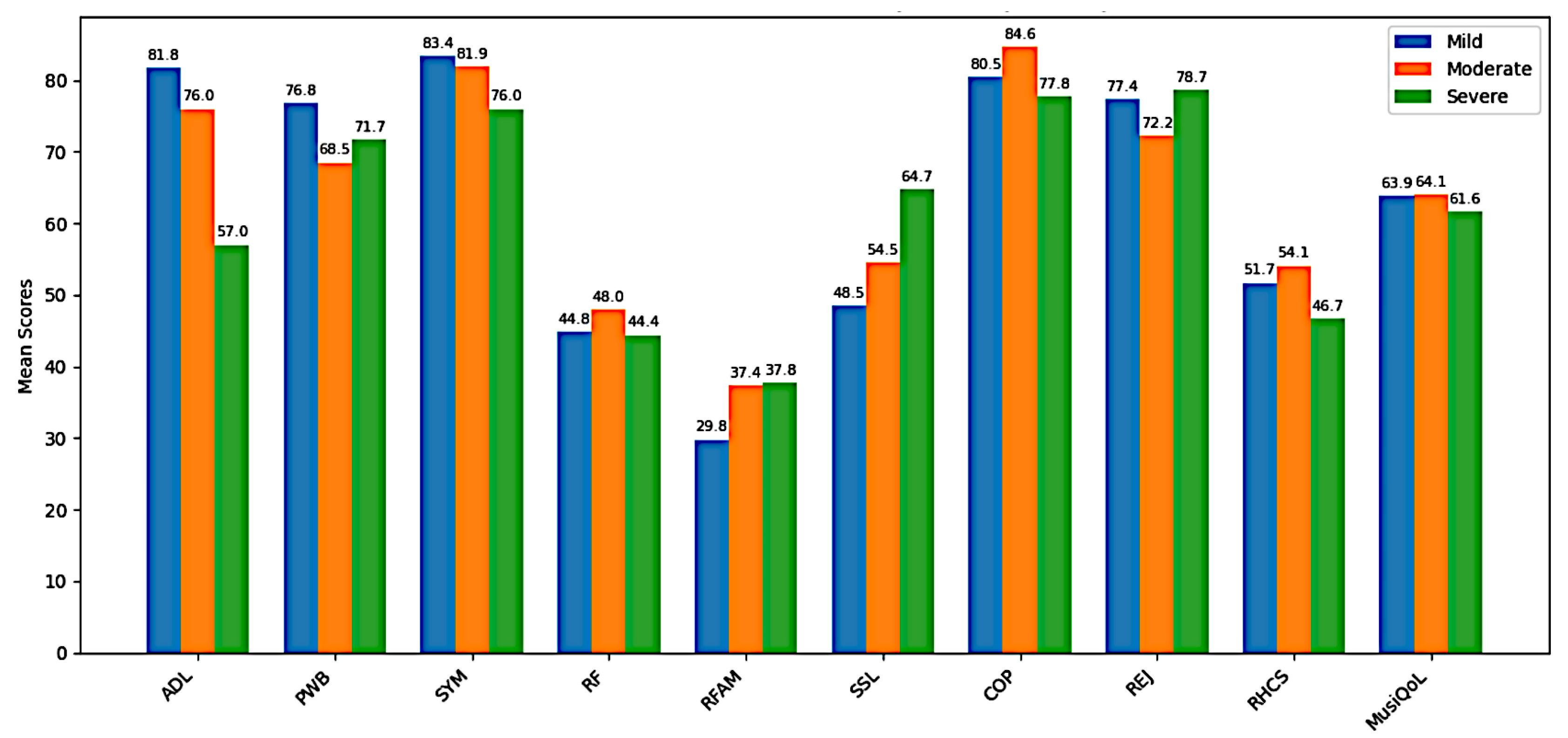
Functional outcomes showed progressive decline with increasing disability. ADL scores decreased from mild (81.8 ± 9.8) to severe cases (57.0 ± 9.6). Psychological well-being (PWB) and symptom burden (SYM) were slightly lower in moderate and severe groups compared with mild. Scores for relationships with friends (RF) and family (RFAM) were generally similar across groups, though RFAM was higher in moderate and severe disability. Social support (SSL) increased with disability severity, peaking in the severe group (64.7 ± 13.6). Coping (COP) was highest in the moderate group (84.6 ± 12.8), while rejection (REJ) remained consistent across groups. Relationship with healthcare system (RHCS) scores were slightly lower among severe cases (46.7 ± 9.0). Overall MusiQoL scores were comparable across groups, with only a modest decline in severe disability (61.6 ± 3.0) relative to mild (63.9 ± 5.6) and moderate (64.1 ± 5.2) groups (Figure 1).

3.3. Distribution of Cognitive Function and Physical Activity by Disability Severity

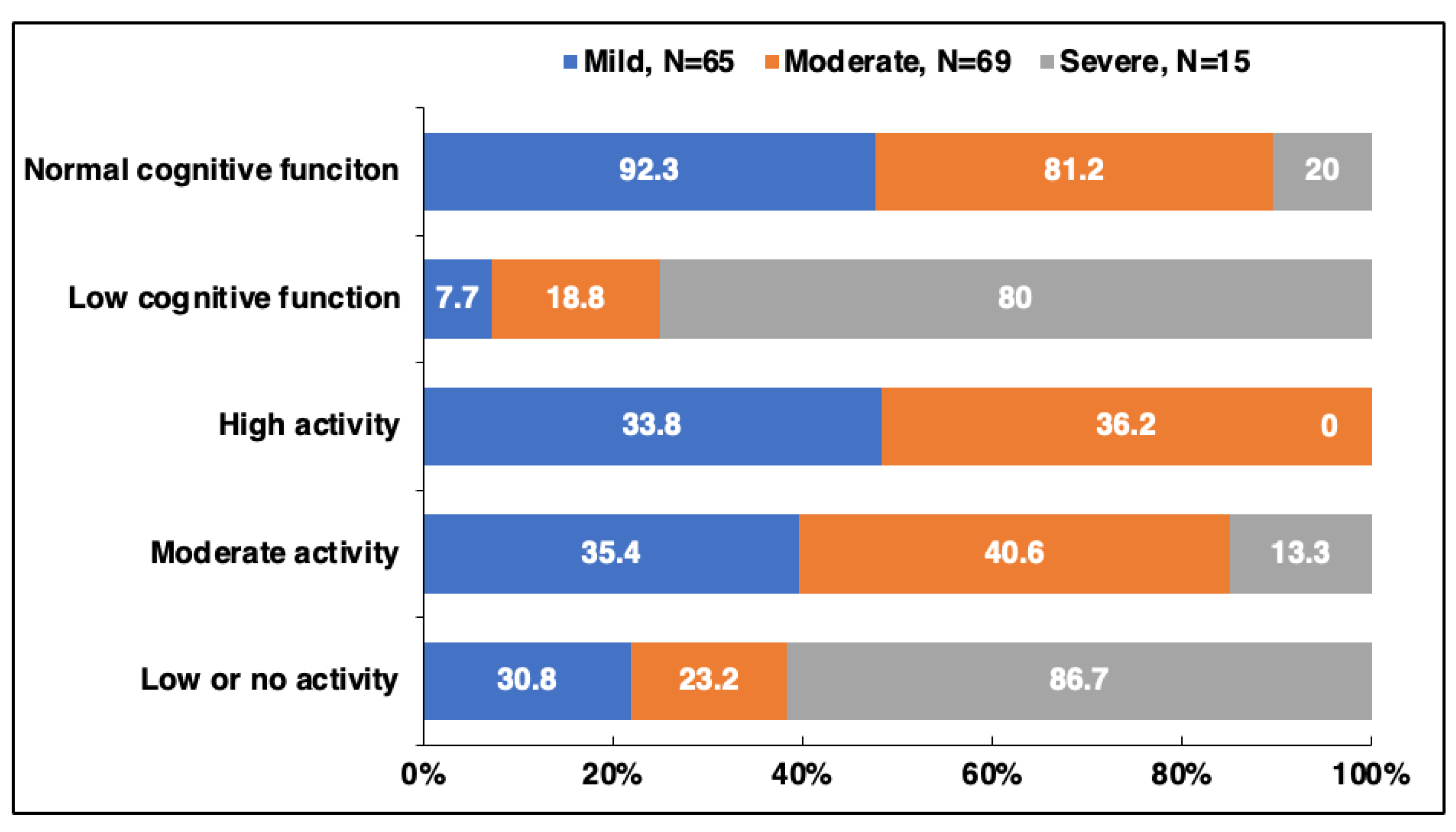
Patterns of cognitive function and physical activity varied across disability levels (Figure 2). Among patients with mild disability, most (92.3%) demonstrated normal cognitive function, with only 7.7% showing low function. In contrast, 18.8% of moderate and 80% of severe cases exhibited low cognitive function, indicating a clear association between greater disability and cognitive decline.
Physical activity levels also decreased with increasing disability. High activity was reported by 33.8% of mild and 36.2% of moderate cases but by none of the severe cases. Moderate activity was most common in the moderate group (40.6%), compared with 35.4% in mild and 13.3% in severe cases. Low or no activity was reported in 30.8% of mild and 23.2% of moderate cases, but it was most prevalent among severe cases (86.7%).

3.4. Associations Between Cognitive Function, Physical Activity, and QoL Domains by Disability Severity

The associations of cognitive function (low vs. normal) and physical activity (low, moderate, high) with QoL domains (MusiQoL subscales) and ADL across disability groups are summarized in Table 2.

3.4.1. Mild Disability

Participants with normal cognitive function reported higher ADL scores than those with low cognition (82.8 ± 9.2 vs. 69.5 ± 8.3, p = 0.003). No other domains differed significantly by cognitive function. Regarding physical activity, significant associations were observed for psychological well-being (PWB, p = 0.029), rejection (REJ, p < 0.001), and relationship with healthcare system (RHCS, p < 0.001). Participants with higher activity levels reported better PWB, lower REJ, and higher RHCS compared with those with low or moderate activity.

3.4.2. Moderate Disability

Normal cognitive function was associated with higher ADL scores than low cognition (77.7 ± 8.9 vs. 68.6 ± 10.3, p = 0.002). Physical activity was significantly associated with symptom burden (SYM, p = 0.013), relationship with friends (RF, p = 0.025), and relationship with family (RFAM, p = 0.041). Higher activity levels were associated with fewer symptoms and improved social functioning. Overall MusiQoL scores did not differ significantly by cognitive function or physical activity.

3.4.3. Severe Disability

Cognitive function showed no significant associations with ADL or most QoL domains, except for sentimental and sexual life (SSL), which was higher among participants with low cognition compared with normal cognition (68.3 ± 11.9 vs. 50.0 ± 10.0, p = 0.030). Physical activity was not significantly associated with ADL or QoL in this group.

3.5. Association Between Psychological Distress and QoL Domains by Disability Severity

The associations between psychological distress (anxiety, stress, depression) and QoL are presented in Table 3, stratified by disability.

3.5.1. Mild Disability

Higher severity of anxiety, stress, and depression was generally associated with lower ADL and PWB scores (all p ≤ 0.009). Symptom burden (SYM) increased with higher anxiety (p = 0.001) and depression (p = 0.003), but not stress (p = 0.368). Anxiety also influenced relationships with friends (RF, p = 0.028) and the healthcare system (RHCS, p = 0.026). Coping (COP) decreased with higher anxiety (p = 0.030), while REJ scores were higher among participants with more severe stress (p = 0.011) and depression (p = 0.004).

3.5.2. Moderate Disability

Greater severity of anxiety, stress, and depression was associated with lower ADL and PWB scores (all p ≤ 0.046). Symptom burden increased with higher anxiety (p < 0.001) and stress (p = 0.032), while depression showed no significant effect (p = 0.269). Anxiety was associated with RF (p < 0.001), RFAM (p < 0.001), and COP (p = 0.003). Stress and depression also affected RFAM and COP (all p ≤ 0.001). Overall MusiQoL scores declined with increasing anxiety (p = 0.006), stress (p = 0.002), and depression (p = 0.008), while SSL, REJ, and some other domains were largely unaffected.

3.5.3. Severe Disability

Anxiety severity was not significantly associated with ADL, PWB, QoL subscales, or overall MusiQoL scores (all p > 0.05). Higher stress levels were associated with poorer ADL (p = 0.013) and lower PWB (p = 0.033), as well as differences in SSL (p = 0.016) and RHCS (p = 0.016). Other domains, including SYM, RF, RFAM, COP, and REJ, did not vary significantly by stress. Depression severity was not significantly associated with any ADL or QoL outcomes in this group.

3.6. Heatmap of Quality of Life and Functioning Across Psychological Distress and Disability Levels

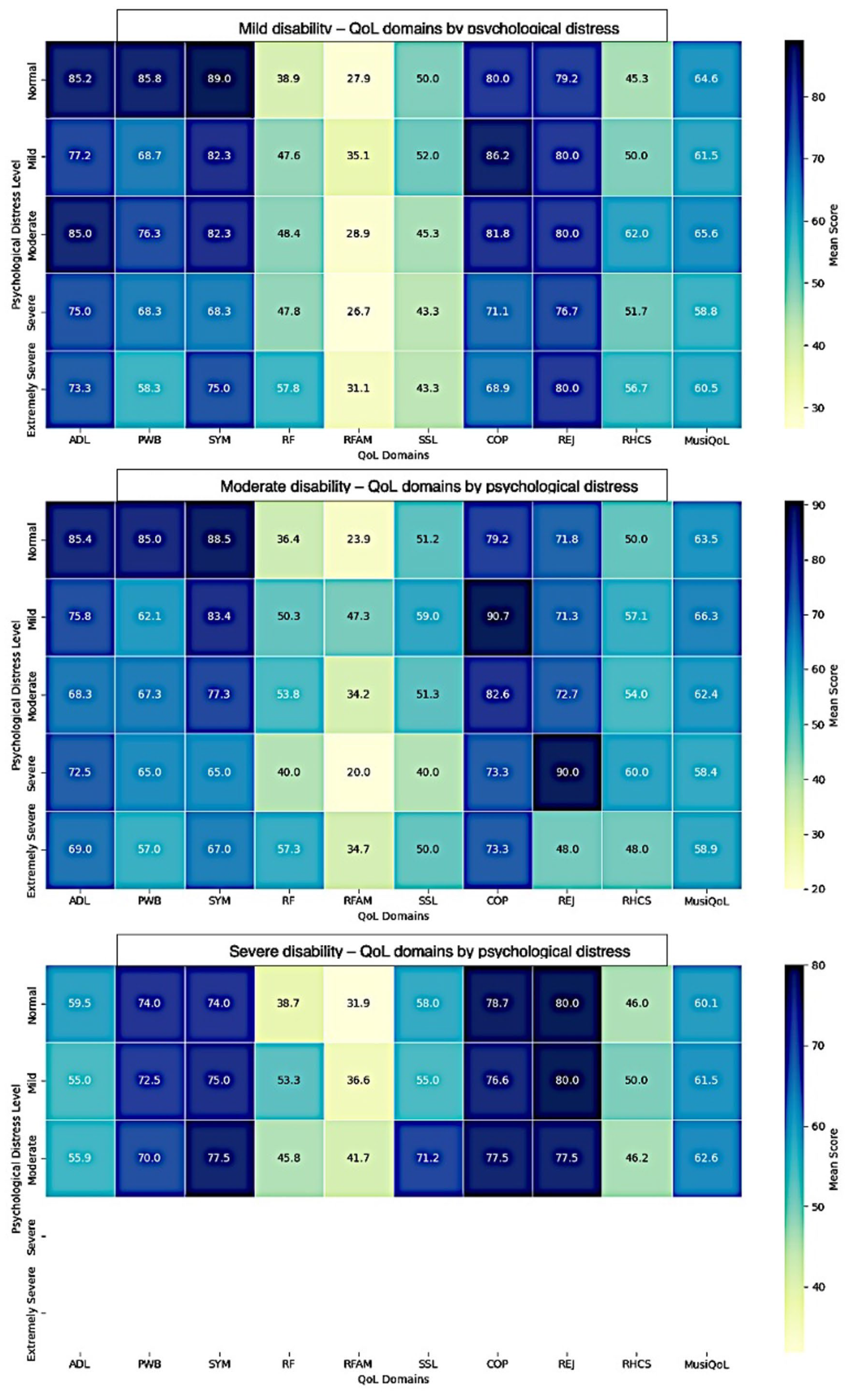
Figure 3 presents heatmaps of mean scores for quality of life and daily functioning domains (ADL, PWB, SYM, RF, RFAM, SSL, COP, REJ, RHCS, MusiQoL) across anxiety, stress, and depression categories, stratified by disability severity. In patients with mild disability, lower psychological distress was generally associated with higher ADL, PWB, SYM, and COP scores, whereas higher levels of anxiety, stress, or depression corresponded with lower scores across most domains. For moderate disability, similar patterns were observed, although some domains (e.g., RFAM, SSL) showed less pronounced differences. In the severe disability group, variations across distress levels were minimal, likely reflecting either attenuation of psychological impact or the limited subgroup size. Overall, the heatmaps provide a clear visual summary of the relationships between psychological distress and functional and quality of life outcomes, highlighting stronger associations in mild-to-moderate disability and relative stability in severe disability.

4. Discussion

This study examined associations between psychological distress, cognitive function, and physical activity with daily functioning and QoL in MS patients across mild, moderate, and severe disability levels. We found that anxiety, stress, and depression were associated with lower QoL, particularly in domains of ADL, PWB, SYM, COP, RF, and RFAM among patients with mild-to-moderate disability. In patients with severe disability, only stress showed an association with ADL and PWB, whereas anxiety and depression were largely unrelated to QoL outcomes. These results suggest that psychological distress is more strongly linked to functional and psychological outcomes in patients with lower disability, while its relative influence diminishes as physical disability increases.
Participants with more severe disability were significantly older, indicating a progressive increase in disability with age. Educational attainment also differed across groups, with a lower proportion of university-educated individuals in the severe disability group, suggesting potential social or functional disadvantages accompanying advanced disability. Gender distribution did not differ significantly, indicating that disability severity was not sex-dependent in this cohort.
Psychological distress increased markedly with disability severity. Anxiety, stress, and depression showed statistically significant associations, with moderate-to-severe symptom levels more prevalent among participants with severe disability. Notably, stress exhibited the strongest gradient, with a substantial shift from normal levels in mild disability to severe levels in the severe disability group. Similarly, depressive symptoms progressed from predominantly normal or mild levels in the mild group to higher proportions of moderate and severe depression in the moderate and severe groups, respectively.
Overall, these findings highlight the close interplay between advancing disability, aging, and psychological burden, underscoring the importance of integrating mental health assessment and support into the clinical management of individuals across all stages of disability, particularly those with moderate to severe impairment. Although the present study offers valuable insights from a Saudi Arabian MS cohort, cultural, social, and healthcare system factors may shape how patients perceive and report QoL, social support, and psychological distress. Cultural values influence individuals’ expectations, social roles, coping strategies, and interpretations of symptoms, outcomes that are not universally uniform across populations. QoL is known to be a subjective and culturally constructed concept, with cultural background affecting how people appraise well-being, social connectedness, and functional limitations [28]. Qualitative research in MS further suggests that sociocultural norms and beliefs can influence patients’ lived experiences, including stress, coping, and stigma [29].
In the Saudi context, family expectations and societal roles may uniquely influence psychological responses and reported outcomes, and healthcare access patterns may differ from those in Western settings [30]. Therefore, while the observed patterns likely reflect real associations in this cohort, caution is warranted when generalizing the findings to non-Middle Eastern or non-Arab populations. Future research in diverse cultural settings is needed to determine whether these associations are consistent internationally and to inform culturally tailored interventions.
Our findings are consistent with previous studies showing that emotional distress is associated with poorer functioning and QoL in MS. Depression and anxiety are prevalent in MS and are linked to reduced QoL independent of physical disability [8]. Cognitive impairment, particularly in memory, attention, and executive function, is also associated with reduced independence and participation in daily activities [6,7]. Physical symptoms, including fatigue and weakness, limit daily functioning and reduce engagement in physical and social activities [10,16]. The attenuated association of psychological distress in severe disability may reflect a ceiling effect, where physical limitations dominate QoL and reduce the observable impact of emotional symptoms, as suggested by prior research [6].

4.1. Strengths and Limitations

Key strengths of this study include the use of standardized, validated instruments (DASS-21, MoCA, IPAQ, MusiQoL) to capture multiple domains of ADL and QoL, and stratification by disability level to identify differential effects [31,32]. The inclusion of both cognitive and physical activity measures alongside psychological distress provides a holistic view of factors influencing QoL [33].
A potential limitation of the study is that it categorized MS patients into mild, moderate, and severe disability, a common approach in previous research, which may limit the novelty of the analytical strategy [34,35]. The small sample size, particularly in the severe disability group, precluded multivariable modeling or testing interactions between disability and key determinants, restricting the findings to descriptive and associative observations. Future studies with larger cohorts are warranted to explore these interactions and provide more robust, stage-specific insights. Other imitations include the cross-sectional design, which does not allow causal inference. The modest sample size and reliance on self-reported measures for physical activity and QoL may introduce bias [36]. Despite these limitations, the cross-sectional approach is valuable for identifying associations and generating hypotheses about how psychological, cognitive, and physical factors interact across disability levels in MS.
In participants with severe disability, the observed weaker associations between psychological distress and QoL may reflect a “ceiling effect,” where extreme physical limitations dominate daily functioning and overshadow the influence of emotional symptoms. However, this should be interpreted cautiously as a hypothesis rather than a definitive conclusion. Alternative explanations are also plausible. For example, a response shift may occur, whereby patients adjust their internal standards or perceptions of QoL over time, leading to smaller apparent differences across psychological distress levels. Similarly, adaptation to chronic limitations or measurement insensitivity of the instruments in capturing subtle psychosocial variations in severely disabled patients may contribute to these findings. These considerations highlight the need for longitudinal studies and more sensitive assessment tools to better understand the interplay of psychological and functional factors in advanced MS.
Although several MusiQoL subdomains showed statistically significant differences across disability groups, the global MusiQoL score varied only modestly. This indicates that, while specific aspects of daily functioning, psychological well-being, and social relationships are affected, the overall quality of life as perceived by patients may remain relatively stable. Therefore, the clinical relevance of these subdomain differences should be interpreted cautiously. This emphasizes the importance of considering both individual subdomains and the global score when assessing patient-centered outcomes in MS.

4.2. Implications

Our findings support the use of disability-stage-informed, multidisciplinary care in MS, based on observed associations between psychological distress, cognitive function, physical activity, and QoL [37]. In individuals with mild-to-moderate disability, routine screening for anxiety, stress, and depression, alongside cognitive assessment and physical activity counseling, may help identify patients at risk of poorer functioning and well-being [38]. In patients with severe disability, strategies emphasizing physical support and adaptive functioning may be more impactful, as psychological distress appears less influential [6]. In contrast, among those with severe disability, care strategies may benefit from prioritizing physical assistance, adaptive rehabilitation, and healthcare engagement, as psychological factors showed more limited associations with QoL outcomes. These insights can guide clinical management, rehabilitation planning, and the development of patient-centered care strategies that consider disability stage [39]. Future longitudinal studies are warranted to evaluate the causal relationships between these domains and to test integrated interventions across the spectrum of MS disability.
These results highlight the value of integrated, patient-centered management approaches tailored to disability severity. Future longitudinal and interventional studies are needed to clarify temporal relationships, assess treatment responsiveness across disability stages, and inform evidence-based, stage-specific rehabilitation programs.

5. Conclusions

In people with MS, psychological distress—including anxiety, stress, and depression—is associated with lower ADL, PWB, symptom burden, coping, and social functioning, particularly in those with mild-to-moderate disability. Cognitive function and physical activity are also linked to these outcomes, highlighting the multifactorial nature of QoL in MS. These results underscore the value of individualized, multidisciplinary approaches that address mental health, cognitive support, and physical activity, tailored to disability stage. Future longitudinal and interventional studies are needed to clarify temporal relationships and inform stage-specific strategies for optimizing QoL in MS populations.

Author Contributions

Conceptualization, S.A.A. and S.S.A.; methodology, S.A.A.; software, S.A.A.; validation, S.A.A., S.S.A., H.T.A., A.A.M. and M.S.A.; formal analysis, S.A.A.; investigation, S.S.A.; resources, S.A.A., S.S.A., H.T.A., A.A.M. and M.S.A.; data curation, H.T.A. and M.S.A.; writing—original draft preparation, H.T.A. and M.S.A.; writing—review and editing, S.A.A. and S.S.A.; visualization, S.A.A., S.S.A., H.T.A., A.A.M. and M.S.A.; supervision, S.S.A.; project administration, S.A.A.; funding acquisition, S.A.A. All authors have read and agreed to the published version of the manuscript.

Funding

This research was funded by the ongoing research funding program, grant number ORF-2026-847-1.

Institutional Review Board Statement

The study was conducted in accordance with the Declaration of Helsinki and was approved by the Institutional Review Board of King Saud University, which was granted before commencing data collection (protocol code E-24-8236 and 22 April 2024).

Informed Consent Statement

Informed consent was obtained from all subjects involved in the study.

Data Availability Statement

Data used in this study are available upon request from the corresponding author.

Acknowledgments

This scientific manuscript is a part of a thesis required for an MSc degree at King Saud University, and the authors would like to thank the Ongoing Research Funding Program (ORF-2026-847-1), Riyadh, Saudi Arabia, for its support. During the preparation of this manuscript, the author(s) used SPSS® version 26 (IBM Corp., Armonk, NY, USA) for statistical analysis. The authors have reviewed and edited the output and take full responsibility for the content of this publication.

Conflicts of Interest

The authors declare no conflicts of interest. The funders had no role in the design of the study; in the collection, analyses, or interpretation of data; in the writing of the manuscript; or in the decision to publish the results.

Abbreviations

The following abbreviations are used in this manuscript:
MSMultiple Sclerosis
QoLQuality of Life
PDDSPatient-Determined Disease Steps
DASS-21Depression, Anxiety, Stress Scale-21
IPAQInternational Physical Activity Questionnaire
MusiQoLMultiple Sclerosis International Quality of Life
RRMSRelapsing–Remitting Multiple Sclerosis
MoCAMontreal Cognitive Assessment
ANOVAAnalysis of Variance
SDStandard Deviation
ADLActivity of Daily Living
PWBPsychological Well-Being
SYMSymptoms
RFRelationship with Friends
RFAMRelationship with Friends and Family
SSLSocial Support
REJRejection
RHCSScores For Healthcare Relationship

References

  1. Thompson, A.J.; Banwell, B.L.; Barkhof, F.; Carroll, W.M.; Coetzee, T.; Comi, G.; Correale, J.; Fazekas, F.; Filippi, M.; Freedman, M.S.; et al. Diagnosis of multiple sclerosis: 2017 revisions of the McDonald criteria. Lancet Neurol. 2018, 17, 162–173. [Google Scholar] [CrossRef]
  2. Lublin, F.D.; Reingold, S.C.; Cohen, J.A.; Cutter, G.R.; Sorensen, P.S.; Thompson, A.J.; Wolinsky, J.S.; Balcer, L.J.; Banwell, B.; Barkhof, F.; et al. Defining the clinical course of multiple sclerosis: The 2013 revisions. Neurology 2014, 83, 278–286. [Google Scholar] [CrossRef] [PubMed]
  3. Collaborators, G.B.D.M.S. Global, regional, and national burden of multiple sclerosis 1990–2016: A systematic analysis for the Global Burden of Disease Study 2016. Lancet Neurol. 2019, 18, 269–285. [Google Scholar] [CrossRef] [PubMed]
  4. Filippi, M.; Bar-Or, A.; Piehl, F.; Preziosa, P.; Solari, A.; Vukusic, S.; Rocca, M.A. Multiple sclerosis. Nat. Rev. Dis. Primers 2018, 4, 43. [Google Scholar] [CrossRef] [PubMed]
  5. Browne, P.; Chandraratna, D.; Angood, C.; Tremlett, H.; Baker, C.; Taylor, B.V.; Thompson, A.J. Atlas of Multiple Sclerosis 2013: A growing global problem with widespread inequity. Neurology 2014, 83, 1022–1024. [Google Scholar] [CrossRef]
  6. Benedict, R.H.B.; Amato, M.P.; DeLuca, J.; Geurts, J.J.G. Cognitive impairment in multiple sclerosis: Clinical management, MRI, and therapeutic avenues. Lancet Neurol. 2020, 19, 860–871. [Google Scholar] [CrossRef]
  7. Langdon, D.W. Cognition in multiple sclerosis. Curr. Opin. Neurol. 2011, 24, 244–249. [Google Scholar] [CrossRef]
  8. Salter, A.; Lancia, S.; Kowalec, K.; Fitzgerald, K.C.; Marrie, R.A. Comorbidity and Disease Activity in Multiple Sclerosis. JAMA Neurol. 2024, 81, 1170–1177. [Google Scholar] [CrossRef]
  9. Sandroff, B.M.; Motl, R.W.; Salter, A. Focusing on neural mechanisms of exercise training benefits in multiple sclerosis. Mult. Scler. Relat. Disord. 2024, 86, 105633. [Google Scholar] [CrossRef]
  10. Motl, R.W.; Sandroff, B.M. Benefits of Exercise Training in Multiple Sclerosis. Curr. Neurol. Neurosci. Rep. 2015, 15, 62. [Google Scholar] [CrossRef]
  11. Gil-Gonzalez, I.; Martin-Rodriguez, A.; Conrad, R.; Perez-San-Gregorio, M.A. Quality of life in adults with multiple sclerosis: A systematic review. BMJ Open 2020, 10, e041249. [Google Scholar] [CrossRef] [PubMed]
  12. Gomez-Melero, S.; Caballero-Villarraso, J.; Escribano, B.M.; Galvao-Carmona, A.; Tunez, I.; Aguera-Morales, E. Impact of Cognitive Impairment on Quality of Life in Multiple Sclerosis Patients-A Comprehensive Review. J. Clin. Med. 2024, 13, 3321. [Google Scholar] [CrossRef] [PubMed]
  13. Rudick, R.A.; Cutter, G.; Reingold, S. The multiple sclerosis functional composite: A new clinical outcome measure for multiple sderosis trials. Mult. Scler. 2002, 8, 359–365. [Google Scholar] [CrossRef] [PubMed]
  14. Vickrey, B.G.; Hays, R.D.; Harooni, R.; Myers, L.W.; Ellison, G.W. A health-related quality of life measure for multiple sclerosis. Qual. Life Res. 1995, 4, 187–206. [Google Scholar] [CrossRef]
  15. Alkahtani, R.F.; Alhinti, M.F.; AlRashid, M.H.; Alomar, A.A.; Alrumaih, S.S.; Alkanhal, A.F.; AlHarbi, A.A.; AlAbdulSalam, A.M. Physical activity assessment among patients with multiple sclerosis in Saudi Arabia. Neurosci. J. 2023, 28, 243–249. [Google Scholar] [CrossRef]
  16. Algahtani, H.A.; Shirah, B.H.; Alzahrani, F.A.; Abobaker, H.A.; Alghanaim, N.A.; Manlangit, J.S., Jr. Quality of life among multiple sclerosis patients in Saudi Arabia. Neurosci. J. 2017, 22, 261–266. [Google Scholar] [CrossRef]
  17. AlMarzooqi, M.A.; Saller, F. Physical Activity Counseling in Saudi Arabia: A Systematic Review of Content, Outcomes, and Barriers. Int. J. Environ. Res. Public Health 2022, 19, 16350. [Google Scholar] [CrossRef]
  18. Hyarat, S.; Al-Gamal, E.; Dela Rama, E. Depression and perceived social support among Saudi patients with multiple sclerosis. Perspect. Psychiatr. Care 2018, 54, 428–435. [Google Scholar] [CrossRef]
  19. Faul, F.; Erdfelder, E.; Lang, A.G.; Buchner, A. G*Power 3: A flexible statistical power analysis program for the social, behavioral, and biomedical sciences. Behav. Res. Methods 2007, 39, 175–191. [Google Scholar] [CrossRef]
  20. Learmonth, Y.C.; Motl, R.W.; Sandroff, B.M.; Pula, J.H.; Cadavid, D. Validation of patient determined disease steps (PDDS) scale scores in persons with multiple sclerosis. BMC Neurol. 2013, 13, 37. [Google Scholar] [CrossRef]
  21. Aldughmi, M.; Al-Shorman, A.; Khalil, H.; El-Salem, K.; Alghwiri, A. Translation and validation of the Arabic version of the patient determined disease steps in people with multiple sclerosis. Physiother. Theory Pract. 2022, 38, 1281–1288. [Google Scholar] [CrossRef]
  22. Nasreddine, Z.S.; Phillips, N.A.; Bedirian, V.; Charbonneau, S.; Whitehead, V.; Collin, I.; Cummings, J.L.; Chertkow, H. The Montreal Cognitive Assessment, MoCA: A brief screening tool for mild cognitive impairment. J. Am. Geriatr. Soc. 2005, 53, 695–699. [Google Scholar] [CrossRef]
  23. Craig, C.L.; Marshall, A.L.; Sjostrom, M.; Bauman, A.E.; Booth, M.L.; Ainsworth, B.E.; Pratt, M.; Ekelund, U.; Yngve, A.; Sallis, J.F.; et al. International physical activity questionnaire: 12-country reliability and validity. Med. Sci. Sports Exerc. 2003, 35, 1381–1395. [Google Scholar] [CrossRef] [PubMed]
  24. Al-Hazzaa, H.M. Health-enhancing physical activity among Saudi adults using the International Physical Activity Questionnaire (IPAQ). Public Health Nutr. 2007, 10, 59–64. [Google Scholar] [CrossRef] [PubMed]
  25. Lovibond, S.H. Manual for the Depression Anxiety Stress Scales; Sydney Psychology Foundation: Sydney, Australia, 1995. [Google Scholar]
  26. Simeoni, M.; Auquier, P.; Fernandez, O.; Flachenecker, P.; Stecchi, S.; Constantinescu, C.; Idiman, E.; Boyko, A.; Beiske, A.; Vollmer, T.; et al. Validation of the Multiple Sclerosis International Quality of Life questionnaire. Mult. Scler. 2008, 14, 219–230. [Google Scholar] [CrossRef] [PubMed]
  27. Shaheen As, A.A.; Alsharafi, J.A.; Aldaihan, M.M.; Alrushud, A.S.; Aldera, A.A.; Alder, M.A.; Alhammad, S.; Farrag, A.; Elsayed, W.; Almurdi, M.; et al. Validation of the Arabic Version of Multiple Sclerosis Quality of Life-29 (MSCOL-29-Ar): Cross-cultural Adaptation and Psychometric Analysis. NeuroRehabilitation 2025, 57, 10538135251344929. [Google Scholar] [CrossRef]
  28. Kagawa-Singer, M.; Padilla, G.V.; Ashing-Giwa, K. Health-related quality of life and culture. Semin. Oncol. Nurs. 2010, 26, 59–67. [Google Scholar] [CrossRef]
  29. Pourhaji, F.; Taraghdar, M.M.; Peyman, N.; Jamali, J.; Tehrani, H. Explaining the burden of cultural factors on MS disease: A qualitative study of the experiences of women with multiple sclerosis. BMC Womens Health 2024, 24, 477. [Google Scholar] [CrossRef]
  30. Alhazzani, A.A.; Alqahtani, M.S.; Alahmari, M.S.; Asiri, M.A.; Alamri, N.M.; Sarhan, L.A.; Alkhashrami, S.S.; Asiri, A.A. Quality of life assessment among multiple sclerosis patients in Saudi Arabia. Neurosci. J. 2018, 23, 140–147. [Google Scholar] [CrossRef]
  31. Fischer, J.S.; LaRocca, N.G.; Miller, D.M.; Ritvo, P.G.; Andrews, H.; Paty, D. Recent developments in the assessment of quality of life in multiple sclerosis (MS). Mult. Scler. 1999, 5, 251–259. [Google Scholar] [CrossRef]
  32. Cohen, J.A.; Reingold, S.C.; Polman, C.H.; Wolinsky, J.S.; International Advisory Committee on Clinical Trials in Multiple, S. Disability outcome measures in multiple sclerosis clinical trials: Current status and future prospects. Lancet Neurol. 2012, 11, 467–476. [Google Scholar] [CrossRef]
  33. Goretti, B.; Portaccio, E.; Zipoli, V.; Razzolini, L.; Amato, M.P. Coping strategies, cognitive impairment, psychological variables and their relationship with quality of life in multiple sclerosis. Neurol. Sci. 2010, 31, S227–S230. [Google Scholar] [CrossRef]
  34. Bergmann, C.; Becker, S.; Watts, A.; Sullivan, C.; Wilken, J.; Golan, D.; Zarif, M.; Bumstead, B.; Buhse, M.; Kaczmarek, O.; et al. Multiple sclerosis and quality of life: The role of cognitive impairment on quality of life in people with multiple sclerosis. Mult. Scler. Relat. Disord. 2023, 79, 104966. [Google Scholar] [CrossRef]
  35. Goksel Karatepe, A.; Kaya, T.; Gunaydn, R.; Demirhan, A.; Ce, P.; Gedizlioglu, M. Quality of life in patients with multiple sclerosis: The impact of depression, fatigue, and disability. Int. J. Rehabil. Res. 2011, 34, 290–298. [Google Scholar] [CrossRef] [PubMed]
  36. Marrie, R.A. Comorbidity in multiple sclerosis: Implications for patient care. Nat. Rev. Neurol. 2017, 13, 375–382. [Google Scholar] [CrossRef] [PubMed]
  37. Pilutti, L.A.; Donkers, S.J. Exercise as a Therapeutic Intervention in Multiple Sclerosis. Mult. Scler. 2024, 30, 30–35. [Google Scholar] [CrossRef] [PubMed]
  38. Feinstein, A.; Magalhaes, S.; Richard, J.F.; Audet, B.; Moore, C. The link between multiple sclerosis and depression. Nat. Rev. Neurol. 2014, 10, 507–517. [Google Scholar] [CrossRef]
  39. Alanazi, A.M.; Almutairi, A.M.; Aldhahi, M.I.; Alotaibi, T.F.; AbuNurah, H.Y.; Olayan, L.H.; Aljuhani, T.K.; Alanazi, A.A.; Aldriwesh, M.G.; Alamri, H.S.; et al. The Intersection of Health Rehabilitation Services with Quality of Life in Saudi Arabia: Current Status and Future Needs. Healthcare 2023, 11, 389. [Google Scholar] [CrossRef]
Figure 1. ADL and MusiQoL domain scores across disability levels in multiple sclerosis. Abbreviations: ADL, activity of daily living; PWB, physical well-being; SYM, symptoms; RF, relationship with friends; RFAM, relationships with family; SSL, sentimental and sexual life; COP, coping; REJ, rejection; RHCS, relationship with healthcare system; MusiQoL, musiquality of life total score. Note: Disability severity was categorized as mild (0–3), moderate (4–6), and severe (7 or higher) based on the PDDS.
Medicina 62 00316 g001
Figure 2. Distribution of cognitive function and physical activity across disability severity in patients with RRMS. Note: Disability severity was categorized as mild (0–3), moderate (4–6), and severe (7 or higher) based on the PDDS. The study included 65 participants in the mild group, 69 in the moderate group, and 15 in the severe group.
Medicina 62 00316 g002
Figure 3. Heatmaps of quality of life and daily functioning across psychological distress levels in multiple sclerosis patients. Note: The heatmaps visually highlight trends in domain scores and the relative impact of psychological distress, with darker colors indicating higher scores. Notably, in severe disability, data sparsity may influence the observed patterns.
Medicina 62 00316 g003
Table 1. Sociodemographic, psychological, and quality-of-life characteristics by disability severity in patients with multiple sclerosis.
CharacteristicsDisability Severityp-Value
Mild
N = 65
Moderate
N = 69
Severe
N = 15
Age, mean ± SD32.1 ± 5.734.6 ± 4.440.8 ± 4.8<0.001 *
Educational level, n (%) 0.018
   High school4 (6.2)9 (13)4 (26.7)
   University61 (93.8)60 (87)11 (73.3)
Gender, n (%) 0.251
   Male35 (53.8)43 (62.3)11 (73.3)
   Female30 (46.2)26 (37.7)4 (26.7)
Anxiety, n (%) 0.022
   Normal26 (40)17 (24.6)5 (33.3)
   Mild15 (23.1)31 (44.9)2 (13.3)
   Moderate15 (23.1)15 (21.7)8 (53.3)
   Severe6 (9.2)1 (1.4)0 (0.0)
   Extremely severe3 (4.6)5 (7.2)0 (0.0)
Stress, n (%) <0.001
   Normal42 (64.6)22 (31.9)1 (6.7)
   Mild9 (13.8)9 (13)4 (26.7)
   Moderate13 (20)34 (49.3)5 (33.3)
   Severe1 (1.5)4 (5.8)5 (33.3)
   Extremely severe0 (0.0)0 (0.0)0 (0.0)
Depression, n (%) 0.001
   Normal36 (55.4)24 (34.8)2 (13.3)
   Mild12 (18.5)7 (10.1)8 (53.3)
   Moderate16 (24.6)36 (52.2)5 (33.3)
   Severe1 (1.5)1 (1.4)0 (0.0)
   Extremely severe0 (0.0)1 (1.4)0 (0.0)
Abbreviations: SD, standard deviation. Note: Disability severity was categorized as mild (0–3), moderate (4–6), and severe (7 or higher) based on the PDDS. * One-way ANOVA for age. Chi-square test for categorical variables (education, gender, anxiety, stress, depression). Significance set at p < 0.05.
Table 2. Associations of cognitive function and physical activity with quality of life and daily functioning in multiple sclerosis patients across disability levels.
Cognitive FunctionPhysical Activity
Low
Mean ± SD
Normal
Mean ± SD
p-ValueLow or No Activity
Mean ± SD
Moderate Activity
Mean ± SD
High Activity
Mean ± SD
p-Value
Mild
ADL69.5 ± 8.382.8 ± 9.20.00384.5 ± 10.779.9 ± 10.681.5 ± 7.70.304
PWB71 ± 11.977.2 ± 12.90.30181.2 ± 12.178.3 ± 12.071.1 ± 12.90.029
SYM74 ± 11.984.2 ± 11.80.06882.2 ± 12.182.4 ± 13.185.4 ± 13.40.616
RF38.7 ± 10.945.3 ± 13.00.27247.0 ± 14.642.0 ± 10.945.8 ± 13.40.423
RFAM25.4 ± 11.930.2 ± 11.90.38028.7 ± 8.928.1 ± 10.632.7 ± 14.90.374
SSL52.0 ± 16.448.2 ± 12.70.52746.5 ± 13.148.7 ± 14.650.0 ± 11.10.683
COP76.0 ± 5.980.9 ± 12.20.38180.7 ± 9.478.2 ± 12.682.7 ± 13.10.457
REJ78.0 ± 4.577.3 ± 10.90.89383.0 ± 7.378.7 ± 10.170.9 ± 10.20.000
RHCS48.0 ± 13.052.0 ± 16.20.59462.5 ± 12.144.8 ± 16.749.1 ± 13.40.000
MusiQoL59.2 ± 6.364.2 ± 5.50.05266.3 ± 5.362.4 ± 5.563.2 ± 5.70.062
Moderate
ADL68.6 ± 10.377.72 ± 8.90.00273.6 ± 13.877.9 ± 10.175.5 ± 5.60.369
PWB67.31 ± 14.468.8 ± 14.90.73872.19 ± 19.770.9 ± 14.363.6 ± 10.00.103
SYM80.0 ± 12.982.3 ± 10.40.49175.0 ± 14.083.9 ± 11.184.0 ± 5.60.013
RF44.1 ± 7.948.9 ± 14.20.24352.5 ± 17.442.9 ± 10.950.9 ± 11.20.025
RFAM43.1 ± 19.636.1 ± 17.30.20430.4 ± 13.343.6 ± 21.934.9 ± 12.80.041
SSL60.0 ± 12.953.2 ± 11.90.07350.0 ± 15.555.7 ± 12.956.0 ± 8.70.252
COP82.0 ± 9.985.2 ± 13.40.42481.7 ± 9.382.8 ± 16.688.5 ± 8.90.159
REJ73.1 ± 9.571.9 ± 9.20.69876.2 ± 7.271.1 ± 12.670.8 ± 4.00.129
RHCS50.8 ± 13.854.8 ± 11.40.27354.4 ± 15.054.6 ± 10.453.2 ± 11.80.904
MusiQoL63.2 ± 4.764.3 ± 5.40.48562.9 ± 5.464.8 ± 5.964.2 ± 4.30.504
Severe
ADL56.5 ± 10.759.2 ± 3.80.68056.9 ± 10.457.5 ± 3.50.941
PWB72.1 ± 10.370.0 ± 10.00.75870.8 ± 9.977.5 ± 10.60.392
SYM77.1 ± 8.471.7 ± 2.90.30175.4 ± 8.080.0 ± 7.10.459
RF45.5 ± 12.340.0 ± 0.00.46144.1 ± 11.746.6 ± 9.40.777
RFAM38.3 ± 13.735.5 ± 16.70.76537.9 ± 14.836.6 ± 4.70.906
SSL68.3 ± 11.950.0 ± 10.00.03066.1 ± 13.955.0 ± 7.10.295
COP77.2 ± 4.580.0 ± 6.70.39278.4 ± 4.873.3 ± 0.00.170
REJ78.3 ± 3.980.0 ± 0.000.48478.5 ± 3.780.0 ± 0.00.584
RHCS45.0 ± 9.153.3 ± 5.80.15846.9 ± 9.545.0 ± 7.10.790
MusiQoL62.0 ± 2.960.0 ± 3.60.31761.7 ± 3.261.3 ± 3.10.875
Abbreviations: SD, standard deviation; ADL, activity of daily living; PWB, physical well-being; SYM, symptoms; RF, relationship with friends; RFAM, relationships with family; SSL, sentimental and sexual life; COP, coping; REJ, rejection; RHCS, relationship with healthcare system; MusiQoL, musiquality of life total score.
Table 3. Associations of anxiety, stress, and depression with quality of life and daily functioning among MS patients across disability levels.
OutcomeDisabilityNAnxiety, Mean ± SD (Normal/Mild/Moderate/Severe/Extremely Severe)p-ValueStress, Mean ± SD (Normal/Mild/Moderate/Severe/Extremely Severe)p-ValueDepression, Mean ± SD (Normal/Mild/Moderate/Severe/Extremely Severe)p-Value
ADLMild6585.2/77.2/85.0/75.0/73.30.00685.2/75.1/76.1/77.5/–0.00285.3/79.3/76.1/77.5/–0.009
Moderate6985.4/75.8/68.3/72.5/69.00.00077.5/73.9/76.9/65.0/–0.09878.1/71.1/76.5/55.0/62.50.046
Severe1559.5/55.0/55.9/–/–0.79780.0/58.7/58.0/50.0/–0.01356.2/61.2/50.5/–/–0.146
PWBMild6585.8/68.7/76.3/68.3/58.30.00083.2/67.8/63.8/79.0/–0.00083.7/73.5/64.7/55.0/–0.000
Moderate6985.0/62.1/67.3/65.0/57.00.00082.0/73.3/60.0/56.2/–0.00082.9/68.6/59.7/50.0/60.00.000
Severe1574.0/72.5/70.0/–/–0.79985.0/67.5/65.0/79.0/–0.03362.5/73.7/72.0/–/–0.385
SYMMild6589.0/82.3/82.3/68.3/75.00.00185.2/78.9/81.1/75.0/–0.36886.7/86.2/74.4/75.0/–0.003
Moderate6988.5/83.4/77.3/65.0/67.00.00083.9/79.4/82.9/67.5/–0.03283.5/77.9/82.4/65.0/70.00.269
Severe1574.0/75.0/77.5/–/–0.75185.0/75.0/79.0/72.0/–0.36075.0/78.1/73.0/–/–0.543
RFMild6538.9/47.6/48.4/47.8/57.80.02842.5/50.4/47.2/60.0/–0.19041.1/48.3/49.6/60.0/–0.056
Moderate6936.4/50.3/53.8/40.0/57.30.00045.1/39.3/51.2/56.7/–0.03242.2/50.5/51.1/46.7/60.00.105
Severe1538.7/53.3/45.8/–/–0.27426.7/41.7/42.7/52.0/–0.15140.0/45.0/45.3/–/–0.852
RFAMMild6527.9/35.1/28.9/26.7/31.10.38928.1/26.7/36.9/40.0/–0.07026.7/32.8/34.2/40.0/–0.100
Moderate6923.9/47.3/34.2/20.0/34.70.00026.4/28.2/47.1/36.7/–0.00024.4/32.4/46.7/40.0/46.70.000
Severe1531.9/36.6/41.7/–/–0.49520.0/36.6/32.0/48.0/–0.13720.0/39.2/42.7/–/–0.128
SSLMild6550.0/52.0/45.3/43.3/43.30.44347.6/42.2/55.4/50.0/–0.10746.9/52.5/48.7/50.0/–0.648
Moderate6951.2/59.0/51.3/40.0/50.00.07050.0/52.2/58.5/50.0/–0.05650.4/52.9/58.1/50.0/40.00.118
Severe1558.0/55.0/71.2/–/–0.12460.0/50.0/66.0/76.0/–0.01655.0/61.2/74.0/–/–0.141
COPMild6580.0/86.2/81.8/71.1/68.90.03079.7/79.9/84.6/66.7/–0.38080.5/84.4/78.3/66.7/–0.367
Moderate6979.2/90.7/82.6/73.3/73.30.00378.2/77.0/92.1/73.3/–0.00078.0/80.9/90.5/80.0/60.00.000
Severe1578.7/76.6/77.5/–/–0.87780.0/78.3/77.3/77.3/–0.96283.3/77.5/75.9/–/–0.193
REJMild6579.2/80.0/80.0/76.7/80.00.13680.0/76.7/69.2/80.0/–0.01181.4/71.7/72.5/60.0/–0.004
Moderate6971.8/71.3/72.7/90.0/48.00.37474.1/72.2/70.3/52.5/–0.30074.6/71.4/70.8/70.0/70.00.646
Severe1580.0/80.0/77.5/–/–0.42080.0/80.0/78.0/78.0/–0.82175.0/80.0/78.0/–/–0.178
RHCSMild6545.3/50.0/62.0/51.7/56.70.02652.1/45.6/53.8/60.0/–0.61051.4/52.5/51.2/60.0/–0.957
Moderate6950.0/57.1/54.0/60.0/48.00.23950.0/50.0/57.3/52.5/–0.15450.8/51.4/57.8/30.0/40.00.021
Severe1546.0/50.0/46.2/–/–0.87130.0/55.0/48.0/42.0/–0.01650.0/47.5/44.0/–/–0.708
MusiQoLMild6564.6/61.5/65.6/58.8/60.50.09364.9/60.4/63.1/62.7/–0.17264.9/64.6/61.1/62.7/–0.154
Moderate6963.5/66.3/62.4/58.4/58.90.00663.1/60.6/66.3/59.5/–0.00262.8/61.9/65.9/54.1/56.60.008
Severe1560.1/61.5/62.6/–/–0.37860.7/60.3/60.7/63.8/–0.30157.5/62.6/61.7/–/–0.097
Abbreviations: SD, standard deviation; ADL, activity of daily living; PWB, physical well-being; SYM, symptoms; RF, relationship with friends; RFAM, relationships with family; SSL, sentimental and sexual life; COP, coping; REJ, rejection; RHCS, relationship with healthcare system; MusiQoL, multiple sclerosis international quality of life.
Disclaimer/Publisher’s Note: The statements, opinions and data contained in all publications are solely those of the individual author(s) and contributor(s) and not of MDPI and/or the editor(s). MDPI and/or the editor(s) disclaim responsibility for any injury to people or property resulting from any ideas, methods, instructions or products referred to in the content.