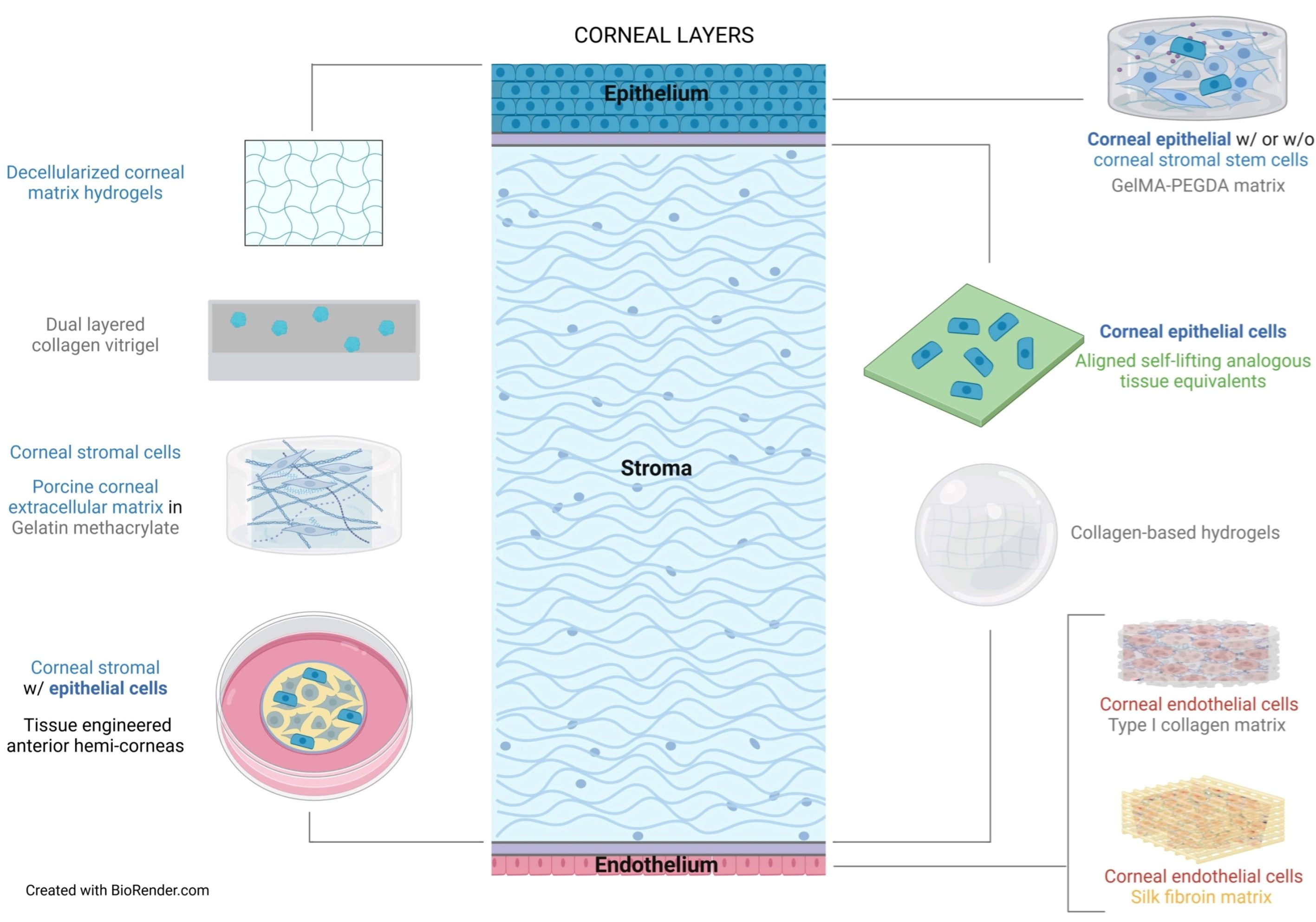
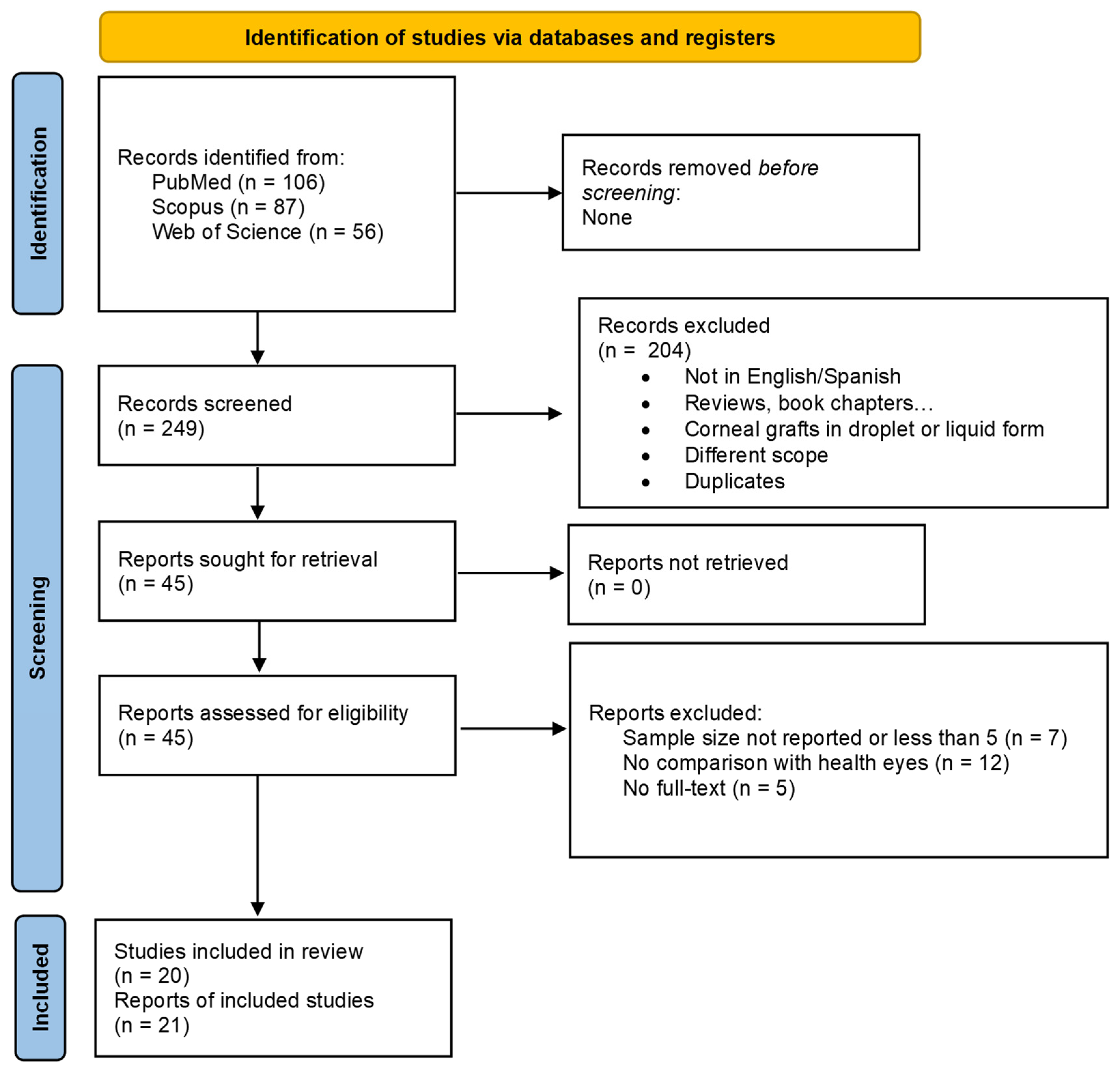
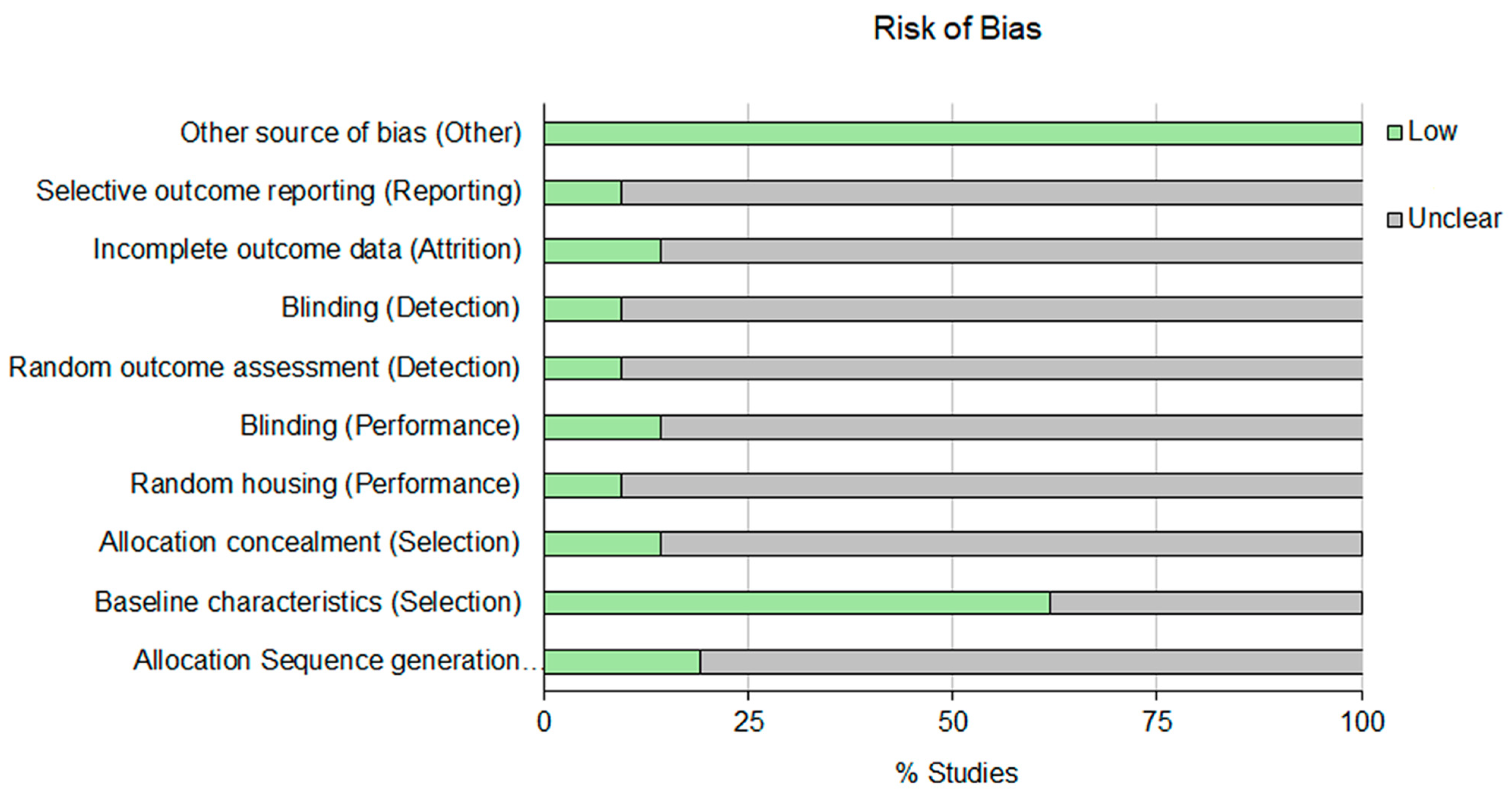
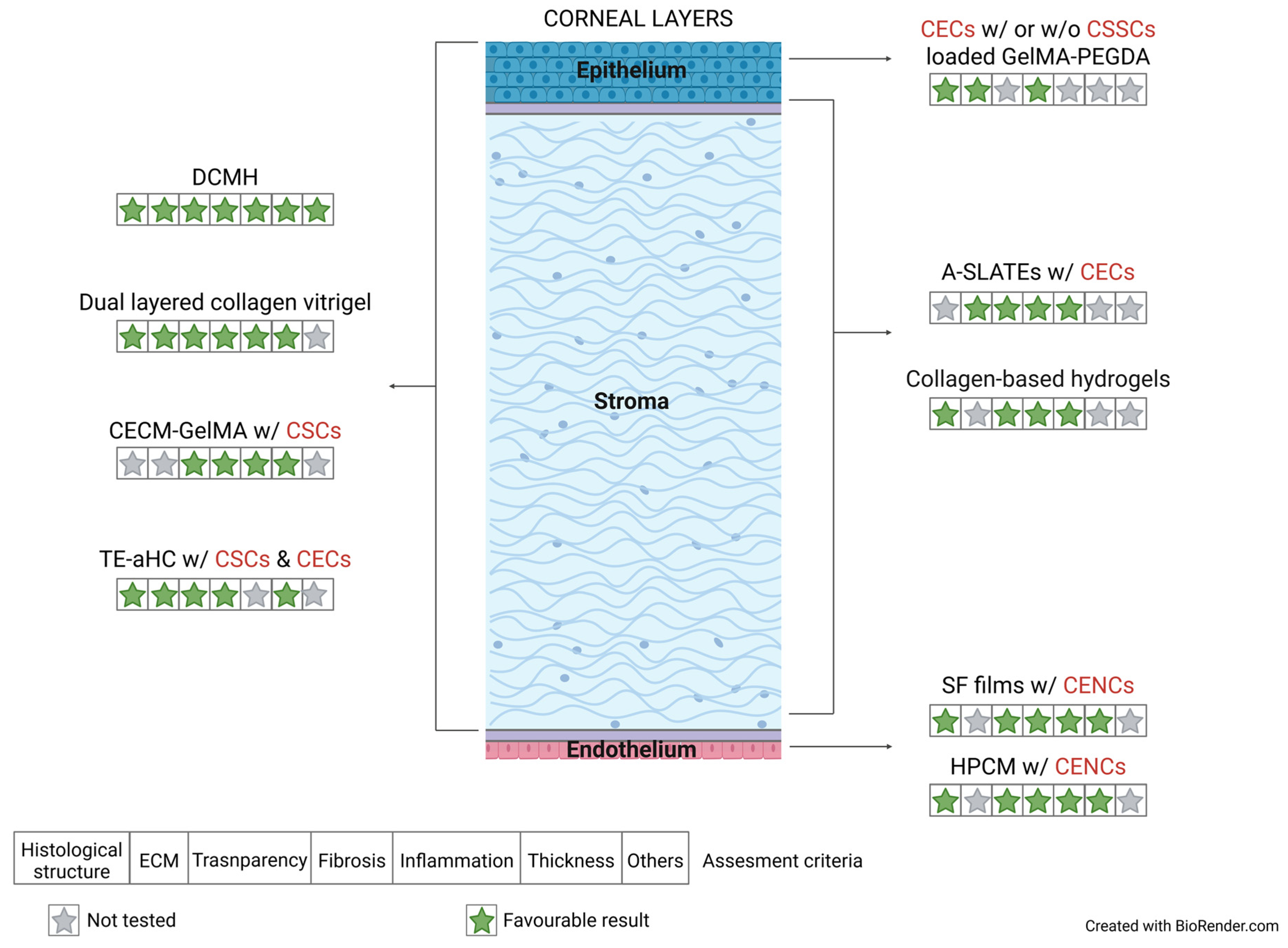
Advances in Corneal Tissue Engineering: Comparative Performance of Bioengineered Grafts in Animal Models



Abstract
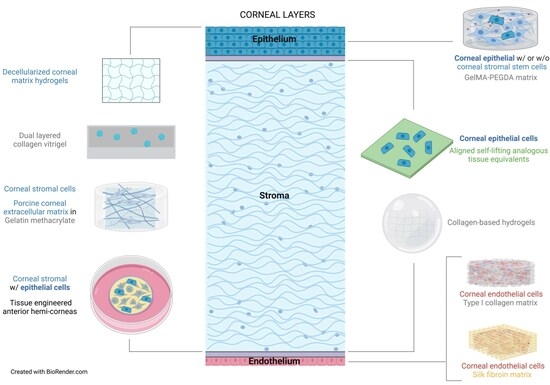
1. Introduction
2. Materials and Methods
2.1. Focus Question
2.2. PICO Strategy
- Population: Any animal model of corneal damage susceptible to keratoplasty, without species limitation;
- Intervention: Transplantation of corneal grafts to assess the efficacy of these structures in terms of restoring corneal function;
- Comparison: Studies where lateral or contralateral controls such as the healthy eye were considered;
- Outcomes: Parameters for assessing graft efficacy in terms of recovery of corneal functionality and/or biocompatibility such as corneal transparency or thickness measurements among others.
2.3. Search Strategy
2.4. Data Extraction
2.5. Risk of Bias Assessment
3. Results
3.1. Corneal Epithelial Layer
3.2. Corneal Epithelial and Stromal Layers
3.3. Corneal Stromal Layer
3.4. Corneal Endothelial Layer
3.5. Assessment of Risk of Bias
4. Discussion
5. Conclusions
Author Contributions
Funding
Institutional Review Board Statement
Informed Consent Statement
Data Availability Statement
Conflicts of Interest
References
- Flaxman, S.R.; Bourne, R.R.A.; Resnikoff, S.; Ackland, P.; Braithwaite, T.; Cicinelli, M.V.; Das, A.; Jonas, J.B.; Keeffe, J.; Kempen, J.H.; et al. Global causes of blindness and distance vision impairment 1990–2020: A systematic review and meta-analysis. Lancet Glob. Health 2017, 5, e1221–e1234. [Google Scholar] [CrossRef]
- Wang, E.Y.; Kong, X.; Wolle, M.; Gasquet, N.; Ssekasanvu, J.; Mariotti, S.P.; Bourne, R.; Taylor, H.; Resnikoff, S.; West, S. Global Trends in Blindness and Vision Impairment Resulting from Corneal Opacity 1984–2020: A Meta-analysis. Ophthalmology 2023, 130, 863–871. [Google Scholar] [CrossRef] [PubMed]
- Wilson, S.E.; Sampaio, L.P.; Shiju, T.M.; Hilgert, G.S.L.; de Oliveira, R.C. Corneal Opacity: Cell Biological Determinants of the Transition From Transparency to Transient Haze to Scarring Fibrosis, and Resolution, After Injury. Investig. Ophthalmol. Vis. Sci. 2022, 63, 22. [Google Scholar] [CrossRef]
- Villanueva, C.; Viviano, F.; García-Montero, M.; Lorente-Velázquez, A.; Martínez-Alberquilla, I.; Garzón, N. Forward-scattered and backward-scattered light in moderate keratoconus. Ophthalmic Physiol. Opt. 2023, 43, 752–759. [Google Scholar] [CrossRef]
- Burton, M.J.; Ramke, J.; Marques, A.P.; Bourne, R.R.A.; Congdon, N.; Jones, I.; Ah Tong, B.A.M.; Arunga, S.; Bachani, D.; Bascaran, C.; et al. The Lancet Global Health Commission on Global Eye Health: Vision beyond 2020. Lancet Glob. Health 2021, 9, e489–e551. [Google Scholar] [CrossRef]
- González-Gallardo, C.; Martínez-Atienza, J.; Mataix, B.; Muñoz-Ávila, J.I.; Daniel Martínez-Rodríguez, J.; Medialdea, S.; Ruiz-García, A.; Lizana-Moreno, A.; Arias-Santiago, S.; de la Rosa-Fraile, M.; et al. Successful restoration of corneal surface integrity with a tissue-engineered allogeneic implant in severe keratitis patients. Biomed. Pharmacother. 2023, 162, 114612. [Google Scholar] [CrossRef]
- Gain, P.; Jullienne, R.; He, Z.; Aldossary, M.; Acquart, S.; Cognasse, F.; Thuret, G. Global Survey of Corneal Transplantation and Eye Banking. JAMA Ophthalmol 2016, 134, 167–173. [Google Scholar] [CrossRef]
- Armitage, W.J.; Goodchild, C.; Griffin, M.D.; Gunn, D.J.; Hjortdal, J.; Lohan, P.; Murphy, C.C.; Pleyer, U.; Ritter, T.; Tole, D.M.; et al. High-risk Corneal Transplantation: Recent Developments and Future Possibilities. Transplantation 2019, 103, 2468–2478. [Google Scholar] [CrossRef]
- Dunker, S.L.; Armitage, W.J.; Armitage, M.; Brocato, L.; Figueiredo, F.C.; Heemskerk, M.B.A.; Hjortdal, J.; Jones, G.L.A.; Konijn, C.; Nuijts, R.; et al. Outcomes of corneal transplantation in Europe: Report by the European Cornea and Cell Transplantation Registry. J. Cataract Refract. Surg. 2021, 47, 780–785. [Google Scholar] [CrossRef] [PubMed]
- Chen, Z.; You, J.; Liu, X.; Cooper, S.; Hodge, C.; Sutton, G.; Crook, J.M.; Wallace, G.G. Biomaterials for corneal bioengineering. Biomed. Mater. 2018, 13, 032002. [Google Scholar] [CrossRef] [PubMed]
- Ionescu, A.M.; Alaminos, M.; de la Cruz Cardona, J.; de Dios García-López Durán, J.; González-Andrades, M.; Ghinea, R.; Campos, A.; Hita, E.; del Mar Pérez, M. Investigating a novel nanostructured fibrin-agarose biomaterial for human cornea tissue engineering: Rheological properties. J. Mech. Behav. Biomed. Mater. 2011, 4, 1963–1973. [Google Scholar] [CrossRef]
- Bonato, P.; Bagno, A. Replace or Regenerate? Diverse Approaches to Biomaterials for Treating Corneal Lesions. Biomimetics 2024, 9, 202. [Google Scholar] [CrossRef]
- Nosrati, H.; Alizadeh, Z.; Nosrati, A.; Ashrafi-Dehkordi, K.; Banitalebi-Dehkordi, M.; Sanami, S.; Khodaei, M. Stem cell-based therapeutic strategies for corneal epithelium regeneration. Tissue Cell 2021, 68, 101470. [Google Scholar] [CrossRef]
- Anitua, E.; Troya, M.; Zalduendo, M.; Tierno, R.; Alkhraisat, M.H.; Osinalde, N.; Fullaondo, A.; Zubiaga, A.M. Improving the mechanical and biological functions of cell sheet constructs: The interplay of human-derived periodontal ligament stem cells, endothelial cells and plasma rich in growth factors. Biomed. Pharmacother. 2024, 174, 116599. [Google Scholar] [CrossRef]
- Soroushzadeh, S.; Karamali, F.; Masaeli, E.; Atefi, A.; Nasr Esfahani, M.H. Scaffold free retinal pigment epithelium sheet engineering using modified alginate-RGD hydrogel. J. Biosci. Bioeng. 2022, 133, 579–586. [Google Scholar] [CrossRef]
- Khalili, M.; Asadi, M.; Kahroba, H.; Soleyman, M.R.; Andre, H.; Alizadeh, E. Corneal endothelium tissue engineering: An evolution of signaling molecules, cells, and scaffolds toward 3D bioprinting and cell sheets. J. Cell. Physiol. 2020, 236, 3275–3303. [Google Scholar] [CrossRef]
- Fullaondo, A.; Zalduendo, M.; Osinalde, N.; Alkhraisat, M.H.; Anitua, E.; Zubiaga, A.M. Impact of increasingly complex cell culture conditions on the proteome of human periodontal ligament stem cells. Regen. Med. 2025, 20, 21–34. [Google Scholar] [CrossRef] [PubMed]
- Javed, Z.; Daigavane, S. Harnessing Corneal Stromal Regeneration for Vision Restoration: A Comprehensive Review of the Emerging Treatment Techniques for Keratoconus. Cureus 2024, 16, e69835. [Google Scholar] [CrossRef] [PubMed]
- Soleimani, M.; Ebrahimi, Z.; Ebrahimi, K.S.; Farhadian, N.; Shahlaei, M.; Cheraqpour, K.; Ghasemi, H.; Moradi, S.; Chang, A.Y.; Sharifi, S.; et al. Application of biomaterials and nanotechnology in corneal tissue engineering. J. Int. Med. Res. 2023, 51, 3000605231190473. [Google Scholar] [CrossRef] [PubMed]
- Gómez-Fernández, H.; Alhakim-Khalak, F.; Ruiz-Alonso, S.; Díaz, A.; Tamayo, J.; Ramalingam, M.; Larra, E.; Pedraz, J.L. Comprehensive review of the state-of-the-art in corneal 3D bioprinting, including regulatory aspects. Int. J. Pharm. 2024, 662, 124510. [Google Scholar] [CrossRef]
- Pal, P.; Sambhakar, S.; Paliwal, S.; Kumar, S.; Kalsi, V. Biofabrication paradigms in corneal regeneration: Bridging bioprinting techniques, natural bioinks, and stem cell therapeutics. J. Biomater. Sci. Polym. Ed. 2024, 35, 717–755. [Google Scholar] [CrossRef]
- Hussain, Z.; Pei, R. Scaffold-free and scaffold-based cellular strategies and opportunities for cornea tissue engineering. Prog. Biomed. Eng. 2021, 3, 032003. [Google Scholar] [CrossRef]
- Cardona Jde, L.; Ionescu, A.M.; Gómez-Sotomayor, R.; González-Andrades, M.; Campos, A.; Alaminos, M.; Pérez Mdel, M. Transparency in a fibrin and fibrin-agarose corneal stroma substitute generated by tissue engineering. Cornea 2011, 30, 1428–1435. [Google Scholar] [CrossRef]
- Chandran, C.; Santra, M.; Rubin, E.; Geary, M.L.; Yam, G.H.-F. Regenerative Therapy for Corneal Scarring Disorders. Biomedicines 2024, 12, 649. [Google Scholar] [CrossRef] [PubMed]
- Sanchez-Avila, R.M.; Uribe-Badillo, E.E.; Sanz, J.F.; Muruzabal, F.; Jurado, N.; Alfonso-Bartolozzi, B.; Alfonso, J.F.; Baamonde, B.; Anitua, E.; Merayo-Lloves, J. Plasma rich in growth factors versus Mitomycin C in photorefractive keratectomy. Medicine 2021, 100, e24139. [Google Scholar] [CrossRef] [PubMed]
- Ibares-Frías, L.; Gallego-Muñoz, P.; Orive, G.; Anitua, E.; Cantalapiedra-Rodríguez, R.; Merayo-Lloves, J.; Martínez-García, M.C. Potential Effect of Plasma Rich in Growth Factors-Endoret in Stromal Wound Healing in Additive Surgery. Ophthalmic Res. 2020, 63, 203–212. [Google Scholar] [CrossRef] [PubMed]
- Anitua, E.; Muruzabal, F.; Alcalde, I.; Merayo-Lloves, J.; Orive, G. Plasma rich in growth factors (PRGF-Endoret) stimulates corneal wound healing and reduces haze formation after PRK surgery. Exp. Eye Res. 2013, 115, 153–161. [Google Scholar] [CrossRef]
- Xiong, S.; Gao, H.; Qin, L.; Jia, Y.G.; Ren, L. Engineering topography: Effects on corneal cell behavior and integration into corneal tissue engineering. Bioact. Mater. 2019, 4, 293–302. [Google Scholar] [CrossRef]
- Orash Mahmoud Salehi, A.; Soleimani, M.; Rios, K.; Ortega, W.; Mamidi, N. Advanced 3D Materials for Corneal Stroma Regeneration: A Preclinical Progress. J. Mater. Chem. B 2025, 13, 5980–6020. [Google Scholar] [CrossRef]
- Korkmaz, I.; Gurdal, M.; Arici, M.; Barut Selver, O. Beyond transplants: Current and future therapeutic potential of amniotic membrane extract (AME) in ophthalmology. Regen. Med. 2025, 20, 97–109. [Google Scholar] [CrossRef]
- Wu, K.Y.; Belaiche, M.; Wen, Y.; Choulakian, M.Y.; Tran, S.D. Advancements in Polymer Biomaterials as Scaffolds for Corneal Endothelium Tissue Engineering. Polymers 2024, 16, 2882. [Google Scholar] [CrossRef]
- Pramanik, B.; Islam, M.M.; Patra, H.K. Rational design of peptide-based implants for corneal bioengineering. Curr. Opin. Biotechnol. 2023, 81, 102947. [Google Scholar] [CrossRef]
- De Miguel, M.P.; Cadenas-Martin, M.; Stokking, M.; Martin-Gonzalez, A.I. Biomedical Application of MSCs in Corneal Regeneration and Repair. Int. J. Mol. Sci. 2025, 26, 695. [Google Scholar] [CrossRef]
- Kobal, N.; Marzidovšek, M.; Schollmayer, P.; Maličev, E.; Hawlina, M.; Marzidovšek, Z.L. Molecular and Cellular Mechanisms of the Therapeutic Effect of Mesenchymal Stem Cells and Extracellular Vesicles in Corneal Regeneration. Int. J. Mol. Sci. 2024, 25, 11121. [Google Scholar] [CrossRef]
- Sarkar, S.; Panikker, P.; D’Souza, S.; Shetty, R.; Mohan, R.R.; Ghosh, A. Corneal Regeneration Using Gene Therapy Approaches. Cells 2023, 12, 1280. [Google Scholar] [CrossRef] [PubMed]
- Di Girolamo, N. Biologicals and Biomaterials for Corneal Regeneration and Vision Restoration in Limbal Stem Cell Deficiency. Adv. Mater. 2024, 36, e2401763. [Google Scholar] [CrossRef] [PubMed]
- Wang, M.; Li, Y.; Wang, H.; Li, M.; Wang, X.; Liu, R.; Zhang, D.; Xu, W. Corneal regeneration strategies: From stem cell therapy to tissue engineered stem cell scaffolds. Biomed. Pharmacother. 2023, 165, 115206. [Google Scholar] [CrossRef]
- Hooijmans, C.R.; Rovers, M.M.; de Vries, R.B.; Leenaars, M.; Ritskes-Hoitinga, M.; Langendam, M.W. SYRCLE’s risk of bias tool for animal studies. BMC Med. Res. Methodol. 2014, 14, 43. [Google Scholar] [CrossRef] [PubMed]
- Wang, L.; Nie, X.; Wei, Y.; Chen, Q.; Sun, Y.; Zhao, X.; Xu, X.; Liu, W.; Liang, Q. 3D printed biomimetic bilayer limbal implants for regeneration of the corneal structure in limbal stem cell deficiency. Acta Biomater. 2025, 193, 157–170. [Google Scholar] [CrossRef]
- Chameettachal, S.; Venuganti, A.; Parekh, Y.; Prasad, D.; Joshi, V.P.; Vashishtha, A.; Basu, S.; Singh, V.; Bokara, K.K.; Pati, F. Human cornea-derived extracellular matrix hydrogel for prevention of post-traumatic corneal scarring: A translational approach. Acta Biomater. 2023, 171, 289–307. [Google Scholar] [CrossRef]
- Zhang, M.; Yang, F.; Han, D.; Zhang, S.Y.; Dong, Y.; Li, X.; Ling, L.; Deng, Z.; Cao, X.; Tian, J.; et al. 3D bioprinting of corneal decellularized extracellular matrix: GelMA composite hydrogel for corneal stroma engineering. Int. J. Bioprint. 2023, 9, 774. [Google Scholar] [CrossRef] [PubMed]
- Fernández-Pérez, J.; Madden, P.W.; Brady, R.T.; Nowlan, P.F.; Ahearne, M. The effect of prior long-term recellularization with keratocytes of decellularized porcine corneas implanted in a rabbit anterior lamellar keratoplasty model. PLoS ONE 2021, 16, e0245406. [Google Scholar] [CrossRef]
- Rico-Sánchez, L.; Garzón, I.; González-Andrades, M.; Ruíz-García, A.; Punzano, M.; Lizana-Moreno, A.; Muñoz-Ávila, J.I.; Sánchez-Quevedo, M.D.C.; Martínez-Atienza, J.; Lopez-Navas, L.; et al. Successful development and clinical translation of a novel anterior lamellar artificial cornea. J. Tissue Eng. Regen. Med. 2019, 13, 2142–2154. [Google Scholar] [CrossRef]
- Park, J.; Lee, K.P.; Kim, H.; Park, S.; Wijesinghe, R.E.; Lee, J.; Han, S.; Lee, S.; Kim, P.; Cho, D.W.; et al. Biocompatibility evaluation of bioprinted decellularized collagen sheet implanted in vivo cornea using swept-source optical coherence tomography. J. Biophotonics 2019, 12, e201900098. [Google Scholar] [CrossRef]
- Li, Z.; Goh, T.W.; Yam, G.H.; Thompson, B.C.; Hu, H.; Setiawan, M.; Sun, W.; Riau, A.K.; Tan, D.T.; Khor, K.A.; et al. A sintered graphene/titania material as a synthetic keratoprosthesis skirt for end-stage corneal disorders. Acta Biomater. 2019, 94, 585–596. [Google Scholar] [CrossRef]
- Hong, S.; Yun, J.H.; Kim, E.S.; Kim, J.S.; Tchah, H.; Hwang, C. Human Conjunctival Epithelial Sheets Grown on Poly(Lactic-Co-Glycolic) Acid Membranes and Cocultured With Human Tenon’s Fibroblasts for Corneal Repair. Investig. Ophthalmol. Vis. Sci. 2018, 59, 1475–1485. [Google Scholar] [CrossRef]
- Syed-Picard, F.N.; Du, Y.; Hertsenberg, A.J.; Palchesko, R.; Funderburgh, M.L.; Feinberg, A.W.; Funderburgh, J.L. Scaffold-free tissue engineering of functional corneal stromal tissue. J. Tissue Eng. Regen. Med. 2018, 12, 59–69. [Google Scholar] [CrossRef]
- Vázquez, N.; Rodríguez-Barrientos, C.A.; Aznar-Cervantes, S.D.; Chacón, M.; Cenis, J.L.; Riestra, A.C.; Sánchez-Avila, R.M.; Persinal, M.; Brea-Pastor, A.; Fernández-Vega Cueto, L.; et al. Silk Fibroin Films for Corneal Endothelial Regeneration: Transplant in a Rabbit Descemet Membrane Endothelial Keratoplasty. Investig. Ophthalmol. Vis. Sci. 2017, 58, 3357–3365. [Google Scholar] [CrossRef]
- Gouveia, R.M.; González-Andrades, E.; Cardona, J.C.; González-Gallardo, C.; Ionescu, A.M.; Garzon, I.; Alaminos, M.; González-Andrades, M.; Connon, C.J. Controlling the 3D architecture of Self-Lifting Auto-generated Tissue Equivalents (SLATEs) for optimized corneal graft composition and stability. Biomaterials 2017, 121, 205–219. [Google Scholar] [CrossRef] [PubMed]
- Hyun, D.W.; Kim, Y.H.; Koh, A.Y.; Lee, H.J.; Wee, W.R.; Jeon, S.; Kim, M.K. Characterization of biomaterial-free cell sheets cultured from human oral mucosal epithelial cells. J. Tissue Eng. Regen. Med. 2014, 11, 743–750. [Google Scholar] [CrossRef] [PubMed]
- Vázquez, N.; Chacón, M.; Rodríguez-Barrientos, C.A.; Merayo-Lloves, J.; Naveiras, M.; Baamonde, B.; Alfonso, J.F.; Zambrano-Andazol, I.; Riestra, A.C.; Meana, Á. Human Bone Derived Collagen for the Development of an Artificial Corneal Endothelial Graft. In Vivo Results in a Rabbit Model. PLoS ONE 2016, 11, e0167578. [Google Scholar] [CrossRef] [PubMed]
- Hashimoto, Y.; Hattori, S.; Sasaki, S.; Honda, T.; Kimura, T.; Funamoto, S.; Kobayashi, H.; Kishida, A. Ultrastructural analysis of the decellularized cornea after interlamellar keratoplasty and microkeratome-assisted anterior lamellar keratoplasty in a rabbit model. Sci. Rep. 2016, 6, 27734. [Google Scholar] [CrossRef]
- Rafat, M.; Xeroudaki, M.; Koulikovska, M.; Sherrell, P.; Groth, F.; Fagerholm, P.; Lagali, N. Composite core-and-skirt collagen hydrogels with differential degradation for corneal therapeutic applications. Biomaterials 2016, 83, 142–155. [Google Scholar] [CrossRef]
- Nie, X.; Tang, Y.; Wu, T.; Zhao, X.; Xu, Z.; Yang, R.; Sun, Y.; Wu, B.; Han, Q.; Hui, J.; et al. 3D printing sequentially strengthening high-strength natural polymer hydrogel bilayer scaffold for cornea regeneration. Regen. Biomater. 2024, 11, rbae012. [Google Scholar] [CrossRef]
- Liu, J.; Li, Z.; Li, J.; Liu, Z. Application of benzonase in preparation of decellularized lamellar porcine corneal stroma for lamellar keratoplasty. J. Biomed. Mater. Res. Part A 2019, 107, 2547–2555. [Google Scholar] [CrossRef]
- Blanco-Elices, C.; Morales-Alvarez, C.; Chato-Astrain, J.; González-Gallardo, C.; Avila-Fernández, P.; Campos, F.; Carmona, R.; Martín-Piedra, M.A.; Garzón, I.; Alaminos, M. Development of stromal differentiation patterns in heterotypical models of artificial corneas generated by tissue engineering. Front. Bioeng. Biotechnol. 2023, 11, 1124995. [Google Scholar] [CrossRef]
- Wang, X.K.; Majumdar, S.; Soiberman, U.; Webb, J.N.; Chung, L.; Scarcelli, G.; Elisseeff, J.H. Multifunctional synthetic Bowman’s membrane-stromal biomimetic for corneal reconstruction. Biomaterials 2020, 241, 119880. [Google Scholar] [CrossRef] [PubMed]
- Xu, B.; Song, Z.; Fan, T.J. Construction of Anterior Hemi-Corneal Equivalents Using Nontransfected Human Corneal Cells and Transplantation in Dog Models. Artif. Organs 2017, 41, 1004–1016. [Google Scholar] [CrossRef]
- Hussain, N.A.; Figueiredo, F.C.; Connon, C.J. Use of biomaterials in corneal endothelial repair. Ther. Adv. Ophthalmol. 2021, 13, 25158414211058249. [Google Scholar] [CrossRef]
- Fernandez-Perez, J.; Ahearne, M. Decellularization and recellularization of cornea: Progress towards a donor alternative. Methods 2020, 171, 86–96. [Google Scholar] [CrossRef] [PubMed]
- Lin, L.; Jin, X. The development of tissue engineering corneal scaffold: Which one the history will choose? Ann. Eye Sci. 2018, 3, 6. [Google Scholar] [CrossRef]
- Chen, Q.; Pei, Y.; Tang, K.; Albu-Kaya, M.G. Structure, extraction, processing, and applications of collagen as an ideal component for biomaterials—A review. Collagen Leather 2023, 5, 20. [Google Scholar] [CrossRef]
- Dong, C.; Lv, Y. Application of collagen ccaffold in tissue engineering: Recent advances and new perspectives. Polymers 2016, 8, 42. [Google Scholar] [CrossRef]
- Balters, L.; Reichl, S. 3D bioprinting of corneal models: A review of the current state and future outlook. J. Tissue Eng. 2023, 14, 20417314231197793. [Google Scholar] [CrossRef]
- Jia, S.; Bu, Y.; Lau, D.A.; Lin, Z.; Sun, T.; Lu, W.W.; Lu, S.; Ruan, C.; Chan, C.J. Advances in 3D bioprinting technology for functional corneal reconstruction and regeneration. Front. Bioeng. Biotechnol. 2022, 10, 1065460. [Google Scholar] [CrossRef]
- Monostori, T.; Szűcs, D.; Lovászi, B.; Kemény, L.; Veréb, Z. Advances in tissue engineering and 3D bioprinting for corneal regeneration. Int. J. Bioprint. 2024, 10, 1669. [Google Scholar] [CrossRef]
- Al-Shami, K.; Almurabi, S.; Pop, A.; Vincent, C.; Popescu, A.; Pop, I.C.; Bader, N.S.; Faour, H.; Barhoush, R.; Karaja, S. Emerging technologies in corneal transplantation: Innovations, challenges, and global implications. Transplant. Rep. 2025, 10, 100180. [Google Scholar] [CrossRef]
- Xie, Z.J.; Yuan, B.W.; Chi, M.M.; Hong, J. Focus on seed cells: Stem cells in 3D bioprinting of corneal grafts. Front. Bioeng. Biotechnol. 2024, 12, 1423864. [Google Scholar] [CrossRef]
- Anitua, E. Plasma rich in growth factors: Preliminary results of use in the preparation of future sites for implants. Int. J. Oral Maxillofac. Implant. 1999, 14, 529–535. [Google Scholar]
- Anitua, E.; Troya, M.; Falcon-Pérez, J.M.; López-Sarrio, S.; González, E.; Alkhraisat, M.H. Advances in Platelet Rich Plasma-Derived Extracellular Vesicles for Regenerative Medicine: A Systematic-Narrative Review. Int. J. Mol. Sci. 2023, 24, 13043. [Google Scholar] [CrossRef] [PubMed]
- Anitua, E.; Muruzabal, F.; de la Fuente, M.; Merayo, J.; Durán, J.; Orive, G. Plasma Rich in Growth Factors for the Treatment of Ocular Surface Diseases. Curr. Eye Res. 2016, 41, 875–882. [Google Scholar] [CrossRef] [PubMed]
- Verma, N.; Khare, D.; Poe, A.J.; Amador, C.; Ghiam, S.; Fealy, A.; Ebrahimi, S.; Shadrokh, O.; Song, X.-Y.; Santiskulvong, C.; et al. MicroRNA and Protein Cargos of Human Limbal Epithelial Cell-Derived Exosomes and Their Regulatory Roles in Limbal Stromal Cells of Diabetic and Non-Diabetic Corneas. Cells 2023, 12, 2524. [Google Scholar] [CrossRef] [PubMed]
- Verma, N.; Arora, S.; Singh, A.K.; Kumar, A. Extracellular Vesicle-Associated miRNAs in Cornea Health and Disease: Diagnostic Potential and Therapeutic Implications. Targets 2025, 3, 32. [Google Scholar] [CrossRef]



| Corneal Layer to Be Regenerated | Reference | Graft | Bioprinting | Scaffold Matrix Composition | Cell Inclusion | Toxicologic/Biocompatibility Assays | Cell Viability/Functionality In Vitro Assays | Scaffold Suturability |
|---|---|---|---|---|---|---|---|---|
| EPITHELIUM | Wang L et al., 2025 [39] | GelMA-PEGDA | ✓ | Gelatin methacrylate and poly (ethylene glycol) diacrylate | hCECs and hCSSCs | ✗ | Live/dead staining Ki67, CK3 y LUM | ✓ |
| Hong S et al., 2018 [46] | PLGA | ✗ | Poly(lactic-co-glycolic) acid membranes | hCjECs and hTFs | ✗ | Live/dead assay at 7 and 14 days. Cell proliferation and gene expression were also determined. | ✓ | |
| Hyun DW et al., 2014 [50] | Biomaterial-free cell sheet | ✗ | ✗ | Human oral mucosal epithelial cells and limbal epithelial cells | ✗ | Viability and proliferative capacity assay | ✗ | |
| EPITHELIUM and STROMA | Nie X et al., 2024 [54] | rhEGF/TSA-loaded bilayer graft | ✓ | Concentrated aqueous solutions of Gel/Alg-CDH. | ✗ | ✗ | NA | ✓ |
| Chameettachal S et al., 2023 [40] | DCMH | ✗ | Human and bovine decellularized corneas | ✗ | ✓ | NA | ✗ | |
| Zhang M et al., 2023 [41] | CECM-GelMA | ✓ | Gelatin methacrylate and corneal decellularized extracellular matrix from fresh porcine corneas | hCFs | ✓ | Live/dead assay after culturing for 1, 7 and 14 days | ✗ | |
| Blanco-Elices C et al., 2023 [56] | OAC HAC | ✗ | Nanostructured fibrin-agarose biomaterial | Primary cell cultures of corneal stromal cells (immersed) Primary cell cultures of human corneal epithelial cells (surface) andHWJSC (surface) | ✓ | ✗ | ✓ | |
| Fernández-Pérez J et al., 2021 [42] | DPC | ✗ | Decellularized porcine corneas | Isolated human stromal keratocytes (fibroblasts) | ✗ | Stromal markers detection: ALDH3A1, CD34, KERA, decorin, LUM and Col-I | ✓ | |
| Wang XK et al., 2020 [57] | Dual-layered collagen vitrigel | ✗ | sBM and a sSL containing tissue-derived ECM microparticles | ✗ | ✗ | NA | ✓ | |
| Rico-Sánchez L et al., 2019 [43] | TEAHC | ✗ | Fibrin–agarose nanostructured sheets | Primary cell cultures of epithelial cells and stromal keratocytes | ✓ | EPXMA to determine cell viability. mRNA expression of the cell proliferation marker PCNA, the pro-apoptotic gene CASP9 and crystallin gene LDHA, involved in corneal transparency | ✓ | |
| Park J et al., 2019 [44] | 3D-BDCS | ✓ | Decellularized corneal ECM | hTMSCs differentiated to keratocytes | ✓ | NM | ✓ | |
| Liu J et al., 2019 [55] | DLPCS | ✗ | Decellularized lamellar porcine corneal stroma | ✗ | ✗ | NA | ✓ | |
| Xu B et al., 2017 [58] | TE-aHC | ✗ | aPCS | ntHCS and ntHCEP | ✗ | Immunofluorescent staining for CK3, vimentin, ALDH3A1, E-cadherin, connexin 43, integrin b1, Na1/K1-ATPase a1 polypeptide, and Ca21-ATPase | ✓ | |
| STROMA | Li Z et al., 2019 [45] | 1rGO/TiO2 1rLCGO/TiO2 | ✗ | Reduced graphene oxide-reinforced titania-based composites | ✗ | ✓ | NM | ✓ |
| Syed-Picard FN et al., 2018 [47] | Cell tissue sheet | ✗ | ✗ | hCSSC | ✗ | Structural evaluation, immunostaining for ECM: Col-I, Col-V and KERA | ✗ | |
| Gouveia RM et al., 2017 [49] | Self-Lifting Analogous Tissue Equivalents: Aligned: A-SLATEs Randomly oriented: R-SLATEs | ✗ | Corneal stromal tissues formed by cells and deposited ECM | Human corneal epithelial (for seeding onto the scaffold) and stromal cells (for obtaining the scaffold) | ✗ | Live/Dead Cell double staining kit | ✓ | |
| Hashimoto Y et al., 2016 [52] | DPC-HHP | ✗ | Porcine cornea decellularized by HHP method. | ✗ | ✗ | NA | ✓ | |
| Rafat M et al., 2016 [53] | MBPC thin MBPC thick HBPC MHBPC thick | ✗ | Composite collagen-based hydrogels with a centrally transparent core and embedded peripheral skirt of adjustable transparency and degradability | ✗ | ✓ (in vitro) | NA | ✗ | |
| ENDOTHELIUM | Vázquez N et al., 2017 [48] | SF films | ✗ | SF-based artificial graft | rCENCs | ✗ | SEM (polygonal morphology) Staining for ZO-1 and Naþ/Kþ ATPase | ✓ |
| Vázquez N et al., 2016 [51] | HPCM | ✗ | Human purified type I collagen membrane, isolated from remnant cancellous bone chips | Rabbit corneal endothelial cells | ✗ | ✗ | ✓ |
| Graft | Graft Options | Outcomes Summary | ||||||
|---|---|---|---|---|---|---|---|---|
| Inflammation | Fibrosis | Neovascularization | Transparency | Thickness | Histological Examination | |||
| Structural Features | ECM Components | |||||||
| GelMA-PEGDA [39] | CEC/CSSC-loaded (A) CEC-loaded (B) cell-free (C) | NT | ✗ (A, B) ✓ (C) | ✗ (A, B) ✓ (C) | NT | NT | Epithelial cells arranged regularly (A, B) No goblet cells (conjunctive) (A, B) Goblet cells (C) | NT |
| PLGA [46] | PLGA + epithelial tissue sheet (A) PLGA (B) | NT | NT | NT | NT | Partially degraded (B) | Re-epithelialization (A) | NT |
| Biomaterial-free cell sheet [50] | with fibrin support (A) without fibrin support (B) | NT | NT | NT | NT | NT | Positive expression of p63, ABCG2 and Ki-67 (B) multiple layers of epithelial cells without visible goblet (B) | K3, K4 and K13 were partially expressed in the transplanted epithelial cell layers (B). |
| Graft | Graft Versions | Cellularized Option | Outcomes Summary | ||||||
|---|---|---|---|---|---|---|---|---|---|
| Inflammation | Fibrosis | Optical Properties | Transparency | Thickness | Histological Examination | ||||
| Structural Features | ECM Components | ||||||||
| DCMH [40] | NT | ✗ | ✗ | ✗ | Stromal reflectivity and mean radius of curvature measurement close to pre-operative values. | Recovered. | No significant differences. | Similar total number of epithelial cells. Densely packed and highly organized ECM fibrils in the entire cornea. | Stromal matrix synthesis and restoration of milieu. Col I detection and increased LUM expression. |
| CECM-GelMA [41] | NT | ✓ | ✗ | ✗ | NT | Recovered at 2 months | No significant differences. | NT | NT |
| DPC [42] | DPC (A) DPC + human stromal keratocytes (B) | ✓ (B) | NT | ✓ (A, B). | NT | Did not return (A, B). | NT | Complete epithelial covering (A, B). Cells sparsely distributed in the central scaffold (A, B). Increased density of cells in the anterior area (regeneration) (A, B). | Positive cell staining for ALDH1A1 in the epithelium, the native stroma and endothelium (A, B). |
| TEAHC [43] | NT | ✓ | Initial inflammatory process disappearing 3 to 6 months post-surgery. | NT | NT | Improvement of transparency levels. | NT | Graft properly integrated, displaying a proper structural integrity and cells inside keeping their adequate corneal differentiation status. | NT |
| 3D-BDCS [44] | NT | ✓ | Corneal edema decreased over time. | NT | NT | NT | Overall thickness reduction. | NT | NT |
| rhEGF/TSA-loaded bilayer graft [54] | rhEGF/TSA-loaded bilayer graft (A) Hydrogel scaffold (B) | ✗ | NT | ✗ (A). ✓ (B). | NT | Maintained a good optical transparency (A, B). | Epithelial layer thickness higher than (B) and comparable to (A) normal tissue. | An integrated epithelium-stroma structure (A, B). Re-epithelialization (A, B). Epithelial cells more tightly aligned (A). Appropriate stroma thickness (A, B). | Regenerated corneal stroma consisting of collagen fibers (A, B). Epithelial layers expressed CK3 protein (A, B). Parallel Col I fibers and LUM expression (A). |
| DLPCS [55] | NT | ✗ | Slight edema at 1-month post-operation gradually disappeared. Without activated cells notably infiltrating the stroma. | NT | NT | At 24 ± 5 days sufficient transparency. | Decreased gradually to a normal thickness. | Lower stromal and epithelial cell density. | NT |
| Nanostructured fibrin-agarose biomaterials with corneal stromal cells (immersed) and an epithelial-like layer on top [56] | OAC (A) HAC (B) | ✓ (A, B) | NT | NT | NT | Opacity comparable to control native corneas (A). Opacity decreased with time (B). | NT | Appropriate stroma and epithelial layers (A, B). Well-differentiated epithelium with numerous cell strata (A, B). Dense corneal stroma consisting of numerous lamellae of well-organized fibers with abundant stromal cells (A, B). | Well differentiated stroma (increased contents of collagen, proteoglycans, decorin, KERA and LUM, higher levels of maturation and spatial organization) (A, B). |
| Dual-layered collagen vitrigel [57] | NT | ✗ | ✗ | ✗ | NT | Remained clear at 30 days post-surgery. | Complete restoration of corneal thickness. | Complete re-epithelialization. | Functional multilayer with limbal stem cell marker p63. Expression through the layers of K3 and K12 epithelial markers and tight junction protein ZO-1 K14 expressed in the lower layer. |
| TE-aHC (tissue-engineered human anterior hemi-cornea) [58] | TE-aHC (A) aPCS (B) | ✓ (A) ✗ (B) | Corneal edema at 1-month post-surgery decreased (A). Intense corneal edema and neovascularization (B). | ✗ (A, B) | NT | Almost identical to normal control eyes from day 60 to day 360 (A). Remained turbid (B). | No significant difference (A). Significantly thinner (B). | Native-like epithelium together with a regularly arranged stroma with sparsely distributed keratocytes (A). Few keratocytes but a neoregenerated epithelium (B). Appropriate cell morphology (A). | Appropriate amount and distribution pattern of GAGs and collagen fibrils (A, B). |
| Graft | Graft Versions | Cellularized Option | Outcomes Summary | |||||
|---|---|---|---|---|---|---|---|---|
| Inflammation | Fibrosis | Optical Properties | Transparency | Histological Examination | ||||
| Structural Features | ECM Components | |||||||
| Reduced graphene oxide-reinforced titania-based composite [45] | 1rGO/TiO2 (A) 1rLCGO/TiO2 (B) | ✗ (A, B) | ✗ | ✗ | NT | NT | Epithelium remained intact (A, B). Appropriate stromal cell density and morphology (A, B). | NT |
| Cell tissue sheet (CSSC from human limbal tissue and differentiated into keratocytes) [47] | NT | ✓ | NT | NT | Normal light scattering of corneal stromal tissue containing tissue sheets. | Transplanted corneas qualitatively appear transparent. | Transplanted corneas maintained a structure similar to normal corneas. | Human cells in mouse eyes were functional (producing keratocan). |
| SLATEs [49] | In terms of tissue organization: aligned, A-SLATEs (A) randomly oriented, R-SLATEs (B). | ✓ (A, B) | ✗ | ✗ (A) ✓ (B) | NT | Corneas remained clear and haze-free (A, B). | NT | Grafts showed appropriate vimentin-positive cells (A, B). |
| DPC-HHP [52] | NT | ✗ | ✗ | NT | NT | Slight disorganization of collagen fibrils did not affect corneal transparency. | Graft did not undergo remodeling. | NT |
| DPC-HHP [52] | NT | ✗ | ✗ | NT | NT | Transparency was maintained. | Graft did not undergo remodeling. Highly organized graft structure and similar to the host cornea. | NT |
| Composite collagen-based hydrogels [53] | MBPC thin (A) MBPC thick (B) HBPC (C) MHBPC thick (D) | ✗ (A, B, C, D) | Initial graft population with CD45—bone marrow-derived cells such as macrophages (A, B, C, D). | Initial graft population with host cells (α-SMA—myofibroblasts). | NT | Postoperative haze in biomaterial-implanted corneas diminished over time (A, B, C, D). | Postoperatively coverage of implanted corneas by epithelium (A, B, C, D). The corneal epithelium derives innervation (A, B, C, D). No significant difference in sub-basal nerve density comparing to native cornea (A, B, C, D) | NT |
| Graft | Graft Versions | Outcomes Summary | |||||
|---|---|---|---|---|---|---|---|
| Inflammation | Fibrosis | Transparency | Thickness | Histological Examination | |||
| Structural Features | ECM Components | ||||||
| SF films [48] | SF films with rabbit CENCs (A) Acellular SF (B) | ✗ (A) Corneal edema (B) | ✗ (A) Slightly marked fibrotic tissue (B) | Transparency was restored (A). Transparency was not restored (B) | Normal corneal thickness (A). Enhancement in corneal thickness (B) | A monolayer of rabbit CENCs showed ZO-1 and Naþ/Kþ ATPase markers, (proper intercellular junctions and cellular pump function) (A). Normal endothelial cell count (A). | NT |
| HPCM, isolated from remnant cancellous bone chips [51] | HPCM with CENCs (A) Acellular HPCM (B) | ✗ (A) Corneal edema (B) | ✗ (A) Slightly marked fibrotic tissue (B) | Transparency at day 10 subsequently maintained (A). Corneal transparency was not restored (B). | Normal corneal thickness (A). Enhancement in corneal thickness (loss of corneal endothelial functionality) (B) | Graft attached tightly to the corneal stroma. A continuous monolayer of rabbit CENCs with normal morphology and phenotypical markers (ZO-1 and Na+/K+ ATPase) (A). Loss of corneal endothelial functionality (B). | NT |
Disclaimer/Publisher’s Note: The statements, opinions and data contained in all publications are solely those of the individual author(s) and contributor(s) and not of MDPI and/or the editor(s). MDPI and/or the editor(s) disclaim responsibility for any injury to people or property resulting from any ideas, methods, instructions or products referred to in the content. |
© 2025 by the authors. Published by MDPI on behalf of the Lithuanian University of Health Sciences. Licensee MDPI, Basel, Switzerland. This article is an open access article distributed under the terms and conditions of the Creative Commons Attribution (CC BY) license.
Share and Cite
Anitua, E.; Zalduendo, M.; Alkhraisat, M.H. Advances in Corneal Tissue Engineering: Comparative Performance of Bioengineered Grafts in Animal Models. Medicina 2026, 62, 80. https://doi.org/10.3390/medicina62010080
Anitua E, Zalduendo M, Alkhraisat MH. Advances in Corneal Tissue Engineering: Comparative Performance of Bioengineered Grafts in Animal Models. Medicina. 2026; 62(1):80. https://doi.org/10.3390/medicina62010080
Chicago/Turabian StyleAnitua, Eduardo, Mar Zalduendo, and Mohammad H. Alkhraisat. 2026. "Advances in Corneal Tissue Engineering: Comparative Performance of Bioengineered Grafts in Animal Models" Medicina 62, no. 1: 80. https://doi.org/10.3390/medicina62010080
APA StyleAnitua, E., Zalduendo, M., & Alkhraisat, M. H. (2026). Advances in Corneal Tissue Engineering: Comparative Performance of Bioengineered Grafts in Animal Models. Medicina, 62(1), 80. https://doi.org/10.3390/medicina62010080