Article

The Effect of Iodinated Contrast Media Sensitivity on the Prognosis of Patients with STEMI

1
Azrieli Faculty of Medicine, Bar-Ilan University, Safed 5290002, Israel
2
The Kittner-Davidai Division of Cardiovascular Medicine and Surgery, Tzafon Medical Center, Ramat Gan 5290002, Israel
3
Division of Cardiovascular Medicine, Hillel Yaffe Medical Center, Hadera 38100, Israel
4
The Ruth and Bruce Rappaport Faculty of Medicine, Technion, Haifa 3109601, Israel
*
Author to whom correspondence should be addressed.
Medicina 2024, 60(6), 973; https://doi.org/10.3390/medicina60060973

Submission received: 24 April 2024 / Revised: 23 May 2024 / Accepted: 5 June 2024 / Published: 12 June 2024
(This article belongs to the Special Issue Advances in Acute Coronary Syndrome Diagnosis and Management)

Abstract

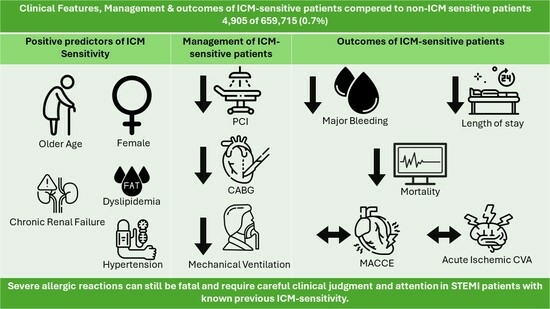
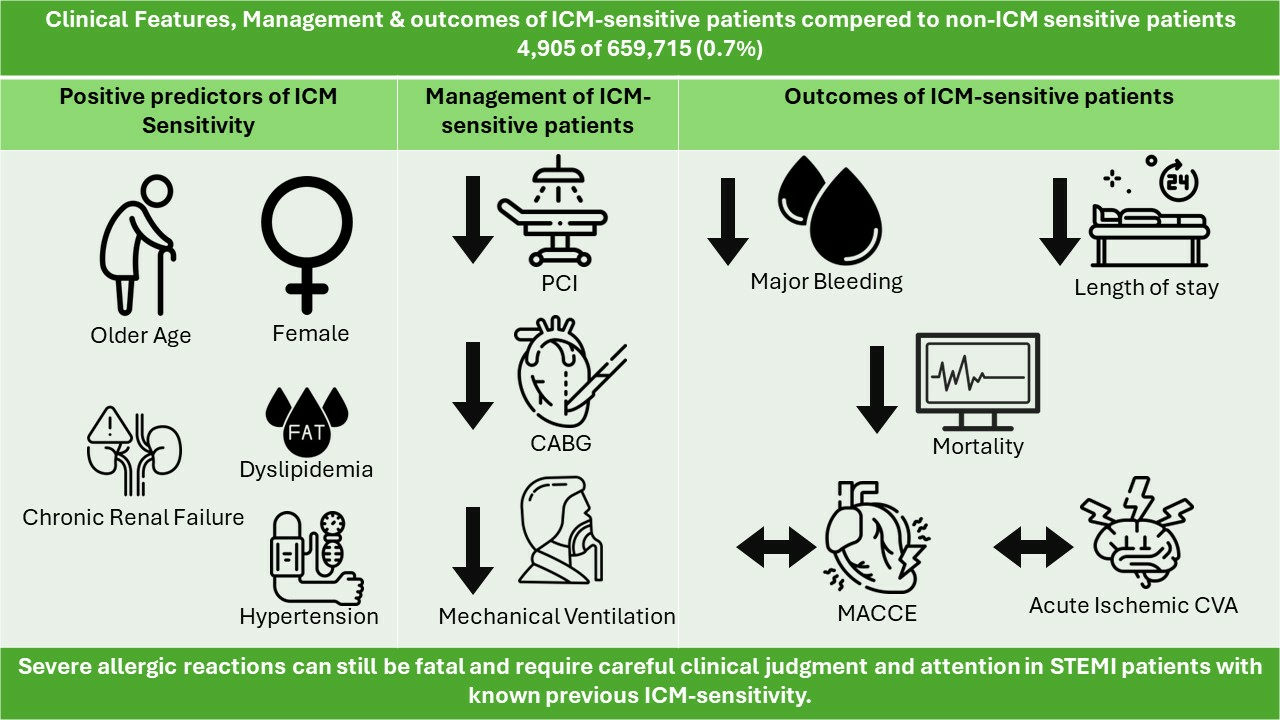
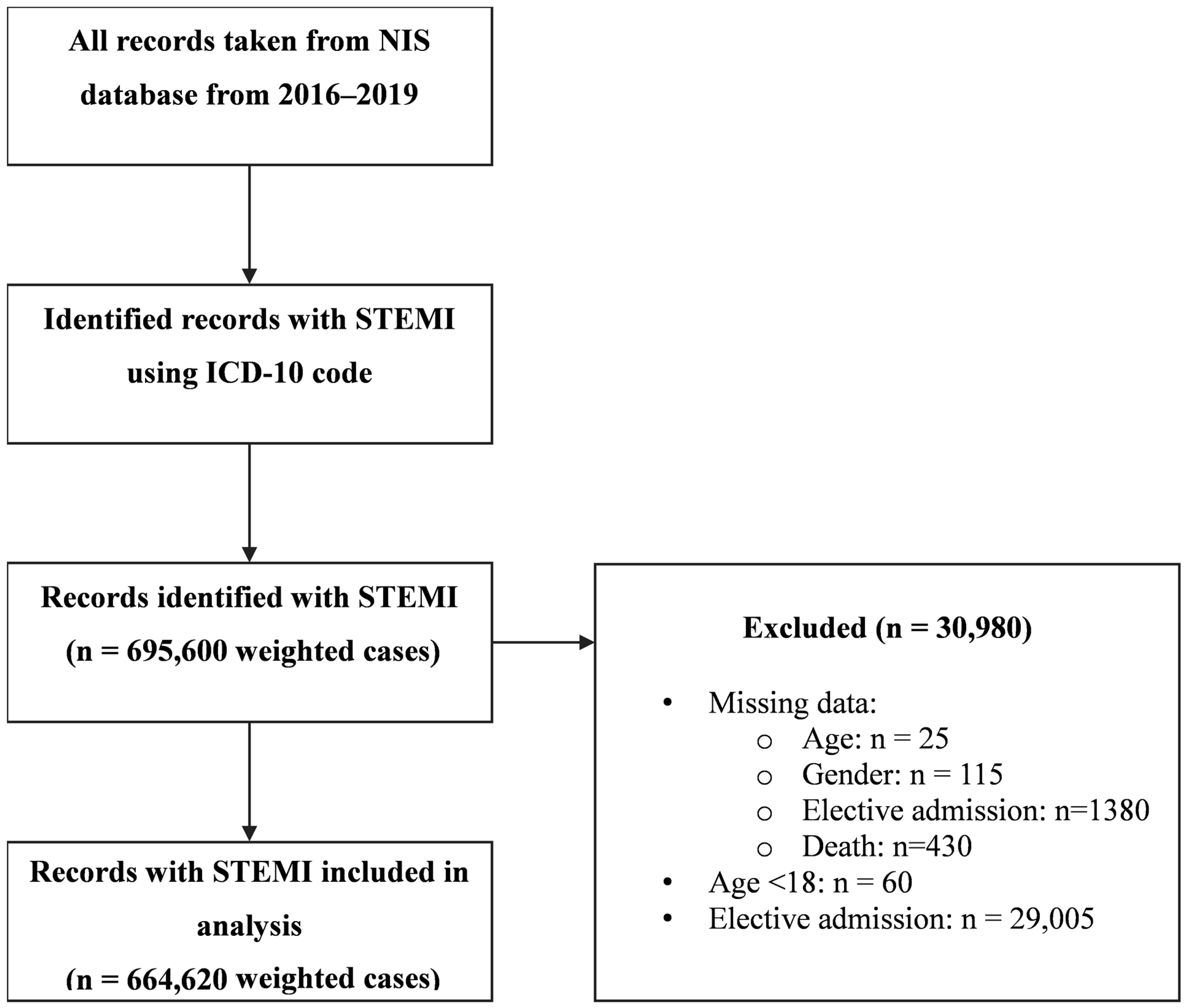
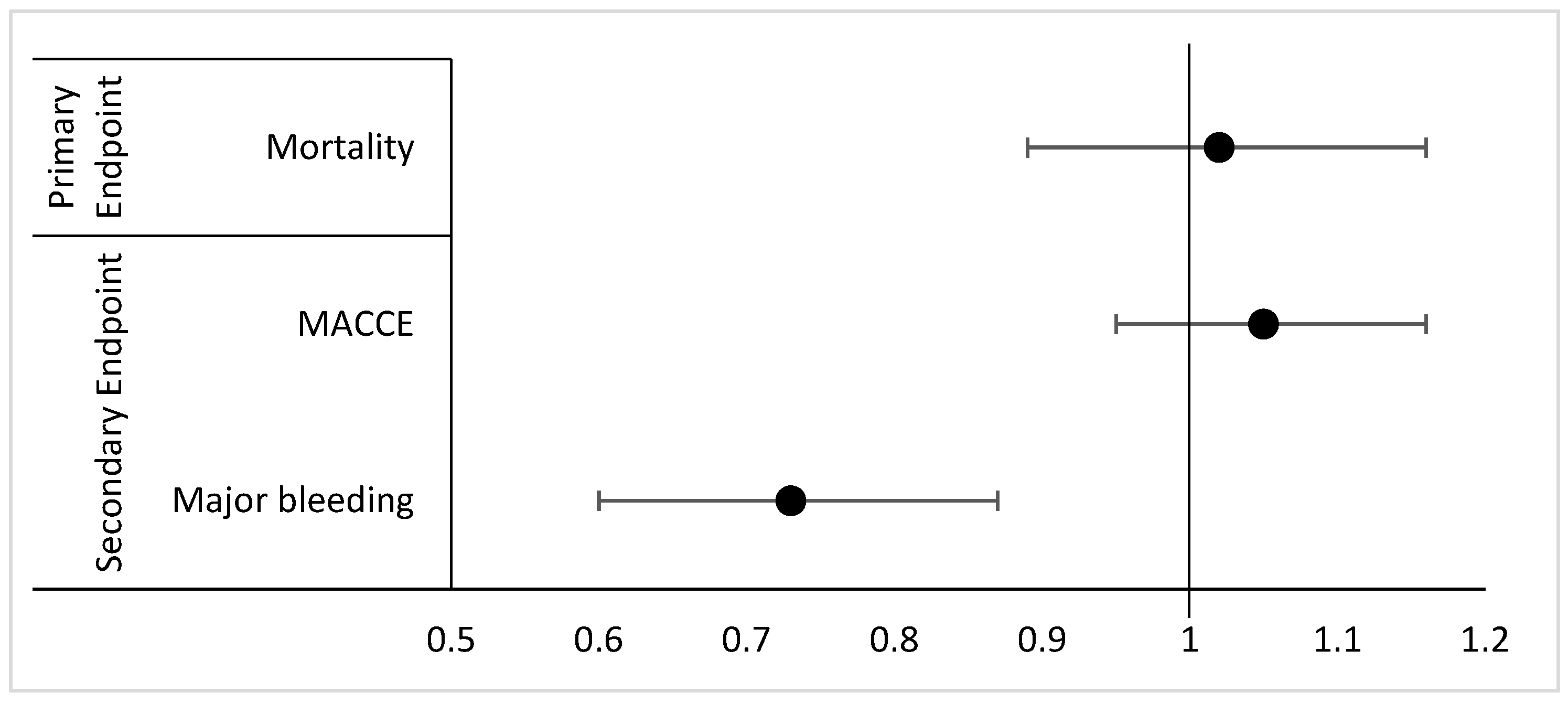
Background and Objectives: Iodinated Contrast Media (ICM) is used daily in many imaging departments worldwide. The main risk associated with ICM is hypersensitivity. When a severe hypersensitivity reaction is not properly managed and treated swiftly, it may be fatal. Currently, there is no data to demonstrate how ICM sensitivity affects the prognosis of cardiac patients, especially those diagnosed with ST elevation myocardial infarction (STEMI), in whom urgent coronary angiography is indicated. This study aimed to identify and characterize this relationship. Materials and Methods: We included patients hospitalized with STEMI between 2016 and 2019 from the National Inpatient Sample. The population was compared based on ICM sensitivity status, sensitive vs. non-sensitive. The primary endpoint was in-hospital mortality, with additional endpoints: length of stay and in-hospital complications. Results: The study included 664,620 STEMI patients, of whom 4905 (0.7%) were diagnosed with ICM sensitivity. ICM-sensitive patients were older, more often white, females, and had more comorbidities and cardiovascular risk factors. Both groups show similarities in management but are slightly less probable to undergo PCI or CABG. Multivariable logistic regression models found that the ICM-sensitive population had similar odds of in-hospital mortality (OR: 1.02, 95% CI: 0.89–1.16) and MACCE (OR: 1.05, 95% CI: 0.95–1.16), and less major bleeding (OR: 0.73, 95% CI: 0.60–0.87). Conclusions: Our study found that ICM sensitivity status was not a significant factor for worse prognosis in patients hospitalized with STEMI.
Keywords: allergy; contrast agents; mortality; myocardial infraction; national inpatient sample; percutaneous coronary intervention; prognosis; safety of treatment allergy; contrast agents; mortality; myocardial infraction; national inpatient sample; percutaneous coronary intervention; prognosis; safety of treatment
Graphical Abstract