Article

Assessing the Feasibility and Efficacy of Pre-Sleep Dim Light Therapy for Adults with Insomnia: A Pilot Study


1
Department of Family Medicine, Anam Hospital, Korea University College of Medicine, Seoul 02481, Republic of Korea
2
Division of Biostatistics, Department of Biomedical Systems Informatics, Yonsei University College of Medicine, Seoul 03722, Republic of Korea
3
College of Nursing, Mo-Im Kim Research Institute, Yonsei University, Seoul 03722, Republic of Korea
4
Department of Family Medicine, Yongin Severance Hospital, Yonsei University College of Medicine, Yongin 16995, Republic of Korea
5
Integrative Research Center for Cerebrovascular and Cardiovascular Diseases, Yonsei University College of Medicine, Seoul 03722, Republic of Korea
*
Authors to whom correspondence should be addressed.
Medicina 2024, 60(4), 632; https://doi.org/10.3390/medicina60040632

Submission received: 14 March 2024 / Revised: 9 April 2024 / Accepted: 11 April 2024 / Published: 14 April 2024

Abstract

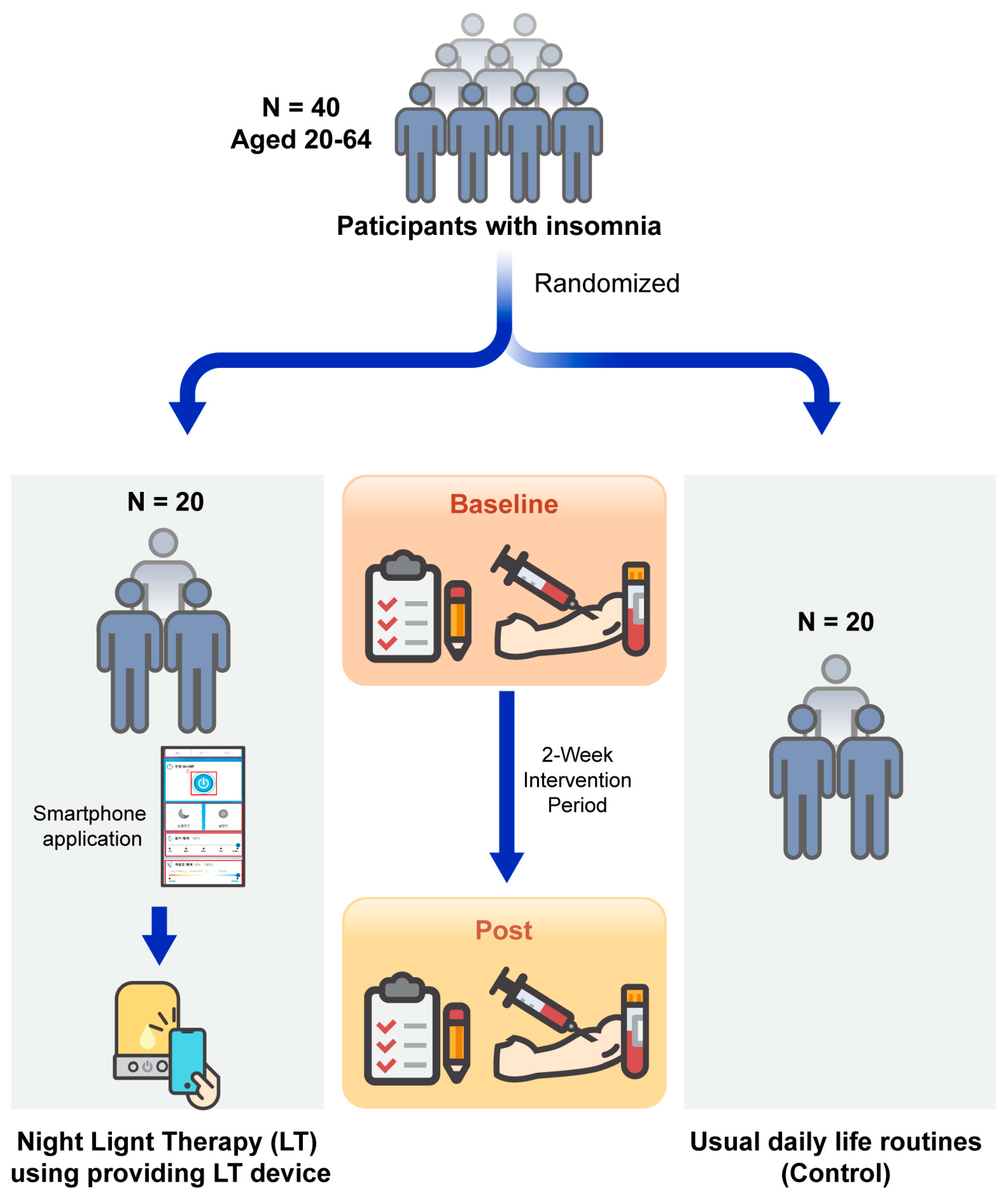
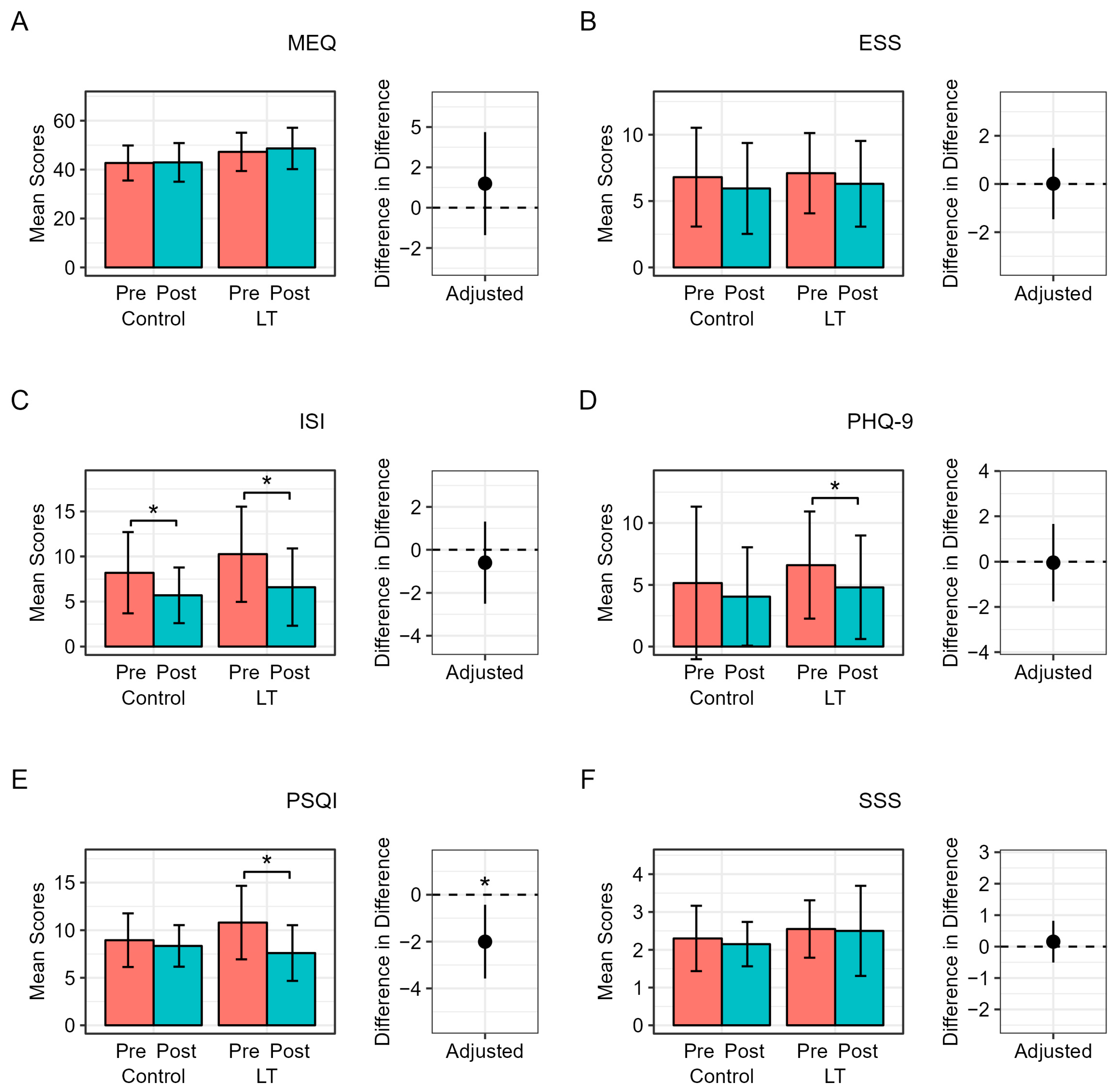
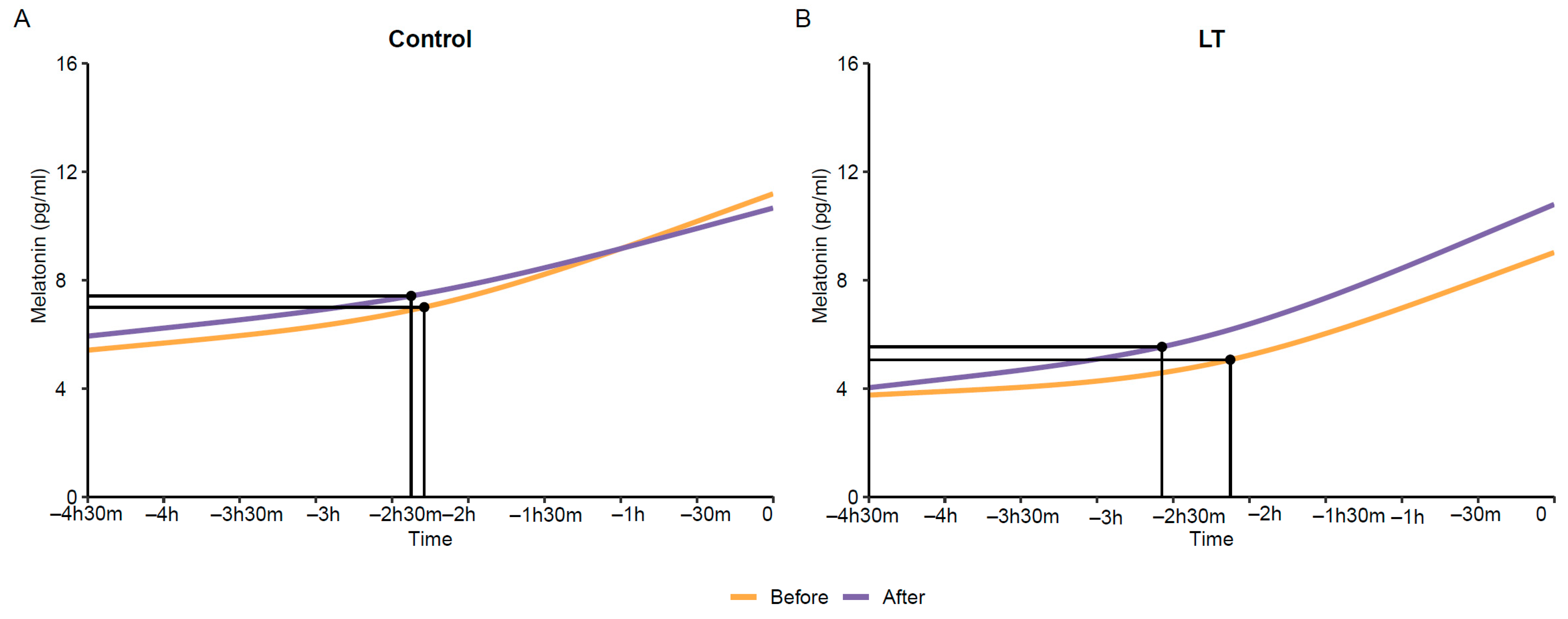
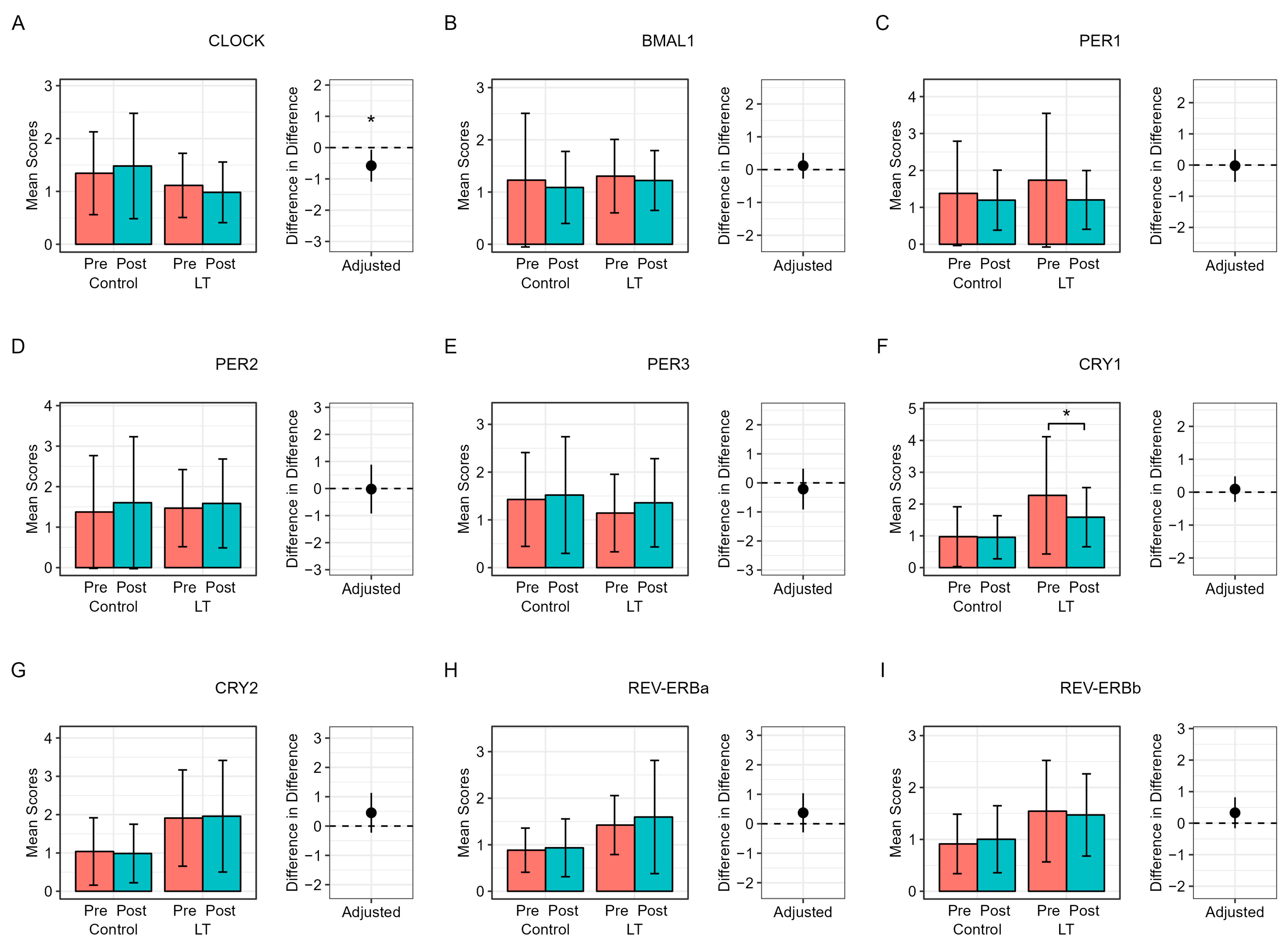
Background: Insomnia is increasingly recognized for its marked impact on public health and is often associated with various adverse health outcomes, including cardiovascular diseases and mental health disorders. The aim of this study was to investigate the efficacy of pre-sleep dim light therapy (LT) as a non-pharmacological intervention for insomnia in adults, assessing its influence on sleep parameters and circadian rhythms. Methods: A randomized, open-label, two-arm clinical trial was conducted over two weeks with 40 participants aged 20–60 years, all of whom had sleep disorders (CRIS, KCT0008501). They were allocated into control and LT groups. The LT group received exposure to warm-colored light, minimizing the blue spectrum, before bedtime. The study combined subjective evaluation via validated, sleep-related questionnaires, objective sleep assessments via actigraphy, and molecular analyses of circadian clock gene expression in peripheral blood mononuclear cells. Baseline characteristics between the two groups were compared using an independent t-test for continuous variables and the chi-squared test for categorical variables. Within-group differences were assessed using the paired t-test. Changes between groups were analyzed using linear regression, adjusting for each baseline value and body mass index. The patterns of changes in sleep parameters were calculated using a linear mixed model. Results: The LT group exhibited significant improvements in sleep quality (difference in difference [95% CI]; −2.00 [−3.58, −0.43], and sleep efficiency (LT: 84.98 vs. control: 82.11, p = 0.032), and an advanced Dim Light Melatonin Onset compared to the control group (approximately 30 min). Molecular analysis indicated a significant reduction in CRY1 gene expression after LT, suggesting an influence on circadian signals for sleep regulation. Conclusions: This study provides evidence for the efficacy of LT in improving sleep quality and circadian rhythm alignment in adults with insomnia. Despite limitations, such as a small sample size and short study duration, the results underscore the potential of LT as a viable non-pharmacological approach for insomnia. Future research should expand on these results with larger and more diverse cohorts followed over a longer period to validate and further elucidate the value of LT in sleep medicine. Trial registration: The trial was registered with the Clinical Research Information Service (KCT0008501).
Keywords: insomnia; light therapy; sleep quality; melatonin; clock gene expression insomnia; light therapy; sleep quality; melatonin; clock gene expression