Article

Male Sex Is an Associated Factor for Delayed Bone Union Following Hybrid Closed-Wedge High Tibial Osteotomy


1
Department of Orthopaedic Surgery, Institute of Medicine, University of Tsukuba, 1-1-1 Tennodai, Tsukuba 305-8575, Ibaraki, Japan
2
Department of Orthopaedic Surgery, Tsukuba Memorial Hospital, 1187-2 Kaname, Tsukuba 300-2622, Ibaraki, Japan
*
Author to whom correspondence should be addressed.
Medicina 2024, 60(11), 1772; https://doi.org/10.3390/medicina60111772

Submission received: 16 September 2024 / Revised: 9 October 2024 / Accepted: 25 October 2024 / Published: 29 October 2024
(This article belongs to the Section Orthopedics)

Abstract

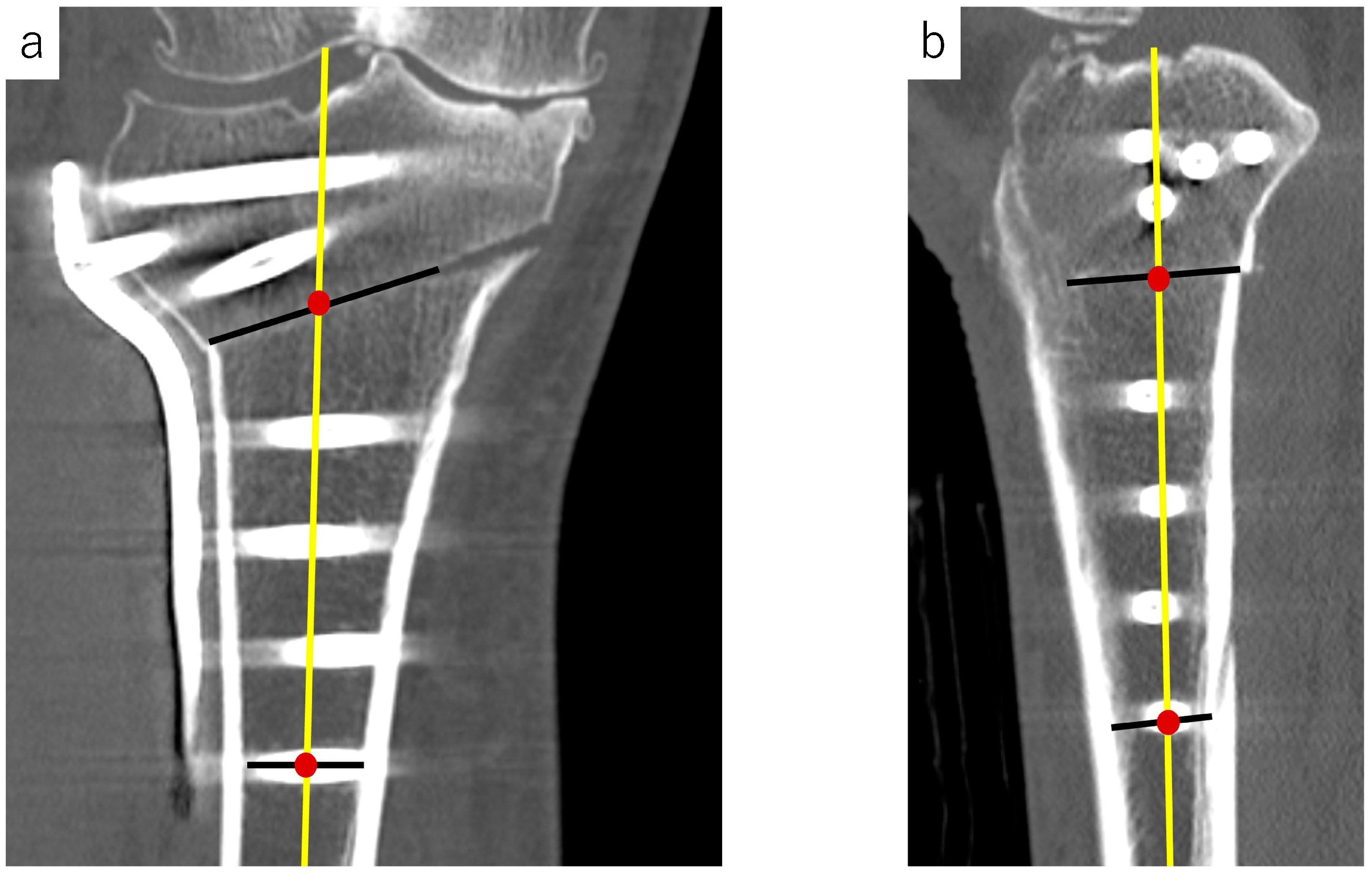
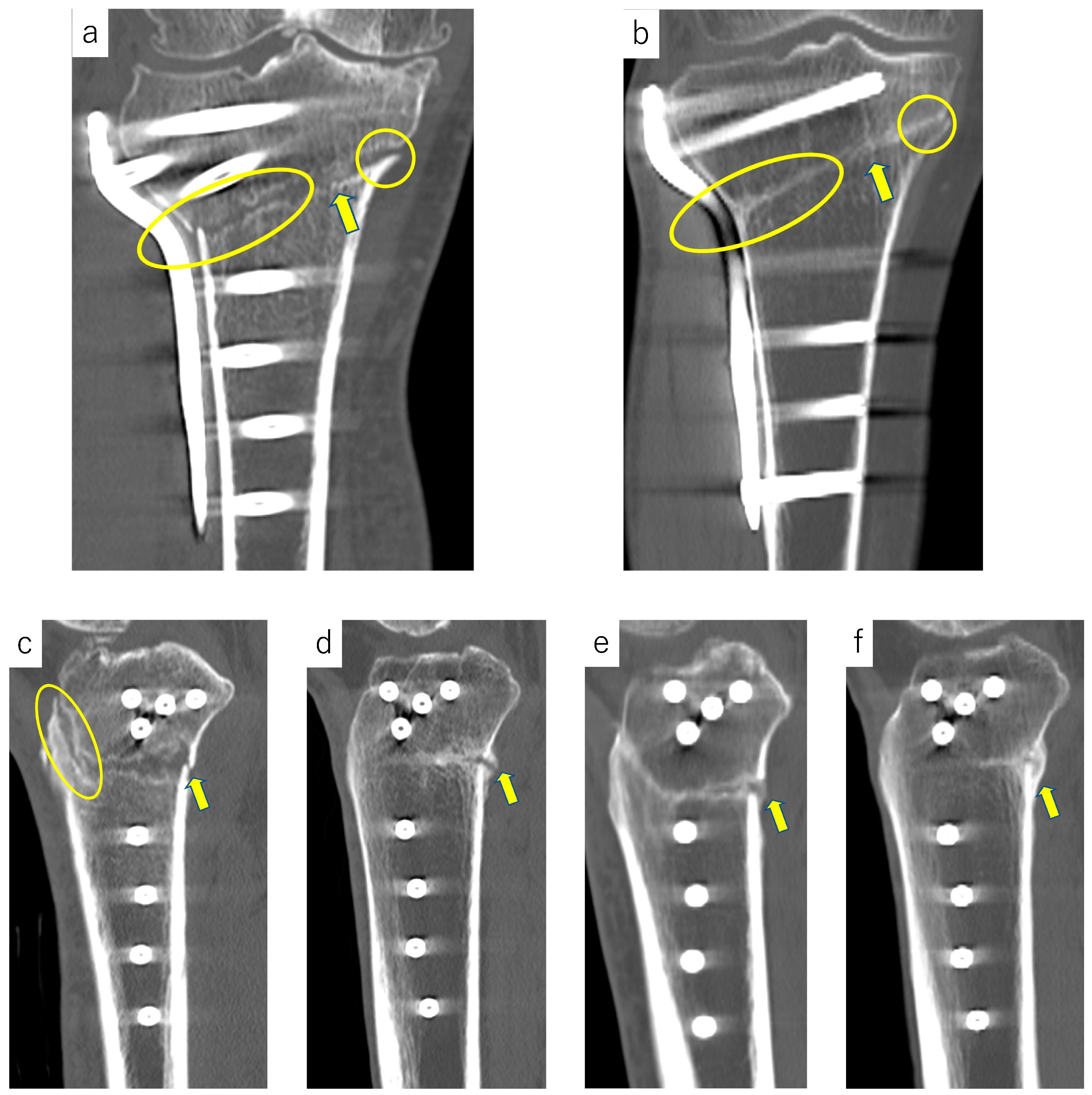
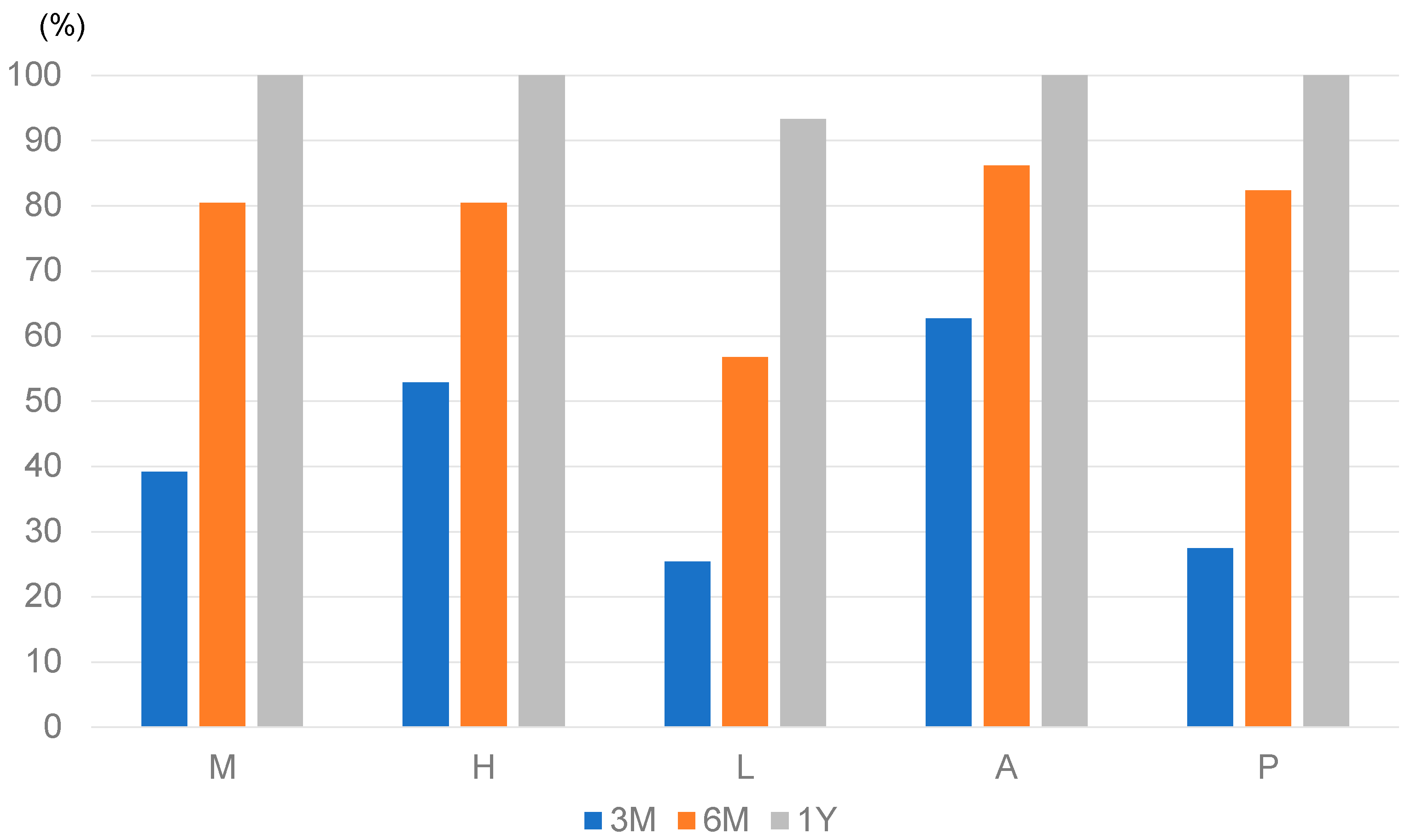
Background and Objectives: Although hybrid closed-wedge high tibial osteotomy (HTO) is an effective procedure for varus knee osteoarthritis, delayed bone union is a frequent occurrence. The rate of bone union and its associated factors remain unclear. This study aimed to investigate the detailed process of bone union in hybrid closed-wedge HTO using computed tomography (CT) and to examine factors associated with delayed bone union. Materials and Methods: We retrospectively reviewed 53 consecutive patients who underwent hybrid closed-wedge HTO. Cases with no bone union at any of five sites (anterior flange, posterior, lateral, hinge, and medial) on coronal and sagittal computed tomography at 3 months postoperatively were defined as delayed bone union. Regression analysis was performed with delayed bone union as the dependent variable and sex, age, height, body weight, body mass index, correction distance, smoking, and diabetes mellitus as independent variables. Results: Among 50 analyzed knees (mean age, 61.4 ± 7.8 years), 17 (34.0%) had delayed bone union at 3 months postoperatively and one knee had screw breakage. Sex was the only significant factor associated with delayed bone union (male: β = 2.1, p < 0.004). Conclusions: Delayed bone union (absence at 3 months after hybrid closed-wedge high tibial osteotomy) occurred in 34% of patients, and male sex was associated with delayed bone union.
Keywords: hybrid closed-wedge high tibial osteotomy; bone union; knee osteoarthritis; computed tomography hybrid closed-wedge high tibial osteotomy; bone union; knee osteoarthritis; computed tomography