Article

Does the Type of Knee Arthroplasty Affect the Patient’s Postural Stability?

by
Tomasz Sorysz
1,
Aleksandra Adamik
2 and
Katarzyna Ogrodzka-Ciechanowicz
3,*
1
Trauma and Orthopaedic Unit, Gabriel Narutowicz Municipal Specialist Hospital in Krakow, 31-202 Krakow, Poland
2
Institute of Applied Sciences, Faculty of Motor Rehabilitation, University of Physical Education, 31-571 Krakow, Poland
3
Institute of Clinical Rehabilitation, Faculty of Motor Rehabilitation, University of Physical Education, 31-571 Krakow, Poland
*
Author to whom correspondence should be addressed.
Medicina 2024, 60(10), 1582; https://doi.org/10.3390/medicina60101582

Submission received: 2 September 2024 / Revised: 16 September 2024 / Accepted: 22 September 2024 / Published: 26 September 2024
(This article belongs to the Section Orthopedics)

Abstract

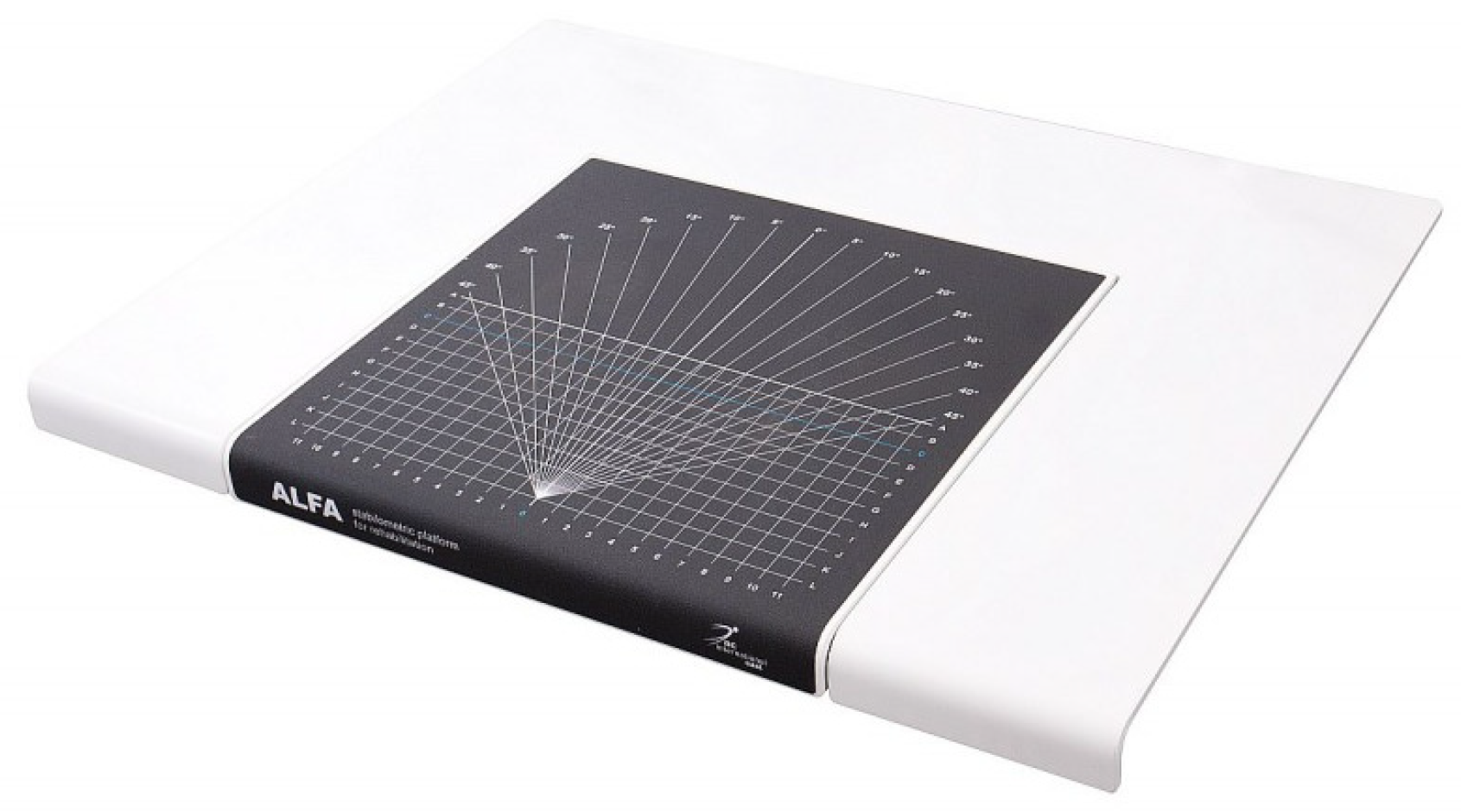
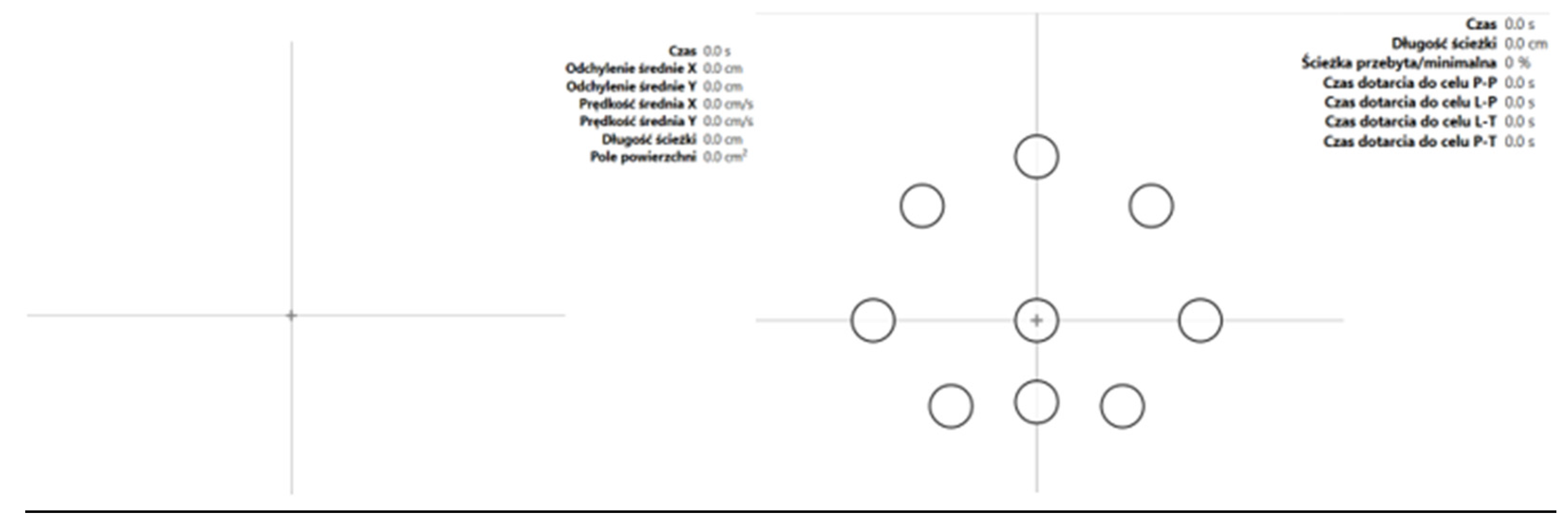
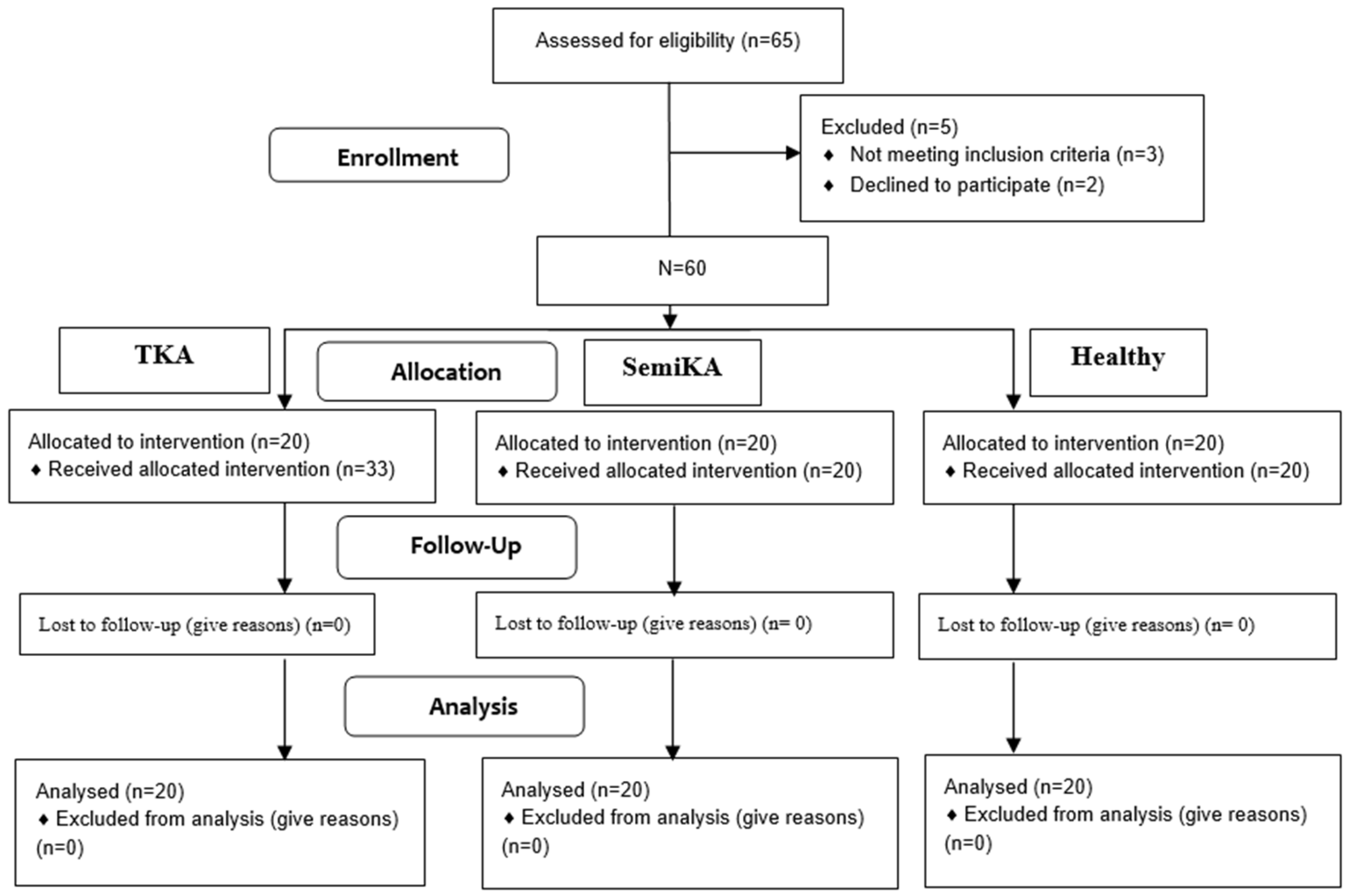
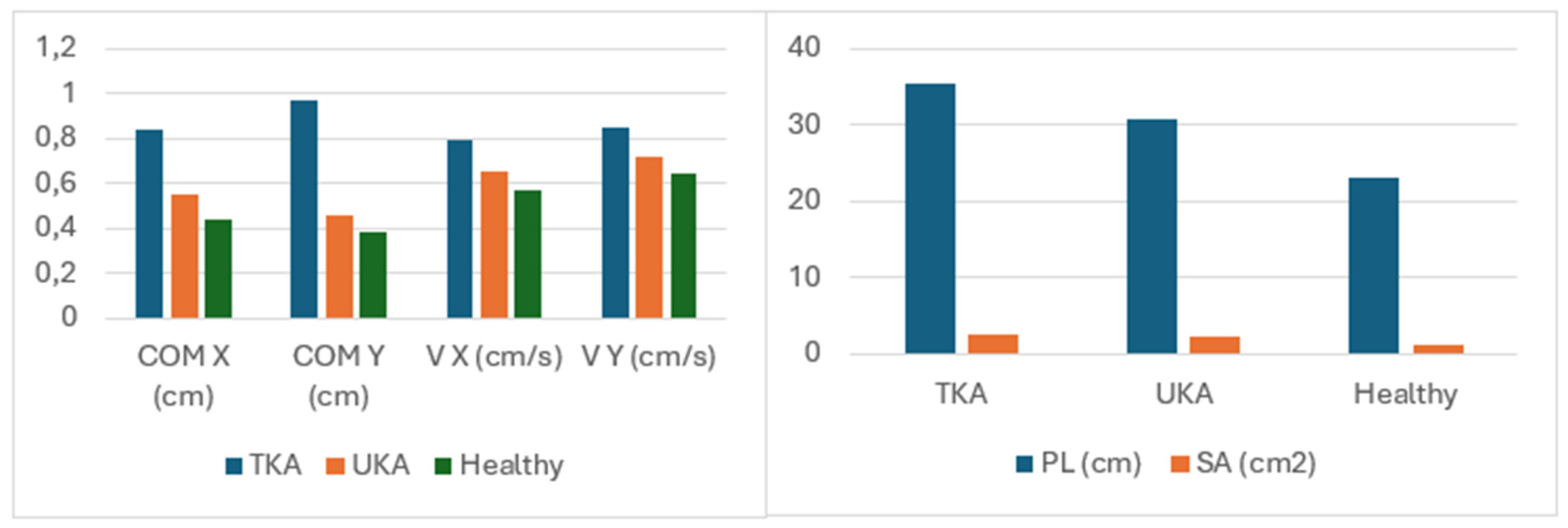
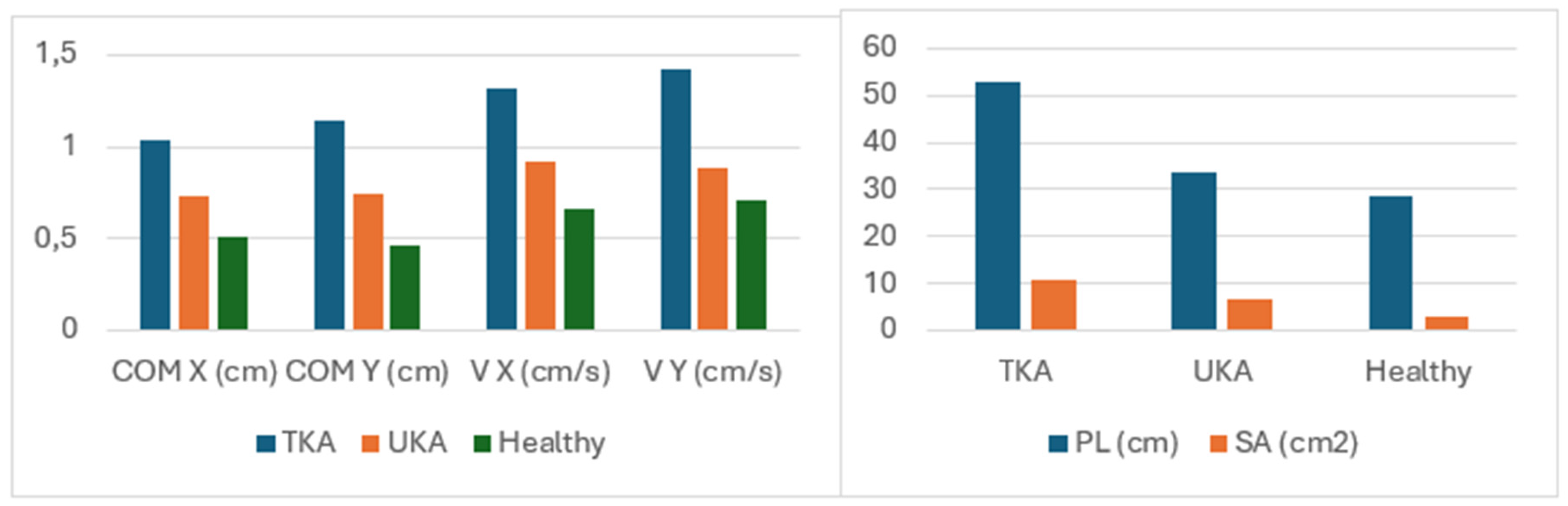
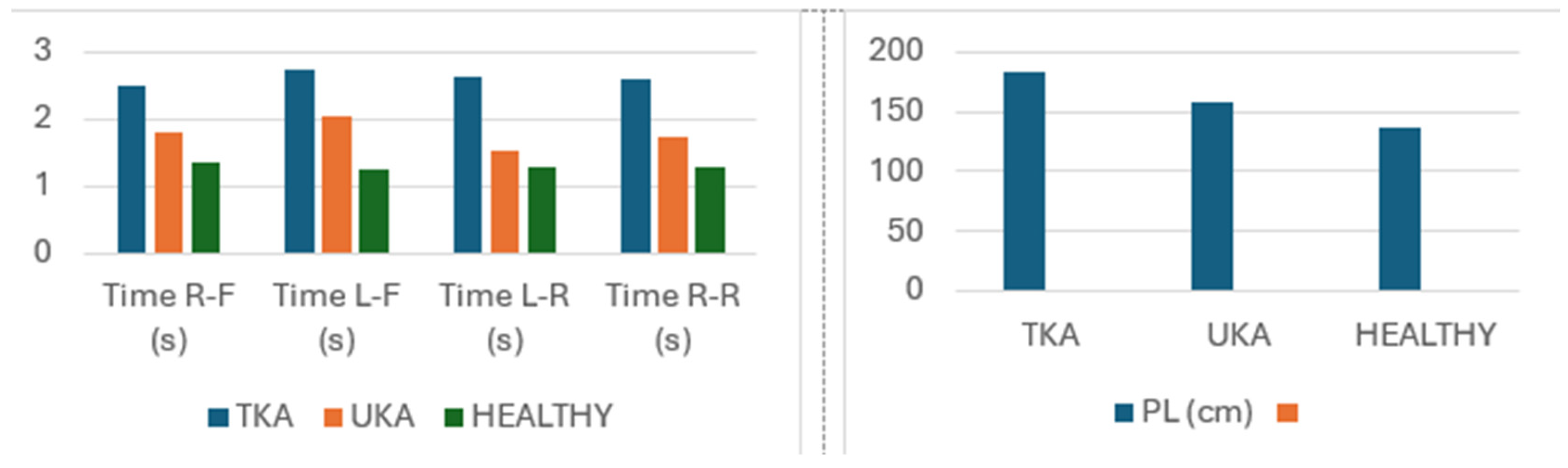
Background and Objectives: The aim of this study was to assess postural stability in patients after total and unicompartmental knee arthroplasties. Materials and Methods: The study included 40 women who had undergone knee arthroplasties—20 women who had undergone total knee arthroplasty (TKA) (mean age 63.47 ± 2.17) and 20 women who had undergone unicompartmental knee arthroplasty (UKA) (mean age 64.65 ± 1.93). The comparison group consisted of 20 healthy women aged 60–69 years (mean age 64.45 ± 3.12). The average time from surgery to stabilometry was 14.4 months. Each patient underwent stabilography using a single-plate stabilography platform, which included both Romberg’s test and a dynamic test. Additionally, the WOMAC scale was administered, where patients assessed their condition both before surgery and at the present time. Results: The averaged Romberg’s test results show a slight displacement in the center of mass (COM) toward the forefoot and towards the right limb in both the TKA and UKA groups. The WOMAC scale results showed significant improvement and satisfactory functional outcomes in both groups. Conclusions: The study indicated that one year after surgery, patients in both groups required a larger base of support to maintain postural control. However, the results for the UKA group were more similar to those of healthy individuals.
Keywords: stabilometry; knee arthroplasty; postural stability stabilometry; knee arthroplasty; postural stability