Systematic Review

Predictive Factors for Pregnancy-Related Persistent Pelvic Girdle Pain (PPGP): A Systematic Review


by
Elisa Burani
1,2,
Sharon Marruganti
1,3,
Gloria Giglioni
1,4,
Francesca Bonetti
1,5,*,
Daniele Ceron
1,6 and
Alessandro Cozzi Lepri
7
1
Musculoskeletal and Rheumatological Physiotherapy, Faculty of Medicine and Surgery, University of Rome Tor Vergata, 00142 Rome, Italy
2
Private Practice “Kura” Clinic, 53047 Siena, Italy
3
Asl Sud-Est, Department of Rehabilitation, Valdichiana Senese, 53045 Siena, Italy
4
Asl Roma 3, Department of Rehabilitation, 00122 Rome, Italy
5
Private Practice “Physioup” Clinic, 00142 Rome, Italy
6
Private Practice “Riabilita” Clinic, 35030 Padova, Italy
7
Medical Statistics and Epidemiology, Centre for Clinical Research, Epidemiology, Modelling and Evaluation (CREME), Institute for Global Health, London NW3 2PF, UK
*
Author to whom correspondence should be addressed.
Medicina 2023, 59(12), 2123; https://doi.org/10.3390/medicina59122123

Submission received: 4 October 2023 / Revised: 29 October 2023 / Accepted: 9 November 2023 / Published: 5 December 2023
(This article belongs to the Section Orthopedics)

Abstract

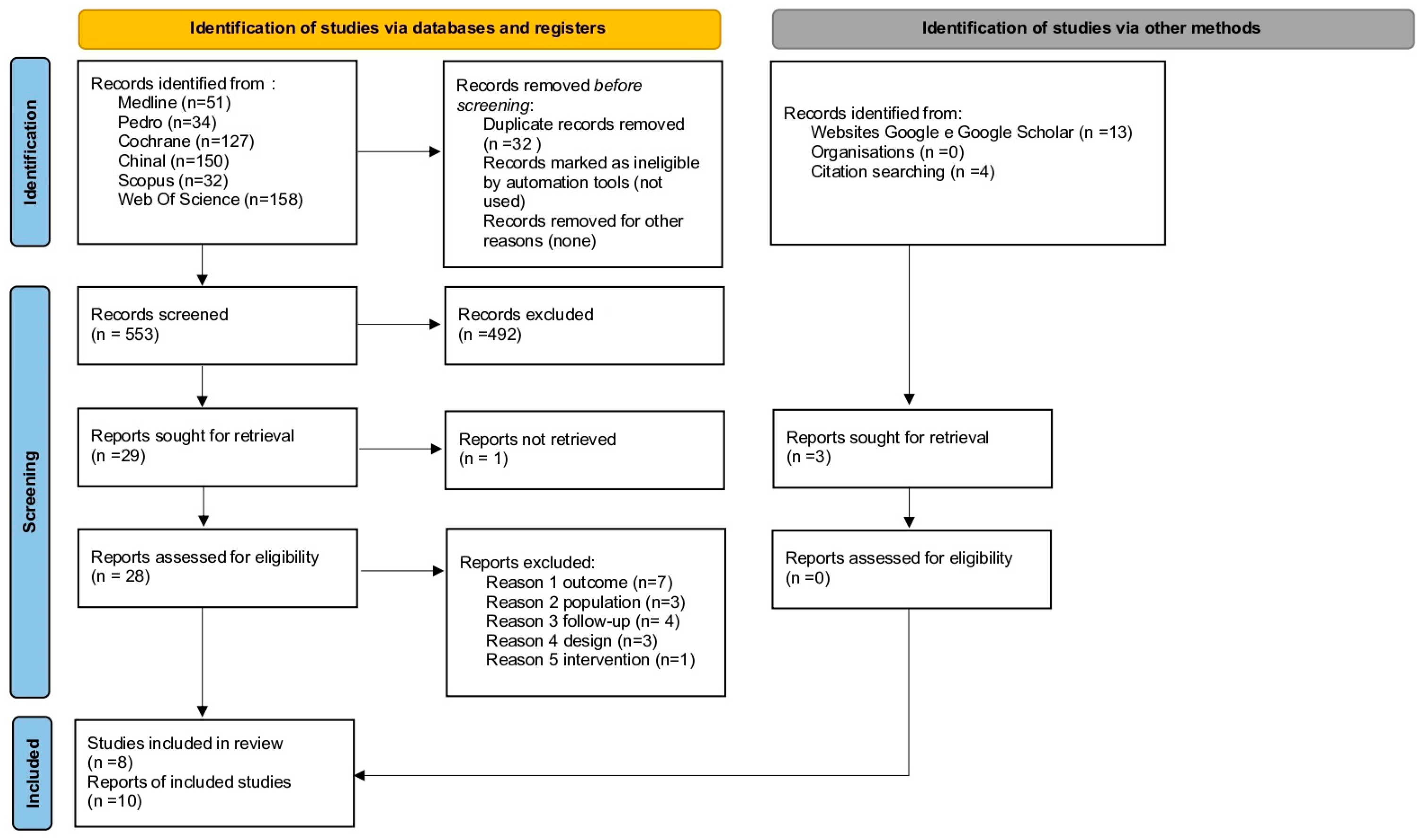
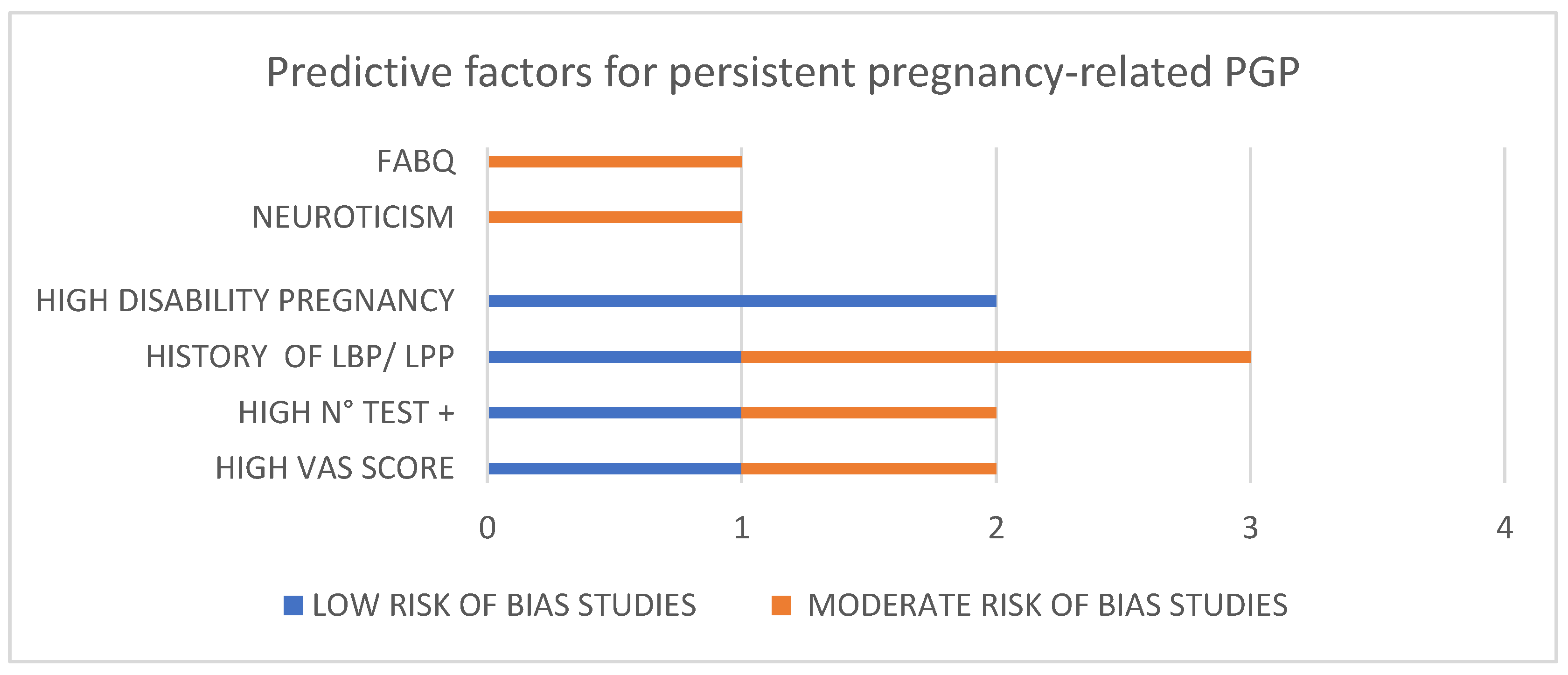
Background and Objectives: To identify the most frequently reported predictive factors for the persistency of pregnancy-related pelvic girdle pain (PPGP) at 3–6 months after childbirth in women with PPGP alone or PPGP in association with pregnancy-related lower back pain (PLBP). Methods: Eligibility criteria: Two authors independently selected studies excluding PPGP determined by a specific, traumatic, gynecological/urological cause or isolated PLBP and studies that did not include the presence/absence of PPGP as the the primary outcome. We, instead, included studies with an initial assessment in pregnancy (within 1 month of delivery) and with a follow-up of at least 3 months after delivery. Data sources: The research was performed using the databases of Medline, Cochrane, Pedro, Scopus, Web of Science and Cinahl from December 2018 to January 2022, following the indications of the PRISMA statement 2021 and the MOOSE checklist. It includes observational cohort studies in which data were often collected through prospective questionnaires (all in English). Study appraisal and risk of bias: Two independent authors performed evaluations of the risk of bias (ROB) using the quality in prognostic studies (QUIPS) tool. Synthesis of results: An in-depth qualitative analysis was conducted because, due to a high degree of heterogeneity in the data collection of the included studies and a lack of raw data suitable for quantitative analysis, it was not possible to carry out the originally planned meta-analyses for the subgroups. Results: The research process led to the inclusion of 10 articles which were evaluated using the QUIPS tool: 5 studies were evaluated as low ROB and 5 were evaluated as moderate ROB. High levels of pain in pregnancy, a large number of positive provocation tests, a history of lower back pain and lumbo-pelvic pain, high levels of disability in pregnancy, neurotic behavior and high levels of fear-avoidance belief were identified as strong predictors of long-term PPGP, while there was weak or contradictory evidence regarding predictions of emotional distress, catastrophizing and sleep disturbances. Discussion: The impossibility of carrying out the meta-analysis by subgroups suggests the need for further research with greater methodological rigor in the acquisition of measures based on an already existing PPGP core predictors/outcome sets.
Keywords: persistent PGP; PGP postpartum; pregnancy-related PGP; predictive factors; systematic review persistent PGP; PGP postpartum; pregnancy-related PGP; predictive factors; systematic review