Article

Orthostatic Symptoms and Reductions in Cerebral Blood Flow in Long-Haul COVID-19 Patients: Similarities with Myalgic Encephalomyelitis/Chronic Fatigue Syndrome

by
C. (Linda) M. C. van Campen
1,*,
Peter C. Rowe
2 and
Frans C. Visser
1
1
Stichting CardioZorg, Planetenweg 5, 2132 HN Hoofddorp, The Netherlands
2
Department of Pediatrics, Johns Hopkins University School of Medicine, Baltimore, MD 21287, USA
*
Author to whom correspondence should be addressed.
Medicina 2022, 58(1), 28; https://doi.org/10.3390/medicina58010028

Submission received: 18 November 2021 / Revised: 18 December 2021 / Accepted: 21 December 2021 / Published: 24 December 2021

Abstract

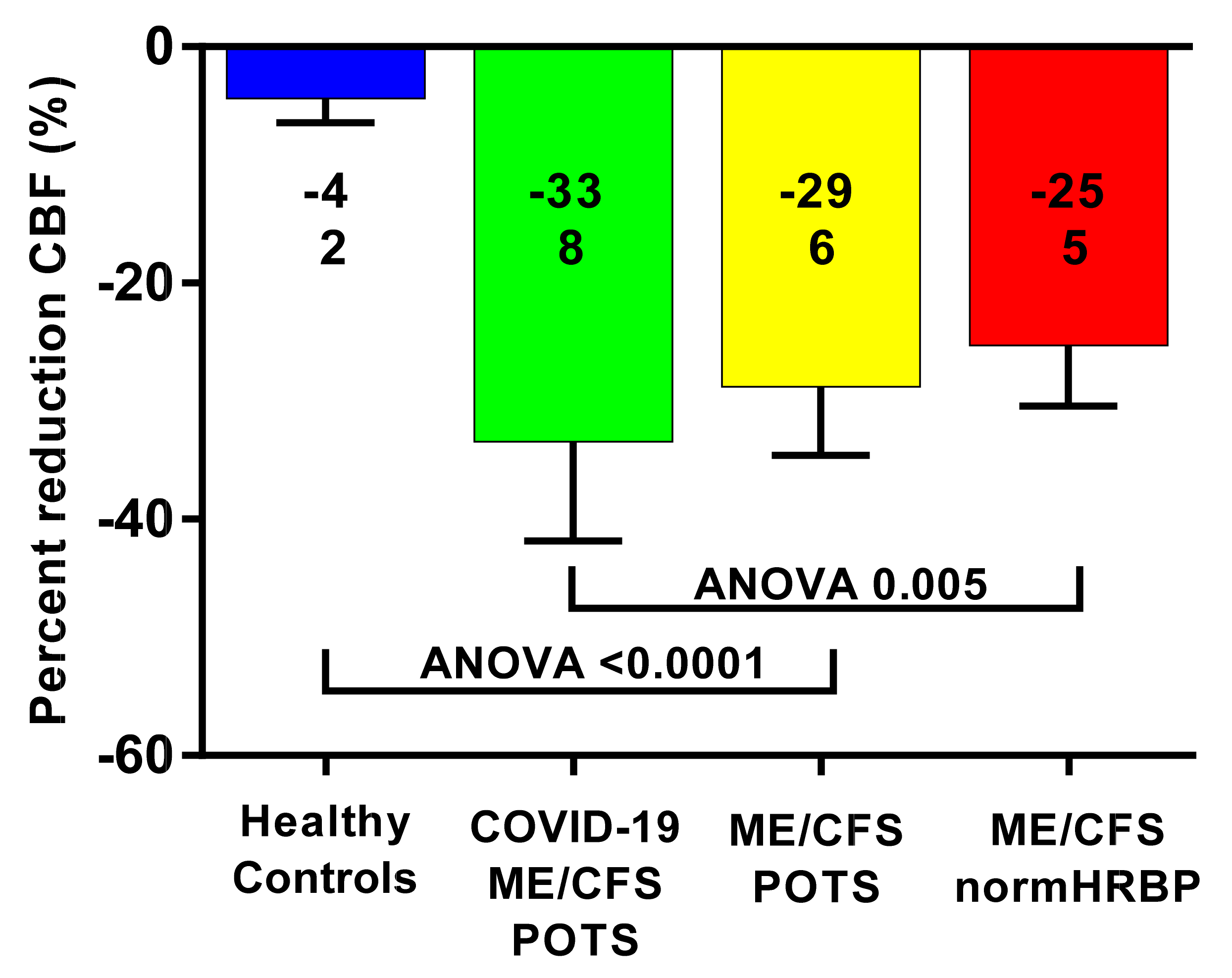
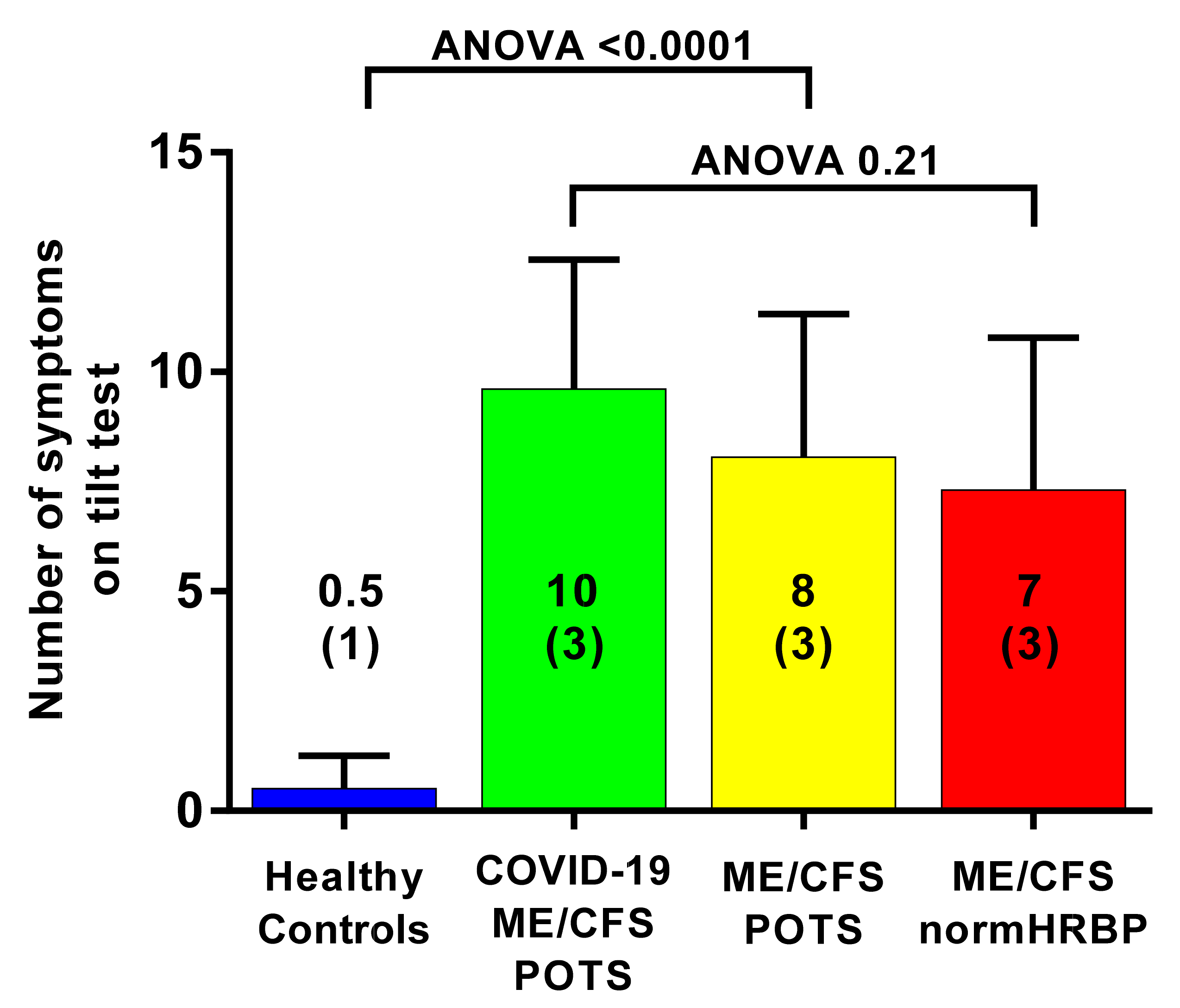
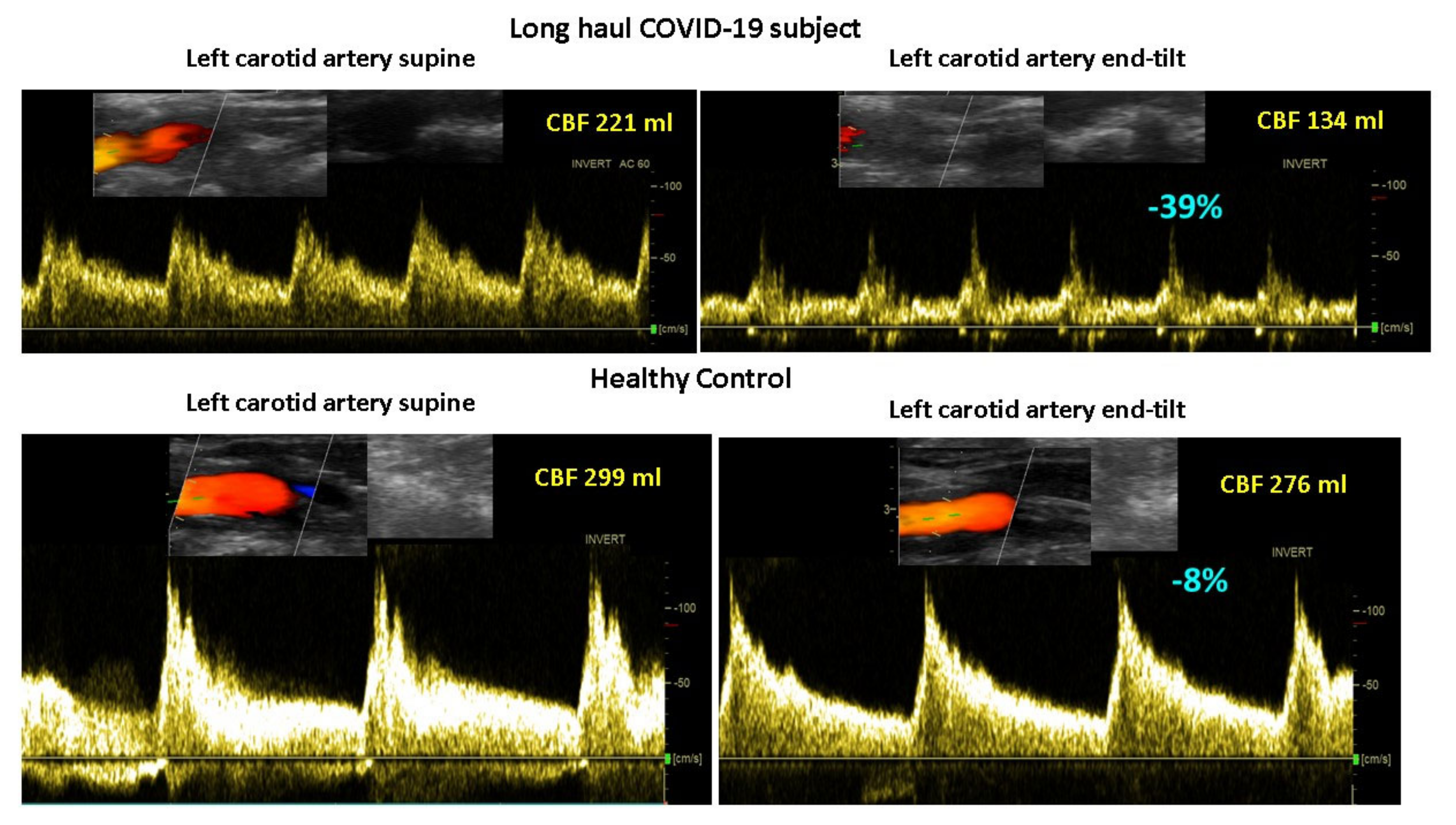
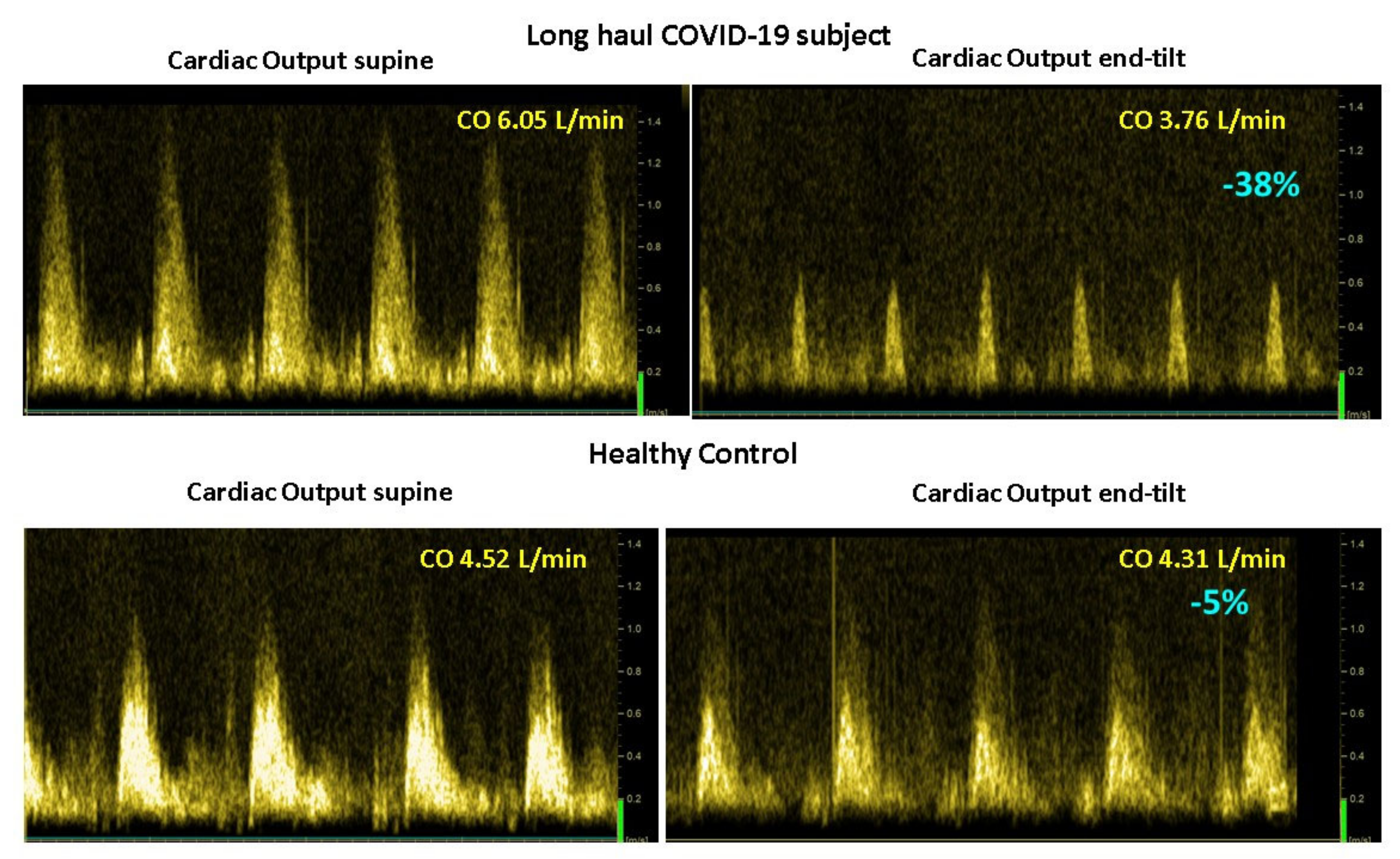
Background and Objectives: Symptoms and hemodynamic findings during orthostatic stress have been reported in both long-haul COVID-19 and myalgic encephalomyelitis/chronic fatigue syndrome (ME/CFS), but little work has directly compared patients from these two groups. To investigate the overlap in these clinical phenotypes, we compared orthostatic symptoms in daily life and during head-up tilt, heart rate and blood pressure responses to tilt, and reductions in cerebral blood flow in response to orthostatic stress in long-haul COVID-19 patients, ME/CFS controls, and healthy controls. Materials and Methods: We compared 10 consecutive long-haul COVID-19 cases with 20 age- and gender-matched ME/CFS controls with postural tachycardia syndrome (POTS) during head-up tilt, 20 age- and gender-matched ME/CFS controls with a normal heart rate and blood pressure response to head-up tilt, and 10 age- and gender-matched healthy controls. Identical symptom questionnaires and tilt test procedures were used for all groups, including measurement of cerebral blood flow and cardiac index during the orthostatic stress. Results: There were no significant differences in ME/CFS symptom prevalence between the long-haul COVID-19 patients and the ME/CFS patients. All long-haul COVID-19 patients developed POTS during tilt. Cerebral blood flow and cardiac index were more significantly reduced in the three patient groups compared with the healthy controls. Cardiac index reduction was not different between the three patient groups. The cerebral blood flow reduction was larger in the long-haul COVID-19 patients compared with the ME/CFS patients with a normal heart rate and blood pressure response. Conclusions: The symptoms of long-haul COVID-19 are similar to those of ME/CFS patients, as is the response to tilt testing. Cerebral blood flow and cardiac index reductions during tilt were more severely impaired than in many patients with ME/CFS. The finding of early-onset orthostatic intolerance symptoms, and the high pre-illness physical activity level of the long-haul COVID-19 patients, makes it unlikely that POTS in this group is due to deconditioning. These data suggest that similar to SARS-CoV-1, SARS-CoV-2 infection acts as a trigger for the development of ME/CFS.
Keywords: long-haul COVID-19; chronic fatigue syndrome (CFS); myalgic encephalomyelitis (ME); cerebral blood flow (CBF); orthostatic intolerance; tilt testing; postural orthostatic tachycardia syndrome (POTS) long-haul COVID-19; chronic fatigue syndrome (CFS); myalgic encephalomyelitis (ME); cerebral blood flow (CBF); orthostatic intolerance; tilt testing; postural orthostatic tachycardia syndrome (POTS)