Case Report

Recurrent Germline BRCA2 Gene Mutation in Lithuanian Family


by
Ieva Sadzevičienė
1,
Olga Liaugaudienė
2,
Justinas Besusparis
3,4,
Jolita Asadauskienė
5,
Ilona Kulikienė
6,
Birutė Brasiūnienė
5,
Rasa Sabaliauskaitė
6 and
Sonata Jarmalaitė
7,*
1
Institute of Biosciences, Life Sciences Center, Vilnius University, Saulėtekio Avenue 7, LT-10222 Vilnius, Lithuania
2
Department of Consultative Polyclinic, National Cancer Institute, Santariškių 1, LT-08406 Vilnius, Lithuania
3
Faculty of Medicine, Vilnius University, Čiurlionio, 21 LT-03101 Vilnius, Lithuania
4
National Center of Pathology, Affiliate of Vilnius University Hospital Santaros Clinics, P. Baublio 5, LT-08406 Vilnius, Lithuania
5
Department of Medical Oncology, National Cancer Institute, Santariškių 1, LT-08406 Vilnius, Lithuania
6
Laboratory of Genetic Diagnostic, National Cancer Institute, Santariškių 1, LT-08406 Vilnius, Lithuania
7
Laboratory of Clinical Oncology, National Cancer Institute, Santariškių 1, LT-08406 Vilnius, Lithuania
*
Author to whom correspondence should be addressed.
Medicina 2020, 56(3), 119; https://doi.org/10.3390/medicina56030119

Submission received: 22 January 2020 / Revised: 17 February 2020 / Accepted: 4 March 2020 / Published: 10 March 2020

Abstract

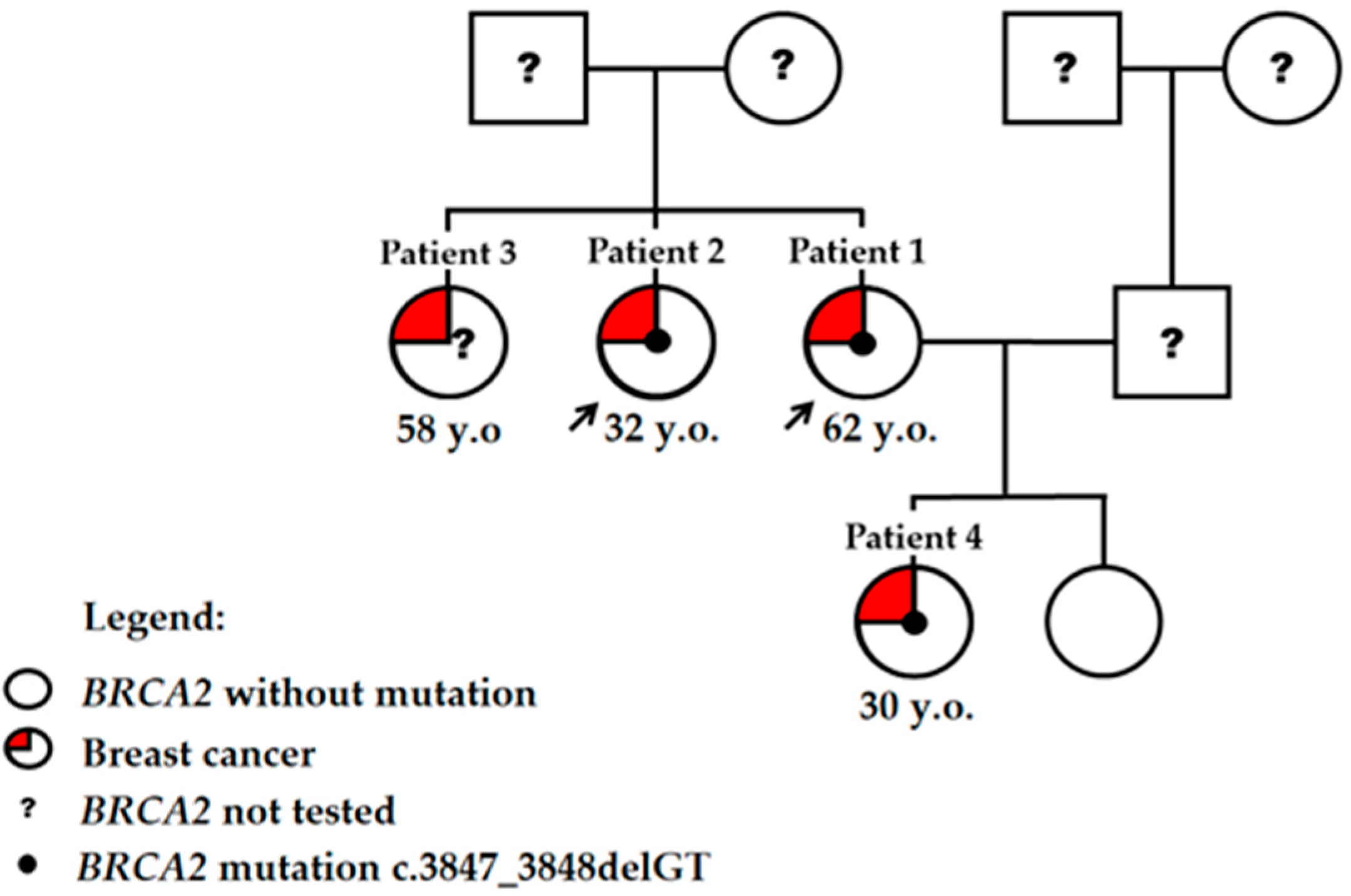
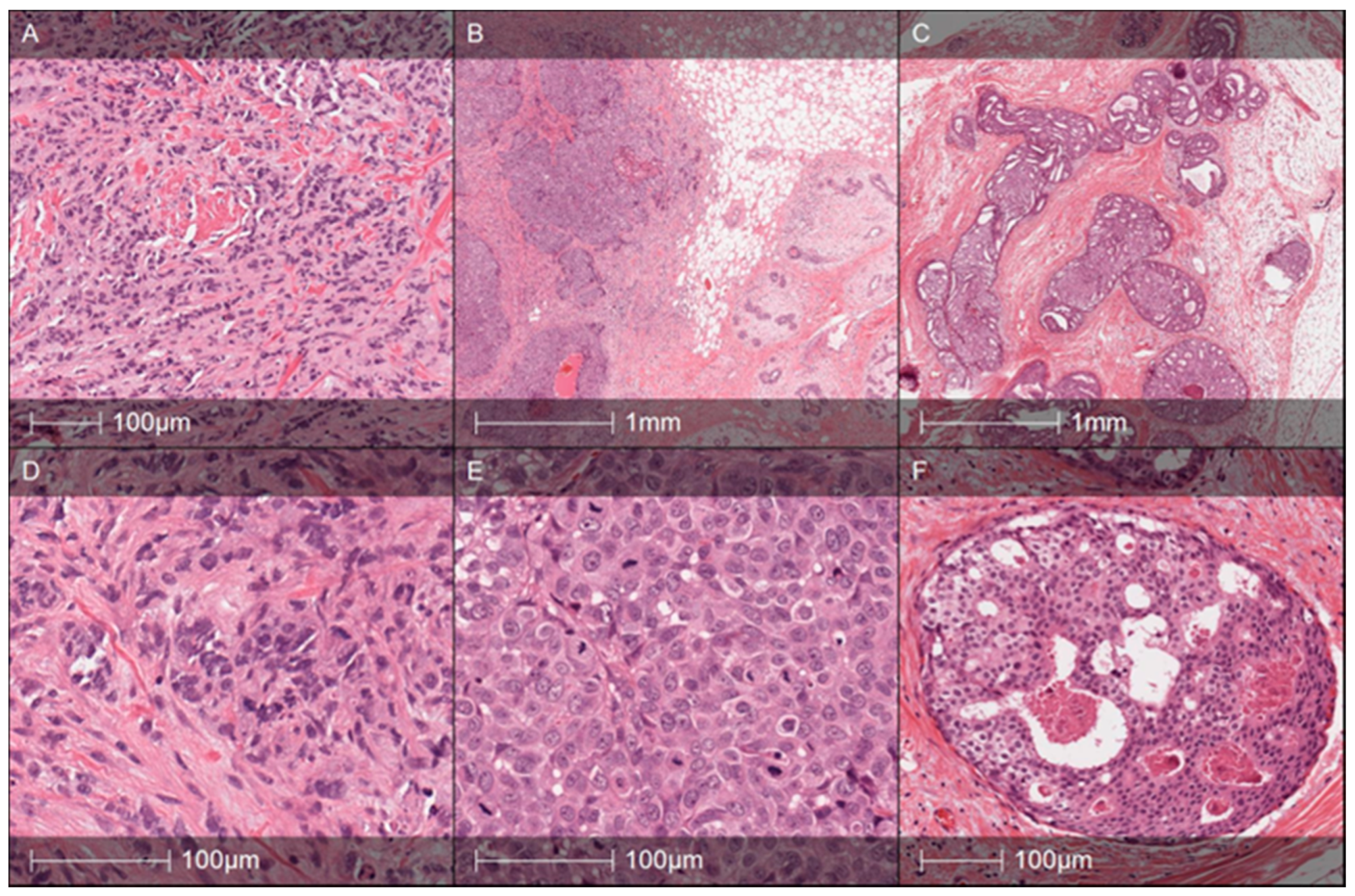
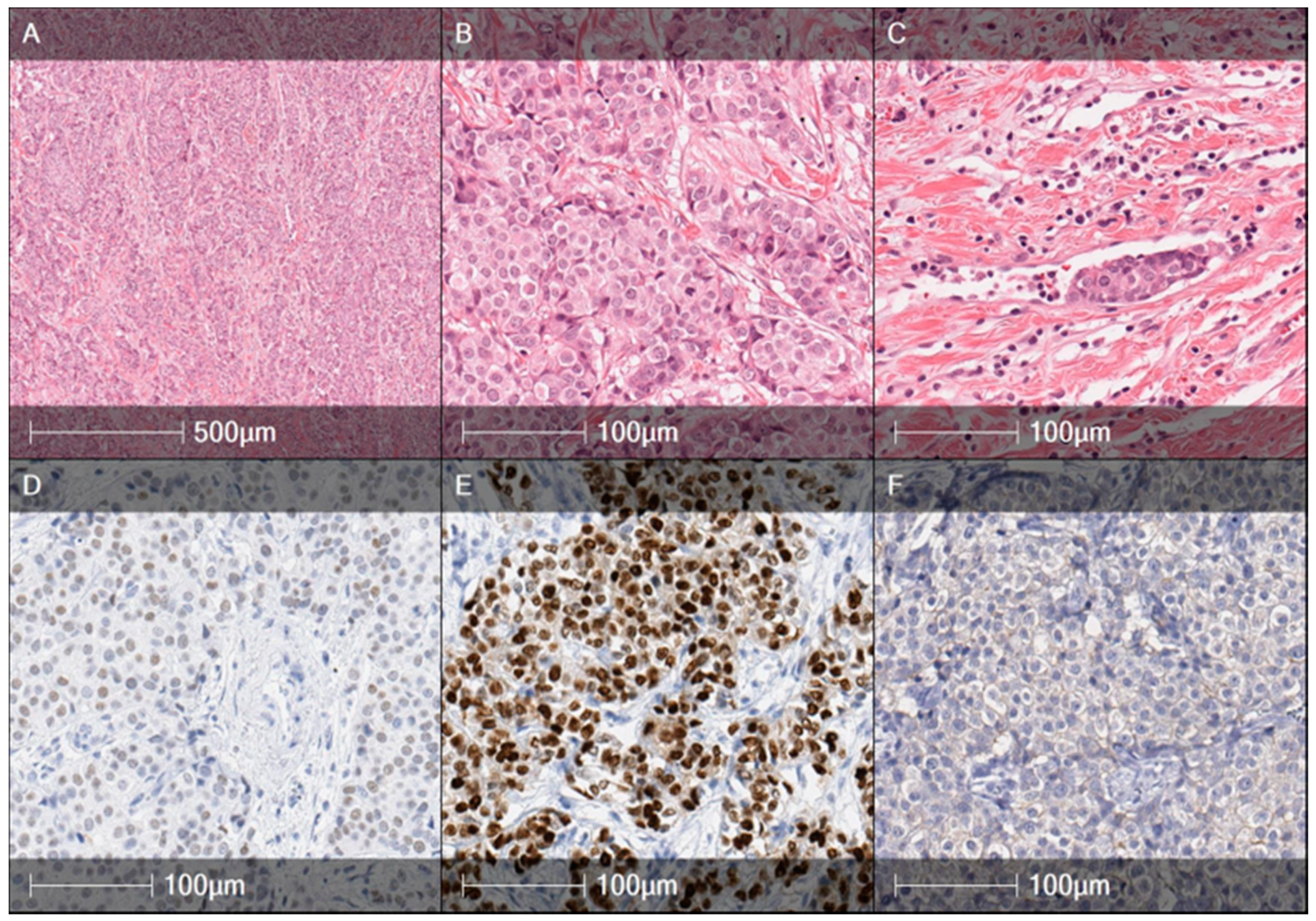
Approximately 10% of all breast cancer (BC) cases are familial and caused by inheritance of mutant BRCA1, BRCA2, or some other genes from the same DNA reparation pathway. Genetic counseling in families with cancer history is a powerful means for early cancer detection and active risk reduction through preventive interventions. This is the first report of the rare inherited BRCA2 frameshift-deletion mutation c.3847_3848delGT in one Lithuanian pedigree with the intense familial history of BC. Three BRCA2-positive blood relatives with BC of different biological types were identified in this pedigree with the same type mutation. All three cases were diagnosed with advanced stage ductal carcinoma. Markedly, polymorphic cells and numerous mitoses were identified in BC from the cases. Two patients from the family were diagnosed with the triple negative tumors, while one case had early onset of the hormone positive BC. Despite the variation in clinical and biological presentation of BC, all cases showed a good response to conventional treatment. In conclusion, the strong influence of BRCA2 mutation on the onset of BC of various biological types reveals the complexity of genetic counselling in families with BC history.
Keywords: breast cancer; BRCA testing; BRCA2; c.3847_3848delGT breast cancer; BRCA testing; BRCA2; c.3847_3848delGT