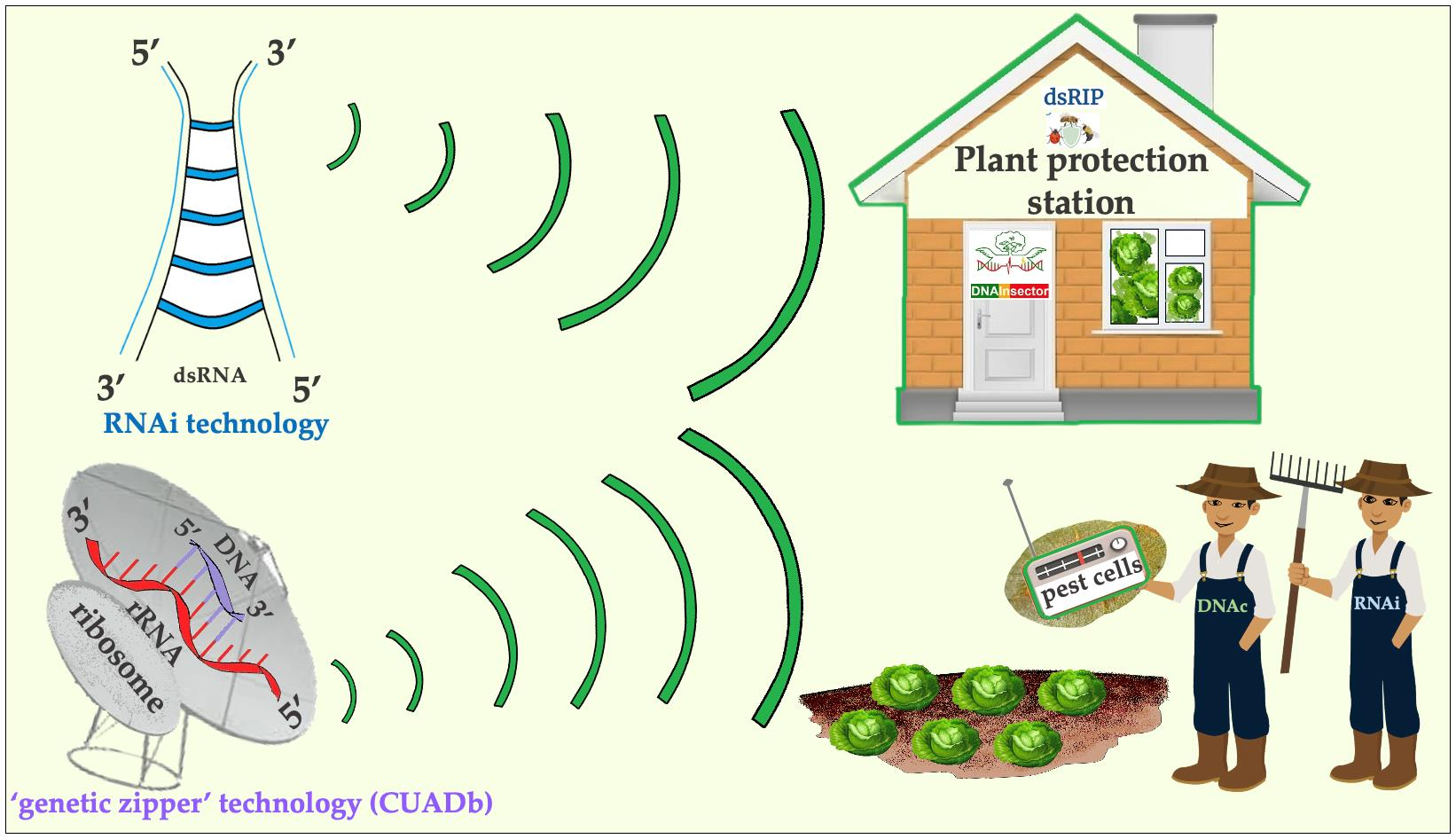

Contact Unmodified Antisense DNA Biotechnology (CUADb)-Based Oligonucleotide Insecticides and RNA Biocontrols: Molecular Bases and Potential in Plant Protection




Abstract
1. Introduction
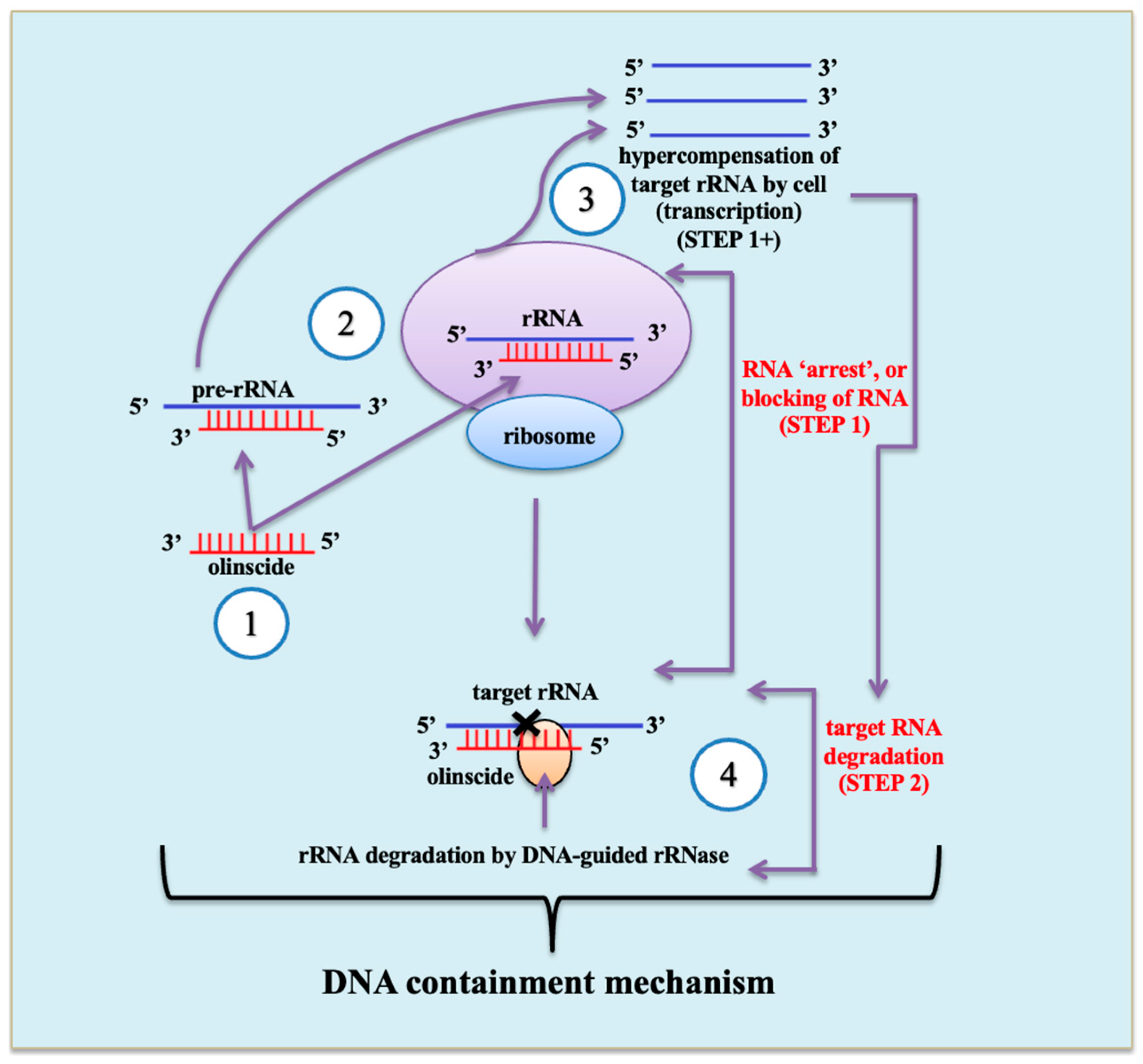
2. CUADb-Based Oligonucleotide Insecticides
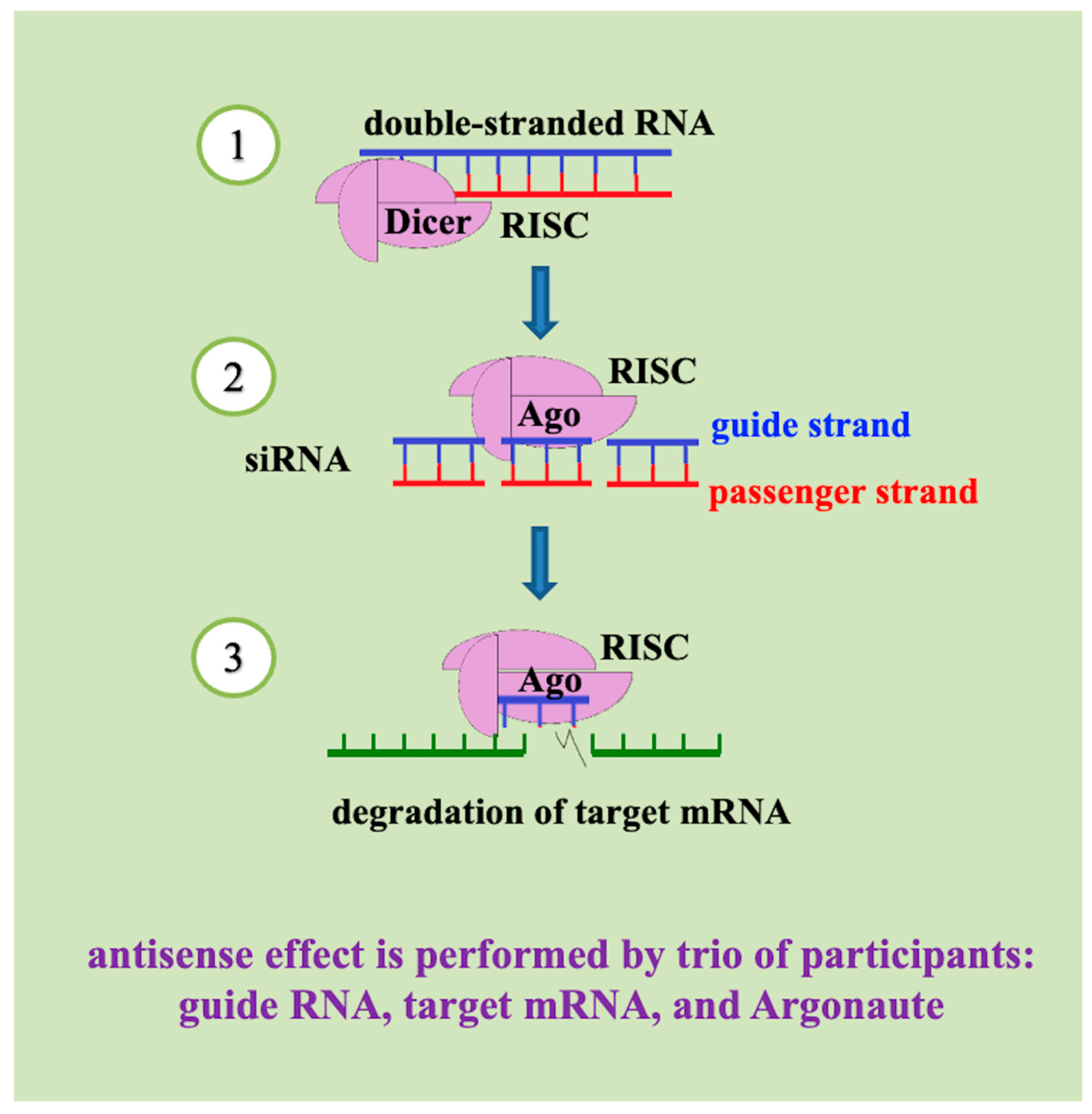
3. RNA Biocontrols
4. Conclusions
Author Contributions
Funding
Institutional Review Board Statement
Informed Consent Statement
Data Availability Statement
Acknowledgments
Conflicts of Interest
References
- Zheng, J.; Xu, Y. A Review: Development of Plant Protection Methods and Advances in Pesticide Application Technology in Agro-Forestry Production. Agriculture 2023, 13, 2165. [Google Scholar] [CrossRef]
- van den Berg, H.; daSilva Bezerra, H.S.; Al-Eryani, S.; Chanda, E.; Nagpal, B.N.; Knox, T.B.; Velayudhan, R.; Yadav, R.S. Recent trends in global insecticide use for disease vector control and potential implications for resistance management. Sci. Rep. 2021, 11, 23867. [Google Scholar] [CrossRef]
- Sparks, T.C.; Storer, N.; Porter, A.; Slater, R.; Nauen, R. Insecticide resistance management and industry: The origins and evolution of the Insecticide Resistance Action Committee (IRAC) and the mode of action classification scheme. Pest Manag. Sci. 2021, 77, 2609–2619. [Google Scholar] [CrossRef]
- Mogilicherla, K.; Roy, A. Epigenetic regulations as drivers of insecticide resistance and resilience to climate change in arthropod pests. Front. Genet. 2023, 13, 1044980. [Google Scholar] [CrossRef]
- Christiaens, O.; Whyard, S.; Vélez, A.M.; Smagghe, G. Double-Stranded RNA Technology to Control Insect Pests: Current Status and Challenges. Front. Plant Sci. 2020, 11, 451. [Google Scholar] [CrossRef]
- Oberemok, V.V.; Useinov, R.Z.; Skorokhod, O.A.; Gal’chinsky, N.V.; Novikov, I.A.; Makalish, T.P.; Yatskova, E.V.; Sharmagiy, A.K.; Golovkin, I.O.; Gninenko, Y.I.; et al. Oligonucleotide Insecticides for Green Agriculture: Regulatory Role of Contact DNA in Plant–Insect Interactions. Int. J. Mol. Sci. 2022, 23, 15681. [Google Scholar] [CrossRef] [PubMed]
- Palli, S.R. RNAi turns 25: Contributions and challenges in insect science. Front. Insect Sci. 2023, 3, 1209478. [Google Scholar] [CrossRef] [PubMed]
- Gal’chinsky, N.V.; Yatskova, E.V.; Novikov, I.A.; Sharmagiy, A.K.; Plugatar, Y.V.; Oberemok, V.V. Mixed insect pest populations of Diaspididae species under control of oligonucleotide insecticides: 3′-end nucleotide matters. Pestic. Biochem. Physiol. 2024, 200, 105838. [Google Scholar] [CrossRef] [PubMed]
- Oberemok, V.V.; Laikova, K.V.; Repetskaya, A.I.; Kenyo, I.M.; Gorlov, M.V.; Kasich, I.N.; Krasnodubets, A.M.; Gal’chinsky, N.V.; Fomochkina, I.I.; Zaitsev, A.S.; et al. A Half-Century History of Applications of Antisense Oligonucleotides in Medicine, Agriculture and Forestry: We Should Continue the Journey. Molecules 2018, 23, 1302. [Google Scholar] [CrossRef]
- Rank, A.P.; Koch, A. Lab-to-Field Transition of RNA Spray Applications—How Far Are We? Front. Plant Sci. 2021, 12, 755203. [Google Scholar] [CrossRef]
- Oberemok, V.V.; Gal’chinsky, N.V.; Useinov, R.Z.; Novikov, I.A.; Puzanova, Y.V.; Filatov, R.I.; Kouakou, N.J.; Kouame, K.F.; Kra, K.D.; Laikova, K.V. Four Most Pathogenic Superfamilies of Insect Pests of Suborder Sternorrhyncha: Invisible Superplunderers of Plant Vitality. Insects 2023, 14, 462. [Google Scholar] [CrossRef] [PubMed]
- Koeppe, S.; Kawchuk, L.; Kalischuk, M. RNA Interference Past and Future Applications in Plants. Int. J. Mol. Sci. 2023, 24, 9755. [Google Scholar] [CrossRef] [PubMed]
- Oberemok, V.V.; Novikov, I.A.; Yatskova, E.V.; Bilyk, A.I.; Sharmagiy, A.K.; Gal’chinsky, N.V. Potent and selective ‘genetic zipper’ method for DNA-programmable plant protection: Innovative oligonucleotide insecticides against Trioza alacris Flor. Chem. Biol. Technol. Agric. 2024, 11, 144. [Google Scholar] [CrossRef]
- Nitnavare, R.B.; Bhattacharya, J.; Singh, S.; Kour, A.; Hawkesford, M.J.; Arora, N. Next Generation dsRNA-Based Insect Control: Success So Far and Challenges. Front. Plant Sci. 2021, 12, 673576. [Google Scholar] [CrossRef]
- Kumar, H.; Gal’chinsky, N.; Sweta, V.; Negi, N.; Filatov, R.; Chandel, A.; Ali, J.; Oberemok, V.; Laikova, K. Perspectives of RNAi, CUADb and CRISPR/Cas as Innovative Antisense Technologies for Insect Pest Control: From Discovery to Practice. Insects 2025, 16, 746. [Google Scholar] [CrossRef]
- Oberemok, V.V.; Laikova, K.V.; Andreeva, O.A.; Gal’chinsky, N.V. Biodegradation of insecticides: Oligonucleotide insecticides and double-stranded RNA biocontrols paving the way for eco-innovation. Front. Environ. Sci. 2024, 12, 1430170. [Google Scholar] [CrossRef]
- Oberemok, V.; Gal’chinsky, N.; Novikov, I.; Sharmagiy, A.; Yatskova, E.; Laikova, E.; Plugatar, Y. Ribosomal RNA-Specific Antisense DNA and Double-Stranded DNA Trigger rRNA Biogenesis and Insecticidal Effects on the Insect Pest Coccus hesperidum. Int. J. Mol. Sci. 2025, 26, 7530. [Google Scholar] [CrossRef]
- Oberemok, V.V. Method of Elimination of Phyllophagousinsects from Order Lepidoptera. UA Patent 36445, 19 May 2008. [Google Scholar]
- Oberemok, V.V.; Laikova, K.V.; Zaitsev, A.S.; Shumskykh, M.N.; Kasich, I.N.; Gal’chinsky, N.V.; Bekirova, V.V.; Makarov, V.V.; Agranovsky, A.A.; Gushchin, V.A.; et al. Molecular Alliance of Lymantria dispar Multiple Nucleopolyhedrovirus and a Short Unmodified Antisense Oligonucleotide of Its Anti-Apoptotic IAP-3 Gene: A Novel Approach for Gypsy Moth Control. Int. J. Mol. Sci. 2017, 18, 2446. [Google Scholar] [CrossRef]
- Oberemok, V.V.; Laikova, K.V.; Gal’chinsky, N.V.; Useinov, R.Z.; Novikov, I.A.; Temirova, Z.Z.; Shumskykh, M.N.; Krasnodubets, A.M.; Repetskaya, A.I.; Dyadichev, V.V.; et al. DNA insecticide developed from the Lymantria dispar 5.8S ribosomal RNA gene provides a novel biotechnology for plant protection. Sci. Rep. 2019, 9, 6197. [Google Scholar] [CrossRef]
- Deng, Z.L.; Münch, P.C.; Mreches, R.; McHardy, A.C. Rapid and accurate identification of ribosomal RNA sequences via deep learning. Nucleic Acids Res. 2022, 50, e60. [Google Scholar] [CrossRef] [PubMed]
- Szaflarski, W.; Leśniczak-Staszak, M.; Sowiński, M.; Ojha, S.; Aulas, A.; Dave, D.; Malla, S.; Anderson, P.; Ivanov, P.; Lyons, S.M. Early rRNA processing is a stress-dependent regulatory event whose inhibition maintains nucleolar integrity. Nucleic Acids Res. 2022, 50, 1033–1051. [Google Scholar] [CrossRef]
- Wang, D.; Farhana, A. Biochemistry, RNA Structure. In StatPearls; StatPearls Publishing: Treasure Island, FL, USA, 2025. Available online: https://www.ncbi.nlm.nih.gov/books/NBK558999/ (accessed on 8 February 2026).
- Gingeras, T.R. Current frontiers in RNA research. Front. RNA Res. 2023, 1, 1152146. [Google Scholar] [CrossRef]
- Gal’chinsky, N.V.; Yatskova, E.V.; Novikov, I.A.; Useinov, R.Z.; Kouakou, N.J.; Kouame, K.F.; Kra, K.D.; Sharmagiy, A.K.; Plugatar, Y.V.; Laikova, K.V.; et al. Icerya purchasi Maskell (Hemiptera: Monophlebidae) Control Using Low Carbon Footprint Oligonucleotide Insecticides. Int. J. Mol. Sci. 2023, 24, 11650. [Google Scholar] [CrossRef] [PubMed]
- Oberemok, V.V.; Puzanova, Y.V.; Gal’chinsky, N.V. The ‘genetic zipper’ method offers a cost-effective solution for aphid control. Front. Insect Sci. 2024, 4, 1467221. [Google Scholar] [CrossRef]
- Gal’chinsky, N.; Useinov, R.; Yatskova, E.; Laikova, K.; Novikov, I.; Gorlov, M.; Trikoz, N.; Sharmagiy, A.; Plugatar, Y.; Oberemok, V. A breakthrough in the efficiency of contact DNA insecticides: Rapid high mortality rates in the sap-sucking insects Dynaspidiotus britannicus Comstock and Unaspis euonymi Newstead. J. Plant Prot. Res. 2020, 60, 220–223. [Google Scholar] [CrossRef]
- Useinov, R.Z.; Gal’chinsky, N.; Yatskova, E.; Novikov, I.; Puzanova, Y.; Trikoz, N.; Sharmagiy, A.; Plugatar, Y.; Laikova, K.; Oberemok, V. To bee or not to bee: Creating DNA insecticides to replace non-selective organophosphate insecticides for use against the soft scale insect Ceroplastes Japonicus green. J. Plant Prot. Res. 2020, 60, 406–409. [Google Scholar]
- Novikov, A.; Yatskova, E.; Bilyk, A.; Puzanova, Y.; Sharmagiy, A.; Oberemok, V. Efficient Control of the Obscure Mealybug Pseudococcus viburni with DNA Insecticides. In Vitro Cell. Dev. Biol.-Anim. 2023, 59, 92–108. [Google Scholar] [CrossRef]
- Oberemok, V.; Laikova, K.; Andreeva, O.; Dmitrienko, A.; Rybareva, T.; Ali, J.; Gal’chinsky, N. DNA-Programmable Oligonucleotide Insecticide Eriola-11 Targets Mitochondrial 16S rRNA and Exhibits Strong Insecticidal Activity Against Woolly Apple Aphid (Eriosoma lanigerum) Hausmann. Int. J. Mol. Sci. 2025, 26, 7486. [Google Scholar] [CrossRef]
- Puzanova, Y.V.; Novikov, I.A.; Bilyk, A.I.; Sharmagiy, A.K.; Plugatar, Y.V.; Oberemok, V.V. Perfect Complementarity Mechanism for Aphid Control: Oligonucleotide Insecticide Macsan-11 Selectively Causes High Mortality Rate for Macrosiphoniella sanborni Gillette. Int. J. Mol. Sci. 2023, 24, 11690. [Google Scholar] [CrossRef]
- Gavrilova, D.; Grizanova, E.; Novikov, I.; Laikova, E.; Zenkova, A.; Oberemok, V.; Dubovskiy, I. Antisense DNA acaricide targeting pre-rRNA of two-spotted spider mite Tetranychus urticae as efficacy-enhancing agent of fungus Metarhizium robertsii. J. Invertebr. Pathol. 2025, 211, 108297. [Google Scholar] [CrossRef]
- Oberemok, V.V.; Laikova, K.V.; Gal’chinsky, N.V. Contact unmodified antisense DNA (CUAD) biotechnology: List of pest species successfully targeted by oligonucleotide insecticides. Front. Agron. 2024, 6, 1415314, Correction in: Front. Agron. 2024, 6, 1448212. [Google Scholar] [CrossRef]
- Oberemok, V.V.; Laikova, K.V.; Gal’chinsky, N.V. Toward Global Pesticide Market: Notes on Using of Innovative ’Genetic Zipper’ Method. Indian J. Entomol. 2025, 88, 549–552. [Google Scholar] [CrossRef]
- Oberemok, V.V.; Laikova, K.; Shumskykh, M.; Kenyo, I.; Kasich, I.; Deri, K.; Seidosmanova, E.; Krasnodubets, K.; Bekirova, V.; Gal’chinsky, N. A primary attempt of Leptinotarsa decemlineata control using contact DNA insecticide based on short antisense oligonucleotide of its CYP6B gene. J. Plant. Prot. Res. 2018, 58, 106–108. [Google Scholar] [CrossRef]
- Zaitsev, A.S.; Omel’chenko, O.V.; Nyadar, P.M.; Oberemok, V.V. Influence of DNA oligonucleotides used as insecticides on biochemical parameters of Quercus robur and Malus domestica. Bull. Transilv. Univ. Brasov. Ser. II For. Wood Ind. Agric. Food Eng. 2015, 8, 37–46. [Google Scholar]
- Oberemok, V.V.; Nyadar, P.; Zaytsev, O.; Levchenko, N.; Shiyntum, H.; Omelchenko, O. Pioneer evaluation of the possible side effects of the DNA insecticides on wheat (Triticum aestivum L.). Int. J. Biochem. Biophys. 2013, 1, 57–63. [Google Scholar] [CrossRef]
- Nyadar, P.M.; Oberemok, V.; Omelchenko, A.; Kerimova, S.; Seidosmanova, E.; Krasnodubiets, A.; Shumskykh, M.; Bekirova, V.; Galchinsky, N.; Vvdensky, V. DNA Insecticides: The Effect of Concentration on Non-Target Plant Organisms Such as Wheat (Triticum aestivum L.). J. Plant Prot. Res. 2019, 59, 60–68. [Google Scholar] [CrossRef]
- Oberemok, V.V.; Laikova, V.K.; Zaitsev, S.A.; Nyadar, M.P.; Shumskykh, N.M.; Gninenko, I.Y. DNA insecticides based on iap3 gene fragments of cabbage looper and gypsy moth nuclear polyhedrosis viruses show selectivity for non-target insects. Arch. Biol. Sci. 2015, 67, 785–792. [Google Scholar] [CrossRef]
- Du, Q.; Thonberg, H.; Wang, J.; Wahlestedt, C.; Liang, Z. A systematic analysis of the silencing effects of an active siRNA at all single-nucleotide mismatched target sites. Nucleic Acids Res. 2005, 33, 1671–1677. [Google Scholar] [CrossRef]
- Luige, O.; Karalė, K.; Bose, P.P.; Bollmark, M.; Tedebark, U.; Murtola, M.; Strömberg, R. Influence of sequence variation on the RNA cleavage activity of Zn2+-dimethyl-dppz-PNA-based artificial enzymes. RSC Adv. 2022, 12, 5398–5406. [Google Scholar] [CrossRef]
- Cao, M.; Gatehouse, J.A.; Fitches, E.C. A Systematic Study of RNAi Effects and dsRNA Stability in Tribolium castaneum and Acyrthosiphon pisum, Following Injection and Ingestion of Analogous dsRNAs. Int. J. Mol. Sci. 2018, 19, 1079. [Google Scholar] [CrossRef] [PubMed]
- Dias, N.; Stein, C.A. Antisense oligonucleotides: Basic concepts and mechanisms. Mol. Cancer Ther. 2002, 1, 347–355. [Google Scholar]
- Will, C.L.; Luhrmann, R. Spliceosomal UsnRNP biogenesis, structure and function. Curr. Opin. Cell Biol. 2001, 13, 290–301. [Google Scholar] [CrossRef]
- Bachellerie, J.P.; Cavaille, J.; Huttenhofer, A. The expanding snoRNA world. Biochimie 2002, 84, 775–790. [Google Scholar] [CrossRef] [PubMed]
- Wang, Y.; Zhang, H.; Li, H.; Miao, X. Second-generation sequencing supply an effective way to screen RNAi targets in large scale for potential application in pest insect control. PLoS ONE 2011, 6, e18644. [Google Scholar] [CrossRef]
- He, L.; Huang, Y.; Tang, X. RNAi-based pest control: Production, application and the fate of dsRNA. Front. Bioeng. Biotechnol. 2022, 10, 1080576. [Google Scholar] [CrossRef]
- Sun, C.X.; Wang, J.; Hu, X. Leveraging cell-free gene expression for RNA-based biopesticides production: Mechanisms and applications. Pest Manag. Sci. 2025, 81, 7614–7624. [Google Scholar] [CrossRef]
- Cunningham, D.S.; MacEachran, D.; Abshire, J.R.; Dhamankar, H.; Iwuchukwu, I.; Gupta, M.; Moura, M.E.; Sudharsan, N.; Skizim, N.; Jain, R.; et al. Methods and Compositions for Nucleoside Triphosphate and Ribonucleic Acid Production. U.S. Patent US20190144489A1, 8 December 2020. [Google Scholar]
- Levanova, A.A.; Poranen, M.M. Utilization of Bacteriophage phi6 for the Production of High-Quality Double-Stranded RNA Molecules. Viruses 2024, 16, 166. [Google Scholar] [CrossRef] [PubMed]
- Cerio, R.J.; Vandergaast, R.; Friesen, P.D. Host insect inhibitor-of-apoptosis SfIAP functionally replaces baculovirus IAP but is differentially regulated by its N-terminal leader. J. Virol. 2020, 84, 11448–11460. [Google Scholar] [CrossRef] [PubMed]
- Evseev, P.V.; Landysheva, Y.G.; Landyshev, N.N.; Ignatov, A.N. Presence of rRNA-like regions in Genbank viral sequences. In 2021 IEEE Ural-Siberian Conference on Computational Technologies in Cognitive Science, Genomics and Biomedicine (CSGB); IEEE: New York, NY, USA, 2021; pp. 310–314. [Google Scholar] [CrossRef]
- Balakrishnan, L.; Bambara, R.A. Okazaki fragment metabolism. Cold Spring Harb. Perspect. Biol. 2013, 5, a010173. [Google Scholar] [CrossRef]
- Sharma, V.K.; Sharma, R.K.; Singh, S.K. Antisense oligonucleotides: Modifications and clinical trials. Med. Chem. Comm. 2014, 5, 1454–1471. [Google Scholar] [CrossRef]
- Jakubowska, M.; Dobosz, R.; Zawada, D.; Kowalska, J. A Review of Crop Protection Methods against the Twospotted Spider Mite—Tetranychus urticae Koch (Acari: Tetranychidae)—With Special Reference to Alternative Methods. Agriculture 2022, 12, 898. [Google Scholar] [CrossRef]
- Xu, D.; He, Y.; Zhang, Y.; Xie, W.; Wu, Q.; Wang, S. Status of pesticide resistance and associated mutations in the two-spotted spider mite, Tetranychus urticae, in China. Pestic. Biochem. Physiol. 2018, 150, 89–96. [Google Scholar] [CrossRef]
- Gill, G.S.; Lu, H.B.; Bui, H.; Clark, R.M.; Ramirez, R.A. Short-term responses of spider mites inform mechanisms of maize resistance to a generalist herbivore. Sci. Rep. 2024, 14, 19607. [Google Scholar] [CrossRef] [PubMed]
- Gul, H.; Gadratagi, B.G.; Güncan, A.; Tyagi, S.; Ullah, F.; Desneux, N.; Liu, X. Fitness costs of resistance to insecticides in insects. Front. Physiol. 2023, 14, 1238111. [Google Scholar] [CrossRef] [PubMed]
- Saleem, M.; Hussain, D.; Hasan, M.U.; Sagheer, M.; Ghouse, G.; Zubair, M.; Brown, J.K.; Cheema, S.A. Differential insecticide resistance in Bemisia tabaci (Hemiptera: Aleyrodidae) field populations in the Punjab Province of Pakistan. Heliyon 2022, 8, e12010. [Google Scholar] [CrossRef]
- Silva, A.X.; Jander, G.; Samaniego, H.; Ramsey, J.S.; Figueroa, C.C. Insecticide Resistance Mechanisms in the Green Peach Aphid Myzus persicae (Hemiptera: Aphididae) I: A Transcriptomic Survey. PLoS ONE 2012, 7, e36366. [Google Scholar] [CrossRef] [PubMed]
- Machado, E.P.; Souza, E.V.; Dias, G.S.; Camargo, P.V.; Omoto, C. Unraveling imidacloprid resistance in Dalbulus maidis (Hemiptera: Cicadellidae): Inheritance patterns, cross-resistance and stability. Crop Prot. 2025, 195, 107256. [Google Scholar] [CrossRef]
- Whalon, M.E.; Mota-Sanchez, R.M.; Hollingworth, R.M. Arthropods Resistant to Pesticides Database (ARPD). 2015. Available online: http://www.pesticideresistance.org (accessed on 13 February 2015).
- Barnes, M.A.; Turner, C.R. The ecology of environmental DNA and implications for conservation genetics. Conserv. Genet. 2016, 17, 1–17. [Google Scholar] [CrossRef]
- TriLink BioTechnologies. Feasibility of Antisense Oligonucleotides as DNAInsecticides. Available online: https://www.trilinkbiotech.com/blog/feasibility-of-antisense-oligonucleotides-as-dna-insecticides/ (accessed on 8 February 2026).
- Kumar, H.; Sharma, M.; Chandel, A. DNA Insecticides: Future of Crop Protection. Agric. Food E-Newsl. 2022, 4, 551. [Google Scholar]
- Hunter, W.B.; Cooper, W.R.; Sandoval-Mojica, A.F.; McCollum, G.; Aishwarya, V.; Pelz-Stelinski, K.S. Improving Suppression of Hemipteran Vectors and Bacterial Pathogens of Citrus and Solanaceous Plants: Advances in Antisense Oligonucleotides (FANA). Front. Agron. 2021, 3, 675247. [Google Scholar] [CrossRef]
- Sandoval-Mojica, A.F.; Hunter, W.B.; Aishwarya, V.; Bonilla, S.; Pelz-Stelinski, K.S. Antibacterial FANA oligonucleotides as a novel approach for managing the Huanglongbing pathosystem. Sci. Rep. 2021, 11, 2760. [Google Scholar] [CrossRef]
- Priti; Mukherjee, S.K.; Ghosh, A. Silencing of Thrips palmi UHRF1BP1 and PFAS Using Antisense Oligos Induces Mortality and Reduces Tospovirus Titer in Its Vector. Pathogens 2022, 11, 1319. [Google Scholar] [CrossRef]
- Fire, A.; Xu, S.; Montgomery, M.K.; Kostas, S.A.; Driver, S.E.; Mello, C.C. Potent and specific genetic interference by double-stranded RNA in Caenorhabditis elegans. Nature 1998, 391, 806–811. [Google Scholar] [CrossRef]
- Tomoyasu, Y.; Miller, C.; Tomita, S.; Schoppmeier, M.; Grossmann, D.; Bucher, G. Exploring systemic RNA interference in insects: A genome- wide survey for RNAi genes in Tribolium. Genome Biol. 2008, 9, R10. [Google Scholar] [CrossRef]
- Svoboda, P. Key Mechanistic Principles and Considerations Concerning RNA Interference. Front. Plant Sci. 2020, 11, 1237. [Google Scholar] [CrossRef]
- Carmell, M.A.; Xuan, Z.; Zhang, M.Q.; Hannon, G.J. The Argonaute family: Tentacles that reach into RNAi, developmental control, stem cell maintenance, and tumorigenesis. Genes. Dev. 2002, 16, 2733–2742. [Google Scholar] [CrossRef]
- Obbard, D.J.; Gordon, K.H.; Buck, A.H.; Jiggins, F.M. The evolution of RNAi as a defence against viruses and transposable elements. Philos. Trans. R. Soc. Lond. B Biol. Sci. 2009, 364, 99–115. [Google Scholar] [CrossRef] [PubMed]
- Wu, J.; Yang, J.; Cho, W.C.; Zheng, Y. Argonaute proteins: Structural features, functions and emerging roles. J. Adv. Res. 2020, 24, 317–324. [Google Scholar] [CrossRef] [PubMed]
- Müller, M.; Fazi, F.; Ciaudo, C. Argonaute Proteins: From Structure to Function in Development and Pathological Cell Fate Determination. Front. Cell Dev. Biol. 2020, 7, 360. [Google Scholar] [CrossRef] [PubMed]
- Wang, W.; Han, B.W.; Tipping, C.; Ge, D.T.; Zhang, Z.; Weng, Z.; Zamore, P.D. Slicing and binding by Ago3 or Aub trigger Piwi-bound piRNA production by distinct mechanisms. Mol. Cell. 2015, 59, 819–830. [Google Scholar] [CrossRef]
- Chattopadhyay, T.; Biswal, P.; Lalruatfela, A.; Mallick, B. Emerging roles of PIWI- interacting RNAs (piRNAs) and PIWI proteins in head and neck cancer and their potential clinical implications. Biochim. Biophys. Acta Rev. Cancer 2022, 1877, 188772. [Google Scholar] [CrossRef]
- Bodemann, R.R.; Rahfeld, P.; Stock, M.; Kunert, M.; Wielsch, N.; Groth, M.; Frick, S.; Boland, W.; Burse, A. Precise RNAi-mediated silencing of metabolically active proteins in the defence secretions of juvenile leaf beetles. Proc. Biol. Sci. 2012, 279, 4126–4134. [Google Scholar] [CrossRef]
- Powell, M.E.; Bradish, H.M.; Gatehouse, J.A.; Fitches, E.C. Systemic RNAi in the small hive beetle Aethina tumida Murray (Coleoptera: Nitidulidae), a serious pest of the European honey bee Apis mellifera. Pest Manag. Sci. 2017, 73, 53–63. [Google Scholar] [CrossRef] [PubMed]
- Rodrigues, T.B.; Dhandapani, R.K.; Duan, J.J.; Palli, S.R. RNA interference in the Asian Longhorned beetle: Identification of key RNAi genes and reference genes for RT-qPCR. Sci. Rep. 2017, 7, 8913. [Google Scholar] [CrossRef]
- Irles, P.; Silva-Torres, F.A.; Piulachs, M.-D. RNAi reveals the key role of Nervana 1 in cockroach oogenesis and embryo development. Insect Biochem. Mol. Biol. 2013, 43, 178–188. [Google Scholar] [CrossRef]
- Santos, D.; Vanden Broeck, J.; Wynant, N. Systemic RNA interference in locusts: Reverse genetics and possibilities for locust pest control. Curr. Opin. Insect Sci. 2014, 6, 9–14. [Google Scholar] [CrossRef] [PubMed]
- Li, L.; Jing, A.; Xie, M.; Li, S.; Ren, C. Applications of RNA interference in American cockroach. J. Vis. Exp. 2021, 178, e63380. [Google Scholar] [CrossRef]
- Hoang, T.; Foquet, B.; Rana, S.; Little, D.W.; Woller, D.A.; Sword, G.A.; Song, H. Development of RNAi methods for the Mormon cricket, Anabrus simplex (Orthoptera: Tettigoniidae). Insects 2022, 13, 739. [Google Scholar] [CrossRef]
- Christiaens, O.; Swevers, L.; Smagghe, G. DsRNA Degradation in the Pea Aphid (Acyrthosiphon pisum) Associated with Lack of Response in RNAi Feeding and Injection Assay. Peptides 2014, 53, 307–314. [Google Scholar] [CrossRef] [PubMed]
- Jain, R.G.; Robinson, K.E.; Asgari, S.; Mitter, N. Current scenario of RNAi-based hemipteran control. Pest Manag. Sci. 2021, 77, 2188–2196. [Google Scholar] [CrossRef]
- Jain, R.G.; Robinson, K.E.; Fletcher, S.J.; Mitter, N. RNAi-Based Functional Genomics in Hemiptera. Insects 2020, 11, 557. [Google Scholar] [CrossRef] [PubMed]
- Miller, S.C.; Brown, S.J.; Tomoyasu, Y. Larval RNAi in Drosophila? Dev. Genes Evol. 2008, 218, 505–510. [Google Scholar] [CrossRef]
- Terenius, O.; Papanicolaou, A.; Garbutt, J.S.; Eleftherianos, I.; Huvenne, H.; Kanginakudru, S.; Albrechtsen, M.; An, C.; Aymeric, J.L.; Barthel, A.; et al. RNA interference in Lepidoptera: An overview of successful and unsuccessful studies and implications for experimental design. J. Insect Physiol. 2011, 57, 231–245. [Google Scholar] [CrossRef]
- Bramlett, M.; Plaetinck, G.; Maienfisch, P. RNA-based biocontrols—A new paradigm in crop protection. Engineering 2020, 6, 522–527. [Google Scholar] [CrossRef]
- Rodrigues, T.B.; Mishra, S.K.; Sridharan, K.; Barnes, E.R.; Alyokhin, A.; Tuttle, R.; Kokulapalan, W.; Garby, D.; Skizim, N.; Tang, Y.W.; et al. First sprayable double-stranded RNA-bases biopesticide product target Type-5 Colorado potato beetle. Front. Plant Sci. 2021, 12, 728652. [Google Scholar] [CrossRef]
- Koo, J.; Palli, S.R. Recent advances in understanding of the mechanisms of RNA interference in insects. Insect Mol. Biol. 2024, 34, 491–504. [Google Scholar] [CrossRef]
- Liu, S.; Jaouannet, M.; Dempsey, D.A.; Imani, J.; Coustau, C.; Kogel, K.H. RNA-based technologies for insect control in plant production. Biotechnol. Adv. 2020, 39, 107463. [Google Scholar] [CrossRef]
- Ivashuta, S.I.; Zhang, Y.; Wiggins, E.B.; Ramaseshadri, P.; Segers, G.C.; Johnson, S.; Meyer, S.E.; Kerstetter, R.A.; McNulty, B.C.; Bolognesi, R.; et al. Environmental RNAi in herbivorous insects. RNA 2015, 21, 840–850. [Google Scholar] [CrossRef] [PubMed]
- Dietz-Pfeilstetter, A.; Mendelsohn, M.; Gathmann, A.; Klinkenbuß, D. Considerations and regulatory approaches in the USA and in the EU for dsRNA-based externally applied pesticides for plant protection. Front. Plant Sci. 2021, 12, 974. [Google Scholar] [CrossRef]
- Galli, M.; Feldmann, F.; Vogler, U.K.; Kogel, K.H. Can biocontrol be the game-changer in integrated pest management? A review of definitions, methods and strategies. J. Plant Dis. Prot. 2024, 131, 265–291. [Google Scholar] [CrossRef]
- Head, G.P.; Carroll, M.W.; Evans, S.P.; Rule, D.M.; Willse, A.R.; Clark, T.L.; Storer, N.P.; Flannagan, R.D.; Samuel, L.W.; Meinke, L.J. Evaluation of SmartStax and SmartStax PRO maize against western corn rootworm and northern corn rootworm: Efficacy and resistance management. Pest. Manag Sci. 2017, 73, 1883–1899. [Google Scholar] [CrossRef]
- U.S. Environmental Protection Agency. Pesticide Product Label, SmartStax PRO Enlist Refuge Advanced. Available online: https://www3.epa.gov/pesticides/chem_search/ppls/062719-00707-20170608.pdf (accessed on 19 April 2025).
- Vaccari, T.; Rusten, T.E.; Menut, L.; Nezis, I.P.; Brech, A.; Stenmark, H.; Bilder, D. Comparative analysis of ESCRT-I, ESCRT-II and ESCRT-III function in Drosophila by efficient isolation of ESCRT mutants. J. Cell Sci. 2009, 122, 2413–2423. [Google Scholar] [CrossRef]
- Bolognesi, R.; Ramaseshadri, P.; Anderson, J.; Bachman, P.; Clinton, W.; Flannagan, R.; Ilagan, O.; Lawrence, C.; Levine, S.; Moar, W.; et al. Characterizing the mechanism of action of double-stranded RNA activity against western corn rootworm (Diabrotica virgifera virgifera LeConte). PLoS ONE 2012, 7, e47534. [Google Scholar] [CrossRef]
- Moar, W.; Khajuria, C.; Pleau, M.; Ilagan, O.; Chen, M.; Jiang, C.; Price, P.; McNulty, B.; Clark, T.; Head, G. Cry3Bb1-Resistant Western Corn Rootworm, Diabrotica virgifera virgifera (LeConte) Does Not Exhibit Cross-Resistance to DvSnf7 dsRNA. PLoS ONE 2017, 12, e0169175. [Google Scholar] [CrossRef]
- Khajuria, C.; Ivashuta, S.; Wiggins, E.; Flagel, L.; Moar, W.; Pleau, M.; Miller, K.; Zhang, Y.; Ramaseshadri, P.; Jiang, C.; et al. Development and characterization of the first dsRNA-resistant insect population from western corn rootworm, Diabrotica virgifera virgifera LeConte. PLoS ONE 2018, 13, e0197059. [Google Scholar] [CrossRef]
- Reinders, J.D.; Moar, W.J.; Head, G.P.; Hassan, S.; Meinke, L.J. Effects of SmartStax® and SmartStax® PRO maize on western corn rootworm (Diabrotica virgifera virgifera LeConte) larval feeding injury and adult life history parameters. PLoS ONE 2023, 18, e0288372. [Google Scholar] [CrossRef] [PubMed]
- Xiong, Y.; Zeng, H.; Zhang, Y.; Xu, D.; Qiu, D. Silencing the HaHR3 gene by transgenic plant-mediated RNAi to disrupt Helicoverpa armigera development. Int. J. Biol. Sci. 2013, 9, 370–381. [Google Scholar] [CrossRef]
- Mao, J.; Zeng, F. Plant-mediated RNAi of a gap gene-enhanced tobacco tolerance against the Myzus persicae. Transgenic Res. 2014, 23, 145–152. [Google Scholar] [CrossRef] [PubMed]
- Guo, W.; Bai, C.; Wang, Z.; Wang, P.; Fan, Q.; Mi, X.; Wang, L.; He, J.; Pang, J.; Luo, X.; et al. Double-strand- ed RNAs high-efficiently protect transgenic potato from Leptinotarsa decemlineata by disrupting juvenile hormone biosynthesis. J. Agric. Food Chem. 2018, 66, 11990–11999. [Google Scholar] [CrossRef] [PubMed]
- Shen, G.M.; Song, C.G.; Ao, Y.Q.Y.; Xiao, Y.H.; Zhang, Y.J.; Pan, Y.; He, L. Transgenic cotton expressing CYP392A4 double-stranded RNA decreases the reproductive ability of Tetranychus cinnabarinus. Insect Sci. 2017, 24, 559–568. [Google Scholar] [CrossRef]
- Pallis, S.; Alyokhin, A.; Manley, B.; Rodrigues, T.; Barnes, E.; Narva, K. Effects of Low Doses of a Novel dsRNA-based Biopesticide (Calantha) on the Colorado Potato Beetle. J. Econ. Entomol. 2023, 116, 456–461. [Google Scholar] [CrossRef] [PubMed]
- GreenLight Biosciences. Available online: https://greenlightbiosciences.com/in-the-pipeline-colorado-potato-beetle (accessed on 20 January 2025).
- Narva, K.; Toprak, U.; Alyokhin, A.; Groves, R.; Jurat-Fuentes, J.L.; Moar, W.; Nauen, R.; Whipple, S.; Head, G. Insecticide resistance management scenarios differ for RNA-based sprays and traits. Insect Mol. Biol. 2025, 34, 518–526. [Google Scholar] [CrossRef]
- Zha, W.; Peng, X.; Chen, R.; Du, B.; Zhu, L.; He, G. Knockdown of midgut genes by dsRNA-transgenic plant-mediated RNA interference in the hemipteran insect Nilaparvata lugens. PLoS ONE 2011, 6, e20504. [Google Scholar] [CrossRef]
- Prentice, K.; Christiaens, O.; Pertry, I.; Bailey, A.; Niblett, C.; Ghislain, M.; Gheysen, G.; Smagghe, G. RNAi-based gene silencing through dsRNA injection or ingestion against the African sweet potato weevil Cylas puncticollis (Coleoptera: Brentidae). Pest Manag. Sci. 2017, 73, 44–52. [Google Scholar] [CrossRef]
- Camargo, R.A.; Barbosa, G.O.; Possignolo, I.P.; Peres, L.E.; Lam, E.; Lima, J.E.; Figueira, A.; Marques-Souza, H. RNA interference as a gene silencing tool to control Tuta absoluta in tomato (Solanum lycopersicum). PeerJ 2016, 4, e2673. [Google Scholar] [CrossRef]
- Sun, Z.; Liu, J.; Chen, Y.; Zhang, J.; Zhong, G. RNAi-mediated knockdown of α-Spectrin depresses reproductive performance in female Bactrocera dorsalis. Pestic. Biochem. Physiol. 2023, 196, 105611. [Google Scholar] [CrossRef]
- Arya, S.K.; Singh, S.; Upadhyay, S.K.; Tiwari, V.; Saxena, G.; Verma, P.C. RNAi-based gene silencing in Phenacoccus solenopsis and its validation by in planta expression of a double-stranded RNA. Pest Manag. Sci. 2021, 77, 1796–1805. [Google Scholar] [CrossRef]
- Chen, J.Z.; Jiang, Y.X.; Li, M.W.; Li, J.W.; Zha, B.H.; Yang, G. Double-stranded RNA-degrading enzymes reduce the efficiency of RNA interference in Plutella xylostella. Insects 2021, 12, 712. [Google Scholar] [CrossRef]
- Li, N.; Xu, X.; Li, J.; Hull, J.J.; Chen, L.; Liang, G. A spray-induced gene silencing strategy for Spodoptera frugiperda oviposition inhibition using nanomaterial-encapsulated dsEcR. Int. J. Biol. Macromol. 2024, 281, 136503. [Google Scholar] [CrossRef] [PubMed]
- Bera, P.; Suby, S.B.; Dixit, S.; Vijayan, V.; Kumar, N.; Sekhar, J.C.; Vadassery, J. Identification of novel target genes for RNAi mediated management of the pest, Fall Armyworm (Spodoptera frugiperda, JE Smith). Crop Prot. 2025, 187, 106972. [Google Scholar] [CrossRef]
- Guo, P.P.; Yang, X.B.; Yang, H.; Zhou, C.; Long, G.Y.; Jin, D.C. Knockdown of the β-N-acetylhexosaminidase genes by RNA interference inhibited the molting and increased the mortality of the white-backed planthopper, Sogatella furcifera. Pestic. Biochem. Physiol. 2025, 207, 106216. [Google Scholar]
- Schellens, S.; Lenaerts, C.; Pérez Baca, M.D.R.; Cools, D.; Peeters, P.; Marchal, E.; Vanden Broeck, J. Knockdown of the Halloween genes Spook, Shadow and Shade influences oocyte development, egg shape, oviposition and hatching in the desert locust. Int. J. Mol. Sci. 2022, 23, 9232. [Google Scholar] [CrossRef]
- Lu, J.; Shen, J. Target genes for RNAi in pest control: A comprehensive overview. Entomol. Gen. 2024, 44, 95–114. [Google Scholar] [CrossRef]
- Sarkar, S.C.; Hatt, S.; Philips, A.; Akter, M.; Milroy, S.P.; Xu, W. Tomato Potato Psyllid Bactericera cockerelli (Hemiptera: Triozidae) in Australia: Incursion, Potential Impact and Opportunities for Biological Control. Insects 2023, 14, 263. [Google Scholar] [CrossRef]
- Rinaldi, A.; Mat Jalaluddin, N.S.; Hussain, R.B.M.; Ghapor, A.A. Building public trust and acceptance towards spray-on RNAi biopesticides: Lessons from current ethical, legal and social discourses. GM Crops Food 2025, 16, 383–397. [Google Scholar] [CrossRef]
- Gunasekara, S.; Fidelman, P.; Fletcher, S.; Gardiner, D.; Manzie, N.; Ashworth, P.; Tardin-Coelho, R.; Mitter, N. The future of dsRNA-based biopesticides will require global regulatory cohesion. Nat. Plants 2025, 11, 664–667. [Google Scholar] [CrossRef]
- Singh, J.K.D.; Jalaluddin, N.S.M.; Sanan-Mishra, N.; Harikrishna, J.A. Genetic modification in Malaysia andIndia: Current regulatory framework and the specialcase of non-transformative RNAi in agriculture. Plant Cell Rep. 2019, 38, 1449–1463. [Google Scholar] [CrossRef]
- Mezzetti, B.; Smagghe, G.; Arpaia, S.; Christiaens, O.; Dietz-Pfeilstetter, A.; Jones, H.; Kostov, K.; Sabbadini, S.; Opsahl-Sorteberg, H.; Ventura, V.; et al. Rnai: What is its positionin agriculture? J. Pest Sci. 2020, 93, 1125–1130, Correction in: J. Pest. Sci. 2021, 94, 1555. [Google Scholar] [CrossRef]
- Tardin-Coelho, R.; Fletcher, S.; Manzie, N.; Gunasekara, S.N.; Fidelman, P.; Mitter, N.; Ashworth, P. A systematic review on public perceptions of RNAi-based biopesticides: Developing social licence to operate. Agriculture 2025, 3, 15. [Google Scholar] [CrossRef]
- Ulrich, J.; Dao, V.A.; Majumdar, U.; Schmitt-Engel, C.; Schwirz, J.; Schultheis, D.; Ströhlein, N.; Troelenberg, N.; Grossmann, D.; Richter, T.; et al. Large scale RNAi screen in Tribolium reveals novel target genes for pest control and the proteasome as prime target. BMC Genom. 2015, 16, 674. [Google Scholar] [CrossRef]
- Buer, B.; Dönitz, J.; Milner, M.; Mehlhorn, S.; Hinners, C.; Siemanowski-Hrach, J.; Ulrich, J.K.; Großmann, D.; Cedden, D.; Nauen, R.; et al. Superior target genes and pathways for RNAi-mediated pest control revealed by genome-wide analysis in the beetle Tribolium castaneum. Pest Manag. Sci. 2025, 81, 1026–1036. [Google Scholar] [CrossRef] [PubMed]
- Cedden, D.; Bucher, G. The quest for the best target genes for RNAi-mediated pest control. Insect Mol. Biol. 2024, 34, 505–517. [Google Scholar] [CrossRef] [PubMed]
- Guo, X.; Wang, Y.; Sinakevitch, I.; Lei, H.; Smith, B.H. Comparison of RNAi knockdown effect of tyramine receptor 1 induced by dsRNA and siRNA in brains of the honey bee, Apis mellifera. Insect Physiol. 2018, 111, 47–52. [Google Scholar] [CrossRef]
- Asokan, R.; Chandra, G.S.; Manamohan, M.; Kumar, N.K. Effect of diet delivered various concentrations of double-stranded RNA in silencing a midgut and a non-midgut gene of Helicoverpa armigera. Bull. Entomol. Res. 2013, 103, 555–563. [Google Scholar] [CrossRef] [PubMed]
- Camargo, R.d.A.; Herai, R.H.; Santos, L.N.; Bento, F.M.; Lima, J.E.; Marques, S.H.; Figueira, A. De novo transcriptome assembly and analysis to identify potential gene targets for RNAi-mediated control of the tomato leafminer (Tuta absoluta). BMC Genom. 2015, 16, 635. [Google Scholar] [CrossRef]
- Peng, J. Gene redundancy and gene compensation: An updated view. Genet. Genom. 2019, 46, 329–333. [Google Scholar] [CrossRef]
- Willow, J.; Sulg, S.; Taning, C.N.T.; Silva, A.I.; Christiaens, O.; Kaasik, R.; Prentice, K.; Lövei, G.L.; Smagghe, G.; Veromann, E. Targeting a coatomer protein complex-I gene via RNA interference results in effective lethality in the pollen beetle Brassicogethes aeneus. J. Pest Sci. 2021, 94, 703–712. [Google Scholar] [CrossRef]
- Mendoza-Alatorre, M.; Julian-Chávez, B.; Solano-Ornelas, S.; Siqueiros-Cendón, T.S.; Torres-Castillo, J.A.; Sinagawa-García, S.R.; Abraham-Juárez, M.J.; González-Barriga, C.D.; Rascón-Cruz, Q.; Siañez-Estrada, L.I.; et al. RNAi in Pest Control: Critical Factors Affecting dsRNA Efficacy. Insects 2025, 16, 737. [Google Scholar] [CrossRef]
- Dalakouras, A.; Vlachostergios, D. Epigenetic approaches to crop breeding: Current status and perspectives. J. Exp. Bot. 2021, 72, 5356–5371. [Google Scholar] [CrossRef]
- Powell, M.; Pyati, P.; Cao, M.; Bell, H.; Gatehouse, J.A.; Fitches, E. Insecticidal effects of dsRNA targeting the Diap1 gene in dipteran pests. Sci. Rep. 2017, 7, 15147. [Google Scholar] [CrossRef]
- Chen, J.; Peng, Y.; Zhang, H.; Wang, K.; Zhao, C.; Zhu, G.; Reddy Palli, S.; Han, Z. Off-target effects of RNAi correlate with the mismatch rate between dsRNA and non-target mRNA. RNA Biol. 2021, 18, 1747–1759. [Google Scholar] [CrossRef]
- Hirai, M.; Terenius, O.; Li, W.; Faye, I. Baculovirus and dsRNA induce Hemolin, but no antibacterial activity, in Antheraea pernyi. Insect Mol. Biol. 2004, 13, 399–405. [Google Scholar] [CrossRef] [PubMed]
- Brutscher, L.M.; Daughenbaugh, K.F.; Flenniken, M.L. Virus and dsRNA-triggered transcriptional responses reveal key components of honey bee antiviral defense. Sci. Rep. 2017, 7, 6448. [Google Scholar] [CrossRef] [PubMed]
- Castellanos, N.L.; Smagghe, G.; Sharma, R.; Oliveira, E.E.; Christiaens, O. Liposome encapsulation and EDTA formulation of dsRNA targeting essential genes increase oral RNAi-caused mortality in the Neotropical stink bug Euschistus heros. Pest Manag. Sci. 2019, 75, 537–548. [Google Scholar] [CrossRef] [PubMed]
- Dubelman, S.; Fischer, J.; Zapata, F.; Huizinga, K.; Jiang, C.; Uffman, J.; Levine, S.; Carson, D. Environmental Fate of Double-Stranded RNA in Agricultural Soils. PLoS ONE 2014, 9, e93155. [Google Scholar] [CrossRef]
- Parker, K.M.; Barragán Borrero, V.; van Leeuwen, D.M.; Lever, M.A.; Mateescu, B.; Sander, M. Environmental Fate of RNA Interference Pesticides: Adsorption and Degradation of Double-Stranded RNA Molecules in Agricultural Soils. Environ. Sci. Technol. 2019, 53, 3027–3036. [Google Scholar] [CrossRef]
- Garbutt, J.S.; Bellés, X.; Richards, E.H.; Reynolds, S.E. Persistence of double-stranded RNA in insect hemolymph as a potential determiner of RNA interference success: Evidence from Manduca sexta and Blattella germanica. J. Insect Physiol. 2013, 59, 171–178. [Google Scholar] [CrossRef]
- Peng, Y.; Wang, K.; Fu, W.; Sheng, C.; Han, Z. Biochemical Comparison of dsRNA Degrading Nucleases in Four Different Insects. Front. Physiol. 2018, 9, 624. [Google Scholar] [CrossRef]
- Taning, C.N.T.; Arpaia, S.; Christiaens, O.; Dietz-Pfeilstetter, A.; Jones, H.; Mezzetti, B.; Sabbadini, S.; Sorteberg, H.; Sweet, J.; Ventura, V.; et al. RNA-Based Biocontrol Compounds: Current Status and Perspectives to Reach the Market. Pest Manag. Sci. 2020, 76, 841–845. [Google Scholar] [CrossRef]
- Zotti, M.; dos Santos, E.A.; Cagliari, D.; Christiaens, O.; Taning, C.N.T.; Smagghe, G. RNA interference technology in crop protection against arthropod pests, pathogens and nematodes. Pest Manag. Sci. 2018, 74, 1239–1250. [Google Scholar] [CrossRef]
- Verdonckt, T.W.; Vanden Broeck, J. Methods for the cost-effective production of bacteria-derived double-stranded RNA for in vitro knockdown studies. Front. Physiol. 2022, 13, 836106. [Google Scholar] [CrossRef] [PubMed]
- Thorp, H.H. The importance of being r: Greater oxidative stability of RNA compared with DNA. Chem. Biol. 2000, 7, 33–36. [Google Scholar] [CrossRef] [PubMed]
- Williams, J.S.; Lujan, S.A.; Kunkel, T.A. Processing ribonucleotides incorporated during eukaryotic DNA replication. Nat. Rev. Mol. Cell Biol. 2016, 17, 350–363. [Google Scholar] [CrossRef] [PubMed]
- Roberts, A.F.; Devos, Y.; Lemgo, G.N.Y.; Zhou, X. Biosafety research for non-target organism risk assessment of RNAi-based GE plants. Front. Plant Sci. 2015, 6, 958. [Google Scholar] [CrossRef]
- Christiaens, O.; Sweet, J.; Dzhambazova, T.; Urru, I.; Smagghe, G.; Kostov, K.; Arpaia, S. Implementation of RNAi-based arthropod pest control: Environmental risks, potential for resistance and regulatory considerations. J. Pest Sci. 2022, 95, 1–15. [Google Scholar] [CrossRef]



| Key Features | CUAD Biotechnology (‘Genetic Zipper’ Technology) | dsRNA Technology |
|---|---|---|
| Effector | ssDNA | dsRNA |
| Mechanism | DNA containment First step: rRNA arrest and its hypercompensation; second step: rRNA degradation | RNA interference First step: processing of dsRNA into siRNA; second step: mRNA degradation |
| Mode of action | ssDNA:rRNA | ssRNA:mRNA |
| Nuclease involved | DNA(-RNA hybrid)-guided RNase (such as RNase H1) | Argonaute |
| Synthesis | Liquid-phase/solid-phase oligonucleotide synthesis based on phosphoramidite chemistry [25,31] | Large-scale cell-free biomanufacturing (cell-free dsRNA production) [47,48,49] and utilization of bacteriophage phi6 for the production of high-quality dsRNA molecules [50] |
| Target pests with best outcome | Hemiptera: Sternorrhyncha | Coleoptera: Chrysomeloidea, Tenebrionoidea |
Disclaimer/Publisher’s Note: The statements, opinions and data contained in all publications are solely those of the individual author(s) and contributor(s) and not of MDPI and/or the editor(s). MDPI and/or the editor(s) disclaim responsibility for any injury to people or property resulting from any ideas, methods, instructions or products referred to in the content. |
© 2026 by the authors. Licensee MDPI, Basel, Switzerland. This article is an open access article distributed under the terms and conditions of the Creative Commons Attribution (CC BY) license.
Share and Cite
Oberemok, V.; Laikova, K.; Ali, J.; Chachoua, I.; Gal’chinsky, N. Contact Unmodified Antisense DNA Biotechnology (CUADb)-Based Oligonucleotide Insecticides and RNA Biocontrols: Molecular Bases and Potential in Plant Protection. Curr. Issues Mol. Biol. 2026, 48, 235. https://doi.org/10.3390/cimb48020235
Oberemok V, Laikova K, Ali J, Chachoua I, Gal’chinsky N. Contact Unmodified Antisense DNA Biotechnology (CUADb)-Based Oligonucleotide Insecticides and RNA Biocontrols: Molecular Bases and Potential in Plant Protection. Current Issues in Molecular Biology. 2026; 48(2):235. https://doi.org/10.3390/cimb48020235
Chicago/Turabian StyleOberemok, Vol, Kate Laikova, Jamin Ali, Ilyas Chachoua, and Nikita Gal’chinsky. 2026. "Contact Unmodified Antisense DNA Biotechnology (CUADb)-Based Oligonucleotide Insecticides and RNA Biocontrols: Molecular Bases and Potential in Plant Protection" Current Issues in Molecular Biology 48, no. 2: 235. https://doi.org/10.3390/cimb48020235
APA StyleOberemok, V., Laikova, K., Ali, J., Chachoua, I., & Gal’chinsky, N. (2026). Contact Unmodified Antisense DNA Biotechnology (CUADb)-Based Oligonucleotide Insecticides and RNA Biocontrols: Molecular Bases and Potential in Plant Protection. Current Issues in Molecular Biology, 48(2), 235. https://doi.org/10.3390/cimb48020235