Research Progress on the Anticancer Effect of Ginsenoside Rh1

Abstract
1. Introduction
2. Ginsenoside Rh1 and Digestive System Tumors
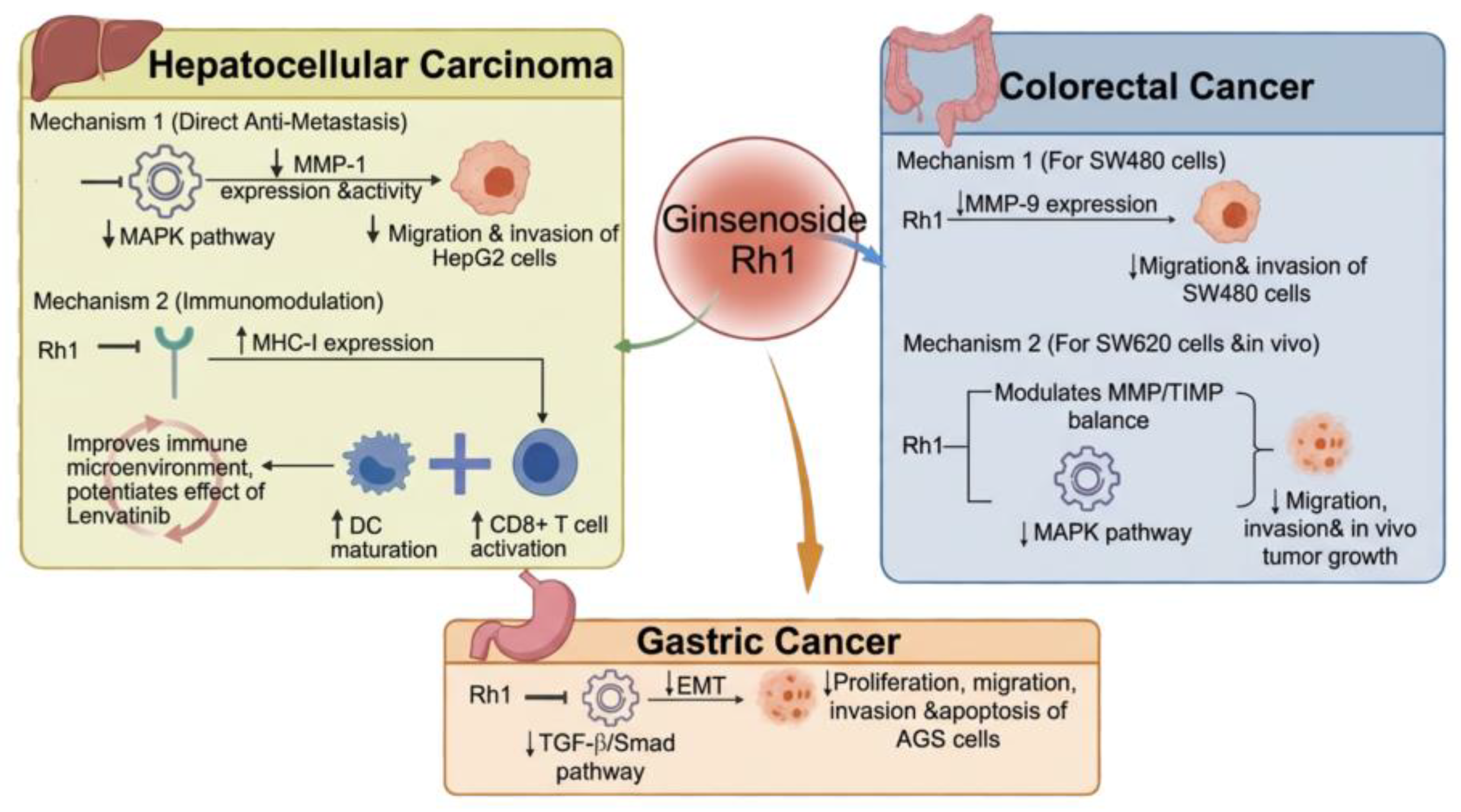
2.1. Ginsenoside Rh1 and Hepatocellular Carcinoma
2.2. Ginsenoside Rh1 and Gastric Cancer
2.3. Ginsenoside Rh1 and Colorectal Cancer
3. Ginsenoside Rh1 and Gynecological Tumors
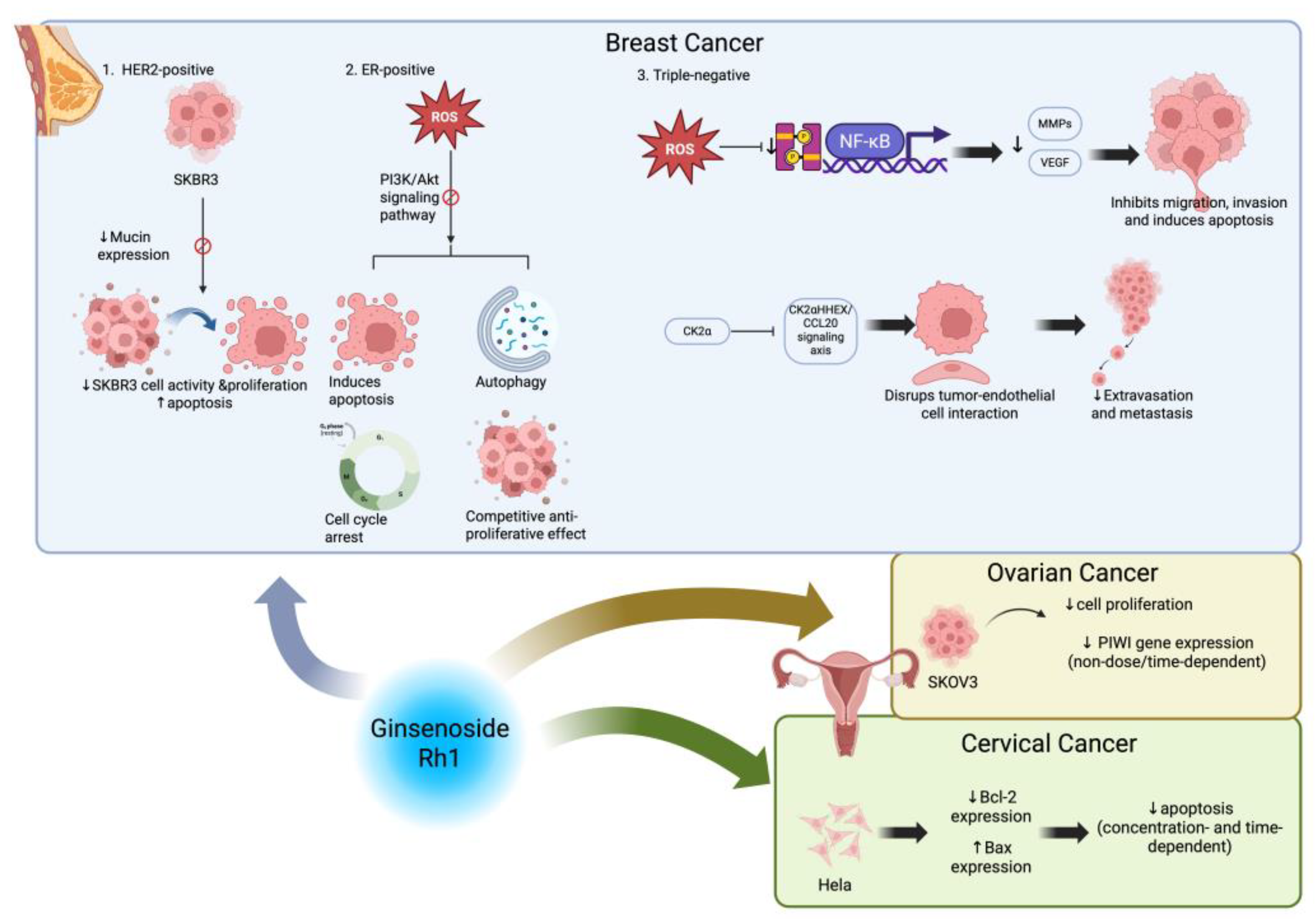
3.1. Ginsenoside Rh1 and Breast Cancer
3.2. Ginsenoside Rh1 and Ovarian Cancer
3.3. Ginsenoside Rh1 and Cervical Carcinoma
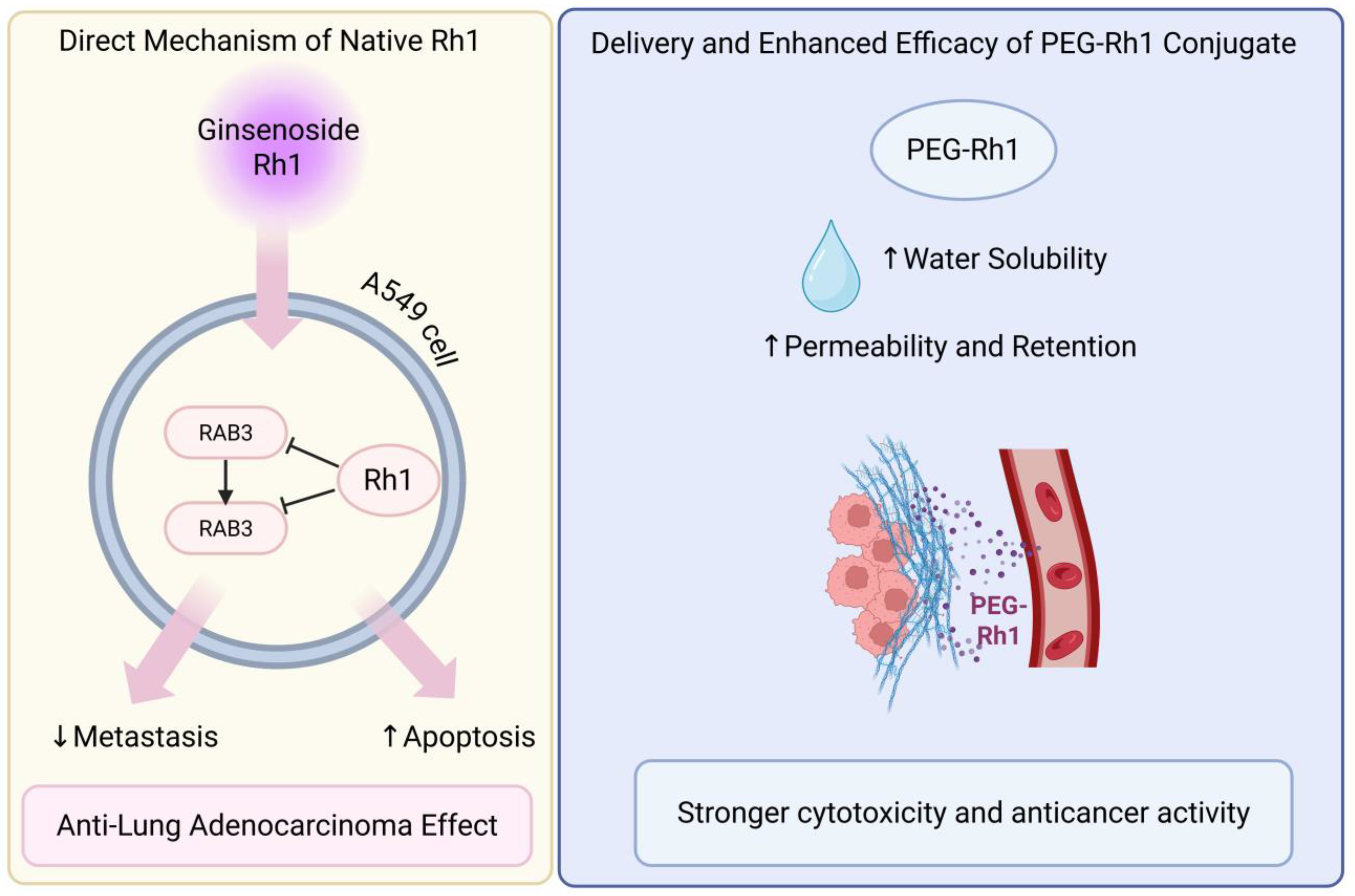
4. Ginsenoside Rh1 and Lung Cancer
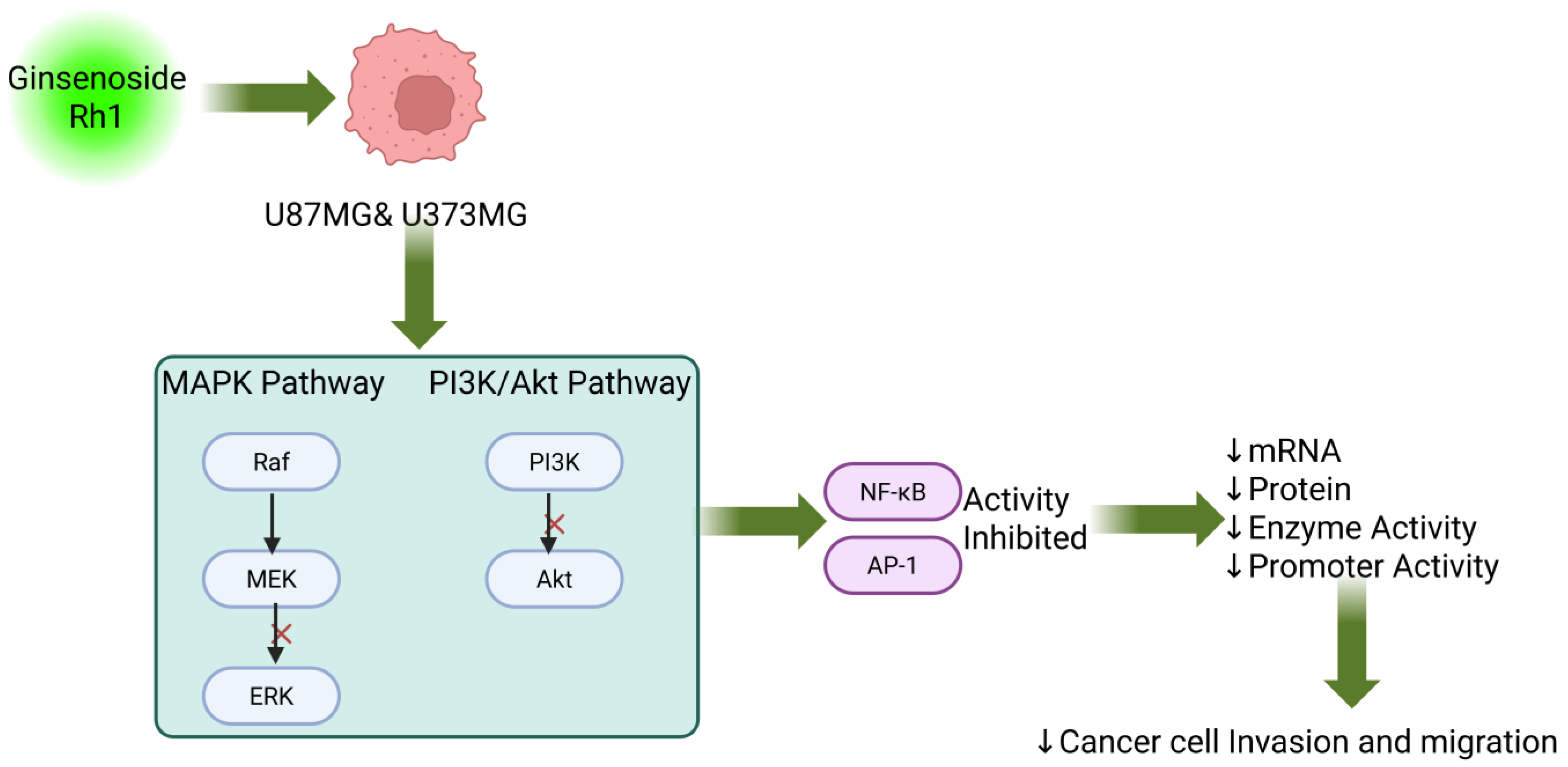
5. Ginsenoside Rh1 and Glioma
6. Summary and Outlook
Author Contributions
Funding
Data Availability Statement
Acknowledgments
Conflicts of Interest
Abbreviations
| AP-1 | Activating Protein-1 |
| MAPK | Mitogen-activated Protein Kinase |
| MHC-I | major histocompatibility complex class-I |
| MMPs | matrix metalloproteinases |
| NF-κB | Nuclear Factor-κB |
| PEG | Polyethylene Glycol |
| PI3K/Akt | phosphoinositide 3-kinase/protein kinase B |
| PMA | Phorbol 12-myristate 13-acetate |
| PPD | protopanaxadiol |
| PPT | protopanaxatriol |
| RhoA/ROCK1 | Ras Homolog Gene Family Member A/Rho-associated Coiled Protein Kinase 1 |
| ROS | reactive oxygen species |
| STAT3 | Signal Transducer and Activator of Transcription 3 |
| TGF-β/Smad | Transforming Growth Factor Beta/Small Mother Against Decapentaplegic |
References
- Liu, J.; Nile, S.H.; Xu, G.; Wang, Y.; Kai, G. Systematic Exploration of Astragalus Membranaceus and Panax Ginseng as Immune Regulators: Insights from the Comparative Biological and Computational Analysis. Phytomedicine 2021, 86, 153077, Erratum in: Phytomedicine 2021, 91, 153618. Erratum in: Phytomedicine 2021, 91, 153730. [Google Scholar] [CrossRef]
- Ren, Z.; Shi, C.; Guo, Y. Progress in the Study of Active Components and Mechanism of Ginseng Radix et Rhizoma in Anti-Tumor Activi. Glob. Tradit. Chin. Med. 2024, 17, 1897–1906. [Google Scholar]
- Liu, J.; Pandya, P.; Afshar, S. Therapeutic Advances in Oncology. Int. J. Mol. Sci. 2021, 22, 2008. [Google Scholar] [CrossRef] [PubMed]
- Zugazagoitia, J.; Guedes, C.; Ponce, S.; Ferrer, I.; Molina-Pinelo, S.; Paz-Ares, L. Current Challenges in Cancer Treatment. Clin. Ther. 2016, 38, 1551–1566. [Google Scholar] [CrossRef] [PubMed]
- Naeem, A.; Hu, P.; Yang, M.; Zhang, J.; Liu, Y.; Zhu, W.; Zheng, Q. Natural Products as Anticancer Agents: Current Status and Future Perspectives. Molecules 2022, 27, 8367. [Google Scholar] [CrossRef]
- Zhao, L.; Xu, J.; Zhang, L. Research Progress on the Anti-tumor Mechanism of Ginsenosides. Chin. J. Mod. Appl. Pharm. 2023, 40, 2016–2022. [Google Scholar] [CrossRef]
- Yang, W.-Z.; Hu, Y.; Wu, W.-Y.; Ye, M.; Guo, D.-A. Saponins in the Genus Panax L. (Araliaceae): A Systematic Review of Their Chemical Diversity. Phytochemistry 2014, 106, 7–24. [Google Scholar] [CrossRef]
- Lin, Y.-P.; Zhang, M.-P.; Wang, K.-Y.; Sun, C.-Y.; Wang, Y. Research Achievements on Ginsenosides Biosynthesis from Panax Ginseng. Zhongguo Zhong Yao Za Zhi 2016, 41, 4292–4302. [Google Scholar] [CrossRef]
- Sun, Y.; Liu, Y.; Chen, K. Roles and Mechanisms of Ginsenoside in Cardiovascular Diseases: Progress and Perspectives. Sci. China Life Sci. 2016, 59, 292–298. [Google Scholar] [CrossRef]
- Cao, M.; Yu, H.-S.; Song, X.-B.; Ma, B.-P. Advances in the study of derivatization of ginsenosides and their anti-tumor structure-activity relationship. Yao Xue Xue Bao 2012, 47, 836–843. [Google Scholar]
- Wang, Y.-S.; Lin, Y.; Li, H.; Li, Y.; Song, Z.; Jin, Y.-H. The Identification of Molecular Target of (20S) Ginsenoside Rh2 for Its Anti-Cancer Activity. Sci. Rep. 2017, 7, 12408. [Google Scholar] [CrossRef]
- Wang, B.; Wang, F.; Ding, A.; Zhao, H.; Bu, X. Regorafenib and Ginsenoside Combination Therapy: Inhibition of HepG2 Cell Growth through Modulating Survivin and Caspase-3 Gene Expression. Clin. Transl. Oncol. 2020, 22, 1491–1498. [Google Scholar] [CrossRef] [PubMed]
- Li, H.; Huang, N.; Zhu, W.; Wu, J.; Yang, X.; Teng, W.; Tian, J.; Fang, Z.; Luo, Y.; Chen, M.; et al. Modulation the Crosstalk between Tumor-Associated Macrophages and Non-Small Cell Lung Cancer to Inhibit Tumor Migration and Invasion by Ginsenoside Rh2. BMC Cancer 2018, 18, 579. [Google Scholar] [CrossRef] [PubMed]
- Chen, W.; Chu, S.; Li, H.; Qiu, Y. MicroRNA-146a-5p Enhances Ginsenoside Rh2-Induced Anti-Proliferation and the Apoptosis of the Human Liver Cancer Cell Line HepG2. Oncol. Lett. 2018, 16, 5367–5374. [Google Scholar] [CrossRef] [PubMed]
- Qian, J.; Li, J.; Jia, J.-G.; Jin, X.; Yu, D.-J.; Guo, C.-X.; Xie, B.; Qian, L.-Y. Ginsenoside-Rh2 Inhibits Proliferation and Induces Apoptosis of Human Gastric Cancer SGC-7901 Side Population Cells. Asian Pac. J. Cancer Prev. 2016, 17, 1817–1821. [Google Scholar] [CrossRef]
- Chen, W.; Qiu, Y. Ginsenoside Rh2 Targets EGFR by Up-Regulation of miR-491 to Enhance Anti-Tumor Activity in Hepatitis B Virus-Related Hepatocellular Carcinoma. Cell Biochem. Biophys. 2015, 72, 325–331. [Google Scholar] [CrossRef]
- Chen, Y.; Zhang, Y.; Song, W.; Zhang, Y.; Dong, X.; Tan, M. Ginsenoside Rh2 Inhibits Migration of Lung Cancer Cells under Hypoxia via Mir-491. Anti-Cancer Agents Med. Chem. 2019, 19, 1633–1641. [Google Scholar] [CrossRef]
- Yang, Z.; Zhao, T.; Liu, H.; Zhang, L. Ginsenoside Rh2 Inhibits Hepatocellular Carcinoma through β-Catenin and Autophagy. Sci. Rep. 2016, 6, 19383. [Google Scholar] [CrossRef]
- Ge, G.; Yan, Y.; Cai, H. Ginsenoside Rh2 Inhibited Proliferation by Inducing ROS Mediated ER Stress Dependent Apoptosis in Lung Cancer Cells. Biol. Pharm. Bull. 2017, 40, 2117–2124. [Google Scholar] [CrossRef]
- Lv, Q.; Rong, N.; Liu, L.-J.; Xu, X.-L.; Liu, J.-T.; Jin, F.-X.; Wang, C.-M. Antitumoral Activity of (20R)- and (20S)-Ginsenoside Rh2 on Transplanted Hepatocellular Carcinoma in Mice. Planta Med. 2016, 82, 705–711. [Google Scholar] [CrossRef]
- Ren, G.; Wu, C.; Teng, C.; Yao, Y. Synergistic Effect of Combined Protopanaxatiol and Ginsenoside Rh2 on Antiproliferative Activity in MDA-MB-231 Human Breast Cancer Cells in Vitro. Food Agric. Immunol. 2018, 29, 953–963. [Google Scholar] [CrossRef]
- Yang, L.; Xin, J.; Zhang, Z.; Yan, H.; Wang, J.; Sun, E.; Hou, J.; Jia, X.; Lv, H. TPGS-Modified Liposomes for the Delivery of Ginsenoside Compound K against Non-Small Cell Lung Cancer: Formulation Design and Its Evaluation in Vitro and in Vivo. J. Pharm. Pharmacol. 2016, 68, 1109–1118. [Google Scholar] [CrossRef] [PubMed]
- Lee, S.J.; Lee, J.S.; Lee, E.; Lim, T.-G.; Byun, S. The Ginsenoside Metabolite Compound K Inhibits Hormone-Independent Breast Cancer through Downregulation of Cyclin D1. J. Funct. Foods 2018, 46, 159–166. [Google Scholar] [CrossRef]
- Yang, L.; Zhang, Z.; Hou, J.; Jin, X.; Ke, Z.; Liu, D.; Du, M.; Jia, X.; Lv, H. Targeted Delivery of Ginsenoside Compound K Using TPGS/PEG-PCL Mixed Micelles for Effective Treatment of Lung Cancer. Int. J. Nanomed. 2017, 12, 7653–7667. [Google Scholar] [CrossRef]
- Hou, J.; Xue, J.; Zhao, X.; Wang, Z.; Li, W.; Li, X.; Zheng, Y. Octyl Ester of Ginsenoside Compound K as Novel Anti-Hepatoma Compound: Synthesis and Evaluation on Murine H22 Cells in Vitro and in Vivo. Chem. Biol. Drug Des. 2018, 91, 951–956. [Google Scholar] [CrossRef]
- Li, C.; Dong, Y.; Wang, L.; Xu, G.; Yang, Q.; Tang, X.; Qiao, Y.; Cong, Z. Ginsenoside Metabolite Compound K Induces Apoptosis and Autophagy in Non-Small Cell Lung Cancer Cells via AMPK-mTOR and JNK Pathways. Biochem. Cell Biol. 2019, 97, 406–414. [Google Scholar] [CrossRef]
- Zhang, X.; Zhang, S.; Sun, Q.; Jiao, W.; Yan, Y.; Zhang, X. Compound K Induces Endoplasmic Reticulum Stress and Apoptosis in Human Liver Cancer Cells by Regulating STAT3. Molecules 2018, 23, 1482. [Google Scholar] [CrossRef]
- Choi, E.; Kim, E.; Kim, J.H.; Yoon, K.; Kim, S.; Lee, J.; Cho, J.Y. AKT1-Targeted Proapoptotic Activity of Compound K in Human Breast Cancer Cells. J. Ginseng Res. 2019, 43, 692–698. [Google Scholar] [CrossRef]
- Chian, S.; Zhao, Y.; Xu, M.; Yu, X.; Ke, X.; Gao, R.; Yin, L. Ginsenoside Rd Reverses Cisplatin Resistance in Non-Small-Cell Lung Cancer A549 Cells by Downregulating the Nuclear Factor Erythroid 2-Related Factor 2 Pathway. Anti-Cancer Drugs 2019, 30, 838–845. [Google Scholar] [CrossRef]
- Zhang, E.; Shi, H.; Yang, L.; Wu, X.; Wang, Z. Ginsenoside Rd Regulates the Akt/mTOR/p70S6K Signaling Cascade and Suppresses Angiogenesis and Breast Tumor Growth. Oncol. Rep. 2017, 38, 359–367. [Google Scholar] [CrossRef]
- Wang, P.; Du, X.; Xiong, M.; Cui, J.; Yang, Q.; Wang, W.; Chen, Y.; Zhang, T. Ginsenoside Rd Attenuates Breast Cancer Metastasis Implicating Derepressing microRNA-18a-Regulated Smad2 Expression. Sci. Rep. 2016, 6, 33709. [Google Scholar] [CrossRef]
- Porta, C.; Paglino, C.; Mosca, A. Targeting PI3K/Akt/mTOR Signaling in Cancer. Front. Oncol. 2014, 4, 64. [Google Scholar] [CrossRef] [PubMed]
- Liu, Y.; Fan, D. Ginsenoside Rg5 Induces G2/M Phase Arrest, Apoptosis and Autophagy via Regulating ROS-Mediated MAPK Pathways against Human Gastric Cancer. Biochem. Pharmacol. 2019, 168, 285–304. [Google Scholar] [CrossRef] [PubMed]
- Liu, Y.; Fan, D. Ginsenoside Rg5 Induces Apoptosis and Autophagy via the Inhibition of the PI3K/Akt Pathway against Breast Cancer in a Mouse Model. Food Funct. 2018, 9, 5513–5527. [Google Scholar] [CrossRef] [PubMed]
- Xiao, M.; Xia, J.; Wang, Z.; Hu, W.; Fan, Y.; Jia, D.; Li, J.; Jing, P.; Wang, L.; Wang, Y. Ginsenoside Rg1 Attenuates Liver Injury Induced by D-galactose in Mice. Exp. Ther. Med. 2018, 16, 4100–4106. [Google Scholar] [CrossRef]
- Zhen, N.; Jin, L.; Ma, J.; Zhu, J.; Gu, S.; Wang, J.; Pan, Q.; Ni, X.; Xu, M. Ginsenoside Rg1 Impairs Homologous Recombination Repair by Targeting CtBP-Interacting Protein and Sensitizes Hepatoblastoma Cells to DNA Damage. Anti-Cancer Drugs 2018, 29, 756–766. [Google Scholar] [CrossRef]
- Zhou, P.; Xie, W.; He, S.; Sun, Y.; Meng, X.; Sun, G.; Sun, X. Ginsenoside Rb1 as an Anti-Diabetic Agent and Its Underlying Mechanism Analysis. Cells 2019, 8, 204. [Google Scholar] [CrossRef]
- Gong, L.; Yin, J.; Zhang, Y.; Huang, R.; Lou, Y.; Jiang, H.; Sun, L.; Jia, J.; Zeng, X. Neuroprotective Mechanisms of Ginsenoside Rb1 in Central Nervous System Diseases. Front. Pharmacol. 2022, 13, 914352. [Google Scholar] [CrossRef]
- Zheng, Q.; Zhu, P.-C.; Tong, Q.; Zheng, G.-Q.; Wang, Y. Ginsenoside Rb1 for Myocardial Ischemia/Reperfusion Injury: Preclinical Evidence and Possible Mechanisms. Oxidative Med. Cell. Longev. 2017, 2017, 6313625. [Google Scholar] [CrossRef]
- Zhou, P.; Xie, W.; Sun, Y.; Dai, Z.; Li, G.; Sun, G.; Sun, X. Ginsenoside Rb1 and Mitochondria: A Short Review of the Literature. Mol. Cell. Probes 2019, 43, 1–5, Erratum in: Mol. Cell. Probes 2020, 54, 101626. [Google Scholar] [CrossRef]
- Miao, L.; Yang, Y.; Li, Z.; Fang, Z.; Zhang, Y.; Han, C. Ginsenoside Rb2: A Review of Pharmacokinetics and Pharmacological Effects. J. Ginseng Res. 2022, 46, 206–213. [Google Scholar] [CrossRef] [PubMed]
- Lu, Z.; Mao, T.; Chen, K.; Chai, L.; Dai, Y.; Liu, K. Ginsenoside Rc: A Potential Intervention Agent for Metabolic Syndrome. J. Pharm. Anal. 2023, 13, 1375–1387. [Google Scholar] [CrossRef] [PubMed]
- Chen, Y.-Y.; Liu, Q.-P.; An, P.; Jia, M.; Luan, X.; Tang, J.-Y.; Zhang, H. Ginsenoside Rd: A Promising Natural Neuroprotective Agent. Phytomedicine 2022, 95, 153883. [Google Scholar] [CrossRef] [PubMed]
- Ma, X.; Wang, J. Research Progress on the Role of Ginsenoside Rd in Central Nervous System Diseases. Afr. Health Sci. 2025, 24, 325–331. [Google Scholar] [CrossRef]
- Nakhjavani, M.; Smith, E.; Townsend, A.R.; Price, T.J.; Hardingham, J.E. Anti-Angiogenic Properties of Ginsenoside Rg3. Molecules 2020, 25, 4905. [Google Scholar] [CrossRef]
- Yao, Z.-W.; Zhu, H. Pharmacological Mechanisms and Drug Delivery Systems of Ginsenoside Rg3: A Comprehensive Review. Pharmacol. Res. 2025, 216, 107799. [Google Scholar] [CrossRef]
- Liu, Y.; Fan, D. The Preparation of Ginsenoside Rg5, Its Antitumor Activity against Breast Cancer Cells and Its Targeting of PI3K. Nutrients 2020, 12, 246. [Google Scholar] [CrossRef]
- Yesmin Simu, S.; Ahn, S.; Castro-Aceituno, V.; Yang, D.-C. Ginsenoside Rg5: Rk1 Exerts an Anti-Obesity Effect on 3T3-L1 Cell Line by the Downregulation of PPARγ and CEBPα. Iran. J. Biotechnol. 2017, 15, 252–259. [Google Scholar] [CrossRef]
- Yang, D.-C.; Ponnuraj, S.; Siraj, F.; Kang, S.; Noh, H.; Min, J.-W.; Kim, Y.-J. Amelioration of Insulin Resistance by Rk1 + Rg5 Complex under Endoplasmic Reticulum Stress Conditions. Pharmacogn. Res. 2014, 6, 292. [Google Scholar] [CrossRef]
- Zhu, Y.; Zhu, C.; Yang, H.; Deng, J.; Fan, D. Protective Effect of Ginsenoside Rg5 against Kidney Injury via Inhibition of NLRP3 Inflammasome Activation and the MAPK Signaling Pathway in High-Fat Diet/Streptozotocin-Induced Diabetic Mice. Pharmacol. Res. 2020, 155, 104746. [Google Scholar] [CrossRef]
- Zhang, P. Ginsenoside-Rg5 Treatment Inhibits Apoptosis of Chondrocytes and Degradation of Cartilage Matrix in a Rat Model of Osteoarthritis. Oncol. Rep. 2017, 37, 1497–1502. [Google Scholar] [CrossRef]
- Shao, J.; Zheng, X.; Qu, L.; Zhang, H.; Yuan, H.; Hui, J.; Mi, Y.; Ma, P.; Fan, D. Ginsenoside Rg5/Rk1 Ameliorated Sleep via Regulating the GABAergic/Serotoninergic Signaling Pathway in a Rodent Model. Food Funct. 2020, 11, 1245–1257. [Google Scholar] [CrossRef] [PubMed]
- Cho, Y.-L.; Hur, S.-M.; Kim, J.-Y.; Kim, J.-H.; Lee, D.-K.; Choe, J.; Won, M.-H.; Ha, K.-S.; Jeoung, D.; Han, S.; et al. Specific Activation of Insulin-like Growth Factor-1 Receptor by Ginsenoside Rg5 Promotes Angiogenesis and Vasorelaxation. J. Biol. Chem. 2015, 290, 467–477. [Google Scholar] [CrossRef] [PubMed]
- Lv, J.; Lu, C.; Jiang, N.; Wang, H.; Huang, H.; Chen, Y.; Li, Y.; Liu, X. Protective Effect of Ginsenoside Rh2 on Scopolamine-Induced Memory Deficits through Regulation of Cholinergic Transmission, Oxidative Stress and the ERK-CREB-BDNF Signaling Pathway. Phytother. Res. 2021, 35, 337–345. [Google Scholar] [CrossRef] [PubMed]
- Hsieh, Y.-H.; Deng, J.-S.; Chang, Y.-S.; Huang, G.-J. Ginsenoside Rh2 Ameliorates Lipopolysaccharide-Induced Acute Lung Injury by Regulating the TLR4/PI3K/Akt/mTOR, Raf-1/MEK/ERK, and Keap1/Nrf2/HO-1 Signaling Pathways in Mice. Nutrients 2018, 10, 1208. [Google Scholar] [CrossRef]
- Tang, M.; Xie, X.; Yang, Y.; Li, F. Ginsenoside Compound K- a Potential Drug for Rheumatoid Arthritis. Pharmacol. Res. 2021, 166, 105498. [Google Scholar] [CrossRef]
- Gao, X.-Y.; Liu, G.-C.; Zhang, J.-X.; Wang, L.-H.; Xu, C.; Yan, Z.-A.; Wang, A.; Su, Y.-F.; Lee, J.-J.; Piao, G.-C.; et al. Pharmacological Properties of Ginsenoside Re. Front. Pharmacol. 2022, 13, 754191. [Google Scholar] [CrossRef]
- Yang, S.; Wang, J.; Cheng, P.; Chen, L.; Hu, J.; Zhu, G. Ginsenoside Rg1 in Neurological Diseases: From Bench to Bedside. Acta Pharmacol. Sin. 2023, 44, 913–930. [Google Scholar] [CrossRef]
- Wu, J.; Yang, Y.; Wan, Y.; Xia, J.; Xu, J.-F.; Zhang, L.; Liu, D.; Chen, L.; Tang, F.; Ao, H.; et al. New Insights into the Role and Mechanisms of Ginsenoside Rg1 in the Management of Alzheimer’s Disease. Biomed. Pharmacother. 2022, 152, 113207. [Google Scholar] [CrossRef]
- Zarneshan, S.N.; Fakhri, S.; Khan, H. Targeting Akt/CREB/BDNF Signaling Pathway by Ginsenosides in Neurodegenerative Diseases: A Mechanistic Approach. Pharmacol. Res. 2022, 177, 106099. [Google Scholar] [CrossRef]
- Abdelgawwad El-Sehrawy, A.A.M.; Al-Dulaimi, A.A.; Alkhathami, A.G.; S., R.J.; Panigrahi, R.; Pargaien, A.; Singh, U.; Husseini, A.; Alnajar, M.J. NRF2 as a Ferroptosis Gatekeeper in Colorectal Cancer: Implications for Therapy. Naunyn-Schmiedeberg’s Arch. Pharmacol. 2025, 398, 16479–16506. [Google Scholar] [CrossRef] [PubMed]
- Tam, D.; Truong, D.; Nguyen, T.; Quynh, L.; Tran, L.; Nguyen, H.; Shamandy, B.E.; Le, T.; Tran, D.; Sayed, D.; et al. Ginsenoside Rh1: A Systematic Review of Its Pharmacological Properties. Planta Med. 2018, 84, 139–152. [Google Scholar] [CrossRef] [PubMed]
- Kim, D.-H. Gut Microbiota-Mediated Pharmacokinetics of Ginseng Saponins. J. Ginseng Res. 2018, 42, 255–263. [Google Scholar] [CrossRef] [PubMed]
- Kang, J.I.; Choi, Y.; Cui, C.-H.; Lee, D.; Kim, S.C.; Kim, H.M. Pro-Angiogenic Ginsenosides F1 and Rh1 Inhibit Vascular Leakage by Modulating NR4A1. Sci. Rep. 2019, 9, 4502. [Google Scholar] [CrossRef]
- Lee, S.-Y. Anti-Inflammatory Effects of Ginsenoside Rg1 and Its Metabolites Ginsenoside Rh1 and 20(S)-Protopanaxatriol in Mice with TNBS-Induced Colitis. Eur. J. Pharmacol. 2015, 762, 333–343. [Google Scholar] [CrossRef]
- Yang, Q.; Qian, L.; Zhang, S. Ginsenoside Rh1 Alleviates HK-2 Apoptosis by Inhibiting ROS and the JNK/P53 Pathways. Evid.-Based Complement. Altern. Med. 2020, 2020, 3401067. [Google Scholar] [CrossRef]
- Bray, F.; Laversanne, M.; Sung, H.; Ferlay, J.; Siegel, R.L.; Soerjomataram, I.; Jemal, A. Global Cancer Statistics 2022: GLOBOCAN Estimates of Incidence and Mortality Worldwide for 36 Cancers in 185 Countries. CA Cancer J. Clin. 2024, 74, 229–263. [Google Scholar] [CrossRef]
- Yoon, J.-H.; Choi, Y.-J.; Lee, S.-G. Ginsenoside Rh1 Suppresses Matrix Metalloproteinase-1 Expression through Inhibition of Activator Protein-1 and Mitogen-Activated Protein Kinase Signaling Pathway in Human Hepatocellular Carcinoma Cells. Eur. J. Pharmacol. 2012, 679, 24–33. [Google Scholar] [CrossRef]
- Wang, X.-H.; Fu, Y.-L.; Xu, Y.-N.; Zhang, P.-C.; Zheng, T.-X.; Ling, C.-Q.; Feng, Y.-L. Ginsenoside Rh1 Regulates the Immune Microenvironment of Hepatocellular Carcinoma via the Glucocorticoid Receptor. J. Integr. Med. 2024, 22, 709–718. [Google Scholar] [CrossRef]
- Wang, J.; Liu, T.; Huang, T.; Shang, M.; Wang, X. The Mechanisms on Evasion of Anti-Tumor Immune Responses in Gastric Cancer. Front. Oncol. 2022, 12, 943806. [Google Scholar] [CrossRef]
- Yang, Z.; Wu, X.; Shen, J.; Gudamu, A.; Ma, Y.; Zhang, Z.; Hou, M. Ginsenoside Rh1 Regulates Gastric Cancer Cell Biological Behaviours and Transplanted Tumour Growth in Nude Mice via the TGF-β/Smad Pathway. Clin. Exp. Pharmacol. Physiol. 2022, 49, 1270–1280. [Google Scholar] [CrossRef] [PubMed]
- Wei, R.; Xiao, Y.; Xu, W.; Zeng, F. Effect of Ginsenoside Rh1 on Invasion and Migration of Human Colon Cancer Cells. Chongqing Med. J. 2019, 48, 1996–2000. [Google Scholar]
- Lyu, X.; Xu, X.; Song, A.; Guo, J.; Zhang, Y.; Zhang, Y. Ginsenoside Rh1 Inhibits Colorectal Cancer Cell Migration and Invasion in Vitro and Tumor Growth in Vivo. Oncol. Lett. 2019, 18, 4160–4166. [Google Scholar] [CrossRef] [PubMed]
- Li, Q.; Ju, L.; Wang, N.; Liu, Z. Analysis of the Effect of Ginsenoside Rh1 on Gene Expression of Breast CancerSKBR3 Cells by KEGG Biological Pathway Enrichment Analysis. Guid. J. Tradit. Chin. Med. 2019, 25, 36–41. [Google Scholar] [CrossRef]
- Li, Q.; Liu, L.; Liu, M.; Liu, Z. Mechanism Research on Ginsenoside Rh1 Regulating MTDH Gene Expression to Effectbreast Cancer SKBR3 Cell Invasion and Metastasis. China J. Tradit. Chin. Med. 2020, 35, 4117–4121. [Google Scholar]
- Huynh, D.T.N.; Jin, Y.; Myung, C.-S.; Heo, K.-S. Ginsenoside Rh1 Induces MCF-7 Cell Apoptosis and Autophagic Cell Death through ROS-Mediated Akt Signaling. Cancers 2021, 13, 1892. [Google Scholar] [CrossRef]
- Jin, Y.; Huynh, D.T.N.; Myung, C.-S.; Heo, K.-S. Ginsenoside Rh1 Prevents Migration and Invasion through Mitochondrial ROS-Mediated Inhibition of STAT3/NF-κB Signaling in MDA-MB-231 Cells. Int. J. Mol. Sci. 2021, 22, 10458. [Google Scholar] [CrossRef]
- Zheng, W.; Shen, P.; Yu, C.; Tang, Y.; Qian, C.; Yang, C.; Gao, M.; Wu, Y.; Yu, S.; Tang, W.; et al. Ginsenoside Rh1, a Novel Casein Kinase II Subunit Alpha (CK2α) Inhibitor, Retards Metastasis via Disrupting HHEX/CCL20 Signaling Cascade Involved in Tumor Cell Extravasation across Endothelial Barrier. Pharmacol. Res. 2023, 198, 106986. [Google Scholar] [CrossRef]
- Sun, Q.; Xiao, L. Ginsenoside Rh1 Induces Apoptosis of Ovarian Cancer Cells and Its Depression Effect on Piwi Genes. China J. Mod. Med. 2013, 23, 1–5. [Google Scholar]
- Sun, Q. Ginsenoside Rh1 Induces Hela and K562 Apoptosis. Anti-Tumor Pharm. 2011, 1, 434–438. [Google Scholar]
- Barta, J.A.; Powell, C.A.; Wisnivesky, J.P. Global Epidemiology of Lung Cancer. Ann. Glob. Health 2019, 85, 8. [Google Scholar] [CrossRef] [PubMed]
- Nahar, J.; Boopathi, V.; Murugesan, M.; Rupa, E.J.; Yang, D.C.; Kang, S.C.; Mathiyalagan, R. Investigating the Anticancer Activity of G-Rh1 Using In Silico and In Vitro Studies (A549 Lung Cancer Cells). Molecules 2022, 27, 8311. [Google Scholar] [CrossRef] [PubMed]
- Mathiyalagan, R.; Wang, C.; Kim, Y.J.; Castro-Aceituno, V.; Ahn, S.; Subramaniyam, S.; Simu, S.Y.; Jiménez-Pérez, Z.E.; Yang, D.C.; Jung, S.-K. Preparation of Polyethylene Glycol-Ginsenoside Rh1 and Rh2 Conjugates and Their Efficacy against Lung Cancer and Inflammation. Molecules 2019, 24, 4367. [Google Scholar] [CrossRef]
- Hua, H.; Li, M.; Luo, T.; Yin, Y.; Jiang, Y. Matrix Metalloproteinases in Tumorigenesis: An Evolving Paradigm. Cell Mol. Life Sci. 2011, 68, 3853–3868. [Google Scholar] [CrossRef]
- Jung, J.-S.; Ahn, J.-H.; Le, T.K.; Kim, D.-H.; Kim, H.-S. Protopanaxatriol Ginsenoside Rh1 Inhibits the Expression of Matrix Metalloproteinases and the in Vitro Invasion/Migration of Human Astroglioma Cells. Neurochem. Int. 2013, 63, 80–86. [Google Scholar] [CrossRef]
- Shah, M.A.; Abuzar, S.M.; Ilyas, K.; Qadees, I.; Bilal, M.; Yousaf, R.; Kassim, R.M.T.; Rasul, A.; Saleem, U.; Alves, M.S.; et al. Ginsenosides in Cancer: Targeting Cell Cycle Arrest and Apoptosis. Chem.-Biol. Interact. 2023, 382, 110634. [Google Scholar] [CrossRef]
- Yang, Y.; Nan, Y.; Du, Y.; Liu, W.; Ning, N.; Chen, G.; Gu, Q.; Yuan, L. Ginsenosides in Cancer: Proliferation, Metastasis, and Drug Resistance. Biomed. Pharmacother. 2024, 177, 117049. [Google Scholar] [CrossRef]
- Xu, J.; Pan, Y.; Liu, Y.; Na, S.; Zhou, H.; Li, L.; Chen, F.; Song, H. A Review of Anti-Tumour Effects of Ginsenoside in Gastrointestinal Cancer. J. Pharm. Pharmacol. 2021, 73, 1292–1301. [Google Scholar] [CrossRef]
- Luo, H.; Vong, C.T.; Chen, H.; Gao, Y.; Lyu, P.; Qiu, L.; Zhao, M.; Liu, Q.; Cheng, Z.; Zou, J.; et al. Naturally Occurring Anti-Cancer Compounds: Shining from Chinese Herbal Medicine. Chin. Med. 2019, 14, 48. [Google Scholar] [CrossRef]
- Mancuso, C.; Santangelo, R. Panax Ginseng and Panax Quinquefolius: From Pharmacology to Toxicology. Food Chem. Toxicol. 2017, 107, 362–372. [Google Scholar] [CrossRef]
- Wang, Z.; Liu, R.; Chen, L.; Wang, H.; Zhou, M.; Wang, Y.; Qin, Y. Pharmacokinetics of Ginsenoside Rh2, the Major Anticancer Ingredient of Ginsenoside H Dripping Pills, in Healthy Subjects. Clin. Pharmacol. Drug Dev. 2021, 10, 669–674. [Google Scholar] [CrossRef]





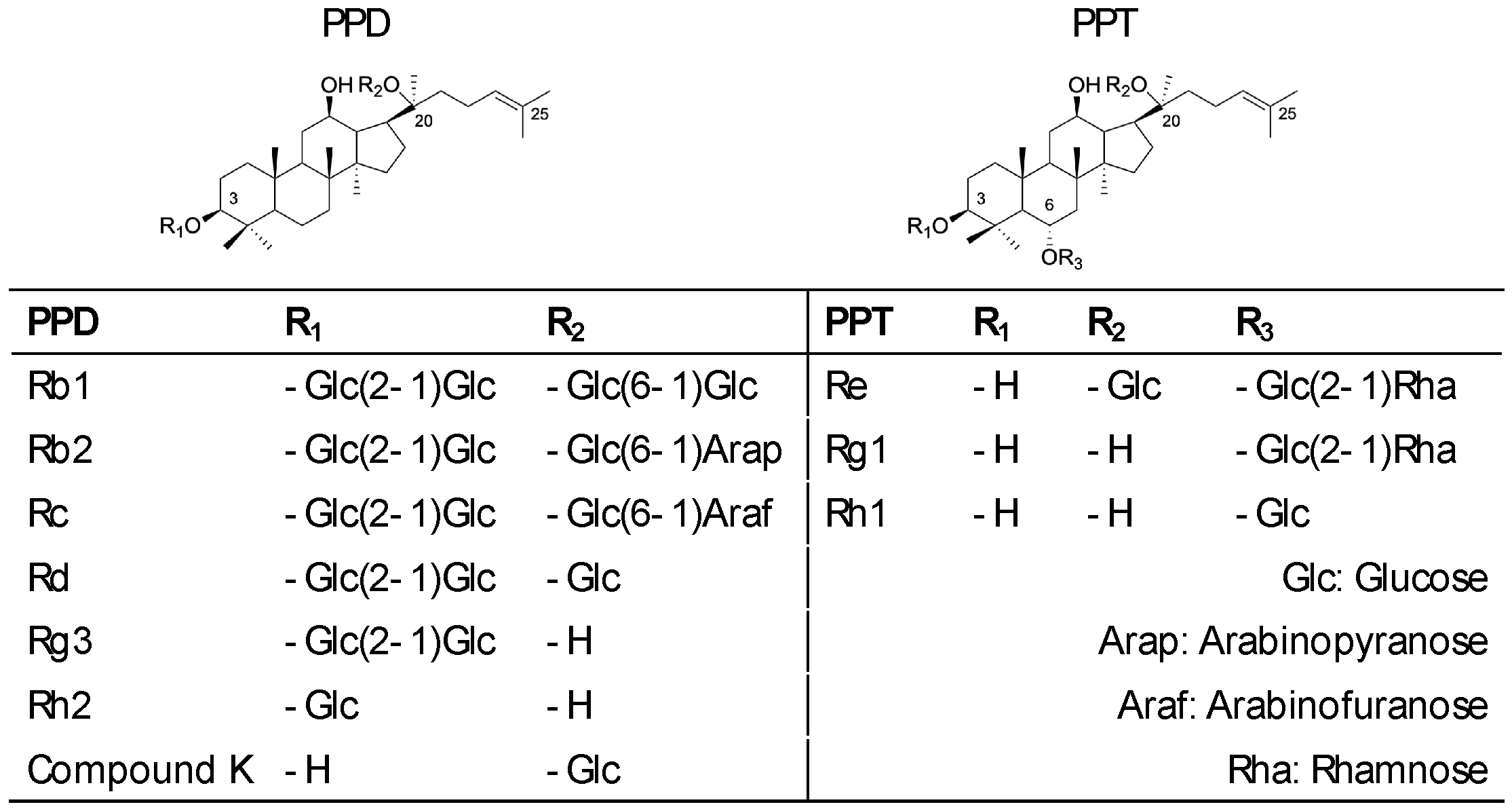
| Types of Ginsenosides | Main Activities | ||
|---|---|---|---|
| dammarane type | PPD | Rb1 | Diabetes [37], nervous [38], cardiovascular [39], and endocrine systems [40] |
| Rb2 | Diabetes, obesity, tumor, photoaging, virus infection and cardiovascular problems [41] | ||
| Rc | Metabolic syndrome [42] | ||
| Rd | Neuroprotection [43], cardiovascular, cerebrovascular and nervous systems [44] | ||
| Rg3 | Anti-angiogenic [45], anticancer, anti-inflammatory, antioxidant, immunomodulatory [46] | ||
| Rg5 | Anticancer [47], antidiabetic [48,49], anti-inflammatory [50], anti-osteoarthritic [51], sedative and hypnotic [52], and cardioprotective effects [53] | ||
| Rh2 | Neuroprotective effect [54], anticancer [55] | ||
| Compound K | Rheumatoid arthritis [56] | ||
| PPT | Re | Diabetes mellitus, nerve, inflammation, cardiovascular disease, and cancer [57] | |
| Rg1 | Neurological diseases, like Alzheimer’s disease [58,59] | ||
| oleanolic type | Rh3 | Neuroprotective effect [60], anti-tumor [61] | |
Disclaimer/Publisher’s Note: The statements, opinions and data contained in all publications are solely those of the individual author(s) and contributor(s) and not of MDPI and/or the editor(s). MDPI and/or the editor(s) disclaim responsibility for any injury to people or property resulting from any ideas, methods, instructions or products referred to in the content. |
© 2026 by the authors. Licensee MDPI, Basel, Switzerland. This article is an open access article distributed under the terms and conditions of the Creative Commons Attribution (CC BY) license.
Share and Cite
Zhang, Y.; Yao, Q. Research Progress on the Anticancer Effect of Ginsenoside Rh1. Curr. Issues Mol. Biol. 2026, 48, 219. https://doi.org/10.3390/cimb48020219
Zhang Y, Yao Q. Research Progress on the Anticancer Effect of Ginsenoside Rh1. Current Issues in Molecular Biology. 2026; 48(2):219. https://doi.org/10.3390/cimb48020219
Chicago/Turabian StyleZhang, Yiqiong, and Qinghua Yao. 2026. "Research Progress on the Anticancer Effect of Ginsenoside Rh1" Current Issues in Molecular Biology 48, no. 2: 219. https://doi.org/10.3390/cimb48020219
APA StyleZhang, Y., & Yao, Q. (2026). Research Progress on the Anticancer Effect of Ginsenoside Rh1. Current Issues in Molecular Biology, 48(2), 219. https://doi.org/10.3390/cimb48020219