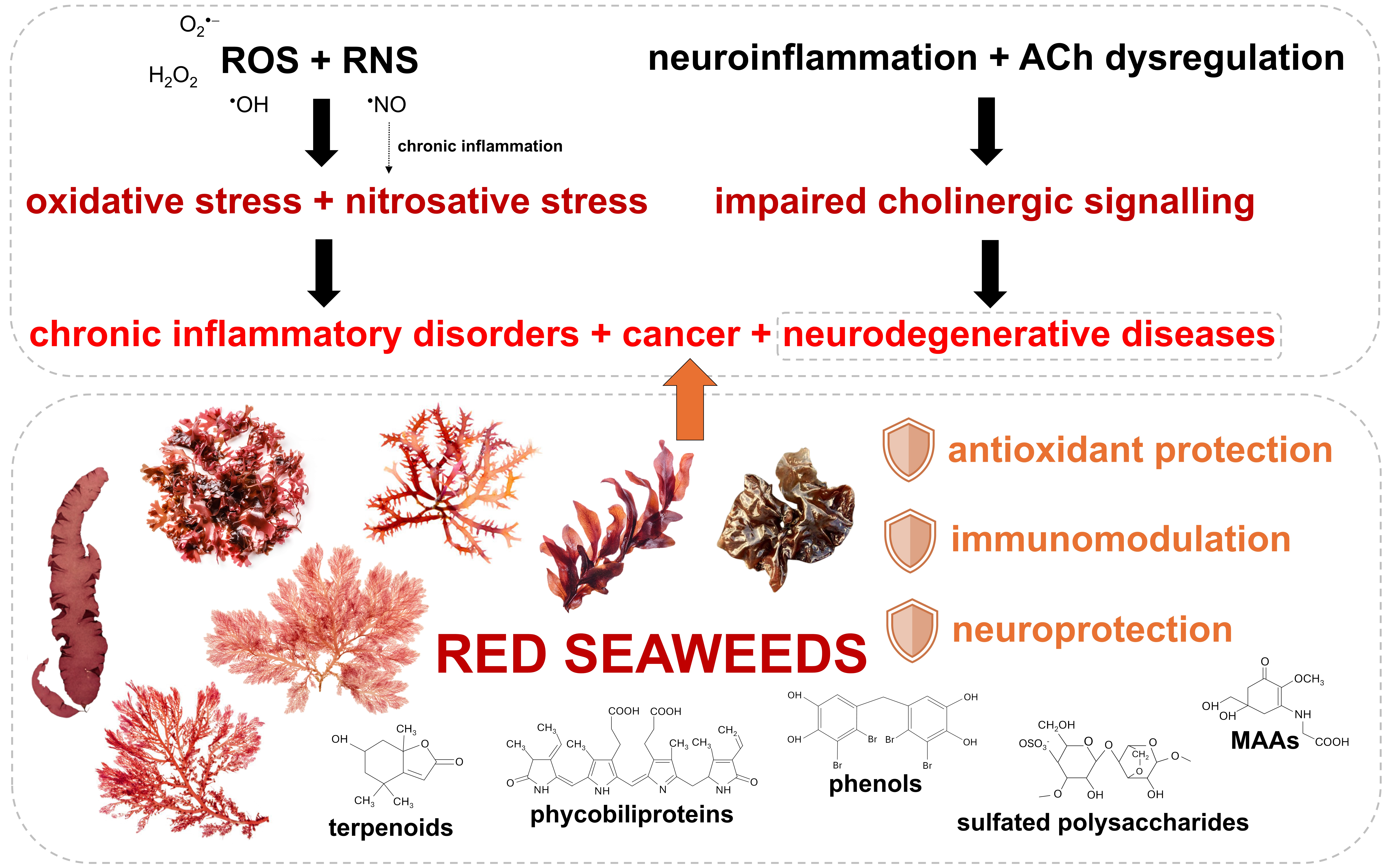

Role of Main Red Seaweed Bioactive Compounds in Modulating Redox Imbalance and Cholinergic Dysfunction: Insights from In Vitro Assays




Abstract
1. Unique Chemical Composition of Red Seaweeds and Their Use as Food
2. Red Seaweed Bioactive Compounds in Redox Regulation
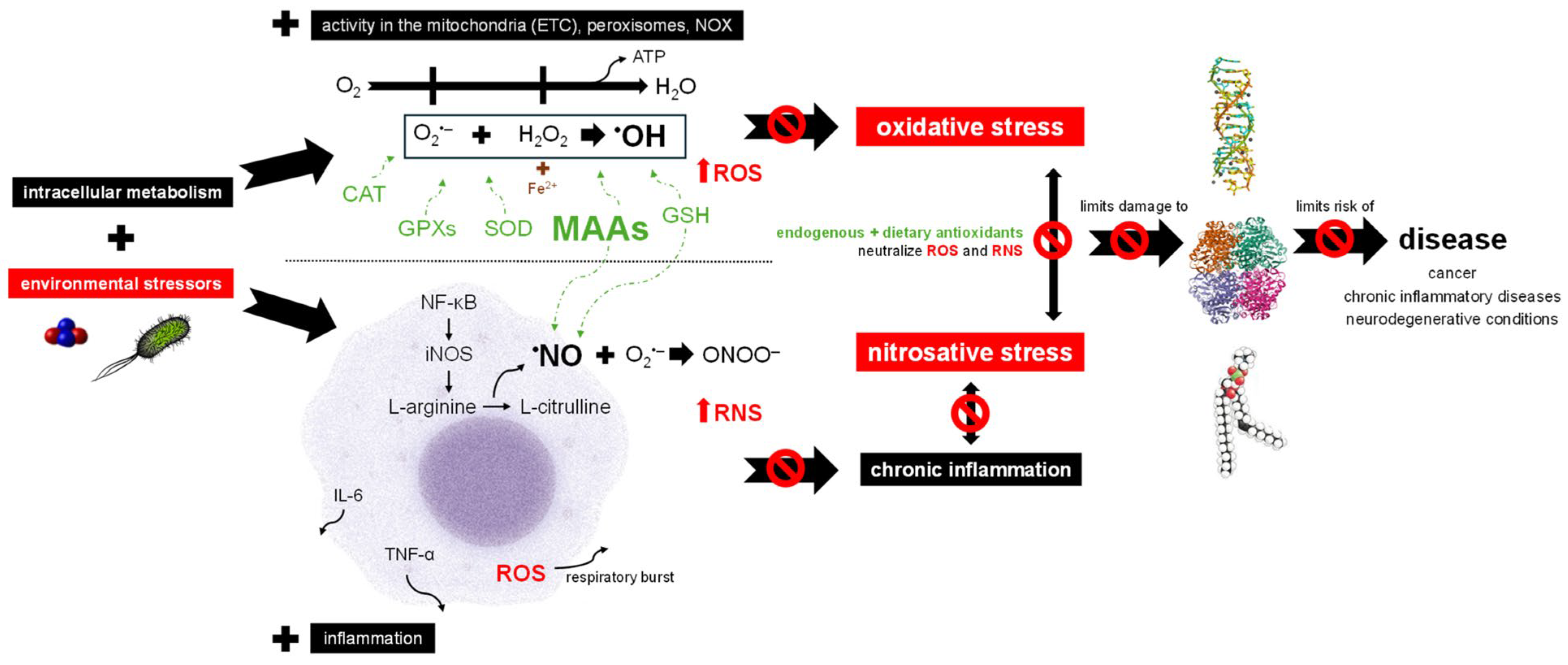
2.1. Reactive Oxygen and Nitrogen Species and Disease
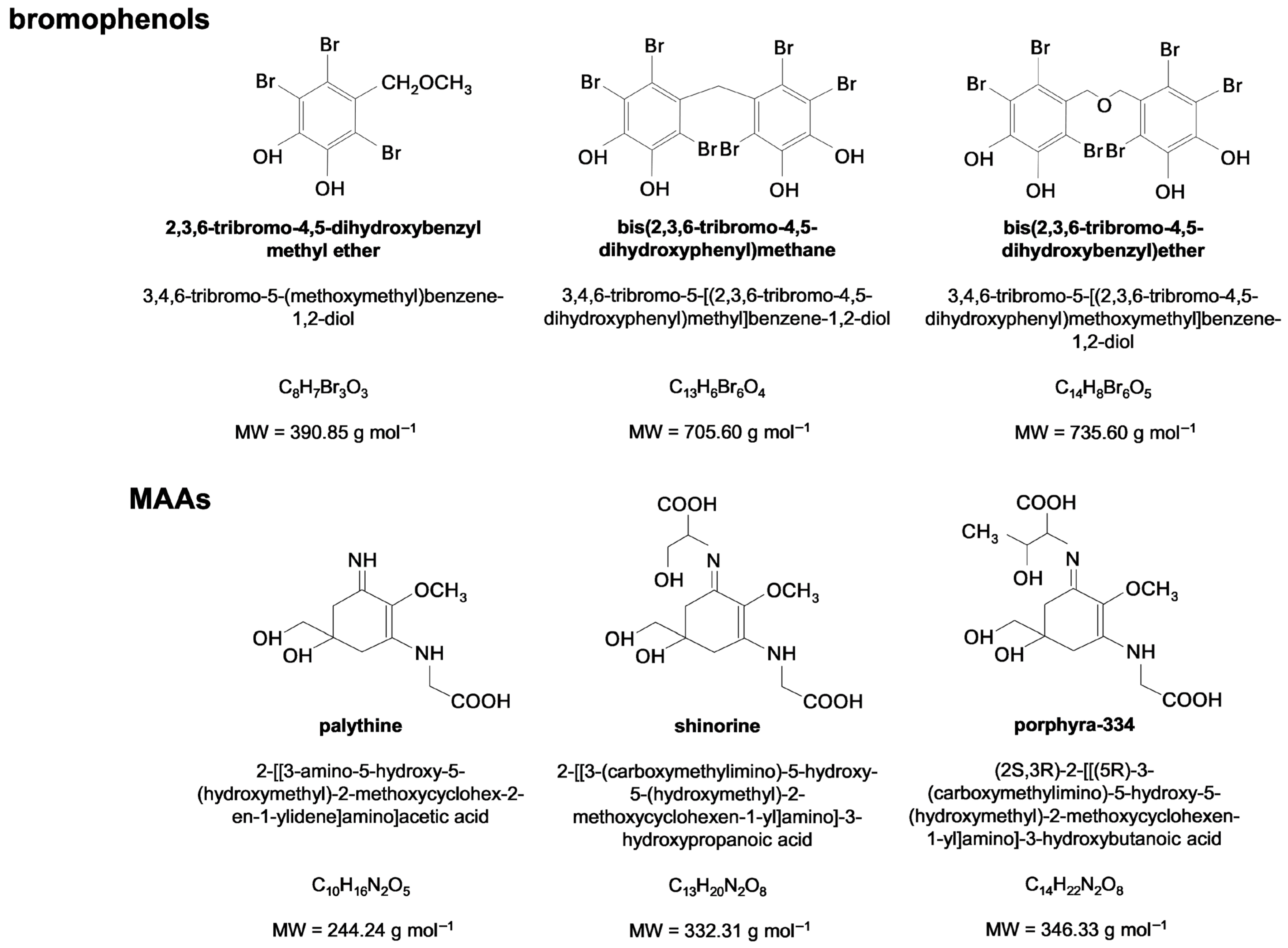
2.2. Red Seaweed Bioactive Compounds Promote Antioxidant Protection and Immunomodulation

| Seaweed Species | Isolated Compound/ Fraction | Type of Assay | Result | Dose | Reference |
|---|---|---|---|---|---|
| Symphyocladia latiuscula | Bromophenols | DPPH• radical | IC50 = 0.006–0.011 mg mL−1 (9) a | - | [52] |
| Kappaphycus alvarezii | Meroterpenoids | ABTS•+ radical | IC50 = 0.34, 0.58, 0.72 mg mL−1 (3) a | - | [53] |
| DPPH• radical | IC50 = 0.31, 0.52, 0.70 mg mL−1 (3) a | - | [53] | ||
| Grateloupia elliptica | Phlorotannin | DPPH• radical | IC50 = 0.02 mg mL−1 | - | [54] |
| Kappaphycus alvarezii | Phycoerythrin | ABTS•+ radical | 62% (% control) b | 1.00 mg mL−1 | [55] |
| DPPH• radical | 58% (% control) b | 1.00 mg mL−1 | [55] | ||
| H2O2 scavenging | 68% (% control) b | 1.00 mg mL−1 | [55] | ||
| Phosphomolybdenum | 73% (% control) b | 1.00 mg mL−1 | [55] | ||
| Reducing power | 71% (% control) b | 1.00 mg mL−1 | [55] | ||
| Gracilaria domingensis | Palythine (MAAs) | ABTS•+ radical | 46.6 mmol TE mol−1 | - | [45] |
| Ferrous ion-chelating | IC50 > 0.07 mg mL−1 | - | [45] | ||
| Folin–Ciocalteu | 905.0 mmol TE mol−1 | - | [45] | ||
| FRAP | 7.1 mmol TE mol−1 | - | [45] | ||
| ORAC | 57.4 mmol TE mol−1 | - | [45] | ||
| Gracilaria domingensis | Porphyra-334 (MAAs) | ABTS•+ radical | 28.9 mmol TE mol−1 | - | [45] |
| Porphyra umbilicalis | IC50 = 0.05 mg mL−1 | - | [46] | ||
| Porphyra yezoensis | DPPH• radical | IC50 = 0.06 mg mL−1 | - | [9] | |
| Gracilaria domingensis | Ferrous ion-chelating | IC50 > 0.07 mg mL−1 | - | [45] | |
| Folin–Ciocalteu | 1287.0 mmol TE mol−1 | - | [45] | ||
| FRAP | 5.7 mmol TE mol−1 | - | [45] | ||
| ORAC | 33.8 mmol TE mol−1 | - | [45] | ||
| Porphyra yezoensis | 51% (% Trolox) c | 0.035 mg mL−1 | [9] | ||
| Ahnfeltiopsis devoniensis | Shinorine | ABTS•+ radical | IC50 = 0.03 mg mL−1 | - | [47] |
| Gracilaria domingensis | (MAAs) | 29.9 mmol TE mol−1 | - | [45] | |
| Porphyra umbilicalis | IC50 = 0.03 mg mL−1 | - | [46] | ||
| Gloiopeltis furcata | DPPH• radical | IC50 = 0.03 mg mL−1 | - | [9] | |
| Gracilaria domingensis | Ferrous ion-chelating | IC50 = 0.07 mg mL−1 | - | [45] | |
| Folin–Ciocalteu | 1032.0 mmol TE mol−1 | - | [45] | ||
| FRAP | 8.5 mmol TE mol−1 | - | [45] | ||
| ORAC | 75.5 mmol TE mol−1 | - | [45] | ||
| Gloiopeltis furcata | 17% (% Trolox) c | 0.033 mg mL−1 | [9] | ||
| Asparagopsis armata | Sulfated | ABTS•+ radical | 52% (% control) b | 1.00 mg mL−1 | [49] |
| Gelidium corneum | polysaccharides | ~12% (% control) b | 0.50 mg mL−1 | [48] | |
| Gelidium pristoides | 71% (% control) b | 0.33 mg mL−1 | [63] | ||
| Gracilaria gracilis | 61% (% control) b | 0.33 mg mL−1 | [64] | ||
| Porphyra umbilicalis | ~20% (% control) b | 0.50 mg mL−1 | [48] | ||
| Gelidium pristoides | DPPH• radical | ~38% (% control) b | 0.33 mg mL−1 | [63] | |
| Gracilaria gracilis | ~30% (% control) b | 0.33 mg mL−1 | [64] | ||
| Gelidium pristoides | Ferrous ion-chelating | 62% (% control) b | 0.10 mg mL−1 | [63] | |
| Gracilaria caudata | 0, 40, 70% (% control) b (3) a | 1.00 mg mL−1 | [65] | ||
| Gracilaria gracilis | 63% (% control) b | 0.10 mg mL−1 | [64] | ||
| Asparagopsis armata | •OH scavenging | 55% (% control) b | 5.00 mg mL−1 | [49] | |
| Gelidium pristoides | ~50% (% control) b | 0.10 mg mL−1 | [63] | ||
| Gracilaria caudata | ~1, 30, 8% (% control) b (3) a | 1.00 mg mL−1 | [65] | ||
| Gracilaria gracilis | 52% (% control) b | 0.10 mg mL−1 | [64] | ||
| Porphyra haitanensis | ~23% (% control) b | 5.00 mg mL−1 | [50] | ||
| Asparagopsis armata | Phosphomolybdenum | 190.0 μmol mL α-TE−1 | 5.00 mg mL−1 | [49] | |
| Gracilaria caudata | 53.0, 25.4, 63.9 mg AA g−1 (3) a | - | [65] | ||
| Reducing power | 100, 100, 80% (% control) b (3) a | 1.00 mg mL−1 | [65] | ||
| O2•− scavenging | ~24, 54, 18% (% control) b (3) a | 0.05 mg mL−1 | [65] |
3. The Impact of Red Seaweed Compounds on Neuroprotection
3.1. Main Physiological Functions of Acetylcholine
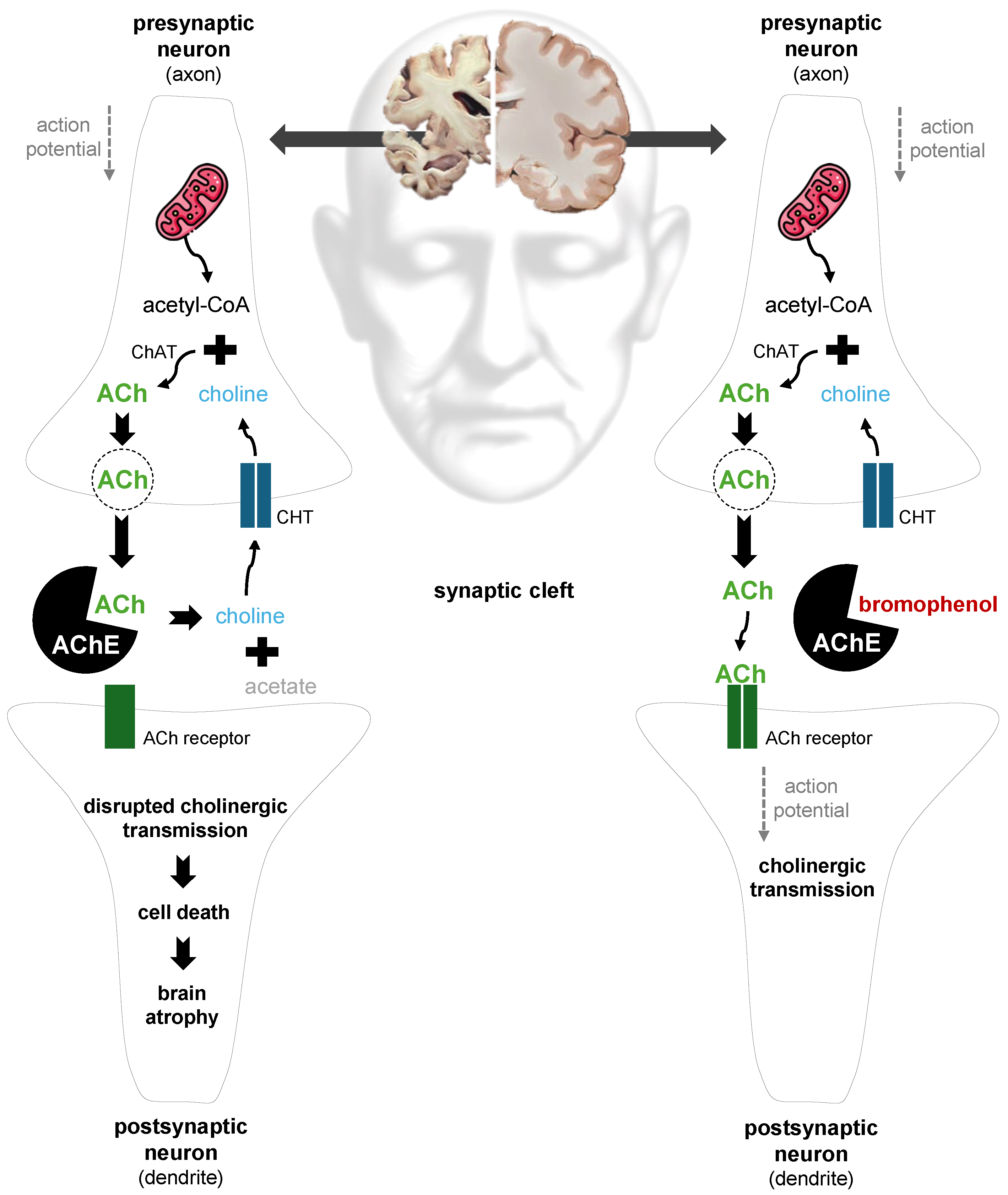
3.2. Red Seaweed-Derived Compounds as Acetylcholinesterase Inhibitors and Antioxidant/Anti-Inflammatory Agents in Alzheimer’s Disease
| Seaweed Species | Isolated Compound/Fraction | Concentration | Result (% Inhibition) | Reference |
|---|---|---|---|---|
| Symphyocladia latiuscula | Bromophenols | |||
| bis-(2,3,6-tribromo-4,5- dihydroxybenzyl) ether (C14H8Br6O5) | 0.002 mg mL−1 | 50% | [82] | |
| 2,3,6-tribromo-4,5- dihydroxybenzyl alcohol (C7H5Br3O3) | 0.003 mg mL−1 | 50% | [82] | |
| 2,3,6-tribromo-4,5- dihydroxybenzyl methyl ether (C8H7Br3O3) | 0.004 mg mL−1 | 50% | [82] | |
| Grateloupia elliptica | Phlorotannin | 0.033 mg mL−1 | 50% | [54] |
| 6,6′-bis(3,5-dihydroxyphenoxy)-1,1′-bioxanthrene-2,2′,4,4′,7,7′,9,9′-octol (6,6′-Bieckol; C36H22O18) | ||||
| Laurencia dendroidea | Halogenated sesquiterpenes | |||
| (3S,4R,6R)-4-bromo-10-chloro-5,5,9-trimethyl-1-methylidenespiro[5.5]undec-9-en-3-ol ((−)-elatol; C15H22BrClO) | 0.100 mg mL−1 | 79% | [95] | |
| (2S,3R,6S,8S,9R)-2-bromo-8-chloro-1,1,9-trimethyl-5-methylidenespiro[5.5]undecane-3,9-diol ((−)-dendroidiol; C15H24BrClO2) | 0.106 mg mL−1 | 73% | [95] | |
| (2S,3R,6S)-2,8-dibromo-9-chloro-1,1,9-trimethyl-5-methylidenespiro[5.5]undecan-3-ol ((−)-cartilagineol; C15H23Br2ClO) | 0.124 mg mL−1 | 61% | [95] | |
| Laurencia johnstonii | 4-bromo-2-[(1S,2R,5R)-1,2-dimethyl-2-bicyclo[3.1.0]hexanyl]-5-methylphenol (laurinterol; C15H19BrO) | 0.059 mg mL−1 a | 50% | [96] |
| 2 mg mL−1 a | 78% | [96] | ||
| Asparagopsis armata | Sulfated polysaccharides | 0.3 mg mL−1 b | 36% | [49] |
| 1 mg mL−1 b | ~60% | [49] | ||
| 10 mg mL−1 b | 90% | [49] | ||
| Gelidium pristoides | 0.1 mg mL−1 c | ~36% | [63] | |
| 0.13 mg mL−1 c | ~48% | [63] | ||
| 0.8 mg mL−1 | ~32% | [69] | ||
| Gracilaria gracilis | 0.1 mg mL−1 d | ~37% | [64] | |
| 0.13 mg mL−1 d | ~50% | [64] | ||
| 0.8 mg mL−1 | ~25% | [69] |
4. Conclusions and Future Directions
Author Contributions
Funding
Institutional Review Board Statement
Informed Consent Statement
Data Availability Statement
Conflicts of Interest
References
- Horton, T.; Kroh, A.; Ahyong, S.; Bailly, N.; Boyko, C.B.; Brandão, S.N.; Gofas, S.; Hooper, J.N.A.; Hernandez, F.; Holovachov, O.; et al. World Register of Marine Species (WoRMS). Available online: http://www.marinespecies.org (accessed on 15 April 2020).
- Guiry, M.D.; Guiry, G.M. AlgaeBase. World-Wide electronic Publication, University of Galway. Available online: https://www.algaebase.org (accessed on 28 July 2024).
- Carpena, M.; Garcia-Perez, P.; Garcia-Oliveira, P.; Chamorro, F.; Otero, P.; Lourenço-Lopes, C.; Cao, H.; Simal-Gandara, J.; Prieto, M.A. Biological properties and potential of compounds extracted from red seaweeds. Phytochem. Rev. 2023, 22, 1509–1540. [Google Scholar] [CrossRef] [Scilit] [PubMed]
- Rawiwana, P.; Peng, Y.; Paramayuda, I.G.P.B.; Quek, S.Y. Red seaweed: A promising alternative protein source for global food sustainability. Trends Food Sci. Technol. 2022, 123, 37–56. [Google Scholar] [CrossRef] [Scilit]
- Ferreira, J.; Pacheco, M.; Silva, A.M.; Gaivão, I. Unlocking the Potential of Red Seaweeds: A Special Focus on Grateloupia turuturu Yamada and Porphyra umbilicalis Kütz. Mar. Drugs 2025, 23, 347. [Google Scholar] [CrossRef] [Scilit] [PubMed]
- Fu, Y.; Jiao, H.; Suna, J.; Okoyea, C.O.; Zhang, H.; Li, Y.; Lu, X.; Wanga, Q.; Liu, J. Structure-activity relationships of bioactive polysaccharides extracted from macroalgae towards biomedical application: A review. Carbohydr. Polym. 2024, 324, 121533. [Google Scholar] [CrossRef] [Scilit]
- Jönsson, M.; Allahgholi, L.; Sardari, R.R.R.; Hreggviðsson, G.O.; Karlsson, E.N. Extraction and Modification of Macroalgal Polysaccharides for Current and Next-Generation Applications. Molecules 2020, 25, 930. [Google Scholar] [CrossRef] [Scilit]
- Görünmek, M.; Ballık, B.; Çakmak, Z.E.; Çakmak, T. Mycosporine-like amino acids in microalgae and cyanobacteria: Biosynthesis, diversity, and applications in biotechnology. Algal Res. 2024, 80, 103507. [Google Scholar] [CrossRef] [Scilit]
- Gacesa, R.; Lawrence, K.P.; Georgakopoulos, N.D.; Yabe, K.; Dunlap, W.C.; Barlow, D.J.; Wells, G.; Young, A.R.; Long, P.F. The mycosporine-like amino acids porphyra-334 and shinorine are antioxidants and direct antagonists of Keap1-Nrf2 binding. Biochimie 2018, 154, 35–44. [Google Scholar] [CrossRef] [Scilit]
- Orfanoudaki, M.; Hartmann, A.; Karsten, U.; Ganzera, M. Chemical profiling of mycosporine-like amino acids in twenty-three red algal species. J. Phycol. 2019, 55, 393–403. [Google Scholar] [CrossRef] [Scilit]
- Llewellyn, C.A.; Greig, C.; Silkina, A.; Kultschar, B.; Hitchings, M.D.; Farnham, G. Mycosporine-like amino acid and aromatic amino acid transcriptome response to UV and far-red light in the cyanobacterium Chlorogloeopsis fritschii PCC 6912. Sci. Rep. 2020, 10, 20638. [Google Scholar] [CrossRef] [Scilit]
- Chrapusta, E.; Kaminski, A.; Duchnik, K.; Bober, B.; Adamski, M.; Bialczyk, J. Mycosporine-Like Amino Acids: Potential Health and Beauty Ingredients. Mar. Drugs 2017, 15, 326. [Google Scholar] [CrossRef] [Scilit]
- Coelho, M.; Duarte, A.P.; Pinto, S.; Botelho, H.M.; Reis, C.P.; Serralheiro, M.L.; Pacheco, R. Edible Seaweeds Extracts: Characterization and Functional Properties for Health Conditions. Antioxidants 2023, 12, 684. [Google Scholar] [CrossRef] [Scilit] [PubMed]
- Pereira, A.G.; Fraga-Corral, M.; Garcia-Oliveira, P.; Lourenço-Lopes, C.; Carpena, M.; Prieto, M.A.; Simal-Gandara, J. The Use of Invasive Algae Species as a Source of Secondary Metabolites and Biological Activities: Spain as Case-Study. Mar. Drugs 2021, 19, 178. [Google Scholar] [CrossRef] [Scilit] [PubMed]
- Lähteenmäki-Uutela, A.; Rahikainen, M.; Camarena-Gómez, M.T.; Piiparinen, J.; Spilling, K.; Yang, B. European Union legislation on macroalgae products. Aquac. Int. 2021, 29, 487–509. [Google Scholar] [CrossRef] [Scilit]
- FAO. The State of World Fisheries and Aquaculture 2022. Towards Blue Transformation; FAO: Rome, Italy, 2022. [Google Scholar]
- Matos, J.; Cardoso, C.; Serralheiro, M.L.; Bandarra, N.M.; Afonso, C. Seaweed bioactives potential as nutraceuticals and functional ingredients: A review. J. Food Compos. Anal. 2024, 133, 106453. [Google Scholar] [CrossRef] [Scilit]
- FAO. The State of World Fisheries and Aquaculture 2020. Sustainability in Action; FAO: Rome, Italy, 2020. [Google Scholar]
- Gomez-Zavaglia, A.; Prieto Lage, M.A.; Jimenez-Lopez, C.; Mejuto, J.C.; Simal-Gandara, J. The Potential of Seaweeds as a Source of Functional Ingredients of Prebiotic and Antioxidant Value. Antioxidants 2019, 8, 406. [Google Scholar] [CrossRef] [Scilit]
- Ahmadinejad, F.; Geir Møller, S.; Hashemzadeh-Chaleshtori, M.; Bidkhori, G.; Jami, M.S. Molecular Mechanisms behind Free Radical Scavengers Function against Oxidative Stress. Antioxidants 2017, 6, 51. [Google Scholar] [CrossRef] [Scilit]
- Bouyahya, A.; Bakrim, S.; Aboulaghras, S.; El Kadri, K.; Aanniz, T.; Khalid, A.; Abdalla, A.N.; Abdallah, A.A.; Ardianto, C.; Ming, L.C.; et al. Bioactive compounds from nature: Antioxidants targeting cellular transformation in response to epigenetic perturbations induced by oxidative stress. Biomed. Pharmacother. 2024, 174, 116432. [Google Scholar] [CrossRef] [Scilit]
- Cipriano, A.; Viviano, M.; Feoli, A.; Milite, C.; Sarno, G.; Castellano, S.; Sbardella, G. NADPH Oxidases: From Molecular Mechanisms to Current Inhibitors. J. Med. Chem. 2023, 66, 11632–11655. [Google Scholar] [CrossRef] [Scilit]
- Gaivão, I.; Ferreira, J.; Sierra, L.M. The w/w+ Somatic Mutation and Recombination Test (SMART) of Drosophila melanogaster for Detecting Antigenotoxic Activity. In Genotoxicity and Mutagenicity—Mechanisms and Test Methods; Soloneski, S., Larramendy, M.L., Eds.; IntechOpen: London, UK, 2020. [Google Scholar]
- Gosslau, A. Assessment of food toxicology. Food Sci. Human. Wellness 2016, 5, 103–115. [Google Scholar] [CrossRef] [Scilit]
- Saleh, E.A.M.; Al-Dolaimy, F.; Qasim Almajidi, Y.; Baymakov, S.; Kader, M.M.; Ullah, M.I.; Abbas, A.H.R.; Khlewee, I.H.; Bisht, Y.S.; Alsaalamy, A.H. Oxidative stress affects the beginning of the growth of cancer cells through a variety of routes. Pathol.-Res. Pract. 2023, 249, 154664. [Google Scholar] [CrossRef] [Scilit]
- Doktorovová, S.; Santos, D.L.; Costa, I.; Andreani, T.; Souto, E.B.; Silva, A.M. Cationic solid lipid nanoparticles interfere with the activity of antioxidant enzymes in hepatocellular carcinoma cells. Int. J. Pharm. 2014, 471, 18–27. [Google Scholar] [CrossRef] [Scilit] [PubMed]
- Guo, Q.; Jin, Y.; Chen, X.; Ye, X.; Shen, X.; Lin, M.; Zeng, C.; Zhou, T.; Zhang, J. NF-κB in biology and targeted therapy: New insights and translational implications. Signal Transduct. Target. Ther. 2024, 9, 53. [Google Scholar] [CrossRef] [Scilit] [PubMed]
- Caliri, A.W.; Tommasi, S.; Besaratinia, A. Relationships among smoking, oxidative stress, inflammation, macromolecular damage, and cancer. Mutat. Res./Rev. Mutat. Res. 2021, 787, 108365. [Google Scholar] [CrossRef] [Scilit] [PubMed]
- Baldelli, S.; Ciccarone, F.; Limongi, D.; Checconi, P.; Palamara, A.T.; Ciriolo, M.R. Glutathione and Nitric Oxide: Key Team Players in Use and Disuse of Skeletal Muscle. Nutrients 2019, 11, 2318. [Google Scholar] [CrossRef] [Scilit]
- Hunyadi, A. The mechanism(s) of action of antioxidants: From scavenging reactive oxygen/nitrogen species to redox signaling and the generation of bioactive secondary metabolites. Med. Res. Rev. 2019, 39, 2505–2533. [Google Scholar] [CrossRef] [Scilit]
- Hong, Y.; Boiti, A.; Vallone, D.; Foulkes, N.S. Reactive Oxygen Species Signaling and Oxidative Stress: Transcriptional Regulation and Evolution. Antioxidants 2024, 13, 312. [Google Scholar] [CrossRef] [Scilit]
- Anam, K.; Nasuno, R.; Takagi, H. A Novel Mechanism for Nitrosative Stress Tolerance Dependent on GTP Cyclohydrolase II Activity Involved in Riboflavin Synthesis of Yeast. Sci. Rep. 2020, 10, 6015. [Google Scholar] [CrossRef] [Scilit]
- Gonzalez, M.; Clayton, S.; Wauson, E.; Christian, D.; Tran, Q.K. Promotion of nitric oxide production: Mechanisms, strategies, and possibilities. Front. Physiol. 2025, 16, 1545044. [Google Scholar] [CrossRef] [Scilit]
- Cinelli, M.A.; Do, H.T.; Miley, G.P.; Silverman, R.B. Inducible nitric oxide synthase: Regulation, structure, and inhibition. Med. Res. Rev. 2020, 40, 158–189. [Google Scholar] [CrossRef] [Scilit]
- Chen, S.; Saeed, A.F.U.H.; Liu, Q.; Jiang, Q.; Xu, H.; Xiao, G.G.; Rao, L.; Duo, Y. Macrophages in immunoregulation and therapeutics. Signal Transduct. Target. Ther. 2023, 8, 207. [Google Scholar] [CrossRef] [Scilit]
- Albensi, B.C. What Is Nuclear Factor Kappa B (NF-κB) Doing in and to the Mitochondrion? Front. Cell Dev. Biol. 2019, 7, 154. [Google Scholar] [CrossRef] [Scilit]
- Martins-Gomes, C.; Nunes, F.M.; Silva, A.M. Natural Products as Dietary Agents for the Prevention and Mitigation of Oxidative Damage and Inflammation in the Intestinal Barrier. Antioxidants 2024, 13, 65. [Google Scholar] [CrossRef] [Scilit] [PubMed]
- Dorrington, M.G.; Fraser, I.D.C. NF-κB Signaling in Macrophages: Dynamics, Crosstalk, and Signal Integration. Front. Immunol. 2019, 10, 705. [Google Scholar] [CrossRef] [Scilit] [PubMed]
- Álvarez-Gómez, F.; Korbee, N.; Casas-Arrojo, V.; Abdala-Díaz, R.T.; Figueroa, F.L. UV Photoprotection, Cytotoxicity and Immunology Capacity of Red Algae Extracts. Molecules 2019, 24, 341. [Google Scholar] [CrossRef] [Scilit] [PubMed]
- Ayala, A.; Muñoz, M.F.; Argüelles, S. Lipid peroxidation: Production, metabolism, and signaling mechanisms of malondialdehyde and 4-hydroxy-2-nonenal. Oxid. Med. Cell. Longev. 2014, 2014, 360438. [Google Scholar] [CrossRef] [Scilit]
- Ferreira, J.; Marques, A.; Abreu, M.H.; Pereira, R.; Rego, A.; Pacheco, M.; Gaivão, I. Red seaweeds Porphyra umbilicalis and Grateloupia turuturu display antigenotoxic and longevity-promoting potential in Drosophila melanogaster. Eur. J. Phycol. 2019, 54, 519–530. [Google Scholar] [CrossRef] [Scilit]
- Panieri, E.; Santoro, M.M. ROS homeostasis and metabolism: A dangerous liason in cancer cells. Cell Death Dis. 2016, 7, e2253. [Google Scholar] [CrossRef] [Scilit]
- Mirończuk-Chodakowska, I.; Witkowska, A.M.; Zujko, M.E. Endogenous non-enzymatic antioxidants in the human body. Adv. Med. Sci. 2018, 63, 68–78. [Google Scholar] [CrossRef] [Scilit]
- Rosa, L.; Cutone, A.; Lepanto, M.S.; Paesano, R.; Valenti, P. Lactoferrin: A Natural Glycoprotein Involved in Iron and Inflammatory Homeostasis. Int. J. Mol. Sci. 2017, 18, 1985. [Google Scholar] [CrossRef] [Scilit]
- Torres, P.; Santos, J.P.; Chow, F.; Ferreira, M.J.P.; Santos, D.Y.A.C.d. Comparative analysis of in vitro antioxidant capacities of mycosporine-like amino acids (MAAs). Algal Res. 2018, 34, 57–67. [Google Scholar] [CrossRef] [Scilit]
- Ngoennet, S.; Nishikawa, Y.; Hibino, T.; Waditee-Sirisattha, R.; Kageyama, H. A Method for the Isolation and Characterization of Mycosporine-Like Amino Acids from Cyanobacteria. Methods Protoc. 2018, 1, 46. [Google Scholar] [CrossRef] [Scilit]
- Coba, F.; Aguilera, J.; Figueroa, F.L.; Gálvez, M.V.; Herrera, E. Antioxidant activity of mycosporine-like amino acids isolated from three red macroalgae and one marine lichen. J. Appl. Phycol. 2009, 21, 161–169. [Google Scholar] [CrossRef] [Scilit]
- Díaz, R.T.A.; Arrojo, V.C.; Agudo, M.A.A.; Cárdenas, C.; Dobretsov, S.; Figueroa, F.L. Immunomodulatory and Antioxidant Activities of Sulfated Polysaccharides from Laminaria ochroleuca, Porphyra umbilicalis, and Gelidium corneum. Mar. Biotechnol. 2019, 21, 577–587. [Google Scholar] [CrossRef] [Scilit] [PubMed]
- Feki, A.; Cherif, B.; Sellem, I.; Naifar, M.; Amar, I.B.; Azaza, Y.B.; Kallel, R.; Hariz, L.; Zeghal, S.; Ayadi, F.M.; et al. Biomedical applications of polysaccharide derived from tetrasporophyte tufts of Asparagopsis armata (Falkenbergia rufolanosa): Focus on antioxidant, anti-inflammatory, anti-coagulant and hepato-protective activities. Algal Res. 2023, 69, 102958. [Google Scholar] [CrossRef] [Scilit]
- Li, Y.-T.; Huo, Y.-F.; Wang, F.; Wang, C.; Zhu, Q.; Wang, Y.-B.; Fu, L.-L.; Zhou, T. Improved antioxidant and immunomodulatory activities of enzymatically degraded Porphyra haitanensis polysaccharides. J. Food Biochem. 2020, 44, e13189. [Google Scholar] [CrossRef] [Scilit] [PubMed]
- Isaka, S.; Cho, K.; Nakazono, S.; Abu, R.; Ueno, M.; Kim, D.; Oda, T. Antioxidant and anti-inflammatory activities of porphyran isolated from discolored nori (Porphyra yezoensis). Int. J. Biol. Macromol. 2015, 74, 68–75. [Google Scholar] [CrossRef] [Scilit]
- Duan, X.-J.; Li, X.-M.; Wang, B.-G. Highly Brominated Mono- and Bis-phenols from the Marine Red Alga Symphyocladia latiuscula with Radical-Scavenging Activity. J. Nat. Prod. 2007, 70, 1210–1213. [Google Scholar] [CrossRef] [Scilit]
- Makkar, F.; Chakraborty, K. Antioxidant and anti-inflammatory oxygenated meroterpenoids from the thalli of red seaweed Kappaphycus alvarezii. Med. Chem. Res. 2018, 27, 2016–2026. [Google Scholar] [CrossRef] [Scilit]
- Lee, B.H.; Choi, B.W.; Lee, S.Y. Isolation of 6,6’-Bieckol from Grateloupia elliptica and its Antioxidative and Anti-Cholinesterase Activity. Ocean Polar Res. 2017, 39, 45–49. [Google Scholar] [CrossRef] [Scilit]
- Balasundaram, H.; Seethapathy, P.; Sankaralingam, S.; Mahendran, S.; Mareeswaran, M.; Pandiarajan, J.; Maheswari, P.; Venkatesh, S.; Arunkumar, M.; Pathade, G.R.; et al. Isolation, characterization, and biomedical potential of phycoerythrin phycobiliprotein from Kappaphycus alvarezii (Doty) L. M. Liao: Antimicrobial, antioxidant, and anticancer activities. Sci. Rep. 2025, 15, 27904. [Google Scholar] [CrossRef] [Scilit]
- National Center for Biotechnology Information. PubChem Compound Summary for CID 21778115, Bis(2,3,6-tribromo-4,5-dihydroxyphenyl)methane. Available online: https://pubchem.ncbi.nlm.nih.gov/compound/Bis_2_3_6-tribromo-4_5-dihydroxyphenyl_methane (accessed on 26 January 2026).
- National Center for Biotechnology Information. PubChem Compound Summary for CID 16047608, Palythine. Available online: https://pubchem.ncbi.nlm.nih.gov/compound/Palythine (accessed on 26 January 2026).
- National Center for Biotechnology Information. PubChem Compound Summary for CID 91864535, Porphyra 334. Available online: https://pubchem.ncbi.nlm.nih.gov/compound/91864535 (accessed on 26 January 2026).
- National Center for Biotechnology Information. PubChem Compound Summary for CID 10471931, Shinorine. Available online: https://pubchem.ncbi.nlm.nih.gov/compound/Shinorine (accessed on 26 January 2026).
- National Center for Biotechnology Information. PubChem Compound Summary for CID 11383736, 2, 3,6-Tribromo-4,5-dihydroxybenzyl Methyl Ether. Available online: https://pubchem.ncbi.nlm.nih.gov/compound/2_3_6-Tribromo-4_5-dihydroxybenzyl-methyl-ether (accessed on 26 January 2026).
- National Center for Biotechnology Information. PubChem Compound Summary for CID 23426771, Bis(2,3,6-tribromo-4,5-dihydroxybenzyl) Ether. Available online: https://pubchem.ncbi.nlm.nih.gov/compound/Bis_2_3_6-tribromo-4_5-dihydroxybenzyl_-ether (accessed on 26 January 2026).
- Yamauchi, M.; Kitamura, Y.; Nagano, H.; Kawatsu, J.; Gotoh, H. DPPH Measurements and Structure-Activity Relationship Studies on the Antioxidant Capacity of Phenols. Antioxidants 2024, 13, 309. [Google Scholar] [CrossRef] [Scilit] [PubMed]
- Olasehinde, T.A.; Mabinya, L.V.; Olaniran, A.O.; Okoh, A.I. Chemical characterization, antioxidant properties, cholinesterase inhibitory and anti-amyloidogenic activities of sulfated polysaccharides from some seaweeds. Bioact. Carbohydr. Diet. Fibre 2019, 18, 100182. [Google Scholar] [CrossRef] [Scilit]
- Olasehinde, T.A.; Mabinya, L.V.; Olaniran, A.O.; Okoh, A.I. Chemical characterization of sulfated polysaccharides from Gracilaria gracilis and Ulva lactuca and their radical scavenging, metal chelating, and cholinesterase inhibitory activities. Int. J. Food Prop. 2019, 22, 100–110. [Google Scholar] [CrossRef] [Scilit]
- Marques, M.L.M.; Costa, L.S.; Costa, M.S.S.P.; Rocha, H.A.O. A Sulfated Polysaccharide from Red Seaweed Gracilaria caudata Exhibits Antioxidant and Antiadipogenic Activities In Vitro. Mar. Drugs 2026, 24, 15. [Google Scholar] [CrossRef] [Scilit] [PubMed]
- Sadowska-Bartosz, I.; Bartosz, G. Evaluation of The Antioxidant Capacity of Food Products: Methods, Applications and Limitations. Processes 2022, 10, 2031. [Google Scholar] [CrossRef] [Scilit]
- Floegel, A.; Kim, D.-O.; Chung, S.-J.; Koo, S.I.; Chun, O.K. Comparison of ABTS/DPPH assays to measure antioxidant capacity in popular antioxidant-rich US foods. J. Food Compos. Anal. 2011, 24, 1043–1048. [Google Scholar] [CrossRef] [Scilit]
- Wołosiak, R.; Drużyńska, B.; Derewiaka, D.; Piecyk, M.; Majewska, E.; Ciecierska, M.; Worobiej, E.; Pakosz, P. Verification of the Conditions for Determination of Antioxidant Activity by ABTS and DPPH Assays—A Practical Approach. Molecules 2022, 27, 50. [Google Scholar] [CrossRef] [Scilit]
- Olasehinde, T.A.; Olaniran, A.O.; Okoh, A.I. Sulfated polysaccharides of some seaweeds exhibit neuroprotection via mitigation of oxidative stress, cholinergic dysfunction and inhibition of Zn—induced neuronal damage in HT-22 cells. BMC Complement. Med. Ther. 2020, 20, 251. [Google Scholar] [CrossRef] [Scilit]
- Qiu, S.-M.; Veeraperumal, S.; Tan, K.; Zhong, S.; Cheong, K.-L. The in vitro anti-inflammatory mechanism of Porphyra haitanensis oligosaccharides on lipopolysaccharide-induced injury in IEC-6 cells. J. Funct. Foods 2024, 112, 106005. [Google Scholar] [CrossRef] [Scilit]
- Tarasuntisuk, S.; Palaga, T.; Kageyama, H.; Waditee-Sirisattha, R. Mycosporine-2-glycine exerts anti-inflammatory and antioxidant effects in lipopolysaccharide (LPS)-stimulated RAW 264.7 macrophages. Arch. Biochem. Biophys. 2019, 662, 33–39. [Google Scholar] [CrossRef] [Scilit]
- Luo, M.; Shao, B.; Nie, W.; Wei, X.-W.; Li, Y.-L.; Wang, B.-L.; He, Z.-Y.; Liang, X.; Ye, T.-H.; Wei, Y.-Q. Antitumor and Adjuvant Activity of λ-carrageenan by Stimulating Immune Response in Cancer Immunotherapy. Sci. Rep. 2015, 5, 11062. [Google Scholar] [CrossRef] [Scilit]
- Becker, K.; Hartmann, A.; Ganzera, M.; Fuchs, D.; Gostner, J.M. Immunomodulatory Effects of the Mycosporine-Like Amino Acids Shinorine and Porphyra-334. Mar. Drugs 2016, 14, 119. [Google Scholar] [CrossRef] [Scilit] [PubMed]
- Premarathna, A.D.; Ahmed, T.A.E.; Rjabovs, V.; Hammami, R.; Critchley, A.T.; Tuvikene, R.; Hincke, M.T. Immunomodulation by xylan and carrageenan-type polysaccharides from red seaweeds: Anti-inflammatory, wound healing, cytoprotective, and anticoagulant activities. Int. J. Biol. Macromol. 2024, 260, 129433. [Google Scholar] [CrossRef] [Scilit] [PubMed]
- Liu, Q.-M.; Xu, S.-S.; Li, L.; Pan, T.-M.; Shi, C.-L.; Liu, H.; Cao, M.-J.; Su, W.-J.; Liu, G.-M. In vitro and in vivo immunomodulatory activity of sulfated polysaccharide from Porphyra haitanensis. Carbohydr. Polym. 2017, 165, 189–196. [Google Scholar] [CrossRef] [Scilit]
- Dewulf, F.; Semmouri, I.; Van Peteghem, L.; Janssen, C.; Asselman, J. Exploring the Human Health Properties of Compounds Derived from Red Seaweed Using Human In Vitro Cell Line Models. Mar. Biotechnol. 2026, 28, 19. [Google Scholar] [CrossRef] [Scilit] [PubMed]
- Bhuyan, P.P.; Nayak, R.; Patra, S.; Abdulabbas, H.S.; Jena, M.; Pradhan, B. Seaweed-Derived Sulfated Polysaccharides; The New Age Chemopreventives: A Comprehensive Review. Cancers 2023, 15, 715. [Google Scholar] [CrossRef] [Scilit]
- Colangelo, C.; Shichkova, P.; Keller, D.; Markram, H.; Ramaswamy, S. Cellular, Synaptic and Network Effects of Acetylcholine in the Neocortex. Front. Neural Circuits 2019, 13, 24. [Google Scholar] [CrossRef] [Scilit]
- Menaa, F.; Wijesinghe, U.; Thiripuranathar, G.; Althobaiti, N.A.; Albalawi, A.E.; Khan, B.A.; Menaa, B. Marine Algae-Derived Bioactive Compounds: A New Wave of Nanodrugs? Mar. Drugs 2021, 19, 484. [Google Scholar] [CrossRef] [Scilit]
- Meriney, S.D.; Fanselow, E.E. Acetylcholine. In Synaptic Transmission; Meriney, S.D., Fanselow, E.E., Eds.; Academic Press: Cambridge, MA, USA, 2019; pp. 345–367. [Google Scholar]
- Ghoran, S.H.; Kijjoa, A. Marine-Derived Compounds with Anti-Alzheimer’s Disease Activities. Mar. Drugs 2021, 19, 410. [Google Scholar] [CrossRef] [Scilit]
- Paudel, P.; Seong, S.H.; Zhou, Y.; Park, H.J.; Jung, H.A.; Choi, J.S. Anti-Alzheimer’s Disease Activity of Bromophenols from a Red Alga, Symphyocladia latiuscula (Harvey) Yamada. ACS Omega 2019, 4, 12259–12270. [Google Scholar] [CrossRef] [Scilit]
- Islam, M.R.; Akash, S.; Islam, M.M.; Sarkar, N.; Kumer, A.; Chakraborty, S.; Dhama, K.; Al-Shaeri, M.A.; Anwar, Y.; Wilairatana, P.; et al. Alkaloids as drug leads in Alzheimer’s treatment: Mechanistic and therapeutic insights. Brain Res. 2024, 1834, 148886. [Google Scholar] [CrossRef] [Scilit]
- Ionescu-Tucker, A.; Cotman, C.W. Emerging roles of oxidative stress in brain aging and Alzheimer’s disease. Neurobiol. Aging 2021, 107, 86–95. [Google Scholar] [CrossRef] [Scilit]
- Abreu-Villaça, Y.; Filgueiras, C.C.; Manhães, A.C. Developmental aspects of the cholinergic system. Behav. Brain Res. 2011, 221, 367–378. [Google Scholar] [CrossRef] [Scilit]
- Taqui, R.; Debnath, M.; Ahmed, S.; Ghosh, A. Advances on plant extracts and phytocompounds with acetylcholinesterase inhibition activity for possible treatment of Alzheimer’s disease. Phytomedicine Plus 2022, 2, 100184. [Google Scholar] [CrossRef] [Scilit]
- Olasehinde, T.A.; Olaniran, A.O.; Okoh, A.I. Macroalgae as a Valuable Source of Naturally Occurring Bioactive Compounds for the Treatment of Alzheimer’s Disease. Mar. Drugs 2019, 17, 609. [Google Scholar] [CrossRef] [Scilit]
- Umar, M.; Rehman, Y.; Ambreen, S.; Mumtaz, S.M.; Shaququzzaman, M.; Alam, M.M.; Ali, R. Innovative approaches to Alzheimer’s therapy: Harnessing the power of heterocycles, oxidative stress management, and nanomaterial drug delivery system. Ageing Res. Rev. 2024, 97, 102298. [Google Scholar] [CrossRef] [Scilit] [PubMed]
- Wojsiat, J.; Zoltowska, K.M.; Laskowska-Kaszub, K.; Wojda, U. Oxidant/Antioxidant Imbalance in Alzheimer’s Disease: Therapeutic and Diagnostic Prospects. Oxidative Med. Cell. Longev. 2018, 2018, 6435861. [Google Scholar] [CrossRef] [Scilit] [PubMed]
- Pereira, L.; Valado, A. The Seaweed Diet in Prevention and Treatment of the Neurodegenerative Diseases. Mar. Drugs 2021, 19, 128. [Google Scholar] [CrossRef] [Scilit]
- Pires, C.; Sapatinha, M.; Mendes, R.; Bandarra, N.M.; Gonçalves, A. Dehydration, Rehydration and Thermal Treatment: Effect on Bioactive Compounds of Red Seaweeds Porphyra umbilicalis and Porphyra linearis. Mar. Drugs 2024, 22, 166. [Google Scholar] [CrossRef] [Scilit]
- Dimitrova, D.; Kehayova, G.; Dimitrova, S.; Dragomanova, S. Marine-Derived Natural Substances with Anticholinesterase Activity. Mar. Drugs 2025, 23, 439. [Google Scholar] [CrossRef] [Scilit]
- Wang, T.; Shi, W.; Mao, Z.; Xie, W.; Wan, G. Neuroprotective Mechanisms of Red Algae-Derived Bioactive Compounds in Alzheimer’s Disease: An Overview of Novel Insights. Mar. Drugs 2025, 23, 274. [Google Scholar] [CrossRef] [Scilit]
- Pereira, L.; Valado, A. From the ocean to the brain: Harnessing the power of marine algae for neuroprotection and therapeutic advances. Explor. Neuroprot. Ther. 2023, 3, 409–428. [Google Scholar] [CrossRef] [Scilit]
- Gonçalves, K.G.; Silva, L.L.d.; Soares, A.R.; Romeiro, N.C. Acetylcholinesterase as a target of halogenated marine natural products from Laurencia dendroidea. Algal Res. 2020, 52, 102130. [Google Scholar] [CrossRef] [Scilit]
- González-Castro, A.L.; Torres-Estrada, J.L.; Muñoz-Ochoa, M. Larvicidal and oviposition deterrent activity of sesquiterpenes from the red seaweed Laurencia johnstonii against Aedes aegypti. J. Appl. Phycol. 2024, 36, 1555–1560. [Google Scholar] [CrossRef] [Scilit]
- Sepčić, K.; Marcel, V.; Klaebe, A.; Turk, T.; Šuput, D.; Fournier, D. Inhibition of acetylcholinesterase by an alkyl pyridinium polymer from the marine sponge, Reniera sarai. BBA Prot. Struct. Mol. Enzymol. 1998, 1387, 217–225. [Google Scholar] [CrossRef] [Scilit] [PubMed]
- Machado, L.P.; Carvalho, L.R.; Young, M.C.M.; Cardoso-Lopes, E.M.; Centeno, D.C.; Zambotti-Villela, L.; Colepicolo, P.; Yokoya, N.S. Evaluation of acetylcholinesterase inhibitory activity of Brazilian red macroalgae organic extracts. Rev. Bras. Farmacogn. 2015, 25, 657–662. [Google Scholar] [CrossRef] [Scilit]
- Syad, A.N.; Rajamohamed, B.S.; Shunmugaiah, K.P.; Kasi, P.D. Neuroprotective effect of the marine macroalga Gelidiella acerosa: Identification of active compounds through bioactivity-guided fractionation. Pharm. Biol. 2016, 54, 2073–2081. [Google Scholar] [CrossRef] [Scilit] [PubMed]
- Olasehinde, T.A.; Olaniran, A.O.; Okoh, A.I. Phenolic composition, antioxidant activity, anticholinesterase potential and modulatory effects of aqueous extracts of some seaweeds on β-amyloid aggregation and disaggregation. Pharm. Biol. 2019, 57, 460–469. [Google Scholar] [CrossRef] [Scilit] [PubMed]


Disclaimer/Publisher’s Note: The statements, opinions and data contained in all publications are solely those of the individual author(s) and contributor(s) and not of MDPI and/or the editor(s). MDPI and/or the editor(s) disclaim responsibility for any injury to people or property resulting from any ideas, methods, instructions or products referred to in the content. |
© 2026 by the authors. Licensee MDPI, Basel, Switzerland. This article is an open access article distributed under the terms and conditions of the Creative Commons Attribution (CC BY) license.
Share and Cite
Ferreira, J.; Pacheco, M.; Silva, A.M.; Gaivão, I. Role of Main Red Seaweed Bioactive Compounds in Modulating Redox Imbalance and Cholinergic Dysfunction: Insights from In Vitro Assays. Curr. Issues Mol. Biol. 2026, 48, 190. https://doi.org/10.3390/cimb48020190
Ferreira J, Pacheco M, Silva AM, Gaivão I. Role of Main Red Seaweed Bioactive Compounds in Modulating Redox Imbalance and Cholinergic Dysfunction: Insights from In Vitro Assays. Current Issues in Molecular Biology. 2026; 48(2):190. https://doi.org/10.3390/cimb48020190
Chicago/Turabian StyleFerreira, João, Mário Pacheco, Amélia M. Silva, and Isabel Gaivão. 2026. "Role of Main Red Seaweed Bioactive Compounds in Modulating Redox Imbalance and Cholinergic Dysfunction: Insights from In Vitro Assays" Current Issues in Molecular Biology 48, no. 2: 190. https://doi.org/10.3390/cimb48020190
APA StyleFerreira, J., Pacheco, M., Silva, A. M., & Gaivão, I. (2026). Role of Main Red Seaweed Bioactive Compounds in Modulating Redox Imbalance and Cholinergic Dysfunction: Insights from In Vitro Assays. Current Issues in Molecular Biology, 48(2), 190. https://doi.org/10.3390/cimb48020190