
Somatostatin Effect on Growth Factors in Hepatocellular Carcinoma

 , , , and
Abstract
1. Introduction
2. Patients and Methods
2.1. Study Design
2.1.1. Patients
2.1.2. Methods
2.2. Statistical Analysis
2.2.1. Comparison Analysis (Baseline Group Comparisons, Before Treatment Administration)
2.2.2. Paired Analysis
3. Results
3.1. Comparison Analysis
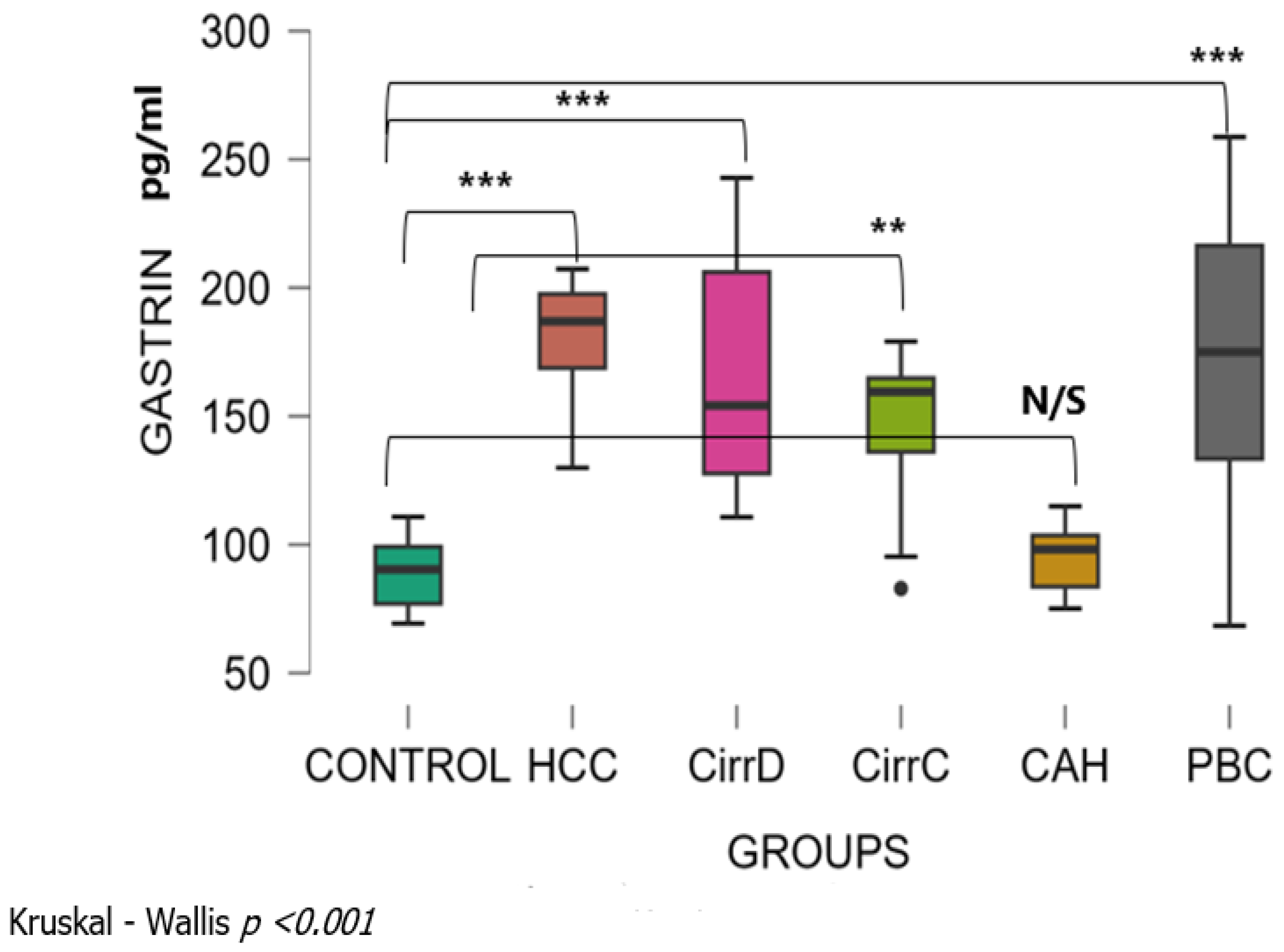
3.1.1. Gastrin I
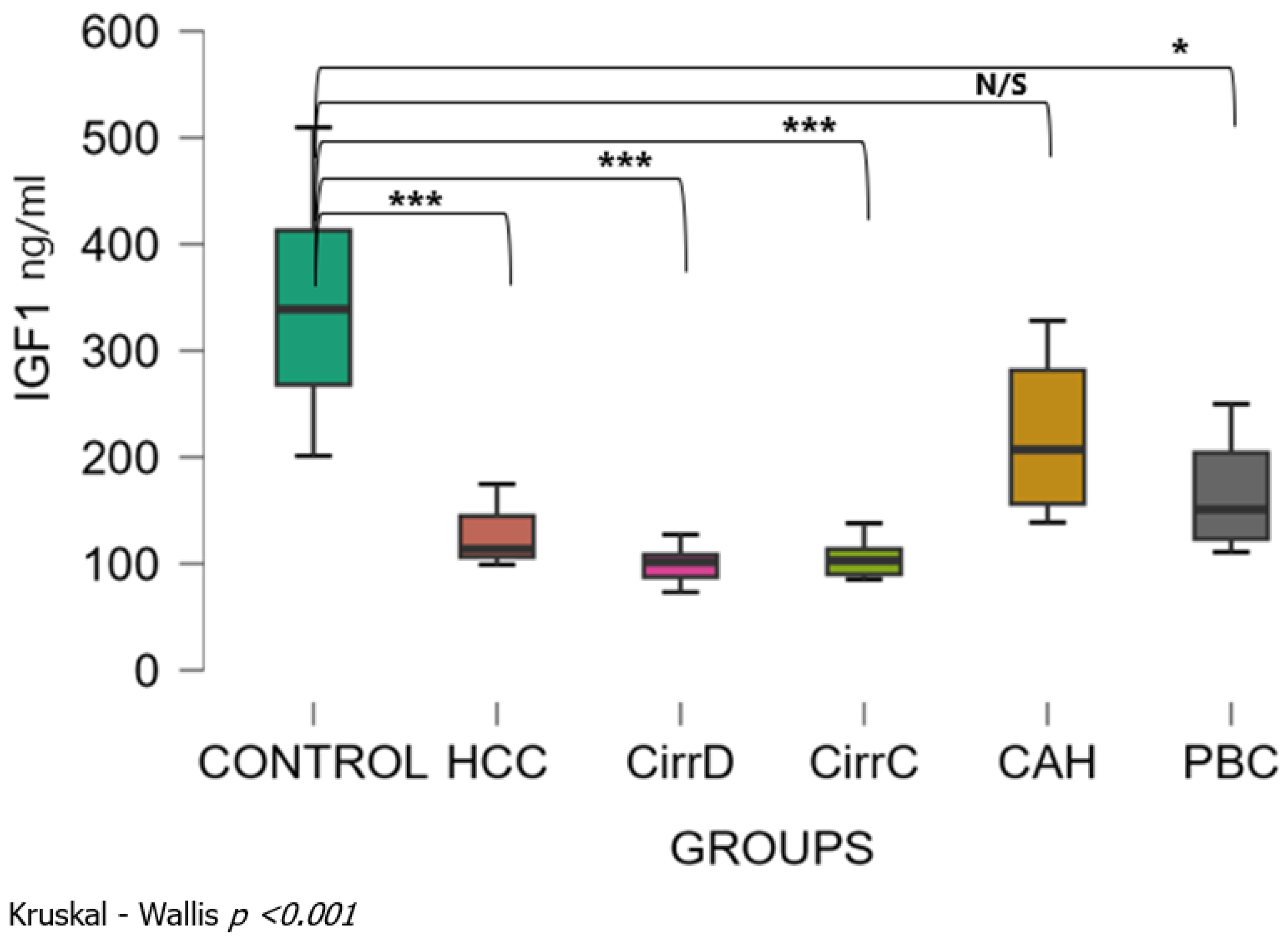
3.1.2. IGF-1
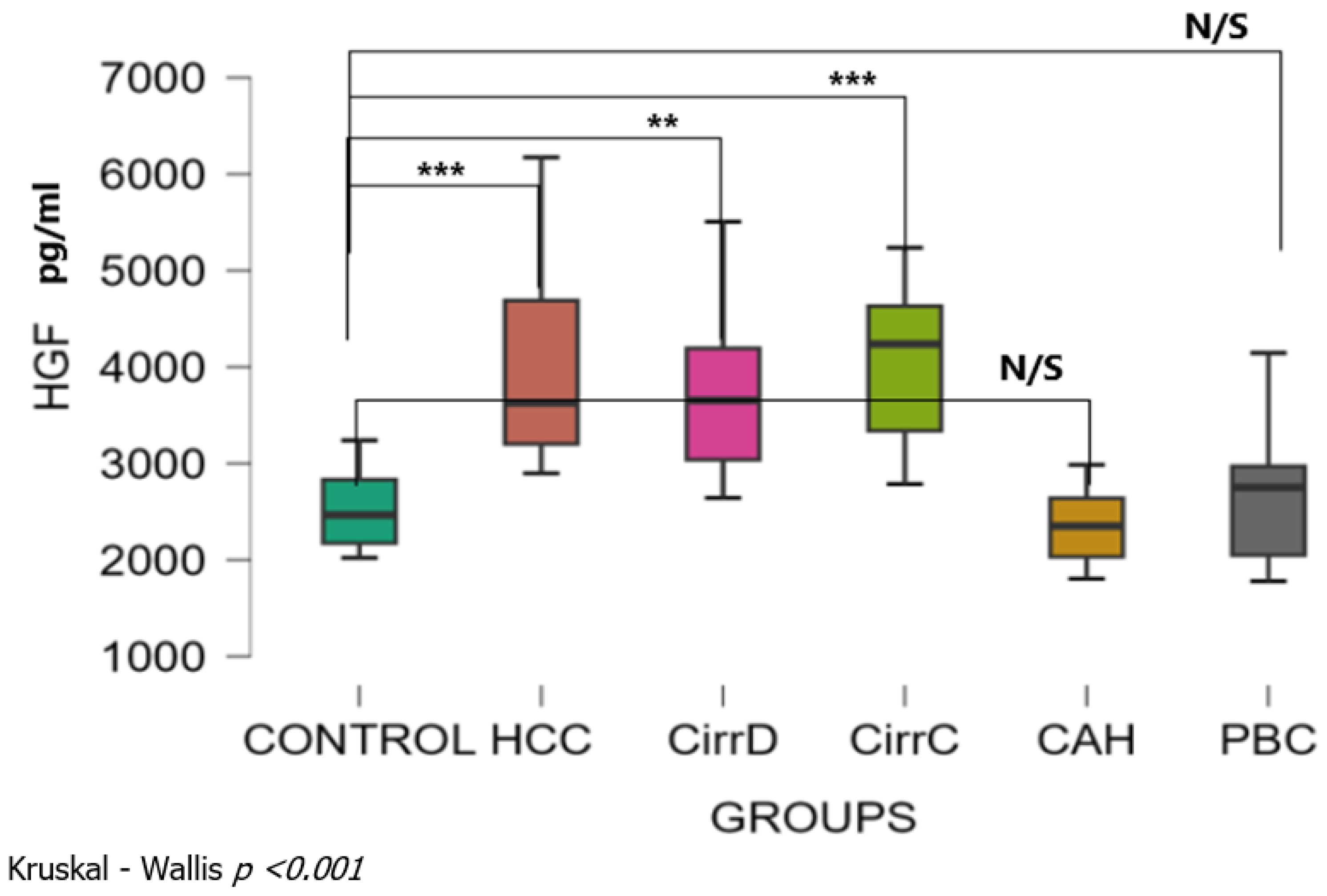
3.1.3. HGF
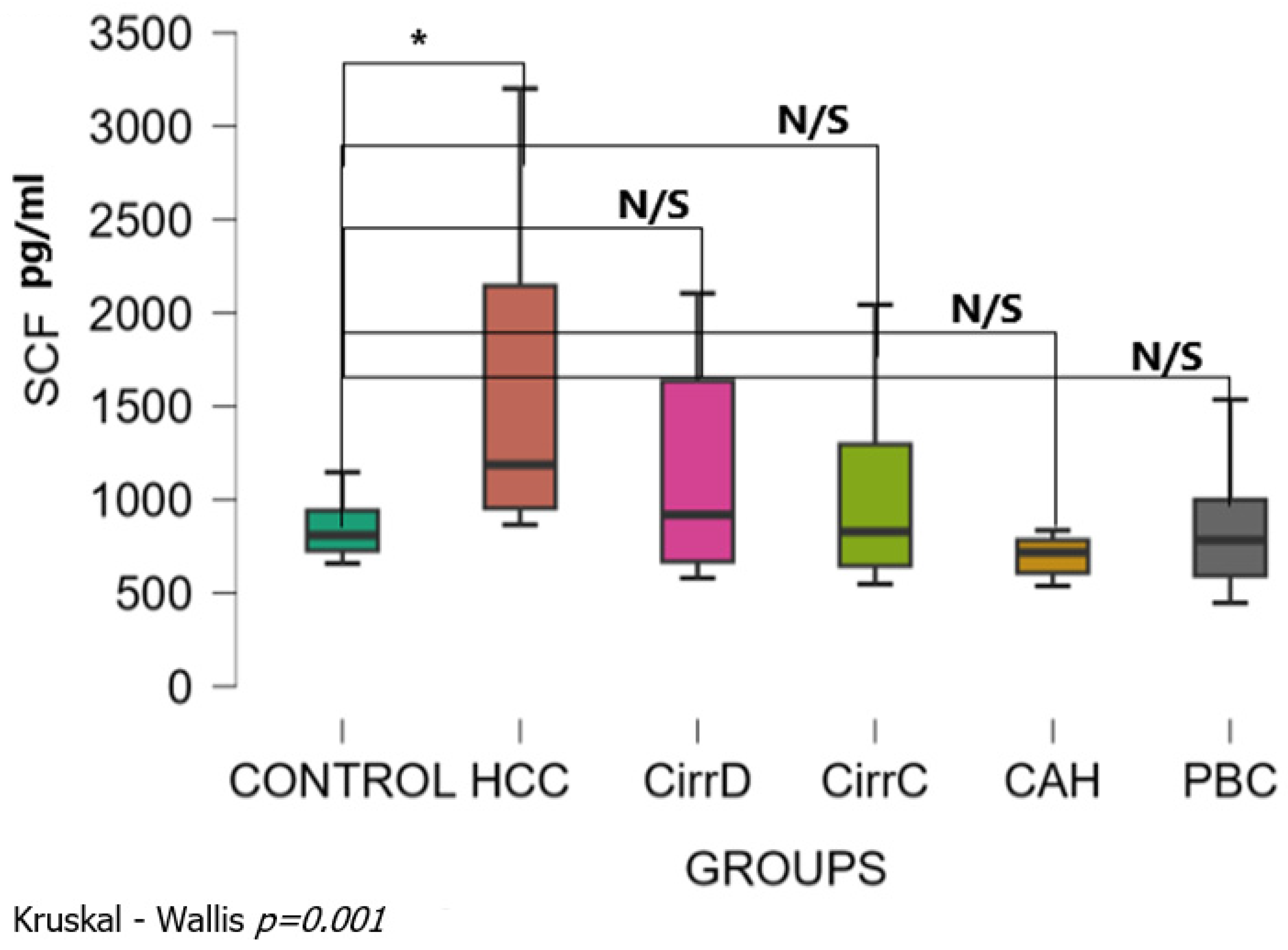
3.1.4. SCF
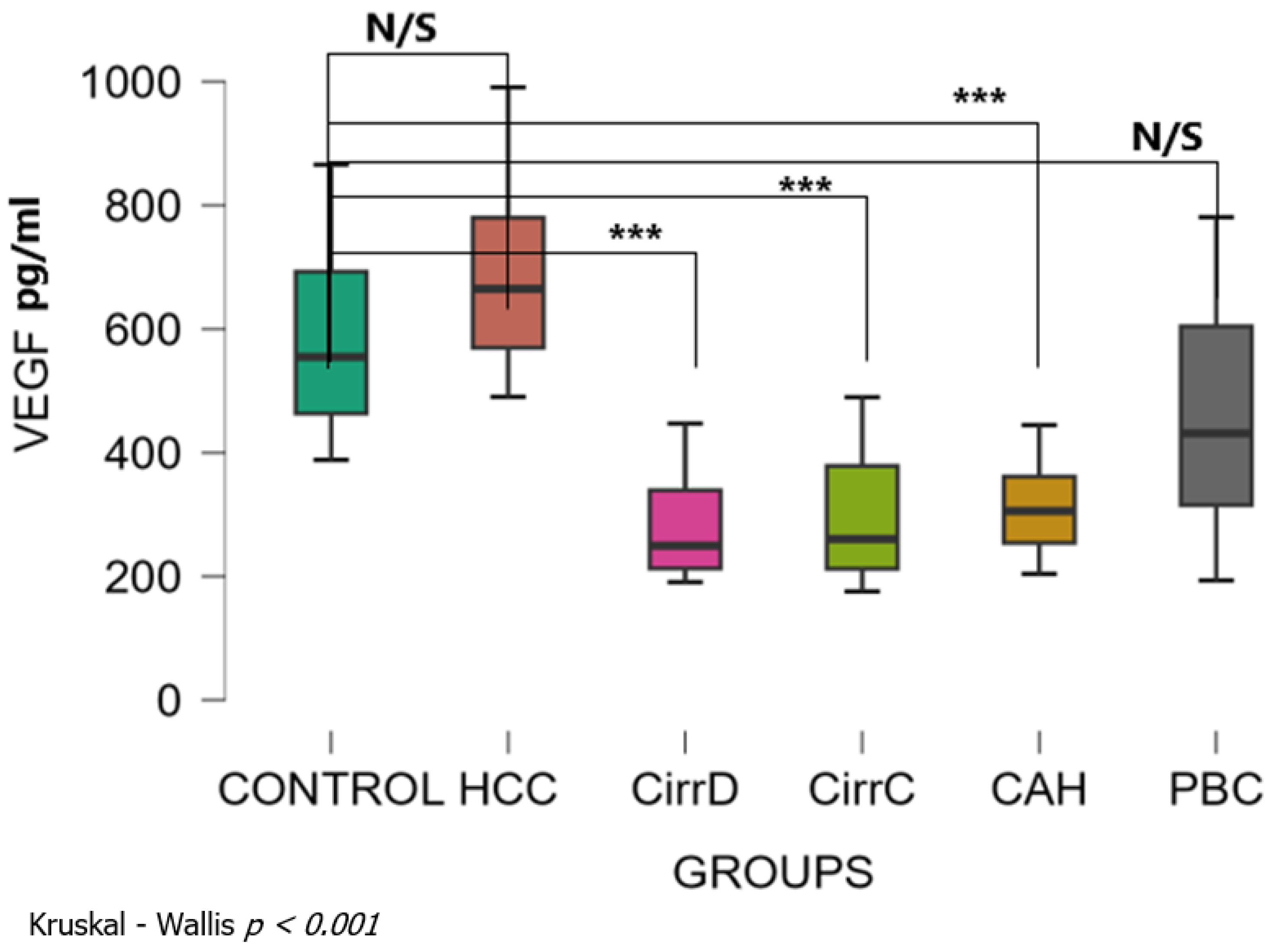
3.1.5. VEGF
3.2. Paired Analysis
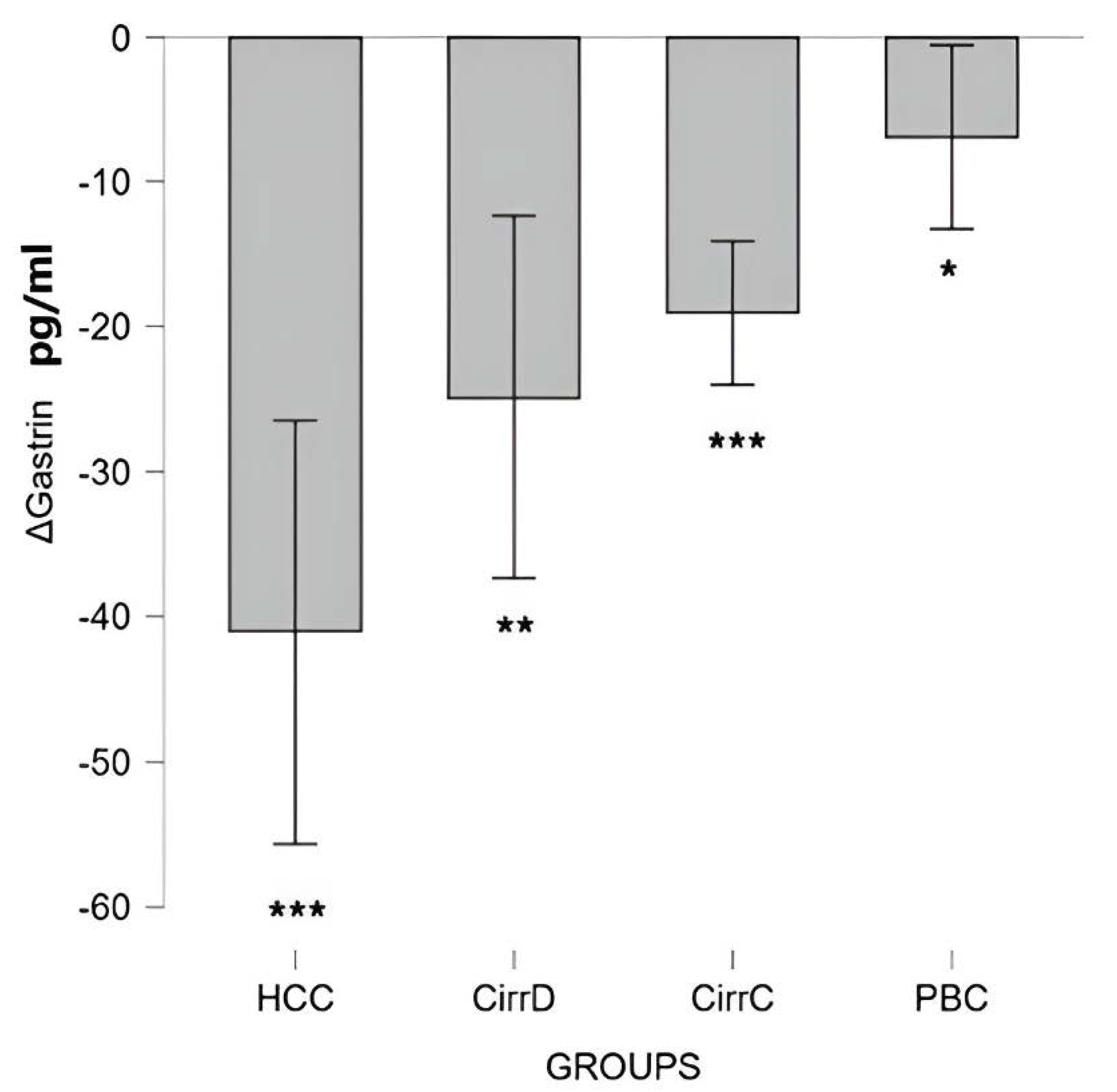
3.2.1. Gastrin I
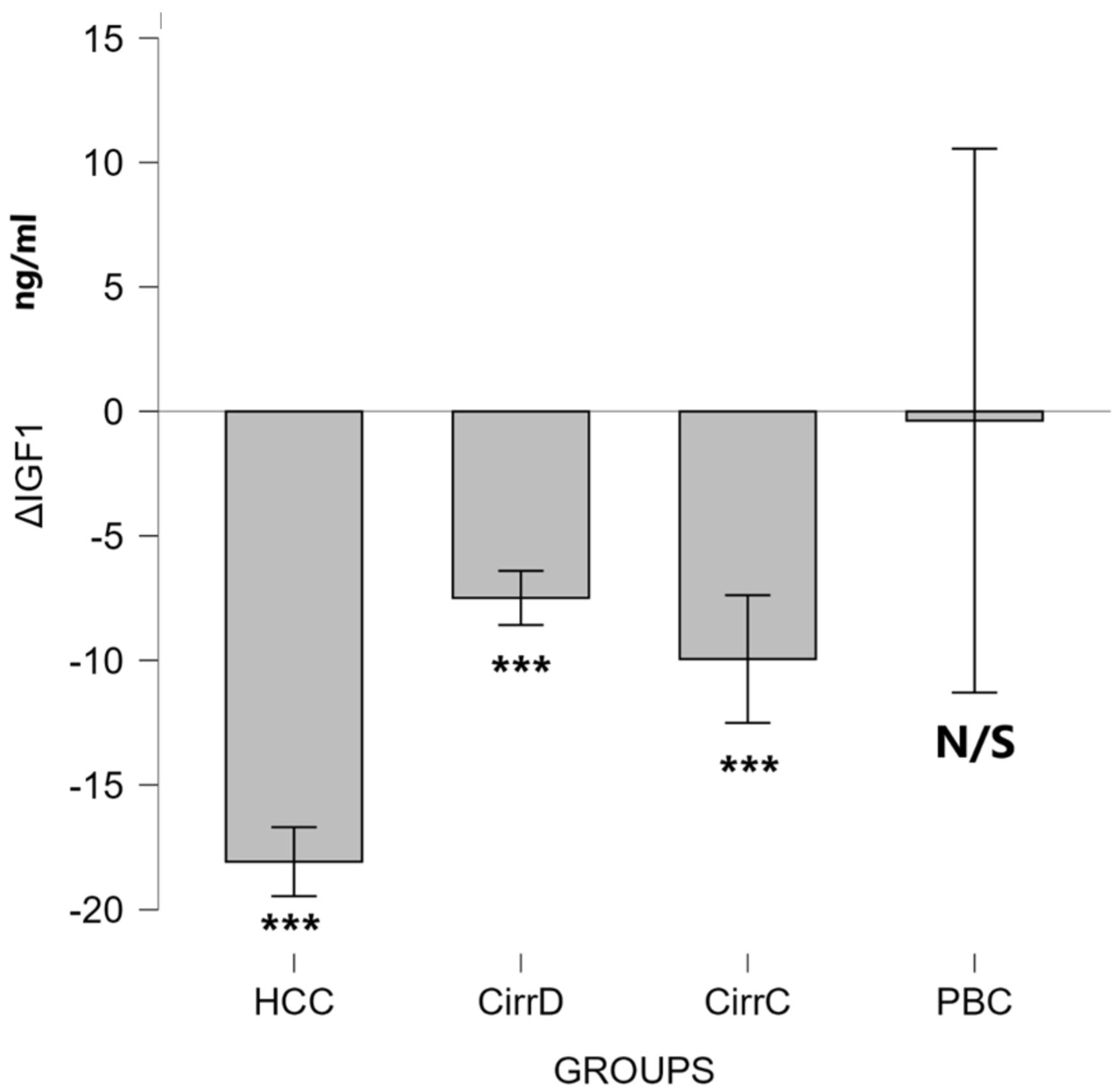
3.2.2. IGF-1
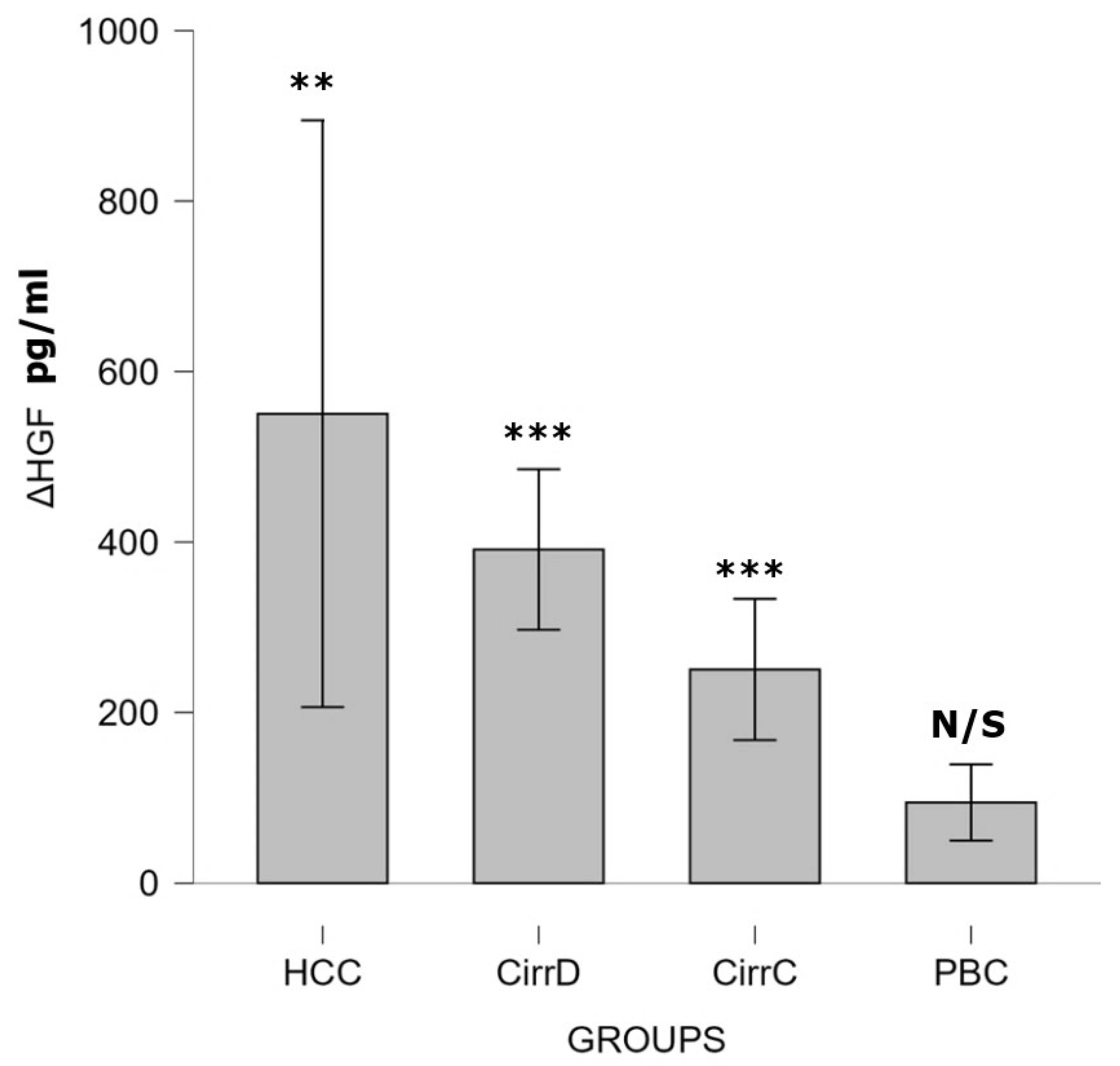
3.2.3. HGF
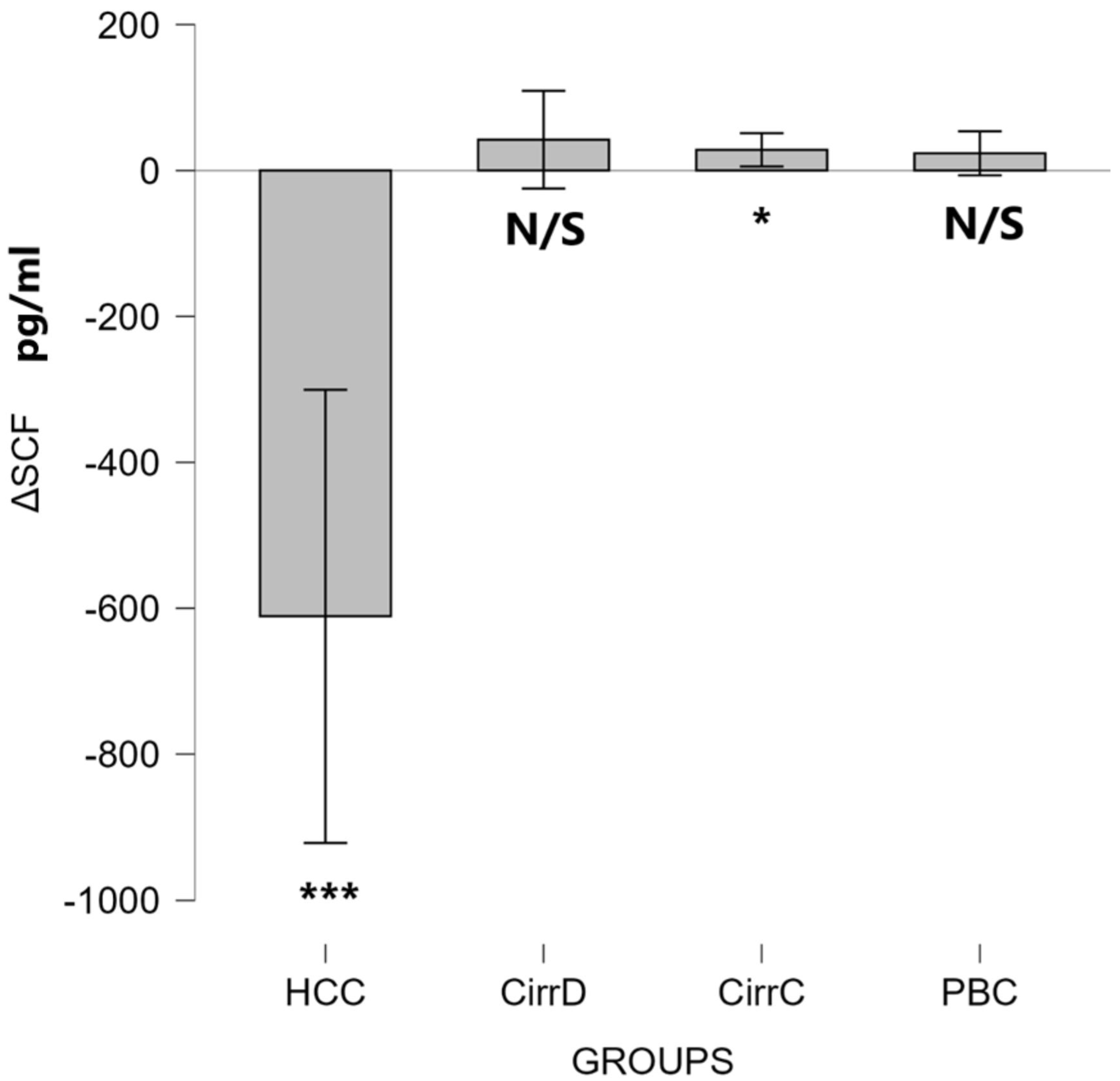
3.2.4. SCF
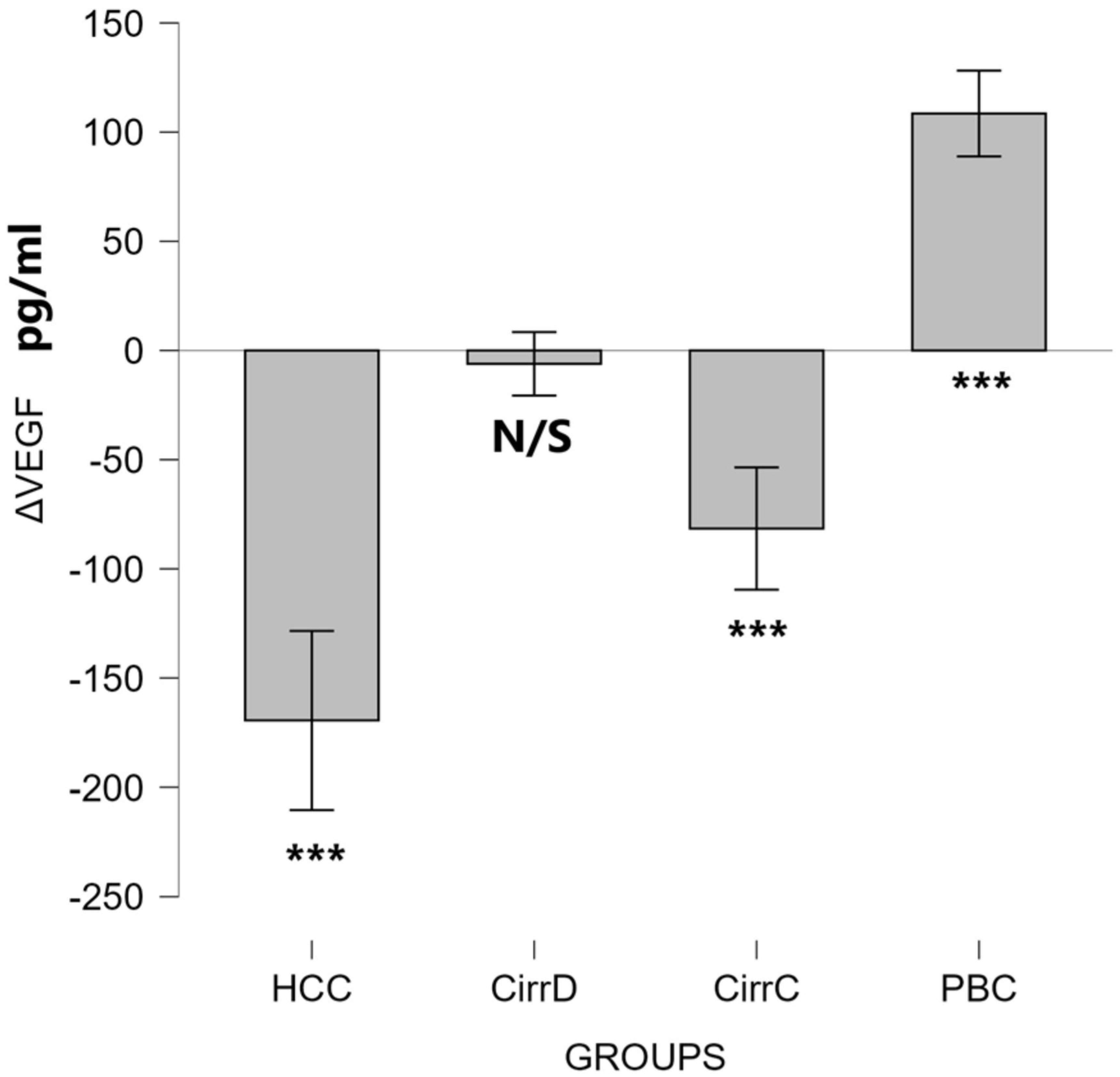
3.2.5. VEGF
4. Discussion
4.1. Gastrin
4.2. IGF 1
4.3. HGF
4.4. SCF
4.5. VEGF
Author Contributions
Funding
Institutional Review Board Statement
Informed Consent Statement
Data Availability Statement
Conflicts of Interest
References
- Berasain, C.; Avila, M.A. The EGFR signalling system in the liver: From hepatoprotection to hepatocarcinogenesis. J. Gastroenterol. 2014, 49, 9–23. [Google Scholar] [CrossRef] [PubMed]
- Radmanić, L.; Zidovec-Lepej, S. The Role of Stem Cell Factor, Epidermal Growth Factor and Angiopoietin-2 in HBV, HCV, HCC and NAFLD. Life 2022, 12, 2072. [Google Scholar] [CrossRef]
- Chang, W.; Wang, H.; Kim, W.; Liu, Y.; Deng, H.; Liu, H.; Jiang, Z.; Niu, Z.; Sheng, W.; Nápoles, O.C.; et al. Hormonal Suppression of Stem Cells Inhibits Symmetric Cell Division and Gastric Tumorigenesis. Cell Stem Cell 2020, 26, 739–754.E8. [Google Scholar] [CrossRef]
- Roy, J.; Putt, K.S.; Coppola, D.; Leon, M.E.; Khalil, F.K.; Centeno, B.A.; Clark, N.; Stark, V.E.; Morse, D.L.; Low, P.S. Assessment of cholecystokinin 2 receptor (CCK2R) in neoplastic tissue. Oncotarget 2016, 7, 14605–14615. [Google Scholar] [CrossRef]
- Shivapurkar, N.; Gay, M.D.; He, A.R.; Chen, W.; Golnazar, S.; Cao, H.; Duka, T.; Kallakury, B.; Vasudevan, S.; Smith, J.P. Treatment with a Cholecystokinin Receptor Antagonist, Proglumide, Improves Efficacy of Immune Checkpoint Antibodies in Hepatocellular Carcinoma. Int. J. Mol. Sci. 2023, 24, 3625. [Google Scholar] [CrossRef]
- Gay, M.D.; Drda, J.C.; Chen, W.; Huang, Y.; Yassin, A.A.; Duka, T.; Fang, H.; Shivapurkar, N.; Smith, J.P. Implicating the cholecystokinin B receptor in liver stem cell oncogenesis. Am. J. Physiol. Gastrointest. Liver Physiol. 2024, 326, G291–G309. [Google Scholar] [CrossRef]
- Schubert, M.L.; Rehfeld, J.F. Gastric Peptides-Gastrin and Somatostatin. Compr. Physiol. 2019, 10, 197–228. [Google Scholar] [CrossRef]
- Imsumran, A.; Adachi, Y.; Yamamoto, H.; Li, R.; Wang, Y.; Min, Y.; Piao, W.; Nosho, K.; Arimura, Y.; Shinomura, Y.; et al. Insulin-like growth factor-I receptor as a marker for prognosis and a therapeutic target in human esophageal squamous cell carcinoma. Carcinogenesis 2007, 28, 947–956. [Google Scholar] [CrossRef] [PubMed]
- Adachi, Y.; Nojima, M.; Mori, M.; Matsunaga, Y.; Akutsu, N.; Sasaki, S.; Endo, T.; Kurozawa, Y.; Wakai, K.; Tamakoshi, A. Insulin-like growth factor-related components and the risk of liver cancer in a nested case-control study. Tumour Biol. 2016, 37, 15125–15132. [Google Scholar] [CrossRef] [PubMed]
- Adachi, Y.; Nojima, M.; Mori, M.; Himori, R.; Kubo, T.; Yamano, H.O.; Lin, Y.; Wakai, K.; Tamakoshi, A. Insulin-like Growth Factor-1, Insulin-like Growth Factor Binding Protein-3 and the Incidence of Malignant Neoplasms in a Nested Case-Control Study. Cancer Prev. Res. 2020, 13, 385–394. [Google Scholar] [CrossRef]
- Alexia, C.; Fallot, G.; Lasfer, M.; Schweizer-Groyer, G.; Groyer, A. An evaluation of the role of insulin-like growth factors (IGF) and of type-I IGF receptor signalling in hepatocarcinogenesis and in the resistance of hepatocarcinoma cells against drug-induced apoptosis. Biochem. Pharmacol. 2004, 68, 1003–1015. [Google Scholar] [CrossRef] [PubMed]
- Pivonello, C.; De Martino, M.C.; Negri, M.; Cuomo, G.; Cariati, F.; Izzo, F.; Colao, A.; Pivonello, R. The GH-IGF-SST system in hepatocellular carcinoma: Biological and molecular pathogenetic mechanisms and therapeutic targets. Infect. Agents Cancer 2014, 9, 27. [Google Scholar] [CrossRef] [PubMed]
- Chen, Y.W.; Pan, H.B.; Tseng, H.H.; Hung, Y.T.; Huang, J.S.; Chou, C.P. Assessment of blood flow in hepatocellular carcinoma: Correlations of computed tomography perfusion imaging and circulating angiogenic factors. Int. J. Mol. Sci. 2013, 14, 17536–17552. [Google Scholar] [CrossRef]
- Kaseb, A.O.; Hanbali, A.; Cotant, M.; Hassan, M.M.; Wollner, I.; Philip, P.A. Vascular endothelial growth factor in the management of hepatocellular carcinoma: A review of literature. Cancer 2009, 115, 4895–4906. [Google Scholar] [CrossRef]
- Lu, Y.; Han, G.; Zhang, Y.; Zhang, L.; Li, Z.; Wang, Q.; Chen, Z.; Wang, X.; Wu, J. M2 macrophage-secreted exosomes promote metastasis and increase vascular permeability in hepatocellular carcinoma. Cell Commun. Signal. 2023, 21, 299. [Google Scholar] [CrossRef]
- Palazon, A.; Tyrakis, P.A.; Macias, D.; Veliça, P.; Rundqvist, H.; Fitzpatrick, S.; Vojnovic, N.; Phan, A.T.; Loman, N.; Hedenfalk, I.; et al. An HIF-1α/VEGF-A Axis in Cytotoxic T Cells Regulates Tumor Progression. Cancer Cell 2017, 32, 669–683.E5. [Google Scholar] [CrossRef]
- Cheng, N.; Bei, Y.; Song, Y.; Zhang, W.; Xu, L.; Zhang, W.; Yang, N.; Bai, X.; Shu, Y.; Shen, P. B7-H3 augments the pro-angiogenic function of tumor-associated macrophages and acts as a novel adjuvant target for triple-negative breast cancer therapy. Biochem. Pharmacol. 2021, 183, 114298. [Google Scholar] [CrossRef] [PubMed]
- García-Vilas, J.A.; Medina, M.Á. Updates on the hepatocyte growth factor/c-Met axis in hepatocellular carcinoma and its therapeutic implications. World J. Gastroenterol. 2018, 24, 3695–3708. [Google Scholar] [CrossRef]
- Gowda, S.V.; Kim, N.Y.; Harsha, K.B.; Gowda, D.; Suresh, R.N.; Deivasigamani, A.; Mohan, C.D.; Hui, K.M.; Sethi, G.; Ahn, K.S.; et al. A new 1,2,3-triazole-indirubin hybrid suppresses tumor growth and pulmonary metastasis by mitigating the HGF/c-MET axis in hepatocellular carcinoma. J. Adv. Res. 2025, 73, 341–356. [Google Scholar] [CrossRef]
- Matsumoto, K.; Umitsu, M.; De Silva, D.M.; Roy, A.; Bottaro, D.P. Hepatocyte growth factor/MET in cancer progression and biomarker discovery. Cancer Sci. 2017, 108, 296–307. [Google Scholar] [CrossRef]
- Ang, C.S.; Sun, M.Y.; Huitzil-Melendez, D.F.; Chou, J.F.; Capanu, M.; Jarnagin, W.; Fong, Y.; Dematteo, R.P.; D’Angelica, M.; Allen, P.; et al. c-MET and HGF mRNA expression in hepatocellular carcinoma: Correlation with clinicopathological features and survival. Anticancer Res. 2013, 33, 3241–3245. [Google Scholar]
- Wang, H.; Rao, B.; Lou, J.; Li, J.; Liu, Z.; Li, A.; Cui, G.; Ren, Z.; Yu, Z. The Function of the HGF/c-Met Axis in Hepatocellular Carcinoma. Front. Cell Dev. Biol. 2020, 8, 55. [Google Scholar] [CrossRef]
- Hu, C.T.; Wu, J.R.; Cheng, C.C.; Wu, W.S. The Therapeutic Targeting of HGF/c-Met Signaling in Hepatocellular Carcinoma: Alternative Approaches. Cancers 2017, 9, 58. [Google Scholar] [CrossRef]
- Fujio, K.; Hu, Z.; Evarts, R.P.; Marsden, E.R.; Niu, C.H.; Thorgeirsson, S.S. Coexpression of stem cell factor and c-kit in embryonic and adult liver. Exp. Cell Res. 1996, 224, 243–250. [Google Scholar] [CrossRef] [PubMed]
- Yushkov, B.G.; Danilova, I.G.; Ponezheva, Z.h.B.; Brykina, I.A.; Abidov, M.T.; Kalyuzhin, O.V. Modulation of reparative regeneration and CD117 expression by liver cells after partial hepatectomy in mice. Bull. Exp. Biol. Med. 2011, 150, 352–354. [Google Scholar] [CrossRef] [PubMed]
- Fang, C.H.; Gong, J.Q.; Zhang, W. Function of oval cells in hepatocellular carcinoma in rats. World J. Gastroenterol. 2004, 10, 2482–2487. [Google Scholar] [CrossRef] [PubMed]
- Yan, W.; Zhu, Z.; Pan, F.; Huang, A.; Dai, G.H. Overexpression of c-kit(CD117), relevant with microvessel density, is an independent survival prognostic factor for patients with HBV-related hepatocellular carcinoma. OncoTargets Ther. 2018, 11, 1285–1292. [Google Scholar] [CrossRef]
- Wang, W.; Shui, L.; Liu, Y.; Zheng, M. C-Kit, a Double-Edged Sword in Liver Regeneration and Diseases. Front. Genet. 2021, 12, 598855. [Google Scholar] [CrossRef]
- Papantoniou, K.; Aggeletopoulou, I.; Pastras, P.; Triantos, C. The Role of Somatostatin in the Gastrointestinal Tract. Biology 2025, 14, 558. [Google Scholar] [CrossRef]
- Notas, G.; Kolios, G.; Mastrodimou, N.; Kampa, M.; Vasilaki, A.; Xidakis, C.; Castanas, E.; Thermos, K.; Kouroumalis, E. Cortistatin production by HepG2 human hepatocellular carcinoma cell line and distribution of somatostatin receptors. J. Hepatol. 2004, 40, 792–798. [Google Scholar] [CrossRef]
- Periferakis, A.; Tsigas, G.; Periferakis, A.T.; Badarau, I.A.; Scheau, A.E.; Tampa, M.; Georgescu, S.R.; Didilescu, A.C.; Scheau, C.; Caruntu, C. Antitumoral and Anti-inflammatory Roles of Somatostatin and Its Analogs in Hepatocellular Carcinoma. Anal. Cell. Pathol. 2021, 2021, 1840069. [Google Scholar] [CrossRef]
- Samonakis, D.N.; Moschandreas, J.; Arnaoutis, T.; Skordilis, P.; Leontidis, C.; Vafiades, I.; Kouroumalis, E. Treatment of hepatocellular carcinoma with long acting somatostatin analogues. Oncol. Rep. 2002, 9, 903–907. [Google Scholar] [CrossRef]
- Kouroumalis, E.A.; Koutroubakis, I.E.; Manousos, O.N. Somatostatin for acute severe bleeding from portal hypertensive gastropathy. Eur. J. Gastroenterol. Hepatol. 1998, 10, 509–512. [Google Scholar] [CrossRef]
- Ludwig, J.; Dickson, E.R.; McDonald, G.S. Staging of chronic nonsuppurative destructive cholangitis (syndrome of primary biliary cirrhosis). Virchows Arch. A Pathol. Anat. Histol. 1978, 379, 103–112. [Google Scholar] [CrossRef]
- D’Amico, G.; Bernardi, M.; Angeli, P. Towards a new definition of decompensated cirrhosis. J. Hepatol. 2022, 76, 202–207, Correction in J. Hepatol. 2022, 76, 757. [Google Scholar] [CrossRef] [PubMed]
- European Association for the Study of the Liver. EASL Clinical Practice Guidelines: The diagnosis and management of patients with primary biliary cholangitis. J. Hepatol. 2017, 67, 145–172. [Google Scholar] [CrossRef]
- Kouroumalis, E.; Tsomidis, I.; Voumvouraki, A. Is There a Place for Somatostatin Analogues for the Systemic Treatment of Hepatocellular Carcinoma in the Immunotherapy Era? Livers 2022, 2, 315–335. [Google Scholar] [CrossRef]
- Barbieri, F.; Bajetto, A.; Pattarozzi, A.; Gatti, M.; Würth, R.; Thellung, S.; Corsaro, A.; Villa, V.; Nizzari, M.; Florio, T. Peptide receptor targeting in cancer: The somatostatin paradigm. Int. J. Pept. 2013, 2013, 926295. [Google Scholar] [CrossRef] [PubMed]
- Jia, W.D.; Xu, G.L.; Xu, R.N.; Sun, H.C.; Wang, L.; Yu, J.H.; Wang, J.; Li, J.S.; Zhai, Z.M.; Xue, Q. Octreotide acts as an antitumor angiogenesis compound and suppresses tumor growth in nude mice bearing human hepatocellular carcinoma xenografts. J. Cancer Res. Clin. Oncol. 2003, 129, 327–334. [Google Scholar] [CrossRef]
- Gao, J.H.; Wen, S.L.; Feng, S.; Yang, W.J.; Lu, Y.Y.; Tong, H.; Liu, R.; Tang, S.H.; Huang, Z.Y.; Tang, Y.M.; et al. Celecoxib and octreotide synergistically ameliorate portal hypertension via inhibition of angiogenesis in cirrhotic rats. Angiogenesis 2016, 19, 501–511, Correction in Angiogenesis 2022, 26, 193–196. [Google Scholar] [CrossRef]
- Konturek, S.J.; Gonciarz, M.; Gonciarz, Z.; Bielanski, W.; Mazur, W.; Mularczyk, A.; Konturek, P.C.; Goetze, J.P.; Rehfeld, J.F. Progastrin and its products from patients with chronic viral hepatitis and liver cirrhosis. Scand. J. Gastroenterol. 2003, 38, 643–647. [Google Scholar] [CrossRef]
- Caplin, M.; Khan, K.; Savage, K.; Rode, J.; Varro, A.; Michaeli, D.; Grimes, S.; Brett, B.; Pounder, R.; Dhillon, A. Expression and processing of gastrin in hepatocellular carcinoma, fibrolamellar carcinoma and cholangiocarcinoma. J. Hepatol. 1999, 30, 519–526. [Google Scholar] [CrossRef] [PubMed]
- Gay, M.D.; Safronenka, A.; Cao, H.; Liu, F.H.; Malchiodi, Z.X.; Tucker, R.D.; Kroemer, A.; Shivapurkar, N.; Smith, J.P. Targeting the Cholecystokinin Receptor: A Novel Approach for Treatment and Prevention of Hepatocellular Cancer. Cancer Prev. Res. 2021, 14, 17–30. [Google Scholar] [CrossRef] [PubMed]
- You, B.; Mercier, F.; Assenat, E.; Langlois-Jacques, C.; Glehen, O.; Soulé, J.; Payen, L.; Kepenekian, V.; Dupuy, M.; Belouin, F.; et al. The oncogenic and druggable hPG80 (Progastrin) is overexpressed in multiple cancers and detected in the blood of patients. EBioMedicine 2020, 51, 102574. [Google Scholar] [CrossRef] [PubMed]
- You, B.; Couraud, S.; Ceruse, P.; Badet, L.; Paparel, P.; Durand, A.; Guillet, M.; Merle, P.; Lescuyer, G.; Philip, C.A.; et al. Diagnostic value of the wnt target and cancer-associated blood biomarker hPG80: ONCOPRO case-control prospective study. Biomark. Res. 2025, 13, 91. [Google Scholar] [CrossRef]
- Tomita, H.; Takaishi, S.; Menheniott, T.R.; Yang, X.; Shibata, W.; Jin, G.; Betz, K.S.; Kawakami, K.; Minamoto, T.; Tomasetto, C.; et al. Inhibition of gastric carcinogenesis by the hormone gastrin is mediated by suppression of TFF1 epigenetic silencing. Gastroenterology 2011, 140, 879–891. [Google Scholar] [CrossRef]
- Zavros, Y.; Eaton, K.A.; Kang, W.; Rathinavelu, S.; Katukuri, V.; Kao, J.Y.; Samuelson, L.C.; Merchant, J.L. Chronic gastritis in the hypochlorhydric gastrin-deficient mouse progresses to adenocarcinoma. Oncogene 2005, 24, 2354–2366. [Google Scholar] [CrossRef]
- Takaishi, S.; Tu, S.; Dubeykovskaya, Z.A.; Whary, M.T.; Muthupalani, S.; Rickman, B.H.; Rogers, A.B.; Lertkowit, N.; Varro, A.; Fox, J.G.; et al. Gastrin is an essential cofactor for helicobacter-associated gastric corpus carcinogenesis in C57BL/6 mice. Am. J. Pathol. 2009, 175, 365–375. [Google Scholar] [CrossRef]
- Aleem, E.; Elshayeb, A.; Elhabachi, N.; Mansour, A.R.; Gowily, A.; Hela, A. Serum IGFBP-3 is a more effective predictor than IGF-1 and IGF-2 for the development of hepatocellular carcinoma in patients with chronic HCV infection. Oncol. Lett. 2012, 3, 704–712. [Google Scholar] [CrossRef]
- Nikolić, J.A.; Todorović, V.; Bozić, M.; Tosić, L.; Bulajić, M.; Alempijević, T.; Nedić, O.; Masnikosa, R. Serum insulin-like growth factor (IGF)-II is more closely associated with liver dysfunction than is IGF-I in patients with cirrhosis. Clin. Chim. Acta 2000, 294, 169–177. [Google Scholar] [CrossRef]
- Stuver, S.O.; Kuper, H.; Tzonou, A.; Lagiou, P.; Spanos, E.; Hsieh, C.C.; Mantzoros, C.; Trichopoulos, D. Insulin-like growth factor 1 in hepatocellular carcinoma and metastatic liver cancer in men. Int. J. Cancer 2000, 87, 118–121. [Google Scholar] [CrossRef]
- Colakoğlu, O.; Taşkiran, B.; Colakoğlu, G.; Kizildağ, S.; Ari Ozcan, F.; Unsal, B. Serum insulin like growth factor-1 (IGF-1) and insulin like growth factor binding protein-3 (IGFBP-3) levels in liver cirrhosis. Turk. J. Gastroenterol. 2007, 18, 245–249. [Google Scholar]
- Elmashad, N.; Ibrahim, W.S.; Mayah, W.W.; Farouk, M.; Ali, L.A.; Taha, A.; Elmashad, W. Predictive value of serum insulin-like growth factor-1 in hepatocellular carcinoma. Asian Pac. J. Cancer Prev. 2015, 16, 613–619. [Google Scholar] [CrossRef]
- Lee, D.H.; Lee, J.H.; Jung, Y.J.; Gim, J.; Kim, W.; Kim, B.G.; Lee, K.L.; Cho, Y.; Yoo, J.J.; Lee, M.; et al. Validation of a Modified Child-Turcotte-Pugh Classification System Utilizing Insulin-Like Growth Factor-1 for Patients with Hepatocellular Carcinoma in an HBV Endemic Area. PLoS ONE 2017, 12, e0170394. [Google Scholar] [CrossRef]
- Abdel-Wahab, R.; Shehata, S.; Hassan, M.M.; Habra, M.A.; Eskandari, G.; Tinkey, P.T.; Mitchell, J.; Lee, J.S.; Amin, H.M.; Kaseb, A.O. Type I insulin-like growth factor as a liver reserve assessment tool in hepatocellular carcinoma. J. Hepatocell. Carcinoma 2015, 2, 131–142. [Google Scholar] [CrossRef]
- Assy, N.; Pruzansky, Y.; Gaitini, D.; Shen Orr, Z.; Hochberg, Z.; Baruch, Y. Growth hormone-stimulated IGF-1 generation in cirrhosis reflects hepatocellular dysfunction. J. Hepatol. 2008, 49, 34–42. [Google Scholar] [CrossRef]
- Mazziotti, G.; Sorvillo, F.; Morisco, F.; Carbone, A.; Rotondi, M.; Stornaiuolo, G.; Precone, D.F.; Cioffi, M.; Gaeta, G.B.; Caporaso, N.; et al. Serum insulin-like growth factor I evaluation as a useful tool for predicting the risk of developing hepatocellular carcinoma in patients with hepatitis C virus-related cirrhosis: A prospective study. Cancer 2002, 95, 2539–2545. [Google Scholar] [CrossRef]
- Su, W.W.; Lee, K.T.; Yeh, Y.T.; Soon, M.S.; Wang, C.L.; Yu, M.L.; Wang, S.N. Association of circulating insulin-like growth factor 1 with hepatocellular carcinoma: One cross-sectional correlation study. J. Clin. Lab. Anal. 2010, 24, 195–200. [Google Scholar] [CrossRef] [PubMed]
- Kaseb, A.O.; Morris, J.S.; Hassan, M.M.; Siddiqui, A.M.; Lin, E.; Xiao, L.; Abdalla, E.K.; Vauthey, J.N.; Aloia, T.A.; Krishnan, S.; et al. Clinical and prognostic implications of plasma insulin-like growth factor-1 and vascular endothelial growth factor in patients with hepatocellular carcinoma. J. Clin. Oncol. 2011, 29, 3892–3899. [Google Scholar] [CrossRef] [PubMed]
- Cho, E.; Kim, H.C.; Lee, J.H.; Yoo, J.J.; Choi, W.M.; Cho, Y.Y.; Lee, M.J.; Cho, Y.; Lee, D.H.; Lee, Y.B.; et al. Serum insulin-like growth factor-1 predicts disease progression and survival in patients with hepatocellular carcinoma who undergo transarterial chemoembolization. PLoS ONE 2014, 9, e90862. [Google Scholar] [CrossRef] [PubMed]
- Liu, S.; Liu, Y.; Jiang, X. Prognostic significance of serum insulin-like growth factor-1 in patients with hepatocellular carcinoma following transarterial chemoembolization. Exp. Ther. Med. 2016, 11, 607–612. [Google Scholar] [CrossRef] [PubMed]
- Cho, E.J.; Lee, J.H.; Yoo, J.J.; Choi, W.M.; Lee, M.J.; Cho, Y.; Lee, D.H.; Lee, Y.B.; Kwon, J.H.; Yu, S.J.; et al. Serum insulin-like growth factor-I level is an independent predictor of recurrence and survival in early hepatocellular carcinoma: A prospective cohort study. Clin. Cancer Res. 2013, 19, 4218–4227. [Google Scholar] [CrossRef]
- Ding, S.; Ding, W.; Zhang, Y.; Chen, Y.; Tang, H.; Jiang, X.; Chen, J. Serum HIF-1α, IGF-1 and IGFBP-3 correlate to recurrence and overall survival in early-stage hepatocellular carcinoma patients. Biomark. Med. 2024, 18, 1027–1036. [Google Scholar] [CrossRef]
- Yao, Y.; Mao, W.; Dong, M.; Yang, D.; Li, W.; Chen, Y. Serum Insulin-Like Growth Factor-1 (IGF-1): A Novel Prognostic Factor for Early Recurrence of Hepatocellular Carcinoma (HCC). Clin. Lab. 2017, 63, 261–270. [Google Scholar] [CrossRef] [PubMed]
- Huber, Y.; Bierling, F.; Labenz, C.; Koch, S.; Schmidtmann, I.; Kloeckner, R.; Schotten, S.; Huber, T.; Lang, H.; Woerns, M.A.; et al. Validation of insulin-like growth factor-1 as a prognostic parameter in patients with hepatocellular carcinoma in a European cohort. BMC Cancer 2018, 18, 774. [Google Scholar] [CrossRef]
- Khoshnood, A.; Nasiri Toosi, M.; Faravash, M.J.; Esteghamati, A.; Froutan, H.; Ghofrani, H.; Kalani, M.; Miroliaee, A.; Abdollahi, A.; Yasir, A. A survey of correlation between insulin-like growth factor-I (igf-I) levels and severity of liver cirrhosis. Hepat. Mon. 2013, 13, e6181. [Google Scholar] [CrossRef] [PubMed]
- Mohamed, A.A.; Sahin, C.; Berres, M.L.; Beetz, O.; Websky, M.V.; Vogel, T.; Vondran, F.W.R.; Bruners, P.; Imöhl, M.; Frank, K.; et al. The prognostic utility of IGF-1 in hepatocellular carcinoma treated with stereotactic body radiotherapy. Clin. Transl. Radiat. Oncol. 2024, 50, 100887. [Google Scholar] [CrossRef]
- Wang, J.; Li, Y.C.; Deng, M.; Jiang, H.Y.; Guo, L.H.; Zhou, W.J.; Ruan, B. Serum insulin-like growth factor-1 and its binding protein 3 as prognostic factors for the incidence, progression, and outcome of hepatocellular carcinoma: A systematic review and meta-analysis. Oncotarget 2017, 8, 81098–81108. [Google Scholar] [CrossRef]
- Renehan, A.G.; Zwahlen, M.; Minder, C.; O’Dwyer, S.T.; Shalet, S.M.; Egger, M. Insulin-like growth factor (IGF)-I, IGF binding protein-3, and cancer risk: Systematic review and meta-regression analysis. Lancet 2004, 363, 1346–1353. [Google Scholar] [CrossRef]
- Cai, W.; Ma, Y.; Song, L.; Cao, N.; Gao, J.; Zhou, S.; Tang, X. IGF-1R down regulates the sensitivity of hepatocellular carcinoma to sorafenib through the PI3K/akt and RAS/raf/ERK signaling pathways. BMC Cancer 2023, 23, 87. [Google Scholar] [CrossRef]
- Lei, T.; Ling, X. IGF-1 promotes the growth and metastasis of hepatocellular carcinoma via the inhibition of proteasome-mediated cathepsin B degradation. World J. Gastroenterol. 2015, 21, 10137–10149. [Google Scholar] [CrossRef]
- Treiber, G.; Wex, T.; Röcken, C.; Fostitsch, P.; Malfertheiner, P. Impact of biomarkers on disease survival and progression in patients treated with octreotide for advanced hepatocellular carcinoma. J. Cancer Res. Clin. Oncol. 2006, 132, 699–708. [Google Scholar] [CrossRef]
- Adamek, A.; Kasprzak, A. Insulin-Like Growth Factor (IGF) System in Liver Diseases. Int. J. Mol. Sci. 2018, 19, 1308. [Google Scholar] [CrossRef] [PubMed]
- Venepalli, N.K.; Goff, L. Targeting the HGF-cMET Axis in Hepatocellular Carcinoma. Int. J. Hepatol. 2013, 2013, 341636. [Google Scholar] [CrossRef]
- Firtina Karagonlar, Z.; Koc, D.; Iscan, E.; Erdal, E.; Atabey, N. Elevated hepatocyte growth factor expression as an autocrine c-Met activation mechanism in acquired resistance to sorafenib in hepatocellular carcinoma cells. Cancer Sci. 2016, 107, 407–416. [Google Scholar] [CrossRef]
- Lau, E.Y.; Lo, J.; Cheng, B.Y.; Ma, M.K.; Lee, J.M.; Ng, J.K.; Chai, S.; Lin, C.H.; Tsang, S.Y.; Ma, S.; et al. Cancer-Associated Fibroblasts Regulate Tumor-Initiating Cell Plasticity in Hepatocellular Carcinoma through c-Met/FRA1/HEY1 Signaling. Cell Rep. 2016, 15, 1175–1189. [Google Scholar] [CrossRef] [PubMed]
- Jia, C.C.; Wang, T.T.; Liu, W.; Fu, B.S.; Hua, X.; Wang, G.Y.; Li, T.J.; Li, X.; Wu, X.Y.; Tai, Y.; et al. Cancer-associated fibroblasts from hepatocellular carcinoma promote malignant cell proliferation by HGF secretion. PLoS ONE 2013, 8, e63243. [Google Scholar] [CrossRef]
- Ogunwobi, O.O.; Puszyk, W.; Dong, H.J.; Liu, C. Epigenetic upregulation of HGF and c-Met drives metastasis in hepatocellular carcinoma. PLoS ONE 2013, 8, e63765. [Google Scholar] [CrossRef]
- Junbo, H.; Li, Q.; Zaide, W.; Yunde, H. Increased level of serum hepatocyte growth factor/scatter factor in liver cancer is associated with tumor metastasis. In Vivo 1999, 13, 177–180. [Google Scholar] [PubMed]
- Yamagamim, H.; Moriyama, M.; Matsumura, H.; Aoki, H.; Shimizu, T.; Saito, T.; Kaneko, M.; Shioda, A.; Tanaka, N.; Arakawa, Y. Serum concentrations of human hepatocyte growth factor is a useful indicator for predicting the occurrence of hepatocellular carcinomas in C-viral chronic liver diseases. Cancer 2002, 95, 824–834. [Google Scholar] [CrossRef]
- Pocino, K.; Napodano, C.; Marino, M.; Di Santo, R.; Miele, L.; De Matthaeis, N.; Gulli, F.; Saporito, R.; Rapaccini, G.L.; Ciasca, G.; et al. A Comparative Study of Serum Angiogenic Biomarkers in Cirrhosis and Hepatocellular Carcinoma. Cancers 2021, 14, 11. [Google Scholar] [CrossRef] [PubMed]
- Matsumoto, K.; Nakamura, T. Hepatocyte growth factor (HGF) as a tissue organizer for organogenesis and regeneration. Biochem. Biophys. Res. Commun. 1997, 239, 639–644. [Google Scholar] [CrossRef]
- Chen, Z.; Wan, L.; Jin, X.; Wang, W.; Li, D. Transforming growth factor-β signaling confers hepatic stellate cells progenitor features after partial hepatectomy. J. Cell Physiol. 2020, 235, 2655–2667. [Google Scholar] [CrossRef]
- Simpson, K.; Hogaboam, C.M.; Kunkel, S.L.; Harrison, D.J.; Bone-Larson, C.; Lukacs, N.W. Stem cell factor attenuates liver damage in a murine model of acetaminophen-induced hepatic injury. Lab. Investig. 2003, 83, 199–206. [Google Scholar] [CrossRef] [PubMed]
- Radmanić, L.; Bodulić, K.; Šimičić, P.; Vince, A.; Lepej, S.Ž. The Effect of Treatment-Induced Viral Eradication on Cytokine and Growth Factor Expression in Chronic Hepatitis C. Viruses 2022, 14, 1613. [Google Scholar] [CrossRef]
- Lee, J.; Breton, G.; Oliveira, T.Y.; Zhou, Y.J.; Aljoufi, A.; Puhr, S.; Cameron, M.J.; Sékaly, R.P.; Nussenzweig, M.C.; Liu, K. Restricted dendritic cell and monocyte progenitors in human cord blood and bone marrow. J. Exp. Med. 2015, 212, 385–399. [Google Scholar] [CrossRef]
- Apte, R.S.; Chen, D.S.; Ferrara, N. VEGF in signaling and disease: Beyond discovery and development. Cell 2019, 176, 1248–1264. [Google Scholar] [CrossRef]
- Simons, M.; Gordon, E.; Claesson-Welsh, L. Mechanisms and regulation of endothelial VEGF receptor signalling. Nat. Rev. Mol. Cell Biol. 2016, 17, 611–625. [Google Scholar] [CrossRef]
- Deli, G.; Jin, C.H.; Mu, R.; Yang, S.; Liang, Y.; Chen, D.; Makuuchi, M. Immunohistochemical assessment of angiogenesis in hepatocellular carcinoma and surrounding cirrhotic liver tissues. World J. Gastroenterol. 2005, 11, 960–963. [Google Scholar] [CrossRef]
- Tseng, P.L.; Tai, M.H.; Huang, C.C.; Wang, C.C.; Lin, J.W.; Hung, C.H.; Chen, C.H.; Wang, J.H.; Lu, S.N.; Lee, C.M.; et al. Overexpression of VEGF is associated with positive p53 immunostaining in hepatocellular carcinoma (HCC) and adverse outcome of HCC patients. J. Surg. Oncol. 2008, 98, 349–357. [Google Scholar] [CrossRef] [PubMed]
- Iavarone, M.; Lampertico, P.; Iannuzzi, F.; Manenti, E.; Donato, M.F.; Arosio, E.; Bertolini, F.; Primignani, M.; Sangiovanni, A.; Colombo, M. Increased expression of vascular endothelial growth factor in small hepatocellular carcinoma. J. Viral Hepat. 2007, 14, 133–139. [Google Scholar] [CrossRef] [PubMed]
- Yao, D.F.; Wu, X.H.; Zhu, Y.; Shi, G.S.; Dong, Z.Z.; Yao, D.B.; Wu, W.; Qiu, L.W.; Meng, X.Y. Quantitative analysis of vascular endothelial growth factor, microvascular density and their clinicopathologic features in human hepatocellular carcinoma. Hepatobiliary Pancreat. Dis. Int. 2005, 4, 220–226. [Google Scholar]
- Poon, R.T.; Lau, C.; Pang, R.; Ng, K.K.; Yuen, J.; Fan, S.T. High serum vascular endothelial growth factor levels predict poor prognosis after radiofrequency ablation of hepatocellular carcinoma: Importance of tumor biomarker in ablative therapies. Ann. Surg. Oncol. 2007, 14, 1835–1845. [Google Scholar] [CrossRef]
- Poon, R.T.; Ho, J.W.; Tong, C.S.; Lau, C.; Ng, I.O.; Fan, S.T. Prognostic significance of serum vascular endothelial growth factor and endostatin in patients with hepatocellular carcinoma. Br. J. Surg. 2004, 91, 1354–1360. [Google Scholar] [CrossRef]
- Gunsilius, E.; Petzer, A.; Stockhammer, G.; Nussbaumer, W.; Schumacher, P.; Clausen, J.; Gastl, G. Thrombocytes are the major source for soluble vascular endothelial growth factor in peripheral blood. Oncology 2000, 58, 169–174. [Google Scholar] [CrossRef] [PubMed]
- Kapsoritakis, A.; Sfiridaki, A.; Maltezos, E.; Simopoulos, K.; Giatromanolaki, A.; Sivridis, E.; Koukourakis, M.I. Vascular endothelial growth factor in inflammatory bowel disease. Int. J. Color. Dis. 2003, 18, 418–422. [Google Scholar] [CrossRef]
- Kamel, L.; Nessim, I.; Abd-el-Hady, A.; Ghali, A.; Ismail, A. Assessment of the clinical significance of serum vascular endothelial growth factor and matrix metalloproteinase-9 in patients with hepatocellular carcinoma. J. Egypt. Soc. Parasitol. 2005, 35, 875–890. [Google Scholar] [PubMed]
- Pinto, E.; Pelizzaro, F.; Cardin, R.; Battistel, M.; Palano, G.; Bertellini, F.; Kitenge, M.P.; Peserico, G.; Farinati, F.; Russo, F.P. HIF-1α and VEGF as prognostic biomarkers in hepatocellular carcinoma patients treated with transarterial chemoembolization. Dig. Liver Dis. 2024, 56, 872–879. [Google Scholar] [CrossRef]
- Cao, G.; Li, X.; Qin, C.; Li, J. Prognostic Value of VEGF in Hepatocellular Carcinoma Patients Treated with Sorafenib: A Meta-Analysis. Med. Sci. Monit. 2015, 21, 3144–3151. [Google Scholar] [CrossRef]
- May, D.; Djonov, V.; Zamir, G.; Bala, M.; Safadi, R.; Sklair-Levy, M.; Keshet, E. A transgenic model for conditional induction and rescue of portal hypertension reveals a role of VEGF-mediated regulation of sinusoidal fenestrations. PLoS ONE 2011, 6, e21478. [Google Scholar] [CrossRef]
- Siegel, A.B.; Cohen, E.I.; Ocean, A.; Lehrer, D.; Goldenberg, A.; Knox, J.J.; Chen, H.; Clark-Garvey, S.; Weinberg, A.; Mandeli, J.; et al. Phase II trial evaluating the clinical and biologic effects of bevacizumab in unresectable hepatocellular carcinoma. J. Clin. Oncol. 2008, 26, 2992–2998. [Google Scholar] [CrossRef]
- Abu-Ghazaleh, R.; Kabir, J.; Jia, H.; Lobo, M.; Zachary, I. Src mediates stimulation by vascular endothelial growth factor of the phosphorylation of focal adhesion kinase at tyrosine 861, and migration and anti-apoptosis in endothelial cells. Biochem. J. 2001, 360, 255–264. [Google Scholar] [CrossRef] [PubMed]
- Bachelder, R.E.; Crago, A.; Chung, J.; Wendt, M.A.; Shaw, L.M.; Robinson, G.; Mercurio, A.M. Vascular endothelial growth factor is an autocrine survival factor for neuropilin-expressing breast carcinoma cells. Cancer Res. 2001, 61, 5736–5740. [Google Scholar] [PubMed]
- Han, L.; Lin, X.; Yan, Q.; Gu, C.; Li, M.; Pan, L.; Meng, Y.; Zhao, X.; Liu, S.; Li, A. PBLD inhibits angiogenesis via impeding VEGF/VEGFR2-mediated microenvironmental cross-talk between HCC cells and endothelial cells. Oncogene 2022, 41, 1851–1865. [Google Scholar] [CrossRef] [PubMed]
- Zhang, H.; Yang, Z.; Jiang, Z.; Zhao, Z.; Chen, X.; Wan, J.; Li, Y. Aberrant angiogenic signaling in HCC: Therapeutic targeting and drug resistance. Front. Oncol. 2025, 15, 1595195. [Google Scholar] [CrossRef]



| HCC | Decomp Cirrhosis | Compensated Cirrhosis | Chronic Hepatitis | PBC | Controls | |
|---|---|---|---|---|---|---|
| No | 19 | 19 | 18 | 19 | 18 | 17 |
| Age range | 45–68 | 41–70 | 37–59 | 36–60 | 35–63 | 40–60 |
| Sex (male/female) | 14/5 | 12/7 | 15/3 | 13/6 | 3/15 | 12/5 |
| Esophageal varices | 19 | 17 | 5 | 0 | 9 | |
| Child–Pugh score (A/B/C) | 0/19/0 | 0/10/9 | 0/18/0 | 5/14/0 | 6/12/0 | |
| MELD (mean ± SD) | 17 ± 3 | 25 ± 4 | 16 ± 5 | 10 ± 2 | 13 ± 3 | |
| Etiology | HCV | HCV | HCV | HCV | ||
| Stage (III/IV) | 5/13 |
| Groups | Gastrin | IGF1 | HGF | SCF | VEGF |
|---|---|---|---|---|---|
| HCC–CirrD | × | × | × | × | p < 0.001 |
| HCC–CirrC | × | × | × | × | p < 0.001 |
| HCC–CAH | p < 0.001 | p = 0.009 | p < 0.001 | p < 0.001 | p < 0.001 |
| HCC–PBC | × | × | p = 0.002 | p = 0.002 | × |
| CirrD–CirrC | × | × | × | × | × |
| CirrD–CAH | p < 0.001 | p < 0.001 | p < 0.001 | × | × |
| CirrD–PBC | × | p < 0.001 | p = 0.013 | × | p = 0.036 |
| CirrC–CAH | p = 0.009 | p < 0.001 | p < 0.001 | × | × |
| CirrC–PBC | × | p = 0.006 | p < 0.001 | × | × |
| CAH–PBC | p < 0.001 | × | × | × | × |
| Groups | Gastrin | IGF1 | HGF | SCF | VEGF |
|---|---|---|---|---|---|
| HCC–CirrD | × | p < 0.001 | × | p < 0.001 | p < 0.001 |
| HCC–CirrC | × | p < 0.001 | × | p < 0.001 | × |
| HCC–PBC | p < 0.001 | p = 0.02 | p = 0.04 | p < 0.001 | p < 0.001 |
| CirrD–CirrC | × | × | × | × | × |
| CirrD–PBC | × | × | p = 0.03 | × | p = 0.026 |
| CirrC–PBC | × | × | p = 0.03 | × | p < 0.001 |
Disclaimer/Publisher’s Note: The statements, opinions and data contained in all publications are solely those of the individual author(s) and contributor(s) and not of MDPI and/or the editor(s). MDPI and/or the editor(s) disclaim responsibility for any injury to people or property resulting from any ideas, methods, instructions or products referred to in the content. |
© 2026 by the authors. Licensee MDPI, Basel, Switzerland. This article is an open access article distributed under the terms and conditions of the Creative Commons Attribution (CC BY) license.
Share and Cite
Tsakou, A.; Notas, G.; Xidakis, C.; Tsomidis, I.; Kouroumalis, E.; Voumvouraki, A. Somatostatin Effect on Growth Factors in Hepatocellular Carcinoma. Curr. Issues Mol. Biol. 2026, 48, 134. https://doi.org/10.3390/cimb48020134
Tsakou A, Notas G, Xidakis C, Tsomidis I, Kouroumalis E, Voumvouraki A. Somatostatin Effect on Growth Factors in Hepatocellular Carcinoma. Current Issues in Molecular Biology. 2026; 48(2):134. https://doi.org/10.3390/cimb48020134
Chicago/Turabian StyleTsakou, Angeliki, George Notas, Costantinos Xidakis, Ioannis Tsomidis, Elias Kouroumalis, and Argyro Voumvouraki. 2026. "Somatostatin Effect on Growth Factors in Hepatocellular Carcinoma" Current Issues in Molecular Biology 48, no. 2: 134. https://doi.org/10.3390/cimb48020134
APA StyleTsakou, A., Notas, G., Xidakis, C., Tsomidis, I., Kouroumalis, E., & Voumvouraki, A. (2026). Somatostatin Effect on Growth Factors in Hepatocellular Carcinoma. Current Issues in Molecular Biology, 48(2), 134. https://doi.org/10.3390/cimb48020134