Design, Synthesis, and Biological Evaluation of Tetrahydroindazole-Based Sulfonamides as Potential Multi-Target Anti-Inflammatory Agents

 , , , , and
Abstract
1. Introduction
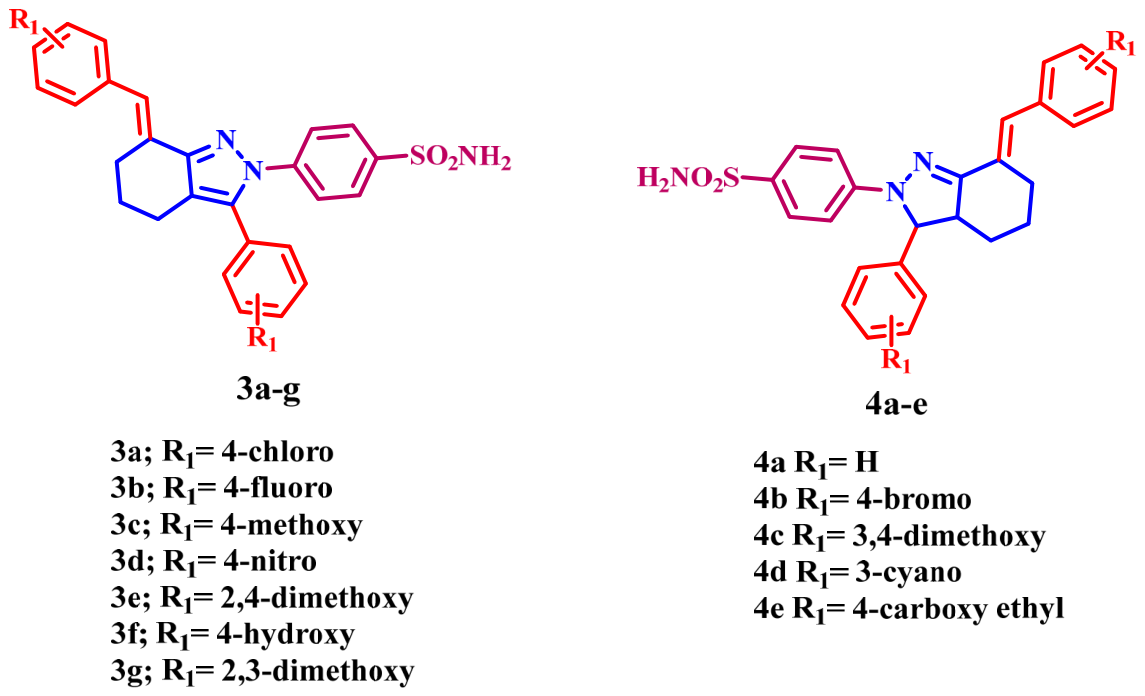
Rational Design
2. Results and Discussion
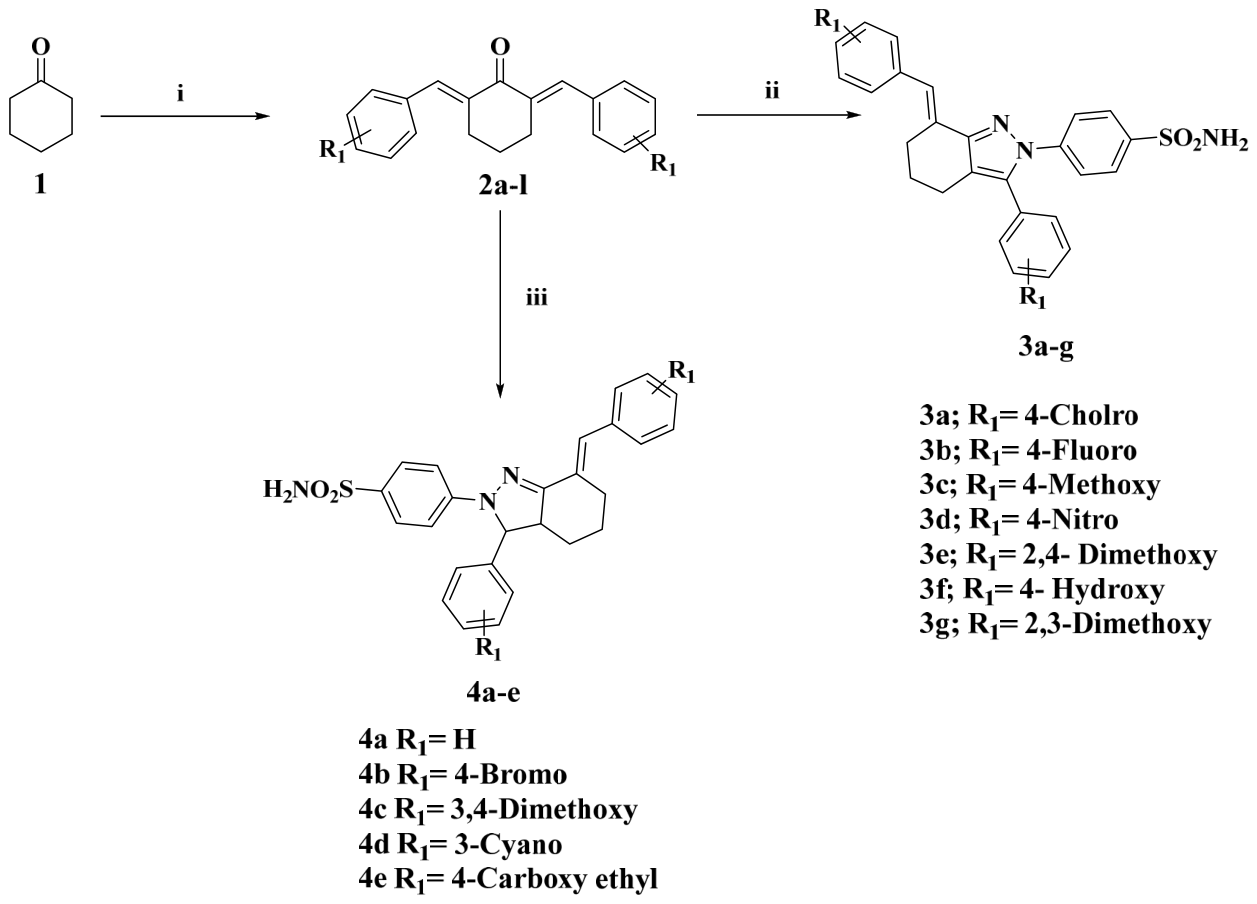
2.1. Chemistry
2.2. Biology
2.2.1. In Vitro Cyclooxygenase (COX) Inhibition Assay
2.2.2. In Vitro Lipoxygenase (5-LOX) Inhibition Assay
2.2.3. In Vitro Soluble Epoxide Hydrolase (sEH) Assay
2.2.4. Modulation of TNF-α, CK-MB, and LDH
2.3. Docking Study
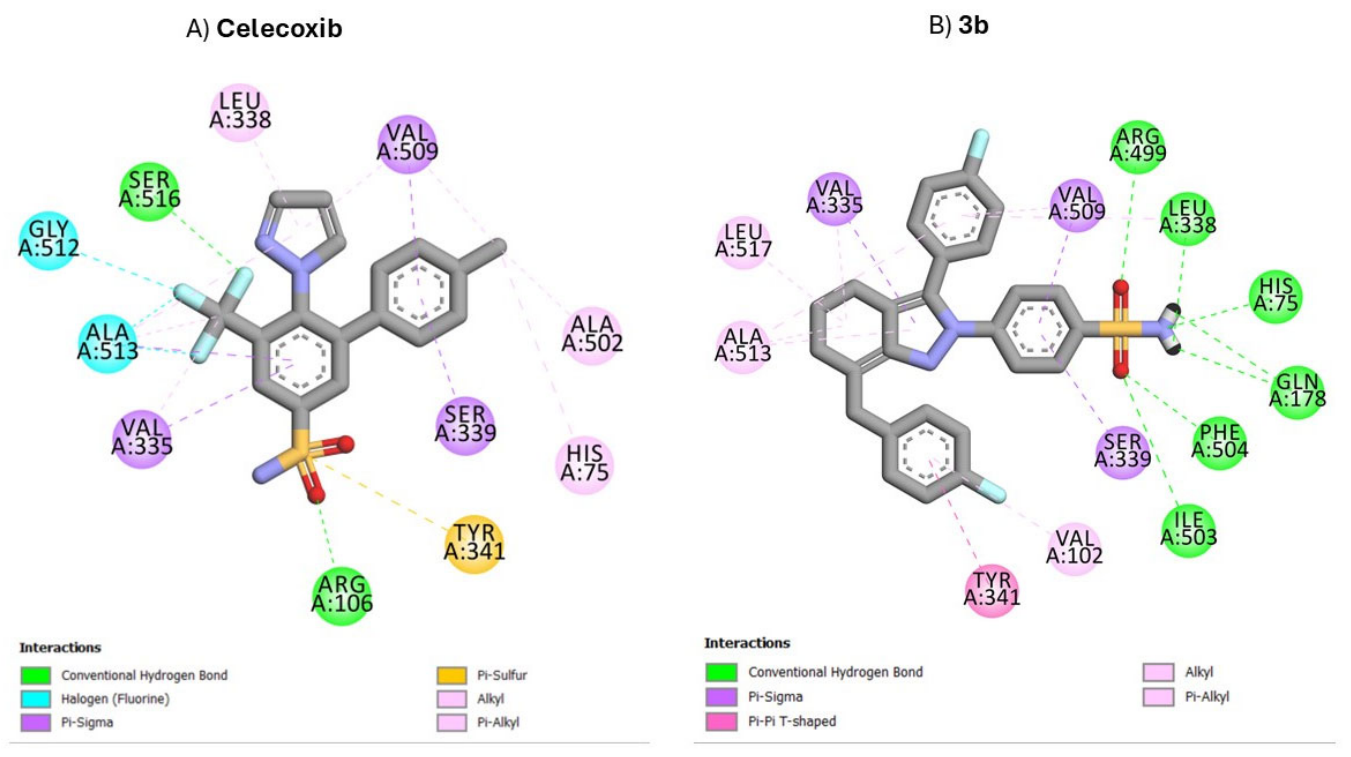
2.3.1. Analysis of 3b and Celecoxib with the COX-2 Active Site
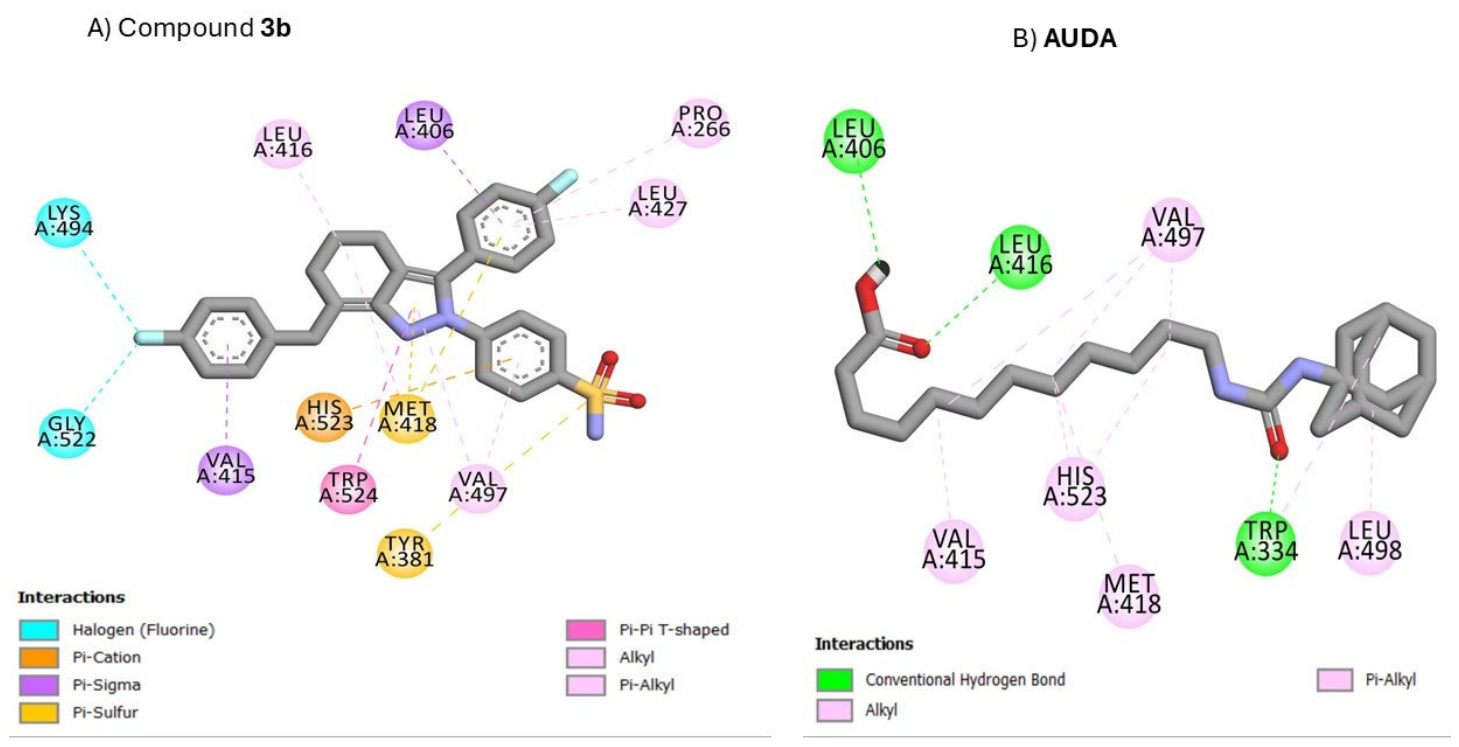
2.3.2. Analysis of 3b and AUDA with sEH Active Site
2.4. Structure Activity Relationship (SAR) Analysis

- 1.
- Impact of the Indazole Core (Tetrahydro vs. Hexahydro)
- The tetrahydroindazole series (3a–g) often has significantly greater potency against all three targets (COX-2, 5-LOX, and sEH) compared to the hexahydroindazole series (4a–e).
- The planar, more rigid configuration of the 4,5,6,7-tetrahydro-2H-indazole core in series 3a–g appears to facilitate a superior fit within the hydrophobic pockets of the enzymes compared to the more flexible hexahydro core in series 4a–e.
- 2.
- Electronic Effects of Substituents (Series 3)
- Halogenation: The crucial factor for multi-target action is the presence of para-halogen atoms on the benzylidene and phenyl rings.
- ○
- ○
- Chlorine (3a): Replacing Fluorine with the slightly bulkier 4-Cl maintained strong activity, though it was slightly less potent than 3b.
- Electron-Donating Groups (EDG), such as methoxy (3c, 3e, 3g) or hydroxy (3f), significantly reduced COX-2 selectivity and sEH inhibition. The 4-OCH3 (3c) and dimethoxy (3e, 3g) derivatives exhibited significantly elevated IC50 values. This indicates that large, oxygen-rich groups may impair the enzyme’s function by rendering its active sites less conducive to electron transfer [39].
- Electron-Withdrawing Groups (EWG): Halogens served as effective EWGs; however, the highly polar 4-NO2 (3d) group inhibited sEH activity and significantly reduced COX-2/5-LOX efficacy, likely due to its excessive polarity or size [40].
- 3.
- COX-2 Selectivity and sEH Inhibition
- Compound 3b had the greatest Selectivity Index (SI) at 82, nearly double that of Celecoxib, which recorded a SI of 42. The 4-F substitution sequence on the tetrahydroindazole scaffold aligns optimally with the COX-2 hydrophobic side pocket while avoiding the COX-1 narrow channel.
- sEH activity: Only the halogenated (3a, 3b) and hydroxylated (3f) compounds shown measurable efficacy against sEH. The transition from 3b (F) to 3f (OH) resulted in a 3-fold reduction in sEH potency, indicating that a hydrophobic, halogenated moiety is essential for sub-micromolar sEH suppression [40].
- 4.
- Developments in the Hexahydro Series (4a–e)
- This series had low selectivity (SIs ranging from >1 to 6).
- The 3-CN (4d) and 3,4-dimethoxy (4c) derivatives exhibited moderate inhibition of COX-2 but were inferior to the tetrahydro series, indicating that saturating the indazole ring detrimentally affects the overall pharmacophore.
3. Materials and Methods
3.1. Chemistry
3.1.1. General Synthesis of 4-(7-Benzylidene Derivatives-3-phenyl derivatives-4,5,6,7-tetrahydro-2H-indazol-2-yl)benzenesulphonamide (3a–g)
4-(7-(4-Chlorobenzylidene)-3-(4-chlorophenyl)-4,5,6,7-tetrahydro-2H-indazol-2-yl)benzenesulfonamide (3a)
4-(7-(4-Fluorobenzylidene)-3-(4-fluorophenyl)-4,5,6,7-tetrahydro-2H-indazol-2-yl)benzenesulfonamide (3b)
4-(7-(4-Methoxybenzylidene)-3-(4-methoxyphenyl)-4,5,6,7-tetrahydro-2H-indazol-2-yl)benzenesulfonamide (3c)
4-(7-(4-Nitrobenzylidene)-3-(4-nitrophenyl)-4,5,6,7-tetrahydro-2H-indazol-2-yl)benzenesulfonamide (3d)
4-(7-(2,4-Dimethoxybenzylidene)-3-(2,4-dimethoxyphenyl)-4,5,6,7-tetrahydro-2H-indazol-2-yl)benzenesulfonamide (3e)
4-(7-(4-Hydroxybenzylidene)-3-(4-hydroxyphenyl)-4,5,6,7-tetrahydro-2H-indazol-2-yl)benzenesulfonamide (3f)
4-(7-(2,3-Dimethoxybenzylidene)-3-(2,3-dimethoxyphenyl)-4,5,6,7-tetrahydro-2H-indazol-2-yl)benzenesulfonamide (3g)
3.1.2. General Synthesis of 4-(7-Benzylidene Derivatives-3-phenyl derivatives-3,3a,4,5,6,7-hexahydro-2H-indazol-2-yl)benzenesulfonamide (4a−e)
4-(7-Benzylidene-3-phenyl-3,3a,4,5,6,7-hexahydro-2H-indazol-2-yl)benzenesulfonamide (4a)
4-(7-(4-Bromobenzylidene)-3-(4-bromophenyl)-3,3a,4,5,6,7-hexahydro-2H-indazol-2-yl)benzenesulfonamide (4b)
4-(7-(3,4-Dimethoxybenzylidene)-3-(3,4-dimethoxyphenyl)-3,3a,4,5,6,7-hexahydro-2H-indazol-2-yl)benzenesulfonamide (4c)
4-(7-(3-Cyanobenzylidene)-3-(3-cyanophenyl)-3,3a,4,5,6,7-hexahydro-2H-indazol-2-yl)benzenesulfonamide (4d)
Ethyl-4-(7-(4-(ethoxycarbonyl)benzylidene)-2-(4-sulfamoylphenyl)-3,3a,4,5,6,7-hexahydro-2H-indazol-3-yl)benzoate (4e)
3.2. Biology
3.2.1. In Vitro COX-1/COX-2 Assays
3.2.2. 5-LOX Inhibitory Assay
3.2.3. Soluble Epoxide Hydrolase (sEH) Assay
3.2.4. Modulation of TNFα, LDH, and CK-MB
4. Conclusions
- Future perspectives
Supplementary Materials
Author Contributions
Funding
Institutional Review Board Statement
Informed Consent Statement
Data Availability Statement
Acknowledgments
Conflicts of Interest
References
- Guan, A.; Bei, X.; Jin, C.; Xie, J.; Guo, J.; Li, X. Biowaiver Monographs for Immediate-Release Solid Oral Dosage Forms: Meloxicam. Molecules 2026, 31, 1020. [Google Scholar] [CrossRef] [PubMed]
- Abdelazeem, A.H.; El-Saadi, M.T.; Said, E.G.; Youssif, B.G.; Omar, H.A.; El-Moghazy, S.M. Novel diphenylthiazole derivatives with multi-target mechanism: Synthesis, docking study, anticancer and anti-inflammatory activities. Bioorg. Chem. 2017, 75, 127–138. [Google Scholar] [CrossRef]
- Adhikary, K.; Karn, A.; Ganguly, K.; Banerjee, P. Anti-Inflammatory Benefits of Shatavari Saponins by Inhibiting COX-2 without Digestive Side Effects. In Health Benefits of Asparagus racemosus (Shatavari); CRC Press: Boca Raton, FL, USA, 2026; pp. 210–217. [Google Scholar]
- Tawfik, A.G.; Gomez-Lumbreras, A.; Del Fiol, G.; Kawamoto, K.; Trinkley, K.E.; Reese, T.; Jones, A.; Malone, D.C. Nonsteroidal Anti-Inflammatory Drugs and Risk of Gastrointestinal Bleeding: A Systematic Review and Meta-Analysis. Clin. Pharmacol. Ther. 2026, 119, 46–62. [Google Scholar] [CrossRef] [PubMed]
- Zhang, K.; Ren, H.; Ren, X.; Wen, P.; Xu, K.; Liu, L.; Xu, P.; Zhang, M.; Yang, Z.; Yang, M. Evaluating adverse events reported for non-steroidal anti-inflammatory drugs in osteoarthritis: A real-world pharmacovigilance study. Inflammopharmacology 2026, 34, 1871–1888. [Google Scholar] [CrossRef]
- Abdel-Aziz, S.A.; Taher, E.S.; Lan, P.; El-Koussi, N.A.; Salem, O.I.; Gomaa, H.A.; Youssif, B.G. New pyrimidine/thiazole hybrids endowed with analgesic, anti-inflammatory, and lower cardiotoxic activities: Design, synthesis, and COX-2/sEH dual inhibition. Arch. Pharm. 2022, 355, e2200024. [Google Scholar] [CrossRef]
- Al-Wahaibi, L.H.; Abdel-Rahman, M.H.; El-Adl, K.; Youssif, B.G.; Brase, S.; Abdel-Aziz, S.A. New diaryl-1, 2, 4-triazolo [3, 4-a] pyrimidine hybrids as selective COX-2/sEH dual inhibitors with potent analgesic/anti-inflammatory and cardioprotective properties. ACS Omega 2024, 9, 33494–33509. [Google Scholar] [CrossRef]
- Abdel-Aziz, S.A.; Taher, E.S.; Lan, P.; Asaad, G.F.; Gomaa, H.A.; El-Koussi, N.A.; Youssif, B.G. Design, synthesis, and biological evaluation of new pyrimidine-5-carbonitrile derivatives bearing 1, 3-thiazole moiety as novel anti-inflammatory EGFR inhibitors with cardiac safety profile. Bioorg. Chem. 2021, 111, 104890. [Google Scholar] [CrossRef]
- Hendawy, O.; Gomaa, H.A.; Alzarea, S.I.; Alshammari, M.S.; Mohamed, F.A.; Mostafa, Y.A.; Abdelazeem, A.H.; Abdelrahman, M.H.; Trembleau, L.; Youssif, B.G. Novel 1, 5-diaryl pyrazole-3-carboxamides as selective COX-2/sEH inhibitors with analgesic, anti-inflammatory, and lower cardiotoxicity effects. Bioorg. Chem. 2021, 116, 105302. [Google Scholar] [CrossRef]
- Shawky, A.M.; Almalki, F.A.; Abdalla, A.N.; Youssif, B.G.; Abdel-Fattah, M.M.; Hersi, F.; El-Sherief, H.A.; Gouda, A.M. Discovery and optimization of 2, 3-diaryl-1, 3-thiazolidin-4-one-based derivatives as potent and selective cytotoxic agents with anti-inflammatory activity. Eur. J. Med. Chem. 2023, 259, 115712. [Google Scholar] [CrossRef] [PubMed]
- Leal-Ramos, O.J.; Arias-Ruiz, L.F.; Huerta-Velázquez, J.M.; Lamoreaux-Aguayo, J.P.; Butcher, D.; López-Cuellar, A.B.; Orozco-Jiménez, K.I.; Torres-Bugarín, O. Mechanisms Involved in the Adverse Cardiovascular Effects of Selective Cyclooxygenase-2 Inhibitors. Cardiovasc. Med. 2025, 28, 5. [Google Scholar] [CrossRef]
- Jamieson, K.L. Cardioprotective Effects of Soluble Epoxide Hydrolase Inhibition Following Myocardial Infarction. Ph.D. Thesis, University of Alberta, Edmonton, AB, Canada, 2020. [Google Scholar]
- Das Mahapatra, A.; Choubey, R.; Datta, B. Small molecule soluble epoxide hydrolase inhibitors in multitarget and combination therapies for inflammation and cancer. Molecules 2020, 25, 5488. [Google Scholar] [CrossRef]
- Meloun, A. Cysteine Protease Activity in Allergen Recognition and Initiation of TH2 Allergic Responses. Ph.D. Thesis, The University of Alabama at Birmingham, Birmingham, AL, USA, 2025. [Google Scholar]
- Agrawal, N. A Comprehensive Review on the Advancements of Dual COX-2/5-LOX Inhibitors as Anti-Inflammatory Drugs. Chem. Biol. Drug Des. 2025, 105, e70114. [Google Scholar] [CrossRef]
- Abuelella, K.E.; Mosallam, S.; Soliman, S.M.; Elshafeey, A.H. Licofelone as a dual COX/5-LOX inhibitor: A comprehensive review of its Physicochemical, Pharmacological, and therapeutic profiles in osteoarthritis and neurodegenerative disorders. Bull. Pharm. Sci. Assiut Univ. 2025, 48, 901–922. [Google Scholar] [CrossRef]
- Neha, K.; Singh, G.; Singh, M.; Asthana, S.; Wakode, S. In silico strategies to recognize pharmacological constraints contrary to COX-2 and 5-LOX. J. Biomol. Struct. Dyn. 2026, 44, 384–401. [Google Scholar] [CrossRef] [PubMed]
- Chistyakov, D.V.; Chistyakov, V.V.; Sergeeva, M.G. Oxylipins in Atherosclerosis: Their Role in Inflammation, Diagnosis, and Therapeutic Perspectives. Int. J. Mol. Sci. 2025, 26, 10577. [Google Scholar] [CrossRef]
- Hwang, S.H.; Wecksler, A.T.; Wagner, K.; Hammock, B.D. Rationally designed multitarget agents against inflammation and pain. Curr. Med. Chem. 2013, 20, 1783–1799. [Google Scholar] [CrossRef]
- Mukhopadhyay, N.; Shukla, A.; Makhal, P.N.; Kaki, V.R. Natural product-driven dual COX-LOX inhibitors: Overview of recent studies on the development of novel anti-inflammatory agents. Heliyon 2023, 9, e14569. [Google Scholar]
- Ragab, M.A.; Eldehna, W.M.; Nocentini, A.; Bonardi, A.; Okda, H.E.; Elgendy, B.; Ibrahim, T.S.; Abd-Alhaseeb, M.M.; Gratteri, P.; Supuran, C.T.; et al. 4-(5-Amino-pyrazol-1-yl) benzenesulfonamide derivatives as novel multi-target anti-inflammatory agents endowed with inhibitory activity against COX-2, 5-LOX and carbonic anhydrase: Design, synthesis, and biological assessments. Eur. J. Med. Chem. 2023, 250, 115180. [Google Scholar] [CrossRef]
- Abdel-Rahman, H.M.; Ozadali, K. Trimethyl-4-oxo-4, 5, 6, 7-tetrahydroindazole-1-acetic acid: A new Lead compound with selective COX-2 inhibitory activity. Arch. Pharm. 2012, 345, 878–883. [Google Scholar] [CrossRef] [PubMed]
- Singampalli, A.; Kumar, P.; Bandela, R.; Bellapukonda, S.M.; Nanduri, S.; Yaddanapudi, V.M. Indazole—An emerging privileged scaffold: Synthesis and its biological significance. RSC Med. Chem. 2025, 16, 5196–5221. [Google Scholar] [CrossRef] [PubMed]
- Dimmock, J.R.; Padmanilayam, M.P.; Zello, G.A.; Nienaber, K.H.; Allen, T.M.; Santos, C.L.; De Clercq, E.; Balzarini, J.; Manavathu, E.K.; Stables, J.P. Cytotoxic analogues of 2, 6-bis (arylidene) cyclohexanones. Eur. J. Med. Chem. 2003, 38, 169–177. [Google Scholar] [CrossRef]
- Braga, S.F.; Alves, É.V.; Ferreira, R.S.; Fradico, J.R.; Lage, P.S.; Duarte, M.C.; Ribeiro, T.G.; Júnior, P.A.; Romanha, A.J.; Tonini, M.L.; et al. Synthesis and evaluation of the antiparasitic activity of bis-(arylmethylidene) cycloalkanones. Eur. J. Med. Chem. 2014, 71, 282–289. [Google Scholar] [CrossRef]
- Abdelrahman, M.H.; Youssif, B.G.; Abdelazeem, A.H.; Ibrahim, H.M.; Moustafa, A.E.G.A.; Treamblu, L.; Bukhari, S.N.A. Synthesis, biological evaluation, docking study and ulcerogenicity profiling of some novel quinoline-2-carboxamides as dual COXs/LOX inhibitors endowed with anti-inflammatory activity. Eur. J. Med. Chem. 2017, 127, 972–985. [Google Scholar] [CrossRef] [PubMed]
- Singh, L. Reviewing: Monoclonal Antibody Therapies Targeting IL-6 & TNF-Alpha against Rheumatoid Arthritis. Int. J. High Sch. Res. 2026, 8, 29–40. [Google Scholar] [CrossRef]
- Tantray, J.; Menezes-Rodrigues, F.S.; Podanosque, J.M.; Tallo, F.S.; Caricati-Neto, A.; Sharma, A.K.; Patel, A.; Sharma, R.K.; Singh, S.; Beibituly, B.A. Cardioprotective effects of the ranolazine in myocardial infarction mediated by stimulation of the endogenous mediators involved in ischemic preconditioning. Acta Cir. Bras. 2026, 41, e410926. [Google Scholar] [CrossRef]
- Li, J.; Ma, P.; Liu, Z.; Xie, J. L- and D-Lactate: Unveiling their hidden functions in disease and health. Cell Commun. Signal. 2025, 23, 134. [Google Scholar] [CrossRef]
- Kava, D.M.; Nakarani, K.C.; Chavan, V.U. Comparative Evaluation of Serum CK-Total, CK-MB, and Lactate Dehydrogenase Levels in Type 2 Diabetes Mellitus and Their Association with Cardiovascular Risk. Eur. J. Cardiovasc. Med. 2026, 16, 287–292. [Google Scholar]
- Hu, D.; Li, R.; Li, Y.; Wang, M.; Wang, L.; Wang, S.; Cheng, H.; Zhang, Q.; Fu, C.; Qian, Z.; et al. Inflammation-Targeted Nanomedicines Alleviate Oxidative Stress and Reprogram Macrophages Polarization for Myocardial Infarction Treatment. Adv. Sci. 2024, 11, e2308910. [Google Scholar] [CrossRef]
- Hamesch, K.; Borkham-Kamphorst, E.; Strnad, P.; Weiskirchen, R. Lipopolysaccharide-induced inflammatory liver injury in mice. Lab. Anim. 2015, 49, 37–46. [Google Scholar] [CrossRef] [PubMed]
- Zhang, B.; Liu, Z.-Y.; Li, Y.-Y.; Luo, Y.; Liu, M.-L.; Dong, H.-Y.; Wang, Y.-X.; Liu, Y.; Zhao, P.-T.; Jin, F.-G.; et al. Antiinflammatory effects of matrine in LPS-induced acute lung injury in mice. Eur. J. Pharm. Sci. 2011, 44, 573–579. [Google Scholar] [CrossRef] [PubMed]
- Jassim, S.S. Preparation and Molecular Docking of Some Heterocyclic Compounds Containing Nitrogen and Oxygen Atoms. Inov. Kesehat. Glob. 2026, 3, 94–108. [Google Scholar] [CrossRef]
- Kharl, H.A.A.; Naeem, M.; Ghazanfar, S.; Mehreen, A.; Haider, H.; Ashique, S.; Yasmin, S.; Al-Salem, F.M.; Ansari, M.Y. Computationally guided synthesis and biological profiling of chalcones as antioxidant and anti-inflammatory activities. Inflammopharmacology 2026, 34, 1929–1944. [Google Scholar] [CrossRef]
- Danhart, E.M.; Bakhtina, M.; Cantara, W.A.; Kuzmishin, A.B.; Ma, X.; Sanford, B.L.; Vargas-Rodriguez, O.; Košutić, M.; Goto, Y.; Suga, H.; et al. Conformational and chemical selection by a trans-acting editing domain. Proc. Natl. Acad. Sci. USA 2017, 114, E6774–E6783. [Google Scholar] [CrossRef]
- Han, J.; Kiss, L.; Mei, H.; Remete, A.M.; Ponikvar-Svet, M.; Sedgwick, D.M.; Roman, R.; Fustero, S.; Moriwaki, H.; Soloshonok, V.A. Chemical aspects of human and environmental overload with fluorine. Chem. Rev. 2021, 121, 4678–4742. [Google Scholar] [CrossRef] [PubMed]
- Park, B.K.; Kitteringham, N.R. Effects of fluorine substitution on drug metabolism: Pharmacological and toxicological implications. Drug Metab. Rev. 1994, 26, 605–643. [Google Scholar] [CrossRef]
- Oniga, S.D.; Pacureanu, L.; Stoica, C.I.; Palage, M.D.; Crăciun, A.; Rusu, L.R.; Crisan, E.-L.; Araniciu, C. COX inhibition profile and molecular docking studies of some 2-(trimethoxyphenyl)-thiazoles. Molecules 2017, 22, 1507. [Google Scholar] [CrossRef] [PubMed]
- Shen, H.C.; Hammock, B.D. Discovery of inhibitors of soluble epoxide hydrolase: A target with multiple potential therapeutic indications. J. Med. Chem. 2012, 55, 1789–1808. [Google Scholar] [CrossRef] [PubMed]
- Yasmen, N.; Sluter, M.N.; Li, L.; Yu, Y.; Jiang, J. Transient inhibition of microsomal prostaglandin E synthase-1 after status epilepticus blunts brain inflammation and is neuroprotective. Mol. Brain 2023, 16, 14. [Google Scholar] [CrossRef]
- Afzal, U.; Mahmood, A.; Zubair, M.; Rasool, N.; Kanwal, A.; Sohail, M.; Ahmad, G. Synthesis, hydrolysis, and COX-2/15-LOX inhibitory evaluation of 4-Acetamidophenyl 4-Bromobenzoates. Med. Chem. Res. 2025, 34, 982–995. [Google Scholar] [CrossRef]
- Cai, Y.; Hu, S.; Liu, J.; Luo, J.; Li, W.; Tang, J.; Liu, S.; Dong, R.; Yang, Y.; Tu, L.; et al. Diabetic vascular calcification inhibited by soluble epoxide hydrolase gene deletion via regressing NID2-mediated IGF2-ERK1/2 signaling pathway. Chin. Med. J. 2025, 138, 2657–2668. [Google Scholar] [CrossRef]
- Copeland, S.; Warren, H.S.; Lowry, S.F.; Calvano, S.E.; Remick, D. Acute inflammatory response to endotoxin in mice and humans. Clin. Vaccine Immunol. 2005, 12, 60–67. [Google Scholar] [CrossRef]
- Rittirsch, D.; Flierl, M.A.; Ward, P.A. Harmful molecular mechanisms in sepsis. Nat. Rev. Immunol. 2008, 8, 776–787. [Google Scholar] [CrossRef]



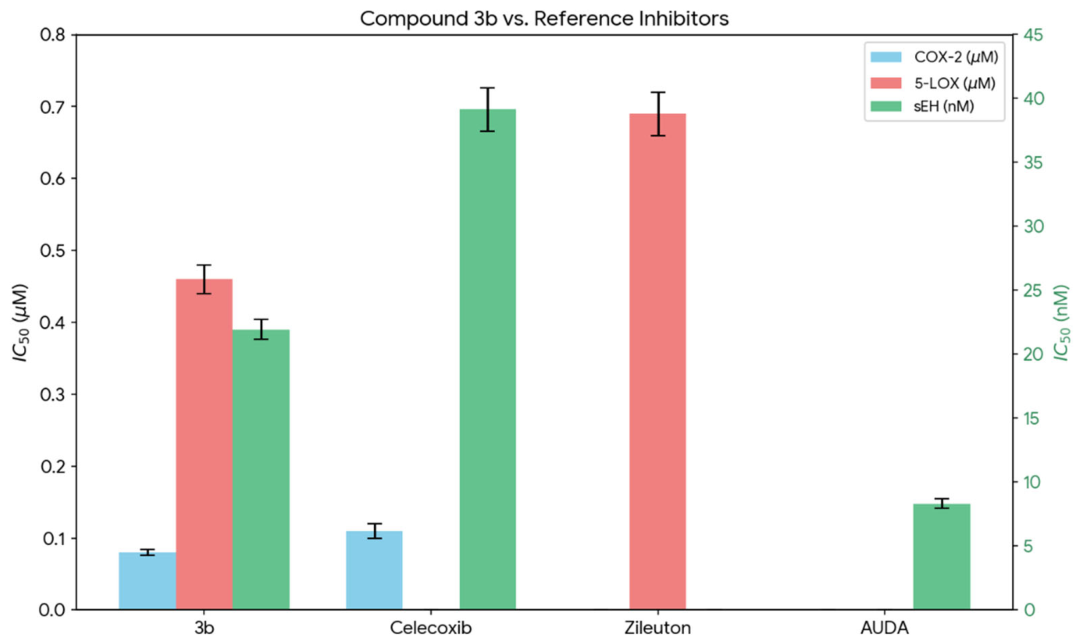
| Comp. | COX-1 (IC50 µM) | COX-2 (IC50 µM) | SI | 5-LOX (IC50 µM) | sEH (IC50 nM) |
|---|---|---|---|---|---|
| 3a | 9.08 ± 0.41 | 0.27 ± 0.01 | 33 | 0.80 ± 0.03 | 27.56 ± 1.43 |
| 3b | 6.54 ± 0.31 | 0.08 ± 0.004 | 82 | 0.46 ± 0.02 | 21.95 ± 0.78 |
| 3c | 1.76 ± 0.01 | 1.37 ± 0.09 | >1 | 0.87 ± 0.04 | -- |
| 3d | 7.18 ± 0.28 | 5.92 ± 0.22 | >1 | 7.34 ± 0.44 | -- |
| 3e | 16.47 ± 0.86 | 4.17 ± 0.17 | 4 | 6.18 ± 0.37 | -- |
| 3f | 9.70 ± 0.50 | 0.89 ± 0.06 | 10 | 0.93 ± 0.07 | 66.29 ± 4.26 |
| 3g | 0.84 ± 0.04 | 4.25 ± 0.33 | -- | 1.10 ± 0.07 | -- |
| 4a | 4.97 ± 0.27 | 2.75 ± 0.12 | 2 | 6.47 ± 0.38 | -- |
| 4b | 3.74 ± 0.19 | 2.43 ± 0.17 | >1 | 3.08 ± 0.14 | -- |
| 4c | 12.63 ± 0.59 | 2.14 ± 0.09 | 6 | 1.68 ± 0.06 | -- |
| 4d | 1.22 ± 0.07 | 1.09 ± 0.07 | >1 | 5.91 ± 0.21 | -- |
| 4e | 11.29 ± 0.64 | 5.60 ± 0.29 | 2 | 2.87 ± 0.11 | -- |
| Indomethacin | 1.11 ± 0.09 | -- | -- | -- | -- |
| Celecoxib | 4.58 ± 0.38 | 0.11 ± 0.01 | 42 | -- | 39.15 ± 1.70 |
| Zileuton | -- | -- | -- | 0.69 ± 0.03 | -- |
| AUDA | -- | -- | -- | -- | 8.32 ± 0.39 |
| Group | TNF-α (pg/mL) | TNF-α Inhibition (%) ‡ | LDH (mIU/mL) | LDH Inhibition (%) ‡ | CK-MB (ng/mL) | CK-MB Inhibition (%) ‡ |
|---|---|---|---|---|---|---|
| Normal Control | 20.85 | — | 88.73 | — | 1.10 | — |
| Positive Control (LPS) | 110.40 | — | 244.55 | — | 6.78 | — |
| 3a | 59.36 | 57.00% | 146.03 | 63.23% | 4.25 | 44.54% |
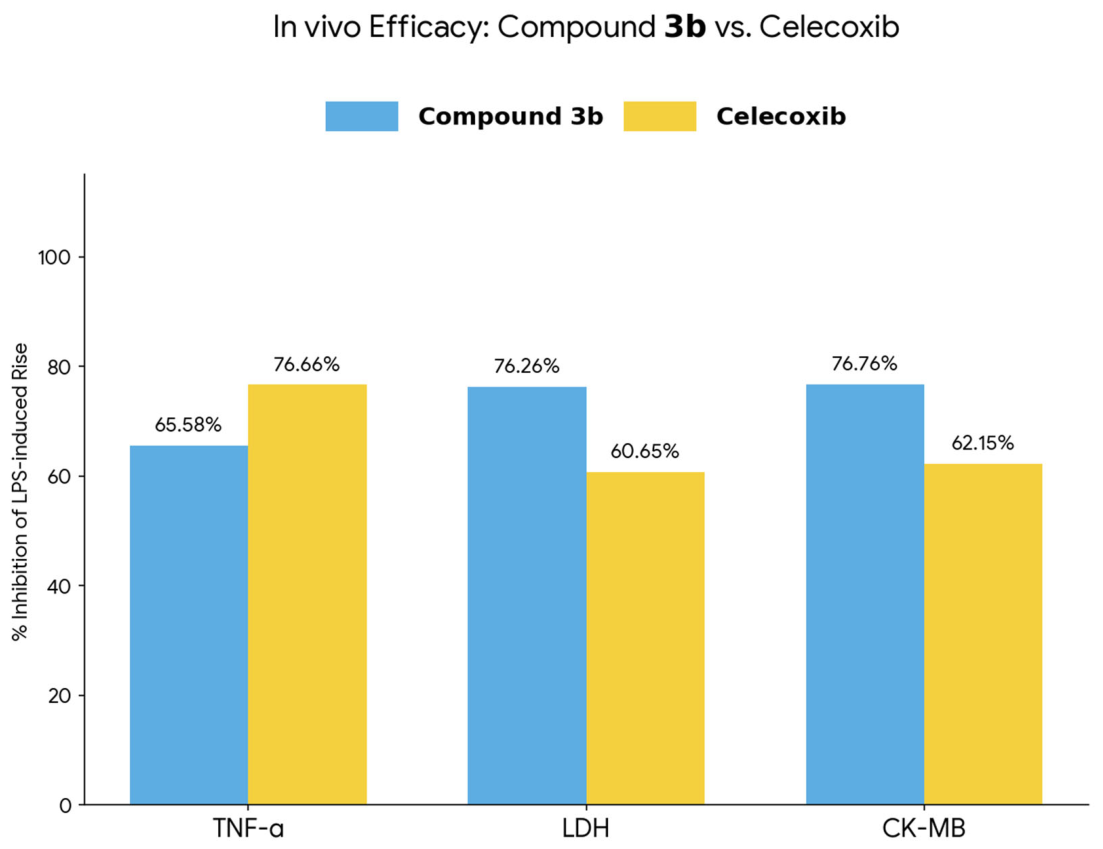
| 3b | 51.67 | 65.58% | 125.72 | 76.26% | 2.42 | 76.76% |
| 3f | 69.04 | 46.19% | 174.32 | 45.07% | 6.08 | 12.32% |
| Celecoxib | 41.75 | 76.66% | 150.05 | 60.65% | 3.25 | 62.15% |
Disclaimer/Publisher’s Note: The statements, opinions and data contained in all publications are solely those of the individual author(s) and contributor(s) and not of MDPI and/or the editor(s). MDPI and/or the editor(s) disclaim responsibility for any injury to people or property resulting from any ideas, methods, instructions or products referred to in the content. |
© 2026 by the authors. Licensee MDPI, Basel, Switzerland. This article is an open access article distributed under the terms and conditions of the Creative Commons Attribution (CC BY) license.
Share and Cite
Elbastawesy, M.A.I.; Abdelhafez, A.H.; Yahya Abdullah Alzahrani, A.; Alyami, B.A.; Ling, H.; Abdelbaset, M.S.; Gaber, A.A.; Youssif, B.G.M.; Brase, S.; Konno, H. Design, Synthesis, and Biological Evaluation of Tetrahydroindazole-Based Sulfonamides as Potential Multi-Target Anti-Inflammatory Agents. Pharmaceuticals 2026, 19, 843. https://doi.org/10.3390/ph19060843
Elbastawesy MAI, Abdelhafez AH, Yahya Abdullah Alzahrani A, Alyami BA, Ling H, Abdelbaset MS, Gaber AA, Youssif BGM, Brase S, Konno H. Design, Synthesis, and Biological Evaluation of Tetrahydroindazole-Based Sulfonamides as Potential Multi-Target Anti-Inflammatory Agents. Pharmaceuticals. 2026; 19(6):843. https://doi.org/10.3390/ph19060843
Chicago/Turabian StyleElbastawesy, Mohammed A. I., Ahmed H. Abdelhafez, Abdullah Yahya Abdullah Alzahrani, Bandar A. Alyami, Hanyu Ling, Mahmoud S. Abdelbaset, Ahmed A. Gaber, Bahaa G. M. Youssif, Stefan Brase, and Hiroyuki Konno. 2026. "Design, Synthesis, and Biological Evaluation of Tetrahydroindazole-Based Sulfonamides as Potential Multi-Target Anti-Inflammatory Agents" Pharmaceuticals 19, no. 6: 843. https://doi.org/10.3390/ph19060843
APA StyleElbastawesy, M. A. I., Abdelhafez, A. H., Yahya Abdullah Alzahrani, A., Alyami, B. A., Ling, H., Abdelbaset, M. S., Gaber, A. A., Youssif, B. G. M., Brase, S., & Konno, H. (2026). Design, Synthesis, and Biological Evaluation of Tetrahydroindazole-Based Sulfonamides as Potential Multi-Target Anti-Inflammatory Agents. Pharmaceuticals, 19(6), 843. https://doi.org/10.3390/ph19060843