Article

Bioequivalence of Two Empagliflozin 25 mg Immediate-Release Tablet Formulations Under Fasting Conditions in Healthy Mexican Subjects

by
Porfirio de la Cruz Cruz
1,
Alberto Martínez Muñoz
2,
Erika Gabriela Guido Ávila
3,
Omar Emmanuel Hernández Piña
3 and
José Trinidad Pérez Urizar
2,4,*
1
Doctorado Institucional en Ingeniería y Ciencia de Materiales (DICIM), de la Universidad Autónoma de San Luis Potosí (UASLP), Av. Sierra Leona No. 550, Col. Lomas 2da. Sección, San Luis Potosí C.P. 78210, Mexico
2
FS SCIENTIA PHARMA S.A. de C.V (Authorized Third Party), Av. Himno Nacional 1330, Jardín, San Luis Potosí C.P. 78270, Mexico
3
Asofarma de México S.A. de C.V. Av. Santa Fe 485, Lomas de Santa Fe, Contadero, Cuajimalpa de Morelos, Ciudad de Mexico C.P. 05348, Mexico
4
Facultad de Ciencias Químicas, de la Universidad Autónoma de San Luis Potosí, Martínez #6, Av. Dr. Manuel Nava, Zona Universitaria, San Luis Potosí C.P. 78210, Mexico
*
Author to whom correspondence should be addressed.
Pharmaceuticals 2026, 19(6), 842; https://doi.org/10.3390/ph19060842
Submission received: 19 April 2026 / Revised: 20 May 2026 / Accepted: 25 May 2026 / Published: 28 May 2026
(This article belongs to the Section Pharmacology)

Abstract

Background/Objectives: Type 2 diabetes is a group of metabolic disorders whose pathophysiological outcome is sustained hyperglycemia. Several medications are available for the treatment. SGLT2 simultaneously inhibits glucose and sodium reabsorption in the renal proximal tubule, resulting in urinary glucose excretion. This study assessed the pharmacokinetic profiles of two empagliflozin 25 mg drug products under fasting conditions in healthy Mexican subjects to establish bioequivalence. Methods: This was a randomized, open-label, two-way crossover, single-dose, prospective study with a 7-day washout period. Eligible subjects were healthy adult Mexican volunteers. The drugs were dosed orally, according to the randomization, after 10 h of fasting and 4 h before breakfast, with 250 mL of 10% glucose solution at room temperature. Serial blood samples were collected before and after dosing. Empagliflozin concentrations were analyzed using high-performance liquid chromatography–tandem mass spectrometry. Results: A total of 32 subjects were enrolled, and 30 completed the study. Pharmacokinetic parameters Cmax, tmax, AUC0–t, AUC 0–∞, and t½ of empagliflozin for test and reference formulation, expressed as mean ± SD, were 578.28 ± 125.60 ng/mL, 2.72 ± 0.85 h, 4370.88 ± 769.50 ngh/mL, 4423.93 ± 776.02 ngh/mL, 7.62 ± 0.83 h, and 593.99 ± 156.78 ng/mL, 2.86 ± 1.00 h, 4313.24 ± 885.02 ngh/mL, 4368.04 ± 887.75 ngh/mL, and 7.61 ± 0.68 h, respectively. The 90% CI for Cmax, AUC0–t, and AUC 0–∞ were 98.30 [92.72–104.22], 101.72 [98.77–104.77], and 101.64 [98.73–104.63], respectively. Serious adverse events were not observed. Conclusions: Our study demonstrated bioequivalence between the empagliflozin formulations tested in healthy subjects under fasting conditions.

1. Introduction

Diabetes mellitus is a group of metabolic disorders of carbohydrate metabolism in which glucose is both underutilized as an energy source and overproduced due to inappropriate gluconeogenesis and glycogenolysis [1]. The pathophysiological outcome is sustained hyperglycemia and its associated complications [2].
Type 2 diabetes (T2D) is caused by a combination of genetic factors related to impaired insulin secretion and insulin resistance, as well as environmental factors such as obesity, lack of exercise, aging, and stress [3]. In 2022, T2D was the second leading cause of death in Mexico, responsible for more than 115,000 deaths. By 2022, 18.5% of the Mexican population had T2D, representing an increase of almost 30% compared to 2006. Furthermore, 32% of people living with T2D were unaware they had the disease. The increase in prevalence and mortality from T2D represents a challenge for Mexico, which faces a rapidly increasing need for screening, care, and treatment [4].
Efficient glycemic control is the cornerstone for reducing the risk of both micro- and macrovascular complications in T2D [5]. The 2025 American Diabetes Association (ADA) guidelines state that the pharmacological management of T2D should address multiple targets, including glucose lowering, weight loss, kidney disease, and cardiovascular disease [6]. Several medications are available for the treatment of T2D. Recently, sodium–glucose cotransporter 2 (SGLT2) inhibitors have gained prominence. These drugs simultaneously inhibit glucose and sodium reabsorption in the renal proximal tubule, resulting in urinary glucose excretion. This group of medications includes canagliflozin, dapagliflozin, and empagliflozin. SGLT2 inhibitors have demonstrated additional benefits in patients with T2D, like promoting weight and blood pressure reduction, decreasing the risk of cardiovascular events, and offering a renal protection effect [7,8,9,10].
Empagliflozin is an SGLT2 inhibitor indicated for the treatment of diabetes, either as monotherapy or in combination [11]. It exhibits high solubility and low permeability in gastrointestinal fluids, classifying it as a BCS (Biopharmaceutical Classification System) Class III drug, and displays linear pharmacokinetics (PK) [12]. Following oral administration, empagliflozin is rapidly absorbed; although absolute bioavailability has not been directly measured, a radiolabel study reported that 75.5–77.4% of plasma radioactivity corresponded to the unchanged parent drug [12,13]. After administering a single 25 mg dose of empagliflozin to healthy Venezuelan subjects under fasting conditions, peak plasma concentrations (Cmax) were observed to occur within a time frame ranging from 1.33 to 3.00 h. The mean peak plasma concentration attained was 339.22 ± 92.14 ng/mL [14].
The decline in plasma concentration following the peak exhibited a biphasic pattern, characterized by an initial rapid distribution phase and a subsequent relatively slow terminal phase. The area under the curve (AUC) for the terminal phase accounted for approximately 16% of the total exposure. Additionally, the maximum plasma concentration (Cmax) represented about 37% when compared to the fasting state [14]. Empagliflozin is distributed into all organs and tissues, [15] with an apparent volume of distribution (Vd) of 73.80 L [16]. Empagliflozin’s metabolism is not regulated by CYPs, but by glucuronidation. No major metabolites are known. Empagliflozin is a substrate for P-glycoprotein and breast cancer resistance protein. The elimination half-life (t1/2) of empagliflozin is 7.47 ± 0.97 h [14].
While the clinical efficacy of empagliflozin is well-established, the scientific rationale for rigorously evaluating new formulations in vivo is closely linked to its biopharmaceutical properties. Empagliflozin is classified as a BCS Class III drug, characterized by high solubility but low intestinal permeability [12]. For BCS Class III compounds, the rate and extent of absorption are primarily permeability-limited; thus, formulation-related factors, including excipient composition and manufacturing processes, may influence drug absorption and systemic exposure. Consequently, in vitro dissolution profiles may not fully predict in vivo performance, supporting the need for well-designed human bioequivalence (BE) studies. This is particularly relevant in the context of generic drug development, where demonstration of therapeutic equivalence is essential to ensure interchangeability, quality, and patient safety. Furthermore, given that SGLT2 inhibitors are now foundational therapies for cardiorenal protection in T2D [7], ensuring comparable pharmacokinetic performance between formulations is important to maintain their established therapeutic effects. Finally, despite the high burden of T2D in Mexico [4], there is limited pharmacokinetic evidence regarding empagliflozin formulations in Latin American populations. Therefore, this study aimed to scientifically validate the pharmacokinetic performance and establish the bioequivalence of a new 25 mg empagliflozin immediate-release (IR) formulation in healthy Mexican subjects, contributing region-specific data within a rigorous biopharmaceutical framework, and supporting the availability of high-quality generic alternatives in the local healthcare system.

2. Results

2.1. In Vitro Dissolution Profiles

The comparative dissolution profiles of the test and reference formulations in phosphate buffer pH 6.8 are shown in Figure 1. Both formulations exhibited very rapid and similar dissolution behavior, achieving more than 85% dissolved drug within 15 min. According to current regulatory criteria, dissolution profiles meeting this condition are considered similar without requiring f2 comparison. Nevertheless, the calculated similarity factor was f2 = 85 [17]. These findings were consistent with the observed in vivo bioequivalence between formulations.

2.2. Demographic Characteristics

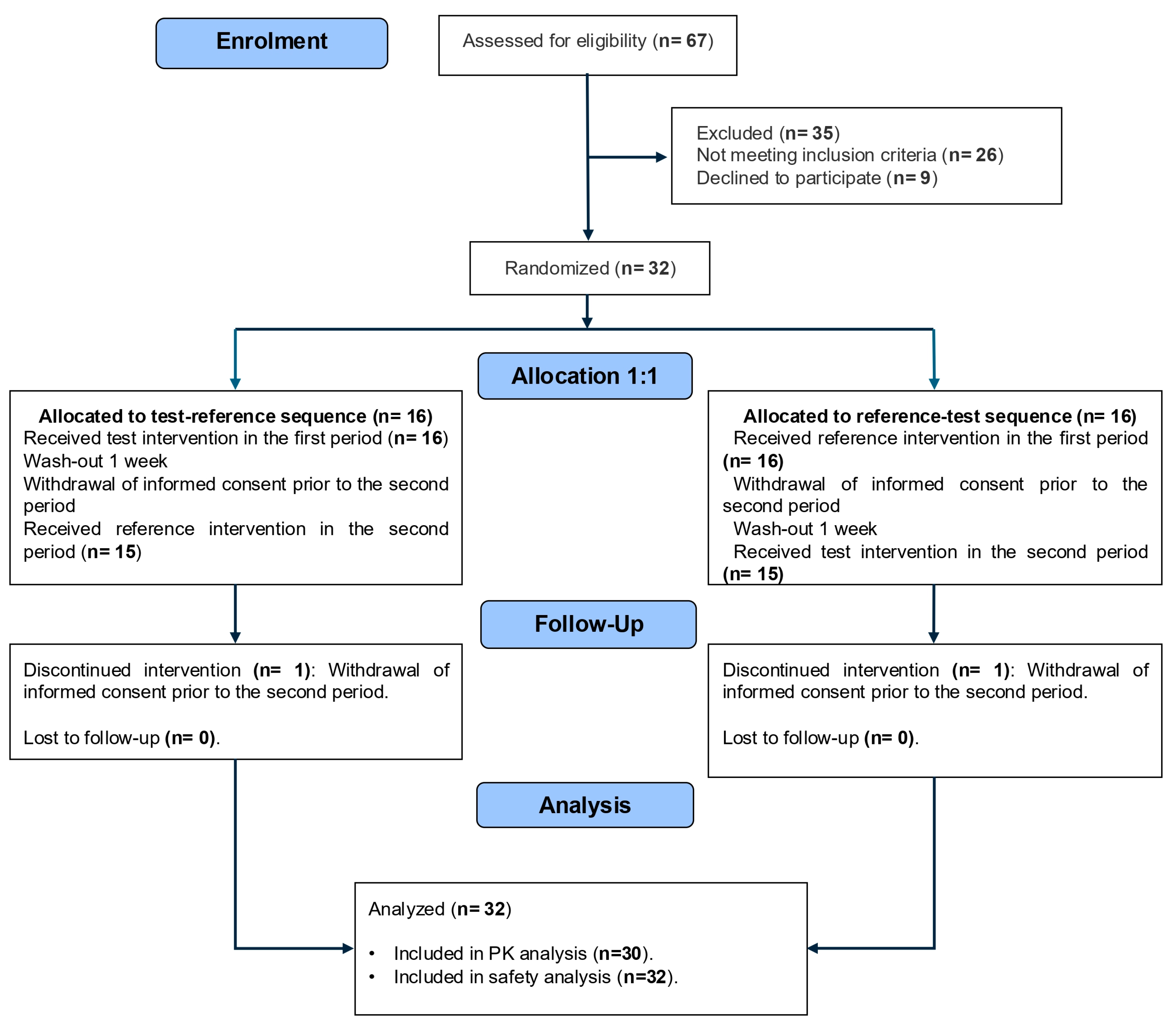
A total of 32 subjects were enrolled in this study, 30 of whom completed the full protocol (Figure 2). The demographic characteristics of the study population, including age, gender, height, weight and body mass index (BMI), are summarized in Table 1. The total study population consisted of both male and female subjects with a mean ± SD age of 25.10 ± 7.80 years, a height of 1.68 ± 0.08 m, a weight of 66.50 ± 10.30 kg, and a body mass index of 23.40 [2.29] kg/m2.

2.3. Pharmacokinetics

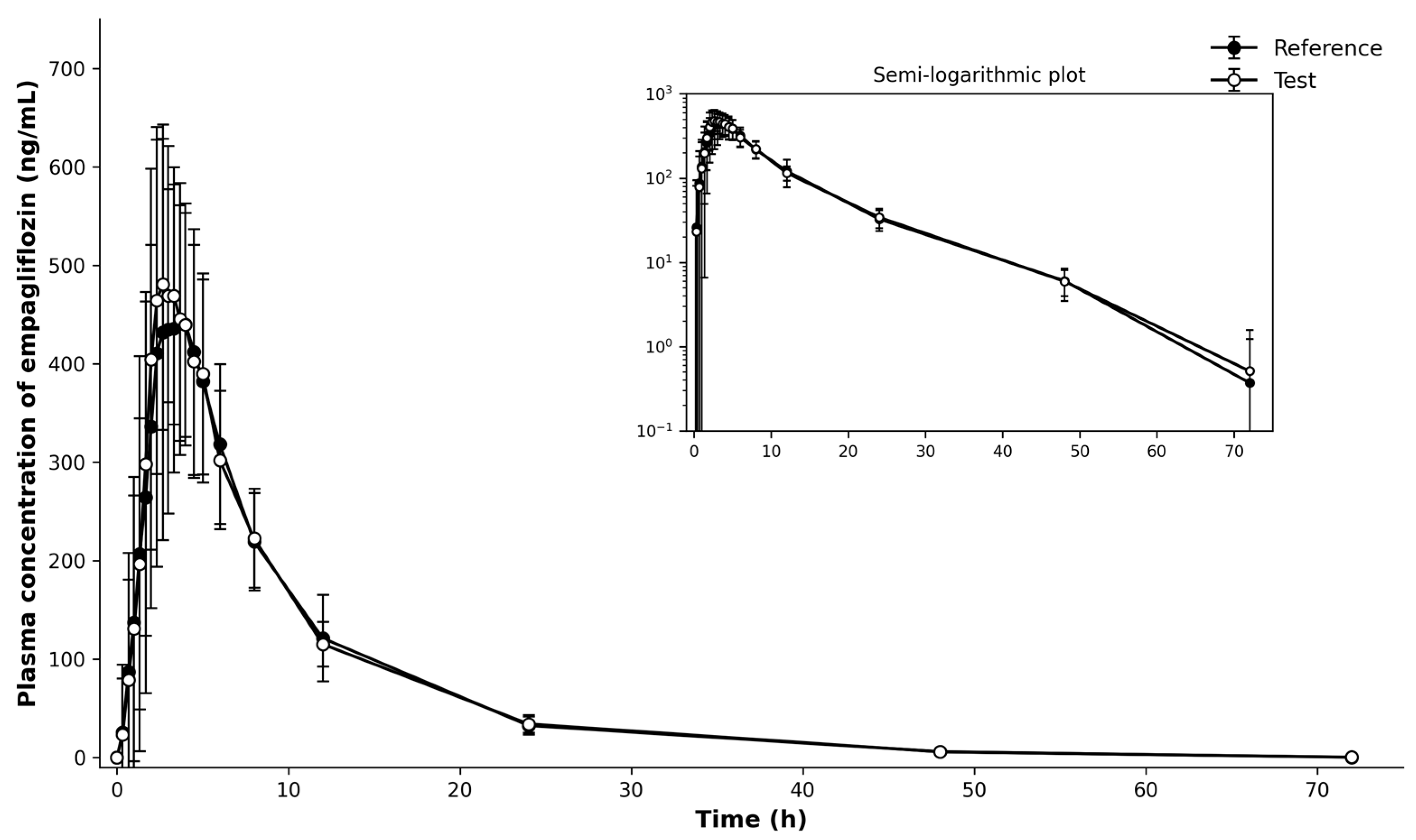
The mean plasma ± standard deviation (SD) concentration–time profiles for empagliflozin following oral administration are shown in Figure 3. The pharmacokinetic parameters (Cmax, tmax, AUC0–t, AUC 0–∞, and t½) for both the test and reference formulations are shown in Table 2. Pharmacokinetic parameters: Cmax, tmax, AUC0–t, AUC 0–∞, and t½ of empagliflozin for test and reference formulation, expressed as mean ± SD, were 578.28 ± 125.60 ng/mL, 2.72 ± 0.85 h, 4370.88 ± 769.50 ngh/mL, 4423.93 ± 776.02 ngh/mL, 7.62 ± 0.83 h, and 593.99 ± 156.78 ng/mL, 2.86 ± 1.00 h, 4313.24 ± 885.02 ngh/mL, 4368.04 ± 887.75 ngh/mL, and 7.61 ± 0.68 h, respectively.
The bioequivalence between both formulations of empagliflozin was evaluated using the geometric mean ratio, and the 90% confidence interval (CI) of the test/reference ratios for log-transformed Cmax, AUC0–t, and AUC0–∞. The 90% CI for log-transformed Cmax, AUC0–t and AUC0–∞ for empagliflozin were 92.72% to 104.22%, 98.77% to 104.77% and 98.73% to 104.63%, respectively (Table 3). All 90% CI of the geometric mean ratios of the pharmacokinetics parameters fell within the pre-specified bioequivalence acceptance limits (80–125%).

2.4. Safety and Tolerability Analysis

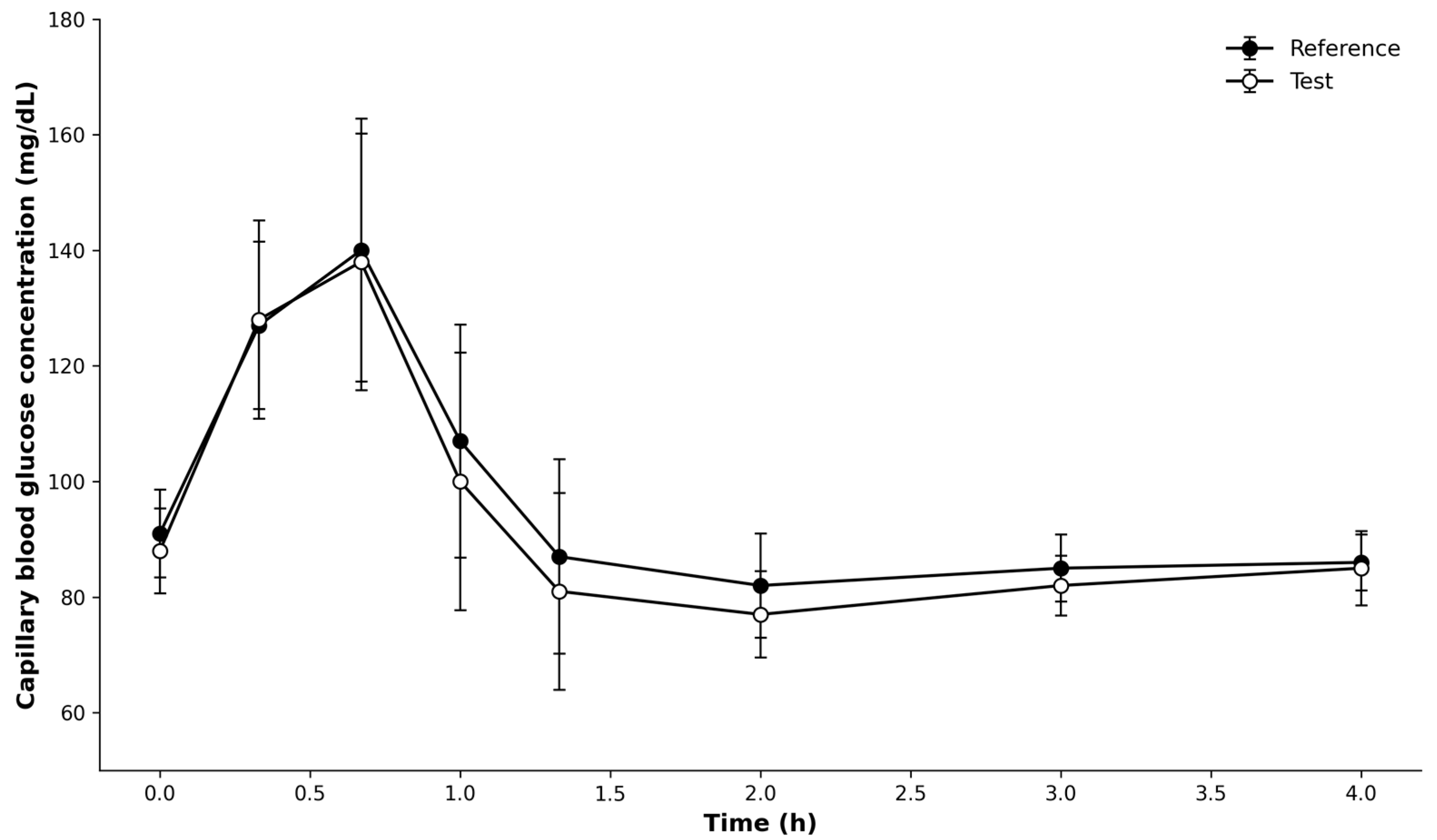
During the study, a total of 42 adverse events (AEs) were identified in 14 out of 32 subjects (43.8%). Of the total AEs, 13 AEs (31.0%) were associated with the test formulation (experienced by eight subjects), while 29 (69.0%) occurred with the reference drug product (experienced by 10 subjects). Regarding gender, 13 AEs (31.0%) occurred in men and 29 (69%) in women. In terms of causality, 24 AEs (57.1%) were assessed as unlikely to be related to the study drug, while 18 (42.9%) were considered possibly related to the study drug. A total of 28 (67%) of the events were unexpected, and 14 (33%) were expected according to the study drug. The most frequent events were headache, nausea, and dizziness (Table 4). None of the adverse events were serious, and all were resolved before study close-out. Hypoglycemia (<75 mg/dL) risk was evaluated by capillary plasma glucose measurements for up to 4 h post-dose. Hypoglycemia was observed in 10% and 20% of the test and reference populations, respectively (Figure 4).

3. Discussion

Empagliflozin is a potent, selective sodium–glucose cotransporter 2 (SGLT2) inhibitor with a mechanism of action that is independent of β-cell function and insulin sensitivity. SGLT2 inhibitors exert their pharmacodynamic effects by inhibiting renal glucose reabsorption, thereby increasing urinary glucose excretion. These agents carry a low risk of hypoglycemia and do not induce β-cell exhaustion or overstimulation. Consequently, SGLT2 inhibitors represent a viable therapeutic option at any stage of type 2 diabetes management, whether as monotherapy or as an adjunct to other pharmacological interventions [18,19].
The study was designed, according to international guidelines [20] and Mexican regulatory requirements, to evaluate the bioequivalence of 25 mg immediate-release empagliflozin tablets in the fasting state. The study enrolled 32 male and female subjects. According to the initial sample size estimation, this cohort provided sufficient statistical power to demonstrate bioequivalence between the two formulations with a 90% confidence interval, ensuring that the study was adequately powered to detect clinically relevant differences.
The median tmax values for the test and reference formulations were 2.72 ± 0.85 h and 2.86 ± 1.00 h, respectively, following a single oral dose of 25 mg empagliflozin in healthy Mexican subjects under fasting conditions. These values indicate a faster absorption rate compared to those reported in Jordanian [21] (4.75 h ± 1.619 h), Chinese [22] (4.0 h) and Venezuelan [14] (3.50 h) populations. Conversely, the absorption was slower than that observed in Korean subjects [23] (1.50 h). Similarly, the mean Cmax observed in our study (>500 ng/mL) was higher than the approximately 339 ng/mL previously reported in a Venezuelan population [14]. Since the pharmacokinetic profiles compared across these different populations were all evaluated under fasting conditions, the observed variability is unlikely to be related to food effects. Instead, this faster absorption rate and higher peak exposure could be attributed to inter-ethnic variations in gastrointestinal physiology, such as differences in gastric emptying time. Furthermore, because empagliflozin is a BCS Class III [12] drug whose absorption is permeability-limited and acts as a substrate for intestinal efflux transporters like P-glycoprotein, genetic polymorphisms affecting transporter expression (such as those in the ABCB1 gene) among different ethnic groups may significantly contribute to these specific pharmacokinetic variations [24]. The mean value of AUC0–∞ was 4368.04 ± 887.75 ng*h/mL in healthy Mexican subjects, which is notably higher than the values reported for Korean [23] and Chinese [22] subjects (3064.17 ± 522.99 ng*h/mL, and 3113.27 ± 508.57 ng*h/mL, respectively), and even than in another Latin population [14] (Venezuelan; 3409.2551 ± 716.71756 ng*h/mL), but lower than the values reported in Jordanian subjects [21] (5270.50 ± 1390.52 ng*h/mL). As shown in Table 2, the mean ± SD t1/2 of empagliflozin was 7.62 ± 0.83 h and 7.61 ± 0.68 h for test and reference under fasting conditions, respectively. Therefore, the 7-day washout period was appropriate for the present study, and the carryover effect was not observed. These values were similar to the reported ones in the Venezuelan population [14]; 7.47 ± 0.97 h, shorter that the reported values in Korean [23] and Chinese [22] subjects, 8.59 ± 1.52 h and 8.93 ± 3.66 h, and lower than the reported values in Jordanian subjects [21], 4.00 ± 1.12 h. The observed differences in the rate and extent of absorption in this study might be due to the ethnic differences between study populations.
The 90% confidence interval (CI) for the geometric mean ratios of the primary pharmacokinetic parameters (Cmax and AUC0–t) were entirely within the established bioequivalence acceptance range (80.00–125.00%), as per the regulatory requirements for bioequivalence set by the Mexican Ministry of Health (COFEPRIS) [17]. Furthermore, the ANOVA performed on the log-transformed parameters (Cmax and AUC0–t) revealed no significant effects for formulation, period or sequence.
All adverse events reported during the study were classified as non-serious and mild in intensity, requiring no pharmacological intervention. Although empagliflozin is known to exert a mild antihypertensive effect in chronic use, the difference in acute hypotensive adverse events observed following a single dose (five in the reference group versus 0 in the test group) is likely attributable to random inter-individual variability in healthy normotensive subjects, particularly given the near-identical AUC and Cmax values between both formulations. All subjects recovered completely without sequelae or further complications. The safety and tolerability profile observed in this study was comparable to that reported in previous single-dose bioequivalence studies of 25 mg empagliflozin.

4. Materials and Methods

4.1. Drug Products

The test formulation was an immediate-release (IR) tablet containing Empagliflozin 25 mg (Batch No. 73188, expiry date February 2026), manufactured by Farmacéutica Paraguaya S.A. for Asofarma de México, S.A. de C.V (Ciudad de México, Mexico). The reference formulation was Jardiance®, an IR tablet containing Empagliflozin 25 mg (Batch No. F42214, expiry date May 2026), manufactured by Boehringer Ingelheim Pharmaceutical Inc. (Ridgefield, CT, USA).

4.2. In Vitro Dissolution Studies

Comparative in vitro dissolution profiles of the test and reference formulations were evaluated in phosphate buffer pH 6.8. Dissolution testing was performed using Elite 8 dissolution tester (HANSON RESEARCH, Chatsworth, CA, USA) at 75 rpm in 900 mL of dissolution medium maintained at 37.0 ± 0.5 °C. Samples of 10 mL were collected at 5, 10, 15, 20, and 30 min from 12 dosage units of each formulation, without medium replacement. Empagliflozin dissolved in the samples was quantified by HPLC-UV at 223 nm. The dissolution conditions were selected considering general recommendations described in FDA dissolution guidance documents and the Mexican Pharmacopeia (FEUM 13.0), and the study was conducted following the criteria established in NOM-177-SSA1-2013 for comparative dissolution profile studies used in interchangeability assessments [17]. Similarity between dissolution profiles was assessed using the similarity factor (f2).

4.3. Study Design

The study design was a randomized, open-label, two-way, crossover, single-dose, prospective, longitudinal study, with a 7-day washout period before next dosing, to compare the pharmacokinetic profile (Cmax and AUC0–t) of two 25 mg empagliflozin tablet formulations in thirty-two (32) healthy Mexican adult volunteers aged 18 to 55 years, under fasting condition.
The trial was conducted at the third-party research site (a contract research organization also identified as CRO) FS Scientia Pharma, S.A de C.V. [San Luis Potosí, Mexico]. Volunteers were submitted for a 36 h confinement period, admitted to the investigational site from around 16:00 h on day 0 until around 8:00 AM on day 2, for drug dosing, safety and tolerability assessment, and pharmacokinetic blood sampling. Included subjects received a 25 mg empagliflozin tablet with 250 mL of 10% glucose solution (Merck, Naucalpan de Juárez, México) at room temperature under fasting conditions, as part of the hypoglycemia risk management measures required by the national regulatory authority (COFEPRIS), consistent with regulatory recommendations to monitor and prevent hypoglycemia during such studies.
Subjects received a standardized 3000 kcal diet during confinement. Following a mandatory overnight pre-dose fasting period of at least 10 h, the study drug was administered, with water restricted until 4 h post-dose. Pharmacokinetic sampling and vital signs were assessed at scheduled intervals. Subjects were discharged after the initial confinement period, returning at 48.00 and 72.00 h post-dose for further blood collection. Adverse events were rigorously recorded and categorized by duration, severity, causality, and outcome. All participants remained under close medical supervision throughout the study duration.

4.4. Study Population

All subjects provided a written informed consent form before the carrying out of any protocol-related procedures or assessments. Moreover, 18–55 year-old healthy male or female volunteers were enrolled. A Body Mass Index [BMI] in the range 18–27 kg/m2 was required. Clinical health status was determined at screening visit with the collection of the clinical record, physical examination, 12-lead ECG [electrocardiogram], complete blood cell count, blood chemistry, blood pregnancy test, urinalysis and urine drug test. Additionally, a urine pregnancy test and a breath alcohol test, were performed on baseline. Female subjects of childbearing potential were required to use a highly effective method of contraception during the study period. Key exclusion criteria included pregnancy or lactation, history or evidence of drug or alcohol abuse, clinically significant abnormalities in medical history or laboratory tests, history of significant gastrointestinal surgery or disease, 14-day prior consumption of prescription or over-the-counter drugs and grapefruit or caffeine/xanthine consumption within 10 h before the dosing. All participants were registered on the COFEPRIS volunteer participant database according with the Mexican regulation.

4.5. Sample Size

The sample size was determined in accordance with the Mexican regulation NOM-177-SSA1-2013, which establishes that the number of subjects in a bioequivalence study must be based on an appropriate calculation using the intra-subject coefficient of variation (CVintra) of the pharmacokinetic parameter with the highest variability (Cmax, AUC0–t, or AUC0–∞) [17].
Sample size estimation was performed using R software 4.1.2 version (Rcmdr package, 2021) under a two one-sided tests (TOST) procedure for a 2 × 2 crossover design [25]. A significance level (α) of 0.05, a minimum statistical power of 90%, and an assumed test/reference ratio of 0.95 were considered in the calculation.
The intra-subject variability was obtained from the study reported by Hailat et al. (2022), which evaluated the bioequivalence of two 10 mg empagliflozin tablets under fasting conditions in healthy subjects [21]. The highest CVintra was observed for Cmax (21.41658%), derived from the reported 90% confidence interval (95.69–116.99%). Based on this variability, the minimum required sample size to demonstrate bioequivalence within the 80.00–125.00% acceptance range was estimated to be 28 subjects. To account for potential dropouts or withdrawals, four additional subjects were included, resulting in a total planned sample size of 32 subjects.

4.6. Pharmacokinetic Assessment and Analytical Method

Blood samples (6 mL) were collected at 0 h [pre-dose] and at 0.33, 0.67, 1.00, 1.33, 1.67, 2.00, 2.33, 2.67, 3.00, 3.33, 3.67, 4.00, 4.50, 5.00, 6.00, 8.00, 12.00, 24.00, 48.00 and 72.00 h post-dose. Samples were collected in heparinized tubes and centrifuged at 3500 rpm for 10 min at 4 °C. The resulting plasma was transferred into labeled cryovials and stored immediately at −80 ± 10 °C until analysis.
To maintain blinding of the analyst responsible for quantifying empagliflozin plasma concentrations, study samples were coded prior to analysis. The samples were sent to a third-party analytical laboratory (Axis Clinicals Latina, S.A. de C.V.), which was responsible for the bioanalytical determination. Shipment was conducted at −80 °C (±10 °C) on dry ice with temperature monitoring to ensure sample integrity.
Plasma concentrations of empagliflozin were analyzed using a validated high-performance liquid chromatography–tandem mass spectrometry (LC–MS/MS) method developed in accordance with Good Laboratory Practice (GLP) principles. Detailed bioanalytical validation data, including selectivity, precision, accuracy, recovery, matrix effect, and stability assessments, are provided in the Supplementary Materials (Supplementary Material S1).
Sample preparation was performed using a solid-phase extraction (SPE) procedure. Briefly, plasma samples were spiked with 50 µL of the internal standard (empagliflozin-d4), followed by the addition of 500 µL of ammonium hydroxide solution (2%) as a pretreatment step. The samples were vortex-mixed for 10 s and loaded onto pre-conditioned SPE cartridges (Strata-X), previously activated with 1 mL of 100% methanol and equilibrated with 1 mL of deionized water. The cartridges were washed with 1 mL of 10% methanol to remove interfering matrix components, and the analyte was subsequently eluted using 0.5 mL of mobile phase. The eluate was collected and transferred into autosampler vials for LC–MS/MS analysis.
Calibration standards were prepared in human plasma over a concentration range of 2.00–807.21 ng/mL, and quality control (QC) samples were prepared at concentrations of 5.98, 259.90, and 615.89 ng/mL. The calibration curve was constructed using linear regression with a 1/x2 weighting factor. Linearity was demonstrated with a correlation coefficient (r) of 0.99904.
Chromatographic separation was achieved on a Prominence LC-20AD SIL-20AC HPLC system (SHIMADZU, Kioto, Japan) equipped with a Viva C8 column 5 µm, 50 × 4.6 mm (RESTEK, Bellefonte, PA, USA) maintained at 40 °C. The mobile phase consisted of methanol: acetonitrile:15 mM ammonium formate (70:5:25, v/v/v), at a flow rate of 0.9 mL/min under isocratic conditions, with a run time of 3.5 min. The autosampler temperature was maintained at 5 °C.
Detection was performed using an QTRAP 4500 triple quadrupole mass spectrometer (ABSCIEX, Woodlands, North Region, Singapore) equipped with a turboIonSpray source operating in positive electrospray ionization mode (ESI+) under multiple reaction monitoring (MRM). The monitored mass transitions were m/z 468.3 → 355.3 for empagliflozin and m/z 472.2 → 359.2 for the IS. Data acquisition and integration were performed using Analyst® software version 1.6.2, and study sample concentrations were calculated automatically using the validated chromatographic system.

4.7. Tolerability and Safety Assessments

Tolerability was evaluated based on the incidence and severity of the adverse events, physical examination [before dosing and prior to discharge], and serial vital sign monitoring [at baseline and at 1.00, 3.00, 8.00, 12.00, 24.00, 48.00 and 72.00 h post-dose]. To assess the risk of hypoglycemia, capillary plasma glucose levels were measured at 0, 0.33, 0.67, 1.00, 1.33, 2.00, 3.00, and 4.00 h post-dose (Figure 4). In the event of hypoglycemia, a 50% glucose solution was administered via intravenous bolus until normoglycemia was restored.

4.8. Statistical Analysis

Descriptive statistics were used to summarize demographic data and assess the homogeneity of the study population. The per-protocol (PP) population, defined as all subjects with evaluable pharmacokinetic data, was included in the PK analysis. The following pharmacokinetic parameters were determined using a non-compartmental analysis (NCA): maximum plasma concentration (Cmax), time to reach Cmax (tmax), area under the plasma concentration–time curve from time zero to the last measurable concentration (AUC0–t) and extrapolated to infinity (AUC0–∞), the terminal elimination rate constant (ke), and the plasma elimination half-life (t1/2). Pharmacokinetic parameters were calculated using Phoenix® WinNonlin® version 8.4 software (Certara L.P., Princeton, NJ, USA).
Statistical analysis for bioequivalence assessment was performed using Schuirmann’s two one-sided t-test (TOST) for test/reference geometric means ratios of Cmax and AUC, applying the conventional acceptance criteria of 80–125%. Its 90% confidence intervals were calculated following NOM-177-SSA1-2013 regulation [17].
The intention-to-treat (ITT) population, defined as all subjects who received at least one dose of the study drug, was used for tolerability and safety assessments. Safety evaluation was performed using descriptive statistics and encompassed all observed adverse events.

5. Conclusions

The 90% confidence intervals for the geometric mean ratios of the primary pharmacokinetic parameters (Cmax and AUC0–t) fell entirely within the pre-defined regulatory range of 80.00–125.00%. These results conclusively demonstrate bioequivalence between the test and reference empagliflozin formulations. Furthermore, both treatments were well-tolerated, exhibiting an excellent safety profile with no serious adverse events. Consequently, the test formulation represents a therapeutically interchangeable option for improving glycemic control in patients requiring SGLT2 inhibitor therapy.

Supplementary Materials

The following supporting information can be downloaded at: https://www.mdpi.com/article/10.3390/ph19060842/s1. Supplementary Material S1: Bioanalytical Method Validation.

Author Contributions

Conceptualization and methodology, P.d.l.C.C. and A.M.M.; formal analysis, P.d.l.C.C., A.M.M. and J.T.P.U.; writing—original draft preparation, P.d.l.C.C. and A.M.M.; writing—review and editing, E.G.G.Á., O.E.H.P. and J.T.P.U.; project administration, J.T.P.U.; All authors have read and agreed to the published version of the manuscript.

Funding

This study was full sponsored by Asofarma de México S.A. de C.V. (Mexico City, Mexico).

Institutional Review Board Statement

Research protocol and informed consent form, were reviewed, following local law, and approved by the independent ethics committee Axis Helsia, S. de R.L. de C.V. (code FSPDRA_EB03.002, approval date: 21 October, 2024) and by the Mexico Ministry of Health, through the Federal Commission for Prevention Against Health Risks (COFEPRIS). The study was registered on ClinicalTrials.gov under the identifier NCT07479108 (approval date: 29 November, 2024). The clinical trial was conducted under the most updated version of the Declaration of Helsinki, Good Clinical Practice Guidelines of the International Council for Harmonisation of Technical Requirements for Pharmaceuticals for Human Use, and applicable local regulatory requirements.

Informed Consent Statement

Informed consent was obtained from all subjects involved in the study.

Data Availability Statement

The data presented in this study are available upon request from the corresponding author due to confidentiality reasons.

Acknowledgments

The authors are grateful to the research site staff members involved in the development of the study.

Conflicts of Interest

Authors A.M.M. and J.T.P.U. were employed by the company FS SCIENTIA PHARMA S.A. de C.V. Authors E.G.G.Á. and O.E.H.P. were employed by the company Asofarma de México S.A. de C.V. The remaining authors declare that the research was conducted in the absence of any commercial or financial relationships that could be construed as a potential conflict of interest.

Abbreviations

The following abbreviations are used in this manuscript:
ADAAmerican Diabetes Association
AEsAdverse events
AUCArea under the curve
BCSBiopharmaceutical Classification System
BMIBody mass index
CIConfidence interval
CmaxPeak plasma concentration
COFEPRISMexican Ministry of Health
CROContract research organization
ECGElectrocardiogram
IRImmediate release
ITTIntention-to-treat
KeTerminal elimination rate constant
LLLower limit
NCANon-compartmental analysis
PKPharmacokinetics
PPPer-protocol
RLDReference listed drug
SGLT2Sodium–glucose cotransporter 2
SDStandard deviation
t1/2Elimination half-life
tmaxTime to reach peak plasma concentration
T2DType 2 diabetes
ULUpper limit

References

  1. American Diabetes Association Professional Practice Committee. 2. Diagnosis and Classification of Diabetes: Standards of Care in Diabetes—2025. Diabetes Care 2025, 48, S27–S49. [Google Scholar] [CrossRef] [PubMed] [PubMed Central]
  2. Basto-Abreu, A.; Reyes-Garcia, A.; Stern, D.; Torres-Ibarra, L.; Rojas-Martínez, R.; Aguilar-Salinas, C.A.; Romero-Martínez, M.; Campos-Nonato, I.; López-Ridaura, R.; Barrientos-Gutiérrez, T. Cascadas de tamizaje y atención de la diabetes tipo 2 en México. Salud Pública México 2024, 66, 530–538. (In Spanish) [Google Scholar] [CrossRef] [PubMed]
  3. Młynarska, E.; Czarnik, W.; Dzieża, N.; Jędraszak, W.; Majchrowicz, G.; Prusinowski, F.; Stabrawa, M.; Rysz, J.; Franczyk, B. Type 2 Diabetes Mellitus: New Pathogenetic Mechanisms, Treatment and the Most Important Complications. Int. J. Mol. Sci. 2025, 26, 1094. [Google Scholar] [CrossRef] [PubMed] [PubMed Central]
  4. Rojas-Martínez, R.; Escamilla-Núñez, C.; Castro-Porras, L.; Gómez-Velasco, D.; Romero-Martínez, M.; Hernández-Serrato, M.I.; Ruy López-Ridaura, R.; Diaz, M.Á.; Aguilar-Salinas, C. Detección oportuna de prediabetes y diabetes. Salud Pública México 2024, 66, 520–529. (In Spanish) [Google Scholar] [CrossRef] [PubMed]
  5. Kunutsor, S.K.; Zaccardi, F.; Balasubramanian, V.G.; Gillies, C.L.; Aroda, V.R.; Seidu, S.; Davies, M.J.; Khunti, K. Glycaemic control and macrovascular and microvascular outcomes in type 2 diabetes: Systematic review and meta-analysis of cardiovascular outcome trials of novel glucose-lowering agents. Diabetes Obes. Metab. 2024, 26, 1837–1849. [Google Scholar] [CrossRef] [PubMed]
  6. American Diabetes Association Professional Practice Committee. 9. Pharmacologic Approaches to Glycemic Treatment: Standards of Care in Diabetes—2025. Diabetes Care 2025, 48, S181–S206. [Google Scholar] [CrossRef] [PubMed] [PubMed Central]
  7. Sanjari, M.; Hadavizadeh, M.; Sadeghi, N.; Naghibzadeh-Tahami, A. Effect of empagliflozin on weight in patients with prediabetes and diabetes. Sci. Rep. 2025, 15, 118. [Google Scholar] [CrossRef] [PubMed] [PubMed Central]
  8. Scheen, A.J. Pharmacokinetic and pharmacodynamic profile of empagliflozin, a sodium glucose co-transporter 2 inhibitor. Clin. Pharmacokinet. 2014, 53, 213–225. [Google Scholar] [CrossRef] [PubMed] [PubMed Central]
  9. Munir, K.M.; Davis, S.N. Differential pharmacology and clinical utility of empagliflozin in type 2 diabetes. Clin. Pharmacol. 2016, 8, 19–34. [Google Scholar] [CrossRef] [PubMed] [PubMed Central][Green Version]
  10. Rascher, J.; Cheng, S.; Johnston, C.; Härtter, S.; Jan-Georg, W.; Marquard, J.; Tartakovsky, I.; Laffel, L.M.B. Pharmacokinetics and pharmacodynamics of empagliflozin in paediatric patients aged 10-17 years with type 2 diabetes mellitus. Br. J. Clin. Pharmacol. 2025, 91, 2390–2400. [Google Scholar] [CrossRef] [PubMed] [PubMed Central]
  11. Chettupalli, A.; Unnisa, A.; Peddapalli, H.; Jadi, R.; Anusha, K.; Amarachinta, P. Development and evaluation of empagliflozin-loaded solid lipid nanoparticles: Pharmacokinetics and pharmacodynamics for oral delivery. Intell. Pharm. 2025, 3, 193–206. [Google Scholar] [CrossRef]
  12. Rascher, J.; Cotton, D.; Haertter, S.; Brueckmann, M. Clinical pharmacokinetics and pharmacodynamics of empagliflozin in patients with heart failure. Br. J. Clin. Pharmacol. 2024, 90, 2215–2222. [Google Scholar] [CrossRef] [PubMed]
  13. Heise, T.; Seman, L.; Macha, S.; Jones, P.; Marquart, A.; Pinnetti, S.; Woerle, H.J.; Dugi, K. Safety, tolerability, pharmacokinetics, and pharmacodynamics of multiple rising doses of empagliflozin in patients with type 2 diabetes mellitus. Diabetes Ther. 2013, 4, 331–345. [Google Scholar] [CrossRef] [PubMed] [PubMed Central]
  14. Pena, E.; Inatti, A.; Taly, A.; Chacón, J.G.; Serrano-Martin, X. Bioequivalence assessment of two formulations of empagliflozin in healthy adult subjects. Am. J. Pharmacother. Pharm. Sci. 2023, 2, 19. [Google Scholar] [CrossRef] [PubMed]
  15. Boehringer Ingelheim. JARDIANCE (Empagliflozin) Prescribing Information; U.S. FDA: Silver Spring, MD, USA, 2025.
  16. Ndefo, U.A.; Anidiobi, N.O.; Basheer, E.; Eaton, A.T. Empagliflozin (Jardiance): A Novel SGLT2 Inhibitor for the Treatment of Type-2 Diabetes. Pharm. Ther. 2015, 40, 364–368. [Google Scholar] [PubMed] [PubMed Central]
  17. NOM-177-SSA1-2013; Que Establece las Pruebas y Procedimientos para Demostrar que un Medicamento es Intercambiable. Requisitos a que Deben Sujetarse los Terceros Autorizados que Realicen las Pruebas de Intercambiabilidad. Requisitos para Realizar los Estudios de Biocomparabilidad. Requisitos a que Deben Sujetarse los Terceros Autorizados, Centros de Investigación o Instituciones Hospitalarias que Realicen las Pruebas de Biocomparabilidad. COFEPRIS: Mexico City, Mexico, 2013.
  18. Lunati, M.E.; Cimino, V.; Gandolfi, A.; Trevisan, M.; Montefusco, L.; Pastore, I.; Pace, C.; Betella, N.; Favacchio, G.; Bulgheroni, M.; et al. SGLT2-inhibitors are effective and safe in the elderly: The SOLD study. Pharmacol. Res. 2022, 183, 106396. [Google Scholar] [CrossRef] [PubMed]
  19. American Diabetes Association Professional Practice Committee. 9. Pharmacologic Approaches to Glycemic Treatment: Standards of Care in Diabetes—2024. Diabetes Care 2024, 47, S158–S178, Erratum in Diabetes Care 2024, 47, 1238. https://doi.org/10.2337/dc24-er07a. [Google Scholar] [CrossRef] [PubMed] [PubMed Central]
  20. FDA Product. Specific Guidance for Generic Drug Development. Empagliflozin. 2016. Available online: https://www.fda.gov/ (accessed on 2 March 2026).
  21. Hailat, M.; Zakaraya, Z.; Al-Ani, I.; Meanazel, O.A.; Al-Shdefat, R.; Anwer, M.K.; Saadh, M.J.; Abu Dayyih, W. Pharmacokinetics and Bioequivalence of Two Empagliflozin, with Evaluation in Healthy Jordanian Subjects under Fasting and Fed Conditions. Pharmaceuticals 2022, 15, 193. [Google Scholar] [CrossRef] [PubMed] [PubMed Central]
  22. Li, X.; Liu, L.; Deng, Y.; Li, Y.; Zhang, P.; Wang, Y.; Xu, B. Pharmacokinetics and bioequivalence of a generic empagliflozin tablet versus a brand-named product and the food effects in healthy Chinese subjects. Drug Dev. Ind. Pharm. 2020, 46, 1487–1494. [Google Scholar] [CrossRef] [PubMed]
  23. Jiang, X.; Bae, S.; Yoon, D.Y.; Park, S.J.; Oh, J.; Cho, J.Y.; Yu, K.S. Comparison of the Pharmacokinetics, Safety, and Tolerability of Two Empagliflozin Formulations in Healthy Korean Subjects. Drug Des. Dev. Ther. 2023, 17, 2137–2145. [Google Scholar] [CrossRef] [PubMed] [PubMed Central]
  24. Brambila-Tapia, A.J. MDR1 (ABCB1) polymorphisms: Functional effects and clinical implications. Rev. Investig. Clin. 2013, 65, 445–454. [Google Scholar] [PubMed]
  25. R Core Team. R: A Language and Environment for Statistical Computing; R Foundation for Statistical Computing: Vienna, Austria, 2021; Available online: http://www.r-project.org/ (accessed on 6 March 2026).
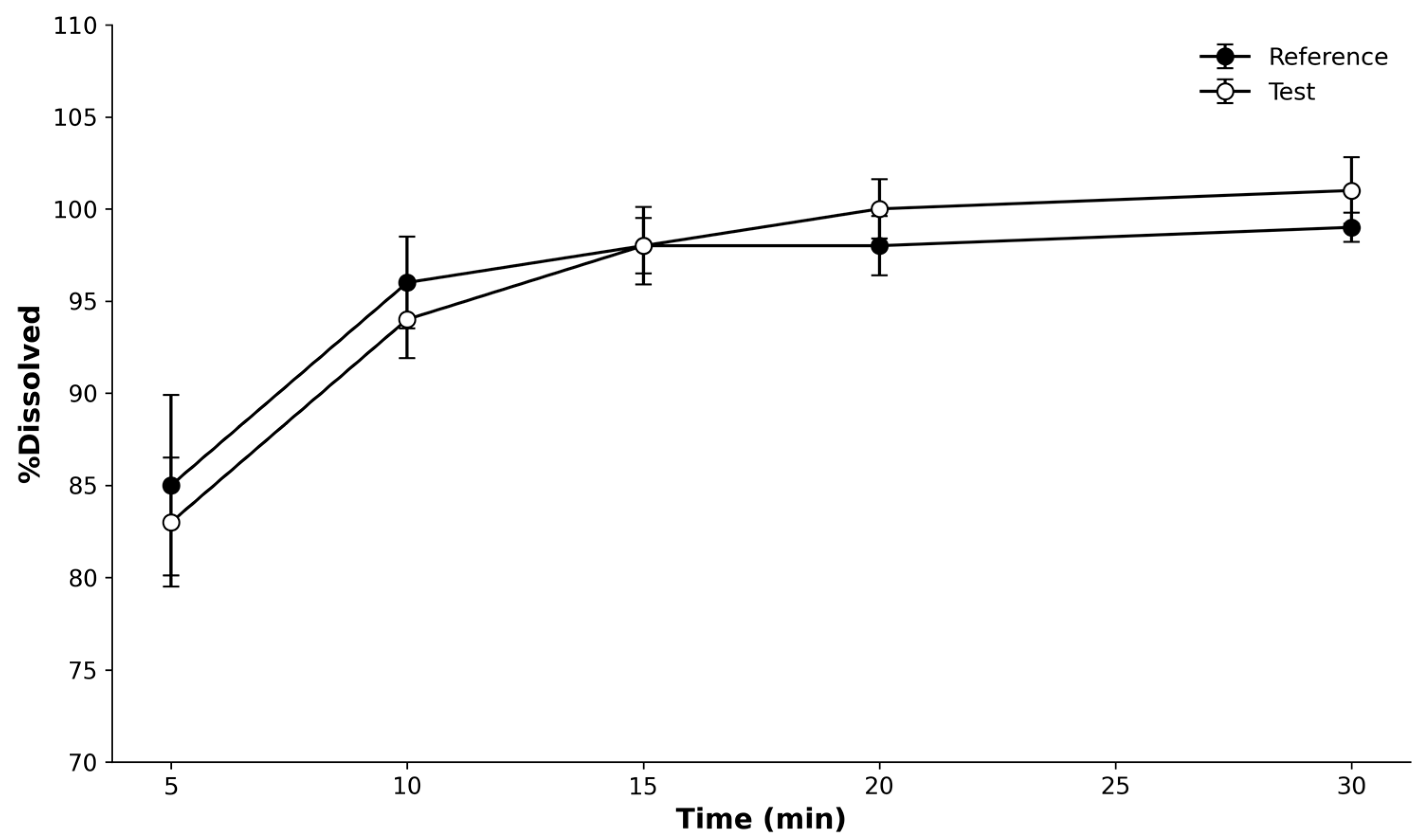
Figure 1. Mean ± SD comparative in vitro dissolution profiles of test (white circle) and reference (black circle) formulations.
Pharmaceuticals 19 00842 g001
Figure 2. Study flowchart. n: number of subjects; PK: pharmacokinetic.
Pharmaceuticals 19 00842 g002
Figure 3. Mean ± SD plasma concentration–time profile of empagliflozin after a single oral dosing of 25 mg tablet. Reference (black circle), test (white circle).
Pharmaceuticals 19 00842 g003
Figure 4. Mean ± SD capillary blood glucose concentration–time profile of empagliflozin after a single oral dosing of 25 mg tablet. Reference (black circle), test (white circle).
Pharmaceuticals 19 00842 g004
Table 1. Demographic baseline characteristics of study subjects.
VariableGeneral Population
n = 32
Female
n = 18
Male
n = 14
(%) 56.2543.75
Age (years) mean ± SD25.10 ± 7.8027.89 ± 9.3125.07 ± 3.20
Weight (kg) mean ± SD66.50 ± 10.3057.54 ± 7.3569.50 ± 9.42
Height (m) mean ± SD1.68 ± 0.081.56 ± 0.061.71 ± 0.08
BMI (kg/m2) mean ± SD23.40 ± 2.2923.38 ± 2.5123.80 ± 2.58
%: percentage; BMI: Body Mass Index; n: number of subjects; SD: standard deviation.
Table 2. Pharmacokinetic parameters of empagliflozin after test and reference dosing. Data are given as mean ± SD.
ParameterEmpagliflozin
TestReference
Cmax (ng/mL)578.28 ± 125.60593.99 ± 156.78
tmax (h)2.72 ± 0.852.86 ± 1.00
AUC0–t (ngh/mL)4370.88 ± 769.504313.24 ± 885.02
AUC0–∞ (ngh/mL)4423.93 ± 776.024368.04 ± 887.75
t½ (h)7.62 ± 0.837.61 ± 0.68
AUC0–t: area under the plasma concentration curve until the last measurable concentration; AUC0–∞: area under the plasma concentration curve extrapolated to infinite time; Cmax: maximum plasma concentration; tmax: time until Cmax is reached; t1⁄2: terminal elimination half-life.
Table 3. Geometric mean ratios (90% CI) of pharmacokinetic parameters of empagliflozin dosing.
ParameterGeometric Mean Ratio (%)90% CISchuirmann’s TOSTPower
LLULp < 80%p > 125%
Cmax (ng/mL)98.3092.72104.220.0000010.0000000.99998
AUC0–t (ngh/mL)101.7298.77104.770.0000000.0000001.00000
AUC0–∞ (ngh/mL)101.6498.73104.630.0000000.0000001.00000
%: percentage; AUC0–t: area under the plasma concentration curve until the last measurable concentration; AUC0–∞: area under the plasma concentration curve extrapolated to infinite time; CI: confidence interval; Cmax: maximum plasma concentration; LL: lower limit; UL: upper limit.
Table 4. Summary of adverse events.
VariableTestReferenceOverall
Number of AEs/n
Overall132942
Study drug-related6/138/2914/42
Type of AEs
Headache4610
Dizziness235
Nausea369
Tachycardia112
Rhinorrhea202
Sore throat112
Hypotension055
Chills011
Fever011
Cough011
Bradycardia011
Diaphoresis011
General weakness011
Pallor of skin011
TOTAL132942
AEs, adverse events; n, number of AEs.
Disclaimer/Publisher’s Note: The statements, opinions and data contained in all publications are solely those of the individual author(s) and contributor(s) and not of MDPI and/or the editor(s). MDPI and/or the editor(s) disclaim responsibility for any injury to people or property resulting from any ideas, methods, instructions or products referred to in the content.