Gut Microbiota in Irritable Bowel Syndrome and Inflammatory Bowel Disease: Differences in Pathophysiology, Biomarkers, and Treatment Implications




Abstract
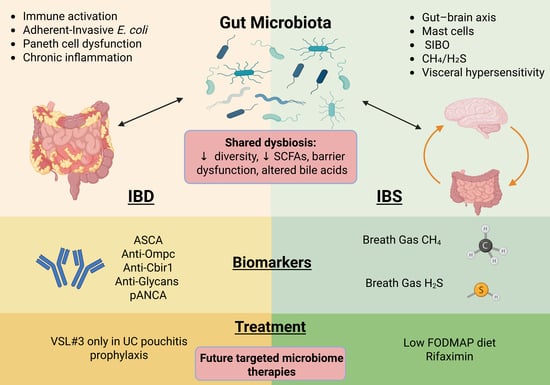
1. Introduction
2. Pathophysiology
2.1. Similar Pathways with Different Intensity
2.1.1. Higher Intensity in IBD
2.1.2. Higher Intensity in IBS
2.2. Different Microbiota-Associated Pathways Between the Two Diseases
2.2.1. Only in IBD
2.2.2. Only in IBS
3. Biomarkers
3.1. Common Biomarkers
3.2. IBD Biomarkers
3.3. IBS Biomarkers
4. Treatment
4.1. Probiotics
4.2. Antibiotics
4.3. Low-FODMAP Diet
4.4. Fecal Microbiota Transplantation (FMT)
4.5. Prebiotics and Synbiotics
5. Discussion/Future Perspectives
5.1. General Discussion
5.2. Concluding Remarks
5.3. Recommendations and Future Prospects
Author Contributions
Funding
Institutional Review Board Statement
Informed Consent Statement
Data Availability Statement
Conflicts of Interest
References
- Long-Smith, C.; O’Riordan, K.J.; Clarke, G.; Stanton, C.; Dinan, T.G.; Cryan, J.F. Microbiota-Gut-Brain Axis: New Therapeutic Opportunities. Annu. Rev. Pharmacol. Toxicol. 2020, 60, 477–502. [Google Scholar] [CrossRef] [PubMed]
- El-Sayed, A.; Aleya, L.; Kamel, M. Microbiota’s role in health and diseases. Environ. Sci. Pollut. Res. Int. 2021, 28, 36967–36983. [Google Scholar] [CrossRef] [PubMed] [PubMed Central]
- Almeida, A.; Mitchell, A.L.; Boland, M.; Forster, S.C.; Gloor, G.B.; Tarkowska, A.; Lawley, T.D.; Finn, R.D. A new genomic blueprint of the human gut microbiota. Nature 2019, 568, 499–504. [Google Scholar] [CrossRef] [PubMed] [PubMed Central]
- Kennedy, K.M.; Gerlach, M.J.; Adam, T.; Heimesaat, M.M.; Rossi, L.; Surette, M.G.; Sloboda, D.M.; Braun, T. Fetal meconium does not have a detectable microbiota before birth. Nat. Microbiol. 2021, 6, 865–873. [Google Scholar] [CrossRef] [PubMed]
- Donald, K.; Finlay, B.B. Early-life interactions between the microbiota and immune system: Impact on immune system development and atopic disease. Nat. Rev. Immunol. 2023, 23, 735–748. [Google Scholar] [CrossRef] [PubMed]
- Ma, Q.; Xing, C.; Long, W.; Wang, H.Y.; Liu, Q.; Wang, R.F. Impact of microbiota on central nervous system and neurological diseases: The gut-brain axis. J. Neuroinflammation 2019, 16, 53. [Google Scholar] [CrossRef] [PubMed] [PubMed Central]
- Bain, C.C.; Cerovic, V. Interactions of the microbiota with the mucosal immune system. Clin. Exp. Immunol. 2020, 199, 9–11. [Google Scholar] [CrossRef] [PubMed] [PubMed Central]
- Shen, Y.; Fan, N.; Ma, S.; Cheng, X.; Yang, X.; Wang, G. Gut Microbiota Dysbiosis: Pathogenesis, Diseases, Prevention, and Therapy. MedComm 2025, 6, e70168. [Google Scholar] [CrossRef] [PubMed] [PubMed Central]
- Gomaa, E.Z. Human gut microbiota/microbiome in health and diseases: A review. Antonie Leeuwenhoek 2020, 113, 2019–2040. [Google Scholar] [CrossRef] [PubMed]
- Loh, J.S.; Mak, W.Q.; Tan, L.K.S.; Ng, C.X.; Chan, H.H.; Yeow, S.H.; Foo, J.B.; Ong, Y.S.; How, C.W.; Khaw, K.Y. Microbiota-gut-brain axis and its therapeutic applications in neurodegenerative diseases. Signal Transduct. Target. Ther. 2024, 9, 37. [Google Scholar] [CrossRef] [PubMed] [PubMed Central]
- Drossman, D.A.; Hasler, W.L. Rome IV-Functional GI Disorders: Disorders of Gut-Brain Interaction. Gastroenterology 2016, 150, 1257–1261. [Google Scholar] [CrossRef] [PubMed]
- Sperber, A.D.; Bangdiwala, S.I.; Drossman, D.A.; Ghoshal, U.C.; Simren, M.; Tack, J.; Whitehead, W.E.; Dumitrascu, D.L.; Fang, X.; Fukudo, S.; et al. Worldwide Prevalence and Burden of Functional Gastrointestinal Disorders, Results of Rome Foundation Global Study. Gastroenterology 2021, 160, 99–114.e3. [Google Scholar] [CrossRef] [PubMed]
- Ray, G.; Ghoshal, U.C. Epidemiology of Disorders of the Gut-Brain Interaction: An Appraisal of the Rome IV Criteria and Beyond. Gut Liver 2024, 18, 578–592. [Google Scholar] [CrossRef] [PubMed] [PubMed Central]
- Aggeletopoulou, I.; Papantoniou, K.; Pastras, P.; Triantos, C. Unraveling the Pathophysiology of Irritable Bowel Syndrome: Mechanisms and Insights. Int. J. Mol. Sci. 2025, 26, 10598. [Google Scholar] [CrossRef] [PubMed] [PubMed Central]
- Jafari, P.; Asadollahi, Z.; Moini, M.; Seyed Mirzaie, M. Health Related Quality of Life in Iranian Patients with Irritable Bowel Syndrome: Reliability and Validity of the Persian Version of the IBS-QOL. Iran. Red Crescent Med. J. 2013, 15, 723–728. [Google Scholar] [CrossRef] [PubMed] [PubMed Central]
- Katsoula, A.; Axiaris, G.; Mpitouli, A.; Palatianou, M.; Christidou, A.; Dimitriadis, N.; Nakos, A.; Pastras, P.; Kourkoulis, P.; Karatzas, P.; et al. The Inflammatory Bowel Disease-Disk Tool for Assessing Disability in Inflammatory Bowel Disease Patients: Validation of the Greek Version. J. Clin. Med. 2023, 12, 3023. [Google Scholar] [CrossRef] [PubMed] [PubMed Central]
- Zhang, Y.; Liu, J.; Han, X.; Jiang, H.; Zhang, L.; Hu, J.; Shi, L.; Li, J. Long-term trends in the burden of inflammatory bowel disease in China over three decades: A joinpoint regression and age-period-cohort analysis based on GBD 2019. Front. Public Health 2022, 10, 994619. [Google Scholar] [CrossRef] [PubMed] [PubMed Central]
- Steinwurz, F.; Machado, M.B.; Veitia, G.; De Paula, J.A.; Bautista Martinez, S.; Vergara, B.I.; Capdevielle, B.; Silva, F.A.M.; Ramirez, A.L. Latin America consensus statement inflammatory bowel disease: Importance of timely access to diagnosis and treatment. Ther. Adv. Gastroenterol. 2023, 16, 17562848231207312. [Google Scholar] [CrossRef] [PubMed] [PubMed Central]
- Wang, S.; Dong, Z.; Wan, X. Global, regional, and national burden of inflammatory bowel disease and its associated anemia, 1990 to 2019 and predictions to 2050: An analysis of the global burden of disease study 2019. Autoimmun. Rev. 2024, 23, 103498. [Google Scholar] [CrossRef] [PubMed]
- Lopetuso, L.R.; Deleu, S.; Godny, L.; Petito, V.; Puca, P.; Facciotti, F.; Sokol, H.; Ianiro, G.; Masucci, L.; Abreu, M.; et al. The first international Rome consensus conference on gut microbiota and faecal microbiota transplantation in inflammatory bowel disease. Gut 2023, 72, 1642–1650. [Google Scholar] [CrossRef] [PubMed] [PubMed Central]
- Zhang, T.; Li, X.; Li, J.; Sun, F.; Duan, L. Gut microbiome-targeted therapies as adjuvant treatments in inflammatory bowel diseases: A systematic review and network meta-analysis. J. Gastroenterol. Hepatol. 2025, 40, 78–88. [Google Scholar] [CrossRef] [PubMed]
- Goodoory, V.C.; Khasawneh, M.; Black, C.J.; Quigley, E.M.M.; Moayyedi, P.; Ford, A.C. Efficacy of Probiotics in Irritable Bowel Syndrome: Systematic Review and Meta-analysis. Gastroenterology 2023, 165, 1206–1218. [Google Scholar] [CrossRef] [PubMed]
- Vich Vila, A.; Imhann, F.; Collij, V.; Jankipersadsing, S.A.; Gurry, T.; Mujagic, Z.; Kurilshikov, A.; Bonder, M.J.; Jiang, X.; Tigchelaar, E.F.; et al. Gut microbiota composition and functional changes in inflammatory bowel disease and irritable bowel syndrome. Sci. Transl. Med. 2018, 10, eaap8914. [Google Scholar] [CrossRef] [PubMed]
- Lopetuso, L.R.; Petito, V.; Graziani, C.; Schiavoni, E.; Paroni Sterbini, F.; Poscia, A.; Gaetani, E.; Franceschi, F.; Cammarota, G.; Sanguinetti, M.; et al. Gut Microbiota in Health, Diverticular Disease, Irritable Bowel Syndrome, and Inflammatory Bowel Diseases: Time for Microbial Marker of Gastrointestinal Disorders. Dig. Dis. 2018, 36, 56–65. [Google Scholar] [CrossRef]
- Li, X.; Yuan, Q.; Huang, H.; Wang, L. Gut microbiota in irritable bowel syndrome: A narrative review of mechanisms and microbiome-based therapies. Front. Immunol. 2025, 16, 1695321. [Google Scholar] [CrossRef] [PubMed] [PubMed Central]
- Xie, H.; Yu, S.; Tang, M.; Xun, Y.; Shen, Q.; Wu, G. Gut microbiota dysbiosis in inflammatory bowel disease: Interaction with intestinal barriers and microbiota-targeted treatment options. Front. Cell. Infect. Microbiol. 2025, 15, 1608025. [Google Scholar] [CrossRef] [PubMed] [PubMed Central]
- Santana, P.T.; Rosas, S.L.B.; Ribeiro, B.E.; Marinho, Y.; de Souza, H.S.P. Dysbiosis in Inflammatory Bowel Disease: Pathogenic Role and Potential Therapeutic Targets. Int. J. Mol. Sci. 2022, 23, 3464. [Google Scholar] [CrossRef] [PubMed] [PubMed Central]
- Cheng, X.; Ren, C.; Mei, X.; Jiang, Y.; Zhou, Y. Gut microbiota and irritable bowel syndrome: Status and prospect. Front. Med. 2024, 11, 1429133. [Google Scholar] [CrossRef]
- Qiu, P.; Ishimoto, T.; Fu, L.; Zhang, J.; Zhang, Z.; Liu, Y. The Gut Microbiota in Inflammatory Bowel Disease. Front. Cell. Infect. Microbiol. 2022, 12, 733992. [Google Scholar] [CrossRef] [PubMed]
- Jeffery, I.B.; O’Toole, P.W.; Öhman, L.; Claesson, M.J.; Deane, J.; Quigley, E.M.M.; Simren, M. An irritable bowel syndrome subtype defined by species-specific alterations in faecal microbiota. Gut 2012, 61, 997–1006. [Google Scholar] [CrossRef] [PubMed]
- Jacobs, J.P.; Lagishetty, V.; Hauer, M.C.; Labus, J.S.; Dong, T.S.; Toma, R.; Vuyisich, M.; Naliboff, B.D.; Lackner, J.M.; Gupta, A.; et al. Multi-omics profiles of the intestinal microbiome in irritable bowel syndrome and its bowel habit subtypes. Microbiome 2023, 11, 5. [Google Scholar] [CrossRef] [PubMed] [PubMed Central]
- Macia, L.; Tan, J.; Vieira, A.T.; Leach, K.; Stanley, D.; Luong, S.; Maruya, M.; McKenzie, C.I.; Hijikata, A.; Wong, C.; et al. Metabolite-sensing receptors GPR43 and GPR109A facilitate dietary fibre-induced gut homeostasis through regulation of the inflammasome. Nat. Commun. 2015, 6, 6734. [Google Scholar] [CrossRef] [PubMed]
- Parada Venegas, D.; De la Fuente, M.K.; Landskron, G.; González, M.J.; Quera, R.; Dijkstra, G.; Harmsen, H.J.M.; Faber, K.N.; Hermoso, M.A. Short Chain Fatty Acids (SCFAs)-Mediated Gut Epithelial and Immune Regulation and Its Relevance for Inflammatory Bowel Diseases. Front. Immunol. 2019, 10, 277. [Google Scholar] [CrossRef]
- Peng, L.; Li, Z.R.; Green, R.S.; Holzman, I.R.; Lin, J. Butyrate enhances the intestinal barrier by facilitating tight junction assembly via activation of AMP-activated protein kinase in Caco-2 cell monolayers. J. Nutr. 2009, 139, 1619–1625. [Google Scholar] [CrossRef] [PubMed] [PubMed Central]
- Shin, A.; Preidis, G.A.; Shulman, R.; Kashyap, P. The Gut Microbiome in Adult and Pediatric Functional Gastrointestinal Disorders. Clin. Gastroenterol. Hepatol. 2019, 17, 256–274. [Google Scholar] [CrossRef] [PubMed] [PubMed Central]
- Heinken, A.; Hertel, J.; Thiele, I. Metabolic modelling reveals broad changes in gut microbial metabolism in inflammatory bowel disease patients with dysbiosis. npj Syst. Biol. Appl. 2021, 7, 19. [Google Scholar] [CrossRef] [PubMed] [PubMed Central]
- Fogelson, K.A.; Dorrestein, P.C.; Zarrinpar, A.; Knight, R. The Gut Microbial Bile Acid Modulation and Its Relevance to Digestive Health and Diseases. Gastroenterology 2023, 164, 1069–1085. [Google Scholar] [CrossRef] [PubMed] [PubMed Central]
- Michielan, A.; D’Incà, R. Intestinal Permeability in Inflammatory Bowel Disease: Pathogenesis, Clinical Evaluation, and Therapy of Leaky Gut. Mediat. Inflamm. 2015, 2015, 628157. [Google Scholar] [CrossRef] [PubMed] [PubMed Central]
- Liu, S.; Zhao, W.; Lan, P.; Mou, X. The microbiome in inflammatory bowel diseases: From pathogenesis to therapy. Protein Cell. 2021, 12, 331–345. [Google Scholar] [CrossRef] [PubMed] [PubMed Central]
- Baumgartner, M.; Lang, M.; Holley, H.; Crepaz, D.; Hausmann, B.; Pjevac, P.; Moser, D.; Haller, F.; Hof, F.; Beer, A.; et al. Mucosal Biofilms Are an Endoscopic Feature of Irritable Bowel Syndrome and Ulcerative Colitis. Gastroenterology 2021, 161, 1245–1256.e20. [Google Scholar] [CrossRef] [PubMed] [PubMed Central]
- Yuan, C.; He, Y.; Xie, K.; Feng, L.; Gao, S.; Cai, L. Review of microbiota gut brain axis and innate immunity in inflammatory and infective diseases. Front. Cell. Infect. Microbiol. 2023, 13, 1282431. [Google Scholar] [CrossRef]
- Aggeletopoulou, I.; Triantos, C. Microbiome Shifts and Their Impact on Gut Physiology in Irritable Bowel Syndrome. Int. J. Mol. Sci. 2024, 25, 12395. [Google Scholar] [CrossRef]
- Fairbrass, K.M.; Lovatt, J.; Barberio, B.; Yuan, Y.; Gracie, D.J.; Ford, A.C. Bidirectional brain-gut axis effects influence mood and prognosis in IBD: A systematic review and meta-analysis. Gut 2022, 71, 1773–1780. [Google Scholar] [CrossRef] [PubMed]
- Barnich, N.; Carvalho, F.A.; Glasser, A.L.; Darcha, C.; Jantscheff, P.; Allez, M.; Peeters, H.; Bommelaer, G.; Desreumaux, P.; Colombel, J.F.; et al. CEACAM6 acts as a receptor for adherent-invasive E. coli, supporting ileal mucosa colonization in Crohn disease. J. Clin. Investig. 2007, 117, 1566–1574. [Google Scholar] [CrossRef] [PubMed] [PubMed Central]
- Zangara, M.T.; Darwish, L.; Coombes, B.K. Characterizing the Pathogenic Potential of Crohn’s Disease-Associated Adherent-Invasive Escherichia coli. EcoSal Plus 2023, 11, eesp00182022. [Google Scholar] [CrossRef] [PubMed] [PubMed Central]
- Mansour, S.; Asrar, T.; Elhenawy, W. The multifaceted virulence of adherent-invasive Escherichia coli. Gut Microbes 2023, 15, 2172669. [Google Scholar] [CrossRef] [PubMed] [PubMed Central]
- Bruder, E.; Nedjar, H.; Quenech’Du, N.; Chevarin, C.; Vazeille, E.; Granotier, M.; Singh, P.; Buisson, A.; Barnich, N.; Espeli, O. Persistence mechanisms of Crohn’s disease-associated adherent invasive Escherichia coli within macrophages. Gut Microbes 2025, 17, 2587402. [Google Scholar] [CrossRef] [PubMed] [PubMed Central]
- Viladomiu, M.; Metz, M.L.; Lima, S.F.; Jin, W.B.; Chou, L.; Bank, J.L.C.; Guo, C.J.; Diehl, G.E.; Simpson, K.W.; Scherl, E.J.; et al. Adherent-invasive E. coli metabolism of propanediol in Crohn’s disease regulates phagocytes to drive intestinal inflammation. Cell Host Microbe 2021, 29, 607–619.e8. [Google Scholar] [CrossRef] [PubMed] [PubMed Central]
- Strober, W. Adherent-invasive E. coli in Crohn disease: Bacterial “agent provocateur”. J. Clin. Investig. 2011, 121, 841–844. [Google Scholar] [CrossRef] [PubMed] [PubMed Central]
- Villanueva-Millan, M.J.; Leite, G.; Wang, J.; Morales, W.; Parodi, G.; Pimentel, M.L.; Barlow, G.M.; Mathur, R.; Rezaie, A.; Sanchez, M.; et al. Methanogens and Hydrogen Sulfide Producing Bacteria Guide Distinct Gut Microbe Profiles and Irritable Bowel Syndrome Subtypes. Am. J. Gastroenterol. 2022, 117, 2055–2066. [Google Scholar] [CrossRef] [PubMed] [PubMed Central]
- Shah, A.; Talley, N.J.; Jones, M.; Kendall, B.J.; Koloski, N.; Walker, M.M.; Morrison, M.; Holtmann, G.J. Small Intestinal Bacterial Overgrowth in Irritable Bowel Syndrome: A Systematic Review and Meta-Analysis of Case-Control Studies. Am. J. Gastroenterol. 2020, 115, 190–201. [Google Scholar] [CrossRef] [PubMed]
- Goździewska, M.; Łyszczarz, A.; Kaczoruk, M.; Kolarzyk, E. Relationship between SIBO and other bowel diseases and a common eating pattern for them. Part III. Ann. Agric. Environ. Med. 2024, 31, 322–328. [Google Scholar] [CrossRef] [PubMed]
- Pimentel, M.; Morales, W.; Rezaie, A.; Marsh, E.; Lembo, A.; Mirocha, J.; Leffler, D.A.; Marsh, Z.; Weitsman, S.; Chua, K.S.; et al. Development and Validation of a Biomarker for Diarrhea-Predominant Irritable Bowel Syndrome in Human Subjects. PLoS ONE 2015, 10, e0126438. [Google Scholar] [CrossRef]
- Rezaie, A.; Park, S.C.; Morales, W.; Marsh, E.; Lembo, A.; Kim, J.H.; Weitsman, S.; Chua, K.S.; Barlow, G.M.; Pimentel, M. Assessment of Anti-vinculin and Anti-cytolethal Distending Toxin B Antibodies in Subtypes of Irritable Bowel Syndrome. Dig. Dis. Sci. 2017, 62, 1480–1485. [Google Scholar] [CrossRef] [PubMed]
- Talley, N.J.; Holtmann, G.; Walker, M.M.; Burns, G.; Potter, M.; Shah, A.; Jones, M.; Koloski, N.A.; Keely, S. Circulating Anti-cytolethal Distending Toxin B and Anti-vinculin Antibodies as Biomarkers in Community and Healthcare Populations with Functional Dyspepsia and Irritable Bowel Syndrome. Clin. Transl. Gastroenterol. 2019, 10, e00064. [Google Scholar] [CrossRef] [PubMed] [PubMed Central]
- Vasapolli, R.; Schulz, C.; Schweden, M.; Casèn, C.; Kirubakaran, G.T.; Kirste, K.H.; Macke, L.; Link, A.; Schutte, K.; Malfertheiner, P. Gut microbiota profiles and the role of anti-CdtB and anti-vinculin antibodies in patients with functional gastrointestinal disorders (FGID). Eur. J. Clin. Investig. 2021, 51, e13666. [Google Scholar] [CrossRef]
- Hasler, W.L.; Grabauskas, G.; Singh, P.; Owyang, C. Mast cell mediation of visceral sensation and permeability in irritable bowel syndrome. Neurogastroenterol. Motil. 2022, 34, e14339. [Google Scholar] [CrossRef] [PubMed] [PubMed Central]
- Barbara, G.; Wang, B.; Stanghellini, V.; de Giorgio, R.; Cremon, C.; Di Nardo, G.; Trevisani, M.; Campi, B.; Geppetti, P.; Tonini, M.; et al. Mast cell-dependent excitation of visceral-nociceptive sensory neurons in irritable bowel syndrome. Gastroenterology 2007, 132, 26–37. [Google Scholar] [CrossRef] [PubMed]
- Zhang, L.; Song, J.; Hou, X. Mast Cells and Irritable Bowel Syndrome: From the Bench to the Bedside. J. Neurogastroenterol. Motil. 2016, 22, 181–192. [Google Scholar] [CrossRef] [PubMed] [PubMed Central]
- De Zuani, M.; Dal Secco, C.; Frossi, B. Mast cells at the crossroads of microbiota and IBD. Eur. J. Immunol. 2018, 48, 1929–1937. [Google Scholar] [CrossRef] [PubMed]
- D’Incà, R.; Sturniolo, G. Biomarkers in IBD: What to Utilize for the Diagnosis? Diagnostics 2023, 13, 2931. [Google Scholar] [CrossRef] [PubMed] [PubMed Central]
- Maaser, C.; Sturm, A.; Vavricka, S.R.; Kucharzik, T.; Fiorino, G.; Annese, V.; Calabrese, E.; Baumgart, D.C.; Bettenworth, D.; Nunes, P.B.; et al. ECCO-ESGAR Guideline for Diagnostic Assessment in IBD Part 1: Initial diagnosis, monitoring of known IBD, detection of complications. J. Crohn’s Colitis. 2019, 13, 144–164. [Google Scholar] [CrossRef]
- Shin, A.S.; Xing, Y.; Waseem, M.R.; Siwiec, R.; James-Stevenson, T.; Rogers, N.; Bohm, M.; Wo, J.; Lockett, C.; Gupta, A.; et al. Microbiota and short chain fatty acid relationships underlie clinical heterogeneity and identify key microbial targets in irritable bowel syndrome (IBS). Sci. Rep. 2025, 15, 35375. [Google Scholar] [CrossRef]
- He, Y.; Shaoyong, W.; Chen, Y.; Li, M.; Gan, Y.; Sun, L.; Liu, Y.; Wang, Y.; Jin, M. The functions of gut microbiota-mediated bile acid metabolism in intestinal immunity. J. Adv. Res. 2026, 80, 351–370. [Google Scholar] [CrossRef]
- Taubenheim, J.; Kadibalban, A.S.; Zimmermann, J.; Taubenheim, C.; Tran, F.; Schreiber, S.; Rosenstiel, P.; Aden, K.; Kaleta, C. Metabolic modeling reveals a multi-level deregulation of host-microbiome metabolic networks in IBD. Nat. Commun. 2025, 16, 5120. [Google Scholar] [CrossRef]
- Di Vincenzo, F.; Del Gaudio, A.; Petito, V.; Lopetuso, L.R.; Scaldaferri, F. Gut microbiota, intestinal permeability, and systemic inflammation: A narrative review. Intern. Emerg. Med. 2024, 19, 275–293. [Google Scholar] [CrossRef]
- Dubinsky, M.; Braun, J. Diagnostic and Prognostic Microbial Biomarkers in Inflammatory Bowel Diseases. Gastroenterology 2015, 149, 1265–1274.e3. [Google Scholar] [CrossRef] [PubMed] [PubMed Central]
- Lewis, J.D. The Utility of Biomarkers in the Diagnosis and Therapy of Inflammatory Bowel Disease. Gastroenterology 2011, 140, 1817–1826.e2. [Google Scholar] [CrossRef] [PubMed] [PubMed Central]
- Zheng, J.; Sun, Q.; Zhang, M.; Liu, C.; Su, Q.; Zhang, L.; Xu, Z.; Lu, W.; Ching, J.; Tang, W.; et al. Noninvasive, microbiome-based diagnosis of inflammatory bowel disease. Nat. Med. 2024, 30, 3555–3567. [Google Scholar] [CrossRef]
- Lacy, B.E.; Pimentel, M.; Brenner, D.M.; Chey, W.D.; Keefer, L.A.; Long, M.D.; Moshiree, B. ACG Clinical Guideline: Management of Irritable Bowel Syndrome. Am. J. Gastroenterol. 2021, 116, 17–44. [Google Scholar] [CrossRef] [PubMed]
- Mehrotra, P. Visceral hypersensitivity and diagnostic markers in functional gastrointestinal disorders: Expert opinion. Int. J. Adv. Med. 2025, 12, 139–146. [Google Scholar] [CrossRef]
- Zaki, M.E.S.; Elhammady, D.; Foda Salama, M.; Abdelsalam, M.; Osman, A.O.B. Study of Antibodies to Cytolethal Distending Toxin B (CdtB) and Antibodies to Vinculin in Patients with Irritable Bowel Syndrome. F1000Research 2021, 10, 303. [Google Scholar] [CrossRef] [PubMed] [PubMed Central]
- Guan, M.; Chang, L. Biomarkers in Irritable Bowel Syndrome: Rationale and Practical Use. Gastroenterol. Clin. N. Am. 2026, 55, 91–105. [Google Scholar] [CrossRef] [PubMed]
- Su, G.L.; Ko, C.W.; Bercik, P.; Falck-Ytter, Y.; Sultan, S.; Weizman, A.V.; Morgan, R.l. AGA Clinical Practice Guidelines on the Role of Probiotics in the Management of Gastrointestinal Disorders. Gastroenterology 2020, 159, 697–705. [Google Scholar] [CrossRef] [PubMed]
- Peery, A.F.; Kelly, C.R.; Kao, D.; Vaughn, B.P.; Lebwohl, B.; Singh, S.; Imdad, A.; Altayar, O. AGA Clinical Practice Guideline on Fecal Microbiota-Based Therapies for Select Gastrointestinal Diseases. Gastroenterology 2024, 166, 409–434. [Google Scholar] [CrossRef] [PubMed]
- Ford, A.C.; Harris, L.A.; Lacy, B.E.; Quigley, E.M.M.; Moayyedi, P. Systematic review with meta-analysis: The efficacy of prebiotics, probiotics, synbiotics and antibiotics in irritable bowel syndrome. Aliment. Pharmacol. Ther. 2018, 48, 1044–1060. [Google Scholar] [CrossRef] [PubMed]
- Gionchetti, P.; Rizzello, F.; Helwig, U.; Venturi, A.; Lammers, K.M.; Brigidi, P.; Vitali, B.; Poggioli, G.; Miglioli, M.; Campieri, M. Prophylaxis of pouchitis onset with probiotic therapy: A double-blind, placebo-controlled trial. Gastroenterology 2003, 124, 1202–1209. [Google Scholar] [CrossRef] [PubMed]
- Tursi, A.; Brandimarte, G.; Papa, A.; Giglio, A.; Elisei, W.; Giorgetti, G.M.; Forti, G.; Morini, S.; Hassan, C.; Pistoia, M.A.; et al. Treatment of relapsing mild-to-moderate ulcerative colitis with the probiotic VSL#3 as adjunctive to a standard pharmaceutical treatment: A double-blind, randomized, placebo-controlled study. Am. J. Gastroenterol. 2010, 105, 2218–2227. [Google Scholar] [CrossRef] [PubMed] [PubMed Central]
- Kruis, W.; Fric, P.; Pokrotnieks, J.; Lukás, M.; Fixa, B.; Kascák, M.; Kamm, M.A.; Weismueller, J.; Beglinger, C.; Stolte, M.; et al. Maintaining remission of ulcerative colitis with the probiotic Escherichia coli Nissle 1917 is as effective as with standard mesalazine. Gut 2004, 53, 1617–1623. [Google Scholar] [CrossRef] [PubMed] [PubMed Central]
- Stange, E.F.; Bünau Rvon Erhardt, A. Ulcerative colitis—Maintanance of Remission with the Probiotic Escherichia coli Strain Nissle 1917. Gastroenterology 2021, 160, 2632. [Google Scholar] [CrossRef] [PubMed]
- Prantera, C.; Scribano, M.L.; Falasco, G.; Andreoli, A.; Luzi, C. Ineffectiveness of probiotics in preventing recurrence after curative resection for Crohn’s disease: A randomised controlled trial with Lactobacillus GG. Gut 2002, 51, 405–409. [Google Scholar] [CrossRef] [PubMed] [PubMed Central]
- Singh, A.; Midha, V.; Kochhar, G.S.; Shen, B.; Sood, A. Management of Perianal Fistulizing Crohn’s Disease. Inflamm. Bowel Dis. 2024, 30, 1579–1603. [Google Scholar] [CrossRef] [PubMed]
- Shen, B.; Kochhar, G.S.; Rubin, D.T.; Kane, S.V.; Navaneethan, U.; Bernstein, C.N.; Cross, R.K.; Sugita, A.; Schairer, J.; Kiran, R.P.; et al. Treatment of pouchitis, Crohn’s disease, cuffitis, and other inflammatory disorders of the pouch: Consensus guidelines from the International Ileal Pouch Consortium. Lancet Gastroenterol. Hepatol. 2022, 7, 69–95. [Google Scholar] [CrossRef] [PubMed]
- Chey, W.D.; Shah, E.D.; DuPont, H.L. Mechanism of action and therapeutic benefit of rifaximin in patients with IBS: A narrative review. Ther. Adv. Gastroenterol. 2020, 13, 1756284819897531. [Google Scholar] [CrossRef] [PubMed Central]
- Pimentel, M.; Lembo, A.; Chey, W.D.; Zakko, S.; Ringel, Y.; Yu, J.; Yu, J.; Mareya, S.M.; Shaw, A.L.; Bortey, E.; et al. Rifaximin Therapy for Patients with Irritable Bowel Syndrome without Constipation. N. Engl. J. Med. 2011, 364, 22–32. [Google Scholar] [CrossRef]
- Lembo, A.; Pimentel, M.; Rao, S.S.; Schoenfeld, P.; Cash, B.; Weinstock, L.B.; Paterson, C.; Bortey, E.; Forbes, W.P. Repeat Treatment with Rifaximin Is Safe and Effective in Patients with Diarrhea-Predominant Irritable Bowel Syndrome. Gastroenterology 2016, 151, 1113–1121. [Google Scholar] [CrossRef] [PubMed]
- Lembo, A.; Sultan, S.; Chang, L.; Heidelbaugh, J.J.; Smalley, W.; Verne, G.N. AGA Clinical Practice Guideline on the Pharmacological Management of Irritable Bowel Syndrome with Diarrhea. Gastroenterology 2022, 163, 137–151. [Google Scholar] [CrossRef] [PubMed]
- Ni, J.; Wu, G.D.; Albenberg, L.; Tomov, V.T. Gut microbiota and IBD: Causation or correlation? Nat. Rev. Gastroenterol. Hepatol. 2017, 14, 573–584. [Google Scholar] [CrossRef] [PubMed] [PubMed Central]
- Wei, Z.J.; Dong, H.B.; Ren, Y.T.; Jiang, B. Efficacy and safety of fecal microbiota transplantation for the induction of remission in active ulcerative colitis: A systematic review and meta-analysis of randomized controlled trials. Ann. Transl. Med. 2022, 10, 802. [Google Scholar] [CrossRef] [PubMed] [PubMed Central]
- Costello, S.P.; Hughes, P.A.; Waters, O.; Bryant, R.V.; Vincent, A.D.; Blatchford, P.; Katsikeros, R.; Makanyanga, J.; Campaniello, M.A.; Mavrangelos, C.; et al. Effect of Fecal Microbiota Transplantation on 8-Week Remission in Patients with Ulcerative Colitis: A Randomized Clinical Trial. JAMA 2019, 321, 156–164. [Google Scholar] [CrossRef]
- Pandey, K.R.; Naik, S.R.; Vakil, B.V. Probiotics, prebiotics and synbiotics—A review. J. Food Sci. Technol. 2015, 52, 7577–7587. [Google Scholar] [CrossRef] [PubMed]
- Stange, E.F. Dysbiosis in inflammatory bowel diseases: Egg, not chicken. Front. Med. 2024, 11, 1395861. [Google Scholar] [CrossRef]
- Feng, J.J.; Maddirala, N.R.; Saint Fleur, A.; Zhou, F.; Yu, D.; Wei, F.; Zhang, Y. Gut Microbiome and Immune System Crosstalk in Chronic Inflammatory Diseases: A Narrative Review of Mechanisms and Therapeutic Opportunities. Microorganisms 2025, 13, 2516. [Google Scholar] [CrossRef] [PubMed] [PubMed Central]
- Reed, C. AGA Does Not Recommend the Use of Probiotics for Most Digestive Conditions. American Gastroenterological Association [Internet]. 9 June 2020. Available online: https://gastro.org/press-releases/aga-does-not-recommend-the-use-of-probiotics-for-most-digestive-conditions/ (accessed on 5 April 2026).
- Oliero, M. Paving the Way for Microbiome-Based Therapy in Clinical Practice. Gut Microbiota for Health [Internet]. 14 July 2025. Available online: https://www.gutmicrobiotaforhealth.com/paving-the-way-for-microbiome-based-therapy-in-clinical-practice/ (accessed on 5 April 2026).
- Tannous, S.; Husein, D.M.; Naim, H.Y. Congenital sucrase-isomaltase mutations worsen IBS-linked V15F dysfunction and trafficking. Gut 2025. [Google Scholar] [CrossRef] [PubMed]
- Kafentzi, T.; Tsounis, E.P.; Tourkochristou, E.; Avramopoulou, E.; Aggeletopoulou, I.; Geramoutsos, G.; Sotiropoulos, C.; Pastras, P.; Thomopoulos, K.; Theocharis, G.; et al. Genetic Polymorphisms (ApaI, FokI, BsmI, and TaqI) of the Vitamin D Receptor (VDR) Influence the Natural History and Phenotype of Crohn’s Disease. Int. J. Mol. Sci. 2025, 26, 1848. [Google Scholar] [CrossRef] [PubMed] [PubMed Central]
- Quiroga-Centeno, A.C.; Atanasova, K.; Ebert, M.P.; Thomann, A.K.; Reindl, W. Emerging microbiome-directed therapies in inflammatory bowel disease: Beyond diet modification and FMT. Semin. Immunopathol. 2025, 47, 42. [Google Scholar] [CrossRef] [PubMed] [PubMed Central]
- Yahya, E.B.; Abdulsamad, M.A.; Aburowais, A.S.; Abogmaza, A.F. Insights into microbiome-based therapeutics: Engineered probiotics, bacteriophages, and microbiome-derived metabolites. Biomed. Res. Ther. 2025, 12, 8062–8071. [Google Scholar] [CrossRef]
- Han, B.; Lv, X.; Liu, G.; Li, S.; Fan, J.; Chen, L.; Huang, Z.; Lin, G.; Xu, X.; Huang, Z.; et al. Gut microbiota-related bile acid metabolism-FXR/TGR5 axis impacts the response to anti-α4β7-integrin therapy in humanized mice with colitis. Gut Microbes 2023, 15, 2232143. [Google Scholar] [CrossRef] [PubMed] [PubMed Central]
- Pitashny, M.; Kesten, I.; Shlon, D.; Hur, D.B.; Bar-Yoseph, H. The Future of Microbiome Therapeutics. Drugs 2025, 85, 117–125. [Google Scholar] [CrossRef]
- Nagayama, M.; Gogokhia, L.; Longman, R.S. Precision microbiota therapy for IBD: Premise and promise. Gut Microbes 2025, 17, 2489067. [Google Scholar] [CrossRef] [PubMed]



| Feature | IBD | IBS |
|---|---|---|
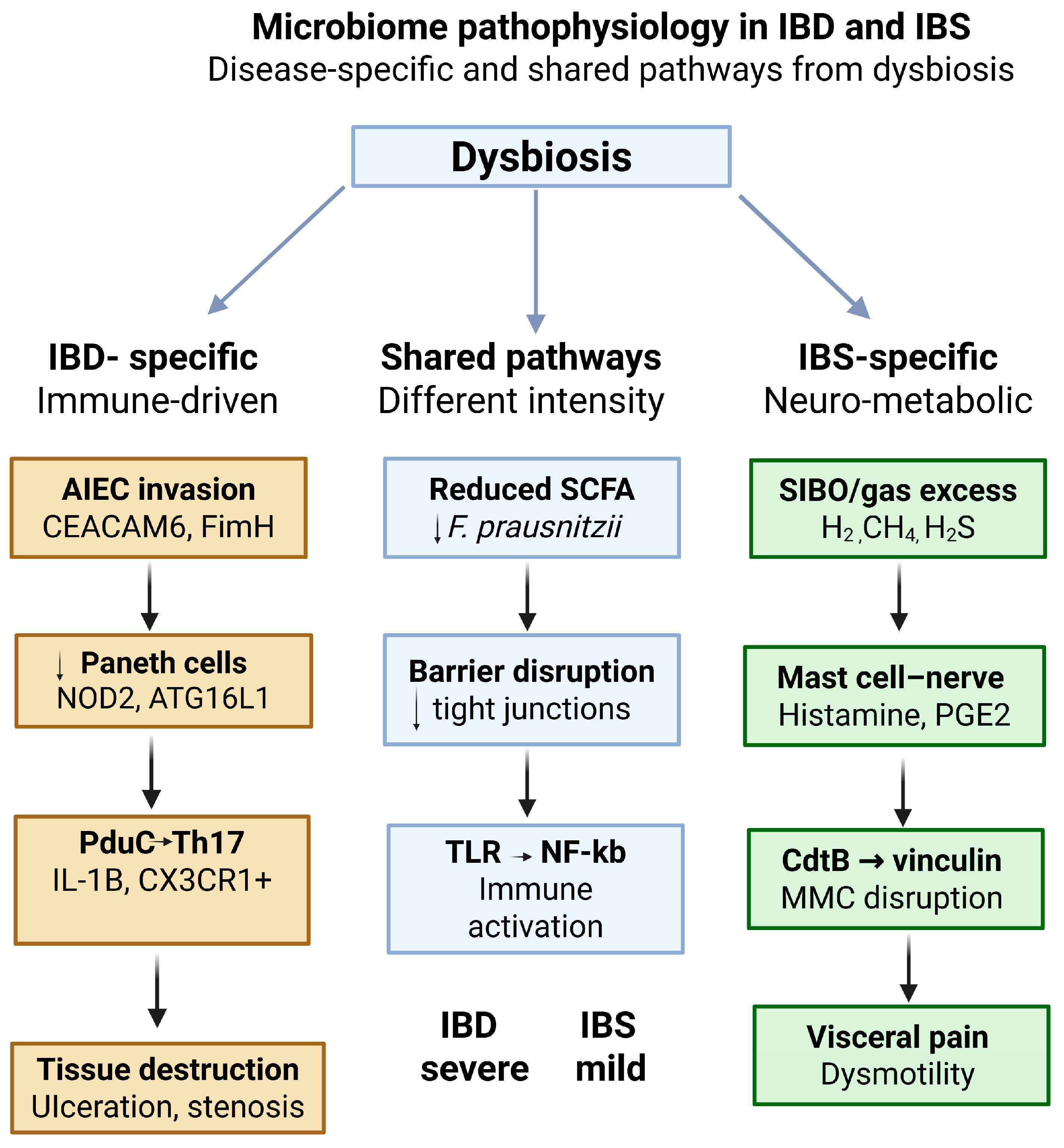
| Oxidative shift/ increase in protobacteria | More pronounced due to chronic inflammation; stable increase in Proteobacteria/Enterobacteriaceae | Can be present in some patients, but is less consistent |
| Reduction in Faecalibacterium prausnitzii | Consistent reduction | Reduced in some patients, but not in all cases |
| Reduced microbial diversity | Consistently greater reduction; Dysbiosis is more severe, especially in CD than UC | Some patients show no clear fecal microbiota changes compared with healthy controls |
| Reduced SCFA production (especially butyrate) | Consistent reduction | Microbiome–SCFA relationships vary by subtype |
| Intestinal barrier disruption | Much more severe: ulceration, crypt destruction, and marked bacterial translocation | Usually, mild paracellular leakage without macroscopic mucosal damage |
| Biomarker | IBD | IBS | Clinical Use (According to Current Guidelines) | References |
|---|---|---|---|---|
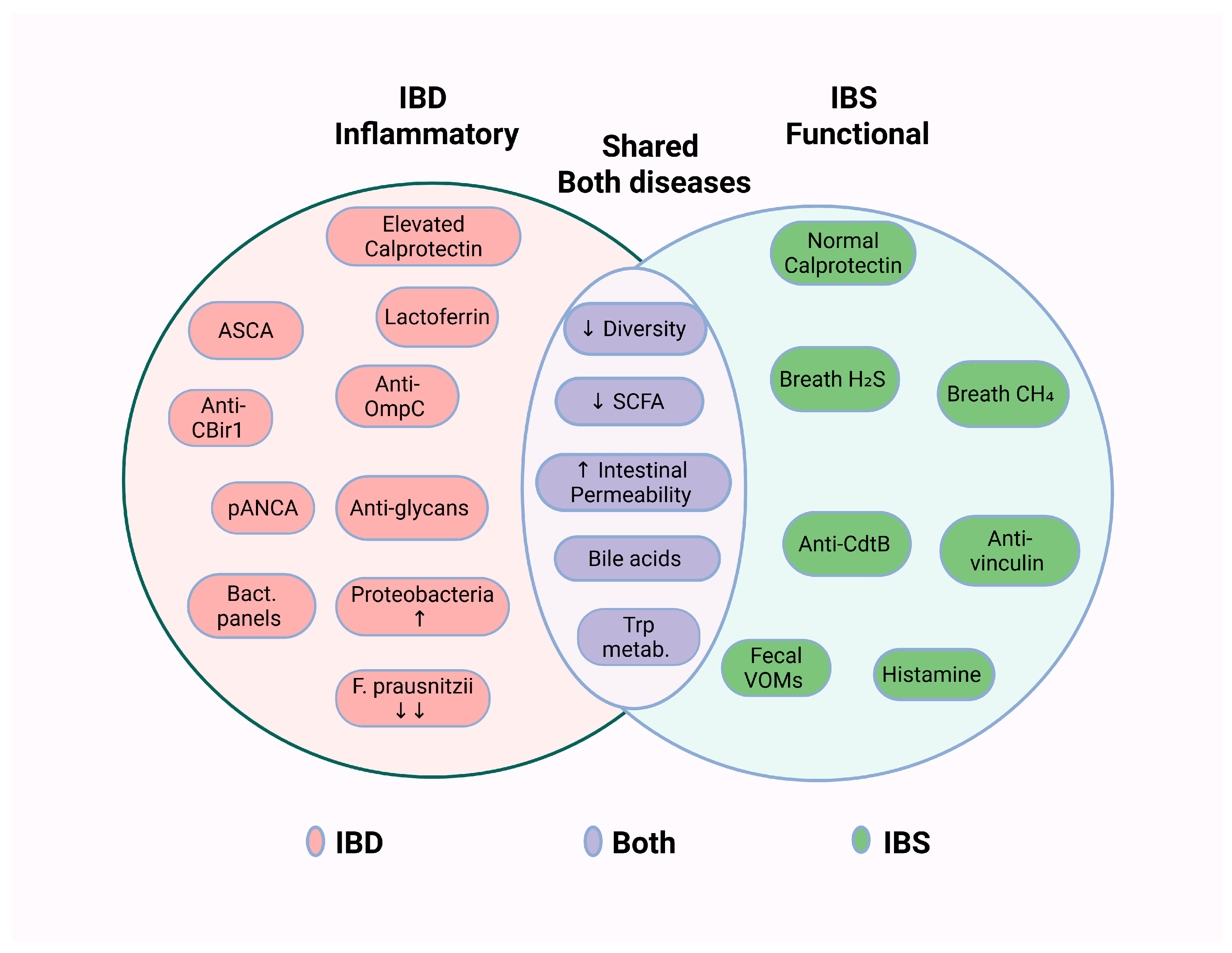
| Fecal Calprotectin | Increased | Normal | Yes | [61,62] |
| Fecal Lactoferrin | Increased | Normal | Yes | [61,62] |
| SCFA | Decreased | Decreased | - | [58,63] |
| Microbial Diversity | Decreased | Decreased | - | [58,63] |
| Primary Fecal Bile Acids | Increased | Increased | - | [37,40,64] |
| Tryptophan Metabolites | Decreased | Increased | - | [37,65] |
| Bacterial Translocation Markers | Increased | Increased | - | [66] |
| ASCA | Increased (CD) | - | No | [61] |
| Anti-OmpC | Increased (CD) | - | No | [66,67] |
| Anti-CBir1 | Increased (CD) | - | No | [66,67] |
| Anti-Glycans (ACCA, ALCA, AMCA) | Increased (CD) | - | No | [61] |
| pANCA | Increased (UC) | - | No | [68] |
| Bacterial Species Panels | Increased * | - * | - | [69] |
| Breath Gas CH4 | - | Increased (IBS-C) | Yes (no as a routine) | [50] |
| Breath Gas H2S | - | Increased (IBS-D) | Yes (no as a routine) | [70] |
| Fecal VOMs | - | Yes | - | [71] |
| Anti-Cdtb | - | Yes | - | [70,72] |
| Anti-Vinculin | - | Yes | - | [72] |
| Therapy | IBD | IBS | References |
|---|---|---|---|
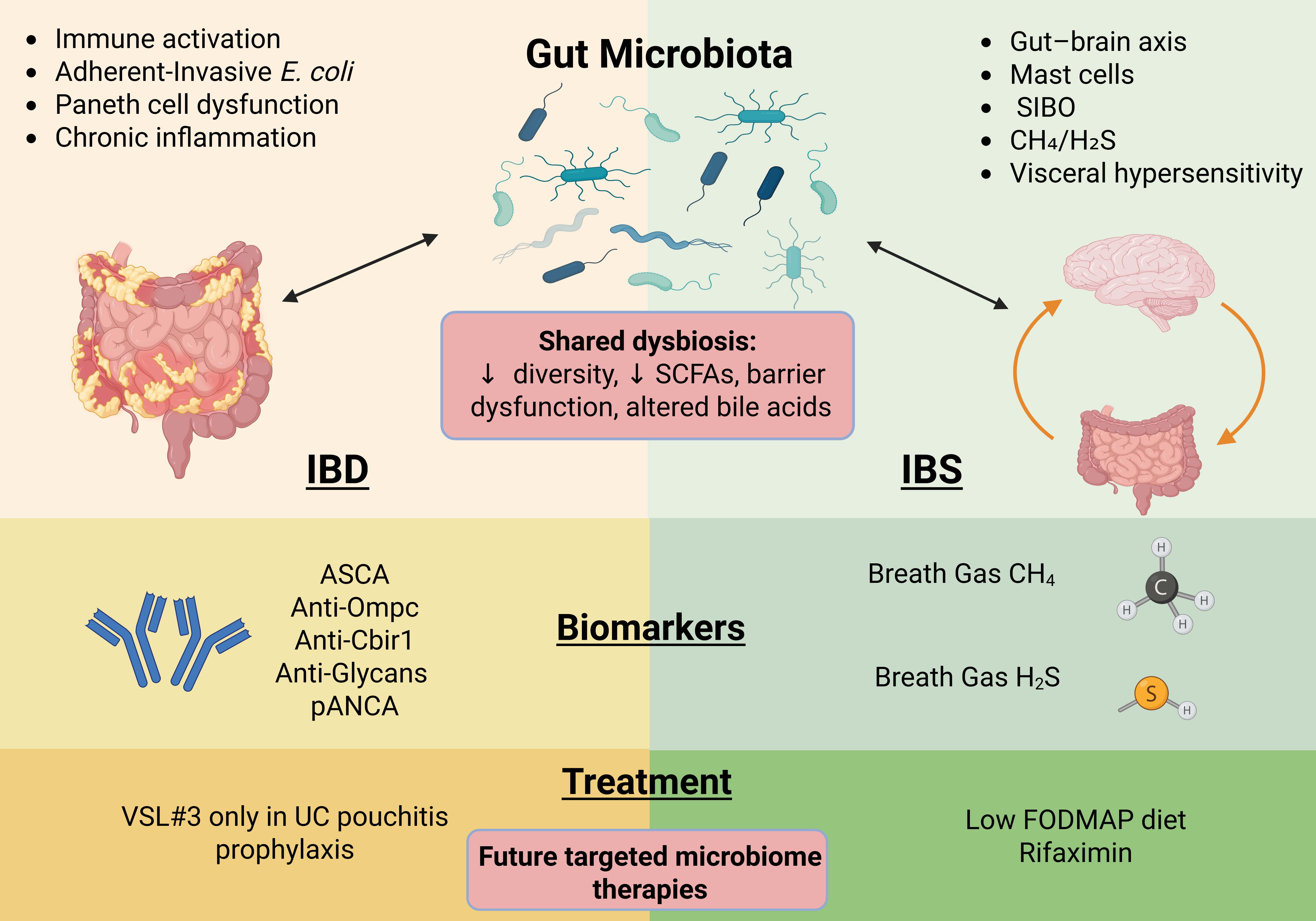
| Probiotics | VSL#3 only in UC pouchitis prophylaxis | Potential treatment only for bloating and gas | [70,74] |
| Antibiotics | NA | Rifaximin in IBS-D | [70] |
| Low FODMAP | NA | Improving overall symptoms | [70] |
| FMT | NA | NA | [75] |
| Prebiotic/Symbiotics | NA | NA | [74] |
| Probiotics | Prebiotics | Synbiotics | |
|---|---|---|---|
| Definition | Bacteria or Yeasts | Indigestible fiber/oligosaccharides | Probiotics + Prebiotics |
| Microbiome Effect | Temporary but Immediate addition of beneficial bacteria to the microbiome, inhibiting competitive pathogens | Prolonged feeding The selective existence of beneficial bacteria increases SCFA production | Synergistic action: prolonged probiotic action |
| IBD | VSL#3 in the prevention of pouchitis in UC patients with IPPA EcN as an adjunct to mesalamine in UC remission | limited data | limited data |
| IBS | Potential benefit in bloating and gas | limited data | limited data |
| Guidelines | IBD: Only VSL#3 [74] (AGA 2020) IBS: conditional recommendation [70] (ACG 2021) | - | - |
| IBD | IBS | |
|---|---|---|
| Dysbiosis Severity | Severe and Consistent (more pronounced in CD than UC) | Mild to Moderate |
| Microbial Diversity | Consistently and Significantly Reduced | Not universally reduced across all patients or subtypes |
| Faecalibacterium prausnitzii levels | Severely Depleted (especially in CD) | Moderately Reduced |
| SCFA production | Consistently Impaired | Variable reduction depending on subtype (more in IBS-D) |
| Barrier Disruption | Complete with macroscopic mucosal damage | Minor paracellular leakage without macroscopic mucosal damage |
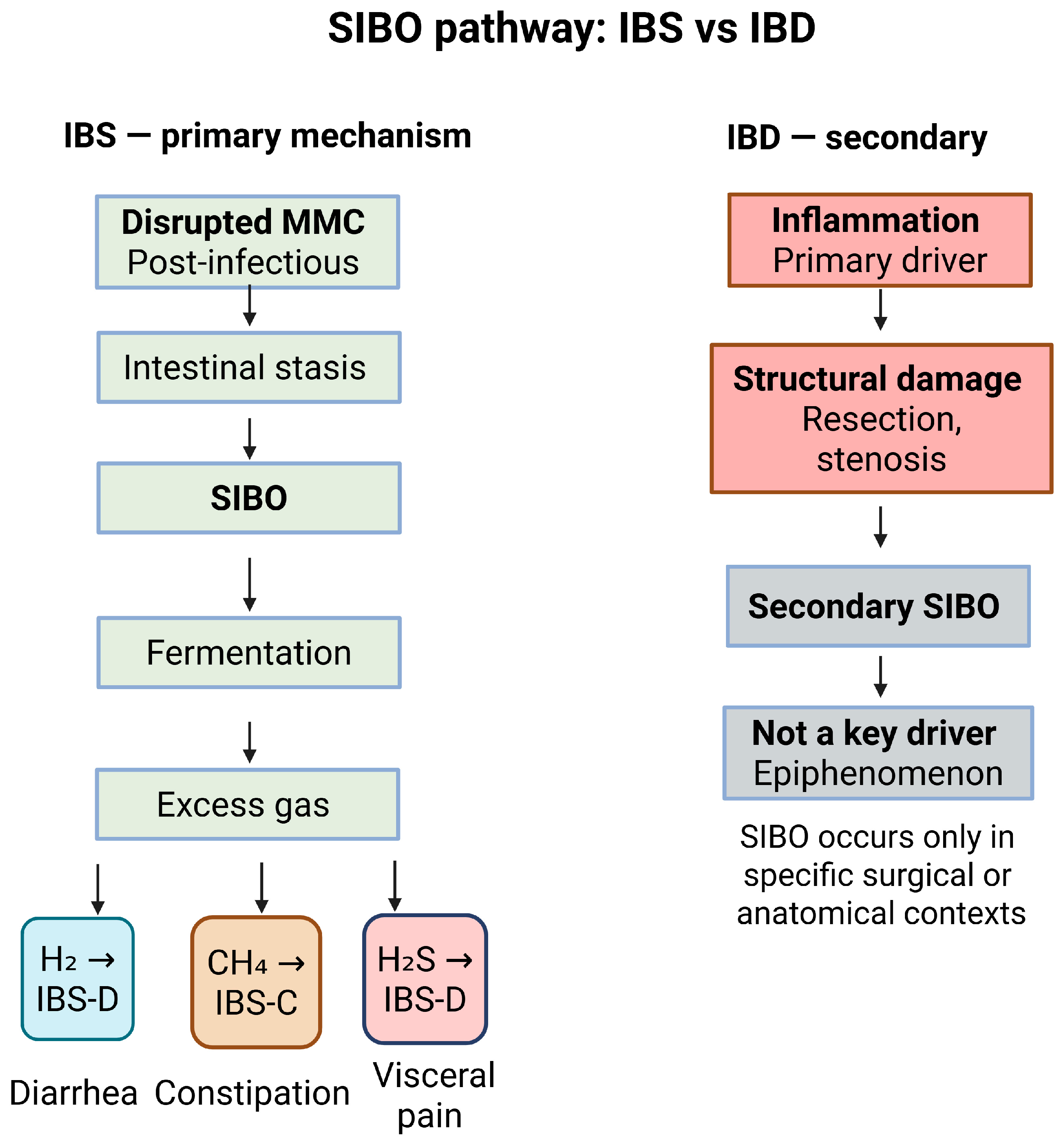
| SIBO | Secondarily | Primary Pathophysiological mechanism |
| Inflammation | Marked NF-kB activation with full Th1/Th17 immune response. Massive neutrophil and T-cell recruitment. Tissue destruction including ulceration, edema, stenosis and fistula | Low-grade mucosal immune activation. Increased TLR4/TLR5 expression without macroscopic inflammation. Mast cell activation near nerves drives visceral hypersensitivity rather than tissue destruction |
| Fecal Calprotectin | Significantly Elevated | Normal (vast majority of patients) |
| FMT | Promising in UC but not recommended in guidelines | Insufficient and conflicting data |
Disclaimer/Publisher’s Note: The statements, opinions and data contained in all publications are solely those of the individual author(s) and contributor(s) and not of MDPI and/or the editor(s). MDPI and/or the editor(s) disclaim responsibility for any injury to people or property resulting from any ideas, methods, instructions or products referred to in the content. |
© 2026 by the authors. Licensee MDPI, Basel, Switzerland. This article is an open access article distributed under the terms and conditions of the Creative Commons Attribution (CC BY) license.
Share and Cite
Pastras, P.; Aggeletopoulou, I.; Psalti, V.; Triantos, C. Gut Microbiota in Irritable Bowel Syndrome and Inflammatory Bowel Disease: Differences in Pathophysiology, Biomarkers, and Treatment Implications. Pharmaceuticals 2026, 19, 783. https://doi.org/10.3390/ph19050783
Pastras P, Aggeletopoulou I, Psalti V, Triantos C. Gut Microbiota in Irritable Bowel Syndrome and Inflammatory Bowel Disease: Differences in Pathophysiology, Biomarkers, and Treatment Implications. Pharmaceuticals. 2026; 19(5):783. https://doi.org/10.3390/ph19050783
Chicago/Turabian StylePastras, Ploutarchos, Ioanna Aggeletopoulou, Vasiliki Psalti, and Christos Triantos. 2026. "Gut Microbiota in Irritable Bowel Syndrome and Inflammatory Bowel Disease: Differences in Pathophysiology, Biomarkers, and Treatment Implications" Pharmaceuticals 19, no. 5: 783. https://doi.org/10.3390/ph19050783
APA StylePastras, P., Aggeletopoulou, I., Psalti, V., & Triantos, C. (2026). Gut Microbiota in Irritable Bowel Syndrome and Inflammatory Bowel Disease: Differences in Pathophysiology, Biomarkers, and Treatment Implications. Pharmaceuticals, 19(5), 783. https://doi.org/10.3390/ph19050783