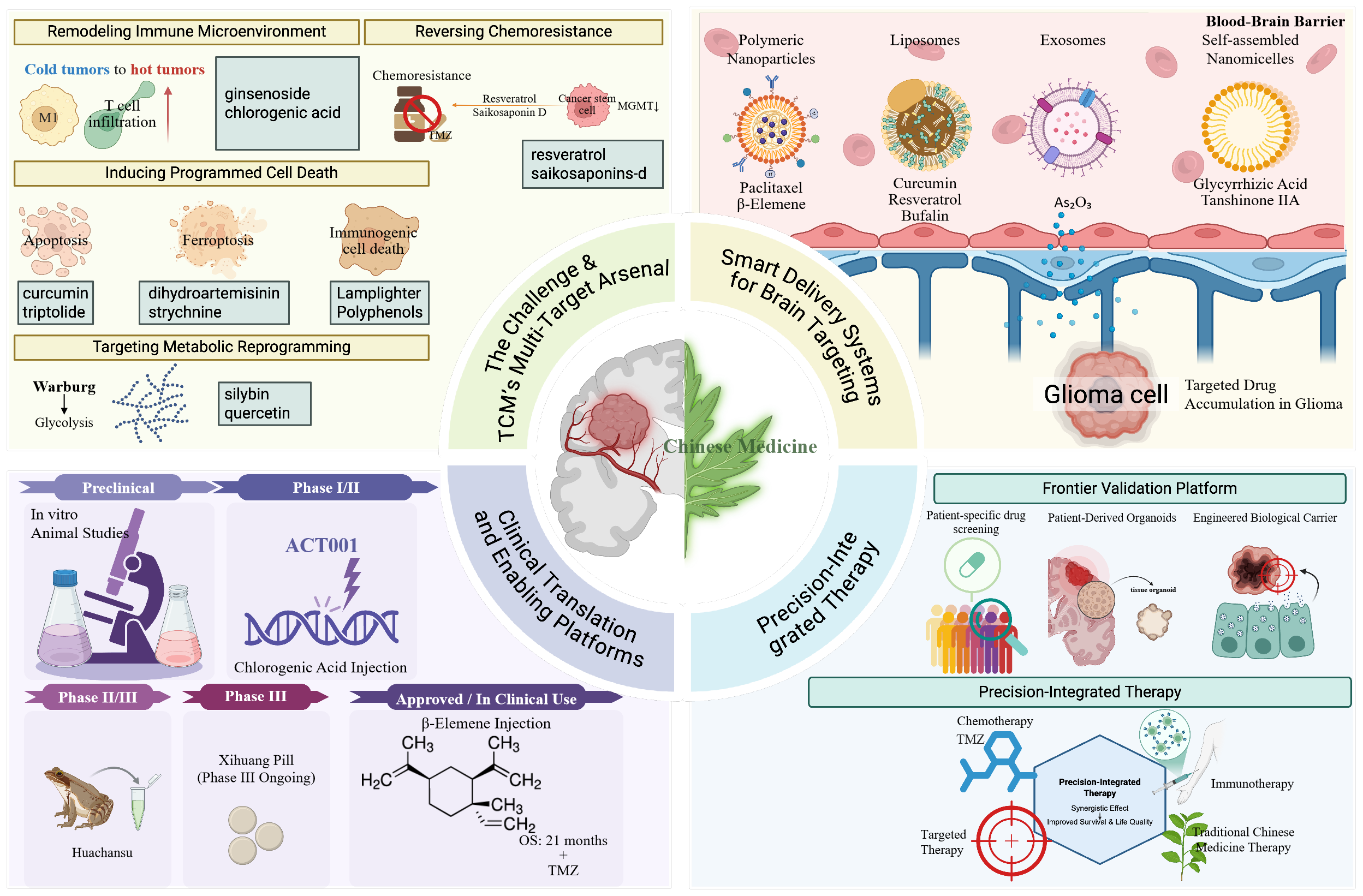
Traditional Chinese Medicine-Derived Active Ingredient and Formulation Therapy for Glioma: Multi-Target Mechanisms, Drug Delivery Systems, and Advances in Clinical Translational Research

 , and
, and
Abstract
1. Introduction
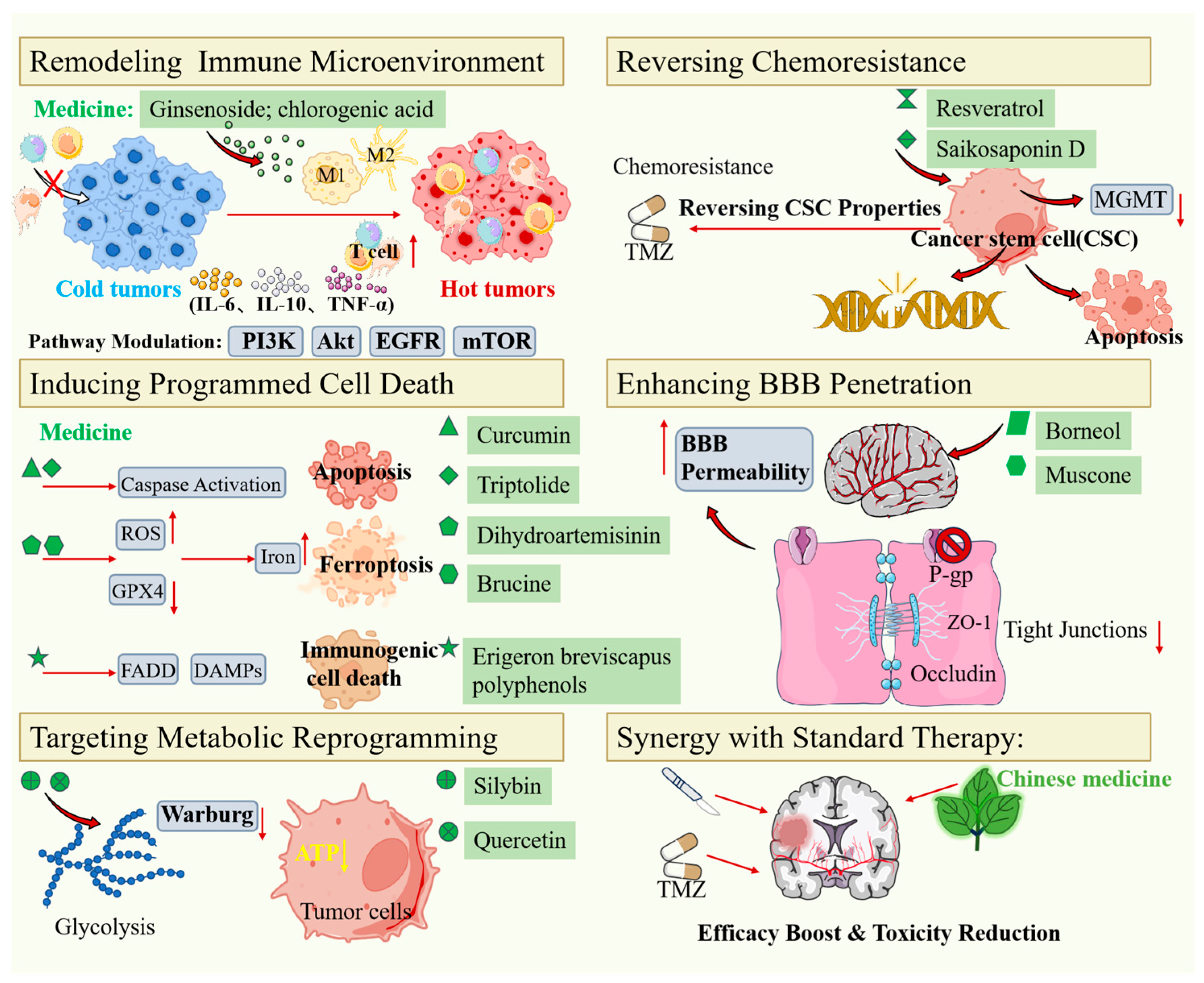
2. Multi-Target Mechanisms of Action of Traditional Chinese Medicine in Treating Glioma
2.1. Remodeling the Tumor Immune Microenvironment: Transforming “Cold Tumors” into “Hot Tumors”
2.2. Inducing Novel Forms of Programmed Cell Death: Overcoming Apoptosis Resistance Mechanisms
2.3. Intervening in Tumor Metabolic Reprogramming: Targeting the Vulnerability of the Warburg Effect
2.4. Enhancing Chemosensitivity: Multi-Dimensional Strategies for Reversing Drug Resistance
2.5. Promoting Drug Penetration Across the Blood–Brain Barrier: Overcoming the Delivery Bottleneck
2.6. Multi-Dimensional Combined Strategies Synergizing with Standard Therapies
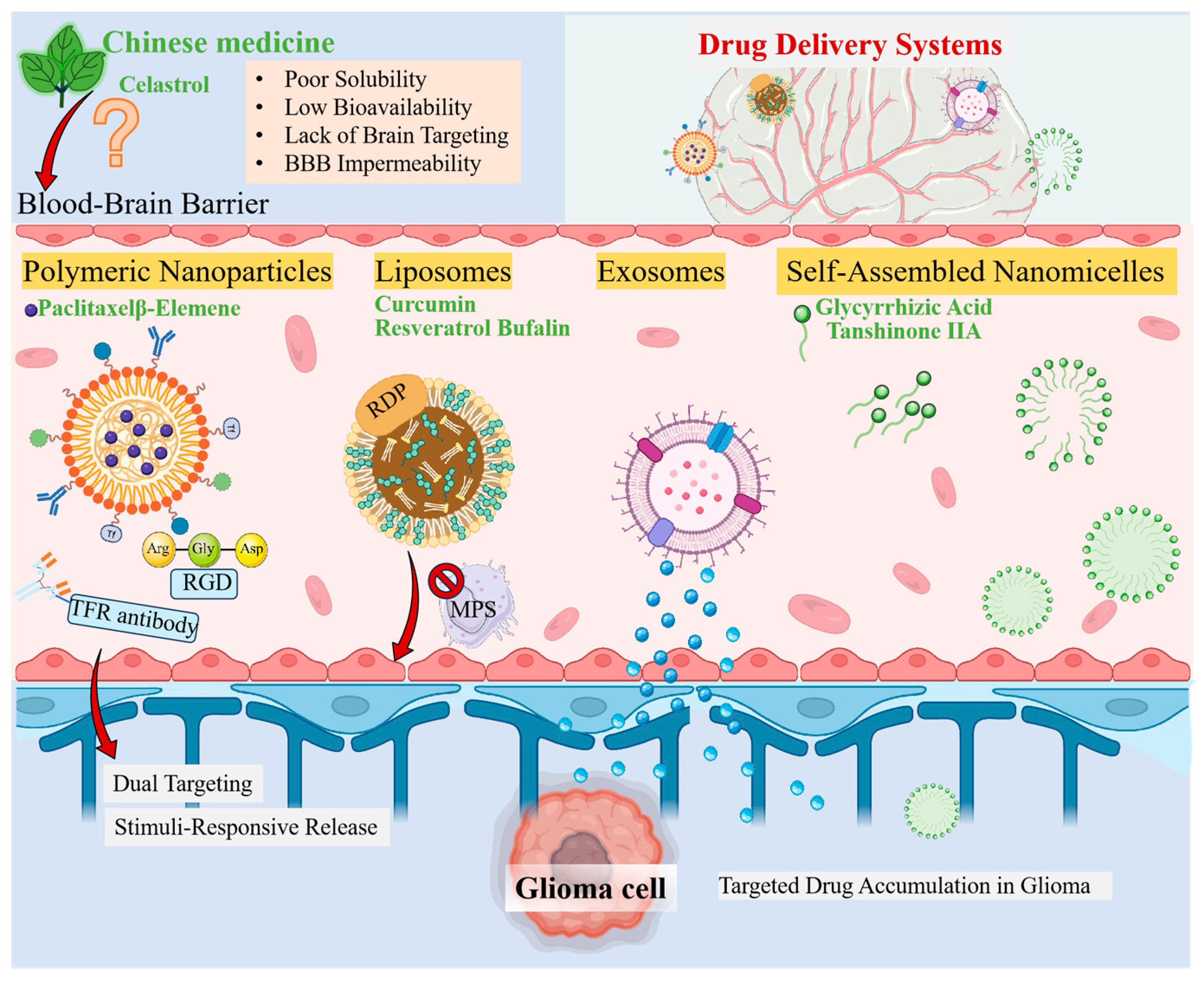
3. Drug Delivery Systems for Traditional Chinese Medicine in Glioma Treatment
3.1. Polymeric Nanocarriers: A Platform for Precision Delivery of TCM Active Components
3.2. Liposomes: A Biocompatible Delivery System for TCM Active Components
3.3. Extracellular Vesicles: Natural Biomimetic Delivery Vehicles for TCM Active Components
3.4. TCM Self-Assembled Nanomicelles: A Novel Carrier-Free Delivery System
4. Clinical Translation and Advanced Technology Platforms for TCM in Anti-Glioma Therapy
5. Conclusions and Future Perspectives
Author Contributions
Funding
Institutional Review Board Statement
Informed Consent Statement
Data Availability Statement
Acknowledgments
Conflicts of Interest
Abbreviations
| TCM | Traditional Chinese Medicine |
| GBM | Glioblastoma multiforme |
| TMZ | Temozolomide |
| BBB | Blood–brain barrier |
| TIME | Tumor immune microenvironment |
| ICD | Immunogenic cell death |
| DAMPs | Damage-associated molecular patterns |
| GMP | Good Manufacturing Practice |
| EVs | Extracellular vesicles |
| TTFields | Tumor Treating Fields |
References
- Chen, R.; Smith-Cohn, M.; Cohen, A.L.; Colman, H. Glioma Subclassifications and Their Clinical Significance. Neurotherapeutics 2017, 14, 284–297. [Google Scholar] [CrossRef] [PubMed]
- Ostrom, Q.T.; Price, M.; Neff, C.; Cioffi, G.; A Waite, K.; Kruchko, C.; Barnholtz-Sloan, J.S. CBTRUS Statistical Report: Primary Brain and Other Central Nervous System Tumors Diagnosed in the United States in 2016–2020. Neuro-Oncology 2023, 25, iv1–iv99. [Google Scholar] [CrossRef]
- Louis, D.N.; Perry, A.; Wesseling, P.; Brat, D.J.; Cree, I.A.; Figarella-Branger, D.; Hawkins, C.; Ng, H.K.; Pfister, S.M.; Reifenberger, G.; et al. The 2021 WHO Classification of Tumors of the Central Nervous System: A summary. Neuro-Oncology 2021, 23, 1231–1251. [Google Scholar] [CrossRef]
- National Health Commission Medical Administration and Hospital Administration; China Anti-Cancer Association Glioma Committee; Chinese Medical Doctor Association Glioma Committee. Glioma diagnosis and treatment guidelines (2022 edition). Chin. J. Neurosurg. 2022, 38, 757–777. [Google Scholar] [CrossRef]
- Iuchi, T.; Hasegawa, Y.; Kawasaki, K.; Sakaida, T. Epilepsy in patients with gliomas: Incidence and control of seizures. J. Clin. Neurosci. 2015, 22, 87–91. [Google Scholar] [CrossRef] [PubMed]
- Davis, M.E. Glioblastoma: Overview of Disease and Treatment. Clin. J. Oncol. Nurs. 2016, 20, S2–S8. [Google Scholar] [CrossRef]
- Stupp, R.; Taillibert, S.; Kanner, A.; Read, W.; Steinberg, D.; Lhermitte, B.; Toms, S.; Idbaih, A.; Ahluwalia, M.S.; Fink, K.; et al. Effect of Tumor-Treating Fields Plus Maintenance Temozolomide vs Maintenance Temozolomide Alone on Survival in Patients With Glioblastoma: A Randomized Clinical Trial. JAMA 2017, 318, 2306–2316. [Google Scholar] [CrossRef]
- Patel, A.P.; Tirosh, I.; Trombetta, J.J.; Shalek, A.K.; Gillespie, S.M.; Wakimoto, H.; Cahill, D.P.; Nahed, B.V.; Curry, W.T.; Martuza, R.L.; et al. Single-cell RNA-seq highlights intratumoral heterogeneity in primary glioblastoma. Science 2014, 344, 1396–1401. [Google Scholar] [CrossRef] [PubMed]
- Chinot, O.L.; Nishikawa, R.; Mason, W.; Henriksson, R.; Saran, F.; Cloughesy, T.; Garcia, J.; Revil, C.; Abrey, L.; Wick, W. Upfront bevacizumab may extend survival for glioblastoma patients who do not receive second-line therapy: An exploratory analysis of AVAglio. Neuro-Oncology 2016, 18, 1313–1318. [Google Scholar] [CrossRef][Green Version]
- Sulaiman, C.; George, B.P.; Balachandran, I.; Abrahamse, H. Cancer and Traditional Medicine: An Integrative Approach. Pharmaceuticals 2025, 18, 644. [Google Scholar] [CrossRef]
- Han, Y.; Wang, H.; Xu, W.; Cao, B.; Han, L.; Jia, L.; Xu, Y.; Zhang, Q.; Wang, X.; Zhang, G.; et al. Chinese herbal medicine as maintenance therapy for improving the quality of life for advanced non-small cell lung cancer patients. Complement. Ther. Med. 2016, 24, 81–89. [Google Scholar] [CrossRef]
- Wang, J.; Qi, F.; Wang, Z.; Zhang, Z.; Pan, N.; Huai, L.; Qu, S.; Zhao, L. A review of traditional Chinese medicine for treatment of glioblastoma. Biosci. Trends 2020, 13, 476–487. [Google Scholar] [CrossRef]
- Tan, Q.; Lu, J.; Liang, J.; Zhou, Y.; Yang, C.; Zhang, Z.; Li, C. A review of traditional Chinese medicine Curcumae Rhizoma for treatment of glioma. Int. Rev. Neurobiol. 2023, 172, 303–319. [Google Scholar] [CrossRef]
- Liang, C.; Zhang, B.; Li, R.; Guo, S.; Fan, X. Network pharmacology-based study on the mechanism of traditional Chinese medicine in the treatment of glioblastoma multiforme. BMC Complement. Med. Ther. 2023, 23, 342. [Google Scholar] [CrossRef] [PubMed]
- Jarosz-Biej, M.; Smolarczyk, R.; Cichoń, T.; Kułach, N. Tumor Microenvironment as A "Game Changer" in Cancer Radiotherapy. Int. J. Mol. Sci. 2019, 20, 3212. [Google Scholar] [CrossRef] [PubMed]
- Cai, X.; Yuan, F.; Zhu, J.; Yang, J.; Tang, C.; Cong, Z.; Ma, C. Glioma-Associated Stromal Cells Stimulate Glioma Malignancy by Regulating the Tumor Immune Microenvironment. Front. Oncol. 2021, 11, 672928. [Google Scholar] [CrossRef] [PubMed]
- Huang, Q.; Pan, X.; Zhu, W.; Zhao, W.; Xu, H.; Hu, K. Natural Products for the Immunotherapy of Glioma. Nutrients 2023, 15, 2795. [Google Scholar] [CrossRef]
- Zhang, H.; Feng, K.; Han, M.; Shi, Y.; Zhang, Y.; Wu, J.; Yang, W.; Wang, X.; Di, L.; Wang, R. Homologous magnetic targeted immune vesicles for amplifying immunotherapy via ferroptosis activation augmented photodynamic therapy against glioblastoma. J. Control. Release 2025, 383, 113816. [Google Scholar] [CrossRef]
- Tang, M.; Deng, H.; Zheng, K.; He, J.; Yang, J.; Li, Y. Ginsenoside 3β-O-Glc-DM (C3DM) suppressed glioma tumor growth by downregulating the EGFR/PI3K/AKT/mTOR signaling pathway and modulating the tumor microenvironment. Toxicol. Appl. Pharmacol. 2023, 460, 116378. [Google Scholar] [CrossRef]
- Ye, J.; Yang, Y.; Jin, J.; Ji, M.; Gao, Y.; Feng, Y.; Wang, H.; Chen, X.; Liu, Y. Targeted delivery of chlorogenic acid by mannosylated liposomes to effectively promote the polarization of TAMs for the treatment of glioblastoma. Bioact. Mater. 2020, 5, 694–708. [Google Scholar] [CrossRef]
- da Silva, A.B.; Coelho, P.L.C.; Oliveira, M.d.N.; Oliveira, J.L.; Amparo, J.A.O.; da Silva, K.C.; Soares, J.R.P.; Pitanga, B.P.S.; Souza, C.d.S.; Lopes, G.P.d.F.; et al. The flavonoid rutin and its aglycone quercetin modulate the microglia inflammatory profile improving antiglioma activity. Brain Behav. Immun. 2020, 85, 170–185. [Google Scholar] [CrossRef]
- Zhu, Y.; Liang, J.; Gao, C.; Wang, A.; Xia, J.; Hong, C.; Zhong, Z.; Zuo, Z.; Kim, J.; Ren, H.; et al. Multifunctional ginsenoside Rg3-based liposomes for glioma targeting therapy. J. Control. Release 2021, 330, 641–657. [Google Scholar] [CrossRef]
- Li, C.-L.; Chang, L.; Guo, L.; Zhao, D.; Liu, H.-B.; Wang, Q.-S.; Zhang, P.; Du, W.-Z.; Liu, X.; Zhang, H.-T.; et al. β-elemene induces caspase-dependent apoptosis in human glioma cells in vitro through the upregulation of Bax and Fas/FasL and downregulation of Bcl-2. Asian Pac. J. Cancer Prev. 2014, 15, 10407–10412. [Google Scholar] [CrossRef] [PubMed]
- Blazevic, T.; Heiss, E.H.; Atanasov, A.G.; Breuss, J.; Dirsch, V.M.; Uhrin, P. Indirubin and Indirubin Derivatives for Counteracting Proliferative Diseases. Evid.-Based Complement. Altern. Med. 2015, 2015, 654098. [Google Scholar] [CrossRef]
- Liu, X.; Ju, J.; Liu, Q.; Zhu, Z.; Liu, C. The Chinese Medicine, Shezhi Huangling Decoction, Inhibits the Growth and Metastasis of Glioma Cells via the Regulation of miR-1298-5p/TGIF1 Axis. Cancer Manag. Res. 2020, 12, 5677–5687. [Google Scholar] [CrossRef] [PubMed]
- Karmakar, S.; Banik, N.L.; Ray, S.K. Curcumin suppressed anti-apoptotic signals and activated cysteine proteases for apoptosis in human malignant glioblastoma U87MG cells. Neurochem. Res. 2007, 32, 2103–2113. [Google Scholar] [CrossRef]
- Jia, G.; Wang, Q.; Wang, R.; Deng, D.; Xue, L.; Shao, N.; Zhang, Y.; Xia, X.; Zhi, F.; Yang, Y. Tubeimoside-1 induces glioma apoptosis through regulation of Bax/Bcl-2 and the ROS/Cytochrome C/Caspase-3 pathway. OncoTargets Ther. 2015, 8, 303–311. [Google Scholar] [CrossRef]
- Liu, Y.; Tang, Z.-G.; Lin, Y.; Qu, X.-G.; Lv, W.; Wang, G.-B.; Li, C.-L. Effects of quercetin on proliferation and migration of human glioblastoma U251 cells. Biomed. Pharmacother. 2017, 92, 33–38. [Google Scholar] [CrossRef]
- Gong, H.; Yang, X.; An, L.; Zhang, W.; Liu, X.; Shu, L.; Yang, L. PCSK5 downregulation promotes the inhibitory effect of andrographolide on glioblastoma through regulating STAT3. Mol. Cell. Biochem. 2025, 480, 521–533. [Google Scholar] [CrossRef] [PubMed]
- Liu, X.; Zhao, P.; Wang, X.; Wang, L.; Zhu, Y.; Gao, W. Triptolide Induces Glioma Cell Autophagy and Apoptosis via Upregulating the ROS/JNK and Downregulating the Akt/mTOR Signaling Pathways. Front. Oncol. 2019, 9, 387. [Google Scholar] [CrossRef]
- Yi, R.; Wang, H.; Deng, C.; Wang, X.; Yao, L.; Niu, W.; Fei, M.; Zhaba, W. Dihydroartemisinin initiates ferroptosis in glioblastoma through GPX4 inhibition. Biosci. Rep. 2020, 40, BSR20193314. [Google Scholar] [CrossRef] [PubMed]
- Nie, X.-H.; Qiu, S.; Xing, Y.; Xu, J.; Lu, B.; Zhao, S.-F.; Li, Y.-T.; Su, Z.-Z. Paeoniflorin Regulates NEDD4L/STAT3 Pathway to Induce Ferroptosis in Human Glioma Cells. J. Oncol. 2022, 2022, 6093216. [Google Scholar] [CrossRef]
- Liang, J.; Li, L.; Tian, H.; Wang, Z.; Liu, G.; Duan, X.; Guo, M.; Liu, J.; Zhang, W.; Nice, E.C.; et al. Drug Repurposing-Based Brain-Targeting Self-Assembly Nanoplatform Using Enhanced Ferroptosis against Glioblastoma. Small 2023, 19, e2303073. [Google Scholar] [CrossRef]
- Lu, S.; Wang, X.-Z.; He, C.; Wang, L.; Liang, S.-P.; Wang, C.-C.; Li, C.; Luo, T.-F.; Feng, C.-S.; Wang, Z.-C.; et al. ATF3 contributes to brucine-triggered glioma cell ferroptosis via promotion of hydrogen peroxide and iron. Acta Pharmacol. Sin. 2021, 42, 1690–1702. [Google Scholar] [CrossRef]
- Wang, C.; Shi, J.; Rao, Q.; Shen, B.; Su, C.; Chen, H.; Huang, Z.; Jiang, S.; He, R.; Xu, L.; et al. Obtain substance of anti-glioblastoma from Erigeron breviscapus through fragment-based target research (FBTR): An efficient strategy for pharmacology investigation and optimization of natural products. J. Pharm. Anal. 2025, 15, 101366. [Google Scholar] [CrossRef]
- Wang, C.; He, C.; Lu, S.; Wang, X.; Wang, L.; Liang, S.; Wang, X.; Piao, M.; Cui, J.; Chi, G.; et al. Autophagy activated by silibinin contributes to glioma cell death via induction of oxidative stress-mediated BNIP3-dependent nuclear translocation of AIF. Cell Death Dis. 2020, 11, 630. [Google Scholar] [CrossRef] [PubMed]
- Wang, L.; Ji, S.; Liu, Z.; Zhao, J. Quercetin Inhibits Glioblastoma Growth and Prolongs Survival Rate through Inhibiting Glycolytic Metabolism. Chemotherapy 2022, 67, 132–141. [Google Scholar] [CrossRef]
- Yang, F.; Zhang, D.; Jiang, H.; Ye, J.; Zhang, L.; Bagley, S.J.; Winkler, J.; Gong, Y.; Fan, Y. Small-molecule toosendanin reverses macrophage-mediated immunosuppression to overcome glioblastoma resistance to immunotherapy. Sci. Transl. Med. 2023, 15, eabq3558. [Google Scholar] [CrossRef]
- Chien, C.-H.; Hsueh, W.-T.; Chuang, J.-Y.; Chang, K.-Y. Dissecting the mechanism of temozolomide resistance and its association with the regulatory roles of intracellular reactive oxygen species in glioblastoma. J. Biomed. Sci. 2021, 28, 18. [Google Scholar] [CrossRef] [PubMed]
- Huang, H.; Lin, H.; Zhang, X.; Li, J. Resveratrol reverses temozolomide resistance by downregulation of MGMT in T98G glioblastoma cells by the NF-κB-dependent pathway. Oncol. Rep. 2012, 27, 2050–2056. [Google Scholar] [CrossRef]
- Liang, J.; Sun, J.; Liu, A.; Chen, L.; Ma, X.; Liu, X.; Zhang, C. Saikosaponin D improves chemosensitivity of glioblastoma by reducing the its stemness maintenance. Biochem. Biophys. Rep. 2022, 32, 101342. [Google Scholar] [CrossRef]
- Bi, Y.; Li, H.; Yi, D.; Sun, Y.; Bai, Y.; Zhong, S.; Song, Y.; Zhao, G.; Chen, Y. Cordycepin Augments the Chemosensitivity of Human Glioma Cells to Temozolomide by Activating AMPK and Inhibiting the AKT Signaling Pathway. Mol. Pharm. 2018, 15, 4912–4925. [Google Scholar] [CrossRef]
- Cui, P.; Chen, F.; Ma, G.; Liu, W.; Chen, L.; Wang, S.; Li, W.; Li, Z.; Huang, G. Oxyphyllanene B overcomes temozolomide resistance in glioblastoma: Structure-activity relationship and mitochondria-associated ER membrane dysfunction. Phytomedicine 2022, 94, 153816. [Google Scholar] [CrossRef]
- Wu, G.J.; Yang, S.T.; Chen, R.M. Major Contribution of Caspase-9 to Honokiol-Induced Apoptotic Insults to Human Drug-Resistant Glioblastoma Cells. Molecules 2020, 25, 1450. [Google Scholar] [CrossRef]
- Maszczyk, M.; Banach, K.; Karkoszka, M.; Rzepka, Z.; Rok, J.; Beberok, A.; Wrześniok, D. Chemosensitization of U-87 MG Glioblastoma Cells by Neobavaisoflavone towards Doxorubicin and Etoposide. Int. J. Mol. Sci. 2022, 23, 5621. [Google Scholar] [CrossRef] [PubMed]
- Lee, Y.-L.; Loh, J.-K.; Ko, H.-J.; Chen, W.-C.; Su, Y.-F.; Tsai, T.-H.; Huang, F.-L.; Li, C.-F.; Tsai, C.Y. 6-Gingerol overcomes TMZ resistance in GBM by suppressing EMT and cell migration via the PI3K/Akt/β-catenin/c-Myc pathway. Int. Immunopharmacol. 2025, 159, 114908. [Google Scholar] [CrossRef] [PubMed]
- Duan, M.; Xing, Y.; Guo, J.; Chen, H.; Zhang, R. Borneol increases blood-tumour barrier permeability by regulating the expression levels of tight junction-associated proteins. Pharm. Biol. 2016, 54, 3009–3018. [Google Scholar] [CrossRef][Green Version]
- Liang, J.; Gao, C.; Zhu, Y.; Ling, C.; Wang, Q.; Huang, Y.; Qin, J.; Wang, J.; Lu, W.; Wang, J. Natural Brain Penetration Enhancer-Modified Albumin Nanoparticles for Glioma Targeting Delivery. ACS Appl. Mater. Interfaces 2018, 10, 30201–30213. [Google Scholar] [CrossRef] [PubMed]
- Yu, B.; Yao, Y.; Zhang, X.; Ruan, M.; Zhang, Z.; Xu, L.; Liang, T.; Lu, J. Synergic Neuroprotection Between Ligusticum Chuanxiong Hort and Borneol Against Ischemic Stroke by Neurogenesis via Modulating Reactive Astrogliosis and Maintaining the Blood-Brain Barrier. Front. Pharmacol. 2021, 12, 666790. [Google Scholar] [CrossRef]
- Meng, L.; Chu, X.; Xing, H.; Liu, X.; Xin, X.; Chen, L.; Jin, M.; Guan, Y.; Huang, W.; Gao, Z. Improving glioblastoma therapeutic outcomes via doxorubicin-loaded nanomicelles modified with borneol. Int. J. Pharm. 2019, 567, 118485. [Google Scholar] [CrossRef]
- Kang, S.; Duan, W.; Zhang, S.; Chen, D.; Feng, J.; Qi, N. Muscone/RI7217 co-modified upward messenger DTX liposomes enhanced permeability of blood-brain barrier and targeting glioma. Theranostics 2020, 10, 4308–4322. [Google Scholar] [CrossRef] [PubMed]
- Cai, Q.; Li, X.; Xiong, H.; Fan, H.; Gao, X.; Vemireddy, V.; Margolis, R.; Li, J.; Ge, X.; Giannotta, M.; et al. Optical blood-brain-tumor barrier modulation expands therapeutic options for glioblastoma treatment. Nat. Commun. 2023, 14, 4934. [Google Scholar] [CrossRef] [PubMed]
- Gao, C.; Liang, J.; Zhu, Y.; Ling, C.; Cheng, Z.; Li, R.; Qin, J.; Lu, W.; Wang, J. Menthol-modified casein nanoparticles loading 10-hydroxycamptothecin for glioma targeting therapy. Acta Pharm. Sin. B 2019, 9, 843–857. [Google Scholar] [CrossRef]
- Shuai, S.-Y.; Liu, S.-S.; Liu, X.-J.; Zhang, G.-S.; Zheng, Q.; Yue, P.-F.; Yang, M.; Hu, P.-Y. Essential oil of Ligusticum chuanxiong Hort. Regulated P-gp protein and tight junction protein to change pharmacokinetic parameters of temozolomide in blood, brain and tumor. J. Ethnopharmacol. 2022, 298, 115646. [Google Scholar] [CrossRef]
- Li, Z.-Q.; Zhang, G.-S.; Liu, R.-Q.; Shuai, S.-Y.; Hu, P.-Y.; Zheng, Q.; Xiao, S.-H. Anti-Glioma Effects of Ligustilide or n-Butylphthalide on Their Own and the Synergistic Effects with Temozolomide via PI3K/Akt Signaling Pathway. OncoTargets Ther. 2023, 16, 983–994. [Google Scholar] [CrossRef]
- Ke, G.; Hu, P.; Xiong, H.; Zhang, J.; Xu, H.; Xiao, C.; Liu, Y.; Cao, M.; Zheng, Q. Enhancing temozolomide efficacy in GBM: The synergistic role of chuanxiong rhizoma essential oil. Phytomedicine 2025, 140, 156575. [Google Scholar] [CrossRef]
- Li, H.; Wu, Y.; Chen, Y.; Lv, J.; Qu, C.; Mei, T.; Zheng, Y.; Ye, C.; Li, F.; Ge, S.; et al. Overcoming temozolomide resistance in glioma: Recent advances and mechanistic insights. Acta Neuropathol. Commun. 2025, 13, 126. [Google Scholar] [CrossRef]
- Yu, B.; Liang, S.-Z.; Hu, M. The prognosis and survival of integrated traditional Chinese and Western medicine on glioma: A meta-analysis. TMR Integr. Med. 2021, 5, e21009. [Google Scholar] [CrossRef]
- Komorowska, D.; Radzik, T.; Kalenik, S.; Rodacka, A. Natural Radiosensitizers in Radiotherapy: Cancer Treatment by Combining Ionizing Radiation with Resveratrol. Int. J. Mol. Sci. 2022, 23, 10627. [Google Scholar] [CrossRef]
- Sminia, P.; van den Berg, J.; van Kootwijk, A.; Hageman, E.; Slotman, B.J.; Verbakel, W. Experimental and clinical studies on radiation and curcumin in human glioma. J. Cancer Res. Clin. Oncol. 2021, 147, 403–409. [Google Scholar] [CrossRef] [PubMed]
- Mobadersany, P.; Yousefi, S.; Amgad, M.; Gutman, D.A.; Barnholtz-Sloan, J.S.; Vega, J.E.V.; Brat, D.J.; Cooper, L.A.D. Predicting cancer outcomes from histology and genomics using convolutional networks. Proc. Natl. Acad. Sci. USA 2018, 115, E2970–E2979. [Google Scholar] [CrossRef] [PubMed]
- Neurosurgery Professional Committee of Shanghai Association of Chinese Integrative Medicine; Writing Group of “Expert Consensus on Integrated Traditional Chinese and Western Medicine Clinical Diagnosis and Treatment of Brain Glioma (Shanghai). Expert consensus on integrated traditional Chinese and western medicine clinical diagnosis and treatment of brain glioma(Shanghai). Acad. J. Shanghai Univ. Tradit. Chin. Med. 2023, 37, 1–10. [CrossRef]
- Zhang, Y.; Zhai, M.; Chen, Z.; Han, X.; Yu, F.; Li, Z.; Xie, X.; Han, C.; Yu, L.; Yang, Y.; et al. Dual-modified liposome codelivery of doxorubicin and vincristine improve targeting and therapeutic efficacy of glioma. Drug Deliv. 2017, 24, 1045–1055. [Google Scholar] [CrossRef] [PubMed]
- Fan, Y.; Xue, W.; Schachner, M.; Zhao, W. Honokiol Eliminates Glioma/Glioblastoma Stem Cell-Like Cells Via JAK-STAT3 Signaling and Inhibits Tumor Progression by Targeting Epidermal Growth Factor Receptor. Cancers 2018, 11, 22. [Google Scholar] [CrossRef]
- Zhang, W.-F.; Yang, Y.; Li, X.; Xu, D.-Y.; Yan, Y.-L.; Gao, Q.; Jia, A.-L.; Duan, M.-H. Angelica polysaccharides inhibit the growth and promote the apoptosis of U251 glioma cells in vitro and in vivo. Phytomedicine 2017, 33, 21–27. [Google Scholar] [CrossRef]
- Zhao, Y.; Xiong, S.; Liu, P.; Liu, W.; Wang, Q.; Liu, Y.; Tan, H.; Chen, X.; Shi, X.; Wang, Q.; et al. Polymeric Nanoparticles-Based Brain Delivery with Improved Therapeutic Efficacy of Ginkgolide B in Parkinson’s Disease. Int. J. Nanomed. 2020, 15, 10453–10467. [Google Scholar] [CrossRef]
- Liu, Z.; Okeke, C.I.; Zhang, L.; Zhao, H.; Li, J.; Aggrey, M.O.; Li, N.; Guo, X.; Pang, X.; Fan, L.; et al. Mixed polyethylene glycol-modified breviscapine-loaded solid lipid nanoparticles for improved brain bioavailability: Preparation, characterization, and in vivo cerebral microdialysis evaluation in adult Sprague Dawley rats. AAPS PharmSciTech 2014, 15, 483–496. [Google Scholar] [CrossRef]
- Ruan, S.; Li, J.; Ruan, H.; Xia, Q.; Hou, X.; Wang, Z.; Guo, T.; Zhu, C.; Feng, N.; Zhang, Y. Microneedle-mediated nose-to-brain drug delivery for improved Alzheimer’s disease treatment. J. Control. Release 2024, 366, 712–731. [Google Scholar] [CrossRef] [PubMed]
- Xin, H.; Chen, L.; Gu, J.; Ren, X.; Wei, Z.; Luo, J.; Chen, Y.; Jiang, X.; Sha, X.; Fang, X. Enhanced anti-glioblastoma efficacy by PTX-loaded PEGylated poly(ε-caprolactone) nanoparticles: In vitro and in vivo evaluation. Int. J. Pharm. 2010, 402, 238–247. [Google Scholar] [CrossRef]
- Lv, L.; Li, X.; Qian, W.; Li, S.; Jiang, Y.; Xiong, Y.; Xu, J.; Lv, W.; Liu, X.; Chen, Y.; et al. Enhanced Anti-Glioma Efficacy by Borneol Combined With CGKRK-Modified Paclitaxel Self-Assembled Redox-Sensitive Nanoparticles. Front. Pharmacol. 2020, 11, 558. [Google Scholar] [CrossRef]
- Dong, C.; Zhou, Q.; Xiang, J.; Liu, F.; Zhou, Z.; Shen, Y. Self-assembly of oxidation-responsive polyethylene glycol-paclitaxel prodrug for cancer chemotherapy. J. Control. Release 2020, 321, 529–539. [Google Scholar] [CrossRef]
- Xiang, Y.; Duan, X.; Feng, L.; Jiang, S.; Deng, L.; Shen, J.; Yang, Y.; Guo, R. tLyp-1-conjugated GSH-sensitive biodegradable micelles mediate enhanced pUNO1-hTRAILa/curcumin co-delivery to gliomas. Chem. Eng. J. 2019, 374, 392–404. [Google Scholar] [CrossRef]
- Garanti, T.; Alhnan, M.A.; Wan, K.W. RGD-decorated solid lipid nanoparticles enhance tumor targeting, penetration and anticancer effect of asiatic acid. Nanomedicine 2020, 15, 1567–1583. [Google Scholar] [CrossRef]
- Large, D.E.; Abdelmessih, R.G.; Fink, E.A.; Auguste, D.T. Liposome composition in drug delivery design, synthesis, characterization, and clinical application. Adv. Drug Deliv. Rev. 2021, 176, 113851. [Google Scholar] [CrossRef]
- Cai, J.-Y.; Liu, Y.; Zhang, L.; Guo, R.-B.; Li, X.-T.; Ma, L.-Y.; Kong, L. Menthol-modified paclitaxel multifunctional cationic liposomes cross the blood-brain barrier and target glioma stem cells for treatment of glioblastoma. J. Drug Deliv. Sci. Technol. 2024, 93, 105387. [Google Scholar] [CrossRef]
- Kong, D.; Hong, W.; Yu, M.; Li, Y.; Zheng, Y.; Ying, X. Multifunctional Targeting Liposomes of Epirubicin Plus Resveratrol Improved Therapeutic Effect on Brain Gliomas. Int. J. Nanomed. 2022, 17, 1087–1110. [Google Scholar] [CrossRef]
- Zhao, M.; Zhao, M.; Fu, C.; Yu, Y.; Fu, A. Targeted therapy of intracranial glioma model mice with curcumin nanoliposomes. Int. J. Nanomed. 2018, 13, 1601–1610. [Google Scholar] [CrossRef]
- Wang, Z.; Wang, X.; Yu, H.; Chen, M. Glioma-targeted multifunctional nanoparticles to co-deliver camptothecin and curcumin for enhanced chemo-immunotherapy. Biomater. Sci. 2022, 10, 1292–1303. [Google Scholar] [CrossRef] [PubMed]
- Yuan, J.; Zeng, C.; Cao, W.; Zhou, X.; Pan, Y.; Xie, Y.; Zhang, Y.; Yang, Q.; Wang, S. Bufalin-Loaded PEGylated Liposomes: Antitumor Efficacy, Acute Toxicity, and Tissue Distribution. Nanoscale Res. Lett. 2019, 14, 223. [Google Scholar] [CrossRef] [PubMed]
- Meng, W.; He, C.; Hao, Y.; Wang, L.; Li, L.; Zhu, G. Prospects and challenges of extracellular vesicle-based drug delivery system: Considering cell source. Drug Deliv. 2020, 27, 585–598. [Google Scholar] [CrossRef] [PubMed]
- Lu, M.; Huang, Y. Bioinspired exosome-like therapeutics and delivery nanoplatforms. Biomaterials 2020, 242, 119925. [Google Scholar] [CrossRef] [PubMed]
- Wang, X.; Zhang, H.; Han, M.; Chen, F.; Zhang, Y.; Feng, K.; Wang, J.; Shi, Y.; Cao, P.; Di, L.; et al. Intranasal hybrid vesicles delivering personalized in situ nano-vaccines induce glioblastoma remodeling to sensitize immunotherapy. Nano Today 2025, 65, 102840. [Google Scholar] [CrossRef]
- Jia, G.; Han, Y.; An, Y.; Ding, Y.; He, C.; Wang, X.; Tang, Q. NRP-1 targeted and cargo-loaded exosomes facilitate simultaneous imaging and therapy of glioma in vitro and in vivo. Biomaterials 2018, 178, 302–316. [Google Scholar] [CrossRef]
- Li, J.; Wang, X.; Guo, Y.; Zhang, Y.; Zhu, A.; Zeng, W.; Di, L.; Wang, R. Ginsenoside Rg3-engineered exosomes as effective delivery platform for potentiated chemotherapy and photoimmunotherapy of glioblastoma. Chem. Eng. J. 2023, 471, 144692. [Google Scholar] [CrossRef]
- Nie, J.-H.; Li, H.; Wu, M.-L.; Lin, X.-M.; Xiong, L.; Liu, J. Differential Exosomic Proteomic Patterns and Their Influence in Resveratrol Sensitivities of Glioblastoma Cells. Int. J. Mol. Sci. 2019, 20, 191. [Google Scholar] [CrossRef] [PubMed]
- Yang, T.; Martin, P.; Fogarty, B.; Brown, A.; Schurman, K.; Phipps, R.; Yin, V.P.; Lockman, P.; Bai, S. Exosome delivered anticancer drugs across the blood-brain barrier for brain cancer therapy in Danio rerio. Pharm. Res. 2015, 32, 2003–2014. [Google Scholar] [CrossRef]
- Cui, J.; Wang, X.; Li, J.; Zhu, A.; Du, Y.; Zeng, W.; Guo, Y.; Di, L.; Wang, R. Immune Exosomes Loading Self-Assembled Nanomicelles Traverse the Blood-Brain Barrier for Chemo-immunotherapy against Glioblastoma. ACS Nano 2023, 17, 1464–1484. [Google Scholar] [CrossRef] [PubMed]
- Zhang, C.; Hou, S.; Hu, B.; Wu, Z.; Li, X.; Yu, D.; Shi, X.; Wang, S.; Wang, Y.; Sun, Z.; et al. Self-Assembling Nanoparticles Orchestrate Cuproptosis-Immunotherapy Synergy to Suppress Postoperative Glioma Recurrence. ACS Appl. Mater. Interfaces 2025, 17, 64322–64339. [Google Scholar] [CrossRef]
- Karavasili, C.; Panteris, E.; Vizirianakis, I.S.; Koutsopoulos, S.; Fatouros, D.G. Chemotherapeutic Delivery from a Self-Assembling Peptide Nanofiber Hydrogel for the Management of Glioblastoma. Pharm. Res. 2018, 35, 166. [Google Scholar] [CrossRef]
- Chen, W.; Lu, Y.; Wu, J.; Gao, M.; Wang, A.; Xu, B. Beta-elemene inhibits melanoma growth and metastasis via suppressing vascular endothelial growth factor-mediated angiogenesis. Cancer Chemother. Pharmacol. 2011, 67, 799–808. [Google Scholar] [CrossRef]
- Yang, D.; Xu, X.; Wang, X.; Feng, W.; Shen, X.; Zhang, J.; Liu, H.; Xie, C.; Wu, Q.; Miao, X.; et al. β-elemene promotes the senescence of glioma cells through regulating YAP-CDK6 signaling. Am. J. Cancer Res. 2021, 11, 370–388. [Google Scholar] [CrossRef] [PubMed]
- Ma, C.; Zhou, W.; Yan, Z.; Qu, M.; Bu, X. β-Elemene treatment of glioblastoma: A single-center retrospective study. OncoTargets Ther. 2016, 9, 7521–7526. [Google Scholar] [CrossRef]
- Fang, M.; Liu, Y.; Cui, J.Q. Effects of Elemene Emulsion Injection Combined with Temozolomide on Postoperative Survival and Serum miR-720 and miR-375 Levels in Patients with Glioma. J. Clin. Res. 2023, 40, 340–343. [Google Scholar] [CrossRef]
- Kong, B.; Zuo, M.R.; Liu, Y.H. The Research on the Anti-glioma Effect and Mechanism of Cinobufagin. J. Sichuan Univ. (Med. Sci.) 2018, 49, 388–393. [Google Scholar] [CrossRef]
- Yang, Y.; Chen, X.Y.; Yu, G.F.; Gu, W.; Liu, X. Efficacy and safety of cinobufotalin combined with temozolomide in the treatment of malignant glioma. Chin. J. Clin. Ration. Drug Use 2024, 17, 47–50. [Google Scholar] [CrossRef]
- Cai, L.; Gong, Q.; Qi, L.; Xu, T.; Suo, Q.; Li, X.; Wang, W.; Jing, Y.; Yang, D.; Xu, Z.; et al. ACT001 attenuates microglia-mediated neuroinflammation after traumatic brain injury via inhibiting AKT/NFκB/NLRP3 pathway. Cell Commun. Signal. 2022, 20, 56. [Google Scholar] [CrossRef] [PubMed]
- Tong, L.; Li, J.; Li, Q.; Wang, X.; Medikonda, R.; Zhao, T.; Li, T.; Ma, H.; Yi, L.; Liu, P.; et al. ACT001 reduces the expression of PD-L1 by inhibiting the phosphorylation of STAT3 in glioblastoma. Theranostics 2020, 10, 5943–5956. [Google Scholar] [CrossRef] [PubMed]
- Hou, Y.; Sun, B.; Liu, W.; Yu, B.; Shi, Q.; Luo, F.; Bai, Y.; Feng, H. Targeting of glioma stem-like cells with a parthenolide derivative ACT001 through inhibition of AEBP1/PI3K/AKT signaling. Theranostics 2021, 11, 555–566. [Google Scholar] [CrossRef]
- Zhu, X.; Feng, J.; Su, Z.; Chen, J.; Wu, X.; Gao, H.; Li, H.; Zou, Y.; Yin, Z.; Wang, Q. Xihuang pill triggers dual gasdermin-mediated pyroptosis in glioma-associated endothelial cells via AMPK inhibition. J. Ethnopharmacol. 2026, 358, 120978. [Google Scholar] [CrossRef]
- Xu, L.; Duan, H.; Zou, Y.; Wang, J.; Liu, H.; Wang, W.; Zhu, X.; Chen, J.; Zhu, C.; Yin, Z.; et al. Xihuang Pill-destabilized CD133/EGFR/Akt/mTOR cascade reduces stemness enrichment of glioblastoma via the down-regulation of SOX2. Phytomedicine 2023, 114, 154764. [Google Scholar] [CrossRef]
- Cui, J.J.; Zhuang, W.; Feng, Y.N.; Sun, G.; Lin, Q.; Wu, X.; Lin, X. Clinical study on Kangliu Pill combined with conventional therapy in the treatment of malignant gliomas. Int. J. Tradit. Chin. Med. 2022, 44, 616–620. [Google Scholar] [CrossRef]
- Habashy, K.J.; Dmello, C.; Chen, L.; Arrieta, V.A.; Kim, K.-S.; Gould, A.; Youngblood, M.W.; Bouchoux, G.; Burdett, K.B.B.; Zhang, H.; et al. Paclitaxel and Carboplatin in Combination with Low-intensity Pulsed Ultrasound for Glioblastoma. Clin. Cancer Res. 2024, 30, 1619–1629. [Google Scholar] [CrossRef]
- Sonabend, A.M.; Gould, A.; Amidei, C.; Ward, R.; A Schmidt, K.; Zhang, D.Y.; Gomez, C.; Bebawy, J.F.; Liu, B.P.; Bouchoux, G.; et al. Repeated blood-brain barrier opening with an implantable ultrasound device for delivery of albumin-bound paclitaxel in patients with recurrent glioblastoma: A phase 1 trial. Lancet Oncol. 2023, 24, 509–522. [Google Scholar] [CrossRef] [PubMed]
- Bandyopadhyay, G.; Biswas, T.; Roy, K.C.; Mandal, S.; Mandal, C.; Pal, B.C.; Bhattacharya, S.; Rakshit, S.; Bhattacharya, D.K.; Chaudhuri, U.; et al. Chlorogenic acid inhibits Bcr-Abl tyrosine kinase and triggers p38 mitogen-activated protein kinase-dependent apoptosis in chronic myelogenous leukemic cells. Blood 2004, 104, 2514–2522. [Google Scholar] [CrossRef]
- Xue, N.; Zhou, Q.; Ji, M.; Jin, J.; Lai, F.; Chen, J.; Zhang, M.; Jia, J.; Yang, H.; Zhang, J.; et al. Chlorogenic acid inhibits glioblastoma growth through repolarizating macrophage from M2 to M1 phenotype. Sci. Rep. 2017, 7, 39011. [Google Scholar] [CrossRef]
- Kang, Z.; Li, S.; Kang, X.; Deng, J.; Yang, H.; Chen, F.; Jiang, J.; Zhang, J.; Li, W. Phase I study of chlorogenic acid injection for recurrent high-grade glioma with long-term follow-up. Cancer Biol. Med. 2023, 20, 465–476. [Google Scholar] [CrossRef]
- Mangena, V.; Chanoch-Myers, R.; Sartore, R.; Paulsen, B.; Gritsch, S.; Weisman, H.; Hara, T.; Breakefield, X.O.; Breyne, K.; Regev, A.; et al. Glioblastoma Cortical Organoids Recapitulate Cell-State Heterogeneity and Intercellular Transfer. Cancer Discov. 2025, 15, 299–315. [Google Scholar] [CrossRef]
- Ramani, A.; Pasquini, G.; Gerkau, N.J.; Jadhav, V.; Vinchure, O.S.; Altinisik, N.; Windoffer, H.; Muller, S.; Rothenaigner, I.; Lin, S.; et al. Reliability of high-quantity human brain organoids for modeling microcephaly, glioma invasion and drug screening. Nat. Commun. 2024, 15, 10703. [Google Scholar] [CrossRef] [PubMed]
- Zheng, C.; Wang, P.; Zhang, D.; Fang, Z.; Feng, Y.; Chen, J.; Chen, J.; Fu, Y.; Yang, B.; Yu, S.; et al. A novel organoid model retaining the glioma microenvironment for personalized drug screening and therapeutic evaluation. Bioact. Mater. 2025, 53, 205–217. [Google Scholar] [CrossRef]
- Wang, B.; Dai, Z.; Yang, X.-W.; Liu, Y.-P.; Khan, A.; Yang, Z.-F.; Huang, W.-Y.; Wang, X.-H.; Zhao, X.-D.; Luo, X.-D. Novel nor-monoterpenoid indole alkaloids inhibiting glioma stem cells from fruits of Alstonia scholaris. Phytomedicine 2018, 48, 170–178. [Google Scholar] [CrossRef]
- Qu, J.; Qiu, B.; Zhang, Y.; Hu, Y.; Wang, Z.; Guan, Z.; Qin, Y.; Sui, T.; Wu, F.; Li, B.; et al. The tumor-enriched small molecule gambogic amide suppresses glioma by targeting WDR1-dependent cytoskeleton remodeling. Signal Transduct. Target. Ther. 2023, 8, 424. [Google Scholar] [CrossRef] [PubMed]
- Meng, Y.; Hynynen, K.; Lipsman, N. Applications of focused ultrasound in the brain: From thermoablation to drug delivery. Nat. Rev. Neurol. 2021, 17, 7–22. [Google Scholar] [CrossRef] [PubMed]
- Li, J.; Liu, R.; Hu, H.; Huang, Y.; Shi, Y.; Li, H.; Chen, H.; Cai, M.; Wang, N.; Yan, T.; et al. Methionine deprivation inhibits glioma proliferation and EMT via the TP53TG1/miR-96-5p/STK17B ceRNA pathway. npj Precis. Oncol. 2024, 8, 270. [Google Scholar] [CrossRef] [PubMed]



| Action Mode | Summary Mechanism of Action | Related TCM Components/Drugs | References |
|---|---|---|---|
| Remodeling the tumor immune microenvironment | Transforming “cold tumors” into “hot tumors”, promoting macrophage polarization to the M1 phenotype, enhancing T cell infiltration and activation, regulating inflammatory cytokine expression. | Ginsenosides, chlorogenic acid, rutin, ginsenoside Rg3 composite liposomes | [15,16,17,18,19,20,21,22] |
| Inducing apoptosis | Activating Caspase pathways, regulating the Bax/Bcl-2 ratio, inducing mitochondrial pathway or death receptor pathway apoptosis. | β-elemene, curcumin, tubeimoside I, quercetin, andrographolide, triptolide, indirubin, shezhi huangling decoction | [23,24,25,26,27,28,29,30] |
| Inducing ferroptosis | Inhibiting GPX4, promoting ROS accumulation and lipid peroxidation, increasing intracellular iron ion levels, activating ferroptosis-related pathways. | Dihydroartemisinin, amentoflavone, paeoniflorin, brucine | [31,32,33,34] |
| Inducing ICD | Directly triggering FADD protein, releasing DAMPs, activating anti-tumor immune responses. | Erigeron breviscapus polyphenols | [35] |
| Intervening in tumor metabolic reprogramming (Inhibiting glycolysis) | Inhibiting key glycolytic enzymes (e.g., HK, PKM2), reducing ATP production, inducing energy stress and autophagy/apoptosis. | Silybin, quercetin | [36,37,38] |
| Enhancing chemotherapy drug sensitivity | Downregulating MGMT expression, inhibiting DNA repair, enhancing endoplasmic reticulum stress, reversing cancer stem cell properties, synergistically inducing apoptosis. | Resveratrol, saikosaponin D, β-Caryophyllene oxide, honokiol, neobavaisoflavone, 6-gingerol | [39,40,41,42,43,44,45,46] |
| Promoting drug penetration across the Blood–Brain Barrier | Inhibiting P-glycoprotein efflux pumps, downregulating tight junction proteins (ZO-1, occludin), modulating NO levels, enhancing nanocarrier penetration capability. | Borneol, muscone, menthol, gold nanoparticles, casein-modified nanoparticles | [47,48,49,50,51,52,53] |
| Synergistic combination with standard-of-care therapy to enhance efficacy and reduce toxicity | Enhancing TMZ sensitivity, inhibiting P-gp-mediated drug efflux, enhancing radiosensitivity, reducing adverse effects of chemoradiotherapy, and improving performance status and quality of life | Chuanxiong essential oil, ligustilide, Chuanxiong * rhizome essential oil, quercetin, tubeimoside I, curcumin | [54,55,56,57,58,59,60,61,62] |
| Dosage Form Classification | Core Carrier/Technical Principle | Example(s) | Payload (TCM) | Mechanism of Action/Advantages | Limitations |
|---|---|---|---|---|---|
| Polymeric nanocarriers | Natural/synthetic polymeric materials (PLGA, PEG, chitosan), surface-modified with targeting ligands (transferrin receptor antibodies, RGD peptides). | PEGylated polycaprolactone nanoparticles loaded with paclitaxel; Borneol + CGKRK peptide-modified redox-responsive paclitaxel nanoparticles; Menthol-modified albumin nanoparticles. | Paclitaxel [48,69,70] | Good biocompatibility, controllable release; Targets BBB and tumor cells; Improves drug solubility; Responsive to tumor microenvironment (pH, ROS) for drug release. | Mostly in preclinical research; Large-scale production processes need optimization. |
| Liposomes | Amphiphilic phospholipid bilayer structure, surface-modified with targeting groups (mannopyranoside, wheat germ agglutinin, RDP peptide). | Menthol-modified cationic paclitaxel liposomes; aminophenyl-α-D-mannopyranoside-modified epirubicin + resveratrol liposomes; PEGylated cinobufagin liposomes. | Paclitaxel [75]; Epirubicin + Resveratrol [76]; Cinobufagin [79] | Excellent biocompatibility, easy fusion with cell membranes; reduces clearance by mononuclear phagocyte system; co-delivery of multiple drugs; reduces drug toxicity. | Insufficient in vivo stability; prone to drug leakage. |
| Extracellular Vesicles | Natural nanoscale vesicles (exosomes, microvesicles), drug-loaded and modified with targeting peptides (e.g., neuropilin-1 targeting peptide). | Ginseng vesicle hybrid nanovaccine; superparamagnetic iron oxide + curcumin-loaded exosomes; brain microvascular endothelial cell-derived exosomes loaded with PTX + doxorubicin. | Ginsenoside Rg3 + Shikonin [82]; Curcumin [83]; Paclitaxel + Doxorubicin [86] | Innate BBB penetration capability; low immunogenicity, high targeting specificity; synergy between carrier function and drug efficacy; can bypass BBB via intranasal delivery. | Low preparation yield; lack of quality control standards. |
| Self-assembled nanomicelles | Self-assembly via non-covalent bonds utilizing the inherent amphiphilic structure of TCM active components (e.g., hydrophilic glycyrrhizic acid sugar chain + hydrophobic aglycone). | Tanshinone IIA-Glycyrrhizic acid self-assembled nanocarrier (exosome membrane-coated); albumin-mediated wogonoside + TMZ self-assembled nanoparticles; doxorubicin-curcumin self-assembled peptide nanofiber hydrogel. | Tanshinone IIA [87]; Wogonoside [88]; Curcumin [89] | Carrier-free, simplifies preparation; strong targeting, penetrates BBB; synergistic chemotherapy and immunotherapy; overcomes drug resistance. | Only applicable to specific amphiphilic TCM components; stability significantly affected by environmental factors. |
| Drug | Component/ Source | Mechanism of Action | Clinical Research Progress | Stage | References |
|---|---|---|---|---|---|
| Elemene Injection | Extract of Curcuma wenyujin (β-elemene) | Induces apoptosis, inhibits angiogenesis, promotes cellular senescence | Combined with TMZ in GBM patients extended OS to 21 months, PFS reached 11 months; Postoperative adjuvant therapy improved immune function and prolonged survival. | Approved (national category II anticancer drug)/phase IV clinical trial | [23,90,91,92,93] |
| Cinobufagin | Extract of dried toad skin | Inhibits PI3K/AKT/4EBP1 and BAX/caspase pathways, induces apoptosis | Combined with TMZ showed superior efficacy to TMZ monotherapy in malignant glioma and improved patient immune function. | Phase II clinical trial/post-marketing evaluation | [94,95] |
| ACT001 | Parthenolide derivative | Inhibits NF-κB and STAT3 pathways, targets AEBP1/PI3K/AKT signaling | Monotherapy achieved CR in recurrent GBM patients; Designated as a “Breakthrough Therapy” by China’s CDE. | Phase III clinical trial | [96,97,98] |
| Xihuang Wan | Calculus Bovis, Olibanum, Myrrha, Moschus | Promotes glioma cell pyroptosis, inhibits CD133/EGFR/Akt/mTOR signaling | A phase III trial is underway (Registration No. ChiCTR2300071982) to evaluate its efficacy combined with targeted drugs for recurrent high-grade glioma. | Phase III clinical trial ongoing | [99,100] |
| Kangliu Wan | 18-herb compound formula (includes Hedyotis diffusa, etc.) | Inhibits tumor cell proliferation | Combined with standard Western therapy for malignant glioma resulted in a 1-year survival rate of 97.92% and a median survival of 21.13 months. | Phase II clinical trial/retrospective study | [101] |
| Paclitaxel | Extract of Taxus (semi-synthetic) | Induces DNA damage and apoptosis | Combined with carboplatin showed anti-glioma activity in preclinical models; A new strategy combining it with Low-Intensity Pulsed Ultrasound (LIPU) to open the BBB preliminarily showed safety and potential to prolong survival. | Phase I completed/phase II ongoing | [102,103] |
| Chlorogenic Acid | Extract of plants from Caprifoliaceae family | Inhibits Bcr-Abl kinase, promotes macrophage M2 → M1 repolarization | Phase I trial showed good tolerance, MTD 5.5 mg/kg; 52.2% of patients had stable disease, median OS 11.3 months; Phase II/III multicenter studies are ongoing. | Phase I completed/phase II/III ongoing | [104,105,106] |
Disclaimer/Publisher’s Note: The statements, opinions and data contained in all publications are solely those of the individual author(s) and contributor(s) and not of MDPI and/or the editor(s). MDPI and/or the editor(s) disclaim responsibility for any injury to people or property resulting from any ideas, methods, instructions or products referred to in the content. |
© 2026 by the authors. Licensee MDPI, Basel, Switzerland. This article is an open access article distributed under the terms and conditions of the Creative Commons Attribution (CC BY) license.
Share and Cite
Shen, X.; Wang, Y.; Lin, Y.; Chen, L.; Wu, H.; Jiang, J.; Chen, L.; Chen, Y.; Li, D.; Wang, W.; et al. Traditional Chinese Medicine-Derived Active Ingredient and Formulation Therapy for Glioma: Multi-Target Mechanisms, Drug Delivery Systems, and Advances in Clinical Translational Research. Pharmaceuticals 2026, 19, 782. https://doi.org/10.3390/ph19050782
Shen X, Wang Y, Lin Y, Chen L, Wu H, Jiang J, Chen L, Chen Y, Li D, Wang W, et al. Traditional Chinese Medicine-Derived Active Ingredient and Formulation Therapy for Glioma: Multi-Target Mechanisms, Drug Delivery Systems, and Advances in Clinical Translational Research. Pharmaceuticals. 2026; 19(5):782. https://doi.org/10.3390/ph19050782
Chicago/Turabian StyleShen, Xiaoting, Yueling Wang, Yating Lin, Lirong Chen, Hao Wu, Jiaxin Jiang, Lisong Chen, Ying Chen, Desen Li, Wenyi Wang, and et al. 2026. "Traditional Chinese Medicine-Derived Active Ingredient and Formulation Therapy for Glioma: Multi-Target Mechanisms, Drug Delivery Systems, and Advances in Clinical Translational Research" Pharmaceuticals 19, no. 5: 782. https://doi.org/10.3390/ph19050782
APA StyleShen, X., Wang, Y., Lin, Y., Chen, L., Wu, H., Jiang, J., Chen, L., Chen, Y., Li, D., Wang, W., & Wu, S. (2026). Traditional Chinese Medicine-Derived Active Ingredient and Formulation Therapy for Glioma: Multi-Target Mechanisms, Drug Delivery Systems, and Advances in Clinical Translational Research. Pharmaceuticals, 19(5), 782. https://doi.org/10.3390/ph19050782