Protective Effects of Licorice (Glycyrrhiza uralensis) Against Vancomycin-Induced Nephrotoxicity In Vivo and In Vitro

Abstract
1. Introduction
2. Results
2.1. Quality Control of Licorice Aqueous Extract
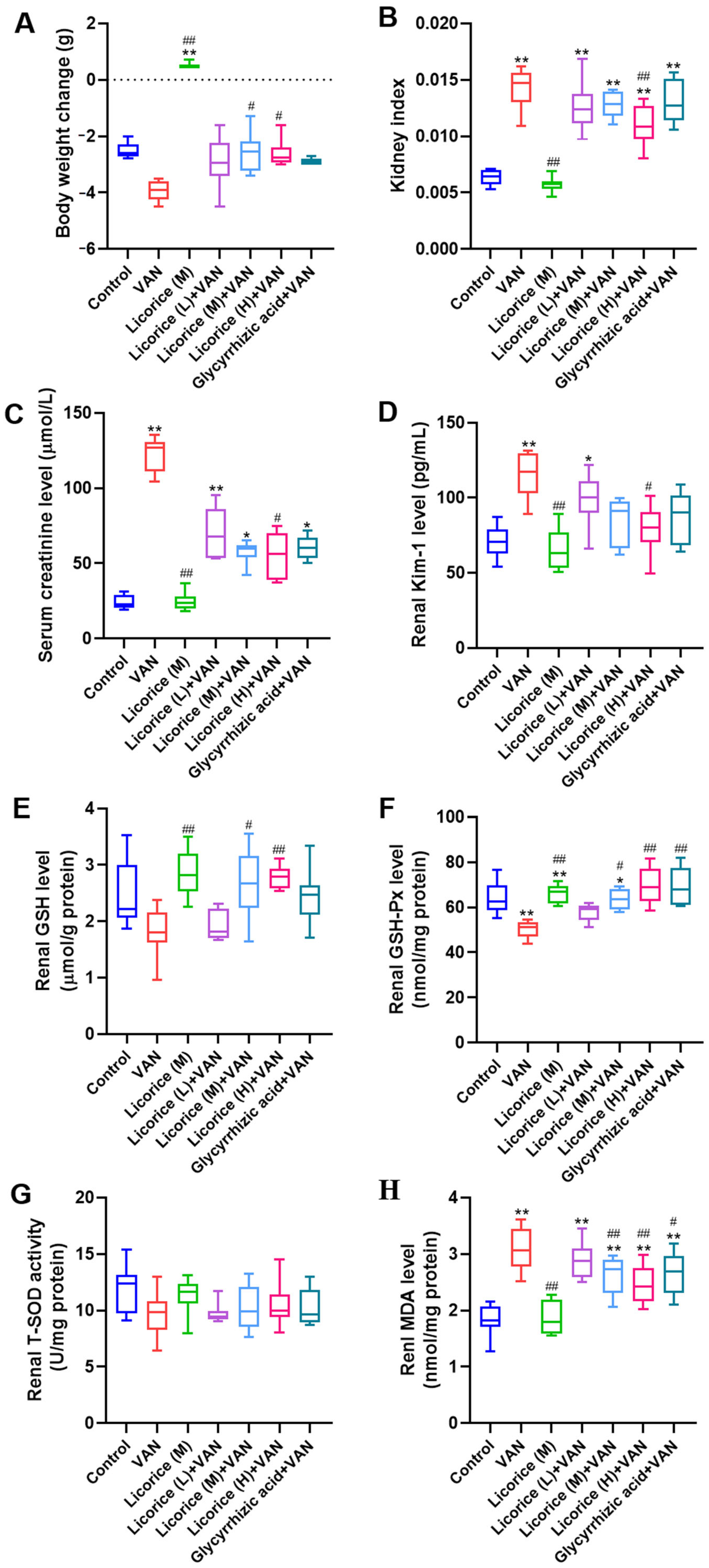
2.2. Licorice Improves VAN-Induced Nephrotoxicity in Mice
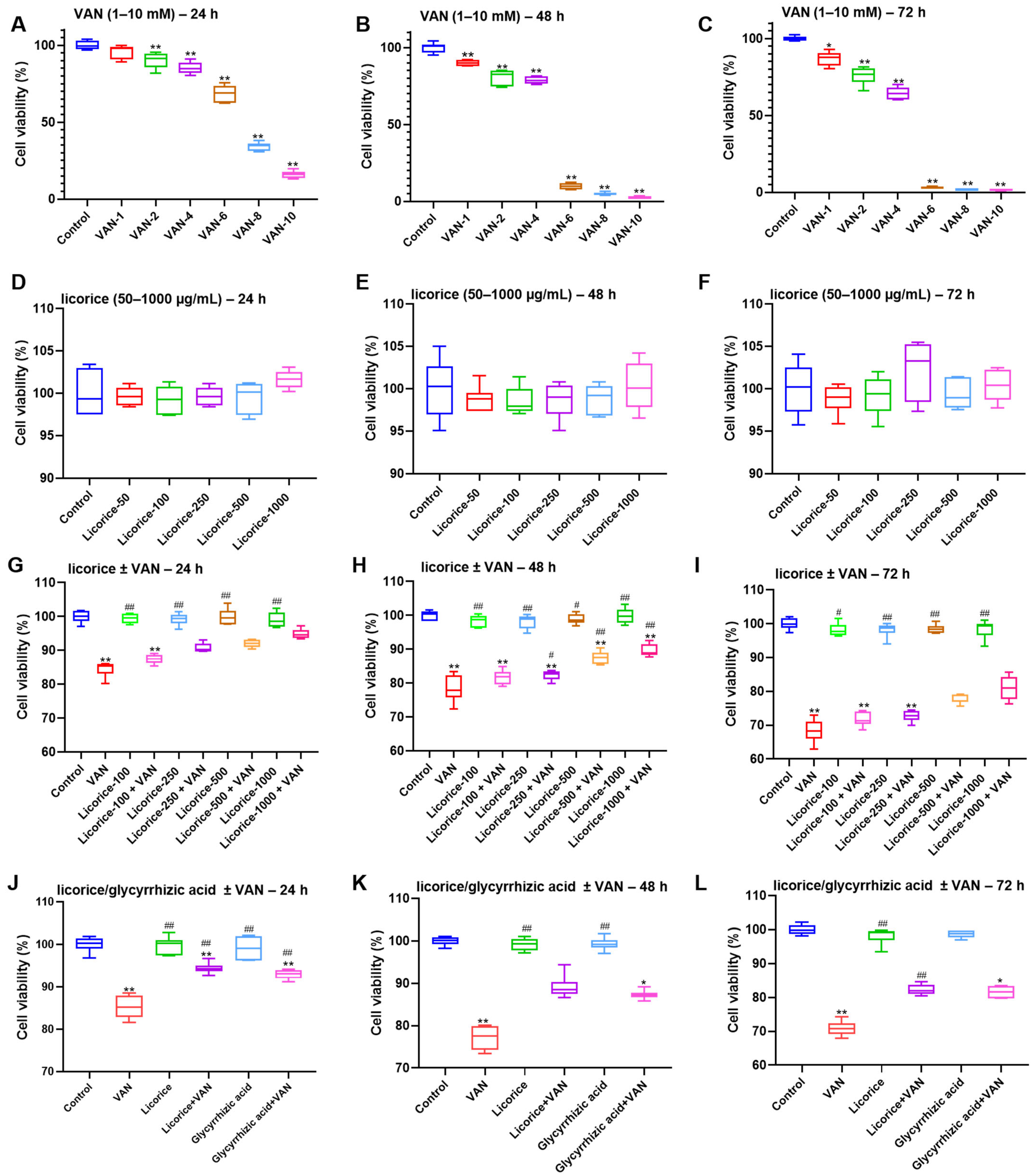
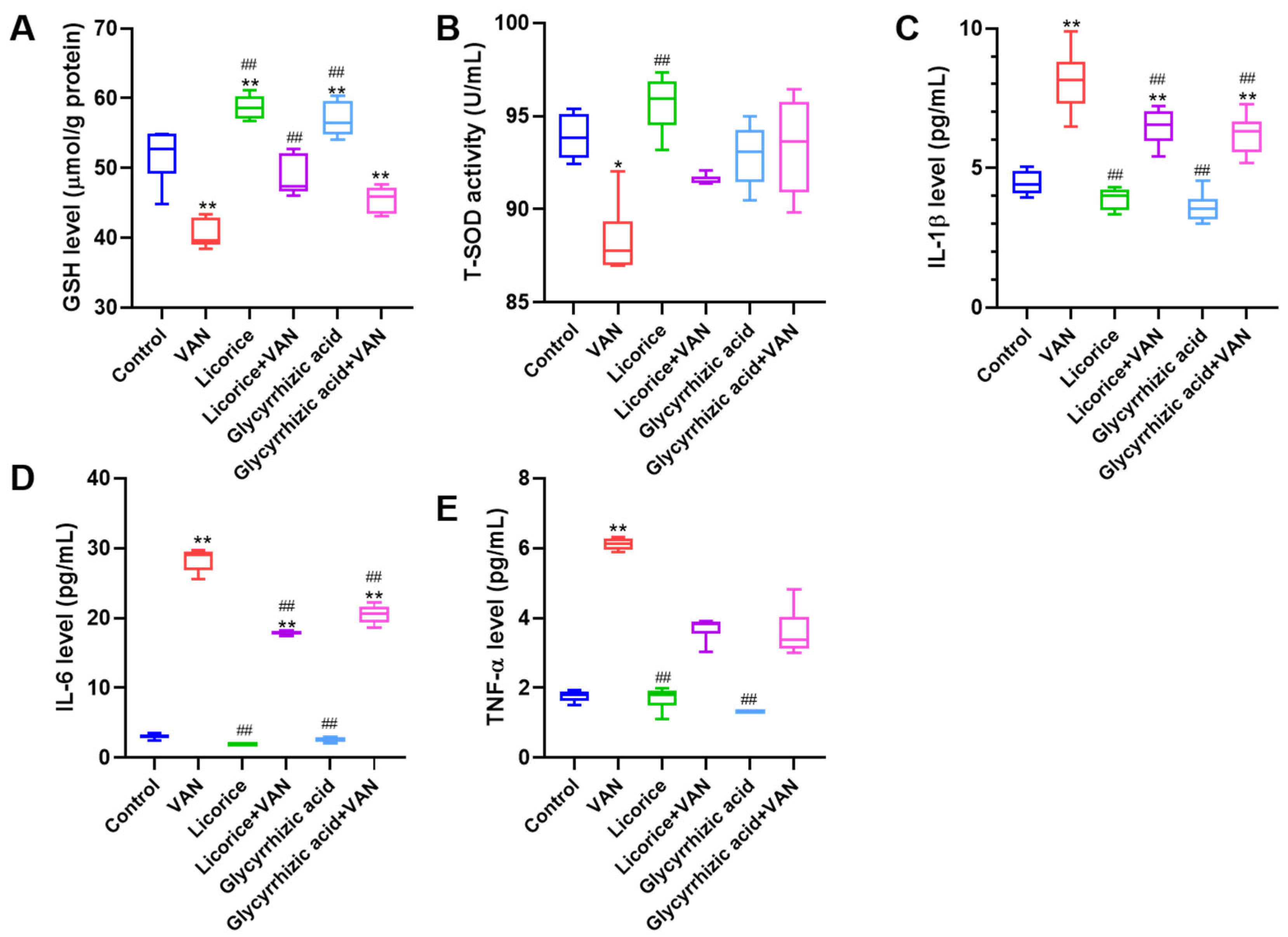
2.3. Effect of Licorice on Cell Viability, Oxidative Stress Markers and Inflammatory Markers in HK-2 Cells
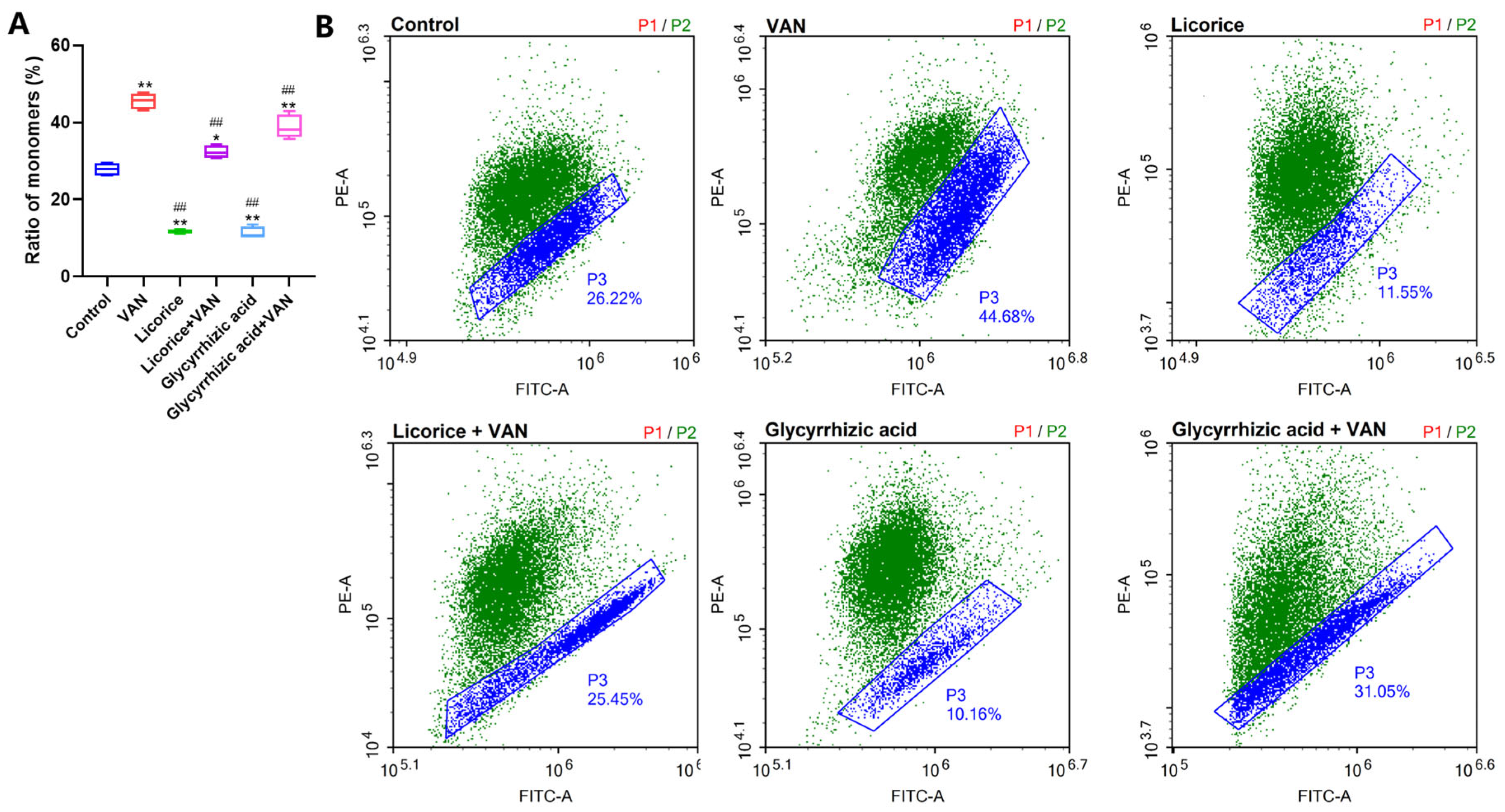
2.4. Effect of Licorice on Mitochondrial Membrane Potential (MMP)
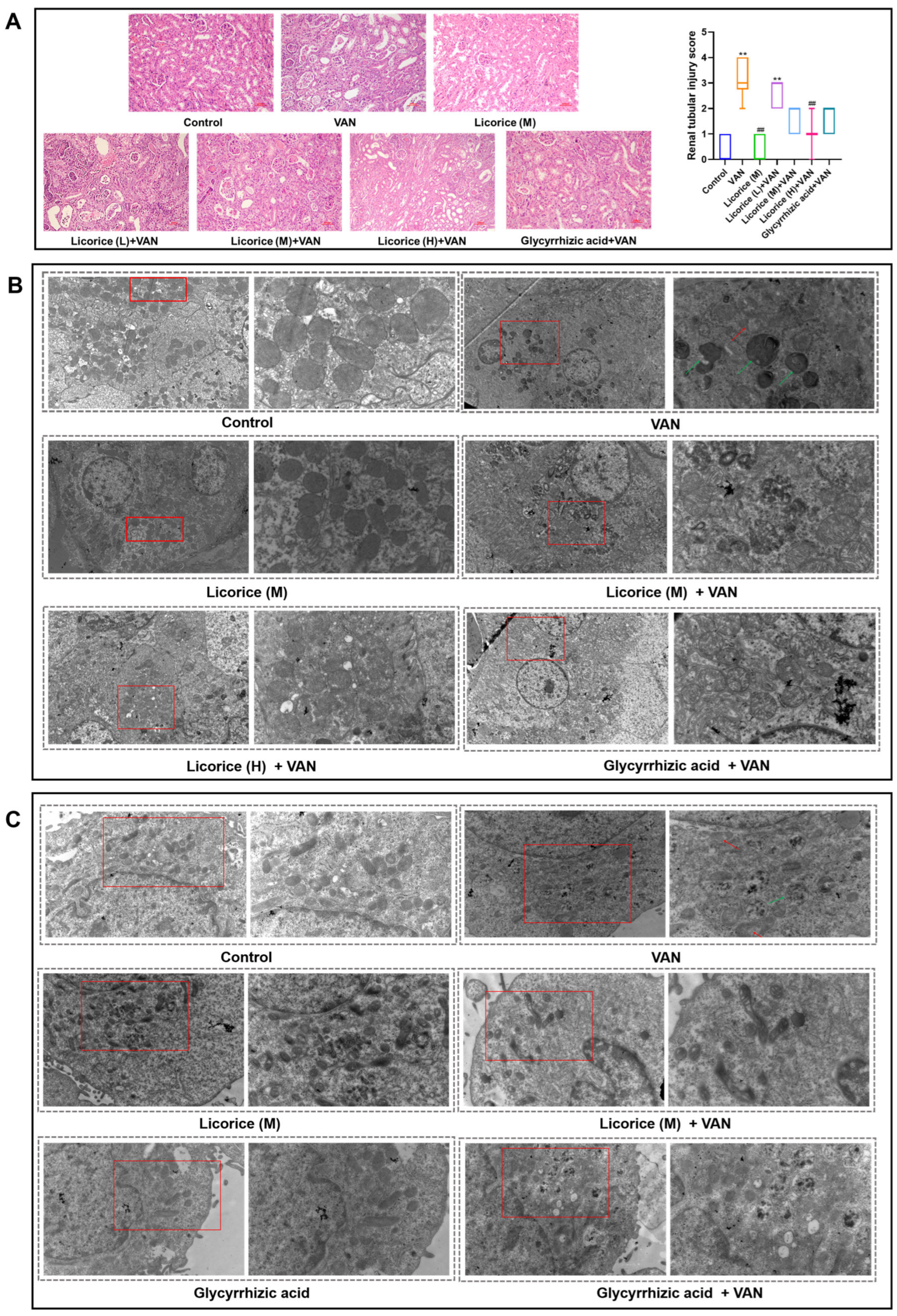
2.5. Histological Analysis of Licorice on the Renal Tissue in Mice and Cells
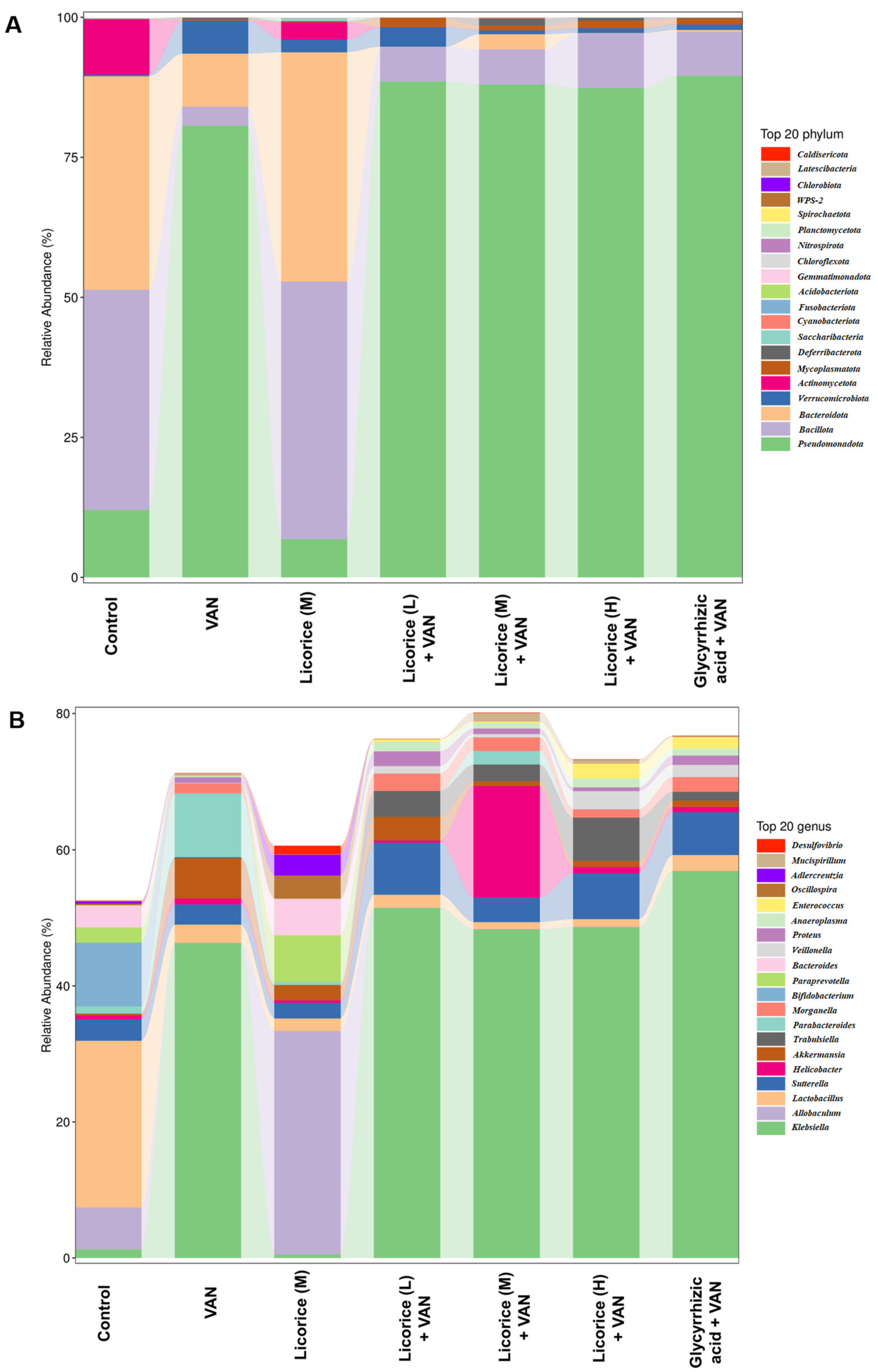
2.6. Effect of Licorice on the Intestinal Microbiota by 16S rRNA Gene Sequencing in Mice
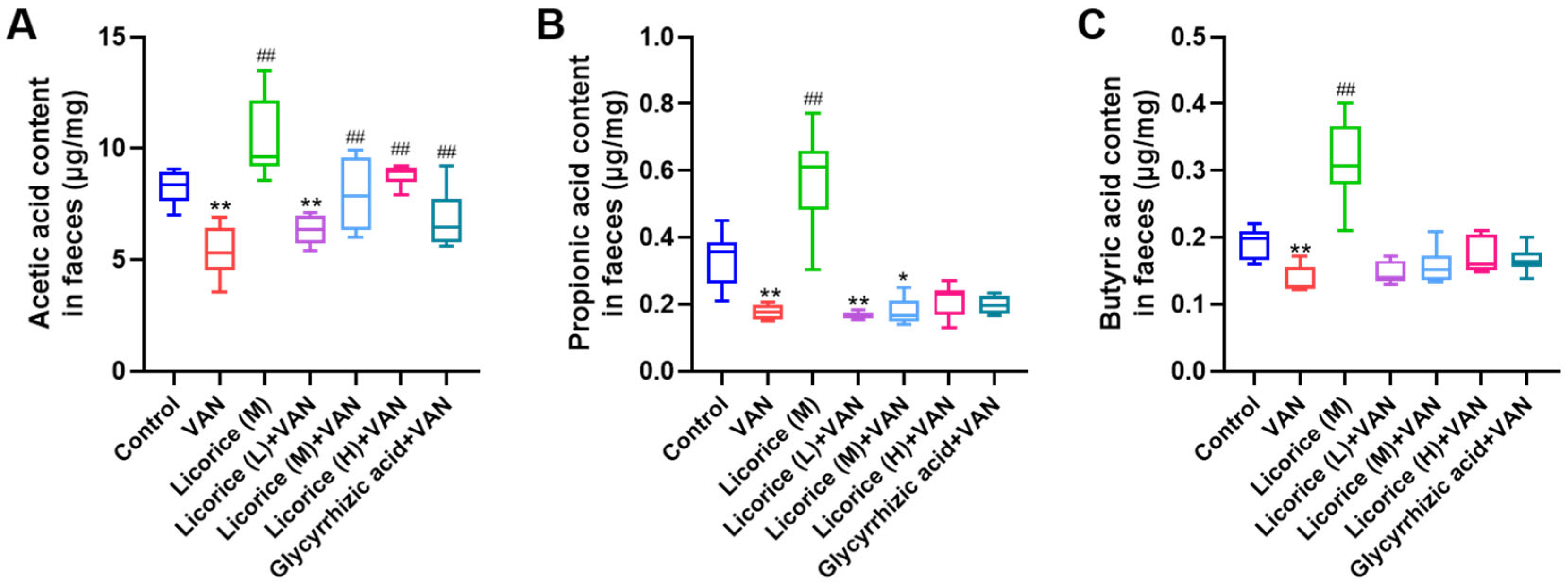
2.7. Measurements of SCFAs in the Feces
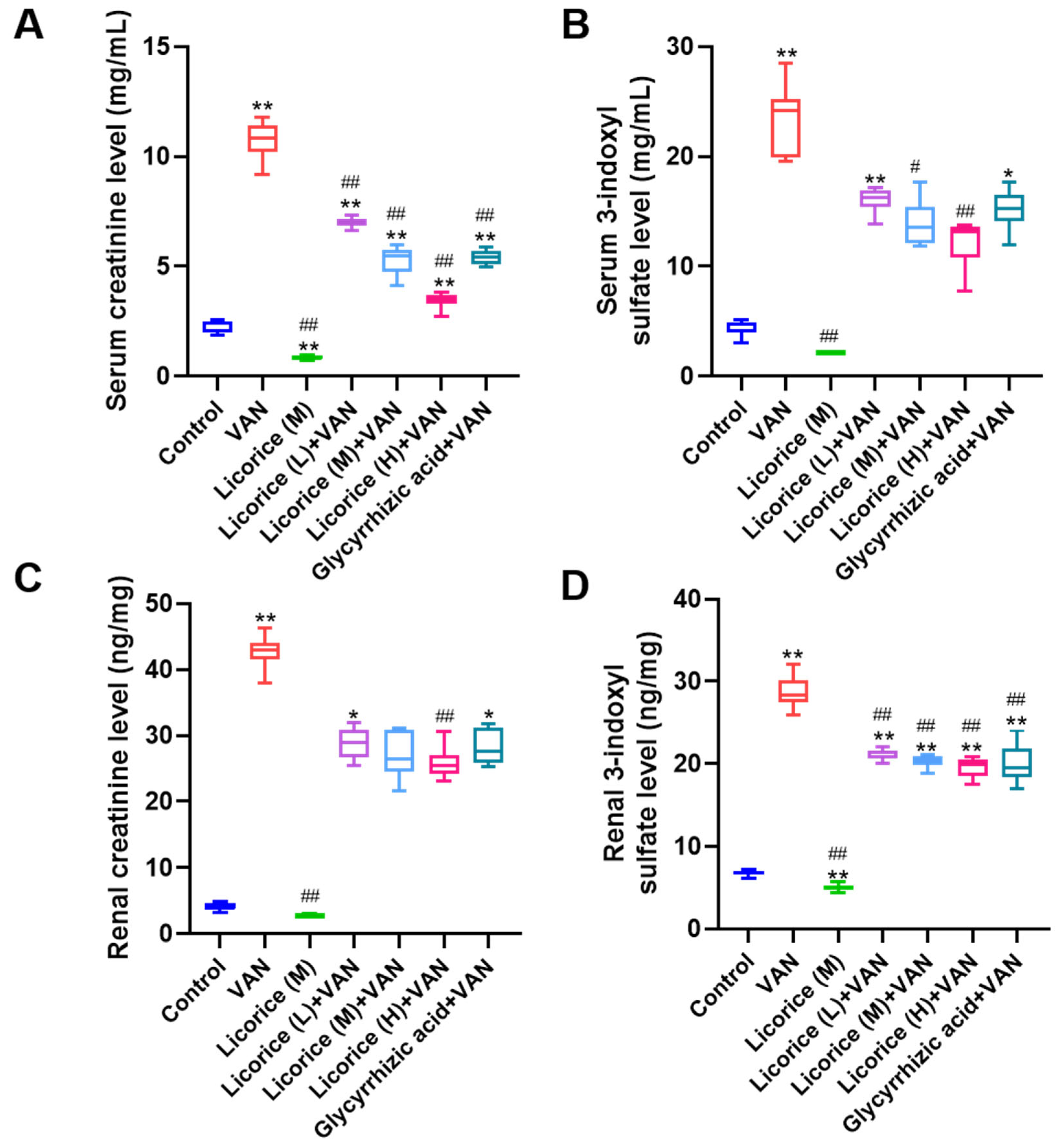
2.8. Uremic Toxins in Serum and Renal Tissue Determined by LC-MS/MS
3. Discussion
3.1. Quality Control of Licorice Aqueous Extract
3.2. Licorice Improves VAN-Induced Nephrotoxicity in Mice
3.3. Licorice Improves the Mitochondrial Function and Structure
3.4. Effect of Licorice on the Intestinal Microbiota
3.5. Effect of Licorice on SCFAs in the Feces
3.6. Effect of Uremic Toxins in Serum and Renal Tissue
3.7. The Potential Protective Mechanism of Licorice and Its Compositions
4. Materials and Methods
4.1. Chemicals and Reagents
4.2. Preparation and Quality Control of Licorice Aqueous Extract
4.3. Animals
4.4. Cell Culture
4.5. Effect of Licorice on Nephrotoxicity of VAN in Mice
4.6. Effect of Licorice on Cell Viability Determined by MTT Assay in HK-2 Cells
4.7. Detection of Creatinine, Kim-1, Oxidative Stress Markers and Inflammatory Markers
4.8. Effect of Licorice on Mitochondrial Membrane Potential (MMP)
4.9. Hematoxylin and Eosin (H&E) Staining
4.10. Transmission Electron Microscopy (TEM)
4.11. Effect of Licorice on the Intestinal Microbiota by 16S rRNA Gene Sequencing in Mice
- (1)
- DNA extraction: Microbial DNA was extracted from fecal samples according to the manufacturer’s instructions. DNA concentration and quality were assessed by 1.2% agarose gel electrophoresis.
- (2)
- PCR amplification: The V3-V4 region of the bacterial 16S ribosomal RNA gene was amplified using barcoded universal primers, 341F (5′-CCTACGGGRSGCAGCAG-3′) and 806R (5′-GGACTACVVGGGTATCTAATC-3′). To obtain clean sequencing templates, PCR amplicons were purified using VAHTS DNA Clean Beads (Vazyme International LLC., Nanjing, China).
- (3)
- Quantification of PCR products: PCR products were quantified using the Quant-iT PicoGreen dsDNA Assay Kit (Thermo Fisher Scientific, Waltham, MA, USA) and a microplate reader (BioTek FLx800) (Waltham, MA, USA).
- (4)
- Library preparation and sequencing: Libraries were prepared using the TruSeq Nano DNA LT Library Prep Kit (Illumina, Inc., San Diego, CA, USA). Purified products were quantified with the Promega QuantiFluor system (Promega Corporation, Beijing, China). Qualified libraries were sequenced on a NovaSeq 6000 platform using the No-vaSeq 6000 SP Reagent Kit (500 cycles) (Illumina, Inc., San Diego, CA, USA).
4.12. Measurements of SCFAs in the Feces
4.13. Uremic Toxins in Serum and Renal Tissue Determined by LC-MS/MS
4.14. Data Processing and Statistical Analysis
5. Conclusions
Supplementary Materials
Author Contributions
Funding
Institutional Review Board Statement
Informed Consent Statement
Data Availability Statement
Acknowledgments
Conflicts of Interest
Abbreviations
| AKI | Acute kidney injury |
| ESI | Electrospray ionization |
| FID | Flame Ionization Detector |
| GC | Gas chromatograph |
| GSH | Glutathione |
| GSH-Px | Glutathione peroxidase |
| H&E | Hematoxylin and Eosin |
| HPLC | High performance liquid chromatography |
| IL-1β | Interleukin-1β |
| IL-6 | Interleukin-6 |
| KEAP1 | Kelch-like ECH-associated protein 1 |
| KEGG | Kyoto encyclopedia of genes and genomes |
| LC-MS/MS | Liquid chromatography-tandem mass spectrometry |
| LEfSe | Linear discriminant analysis effect size |
| MDA | Malondialdehyde |
| MEM | Minimum essential medium |
| MMP | Mitochondrial membrane potential |
| NMDS | Nonmetric multidimensional scaling |
| Nrf2 | Nuclear factor (erythroid-derived 2)-related factor 2 |
| OTUs | Operational taxonomic units |
| PCoA | Principal coordinate analysis |
| SCFAs | Short chain fatty acids |
| TCMs | Traditional Chinese medicines |
| TNF-α | Tumor necrosis factor-α |
| T-SOD | Total superoxide dismutase |
| VAN | Vancomycin |
References
- Pais, G.M.; Liu, J.; Zepcan, S.; Avedissian, S.N.; Rhodes, N.J.; Downes, K.J.; Moorthy, G.S.; Scheetz, M.H. Vancomycin-Induced Kidney Injury: Animal Models of Toxicodynamics, Mechanisms of Injury, Human Translation, and Potential Strategies for Prevention. Pharmacotherapy 2020, 40, 438–454. [Google Scholar] [CrossRef]
- Lodise, T.P.; Rosenkranz, S.L.; Finnemeyer, M.; Evans, S.; Sims, M.; Zervos, M.J.; Creech, C.B.; Patel, P.C.; Keefer, M.; Riska, P.; et al. The Emperor’s New Clothes: Prospective Observational Evaluation of the Association Between Initial Vancomycin Exposure and Failure Rates Among Adult Hospitalized Patients with Methicillin-resistant Staphylococcus aureus Bloodstream Infections (PROVIDE). Clin. Infect. Dis. 2020, 70, 1536–1545. [Google Scholar] [CrossRef]
- Kunming, P.; Ying, H.; Chenqi, X.; Zhangzhang, C.; Xiaoqiang, D.; Xiaoyu, L.; Xialian, X.; Qianzhou, L. Vancomycin associated acute kidney injury in patients with infectious endocarditis: A large retrospective cohort study. Front. Pharmacol. 2023, 14, 1260802. [Google Scholar] [CrossRef]
- Jorgensen, S.; Murray, K.P.; Lagnf, A.M.; Melvin, S.; Bhatia, S.; Shamim, M.D.; Smith, J.R.; Brade, K.D.; Simon, S.P.; Nagel, J.; et al. A Multicenter Evaluation of Vancomycin-Associated Acute Kidney Injury in Hospitalized Patients with Acute Bacterial Skin and Skin Structure Infections. Infect. Dis. Ther. 2020, 9, 89–106. [Google Scholar] [CrossRef] [PubMed]
- King, D.W.; Smith, M.A. Proliferative responses observed following vancomycin treatment in renal proximal tubule epithelial cells. Toxicol. Vitr. 2004, 18, 797–803. [Google Scholar] [CrossRef] [PubMed]
- Luque, Y.; Louis, K.; Jouanneau, C.; Placier, S.; Esteve, E.; Bazin, D.; Rondeau, E.; Letavernier, E.; Wolfromm, A.; Gosset, C.; et al. Vancomycin-Associated Cast Nephropathy. J. Am. Soc. Nephrol. 2017, 28, 1723–1728. [Google Scholar] [CrossRef] [PubMed]
- Kan, W.C.; Chen, Y.C.; Wu, V.C.; Shiao, C.C. Vancomycin-Associated Acute Kidney Injury: A Narrative Review from Pathophysiology to Clinical Application. Int. J. Mol. Sci. 2022, 23, 2052. [Google Scholar] [CrossRef]
- Shi, H.H.; Guo, Y.; Chen, L.P.; Wang, C.C.; Huang, Q.R.; Xue, C.H.; Wang, Y.M.; Zhang, T.T. Docosahexaenoic Acid-Acylated Astaxanthin Esters Exhibit Superior Renal Protective Effect to Recombination of Astaxanthin with DHA via Alleviating Oxidative Stress Coupled with Apoptosis in Vancomycin-Treated Mice with Nephrotoxicity. Mar. Drugs 2021, 19, 499. [Google Scholar] [CrossRef]
- Qu, S.; Dai, C.; Lang, F.; Hu, L.; Tang, Q.; Wang, H.; Zhang, Y.; Hao, Z. Rutin Attenuates Vancomycin-Induced Nephrotoxicity by Ameliorating Oxidative Stress, Apoptosis, and Inflammation in Rats. Antimicrob. Agents Chemother. 2019, 63, e01545-18. [Google Scholar] [CrossRef]
- Uckun, Z.; Guzel, S.; Canacankatan, N.; Yalaza, C.; Kibar, D.; Coskun Yilmaz, B. Potential protective effects of naringenin against vancomycin-induced nephrotoxicity via reduction on apoptotic and oxidative stress markers in rats. Drug. Chem. Toxicol. 2020, 43, 104–111. [Google Scholar] [CrossRef]
- Kandemir, F.M.; Yildirim, S.; Kucukler, S.; Caglayan, C.; Mahamadu, A.; Dortbudak, M.B. Therapeutic efficacy of zingerone against vancomycin-induced oxidative stress, inflammation, apoptosis and aquaporin 1 permeability in rat kidney. Biomed. Pharmacother. 2018, 105, 981–991. [Google Scholar] [CrossRef]
- Qu, S.; Dai, C.; Hao, Z.; Tang, Q.; Wang, H.; Wang, J.; Zhao, H. Chlorogenic acid prevents vancomycin-induced nephrotoxicity without compromising vancomycin antibacterial properties. Phytother. Res. 2020, 34, 3189–3199. [Google Scholar] [CrossRef]
- Zhu, Y.; Jin, H.; Huo, X.; Meng, Q.; Wang, C.; Sun, P.; Ma, X.; Sun, H.; Dong, D.; Wu, J.; et al. Protective effect of Rhein against vancomycin-induced nephrotoxicity through regulating renal transporters and Nrf2 pathway. Phytother. Res. 2022, 36, 4244–4262. [Google Scholar] [CrossRef]
- Khalaf, M.M.; Hassan, S.M.; Sayed, A.M.; Abo-Youssef, A.M. Ameliorate impacts of scopoletin against vancomycin-induced intoxication in rat model through modulation of Keap1-Nrf2/HO-1 and IκBα-P65 NF-κB/P38 MAPK signaling pathways: Molecular study, molecular docking evidence and network pharmacology analysis. Int. Immunopharmacol. 2022, 102, 108382. [Google Scholar] [CrossRef] [PubMed]
- Guzel, S.; Sahinogullari, Z.U.; Canacankatan, N.; Antmen, S.E.; Kibar, D.; Coskun Yilmaz, B. Potential renoprotective effects of silymarin against vancomycin-induced nephrotoxicity in rats. Drug Chem. Toxicol. 2020, 43, 630–636. [Google Scholar] [CrossRef]
- Malkani, N.; Naeem, A.; Ijaz, F.; Mumtaz, S.; Ashraf, S.; Sohail, M.I. Silybum marianum (milk thistle) improves vancomycin induced nephrotoxicity by downregulating apoptosis. Mol. Biol. Rep. 2020, 47, 5451–5459. [Google Scholar] [CrossRef] [PubMed]
- El Bohi, K.M.; Abdel-Motal, S.M.; Khalil, S.R.; Abd-Elaal, M.M.; Metwally, M.; ELhady, W.M. The efficiency of pomegranate (Punica granatum) peel ethanolic extract in attenuating the vancomycin-triggered liver and kidney tissues injury in rats. Environ. Sci. Pollut. Res. Int. 2021, 28, 7134–7150. [Google Scholar] [CrossRef]
- Sadeghi, H.; Karimizadeh, E.; Sadeghi, H.; Panahi Kokhdan, E.; Mansourian, M.; Abbaszadeh-Goudarzi, K.; Shokripour, M.; Asfaram, A.; Doustimotlagh, A.H. Protective Effects of Hydroalcoholic Extract of Rosa canina Fruit on Vancomycin-Induced Nephrotoxicity in Rats. J. Toxicol. 2021, 2021, 5525714. [Google Scholar] [CrossRef]
- Sun, Y. Discussion on the application of Glycyrrhizae Radix et Rhizoma in Shang Han Lun. Liaoning Tradit. J. Chin. Med. 2006, 33, 1173. (In Chinese) [Google Scholar]
- Guo, J.; Shang, E.; Zhao, J.; Fan, X.; Duan, J.; Qian, D.; Tao, W.; Tang, Y. Data mining and frequency analysis for licorice as a “Two-Face” herb in Chinese Formulae based on Chinese Formulae Database. Phytomedicine 2014, 21, 1281–1286. [Google Scholar] [CrossRef] [PubMed]
- Jiang, M.; Zhao, S.; Yang, S.; Lin, X.; He, X.; Wei, X.; Song, Q.; Li, R.; Fu, C.; Zhang, J.; et al. An “essential herbal medicine”-licorice: A review of phytochemicals and its effects in combination preparations. J. Ethnopharmacol. 2020, 249, 112439. [Google Scholar] [CrossRef]
- Heidari, S.; Mehri, S.; Hosseinzadeh, H. The genus Glycyrrhiza (Fabaceae family) and its active constituents as protective agents against natural or chemical toxicities. Phytother. Res. 2021, 35, 6552–6571. [Google Scholar] [CrossRef]
- Nassan, M.A.; Soliman, M.M.; Aldhahrani, A.; Althobaiti, F.; Alkhedaide, A.Q. Ameliorative impacts of Glycyrrhiza glabra root extract against nephrotoxicity induced by gentamicin in mice. Food Sci. Nutr. 2021, 9, 3405–3413. [Google Scholar] [CrossRef]
- Zhou, Q.; Zhang, S.; Geng, X.; Jiang, H.; Dai, Y.; Wang, P.; Hua, M.; Gao, Q.; Lang, S.; Hou, L.; et al. Antioxidant Effects of Roasted Licorice in a Zebrafish Model and Its Mechanisms. Molecules 2022, 27, 7743. [Google Scholar] [CrossRef]
- Yu, J.; Guo, J.; Tao, W.; Liu, P.; Shang, E.; Zhu, Z.; Fan, X.; Shen, J.; Hua, Y.; Zhu, K.Y.; et al. Gancao-Gansui combination impacts gut microbiota diversity and related metabolic functions. J. Ethnopharmacol. 2018, 214, 71–82. [Google Scholar] [CrossRef]
- Wu, M.; Wu, Y.; Deng, B.; Li, J.; Cao, H.; Qu, Y.; Qian, X.; Zhong, G. Isoliquiritigenin decreases the incidence of colitis-associated colorectal cancer by modulating the intestinal microbiota. Oncotarget 2016, 7, 85318–85331. [Google Scholar] [CrossRef]
- Zhu, J.; Lian, J.; Deng, H.; Luo, J.; Chen, T.; Sun, J.; Zhang, Y.; Yang, Y.; Liu, P.; Xi, Q. Effects of Spinach Extract and Licorice Extract on Growth Performance, Antioxidant Capacity, and Gut Microbiota in Weaned Piglets. Animals 2024, 14, 321. [Google Scholar] [CrossRef] [PubMed]
- Mishima, E.; Fukuda, S.; Mukawa, C.; Yuri, A.; Kanemitsu, Y.; Matsumoto, Y.; Akiyama, Y.; Fukuda, N.N.; Tsukamoto, H.; Asaji, K.; et al. Evaluation of the impact of gut microbiota on uremic solute accumulation by a CE-TOFMS-based metabolomics approach. Kidney Int. 2017, 92, 634–645. [Google Scholar] [CrossRef] [PubMed]
- Raj, D.; Tomar, B.; Lahiri, A.; Mulay, S.R. The gut-liver-kidney axis: Novel regulator of fatty liver associated chronic kidney disease. Pharmacol. Res. 2020, 152, 104617. [Google Scholar] [CrossRef] [PubMed]
- Gou, X.; Ran, F.; Yang, J.; Ma, Y.; Wu, X. Construction and Evaluation of a Novel Organic Anion Transporter 1/3 CRISPR/Cas9 Double-Knockout Rat Model. Pharmaceutics 2022, 14, 2307. [Google Scholar] [CrossRef] [PubMed]
- Chinese Pharmacopoeia Commission. The Pharmacopoeia of the People’s Republic of China; China Medical Science and Technology Press: Beijing, China, 2020. (In Chinese) [Google Scholar]
- Chinese Pharmacopoeia Commission. The Pharmacopoeia of the People’s Republic of China; China Medical Science and Technology Press: Beijing, China, 2025. (In Chinese) [Google Scholar]
- National Medical Products Administration of the People’s Republic of China. Guidelines for Research on New Traditional Chinese Medicines; National Medical Products Administration of the People’s Republic of China: Beijing, China, 1993. (In Chinese)
- Liu, Y.; Zhong, G.; Li, Y.; Zhang, Y.; Ou, L.; Liu, M.; Zhao, T. Study of Acute Toxicity Test of Imcompatible Pair of Sargassum and Radix Glycyrrhizae in Haizao Yuhu Decoction. Chin. J. Exp. Tradit. Med. Formulae 2013, 19, 240–245. (In Chinese) [Google Scholar]
- Zhang, M.; Wang, C.; Cai, H.L.; Wen, J.; Fang, P.F. Licorice Extracts Attenuate Nephrotoxicity Induced by Brucine Through Suppression of Mitochondria Apoptotic Pathway and STAT3 Activation. Curr. Med. Sci. 2019, 39, 890–898. [Google Scholar] [CrossRef]
- Cao, R.; Li, Y.; Hu, X.; Qiu, Y.; Li, S.; Xie, Y.; Xu, C.; Lu, C.; Chen, G.; Yang, J. Glycyrrhizic acid improves tacrolimus-induced renal injury by regulating autophagy. FASEB J. 2023, 37, e22749. [Google Scholar] [CrossRef]
- Zhou, L.; Yang, Y.; Fu, X.; Xia, B.; Li, C.; Lu, C.; Qi, Y.; Zhang, H.; Liu, T. The protective effect and molecular mechanism of glycyrrhizic acid glycosides against Tripterygium glycosides induced nephrotoxicity based on the RhoA/ROCK1 signalling pathway. J. Ethnopharmacol. 2024, 319, 117100. [Google Scholar] [CrossRef]
- Xu, W.; Mao, Z.; Zhao, B.; Ni, T.; Deng, S.; Yu, P.; He, J.; Mao, E. Vitamin C attenuates vancomycin induced nephrotoxicity through the reduction of oxidative stress and inflammation in HK-2 cells. Ann. Palliat. Med. 2021, 10, 1748–1754. [Google Scholar] [CrossRef] [PubMed]
- Wang, M.; Zhou, Y.; Hao, G.; Wu, Y.E.; Yin, R.; Zheng, Y.; Zhao, W. Recombinant Klotho alleviates vancomycin-induced acute kidney injury by upregulating anti-oxidative capacity via JAK2/STAT3/GPx3 axis. Toxicology 2023, 499, 153657. [Google Scholar] [CrossRef]
- Jia, L.; Sun, B.; Nie, A.; Shi, Y.; Zhou, Z.; Zhu, C. Rosmarinic acid attenuates hyperuricemia via restoring hyperuricemia-induced renal and intestinal dysfunctions. Phytomedicine 2025, 145, 157084. [Google Scholar] [CrossRef] [PubMed]
- Ding, B.; Liu, J.; Kasay, I.; Konsue, N.; Lin, X.; Yan, F.; Wang, D.; Lv, C.; Xia, H.; Qin, S. The renoprotective anti-hyperuricemia effect of Cornus officinalis extract in hyperuricemia rats based on network pharmacology and multiple omics. J. Ethnopharmacol. 2026, 354, 120519. [Google Scholar] [CrossRef]
- Su, X.; Yu, W.; Liu, A.; Wang, C.; Li, X.; Gao, J.; Liu, X.; Jiang, W.; Yang, Y.; Lv, S. San-Huang-Yi-Shen Capsule Ameliorates Diabetic Nephropathy in Rats Through Modulating the Gut Microbiota and Overall Metabolism. Front. Pharmacol. 2021, 12, 808867. [Google Scholar] [CrossRef]
- Yang, X.; Xin, Y.; Gu, Y.; Wang, Y.; Hu, X.; Ying, G.; Zhang, Q.; He, X. Total alkaloids of Aconitum carmichaelii Debx alleviate cisplatin-induced acute renal injury by inhibiting inflammation and oxidative stress related to gut microbiota metabolism. Phytomedicine 2024, 135, 156128. [Google Scholar] [CrossRef]
- Yu, M.; Li, L.; Ren, Q.; Feng, H.; Tao, S.; Cheng, L.; Ma, L.; Gou, S.J.; Fu, P. Understanding the Gut-Kidney Axis in Antineutrophil Cytoplasmic Antibody-Associated Vasculitis: An Analysis of Gut Microbiota Composition. Front. Pharmacol. 2022, 13, 783679. [Google Scholar] [CrossRef]
- Zhao, Z.X.; Tang, X.H.; Jiang, S.L.; Pang, J.Q.; Xu, Y.B.; Yuan, D.D.; Zhang, L.L.; Liu, H.M.; Fan, Q. Astragaloside IV improves the pharmacokinetics of febuxostat in rats with hyperuricemic nephropathy by regulating urea metabolism in gut microbiota. Front. Pharmacol. 2022, 13, 1031509. [Google Scholar] [CrossRef]
- Zhang, L.; Lu, Q.Y.; Wu, H.; Cheng, Y.L.; Kang, J.; Xu, Z.G. The Intestinal Microbiota Composition in Early and Late Stages of Diabetic Kidney Disease. Microbiol. Spectr. 2023, 11, e0038223. [Google Scholar] [CrossRef] [PubMed]
- Mali, N.; Mali, S.; Zhang, L.; Fu, P. Interplay between gut microbiota and acute kidney injury: A review of their mutual influence and causation. Ren. Fail. 2025, 47, 2522976. [Google Scholar] [CrossRef] [PubMed]
- Magliocca, G.; Mone, P.; Di Iorio, B.R.; Heidland, A.; Marzocco, S. Short-Chain Fatty Acids in Chronic Kidney Disease: Focus on Inflammation and Oxidative Stress Regulation. Int. J. Mol. Sci. 2022, 23, 5354. [Google Scholar] [CrossRef]
- Zou, Y.T.; Zhou, J.; Zhu, J.H.; Wu, C.Y.; Shen, H.; Zhang, W.; Zhou, S.S.; Xu, J.D.; Mao, Q.; Zhang, Y.Q.; et al. Gut Microbiota Mediates the Protective Effects of Traditional Chinese Medicine Formula Qiong-Yu-Gao against Cisplatin-Induced Acute Kidney Injury. Microbiol. Spectr. 2022, 10, e0075922. [Google Scholar] [CrossRef]
- Corte-Iglesias, V.; Saiz, M.L.; Andrade-Lopez, A.C.; Salazar, N.; Bernet, C.R.; Martin-Martin, C.; Borra, J.M.; Lozano, J.J.; Aransay, A.M.; Diaz-Corte, C.; et al. Propionate and butyrate counteract renal damage and progression to chronic kidney disease. Nephrol. Dial. Transplant. 2024, 40, 133–150. [Google Scholar] [CrossRef] [PubMed]
- Favero, C.; Pintor-Chocano, A.; Sanz, A.; Ortiz, A.; Sanchez-Niño, M.D. Butyrate promotes kidney resilience through a coordinated kidney protective response in tubular cells. Biochem. Pharmacol. 2024, 224, 116203. [Google Scholar] [CrossRef]
- Du, Y.; Yang, Y.T.; Tang, G.; Jia, J.S.; Zhu, N.; Yuan, W.J. Butyrate alleviates diabetic kidney disease by mediating the miR-7a-5p/P311/TGF-β1 pathway. FASEB J. 2020, 34, 10462–10475. [Google Scholar] [CrossRef]
- Cheng, X.; Zhou, T.; He, Y.; Xie, Y.; Xu, Y.; Huang, W. The role and mechanism of butyrate in the prevention and treatment of diabetic kidney disease. Front. Microbiol. 2022, 13, 961536. [Google Scholar] [CrossRef]
- Miao, H.; Zhang, S.J.; Wu, X.; Li, P.; Zhao, Y.Y. Tryptophan metabolism as a target in gut microbiota, ageing and kidney disease. Int. J. Biol. Sci. 2025, 21, 4374–4387. [Google Scholar] [CrossRef]
- Wen, S.; Wang, C.; Huo, X.; Meng, Q.; Liu, Z.; Yang, S.; Zhu, Y.; Sun, H.; Ma, X.; Liu, K. JBP485 attenuates vancomycin-induced nephrotoxicity by regulating the expressions of organic anion transporter (Oat) 1, Oat3, organic cation transporter 2 (Oct2), multidrug resistance-associated protein 2 (Mrp2) and P-glycoprotein (P-gp) in rats. Toxicol. Lett. 2018, 295, 195–204. [Google Scholar] [CrossRef]
- Zheng, L.; Luo, M.; Zhou, H.; Chen, J. Natural products from plants and microorganisms: Novel therapeutics for chronic kidney disease via gut microbiota regulation. Front. Pharmacol. 2022, 13, 1068613. [Google Scholar] [CrossRef]
- Li, X.J.; Shan, Q.Y.; Wu, X.; Miao, H.; Zhao, Y.Y. Gut microbiota regulates oxidative stress and inflammation: A double-edged sword in renal fibrosis. Cell. Mol. Life Sci. 2024, 81, 480. [Google Scholar] [CrossRef]
- Li, J.; Xu, Y.; Sun, T.; Zhang, X.; Liang, H.; Lin, W.; Yu, H.; Yang, B.; Yang, H. Exploration of the pathogenesis of nephrotic syndrome and traditional Chinese medicine intervention based on gut microbiota. Front. Immunol. 2024, 15, 1430356. [Google Scholar] [CrossRef] [PubMed]
- Wu, C.; Chen, A.; Yen, G. Protective Effects of Glycyrrhizic Acid and 18β-Glycyrrhetinic Acid against Cisplatin-Induced Nephrotoxicity in BALB/c Mice. J. Agric. Food Chem. 2015, 63, 1200–1209. [Google Scholar] [CrossRef] [PubMed]
- Zhao, H.; Liu, Z.; Shen, H.; Jin, S.; Zhang, S. Glycyrrhizic acid pretreatment prevents sepsis-induced acute kidney injury via suppressing inflammation, apoptosis and oxidative stress. Eur. J. Pharmacol. 2016, 781, 92–99. [Google Scholar] [CrossRef] [PubMed]
- Pei, Z.; Wu, M.; Yu, H.; Long, G.; Gui, Z.; Li, X.; Chen, H.; Jia, Z.; Xia, W. Isoliquiritin Ameliorates Cisplatin-Induced Renal Proximal Tubular Cell Injury by Antagonizing Apoptosis, Oxidative Stress and Inflammation. Front. Med. 2022, 9, 873739. [Google Scholar] [CrossRef]
- Tang, Y.; Wang, C.; Wang, Y.; Zhang, J.; Wang, F.; Li, L.; Meng, X.; Li, G.; Li, Y.; Wang, L. Isoliquiritigenin attenuates LPS-induced AKI by suppression of inflammation involving NF-κB pathway. Am. J. Transl. Res. 2018, 10, 4141–4151. [Google Scholar]
- Im, D.S.; Shin, H.J.; Yang, K.J.; Jung, S.Y.; Song, H.Y.; Hwang, H.S.; Gil, H.W. Cilastatin attenuates vancomycin-induced nephrotoxicity via P-glycoprotein. Toxicol. Lett. 2017, 277, 9–17. [Google Scholar] [CrossRef]
- Wang, J.; Qie, J.; Zhu, D.; Zhang, X.; Zhang, Q.; Xu, Y.; Wang, Y.; Mi, K.; Pei, Y.; Liu, Y.; et al. The landscape in the gut microbiome of long-lived families reveals new insights on longevity and aging-relevant neural and immune function. Gut Microbes 2022, 14, 2107288. [Google Scholar] [CrossRef] [PubMed]
- Zhou, Y.; Cui, R.; Zhang, M.; Tang, F.; Ma, X.; Wu, X. Mitochondrial uptake of aristolactam I plays a critical role in its toxicity. Toxicol. Lett. 2024, 394, 76–91. [Google Scholar] [CrossRef]
- He, S.; Gao, Q.; Wu, X.; Shi, J.; Zhang, Y.; Yang, J.; Li, X.; Du, S.; Zhang, Y.; Yu, J. NAD(+) ameliorates endotoxin-induced acute kidney injury in a sirtuin1-dependent manner via GSK-3β/Nrf2 signaling pathway. J. Cell. Mol. Med. 2022, 26, 1979–1993. [Google Scholar] [CrossRef]
- Zhang, M.; Zhang, J.; Ma, Y.; Jin, Y.; Li, Y.; Wu, X. Nephropathy induced by cisplatin results from mitochondrial disruption, impaired energy metabolism, altered expression of renal transporters, and accumulation of urinary toxins. J. Trace Elem. Med. Biol. 2024, 86, 127553. [Google Scholar] [CrossRef] [PubMed]
- Saad, H.M.; Elekhnawy, E.; Shaldam, M.A.; Alqahtani, M.J.; Altwaijry, N.; Attallah, N.; Hussein, I.A.; Ibrahim, H.A.; Negm, W.A.; Salem, E.A. Rosuvastatin and diosmetin inhibited the HSP70/TLR4 /NF-κB p65/NLRP3 signaling pathways and switched macrophage to M2 phenotype in a rat model of acute kidney injury induced by cisplatin. Biomed. Pharmacother. 2024, 171, 116151. [Google Scholar] [CrossRef] [PubMed]



| Groups | Treatment (For 7 Days) Intragastric Administration (p.o.) | Treatment (For 7 Days) Intraperitoneal Injection (i.p.) |
|---|---|---|
| Control | water (0.2 mL/10 g, twice daily) | saline (0.2 mL/10 g, once daily) |
| VAN | water (0.2 mL/10 g, twice daily) | VAN (600 mg/kg, once daily) |
| Licorice(M) | licorice aqueous extract (270 mg/kg, twice daily) | saline (0.2 mL/10 g, once daily) |
| Licorice(L) + VAN | licorice aqueous extract (54 mg/kg, twice daily) | VAN (600 mg/kg, once daily) |
| Licorice(M) + VAN | licorice aqueous extract (270 mg/kg, twice daily) | VAN (600 mg/kg, once daily) |
| Licorice(H) + VAN | licorice aqueous extract (1350 mg/kg, twice daily) | VAN (600 mg/kg, once daily) |
| Glycyrrhizic acid + VAN | glycyrrhizic acid (50 mg/kg, twice daily) | VAN (600 mg/kg, once daily) |
Disclaimer/Publisher’s Note: The statements, opinions and data contained in all publications are solely those of the individual author(s) and contributor(s) and not of MDPI and/or the editor(s). MDPI and/or the editor(s) disclaim responsibility for any injury to people or property resulting from any ideas, methods, instructions or products referred to in the content. |
© 2026 by the authors. Licensee MDPI, Basel, Switzerland. This article is an open access article distributed under the terms and conditions of the Creative Commons Attribution (CC BY) license.
Share and Cite
Zhang, J.; Zhou, Y.; Cui, R.; Wang, L.; Wang, S.; Rao, W.; Wu, X. Protective Effects of Licorice (Glycyrrhiza uralensis) Against Vancomycin-Induced Nephrotoxicity In Vivo and In Vitro. Pharmaceuticals 2026, 19, 728. https://doi.org/10.3390/ph19050728
Zhang J, Zhou Y, Cui R, Wang L, Wang S, Rao W, Wu X. Protective Effects of Licorice (Glycyrrhiza uralensis) Against Vancomycin-Induced Nephrotoxicity In Vivo and In Vitro. Pharmaceuticals. 2026; 19(5):728. https://doi.org/10.3390/ph19050728
Chicago/Turabian StyleZhang, Jianping, Yan Zhou, Ruirui Cui, Lijun Wang, Sijia Wang, Wenhan Rao, and Xinan Wu. 2026. "Protective Effects of Licorice (Glycyrrhiza uralensis) Against Vancomycin-Induced Nephrotoxicity In Vivo and In Vitro" Pharmaceuticals 19, no. 5: 728. https://doi.org/10.3390/ph19050728
APA StyleZhang, J., Zhou, Y., Cui, R., Wang, L., Wang, S., Rao, W., & Wu, X. (2026). Protective Effects of Licorice (Glycyrrhiza uralensis) Against Vancomycin-Induced Nephrotoxicity In Vivo and In Vitro. Pharmaceuticals, 19(5), 728. https://doi.org/10.3390/ph19050728